


Step into Moosik, a beloved local gem tucked in Seoul’s fashionable Sinsa-dong neighborhood, where the intoxicating aroma of sizzling samgyeopsal fills the air and thick-cut pork belly transforms on tabletop grills into golden, crispy perfection. This unassuming Korean BBQ spot has quietly earned its reputation among Gangnam locals for one simple reason: exceptional quality without the pretense. The restaurant’s name—playfully meaning "unrefined" in Korean—perfectly captures its philosophy that premium ingredients and expert grilling need no elaborate presentation. As smoke curls from tables filled with friends, families, and colleagues sharing this quintessentially Korean dining ritual, Moosik delivers an authentic taste of why samgyeopsal has become the nation’s most beloved dish—one perfectly grilled, melt-in-your-mouth bite at a time.
Moosik: Seoul's Hidden Gem for Authentic Samgyeopsal in Gangnam's Sinsa-dong
Gangnam-gu, Seoul, Republic of Korea 584-1 Sinsa-dong
Editor: James Lee


Overview
Introduction
Operating hours
Menu
Editor's Detail
Tucked away in the fashionable streets of Sinsa-dong in Seoul’s Gangnam district, Moosik (무식) has quietly earned its reputation as a local favorite for authentic Korean BBQ. The restaurant’s name, which playfully means "unrefined" or "simple" in Korean, perfectly captures its philosophy: exceptional samgyeopsal needs no elaborate presentation—just premium pork belly, expert grilling technique, and the warmth of Korean dining culture.
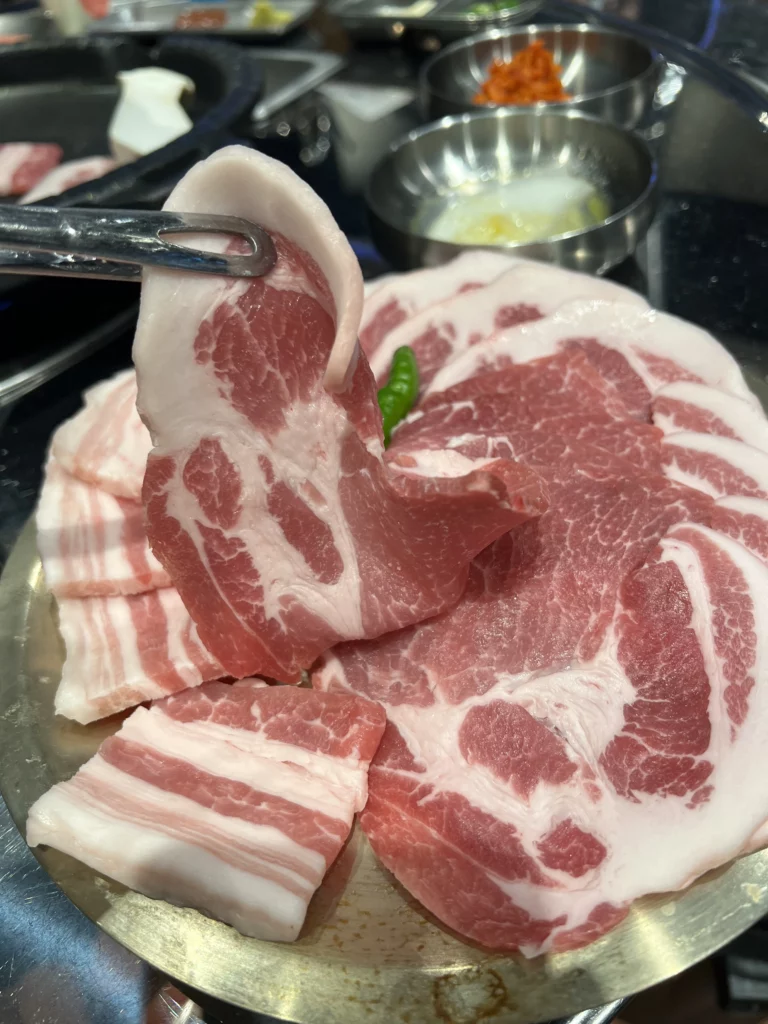
Table of Contents
- What Makes Moosik’s Samgyeopsal Special
- Understanding Korean Pork Belly: A Cut Above
- The Complete Moosik Dining Experience
- What Makes This Dish Uniquely Korean?
- What Are the Key Ingredients That Create This Flavor?
- How Would You Describe the Taste and Spice Level?
- What Should First-Time Eaters Know?
- How Moosik Compares to Other Seoul Samgyeopsal Spots
- Practical Information for Visitors
What Makes Moosik’s Samgyeopsal Special
At Moosik, the approach to samgyeopsal embodies a refreshing simplicity that lets quality ingredients speak for themselves. The restaurant sources premium domestic pork belly, selecting cuts with ideal marbling that ensures each bite delivers the perfect balance of tender meat and rich, flavorful fat. Unlike establishments that rely heavily on marinades or complex seasonings, Moosik’s philosophy centers on the natural excellence of well-sourced pork combined with proper grilling technique.
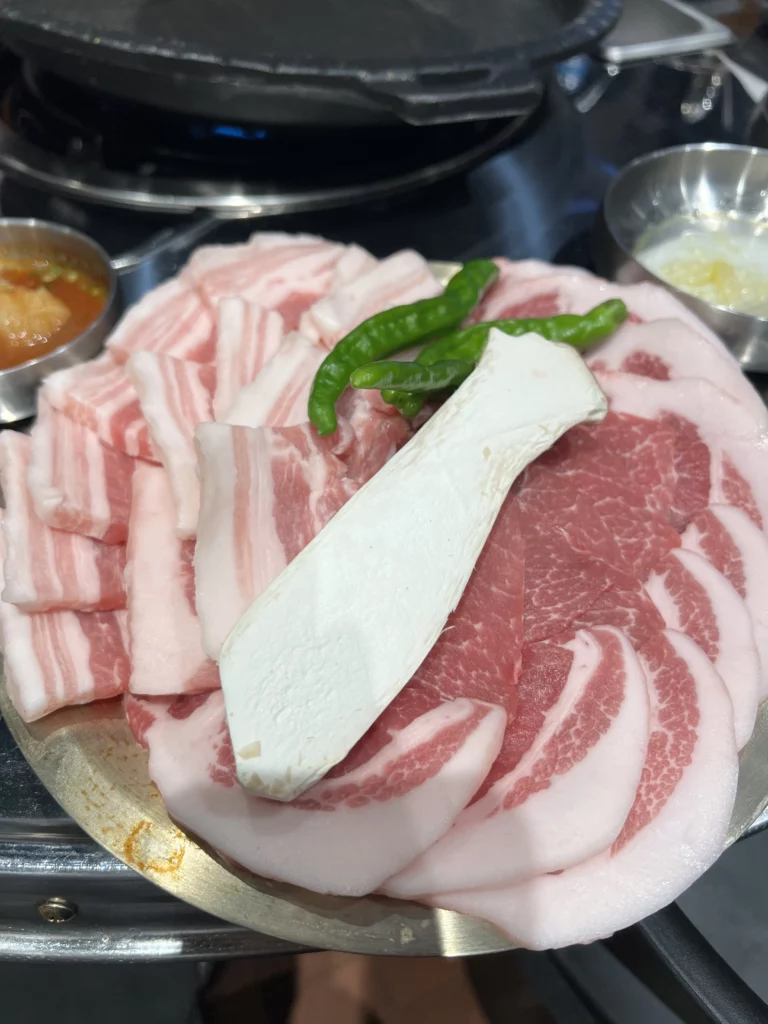
The thick-cut slices arrive at your table unmarinated, showcasing confidence in the meat’s inherent quality. This approach allows diners to appreciate the pure, unadulterated flavor of Korean pork belly as it transforms on the grill—developing a crispy, caramelized exterior while maintaining a juicy, succulent interior. Similar to how Gimsukseoung uses specialized aging techniques to elevate the Korean BBQ experience, Moosik demonstrates that careful sourcing and preparation can transform even familiar dishes into something exceptional.
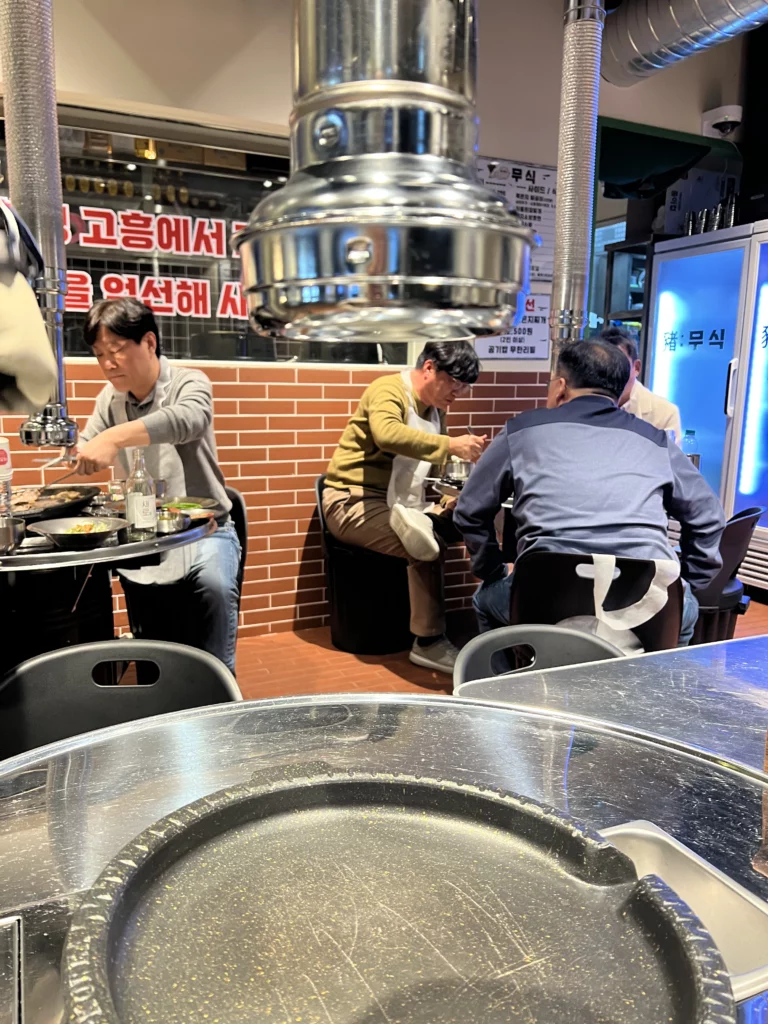
The restaurant’s location in Sinsa-dong places it at the heart of Seoul’s evolving food scene. While nearby Apgujeong and Cheongdam-dong attract attention for their upscale establishments, Sinsa-dong maintains a more approachable yet equally sophisticated dining culture—making it the perfect setting for Moosik’s unpretentious excellence.
The Complete Moosik Dining Experience
Visual and Sensory First Impressions
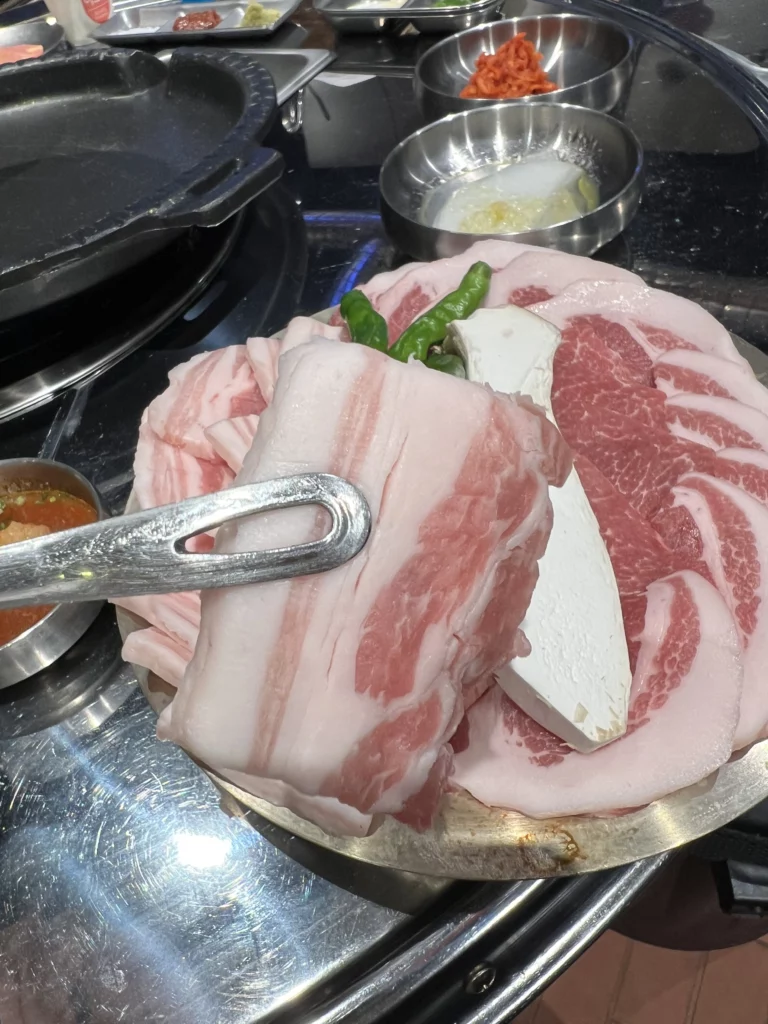
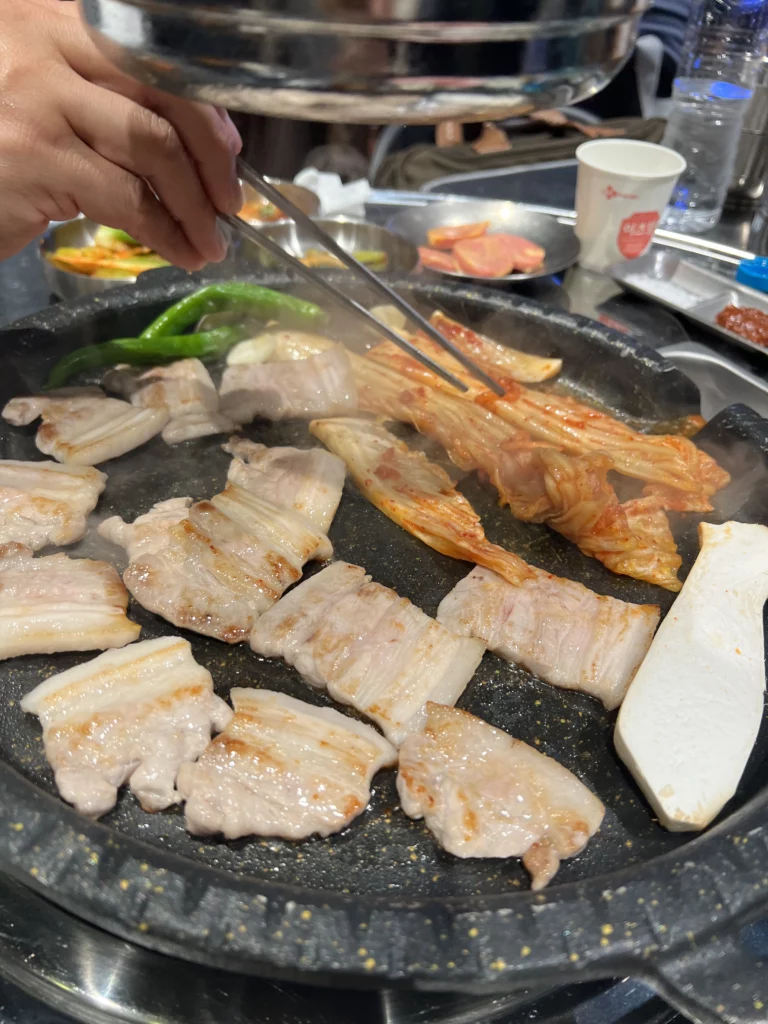
The moment thick slices of samgyeopsal hit Moosik’s sizzling grill, a transformation begins that engages all the senses. The raw pork belly arrives at the table as pale pink and cream-colored strips, the marbling clearly visible in perfect parallel bands. As the meat makes contact with the hot surface, an immediate sizzle fills the air—a sound that has become synonymous with Korean dining satisfaction.
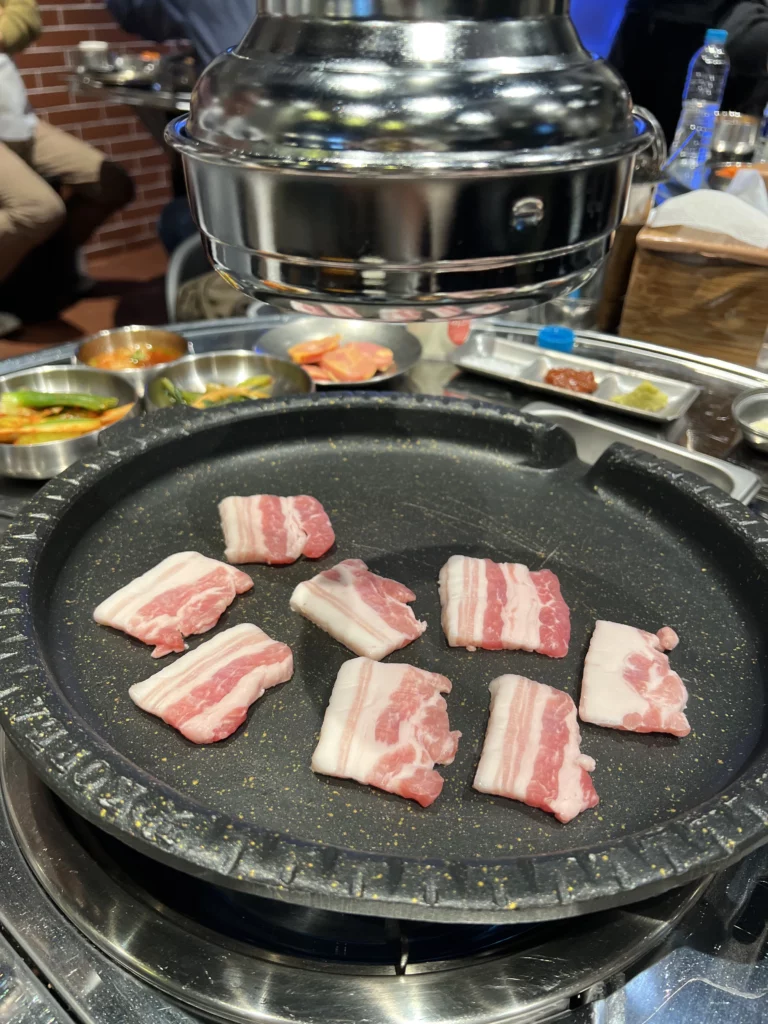
Within moments, the aroma begins to develop: initially subtle and sweet, then deepening into rich, savory notes as the fat renders and the meat’s sugars caramelize. The visual transformation proves equally compelling. The pale meat gradually turns golden, then develops crispy, darkened edges where contact with the grill creates the Maillard reaction that Korean diners prize. Small pools of rendered fat catch and shimmer on the grill surface, adding to the theater of the experience.
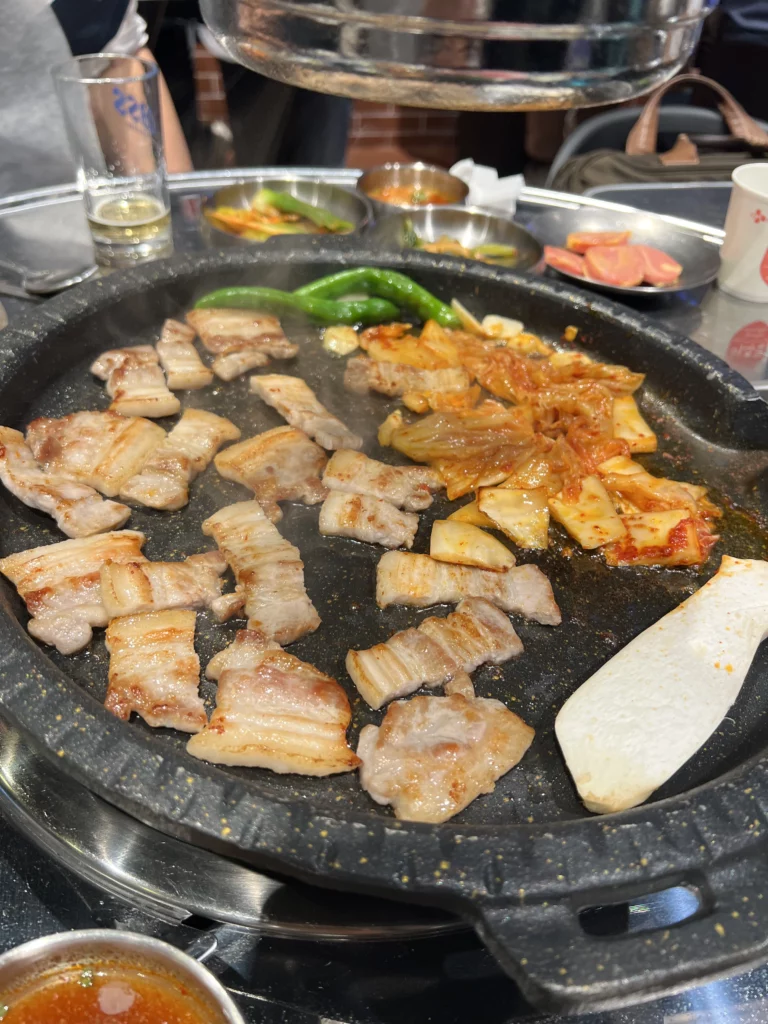
This isn’t rushed fast food—watching samgyeopsal cook properly at Moosik typically takes 8-12 minutes per round, allowing anticipation to build while the meat reaches its optimal state. The staff’s expertise shows in their timing recommendations, suggesting the precise moment when each piece achieves the ideal balance of crispy exterior and tender interior.
Three Key Ingredients That Define the Experience
Premium Domestic Pork Belly
The foundation of Moosik’s samgyeopsal lies in carefully sourced Korean pork belly, selected for ideal fat-to-meat ratio and freshness. Korean domestic pork (국내산) commands premium prices for good reason—it typically offers finer texture and milder flavor than imported alternatives. The meat’s marbling creates natural juiciness while providing the rich, umami-forward taste that makes samgyeopsal satisfying without feeling heavy. Nutritionally, pork belly provides high-quality protein alongside B vitamins, particularly B1 (thiamine) and B12, though its richness means moderation serves diners well.
Fresh Garlic (Saeng Maneul, 생마늘)
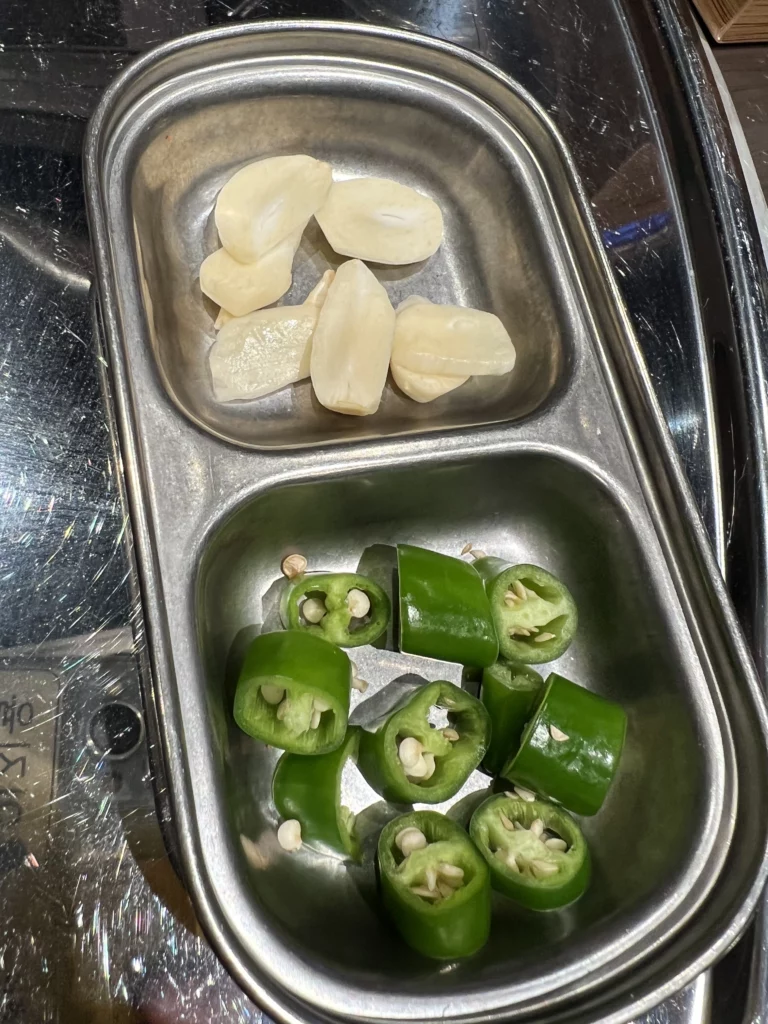
No samgyeopsal experience at Moosik would be complete without fresh garlic cloves grilled alongside the meat. Korean garlic tends toward larger size and sweeter flavor than varieties common in Western cooking. When grilled, the cloves transform from sharp and pungent to mellow, nutty, and almost creamy—becoming sweet enough to eat whole. Beyond flavor, garlic offers allicin, a compound with antimicrobial properties, and Korean dining tradition holds that garlic helps balance the richness of fatty meats. Fresh garlic is readily available at Korean grocery stores or Asian markets, though standard garlic works as a substitute in a pinch.
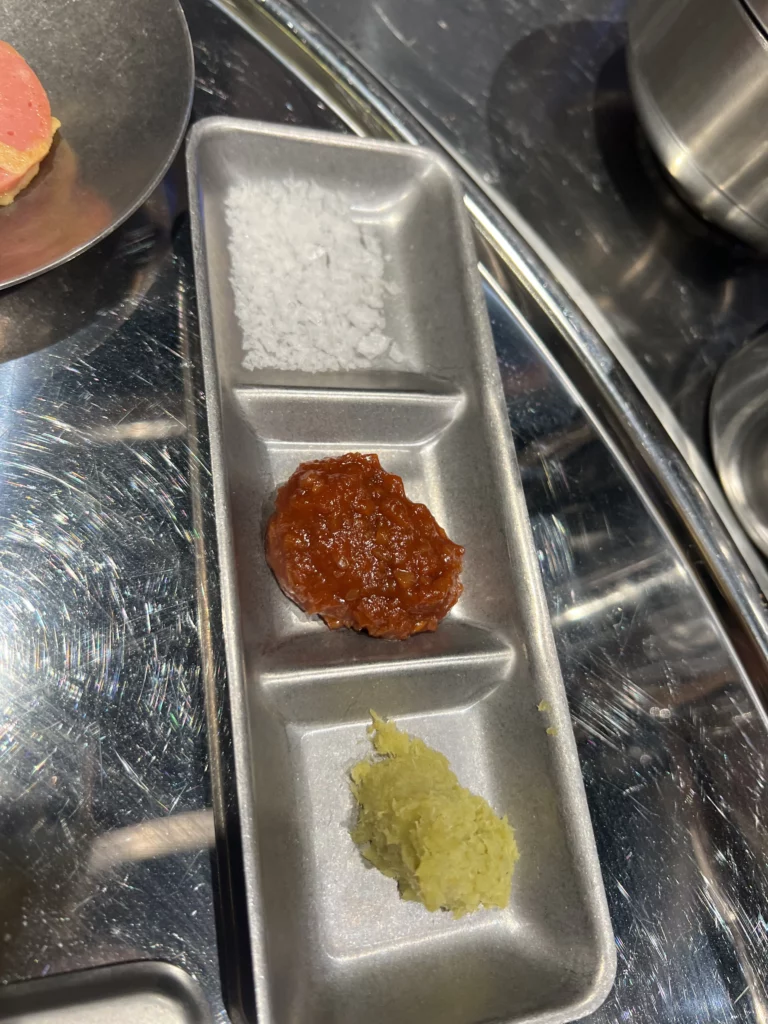
This essential dipping sauce represents the soul of Korean flavor combinations. Ssamjang blends doenjang (fermented soybean paste) with gochujang (fermented red chili paste), creating a complex profile that’s simultaneously savory, slightly spicy, sweet, and deeply umami-rich. The fermentation process that produces both base ingredients develops probiotics and breaks down proteins into more digestible forms, explaining why this sauce has remained a Korean table staple for centuries. The thick, almost jam-like consistency clings perfectly to grilled meat, while its bold flavors stand up to pork belly’s richness without overwhelming it.
What Makes This Dish Uniquely Korean?
Samgyeopsal occupies a special position in Korean cuisine that extends far beyond its status as popular food. The dish emerged during Korea’s rapid economic development of the 1980s and 1990s, when pork belly provided an affordable yet satisfying alternative to beef. This positioning as "the people’s meat" created cultural associations with accessibility and communal enjoyment that persist today.
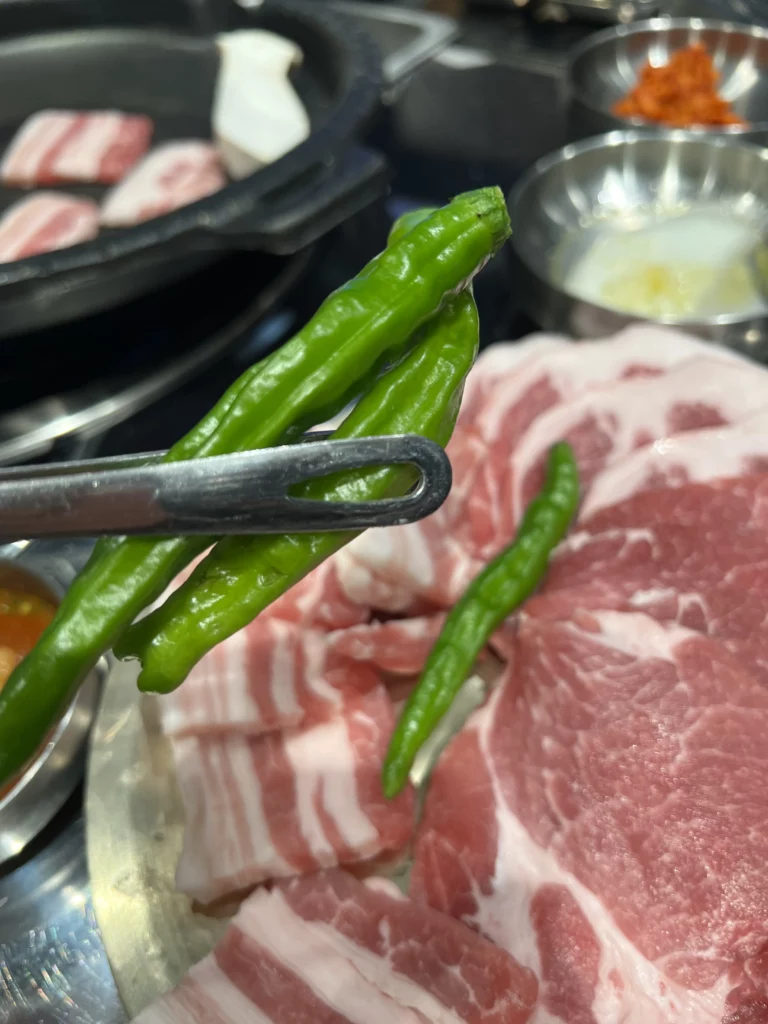
What distinguishes Korean samgyeopsal from similar pork belly preparations in other cuisines lies primarily in its complete lack of pre-seasoning or marinade. While Chinese cuisine might braise pork belly in soy sauce and spices, and Western preparations often cure or smoke it into bacon, Korean samgyeopsal arrives at the table as pure, fresh meat. This approach reflects a broader Korean culinary philosophy valuing the ingredient’s natural flavor, enhanced through proper cooking technique rather than masked by aggressive seasoning.
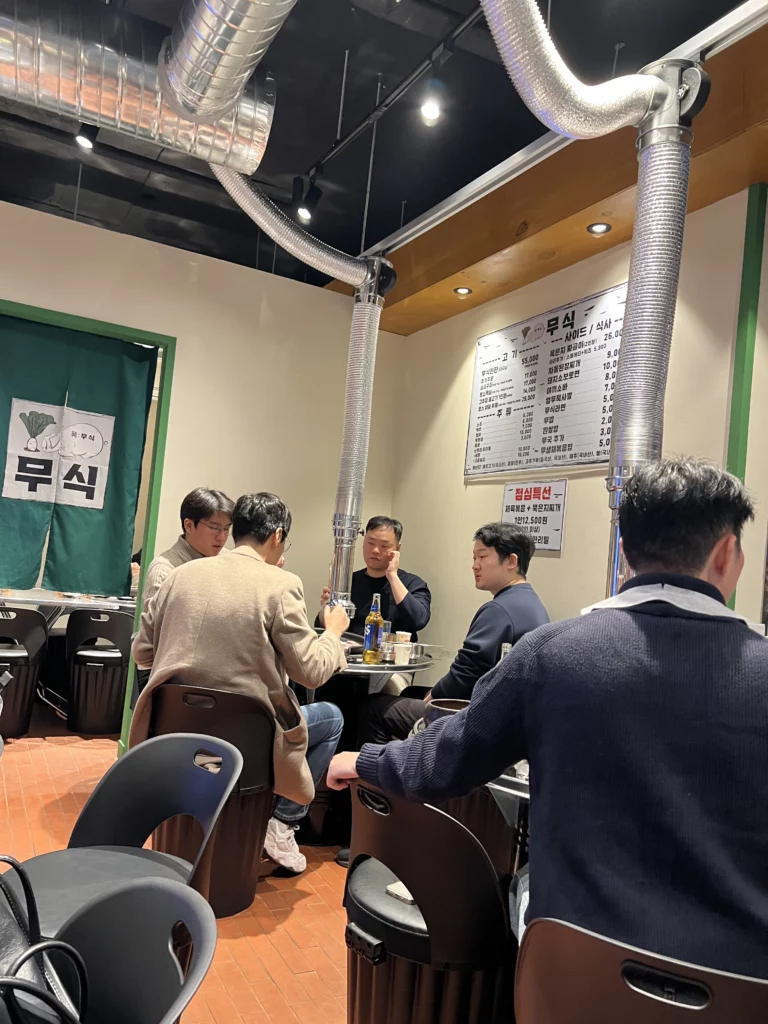
The social dimension of samgyeopsal also sets it apart. Unlike individual plated dishes common in Western dining, samgyeopsal operates as inherently communal food. Everyone at the table shares the same grill, takes turns monitoring the meat’s progress, and participates in the cooking process. This interactive element transforms dining into a collective experience, reinforcing Korean cultural values of togetherness and mutual consideration. The hoesik culture—after-work gatherings where colleagues bond over food and drinks—particularly embraced samgyeopsal after the 1997 Asian financial crisis, when budget-conscious companies sought less expensive alternatives to traditional business dining.
In Korean dining culture, samgyeopsal represents everyday comfort rather than special occasion food. Families might choose elaborate preparations or expensive cuts for holidays, but samgyeopsal serves as the default choice for casual gatherings, late-night meals, or spontaneous dinner plans. This accessibility has made it the dish most closely associated with modern Korean social life.
What Are the Key Ingredients That Create This Flavor?
The beauty of authentic samgyeopsal at Moosik lies in the dish’s essential simplicity—a quality ingredient list that proves less is often more in Korean BBQ.
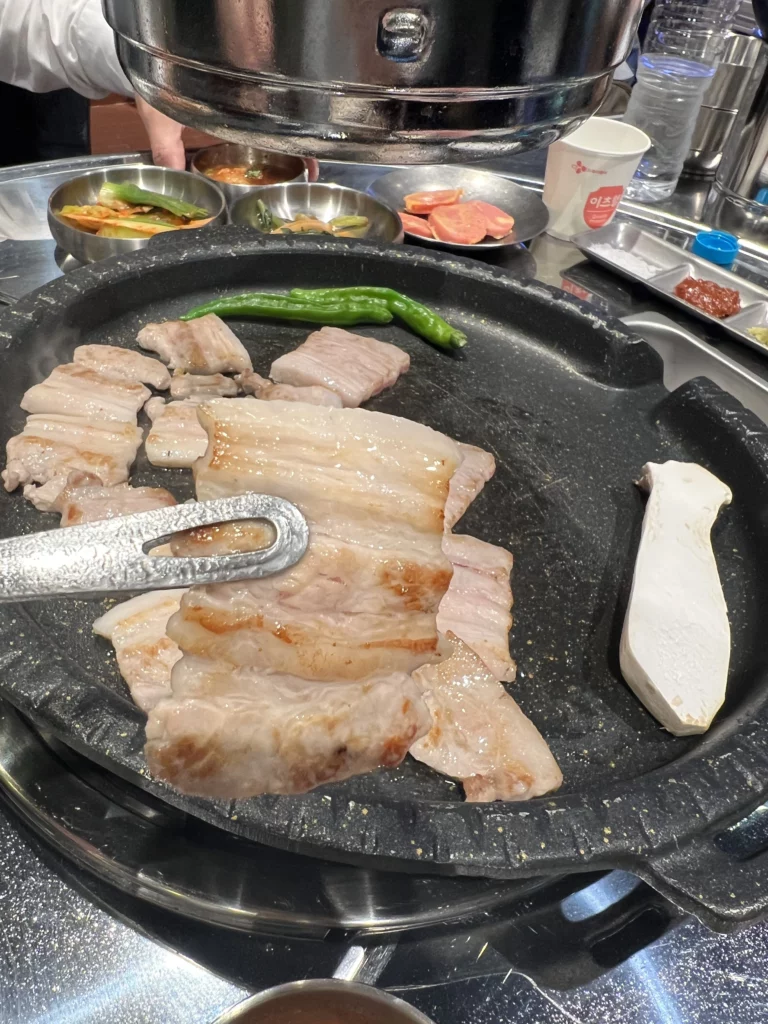
At the foundation sits the pork belly itself, which must meet exacting standards for proper samgyeopsal. The ideal cut shows clear three-layer definition: a bottom layer of tender meat, a middle band of pure white fat, and a top layer of lean meat. This specific configuration ensures every bite delivers balanced texture and flavor. Korean domestic pork tends toward finer grain and sweeter taste than imported alternatives, explaining why restaurants like Moosik specifically source from Korean farms despite higher costs.
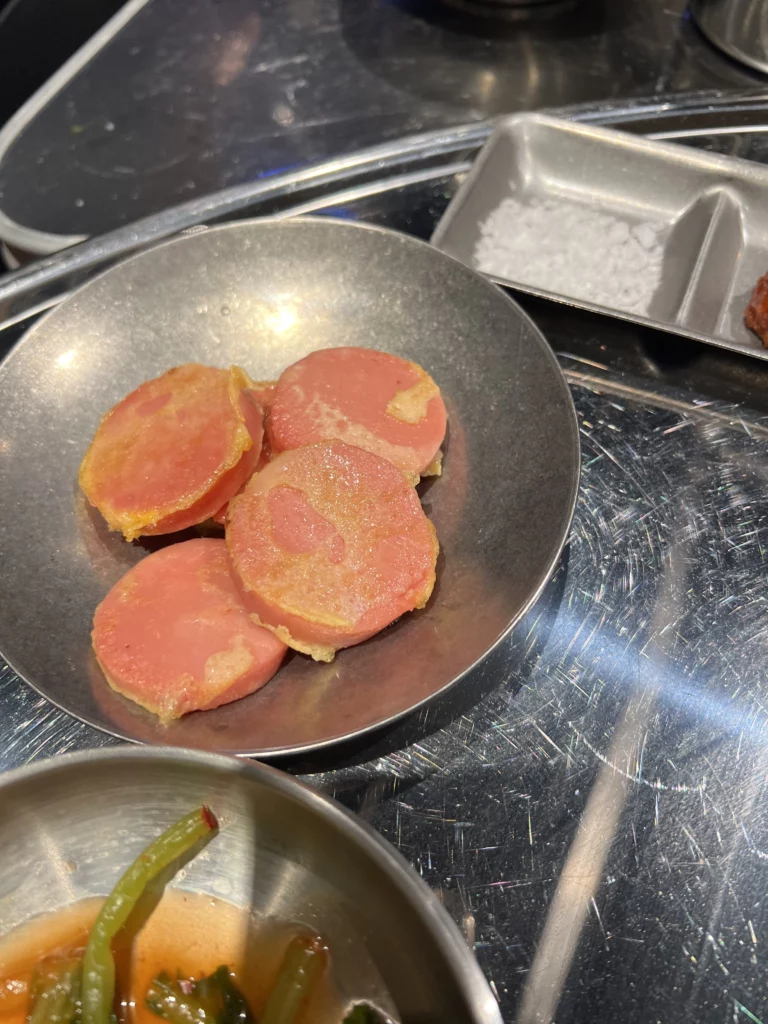
Sea salt might seem basic, but traditional Korean coarse sea salt (굵은소금) provides mineral complexity that refined table salt lacks. Diners typically receive a small dish of salt mixed with sesame oil for dipping, creating a deceptively simple yet perfectly balanced accompaniment. The salt crystals dissolve slowly on hot meat, allowing each bite to season itself naturally rather than overwhelming the palate with uniform saltiness. Some establishments offer additional seasoned salts incorporating ground sesame seeds or dried seaweed for varied flavor profiles.
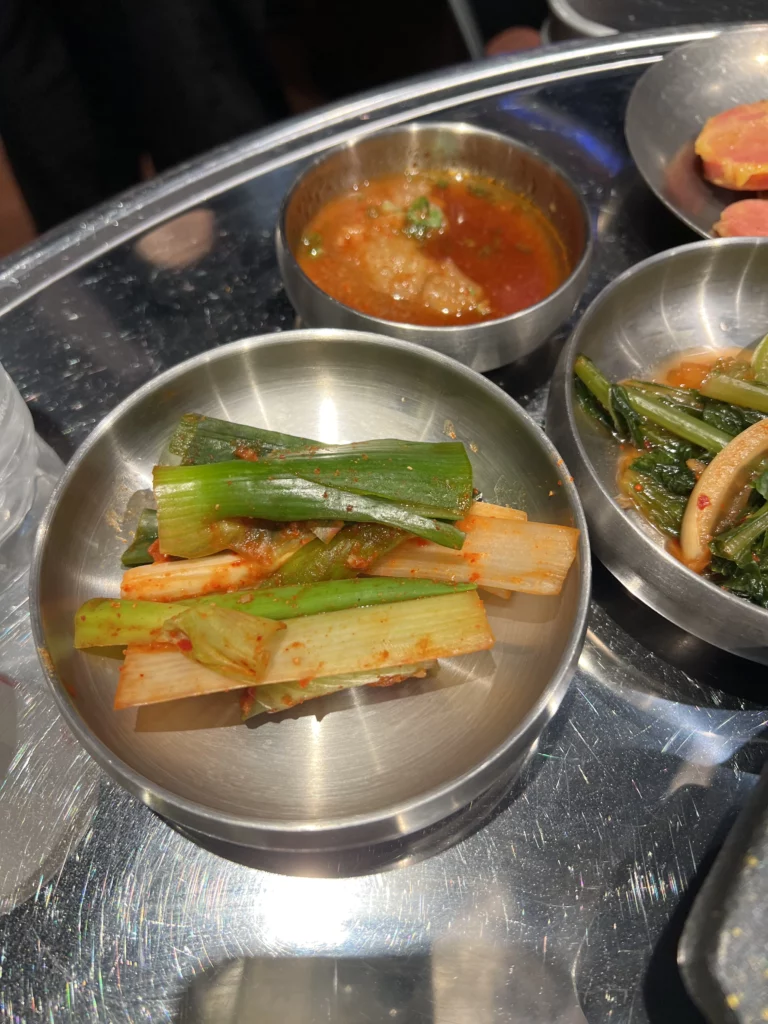
Fresh ssam vegetables complete the core ingredient trinity. Lettuce (typically red leaf or romaine) and perilla leaves (kkaennip, 깻잎) serve as the primary wrappers, but their role transcends mere convenience. The crisp, slightly bitter lettuce provides cooling contrast to rich pork, while perilla’s unique flavor—somewhere between mint, basil, and anise—adds aromatic complexity that complements rather than competes with the meat. Both vegetables offer nutritional benefits: fiber, vitamins A and C, and in perilla’s case, omega-3 fatty acids. Korean markets stock these specifically for ssam purposes, though regular lettuce works adequately when perilla proves unavailable.
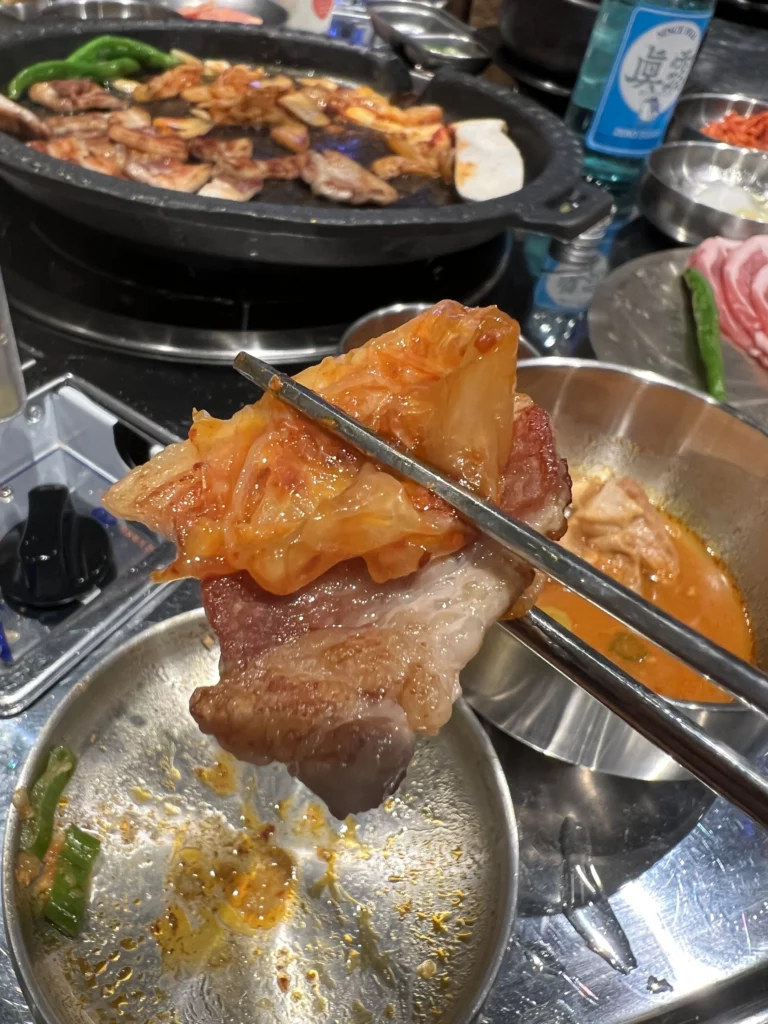
The interplay between these three elements creates samgyeopsal’s distinctive appeal. Rich, fatty meat meets mineral salt on crisp, fresh vegetables, producing a flavor combination that Korean diners have refined over decades of communal experimentation. Each component serves a specific purpose: the meat provides savory satisfaction, the salt enhances without masking, and the vegetables offer textural contrast and palate cleansing between bites.
How Would You Describe the Taste and Spice Level?
Spice Level: 1/10
In its pure form, samgyeopsal at Moosik registers virtually zero on any spice scale, making it supremely accessible for international diners wary of Korean cuisine’s reputation for heat. The unseasoned pork belly itself delivers no spiciness whatsoever—its flavor profile centers entirely on savory, meaty richness with subtle sweetness from rendered fat. Even when paired with traditional accompaniments, the dish remains mild unless diners deliberately add spicy elements.
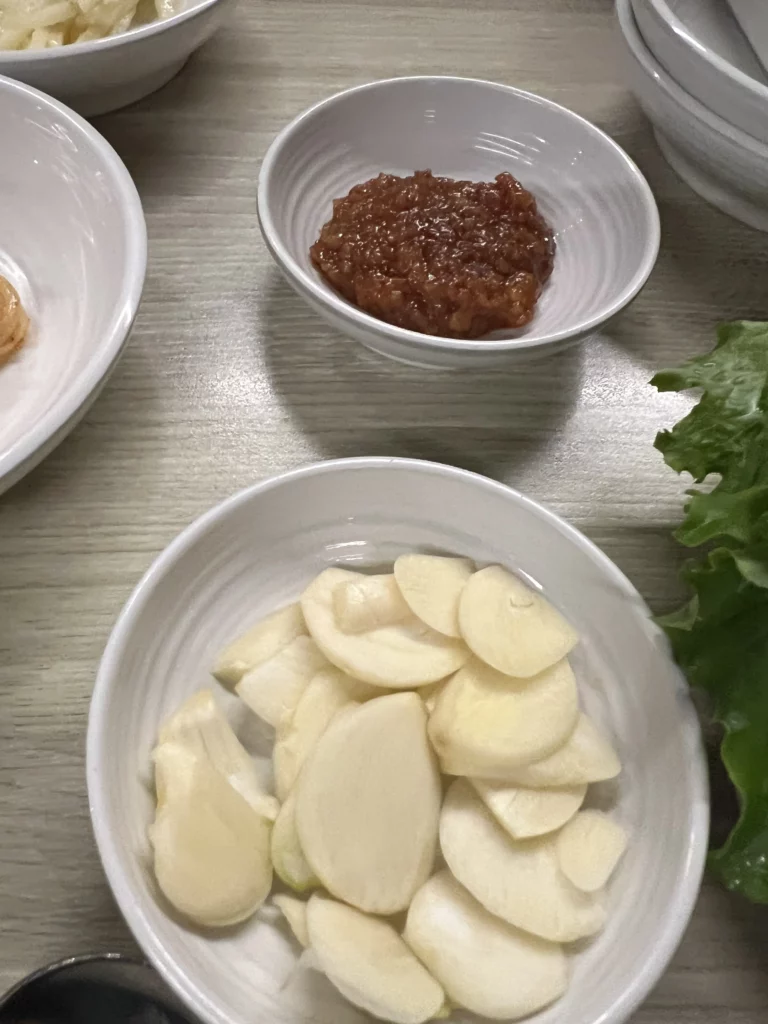
The optional ssamjang sauce introduces gentle heat through its gochujang component, but Korean versions of this fermented chili paste offer far less intensity than many global hot sauces. Think of it as warming rather than burning—a background tingle that enhances flavors rather than dominating them. Diners sensitive to spice can easily control heat levels by using less sauce or requesting versions with reduced chili content.
Primary Flavor Profile
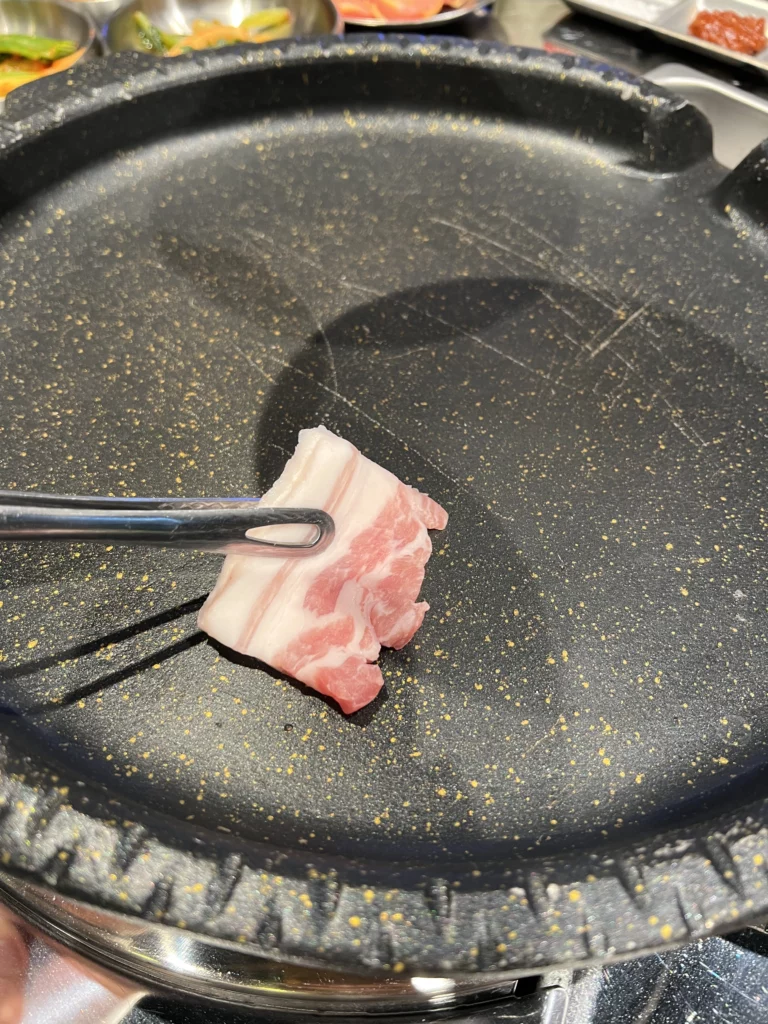
Samgyeopsal’s taste defies simple categorization because it layers multiple flavor dimensions simultaneously. The dominant note strikes as deeply savory—what food scientists term "umami"—from the pork’s natural glutamates concentrated through grilling. As fat renders during cooking, it creates rich, almost buttery smoothness that coats the palate without feeling greasy when properly prepared.
Sweetness appears subtly as the meat’s proteins and sugars undergo caramelization on the hot grill, developing pleasant toasted notes along crispy edges. This isn’t overt sugary sweetness but rather the complex, slightly nutty character that emerges from proper Maillard reactions. The salt-sesame oil dip adds mineral salinity that brightens and defines each bite, while sesame contributes toasted, earthy undertones.
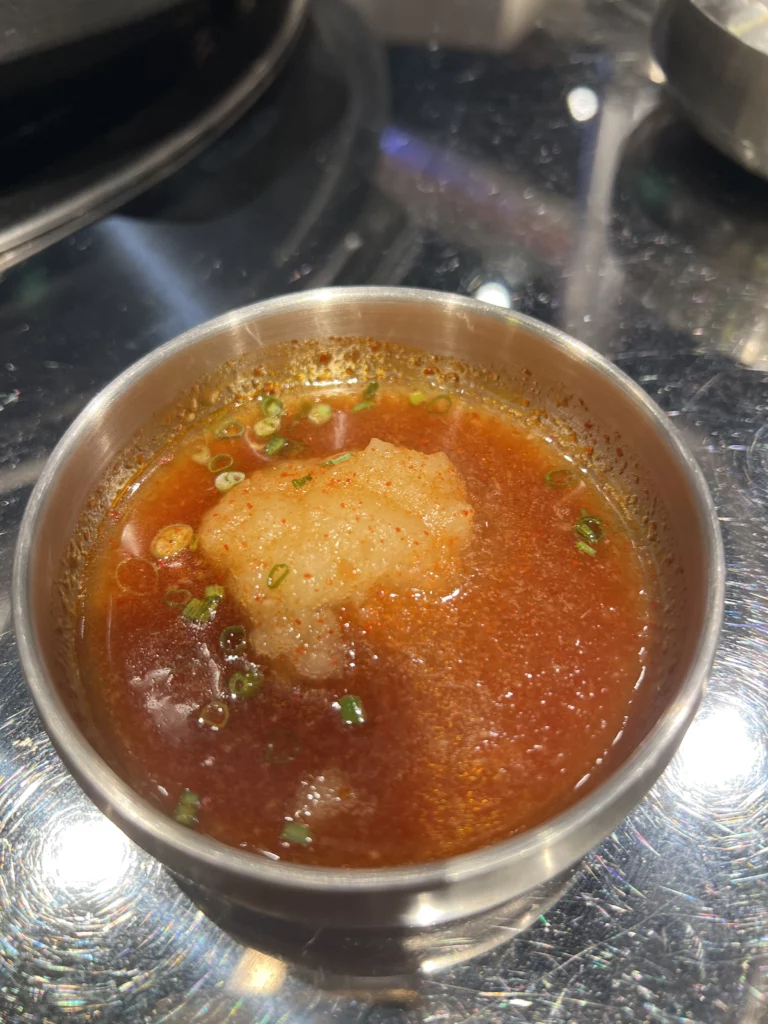
When wrapped in lettuce with garlic and ssamjang, the flavor complexity deepens considerably. Fresh vegetables introduce bitter and vegetal notes that cut through the meat’s richness, while grilled garlic turns sweet and mellow. The ssamjang brings fermented depth—a funky, almost cheese-like quality from doenjang combined with gochujang’s subtle fruity heat and background sweetness.
Texture Description
Texture plays an equally crucial role in samgyeopsal’s appeal. Properly grilled pork belly at Moosik achieves textural duality: crispy, almost crackling exteriors give way to tender, yielding interiors that require minimal chewing. The fat layers, rather than remaining tough or chewy, melt into silky smoothness that lubricates each bite. This contrast between crispy and tender, between the meat’s resistance and the fat’s softness, creates satisfying mouthfeel that explains why Korean diners often return for multiple rounds.
Serving Temperature
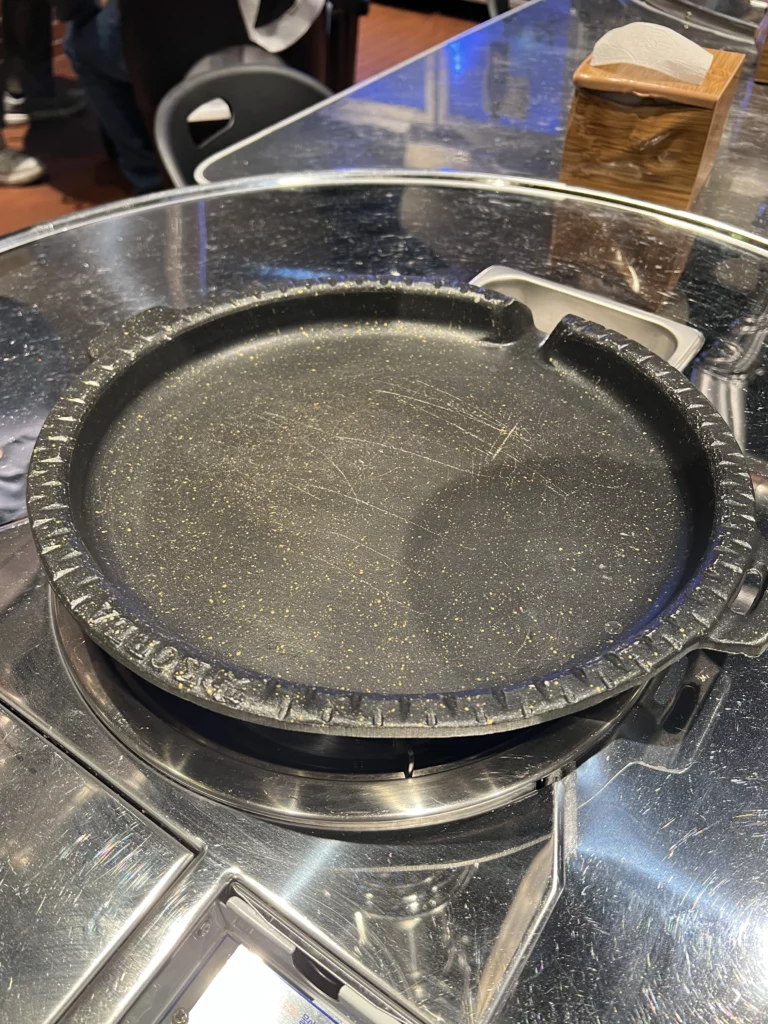
Samgyeopsal reaches the table piping hot, typically between 160-180°F (70-80°C) immediately off the grill. However, Korean dining etiquette encourages letting each piece cool for 20-30 seconds before eating—both for safety and because flavors develop more complexity as temperature drops slightly from searing hot to very warm. The lettuce wrap assembly process naturally allows this cooling, creating ideal eating temperature by the time the completed ssam reaches your mouth.
What Should First-Time Eaters Know?
Proper Eating Method
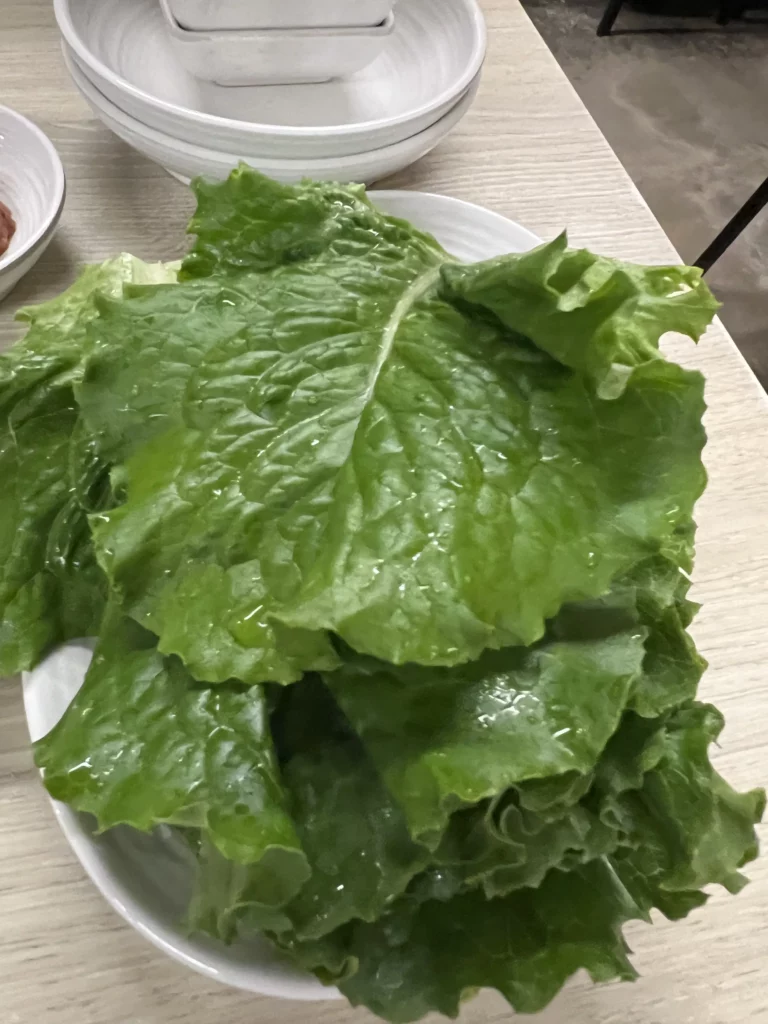
Samgyeopsal follows a specific assembly process that maximizes flavor while honoring Korean dining tradition. Begin by selecting a fresh lettuce leaf (or perilla leaf for more adventurous palates) and placing it flat on your palm. Add one piece of grilled pork belly to the leaf’s center—resist the temptation to pile on multiple pieces, as proper ssam (wrapped food) should be manageable in one bite.
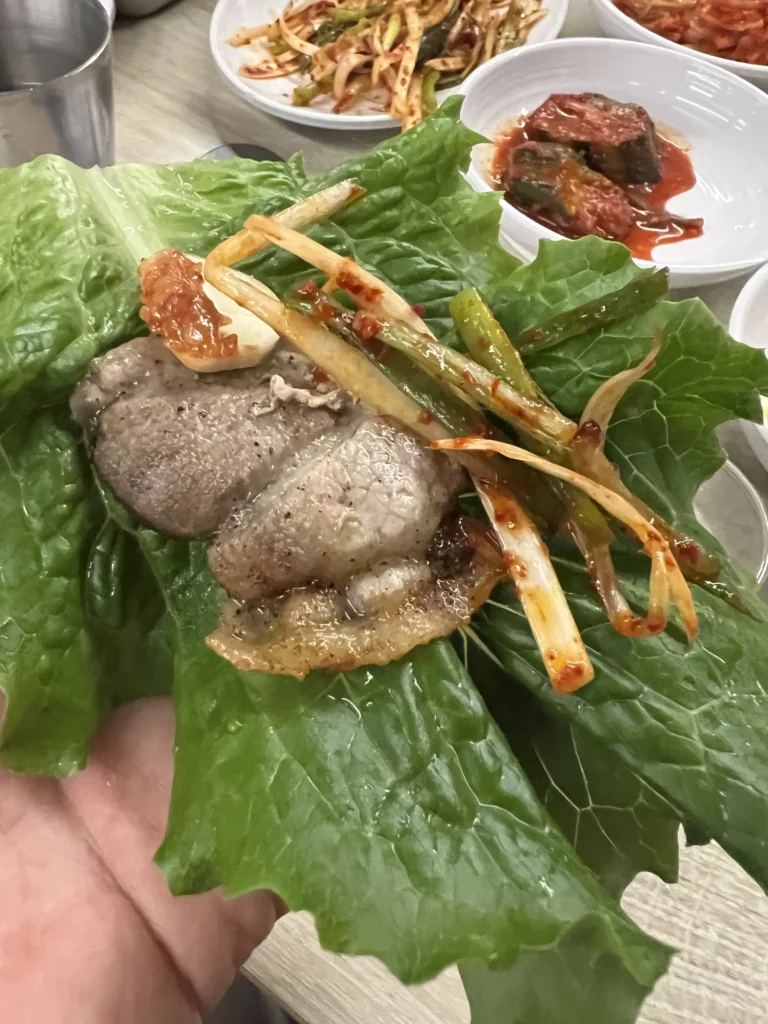
Next comes customization: a small dollop of ssamjang sauce (about dime-sized), a slice or two of grilled garlic, and your choice of accompaniments such as raw garlic slice, fresh chili pepper, kimchi, or pickled radish. The key lies in restraint—overstuffing creates unwieldy wraps that fall apart mid-bite. Once assembled, fold the lettuce over the filling (Korean diners typically fold rather than roll) and consume the entire package in one bite. This "one-bite rule" might seem daunting to newcomers, but it allows all flavors to hit your palate simultaneously, creating the intended taste experience.
What to Expect on First Taste
First-time samgyeopsal eaters often express surprise at how different the experience feels from expectations. The meat itself tastes cleaner and less "porky" than anticipated, particularly when sourced from quality Korean farms. The crispy edges provide immediate textural satisfaction, while the interior’s tenderness requires little chewing effort—the fat should literally melt as you bite down.
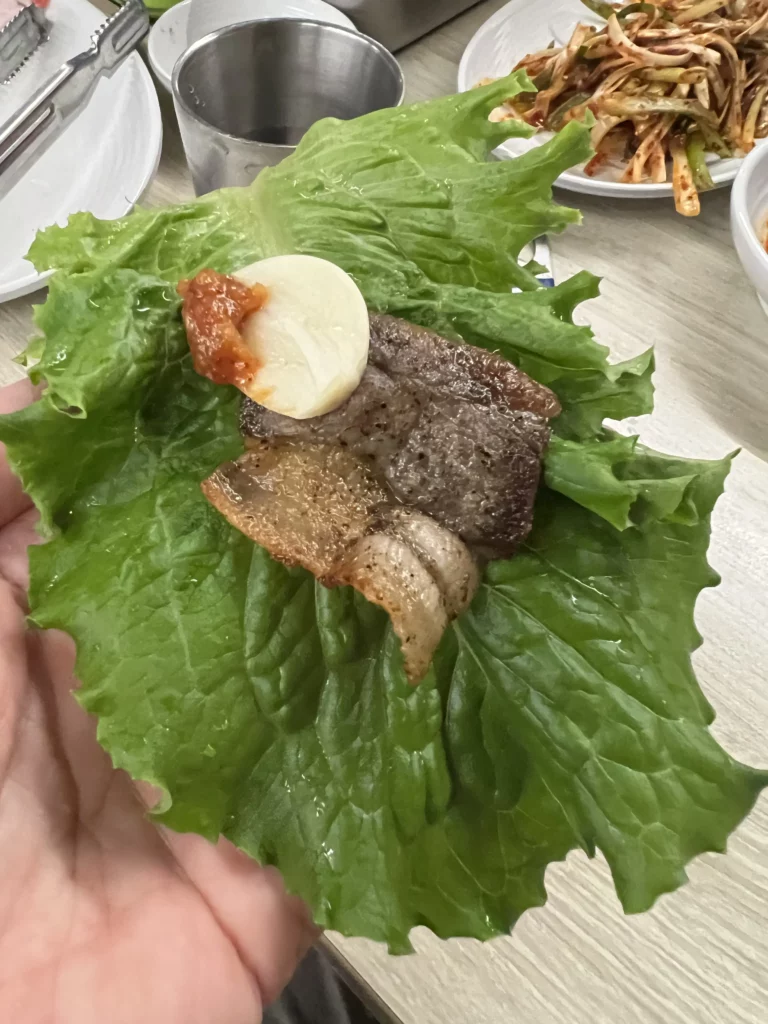
The flavor combination might strike Western palates as unusual initially: the ssamjang’s fermented funk, the perilla leaf’s distinctive aroma, and the sheer amount of garlic can overwhelm on first encounter. However, most diners find these flavors grow increasingly appealing with each subsequent bite as the palate adjusts and begins appreciating the complexity. The lettuce serves as more than vehicle—its crisp freshness and slight bitterness balance the meat’s richness, preventing palate fatigue despite the dish’s inherent heaviness.
Proper Dining Sequence
Korean BBQ restaurants follow an unspoken progression that enhances the meal’s enjoyment. Start with a round or two of samgyeopsal to appreciate its pure flavor, then consider ordering additional cuts if available—moksal (pork neck) offers leaner texture, while ogyeopsal (five-layer belly including skin) provides more varied mouthfeel. Between meat rounds, cleanse your palate with banchan side dishes, particularly kimchi or pickled vegetables.
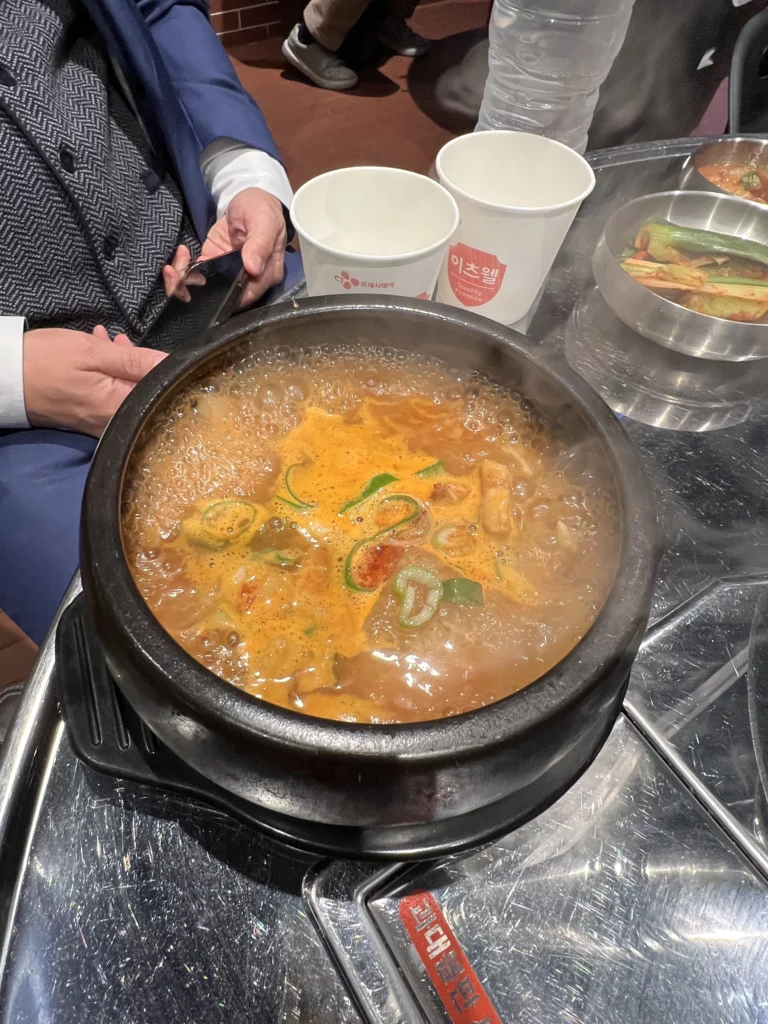
Many Korean diners conclude samgyeopsal meals with naengmyeon (cold buckwheat noodles) or doenjang jjigae (fermented soybean paste stew) to balance the meat’s richness and aid digestion. This finishing course isn’t merely tradition but practical wisdom—the cold noodles’ refreshing quality or the stew’s warming comfort provide satisfying closure after the intensity of grilled meat.
Cultural Considerations for Foreign Diners
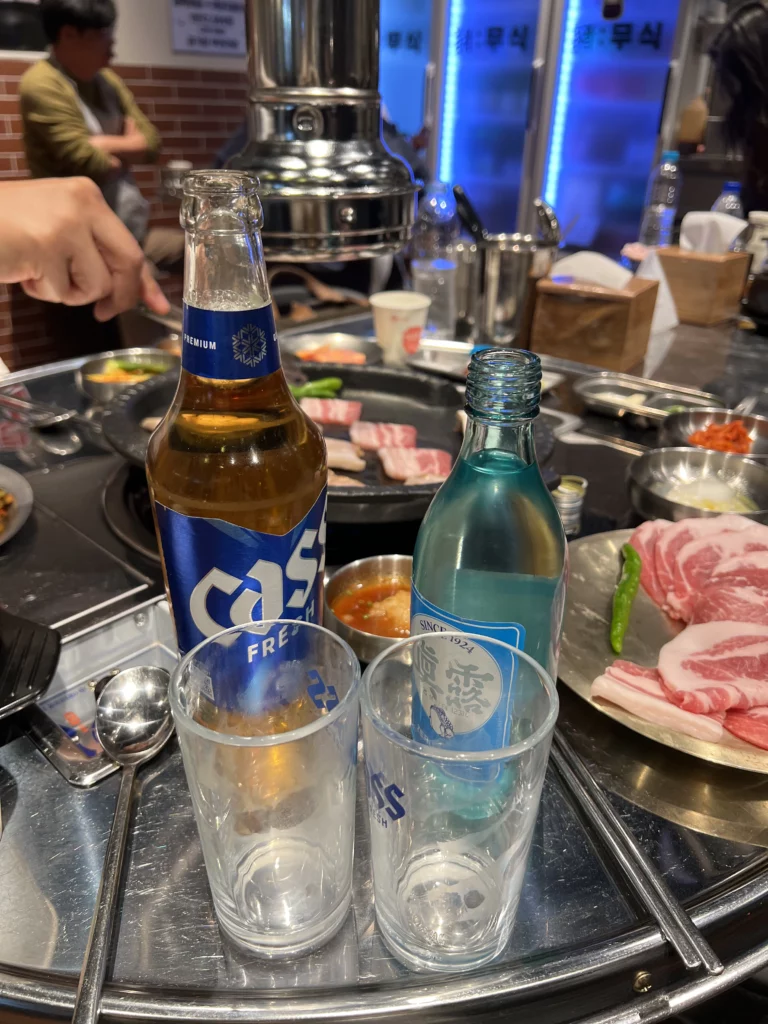
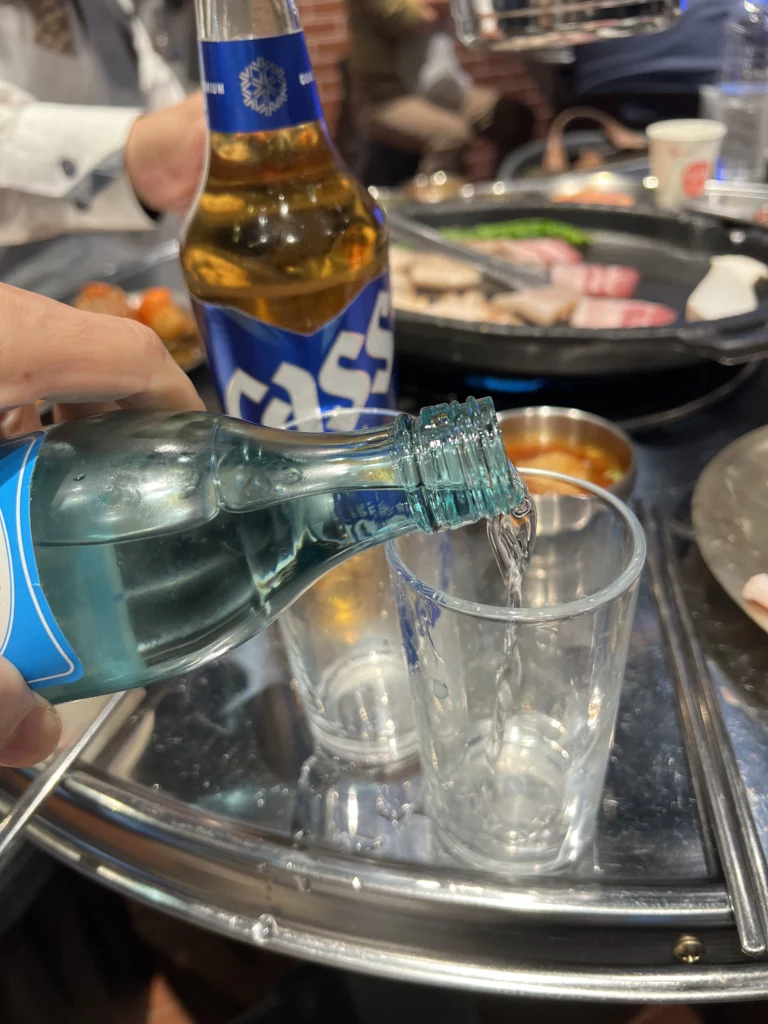
Understanding a few Korean dining customs enhances the experience while showing respect for local culture. When dining with Korean companions, wait for the eldest person to begin eating before you start—this demonstrates proper manners. If someone pours drinks (typically soju or beer), receive the glass with both hands as a sign of respect, and pour for others before refilling your own glass.
Don’t be surprised when restaurant staff actively participate in your meal, often helping grill the first round of meat or changing the grill surface between rounds. This attentive service style differs from Western "leave-you-alone" approaches but shows care for your dining experience. Feel free to ask questions or request assistance—Korean restaurant culture expects and appreciates this interaction rather than viewing it as intrusive.
How Moosik Compares to Other Seoul Samgyeopsal Spots
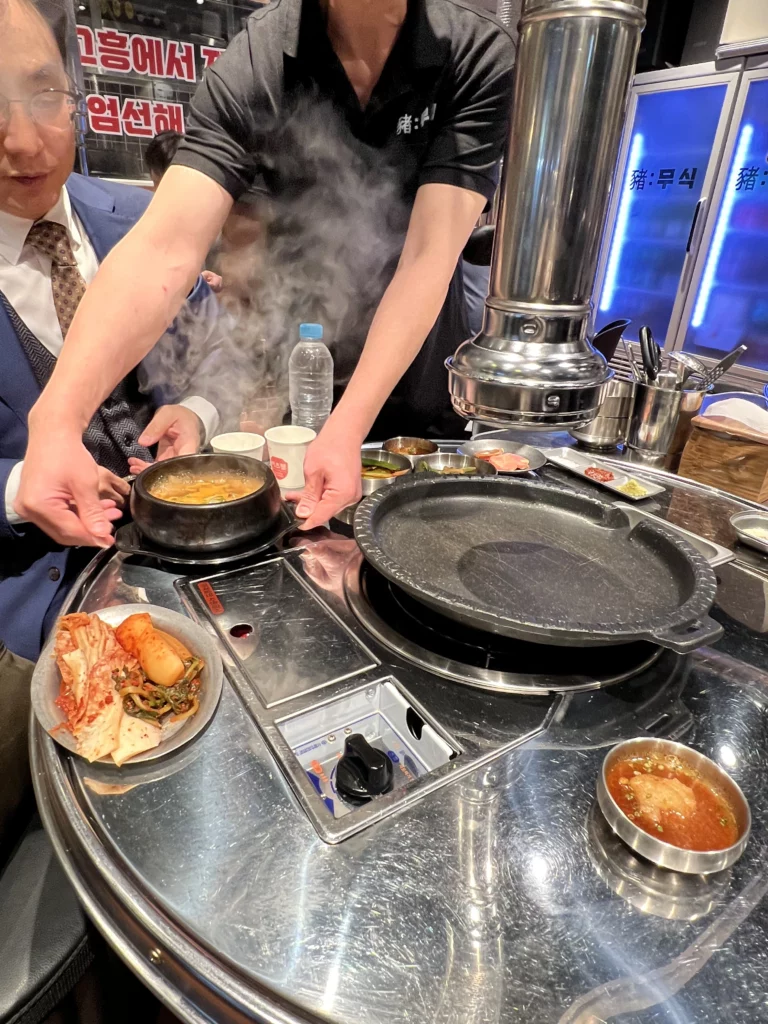
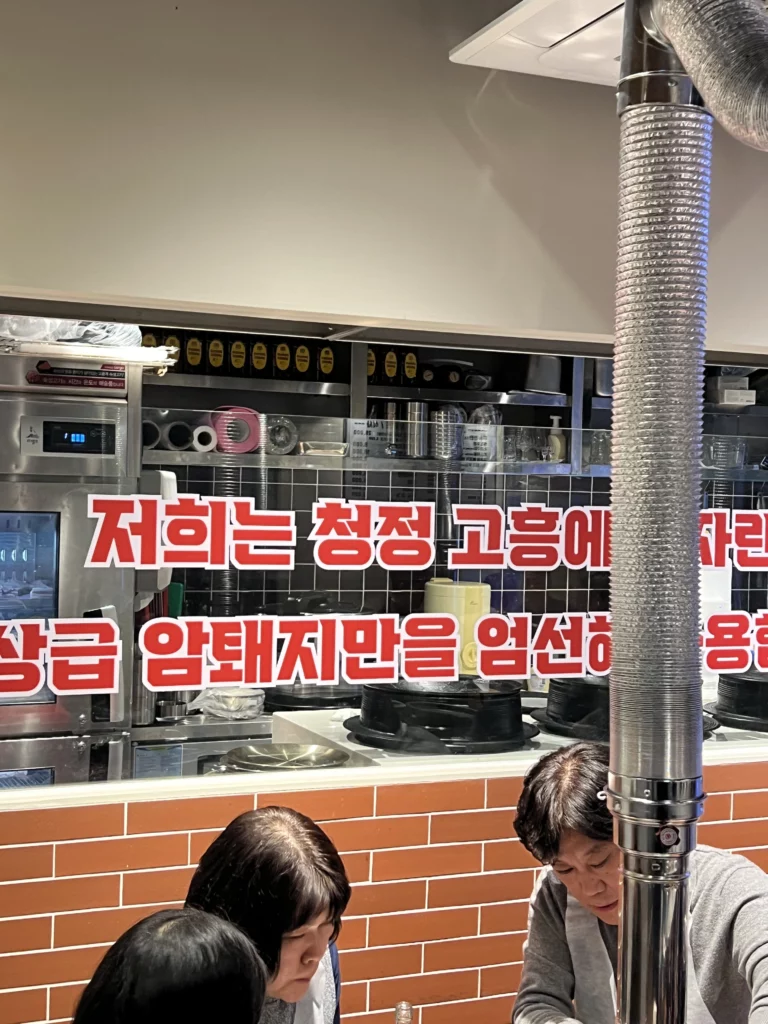
Seoul’s samgyeopsal landscape ranges from humble neighborhood joints to trendy establishments with elaborate concepts. Moosik occupies an interesting middle ground—offering quality that rivals upscale spots while maintaining the approachable atmosphere of traditional Korean BBQ restaurants. Where Sancheong Sutbul Garden attracts social media attention with its rustic mountain-lodge aesthetic and charcoal grilling spectacle, Moosik focuses on consistent execution rather than Instagram moments.
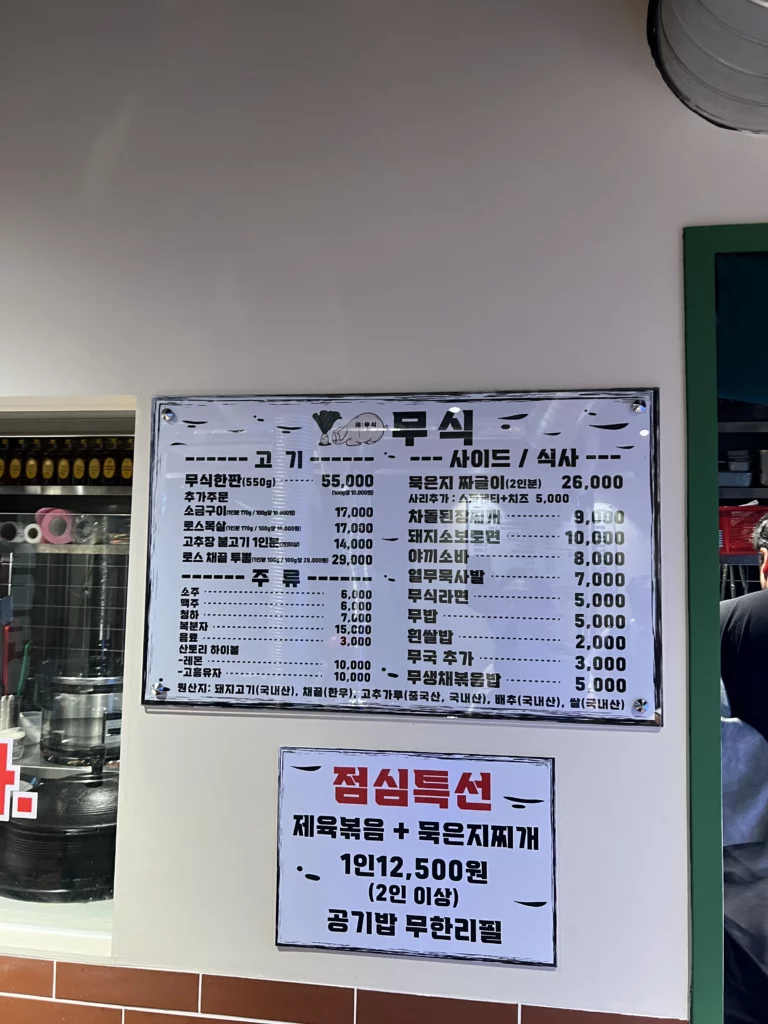
The restaurant’s Sinsa-dong location provides advantages beyond mere geography. While Gangnam’s Apgujeong and Cheongdam neighborhoods skew toward expensive "premium" establishments that may prioritize presentation over substance, Sinsa-dong maintains stronger connections to authentic Korean dining culture. This translates to better value—expect to pay ₩15,000-22,000 per person for quality samgyeopsal at Moosik, compared to ₩25,000-35,000+ at trendier Gangnam alternatives.
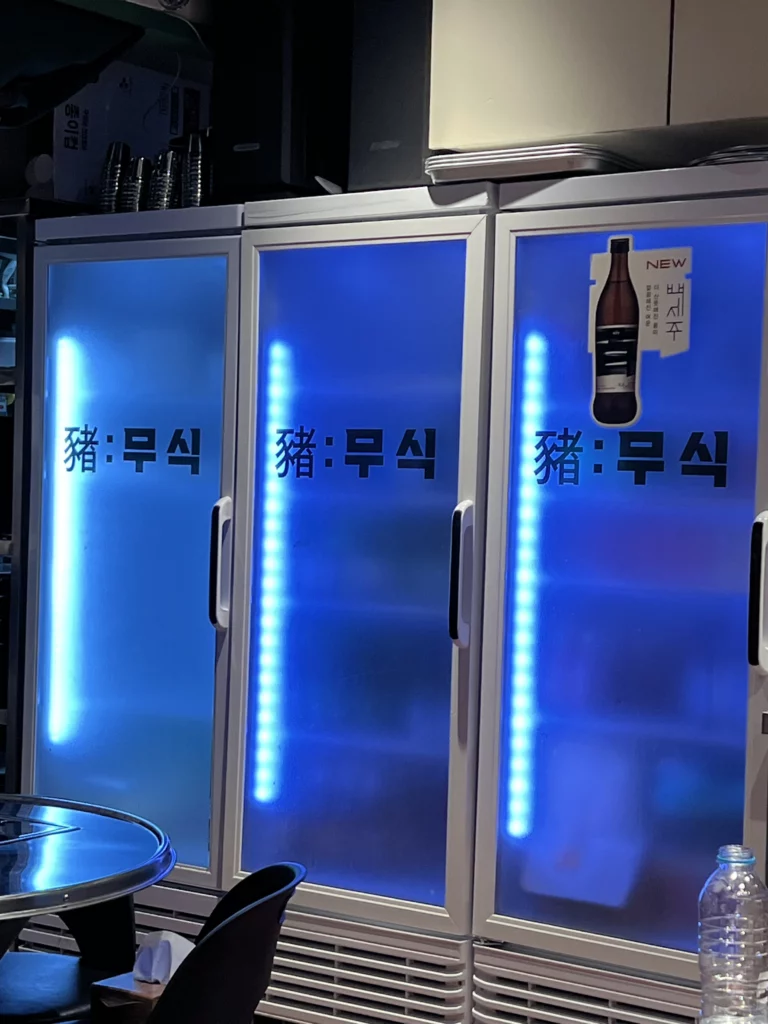
Moosik’s approach contrasts notably with the aged pork belly trend exemplified by restaurants like Gimsukseoung. Where aging processes create tender, developed flavors through careful temperature and humidity control, Moosik relies on premium sourcing and proper grilling technique to achieve excellence. Neither approach surpasses the other objectively—aged pork offers subtle complexity and buttery texture, while fresh pork delivers cleaner, more straightforward meat flavor. The choice comes down to personal preference and dining mood.
For international visitors comparing options, Moosik offers several practical advantages. The Sinsa-dong location proves more accessible than restaurants in Seoul’s outer neighborhoods while avoiding the tourist crowds that pack Myeongdong or Hongdae Korean BBQ spots. The menu focuses on essentials rather than overwhelming newcomers with dozens of cuts and preparations, and the staff typically shows patience with foreign guests still learning Korean dining customs.
Practical Information for Visitors
Location and Access
Moosik sits at 584-1 Sinsa-dong, Gangnam-gu, Seoul, postal code 06027. The most convenient access point is Sinsa Station (Line 3), approximately 5-8 minutes’ walk from Exit 8. Upon exiting, head southwest along Gangnam-daero until reaching the Sinsa-dong residential area, where smaller streets branch off the main thoroughfare. Local smartphone apps like Naver Maps or KakaoMap provide accurate navigation for this final leg, as the restaurant occupies a quieter block away from main commercial strips.
For visitors staying in other Seoul districts, Sinsa Station offers direct Line 3 connections to major hotel areas. From Myeongdong (Euljiro 3-ga Station), expect 15-20 minutes’ travel time. Hongdae visitors should allow 30-35 minutes via transfer at Yaksu or another Line 3 interchange station. International travelers arriving from Incheon Airport can reach Sinsa Station via Airport Railroad Express (AREX) to Seoul Station, then Line 4 to Chungmuro, then Line 3—approximately 90 minutes total including transfers.
Dining Logistics
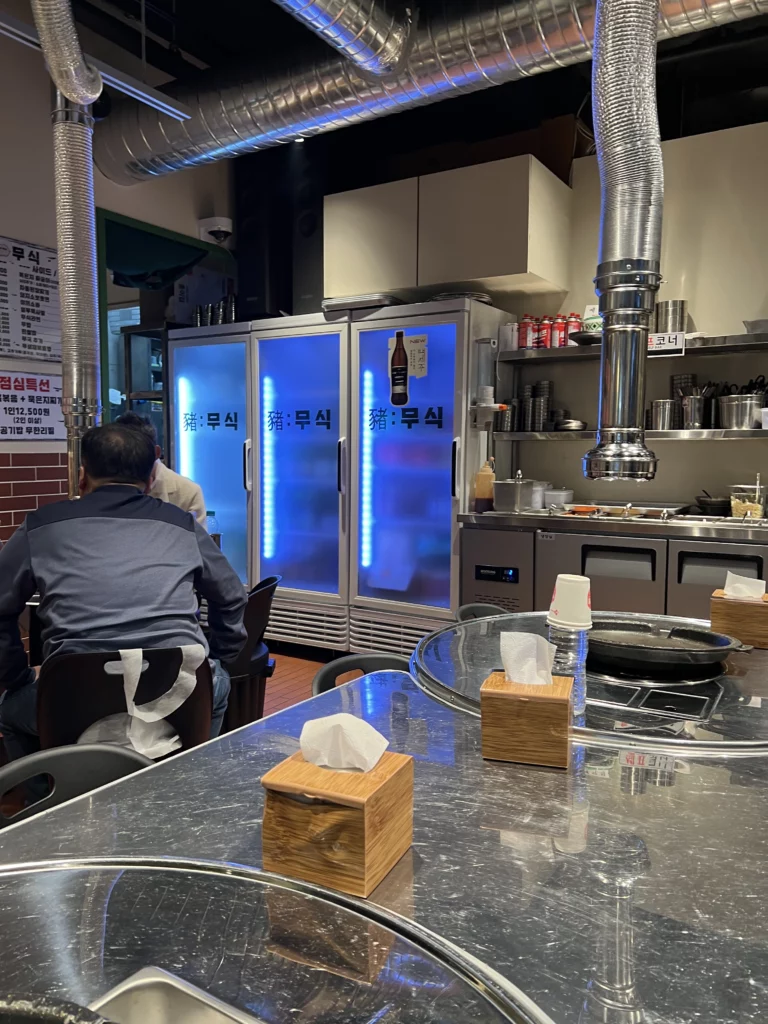
Korean BBQ restaurants typically operate on a two-hour seating limit during peak periods (6:30 PM – 9:00 PM weekdays and weekends), though Moosik’s neighborhood location means less pressure than establishments in high-traffic areas. Arriving before 6:00 PM or after 8:30 PM usually guarantees immediate seating without reservations. Weekend lunchtimes (11:30 AM – 1:30 PM) also see lighter crowds than dinner service.
Minimum orders typically require at least two portions of meat per table, with each portion consisting of approximately 200 grams of pork belly. This makes Moosik less suitable for solo dining, though determined single diners can usually order reduced portions with polite requests. Most tables accommodate 2-6 people comfortably, with larger parties requiring advance coordination.
Pricing Structure
Expect to budget approximately ₩15,000-20,000 per person for a satisfying meal including samgyeopsal, rice, and one beverage. Two people typically order 3-4 meat portions (600-800 grams total) alongside rice, stew, or cold noodles to finish. While this might seem expensive compared to casual Korean meals like bibimbap or kimbap, samgyeopsal occupies a different dining category—more formal than street food but less expensive than high-end restaurant meals.
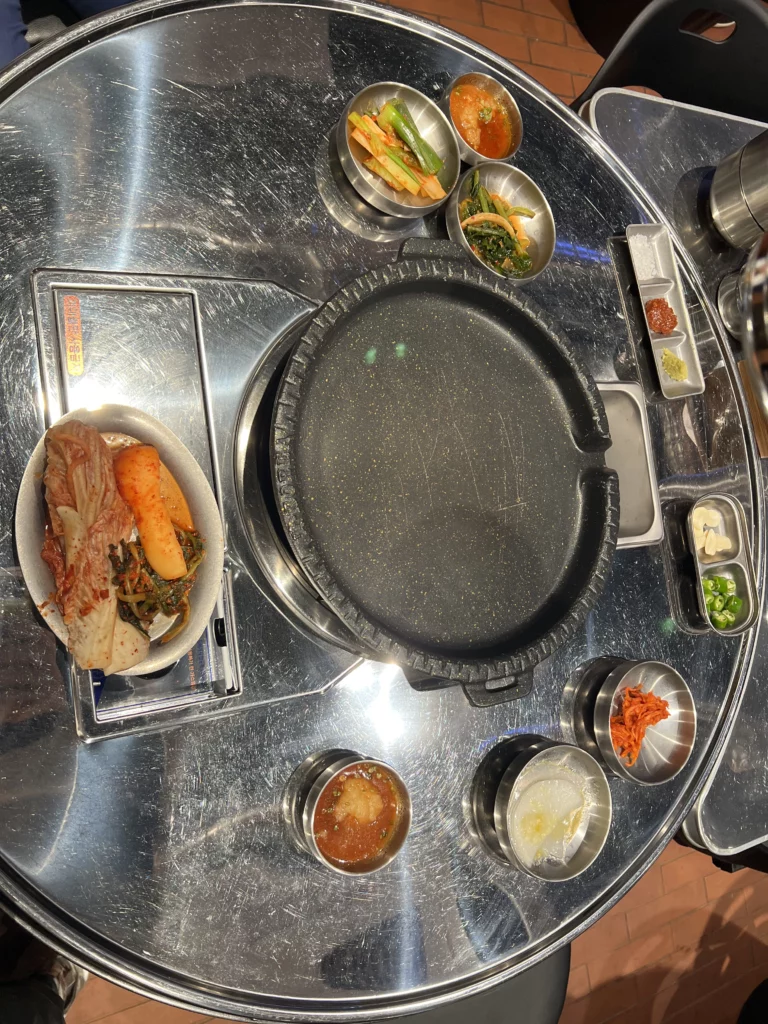
Korean BBQ restaurants include all banchan (side dishes) in the meal price without additional charges, and servers refill these freely upon request. Water and barley tea (boricha) come complimentary, while bottled beverages, beer, and soju incur separate charges ranging from ₩2,000-6,000 depending on the selection.
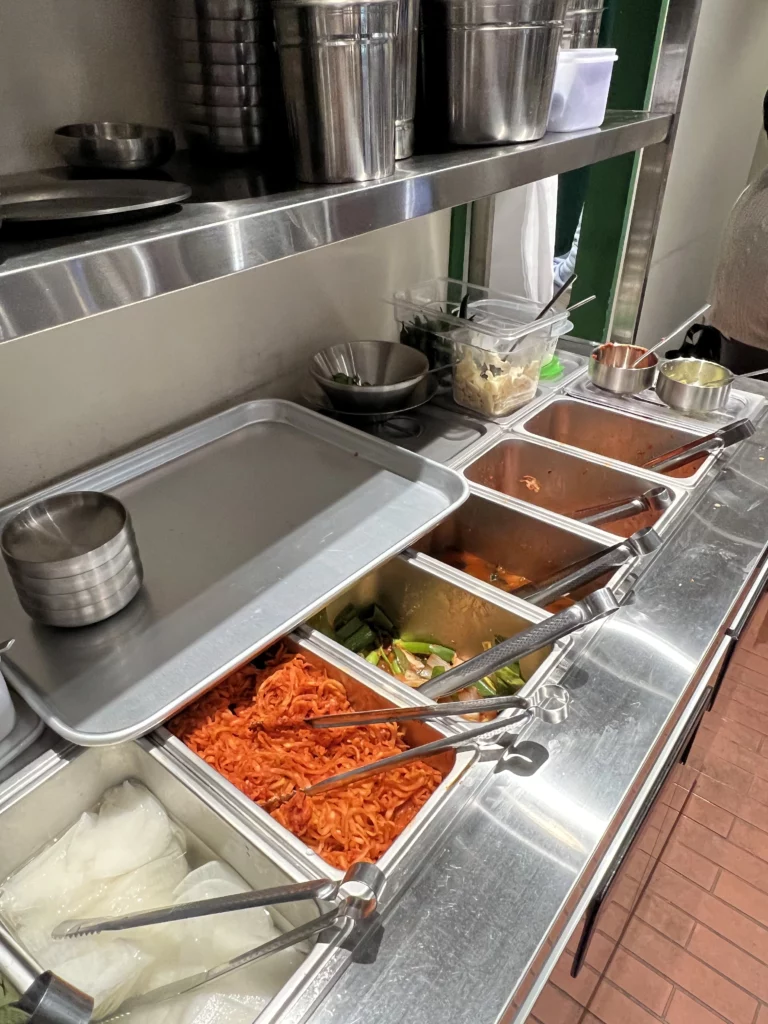
Payment and Service
Most Korean restaurants, including Moosik, accept both cash and cards (Visa, Mastercard widely accepted). However, smaller establishments occasionally prefer cash or may charge small card processing fees for amounts under ₩10,000. Korean dining culture doesn’t include tipping—service charges are built into menu prices, and leaving additional money can cause confusion or even offense.
The call button system at each table allows discreet service requests—press once for staff attention rather than repeatedly pushing, as Korean restaurants often monitor tables closely and will respond quickly. Don’t hesitate to request additional banchan, grill surface changes, or assistance with grilling technique, as attentive service forms part of Korean hospitality culture.
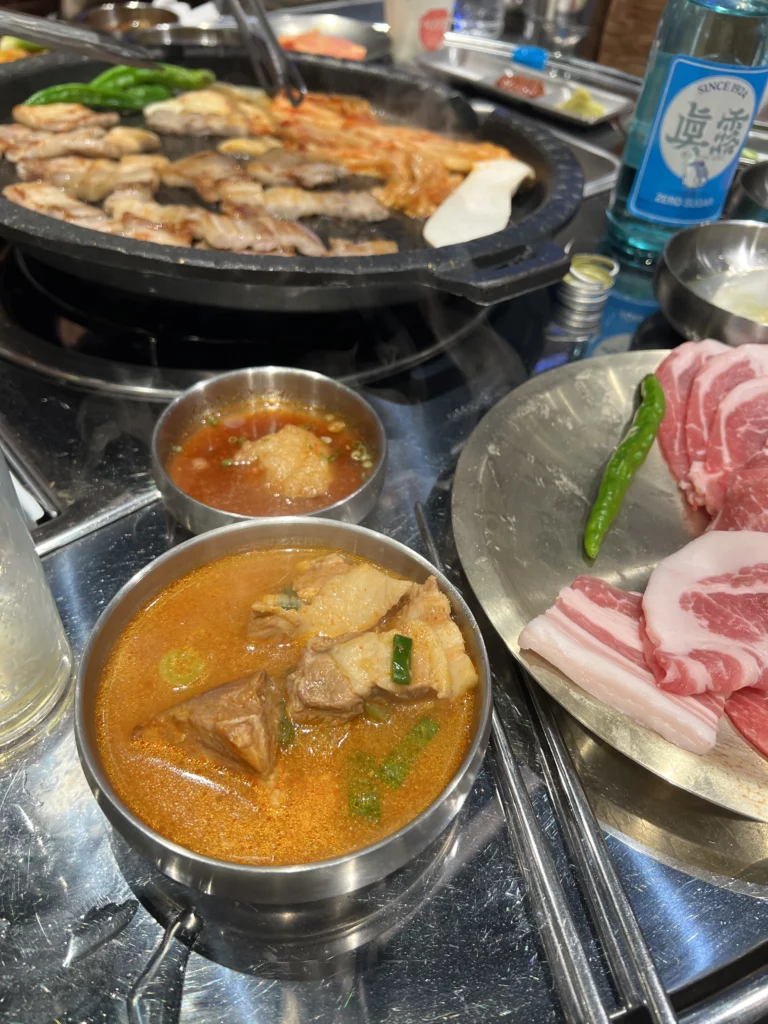
Moosik represents the kind of restaurant that makes Seoul’s food scene extraordinary—no flashy gimmicks or social media strategies, just consistently excellent samgyeopsal grilled with care in a comfortable neighborhood setting. The restaurant’s location in Sinsa-dong provides convenient access for visitors while maintaining authentic Korean dining atmosphere free from tourist-oriented compromises.
Whether you’re experiencing samgyeopsal for the first time or seeking quality Korean BBQ during your Seoul visit, Moosik delivers the essential elements: premium pork belly with ideal marbling, attentive service that helps navigate Korean dining customs, and the warm, communal ambiance that makes Korean BBQ such a beloved tradition. The simple act of grilling meat together at the table creates unexpected connections—between dining companions, between past and present Korean food culture, and between the everyday and the exceptional.
For those planning to explore Korean cuisine beyond tourist restaurant districts, make your way to Sinsa-dong and experience what has made samgyeopsal Korea’s most beloved dish. At Moosik, you’ll taste why this simple preparation of pork belly, fresh vegetables, and fermented sauces continues captivating Korean diners and curious travelers alike, one perfectly grilled slice at a time.
Location
Reviews
5.0
1 reviews
Related Recipes

Myeong-i Namul Jangajji
Few side dishes earn a permanent place on the Korean BBQ table the way Myeong-i Namul Jangajji — Korean pickled...

Korean Spicy Pork (Jeyuk Bokkeum)
If you have ever stood in front of a sizzling Korean BBQ pan in Seoul, watching deep-red pork edges caramelize...

Bossam – Boiled Pork with Kimchi
When you take that first bite of a perfectly assembled Bossam wrap—warm, succulent pork folded into crisp salted cabbage alongside...
Related Ingredients

Myeong-i
When the last of winter’s snow finally retreats from the volcanic slopes of Ulleungdo Island, something quietly extraordinary happens. Broad,...

Korean Pork
Korean pork, known as dwaeji-gogi (돼지고기) in Korean, stands as one of the most beloved and widely consumed meats in...

Samgyeopsal
Few dishes capture Korean dining like samgyeopsal, the thick-cut pork belly at the center of nearly every Korean BBQ table....

Muwol Table: A COEX Korean Restaurant Worth the Wait
Seocho-gu, Seoul, Republic of Korea Famille Station 2F FP215, 205, Sapyeong-daero

Monggalbi – the House of Premium Pork Ribs
1st floor Seoul, Gangnam District, Nonhyeon-ro 149-gil, 5

Cheonggiwa Town - Korean Barbeque House
2nd Floor Seoul, Gangnam District, Yeoksam-dong, 739-1

Seoul Prime: Falls Church's Korean Steakhouse Redefining Premium Beef
106 Founders Ave, Falls Church, VA 22046