


Craving authentic Korean BBQ in Seoul? Kimsuseong in trendy Sinsa-dong serves 22-day aged samgyeopsal that’ll change how you think about pork belly. This local favorite combines traditional aging techniques with expert tableside grilling, creating tender, flavorful Korean pork that melts in your mouth. From the signature aged moksal to minari-loaded side dishes, every element showcases why Koreans are so passionate about their BBQ culture. Located in Gangnam’s fashionable Sinsa neighborhood, this retro-cool spot offers premium quality without the premium attitude—perfect for food lovers seeking the real Seoul dining experience.
Kimsuseong Sinsa: Seoul's Premier Destination for Aged Samgyeopsal Korean BBQ
5
Kimsuseong Sinsa: Seoul's Premier Destination for Aged Samgyeopsal Korean BBQ
5
Gangnam-gu, Seoul, Republic of Korea 516-6 Sinsa-dong
Editor: James Lee


Interior03
Food03

Menu01
Overview
+82 0507-1394-1899
WiFi Provided
Outdoor Seating Available
Electronic Payment accepted: American Express, Master Card, Visa
Introduction
Operating hours
Mon, Tue, Wed, Thu, FriAM 11:30 - PM 12:00
Sat, SunAM 12:00 - PM 12:00
Menu
Editor's Detail
Picture this: thick-cut pork belly sizzling on a hot grill, its edges crisping to golden perfection while releasing an intoxicating aroma that fills the air. At Gimsukseoung (김숙성) in Seoul’s fashionable Gangnam district, this isn’t just another Korean BBQ experience—it’s a carefully orchestrated celebration of aged pork that transforms humble samgyeopsal into something extraordinary. Through their signature 22-day aging process combining wet and dry techniques, Gimsukseoung has carved out a reputation as one of Seoul’s must-visit destinations for Korean pork belly BBQ enthusiasts.

Table of Contents
- Why Gimsukseoung Stands Out Among Seoul’s BBQ Restaurants
- The Science Behind 22-Day Aged Samgyeopsal
- What Makes This Dish Uniquely Korean?
- What Are the Key Ingredients That Create This Flavor?
- How Would You Describe the Taste and Spice Level?
- What Should First-Time Eaters Know?
- Moksal: The Hidden Gem on Gimsukseoung’s Menu
- The Complete Gimsukseoung Dining Experience
- Location and Visiting Tips
Why Gimsukseoung Stands Out Among Seoul’s BBQ Restaurants
While Seoul boasts countless Korean BBQ establishments, Gimsukseoung distinguishes itself through an unwavering commitment to pork aging—a practice traditionally reserved for premium beef. The restaurant’s name itself hints at this dedication: "sukseoung" (숙성) means "aging" or "maturing" in Korean, signaling their specialty from the moment you walk through the door.

Located in Sinsa-dong at 516-6, Gangnam-gu, the original location sits in one of Seoul’s most vibrant neighborhoods, famous for the tree-lined Garosu-gil shopping district. The restaurant’s success has spawned multiple locations across Seoul, each maintaining the same exacting standards for their aged pork products. Unlike many Korean BBQ spots that serve fresh, unmarinated pork, Gimsukseoung takes the time-intensive approach of aging their premium cuts for a full 22 days—18 days of wet aging followed by 4 days of dry aging.
This hybrid aging method represents the best of both worlds. The wet aging process helps maintain moisture and tenderness while the meat develops enhanced flavor through enzymatic breakdown, while the subsequent dry aging concentrates those flavors further and develops the distinctive nutty, earthy notes that aged meat is known for. The result is pork that achieves a tenderness and depth of flavor rarely found in standard Korean BBQ restaurants.
The Science Behind 22-Day Aged Samgyeopsal
The aging process at Gimsukseoung isn’t just marketing hype—it’s rooted in meat science that transforms the texture and taste of pork. During the 18-day wet aging phase, the pork is stored in vacuum-sealed packaging at precisely controlled temperatures. This allows natural enzymes within the meat to break down muscle fibers and connective tissue, resulting in exceptionally tender pork that practically melts on your tongue.
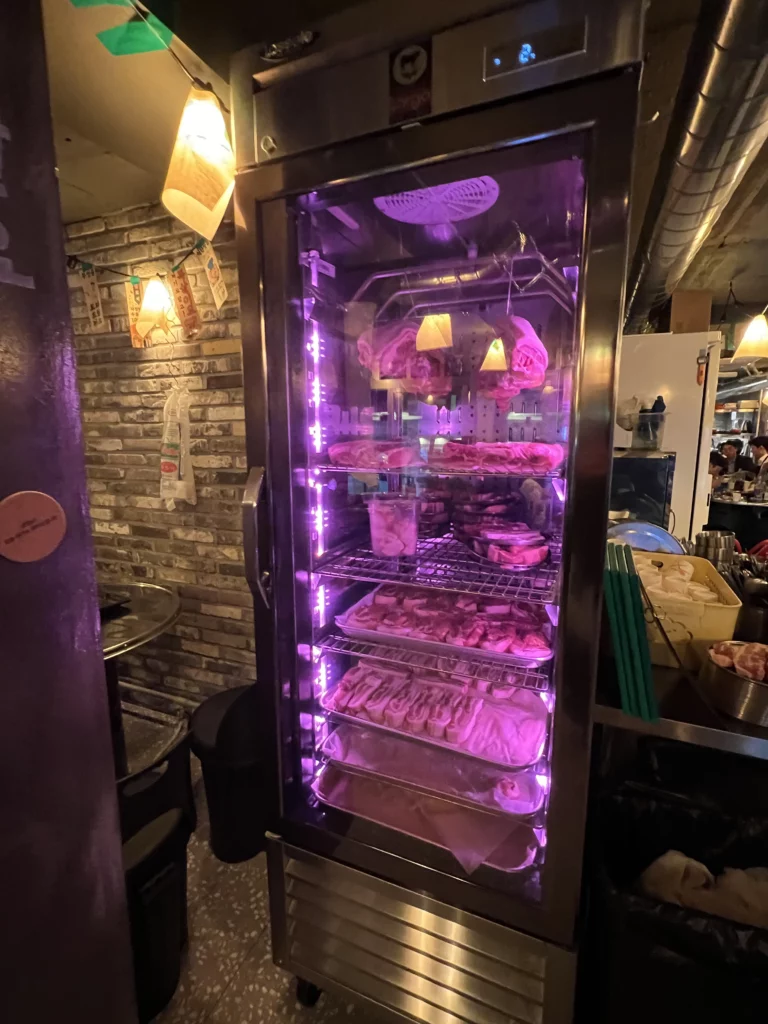
Research has shown that aged pork develops lower shear force values compared to fresh pork, meaning it requires less effort to chew and provides a more pleasant eating experience . For the final 4 days, Gimsukseoung transitions to dry aging, where the pork is exposed to controlled air circulation. This step concentrates the meat’s flavors by reducing moisture content while developing complex, savory notes that distinguish aged pork from its fresh counterpart.
The temperature and humidity must be meticulously monitored throughout this process. Too warm, and bacterial growth becomes a concern; too cold, and the enzymatic activity that tenderizes the meat slows to a crawl. Gimsukseoung’s expertise lies in maintaining this delicate balance, ensuring every cut of samgyeopsal that reaches your table represents the peak of flavor development.
Similar to how premium samgyeopsal at Sancheong Sutbul Garden uses specialized preparation methods to elevate the Korean BBQ experience, Gimsukseoung’s aging process demonstrates that patience and precision can transform even familiar dishes into something exceptional.
What Makes This Dish Uniquely Korean?
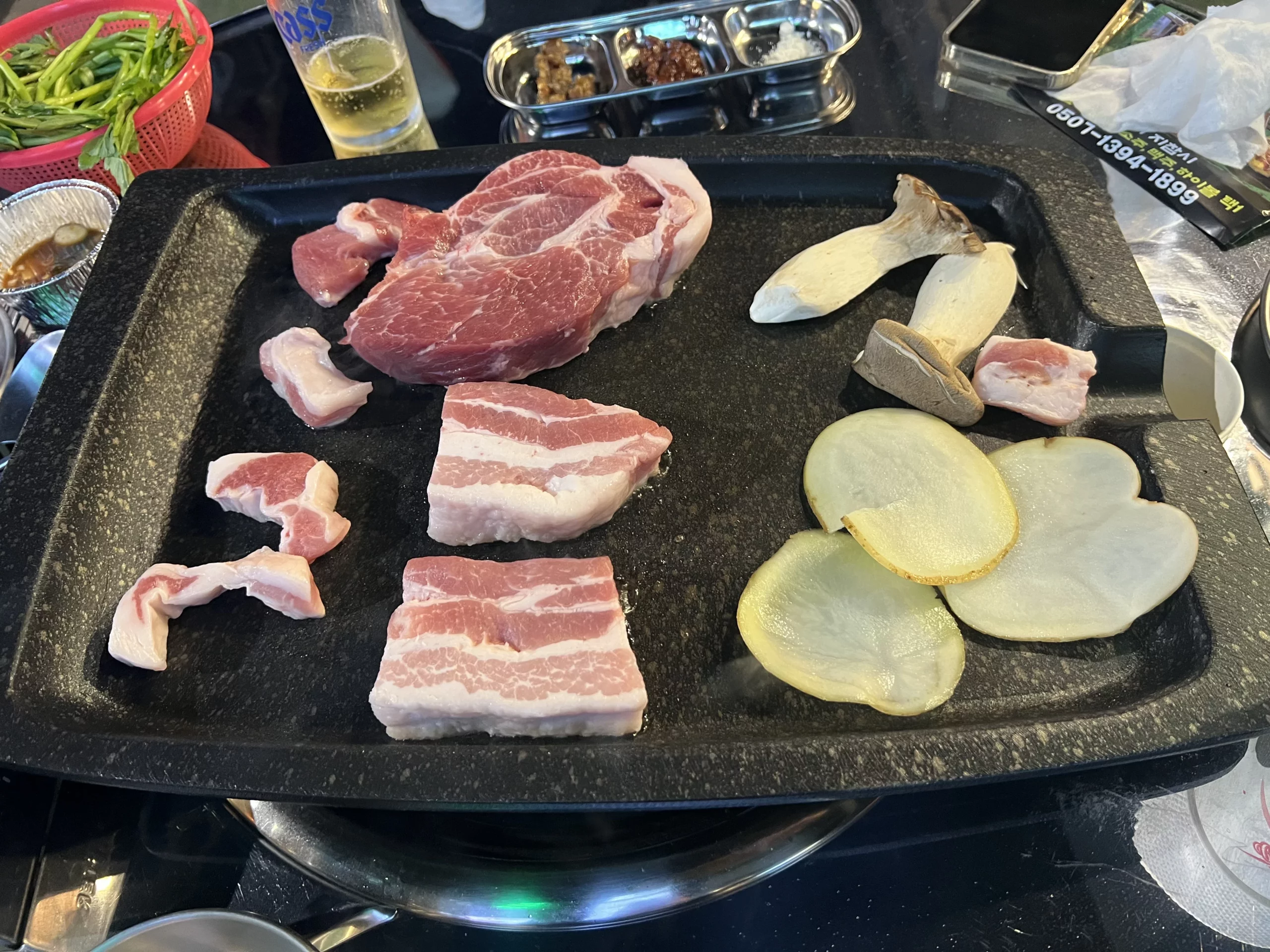
Samgyeopsal holds a special place in Korean culinary culture that goes far beyond simple sustenance. The name translates directly to "three-layer meat," referring to the alternating layers of meat and fat visible in pork belly cuts. This beloved dish has become so integral to Korean dining that the country celebrates "Samgyeopsal Day" every March 3rd (3/3)—a playful nod to those three distinctive layers.
In Korean culture, grilling and sharing meat represents more than just a meal—it’s a social ritual that strengthens bonds between family, friends, and colleagues. Korean BBQ restaurants stay packed from evening through late night, filled with groups gathered around sizzling grills, pouring drinks for one another, and wrapping perfectly grilled meat in fresh lettuce leaves. The communal nature of the experience, where diners take turns cooking and everyone eats from the same grill, embodies Korean values of togetherness and consideration for others.
What makes Gimsukseoung’s approach distinctly modern-Korean is the application of aging techniques to pork belly. Historically, aging was primarily used for beef, while pork was consumed fresh. However, contemporary Korean chefs have embraced these methods for pork, creating a new category of premium Korean BBQ that respects tradition while pushing culinary boundaries.
What Are the Key Ingredients That Create This Flavor?
While the star of the show is undoubtedly the aged pork itself, the complete flavor profile at Gimsukseoung comes from a careful selection of complementary ingredients:
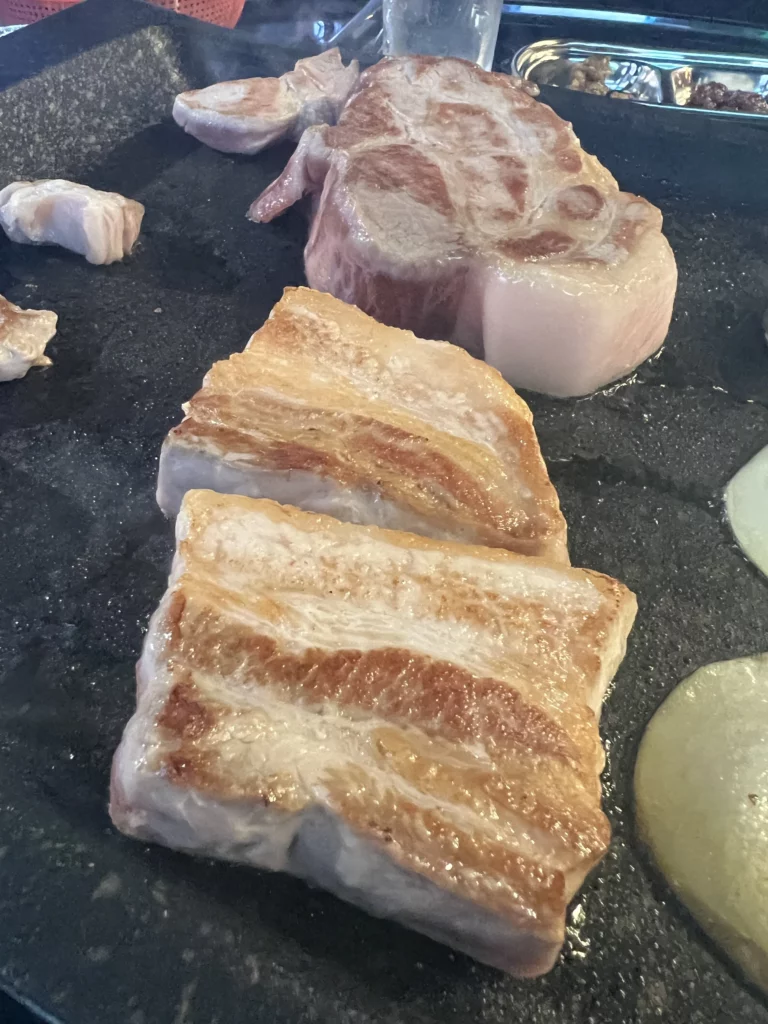
Premium Korean Pork (한돈 – Handon): Gimsukseoung sources domestic Korean pork known for its superior marbling and clean taste. After the 22-day aging process, this pork develops a concentrated, savory flavor with subtle nutty undertones. The aging breaks down proteins into amino acids, creating natural umami that makes the meat taste richer and more complex than fresh pork. Nutritionally, aged pork retains its protein content while becoming more tender and easier to digest.

Coarse Sea Salt (굵은소금 – Gulgeun Sogeum): Unlike table salt, the large crystals of Korean sea salt provide textural contrast and allow you to control seasoning precisely. When you dip a piece of hot grilled pork in sea salt, it creates an immediate flavor pop that highlights the meat’s natural sweetness without overwhelming it. Korean sea salt also contains trace minerals that add subtle depth to the taste.
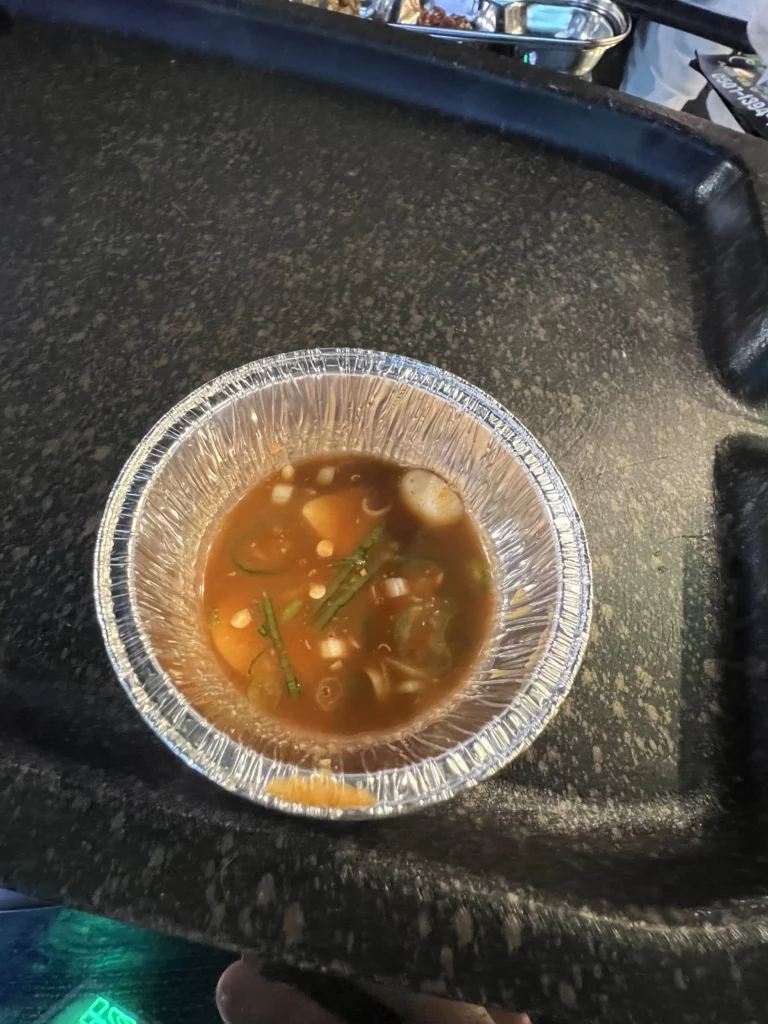
Sesame Oil (참기름 – Chamgireum): This aromatic oil, made from toasted sesame seeds, is essential to the Korean BBQ experience. Its nutty fragrance complements aged pork beautifully, while its high smoke point makes it ideal for the high-heat grilling environment. A light drizzle of sesame oil adds richness and helps the meat develop an appealing sheen. The oil is also packed with healthy fats and antioxidants, making it both delicious and nutritious.
Understanding the role of Korean condiments enhances your appreciation of the meal. For deeper insight into the sauces that accompany samgyeopsal, explore the differences between gochujang and ssamjang, two essential Korean condiments with distinct applications.
How Would You Describe the Taste and Spice Level?
Spice Level: 0-1 out of 10 (when eaten plain; can increase to 3-4 with added gochujang)
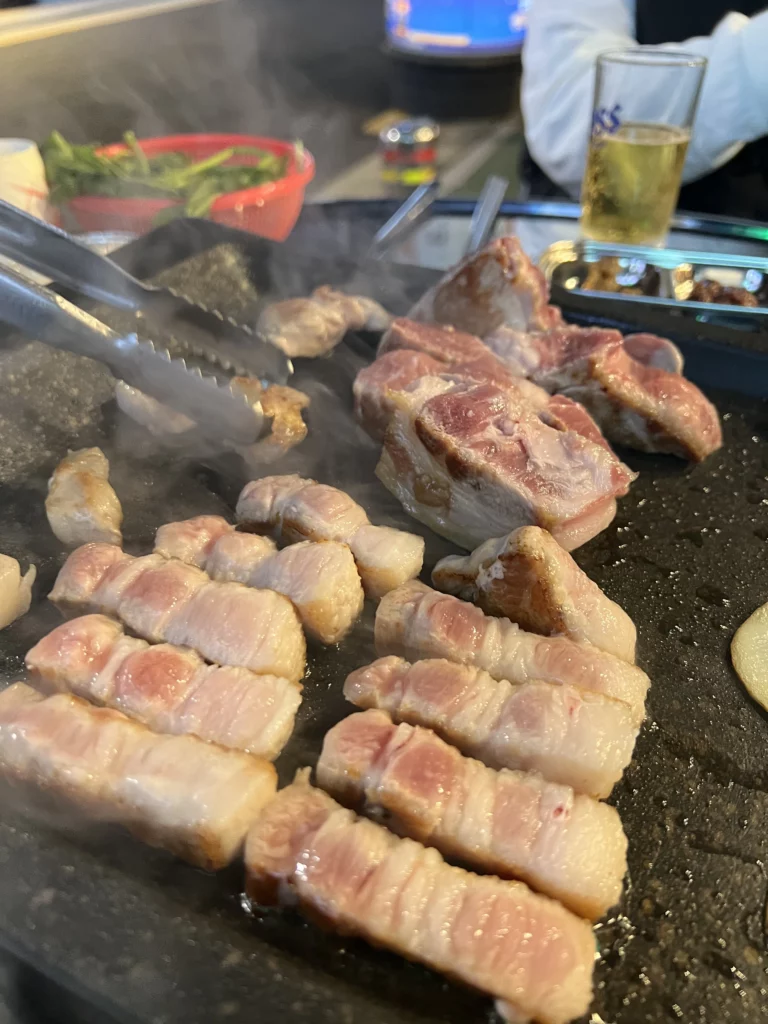
Gimsukseoung’s aged samgyeopsal is remarkably un-spicy in its natural state, making it accessible to those who prefer milder flavors. The dominant taste profile is deeply savory and umami-rich, with a buttery quality from the well-marbled fat that renders during grilling. The 22-day aging process imparts subtle nutty and earthy notes that you won’t find in fresh pork belly—think of it as the difference between fresh mozzarella and aged parmesan, where time develops complexity.
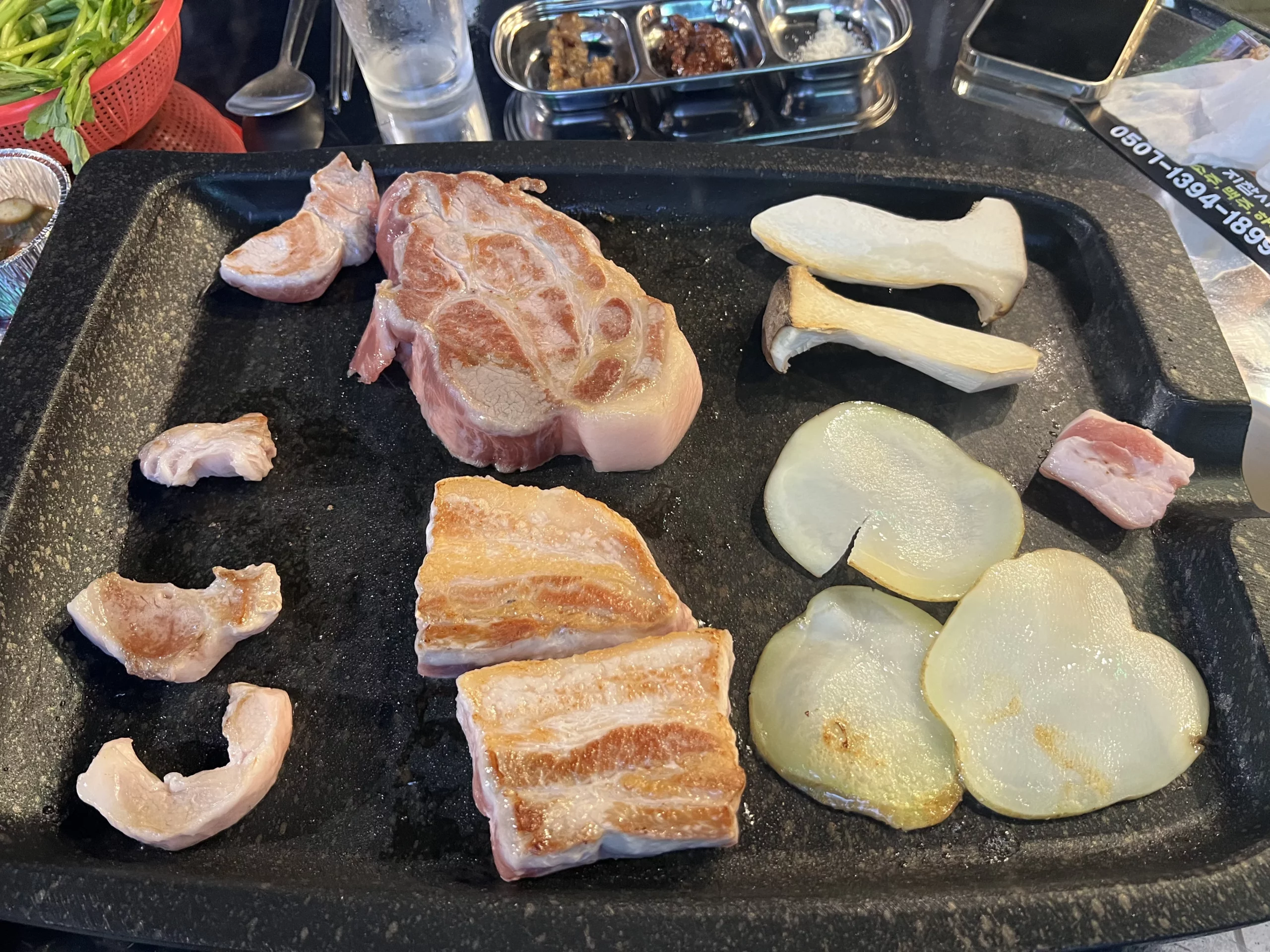
The texture is perhaps the most striking aspect. The exterior achieves a satisfying crispness from high-heat grilling, providing textural contrast to the interior, which remains tender and juicy thanks to the aging process. When you bite into a piece, the fat should practically dissolve on your tongue while the lean meat offers a pleasant chew without being tough. The meat is always served piping hot, straight from the grill, maximizing its aromatic appeal.
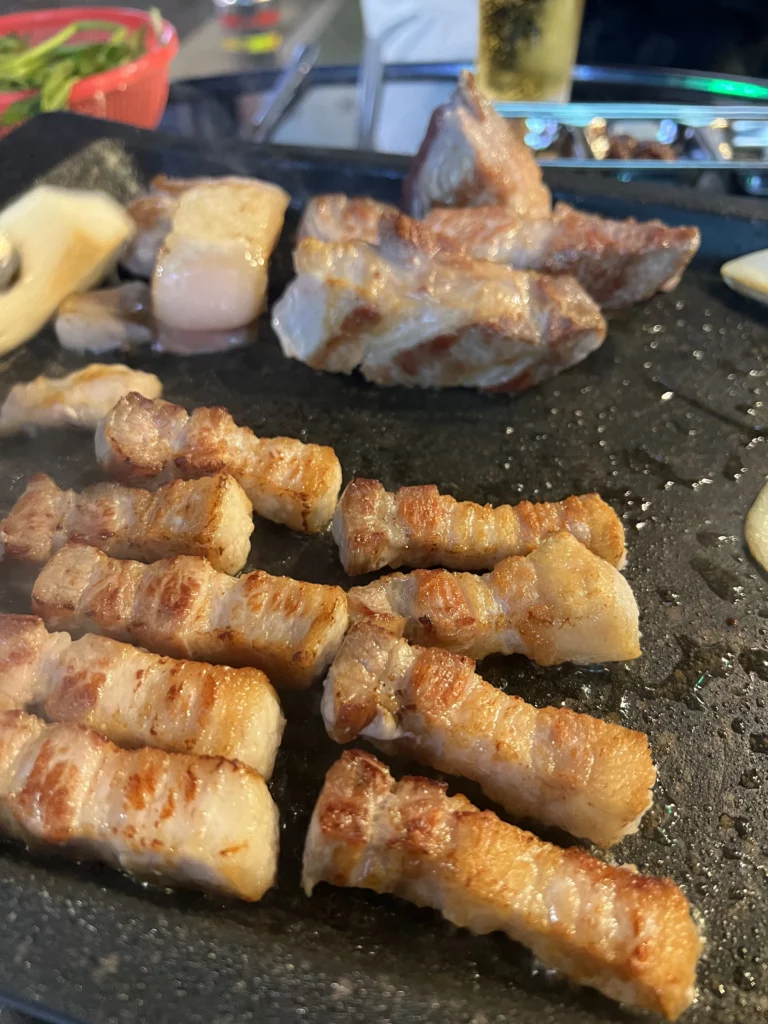
The flavor intensity is medium to medium-high—bold enough to be satisfying on its own, yet balanced enough to pair well with the various banchan (side dishes) and wrapping vegetables. The aged pork has a cleaner finish compared to fresh pork, with less of the gamey aftertaste that some people associate with pork products.

What Should First-Time Eaters Know?
The Proper Eating Method: Don’t eat the samgyeopsal straight from the grill with chopsticks like a steak! The authentic Korean way involves creating a ssam (wrap). Take a piece of red leaf lettuce or perilla leaf in your palm, add a slice of grilled pork, a small dollop of ssamjang (Korean BBQ sauce), perhaps a bit of grilled garlic and kimchi, then fold it into a compact package and pop the entire thing in your mouth in one bite. This combination of textures and temperatures—crispy hot meat, cool crisp lettuce, spicy-savory sauce, and pungent garlic—creates the quintessential Korean BBQ experience.
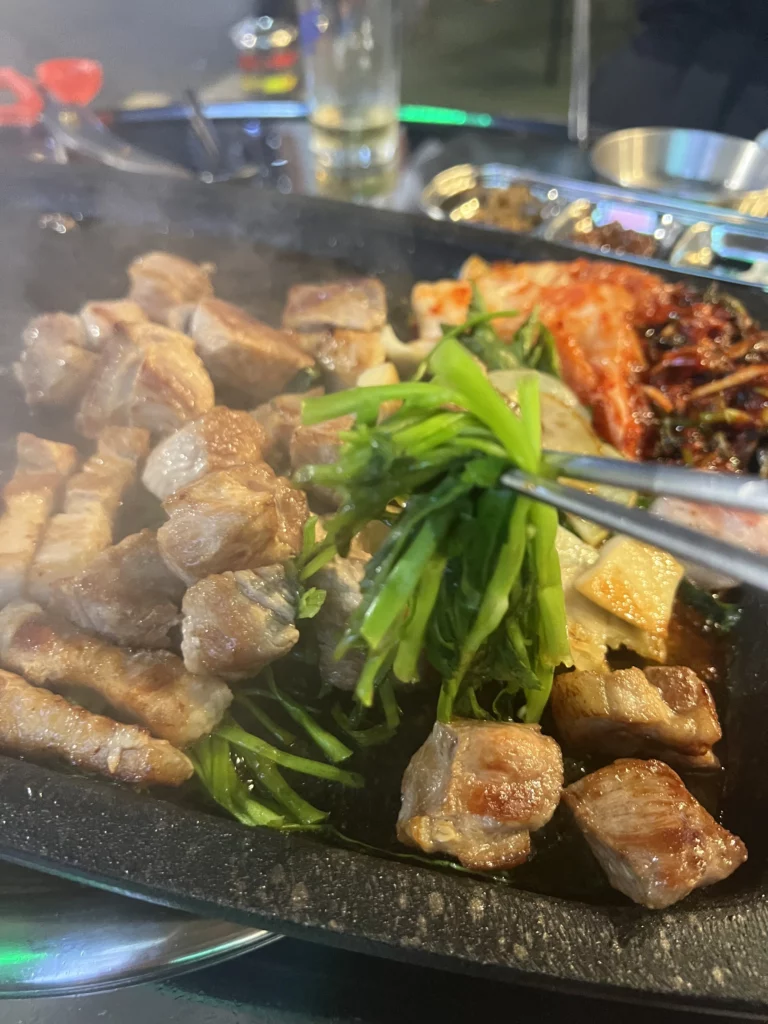
What to Expect on First Taste: Your first bite of aged samgyeopsal might surprise you with its intensity. The meat tastes "meatier" than regular pork belly, with a deeper, almost steak-like savoriness. The fat renders beautifully and doesn’t feel greasy; instead, it adds silkiness to each bite. Some first-timers are taken aback by the richness—this is premium pork, after all—so pace yourself and use the banchan and wrapping vegetables to balance the experience.
Proper Dining Sequence: At Gimsukseoung, the staff typically handles the grilling for you, ensuring perfect doneness. Watch for the edges of the pork to curl and brown—that’s when it reaches peak flavor. Don’t be shy about ordering multiple rounds; Korean BBQ is meant to be leisurely. Many locals finish their meal with naengmyeon (cold buckwheat noodles) to cleanse the palate after the rich meat.

Cultural Considerations: In Korean dining culture, it’s customary to cook for others at your table, especially if there are elders present. If you’re with Korean friends, the youngest person might take charge of the grill. Also, when drinking soju or beer (highly recommended pairings), pour drinks for others rather than filling your own glass—this gesture of consideration is fundamental to Korean dining etiquette.


Moksal: The Hidden Gem on Gimsukseoung’s Menu
While samgyeopsal commands most of the attention, savvy diners at Gimsukseoung also order the moksal (목살)—pork neck or shoulder. This cut offers a different texture experience: less fatty than samgyeopsal but more marbled than typical lean pork. After the same 22-day aging process, moksal develops a firm, almost steak-like texture with concentrated porky flavor.
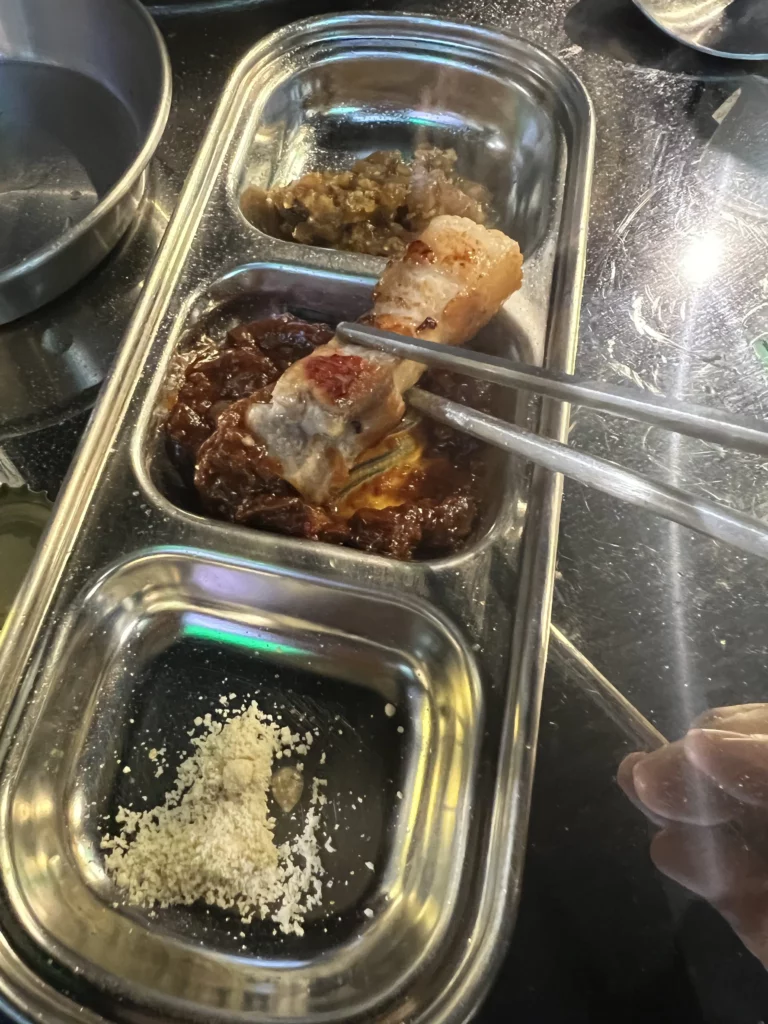
Moksal contains more connective tissue than pork belly, which means the aging process is even more transformative. Those tough fibers break down into gelatin, creating a moist, tender cut that holds together better on the grill than samgyeopsal’s looser structure. The flavor is cleaner and less fatty, making it an excellent choice if you find samgyeopsal too rich or want to alternate between different textures throughout your meal.
Many Korean BBQ enthusiasts actually prefer moksal because it showcases the pure pork flavor more clearly, without the fat’s richness potentially overshadowing it. At Gimsukseoung, both cuts receive equal aging attention, so you can’t go wrong either way—or better yet, order both and discover your personal preference.
The Complete Gimsukseoung Dining Experience
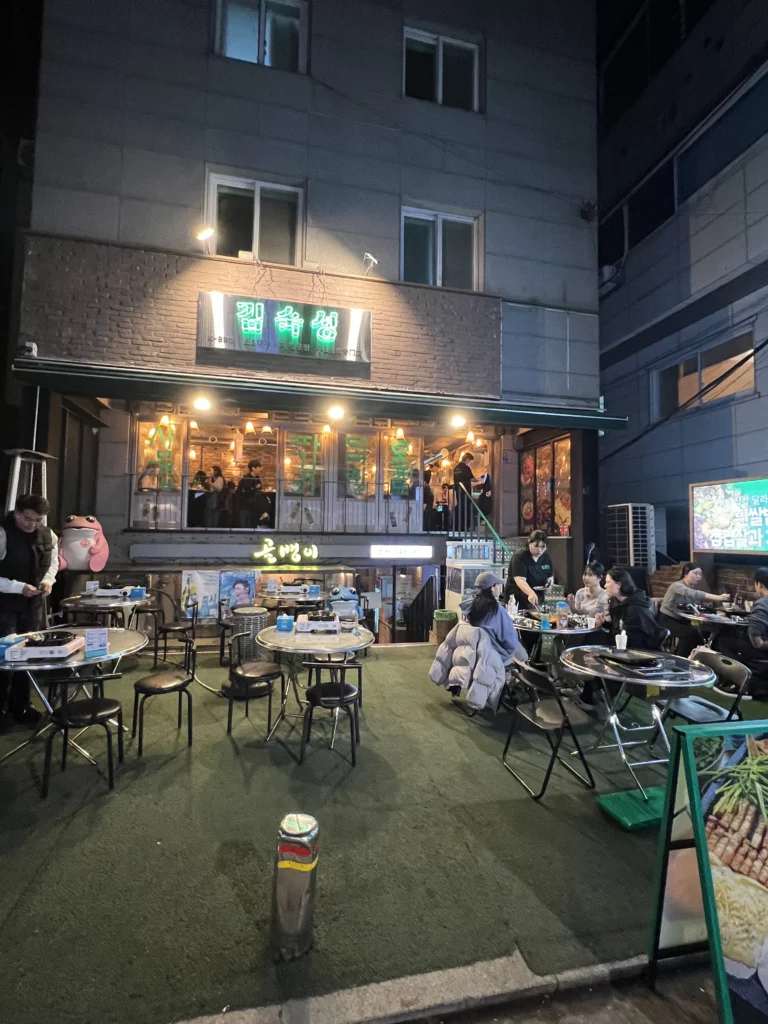
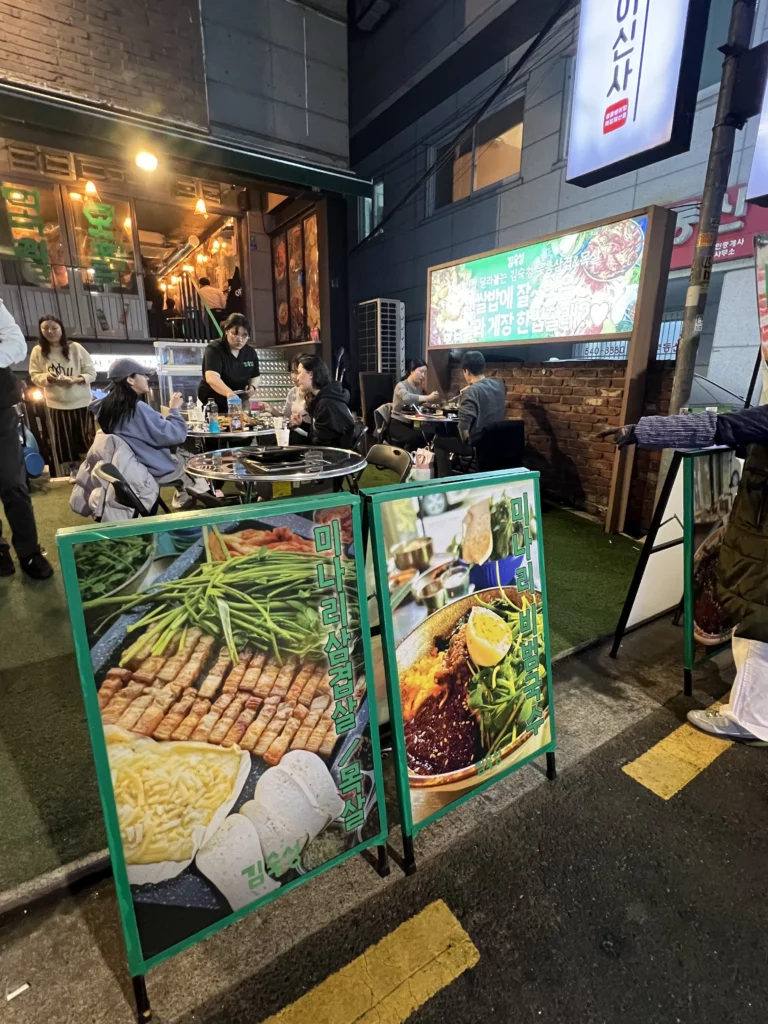


Walking into Gimsukseoung reveals an interior that balances modern comfort with nods to traditional Korean dining aesthetics. The space is designed around the central feature of every Korean BBQ restaurant: the table grills. Unlike some establishments where diners cook their own meat (which can be fun but also stressful), Gimsukseoung employs skilled staff who handle the grilling, flipping, and cutting. This allows you to focus on conversation, drinks, and enjoying the meal without worrying about overcooking expensive aged pork.
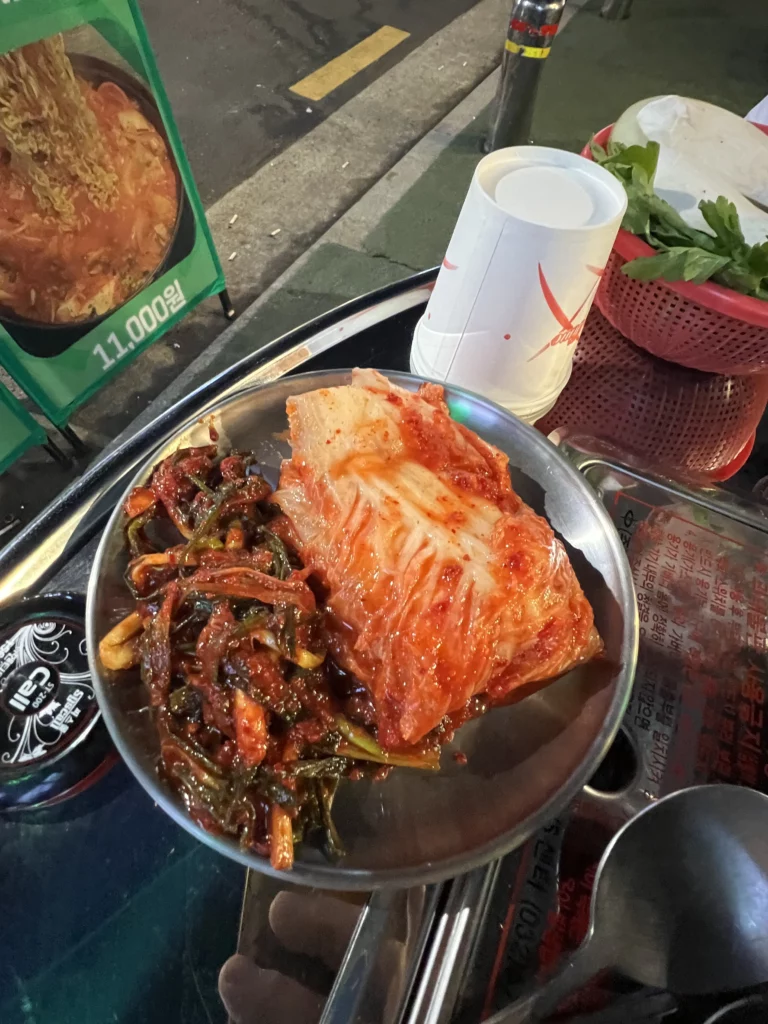
The meal begins with an array of banchan—small side dishes that are refillable and included with your order. Expect kimchi in multiple preparations, pickled vegetables, seasoned greens, and perhaps potato salad or japchae (glass noodles). These banchan aren’t mere garnishes; they’re an integral part of the meal, providing refreshing contrasts to the rich grilled meat and aiding digestion.
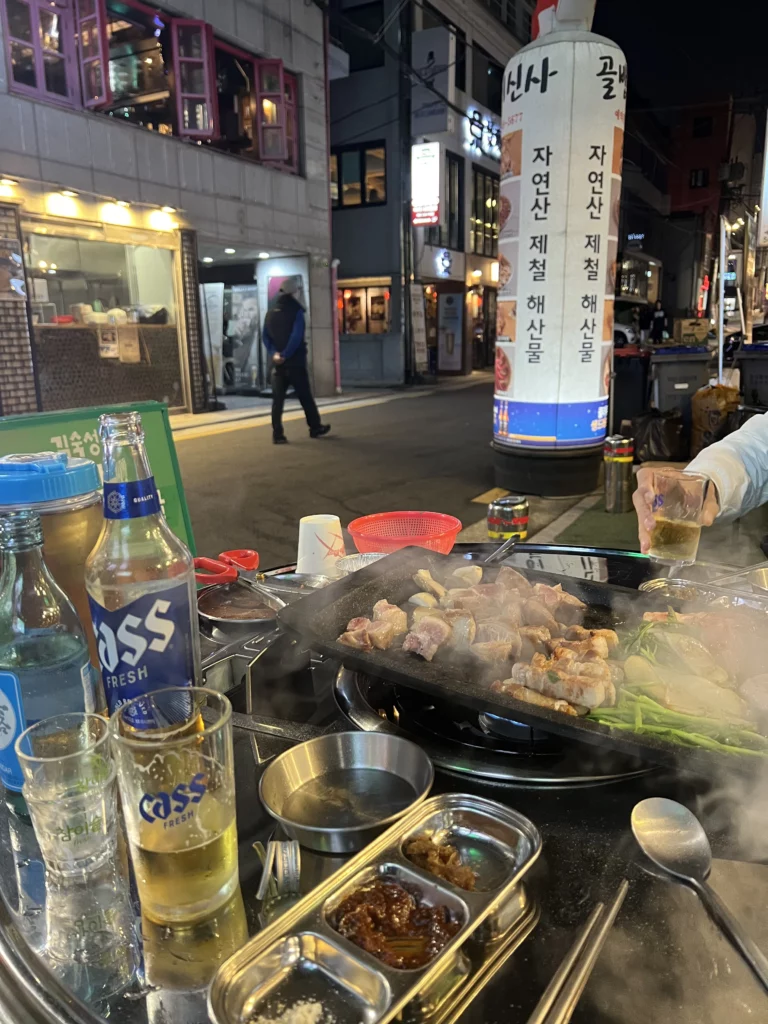
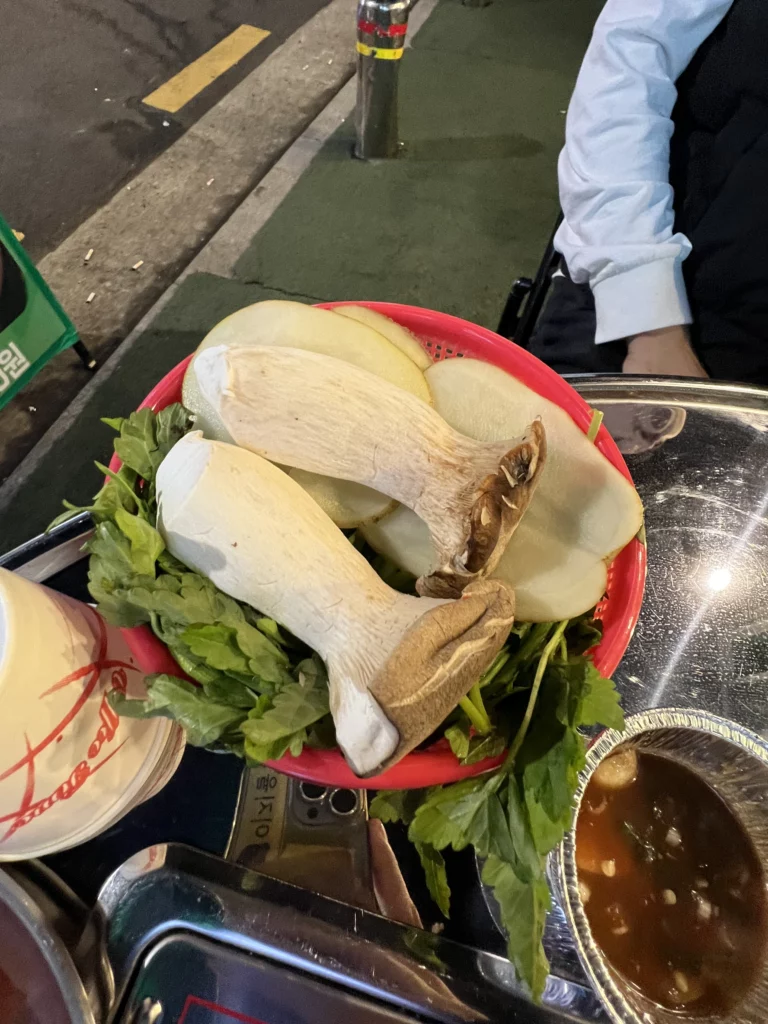
As your samgyeopsal or moksal grills, the staff will periodically check on the meat, cutting it into bite-sized pieces with scissors (a uniquely Korean practice that makes eating easier). They’ll also tend to the accompanying vegetables—garlic cloves, mushrooms, and sometimes green peppers—that grill alongside the meat. The attentive service means you can relax and enjoy the social aspect of Korean BBQ without the work.
The restaurant’s location in Sinsa-dong means you’re in the heart of Seoul’s youth culture and fashion district. Before or after your meal, you can explore Garosu-gil’s tree-lined streets filled with boutiques, cafes, and galleries. The area attracts a stylish, cosmopolitan crowd, and Gimsukseoung fits right into this scene with its quality-focused approach to a traditional dish.
For a deeper understanding of how premium ingredients elevate Korean cuisine, consider reading about Korean doenjang (fermented soybean paste), another example of how fermentation and aging create complex flavors in Korean cooking.
Location and Visiting Tips
Address: 516-6, Sinsa-dong, Gangnam-gu, Seoul (서울특별시 강남구 신사동 516-6)
Getting There: The restaurant is easily accessible via Seoul’s excellent subway system. Take Line 3 or the Sinbundang Line to Sinsa Station. From Exit 8, it’s approximately a 5-10 minute walk through the charming streets of Sinsa-dong. The area is pedestrian-friendly and safe to navigate.
Best Times to Visit: Like most Korean BBQ restaurants, Gimsukseoung gets busiest during dinner hours (6 PM – 9 PM) and late-night hours (after 9 PM when the after-work crowd arrives). For a more relaxed experience with shorter wait times, consider visiting during the late afternoon (3 PM – 5 PM) or making a reservation if available. Weekends are consistently crowded, so weekday visits often provide better service and shorter waits.

What to Order: First-timers should start with the basic aged samgyeopsal to appreciate the signature offering. If dining with multiple people, add the moksal for variety. Don’t skip the grilled garlic and mushrooms—they’re delicious and help balance the richness of the meat. Order soju or Korean beer to complete the experience; the slight bitterness of these beverages cuts through the fat beautifully.
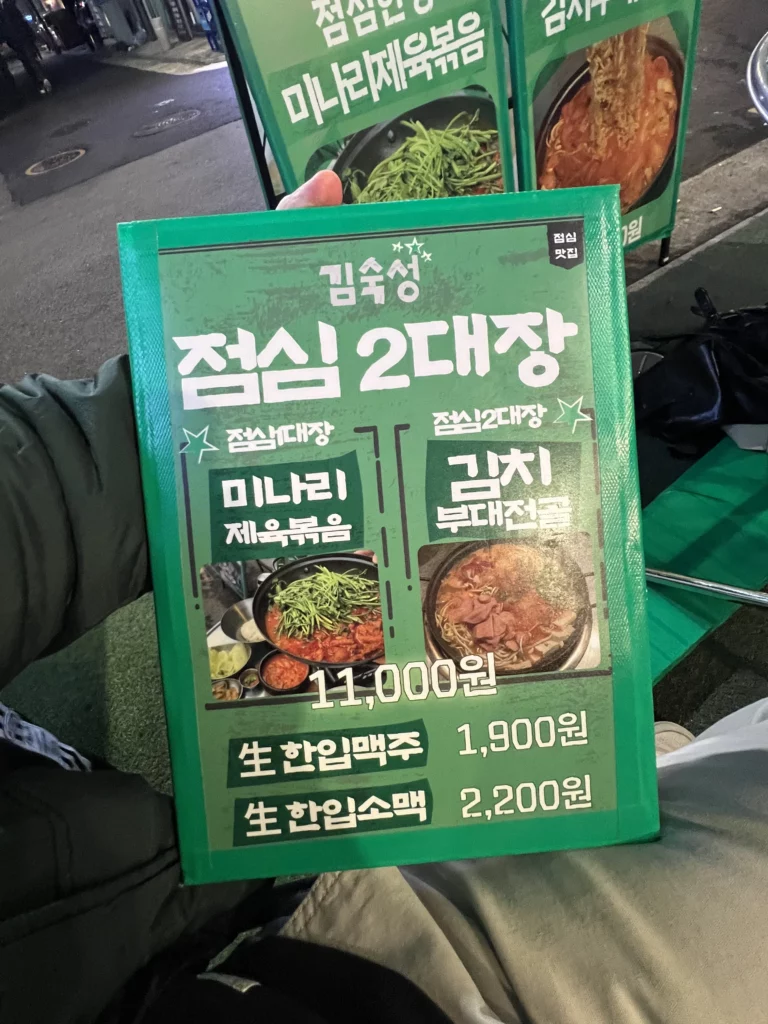
Budget Expectations: Expect to spend approximately ₩20,000-40,000 per person (roughly $15-30 USD) depending on how much meat you order and whether you add extras like cold noodles or rice dishes. This positions Gimsukseoung as mid-to-premium range for Korean BBQ—more expensive than casual spots but justified by the quality of aged meat.
Language Considerations: While the staff primarily speaks Korean, many are accustomed to foreign visitors and can manage basic English. The menu typically includes photos, making ordering straightforward even with a language barrier. Don’t hesitate to use translation apps or point to items on the menu.
Chain Locations: Gimsukseoung operates multiple locations across Seoul. While the Sinsa-dong original maintains a special cachet, all locations use the same 22-day aging process and maintain consistent quality standards. Check current locations and hours before visiting, as restaurants in Seoul occasionally relocate or adjust schedules.
Experience the Art of Aged Samgyeopsal

Gimsukseoung represents the evolution of Korean BBQ—honoring tradition while embracing techniques that elevate familiar dishes to new heights. The 22-day aging process isn’t a gimmick; it’s a commitment to quality that you can taste in every bite. Whether you’re a Korean BBQ veteran seeking something special or a curious first-timer wanting an authentic experience, this Sinsa-dong gem delivers aged pork perfection worth the visit.

Plan your visit to Gimsukseoung and discover why aged samgyeopsal has captured the hearts (and taste buds) of Seoul’s discerning diners.
Location
516-6 Sinsa-dong, Gangnam-gu, Seoul, Republic of Korea, KR
Reviews
5.0
0 reviews
5
0%
4
0%
3
0%
2
0%
1
0%
Loading reviews...
Related Recipes

Vegetable&Fruit
Myeong-i Namul Jangajji
Few side dishes earn a permanent place on the Korean BBQ table the way Myeong-i Namul Jangajji — Korean pickled...

Meat & Poultry
Korean Spicy Pork (Jeyuk Bokkeum)
If you have ever stood in front of a sizzling Korean BBQ pan in Seoul, watching deep-red pork edges caramelize...

Recipe
Bossam – Boiled Pork with Kimchi
When you take that first bite of a perfectly assembled Bossam wrap—warm, succulent pork folded into crisp salted cabbage alongside...
Related Ingredients

Ingredient
Myeong-i
When the last of winter’s snow finally retreats from the volcanic slopes of Ulleungdo Island, something quietly extraordinary happens. Broad,...

Ingredient
Korean Pork
Korean pork, known as dwaeji-gogi (돼지고기) in Korean, stands as one of the most beloved and widely consumed meats in...

Meat & Poultry
Samgyeopsal
Few dishes capture Korean dining like samgyeopsal, the thick-cut pork belly at the center of nearly every Korean BBQ table....

K-BBQ
Muwol Table: A COEX Korean Restaurant Worth the Wait
Seocho-gu, Seoul, Republic of Korea Famille Station 2F FP215, 205, Sapyeong-daero
5

K-BBQ
Monggalbi – the House of Premium Pork Ribs
1st floor Seoul, Gangnam District, Nonhyeon-ro 149-gil, 5
4

K-BBQ
Cheonggiwa Town - Korean Barbeque House
2nd Floor Seoul, Gangnam District, Yeoksam-dong, 739-1
5

Beef
Seoul Prime: Falls Church's Korean Steakhouse Redefining Premium Beef
106 Founders Ave, Falls Church, VA 22046
5