


Nestled in the mountainous Gangwon province, Tongnamujip Dakgalbi Branch No. 2 serves one of Korea’s most beloved comfort foods with a distinctive twist. The sizzle of charcoal-grilled chicken mingling with the sharp aroma of Korean chili paste fills this bustling restaurant, where locals and travelers gather to experience Chuncheon’s signature dish. Unlike typical gas-grilled versions found elsewhere, this establishment honors traditional cooking methods, grilling marinated chicken pieces over glowing charcoal before finishing with an iron plate stir-fry that creates irresistible caramelized edges.
Tongnamujip Dakgalbi: Chuncheon's Charcoal Grilled Chicken Galbi Experience
5
Tongnamujip Dakgalbi: Chuncheon's Charcoal Grilled Chicken Galbi Experience
5
Chuncheon-si, Gangwon-do 655 Sinsaembat-ro, Sinbuk-eup,
Editor: Katie Lee


Interior01
Food01

Menu01
Overview
+82 033-242-5991
Free WiFi Available
Outdoor Seating Available
Electronic Payment
Introduction
Operating hours
Mon, Tue, Wed, Thu, Fri, Sat, SunAM 11:00 - PM 9:30
Menu
Editor's Detail
Chuncheon, a scenic city surrounded by lakes and mountains in Gangwon province, has earned its reputation as the undisputed home of dakgalbi. Among the countless restaurants lining the famous dakgalbi streets, Tongnamujip Dakgalbi Branch No. 2 stands apart by serving the dish in pure charcoal-grilled form—more akin to traditional Korean galbi than the iron plate stir-fry that defines most dakgalbi experiences. This family-friendly restaurant combines Korean BBQ grilling techniques with dakgalbi’s bold, spicy marinade, creating something entirely its own.
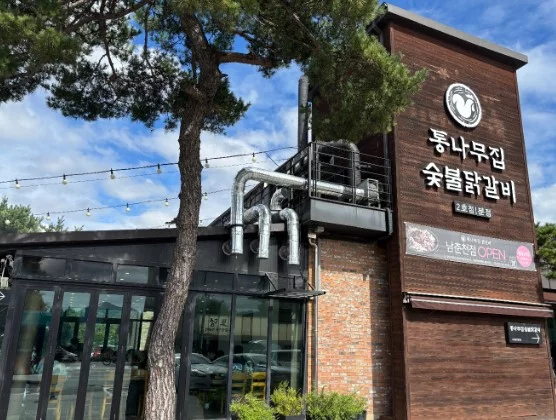
The chicken galbi served here represents Korean home-style cooking at its finest—bold, spicy, and deeply satisfying. Marinated chicken pieces grill directly over glowing charcoal, developing smoky depth and char marks as the gochujang-based sauce caramelizes over open flame. Unlike the iron plate method at Branch No. 1 (where chicken, cabbage, and perilla leaves all stir-fry together on a single hot surface), Branch No. 2 focuses purely on the meat. This is grilling, not stir-frying—each piece cooks over the coals, turned by hand, developing that irreplaceable charcoal-kissed flavor that only live fire can create.
Table of Contents
- What Makes Tongnamujip’s Charcoal Grilled Chicken Galbi Special
- The Chuncheon Dakgalbi Tradition
- Understanding the Cooking Process
- What Makes This Dish Uniquely Korean?
- What Are the Key Ingredients That Create This Flavor?
- How Would You Describe the Taste and Spice Level?
- What Should First-Time Eaters Know?
- The Essential Stir-Fried Rice Finale
- Menu Highlights Beyond Dakgalbi
- Location and Atmosphere
- Planning Your Visit
What Makes Tongnamujip’s Charcoal Grilled Chicken Galbi Special
Tongnamujip Dakgalbi Branch No. 2 takes a fundamentally different approach to Chuncheon’s signature dish. Located at 655 Sinsaembat-ro in Sinbuk-eup, this restaurant attracts both locals seeking authentic flavors and tourists exploring Gangwon province’s culinary heritage. The restaurant’s name, "Tongnamujip," translates to "log house," perfectly reflecting the wood-fired cooking philosophy.
While Tongnamujip’s first branch uses the standard iron plate method—where marinated chicken, cabbage, and perilla leaves all stir-fry together on a hot circular plate—Branch No. 2 strips everything down to the essentials: meat, marinade, and fire. This is Korean BBQ-style grilling applied to dakgalbi. The marinated chicken pieces cook directly over glowing charcoal, developing char marks and smoky depth impossible to achieve on an iron plate.
The charcoal grilling method requires entirely different skills than iron plate stir-frying. Staff members carefully tend the coals, ensuring consistent radiant heat. They monitor each piece of chicken, turning it at precisely the right moment to develop char without burning the sugar-rich gochujang marinade. There’s no vigorous stirring, no scraping of caramelized bits—just the patient art of grilling meat over live coals, the same technique Koreans have used for galbi for centuries.

The flavor profile differs dramatically from iron plate versions. Charcoal smoke infuses the chicken with woody aromatics. The direct flame creates char marks bursting with concentrated, slightly bitter caramelized flavor. The exterior crisps while the interior stays remarkably juicy—textural contrast that iron plate cooking, where everything cooks in rendered fat and sauce, simply cannot replicate. This is dakgalbi for people who love Korean BBQ but want that signature spicy-sweet marinade that makes dakgalbi special.
The Chuncheon Dakgalbi Tradition
Chuncheon’s relationship with dakgalbi dates back to the 1960s when resourceful restaurant owners created this dish as an affordable alternative to expensive beef galbi. Using inexpensive chicken parts and abundant local vegetables, they developed a cooking style that transformed simple ingredients into something extraordinary. The dish gained popularity among university students and soldiers stationed nearby, eventually becoming the city’s signature food.
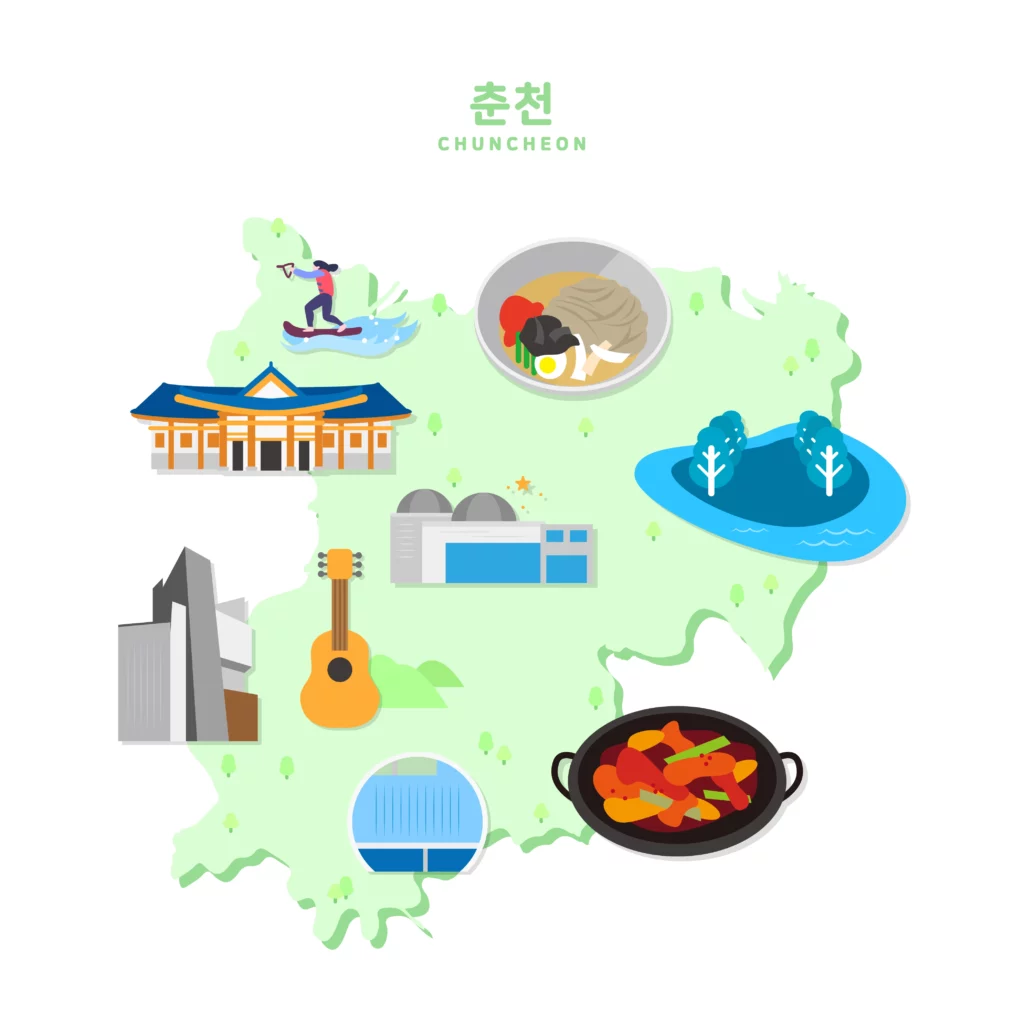
Today, entire streets in downtown Chuncheon dedicate themselves to dakgalbi restaurants, each claiming their own special recipe or technique. However, Tongnamujip’s location in Sinbuk-eup, slightly outside the tourist-heavy downtown area, has allowed it to maintain a more local, authentic character. Regular customers appreciate the consistent quality and the restaurant’s refusal to compromise on traditional methods despite the extra labor involved in charcoal grilling.
The dish embodies Korean dining philosophy: communal cooking brings people together, sharing food from a single pan strengthens bonds, and the interactive cooking process makes dining an experience rather than just a meal. At Tongnamujip, you’ll often see families gathering around the grill, friends celebrating special occasions, and coworkers bonding over the shared task of stirring and turning the chicken as it cooks. This approach to dining reflects deeply rooted Korean cultural values around food and community.
Understanding the Cooking Process
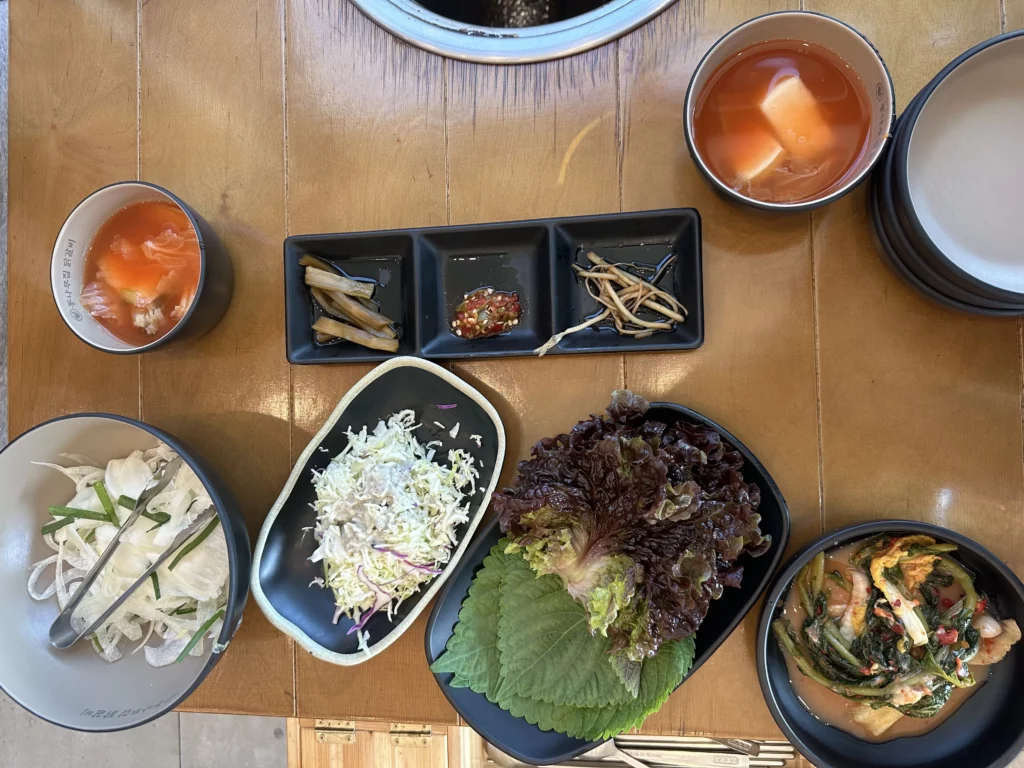
When you order chicken galbi at Tongnamujip Branch No. 2, the experience more closely resembles visiting a traditional Korean BBQ restaurant than a typical dakgalbi spot. Staff bring a charcoal grill to your table—not an iron plate. A generous portion of marinated chicken pieces arrives on a metal tray, their dark red gochujang coating glistening with promise. Side dishes (banchan) appear separately, as they would at any Korean BBQ establishment.
The staff lights the charcoal grill, waiting for the coals to achieve that perfect glowing state—not flaming, but radiating intense consistent heat. Once ready, they begin arranging chicken pieces across the grill grate. The immediate sizzle announces the beginning of your meal as marinade makes contact with hot metal bars. Small flames lick up from dripping sauce, creating those prized scorch marks and adding a hint of flame-grilled character.
This cooking method demands patience and attention. Using metal tongs, staff members (or participating diners) turn pieces regularly—usually letting each side grill for 2-3 minutes before flipping. You’re watching for visual cues: the edges crisping and darkening, the marinade caramelizing into a glossy, slightly blackened coating, clear grill marks forming where meat presses against hot metal. The charcoal’s smoke rises continuously, infusing the chicken with subtle woody notes.
Unlike iron plate dakgalbi where everything stir-fries together in rendered fat and reducing sauce, charcoal-grilled dakgalbi focuses entirely on the meat. The chicken cooks relatively dry—there’s no pool of sauce to scrape and redistribute, no vegetables to wilt and mingle. What you get instead is properly grilled chicken with char marks, smoky depth, and that distinctive texture contrast between crispy caramelized exterior and tender, juicy interior.
What Makes This Dish Uniquely Korean?
Chicken galbi represents several core elements of Korean culinary identity. First, it exemplifies the Korean mastery of fermented and aged ingredients—the gochujang (Korean chili paste) that forms the marinade’s base has fermented for months or years, developing complex umami depth that distinguishes it from simple chili heat. This fermentation tradition, central to Korean cuisine, transforms basic ingredients into sophisticated flavor agents.
Second, the dish embodies Korean dining’s communal nature. Unlike Western meals where individual plates arrive pre-cooked from the kitchen, dakgalbi requires diners to cook together, share from a common pan, and collaborate on timing and technique. This shared experience reinforces social bonds, making the meal about connection as much as sustenance. In Korea, refusing to share food from a communal dish would seem oddly antisocial.
Third, dakgalbi showcases Korean comfort food philosophy—bold flavors, generous portions, and affordable ingredients transformed through technique and seasoning into something special. The dish emerged from economic necessity during harder times but evolved into a beloved specialty that even affluent Koreans crave. This transformation from peasant food to regional pride demonstrates Korean culinary culture’s ability to elevate simple ingredients through proper treatment and respect for traditional methods.
What distinguishes this from similar stir-fried chicken dishes in other cuisines is the specific flavor profile created by Korean ingredients—the fermented complexity of gochujang, the nutty sweetness of sesame oil, the sharp heat of Korean chili flakes, and the pungent aromatics of garlic and ginger all working together in characteristic Korean harmony. While you might find grilled spicy chicken elsewhere, this particular combination of flavors and cooking techniques exists only in Korean cuisine.
What Are the Key Ingredients That Create This Flavor?
Gochujang (고추장) – Korean Fermented Chili Paste
The soul of charcoal grilled chicken galbi resides in gochujang, the brick-red fermented chili paste that gives the dish its distinctive spicy-sweet-savory character. Unlike simple chili sauces, gochujang develops its flavor through months of fermentation, combining chili powder, glutinous rice, fermented soybeans, and salt. This aging process creates deep umami notes and complex sweetness that balances the heat. Gochujang contains probiotics from fermentation, supporting digestive health while delivering vitamin C and capsaicin’s metabolism-boosting properties. At Tongnamujip, the gochujang-based marinade likely includes their own special ratios of soy sauce, garlic, ginger, and sugar to create their signature flavor profile. You can find quality gochujang at Korean grocery stores or Asian markets in plastic tubs or squeeze bottles—look for versions listing fermented ingredients rather than artificial thickeners for the most authentic flavor.
Korean Chili Flakes (Gochugaru 고추가루)
While gochujang provides the marinade base, gochugaru (Korean chili flakes) adds textural heat and vibrant color. These sun-dried chili flakes differ significantly from other chili powders—they’re coarsely ground, fruity rather than simply hot, and deliver a slower-building heat than cayenne or crushed red pepper. Gochugaru’s capsaicin content offers anti-inflammatory benefits and may boost metabolism. The flakes don’t fully dissolve during cooking, creating little pockets of concentrated spice throughout the dish. This ingredient appears in nearly every spicy Korean recipe, from kimchi to various stews. Korean markets sell gochugaru in different grades—fine powder for smooth sauces, coarse flakes for texture. For dakgalbi, medium-coarse flakes work best, maintaining some texture while integrating into the marinade.
Sesame Oil (Chamgireum 참기름)
The finishing touch that brings everything together is sesame oil, drizzled over the dish just before serving or mixed into the final stir-fry. This isn’t the pale, neutral sesame oil used for cooking—Korean sesame oil is dark, intensely nutty, and aromatic, pressed from toasted sesame seeds. Just a small amount transforms the entire dish, adding depth and a characteristic Korean fragrance that makes the food immediately recognizable. Sesame oil contains healthy unsaturated fats, vitamin E, and antioxidants that support heart health. The oil’s low smoke point means it should be added at the end of cooking rather than used for initial grilling—heating it too much destroys its delicate nutty aroma. Look for dark amber sesame oil in bottles labeled "toasted" or "roasted" at Asian markets.
How Would You Describe the Taste and Spice Level?
On a spice scale of 1 to 10, Tongnamujip’s charcoal grilled chicken galbi registers around a solid 7 for most Western palates—definitively spicy but not punishingly so. The heat builds gradually rather than hitting immediately, allowing you to appreciate the complex flavors before the chili warmth settles in. Korean chili heat differs from Thai or Mexican spice; it’s more fruity and less sharp, lingering warmly rather than creating intense burning.
The primary flavor notes work in careful balance: sweet from sugar or corn syrup in the marinade, salty from soy sauce and fermented pastes, deeply savory with umami richness from the fermented ingredients, and bright with sharp ginger and garlic aromatics. The charcoal grilling adds a subtle smokiness that wouldn’t exist in gas-grilled versions, while the iron plate stir-frying creates caramelized edges with concentrated, slightly burnt sweetness that contrasts beautifully with the tender chicken interior.
Texture plays as important a role as flavor. The chicken pieces range from tender and juicy where thickly cut to slightly crispy where the marinade caramelized against the grill. Sweet potatoes provide starchy sweetness and soft texture, cabbage adds crunch and mild sweetness that balances the spice, and perilla leaves contribute a slightly herbal, minty quality. Every bite offers textural variety—chewy chicken skin, tender meat, soft vegetables, and those prized crispy bits.
The dish arrives bubbling hot on the iron plate, and temperature matters significantly to the experience. Koreans prefer eating it piping hot, often waiting just long enough that they won’t burn their mouths but no longer. The heat intensifies flavors and creates steam that carries the aromatic garlic and ginger scents.
What Should First-Time Eaters Know?
First-time diners should expect a hands-on, communal experience rather than a formal plated meal. The restaurant provides scissors for cutting larger vegetable pieces, a ladle or large spoon for stirring, and small individual plates for serving yourself portions. Don’t expect individual servings—everyone shares from the central pan, which is standard Korean dining etiquette for this type of meal.
When the chicken first arrives on the charcoal grill, resist the urge to touch it immediately. Let it develop proper char marks before turning. The staff will likely guide you, but if dining with experienced Korean friends, follow their lead. They’ll know the perfect timing for when to flip pieces and when to transfer everything to the iron plate. For more details on proper Korean BBQ etiquette, understanding these nuances enhances your experience.
The initial bites will be the spiciest, before the vegetables have fully released their moisture to dilute the sauce. Many first-timers underestimate the heat and pile chicken onto their rice immediately—take small bites initially to gauge your tolerance. Keep your water glass full and rice bowl handy; both help moderate the spice. Koreans often wrap bites of chicken and vegetables in lettuce leaves with a smear of ssamjang (fermented bean paste), which mellows the heat while adding additional flavor complexity.
Don’t fill up entirely on the chicken—saving stomach space for the finale stir-fried rice is essential to the full experience. When asked if you want to add rice to the remaining sauce, always say yes. This is when the meal truly comes together. Watch as the staff scrapes up all the caramelized bits stuck to the pan, mixing them with rice and often adding cheese, kimchi, or seaweed for extra flavor.
Cultural considerations: In Korean dining, the oldest person at the table typically starts eating first, and younger diners should wait for this signal. However, at casual restaurants like Tongnamujip, this rule relaxes significantly. Sharing food is mandatory—if you’re uncomfortable eating from a shared pan where others’ spoons touch, Korean communal dining might feel challenging. This is standard practice and considered completely hygienic in Korean culture.
The Essential Stir-Fried Rice Finale
No dakgalbi experience is complete without bokkeumbap—the fried rice made in the same pan after finishing the chicken. This isn’t an afterthought or optional side dish; it’s the culminating moment that Koreans anticipate throughout the meal. At Tongnamujip, the staff will approach your table when they notice you’ve nearly finished the chicken, asking if you want rice. Unless you’re impossibly full, the answer should always be yes.
The magic happens when hot cooked rice hits the iron plate still coated with that intensely flavored, slightly burnt sauce. Restaurant staff expertly scrape and mix, incorporating every precious bit of caramelized marinade stuck to the pan. They often add a pat of butter, a handful of kimchi for extra tang, sheets of roasted seaweed (gim) for umami depth, or even mozzarella cheese for younger customers who enjoy the fusion twist.
As the rice stir-fries, it absorbs all the concentrated flavors left behind by the chicken—spicy, sweet, smoky, and savory all at once. The rice grains develop crispy edges where they contact the hot metal, creating textural contrast between crunchy exterior and fluffy interior. Many Koreans consider this bokkeumbap the best part of the meal, worth pacing yourself through the chicken to ensure you have appetite remaining.
The portion typically feeds 2-3 people as a substantial finale, arriving quickly while still piping hot. Unlike the chicken phase where you serve yourself gradually, the fried rice usually gets divided into individual bowls, allowing everyone to enjoy their portion at their preferred pace. Some diners request extra seaweed or kimchi mixed in, customizing the final dish to their preferences.
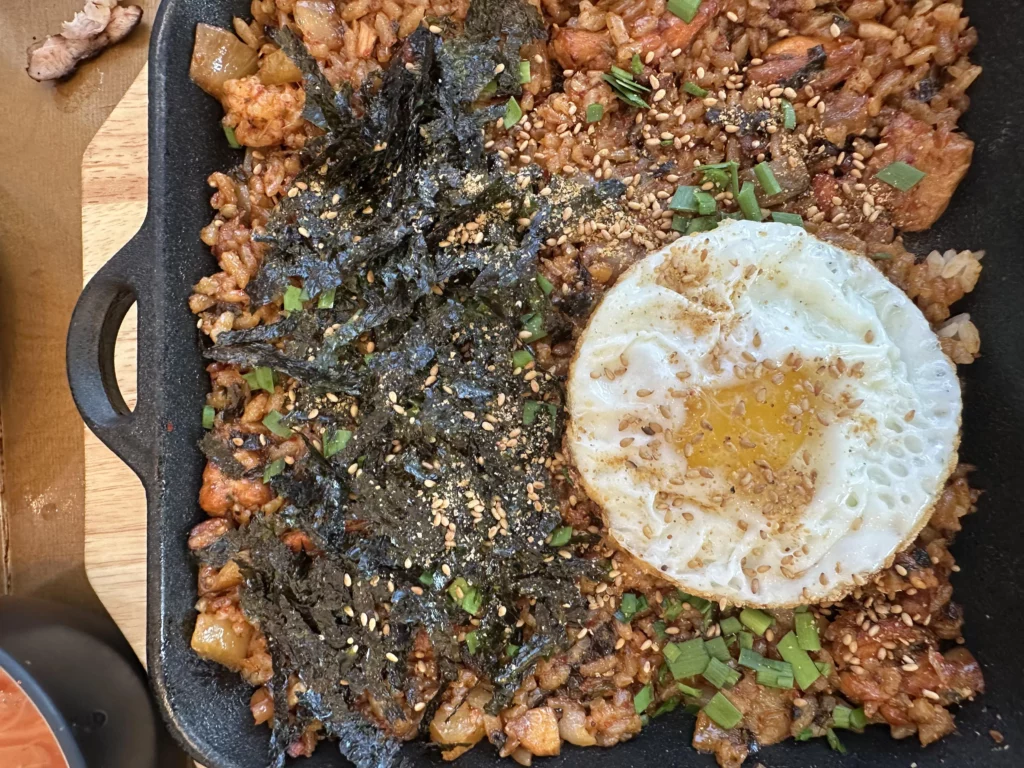
This tradition of finishing with fried rice reflects Korean cultural values about waste—no delicious sauce should be left behind, and the pan that cooked your meal has one more gift to give. It transforms what could be waste into the most anticipated part of the meal, demonstrating the resourcefulness and creativity that characterizes Korean home cooking.
Menu Highlights Beyond Dakgalbi
While charcoal grilled chicken galbi serves as the star attraction, Tongnamujip offers several complementary dishes that round out the meal. The restaurant’s menu includes standard Korean appetizers like kimchi pancakes and vegetable fritters, perfect for nibbling while waiting for your main dish to finish cooking.
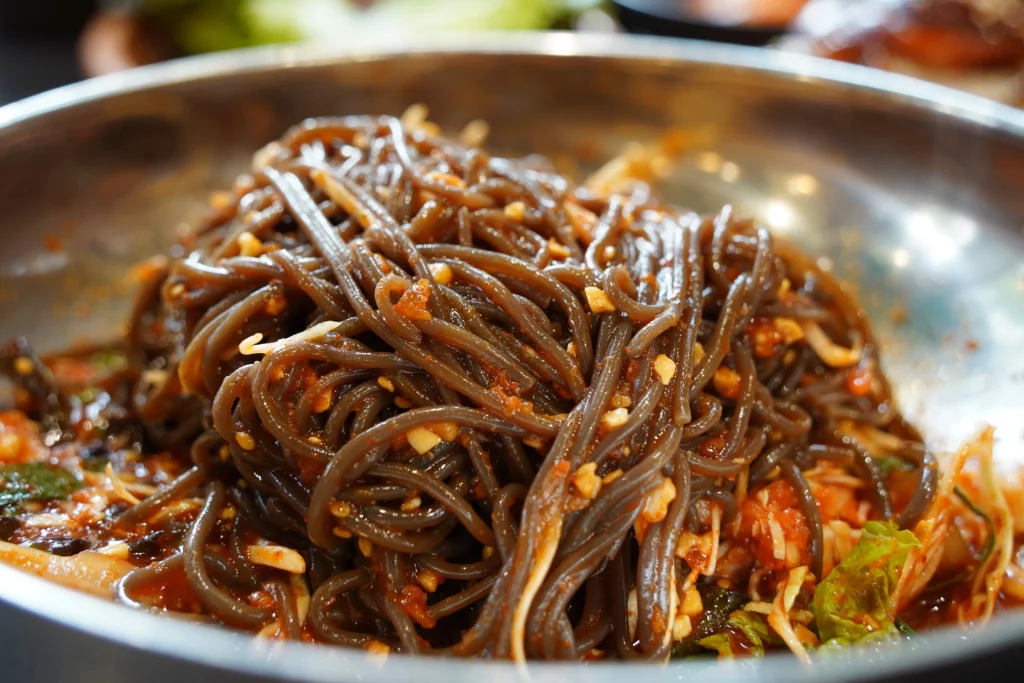
Makguksu, Chuncheon’s other famous specialty, appears on many orders here. This cold buckwheat noodle soup provides refreshing contrast to the spicy, hot dakgalbi. The thin, chewy buckwheat noodles swim in an icy, tangy broth flavored with vinegar, mustard, and sometimes a touch of chili. Many diners order makguksu alongside dakgalbi, alternating between hot and cold, spicy and refreshing, to balance the palate throughout the meal.
For those who can’t handle intense spice, the restaurant offers milder versions of dakgalbi or can adjust the seasoning by request. They also serve various types of galbi using different proteins—pork galbi for those who prefer it, or beef galbi for special occasions when budget allows. Each version follows the same charcoal grilling and iron plate stir-frying technique that defines the restaurant’s approach.
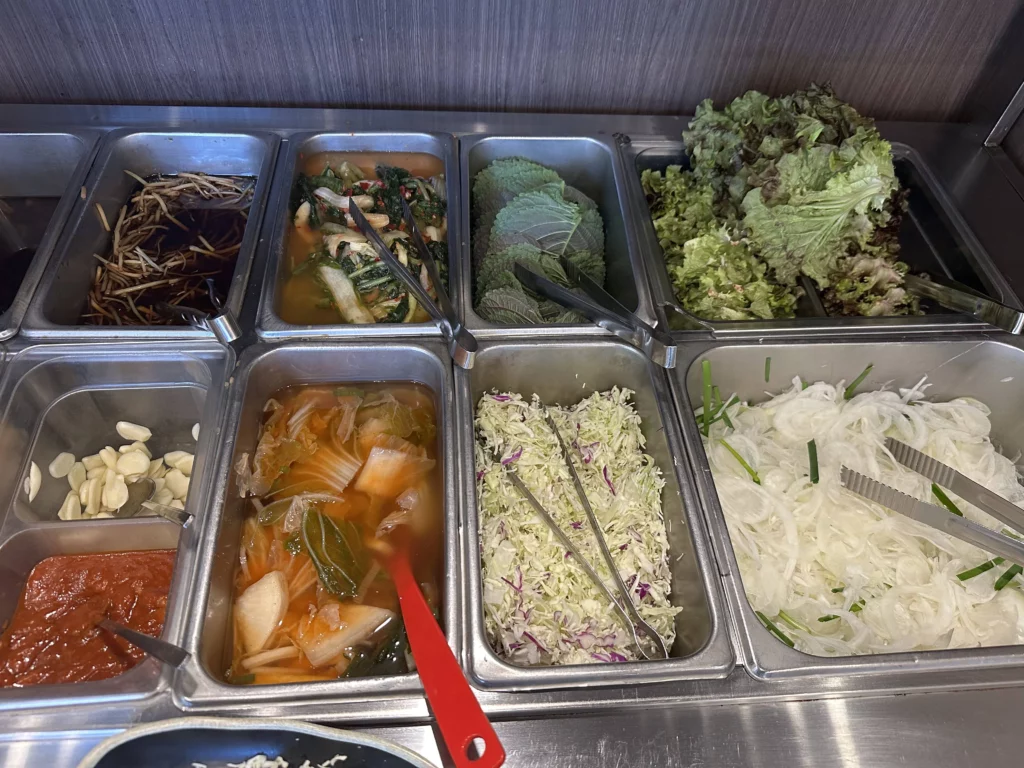
Korean dining rarely happens without abundant banchan (side dishes), and Tongnamujip provides the standard array: various kimchi preparations, seasoned bean sprouts, marinated spinach, and other vegetable sides. These banchan are complimentary and refillable, serving both as palate cleansers between bites and as vehicles for moderating the dakgalbi’s intense flavors. The practice of offering multiple small dishes reflects Korean food culture’s emphasis on variety and balance, where meals should engage all five tastes and provide nutritional harmony.
Beverages lean heavily toward beer and soju, the classic Korean alcohol pairing for spicy, grilled foods. However, the restaurant also serves various soft drinks, and many families opt for sikhye (sweet rice drink) or misutgaru (mixed grain powder drink) for children and non-drinkers.
Location and Atmosphere
Tongnamujip Dakgalbi Branch No. 2 occupies a straightforward location at 655 Sinsaembat-ro in Sinbuk-eup, Chuncheon-si, Gangwon-do. This address places it slightly outside Chuncheon’s downtown tourist district, in a more residential and local area where rent is lower and regular customers form the business backbone. The location requires either a car or taxi ride from Chuncheon Station or the downtown dakgalbi streets, but locals insist the authentic flavors and lower prices justify the journey.
The restaurant itself embraces practical functionality over trendy design. Large tables accommodate groups of 4-8 people comfortably, each equipped with built-in charcoal grills and iron plate stations. The interior tends toward simple, clean decor—tiled floors, sturdy chairs, bright lighting, and walls often covered with signed celebrity photos or positive reviews from satisfied customers. This isn’t the place for romantic ambiance or Instagram-worthy interiors; it’s about the food and the communal experience.
Ventilation systems work overtime to manage the smoke from multiple charcoal grills and iron plates cooking simultaneously. Despite best efforts, expect to leave smelling like grilled chicken and Korean spices—this is inevitable at any serious dakgalbi restaurant. Many customers plan accordingly, avoiding dressy clothes when they know they’re heading to Tongnamujip.
The noise level runs high during peak hours. Sizzling grills, clanking utensils against iron plates, animated conversation, and occasional outbursts of laughter create a lively, energetic atmosphere. This suits Korean dining culture perfectly—restaurants are meant to be vibrant, social spaces, not hushed, formal environments. Families with children feel comfortable here, as do groups of friends and coworkers.
Service style emphasizes efficiency and helpfulness without hovering. Staff members check tables regularly, assist with cooking when needed, and promptly refill banchan or drinks. They’re accustomed to foreign visitors and typically patient with language barriers, though don’t expect English menus or English-speaking staff. Having a translation app handy helps, or simply pointing to what other tables are eating usually succeeds.
Planning Your Visit
Timing your visit strategically enhances the experience. Weekday lunchtimes attract local workers seeking quick, affordable meals—service is efficient, and tables turn over rapidly. Weekend evenings bring families and larger groups, creating a more festive but busier atmosphere. Making reservations helps during peak hours, though this being a local restaurant rather than a tourist hotspot means spontaneous visits often succeed.
Expect to spend approximately 13,000-15,000 won per person for a full dakgalbi meal including the finale fried rice. Adding appetizers, makguksu, or alcohol increases the total, but the restaurant remains remarkably affordable considering the generous portions and quality. Many groups order one portion of chicken per two people, then add more if needed—the initial serving is typically substantial.
Coming with a group of 3-4 people optimizes the experience. Solo diners can certainly order dakgalbi, but the communal cooking and shared portions lose some charm when eating alone. Larger groups of 6-8 work well too, allowing orders of different items to share and compare. Korean dining culture celebrates gathering with others, and dakgalbi particularly shines as a group meal.
Arriving with basic Korean phrases helps, though pointing and gesturing successfully communicates in most situations. Key phrases include "Dakgalbi juseyo" (Please give us dakgalbi), "Mul juseyo" (Please give us water), and "Bokkeumbap haejuseyo" (Please make the fried rice). Staff appreciate any effort at Korean language, even butchered pronunciation, though they won’t hold language barriers against you.
Transportation requires planning since Sinbuk-eup sits outside downtown. Taxis from Chuncheon Station cost approximately 15,000-20,000 won and take 15-20 minutes depending on traffic. Having the restaurant address in Korean on your phone helps taxi drivers. Public buses serve the area but require familiarity with local routes—if staying in Chuncheon for multiple days, researching bus options can save money. Many visitors rent cars when exploring Gangwon province, which provides the most flexibility for reaching restaurants like Tongnamujip that sit outside tourist centers.
The restaurant’s operating hours typically run from 11:00 AM to 10:00 PM, though confirming current hours before visiting prevents disappointment. Like many Korean restaurants, they may close between lunch and dinner service or take occasional holidays. Korean restaurant hours can be fluid, especially family-operated establishments, so calling ahead (if you have Korean-speaking assistance) proves wise.
Parking is available but may fill during peak hours. Street parking nearby serves as backup, though reading Korean parking signs requires caution to avoid violations. Most taxi drivers will wait or return at a specified time if you ask, which solves the return transportation challenge.
Experience Authentic Chuncheon Flavors at Tongnamujip
Tongnamujip Dakgalbi Branch No. 2 delivers an authentic taste of Chuncheon’s most famous culinary export through dedication to traditional charcoal grilling methods. The restaurant’s commitment to this more labor-intensive technique, combined with quality ingredients and generous portions, creates the deeply satisfying meal that has made Chuncheon synonymous with dakgalbi across Korea.
The experience extends beyond simply eating spicy chicken—it’s about participating in Korean food culture, sharing a meal with others, and discovering how simple ingredients transform through technique and tradition into something memorable. The charcoal smoke, the communal cooking, the crescendo of flavors building toward the finale fried rice—these elements combine into an experience that represents Korean dining at its most essential and enjoyable.
For travelers exploring Gangwon province’s natural beauty, a meal at Tongnamujip offers cultural immersion as valuable as any temple visit or mountain hike. For Korean food enthusiasts seeking authenticity over tourist-friendly adaptations, this restaurant delivers the real thing, served with the no-frills hospitality that characterizes Korea’s best local establishments. Whether you’re a spice lover seeking your next challenge or someone ready to expand your Korean cuisine knowledge beyond bibimbap and bulgogi, Tongnamujip’s charcoal grilled chicken galbi provides an unforgettable introduction to one of Korea’s most beloved comfort foods.
Location
655 Sinsaembat-ro, Sinbuk-eup, , Chuncheon-si, Gangwon-do, KR
Reviews
5.0
0 reviews
5
0%
4
0%
3
0%
2
0%
1
0%
Loading reviews...
Related Recipes

Vegetable&Fruit
Myeong-i Namul Jangajji
Few side dishes earn a permanent place on the Korean BBQ table the way Myeong-i Namul Jangajji — Korean pickled...

Recipe
Chicken Stock/Dalk-yuksu
There’s a moment in every serious Korean kitchen when the cook stops reaching for boxed broth and starts making her...

Soups
Korean Chicken Noodle Soup (Dak Kalguksu)
There’s a reason Korean home cooks reach for Dak Kalguksu when the skies turn gray or when someone needs nourishing...
Related Ingredients

Ingredient
Myeong-i
When the last of winter’s snow finally retreats from the volcanic slopes of Ulleungdo Island, something quietly extraordinary happens. Broad,...

Ingredient
Korean Pork
Korean pork, known as dwaeji-gogi (돼지고기) in Korean, stands as one of the most beloved and widely consumed meats in...

Chicken
Yeongyang Center Myeongdong: Korea's Original Tongdak Since 1960
Jung-gu, Seoul, South Korea Yeongyang Center Main Branch 52 Myeongdong 2-gil
5

Chicken
Seoul's Top 3 Stir-Fried Chicken: Okeunnae Dakgalbi, Michelin Bib Gourmand Restarant
1st Floor 40-9 Hangangno 3(sam)-ga, Yongsan District, Seoul
5

Chicken
Top 3 Fried Chicken in Seoul: Why Locals Love "Gyeyeolsa" in Buam-dong
Jongno-gu, Seoul, Republic of Korea 7 Baekseokdong-gil
5

Chicken
Sarangbang Kalguksu: Where Seoul Locals Go for Authentic Dak Baeksuk
Toegye-ro 27-gil, Jung-gu, Seoul, Republic of Korea 46
5