


The moment you step into Hongdon (홍돈), wisps of rich oak smoke greet you before you even see the grill. Tucked away behind the electronic stores of Yongsan, this hidden treasure transports diners to another era with its rustic jumak tavern atmosphere. The meat arrives already kissed by charcoal smoke, its edges bronzed and glistening, releasing an aroma that immediately separates this experience from typical Korean BBQ restaurants. Unlike the fatty, marbled cuts dominating Seoul’s barbecue scene, Hongdon’s smoked pork offers something distinctly different: lean, flavorful meat with an earthy depth that lingers on the palate.
Hondon Yongsan, Smoked K-BBQ
4
Hondon Yongsan, Smoked K-BBQ
4
1st floor 93-3 Wonhyoro 2(i)-ga, Yongsan District, Seoul
Editor: 안주은


Interior04
Food05

Menu03
Overview
+82 02-706-0916
WiFi Provided
Indoor Seating Only
Electronic Payment, Credit Card, Cash Only accepted: American Express, Master Card, Visa
Introduction
Operating hours
Mon, Tue, Wed, Thu, Fri, SatPM 5:00 - PM 11:00
Menu
Editor's Detail
The Story Behind Hongdon’s Oak-Smoked Tradition
For over two decades, Hongdon has quietly built a devoted following among Yongsan locals and adventurous food seekers. The restaurant’s name, 홍돈, combines the characters for "red" (紅) and "pig" (豚), a fitting description for pork that emerges from the smoker with a distinctive rosy hue. This neighborhood establishment has earned recognition on several Korean television programs including SBS’s "Live Today" and "Siksin Road," cementing its reputation as one of Seoul’s most authentic smoked pork destinations.
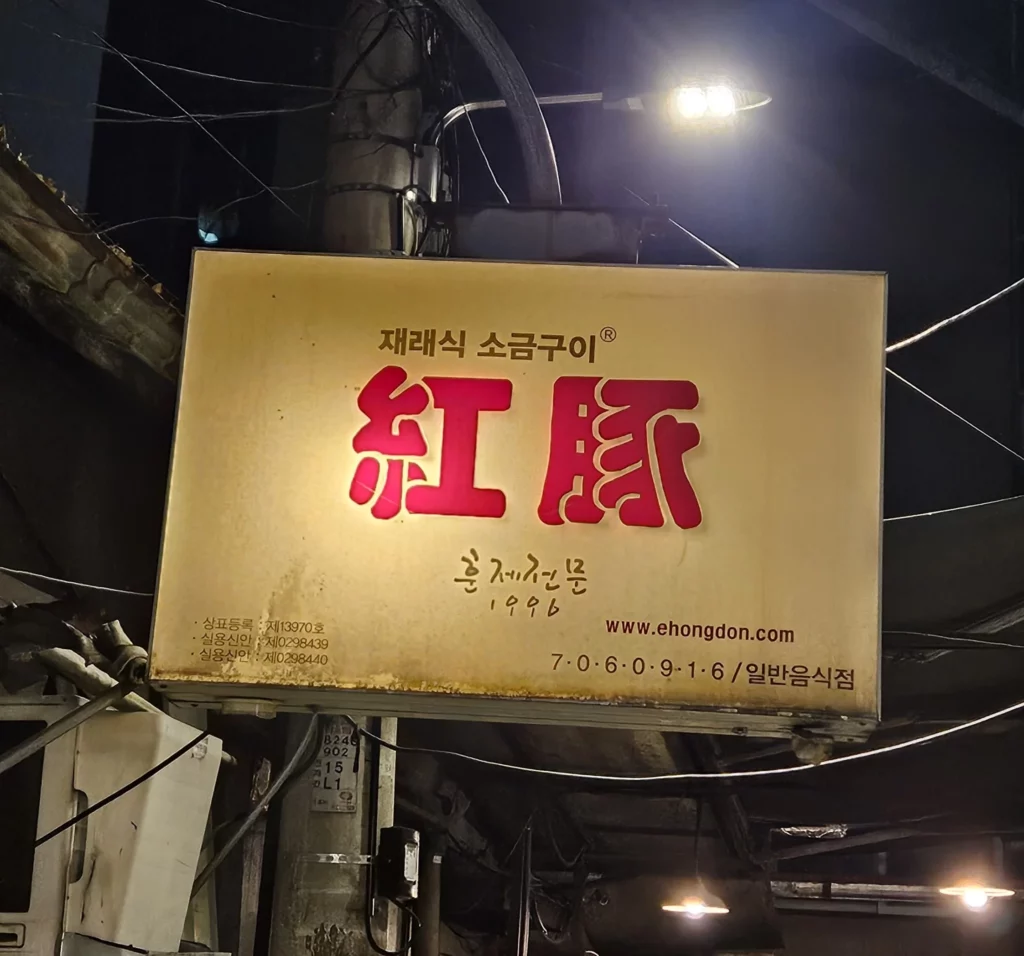
What sets Hongdon apart from countless Korean BBQ establishments is the restaurant’s commitment to in-house smoking. Rather than simply grilling fresh meat at the table, the kitchen team carefully smokes each cut using traditional methods before it reaches diners. This approach draws from Korea’s long history of food preservation through smoking, a technique documented in historical texts dating back centuries.
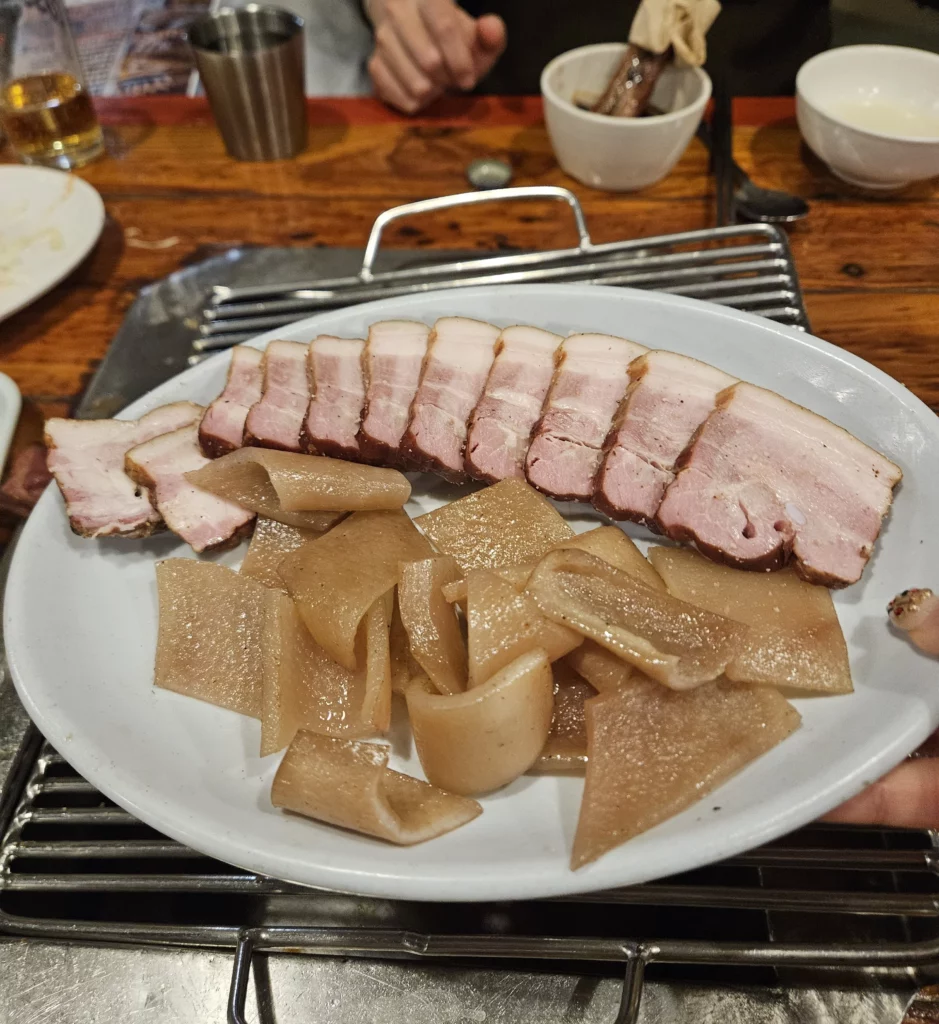
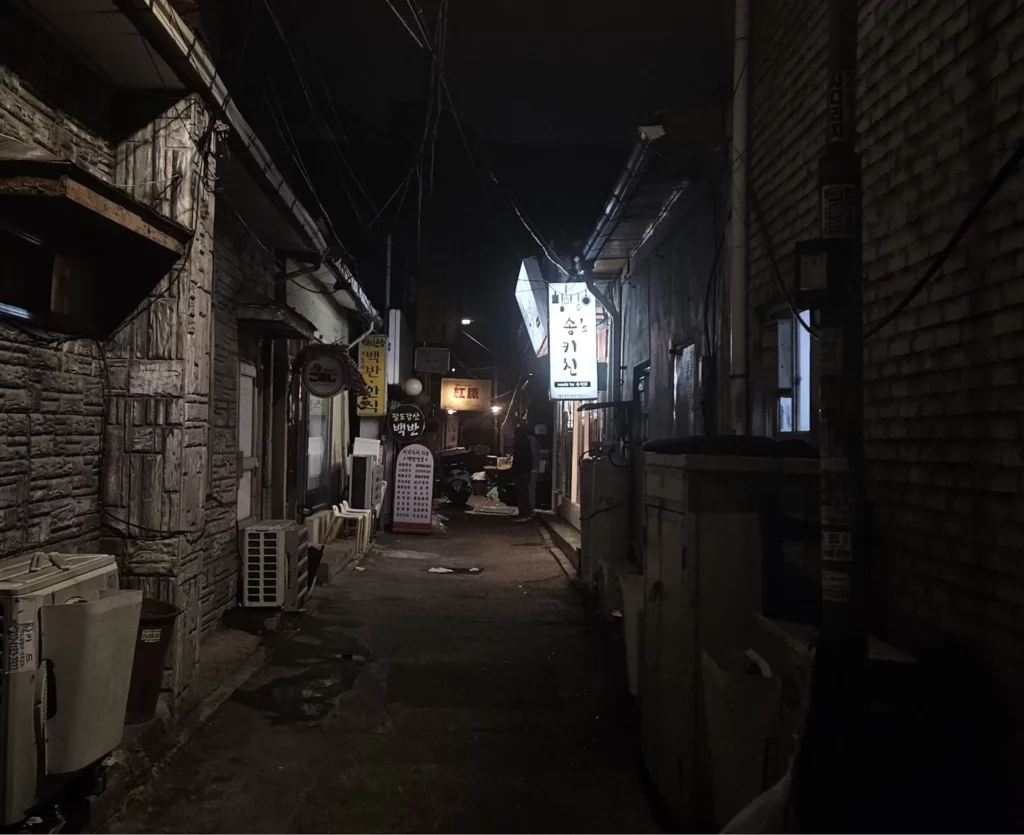
The location itself adds to Hongdon’s mystique. Situated in a weathered building behind Yongsan Electronics Market, the restaurant requires a bit of determination to find. This hidden quality has only enhanced its appeal among those who value authenticity over accessibility, transforming each visit into a small culinary adventure through Seoul’s older neighborhoods.
What Makes Hongdon’s Smoked K-BBQ Uniquely Korean
Smoked Korean BBQ represents a fascinating evolution within Korea’s broader grilling tradition. While most visitors associate Korean barbecue with tableside grilling of fresh or marinated meats, smoking has roots in Korean culinary history that stretch back generations. Traditional Korean households once used similar techniques to preserve proteins through harsh winters, and restaurants like Hongdon have revitalized these methods for contemporary diners.
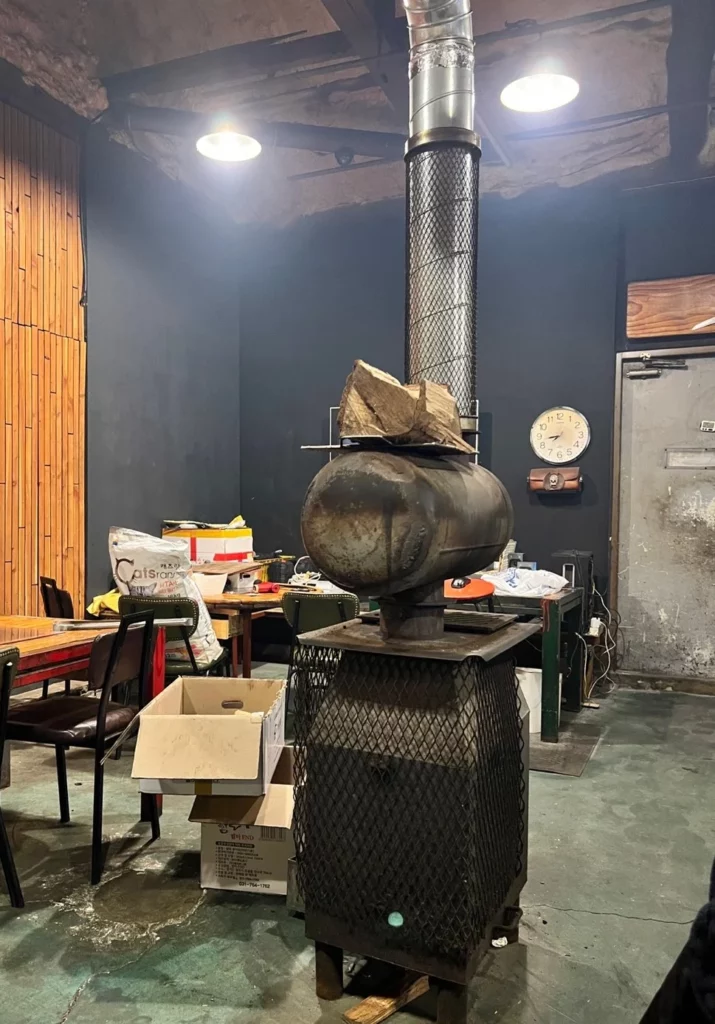
The smoking process at Hongdon employs oak wood, known in Korean as chamnamoo (참나무). Oak produces a mild, slightly sweet smoke that complements pork without overwhelming its natural flavors. This choice of wood matters significantly because different woods impart distinct characteristics to the finished product. Oak creates what Korean food enthusiasts describe as a "clean" smoke flavor, enhancing the meat’s savory qualities while adding aromatic complexity.
Unlike American-style smoked barbecue, which often involves lengthy smoking sessions that render fat completely, Hongdon’s approach strikes a balance between smoking and grilling. The meat receives enough smoke exposure to develop its characteristic flavor profile while maintaining Korean BBQ’s interactive element at the table. This hybrid technique distinguishes smoked K-BBQ as a category unto itself within Korean cuisine.
The restaurant’s dedication to traditional preparation methods also reflects the broader Korean philosophy of honoring ingredients through careful technique. Just as premium samgyeopsal at renowned Seoul establishments emphasizes meat quality and preparation, Hongdon’s smoking process demonstrates how traditional methods can elevate familiar ingredients into something memorable.
The Signature Menu and Must-Try Dishes
Hongdon’s menu focuses on several cuts of smoked pork, each offering distinct characteristics that appeal to different preferences. Understanding these options helps diners make the most of their visit.
Smoked Moksal (목살) – Pork Shoulder
The signature smoked moksal arrives as thick slices of pork shoulder that have absorbed hours of oak smoke. At approximately 13,000 KRW per serving, this cut balances lean meat with just enough fat to maintain juiciness. The shoulder’s natural marbling allows it to remain tender through the smoking process while developing a pronounced smoky character.
Smoked Samgyeopsal (삼겹살) – Pork Belly
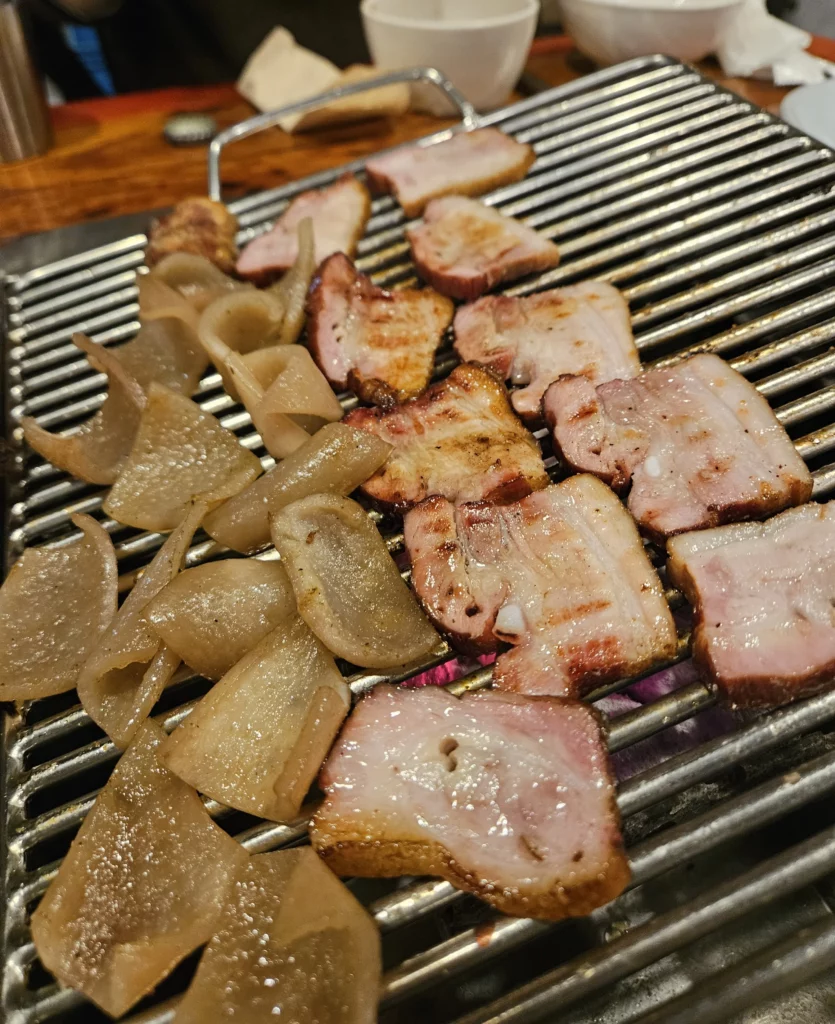
For those who enjoy traditional pork belly, Hongdon offers a smoked version that subverts expectations. Priced around 12,000 KRW, this cut demonstrates how smoking affects fattier portions. The rendered fat takes on a subtly sweet quality, while the meat develops chewy, flavorful edges that differ markedly from conventionally grilled samgyeopsal.
Smoked Deunggalbi (등갈비) – Back Ribs
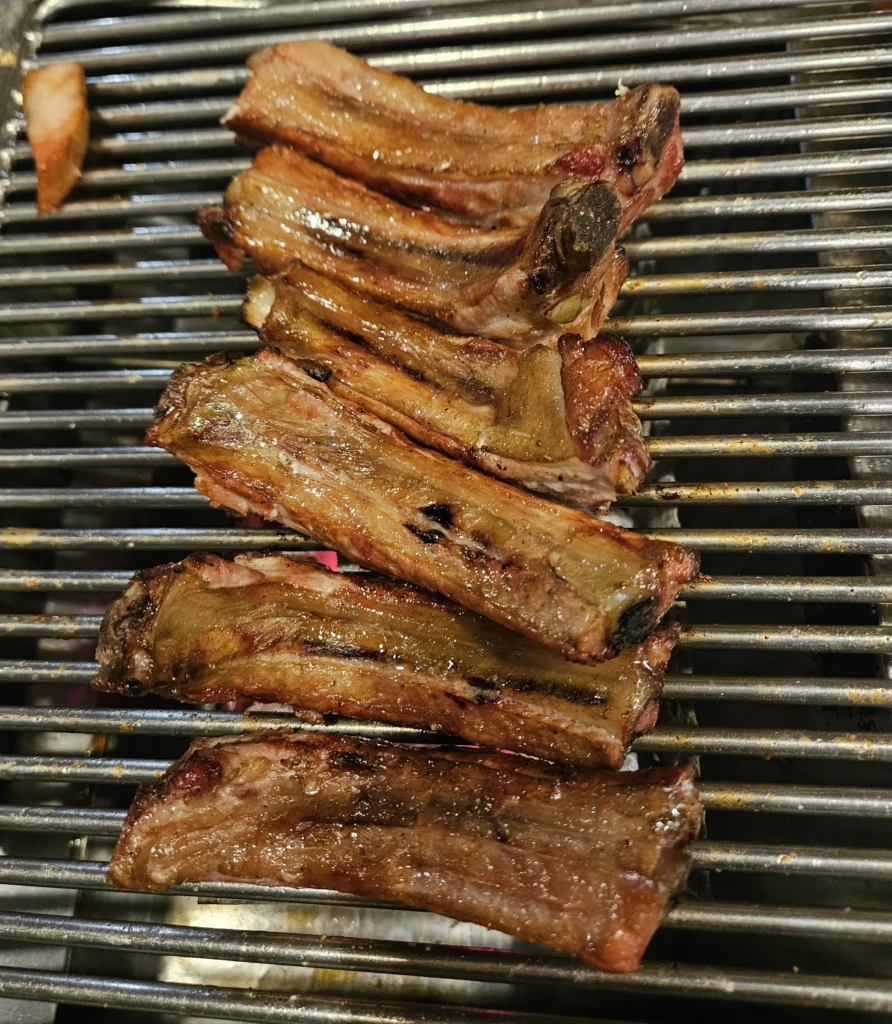
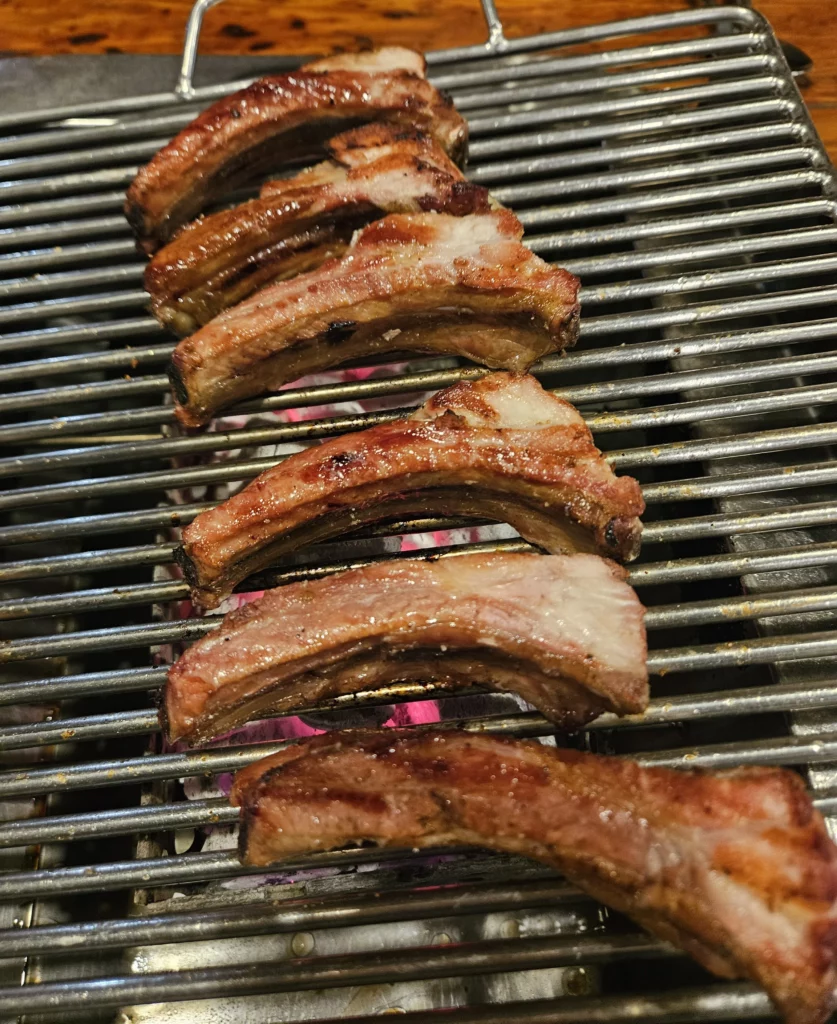
Many regular customers consider the smoked back ribs essential to the Hongdon experience. At approximately 11,000 KRW per serving, these ribs showcase how bones concentrate and enhance smoke flavor. The meat pulls away easily, revealing the pink smoke ring that indicates proper smoking technique.
Smoked Hangjeongsal (항정살) – Pork Jowl
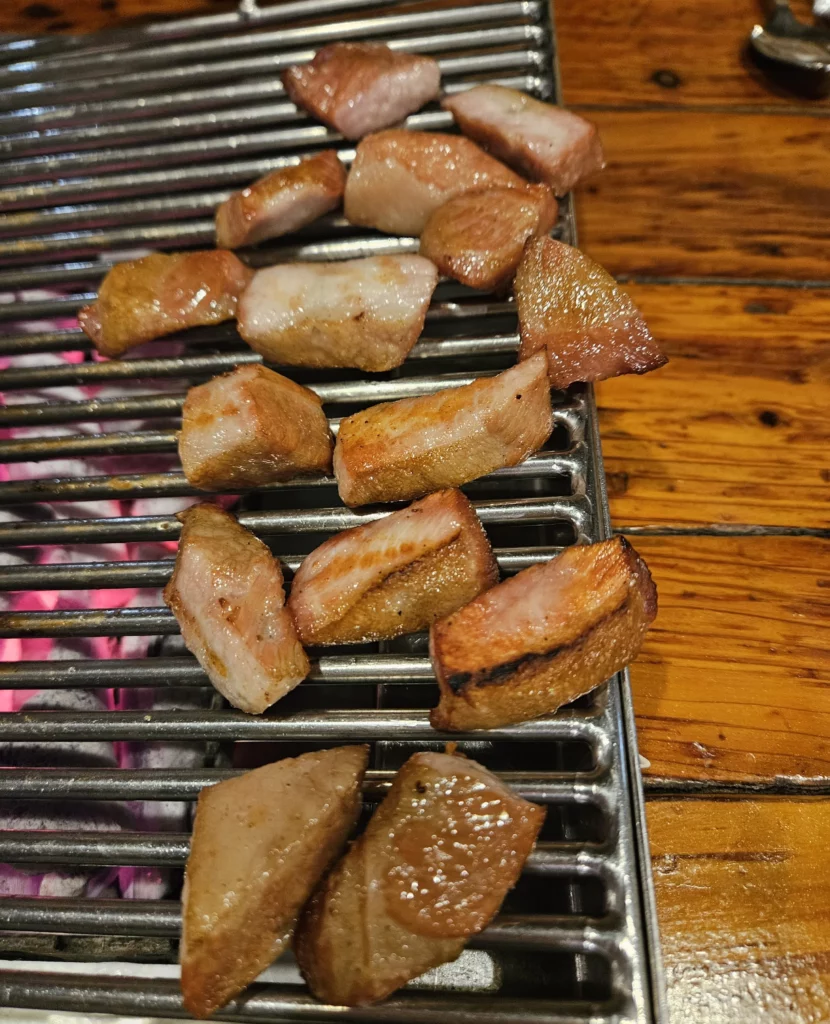
The premium hangjeongsal cut commands particular enthusiasm among Korean BBQ connoisseurs. This prized portion from the pig’s jowl features intense marbling that creates an almost buttery texture when properly prepared. At Hongdon, the smoking process transforms this already exceptional cut into something remarkable.
Kimchi Mali Guksu (김치말이국수) – Cold Noodles with Kimchi
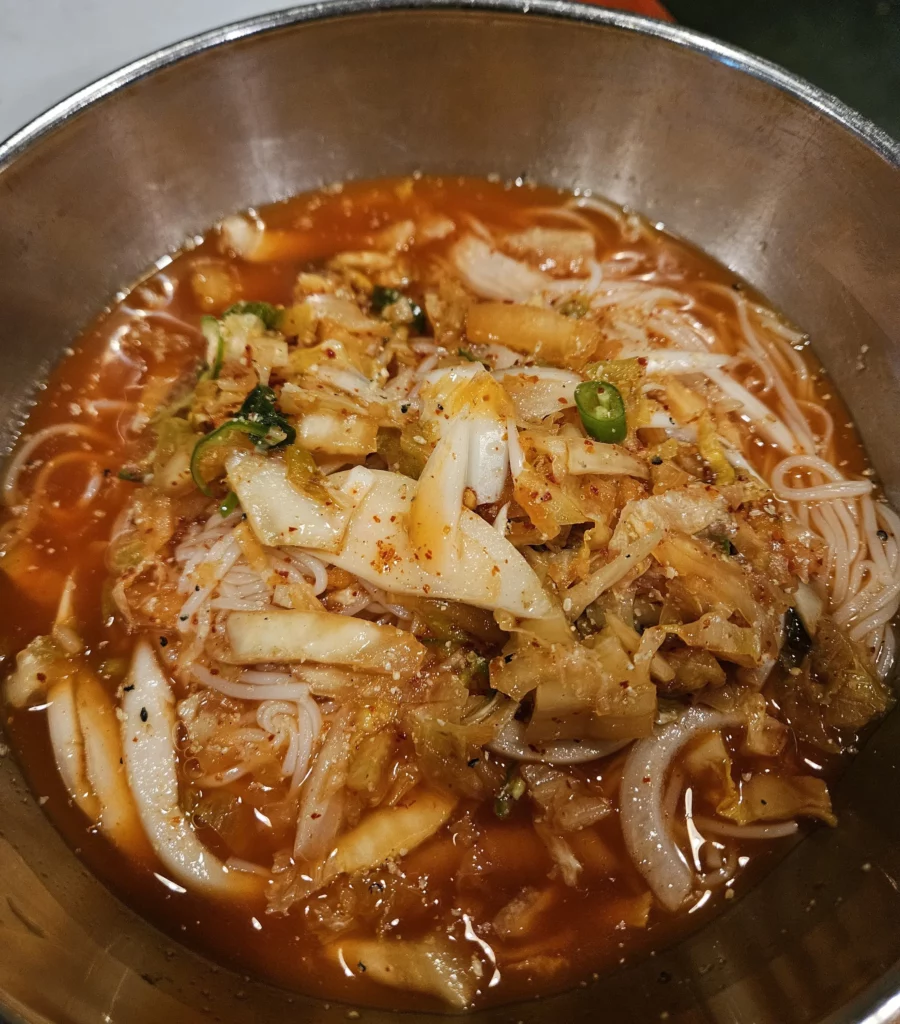
To complete the meal, Hongdon offers cold noodles wrapped in tangy kimchi broth for just 3,000 KRW. This refreshing finale cleanses the palate after rich, smoky meat and exemplifies how Korean dining traditionally balances bold flavors with cooling elements.
What Are the Key Ingredients That Create This Flavor
Three elements define Hongdon’s distinctive taste profile, each contributing essential characteristics to the final dish.
Oak Wood (참나무, Chamnamoo)
Oak serves as the foundation of Hongdon’s smoking process. This hardwood produces moderate smoke with mild sweetness and subtle nutty undertones. Korean oak contains lower resin levels than pine or other softwoods, preventing bitter flavors from developing during extended smoking. The choice of seasoned oak also ensures consistent smoke production without excessive temperature fluctuations.
Nutritional note: Smoking with oak wood produces compounds that act as natural preservatives, a benefit recognized in traditional Korean food preparation for extending protein storage life.
Coarse Salt (굵은 소금, Gulgeun Sogeum)
Rather than complex marinades, Hongdon relies primarily on coarse Korean salt to season its meats before smoking. This minimalist approach allows the smoke flavor to remain prominent while drawing out moisture that helps form the characteristic bark on smoked meat surfaces. Korean coarse salt, traditionally harvested from coastal regions, contains trace minerals that contribute subtle depth to seasoned proteins.
Fresh Pork (돼지고기, Dwaeji Gogi)
The quality of fresh pork determines the final result more than any other factor. Hongdon sources domestic Korean pork, which tends toward leaner composition compared to imported varieties. This leanness becomes important in smoked preparations where excess fat can turn rancid during extended heat exposure. Fresh, properly handled pork absorbs smoke more evenly and develops cleaner flavor profiles.
How Would You Describe the Taste and Spice Level
Spice level: 1/10 – Hongdon’s smoked meats contain no inherent spiciness. The restaurant provides various dipping sauces and condiments that allow diners to customize heat according to preference.
The primary flavor notes include deep umami from the smoking process, subtle sweetness from oak wood compounds, and clean pork essence without gamey undertones. The smoke creates an almost bacon-like quality in fattier cuts while leaner portions develop more pronounced charred notes along their edges.
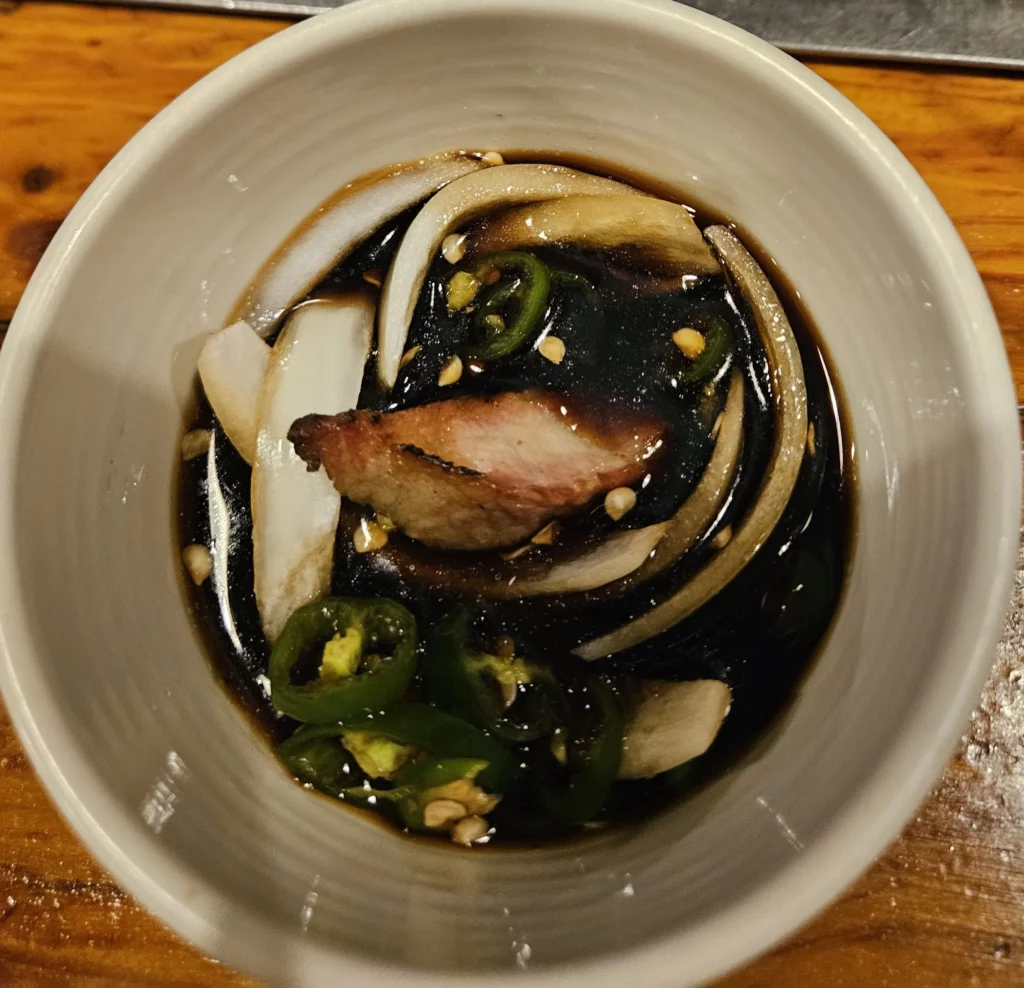
Texture deserves special attention at Hongdon. The smoking process renders significant fat from the meat, resulting in a texture that many describe as "chewy" or "firm" rather than melt-in-mouth tender. Diners who prefer heavily marbled, fatty Korean BBQ may find Hongdon’s offerings noticeably different from their expectations. This leaner profile appeals to those who appreciate meat’s natural texture without excessive fattiness, though customers who love the rich, oily quality of traditional samgyeopsal should adjust expectations accordingly.
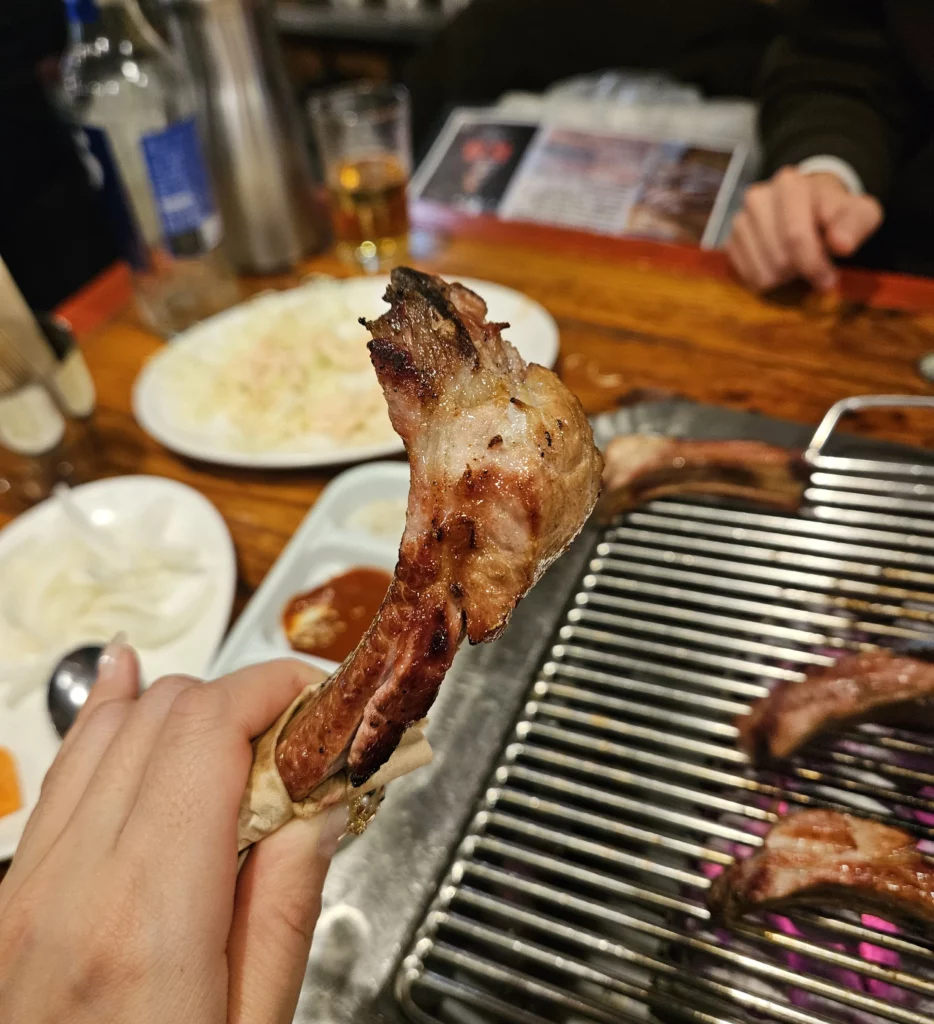
The meat arrives warm with golden-brown exterior surfaces and pink-tinged interiors indicating proper smoking technique. Upon biting, the initial smokiness gives way to savory pork flavor, followed by lingering woody notes that distinguish Hongdon’s product from standard grilled preparations.
What Should First-Time Eaters Know
Dining Sequence
Begin with fattier cuts like samgyeopsal or hangjeongsal before progressing to leaner options like moksal. This progression allows palates to adjust to the smoky profile while ensuring the most flavorful portions are enjoyed while taste buds remain fresh. Finish with cold noodles or clear soup to cleanse and refresh.
The Authentic Jumak Dining Experience
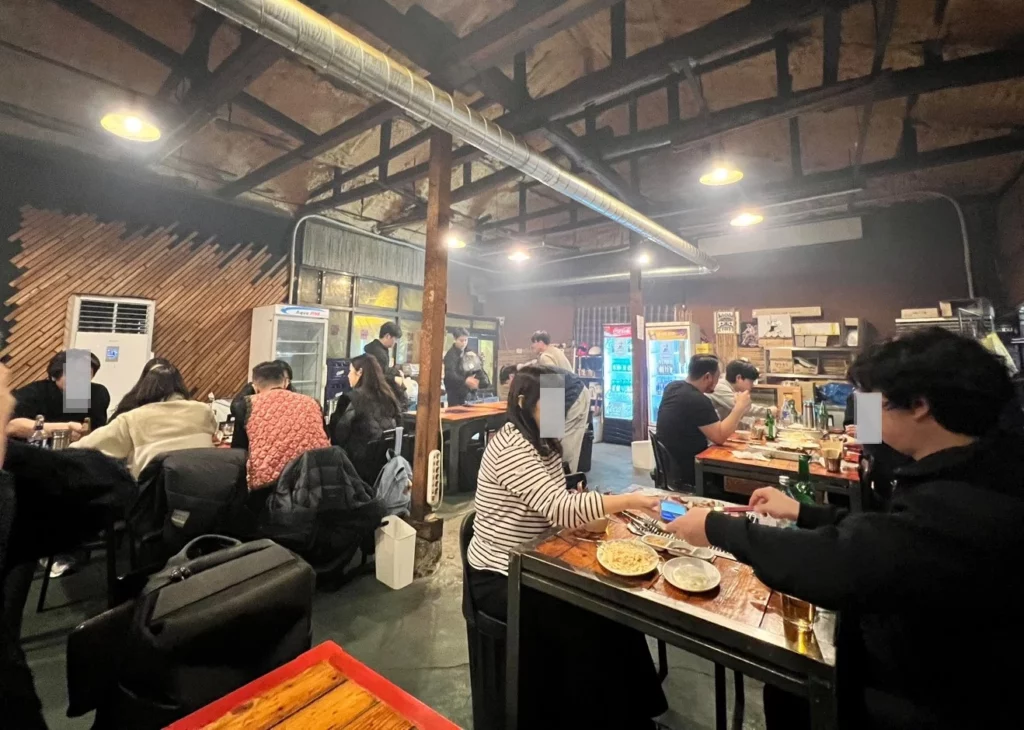
Walking into Hongdon feels like stepping back through Seoul’s culinary history. The restaurant’s jumak atmosphere evokes Korea’s traditional roadside taverns, establishments that once served travelers simple meals and rice wine along rural routes. Weathered wooden surfaces, dim lighting, and the constant presence of smoke create an environment far removed from Seoul’s gleaming modern BBQ palaces.
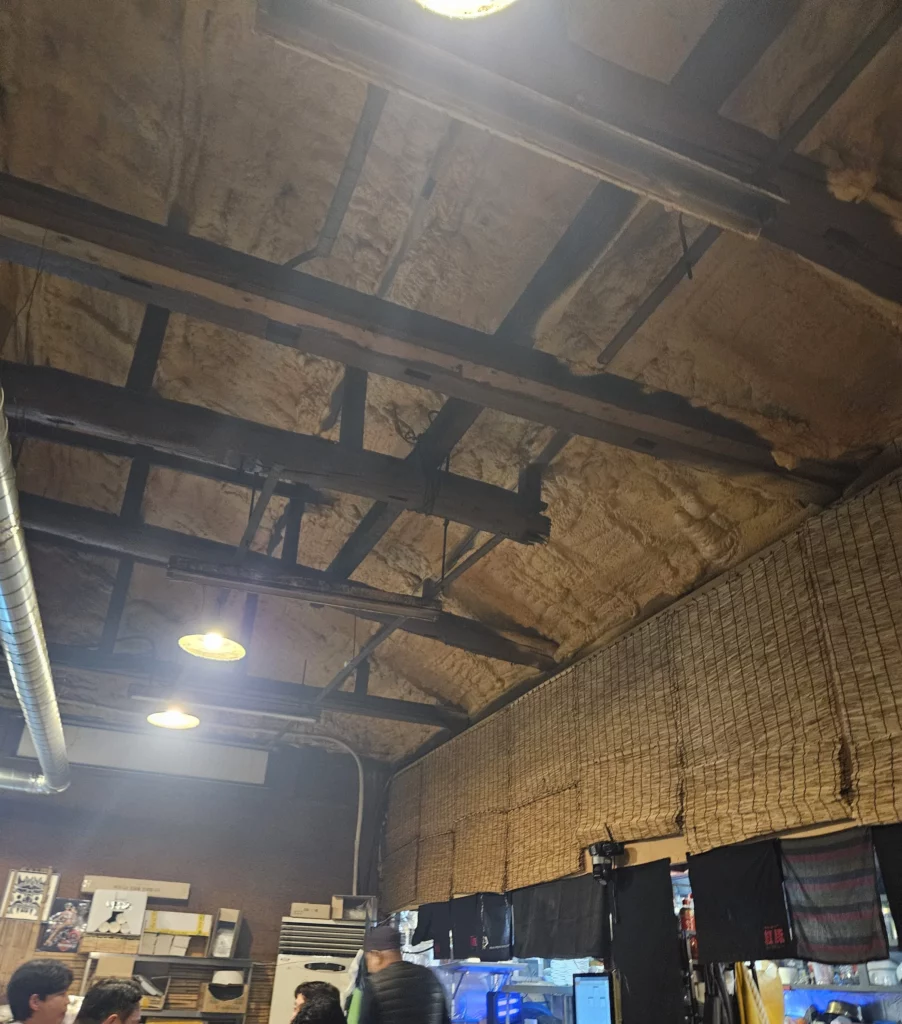
This aesthetic choice reflects more than nostalgia. Traditional jumak settings encouraged communal dining, conversation, and lingering enjoyment of food and drink. Hongdon maintains this spirit through its layout and service style, providing an experience where the meal itself takes precedence over Instagram aesthetics or rapid turnover.
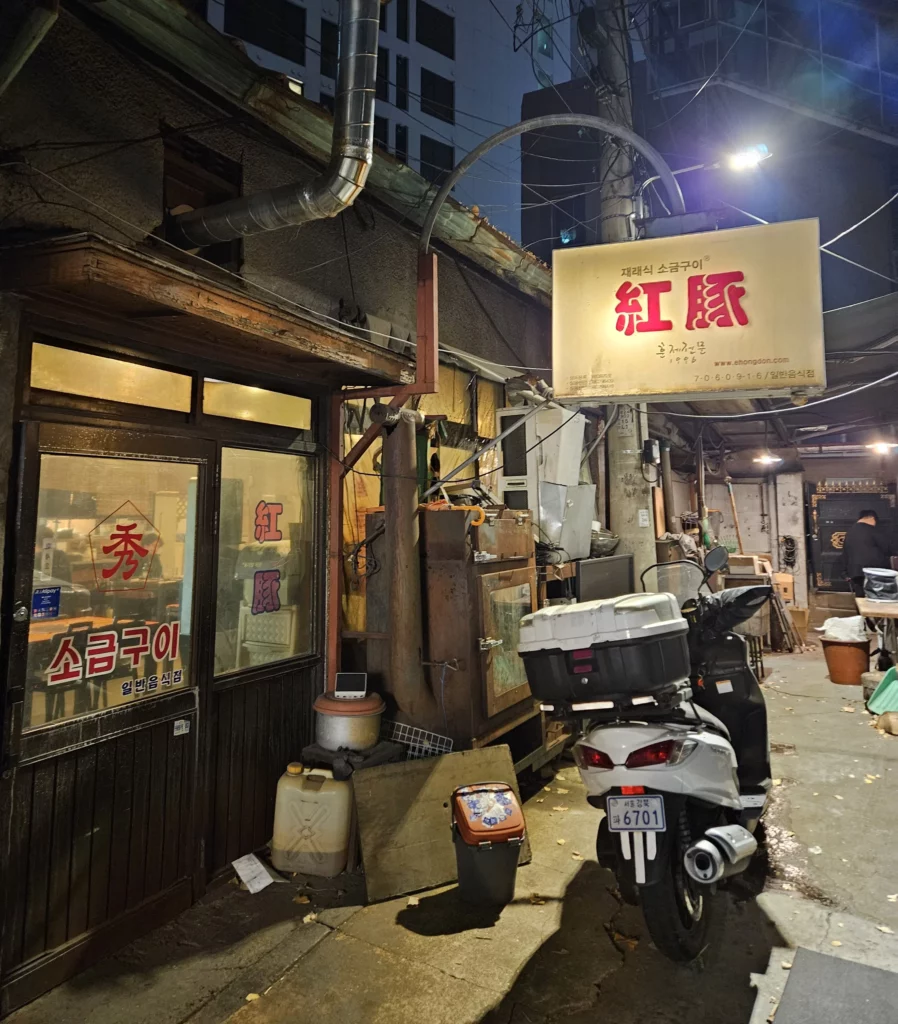
The atmosphere particularly suits evening gatherings among friends or colleagues. The combination of boldly flavored smoked meats, rice wine or soju, and intimate setting creates conditions for exactly the kind of relaxed bonding that defines Korean dining culture. Regular customers report returning not just for the food but for the distinctive ambiance that makes each visit feel like an escape from contemporary Seoul’s frenetic pace.
Practical Information for Visiting Hongdon
Location and Access
Hongdon occupies a somewhat hidden location in Yongsan-gu, Seoul, behind the Yongsan Electronics Market area. The address is 93-3, Wonhyoro 2-ga, Yongsan-gu, Seoul. First-time visitors should allow extra time to locate the restaurant, as the surrounding alleyways can prove confusing.
Nearest subway: Hyochang Park Station (Line 6, Exit 3) offers approximately 11-minute walking distance. Yongsan Station (Line 1) requires roughly 19 minutes on foot.
Operating Hours
- Monday through Friday: 5:00 PM – 10:00 PM
- Saturday: 5:00 PM – 9:00 PM
- Sunday: Closed
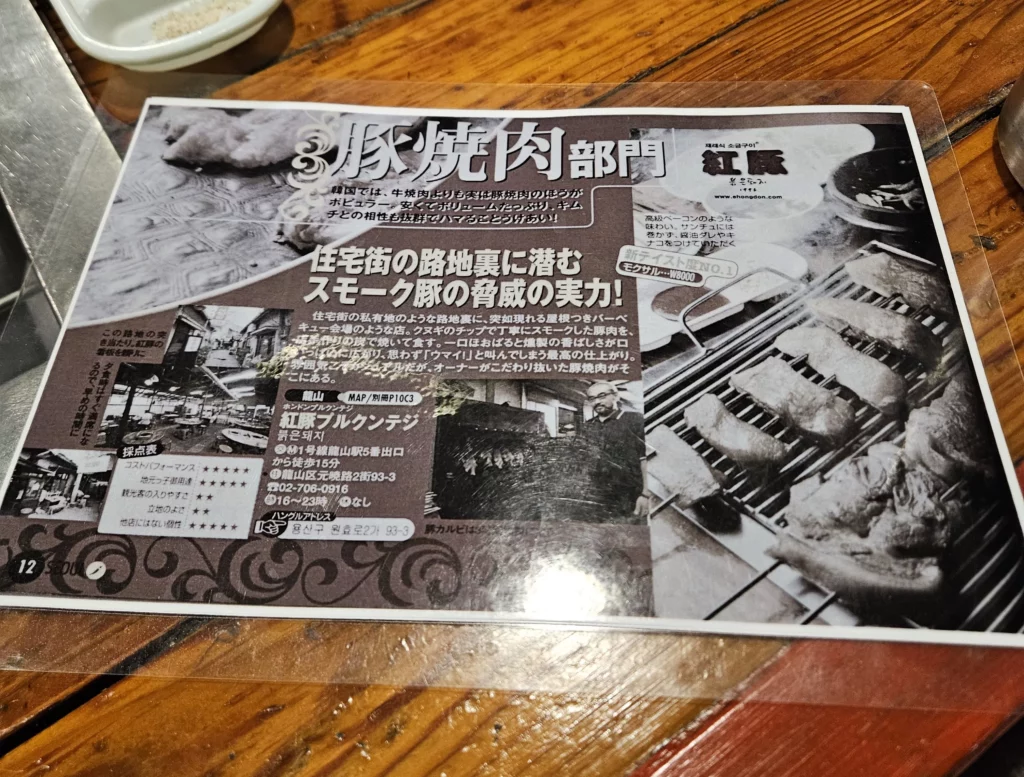
The restaurant opens only for dinner service, reflecting its focus on the traditional Korean evening meal accompanied by alcohol.
Reservations
Making advance reservations through Naver or by phone is strongly recommended. Walk-in customers frequently find no available seats, particularly on Friday evenings. Phone: 0507-1408-0916 or 02-706-0916.

Price Range
Expect to spend approximately 25,000-35,000 KRW per person for a satisfying meal including meat, side dishes, and finishing noodles or rice. Adding drinks increases the total accordingly.
What’s Included
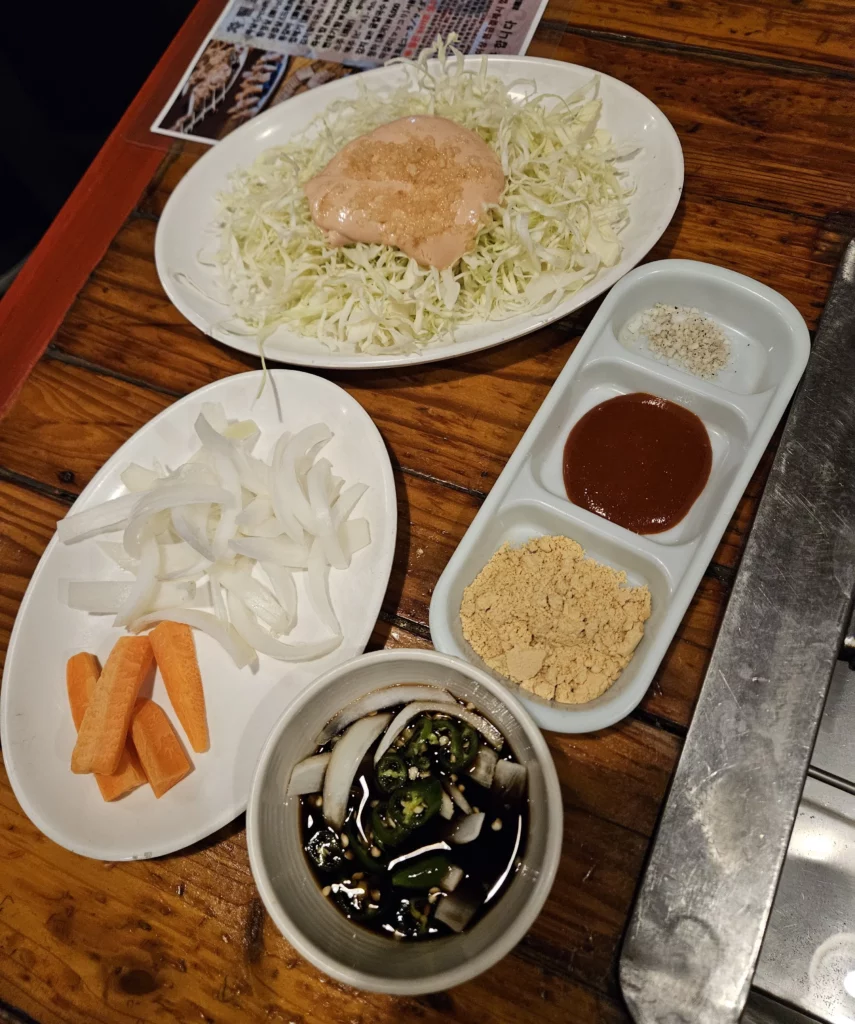
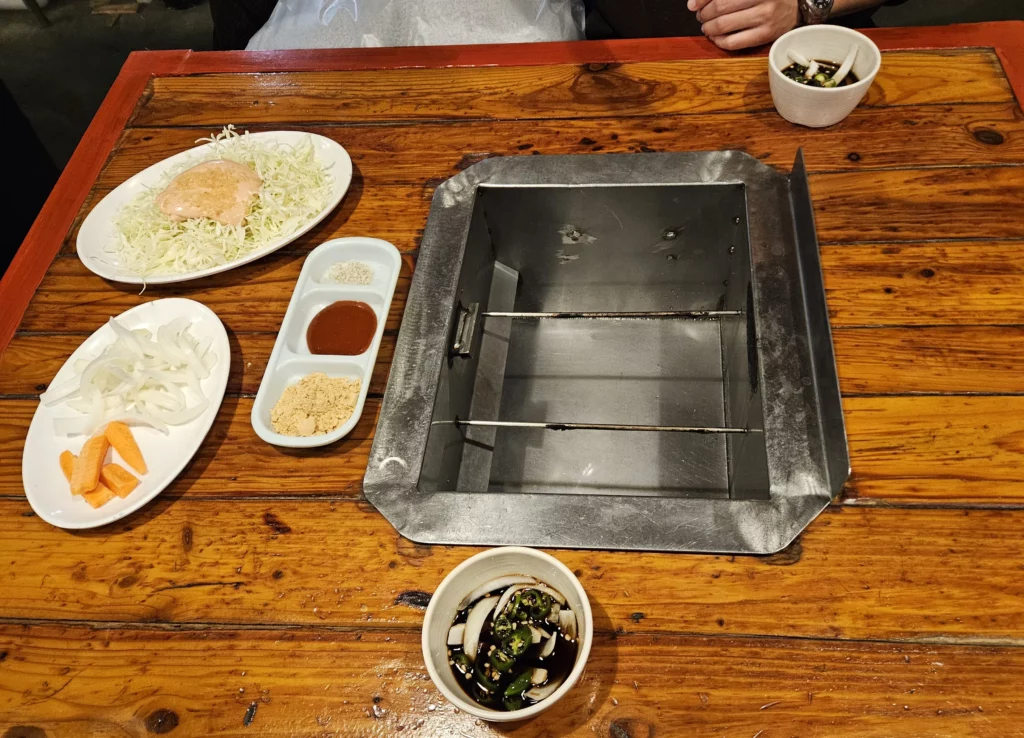
Orders typically include the standard banchan spread of cabbage salad, carrot and onions for dip, and dipping sauces. Note that some visitors report the side dish selection as more limited than larger, tourist-oriented Korean BBQ establishments.
Final Thoughts on Seoul’s Smoked Pork Destination
Hongdon represents something increasingly rare in Seoul’s dining landscape: a restaurant defined by specific technique mastered over decades rather than trendy concepts or celebrity chef endorsements. The oak-smoked pork here won’t suit everyone’s preferences. Those who love rich, fatty Korean BBQ may find Hongdon’s leaner, chewier preparations too different from familiar expectations. The hidden location, limited hours, and Korean-only environment create additional barriers for casual visitors.
Yet for diners seeking authentic experiences beyond tourist circuits, Hongdon rewards the effort required to find it. The distinctive smoke flavor, traditional jumak atmosphere, and decades of accumulated expertise combine into something genuinely special. In a city overflowing with Korean BBQ options, Hongdon carved its niche by mastering a preparation method that others largely abandoned, preserving traditional smoking techniques for those who appreciate their unique results.
Whether you’re a Korean BBQ enthusiast exploring lesser-known preparations or a traveler seeking dining experiences unavailable elsewhere, Hongdon merits a place on your Seoul itinerary. Arrive with open expectations, embrace the rustic setting, and discover why Yongsan locals have kept this smoke-filled secret for over twenty years.
Have you experienced smoked Korean BBQ at Hongdon? Share your thoughts with fellow Korean food enthusiasts exploring Seoul’s hidden culinary gems.
Location
93-3 Wonhyoro 2(i)-ga, Yongsan District, Seoul, 1st floor, KR
Reviews
4.0

0 reviews
5
0%
4
0%
3
0%
2
0%
1
0%
Loading reviews...
Related Recipes

Vegetable&Fruit
Myeong-i Namul Jangajji
Few side dishes earn a permanent place on the Korean BBQ table the way Myeong-i Namul Jangajji — Korean pickled...

Meat & Poultry
Bulgogi(Korean Soy-Marinated Beef)
The first bite of perfectly caramelized bulgogi transports you to a place where centuries of culinary refinement meet primal satisfaction....
Related Ingredients

Ingredient
Myeong-i
When the last of winter’s snow finally retreats from the volcanic slopes of Ulleungdo Island, something quietly extraordinary happens. Broad,...

Ingredient
Korean Pork
Korean pork, known as dwaeji-gogi (돼지고기) in Korean, stands as one of the most beloved and widely consumed meats in...