


Explore Recipes
Recipe list

Korean Omelette Egg Roll
Few dishes capture the essence of Korean home cooking quite like gyeran-mari, the beautifully spiraled egg roll that has graced Korean lunchboxes and dinner tables for generations. What appears to be a simple rolled omelette is actually a testament to the Korean philosophy of **"jeongseong"** (정성)—the sincere effort and care that transforms humble ingredients into something extraordinary, a principle recognized in Korea’s UNESCO-honored culinary traditions.
Whether you encountered this golden banchan at a Korean BBQ restaurant, spotted it in a K-drama lunchbox scene, or tasted it at a friend’s home, mastering gyeran-mari opens the door to authentic Korean cooking. This guide covers everything you need to know about creating restaurant-quality Korean egg rolls in your own kitchen—minus the actual recipe, which you likely already have or can easily find.


Easy Kimchi Fried Rice
Kimchi fried rice, or kimchi bokkeumbap (김치볶음밥), is the quintessential Korean comfort food that transforms humble leftovers into a deeply satisfying meal. This iconic dish represents the heart of Korean home cooking: resourceful, flavorful, and deeply rooted in everyday food culture. When properly aged kimchi meets day-old rice in a hot pan with savory additions like Spam or bacon, something magical happens—the fermented tang caramelizes into umami-rich goodness that’s both nostalgic and utterly craveable.
Unlike many Korean dishes that require elaborate preparation, kimchi fried rice celebrates simplicity while delivering complex flavors. The dish emerged from Korean households’ practical approach to using leftover rice and overly-sour kimchi that had fermented past its prime for eating fresh. Today, it’s beloved as a late-night meal, a quick lunch, and a staple in Korean lunchboxes across the country.
This guide will walk you through everything you need to know to create authentic kimchi fried rice at home—from selecting the right kimchi fermentation level to achieving that perfect restaurant-style texture. We’ll explore the cultural significance, ingredient secrets, and cooking techniques that Korean home cooks have perfected over generations.

Pork Kimchi Stew
When steam rises from a bubbling stone pot of pork kimchi jjigae, something almost magical happens in a Korean household. This spicy, tangy, deeply savory stew represents more than just a meal—it embodies generations of culinary wisdom, the transformative power of fermentation, and the very essence of Korean "jip-bap" (home-cooked meal) tradition.
Pork kimchi jjigae (돼지고기 김치찌개) stands alongside doenjang-jjigae as one of Korea’s most beloved everyday dishes. What makes this stew so extraordinary isn’t complexity but rather the brilliant simplicity of its approach: take well-aged kimchi (mukeunji), combine it with fatty pork, simmer until the flavors meld into something greater than its parts, and serve bubbling hot with steamed rice.

Simple and Delicious Cucumber Salad
Sometimes the most memorable dishes are the simplest ones. This Simple and Delicious Cucumber Salad is proof that when you start with fresh, quality ingredients, you need very little to create something extraordinary. Just paper-thin cucumber slices dressed in fruity olive oil, brightened with fresh dill, and seasoned with nothing more than salt and pepper—it’s the kind of clean, honest cooking that lets each ingredient shine.
This style of cucumber salad has earned its place on tables around the world precisely because of its elegant simplicity. Unlike heavily dressed salads that mask the vegetable’s natural character, this preparation celebrates the cucumber’s refreshing crunch and subtle sweetness. The olive oil creates a light, glossy coating that carries the aromatic dill to every bite, while the salt draws out just enough moisture to concentrate the flavors without making the salad watery.
Whether served alongside a sizzling Korean BBQ spread, grilled Mediterranean fish, or a simple weeknight dinner, this versatile side dish provides the perfect refreshing counterpoint to rich, savory main courses.

Rose Tteokbokki
When Korea’s beloved spicy rice cakes meet Italian-inspired rosé sauce, something magical happens. Rose Tteokbokki (로제떡볶이) has captured the hearts of food lovers worldwide with its beautiful pinkish-orange hue and perfectly balanced flavor that bridges two culinary traditions.
This modern twist on the classic Korean street food has exploded across Seoul’s delivery apps, social media feeds, and now—your own kitchen. Unlike the fiery red traditional version, Rose Tteokbokki wraps those impossibly chewy rice cakes in a velvety, mildly spicy sauce that even heat-sensitive palates can enjoy.

Budae Jjigae (Korean Army Stew)
Few dishes capture the spirit of Korean resilience quite like Budae Jjigae. This bubbling, spicy stew transforms humble ingredients—Spam, sausages, kimchi, and instant noodles—into a deeply satisfying meal that warms both body and soul. Born from post-Korean War necessity, Budae Jjigae has evolved from a survival food into one of Korea’s most beloved comfort dishes, now enjoyed in restaurants and homes worldwide.
Whether you’re craving authentic Korean comfort food on a cold evening or looking to explore Korean culinary history through your kitchen, this guide will help you understand what makes this stew special and how to achieve perfect results every time.


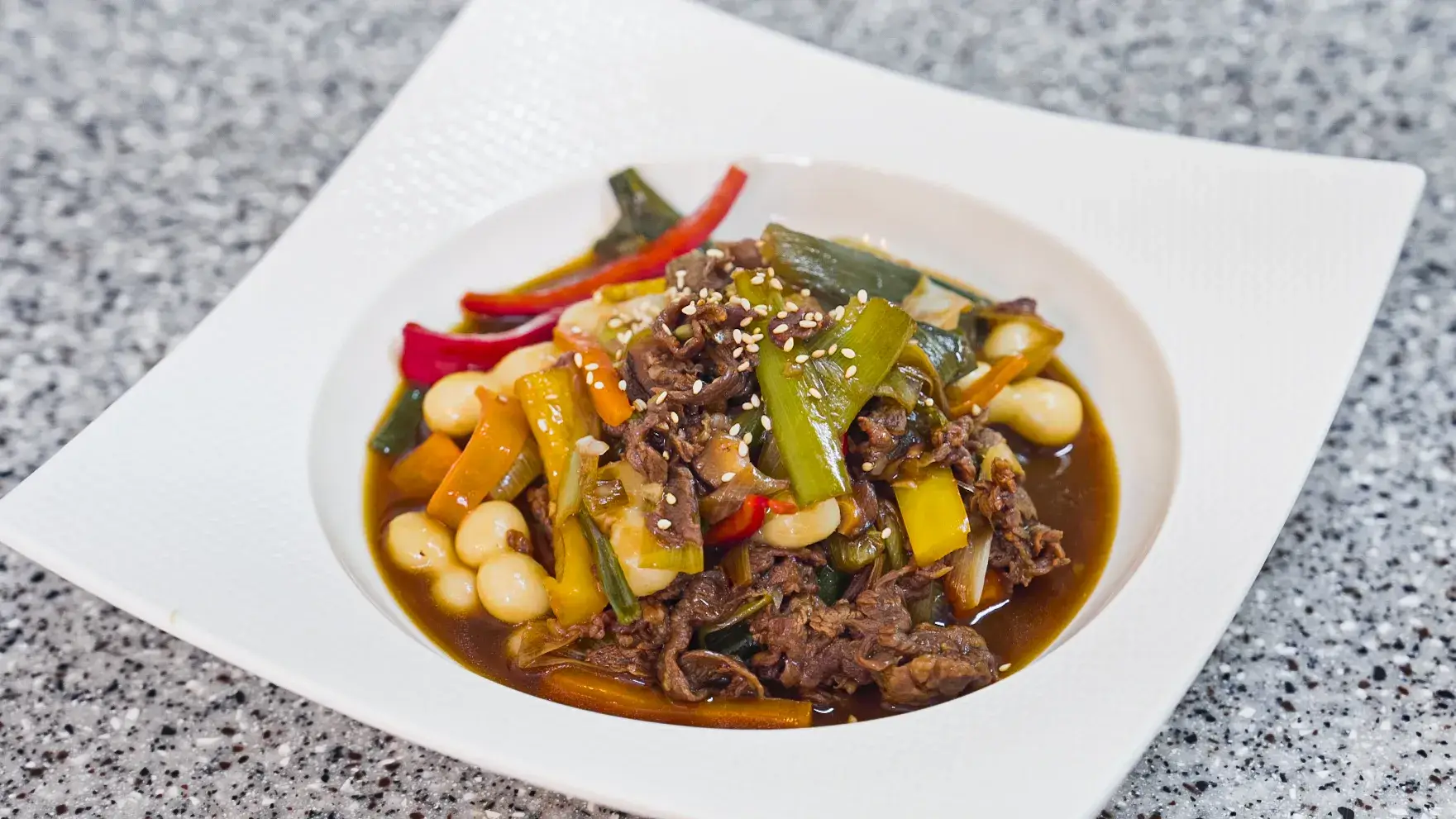
Gungjung Tteokbokki (Royal Tteokbokki)
Before fiery gochujang-drenched rice cakes became Korea’s beloved street food, there was a refined, savory dish gracing the tables of Joseon Dynasty royalty. Gungjung Tteokbokki (궁중떡볶이) represents the original form of tteokbokki, a sophisticated stir-fried rice cake preparation that showcases the elegance of Korean palace cuisine. Unlike its modern spicy counterpart, this royal court version features tender rice cakes combined with marinated beef, assorted mushrooms, and colorful vegetables, all gently cooked in a fragrant soy sauce and sesame oil-based sauce.
This dish exemplifies the core philosophy of Korean royal court cuisine: achieving harmony through carefully balanced flavors and textures while highlighting the natural taste of each premium ingredient. Whether you’re sensitive to spicy foods, cooking for young children, or simply seeking to explore the historical depth of Korean culinary traditions, Gungjung Tteokbokki offers an accessible gateway into authentic Korean cooking.

Bulguri: BTS Jungkook’s Buldak Neoguri Ramen
Bulguri brings together two completely different sides of Korean ramyeon culture: the fiery, sauce-coated intensity of Buldak and the savory seafood character of Neoguri. The result is chewy, glossy, aggressively spicy, and surprisingly aromatic once a final drizzle of perilla oil hits the hot noodles.

Rosé Carbonara Buldak Ramen: Creamy Spicy Ramen
Rosé Carbonara Buldak Ramen takes one of Korea’s most extreme food exports and turns the heat down without turning the flavor down. Built from Carbonara Buldak Ramen, this Korean ramen recipe stirs in milk and mozzarella cheese until the packet’s fiery orange-red sauce softens into a glossy, blush-pink coating. Add a handful of tteokbokki rice cakes and you have a rich, chewy, cheese-pulled bowl that’s ready faster than delivery.

Chapaguri (Ram-don): Korean Instant Noodles with Beef
Every instant-noodle aisle in Korea holds two rival bestsellers — Chapagetti and Neoguri — and chapaguri exists because someone, decades ago, decided not to choose between them. This Korean instant noodle recipe layers black-bean sweetness against seafood-forward heat, and it takes about 15–20 minutes from boiling water to bowl. Its global fame arrived through an Oscar-winning film, but its everyday charm has always been Korean convenience-store and dorm-room cooking at its cleverest.

Bibim Guksu: Korean Spicy Mixed Noodles
On sweltering summer afternoons across Korea, bibim guksu (비빔국수) — Korean spicy mixed noodles — is the dish that revives a lost appetite. Thin wheat noodles get tangled in a fiery-sweet gochujang sauce, then crowned with crunchy vegetables and a soft egg. Ready in about 20 minutes with almost no active cooking, it’s one of the fastest ways to bring an authentic Korean flavor balance to your table.

Yukjeon: Korean Beef Pancake (Pan-Fried Beef Slices)
Lay a slice of just-fried yukjeon on your tongue and it barely needs chewing: a whisper of egg, a hint of salt, and beef so thin it dissolves. Yukjeon (육전, "YOOK-jun") — pan-fried beef slices, or the Korean beef pancake — is the most elegant of the jeon (전), Korea’s battered, pan-fried dishes. With Chuseok falling on September 25 this year, it’s the moment to learn this 30-minute Korean beef pancake recipe.

Vegan Bibimbap with Yak-Gochujang
Vegan bibimbap proves that Korea’s most iconic rice bowl doesn’t need meat, egg, or honey to deliver its full range of color, crunch, and flavor. Underneath the vivid arrangement of five namul vegetables sits the real engineering: a spoonful of vegan yak-gochujang, the stir-fried, nuttier cousin of Korea’s famous fermented chili paste. Every element is prepped and seasoned on its own before it ever meets the rice — which is exactly why the first bite tastes balanced rather than like a pile of cooked vegetables dumped over a bowl.

Yuja-cheong: Korean Yuzu Marmalade
Open a jar of Yuja-cheong and the first impression is perfume: floral citrus, sharp acidity, and the gentle bitterness of softened peel. It preserves Korea’s short yuja season for drinks and desserts year-round.

Yeolmu Kimchi: Crisp Summer Radish & Cabbage Kimchi
As soon as summer radishes and loose-leaf cabbage hit Korean markets, home cooks reach for a big basin and start a batch of yeolmu kimchi — the crisp, tangy counterpart to the deep-red, months-aged kimchi of winter. Blending yeolmu with eolgari baechu is the classic home-kitchen move: it stretches a bundle of radish greens into a full basin of kimchi and layers two textures — peppery, springy radish leaf against tender, sweet cabbage — into one bowl. Ready within a day of salting, it’s the kimchi that shows up beside cold noodles the moment the weather turns hot, and like other fresh, quickly fermented kimchi, it carries real gut-health benefits worth understanding honestly.

Korean BBQ Onion Salad (Yangpa Jeorim)
Korean BBQ Onion Salad is one of those small dishes that can make a home barbecue immediately feel more like a Korean restaurant meal. Cool, crisp onion meets a glossy sweet-and-sour dressing, while mustard or wasabi adds just enough sharpness to stand up to sizzling pork or beef.
