


Explore Recipes
Recipe list

Simple and Delicious Cucumber Salad
Sometimes the most memorable dishes are the simplest ones. This Simple and Delicious Cucumber Salad is proof that when you start with fresh, quality ingredients, you need very little to create something extraordinary. Just paper-thin cucumber slices dressed in fruity olive oil, brightened with fresh dill, and seasoned with nothing more than salt and pepper—it’s the kind of clean, honest cooking that lets each ingredient shine.
This style of cucumber salad has earned its place on tables around the world precisely because of its elegant simplicity. Unlike heavily dressed salads that mask the vegetable’s natural character, this preparation celebrates the cucumber’s refreshing crunch and subtle sweetness. The olive oil creates a light, glossy coating that carries the aromatic dill to every bite, while the salt draws out just enough moisture to concentrate the flavors without making the salad watery.
Whether served alongside a sizzling Korean BBQ spread, grilled Mediterranean fish, or a simple weeknight dinner, this versatile side dish provides the perfect refreshing counterpoint to rich, savory main courses.


Rose Tteokbokki
When Korea’s beloved spicy rice cakes meet Italian-inspired rosé sauce, something magical happens. Rose Tteokbokki (로제떡볶이) has captured the hearts of food lovers worldwide with its beautiful pinkish-orange hue and perfectly balanced flavor that bridges two culinary traditions.
This modern twist on the classic Korean street food has exploded across Seoul’s delivery apps, social media feeds, and now—your own kitchen. Unlike the fiery red traditional version, Rose Tteokbokki wraps those impossibly chewy rice cakes in a velvety, mildly spicy sauce that even heat-sensitive palates can enjoy.

Budae Jjigae (Korean Army Stew)
Few dishes capture the spirit of Korean resilience quite like Budae Jjigae. This bubbling, spicy stew transforms humble ingredients—Spam, sausages, kimchi, and instant noodles—into a deeply satisfying meal that warms both body and soul. Born from post-Korean War necessity, Budae Jjigae has evolved from a survival food into one of Korea’s most beloved comfort dishes, now enjoyed in restaurants and homes worldwide.
Whether you’re craving authentic Korean comfort food on a cold evening or looking to explore Korean culinary history through your kitchen, this guide will help you understand what makes this stew special and how to achieve perfect results every time.


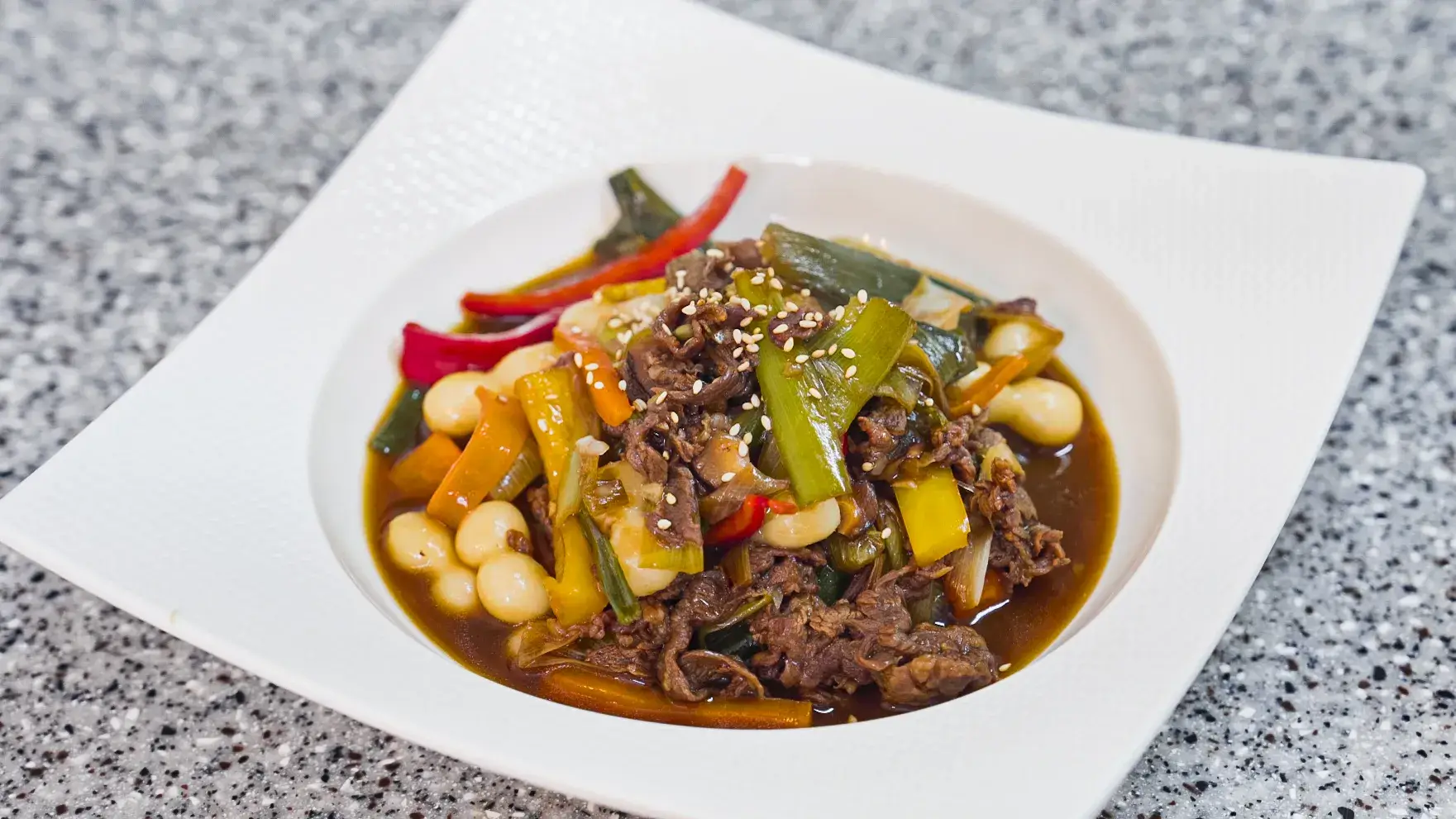
Gungjung Tteokbokki (Royal Tteokbokki)
Before fiery gochujang-drenched rice cakes became Korea’s beloved street food, there was a refined, savory dish gracing the tables of Joseon Dynasty royalty. Gungjung Tteokbokki (궁중떡볶이) represents the original form of tteokbokki, a sophisticated stir-fried rice cake preparation that showcases the elegance of Korean palace cuisine. Unlike its modern spicy counterpart, this royal court version features tender rice cakes combined with marinated beef, assorted mushrooms, and colorful vegetables, all gently cooked in a fragrant soy sauce and sesame oil-based sauce.
This dish exemplifies the core philosophy of Korean royal court cuisine: achieving harmony through carefully balanced flavors and textures while highlighting the natural taste of each premium ingredient. Whether you’re sensitive to spicy foods, cooking for young children, or simply seeking to explore the historical depth of Korean culinary traditions, Gungjung Tteokbokki offers an accessible gateway into authentic Korean cooking.

Perilla Oil Makguksu: Korean Buckwheat Noodle Recipe
Perilla oil makguksu announces itself before the first bite: a warm, toasty nuttiness rises as golden perilla oil hits cold buckwheat noodles, followed by the briny crunch of crushed seaweed and sesame. This Korean buckwheat noodle recipe skips the chili sauce of classic Gangwon-style makguksu for something mild, savory and deeply aromatic. It comes together in about 15 to 20 minutes with no broth to simmer.

Soy Sauce Bibim Guksu with Stone Octopus
Late autumn marks the start of stone octopus season in Korea, and it’s the perfect excuse to set the gochujang aside. This soy sauce bibim guksu pairs icy-rinsed somyeon with tender octopus, crisp cucumber and fragrant wild greens, making Korean cold noodles with octopus that come together in about 30 to 40 minutes.

Halloween Bibim Guksu: Spooky Eyeball Noodles
Looking for a spooky and delicious dish to serve this Halloween? Halloween Eyeball Bibim Guksu puts a playful twist on Korean spicy mixed noodles, combining chewy noodles coated in a sweet, spicy, and tangy gochujang sauce with creepy edible eyeballs made from fresh mozzarella and blueberries.
Ready in just 20–25 minutes, this easy Korean Halloween recipe is perfect for themed parties, family gatherings, or anyone looking to bring a little fright to the dinner table. With its vibrant red noodles and eye-catching decorations, it’s a fun way to enjoy authentic Korean flavors with a creative Halloween twist.

Halloween Tteokbokki: Spooky Korean Spicy Rice Cakes
Halloween Tteokbokki is a spooky twist on Korea’s beloved spicy rice cakes, combining chewy rice cakes, savory fish cakes, and a rich, sweet-and-spicy gochujang sauce. With ghost- and pumpkin-shaped fish cakes and a skull-decorated egg, this classic Korean street food transforms into a fun and festive Halloween dish.
Ready in just 30 minutes, this easy Halloween Tteokbokki recipe is perfect for Halloween parties, family gatherings, or a creative Korean-inspired meal. The spice level is easily adjustable, making it a delicious treat for anyone who loves Korean food with a playful seasonal twist.

Kimchi Braised Pork Ribs (Kimchi Deunggalbi-jjim)
Few dishes use overripe kimchi better than kimchi braised pork ribs, simmered until the kimchi turns silky and crimson and the ribs pull apart with chopsticks. This Korean braised pork ribs dish takes about 70 to 80 minutes, including soaking and parboiling.

Janchi Guksu: Korean Banquet Noodle Soup
In Korea, asking a friend “When will you feed us noodles?” is a playful way of asking when they plan to marry — and the noodles in question are janchi guksu. This Korean noodle soup pairs silky somyeon with a golden anchovy-kelp broth and a confetti of egg, zucchini and carrot, ready in about 30 to 40 minutes.

Bulguri: BTS Jungkook’s Buldak Neoguri Ramen
Bulguri brings together two completely different sides of Korean ramyeon culture: the fiery, sauce-coated intensity of Buldak and the savory seafood character of Neoguri. The result is chewy, glossy, aggressively spicy, and surprisingly aromatic once a final drizzle of perilla oil hits the hot noodles.

Rosé Carbonara Buldak Ramen: Creamy Spicy Ramen
Rosé Carbonara Buldak Ramen takes one of Korea’s most extreme food exports and turns the heat down without turning the flavor down. Built from Carbonara Buldak Ramen, this Korean ramen recipe stirs in milk and mozzarella cheese until the packet’s fiery orange-red sauce softens into a glossy, blush-pink coating. Add a handful of tteokbokki rice cakes and you have a rich, chewy, cheese-pulled bowl that’s ready faster than delivery.

Chapaguri (Ram-don): Korean Instant Noodles with Beef
Every instant-noodle aisle in Korea holds two rival bestsellers — Chapagetti and Neoguri — and chapaguri exists because someone, decades ago, decided not to choose between them. This Korean instant noodle recipe layers black-bean sweetness against seafood-forward heat, and it takes about 15–20 minutes from boiling water to bowl. Its global fame arrived through an Oscar-winning film, but its everyday charm has always been Korean convenience-store and dorm-room cooking at its cleverest.
