


There are Korean BBQ restaurants on almost every corner in Gangnam — and then there is Charari. Tucked into the residential lanes of Sinsa-dong just a short walk from the famous Garosu-gil boulevard, this intimate restaurant does something quietly radical: it pairs meticulously prepared modern Korean dishes with traditional craft spirits most restaurants don’t even stock. The flagship 불등갈비, fire-marinated galbi ribs lacquered in bold, complex sauce, arrives at your table with the confidence of a kitchen that has nothing to prove. Add cold-dressed pork jowl, silky seaweed purée, and a poured glass of Wangyulju — Korea’s very first chestnut distilled spirit — and you begin to understand that Charari isn’t just another galbi spot. It is a case study in what thoughtful, contemporary Korean dining can be.
Charari: Seoul's Best Galbi & Korean Spirits in Sinsa-dong
Gangnam-gu, Seoul, Republic of Korea 663-21 Sinsa-dong
Editor: James Lee


Overview
Introduction
Operating hours
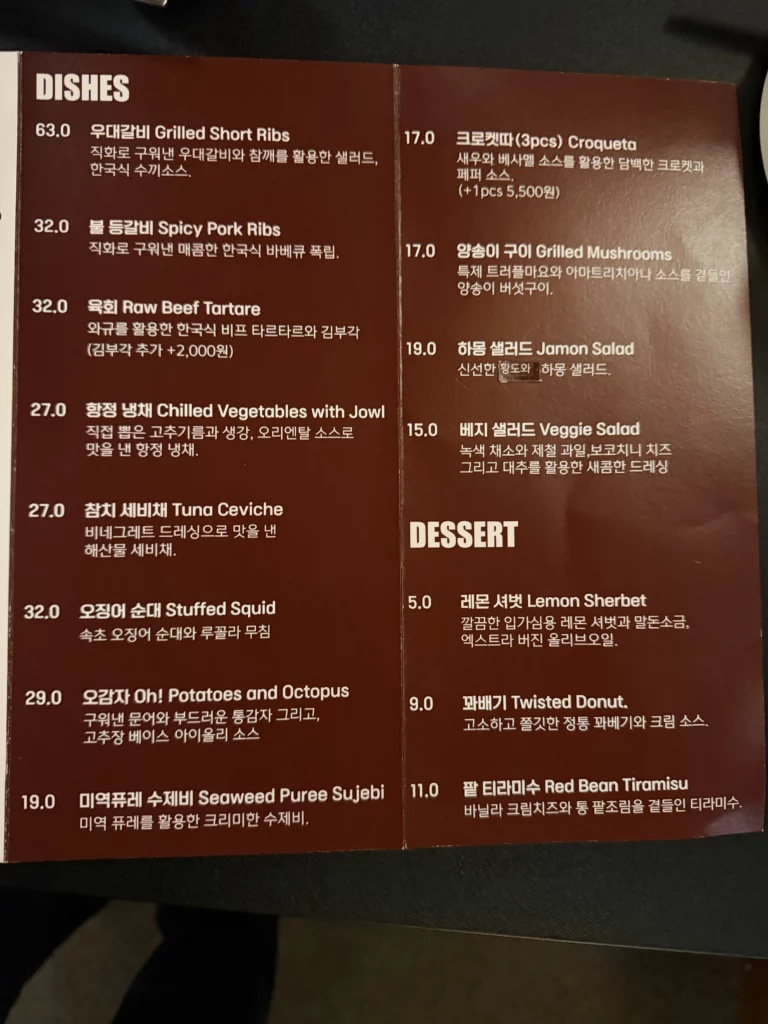
Menu
Editor's Detail
The sweet, smoky scent of caramelizing marinade hits you before you even find a seat. Charari (차라리), tucked into a quiet residential block at the edge of Sinsa-dong in Gangnam, Seoul, is the kind of place that rewards curiosity — the sort of restaurant you discover through a local tip rather than a travel blog. The menu is compact and deliberate, built around fire-marinated galbi and a curated selection of Korean traditional spirits (전통주, jeontongju) that most Western visitors have never encountered. It sits at the intersection of honest Korean cooking and a growing craft liquor culture that is quietly reshaping how Seoul eats and drinks.
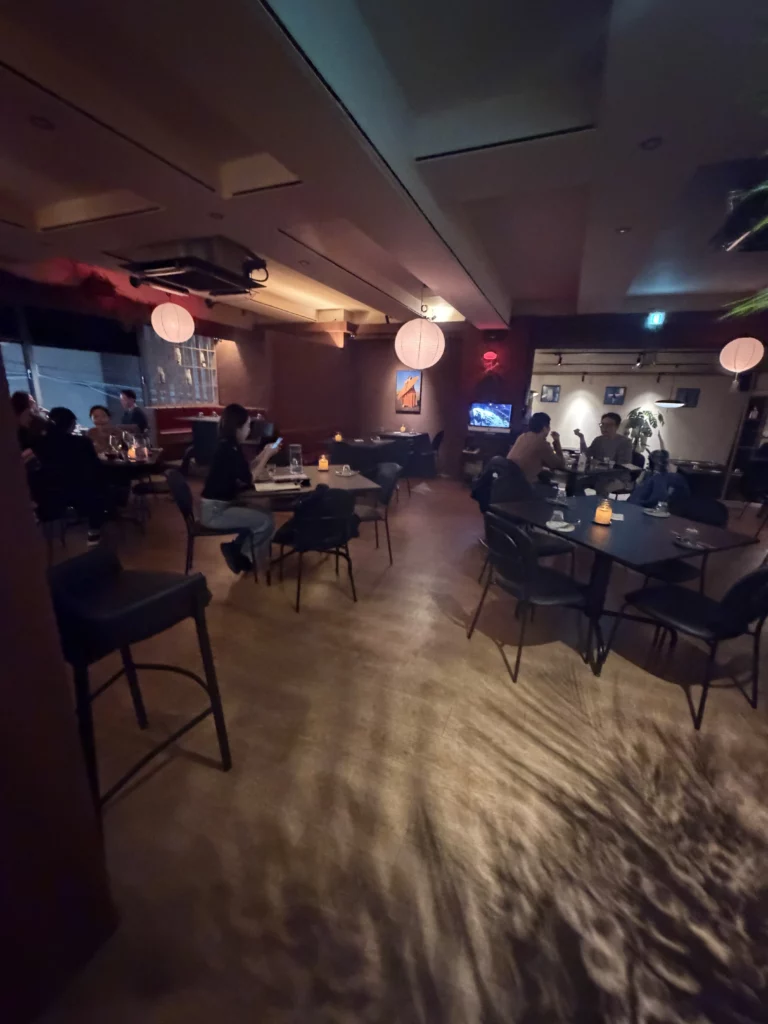
For English-speaking food travelers, Charari offers something increasingly rare near Garosu-gil: a genuinely neighborhood-rooted dining experience in a part of the city increasingly dominated by international brands and chain concepts.
Table of Contents
What Is Charari? A Modern Korean Dining Concept
Charari positions itself at an interesting crossroads. It is not a traditional Korean BBQ house in the style of the legendary Samwon Garden a few kilometers away in Gangnam, with its sprawling garden and white-glove service. Nor is it the no-frills, charcoal-smoke-billowing style of Mapo Charcoal Pork Ribs in the Nonhyeon-dong area. Charari sits between these worlds — small, considered, and driven by the conviction that Korean food deserves thoughtful pairings with drinks as complex as the food itself.
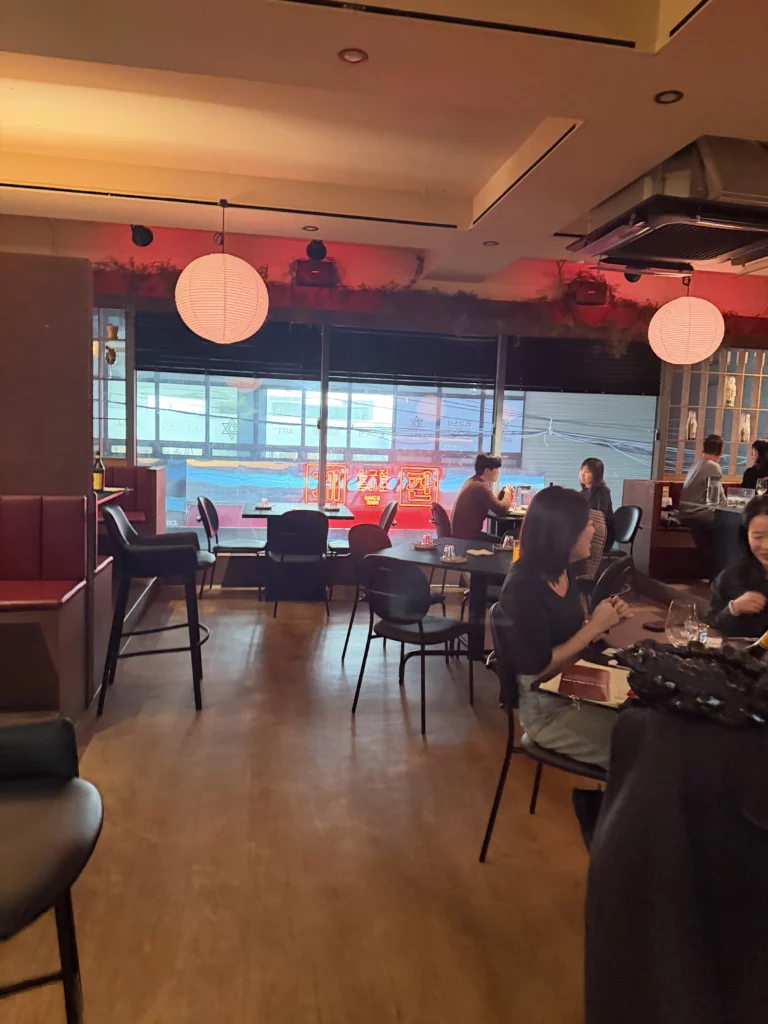
The restaurant’s name, "차라리" (charari), is a Korean adverb meaning "rather" or "instead" — as if to say: rather than the ordinary, choose this. It is a small piece of branding that hints at the restaurant’s philosophy: opt for something more intentional.
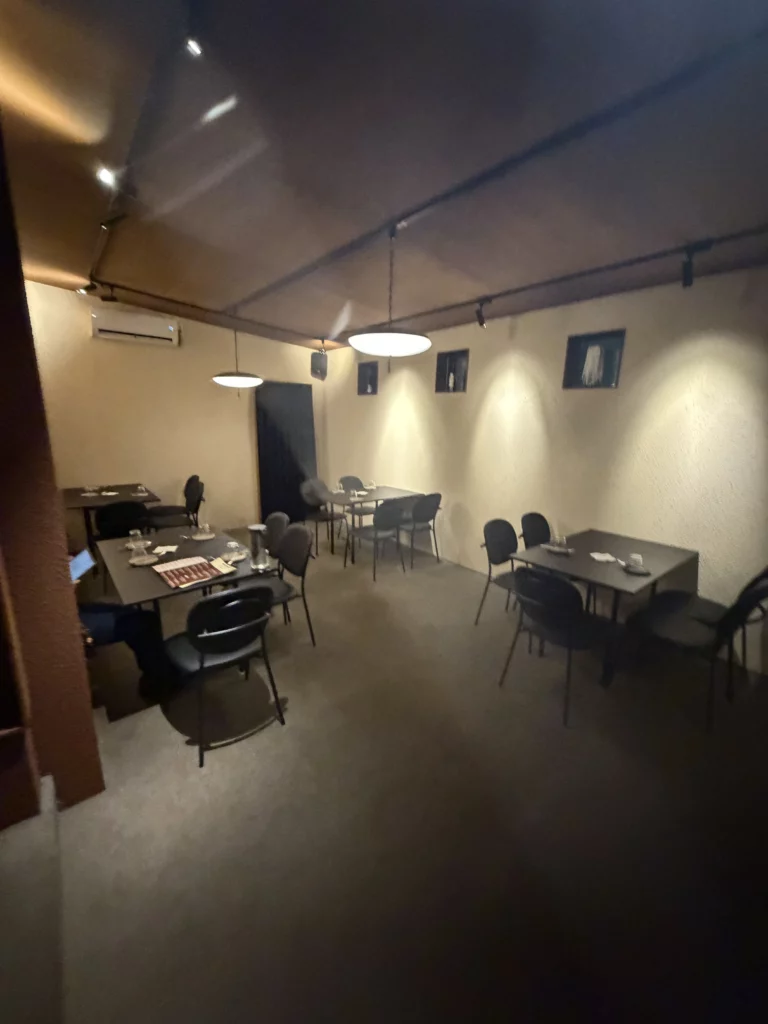
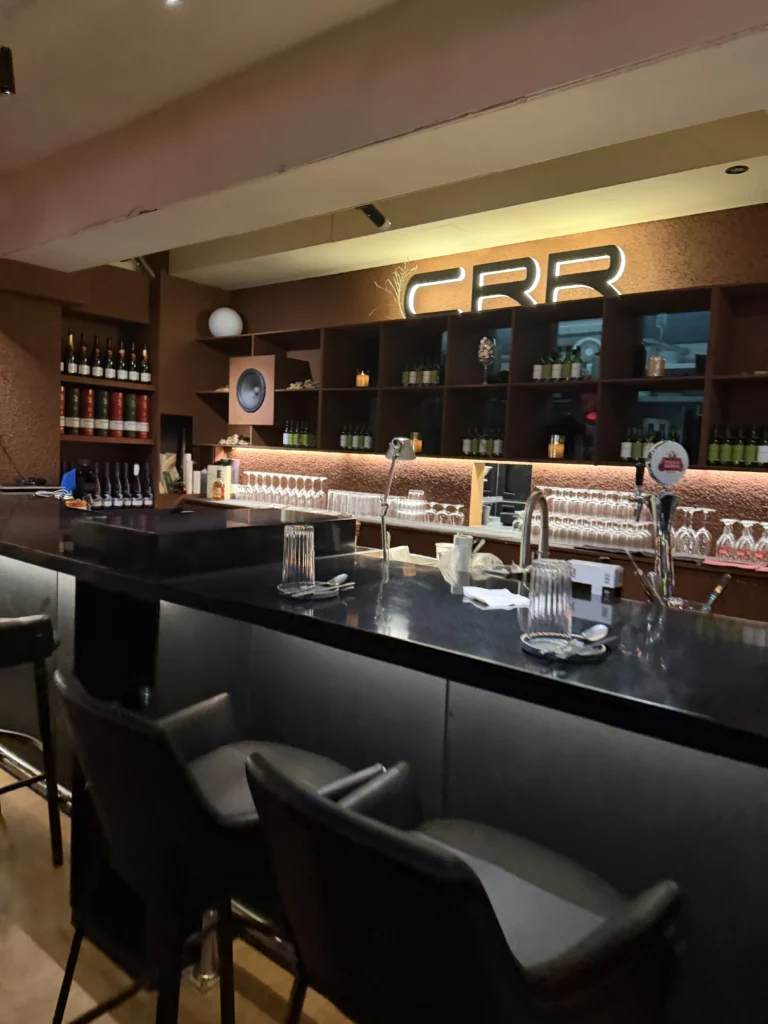
The dining room is intimate, the atmosphere unhurried. This is Sinsa-dong after all — the neighborhood adjacent to the tree-lined Garosu-gil avenue, where boutique coffee shops and independent fashion stores sit beside local restaurants that have been feeding the same regulars for years. Charari fits that rhythm.
The Signature Dish: 불등갈비 (Fire Galbi)
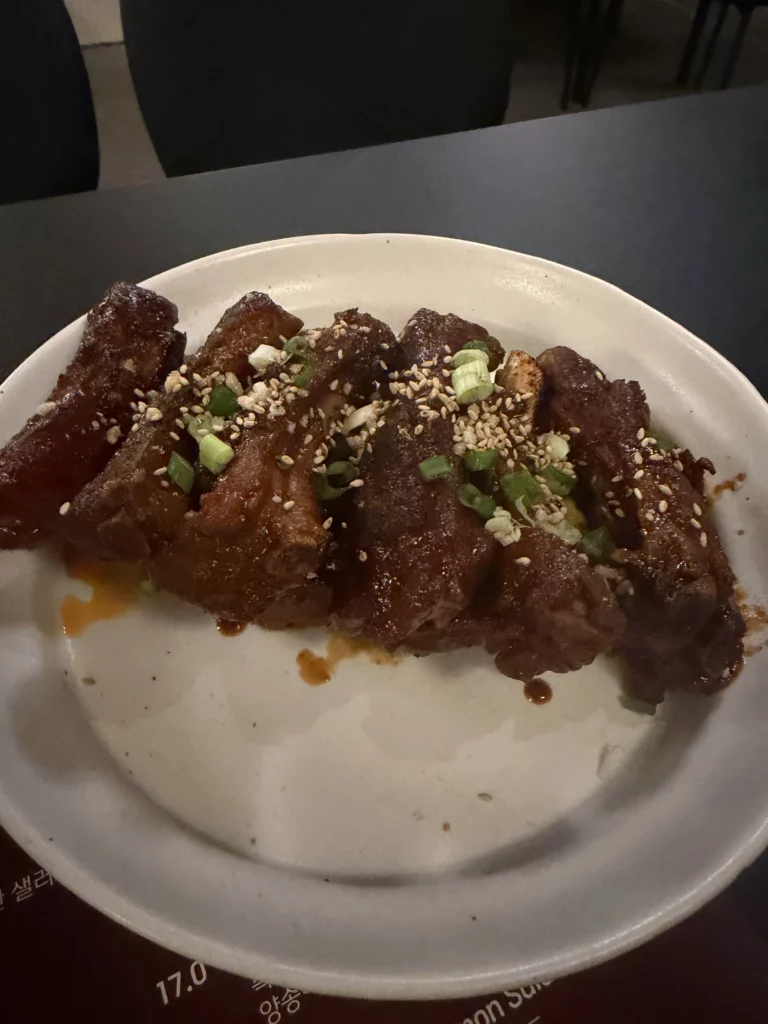
불등갈비 (bul-deung galbi) is the centerpiece of any meal at Charari. "Bul" (불) means fire, and "deung galbi" (등갈비) refers to back ribs — the cut taken from along the spine, which carries a satisfying balance of meat and natural fat marbling. The result is galbi with presence: ribs that have absorbed a deeply savory-sweet marinade and emerge from the heat with lacquered, slightly charred edges and a tender interior that pulls cleanly from the bone.
What separates this galbi from the dozens of options in Sinsa-dong alone is the marinade’s character. Unlike the clean, soy-forward profiles of premium Hanwoo galbi at destination restaurants, Charari’s fire galbi leans into complexity — fermented depth (likely from doenjang or gochujang bases), a noticeable but not aggressive heat, and a finishing sweetness that lingers rather than overwhelms. Think of it as sitting somewhere between traditional marinated galbi and the bolder flavors of charcoal-grilled Korean ribs, but with an elevated culinary sensibility that clearly comes from a kitchen that thinks carefully about flavor.
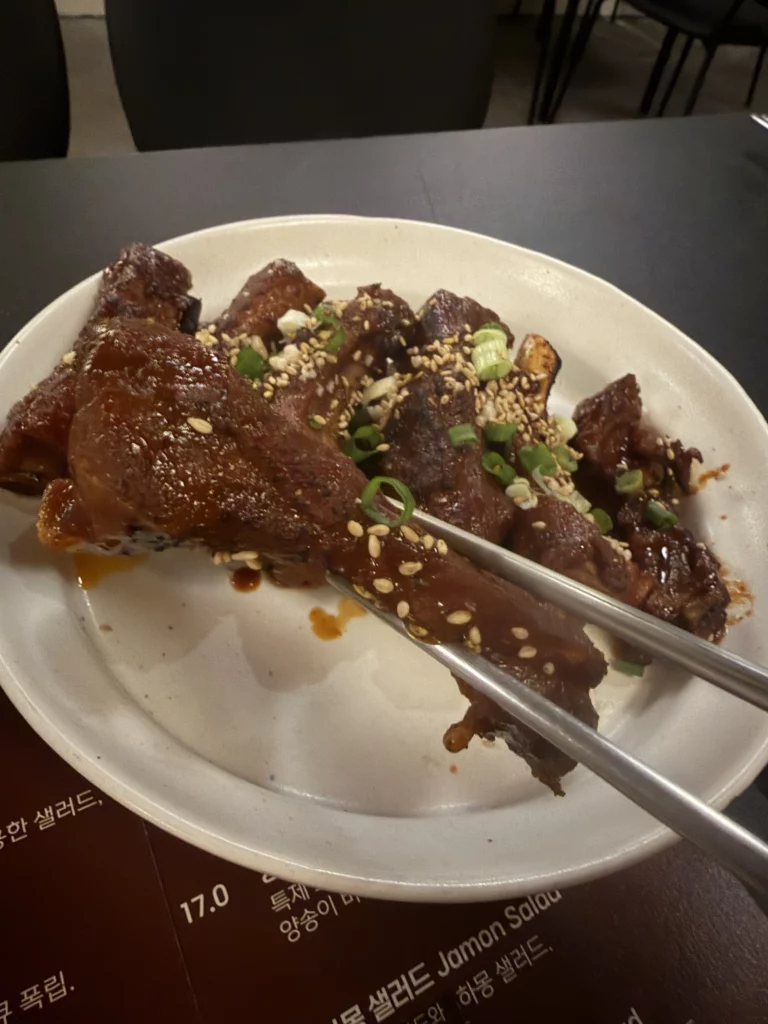
Spice level: approximately 4–5 out of 10 — present warmth that builds over the meal without becoming aggressive. Accessible for most international diners. Flavor profile: complex umami-forward, caramelized sweet finish, gentle heat. Texture: slightly crunchy caramelized exterior, tender and juicy meat that releases cleanly from the back rib bone.
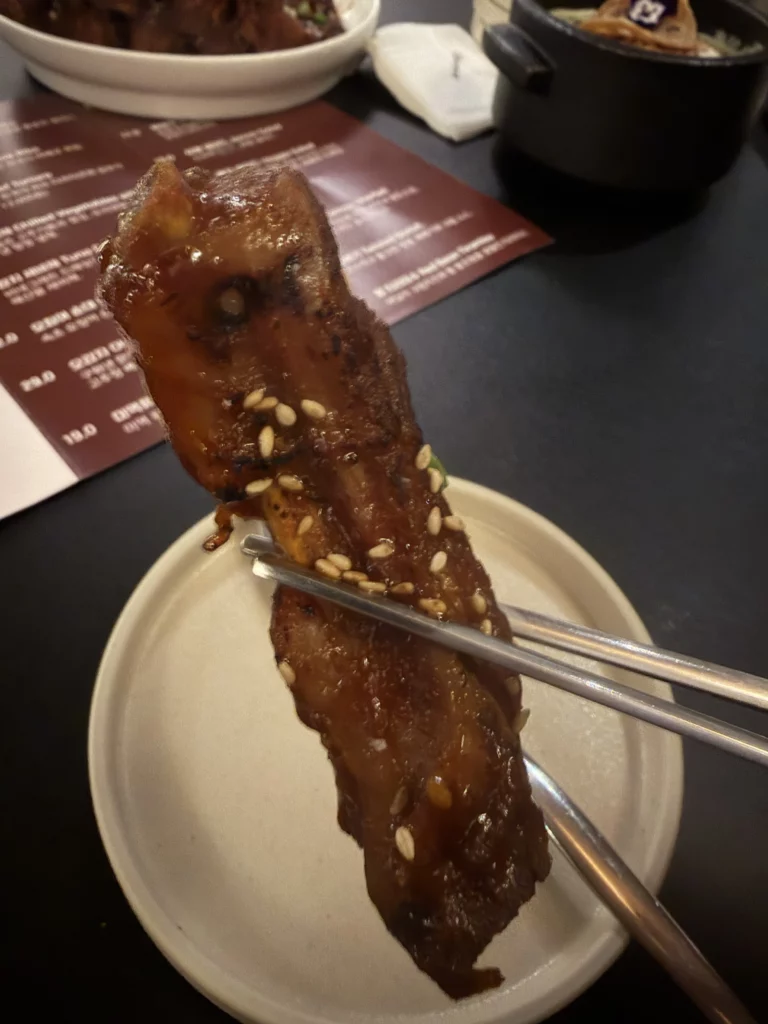
Galbi has historically been considered celebration food in Korea. During the Joseon Dynasty (1392–1910), beef and pork ribs were reserved for special occasions and offerings during ancestral rites. Today, ordering galbi in a place like Charari carries that festive spirit into a contemporary context — the ritual preserved, the format refreshed. The cultural background of Korean galbi’s evolution goes back centuries, but restaurants like Charari are writing its next chapter.
Beyond the Grill: Cold Pork Jowl, Potato, and Seaweed Purée
A meal at Charari extends well past the galbi. Three supporting dishes complete the picture — each one demonstrating that the kitchen cooks with as much attention to contrast and seasonality as to the main event.
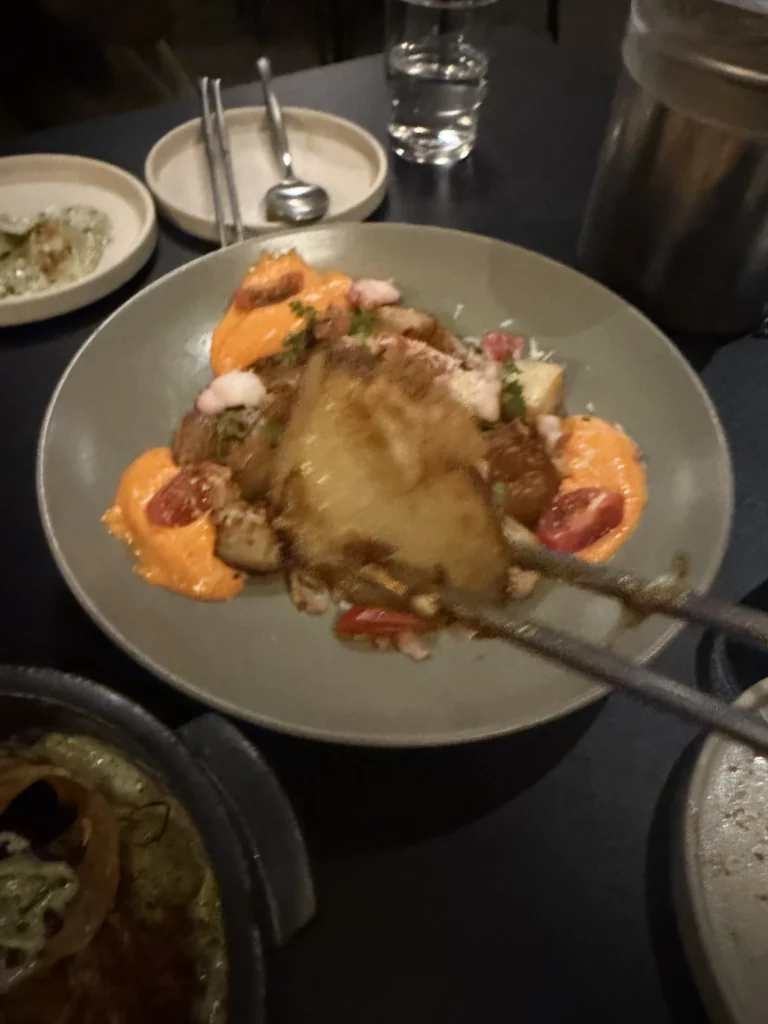
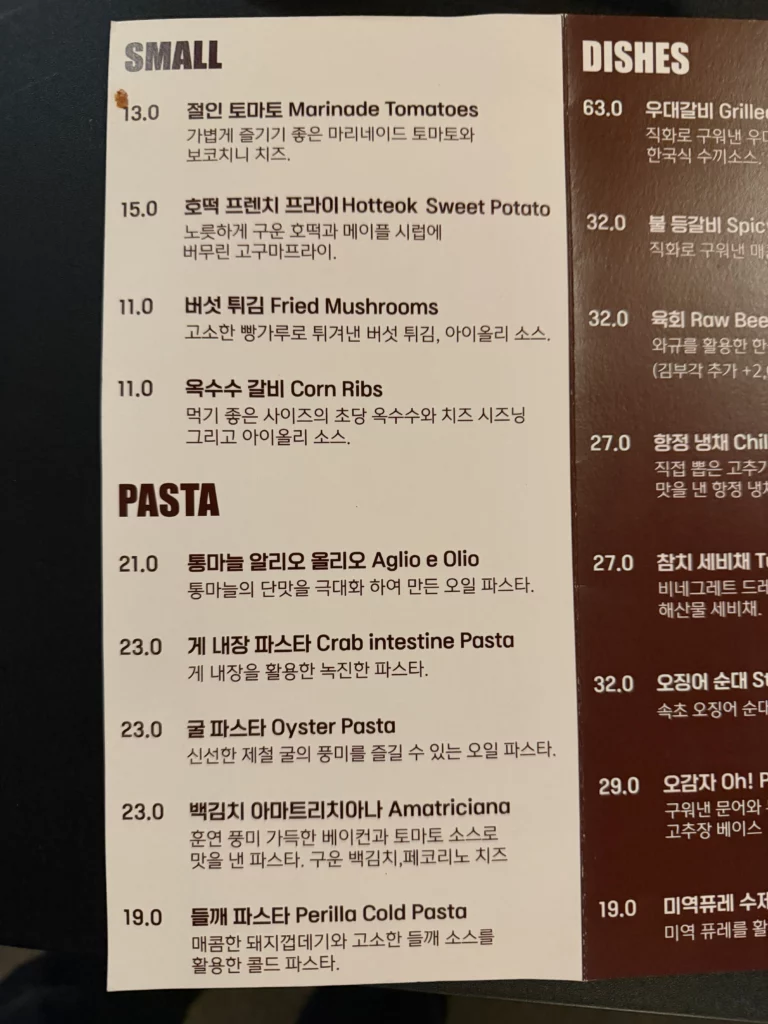
항정냉채 (Hangjeong Naengchae — Cold Pork Jowl Salad) features thinly sliced pork jowl (항정살, hangjeong-sal) — one of Korea’s most prized pork cuts, prized for its dense, toothsome texture and high fat-to-lean ratio. Served cold as a naengchae (냉채, chilled salad-style dish), the jowl is dressed in a tangy, slightly sweet sauce with crisp vegetable garnish. The contrast between the rich meat and the cooling, acidic dressing is deliberate: it balances the fire of the galbi and prepares the palate for the next bite. Naengchae preparations are closely associated with Korean banquet and royal court cuisine, where contrast and harmony between hot and cold dishes defined the meal’s architecture.
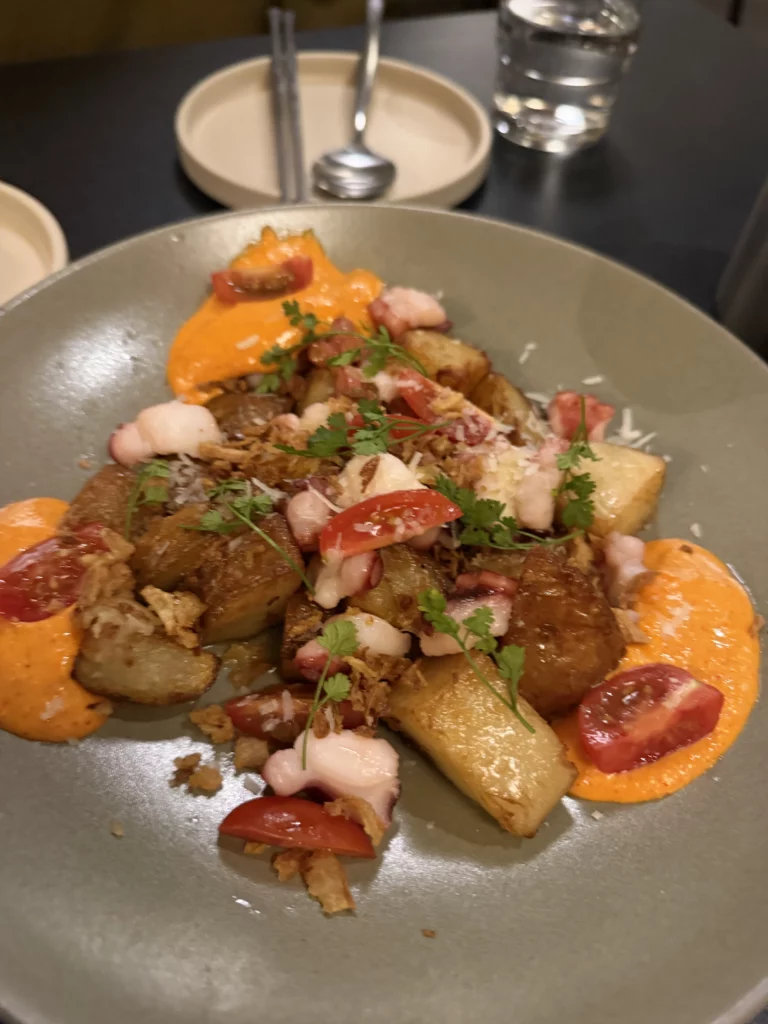
오감자 (Ogamja — Five-Spiced Potato) arrives as a textural interlude — a potato preparation that draws on Korean home-cooking traditions of braising root vegetables in savory, gently spiced sauces. Simple on the surface, this dish is the kind of banchan element that quietly reveals a kitchen’s calibration. For a deeper look at how small side dishes like this function in Korean dining, the essential guide to banchan at Korean BBQ explains why every bite of supporting food matters as much as the main.
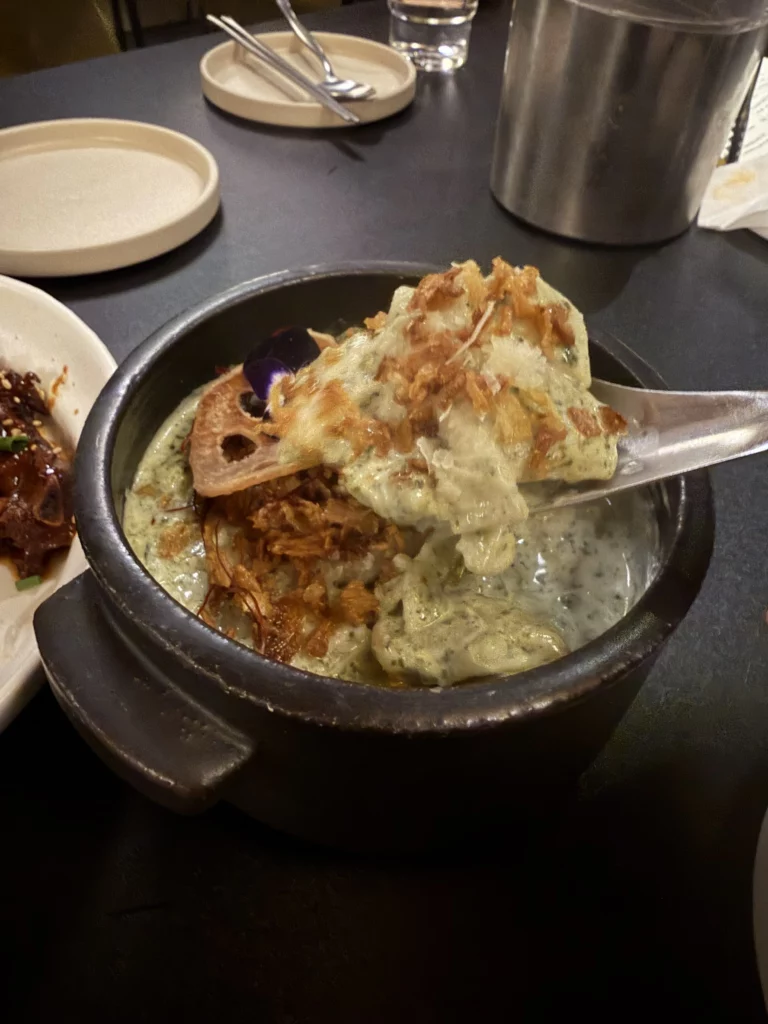
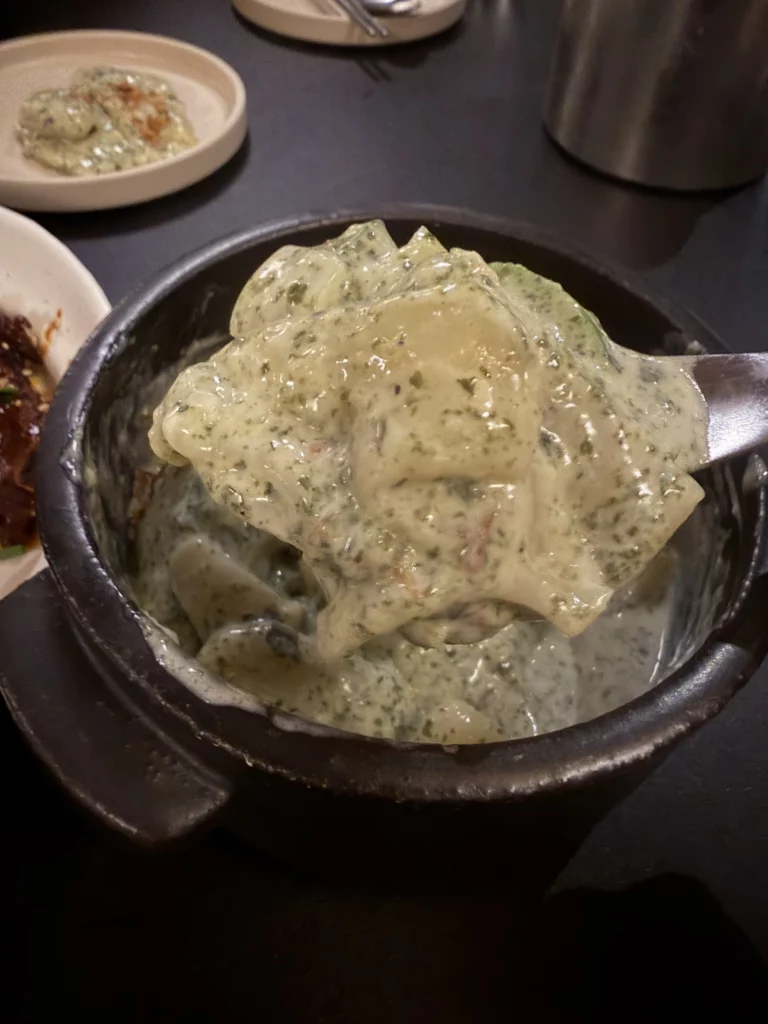
미역퓨레 (Miyeok Purée — Seaweed Purée) is the most contemporary-minded item on the table. Rather than serving miyeok (미역) in its traditional form — as seaweed soup (miyeokguk) or as a cold salad — Charari blends it into a smooth, deeply green purée. The result is intensely mineral, slightly briny, and surprisingly rich. Miyeok (Korean seaweed) is one of the most culturally significant ingredients in Korean cuisine, traditionally consumed after childbirth for its high iodine and calcium content. Serving it as a purée is Charari’s way of honoring tradition while speaking a contemporary culinary language. It pairs extraordinarily well with a pour of traditional spirits.
Korea’s Craft Spirits: Wangyulju and Chunhee 25
This is where Charari earns its most distinctive identity. While many Korean restaurants default to a soju and beer menu, Charari curates a selection of jeontongju (전통주, traditional Korean craft spirits) that would be unfamiliar to most international visitors — and exciting to Korean food enthusiasts who want to go deeper.
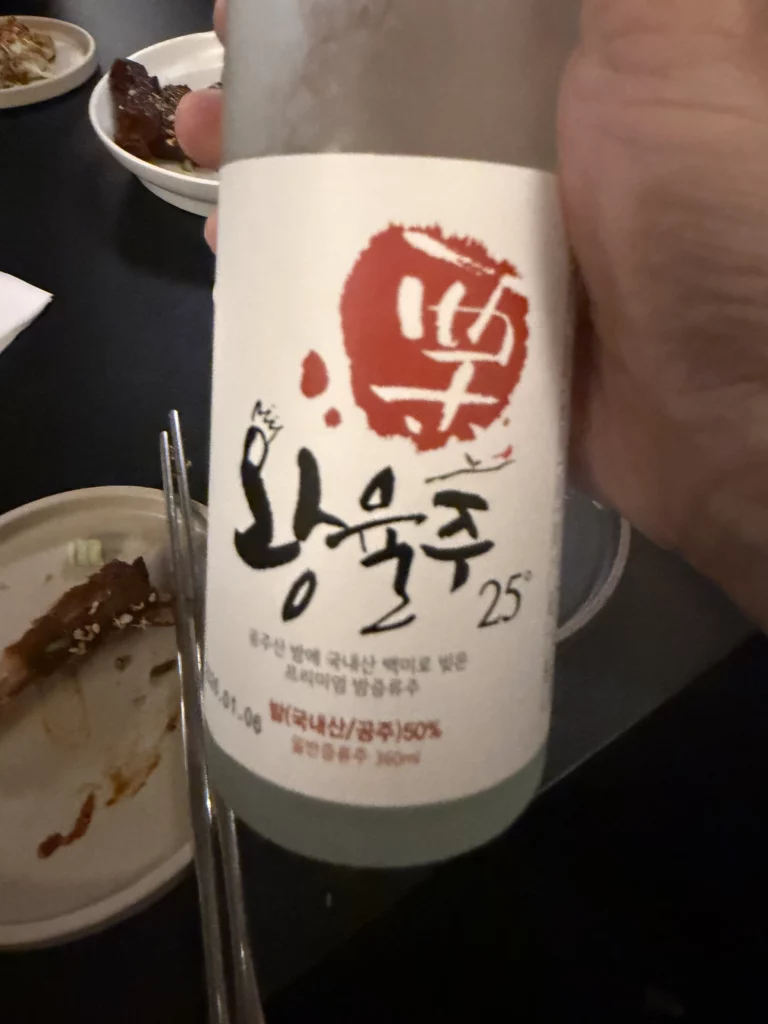
왕율주 25% (Wangyulju, "King Chestnut Spirit") is produced by 사곡양조원 (Sagok Brewery) in Gongju, South Chungcheong Province — a region historically famous for its chestnuts. Wangyulju holds a remarkable distinction: it is recognized as Korea’s first chestnut-based distilled spirit. The 25% ABV version offered at Charari is smooth and approachable, with a subtle nutty sweetness from the Gongju chestnuts (공주 밤) at its core and a clean, dry finish that makes it remarkably food-friendly. Unlike commercial soju (which is distilled from grain starches and then diluted), Wangyulju is a genuinely grain-and-chestnut distillate — closer in character to a mild Korean soju or a lightly sweet eau-de-vie than to anything available at a convenience store. It is the kind of spirit that makes the fire galbi taste even better.
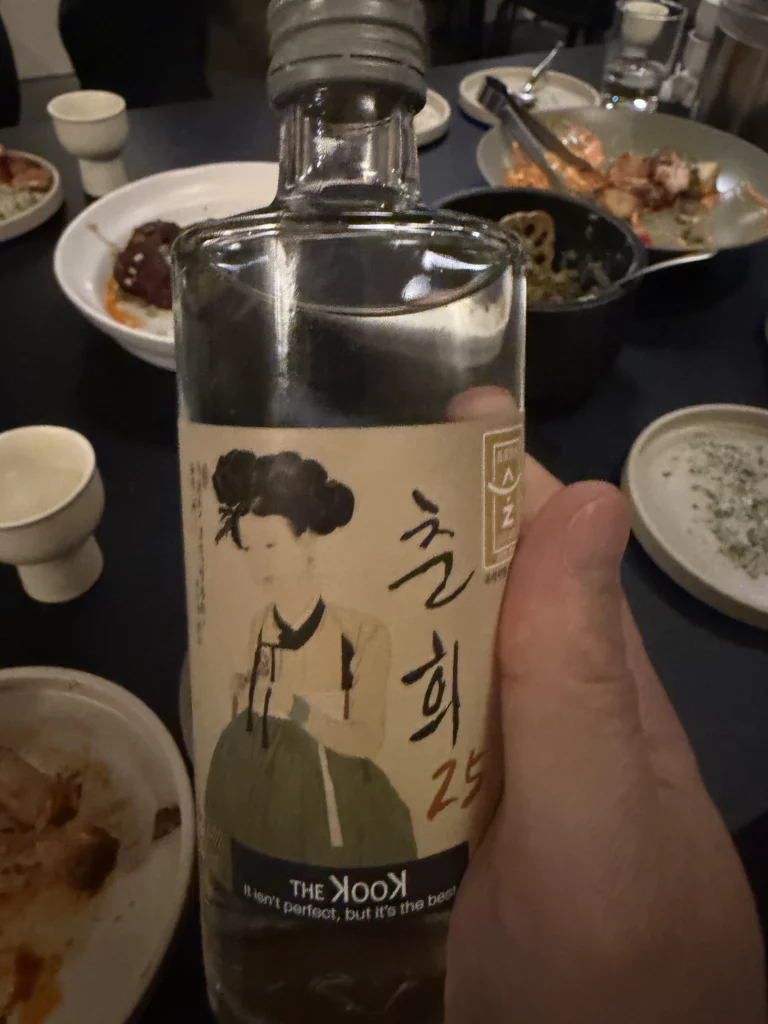
춘희25 (Chunhee 25%) is a traditional Korean spirit from 착한농부 (Chakhan Nongbu, or "Good Farmer") — a small-batch producer working with traditional fermentation methods. At 25% ABV, Chunhee 25 is gentle enough for table drinking through multiple courses yet complex enough to reward slow sipping. The flavor is clean and slightly earthy, with the rounded character that comes from traditional nuruk (누룩) fermentation — Korea’s native fermentation starter culture, which produces flavor compounds distinctly different from Japanese or Western yeasts.
The broader context: Korea is experiencing a significant renaissance in traditional liquor culture. A new generation of breweries and distilleries is reviving historic recipes and producing premium craft spirits that are finding their way onto the menus of restaurants like Charari. This movement mirrors the craft beer or natural wine trends in the West, and it is accelerating. Pairing these spirits thoughtfully with food — the way Charari does — is part of that evolution.
FAQ: Everything First-Timers Need to Know
What makes 불등갈비 (Fire Galbi) uniquely Korean?
Galbi has roots in Korean culinary history dating back to royal court cuisine of the Joseon period. The technique of marinating beef or pork ribs in a soy-ganjang-based sauce before grilling over charcoal is distinctively Korean — the marinade does flavor work that Western BBQ typically achieves post-cooking through sauces. At Charari, "fire galbi" (불등갈비) uses back ribs (등갈비), which offer a different texture from the more commonly known L.A. galbi cut. The fire designation signals a boldly flavored, deeply caramelized preparation that goes beyond the subtler sweetness of premium Hanwoo galbi styles. Understanding the full spectrum of banchan and side dishes that surround galbi is equally important to understanding the meal.
What are the key flavors at Charari?
The three flavor pillars of a Charari meal are fire and umami (from the galbi marinade), cooling acidity (from the cold pork jowl naengchae), and mineral earthiness (from the seaweed purée). The jeontongju spirits add a fourth dimension: clean, nutty sweetness from chestnut distillation (Wangyulju) and earthy, rounded complexity from traditional fermentation (Chunhee 25). Together, these create a meal that cycles through contrast — heat and cool, rich and fresh, bold and clean — in a way that reflects the core Korean culinary philosophy of balance.
How spicy is the food, and what should first-timers expect?
On a 1–10 scale, the 불등갈비 sits at approximately 4–5 — enough heat to provide warmth and build over the meal, but unlikely to overwhelm diners accustomed to mild spice. The cold pork jowl dish and potato preparation offer welcome cooling contrast. For diners new to pairing food with Korean traditional spirits, the approach is simple: treat Wangyulju as you would a lightly sweet white spirit — a small pour between bites, not a shot. The cultural etiquette of Korean dining suggests pouring for others before yourself, and taking the meal slowly enough to cycle through all the flavors on the table.
What should I know before visiting Charari as a foreign diner?
Reservations are strongly recommended given the restaurant’s small size. Charari operates as a dinner-focused establishment — arriving hungry and with time to spare is the right mindset. If you plan to explore the jeontongju selection fully, consider sharing two or three pours across the table to compare the Wangyulju against the Chunhee 25. English menus may be limited, so it is worth knowing the key dish names: 불등갈비 (fire galbi), 항정냉채 (cold pork jowl), 오감자 (seasoned potato), 미역퓨레 (seaweed purée). The neighborhood itself — Sinsa-dong near Garosu-gil — is one of Seoul’s most walkable and pleasant, with cafés and boutiques worth exploring before or after dinner.
Location, Access, and Practical Tips
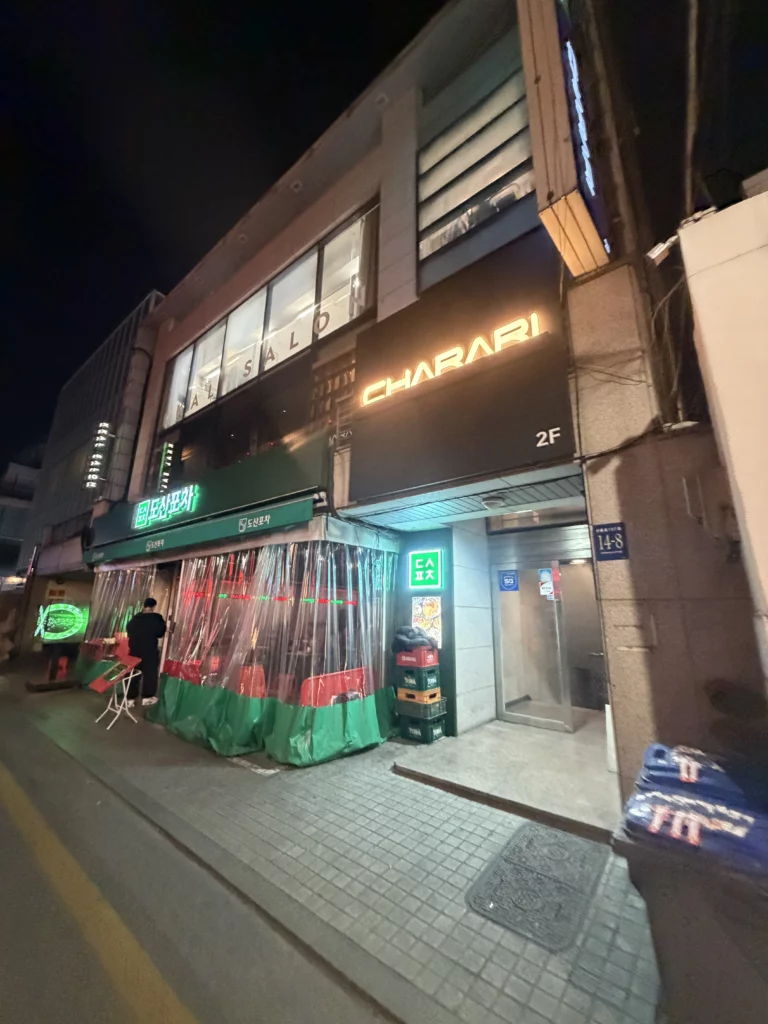
Charari (차라리) Address: 663-21, Sinsa-dong, Gangnam-gu, Seoul (서울 강남구 신사동 663-21) Nearest Station: Sinsa Station (신사역), Seoul Subway Line 3 — approximately 10 minutes walking Neighborhood: Between Sinsa-dong residential streets and Garosu-gil, Gangnam
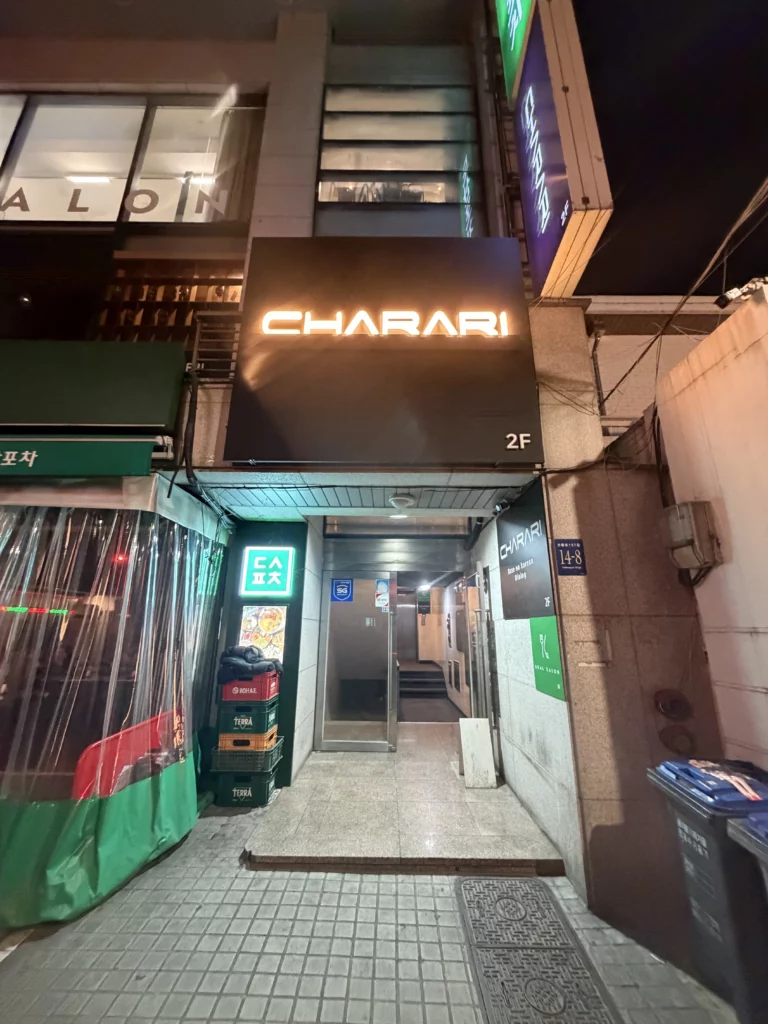
Sinsa-dong sits in the broader Gangnam district — a neighborhood that, despite its global reputation for wealth and entertainment, still contains many genuine local dining spots. Charari is one of them. If you are visiting the nearby Gimsukseoung aged samgyeopsal restaurant in Sinsa-dong on a separate evening, you’ll be in the same neighborhood and can easily plan a multi-night Sinsa-dong dining itinerary.
Price range: Approximately ₩35,000–₩60,000 per person including food and spirits Best for: Couples, small groups of 2–4, food travelers seeking modern Korean dining with craft spirits Not ideal for: Large groups, quick lunches, diners unfamiliar with traditional Korean spirits who prefer beer or soju
Why Charari Is Worth Your Evening
The growing interest in Korean cuisine globally — driven in part by the history and culture of fermented ingredients like gochujang entering mainstream international consciousness — means that restaurants like Charari represent exactly what comes next. They take the foundational flavors that have made Korean food so compelling worldwide and build upward: more nuance, more intention, more respect for the craft traditions behind both the food and the drink.
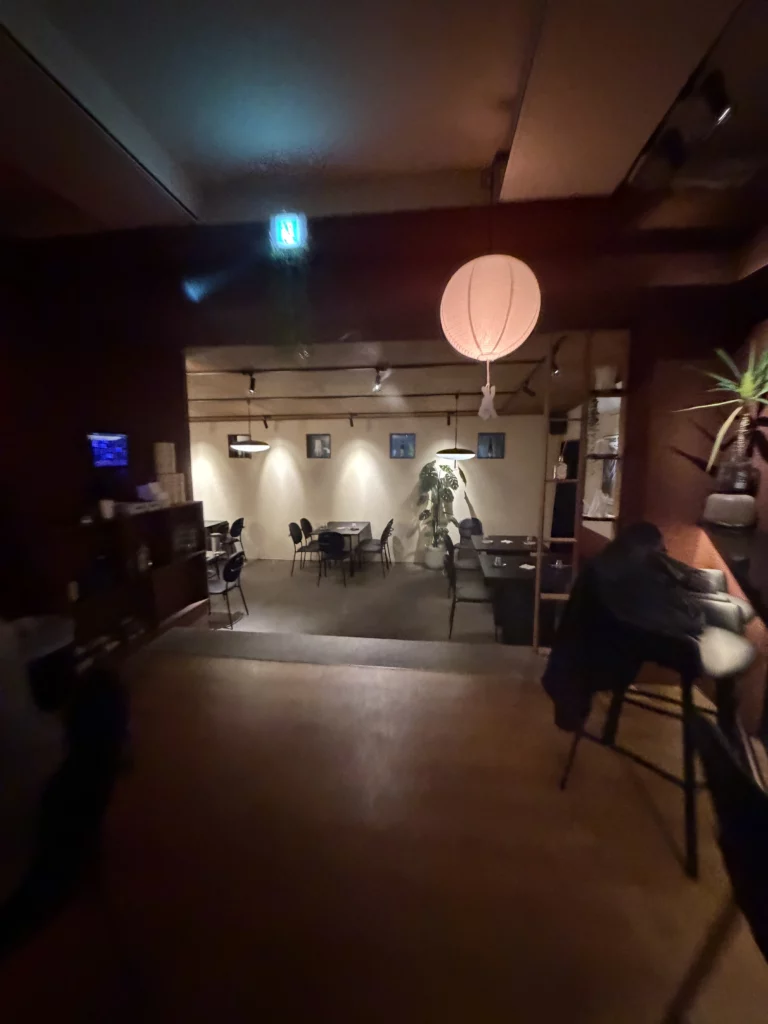
Charari is not trying to become Seoul’s most famous galbi restaurant. What it offers instead is something harder to find: a meal that feels genuinely Korean, genuinely local, and genuinely worth your time. The 불등갈비 will be the reason you come. The Wangyulju, the cold pork jowl, the seaweed purée, and the quiet rhythm of a Sinsa-dong evening — those are the reasons you will remember it.
If you are building a Seoul food itinerary and want to go beyond the obvious, exploring how Korean craft spirits pair with traditional grilled meats is one of the most rewarding directions the city currently offers. Charari makes the case for that conversation beautifully.
Share this guide with a friend planning their first Seoul food trip — and let us know in the comments which dish surprised you most.
Location
Reviews
5.0
0 reviews
Related Recipes

Ttukbaegi Bulgogi (Korean Sizzling Beef Stew in a Hot Stone Pot)
There’s a particular kind of comfort in lifting the lid off a bubbling ttukbaegi bulgogi . Steam curls upward, the...

Korean Spicy Pork (Jeyuk Bokkeum)
If you have ever stood in front of a sizzling Korean BBQ pan in Seoul, watching deep-red pork edges caramelize...

Yukhoe Bibimbap: Korean Raw Beef Rice Bowl with Minari
If there is a rice bowl that rewards restraint over complexity, yukhoe bibimbap (육회비빔밥) is it. This elegant Korean raw...
Related Ingredients

Udoonsal : Korea’s Leanest Beef Cut for Yukhoe
If there is one Korean beef cut that professional butchers and seasoned home cooks quietly revere above all others, it...

Korean raw beef dish (Yukhoe)
There are dishes that define a cuisine’s confidence — its willingness to let a single, exceptional ingredient speak for itself....

Korean beef
Few ingredients carry as much cultural weight in Korean cuisine as sogoegi (소고기) — Korean beef. Long before it became...

Somunnan Seongsu Gamjatang: Seongsu's 24-Hour Pork Stew
Seongdong-gu, Seoul 45, Yeonmujang-gil,

Saejae Halmaejip: Mungyeong's Yakdol Pork Since 1973
Mungyeong-si, Gyeongsangbuk-do 922, Saejae-ro, Mungyeong-eup

Ilsang Jeongwon: Shabu Shabu at Seoul Express Bus Terminal
Seoul FP103, 205, Sapyeong-daero, Seocho-gu, Seoul

Myeongdong Kyoja: Seoul's Michelin Kalguksu Since 1966
Jung-gu, Seoul 29, Myeongdong 10-gil