


Step into a piece of Korean culinary history at Imun Seolleongtang, where the milky-white broth has been simmering for over 123 years in Seoul’s historic Jongno district. As Korea’s oldest officially registered restaurant and a 2025 Michelin Guide selection, this legendary establishment transforms simple ox bones into liquid gold through 17 hours of patient cooking—a tradition that has outlasted dynasties, survived wars, and continues to nourish generations. Whether you’re a curious first-timer or a devoted seolleongtang enthusiast, understanding what makes Imun Seolleongtang Seoul’s definitive destination for this iconic soup reveals why some culinary traditions transcend time.
Imun Seolleongtang: Seoul's 123-Year-Old Temple of Authentic Korean Ox Bone Soup
5
Imun Seolleongtang: Seoul's 123-Year-Old Temple of Authentic Korean Ox Bone Soup
5
Jongno-gu, Seoul, Republic of Korea 88 Gyeonji-dong
Editor: James Lee


Interior02
Food02

Menu01
Overview
+82 02-733-6526
WiFi Provided
Indoor Seating Only
Electronic Payment, Credit Card accepted: American Express, Master Card, Visa
Introduction
Operating hours
Mon, Tue, Wed, Thu, Fri, SatAM 8:00 - PM 9:00
SunAM 8:00 - PM 8:00
Break TimePM 3:00 - PM 4:30
Menu
Editor's Detail
In the bustling heart of Seoul’s Jongno district, where modern skyscrapers tower over ancient pathways, stands a modest brick building that holds more Korean culinary history than perhaps any other restaurant in the nation. Imun Seolleongtang (이문설렁탕) isn’t just Seoul’s oldest continuously operating restaurant—it’s a living testament to Korean food culture, having served its signature milky-white ox bone soup since 1902, earning recognition in the 2025 Michelin Guide while maintaining the same unwavering commitment to traditional preparation that defined Korean comfort food over a century ago.
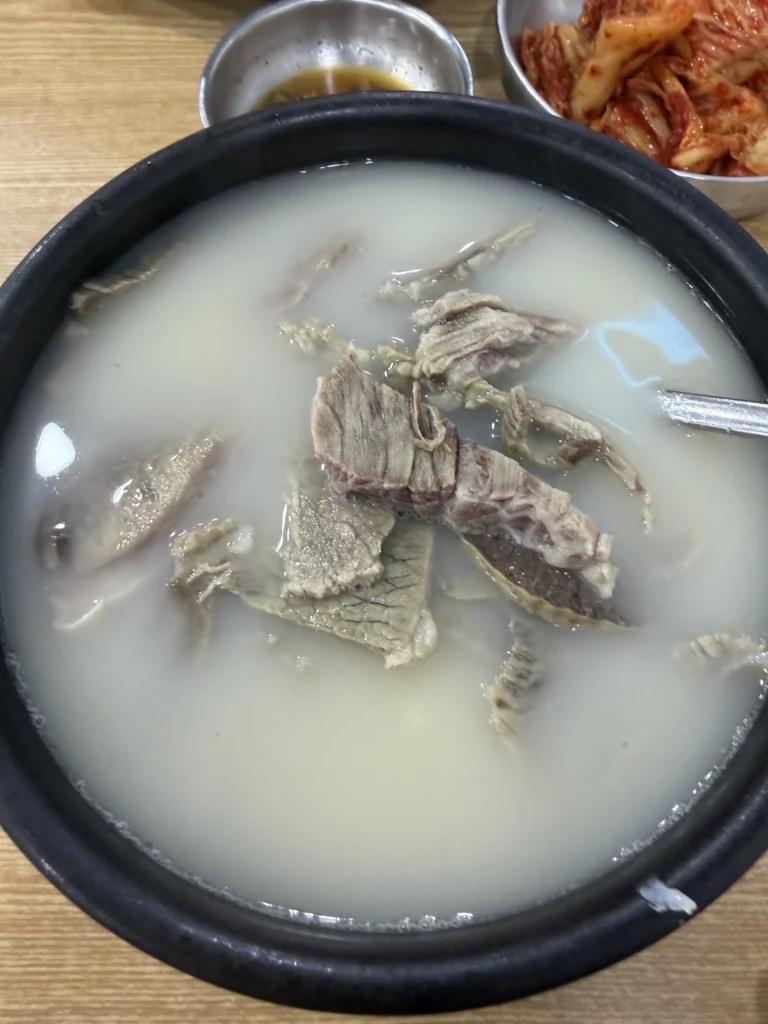
Table of Contents
What Makes Imun Seolleongtang Seoul’s Most Historic Restaurant?
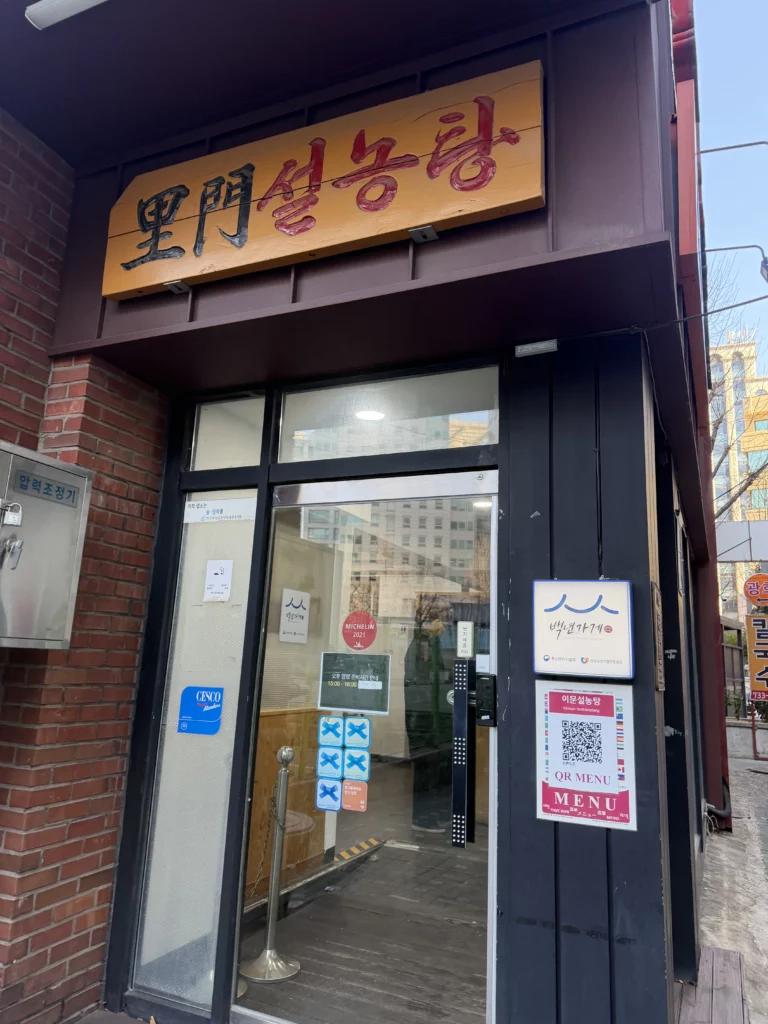
When King Gojong still ruled the Korean Empire from Gyeongbokgung Palace, Imun Seolleongtang opened its doors in 1902 as "Imun Sikdang" (里門食堂), becoming the first eatery in Korea to officially register for a restaurant license. This distinction—Seoul Permit No. 1—marks more than bureaucratic history. The restaurant predates major Korean newspapers by 18 years and has operated continuously through the Korean Empire’s fall, Japanese occupation, the Korean War, rapid industrialization, and Seoul’s transformation into a global metropolis.
The restaurant’s longevity stems from an uncompromising dedication to a single dish prepared exactly as it was when the establishment first opened. Seolleongtang, a milky ox bone soup that originated in Seoul during the Joseon Dynasty, requires no shortcuts, no modern conveniences, and no compromises in quality—principles that Imun Seolleongtang has maintained across four generations of family ownership.
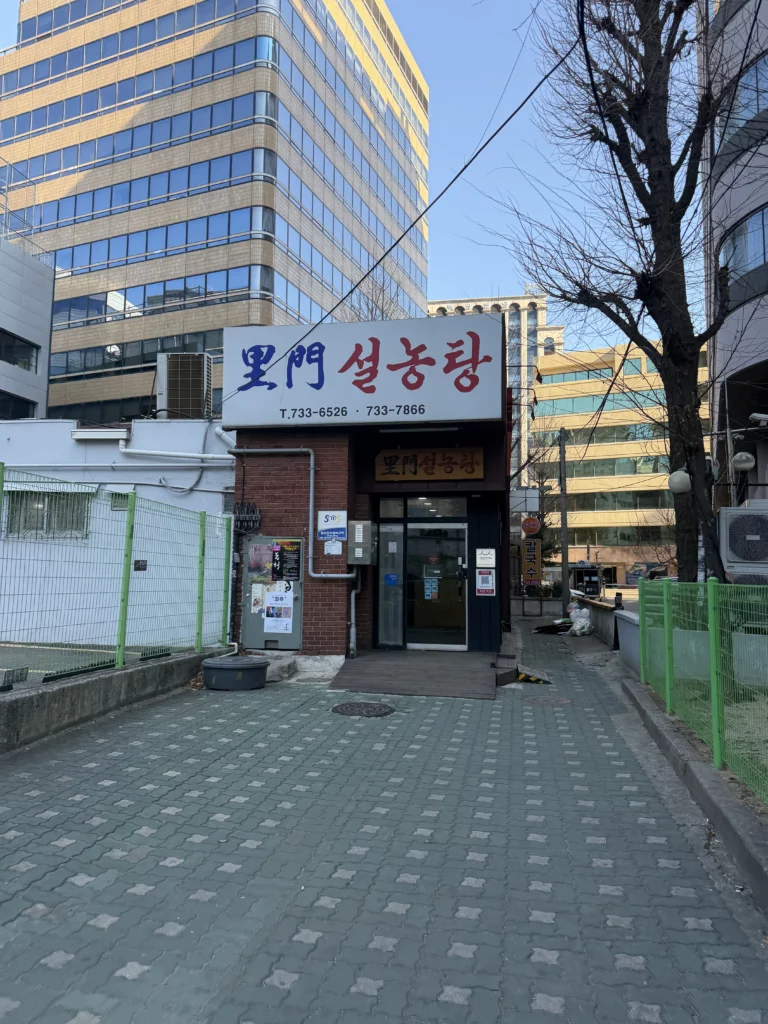
Originally located in Gongpyeong-dong, the restaurant relocated to its current Gyeonji-dong address in 2011 due to urban redevelopment, but the cooking method remained unchanged. The current owner, who has been overseeing operations since 1984, learned the craft from previous generations, ensuring that each bowl served today tastes remarkably similar to what Koreans enjoyed over a century ago.
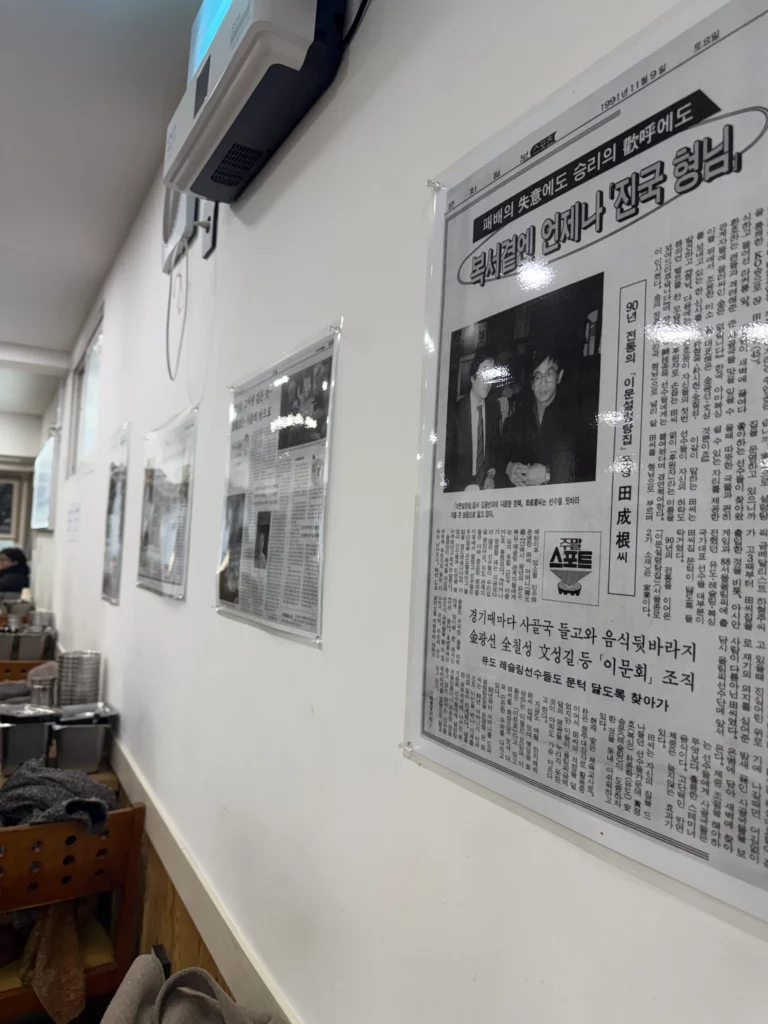
The restaurant’s historical significance extends beyond its operational longevity. Famous patrons have included Olympic gold medalist Son Ki-jung, political figures like Kim Doo-han (whose grandson, actor Song Il-gook, still visits regularly), and countless everyday Koreans who found comfort in its simple, nourishing broth during Korea’s most challenging periods. This connection between Korean food culture and identity makes Imun Seolleongtang more than a restaurant—it’s a cultural institution.
The Art of Authentic Seolleongtang: 17 Hours to Perfection
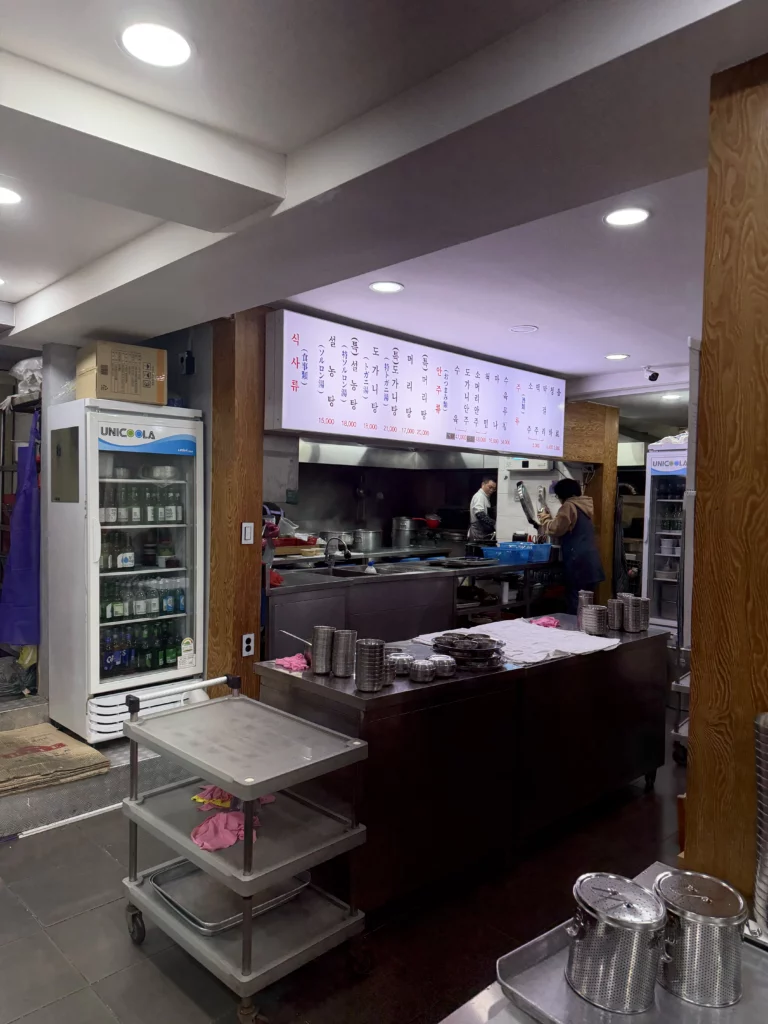
What distinguishes Imun Seolleongtang’s broth from countless other seolleongtang restaurants throughout Seoul comes down to technique, time, and traditional wisdom passed through generations. The process begins before dawn when staff place ox bones—primarily leg bones prized for their marrow content—into massive cast iron pots filled with fresh water.
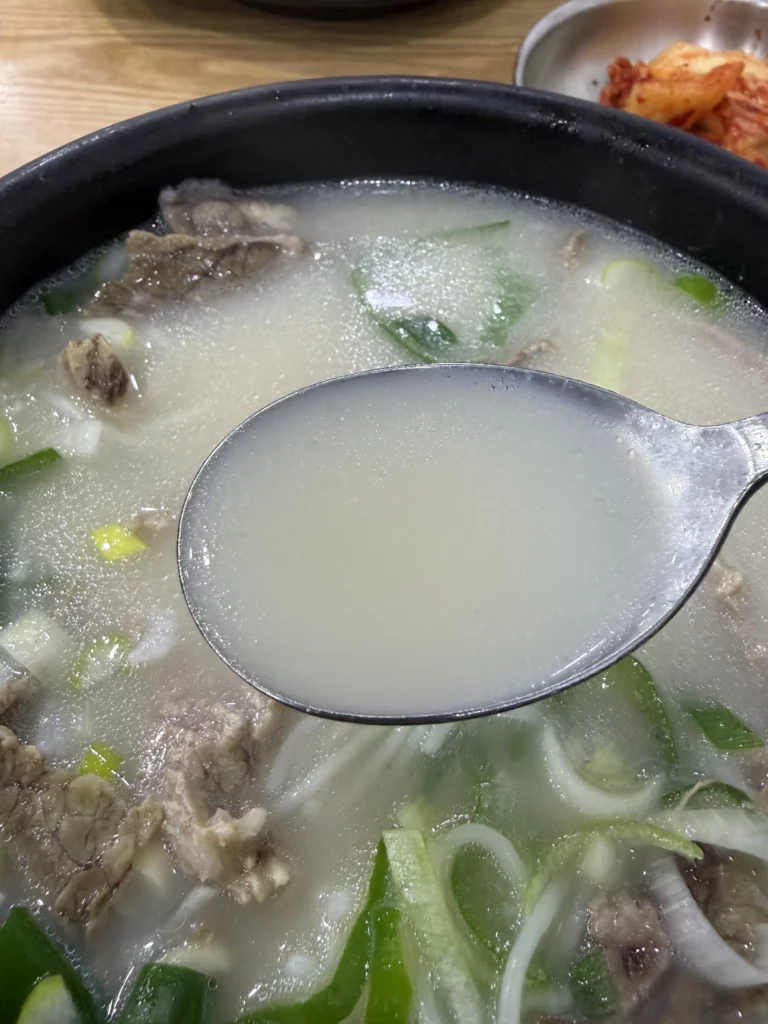
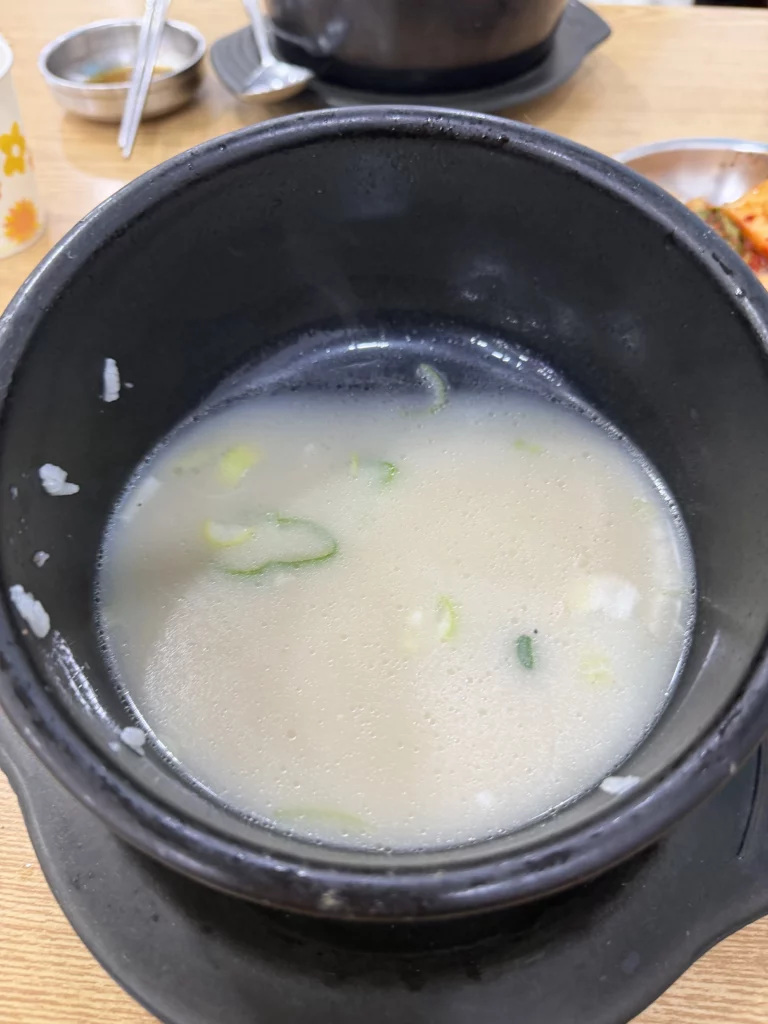
Unlike modern restaurants that might use additives to achieve a milky appearance, Imun Seolleongtang relies entirely on a 17-hour simmer that extracts every molecule of collagen, calcium, and nutrients from the bones naturally. The slow, steady heat causes the bones to release their marrow, creating that signature opaque, milky-white broth that defines authentic seolleongtang. Throughout the cooking process, staff carefully skim any excess oil from the surface, resulting in a broth that tastes clean rather than fatty despite its rich appearance.
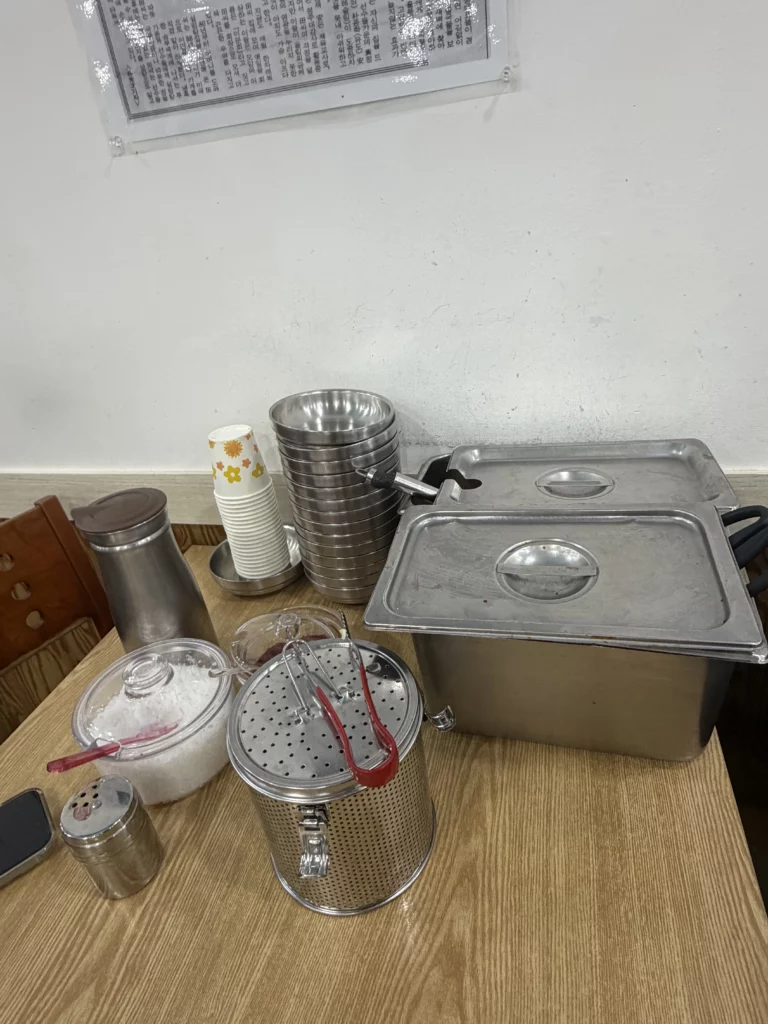
This traditional preparation method reflects broader principles in Korean cooking techniques, where patience and proper heat management extract maximum flavor without relying on heavy seasoning. The broth arrives at each table completely unsalted, allowing diners to season according to personal preference—a practice that showcases the chef’s confidence in the broth’s inherent quality.
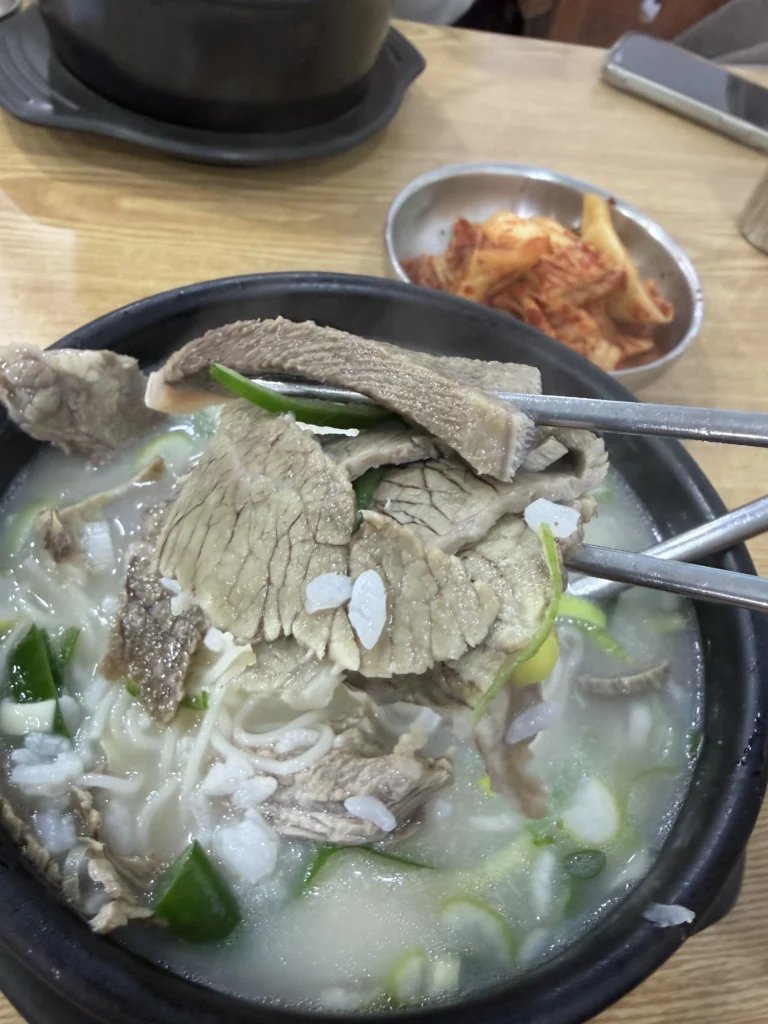
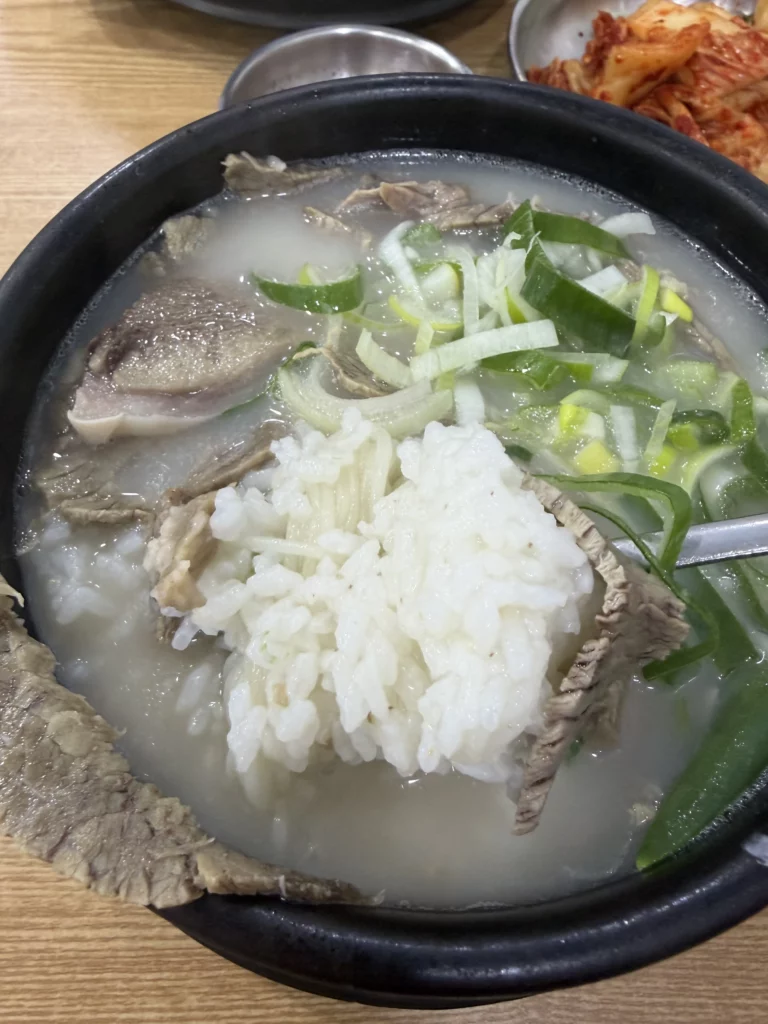
The restaurant’s commitment to traditional methods extends to every aspect. The rice arrives pre-mixed into the soup (a practice called tolyeom), thin wheat noodles (somyeon) provide textural contrast, and generous portions of thinly sliced beef include various cuts—yangji (brisket), meori (head meat), mana (shank), and sometimes oo-seol (tongue)—giving each bowl complex flavor dimensions.
What makes this dish uniquely Korean?
Seolleongtang embodies Korean culinary philosophy in ways that few other dishes can match. Its origins trace to the Joseon Dynasty’s Seonnongjae ceremony, an annual agricultural ritual where the king participated in symbolic farming and shared meals with common citizens. The soup served at these gatherings evolved into what we now call seolleongtang, making it a dish literally born from Korean concepts of community, shared nourishment, and respect for labor.
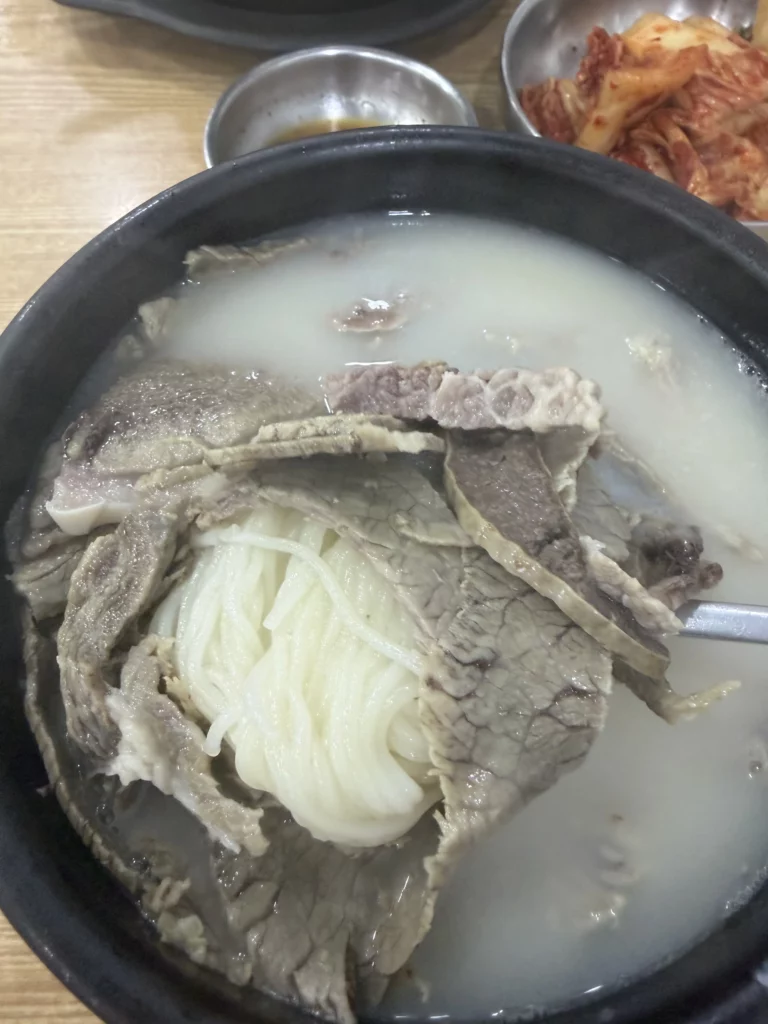
What truly sets Korean seolleongtang apart from similar bone soups in other Asian cuisines is the deliberate absence of heavy seasoning. While Chinese bone broths often incorporate star anise, Sichuan peppercorns, and complex spice blends, and Japanese tonkotsu ramen adds garlic oil and tare seasoning, Korean seolleongtang arrives pure and unadorned. This minimalist approach requires exceptional technique—the broth must be so flavorful and perfectly balanced that it needs only simple Korean salt at the table.
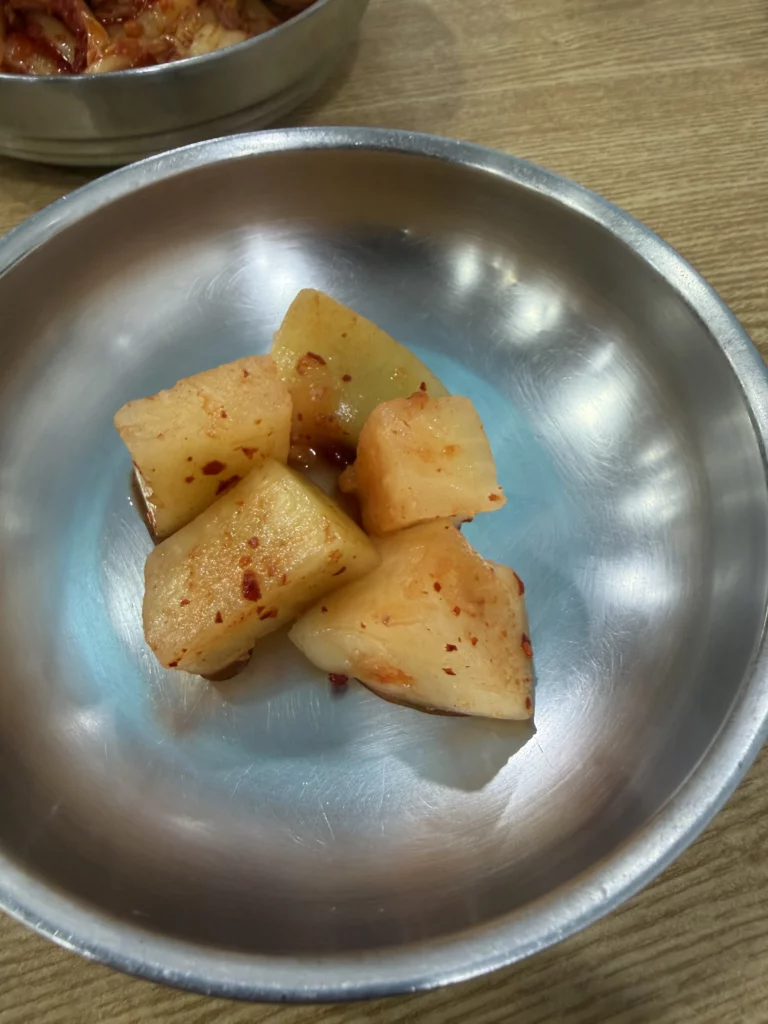
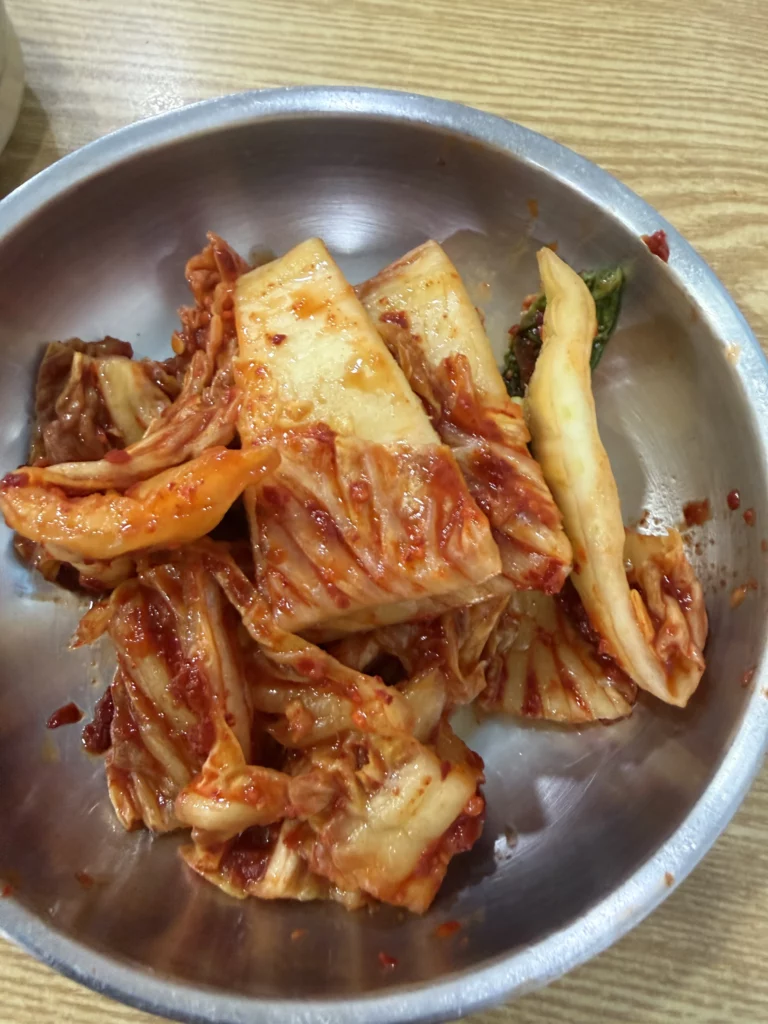
The soup also reflects Korean food culture’s emphasis on individual customization within communal dining. While everyone at the table receives the same base soup, each person adjusts their bowl differently, adding varying amounts of salt, pepper, green onions, or mixing in kkakdugi kimchi liquid to achieve their preferred flavor profile. This personalization within tradition exemplifies Korean dining philosophy beautifully.
What are the key ingredients that create this flavor?
Ox Leg Bones (Sagol)
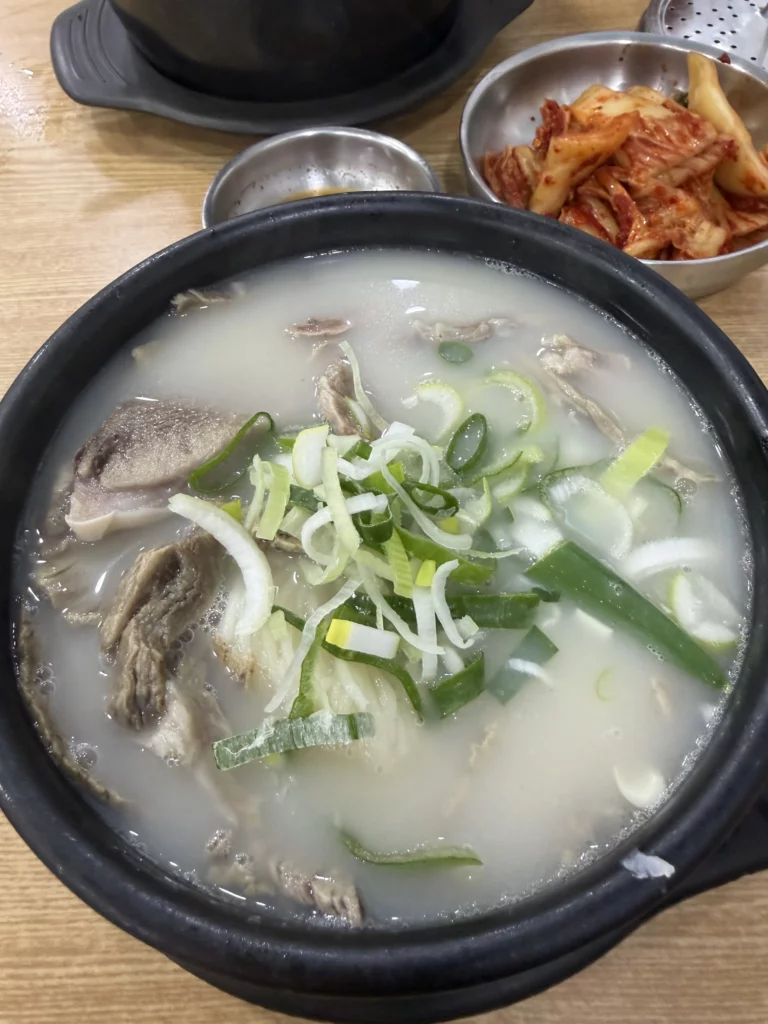
The foundation of authentic seolleongtang lies in beef leg bones, particularly those with rich marrow content. These bones contain exceptional amounts of collagen that, when simmered for extended periods, transforms into gelatin, creating the soup’s characteristic creamy consistency and providing nutrients essential for bone and joint health. The extended cooking time causes the marrow to dissolve completely into the broth, contributing both to its milky appearance and deep, savory flavor.
Beef Brisket and Various Cuts
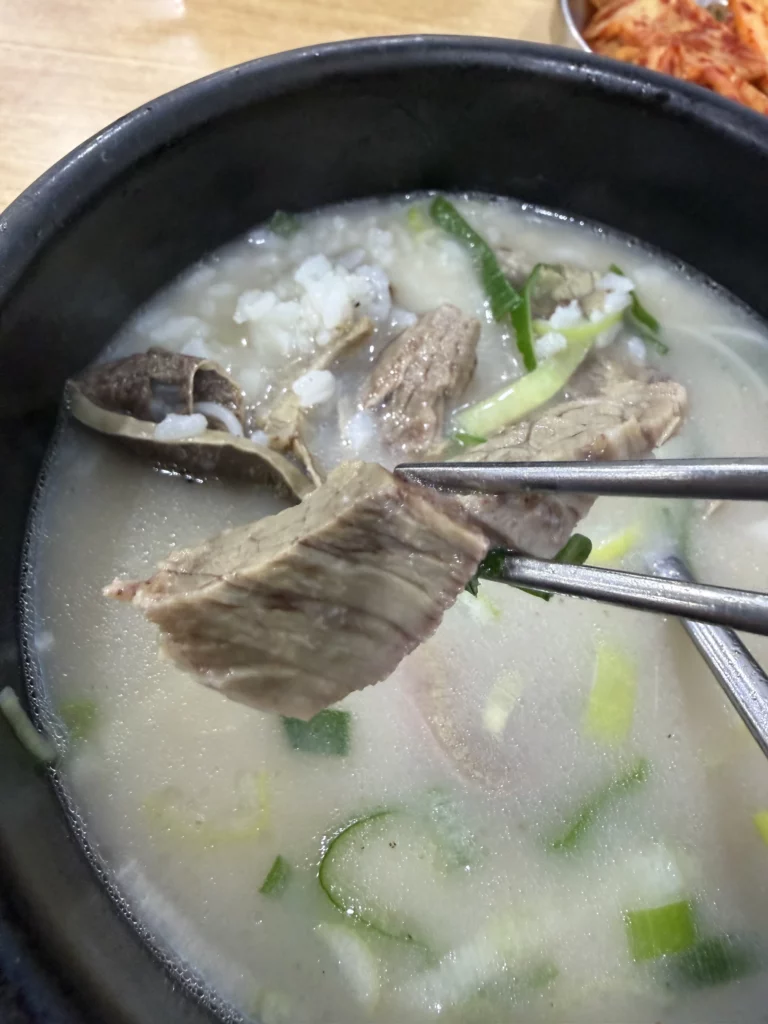
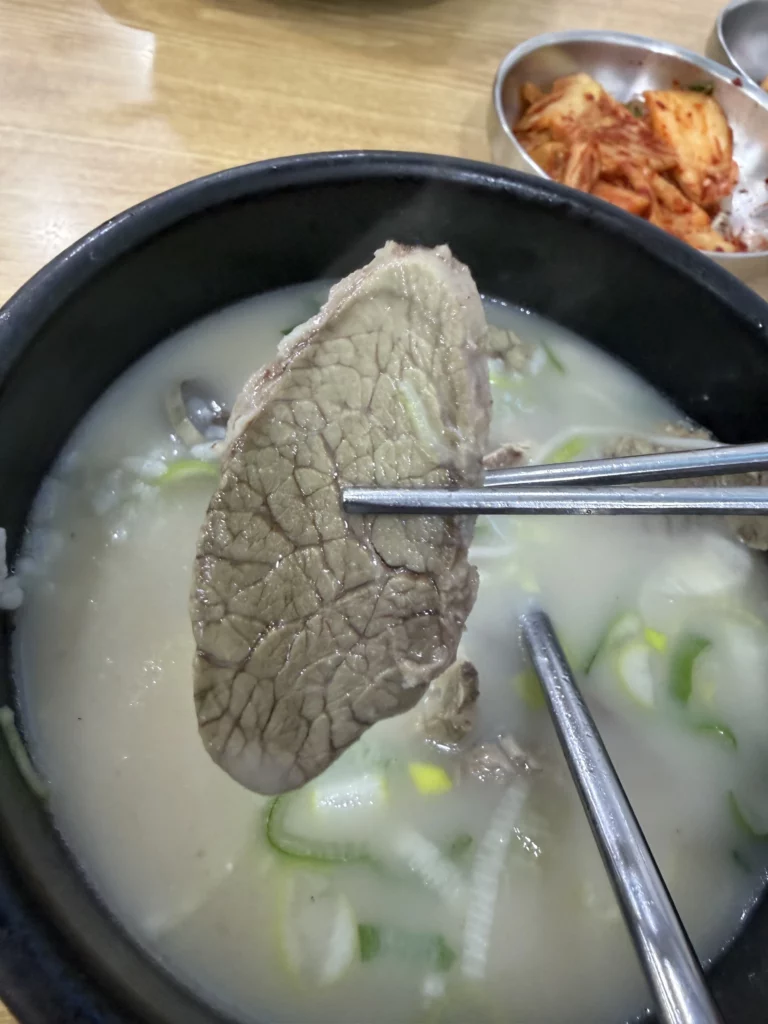
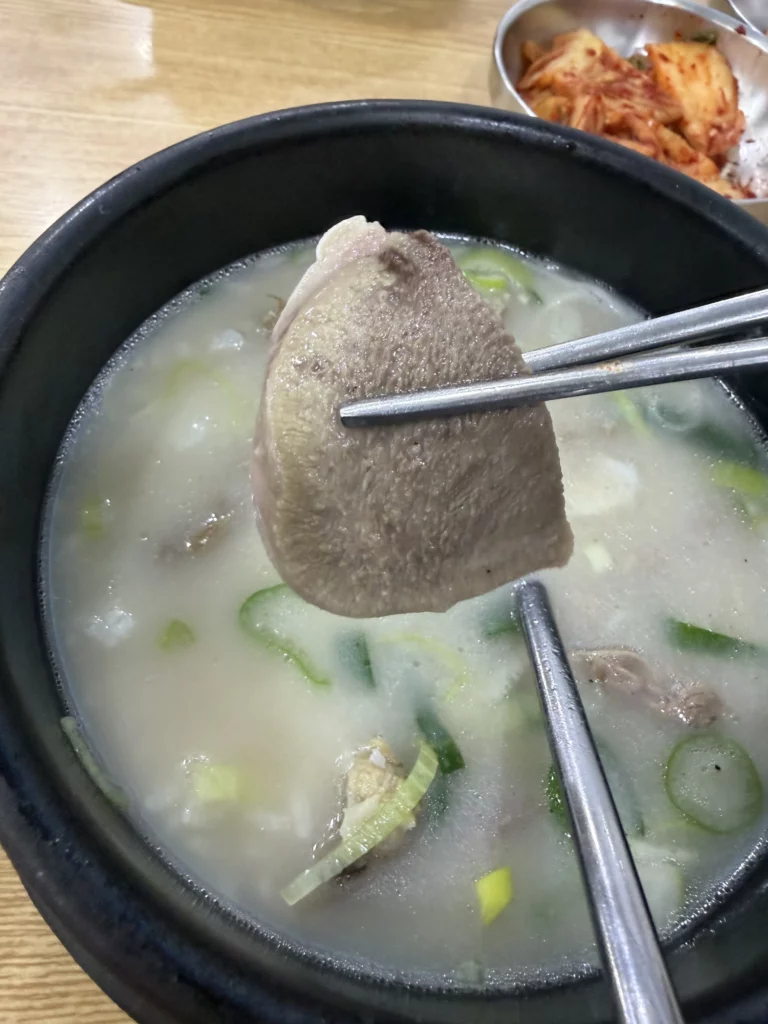
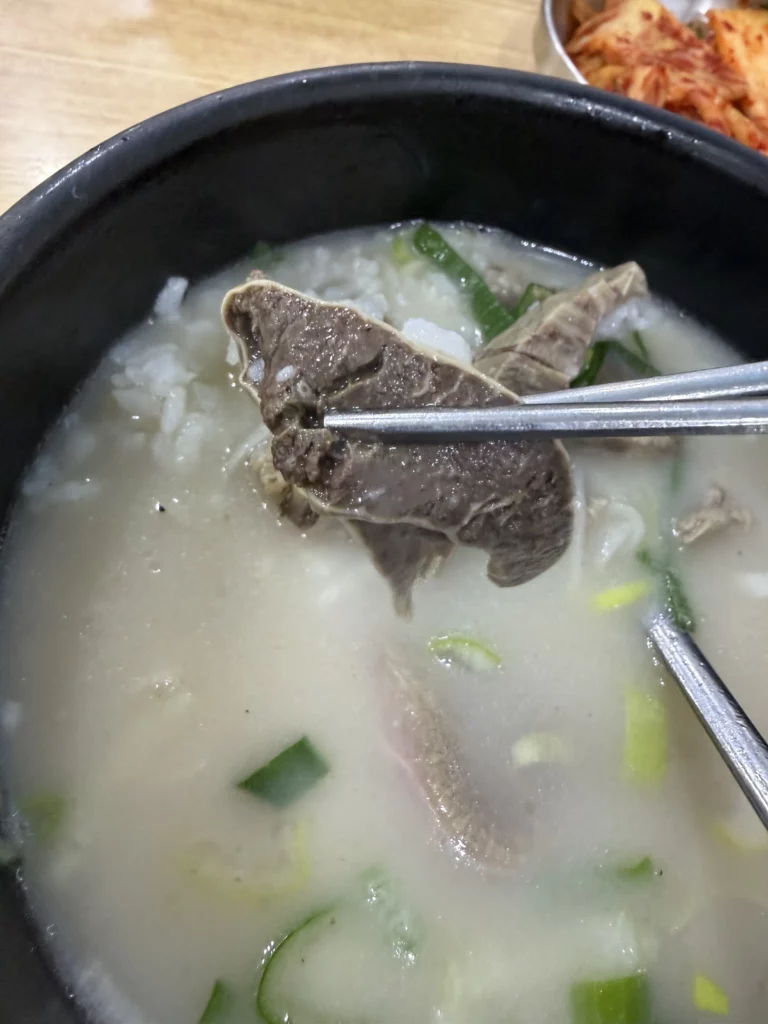
Unlike soups that rely solely on bones, Imun Seolleongtang incorporates multiple beef cuts that contribute distinct textures and flavors. The brisket provides tender, meaty substance, while head meat offers gelatinous richness, and tongue adds luxurious smoothness. This combination of cuts reflects Korean cuisine’s philosophy of utilizing the entire animal respectfully, transforming often-overlooked parts into culinary treasures. Each cut releases different proteins and fats during cooking, creating a more complex flavor profile than bones alone could achieve.
Wheat Noodles (Somyeon)
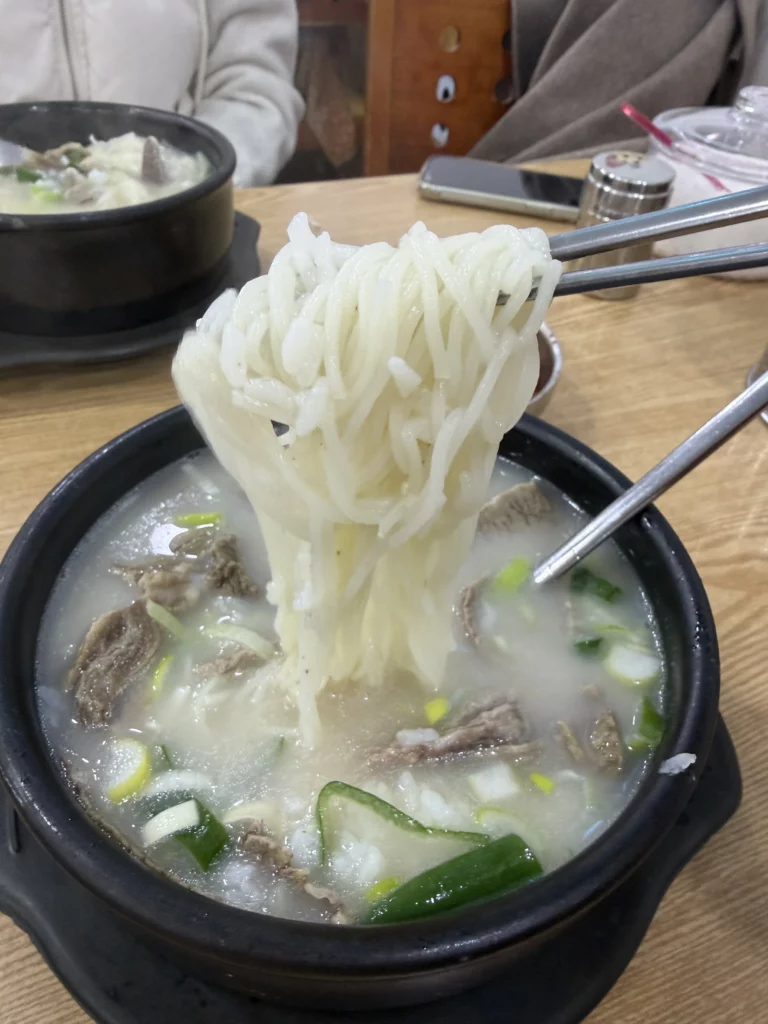
The inclusion of thin wheat noodles in seolleongtang has interesting historical roots. After the Korean War, when rice shortages plagued the nation, the government mandated that soup restaurants add wheat noodles to reduce rice consumption. What began as wartime necessity evolved into beloved tradition, with the noodles now providing textural contrast to the tender meat and creamy broth. The noodles absorb the soup’s flavor while maintaining their springy bite, creating a more satisfying, complete meal.
How would you describe the taste and spice level?
Spice Level: 1/10 – Seolleongtang contains absolutely no spice whatsoever, making it one of Korea’s most universally accessible dishes. The soup arrives completely unseasoned, allowing you to add heat through pepper or spicy kimchi if desired.
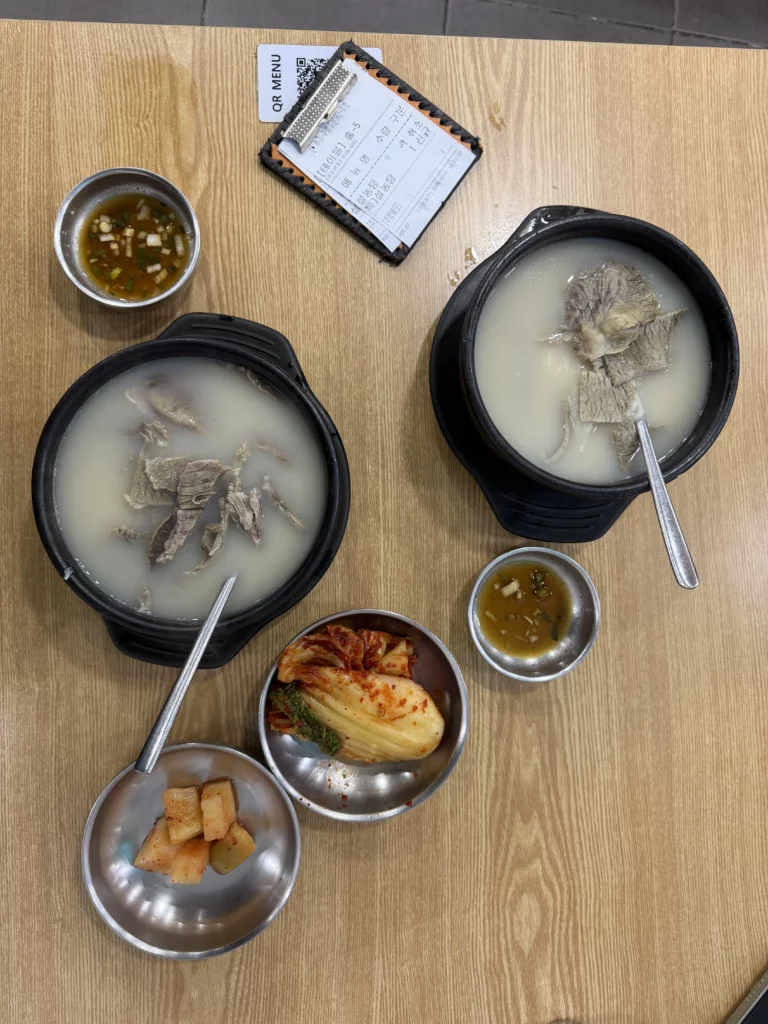
Primary Flavor Notes: The dominant taste is profoundly savory (umami), with a subtle sweetness derived from long-simmered bones and meat. The broth has remarkable depth considering its simple ingredient list—you’ll detect mineral notes from the bones, slight sweetness from marrow, and clean, pure beef flavor without any gaminess. Many first-timers expect intense, complex seasoning and are surprised by how clean and straightforward the taste profile is.
The texture plays as important a role as flavor. The broth has body and weight on your tongue, coating your palate in a way that feels nourishing and substantive rather than thin or watery. This richness comes entirely from extracted collagen, not from fats or oils, which is why the soup feels satisfying without being heavy.
Temperature: Seolleongtang arrives piping hot in traditional earthenware bowls that retain heat exceptionally well. The high temperature is essential—it keeps fats emulsified and allows the aromas to bloom fully. Be patient and let it cool slightly before diving in.
What should first-time eaters know?
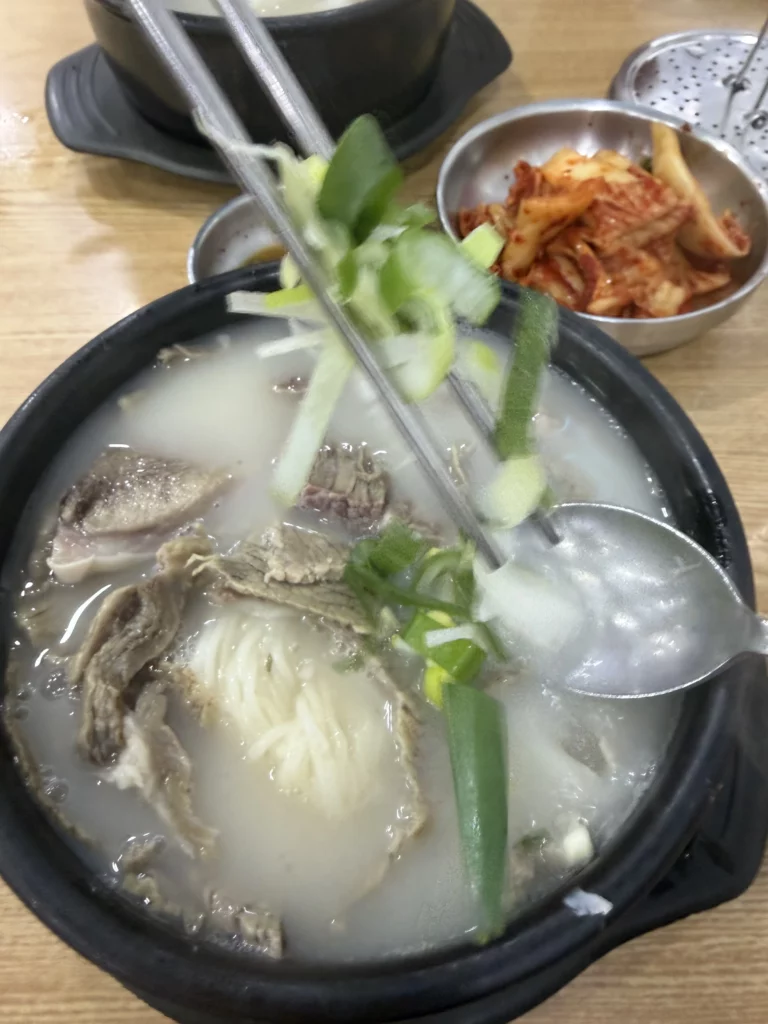
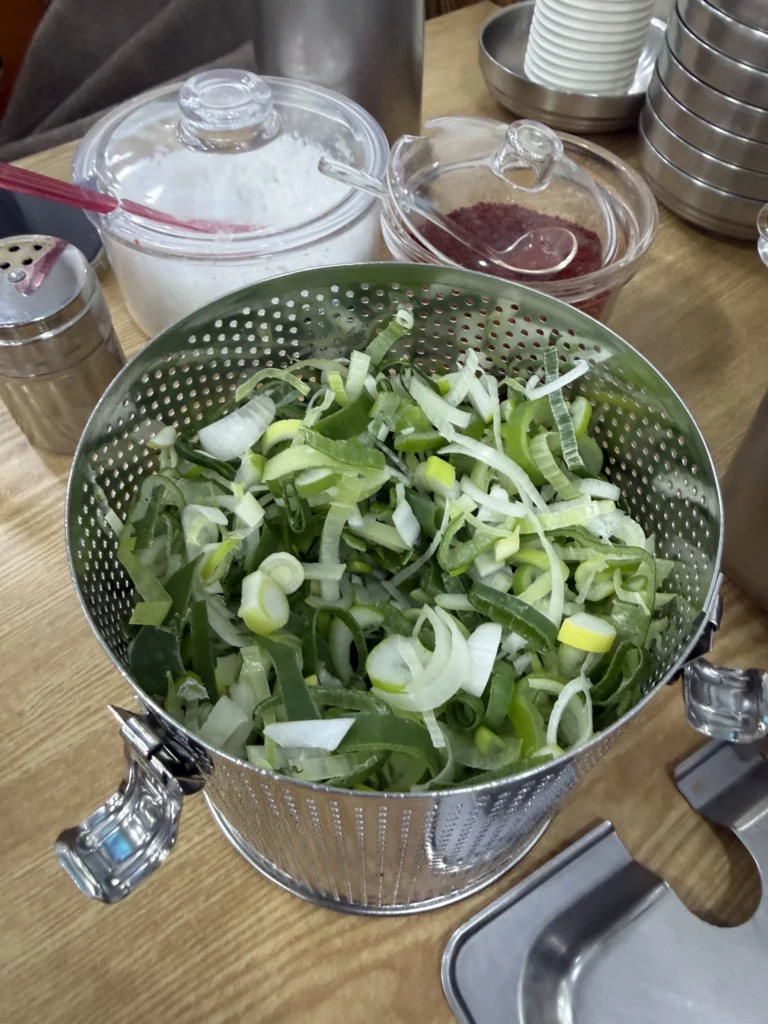
Proper Eating Method: Your seolleongtang arrives with rice already mixed into the soup and a spoon standing upright in the bowl—this is traditional presentation, not an accident. Begin by adding salt gradually, tasting after each addition until you reach your preferred level. Most Koreans use more salt than foreigners initially expect; don’t be shy. Add chopped green onions from the provided dish for aromatic brightness.
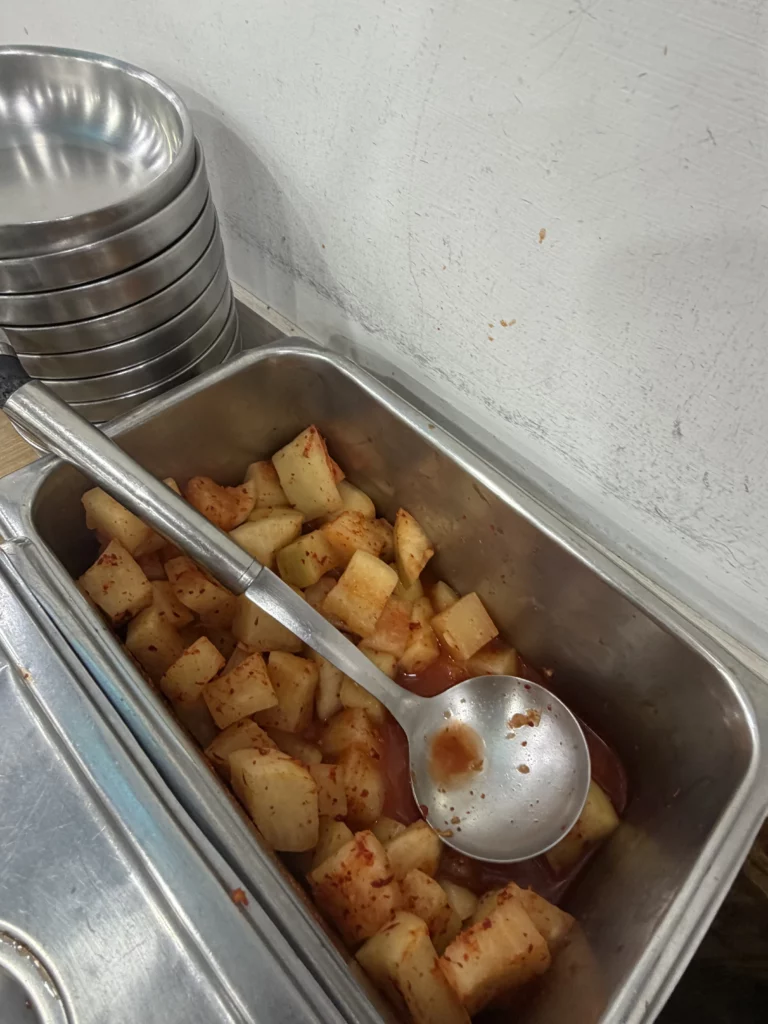
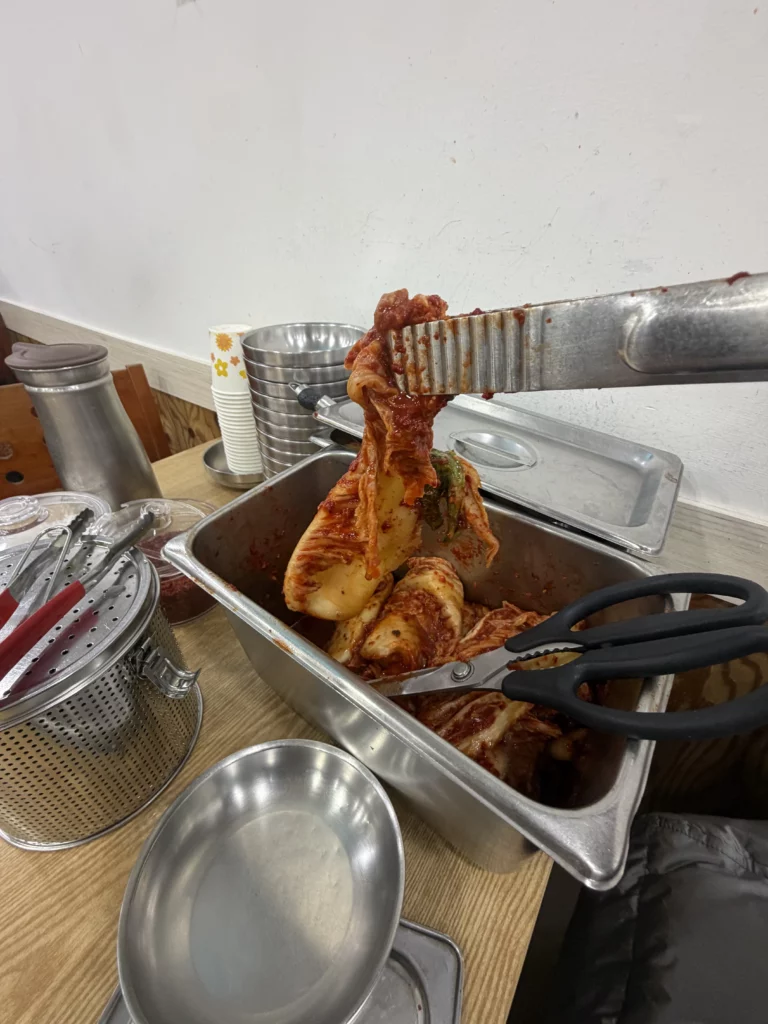
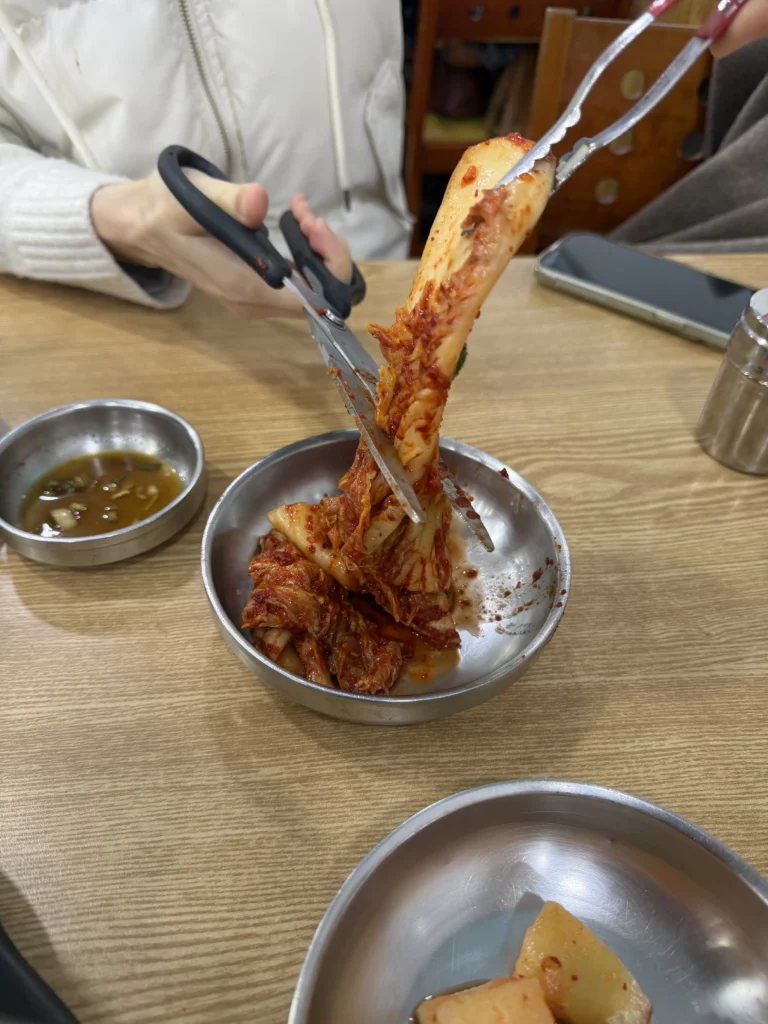
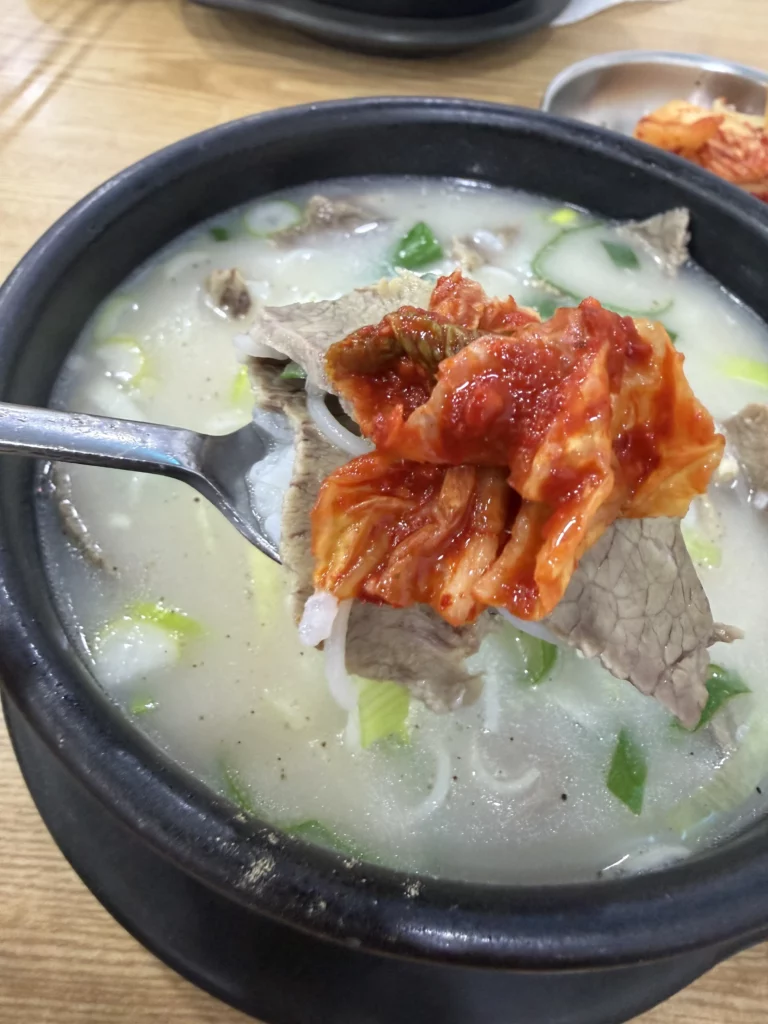
The restaurant provides large portions of banchan (side dishes) including kimchi and kkakdugi (cubed radish kimchi). Take bites of these between spoonfuls of soup—the sharp, tangy kimchi cuts through the rich broth, refreshing your palate. Many Koreans also add a spoonful of kkakdugi liquid directly into their soup for extra tang.
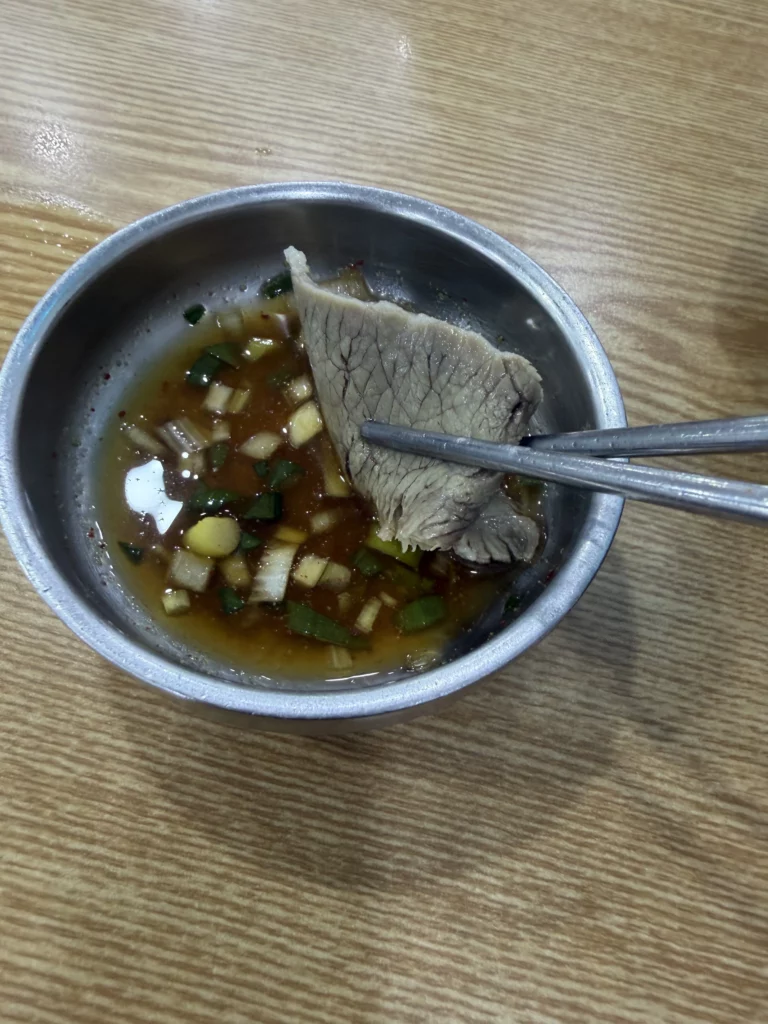
What to Expect on First Taste: If you’re accustomed to heavily seasoned soups, your initial reaction might be "this needs something." That’s exactly the point. The unseasoned broth allows you to appreciate the pure flavor of bones simmered for 17 hours. As you add salt gradually and alternate bites with kimchi, the dish reveals its sophistication. The beef should be so tender it practically dissolves, and the noodles should have just enough chew to provide textural interest.
Cultural Considerations: Don’t feel rushed. Koreans traditionally linger over seolleongtang, treating it as a meditative, comforting experience rather than fast food. It’s perfectly acceptable to slurp the soup—in fact, it’s the proper way to eat it, aerating the broth and cooling it simultaneously. Unlike some Korean dishes meant for sharing, seolleongtang is an individual experience; everyone orders and seasons their own bowl.
The Menu: Beyond Basic Seolleongtang
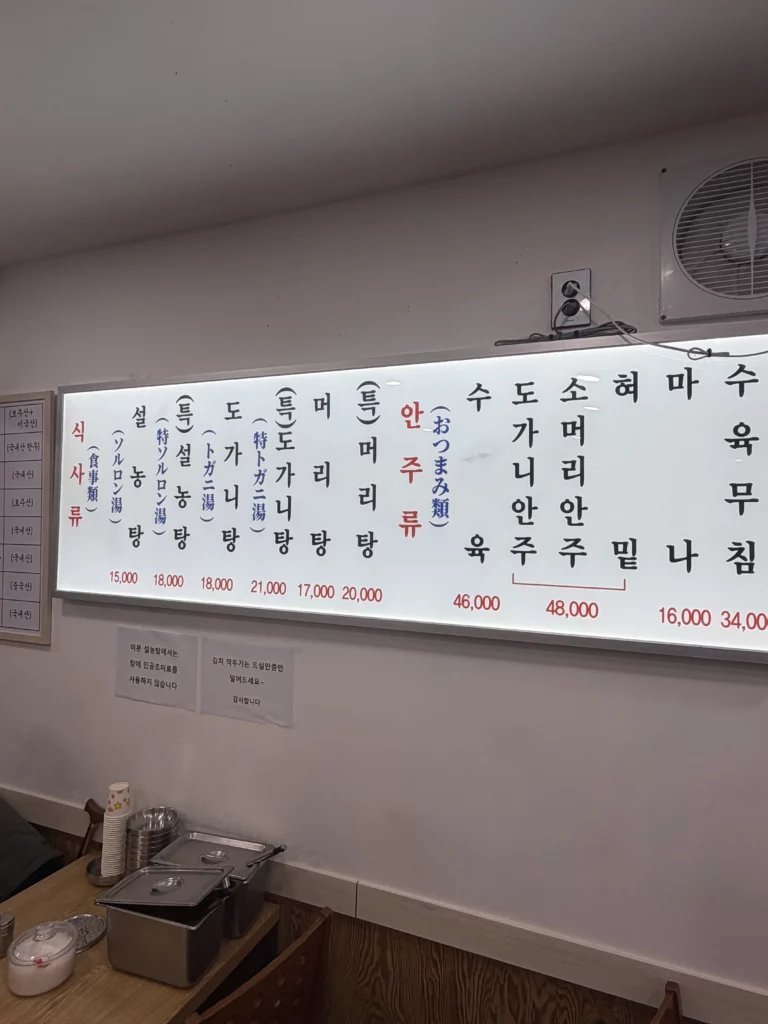
While seolleongtang remains Imun Seolleongtang’s signature and most popular order, the menu offers several variations that appeal to different preferences and adventurous palates:
Seolleongtang (설렁탕) – ₩14,000 (Regular) / ₩17,000 (Special): The foundational dish featuring the classic milky broth with sliced beef, wheat noodles, and rice. The "special" version simply includes more meat. This is what first-time visitors should order to experience the restaurant’s essence.
Doganitang (도가니탕) – ₩17,000 (Regular) / ₩20,000 (Special): This variation focuses exclusively on ox knee cartilage, prized for its gelatinous, tender texture and high collagen content. Koreans consider this cut particularly beneficial for joint health. The texture is distinctly different from regular seolleongtang—softer, more yielding, with a luxurious mouthfeel that cartilage lovers find addictive.
Meoritang (머리탕) – ₩16,000 (Regular) / ₩19,000 (Special): Head meat soup includes various parts from the cow’s head, offering a more robust, slightly richer flavor than standard seolleongtang. The meat tends to be more gelatinous due to the high collagen content in facial muscles. This option appeals to Koreans who grew up eating these traditional cuts.
Suyuk (수육) – ₩44,000: Boiled beef served as an accompaniment to alcohol or as a standalone dish. The meat is tender, plain, and meant to be wrapped in lettuce or perilla leaves with sauces. Many regular customers order suyuk to pair with soju, following Korean drinking culture traditions where substantial food accompanies alcohol.
The menu intentionally remains limited, reflecting the restaurant’s philosophy: master one dish perfectly rather than offering mediocre versions of many items. This focus on specialization over variety is a hallmark of Korea’s most respected traditional restaurants.
Why Imun Seolleongtang Earned Its Michelin Recognition
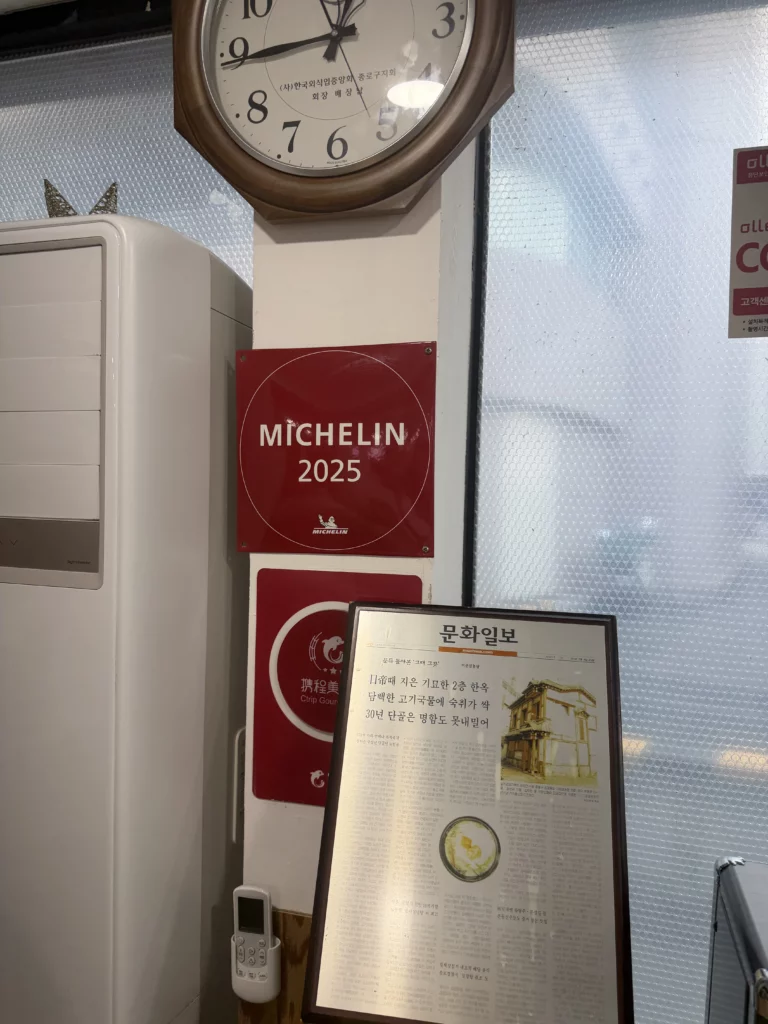
The 2025 Michelin Guide’s continued recognition of Imun Seolleongtang reflects several factors that align with Michelin’s evaluation criteria, particularly for the Bib Gourmand category that celebrates exceptional value and quality.
Consistency Over Time: Michelin inspectors value restaurants that maintain standards across multiple visits and over extended periods. Imun Seolleongtang’s 123-year track record of preparing the same dish identically demonstrates reliability that few establishments can match. The fourth-generation ownership ensures traditional techniques remain unchanged, with the current master chef having refined the same recipe since 1984.
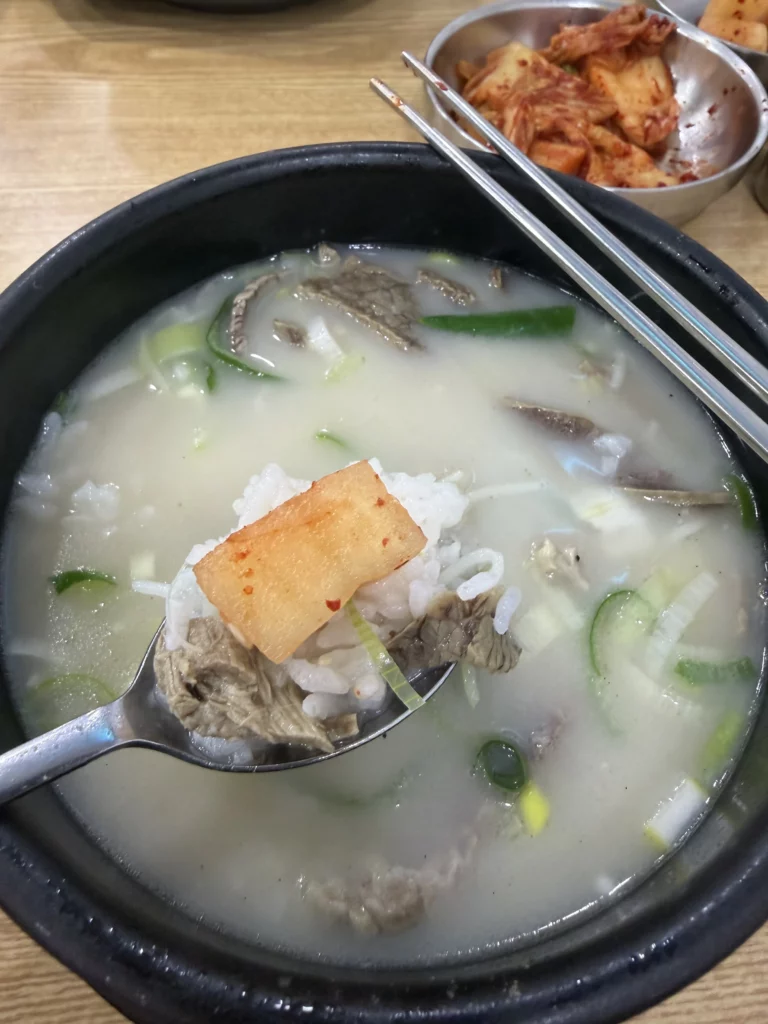
Quality Ingredients and Traditional Technique: Despite charging remarkably affordable prices (₩14,000-17,000 for main dishes), Imun Seolleongtang uses premium ox bones and fresh beef, never cutting corners with cheaper alternatives or time-saving additives. The 17-hour cooking process represents genuine craftsmanship in an era where many restaurants use pressure cookers or pre-made broths.
Cultural Significance: Michelin increasingly recognizes restaurants that preserve culinary heritage and represent authentic regional cuisine. Imun Seolleongtang doesn’t just serve seolleongtang; it preserves the original preparation method that defined this Seoul specialty, making it a living museum of Korean food culture.
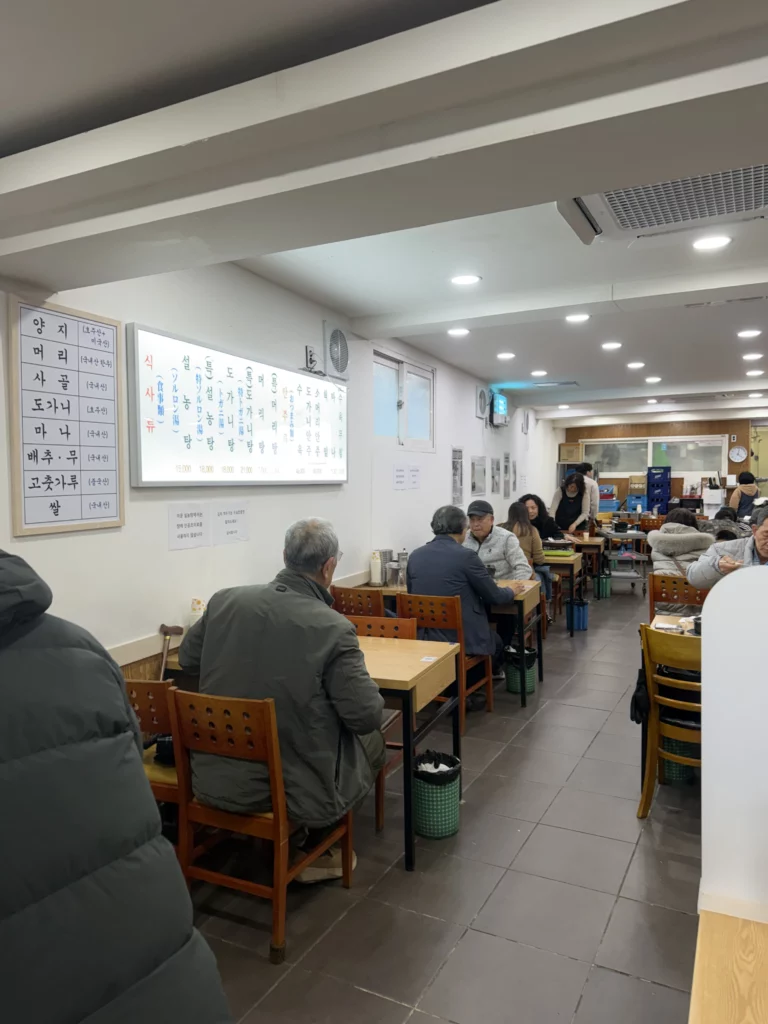
Authentic Dining Experience: The restaurant’s no-frills atmosphere—simple tables, minimal decoration, focus entirely on the food—aligns with Michelin’s appreciation for restaurants where food quality takes absolute precedence over ambiance or trendy presentation. The staff’s efficient, no-nonsense service style reflects traditional Korean dining culture.
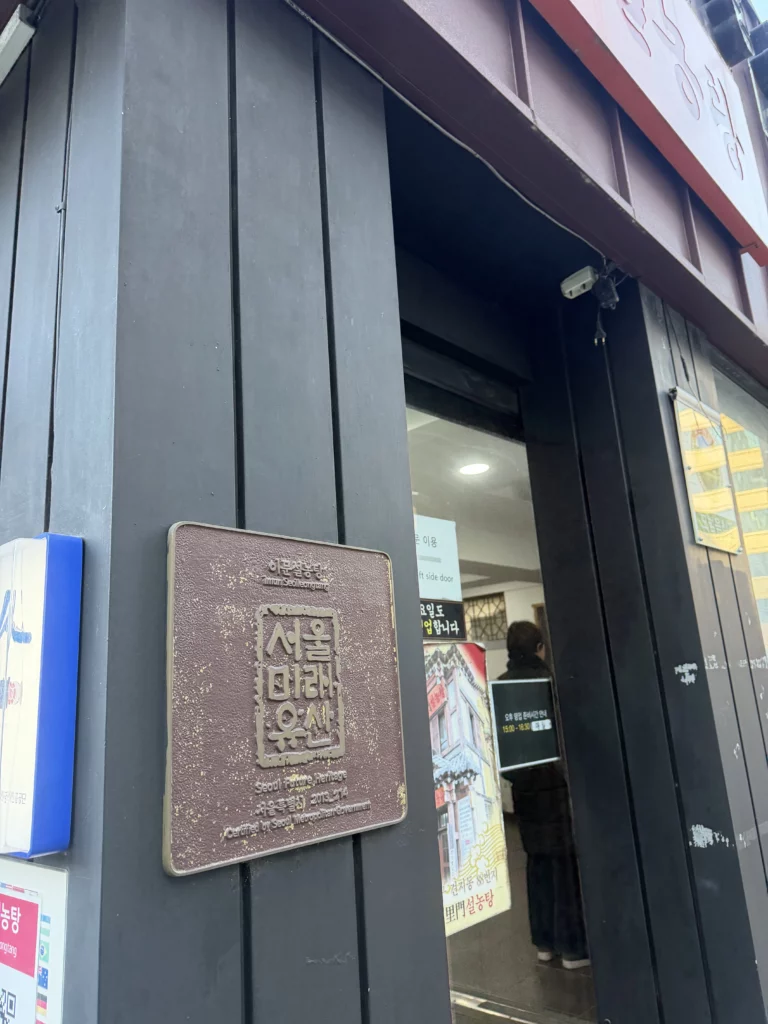
The Michelin recognition has introduced Imun Seolleongtang to international visitors who might otherwise miss it, though the restaurant’s local popularity meant it was already packed with Korean customers who recognized its value long before any guidebook.
Location, Hours, and Practical Dining Information
Address: 38-13 Ujeonguk-ro, Gyeonji-dong, Jongno-gu, Seoul (서울 종로구 우정국로 38-13, 견지동)
Nearest Subway: Jonggak Station (종각역), Line 1, Exit 3-1. Walk approximately 175 meters (3 minutes) to reach the restaurant.
Operating Hours:
- Monday-Saturday: 8:00 AM – 9:00 PM (Break time: 3:00 PM – 4:30 PM)
- Sunday: 8:00 AM – 8:00 PM (Break time: 3:00 PM – 4:30 PM)
- Closed on major Korean holidays (Seollal, Chuseok)
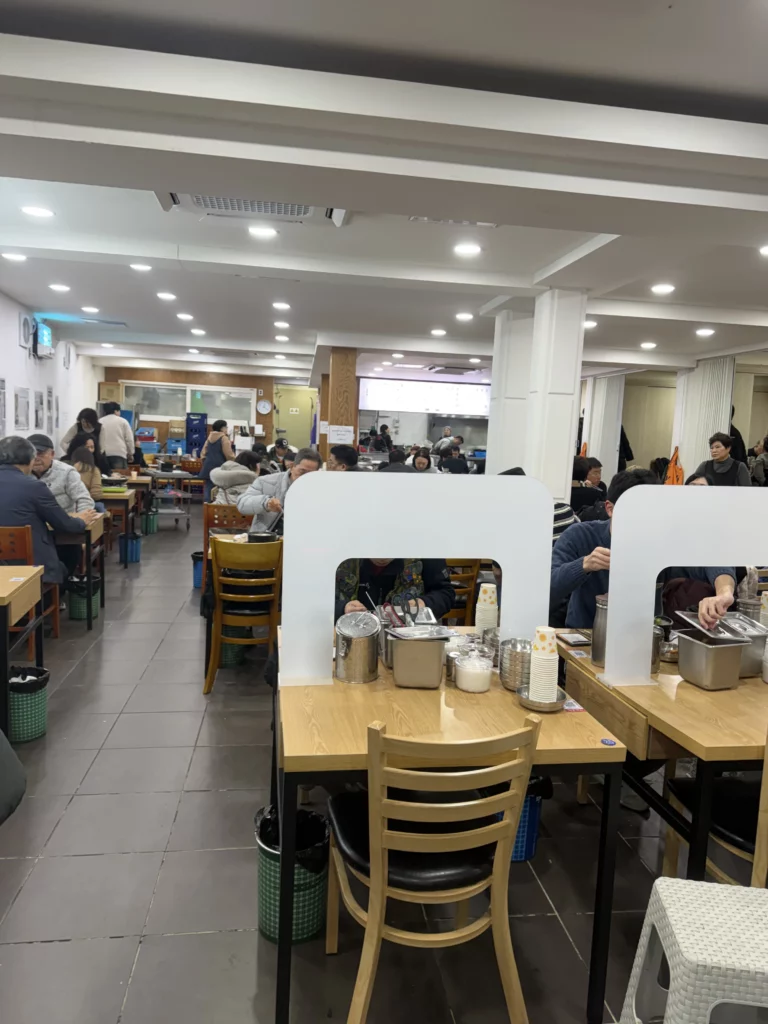
What to Expect: The restaurant occupies a modest two-story brick building that looks deliberately understated compared to surrounding modern structures. Multiple dining rooms accommodate the steady flow of customers, with traditional Korean table settings and efficient service. During peak meal times (12:00-2:00 PM, 6:00-8:00 PM), expect brief waits, though turnover is relatively quick as most diners finish within 30-40 minutes.
Language Considerations: The menu is available in Korean and English. While staff may have limited English proficiency, ordering is straightforward since most customers order one of three or four main items. Pointing at menu pictures works perfectly well.
Payment: Cash and Korean credit cards accepted. International credit cards may work but carrying cash ensures no issues.
Dining Tips: Arrive slightly before or after peak meal times for the shortest wait. Breakfast (8:00-9:00 AM) offers a particularly authentic experience, as many older Korean regulars prefer eating seolleongtang as a morning meal. The restaurant’s location in Jongno, Seoul’s historic district, makes it easy to combine with visits to nearby attractions like Insadong, Cheonggyecheon Stream, or Gwangjang Market.
Experience Korean Culinary History at Imun Seolleongtang
When steam rises from your bowl at Imun Seolleongtang, you’re not just eating soup—you’re participating in over a century of Korean culinary tradition that has outlasted empires, wars, and dramatic social transformation. The milky-white broth, prepared exactly as it was in 1902, represents more than exceptional cooking; it embodies Korean values of patience, respect for ingredients, and the belief that simple food prepared with unwavering dedication can provide both physical nourishment and spiritual comfort.
For anyone seeking to understand Korean food culture beyond trendy restaurants and fusion experiments, Imun Seolleongtang offers the most authentic possible experience. Here, in Seoul’s oldest restaurant, the past remains deliciously present in every carefully seasoned spoonful.
Experience these authentic flavors for yourself at Imun Seolleongtang in Jongno-gu, Seoul, where 123 years of tradition continues to nourish both body and soul.
Location
88 Gyeonji-dong, Jongno-gu, Seoul, Republic of Korea, KR
Reviews
5.0
0 reviews
5
0%
4
0%
3
0%
2
0%
1
0%
Loading reviews...
Related Recipes

Meat & Poultry
Ttukbaegi Bulgogi (Korean Sizzling Beef Stew in a Hot Stone Pot)
There’s a particular kind of comfort in lifting the lid off a bubbling ttukbaegi bulgogi . Steam curls upward, the...

Meat & Poultry
Korean Spicy Pork (Jeyuk Bokkeum)
If you have ever stood in front of a sizzling Korean BBQ pan in Seoul, watching deep-red pork edges caramelize...

Meat & Poultry
Yukhoe Bibimbap: Korean Raw Beef Rice Bowl with Minari
If there is a rice bowl that rewards restraint over complexity, yukhoe bibimbap (육회비빔밥) is it. This elegant Korean raw...
Related Ingredients

Ingredient
Udoonsal : Korea’s Leanest Beef Cut for Yukhoe
If there is one Korean beef cut that professional butchers and seasoned home cooks quietly revere above all others, it...

Ingredient
Korean raw beef dish (Yukhoe)
There are dishes that define a cuisine’s confidence — its willingness to let a single, exceptional ingredient speak for itself....

Ingredient
Ginger
Ginger (생강, saenggang) is a cornerstone ingredient in Korean cuisine that serves dual purposes: as a powerful flavor enhancer and...

Beef
Somunnan Seongsu Gamjatang: Seongsu's 24-Hour Pork Stew
Seongdong-gu, Seoul 45, Yeonmujang-gil,
5

Beef
Saejae Halmaejip: Mungyeong's Yakdol Pork Since 1973
Mungyeong-si, Gyeongsangbuk-do 922, Saejae-ro, Mungyeong-eup
4

Beef
Ilsang Jeongwon: Shabu Shabu at Seoul Express Bus Terminal
Seoul FP103, 205, Sapyeong-daero, Seocho-gu, Seoul
5

Beef
Myeongdong Kyoja: Seoul's Michelin Kalguksu Since 1966
Jung-gu, Seoul 29, Myeongdong 10-gil
5