


In Seoul’s historic Pimatgol alley, where Jongno’s office workers and food enthusiasts form lines even in freezing weather, Mijin has been perfecting Korean buckwheat dishes since 1952. This isn’t just another noodle shop—it’s a Seoul Future Heritage site that has earned consecutive Michelin Bib Gourmand recognition from 2018 through 2025. While Korean pancakes like memil jeonbyeong grace the menu, it’s the restaurant’s mastery of buckwheat noodles—particularly the vibrant red bibim memil myeon—that has captivated generations of Seoul diners and earned international acclaim.
Mijin's Korean Buckwheat Noodles: The Michelin-Starred Legacy in Seoul's Historic Pimatgol
5
Mijin's Korean Buckwheat Noodles: The Michelin-Starred Legacy in Seoul's Historic Pimatgol
5
Jongno-gu, Seoul, Republic of Korea 24 Jongno 1-ga
Editor: James Lee


Interior02
Food03

Menu01
Overview
+82 02-730-6198
Free WiFi Available
Indoor Seating Only
Electronic Payment accepted: American Express, Master Card, Visa
Introduction
Operating hours
Mon, Tue, Wed, Thu, Fri, Sat, SunAM 10:30 - PM 9:00
Menu
Editor's Detail
This is Mijin (미진), and it represents everything Seoul’s food scene celebrates: unwavering dedication to craft, respect for regional traditions, and flavors so consistently excellent they’ve earned Michelin recognition every year since 2018.
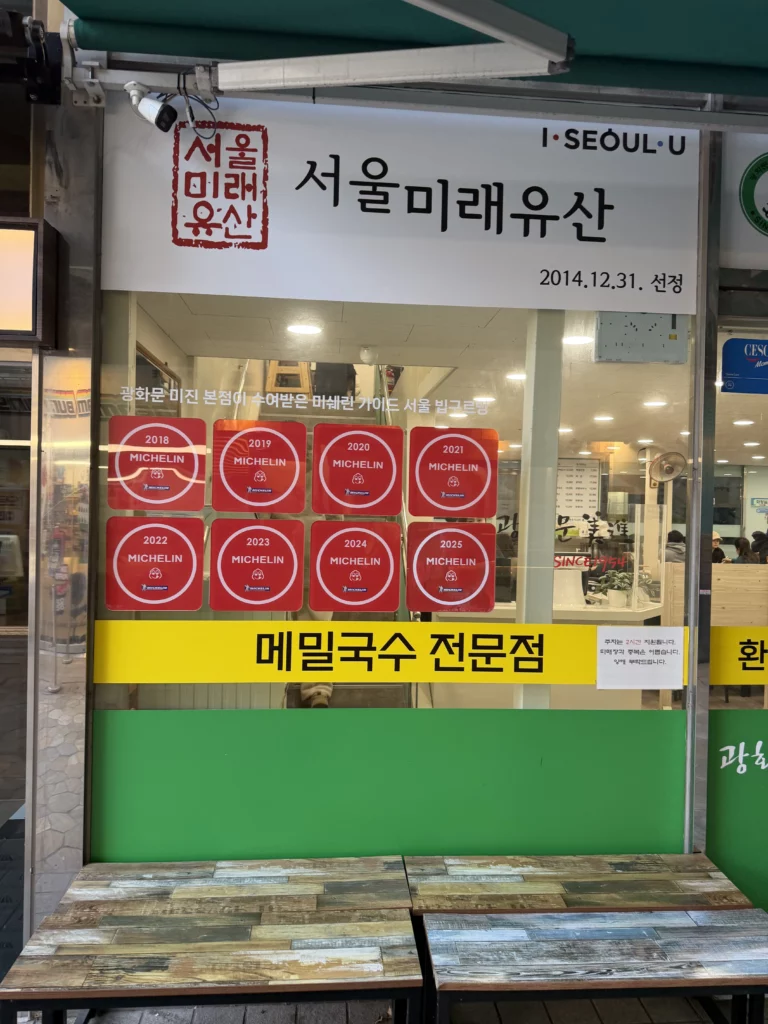
Located in the historically significant Pimatgol area near Gwanghwamun, Mijin occupies special cultural status. The restaurant received Seoul Future Heritage designation, recognizing establishments that preserve the city’s culinary identity amid rapid modernization. When you eat here, you’re not just enjoying excellent Korean noodles—you’re participating in living history.
Table of Contents
- Understanding Mijin’s Buckwheat Excellence
- What Makes This Korean Pancake Restaurant Michelin-Worthy
- The Bibim Memil Myeon Experience: Spicy Korean Buckwheat Noodles
- Dol Naembi Udon: Comfort in a Stone Pot
- Memil Kimchi Jeon: Buckwheat Meets Fermented Excellence
- The Complete Menu: Beyond Buckwheat Noodles
- Mijin’s Prestigious Recognition: Michelin and Seoul Future Heritage
- The Historic Pimatgol Location
- Visiting Mijin: What to Expect and Insider Tips
- Experience Seoul’s Buckwheat Excellence
Understanding Mijin’s Buckwheat Excellence
Mijin’s story begins in 1952, when buckwheat dishes provided affordable, nutritious sustenance in post-Korean War Seoul. While the city has transformed beyond recognition, Mijin’s commitment to traditional preparation remains unchanged. The restaurant operates its own production facility in the building’s basement—an unusual practice that allows complete control over noodle texture and broth depth.
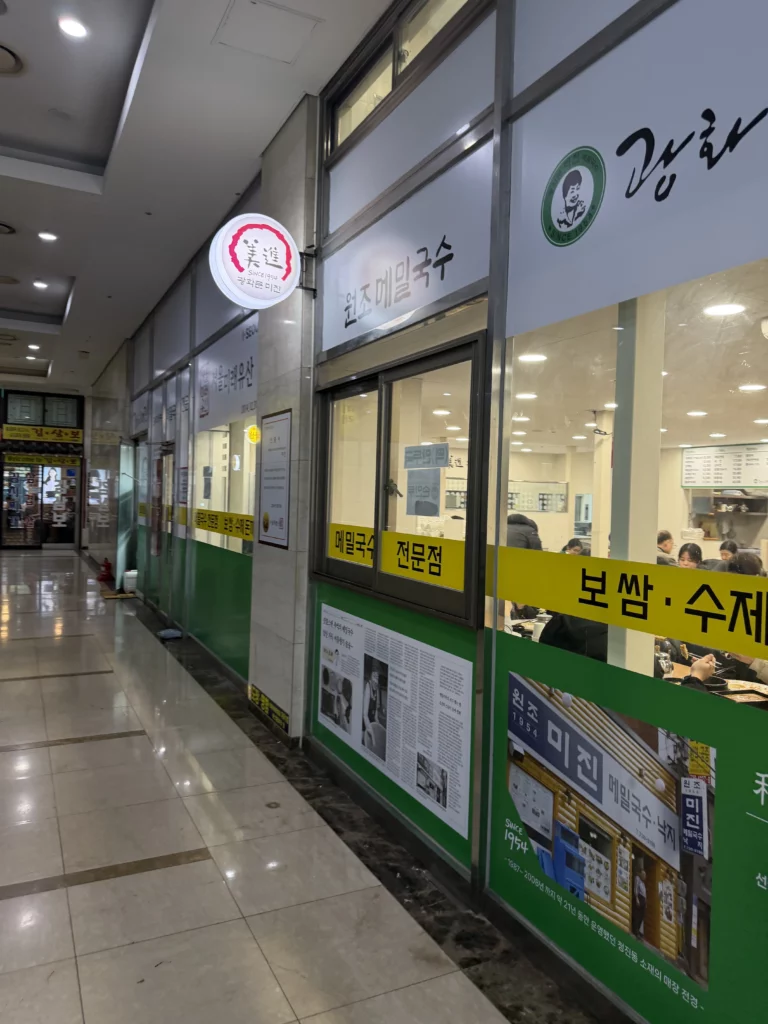
This dedication to in-house production distinguishes Mijin from countless competitors. Fresh buckwheat flour arrives regularly, and kitchen staff produces noodles throughout service to ensure optimal texture. The broth simmers for hours, developing complexity that instant or pre-made versions simply cannot achieve.
Korean-style vs. Japanese-style buckwheat creates an important distinction. While both cuisines celebrate buckwheat noodles (soba in Japanese, memil guksu in Korean), preparation philosophies differ markedly. Japanese soba typically features lighter, bonito-based dipping sauces that showcase buckwheat’s delicate flavor. Mijin’s Korean approach uses richer soy sauce-based broths with deeper savory character, creating more assertive flavor profiles that Korean palates prefer.
The noodles themselves demonstrate proper "jjolgit" (쫄깃) texture—that pleasantly chewy, elastic quality Korean diners prize. Achieving this requires precise buckwheat-to-wheat flour ratios, specific water temperatures, and careful kneading that develops enough structure without becoming tough. After decades of daily practice, Mijin’s kitchen has perfected these variables.
Mijin’s buckwheat mastery extends beyond simple noodles. The menu showcases the grain’s versatility through multiple preparations: cold noodles for summer refreshment, spicy mixed noodles for those craving heat, and traditional buckwheat pancakes (memil jeonbyeong) filled with aged kimchi and vegetables. Each dish honors buckwheat’s earthy character while creating distinct eating experiences.
What Makes This Korean Pancake Restaurant Michelin-Worthy
The Michelin Guide’s consecutive recognition from 2018 through 2025 validates what generations of Korean diners already knew: Mijin represents exceptional quality at reasonable prices. The Bib Gourmand designation—Michelin’s category for outstanding value—perfectly captures the restaurant’s ethos.
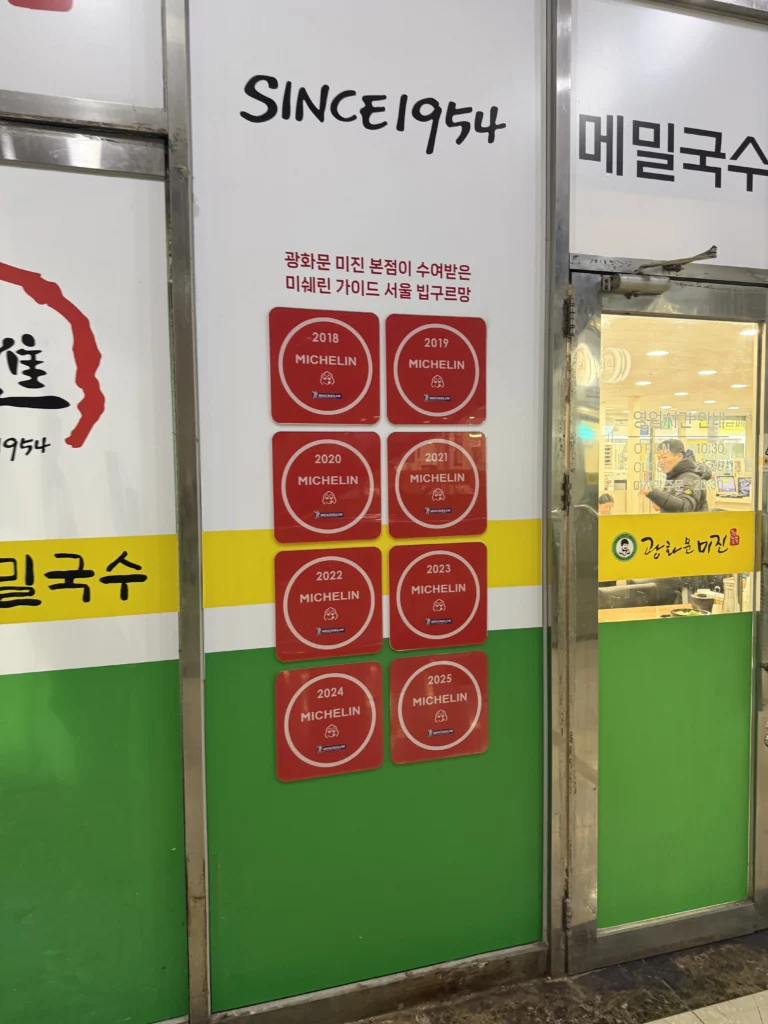
Several factors explain Mijin’s sustained Michelin status:
Unwavering Quality Standards: Seven decades of operation could have introduced shortcuts or cost-cutting measures. Instead, Mijin maintains expensive practices like in-house noodle production and long-simmered broths. This consistency across years impresses inspectors who return annually to verify standards haven’t slipped.
Technique Mastery: Michelin inspectors recognize technical excellence, and Mijin’s buckwheat preparations demonstrate deep expertise. The noodles achieve ideal texture—chewy without being tough, substantial without heaviness. The broths balance multiple umami sources without tasting muddy or confused.
Authentic Regional Cuisine: The restaurant preserves Gangwon Province’s buckwheat traditions with proper respect for technique and ingredients. This authenticity matters to Michelin, which values restaurants that maintain cultural culinary heritage rather than adapting for perceived international appeal.
Exceptional Value: Bib Gourmand specifically honors restaurants offering remarkable quality at accessible prices. Mijin’s portions satisfy Korean standards for generosity while keeping prices moderate. A complete meal costs ₩10,000-20,000—remarkable for Michelin-recognized food in expensive Seoul.
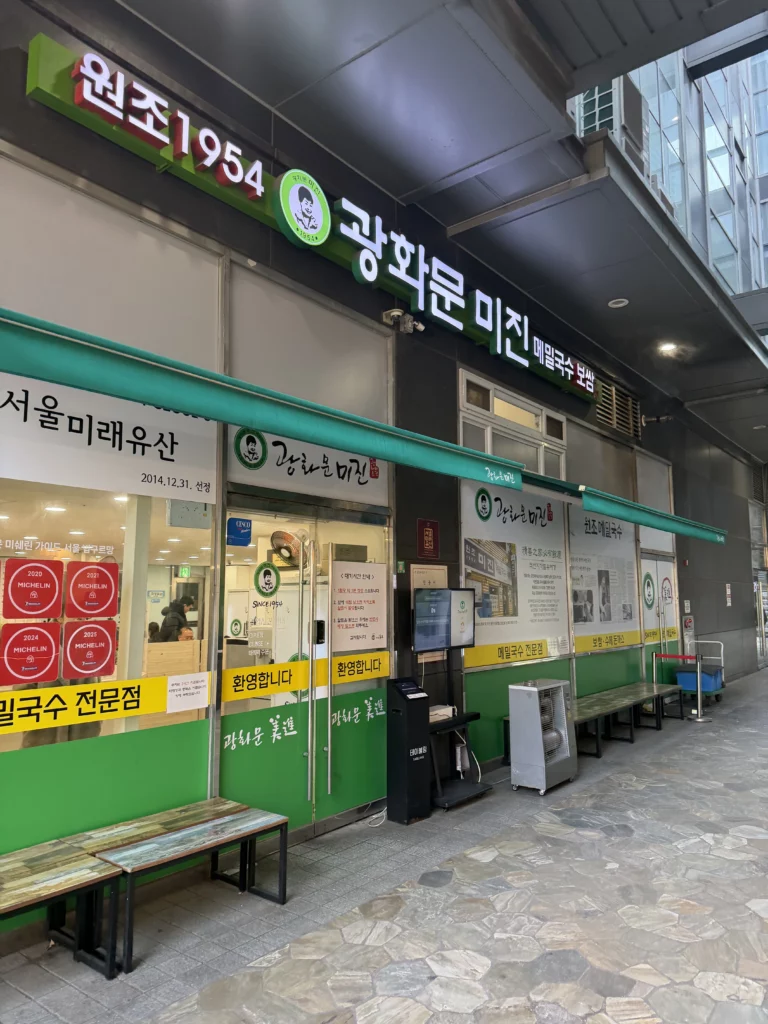
The Seoul Future Heritage designation adds another layer of prestige. This program identifies establishments critical to Seoul’s cultural identity, acknowledging that Mijin represents more than just good food—it embodies the city’s culinary evolution and serves as living connection to Seoul’s past. As modern developments erase historic neighborhoods, designated heritage sites like Mijin preserve authentic Seoul character for future generations.
The Bibim Memil Myeon Experience: Spicy Korean Buckwheat Noodles
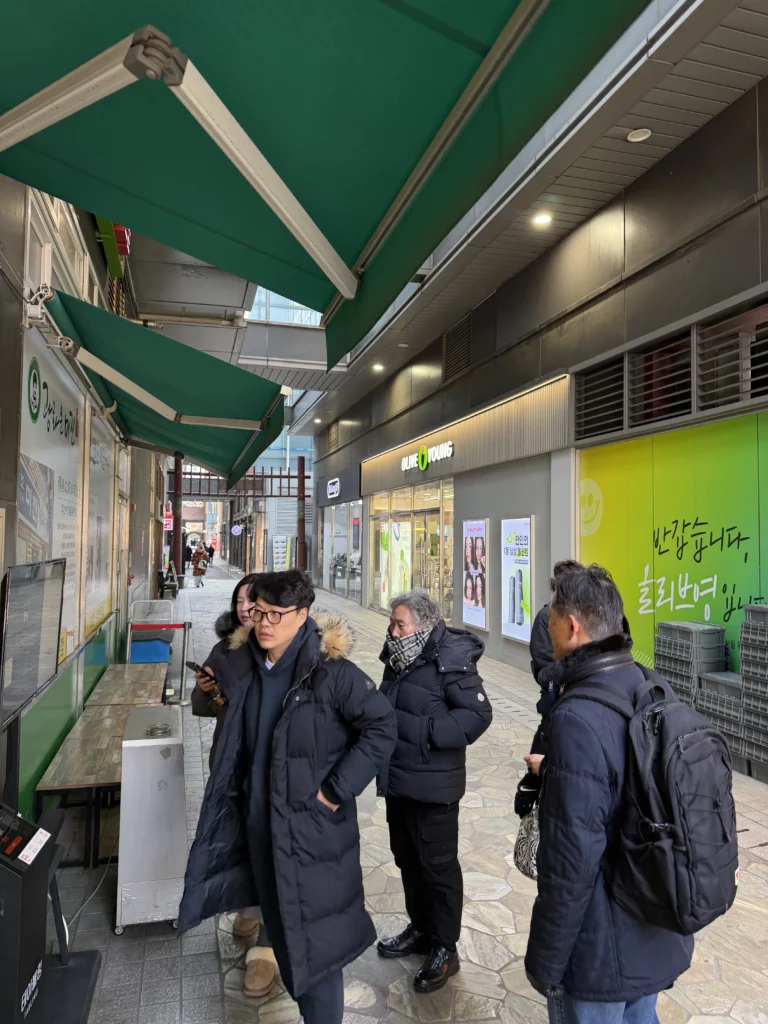
Walking into Mijin on a recent winter visit, the contrast between Seoul’s bitter cold and the restaurant’s warm interior felt dramatic. Despite temperatures hovering near freezing, customers filled every table, and a short queue waited near the entrance. This scene—diners willing to wait in harsh weather—speaks volumes about the food’s quality.
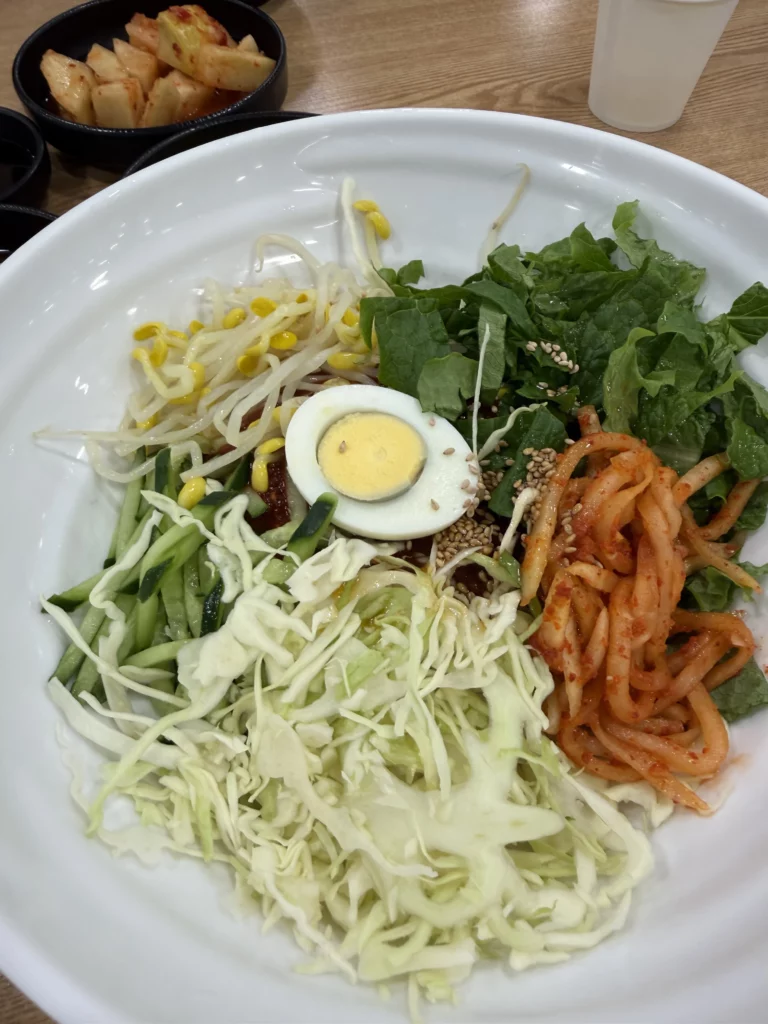
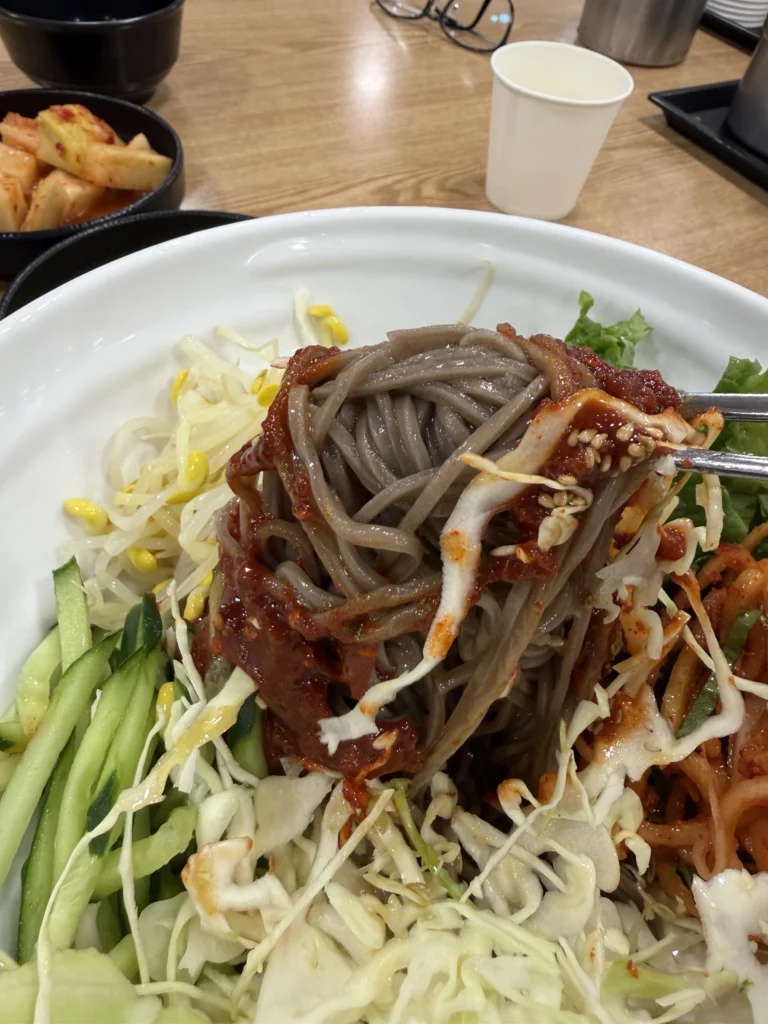
Bibim memil myeon (비빔메밀면) arrived as a striking visual presentation. The buckwheat noodles glistened with vibrant red gochujang sauce, crowned with julienned vegetables, sliced cucumber, and a soft-boiled egg. Unlike the subtle presentation of cold noodles, bibim memil myeon announces itself boldly—this dish doesn’t whisper, it shouts.
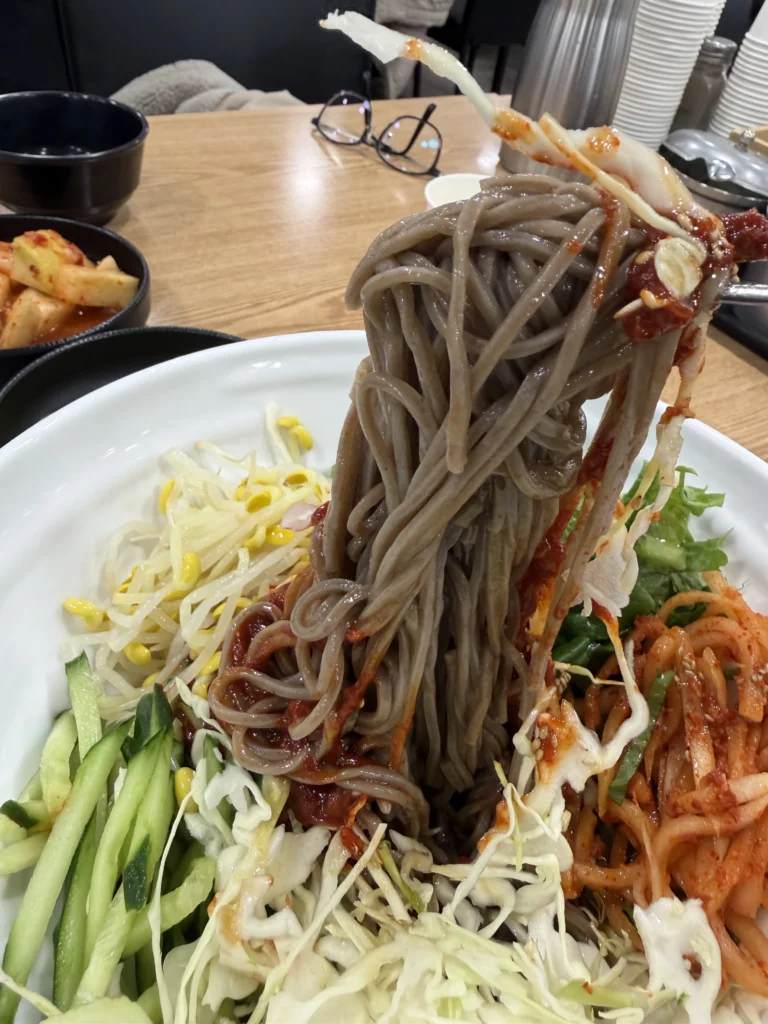
The first bite revealed why this preparation has such devoted following. The buckwheat noodles maintained their characteristic "jjolgit" texture despite the thick sauce coating—a technical achievement requiring proper noodle preparation. Lesser kitchens produce noodles that either become mushy when mixed with sauce or remain too firm, but Mijin’s noodles hit the perfect middle ground.
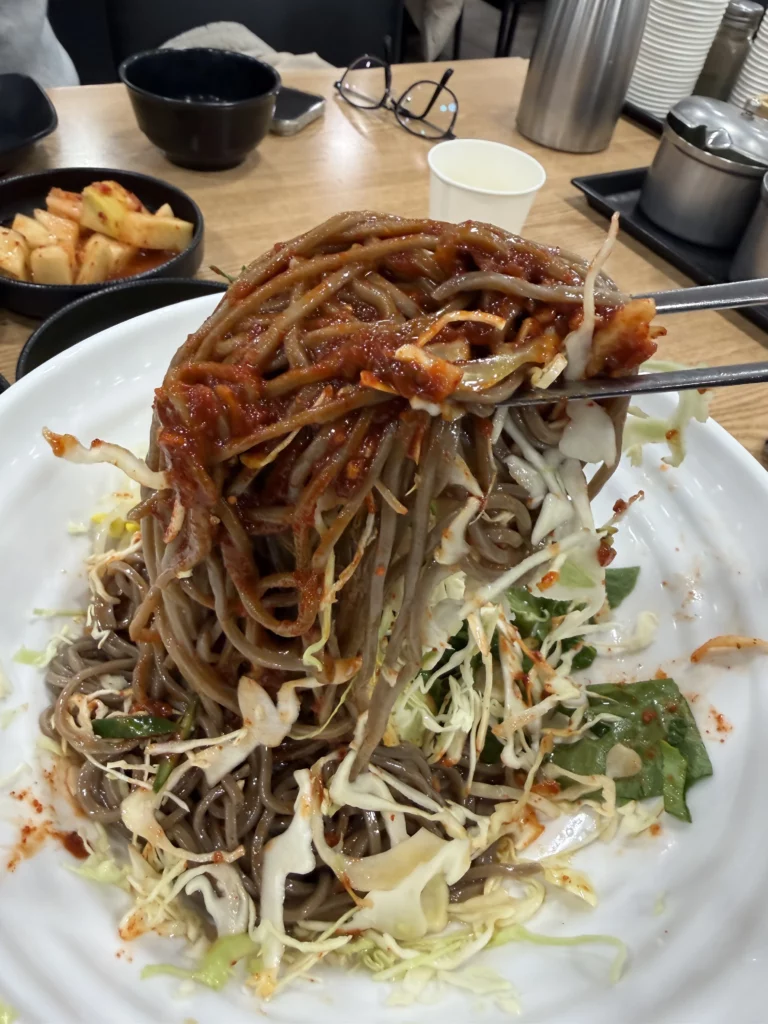
The gochujang-based sauce delivered complex spiciness rather than one-dimensional heat. Korean chefs understand that great spicy dishes balance multiple flavor dimensions, and Mijin’s sauce demonstrated this wisdom. Beyond the initial warmth from gochugaru (Korean red pepper flakes), the sauce contained sesame oil’s nutty richness, rice vinegar’s bright acidity, and subtle sweetness that rounded harsh edges.
Spice level registers around 6/10 on the Korean scale—definitely spicy but not punishing. First-time visitors should expect noticeable heat that builds with each bite, though it never overwhelms. The vegetables provide refreshing crunch that offers brief respite from the spice, while the soft-boiled egg’s creamy yolk, when mixed into the noodles, creates richer, slightly milder bites.
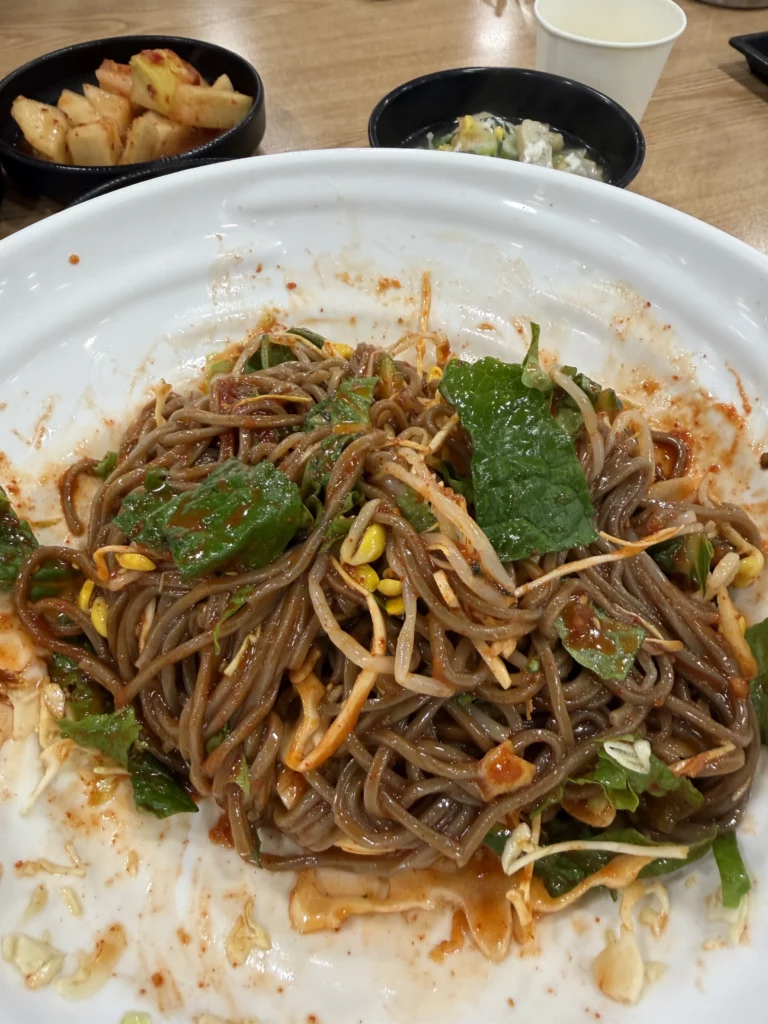
Textural contrast elevates the dish beyond simple spicy noodles. The chewy buckwheat strands contrast with crisp cucumber and carrot, while the egg adds silky creaminess. This textural variety keeps each bite interesting—Korean culinary philosophy emphasizes that great dishes should engage multiple senses and provide varied eating experiences rather than monotonous repetition.
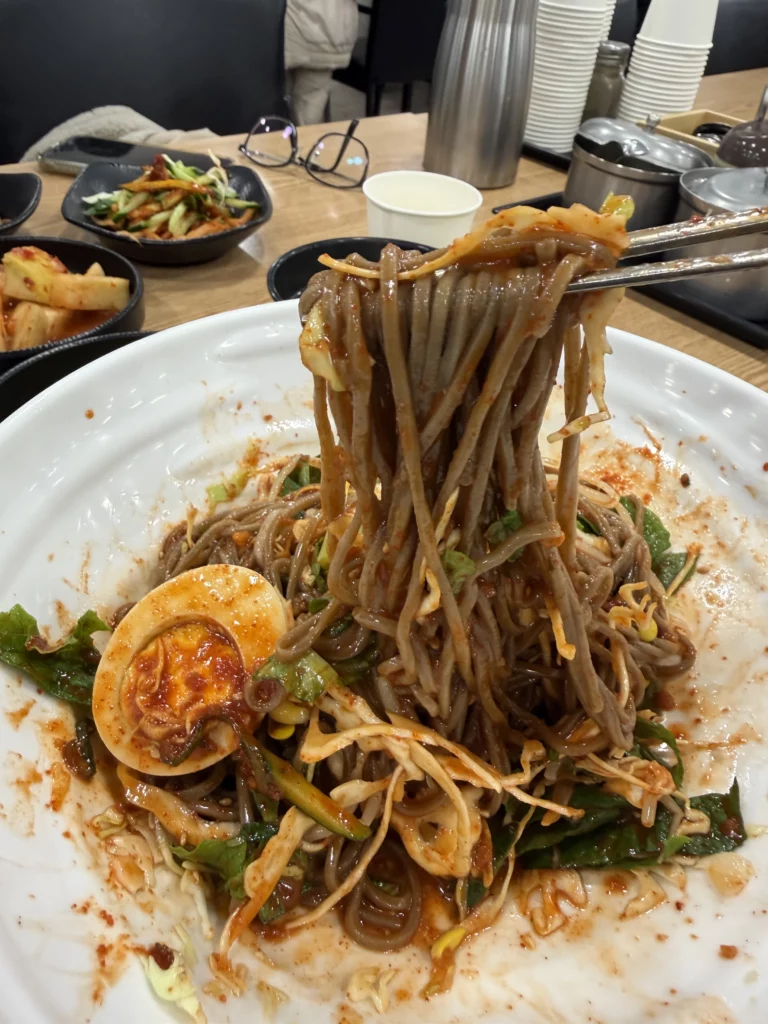
Eating technique matters for maximum enjoyment. Mix the noodles thoroughly before beginning—the sauce needs even distribution, and the egg yolk should coat everything in golden richness. Don’t rush; despite the spice, this dish rewards slower eating that allows appreciation of buckwheat’s nutty undertones beneath the bold sauce.
Dol Naembi Udon: Comfort in a Stone Pot
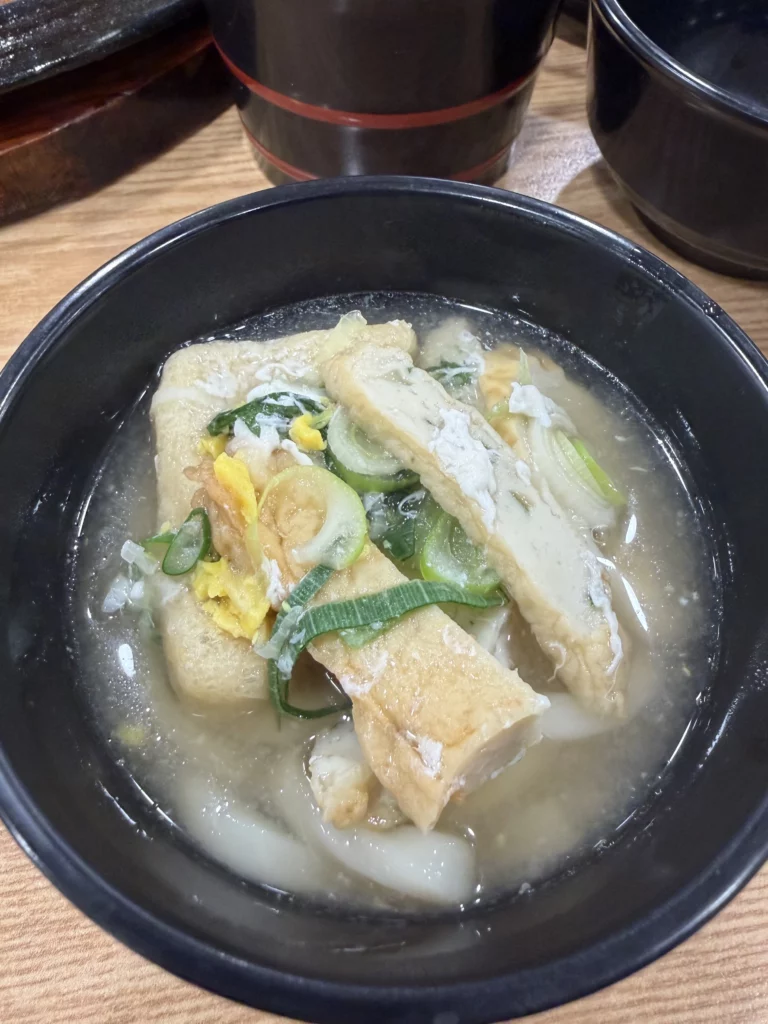
The dol naembi udon (돌냄비우동) arrived still violently bubbling from the stone pot’s residual heat. Steam rose dramatically as the server set it on the table, and the bubbling continued for minutes—a theatrical presentation that never fails to impress diners.
Korean restaurants use heavy stone pots (dolsot) for specific dishes because the material retains heat exceptionally well. The pot arrives so hot that the broth continues actively boiling at the table, slowly calming as the stone releases stored thermal energy. This extended heat keeps the soup piping hot throughout the meal—particularly welcome during Seoul’s frigid winters.
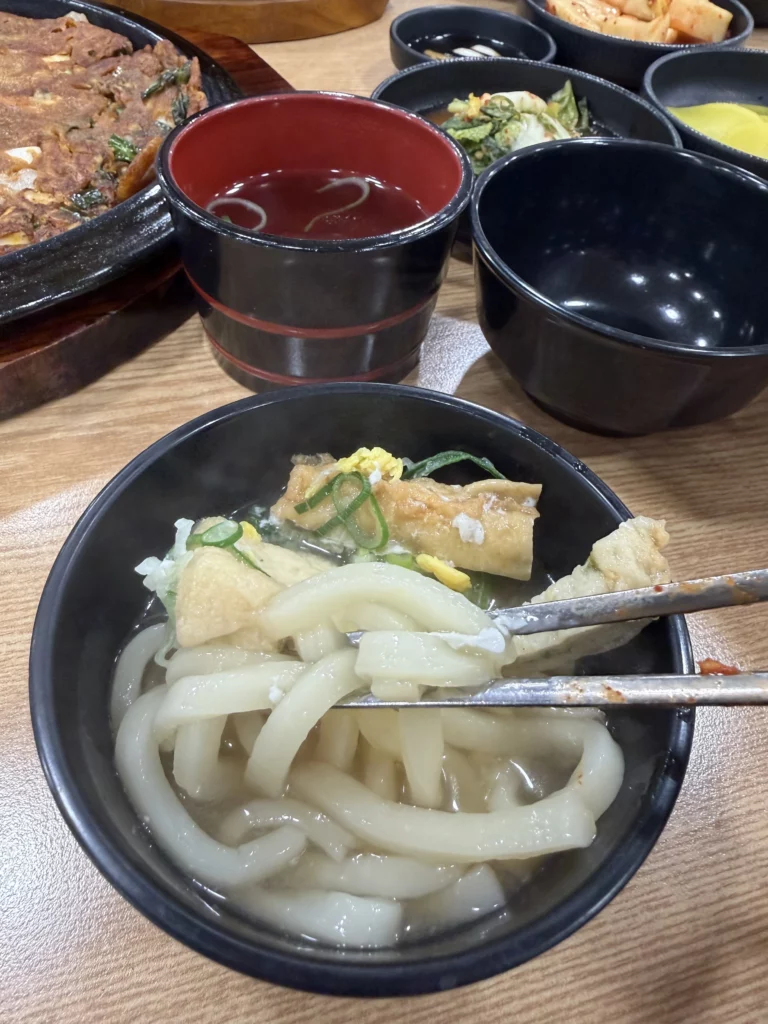
The broth demonstrated proper depth, rich with umami from kelp and bonito while maintaining clean, clear character. Unlike heavy, opaque broths in some Korean soups, udon broth should taste clean yet flavorful—complex enough to satisfy but light enough to allow multiple bowls without heaviness.
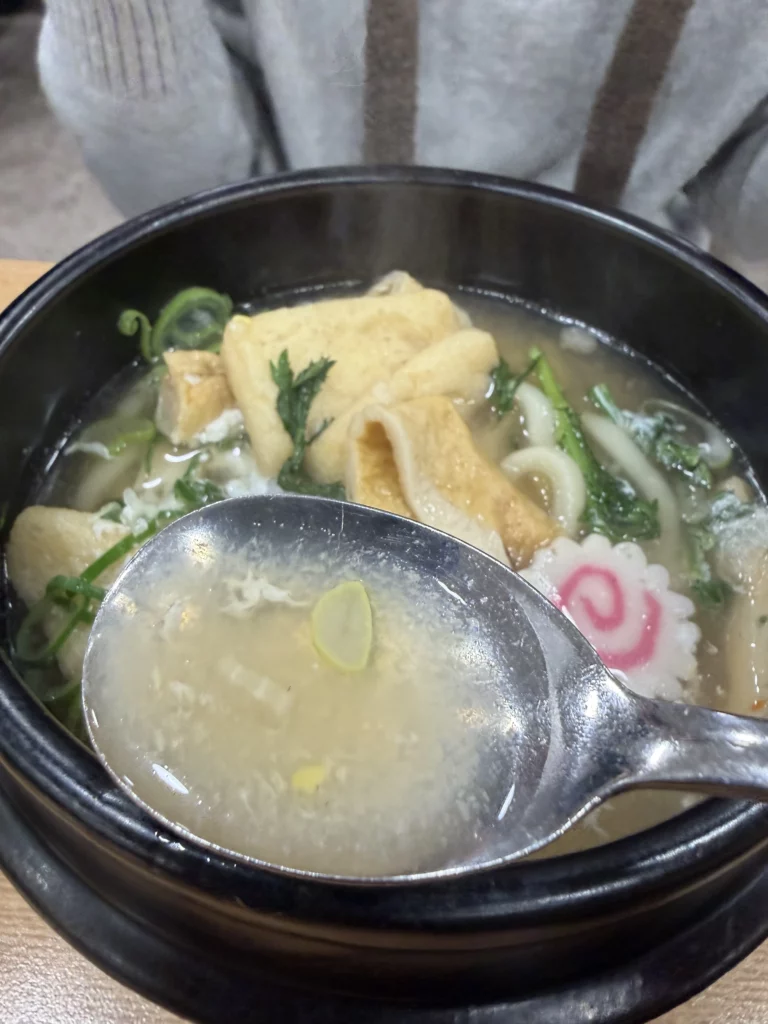
The udon noodles differed dramatically from the buckwheat preparations. Thick, chewy wheat noodles provided substantial satisfaction—the kind of carbohydrate-rich comfort that cold weather demands. These weren’t delicate strands requiring careful handling; udon encourages enthusiastic slurping and satisfying chewing.
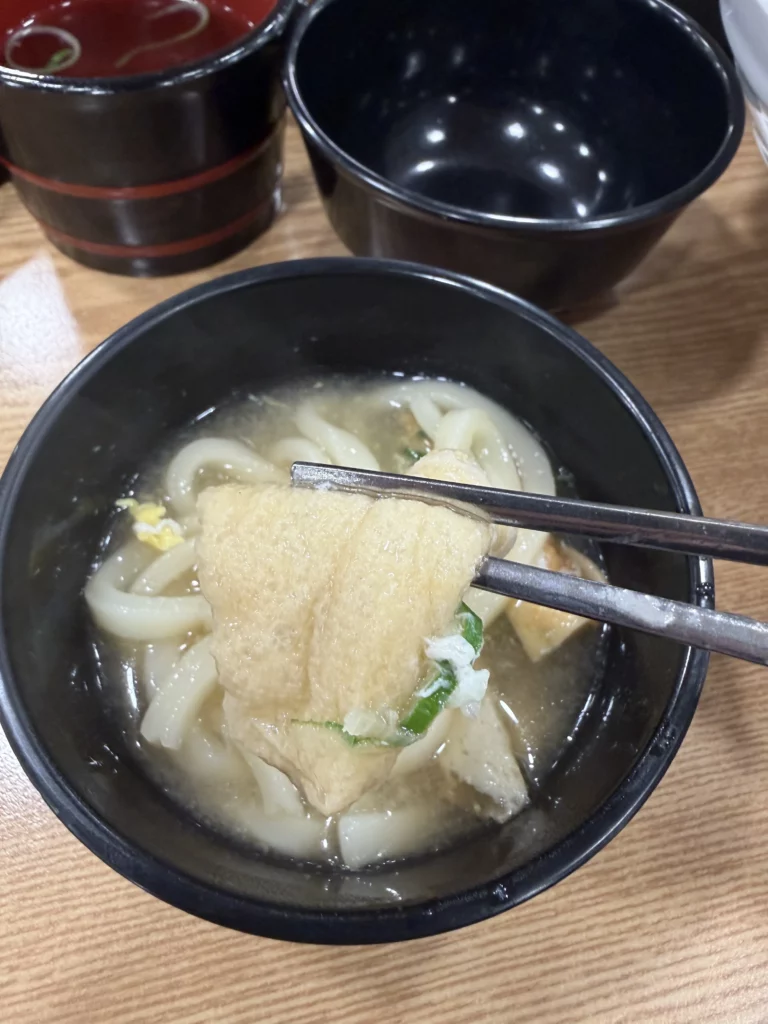
Toppings included fish cake, green onions, and sometimes egg or seafood depending on the specific preparation ordered. The fish cake added savory depth while its spongy texture soaked up broth beautifully. Each piece became a flavor-saturated bite that contrasted nicely with the noodles’ chewy simplicity.
The stone pot’s continued heat meant the broth’s temperature remained consistent from first bite to last. No lukewarm final spoonfuls—the dol naembi ensures every portion tastes freshly served. This consistent heat also allows ingredients to continue softening slightly as you eat, creating gentle texture evolution throughout the meal.
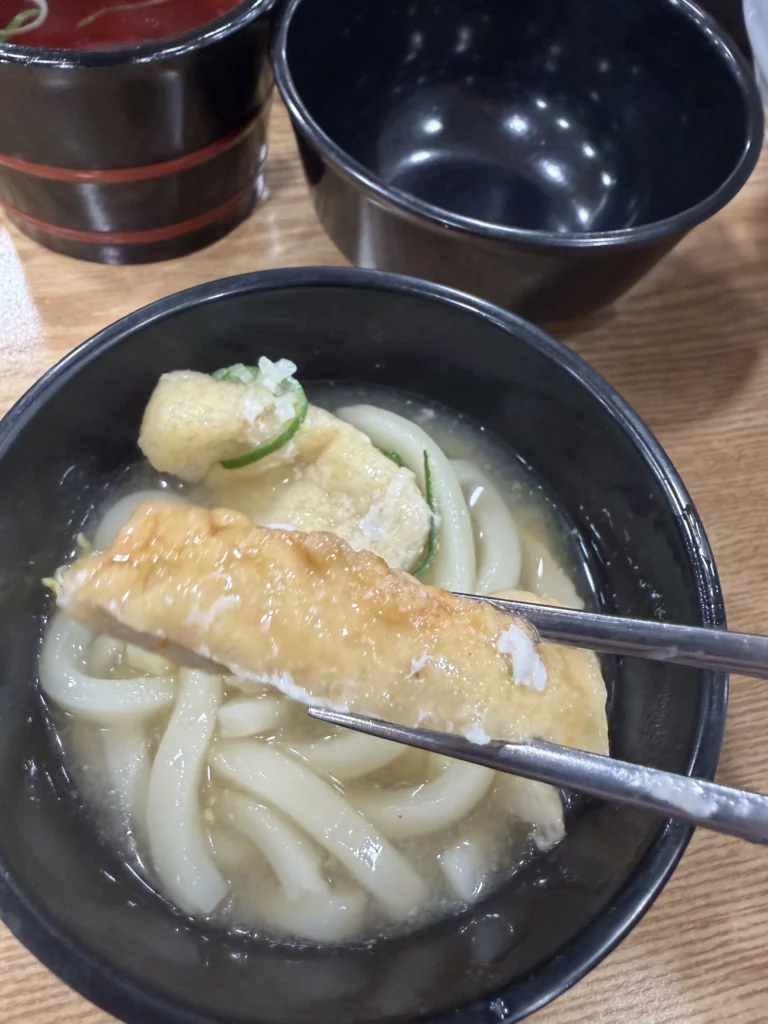
Why order udon at a buckwheat specialist? This question might occur to purists, but the menu inclusion demonstrates kitchen versatility and acknowledges that not every diner appreciates buckwheat’s distinctive earthiness. The udon also provides contrast option for groups—one person orders cold buckwheat noodles, another gets spicy bibim memil myeon, and a third chooses hot udon, creating variety that defines satisfying Korean group dining.
Memil Kimchi Jeon: Buckwheat Meets Fermented Excellence
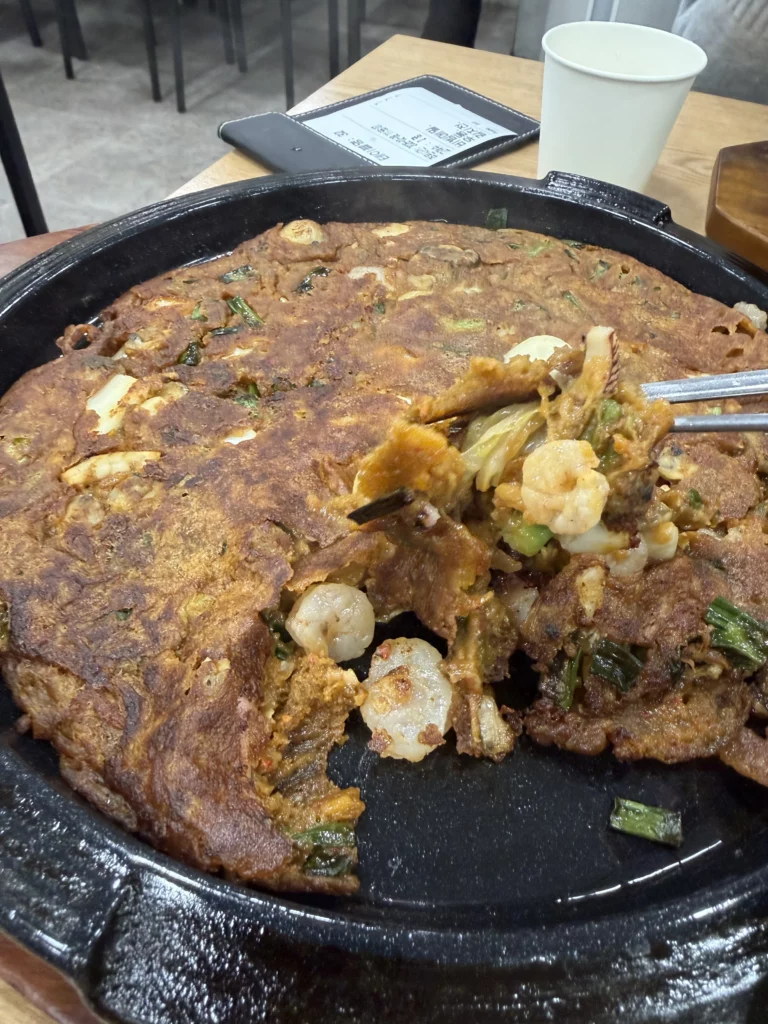
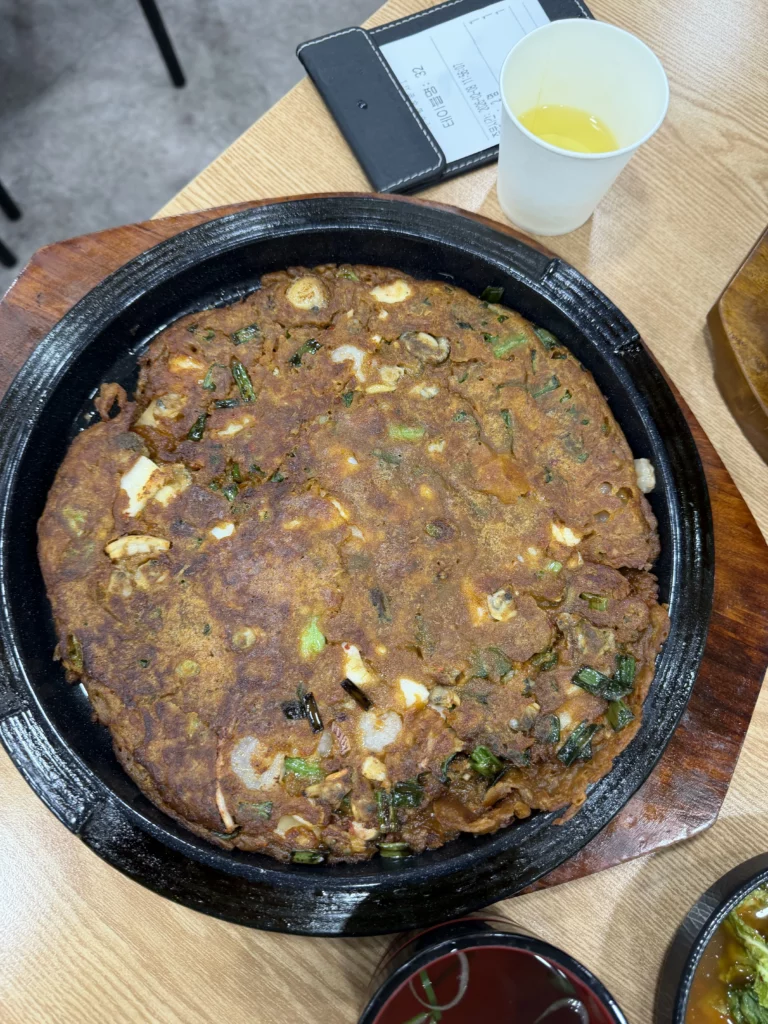
Among the day’s discoveries, memil kimchi jeon (메밀김치전) revealed how buckwheat transforms Korea’s beloved kimchi pancake tradition. Unlike typical wheat-flour versions, buckwheat creates delicate, lacy texture with exceptionally crispy edges and lighter, almost fritter-like interior.
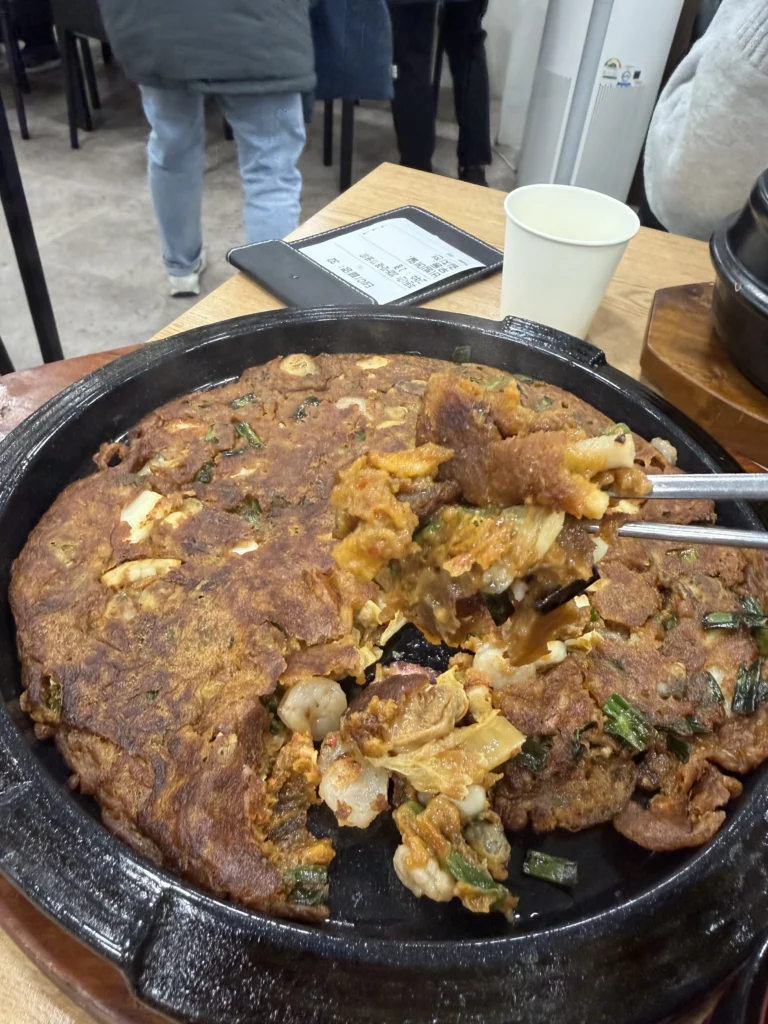
The pancake arrived golden-brown with visible kimchi flecks throughout, its earthy buckwheat character enhancing rather than competing with the aged kimchi’s fermented tang. Each bite delivered satisfying crunch followed by tender center, showcasing the "geot-ba-sok-chok" (겉바속촉) texture—crispy outside, moist inside—that defines excellent Korean pancakes.
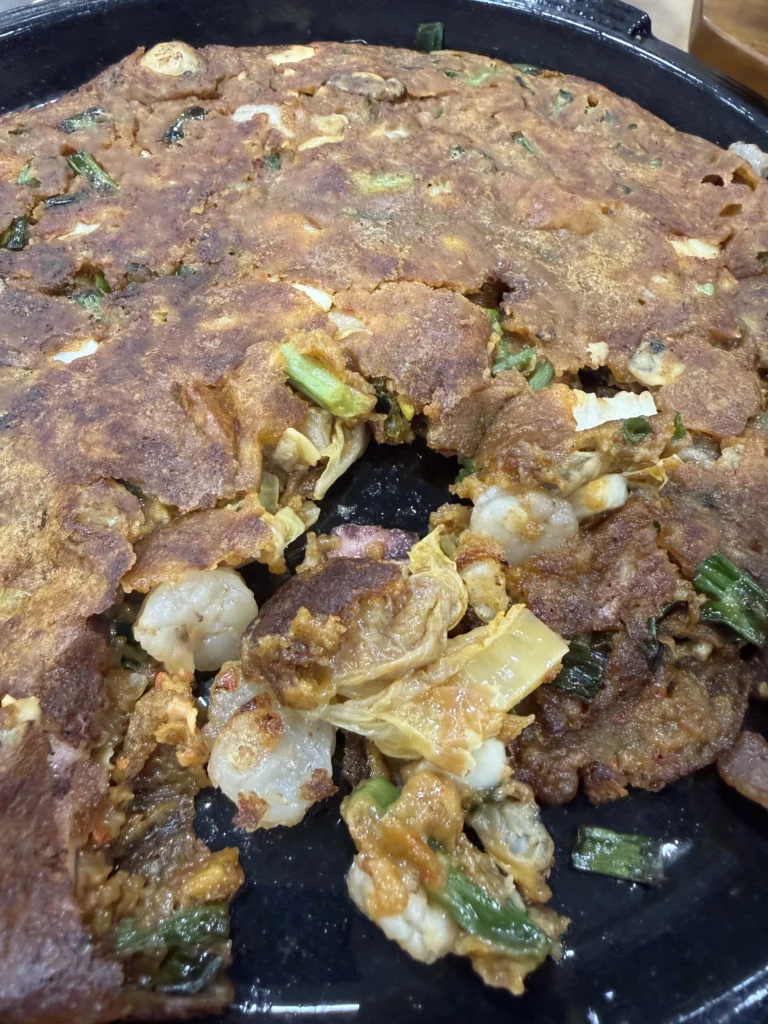
What distinguished this preparation was buckwheat’s subtle mineral notes complementing the kimchi’s funky complexity. The gluten-free batter produced lighter texture compared to chewy wheat-flour pancakes, while properly aged kimchi contributed developed sourness and umami depth. No dipping sauce needed—the pancake contained sufficient seasoning from kimchi and batter.
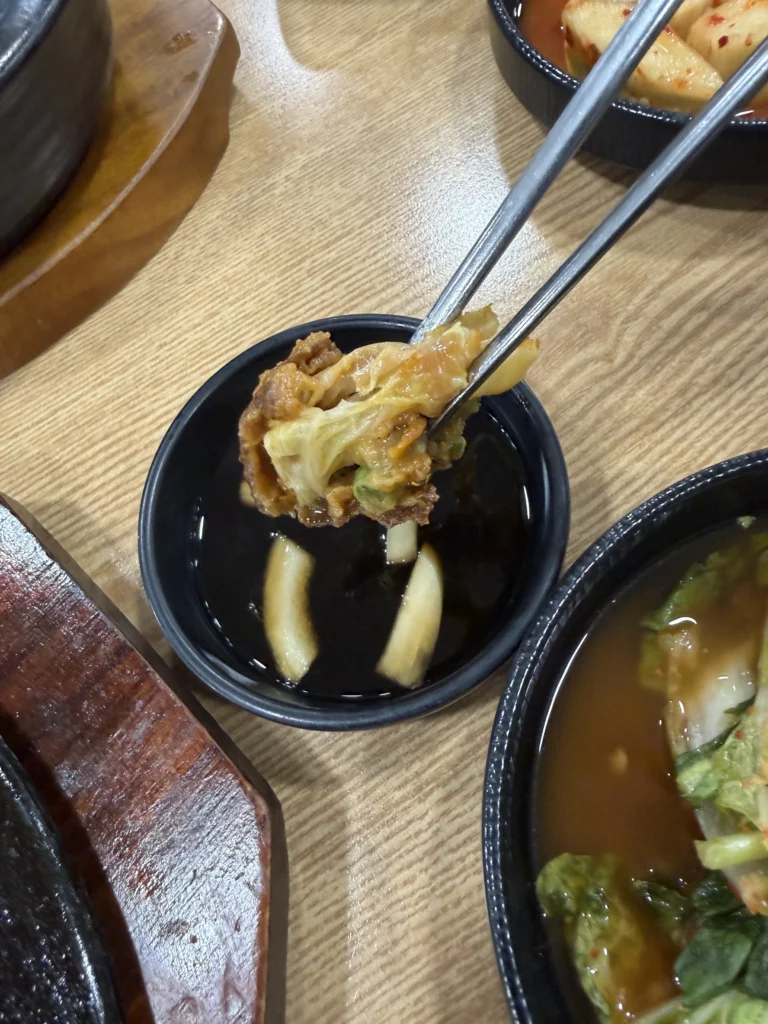
Served cut into rectangular pieces for easy chopstick handling, the memil kimchi jeon paired excellently with noodle dishes. After slurping cold or spicy buckwheat noodles, biting into crispy savory pancake provided textural contrast that kept the meal engaging—multiple buckwheat preparations creating varied experiences within one sitting.
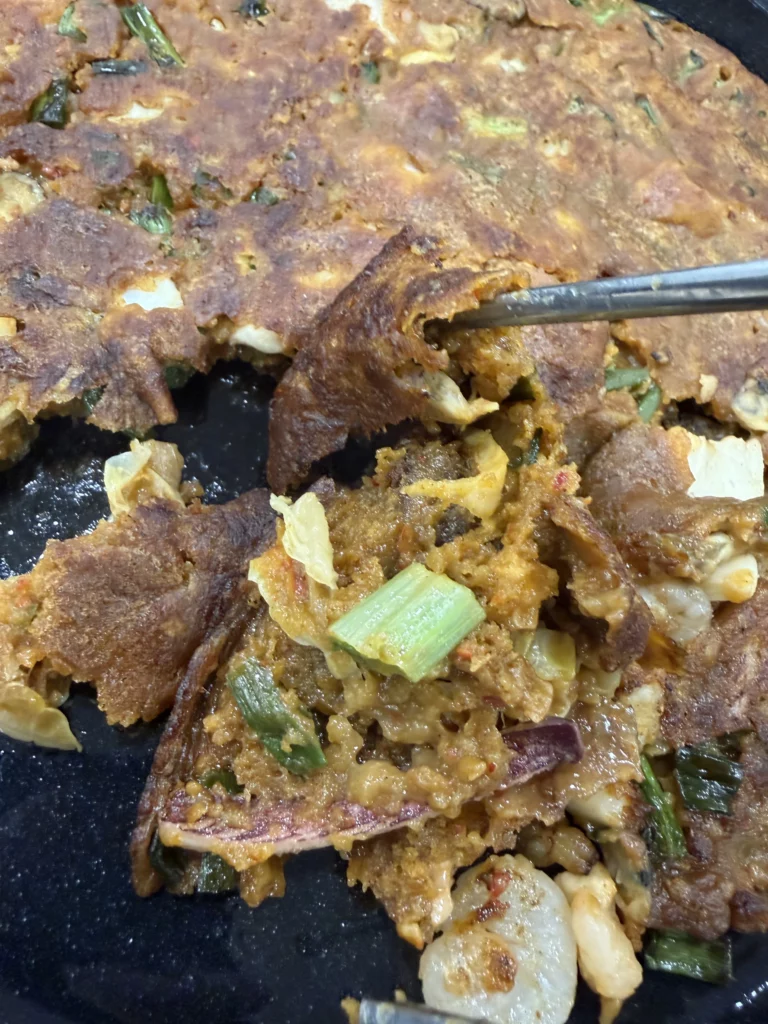
This dish exemplifies Gangwon Province’s buckwheat traditions that Mijin preserves with Seoul Future Heritage designation. Even this relatively simple preparation receives the same meticulous attention—quality buckwheat flour, properly aged kimchi, careful pan-frying—that defines their Michelin-recognized excellence across seven decades.
The Complete Menu: Beyond Buckwheat Noodles
While buckwheat preparations anchor Mijin’s reputation, the menu reveals broader capabilities worth exploring.
Naeng Memilguksu (냉메밀국수) remains the signature dish most customers order. Korean-style cold buckwheat noodles arrive in distinctive two-tiered serving dishes—many first-timers miss the bottom layer containing additional noodles and wonder why their broth finishes before noodles do. The soy-based broth tastes richer and more savory compared to Japanese soba’s typically lighter dipping sauces.
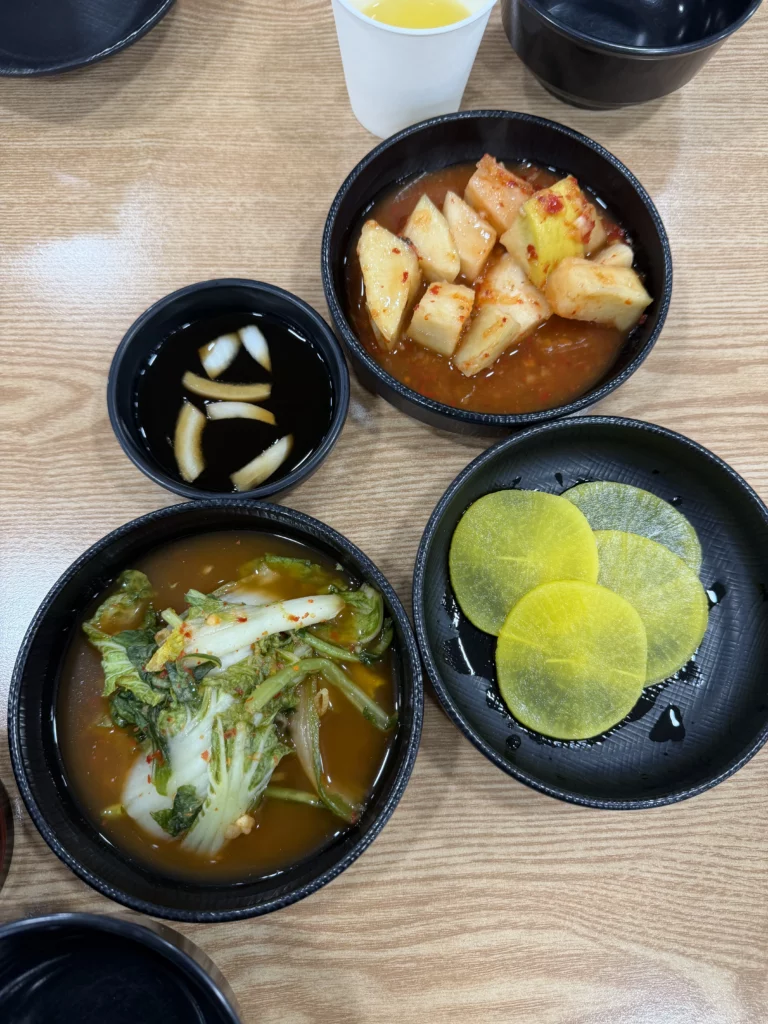
The cold noodles come with generous accompaniments: a pitcher of extra chilled broth for adjusting soup quantity, and notably, the aged kimchi served alongside isn’t decorative. Korean diners add it directly to their noodle bowl, the fermented vegetables enhancing broth complexity while adding crunch and heat.
Memil Jeonbyeong (메밀전병), the Korean buckwheat pancake that showcases Gangwon Province’s traditional preparation, appears as menu option for those wanting to experience buckwheat’s versatility. Thin buckwheat crepes get filled with aged kimchi, tofu, bean sprouts, and seasoned pork before being rolled and sliced into pinwheel pieces. The restaurant offers half-portions, acknowledging that many diners want to sample multiple preparations rather than committing to single large servings.
Bossam Jeongsik (보쌈정식) seems unexpected on buckwheat-focused menu but demonstrates the kitchen’s range. Thinly sliced boiled pork belly arrives with multiple kimchi varieties and fresh vegetable wraps, showcasing proper Korean preparation across categories beyond noodles.
Seasonal and Daily Specials occasionally appear, reflecting ingredient availability and traditional seasonal eating patterns. Korean cuisine emphasizes eating with the seasons, and while Mijin’s core menu remains consistent, occasional variations honor this principle.
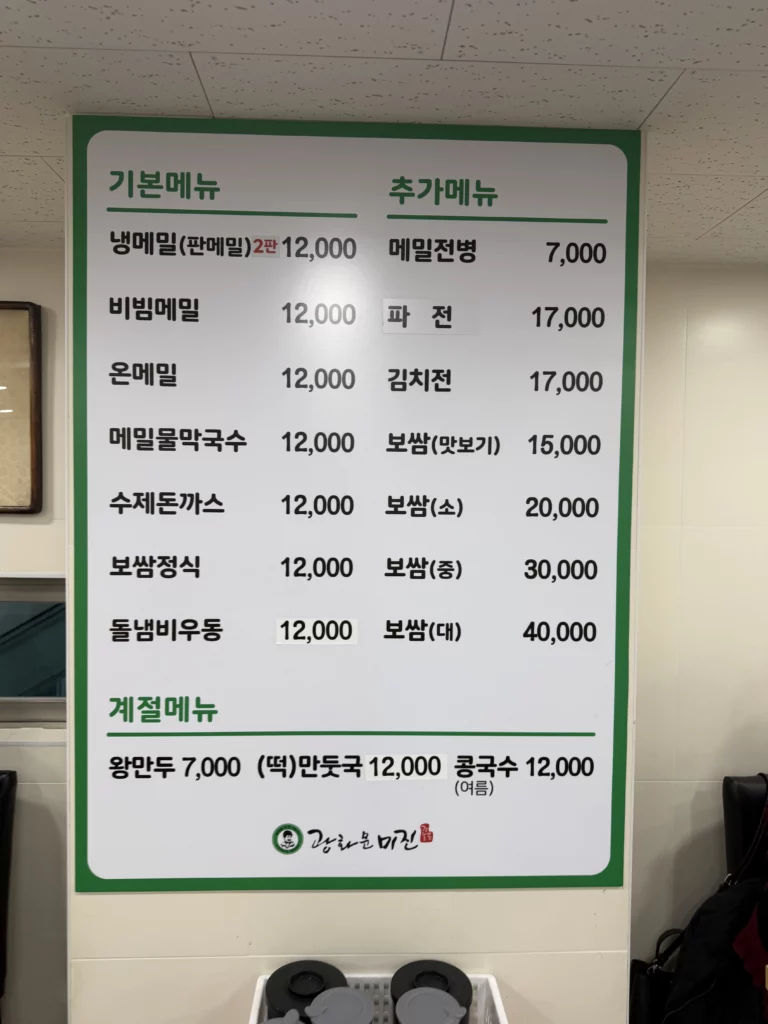
Pricing reflects Bib Gourmand recognition—exceptional quality at reasonable cost. Main dishes range ₩10,000-15,000, with most combinations staying under ₩20,000 per person. This positions Mijin as accessible everyday dining rather than special occasion splurge, appropriate for a neighborhood restaurant serving office workers and residents alongside food enthusiasts making special trips.
Mijin’s Prestigious Recognition: Michelin and Seoul Future Heritage
The combination of consecutive Michelin Bib Gourmand recognition (2018-2025) and Seoul Future Heritage designation places Mijin in rare company. Few restaurants achieve both honors, which approach excellence from different angles—Michelin evaluates food quality and value, while Future Heritage designation recognizes cultural significance and preservation of Seoul’s culinary identity.
The Michelin Journey: Earning first Bib Gourmand recognition in 2018 when the Michelin Guide expanded Seoul coverage validated decades of consistent quality. But maintaining that recognition year after year through 2025 demonstrates something more impressive—Mijin hasn’t rested on laurels or allowed standards to slip. Each year, anonymous inspectors return to verify the restaurant still merits inclusion, and each year, Mijin delivers.
The Bib Gourmand category specifically honors establishments offering "good food at moderate prices"—Michelin’s recognition that exceptional dining shouldn’t require luxury spending. This perfectly captures Mijin’s philosophy: uncompromising quality at prices accessible to regular people rather than special-occasion-only diners.
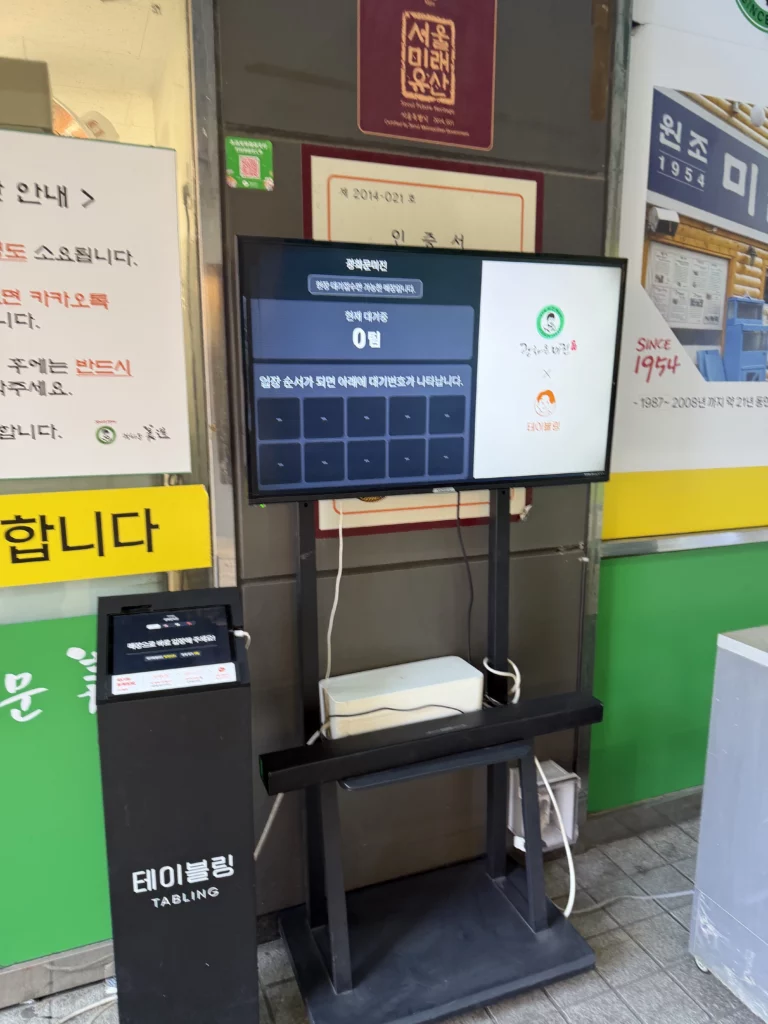
Seoul Future Heritage Status: This designation carries particular weight for Koreans. The program identifies establishments, locations, and cultural practices essential to Seoul’s identity that risk disappearing amid rapid modernization. As gleaming towers replace traditional neighborhoods and chain restaurants displace family operations, Future Heritage sites preserve authentic Seoul character.
Mijin’s designation acknowledges the restaurant’s role in maintaining Korean culinary traditions, particularly regarding buckwheat preparations that originated in Gangwon Province. The restaurant serves as living museum where techniques pass from generation to generation, ensuring knowledge doesn’t disappear with modernization’s march.
What These Recognitions Mean for Diners: The dual honors provide assurance that your meal represents authentic Korean cuisine prepared at exceptional level. You’re not eating at a tourist trap trading on location or marketing—you’re experiencing food that meets rigorous standards both for technical excellence (Michelin) and cultural authenticity (Future Heritage).
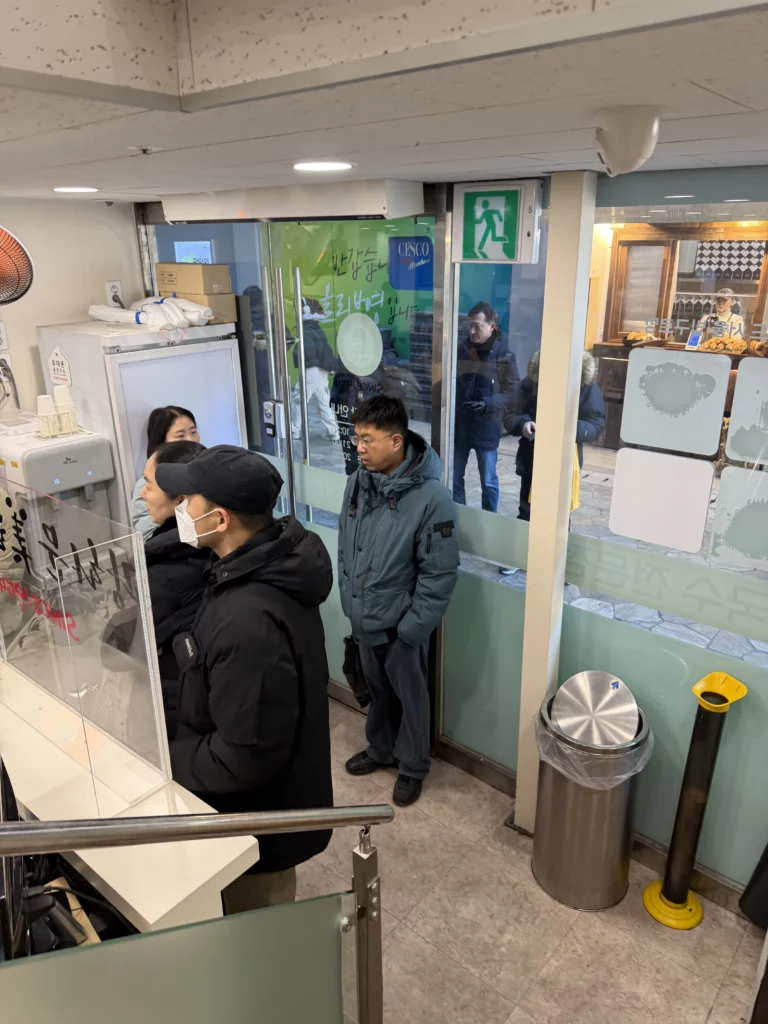
The waiting lines, even in freezing weather, validate these official recognitions. Korean diners—notoriously demanding and quick to abandon restaurants that decline in quality—continue patronizing Mijin decade after decade. This sustained local loyalty matters more than any guide’s recommendation, though the convergence of official recognition and grassroots support creates powerful confirmation of excellence.
The Historic Pimatgol Location
Mijin’s location in Pimatgol (피맛골) carries historical significance that enriches the dining experience. Understanding this context transforms a simple meal into engagement with Seoul’s urban evolution.
Pimatgol’s History: The name translates roughly as "avoid-horse alley"—commoners used this narrow covered passage to avoid mounted nobility traveling the main Jongno thoroughfare. For centuries, Pimatgol served as alternative route where regular people conducted business, socialized, and ate without aristocratic interference.
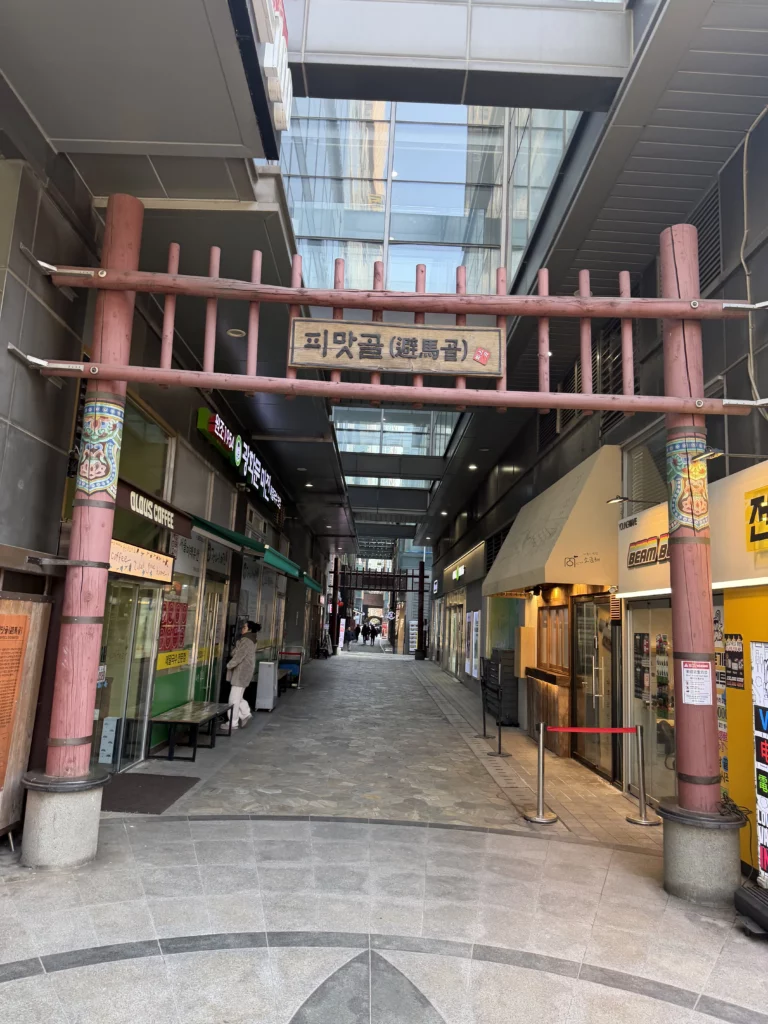
This egalitarian history shaped Pimatgol’s character. The alley became famous for affordable restaurants serving working people—office employees, shopkeepers, students. The atmosphere was democratic, sometimes raucous, authentically Seoul without pretension. Dozens of small restaurants operated side-by-side, each specializing in particular dishes, creating a concentrated food culture that defined the area.
Urban Transformation: Modern development nearly erased Pimatgol completely. The original covered alley disappeared during Jongno redevelopment, replaced by commercial buildings and widened streets. Many feared Seoul was losing irreplaceable cultural heritage as bulldozers demolished historic structures.
Mijin survived by relocating to Lemaire Jongno Town at 19 Jongno, maintaining presence in the general Pimatgol area even as the physical alley changed. This resilience—adapting to modern requirements while preserving traditional food culture—exemplifies how Korean traditions survive amid rapid change.
Today’s Pimatgol: While the original covered alley is gone, the area surrounding Gwanghwamun and Jongno retains some historic character. Traditional restaurants coexist with modern offices, historic palaces like Gyeongbokgung stand within walking distance, and the neighborhood maintains atmosphere distinct from purely modern districts like Gangnam.
Eating at Mijin connects you to this layered history. You’re dining where generations of Seoul residents have sought sustenance, in an area that witnessed Korea’s dramatic twentieth-century transformation. The buckwheat noodles in your bowl represent continuity—the same preparation methods, similar flavors, connecting present to past through living tradition rather than museum preservation.
Visiting Mijin: What to Expect and Insider Tips
Address: 19 Jongno, Lemaire Jongno Town 116-2ho, Jongno-gu, Seoul (서울 종로구 종로 19, 르메이에르 종로타운 116-2호)
Getting There: Mijin’s central location makes access straightforward via Seoul’s subway system:
From Gwanghwamun Station (Line 5), Exit 4: Walk straight approximately 3-4 minutes. Lemaire Jongno Town appears on your right.
From Jonggak Station (Line 1), Exit 1: Walk toward Gwanghwamun approximately 5 minutes. Pass several commercial buildings until reaching Lemaire Jongno Town.
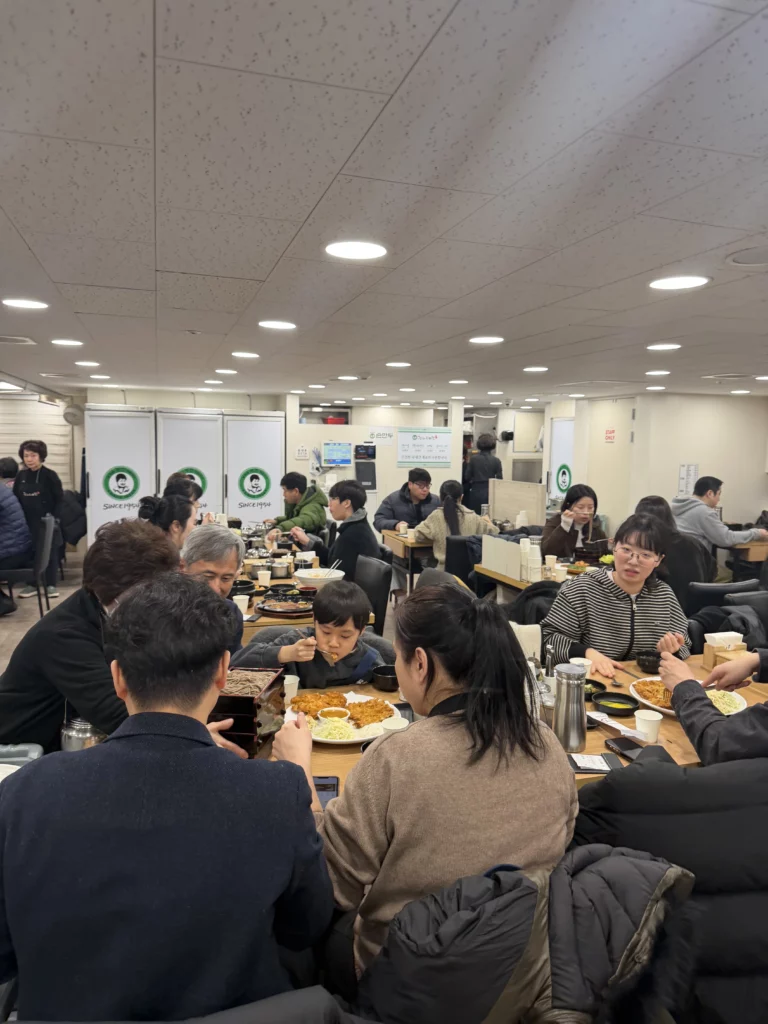
Both routes take under 10 minutes through Jongno’s bustling streets filled with office workers, shoppers, and tourists exploring nearby palaces and traditional neighborhoods.
Hours: Daily 10:30 AM – 9:00 PM (hours may vary seasonally; verify if visiting during major Korean holidays like Lunar New Year or Chuseok)
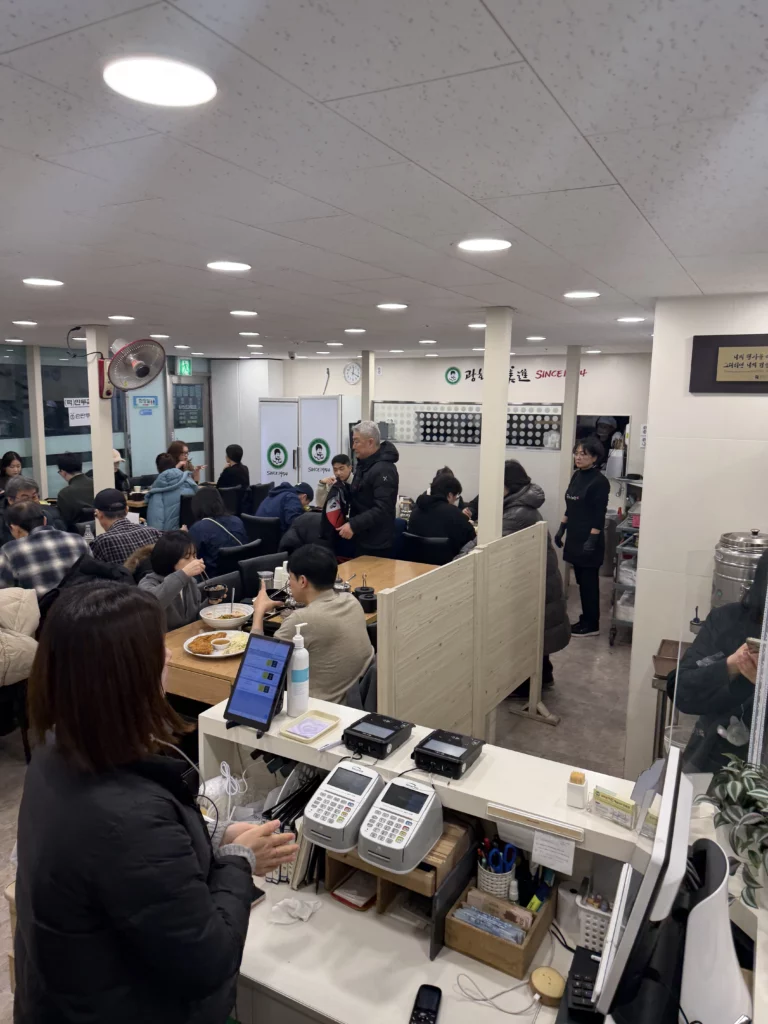
The Waiting Reality: As experienced firsthand during a recent winter visit, Mijin attracts crowds regardless of weather. Despite bitter cold, customers formed orderly lines waiting for tables. This popularity creates strategic considerations:
Best timing: Arrive before 11:45 AM or after 2:00 PM on weekdays to minimize waits. Weekend afternoons (2:00-5:00 PM) offer moderate crowds. Early dinner around 5:30 PM typically allows smoother seating.
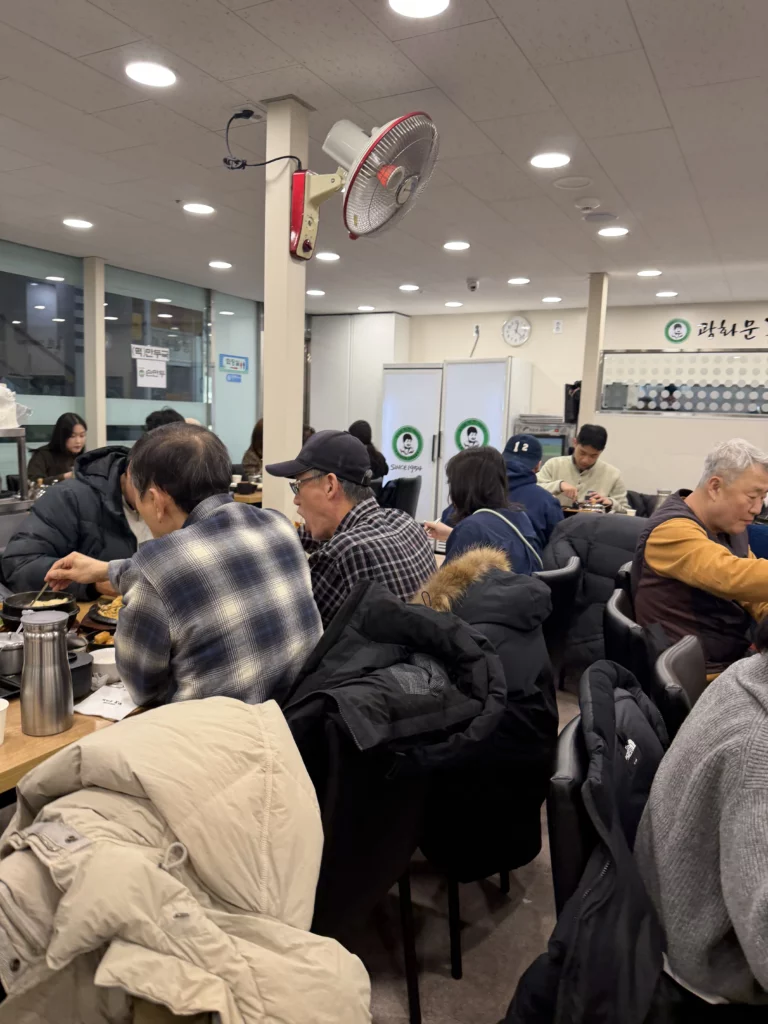
Peak chaos: Lunch hours (12:00-1:30 PM) weekdays see office workers descending simultaneously. Dinner service (6:00-7:30 PM) also attracts crowds. Weekend peak times extend longer as families dine together.
Winter considerations: The cold weather lines demonstrate Mijin’s draw—people willingly wait outdoors in freezing temperatures for these noodles. Dress warmly if visiting during winter months and arriving during peak times.
Language and Ordering: Staff speaks primarily Korean, though menu includes English translations for major items. Pointing works effectively. The international recognition means many foreign visitors dine here, so staff accustomed to non-Korean speakers.
Recommended First-Time Order:
- Start with bibim memil myeon if you enjoy spicy food and want bold flavors
- Add naeng memilguksu (cold noodles) if dining with others, creating temperature contrast
- Dol naembi udon provides excellent winter alternative or option for those less familiar with buckwheat
- Consider half-portion memil jeonbyeong to experience the Korean pancake preparation
Solo diners need not feel uncomfortable. Korean restaurant culture accommodates individual eating, and Mijin’s efficient service suits quick solo meals. The varied portion sizing allows single diners to sample multiple preparations.
Payment: Cash and Korean credit cards accepted; international cards usually work, though carrying cash provides certainty. Follow traditional Korean billing—pay at register when leaving rather than table service payment.
Nearby Attractions: Mijin’s location positions visitors perfectly for exploring Seoul’s historical center. Within 15 minutes’ walk: Gyeongbokgung Palace, Bukchon Hanok Village, Insadong’s art galleries and craft shops, and Cheonggyecheon Stream’s urban walking path.
Experience Seoul’s Buckwheat Excellence
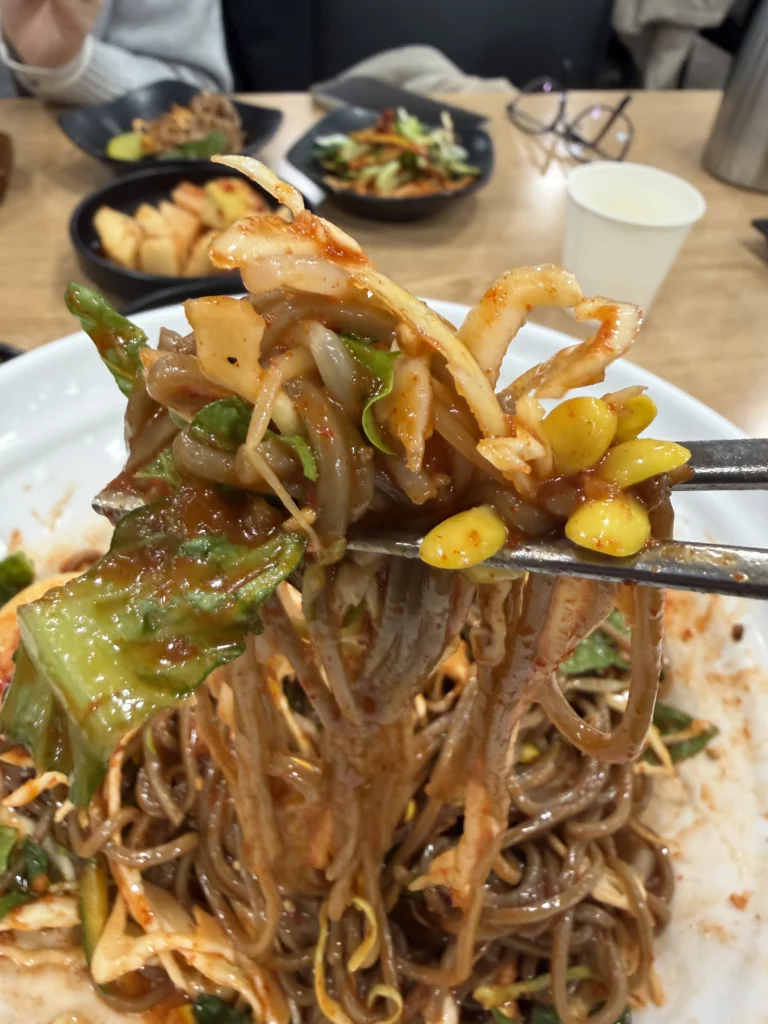
Mijin’s unbroken commitment to buckwheat mastery since 1952 offers something increasingly rare in modern Seoul—authentic traditional preparation without compromise. The consecutive Michelin recognition and Seoul Future Heritage designation validate what generations of Korean diners have known: this restaurant deserves your attention.
Whether you’re seeking the spicy satisfaction of bibim memil myeon, the warming comfort of stone pot udon, or the cold refreshment of traditional buckwheat noodles, Mijin delivers exceptional quality that justifies waiting in line, even during Seoul’s coldest weather. This is food worth traveling for, cuisine that connects you to Korea’s culinary heritage while satisfying thoroughly modern appetites.
Location
24 Jongno 1-ga, Jongno-gu, Seoul, Republic of Korea, KR
Reviews
5.0
0 reviews
5
0%
4
0%
3
0%
2
0%
1
0%
Loading reviews...
Related Recipes

Vegetable&Fruit
Myeong-i Namul Jangajji
Few side dishes earn a permanent place on the Korean BBQ table the way Myeong-i Namul Jangajji — Korean pickled...

Noodles
Spicy Korean Buckwheat Noodles
There’s a particular kind of relief that comes with the first bite of spicy Korean buckwheat noodles on a sweltering...

Meat & Poultry
Spicy Smoky Japchae (Korean Glass Noodles with Pork)
There are Korean dishes you make for convenience — and then there are dishes you make to impress. Japchae (잡채,...


Bibimbap
Sonsuheon: Best Korean Restaurant in Incheon Airport?
271 Gonghang-ro, Jung-gu, Incheon West Side (Public Area), 4th Floor, Incheon Airport Terminal 1 (T1)
5

Beef
Dam Restaurant at Seoul Arts Center: Where Hanjeongsik Meets Cultural Excellence
Seocho-gu, Seoul, Republic of Korea 700 Seocho-dong
5

Bossam
Discover Authentic Korean Bossam at Cheonha Bossam Near Changdeokgung Palace
Jongno-gu, Seoul, Republic of Korea 144 Wonseo-dong

Beef
Korean Comfort Food Gem in Seoul: Gwan-gye Restaurant
Gangnam-gu, Seoul, South Korea 556-29 Sinsa-dong
4