


Stepping into Woo Lae Oak feels like entering a time capsule where Korea’s culinary heritage has been carefully preserved for nearly eight decades. The gentle clatter of brass bowls, the sizzle of premium Hanwoo beef on copper grills, and the intoxicating aroma of charcoal-grilled meat welcome you to this legendary institution. Since 1946, this Michelin Bib Gourmand restaurant has been serving what many consider Seoul’s definitive Pyongyang-style cold noodles alongside perfectly marinated bulgogi, creating a dining experience that has captivated generations of food lovers from local families to international celebrities.
Woo Lae Oak: Seoul's 78-Year Legacy of Authentic Pyongyang Naengmyeon and Premium Bulgogi
5
Woo Lae Oak: Seoul's 78-Year Legacy of Authentic Pyongyang Naengmyeon and Premium Bulgogi
5
Changgyeonggung-ro, Jung-gu, Seoul, Republic of Korea 62-29
Editor: James Lee


Interior02
Food03

Menu02
Overview
+82 02-2265-0151
WiFi Provided
Indoor Seating Only
Electronic Payment, Credit Card accepted: American Express, Master Card, Visa
Introduction
Operating hours
Tue, Wed, Thu, Fri, Sat, SunAM 11:30 - PM 9:00
Menu
Editor's Detail
When three generations of a Korean family gather around a table to share the same dishes their grandparents loved, you know you’ve stumbled upon something truly special. Woo Lae Oak (우래옥) isn’t just another restaurant in Seoul’s competitive dining scene—it’s a living monument to Korean culinary tradition, where Pyongyang-style naengmyeon and charcoal-grilled bulgogi have been perfected over 78 years of continuous operation.
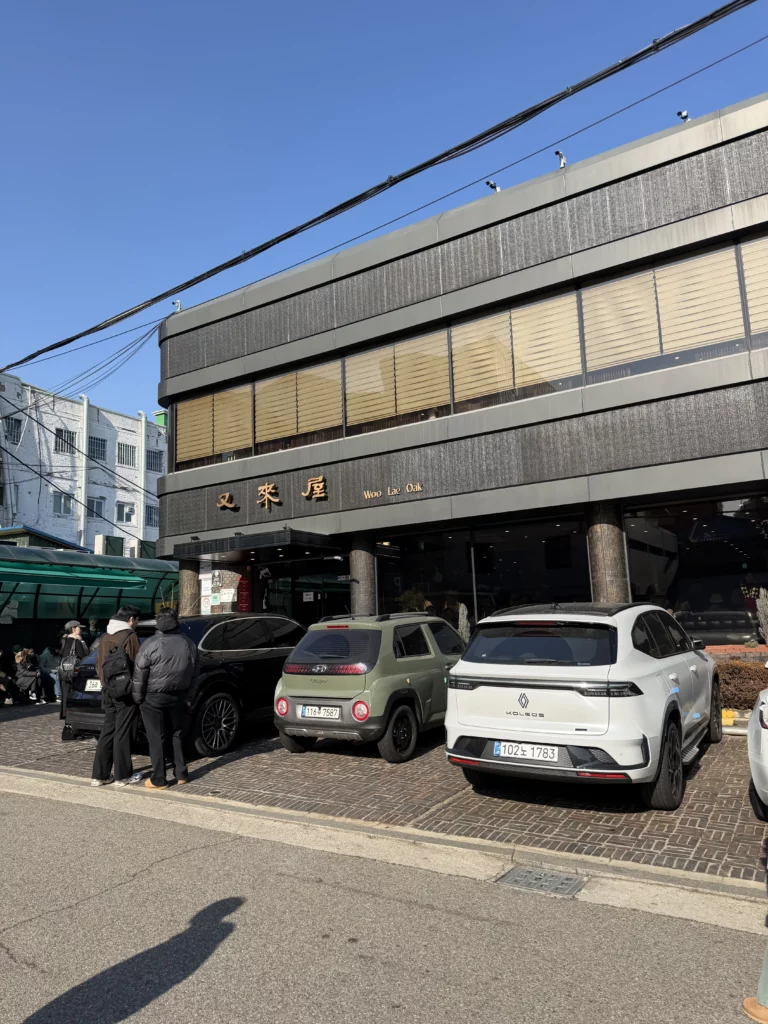
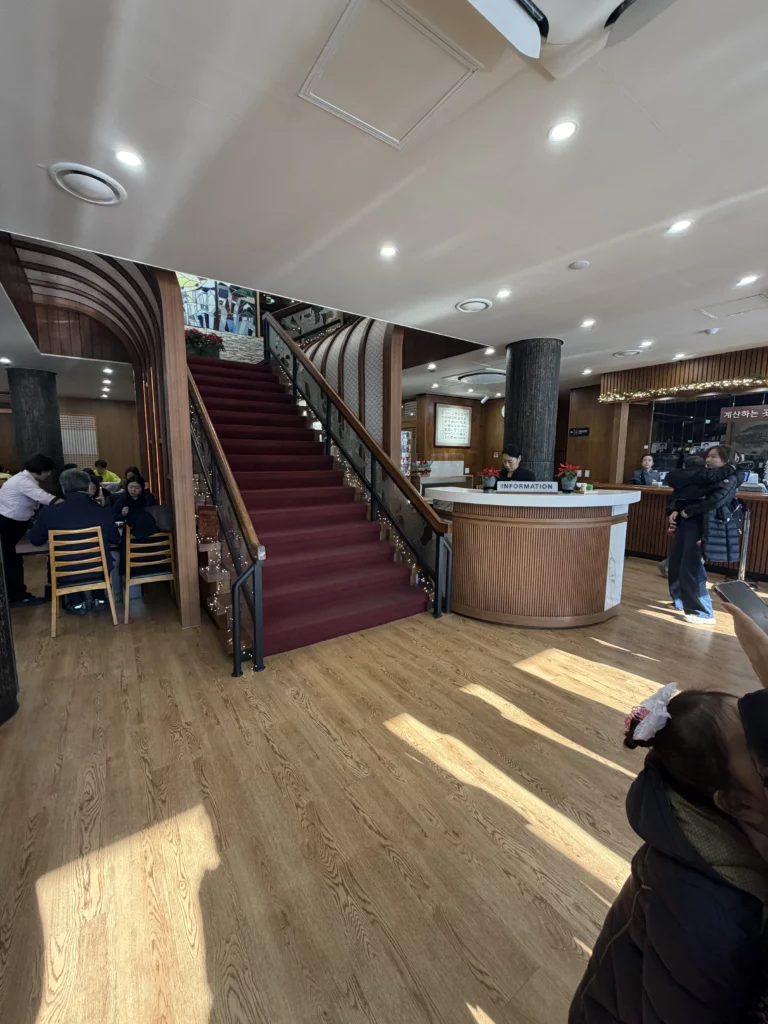
Located in the historic Jung-gu district near Euljiro 4-ga Station, this establishment has witnessed Seoul’s transformation from post-war reconstruction to global metropolis, yet its commitment to authentic flavors has never wavered. The restaurant’s name itself—meaning "return again to this house"—captures the magnetic pull it exerts on diners who inevitably find themselves coming back for the legendary trio: bulgogi, traditional Pyongyang naengmyeon, and Pyongyang bibim naengmyeon.
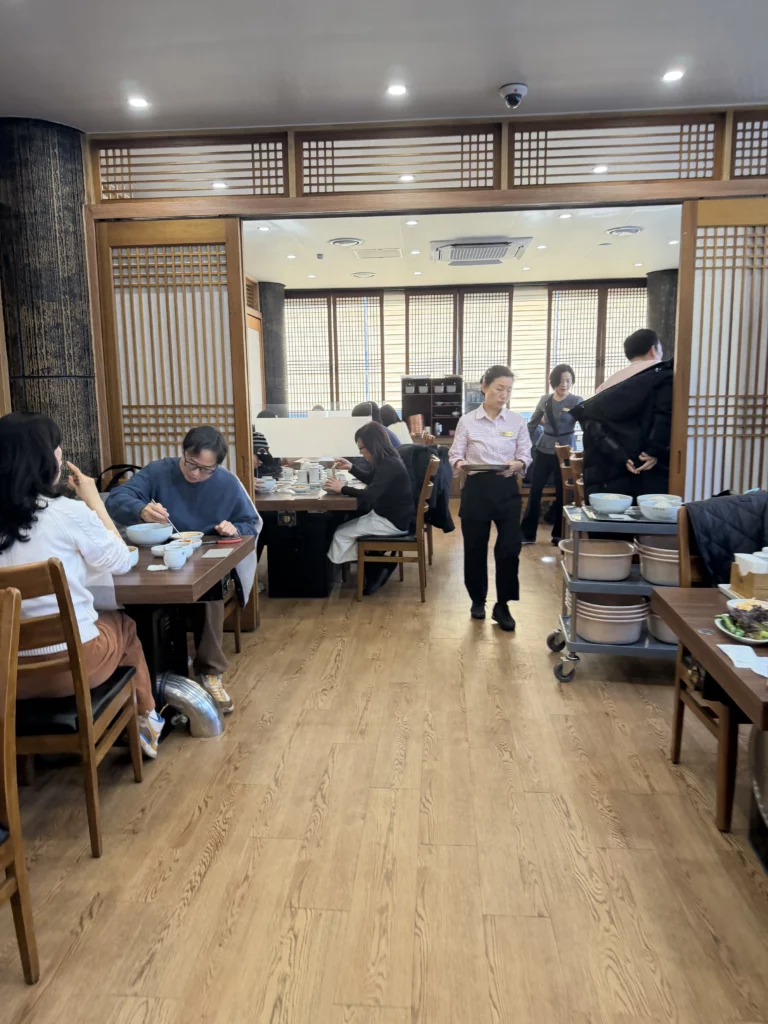
Table of Contents
The Essential Trio: Bulgogi, Mul Naengmyeon, and Bibim Naengmyeon
Woo Lae Oak’s menu, while offering various traditional Korean dishes, centers around three signature preparations that showcase the restaurant’s mastery of both hot and cold cooking techniques. Understanding how these three dishes complement each other reveals the thoughtful philosophy behind Korean dining culture.
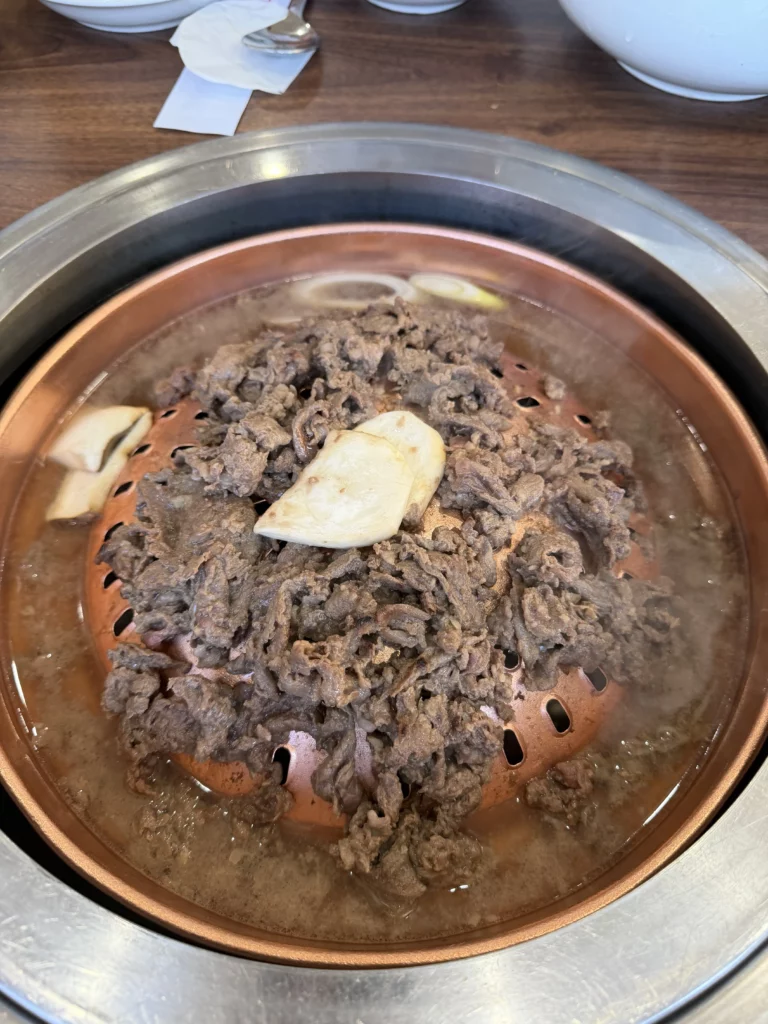
The bulgogi (불고기) represents Korea’s most internationally recognized meat dish—paper-thin slices of premium Hanwoo beef marinated in a savory-sweet blend and grilled tableside over traditional copper plates. This hot, rich dish sets the stage for what follows.
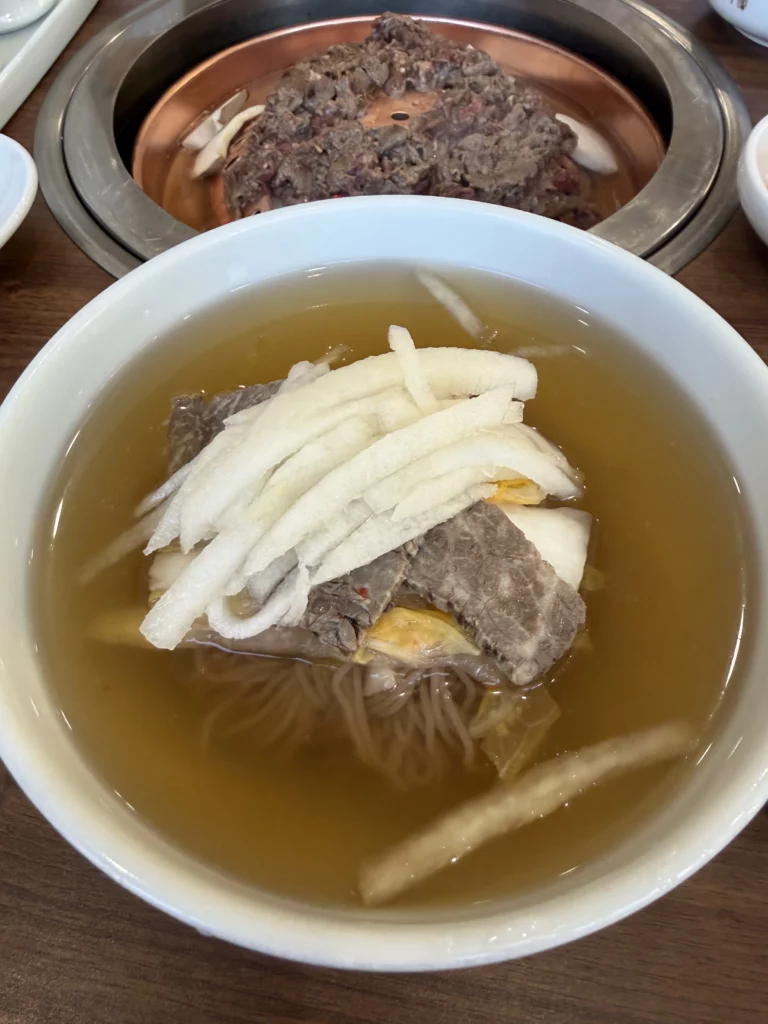
The traditional Pyongyang naengmyeon (전통평양냉면), also called mul naengmyeon (물냉면 – "water cold noodles"), delivers the restaurant’s most celebrated offering. Served in an icy beef and dongchimi broth, this dish exemplifies the clean, refined flavors that earned UNESCO Intangible Cultural Heritage recognition in 2022.
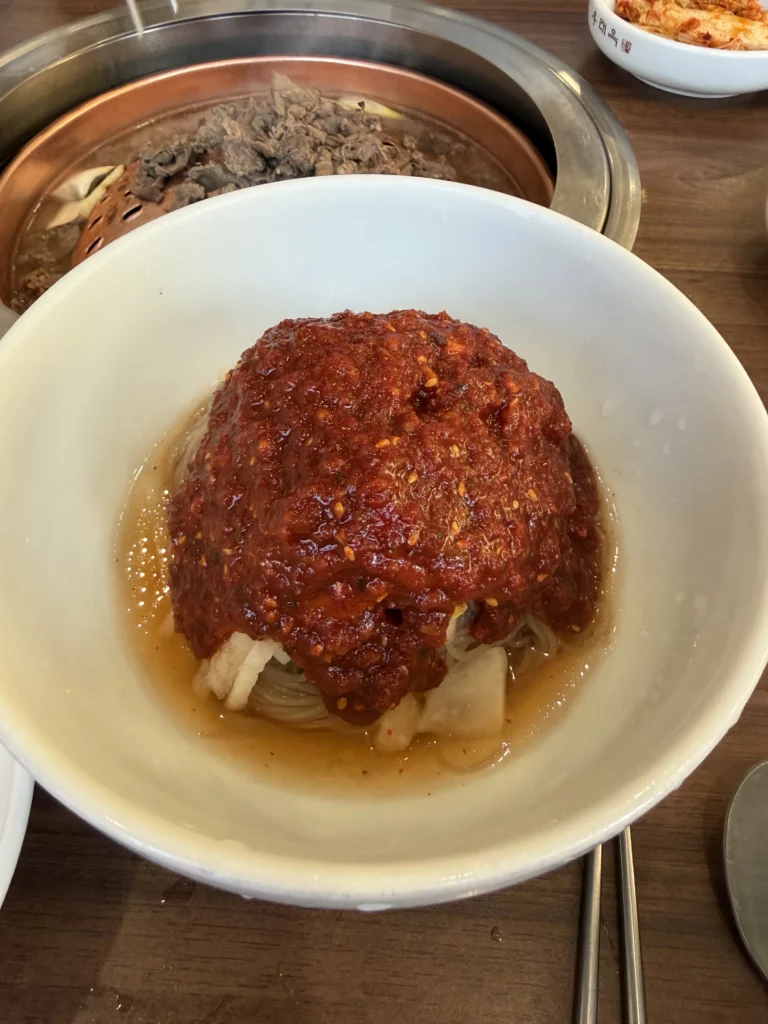
The Pyongyang bibim naengmyeon (전통평양비빔냉면) offers a contrasting interpretation—the same high-quality buckwheat noodles dressed in a vibrant red gochujang-based sauce instead of broth, providing spicy, bold flavors for those who find the traditional version too subtle.
Experienced diners often order all three, creating a progression: start with hot bulgogi to awaken the palate, transition to the refreshing mul naengmyeon to cleanse and cool, then finish with spicy bibim naengmyeon for a bold crescendo. This sequence demonstrates Korean cuisine’s sophisticated understanding of flavor contrast and temperature play.
The Art of Table-Grilled Bulgogi at Woo Lae Oak

While naengmyeon draws the crowds, Woo Lae Oak’s bulgogi deserves equal acclaim. The restaurant sources premium Hanwoo—Korea’s prized native beef cattle breed known for exceptional marbling and flavor—transforming it into one of Seoul’s most memorable grilled meat experiences.
The preparation begins with paper-thin slices of beef marinated in Woo Lae Oak’s signature blend. Unlike heavily sweetened versions popular at tourist-oriented establishments, this marinade achieves sophisticated balance. Soy sauce provides the umami foundation, while finely grated Korean pear and apple contribute natural sweetness and fruit enzymes that tenderize the meat. Generous amounts of minced garlic, freshly ground black pepper, and toasted sesame oil round out the flavor profile without overwhelming the beef’s natural taste.
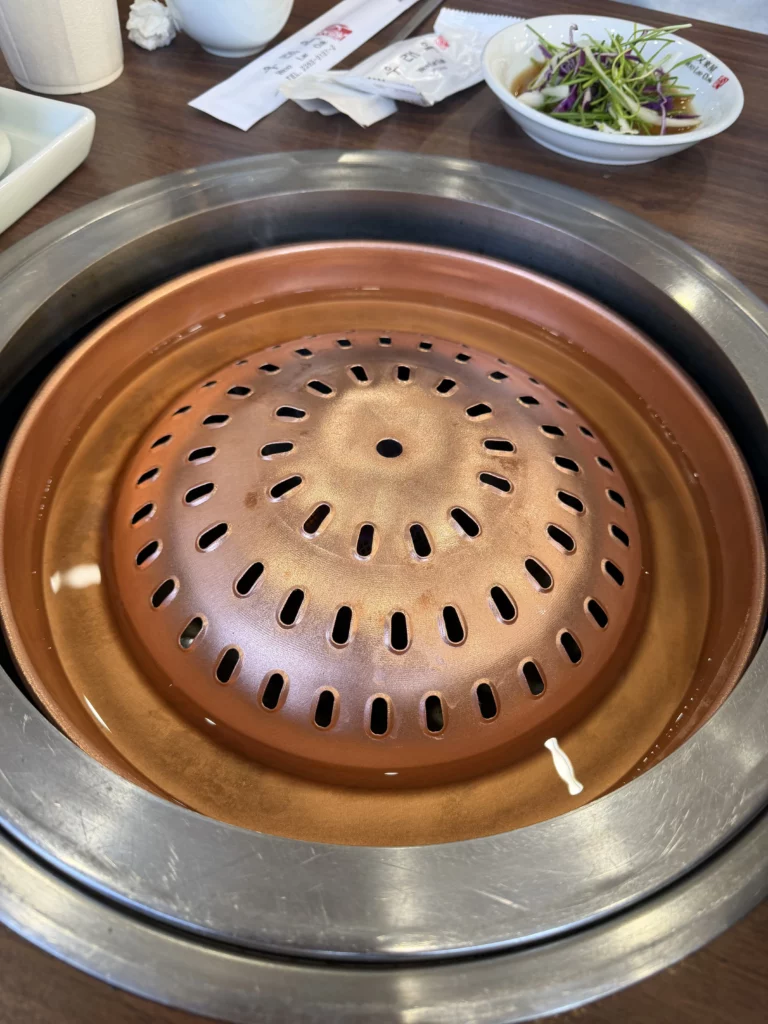
What truly elevates the experience is the tableside grilling ritual. Servers bring a traditional copper grill to your table, already heated to the perfect temperature. As the marinated beef hits the hot surface, it releases an intoxicating aroma—caramelizing sugars creating those coveted crispy edges while the meat’s interior remains tender and juicy. The copper’s superior heat distribution ensures even cooking, preventing the dreaded burnt-outside-raw-inside outcome that plagues inferior grills.
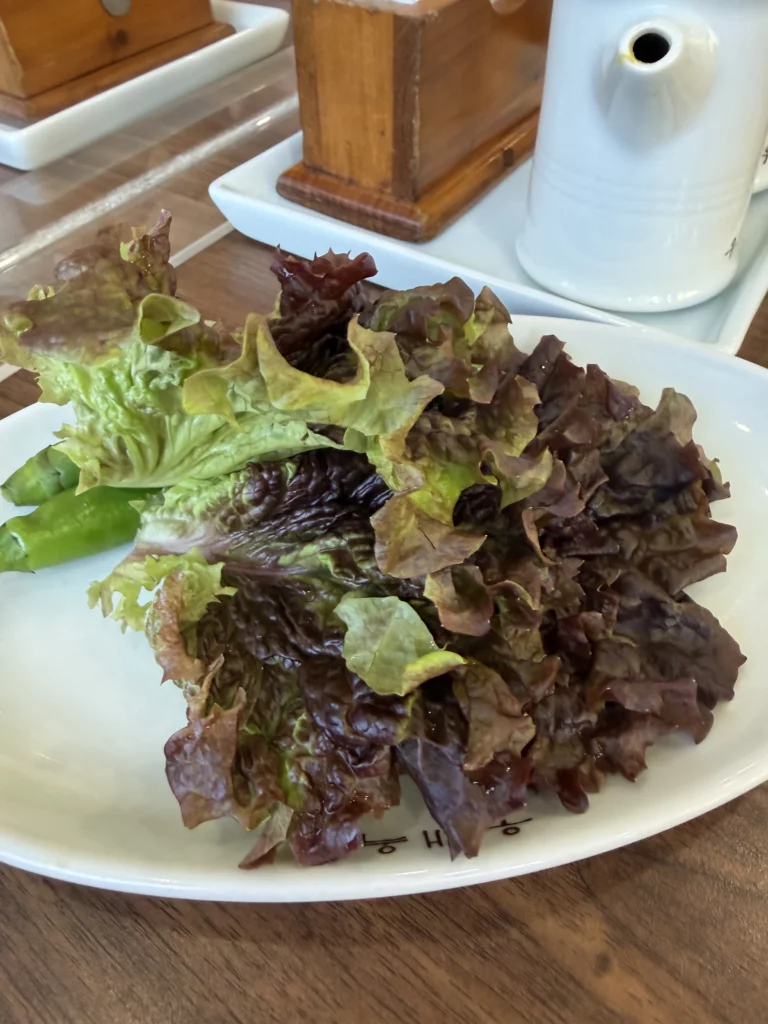
The theatrical element extends beyond mere entertainment. This interactive cooking method allows diners to control their preferred doneness, engaging with their food in a way that Western fine dining rarely permits. Between bites of perfectly charred bulgogi, you cleanse your palate with the restaurant’s complimentary banchan—an array of small side dishes including various kimchi preparations, seasoned vegetables, and pickled radishes that exemplify Korean cuisine’s commitment to balance and variety.
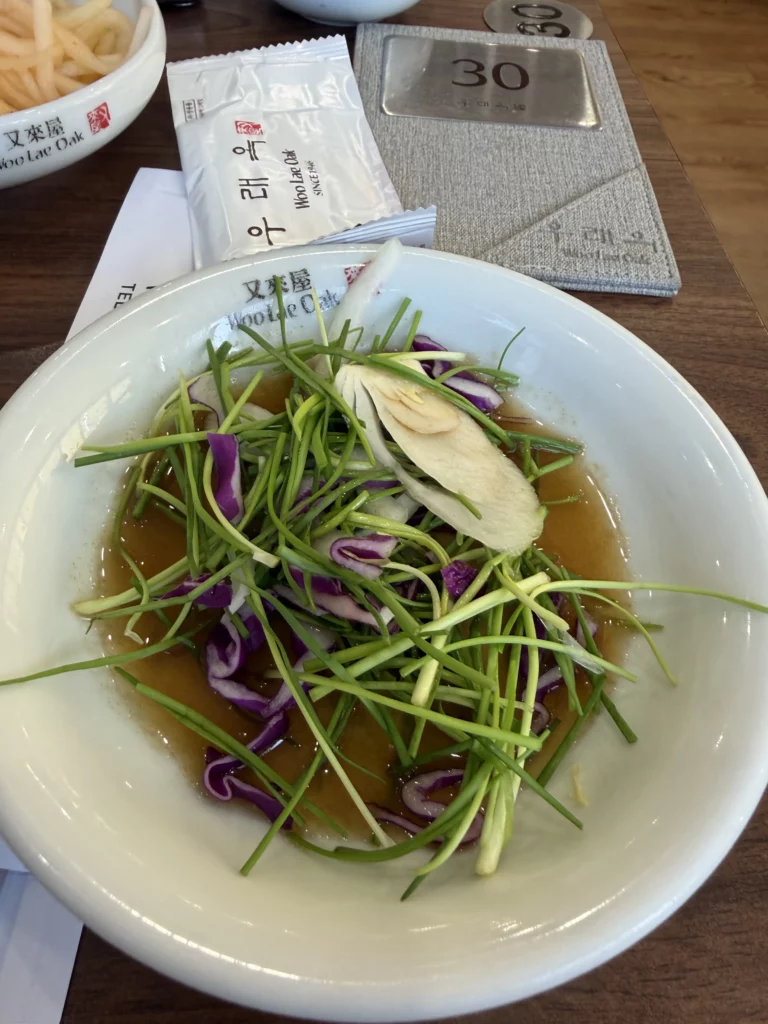
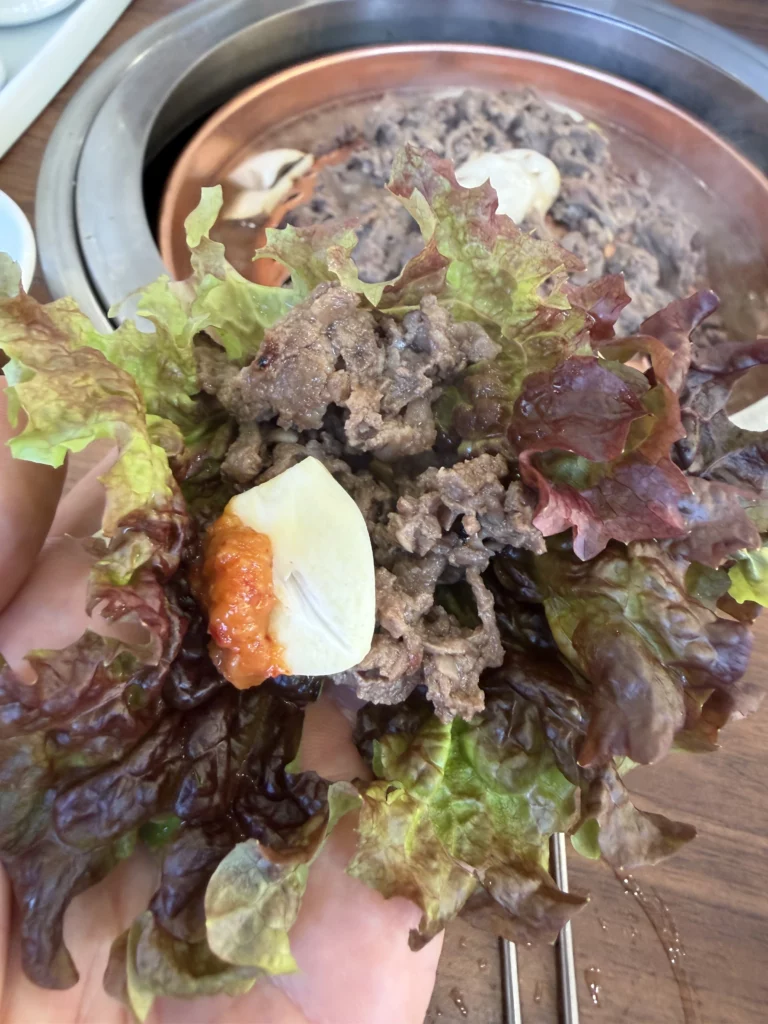
The bulgogi arrives with ssam vegetables—fresh lettuce and perilla leaves for wrapping the grilled meat along with raw garlic slices and ssamjang (a savory dipping sauce combining doenjang and gochujang). Creating these wraps (called ssam) represents traditional Korean BBQ dining culture, where each bite becomes a customizable flavor experience combining meat, vegetables, sauce, and aromatics.
Traditional Pyongyang Naengmyeon: The Cold Noodle Classic
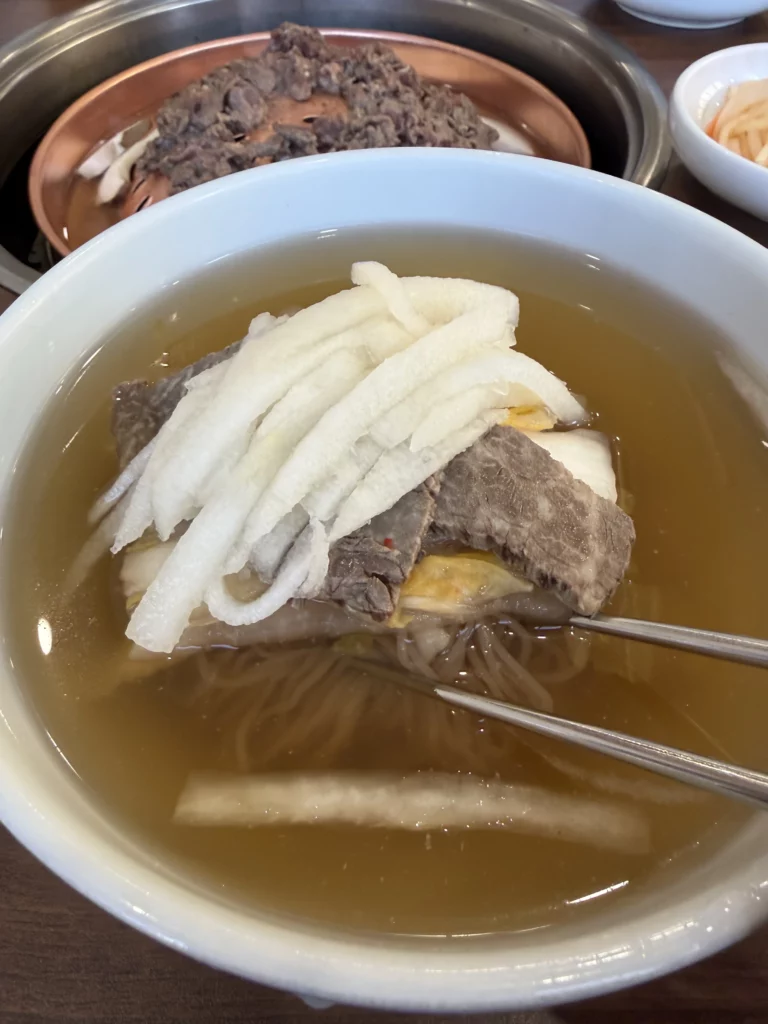
The moment a brass bowl of traditional Pyongyang naengmyeon arrives at your table, you’re experiencing a dish with profound cultural significance. This iconic cold noodle preparation, similar to what’s served at Cheonganok, represents centuries of Korean culinary evolution.

What distinguishes Woo Lae Oak’s version from countless other establishments is the restaurant’s unwavering dedication to the clean, refined flavors that define authentic Pyongyang-style preparation. The chilled broth achieves a delicate balance—light enough to refresh yet complex enough to reveal layers of flavor with each sip. Made from slowly simmered beef and the crystalline liquid from dongchimi (water radish kimchi), the soup possesses a subtle tanginess that awakens the palate without overwhelming it.
The buckwheat noodles themselves demonstrate the kitchen’s technical mastery. Each strand maintains the characteristic slight brittleness of high-buckwheat-content noodles, yet possesses just enough elasticity to provide a satisfying chew. Traditional Pyongyang naengmyeon uses 70-80% buckwheat flour, creating noodles that are more fragile than the chewy sweet potato starch varieties popular elsewhere—a texture purists insist is essential to the authentic experience.
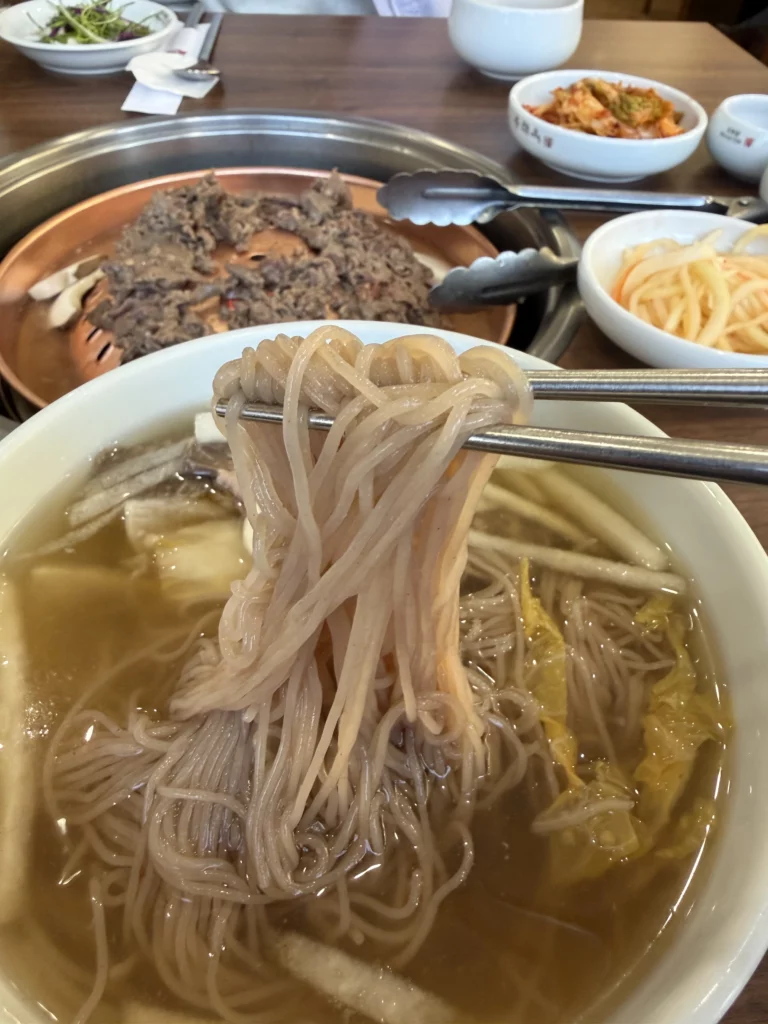
The presentation follows time-honored tradition: the noodles nestle in their brass bowl, submerged in icy broth dotted with ice chips. Garnishes include thinly sliced beef brisket, crisp cucumber ribbons, julienned Korean pear for natural sweetness, and a halved boiled egg. Each component serves a purpose—the pear’s delicate sweetness counters the broth’s subtle acidity, while the cucumber provides textural contrast and the beef adds protein richness.
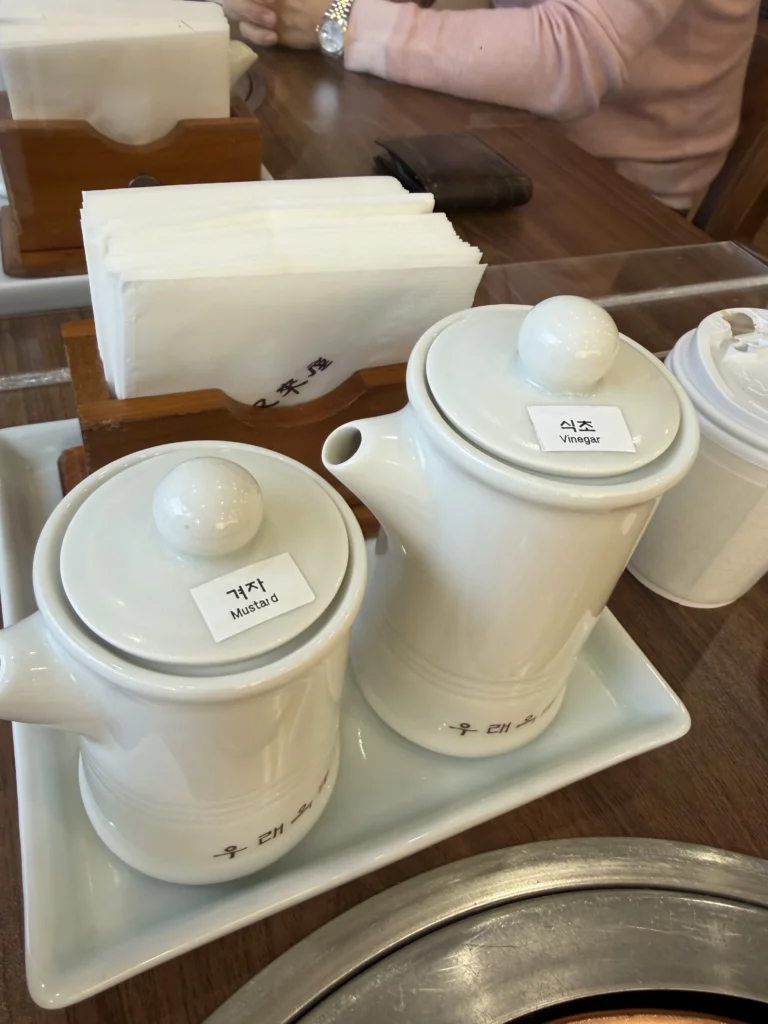
On the table, you’ll find two essential condiments: Korean mustard (gyeoja) and vinegar. The mustard delivers sharp, nose-clearing heat similar to wasabi, while vinegar brightens and accentuates the broth’s natural flavors. Start conservatively with both—you can always add more, but you can’t take it back.
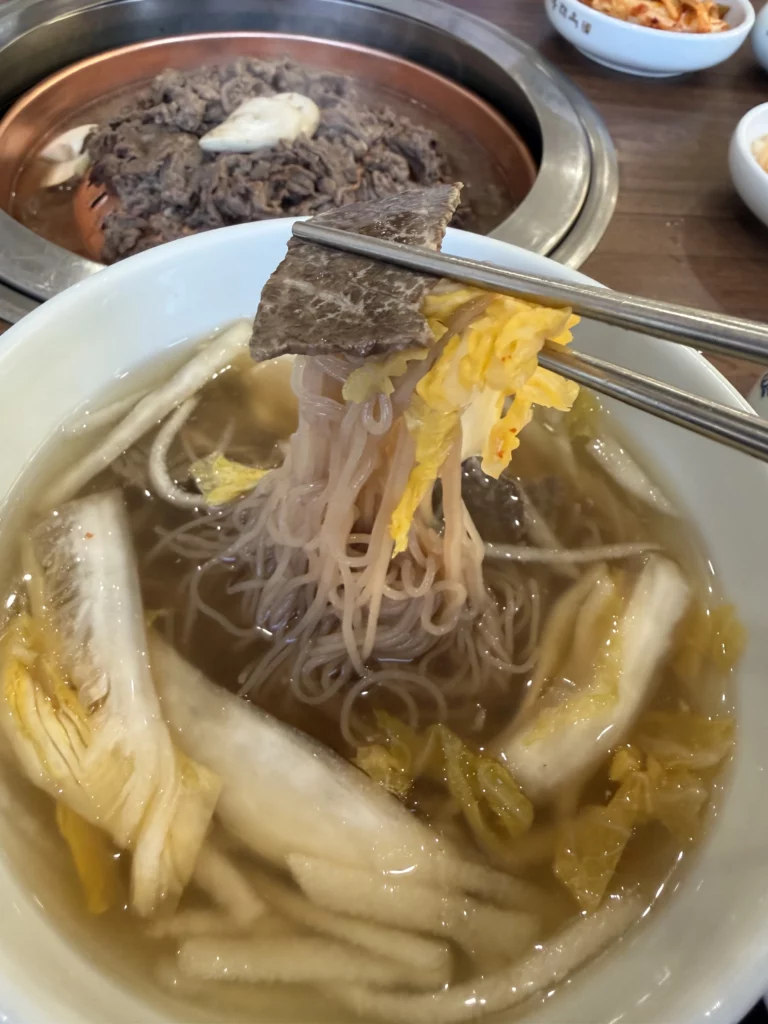
During Seoul’s sweltering summers, the restaurant sees lines stretching down the block as locals seek respite in this traditional heat remedy. Yet contrary to modern assumptions, naengmyeon was historically a winter delicacy, served during the coldest months when dongchimi reached peak fermentation and meat was more readily available.
Pyongyang Bibim Naengmyeon: The Spicy Alternative
For diners who find traditional mul naengmyeon too subtle or who crave more assertive flavors, Woo Lae Oak’s Pyongyang bibim naengmyeon delivers a completely different experience using the same exceptional buckwheat noodles.
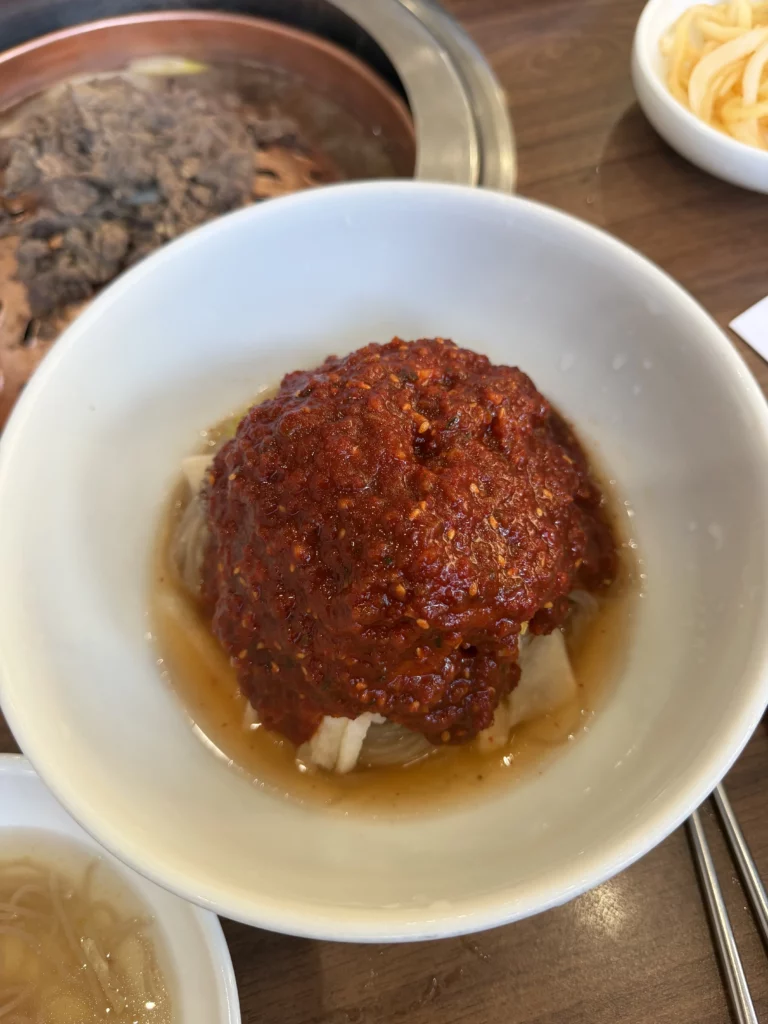
Instead of floating in icy broth, the noodles arrive dressed in a vibrant red sauce based on gochujang (Korean fermented chili paste). This sauce combines the paste’s complex fermented flavors—sweet, savory, and spicy—with rice vinegar for brightness, sesame oil for nutty richness, and sugar to balance the heat. The result is a sauce that coats each noodle strand, delivering bold flavors with every bite.
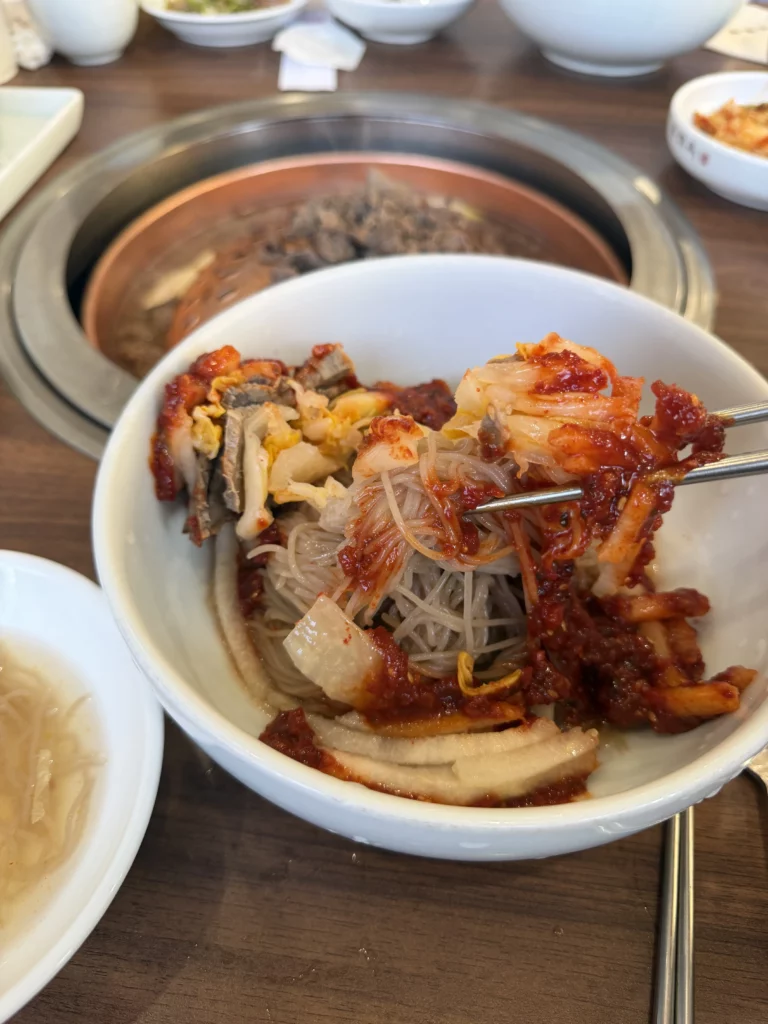
The garnishes mirror those of mul naengmyeon—sliced beef, cucumber, pear, and boiled egg—but here they serve a slightly different purpose. The cool cucumber and sweet pear provide refreshing relief from the sauce’s spice, while the beef adds protein richness that grounds the dish. Some preparations include additional garnishes like sesame seeds for nutty crunch and thinly sliced green onions for sharp, pungent notes.
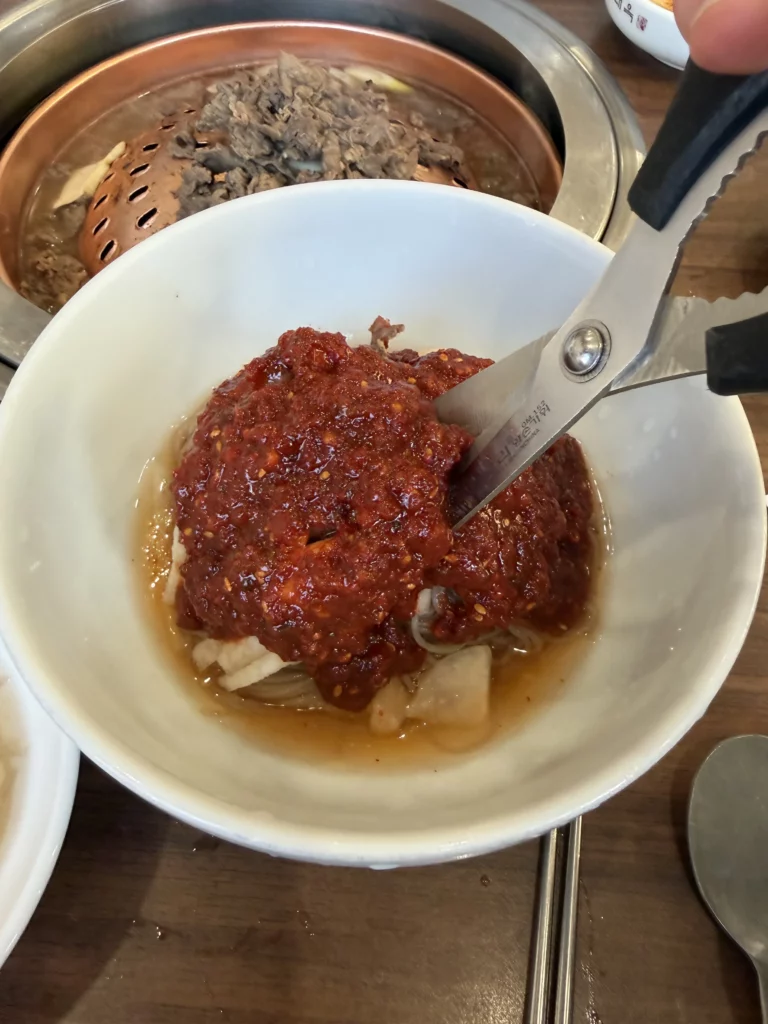
What makes Woo Lae Oak’s version distinctly "Pyongyang-style" bibim naengmyeon rather than the more common Hamhung variety? The noodles. While Hamhung bibim naengmyeon typically uses chewy sweet potato starch noodles, Pyongyang-style maintains the traditional buckwheat composition. This creates an interesting textural contrast—the delicate, slightly brittle noodles provide less chewiness than Hamhung versions but allow the sauce flavors to shine more prominently.
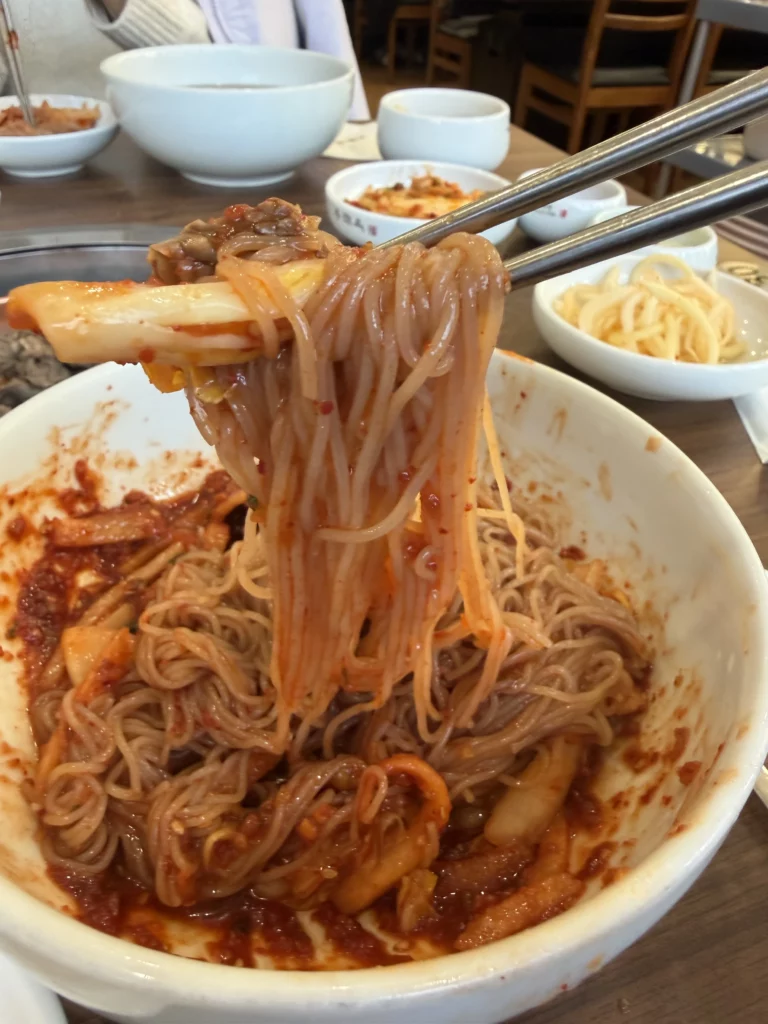
The eating technique differs from mul naengmyeon. Using your chopsticks (or the scissors if offered), mix the noodles thoroughly with the sauce before eating. This ensures even distribution of flavors and prevents some bites from being overwhelmingly spicy while others remain bland. The mixing action also helps cool the noodles slightly as air incorporates into the dish.
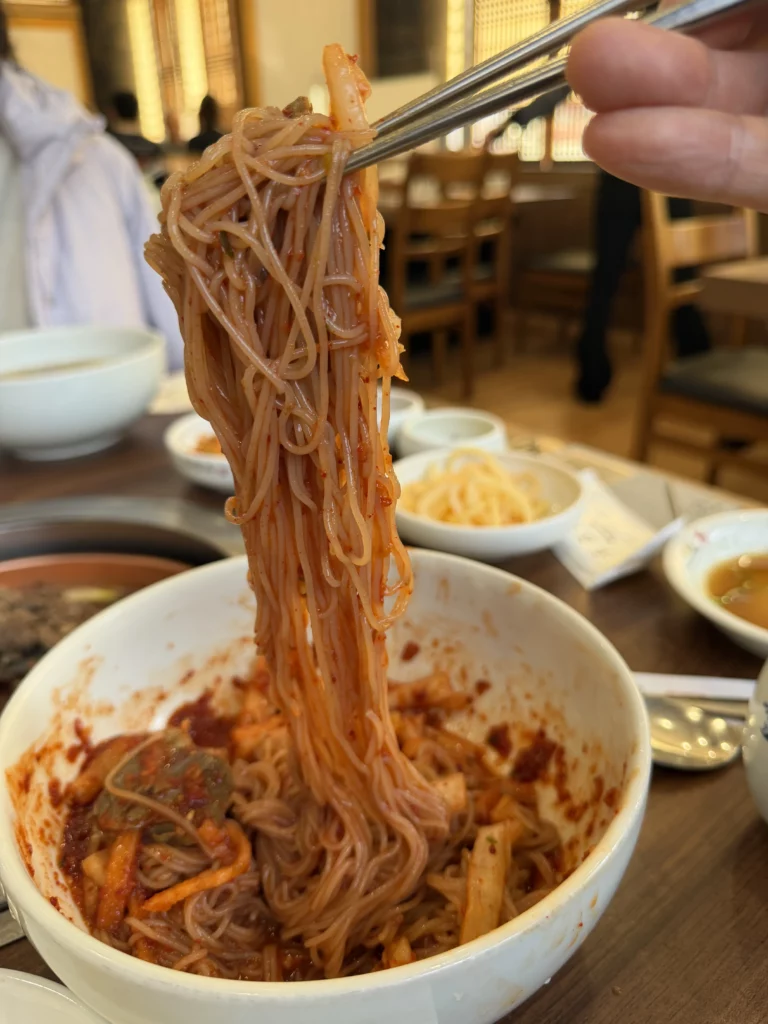
A small bowl of the same beef broth used in mul naengmyeon often accompanies bibim naengmyeon, served on the side. This isn’t just for drinking—pour small amounts over your noodles as you eat to adjust the sauce’s intensity, add moisture if the noodles seem dry, or simply to cleanse your palate between bites.
The spice level, while noticeable, remains moderate compared to other Korean dishes like spicy tteokbokki. Most international diners with any spice tolerance find it pleasantly warming rather than punishingly hot.
What Makes This the Right Restaurant for You?
Choosing among Seoul’s numerous naengmyeon establishments can overwhelm first-time visitors. Woo Lae Oak occupies a particular niche that appeals to specific preferences and dining priorities.
Authenticity Over Innovation: If you seek traditional Pyongyang-style preparation untainted by modern fusion trends, Woo Lae Oak delivers. The restaurant has maintained its recipe integrity for 78 years, resisting pressures to sweeten broths or add fashionable toppings that might broaden appeal but compromise authenticity.
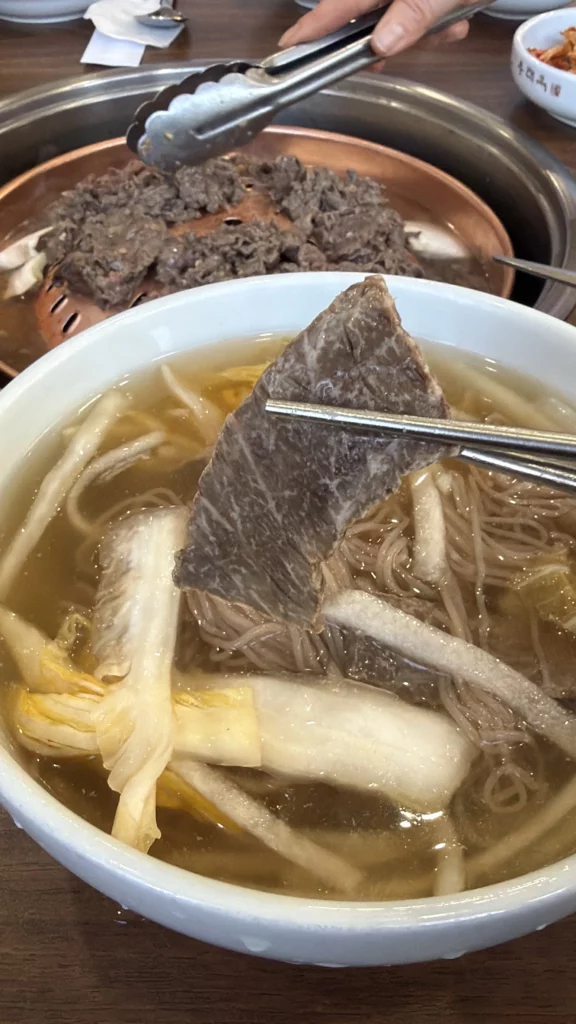
Three Dishes, One Experience: The ability to sample bulgogi, mul naengmyeon, and bibim naengmyeon at a single sitting allows you to experience the full spectrum of Korean hot-and-cold dining philosophy. Few restaurants execute all three dishes at this level of quality.
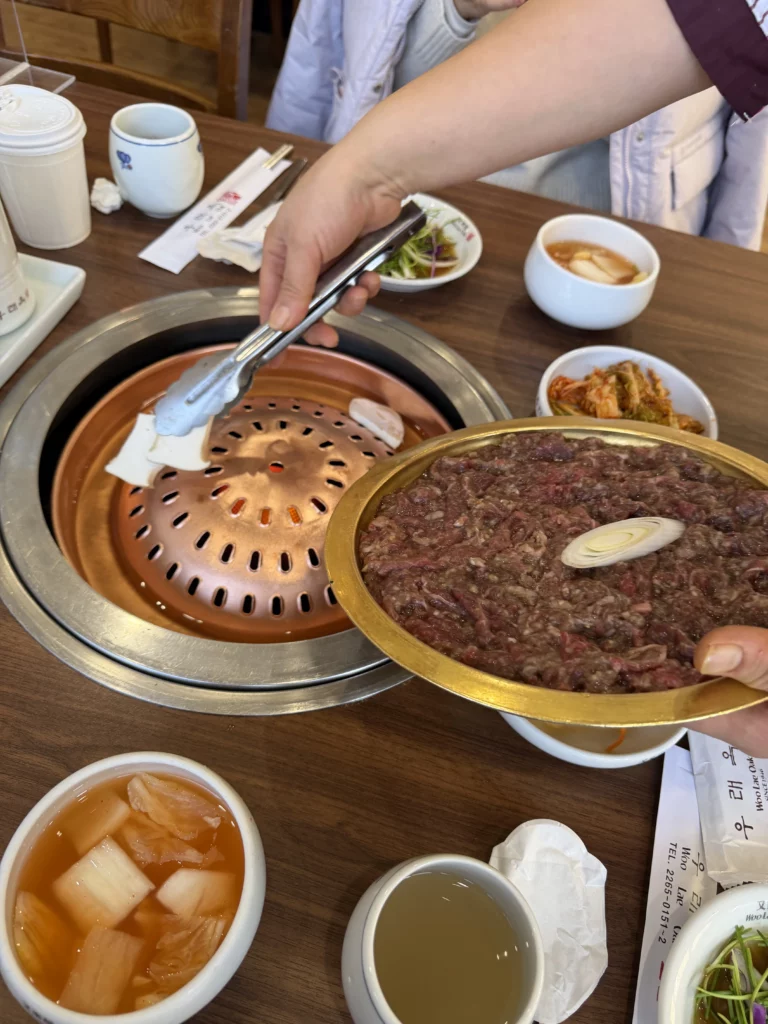
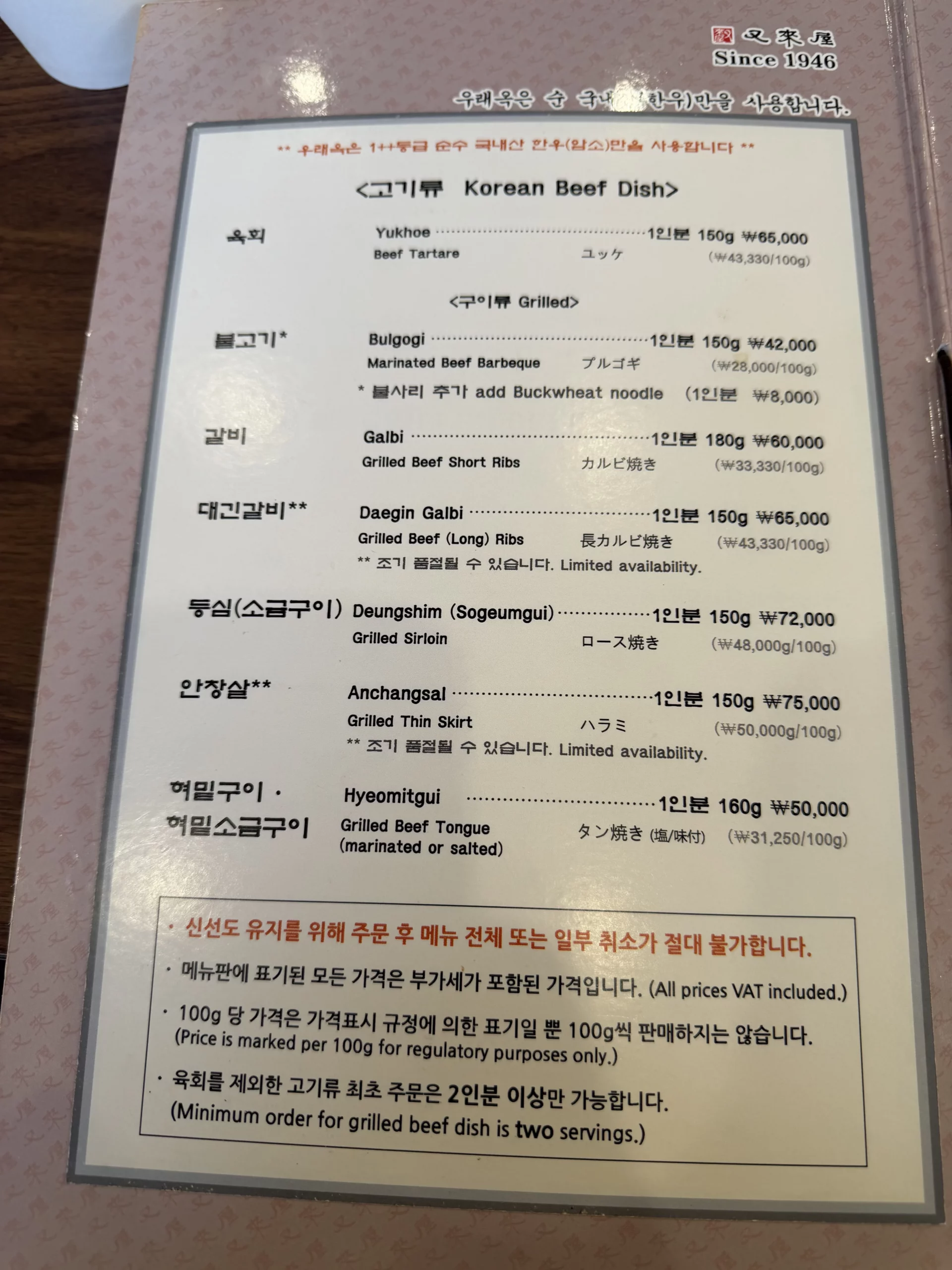
Quality Justifies Premium Pricing: Naengmyeon at 16,000 won each and bulgogi starting at 42,000 won per 150g (minimum two servings) positions Woo Lae Oak at the higher end of Seoul’s pricing spectrum. However, the Hanwoo beef quality, meticulous preparation, and decades of refinement justify the investment for serious food enthusiasts. Budget-conscious diners might find better value elsewhere, but they’ll sacrifice the caliber of ingredients and execution.
Historical Significance: Dining here connects you to Korean culinary lineage. Founded in the aftermath of the Korean War by refugees from Pyongyang who brought their treasured recipes south, Woo Lae Oak represents more than commerce—it’s cultural preservation. The restaurant has served multiple generations of the same families, creating dining memories that span decades.
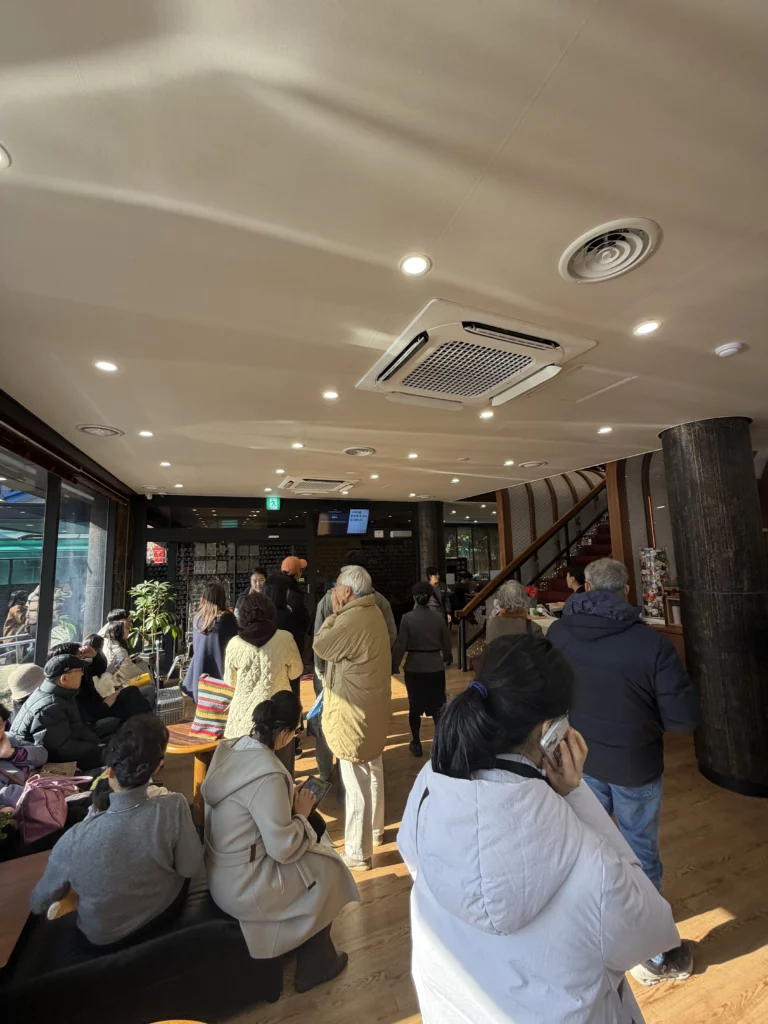
Crowd Tolerance: Popularity brings challenges. Expect significant wait times during peak hours (lunch rushes and weekend dinners), particularly in summer when naengmyeon demand peaks. The spacious interior accommodates crowds better than many competitors, but advance reservations via phone (+82-2-2265-0151) are strongly recommended for guaranteed seating.
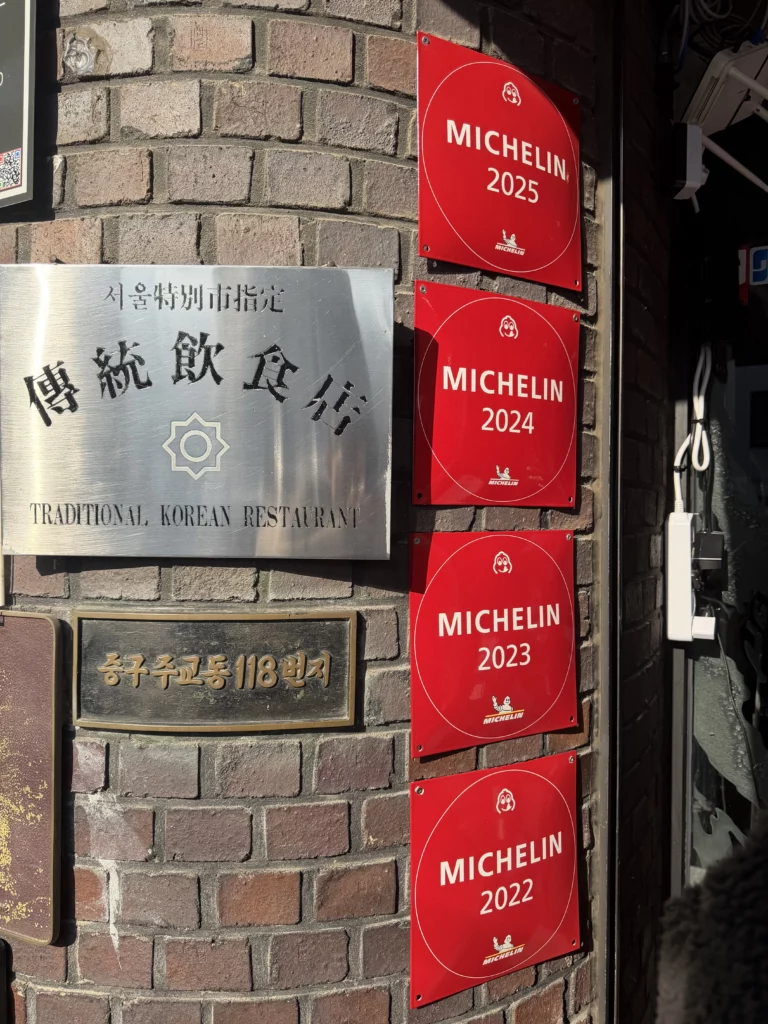
Michelin Recognition Without Pretension: Selected for the Michelin Guide’s Bib Gourmand category (recognizing excellent quality at moderate prices) consistently since 2017, the restaurant maintains humble service standards. Don’t expect elaborate presentation or fawning attention—the focus remains squarely on food quality rather than theatrical service.
What Are the Key Ingredients That Define Woo Lae Oak’s Dishes?
Understanding the essential components that create Woo Lae Oak’s signature flavors enhances appreciation for the dishes’ complexity.
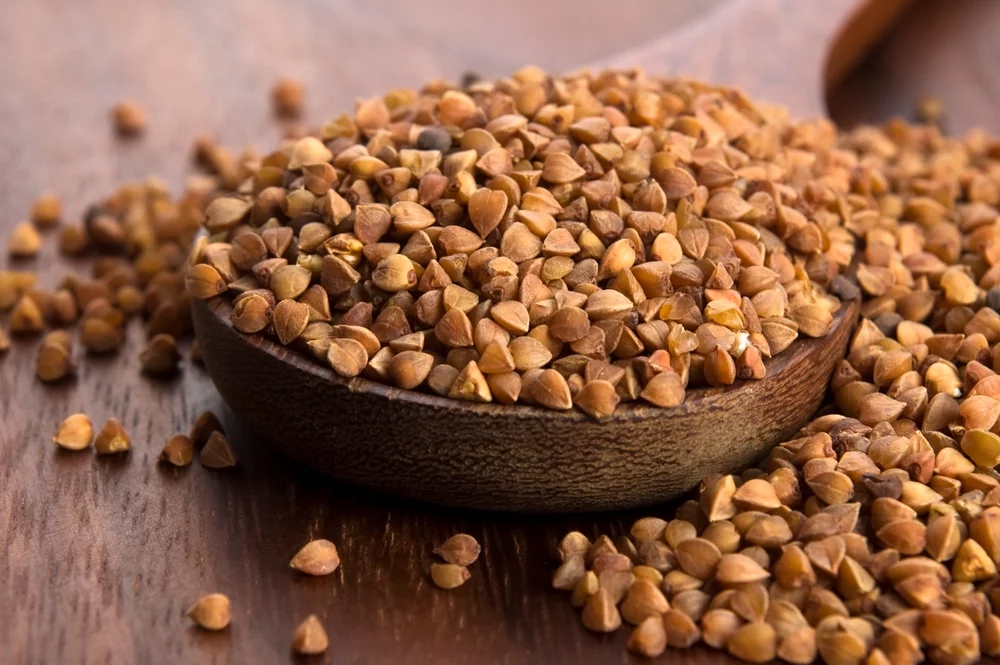
Buckwheat (메밀 – Memil): The foundation of both naengmyeon varieties, buckwheat brings a distinctive nutty, slightly earthy flavor that sets Korean cold noodles apart from other Asian noodle varieties. Rich in protein, fiber, and essential amino acids, buckwheat also offers nutritional benefits that complement its unique taste. The high buckwheat content in Woo Lae Oak’s noodles (70-80%) creates the characteristic fragility that traditionalists prize—these noodles will break if handled roughly, unlike the more resilient sweet potato starch versions. When sourcing buckwheat noodles at home, look for Korean brands labeled 메밀국수 (memil guksu) at Asian markets.
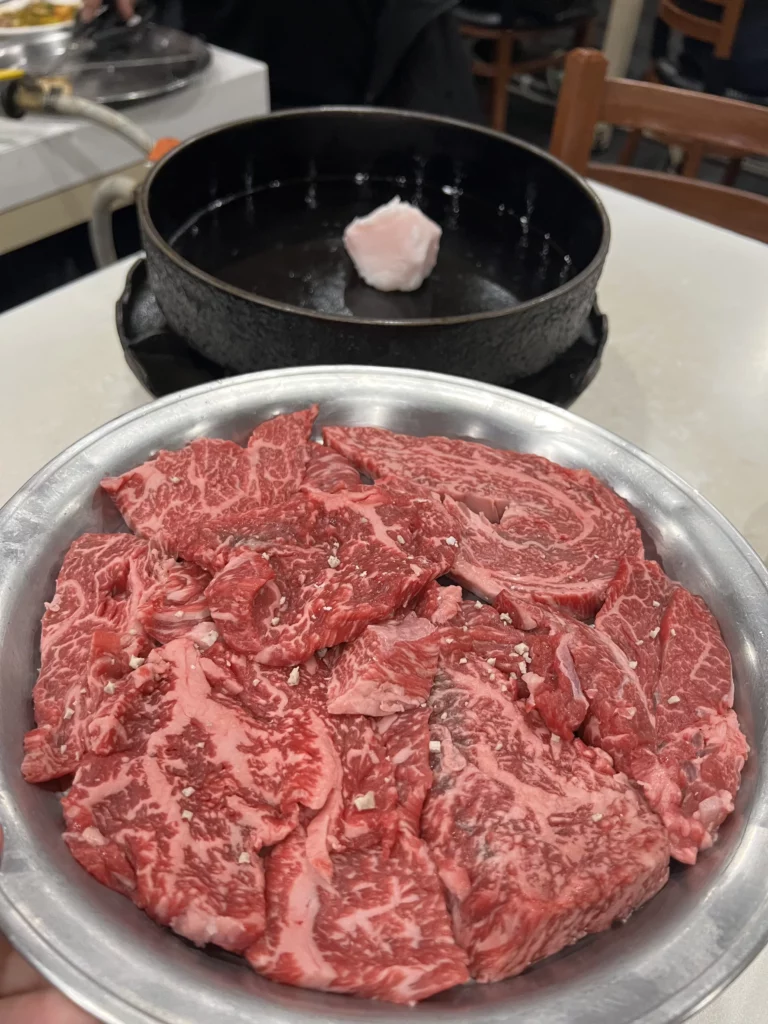
Hanwoo Beef (한우): Korea’s native cattle breed produces meat with exceptional marbling, tender texture, and rich flavor that commands premium prices both domestically and internationally. For the bulgogi, Woo Lae Oak uses cuts like ribeye and sirloin that balance lean meat with sufficient fat for moisture and flavor. The beef’s natural quality means minimal marinade is needed—unlike recipes that rely on heavy sweetness to mask inferior meat. The slow-cooked beef slices garnishing both naengmyeon varieties undergo careful preparation to achieve the perfect texture: tender enough to chew easily yet firm enough to maintain structure in the icy broth or spicy sauce.
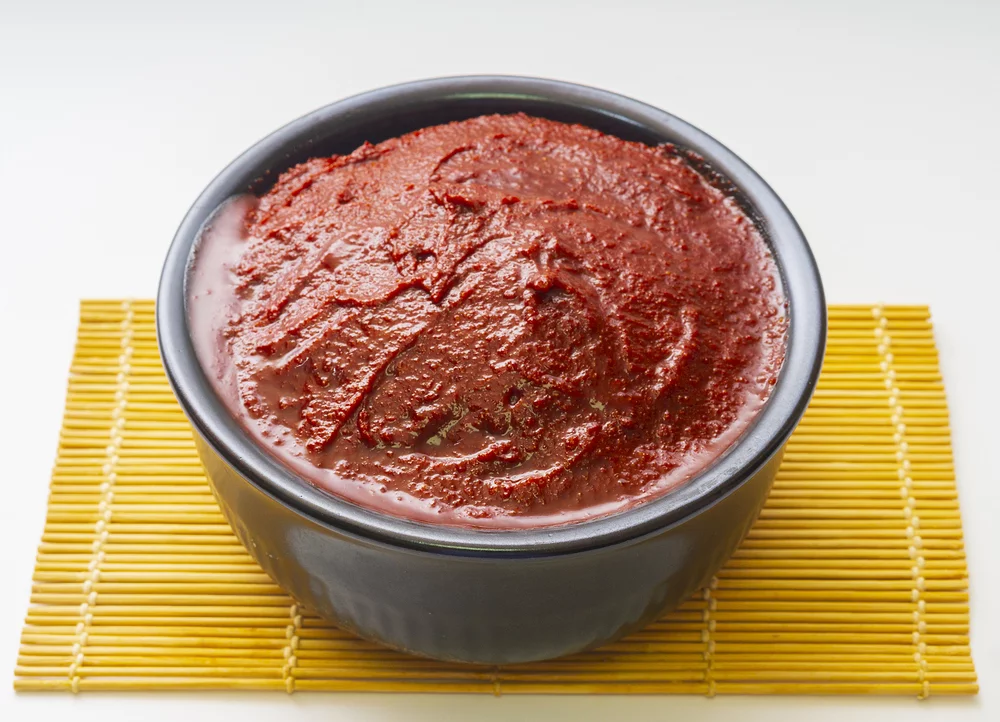
Gochujang (고추장): This fermented Korean chili paste forms the base of bibim naengmyeon’s signature sauce. Unlike fresh chili peppers that deliver straightforward heat, gochujang develops complex flavors during months of fermentation—simultaneously sweet, savory, umami-rich, and spicy. The fermentation process creates beneficial probiotics while mellowing the raw heat into a more rounded, sophisticated spiciness. Authentic gochujang made with traditional methods includes glutinous rice, meju (fermented soybean powder), and gochugaru (Korean chili flakes), creating layers of flavor impossible to replicate with simple hot sauce substitutes.
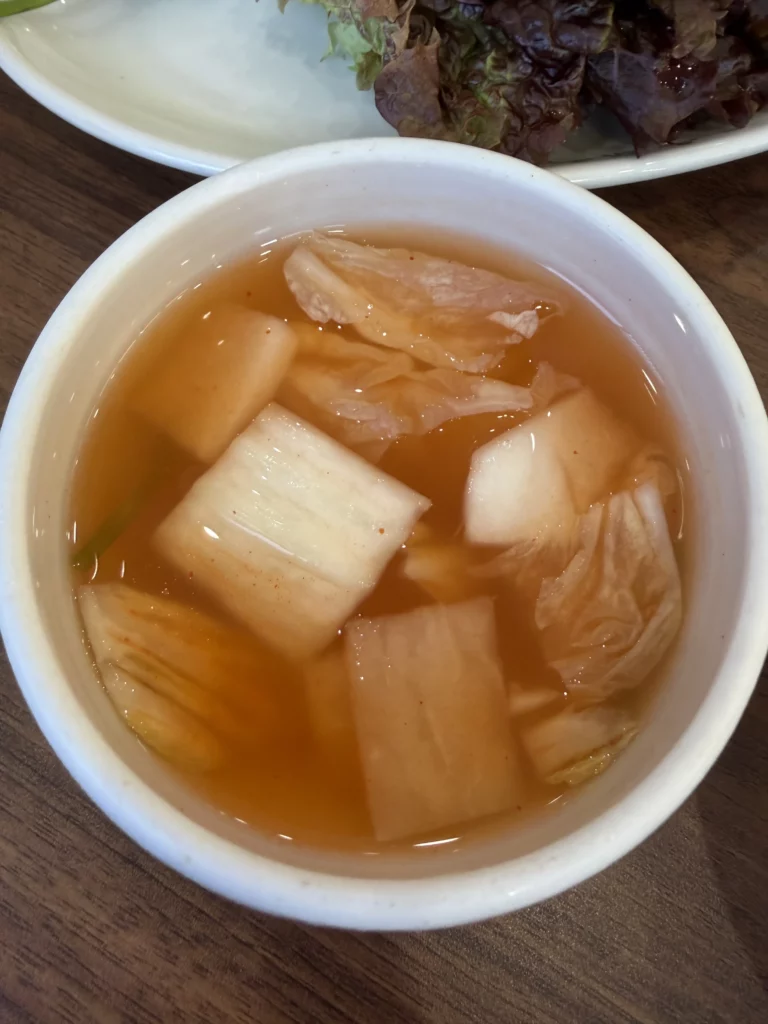
Dongchimi Broth (동치미 국물): This crystal-clear brine from fermented radish kimchi provides mul naengmyeon’s signature tangy-sweet foundation. Unlike the fiery red cabbage kimchi (baechu kimchi) that most Westerners recognize, dongchimi ferments without chili peppers, yielding a refreshing, faintly effervescent liquid rich in beneficial probiotics. The natural fermentation process develops complex flavors—subtle fruit notes, mild acidity, and umami depth—that enliven the beef stock without overwhelming it. Making authentic dongchimi requires patience (minimum 3-5 days fermentation) and specific radishes, though Korean grocery stores often stock ready-made versions.
How Would You Describe the Taste and Spice Level?
Each of Woo Lae Oak’s three signature dishes offers distinct flavor profiles and spice levels, creating a complete sensory journey when enjoyed together.
Bulgogi
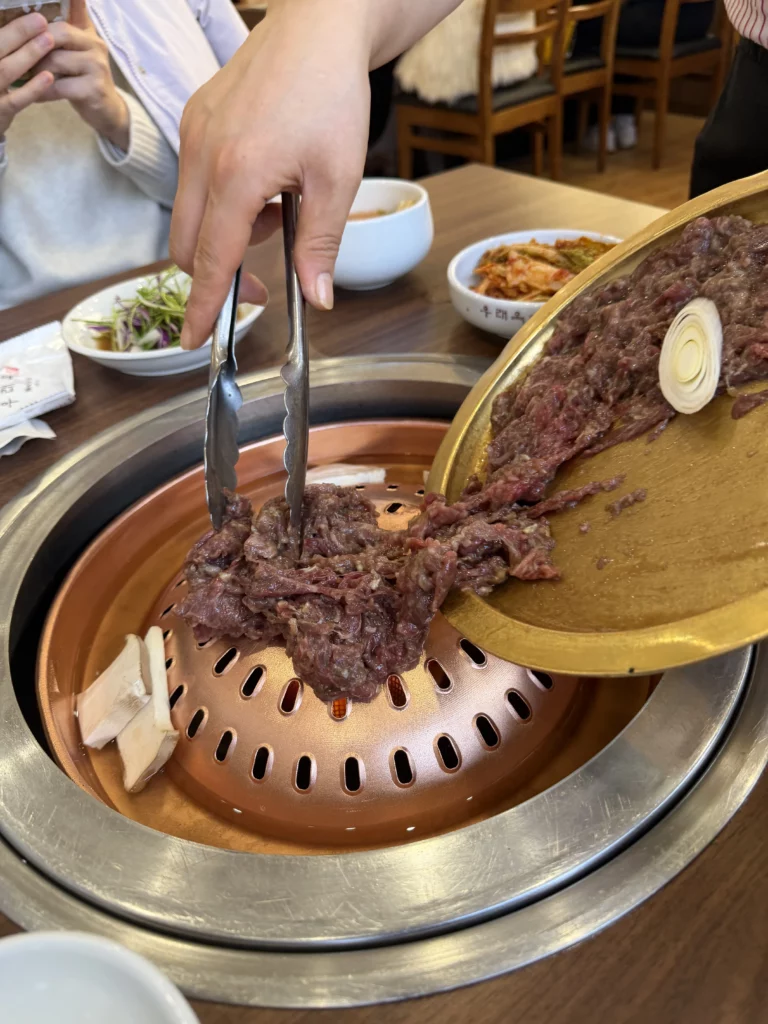
Spice Level: 0.5/10 – Virtually no heat
The bulgogi delivers immediately recognizable flavors—savory-sweet with pronounced garlic and sesame aromatics. The marinade’s caramelization during grilling adds slight char bitterness that balances the inherent sweetness. Compared to heavily sugared versions common in Korean-American restaurants, Woo Lae Oak’s preparation tastes more sophisticated and less cloying, allowing the premium beef’s natural flavor to shine through.
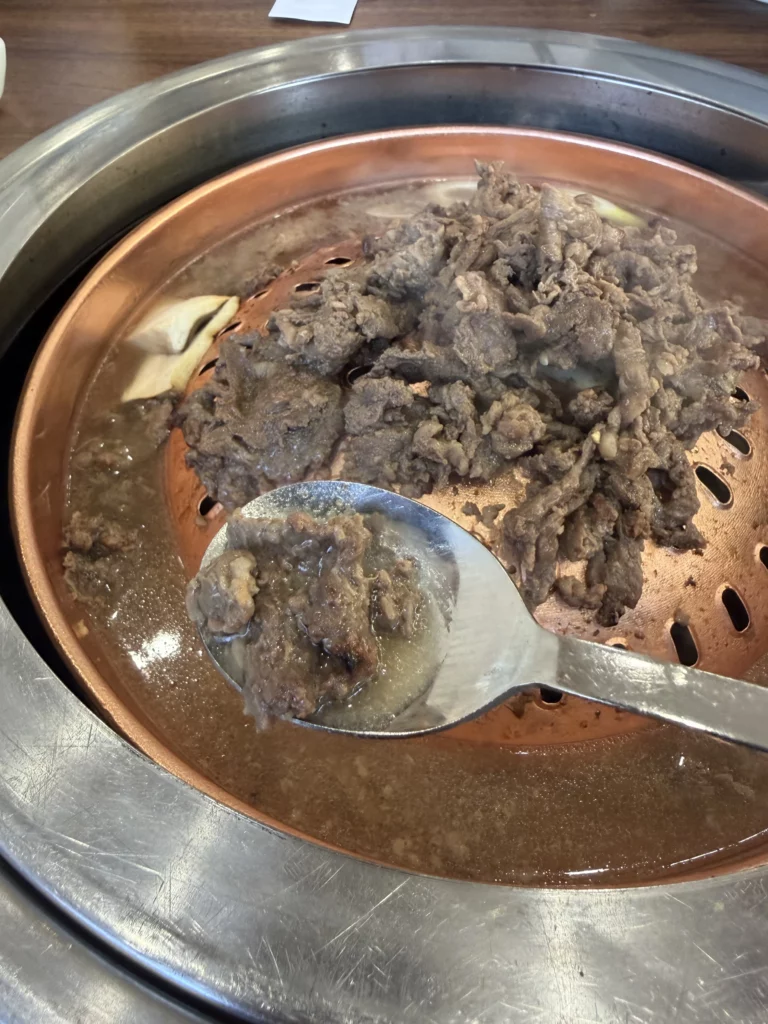
Primary flavor notes:
- Umami-rich: High-quality Hanwoo beef provides deep, meaty satisfaction
- Balanced sweetness: Natural fruit sugars from pear/apple marinade, not refined sugar
- Aromatic: Prominent garlic, sesame oil, and black pepper
- Caramelized edges: Maillard reaction creates complex, slightly bitter notes that cut sweetness
Texture: Charred exterior yields to tender interior, creating satisfying contrast with each bite. The paper-thin slicing ensures quick cooking and easy chewing.
Traditional Pyongyang Naengmyeon (Mul Naengmyeon)
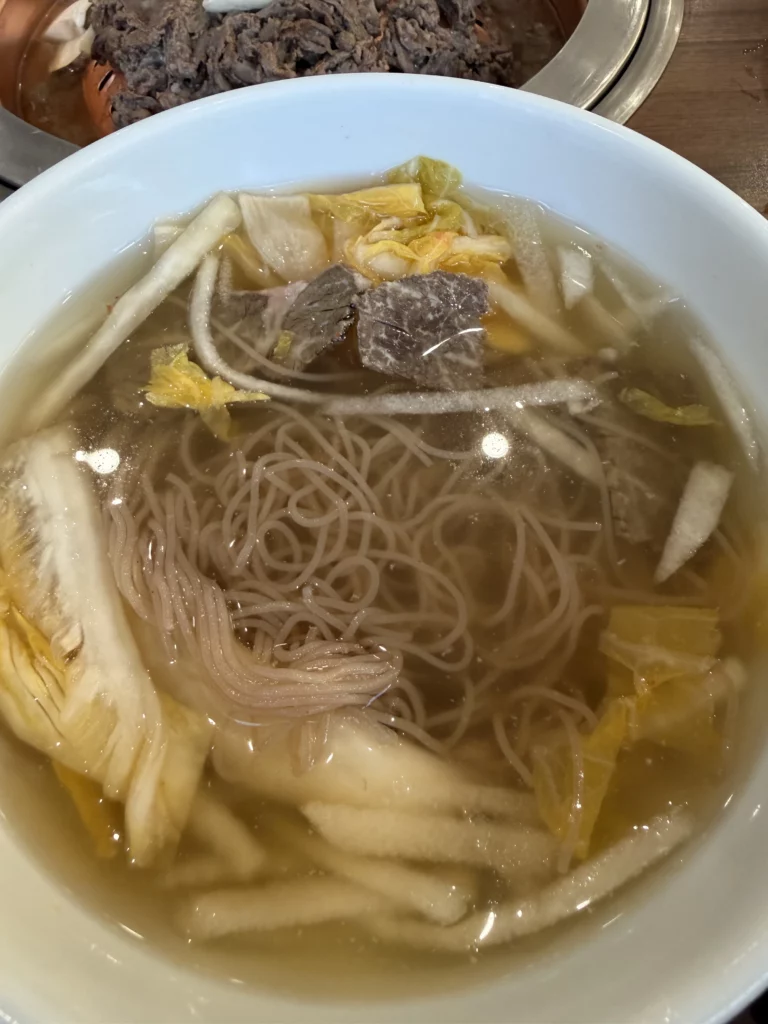
Spice Level: 1/10 – Mild, with optional mustard heat
The mul naengmyeon presents a flavor profile that initially puzzles Western diners expecting bold, assertive tastes. The broth reads as understated on first sip—clean, subtly meaty, with gentle acidic notes and faint sweetness. This restraint is intentional. As you continue eating, the complexity unfolds: the beef stock’s deep savory notes emerge, the dongchimi’s fermented tang becomes more apparent, and the interplay between all components creates satisfying depth.
Primary flavor notes:
- Umami: From slowly simmered beef bones and meat
- Subtle sweetness: Natural sugars from pear garnish and dongchimi radishes
- Mild acidity: Fermented radish brine cuts through richness
- Mineral/earthy: Buckwheat noodles contribute grain-forward notes
Temperature: Served just above freezing with ice chips floating in the bowl, the extreme cold sharpens taste perception, making flavors crisper and more distinct than they would be warm.
Texture: The noodles offer slight resistance before snapping—quite different from the chewy, elastic texture of Japanese ramen or Vietnamese pho noodles.
Pyongyang Bibim Naengmyeon

Spice Level: 4/10 – Moderately spicy, pleasantly warming
The bibim naengmyeon delivers bold, assertive flavors from the first bite. The gochujang-based sauce coats your palate with complex spice—not just heat, but fermented depth, subtle sweetness, and tangy vinegar brightness. The spice builds gradually rather than hitting immediately, warming your mouth without overwhelming.
Primary flavor notes:
- Fermented complexity: Gochujang’s months-long aging creates layered flavors
- Balanced heat: Warm, tingly spice rather than punishing burn
- Sweet-sour interplay: Sugar and vinegar balance the chili heat
- Nutty richness: Sesame oil adds depth and smooths harsh edges
Temperature: Served cold but not as icy as mul naengmyeon, allowing the sauce flavors to express more fully. The contrast between cold noodles and warming spice creates interesting sensory contrast.
Texture: Same buckwheat noodles as mul naengmyeon, but the thick sauce coating changes the mouthfeel—slightly sticky, clinging to each strand.
What Should First-Time Visitors Know?
Navigating Woo Lae Oak successfully requires understanding both practical logistics and cultural context that first-time international visitors might not anticipate.

Optimal Ordering Strategy: For groups of 2-4 people, consider ordering one bulgogi (2 servings minimum), one mul naengmyeon, and one bibim naengmyeon to share. This allows everyone to experience all three signature dishes. Solo diners might choose bulgogi plus one naengmyeon type, or skip the bulgogi and order both naengmyeon varieties to compare directly.
How to Eat Mul Naengmyeon Properly: When your brass bowl arrives, resist the urge to immediately slurp. First, add condiments to taste—Korean mustard (겨자, gyeoja) provides sharp, nose-clearing heat similar to wasabi, while vinegar brightens the broth’s flavors. Start with small amounts; you can always add more. Servers typically ask if you want the noodles cut with scissors before eating. Traditionally, the long, uncut noodles symbolize longevity and good fortune, but practical considerations (ease of eating, preventing splash) make cutting acceptable, especially for beginners.
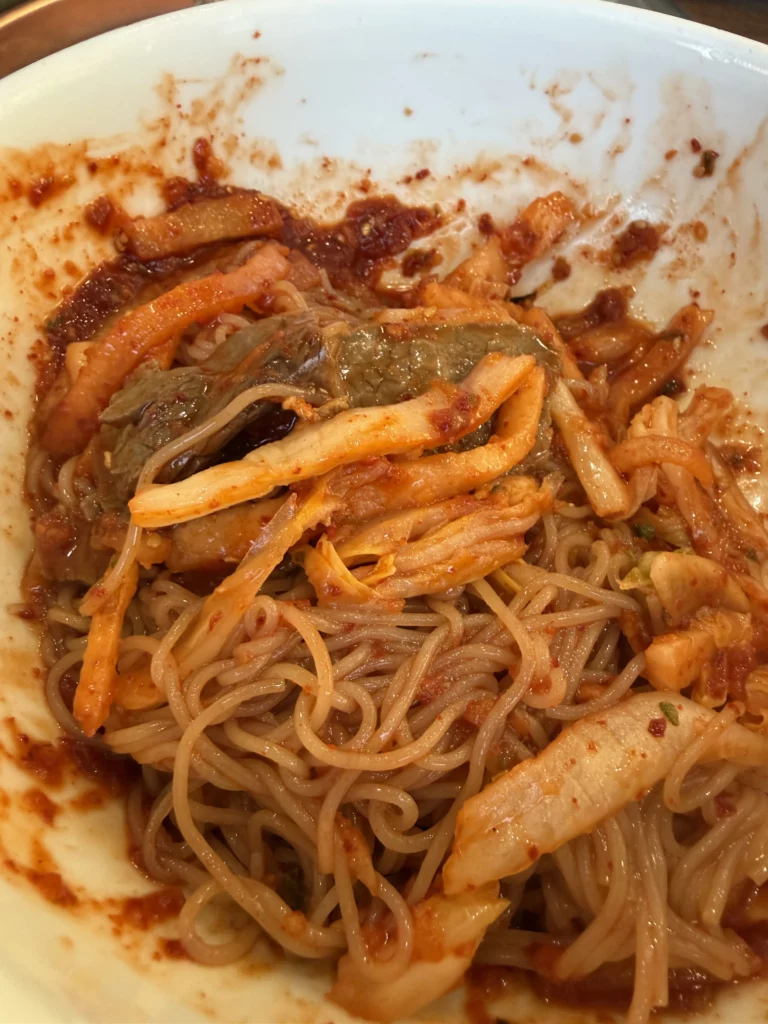
How to Eat Bibim Naengmyeon Properly: Use your chopsticks to thoroughly mix the noodles with the red sauce before eating. This ensures even flavor distribution. If the dish seems too spicy after mixing, add some of the accompanying beef broth to dilute the sauce. If it seems too dry, also add broth for moisture. Don’t be shy about mixing vigorously—the sauce needs to coat every noodle strand.
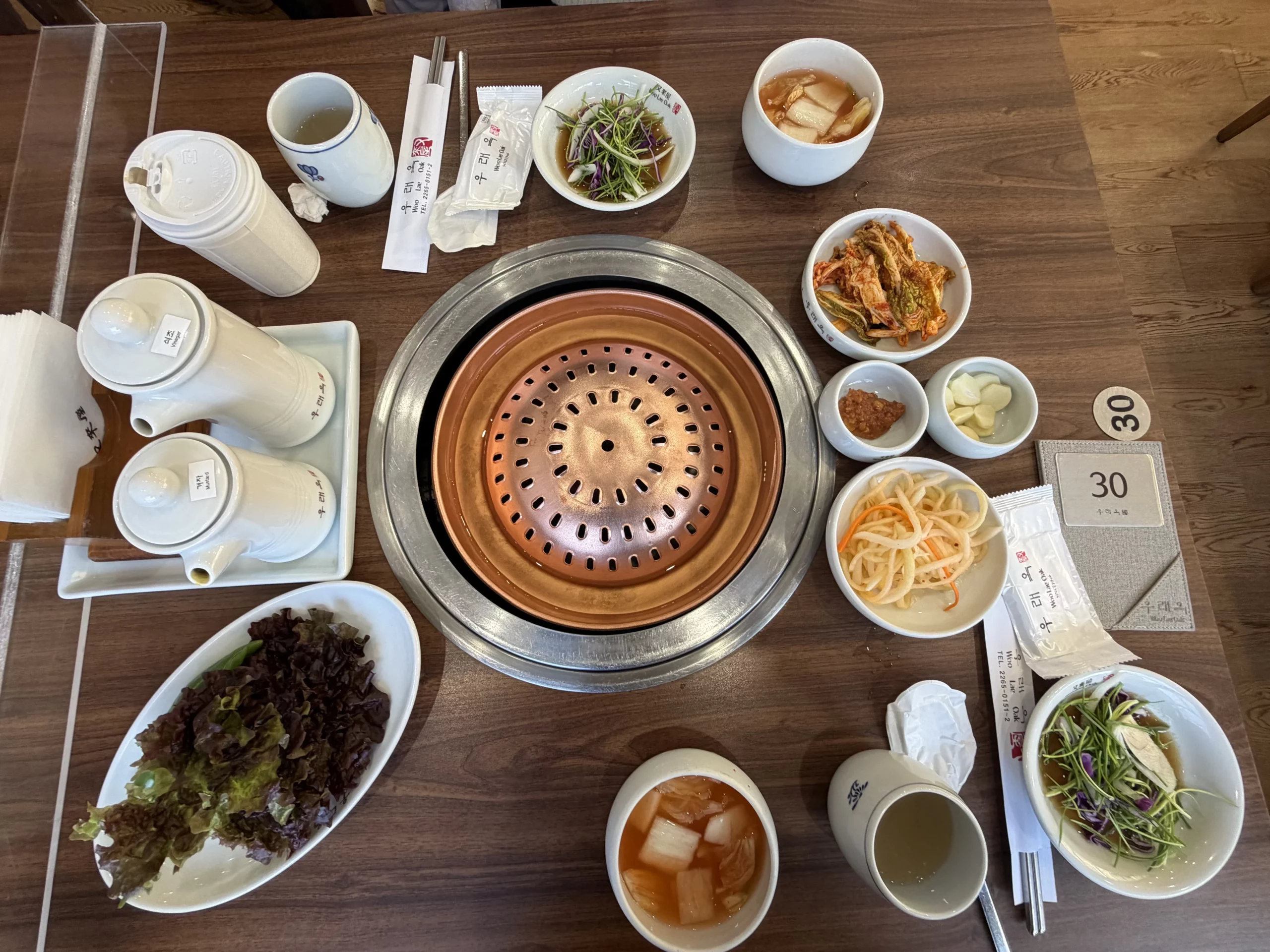
Proper Dining Sequence: Koreans often begin with bulgogi, enjoying the rich grilled meat alongside various banchan side dishes and steamed rice. After finishing the meat course, naengmyeon arrives as a refreshing finale. If you’ve ordered both naengmyeon types, try mul naengmyeon first (it’s more delicate), then finish with the bolder bibim naengmyeon. This "meat then noodles" progression maximizes each dish’s impact and reflects traditional Korean meal structure where different temperatures and textures create balanced dining experiences.
What to Expect on First Taste: Many international diners find Pyongyang mul naengmyeon perplexing initially. The mild, understated broth can seem bland compared to robustly seasoned soups common in other cuisines. Give it time. The subtle flavors require mindful tasting to appreciate fully—rushing through the bowl prevents proper flavor perception. If mul naengmyeon doesn’t resonate, the bibim naengmyeon offers more immediately accessible flavors that most international palates recognize and enjoy.
Location and Practical Information
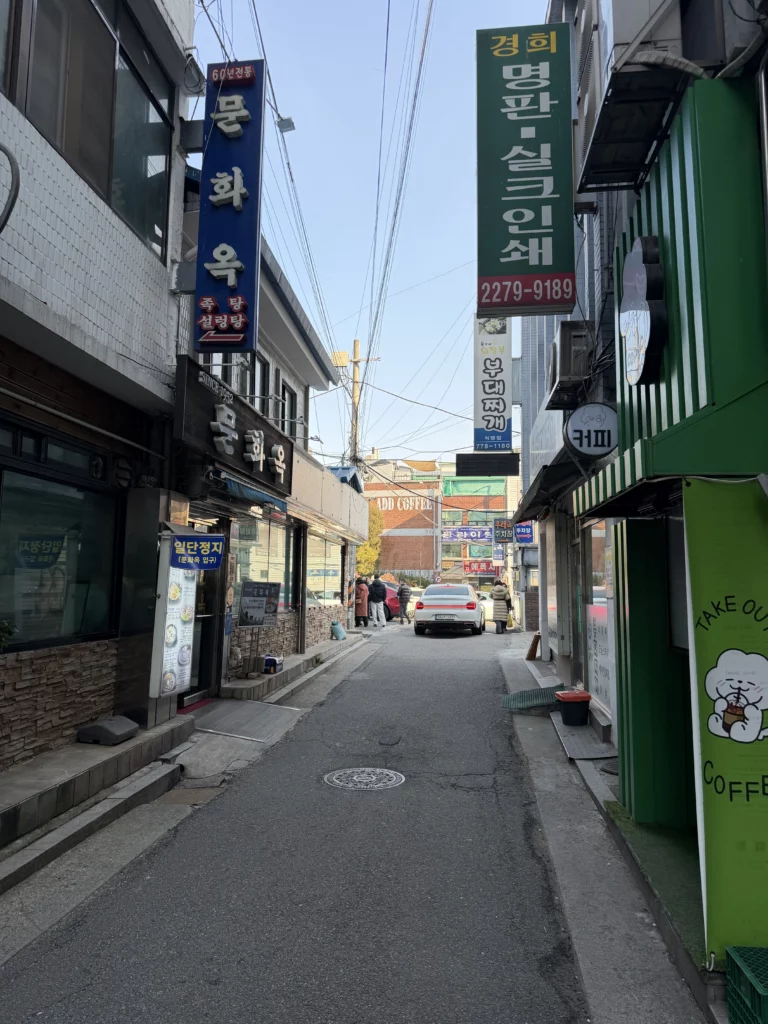
Address: 62-29 Changgyeonggung-ro, Jung-gu, Seoul, South Korea (서울특별시 중구 창경궁로 62-29)
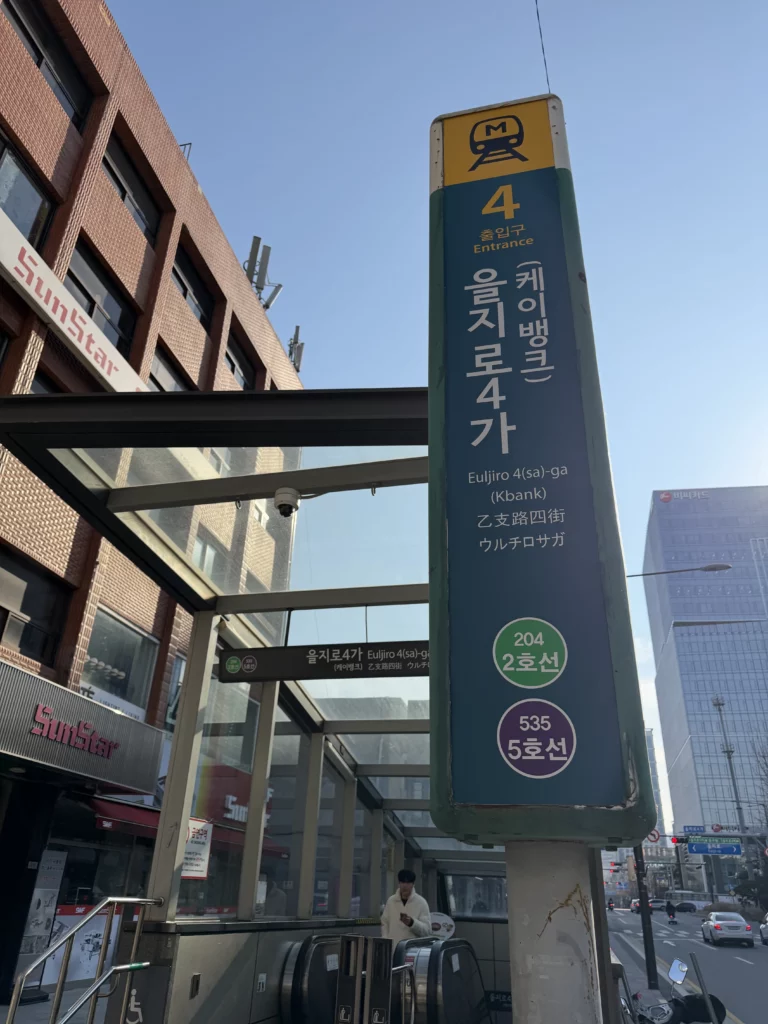
Nearest Subway: Euljiro 4-ga Station (Line 2 & 5), Exit 4. Walk approximately 5 minutes through the neighborhood’s back alleys—the restaurant’s prominent signage makes it easy to spot once you’re close.
Hours: Tuesday-Sunday, 11:30 AM – 9:30 PM (Last order 9:00 PM) | Closed Mondays
Phone: +82-2-2265-0151 (Reservations strongly recommended, especially for dinner and weekends)
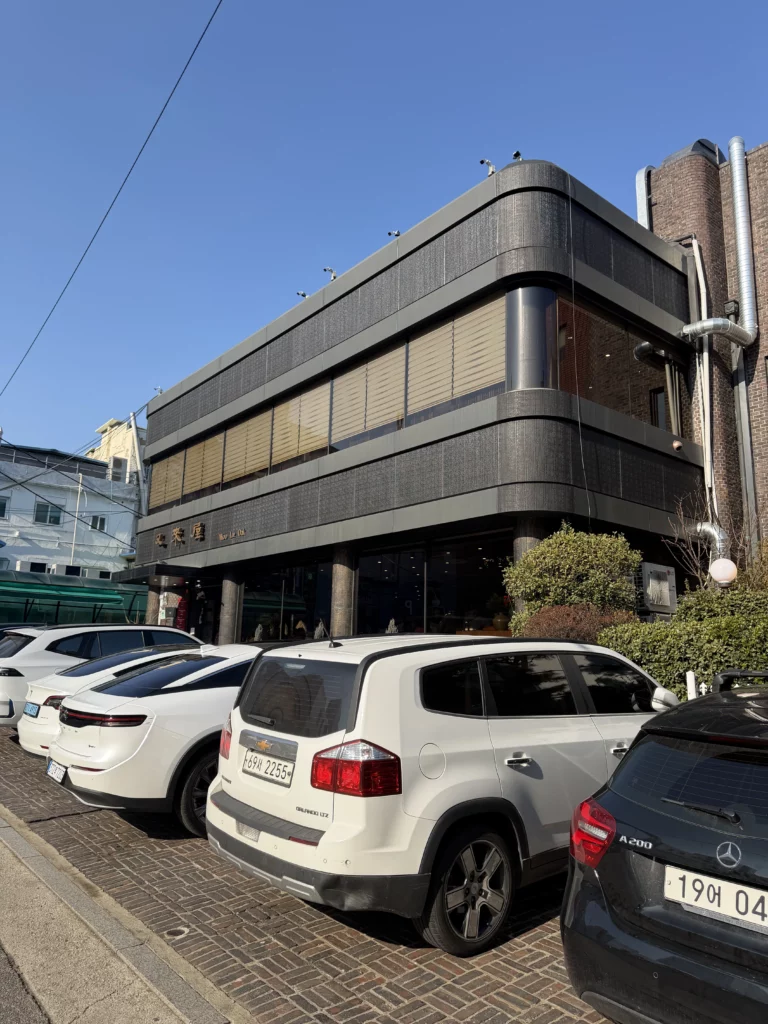
Parking: Available on-site, though limited spaces fill quickly during peak hours. The neighborhood offers several paid parking lots within walking distance.
Price Range: ₩15,000-₩60,000 per person

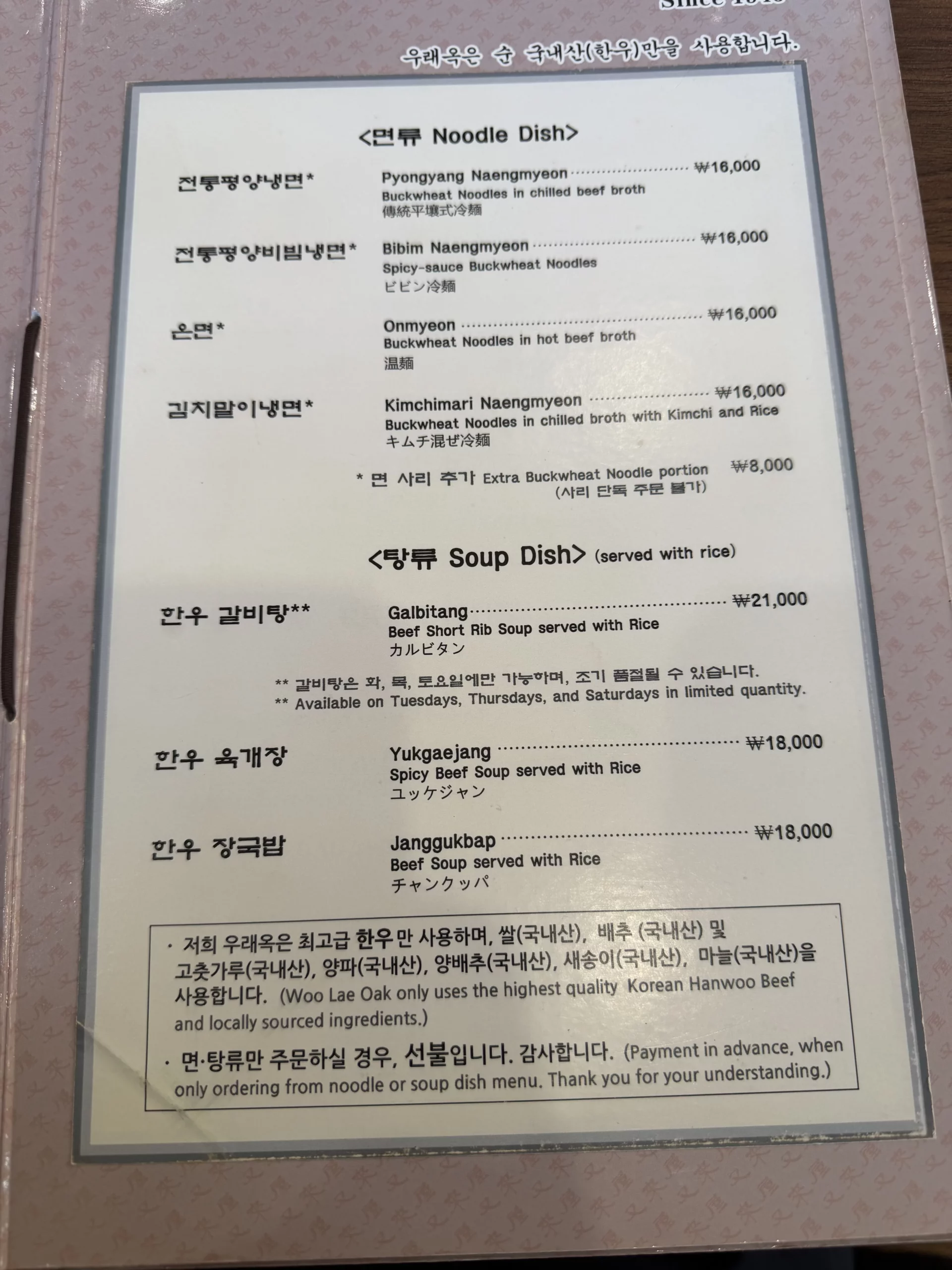
- Traditional Pyongyang Naengmyeon (Mul): ₩16,000
- Pyongyang Bibim Naengmyeon: ₩16,000
- Bulgogi (150g): ₩42,000 (minimum 2 servings)
- Galbi (180g): ₩53,000 (minimum 2 servings)
- Onmyeon (warm noodles): ₩16,000
- Galbitang (short rib soup): ₩18,000
Payment: Cash and credit cards accepted
Recommended Combination: For the complete Woo Lae Oak experience, order bulgogi (2 servings for 2 people), traditional Pyongyang naengmyeon, and Pyongyang bibim naengmyeon. This provides the full spectrum of the restaurant’s expertise and allows direct comparison between the two naengmyeon styles.
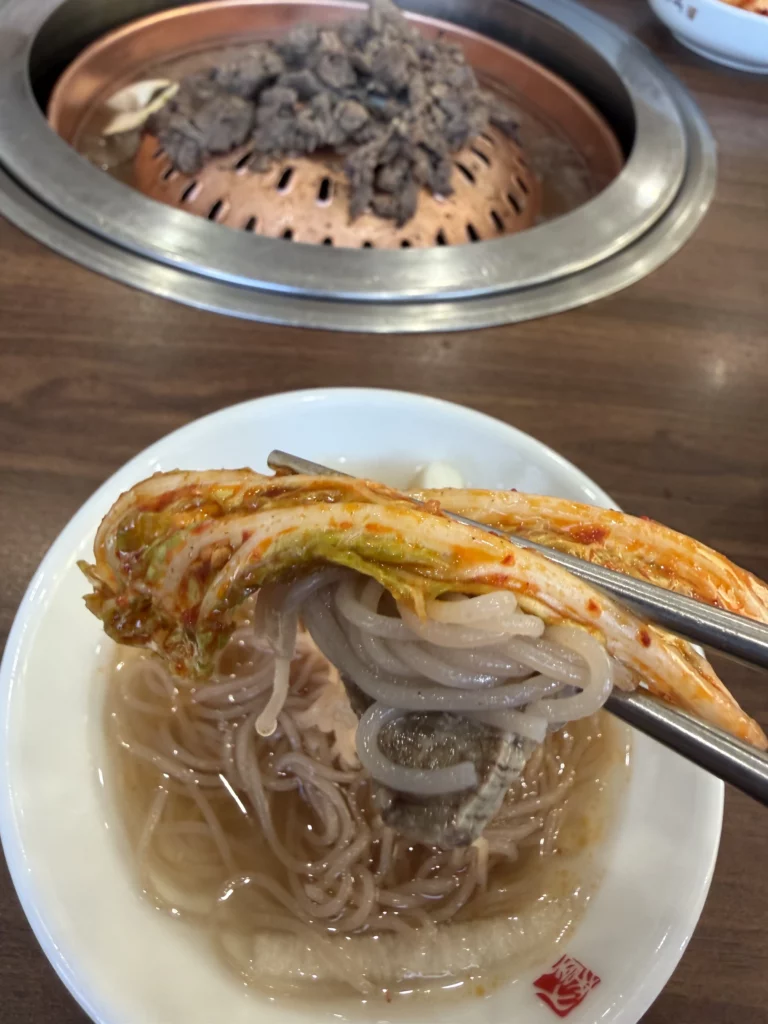
Experiencing authentic Pyongyang naengmyeon in both mul and bibim styles alongside premium Hanwoo bulgogi at this 78-year-old institution offers more than just a meal—it’s a connection to Korean culinary heritage that has survived war, division, and modernization. Whether you’re a seasoned Korean food enthusiast or a curious first-timer, Woo Lae Oak’s signature trio provides a complete window into the flavors that have defined Seoul’s dining culture for generations. The contrasts between hot bulgogi and icy naengmyeon, between subtle mul naengmyeon and bold bibim naengmyeon, create a dining journey that showcases Korean cuisine’s sophisticated understanding of balance, temperature, and flavor harmony.
Location
62-29, Changgyeonggung-ro, Jung-gu, Seoul, Republic of Korea, KR
Reviews
5.0
0 reviews
5
0%
4
0%
3
0%
2
0%
1
0%
Loading reviews...
Related Recipes

Meat & Poultry
Ttukbaegi Bulgogi (Korean Sizzling Beef Stew in a Hot Stone Pot)
There’s a particular kind of comfort in lifting the lid off a bubbling ttukbaegi bulgogi . Steam curls upward, the...

Noodles
Spicy Korean Buckwheat Noodles
There’s a particular kind of relief that comes with the first bite of spicy Korean buckwheat noodles on a sweltering...

Meat & Poultry
Korean Spicy Pork (Jeyuk Bokkeum)
If you have ever stood in front of a sizzling Korean BBQ pan in Seoul, watching deep-red pork edges caramelize...
Related Ingredients

Ingredient
Udoonsal : Korea’s Leanest Beef Cut for Yukhoe
If there is one Korean beef cut that professional butchers and seasoned home cooks quietly revere above all others, it...

Ingredient
Korean raw beef dish (Yukhoe)
There are dishes that define a cuisine’s confidence — its willingness to let a single, exceptional ingredient speak for itself....

Meat & Poultry
Korean beef
Few ingredients carry as much cultural weight in Korean cuisine as sogoegi (소고기) — Korean beef. Long before it became...

Beef
Somunnan Seongsu Gamjatang: Seongsu's 24-Hour Pork Stew
Seongdong-gu, Seoul 45, Yeonmujang-gil,
5

Beef
Saejae Halmaejip: Mungyeong's Yakdol Pork Since 1973
Mungyeong-si, Gyeongsangbuk-do 922, Saejae-ro, Mungyeong-eup
4

Beef
Ilsang Jeongwon: Shabu Shabu at Seoul Express Bus Terminal
Seoul FP103, 205, Sapyeong-daero, Seocho-gu, Seoul
5

Beef
Myeongdong Kyoja: Seoul's Michelin Kalguksu Since 1966
Jung-gu, Seoul 29, Myeongdong 10-gil
5