


Located in Seoul’s historic Bukchon neighborhood near Gyeongbokgung Palace, Hwangsaengga Kalguksu has earned Michelin Bib Gourmand recognition for seven consecutive years. This beloved noodle house transforms simple ingredients—wheat flour, ox bones, and fresh vegetables—into bowls of comforting Korean soul food that keep locals and tourists queuing daily for their signature sagol kalguksu (ox bone noodle soup) and perfectly crafted mandu.
Hwangsaengga Kalguksu: Seoul's Michelin-Recognized Master of Korean Knife-Cut Noodles
4
Hwangsaengga Kalguksu: Seoul's Michelin-Recognized Master of Korean Knife-Cut Noodles
4
ongno-gu, Seoul, Republic of Korea 84 Sogyeok-dong
Editor: James Lee


Interior02
Food03

Menu02
Overview
+82 02-739-6334
WiFi Provided
Indoor Seating Only
Electronic Payment, Credit Card accepted: American Express, Master Card, Visa
Introduction
Operating hours
EverydayAM 11:00 - PM 9:30
Menu
Editor's Detail
The steam rises from a creamy white broth as a server places a generous bowl of kalguksu before you. Silky noodles glisten beneath the surface, accompanied by tender slices of beef and vibrant green onions. This is the scene at Hwangsaengga Kalguksu in Seoul’s Bukchon neighborhood, where traditional Korean knife-cut noodles have earned Michelin Bib Gourmand recognition seven years running. Unlike flashy celebrity restaurants or trendy fusion spots, this establishment has built its reputation on something far more enduring: consistency, quality ingredients, and a deep respect for the craft of noodle-making that dates back over two decades.
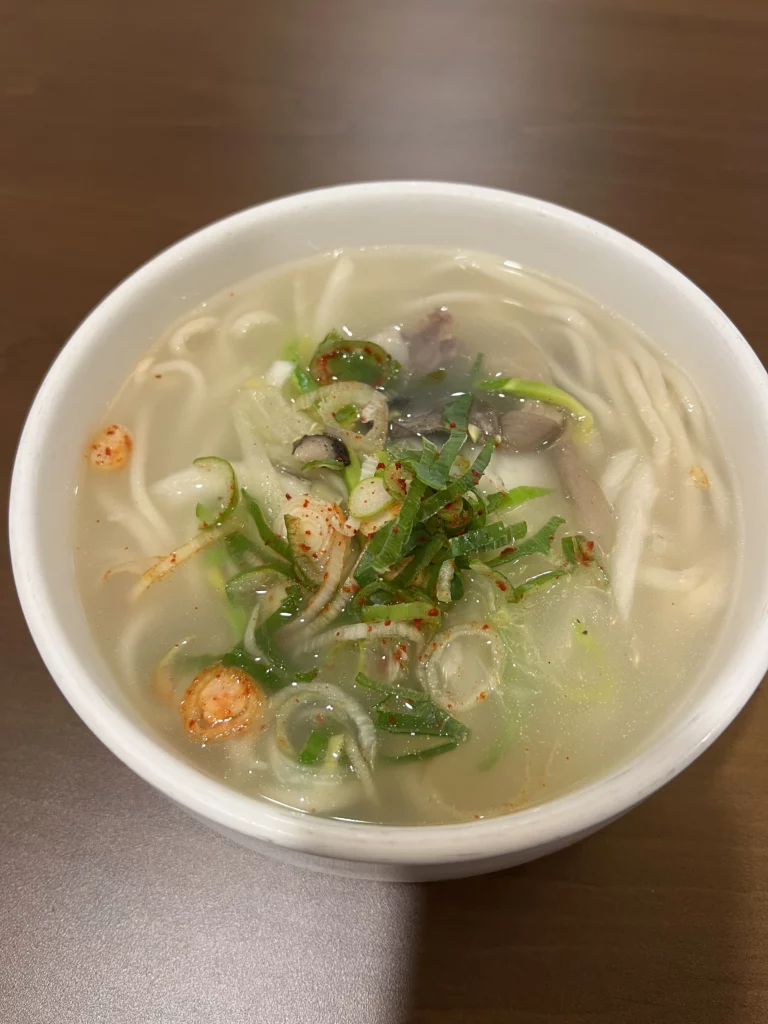
Nestled in the heart of historic Bukchon Hanok Village, just steps from Gyeongbokgung Palace, Hwangsaengga Kalguksu represents everything right about Korean comfort food. The queue that forms outside—often 20-30 people deep even during off-peak hours—testifies to the restaurant’s unwavering quality. Whether you’re a Korean food enthusiast or a first-time visitor to Seoul, understanding what makes this humble noodle house exceptional reveals important insights into Korean culinary values and the artistry behind seemingly simple dishes.
Table of Contents
- Why Hwangsaengga Kalguksu Stands Out Among Seoul’s Noodle Restaurants
- The Story Behind Seoul’s Beloved Kalguksu Destination
- What Makes This Dish Uniquely Korean?
- What Are the Key Ingredients That Create This Flavor?
- How Would You Describe the Taste and Spice Level?
- What Should First-Time Eaters Know?
- The Art of Handmade Mandu at Hwangsaengga
- Understanding the Menu: Beyond Kalguksu
- Location, Hours, and What to Expect
- How to Order Like a Local
- Cultural Context: Kalguksu in Korean Dining Traditions
- Perfect Pairings and Side Dishes
- Price, Value, and What Makes It Worth the Wait
Why Hwangsaengga Kalguksu Stands Out Among Seoul’s Noodle Restaurants
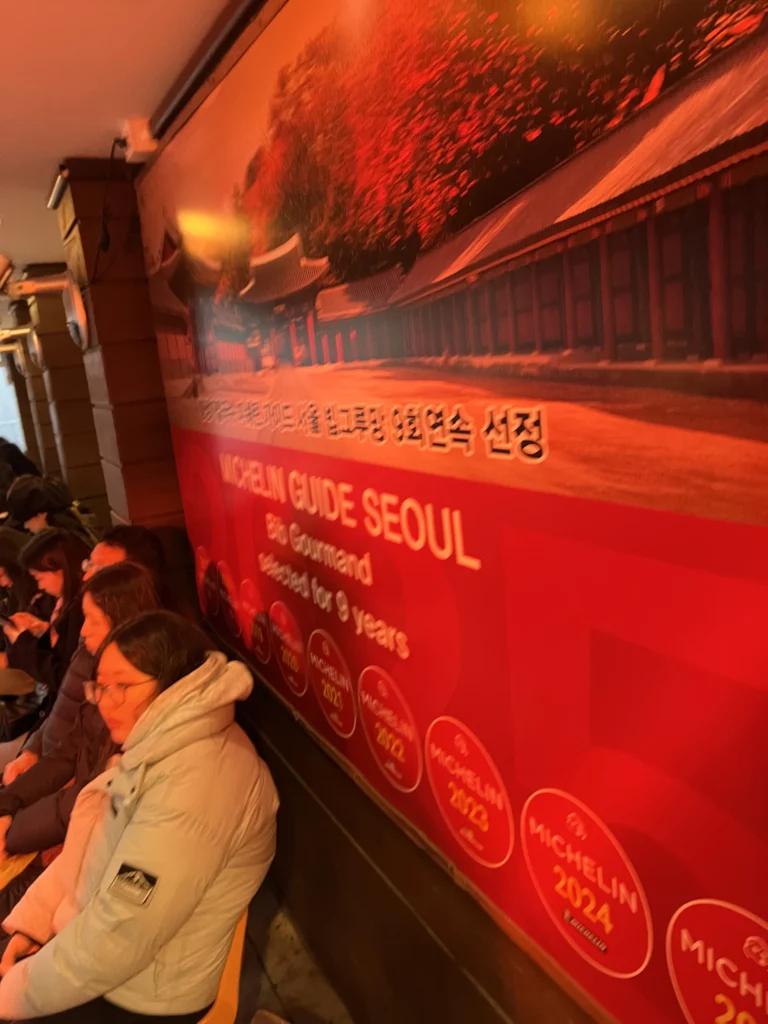
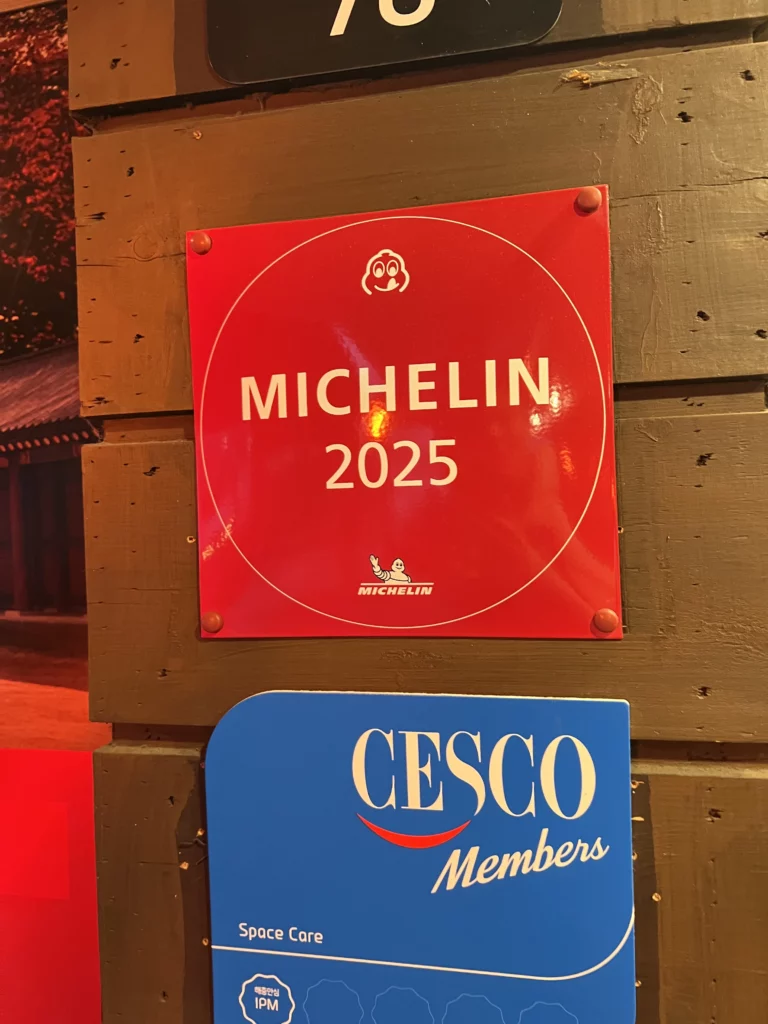
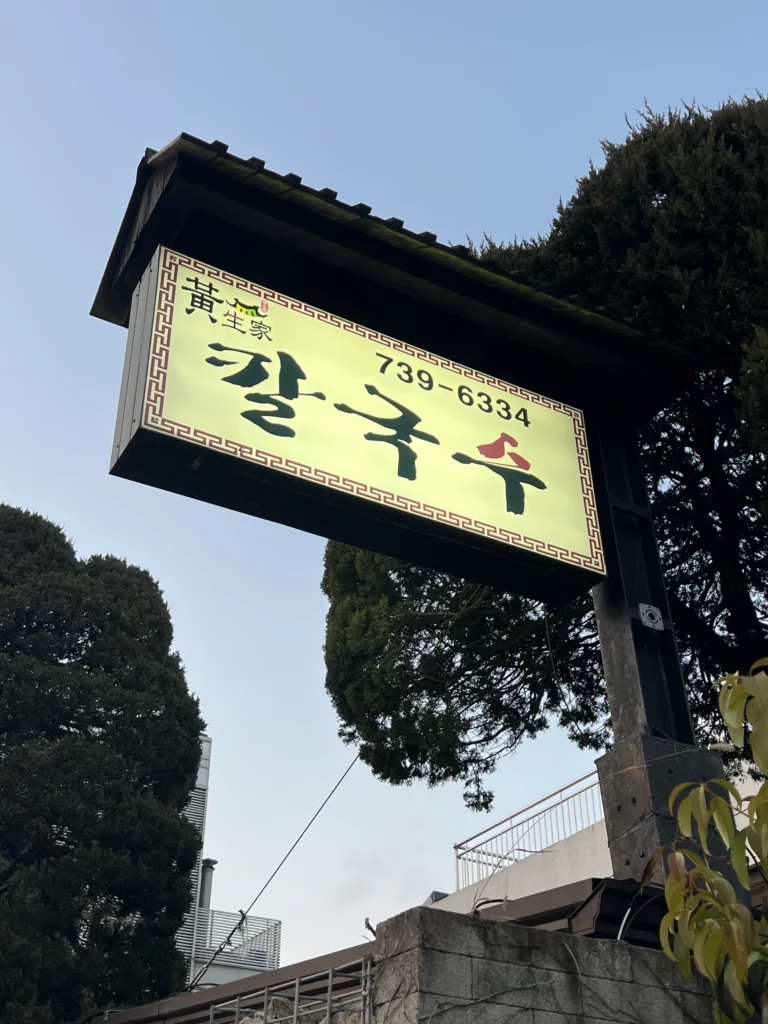
Seoul boasts hundreds of restaurants serving Korean noodle dishes, yet Hwangsaengga Kalguksu has maintained its distinctive reputation since opening as "Bukchon Kalguksu" in 2001. The restaurant’s entrance tells its own story—multiple plaques and certificates from the Michelin Guide adorn the walls, with the coveted Bib Gourmand designation appearing consistently since 2018. This recognition isn’t merely marketing hype; it represents validated excellence in delivering "good quality, good value cooking" that satisfies both local palates and international standards.
What distinguishes this establishment isn’t elaborate presentation or innovative fusion concepts. Instead, Hwangsaengga Kalguksu succeeds through unwavering commitment to fundamentals. The restaurant has perfected the technique of extracting maximum flavor from quality beef bones through extended simmering, creating a broth that’s simultaneously rich yet remarkably clean-tasting. The noodles, made fresh daily using traditional Korean wheat flour, achieve that perfect balance between tender and chewy that defines authentic kalguksu. Each dumpling receives individual attention, with the filling hand-mixed and wrappers carefully pleated by experienced kitchen staff visible through the restaurant’s open kitchen concept.
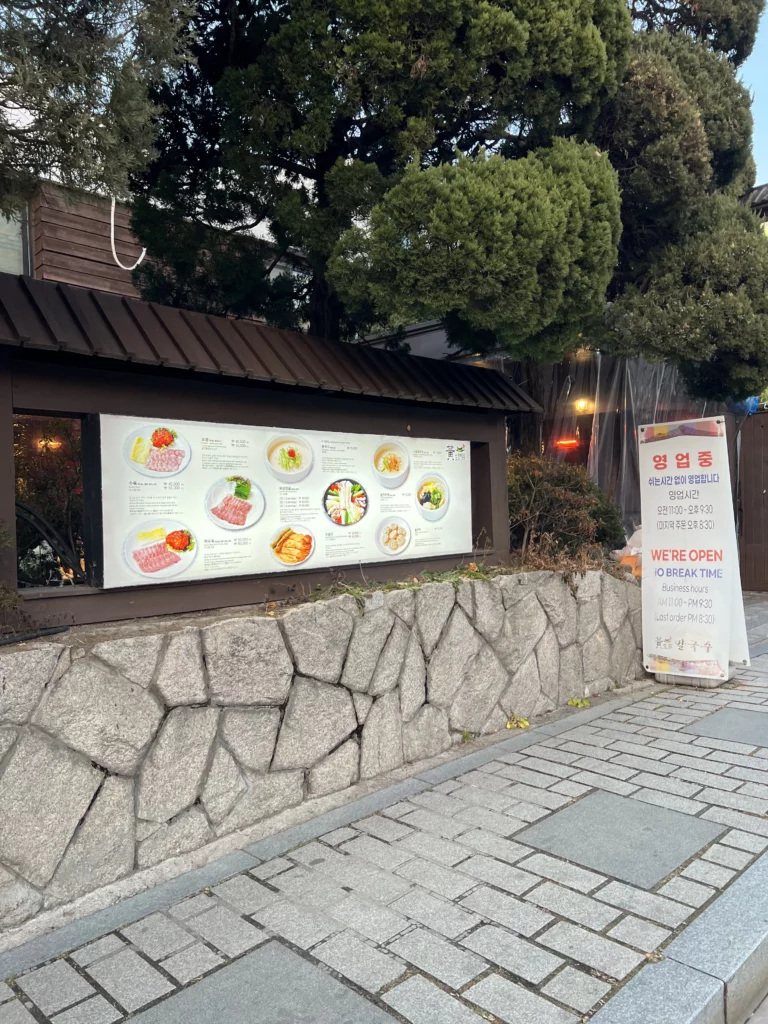
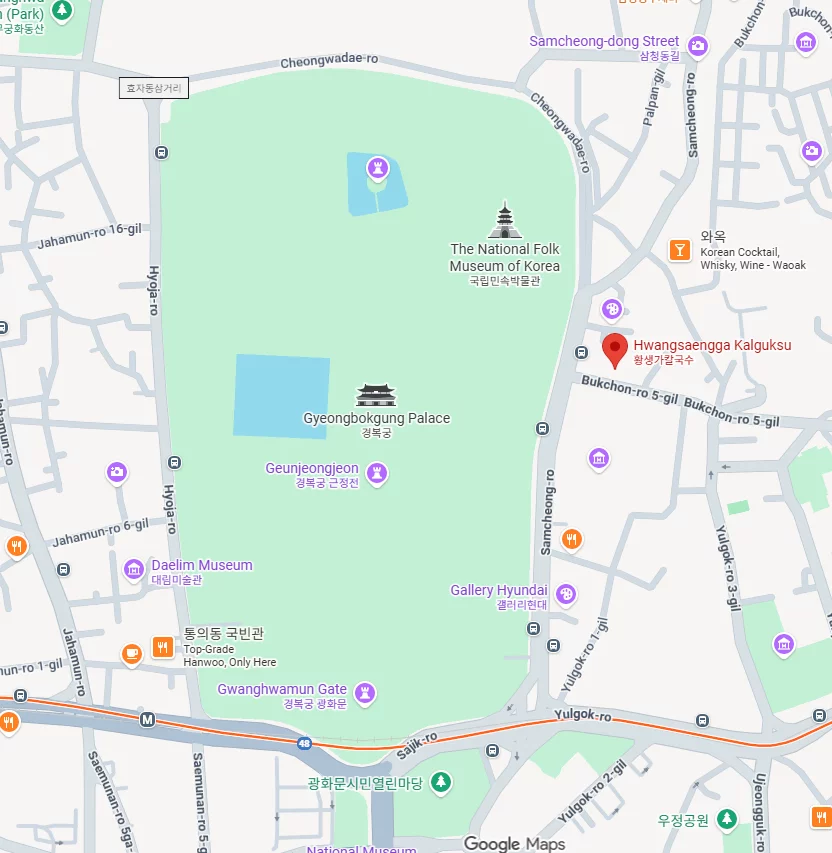
The location itself contributes significantly to the restaurant’s character. Positioned in Bukchon’s traditional hanok village area at 78 Bukchon-ro 5-gil, the restaurant blends seamlessly into its historic surroundings. Traditional design elements—classic tiled roofing and wood paneling—make the establishment feel less like a commercial operation and more like a cherished neighborhood gathering spot that happens to serve exceptional food. This authenticity resonates particularly with Korean diners who recognize genuine traditional character versus manufactured "Instagrammable" atmospheres.
Operating with "no break time" throughout the day, Hwangsaengga accommodates visitors across varied schedules—a practical consideration that demonstrates their service-oriented approach. The hardworking staff maintains efficiency even during peak rush periods, though the quality never wavers regardless of how busy the restaurant becomes.
The Story Behind Seoul’s Beloved Kalguksu Destination
Hwangsaengga Kalguksu’s journey began in 2001 when it first opened under the name "Bukchon Kalguksu." The original concept focused on serving neighborhood residents and workers in the Jongno-gu district with honest, nourishing Korean noodle soup at reasonable prices. The restaurant occupied a small space near Gyeongbokgung Palace, capitalizing on foot traffic from palace visitors while primarily catering to local office workers seeking satisfying lunch options.
In 2014, the restaurant underwent a rebranding, changing its name to "Hwangsaengga Kalguksu" (황생가칼국수). Despite this name change, the core philosophy remained unchanged: prioritize ingredient quality, maintain traditional preparation methods, and never compromise on consistency regardless of volume. This steadfast approach eventually caught the attention of Michelin Guide inspectors, who recognized the restaurant’s exceptional value proposition and added it to their Seoul selection.
The Michelin recognition transformed Hwangsaengga from a beloved local secret into a destination restaurant that now attracts international food enthusiasts alongside its loyal regular customers. Yet remarkably, success hasn’t altered the restaurant’s fundamental character. The same recipes, preparation techniques, and attention to detail that earned neighborhood approval in 2001 continue today, ensuring that long-time customers and first-time visitors receive identical quality.
The restaurant’s evolution mirrors broader changes in Seoul’s food culture. Korean comfort foods—once dismissed as unsophisticated "common people’s meals"—now receive recognition as culinary treasures worthy of preservation and celebration. Hwangsaengga’s Michelin status validates what Koreans have always known: properly executed traditional dishes require skill, dedication, and artistry that rivals any haute cuisine.
What Makes This Dish Uniquely Korean?
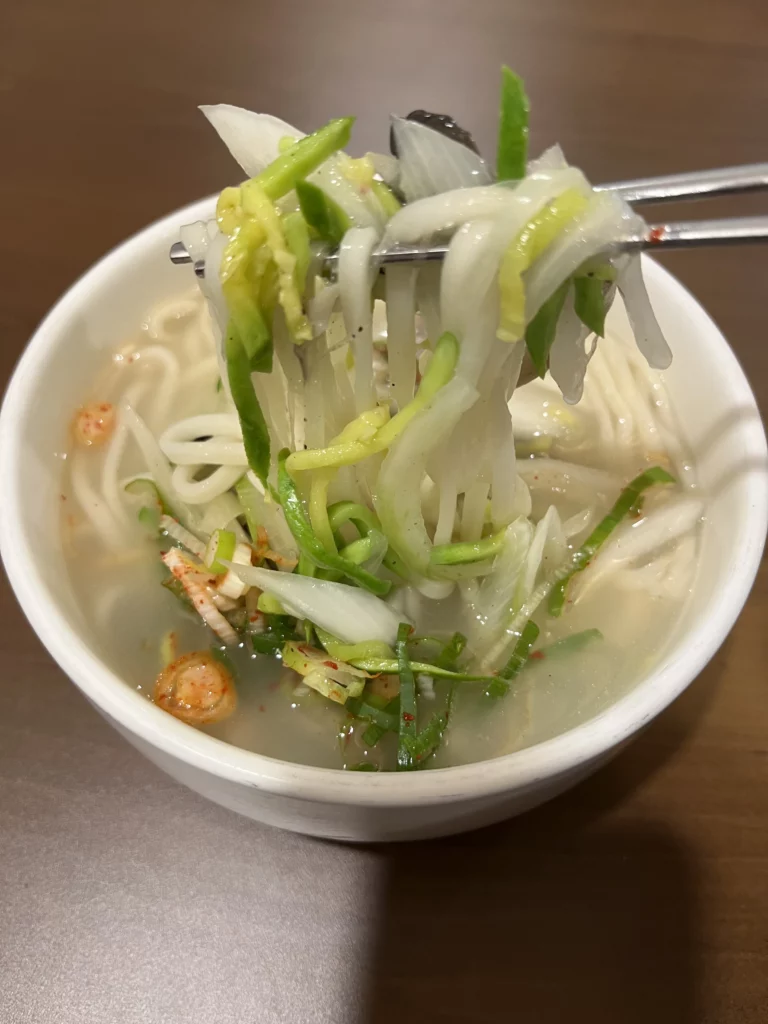
Kalguksu occupies a special position in Korean culinary culture as the quintessential comfort food that transcends class boundaries. The dish’s name literally translates to "knife noodles" (칼=knife, 국수=noodles), referring to the traditional preparation method where wheat flour dough is rolled flat and cut by hand into thick, irregular strips. This handmade quality distinguishes Korean kalguksu from factory-produced noodles or the perfectly uniform strands found in other Asian noodle traditions.
Historically, wheat flour was a luxury ingredient in Korea until the mid-20th century, as rice paddies dominated agricultural land and wheat needed to be imported from China. During the 12th century Goryeo Dynasty, noodle dishes appeared only at special occasions and celebrations, with their long, unbroken strands symbolizing longevity and prosperity. This cultural significance persists today—kalguksu still appears at birthday celebrations, where eating the long noodles represents wishes for a long, healthy life.
What makes kalguksu distinctly Korean, beyond the noodle-cutting technique, is the broth philosophy. Unlike ramen’s complex, layered broths or the clear, delicate consommés of Japanese udon, Korean kalguksu broths aim for what Koreans call "시원한 맛" (siwonhan mat)—a difficult-to-translate concept combining "refreshing," "clean," and "satisfying" into one sensation. At Hwangsaengga, the sagol (ox bone) broth achieves this through patient simmering that extracts collagen and minerals while removing impurities through careful skimming. The result is a creamy, milky-white broth that feels nourishing rather than heavy.
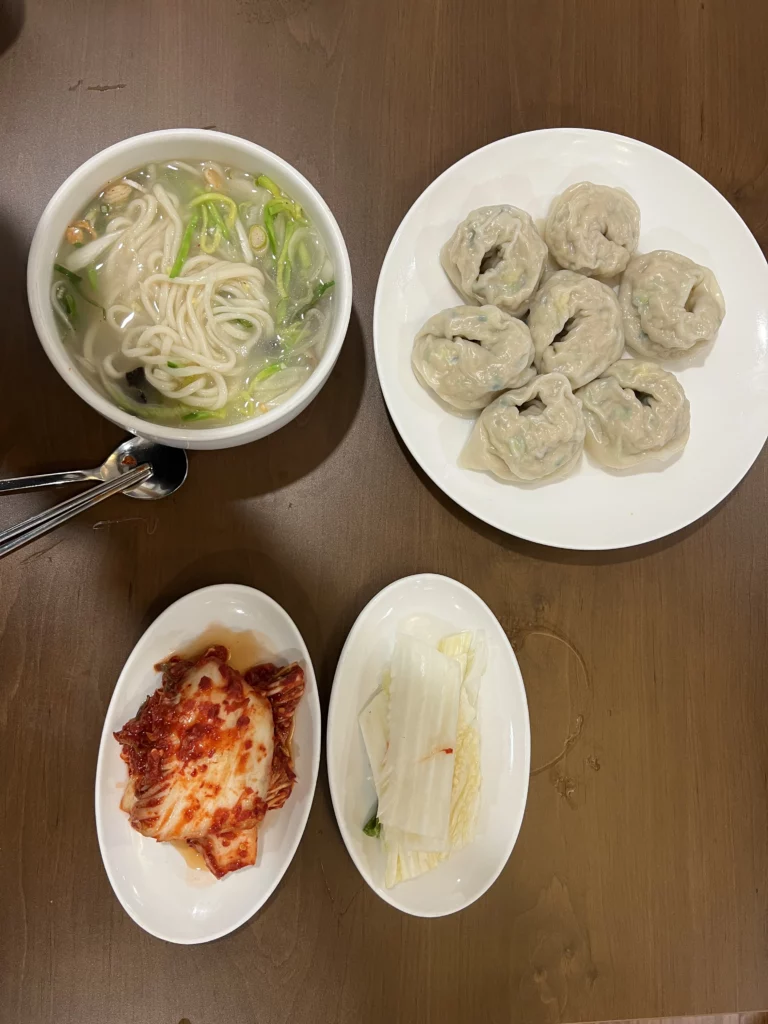
The dish also reflects Korean communal dining values. Kalguksu traditionally serves as a meal to share among family or friends, with large bowls placed centrally for everyone to serve themselves. This sharing aspect, combined with the complimentary banchan that accompanies every Korean meal, creates a complete dining experience that emphasizes togetherness over individual consumption.
What Are the Key Ingredients That Create This Flavor?
The deceptive simplicity of kalguksu at Hwangsaengga Kalguksu relies on three essential components, each requiring careful sourcing and preparation:
Sagol (사골) – Ox Leg Bones
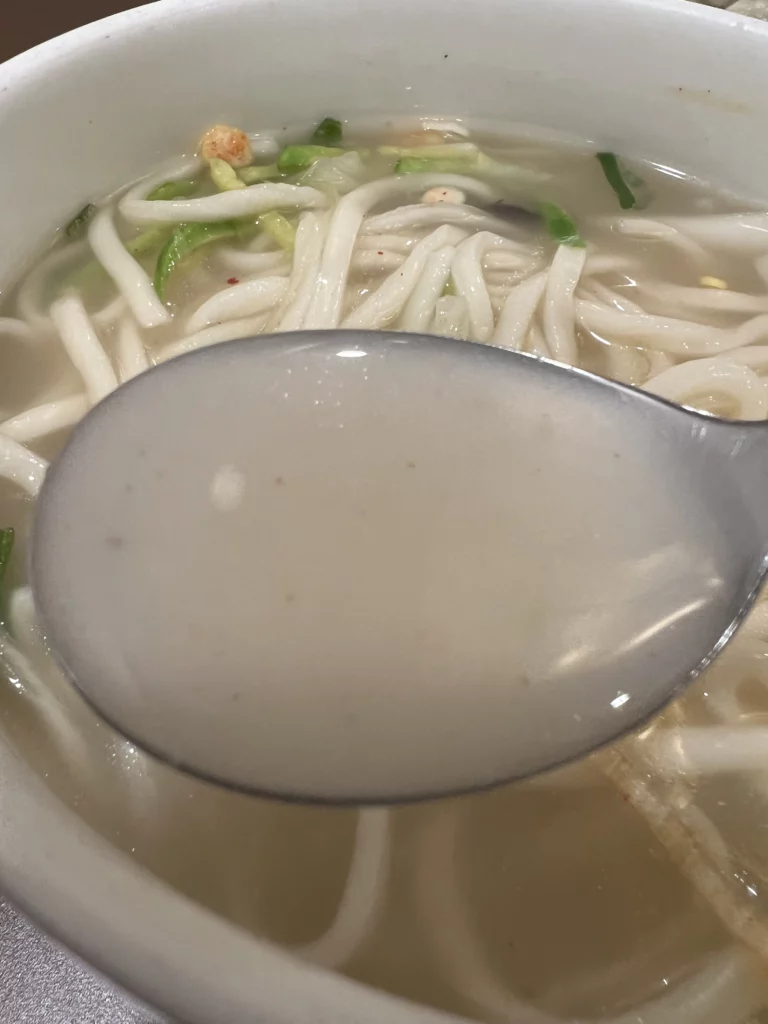
The foundation of Hwangsaengga’s signature broth comes from ox leg bones, specifically the marrow-rich bones that Koreans call sagol. These bones undergo extended simmering—traditionally 12-18 hours—to extract collagen, minerals, and that characteristic milky appearance that indicates proper extraction. The bones’ high collagen content creates the broth’s silky mouthfeel and provides the natural gelatin that makes the soup feel coating yet light. Nutritionally, bone broth provides calcium, phosphorus, and amino acids that Korean tradition considers especially beneficial for joint health and overall vitality. The extended cooking process breaks down proteins into easily digestible forms, making sagol broth a traditional Korean recovery food for new mothers, elderly people, or anyone needing gentle nourishment.
Wheat Flour Noodles (밀가루 국수)
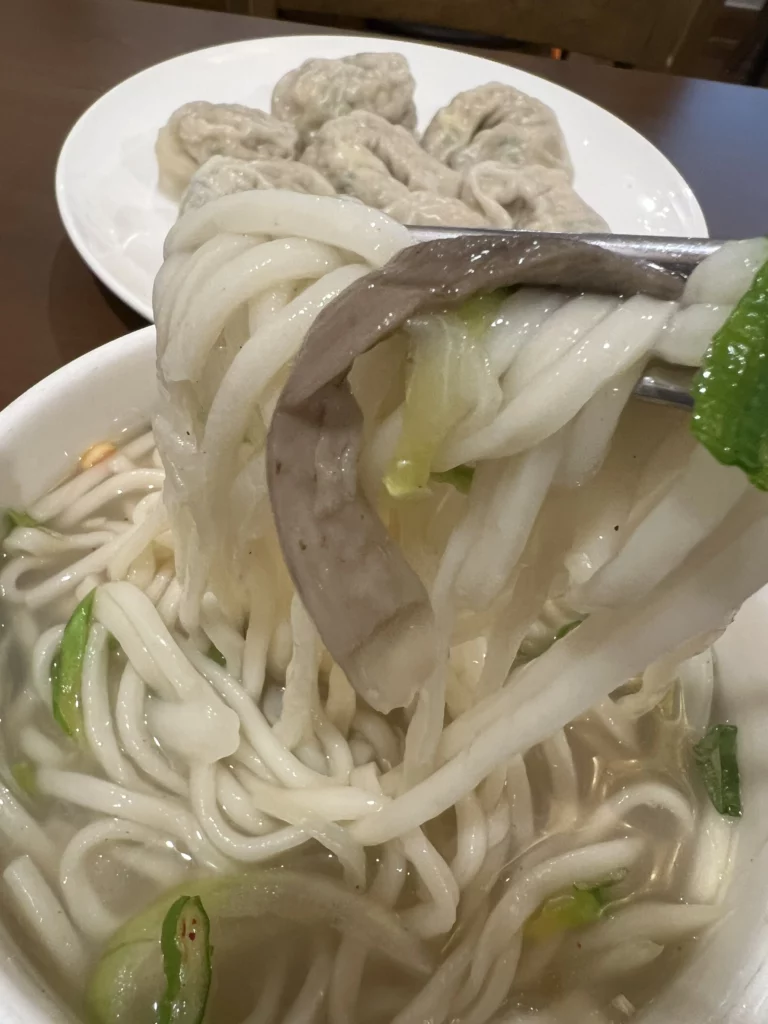
The noodles at Hwangsaengga exemplify why traditional Korean wheat flour produces superior results for hand-cut noodles. Korean medium-strength flour (중력분) contains the ideal protein content—slightly higher than Western cake flour but lower than bread flour—creating noodles that achieve that characteristic soft-yet-chewy texture Koreans describe as "쫄깃쫄깃" (jjol-git jjol-git). The noodles are rolled thin, then hand-cut into irregular widths, creating varied textures in each spoonful. This irregularity isn’t a flaw but a deliberate technique—the varying thickness means some noodle pieces absorb more broth while others maintain firmer bite, creating textural interest throughout the meal. Fresh-made noodles cook quickly in boiling broth, typically just 3-4 minutes, ensuring they retain that silky smoothness rather than becoming mushy.
Hanwoo Beef (한우)
While the broth itself comes from bones, Hwangsaengga includes slices of Hanwoo beef brisket and flank in their kalguksu. Hanwoo refers to Korean native cattle, prized for their marbling, tender texture, and slightly sweet flavor profile. The beef undergoes gentle boiling alongside the bones, becoming meltingly tender while contributing additional depth to the broth’s umami character. These meat pieces provide protein and textural contrast to the soft noodles, making the dish more substantial without heaviness. Hanwoo’s premium quality elevates what could be a simple noodle soup into something exceptional—the beef’s natural sweetness balances the broth’s savory depth while its tender texture complements the noodles’ smoothness.
What Should First-Time Eaters Know?
Proper Eating Method and Etiquette
Korean noodle soup eating follows specific practices that enhance both flavor and cultural authenticity. Start by tasting the broth alone—take a spoonful to appreciate the depth of flavor before mixing anything. This initial sip helps you gauge whether you’d like to add kimchi, adjust seasonings, or enjoy the soup as-is.
When eating the noodles, use chopsticks to lift a small portion and your spoon simultaneously to scoop some broth. Slurping is not only acceptable but encouraged in Korean dining culture—the sound indicates appreciation and actually helps cool the hot noodles while allowing you to taste both the noodles and broth together. Unlike Western soup etiquette, making noise while eating noodles shows you’re enjoying the meal.
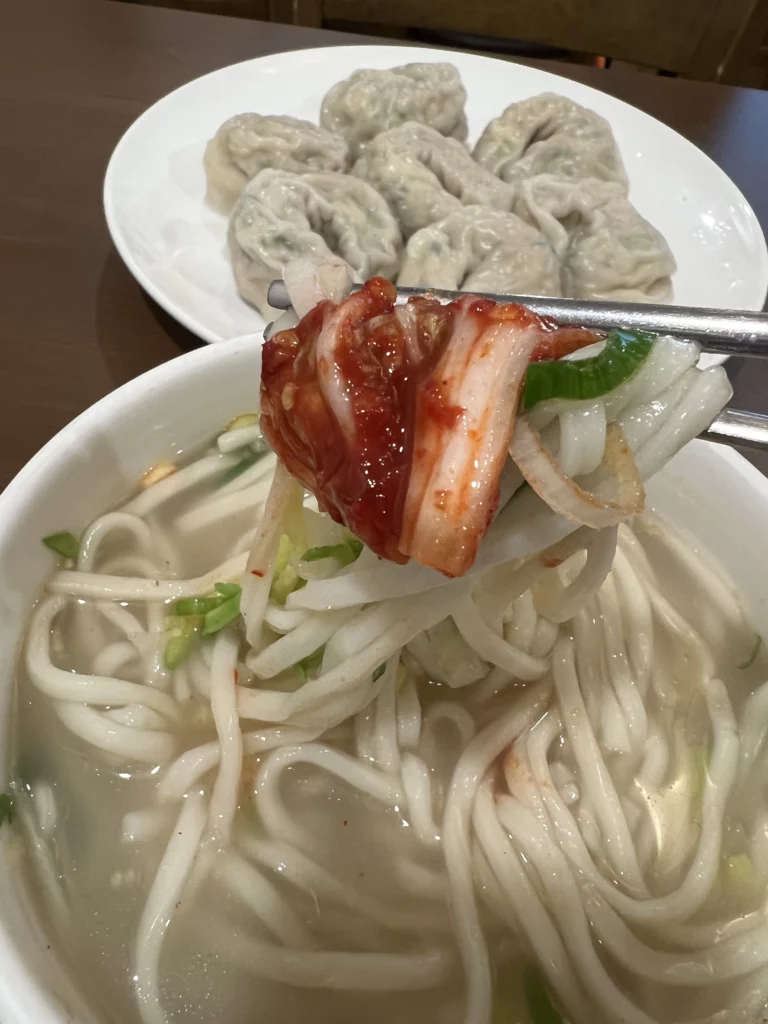
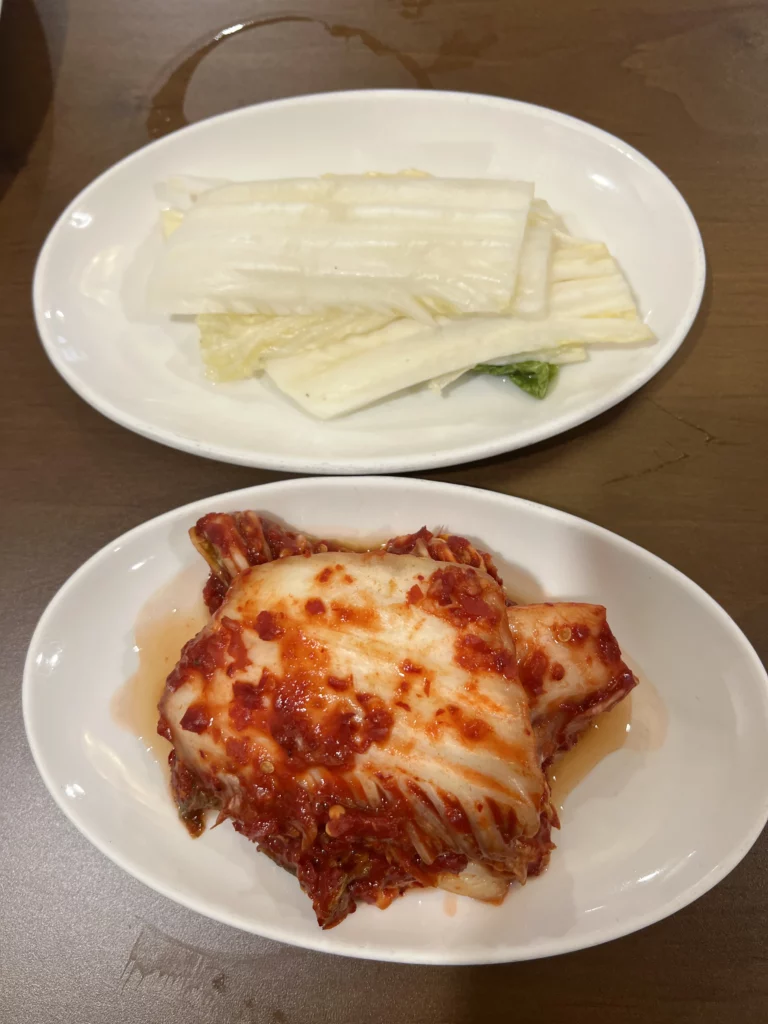
The banchan (Korean side dishes) served alongside your kalguksu aren’t mere decoration. The kimchi in particular plays a crucial role in the eating experience. Take bites of kimchi between spoonfuls of kalguksu—the tangy, fermented flavor and crunchy texture provide palate-cleansing contrast to the rich, smooth noodles. Many Korean diners also add small amounts of kimchi directly into their broth, creating a slightly spicy, more complex flavor profile. This customization is entirely personal preference, so experiment to find your ideal combination.
What to Expect on First Taste
First-time kalguksu eaters often express surprise at how gentle and comforting the flavors are, especially if they’re expecting intense seasonings or spicy heat. The initial impression might seem milder than anticipated if you’re accustomed to aggressively seasoned Western soups or spicy Korean dishes like kimchi jjigae. Give the dish time to reveal its character—kalguksu’s charm unfolds gradually through clean, honest flavors rather than immediate impact.
The broth’s silky texture might feel unusual at first. This smoothness comes from extracted collagen, not added cream or fat. As you continue eating, you’ll notice how this quality coats your palate pleasantly without heaviness, making each subsequent spoonful feel equally satisfying.
The noodles’ soft texture differs significantly from al dente pasta or springy ramen noodles. This isn’t undercooking—Korean kalguksu deliberately achieves this silky-soft consistency because it allows the noodles to absorb the broth’s flavor while maintaining pleasant mouthfeel. The irregularly cut edges mean some pieces will be slightly chewier than others, creating textural variety.
Common Accompaniments and Proper Dining Sequence
Your meal arrives with rice in addition to the noodle soup—this isn’t a mistake or redundancy but reflects Korean dining customs where rice accompanies most meals. You can enjoy the rice separately with banchan, or many Koreans add rice directly into their remaining kalguksu broth near the end of the meal, creating a comforting, porridge-like finish that ensures no delicious broth goes to waste.
The table will also feature condiments like kimchi, pickled radish (danmuji), and possibly soy sauce with green onions. These aren’t mandatory additions but tools for customizing your meal according to preference. Start with the kalguksu as served, then experiment with adding elements as you discover what flavor balance suits your taste.
Cultural Considerations for Foreign Diners
Korean dining culture values efficiency and quick turnover during busy periods, especially at popular restaurants like Hwangsaengga. Don’t be surprised if service seems brisk or if staff appear to be rushing you slightly during peak lunch hours—this isn’t rudeness but reflects the reality of high demand and limited seating. The restaurant serves hundreds of customers daily, and lingering over empty bowls prevents others from enjoying the food.
That said, while eating at a comfortable pace, don’t feel pressured to rush through your meal. Take time to appreciate each element, but once finished, settling your bill promptly helps maintain the flow that allows more people to experience this exceptional kalguksu.
The Art of Handmade Mandu at Hwangsaengga

Beyond their celebrated kalguksu, Hwangsaengga has built an equally impressive reputation for their mandu (Korean dumplings). The restaurant’s open kitchen design allows diners to watch staff hand-pleating each dumpling with practiced precision, a visual testament to the craftsmanship that defines the establishment.
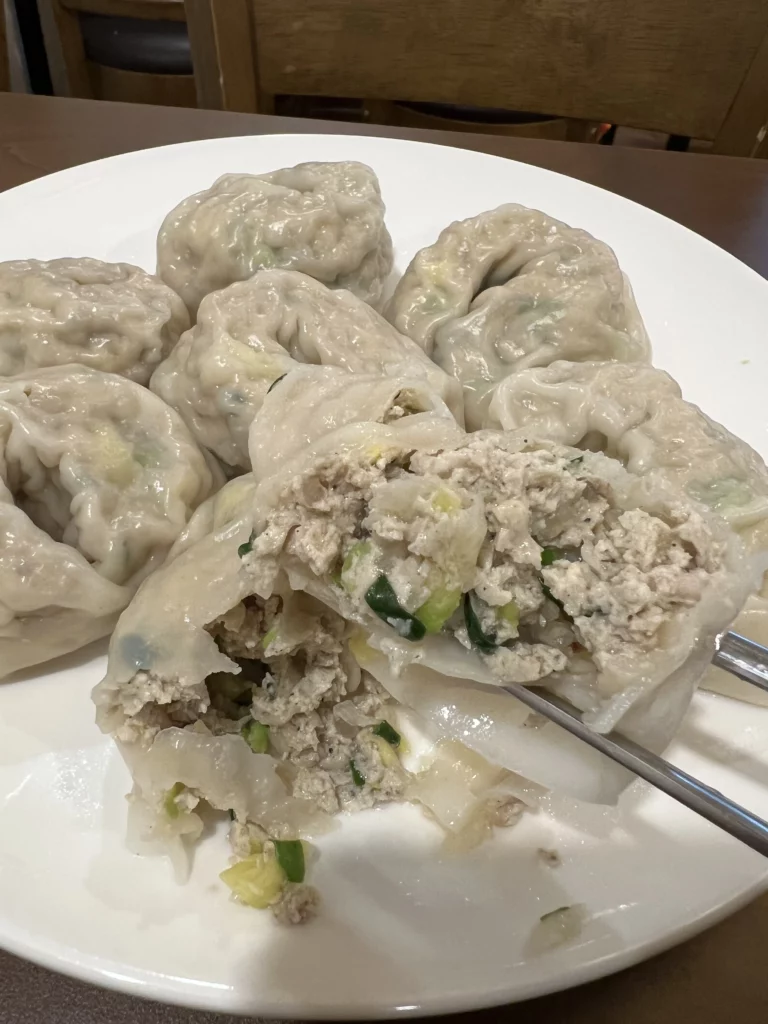
Korean mandu differs from Chinese jiaozi or Japanese gyoza in several key aspects. The filling typically incorporates more vegetables—finely minced cabbage, chives, and sometimes glass noodles (dangmyeon)—creating a lighter, more vegetable-forward flavor than the heavier meat dumplings found in other Asian cuisines. Hwangsaengga’s version balances seasoned pork or beef with aromatic vegetables, tofu, and subtle garlic, achieving that characteristic Korean flavor profile that’s savory without being aggressive.
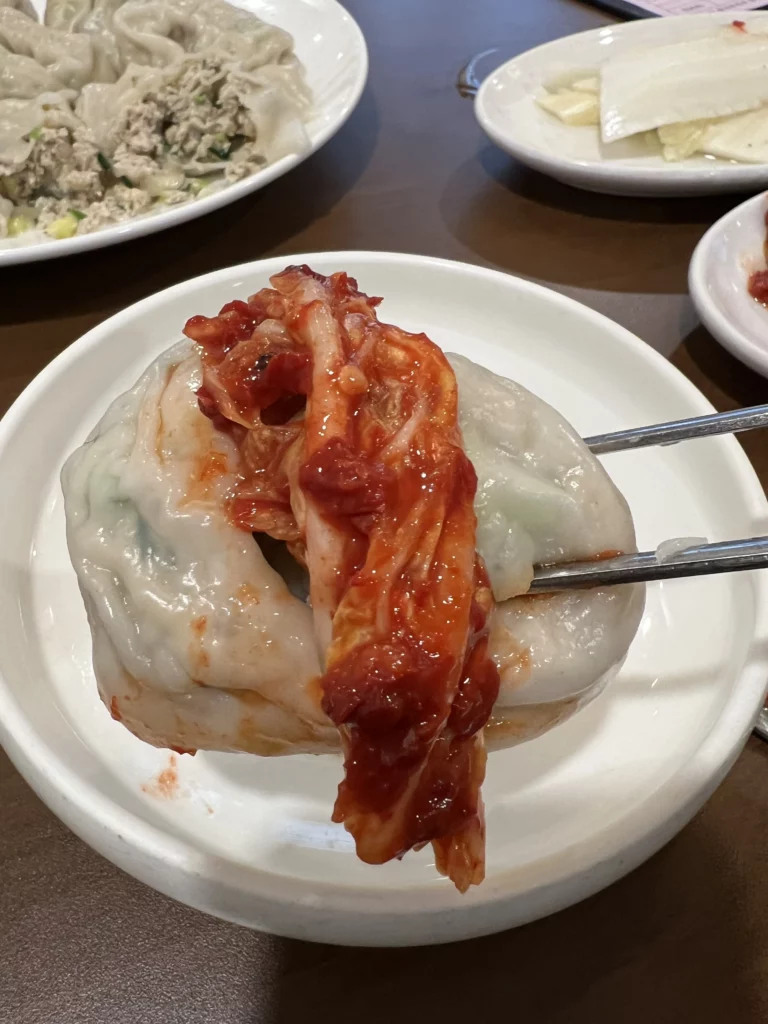
The dumpling wrappers receive equal attention. Made fresh daily, they achieve the ideal thickness—substantial enough to hold together during boiling yet thin enough to provide delicate texture rather than doughy heaviness. Each wrapper is carefully pleated with multiple folds, creating the signature crescent shape that isn’t merely aesthetic but functional, providing edges that crisp beautifully when pan-fried and pleats that trap flavorful broth when boiled.
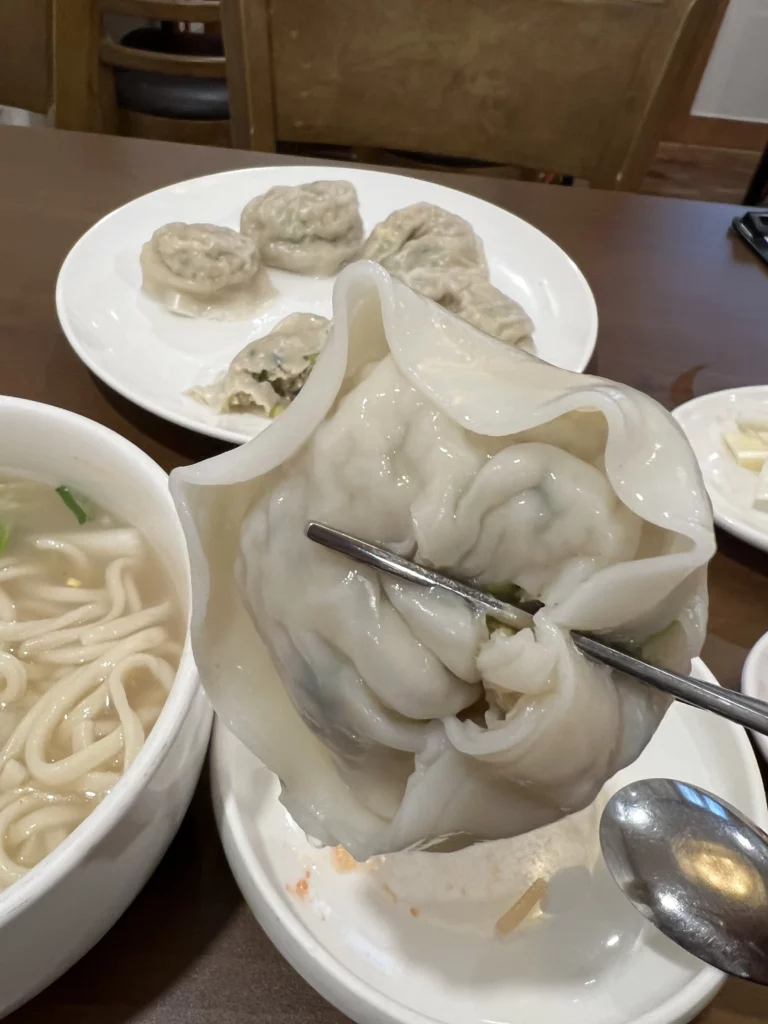
You can order mandu several ways at Hwangsaengga: steamed (jjin mandu), pan-fried (gun mandu), or in dumpling soup (mandu-guk). The steamed version showcases the filling’s flavors most clearly, while pan-frying creates appealing textural contrast between crispy bottom and tender top. Mandu-guk, where dumplings float in the same sagol broth used for kalguksu, provides a heartier meal option that many locals prefer during colder months.
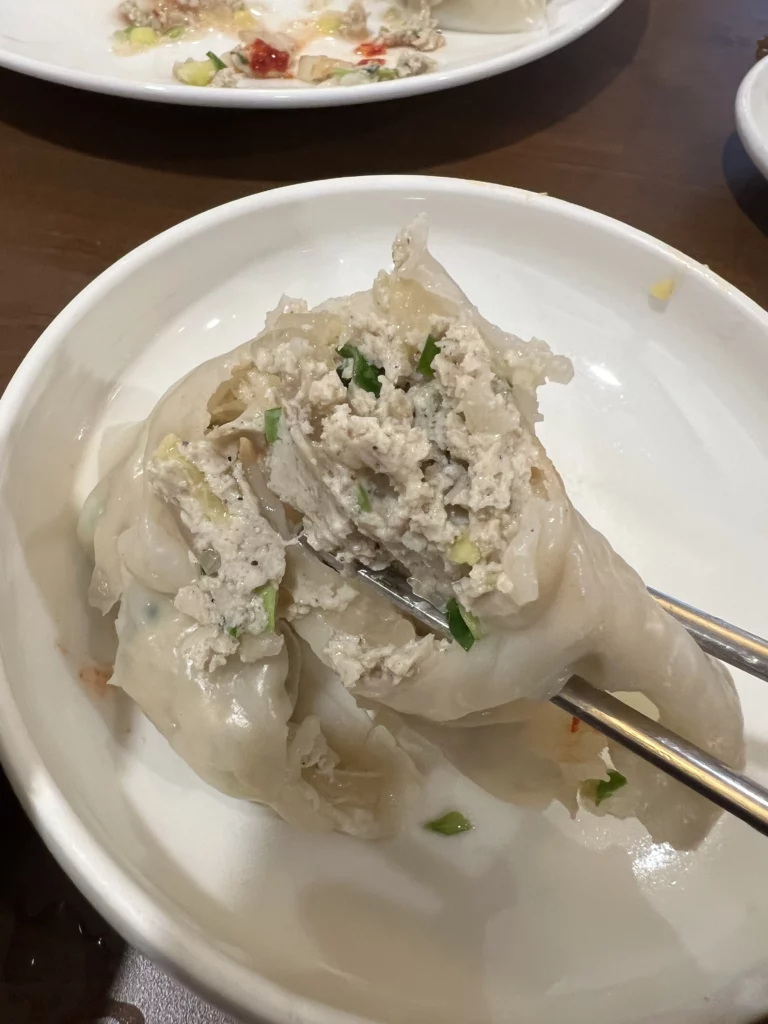
Many diners opt for the combination of kalguksu and mandu, creating a complete Korean comfort food experience. The dumplings’ concentrated flavors provide nice contrast to the gentle, soothing kalguksu, while the different textures—chewy noodles, tender beef, crispy-soft dumpling wrappers, and juicy filling—create a meal with surprising complexity despite the seemingly simple components.
Understanding the Menu: Beyond Kalguksu
While sagol kalguksu remains the signature draw, Hwangsaengga offers several variations and alternative dishes that showcase the kitchen’s versatility:
Kongguksu (콩국수) – Cold Soybean Noodle Soup
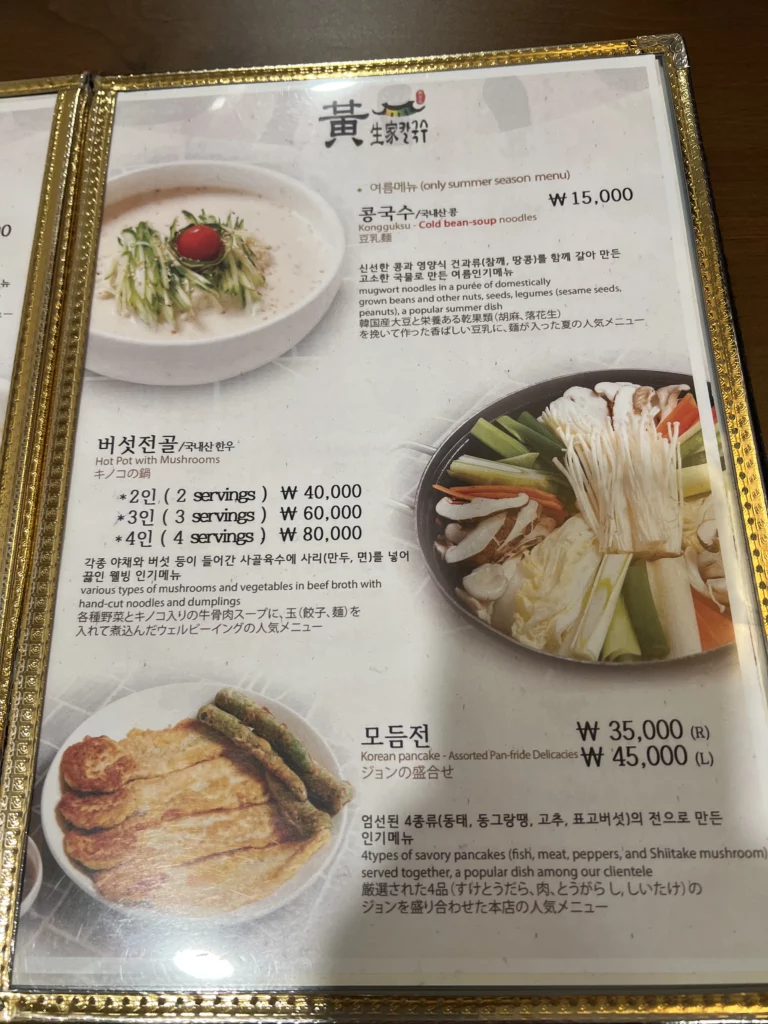
A summer specialty that appears on Hwangsaengga’s seasonal menu, kongguksu features the same handmade noodles served in creamy, cold soybean milk broth. This refreshing dish represents traditional Korean wisdom about eating cooling foods during hot weather. The soybean broth provides protein and nutrients while its cold temperature and mild flavor offer respite from summer heat. Pine nuts, cucumber, and tomato typically garnish the top, adding textural interest and fresh flavors. The Michelin Guide specifically mentions this as one of Hwangsaengga’s popular offerings, though availability depends on season.
Beef Slices in Broth (육수)
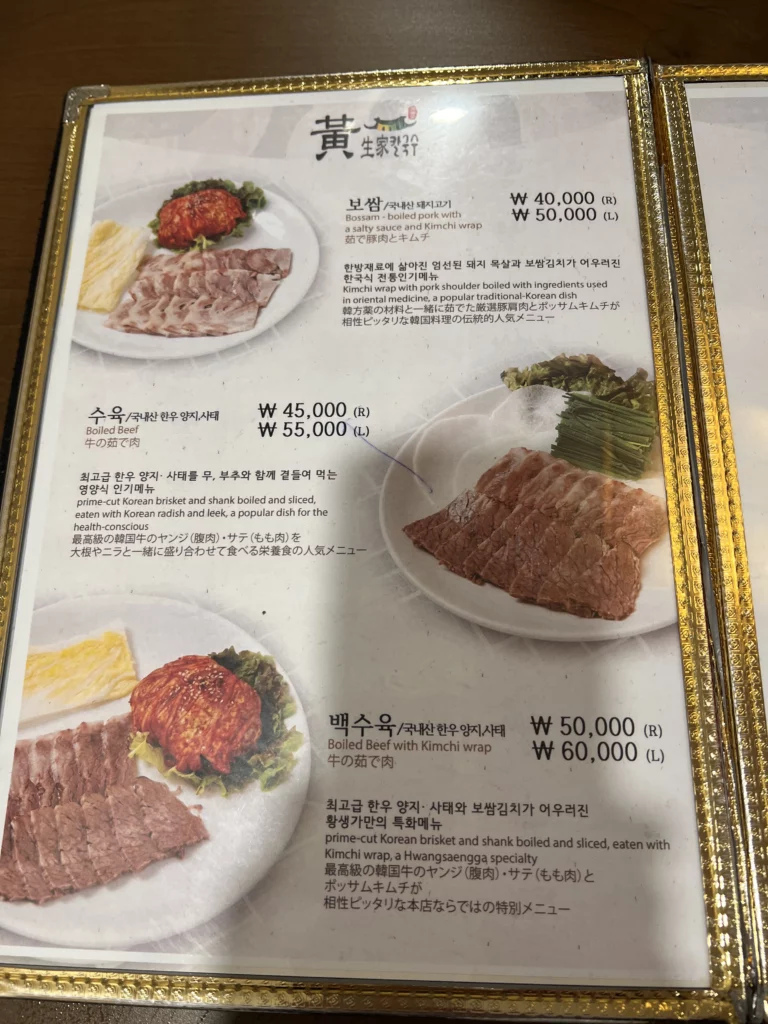
For diners who prefer less noodles and more protein, this option features generous portions of tender Hanwoo beef brisket and flank served in the same savory sagol broth. The meat receives extended boiling until it achieves melt-in-your-mouth tenderness while absorbing the broth’s rich flavors. This makes an excellent choice for those following lower-carbohydrate diets or anyone who wants to fully appreciate the quality of Korean beef without noodles.
Combination Sets
Hwangsaengga offers combination meals pairing kalguksu with mandu or other dishes at slightly discounted prices compared to ordering separately. These sets work well for first-time visitors wanting to sample multiple items or for larger groups who can share various dishes family-style, following traditional Korean dining customs.
The menu remains deliberately focused rather than exhaustive—a strategic choice that allows the kitchen to maintain consistent quality across all offerings. Each dish receives the same careful attention whether it’s the signature kalguksu or a seasonal special, ensuring that whatever you order meets the same exacting standards.
Location, Hours, and What to Expect
Address and Getting There
Hwangsaengga Kalguksu occupies a prime location at 78 Bukchon-ro 5-gil, Jongno-gu, Seoul, 03053. The restaurant sits in the heart of Bukchon Hanok Village, one of Seoul’s most picturesque traditional neighborhoods. Its proximity to Gyeongbokgung Palace—just a short walk away—makes it an ideal lunch or dinner stop after palace touring.
Finding the restaurant requires some attention to landmarks. Look for the distinctive traditional hanok-style building with a tiled roof and wooden exterior. The restaurant shares the block with Blue Bottle Coffee and Cassina furniture store, which serve as useful orientation points. The wall visible at the end of Bukchon-ro 5-gil is actually the outer wall of Gyeongbokgung Palace, helping confirm you’re in the right location.
The nearest subway station is Anguk Station (Line 3), Exit 2. From there, it’s approximately a 10-12 minute walk through Bukchon’s charming streets. While the walk involves some uphill sections—Bukchon means "North Village" and sits on elevated terrain—the journey itself provides beautiful views of traditional hanok houses and modern Seoul’s skyline juxtaposed.
Operating Hours
Hwangsaengga operates with extended hours designed to accommodate various schedules:
- Daily: 10:30 AM – 9:30 PM
- No break time (continuous service throughout the day)
- Last order approximately 30 minutes before closing
The "no break time" policy distinguishes Hwangsaengga from many Korean restaurants that close during afternoon hours between lunch and dinner service. This continuous operation reflects their commitment to serving customers whenever hunger strikes, whether that’s a late lunch at 3 PM or early dinner at 5 PM.
Queue Management and Wait Times
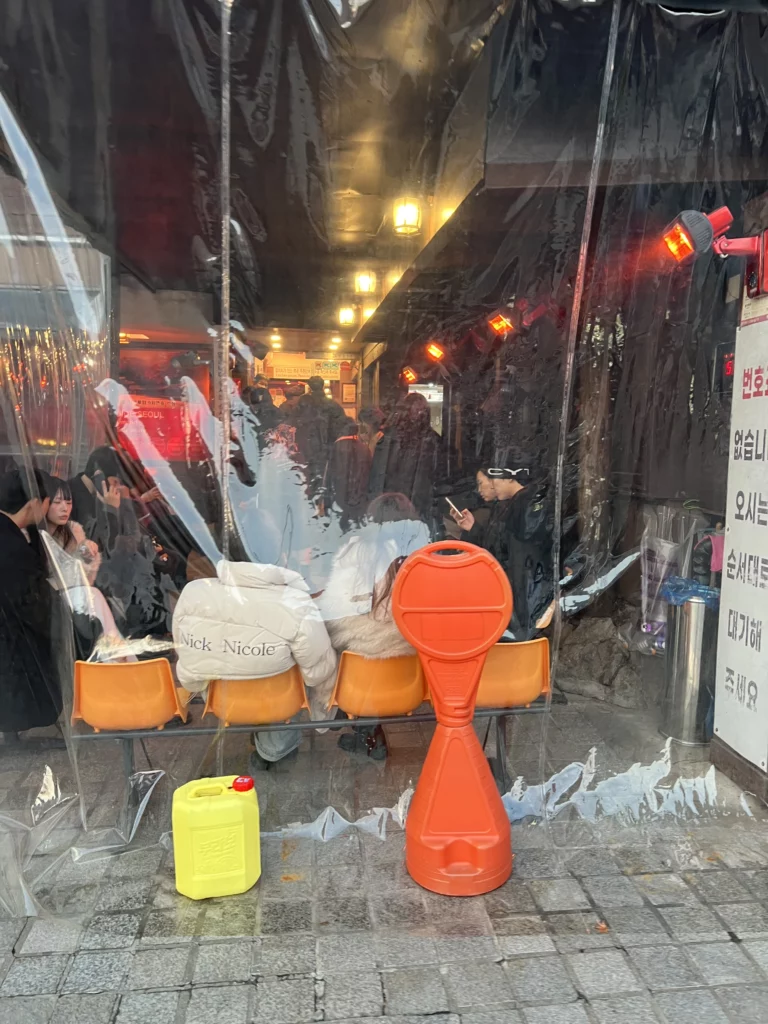
As the Michelin Guide accurately notes, "No matter what time of day, always expect to see a line outside this beloved establishment." The queue is real and persistent, though wait times vary significantly based on timing:
- Peak hours (12:00-1:30 PM weekdays, 12:00-2:00 PM weekends, 6:00-7:30 PM any day): Expect 30-60 minute waits
- Shoulder periods (11:00 AM, 2:30-5:00 PM): Typically 15-30 minute waits
- Early opening or late evening: Minimal to no wait, though some popular items might be sold out late in the day
The restaurant provides outdoor seating areas where waiting customers can rest, and during summer months, portable fans help make the wait more comfortable. The queue moves relatively quickly thanks to efficient kitchen operations and the table turnover rate—most diners finish within 30-40 minutes, keeping the line flowing steadily.
Atmosphere and Seating
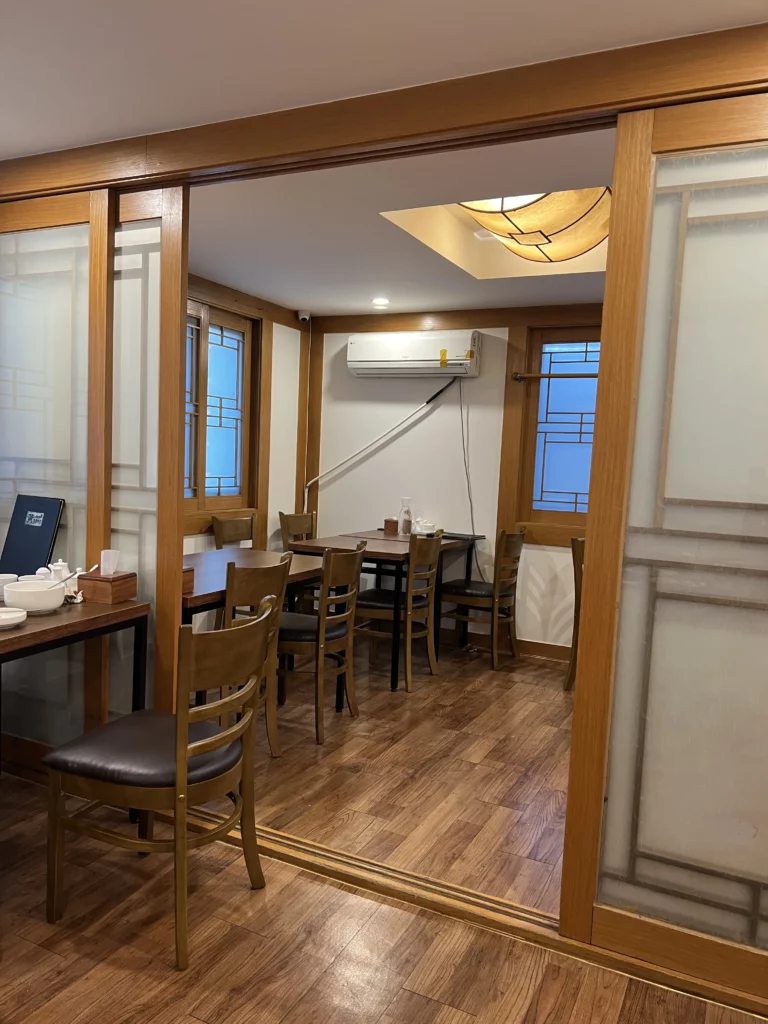
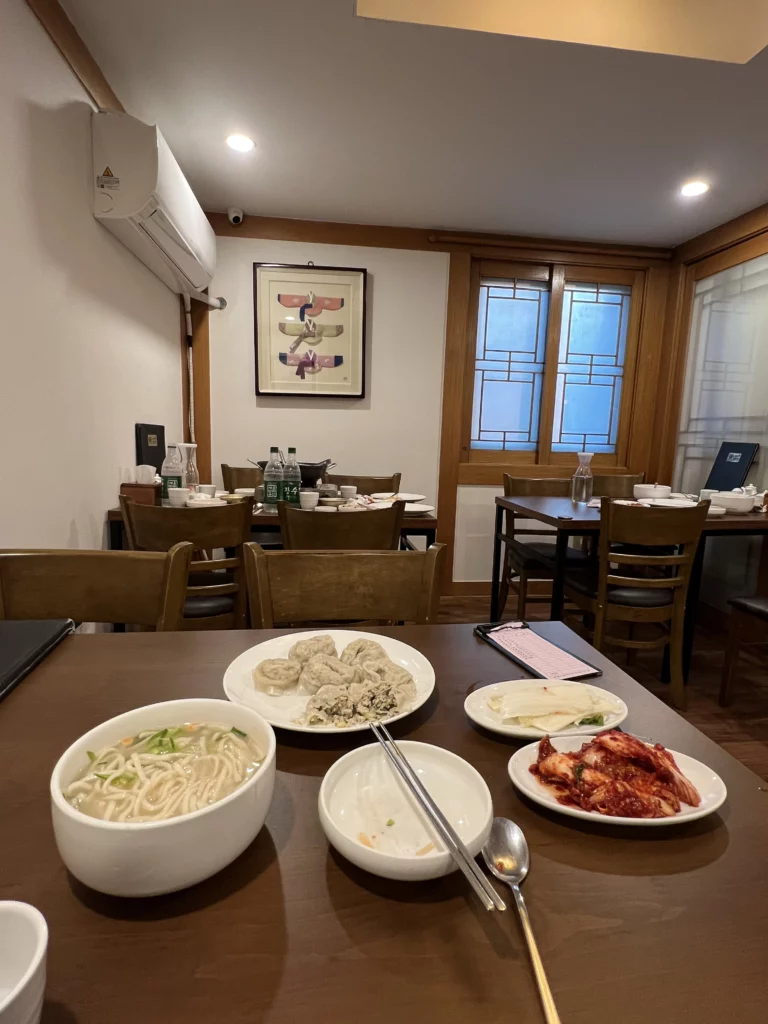
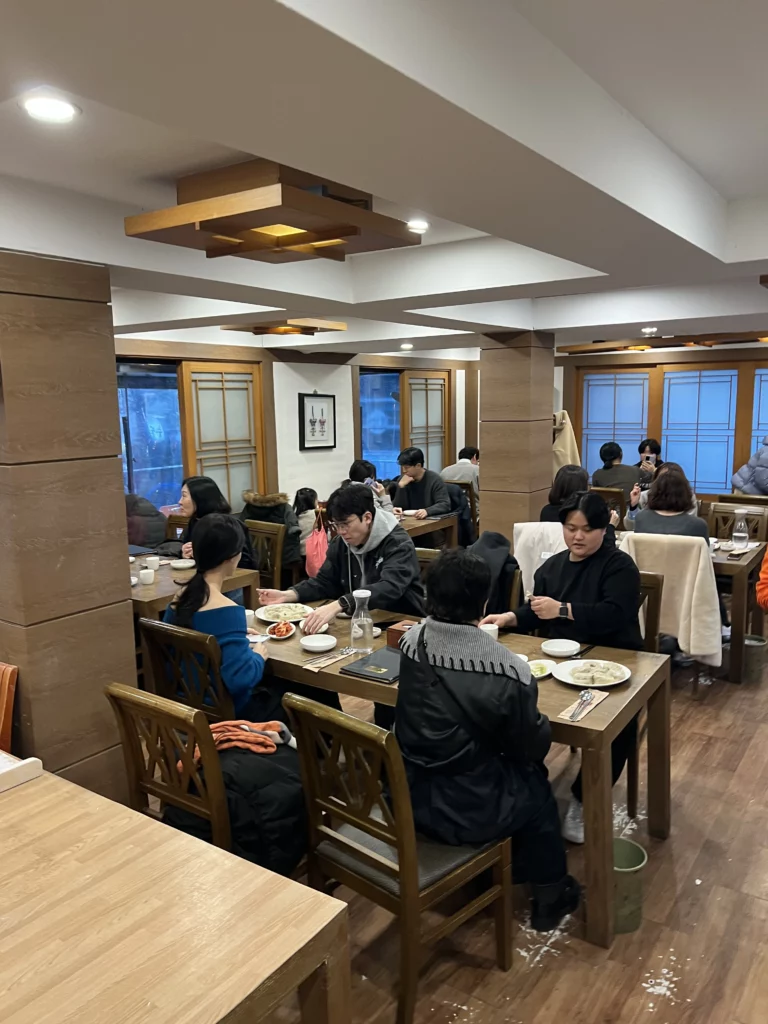
Upon entering, you’ll discover a traditional yet comfortable interior that balances authenticity with modern convenience. The restaurant spans two levels, with the first floor featuring both table seating and traditional ondol-style floor seating where diners sit on cushions at low tables—a genuinely authentic Korean experience. The second floor provides additional table seating for those who prefer Western-style dining positions.
The atmosphere tends toward lively and bustling rather than quiet and contemplative, especially during meal rushes. Conversation fills the air as local office workers, tourists, families, and food enthusiasts all converge to enjoy their kalguksu. This energetic environment reflects authentic Korean dining culture, where meals are social events meant for conversation and connection rather than hushed formality.
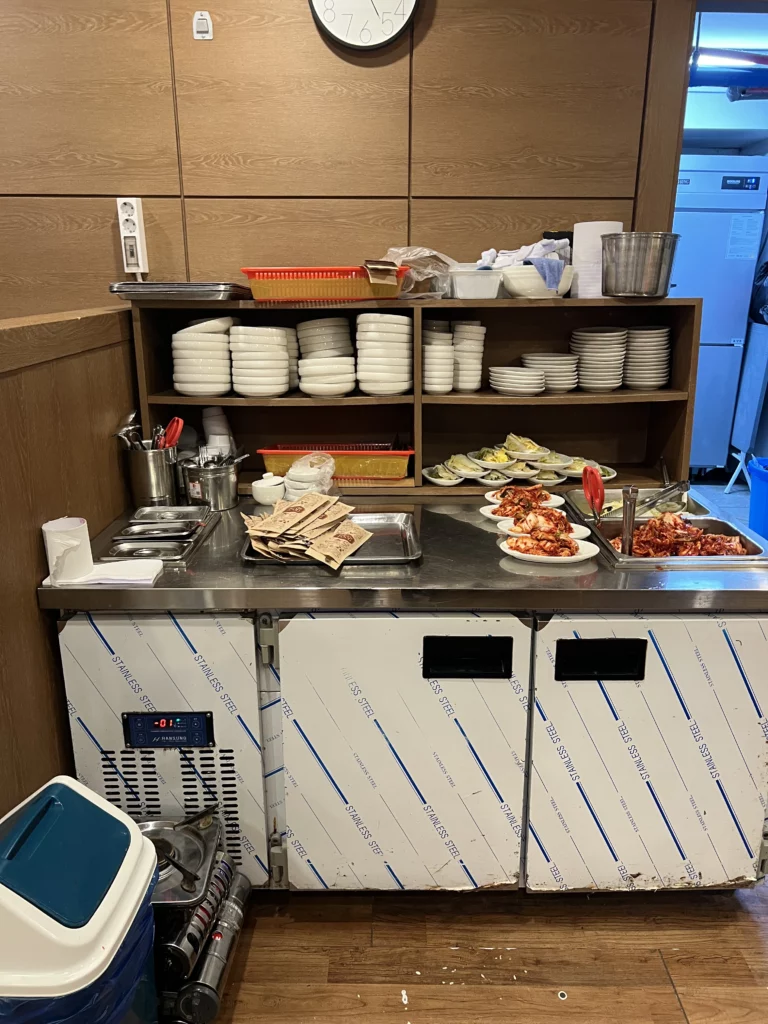
The open kitchen concept means you can watch the cooking process—noodles being cut, dumplings being shaped, and enormous pots of broth simmering constantly. This transparency builds trust and allows diners to appreciate the craftsmanship behind each bowl.
What to Bring and Practical Considerations
- Cash and cards both accepted
- No reservations accepted—first-come, first-served basis
- Limited English on menu, but picture menus available
- Parking extremely limited in Bukchon area; public transportation strongly recommended
- The restaurant name appears in Korean (황생가칼국수) on the signboard; having this written down helps when asking for directions
How to Order Like a Local
Navigating the Ordering Process
Upon seating, staff will quickly provide you with a menu and water. At Hwangsaengga, the ordering process follows typical Korean casual dining customs—you’ll typically order for your entire party at once, with each person required to order at least one main dish. This minimum order policy is standard in Korean restaurants and ensures fair use of limited seating during busy periods.
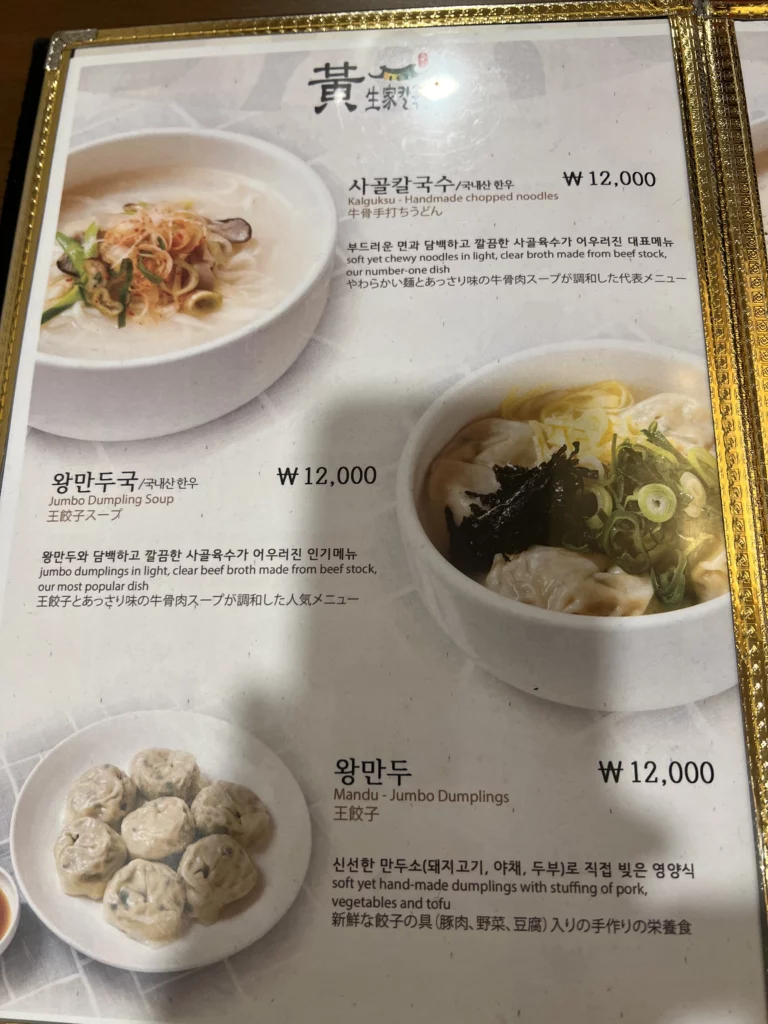
For first-time visitors, the safest bet is the signature Sagol Kalguksu (사골칼국수). Most locals also add a portion of mandu (만두) to share, creating a complete meal with both noodles and dumplings. If visiting with 2-3 people, consider ordering one kalguksu and one mandu-guk (dumpling soup) to experience both dishes fully.
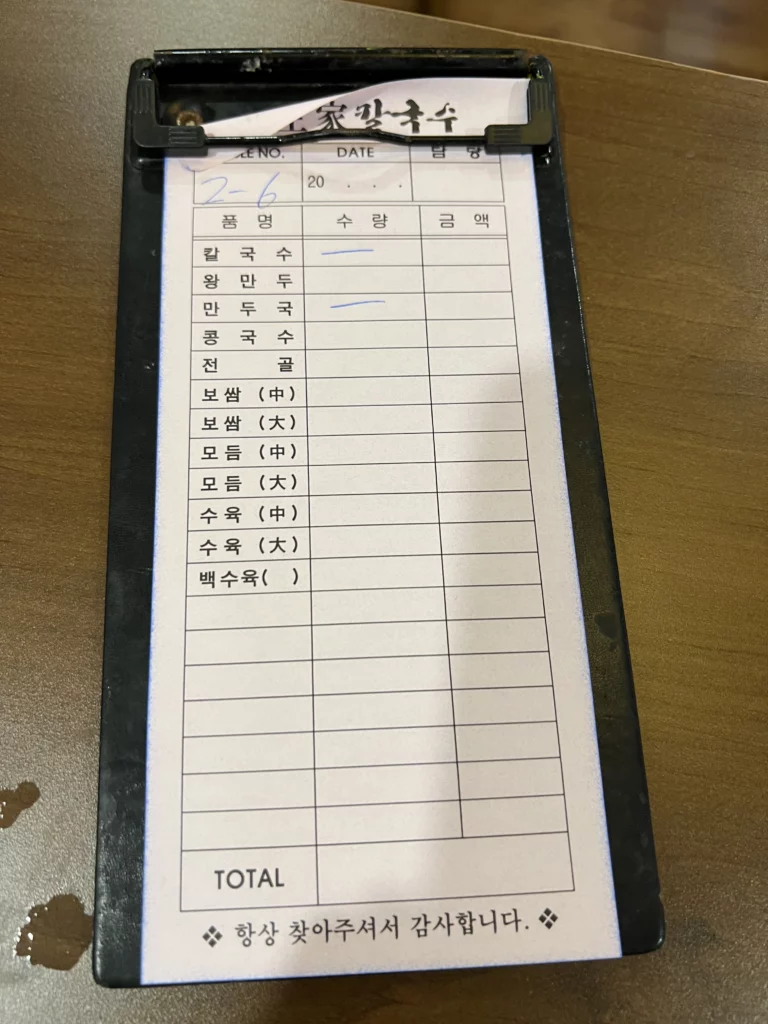
The menu includes prices in Korean won. A typical bowl of kalguksu costs approximately ₩12,000 (around $9-10 USD), while mandu runs about ₩12,000-15,000 depending on preparation style and portion size. These prices represent exceptional value considering the quality, portion sizes, and the restaurant’s Michelin recognition.
Perfect Pairings and Side Dishes
The banchan served at Hwangsaengga have been carefully selected to complement the main kalguksu rather than compete with it. Understanding these pairings enhances your dining experience:
Kimchi (김치)
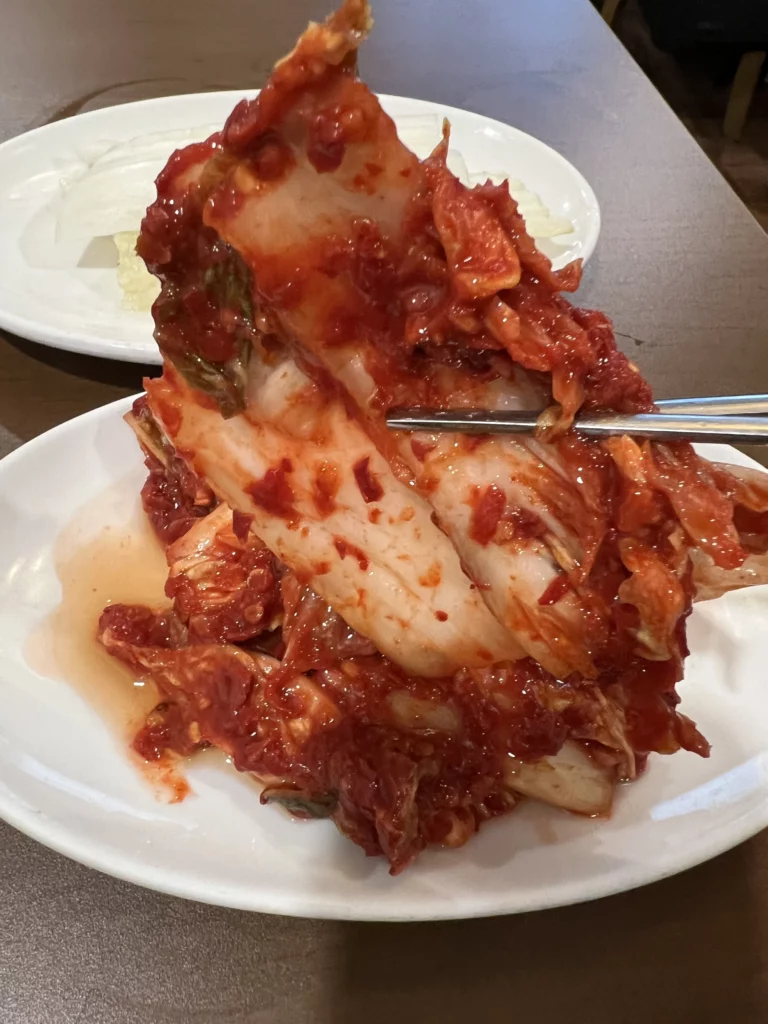
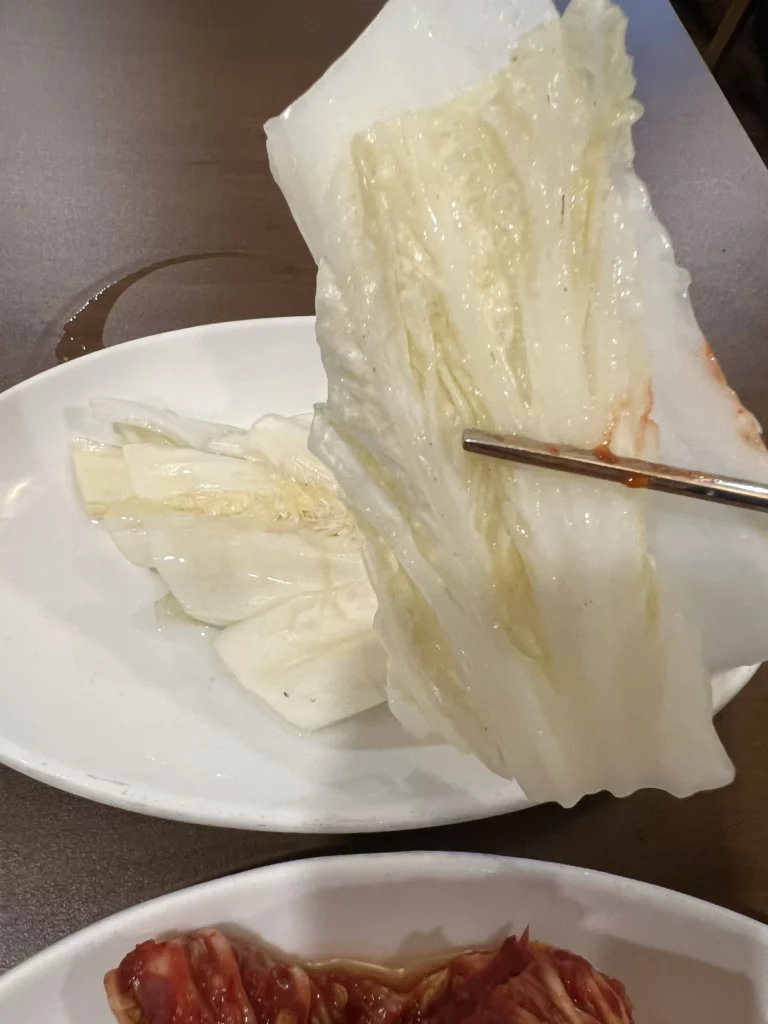
The aged, garlicky kimchi at Hwangsaengga performs crucial flavor balancing. Its tangy fermentation and crisp texture provide palate-cleansing contrast to the rich, smooth noodles and broth. Many diners eat a piece of kimchi between spoonfuls of kalguksu, allowing the acidic, spicy kimchi to refresh the palate before the next mouthful. Some also add kimchi pieces directly into their broth, creating a spicier, more complex flavor profile. This kimchi isn’t the mild, tourist-friendly version—it’s authentically aged with pronounced garlic notes that Korean locals appreciate.
Price, Value, and What Makes It Worth the Wait
At approximately ₩12,000 ($9-10 USD) per bowl, Hwangsaengga Kalguksu delivers exceptional value that justifies both the Michelin recognition and the consistent queues. Consider what this price includes: handmade noodles cut fresh daily, premium Hanwoo beef raised in Korea, hours of careful bone broth preparation, and generous portions that leave most diners comfortably full. Comparable quality in Western cities would easily command $20-25 per serving, making the Seoul prices remarkably accessible.
The portion sizes alone impress—each bowl contains enough noodles and broth for a substantial meal, with the beef providing protein without the premium charges typical of beef-centric dishes. The complimentary banchan, which many restaurants charge for separately, adds further value. Combined with the mandu option at similar pricing, a complete meal for two people—including both kalguksu and dumplings to share—runs approximately ₩24,000-30,000 ($18-23 USD), making it an affordable luxury.
Beyond monetary considerations, the wait time investment pays dividends in authentic cultural experience. Queuing alongside Korean office workers, families, and food enthusiasts provides glimpses into real Seoul dining culture beyond tourist-targeted establishments. The efficient table turnover means even 30-minute waits pass relatively quickly, and the anticipation genuinely enhances appreciation when that steaming bowl finally arrives.
For travelers to Seoul seeking authentic Korean food beyond tourist-friendly fusion spots or expensive celebrity restaurants, Hwangsaengga offers exactly what you’re looking for: genuine local flavor, master craftsmanship recognized by international standards, and an atmosphere where the food speaks for itself without pretension. Whether you’re a Korean cuisine veteran or a first-time explorer, the kalguksu and mandu at Hwangsaengga will likely redefine your understanding of what Korean comfort food can be.
The combination of historical location in Bukchon, Michelin validation, reasonable pricing, and unwavering quality creates a dining experience that represents the best of Seoul’s food scene. Plan your visit during off-peak hours if possible, come with an appetite for nourishing comfort, and prepare to understand why locals have cherished this noodle house for over two decades. Experience Hwangsaengga Kalguksu for yourself—your taste buds will thank you.
Location
84 Sogyeok-dong, ongno-gu, Seoul, Republic of Korea, KR
Reviews
4.0

1 reviews
5
0%
4
100%
3
0%
2
0%
1
0%
Loading reviews...
Related Recipes

Vegetable&Fruit
Myeong-i Namul Jangajji
Few side dishes earn a permanent place on the Korean BBQ table the way Myeong-i Namul Jangajji — Korean pickled...

Meat & Poultry
Ttukbaegi Bulgogi (Korean Sizzling Beef Stew in a Hot Stone Pot)
There’s a particular kind of comfort in lifting the lid off a bubbling ttukbaegi bulgogi . Steam curls upward, the...

Noodles
Spicy Korean Buckwheat Noodles
There’s a particular kind of relief that comes with the first bite of spicy Korean buckwheat noodles on a sweltering...
Related Ingredients

Ingredient
Udoonsal : Korea’s Leanest Beef Cut for Yukhoe
If there is one Korean beef cut that professional butchers and seasoned home cooks quietly revere above all others, it...

Ingredient
Myeong-i
When the last of winter’s snow finally retreats from the volcanic slopes of Ulleungdo Island, something quietly extraordinary happens. Broad,...

Ingredient
Korean raw beef dish (Yukhoe)
There are dishes that define a cuisine’s confidence — its willingness to let a single, exceptional ingredient speak for itself....

Beef
Somunnan Seongsu Gamjatang: Seongsu's 24-Hour Pork Stew
Seongdong-gu, Seoul 45, Yeonmujang-gil,
5

Beef
Saejae Halmaejip: Mungyeong's Yakdol Pork Since 1973
Mungyeong-si, Gyeongsangbuk-do 922, Saejae-ro, Mungyeong-eup
4

Beef
Ilsang Jeongwon: Shabu Shabu at Seoul Express Bus Terminal
Seoul FP103, 205, Sapyeong-daero, Seocho-gu, Seoul
5

Beef
Myeongdong Kyoja: Seoul's Michelin Kalguksu Since 1966
Jung-gu, Seoul 29, Myeongdong 10-gil
5