


Craving authentic Korean-Chinese cuisine? Discover Junghwa Baekban, a hidden gem in Seoul’s Seocho district where locals line up for the city’s most authentic jjamppong—Korea’s beloved spicy seafood noodle soup. Learn what makes this fiery dish uniquely Korean, how to eat it like a local, and why pairing it with traditional jajangmyeon black bean noodles creates the ultimate comfort food experience. From understanding the perfect spice level to insider tips on beating the lunch rush, this guide reveals everything you need to know before your visit. Plus, explore the fascinating history of how Chinese immigrants transformed these dishes into Korean cultural icons that transcend generations. Whether you’re a spice lover or a Korean food enthusiast, Junghwa Baekban’s commitment to authentic preparation and quality ingredients makes it a must-visit destination in Seoul’s competitive dining scene.
Junghwa Baekban: Seoul's Hidden Gem for Authentic Jjamppong and Korean-Chinese Cuisine
Seocho-gu, Seoul, Republic of Korea 1660-3 Seocho-dong
Editor: James Lee


Overview
Introduction
Operating hours
Menu
Editor's Detail
When the craving for authentic Korean-Chinese cuisine strikes, discerning food lovers in Seoul know exactly where to turn. Nestled in the bustling Seocho neighborhood near Gangnam, Junghwa Baekban has quietly built a reputation as one of the area’s most beloved destinations for jjamppong—Korea’s iconic spicy seafood noodle soup that sets taste buds ablaze with its signature red-hot broth and robust flavors.

Unlike the countless Chinese restaurants dotting Seoul’s streets, Junghwa Baekban stands out for its commitment to authenticity. The moment you step inside, you’ll hear staff conversing in fluent Chinese, a reassuring sign that the kitchen takes its culinary roots seriously. This isn’t fusion for fusion’s sake—it’s Korean-Chinese cuisine (known as Junghwa Yori) executed with the skill and passion that only comes from understanding both traditions deeply.
What Makes Junghwa Baekban’s Jjamppong Uniquely Korean?

Jjamppong represents one of Korea’s most fascinating culinary success stories—a Chinese dish that became undeniably Korean. The story begins in the late 19th century when Chinese immigrants from Shandong Province settled in Incheon’s Chinatown, bringing with them a dish called chaomamian (stir-fried noodles). Korean chefs transformed this relatively mild soup into the fiery, seafood-laden powerhouse we know today by adding generous amounts of gochugaru (Korean red chili flakes) and loading it with the fresh seafood abundant in Korea’s coastal waters.

What makes Junghwa Baekban’s version particularly special is the bulmat—the elusive "fire taste" that comes from wok-frying ingredients at extremely high heat before adding the broth. This technique, mastered by the restaurant’s experienced chefs, creates a subtle smokiness that elevates the dish from good to exceptional. The thick, chewy wheat noodles soak up the intensely flavored broth, while generous portions of seafood—including shrimp, squid, and mussels—provide bursts of briny sweetness that balance the heat.
The restaurant’s commitment to traditional preparation methods sets it apart in an era where many establishments cut corners. Each bowl arrives at your table piping hot, with visible steam rising from the vibrant red broth—a visual promise of the warming comfort that awaits.
What Are the Key Ingredients That Create This Flavor?
Understanding jjamppong’s flavor profile requires knowing its three essential components:
Gochugaru (Korean Red Chili Flakes): Unlike standard chili powder, gochugaru provides a complex heat that’s smoky, slightly sweet, and vibrant without being overwhelming. This ingredient gives jjamppong its distinctive red color and warming spice. Rich in vitamins A and C, gochugaru also contains capsaicin, known for its metabolism-boosting properties. You’ll find gochugaru at any Korean grocery store, though the quality at Junghwa Baekban comes through in every spoonful—bright, aromatic, and perfectly balanced.
Fresh Seafood Medley: The seafood component isn’t just for show—it’s what transforms jjamppong from a noodle soup into a complete meal. Junghwa Baekban uses fresh shrimp (still with shells for maximum flavor), tender squid rings, and plump mussels that open beautifully in the hot broth. The combination creates a natural umami depth that no amount of seasoning can replicate. Each type of seafood contributes its own texture and flavor—the snap of shrimp, the tender chewiness of squid, the delicate sweetness of mussel meat.
Kelp and Anchovy Stock: While you won’t see it listed on the menu, the foundation of great jjamppong lies in its broth. Junghwa Baekban builds their base using dried kelp (dasima) and anchovies, creating a savory, mineral-rich stock that provides depth without heaviness. This traditional approach, rather than relying solely on chicken stock, gives the soup its characteristically clean finish despite the bold spicing.
How Would You Describe the Taste and Spice Level?
On a heat scale of 1 to 10, Junghwa Baekban’s jjamppong registers around a 6—decidedly spicy but not punishingly so. The heat builds gradually rather than hitting all at once, allowing you to appreciate the dish’s complexity. First comes the initial warmth from gochugaru, followed by the rich umami of the seafood-infused broth, and finally a lingering tingle that clears the sinuses without overwhelming the palate.
The flavor profile is remarkably balanced: the natural sweetness from onions and cabbage tempers the spice, while the seafood provides bursts of briny freshness. There’s also a subtle smokiness from the high-heat wok cooking and a hint of ginger that adds aromatic complexity. The texture contrast is equally important—slippery, chewy noodles against tender vegetables and firm seafood create an engaging eating experience that keeps you coming back for another bite.
The soup arrives steaming hot (around 85-90°C), and locals know to give it a minute to cool slightly before diving in. The temperature is part of the experience, contributing to jjamppong’s reputation as the ultimate comfort food on cold days or when you’re feeling under the weather.
What Should First-Time Eaters Know?
If this is your first encounter with jjamppong, here’s what to expect and how to eat it like a local:
The Proper Way to Enjoy: Don’t immediately mix everything together. Start with a spoonful of the broth to assess the heat level and appreciate the complex stock. Then use your chopsticks to gather some noodles, making sure to get a piece of seafood and vegetable in the same bite. Koreans often slurp their noodles—it’s not just acceptable, it’s encouraged, as it helps cool the noodles and aerates the flavors.
Pace Yourself: Jjamppong is a marathon, not a sprint. The bowl is generous, typically 600-700ml of soup with a substantial portion of noodles. Take breaks, sip some water (or the complementary barley tea), and don’t feel pressured to finish if it’s too spicy. At Junghwa Baekban, you can request a slightly milder version if you’re concerned about the heat.
The Noodle Situation: The thick, chewy wheat noodles will continue to absorb broth as they sit, so eat at a steady pace. These aren’t delicate ramen noodles—they’re meant to stand up to the assertive broth and provide substantial, satisfying chew.
Cultural Considerations: In Korean dining culture, it’s perfectly acceptable to share dishes, but jjamppong is typically ordered as an individual serving. However, many diners at Junghwa Baekban order one jjamppong and one jajangmyeon (black bean noodles) to share, giving everyone a taste of both iconic dishes. This combination is so popular it even has a name: jjamjjamyeon.
Why Junghwa Baekban Stands Out in Seoul’s Competitive Dining Scene


Located at 18 Seocho Jungang-ro 20-gil in Seoul’s Seocho district (서초구 서초동 1660-3), Junghwa Baekban occupies a prime spot near Gangnam’s business district. Despite the area’s high concentration of restaurants, this establishment has earned a 4.4 rating on Dining Code and developed a loyal following among local office workers and food enthusiasts.

The restaurant’s reputation isn’t built on flashy decor or trendy marketing—the interior is clean and functional rather than Instagram-worthy. What draws the crowds is consistent quality. During lunch hours, expect a wait, particularly between 12:00 and 13:00 when nearby office workers pour in for their midday meal. The turnover is relatively quick, with most diners finishing within 20-30 minutes, so even a queue of 5-6 groups typically moves within 15-20 minutes.

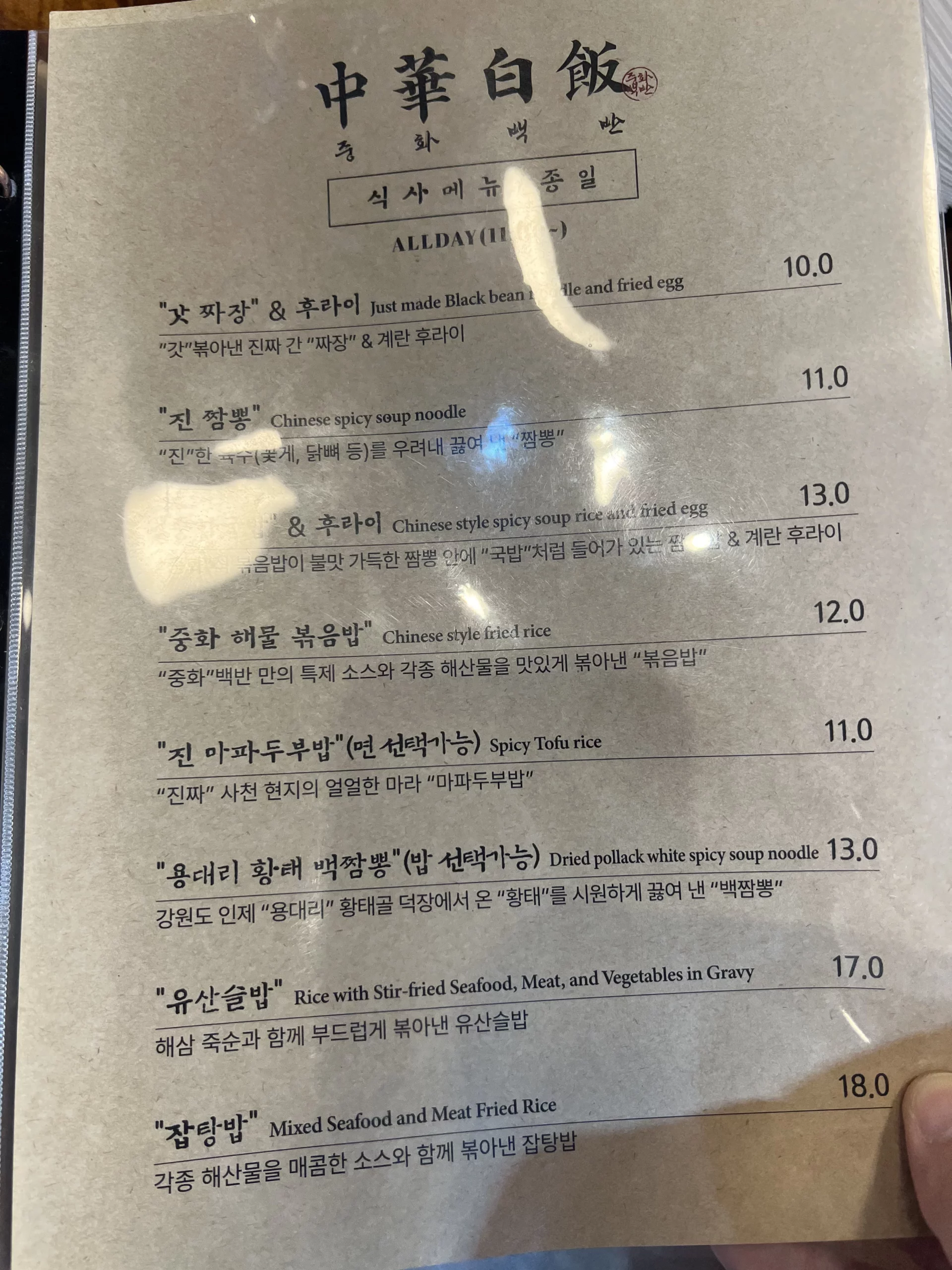
Signature Dishes Beyond Jjamppong: While the jjamppong is the star, Junghwa Baekban’s menu offers several noteworthy options:

- Hwangtae Baek Jjamppong (황태백짬뽕): A unique variation featuring dried pollack (hwangtae) in a white, milky broth rather than the traditional red soup. This milder version is excellent for those who want the seafood experience without intense heat.
- Mapo Tofu Rice Bowl (마파두부밥): Silky soft tofu in a numbing-spicy sauce with pronounced Sichuan peppercorn flavor. Notably, you can request this dish with noodles instead of rice, creating a fusion that satisfies both noodle and spice cravings.
- Chapssal Tangsuyuk (찹쌀탕수육): The restaurant’s take on sweet and sour pork uses glutinous rice coating for extra crispiness, served with thick-cut pork that remains juicy despite the crackling exterior. A sprinkle of fresh scallions cuts through the richness, making it surprisingly light for fried food.
The Perfect Pairing: Jajangmyeon at Junghwa Baekban

No discussion of Junghwa Baekban would be complete without mentioning jajangmyeon, jjamppong’s inseparable companion in Korean-Chinese cuisine. These black bean sauce noodles represent the yin to jjamppong’s yang—where jjamppong is fiery and bold, jajangmyeon is mellow and comforting.
Jajangmyeon’s story mirrors jjamppong’s: it originated from Chinese zhajiangmian but evolved to suit Korean tastes. The key ingredient is chunjang, a Korean-style black bean paste made from fermented wheat flour and soybeans, caramelized with pork and vegetables into a glossy, slightly sweet sauce. Despite its dark appearance, the dish is surprisingly mild—not spicy at all—making it perfect for those who can’t handle heat or for balancing out jjamppong’s intensity.

At Junghwa Baekban, the jajangmyeon features the same chewy noodles as the jjamppong, coated in a thick, savory-sweet sauce with chunks of tender pork and diced vegetables. The sauce strikes an ideal balance—rich enough to coat every noodle strand but not so heavy that it becomes cloying. Many first-time visitors find themselves surprised by how such a simple-looking dish can be so deeply satisfying.
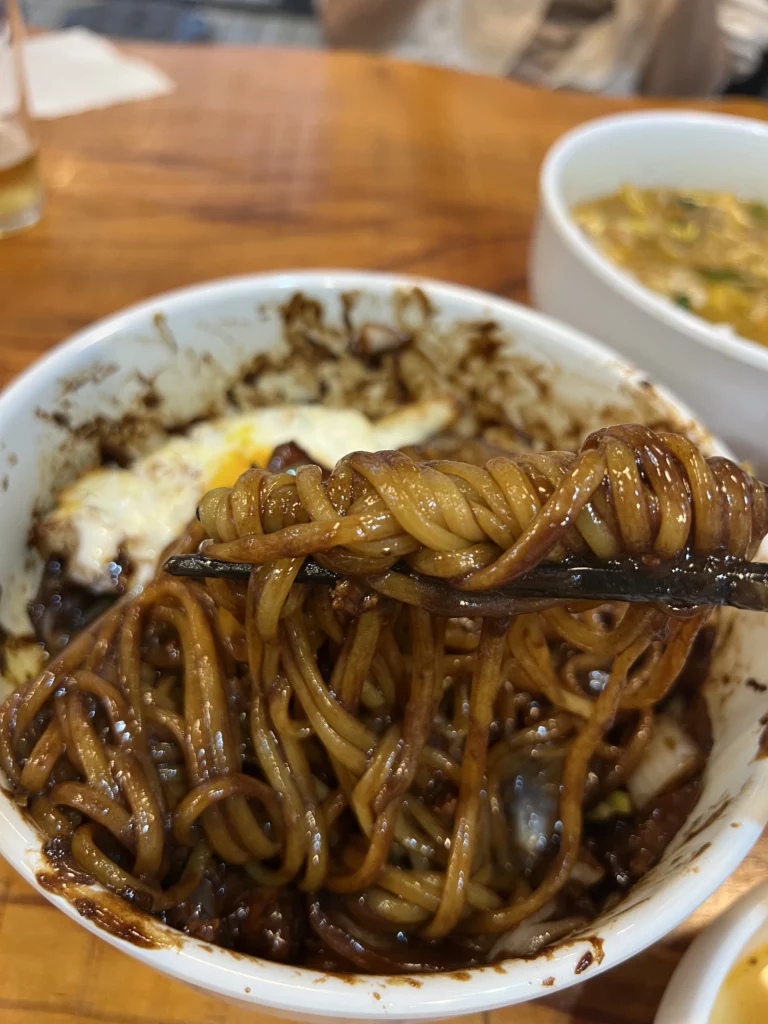
The Jjamjjamyeon Tradition: Korean diners face an eternal dilemma when visiting Chinese restaurants: order jjamppong or jajangmyeon? The solution many choose at Junghwa Baekban is ordering one of each and sharing, a practice so common it has its own name. This approach lets you experience the full spectrum of Korean-Chinese cuisine—the fiery punch of jjamppong’s spicy seafood broth alongside the comforting embrace of jajangmyeon’s savory sauce.
Essential Side Dishes and Dining Tips
Like all Korean meals, jjamppong arrives with complementary banchan (side dishes). At Junghwa Baekban, expect:

- Danmuji (Yellow Pickled Radish): These sweet, crunchy pickles are essential for cutting through the richness of the soup and cleansing your palate between bites. The slight acidity also helps temper the heat if the spice becomes overwhelming.
- Pa Kimchi (Scallion Kimchi): Junghwa Baekban’s distinctive touch. While most Chinese restaurants in Korea serve standard napa cabbage kimchi, this establishment offers pa kimchi—long scallions in a spicy, tangy marinade. It’s refreshing and pairs beautifully with both jjamppong and jajangmyeon.
- Standard Kimchi: For traditionalists, regular cabbage kimchi is also available. The fermented flavors complement the Chinese-Korean dishes surprisingly well, bridging the culinary traditions.
Practical Dining Information:


- Hours: Monday-Saturday, 11:00-22:00 with a break time from 15:00-17:00. Closed Sundays.
- Last Order: 20:40
- Price Range: Most dishes fall between 11,000-14,000 won (approximately $8-11 USD), making it an excellent value for the quality and portion size.
- Seating: The restaurant offers both table and counter seating. During busy periods, you may be seated at larger tables with other parties—this communal-style seating is common in Korean restaurants and considered normal rather than intrusive.
- Parking: Limited street parking available in front; public transportation is recommended. Gangnam Station (Line 2) and Seocho Station (Line 2) are both within reasonable walking distance.
Understanding Korean-Chinese Cuisine’s Cultural Significance
Junghwa Baekban represents more than just another restaurant—it’s part of a culinary tradition that has become inseparable from Korean culture. Korean-Chinese cuisine (Junghwa Yori) emerged in the late 19th century when Chinese workers, primarily from Shandong Province, migrated to the port city of Incheon. These immigrants adapted their hometown recipes using local ingredients and catering to Korean preferences, ultimately creating a cuisine that belonged fully to neither culture—and to both.

Today, ordering Chinese-Korean food is as Korean as eating kimchi. It’s what families order on moving day (a tradition stemming from the practical need for easy, filling food during hectic relocation). It’s what students treat themselves to after exams. And it’s the food that single people eat together on "Black Day" (April 14), commiserating over black bean noodles when they don’t have a romantic partner on White Day.
This cultural integration means that restaurants like Junghwa Baekban aren’t serving "ethnic" or "exotic" food to Koreans—they’re serving comfort food that holds deep nostalgic value. The fact that older Koreans remember jjamppong and jajangmyeon as special occasion foods from their childhood, while younger generations can order it casually for delivery, speaks to both Korea’s economic development and these dishes’ enduring appeal.
Making the Most of Your Visit
To fully appreciate Junghwa Baekban, consider these insider tips:
Timing Your Visit: Lunch (12:00-13:00) and dinner (18:00-19:30) rush hours mean waits of 10-20 minutes. Arriving at 11:30 or after 13:30 for lunch, or before 18:00 or after 20:00 for dinner, virtually guarantees immediate seating.
What to Order: First-timers should try the classic jjamppong (진짬뽕) to understand what all the fuss is about. If you’re dining with a companion, add either jajangmyeon or the tangsuyuk for sharing. The portions are generous, so two items usually satisfy two people.
Heat Management: If you’re sensitive to spice, start with the hwangtae baek jjamppong (white broth version) or request a less spicy version when ordering. The staff is accommodating and understands that not everyone has the same heat tolerance.
Beverage Choices: While beer pairs well with jjamppong (the carbonation helps cool the palate), many locals prefer simple barley tea (boricha), which is provided free. If you want something cold, ask for cola—the sugar helps counteract capsaicin’s burn more effectively than water.
The Art of Mixing: With jajangmyeon, thoroughly mix the black bean sauce with the noodles before eating—this is essential, not optional. For jjamppong, you can eat as-is or gently stir to distribute the ingredients, but avoid over-mixing, which can break up the delicate seafood.
Experience Seoul’s Best Jjamppong for Yourself
Junghwa Baekban proves that sometimes the best dining experiences aren’t found in trendy hotspots or Michelin-starred establishments, but in neighborhood restaurants that quietly perfect their craft over years of dedicated service. The restaurant’s authentic jjamppong—with its perfectly balanced heat, generous seafood, and that elusive fire taste—represents Korean-Chinese cuisine at its finest.
Whether you’re a Seoul local looking for your next regular spot or a visitor wanting to experience authentic Korean-Chinese food beyond the tourist circuit, Junghwa Baekban delivers the kind of honest, satisfying meal that keeps you thinking about your next visit before you’ve even finished your first bowl. Located conveniently in the Seocho district, it’s an easy addition to any Seoul itinerary that includes the nearby Gangnam area.
The next time Seoul’s weather turns cold, or you’re craving something that’s simultaneously comforting and exciting, make your way to Junghwa Baekban. Order a bowl of their signature jjamppong, add some jajangmyeon to share if you’re dining with friends, and prepare to understand why this unassuming restaurant has earned its devoted following. Just remember to arrive with an appetite—and perhaps a tolerance for heat.
Ready to experience authentic Korean-Chinese cuisine? Junghwa Baekban awaits at 18 Seocho Jungang-ro 20-gil in Seoul’s Seocho district. Share your jjamppong adventure with us in the comments below!
Location
Reviews
5.0
0 reviews
Related Recipes

Spicy Korean Buckwheat Noodles
There’s a particular kind of relief that comes with the first bite of spicy Korean buckwheat noodles on a sweltering...

Spicy Smoky Japchae (Korean Glass Noodles with Pork)
There are Korean dishes you make for convenience — and then there are dishes you make to impress. Japchae (잡채,...

Lobster Ramen
Lobster Ramen is a luxurious twist on Korea’s beloved instant noodle culture. The deep umami from fresh lobster combines beautifully...

Dam Restaurant at Seoul Arts Center: Where Hanjeongsik Meets Cultural Excellence
Seocho-gu, Seoul, Republic of Korea 700 Seocho-dong

Mijin's Korean Buckwheat Noodles: The Michelin-Starred Legacy in Seoul's Historic Pimatgol
Jongno-gu, Seoul, Republic of Korea 24 Jongno 1-ga

Woo Lae Oak: Seoul's 78-Year Legacy of Authentic Pyongyang Naengmyeon and Premium Bulgogi
Changgyeonggung-ro, Jung-gu, Seoul, Republic of Korea 62-29

Hwangsaengga Kalguksu: Seoul's Michelin-Recognized Master of Korean Knife-Cut Noodles
ongno-gu, Seoul, Republic of Korea 84 Sogyeok-dong