


Yeongyang Center is the Seoul restaurant credited with introducing Koreans to electric rotisserie whole chicken in 1960 — the dish that ultimately gave birth to the modern Korean chicken obsession. Located on a quiet side street just steps from Myeongdong Station, the main branch still slow-roasts whole chickens by the window the way it did over six decades ago, while also serving one of the city’s most loved bowls of samgyetang (ginseng chicken soup). This guide walks you through the restaurant’s history, signature menu, pricing, eating etiquette, and exactly how to plan your visit.
Yeongyang Center Myeongdong: Korea's Original Tongdak Since 1960
5
Yeongyang Center Myeongdong: Korea's Original Tongdak Since 1960
5
Jung-gu, Seoul, South Korea Yeongyang Center Main Branch 52 Myeongdong 2-gil
Editor: James Lee


Interior05
Food08

Menu01
Overview
+82 02-776-2015
Free WiFi Available
Indoor Seating Only
Electronic Payment accepted: American Express, Master Card, Visa
Introduction
Operating hours
Mon, Tue, Wed, Thu, Fri, Sat, SunAM 10:30 - PM 8:00
Menu
Editor's Detail
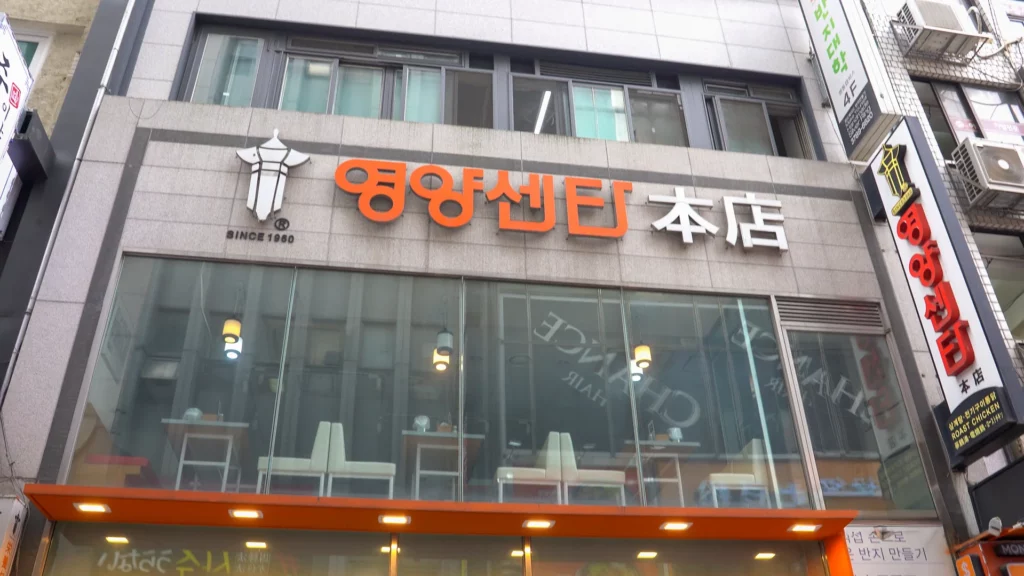
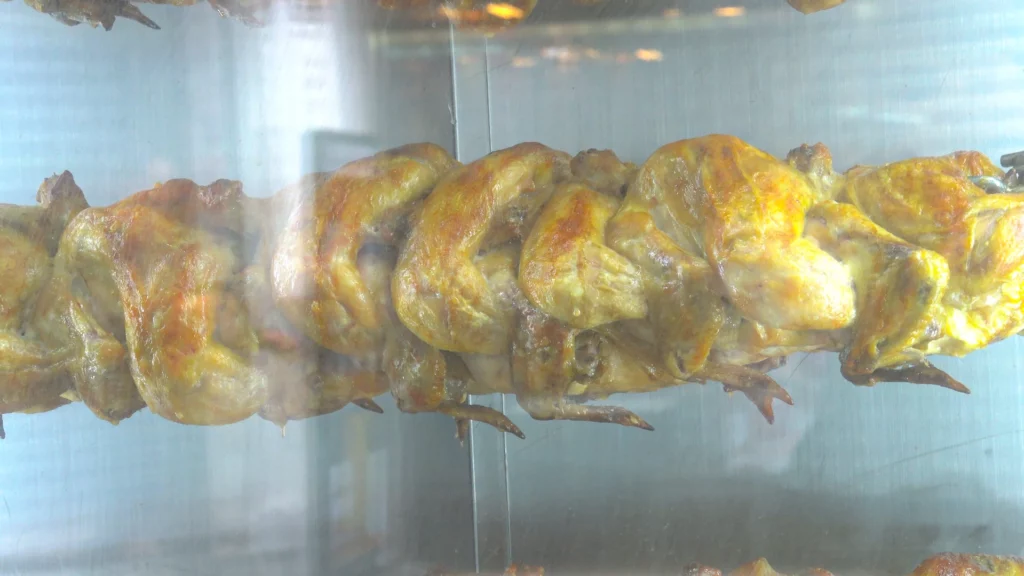
Walk down a narrow lane just off Myeongdong’s main shopping drag and you’ll catch the smell before you see the sign — golden-brown whole chickens rotating slowly behind a glass window, skin crackling under amber light, the air heavy with rendered fat and a faint sweetness of roasted poultry. This is Yeongyang Center Main Branch (영양센타 본점), the restaurant widely credited as the birthplace of Korean rotisserie chicken — known locally as jeongi-gui tongdak (전기구이 통닭). Since opening in 1960, this Myeongdong institution has served two simple specialties — whole roasted chicken and samgyetang (ginseng chicken soup) — and in doing so, quietly shaped the trajectory of Korea’s modern chicken culture.
For anyone visiting Seoul who wants to taste a slice of Korean culinary history rather than another franchise meal, Yeongyang Center offers something increasingly rare: a 66-year-old recipe served in the same neighborhood where it began.
Table of Contents
- The Story Behind Yeongyang Center
- What Makes the Tongdak Different
- Full Menu and Prices in 2026
- What Makes This Dish Uniquely Korean?
- What Are the Key Ingredients That Create This Flavor?
- How Would You Describe the Taste and Spice Level?
- What Should First-Time Eaters Know?
- How to Get to Myeongdong Yeongyang Center
- Tips for Visiting and What to Order
- Final Thoughts on Visiting Yeongyang Center
The Story Behind Yeongyang Center
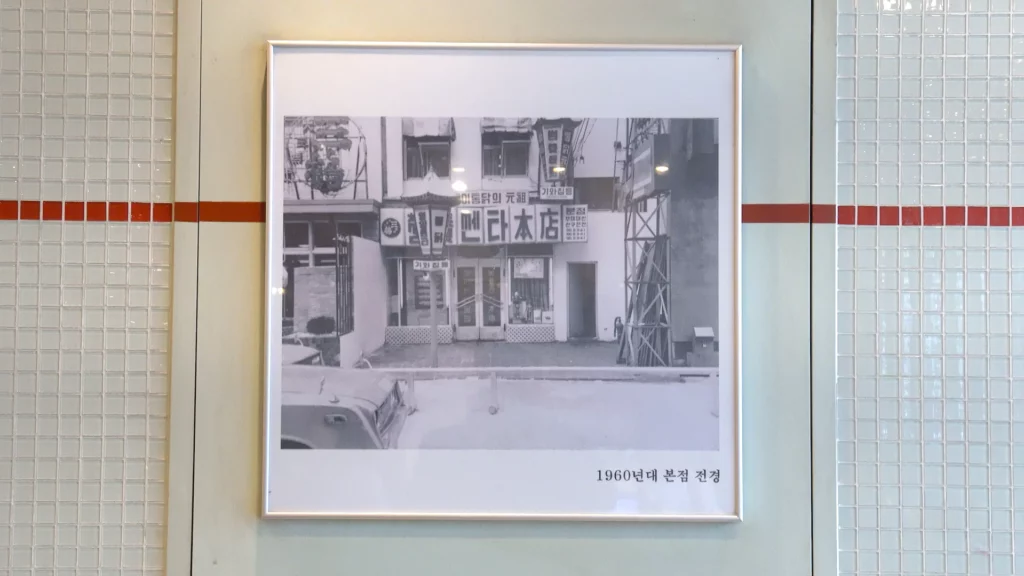
In 1960, when most Koreans were still eating chicken in the form of dak-baeksuk (a simple boiled chicken dish for family gatherings), a small restaurant opened near the Savoy Hotel in Myeongdong with a novelty no one in the country had seen before: an electric rotisserie slowly turning whole chickens behind the front window. That restaurant was Yeongyang Center, and within a few years its display became one of Myeongdong’s defining sights.
Roasted chicken at the time was treated as a luxury celebration food — something a middle-class family might splurge on for a birthday, a promotion, or a payday dinner. According to the Korea Tourism Organization’s official restaurant guide, the restaurant has specialized in roasted chicken and ginseng chicken soup since opening, and the jeongi gui tongdak remains "light and juicy with just the right amount of fat."
The historical importance runs deeper than nostalgia. As the Wikipedia entry on Korean fried chicken explains, the trend of eating chicken as a national obsession began in Korea precisely when "Myeongdong Yeongyang Center in Seoul began selling whole chicken roasted over an electric oven" in the 1960s. Everything that followed — huraideu (fried), yangnyeom (spicy glazed), chimaek (chicken-and-beer pairings), the global K-chicken boom — traces back to this rotisserie.
The original location moved about a decade ago to its current spot on Myeongdong 2-gil, and several authorized branches now exist around Korea. But the main branch (본점) remains the destination. As one longtime food writer who has eaten here since childhood put it, this is "Korean chicken in its classic but distinguished form" — and worth visiting precisely because it’s still here, still doing the same thing.
What Makes the Tongdak Different
Modern Korean fried chicken is defined by its shatter-thin crust and bold sauces. Tongdak at Yeongyang Center is something else entirely — and the difference is the point.
The whole chickens are slow-roasted on a vertical electric rotisserie for roughly an hour, which serves two purposes:
- Renders excess fat. The chicken drips for the entire cooking time, leaving the meat clean-tasting and noticeably less greasy than fried chicken.
- Crisps the skin without batter. There’s no flour, no double-fry, no glaze — just slow heat working on naturally good chicken.
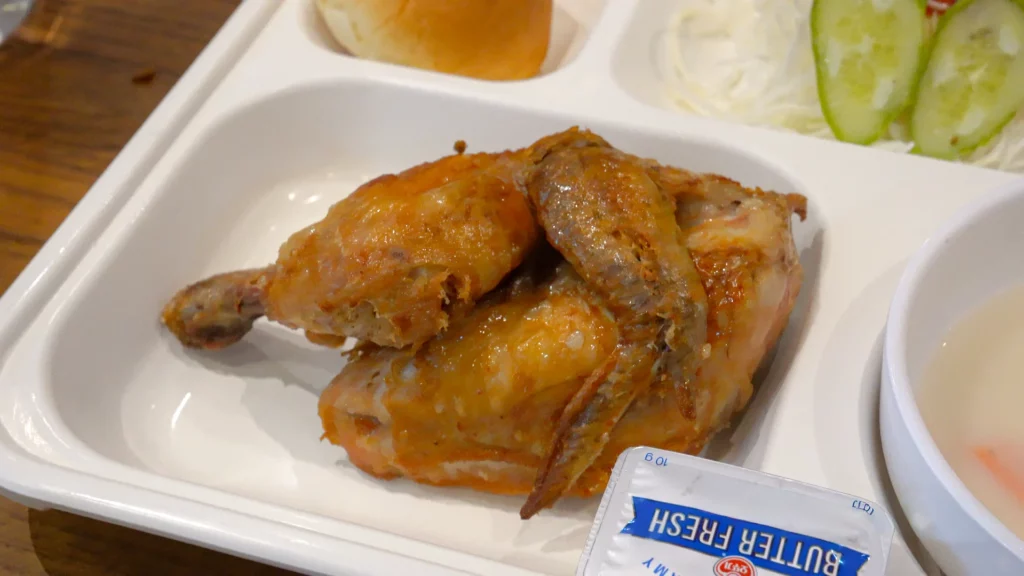
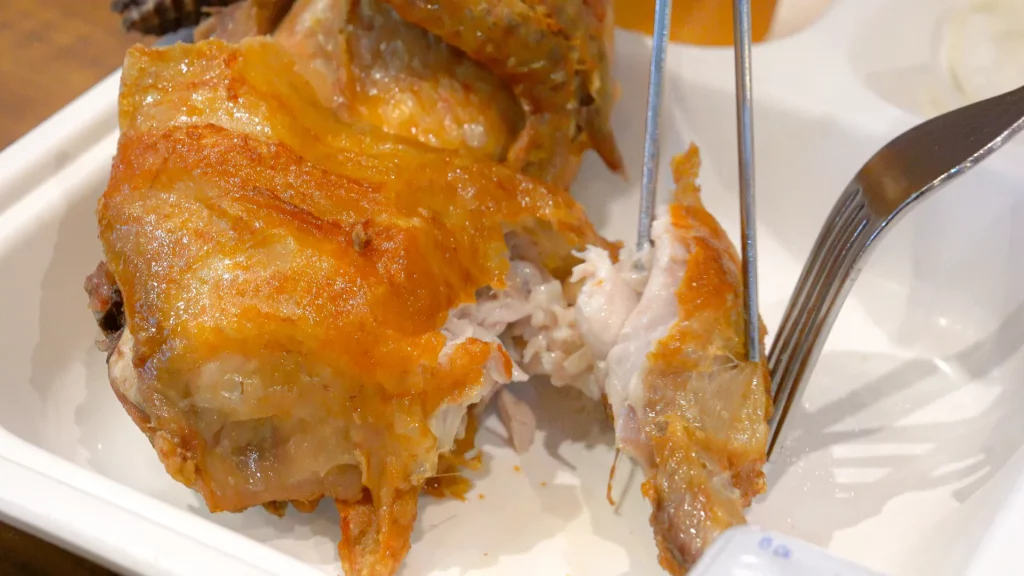
What arrives at the table is a whole bird with mahogany-glossed skin and meat that pulls cleanly off the bone. The flavor is savory, gently sweet from the natural sugars in the rendered fat, and entirely unmasked by sauce. Most diners eat it the traditional way: with their hands, dipped lightly in salt or alongside the tangy pickled radish that comes with every order.
For a comparison point on how Korean chicken evolved into modern fried styles, the legendary Gyeyeolsa fried chicken shop in Buam-dong — Seoul’s most respected double-fried chicken house — represents the next chapter of the story that started here.
Full Menu and Prices in 2026
Yeongyang Center keeps the menu deliberately tight. Roasted chicken or ginseng chicken soup — and a small handful of variations on each. Prices reflect Myeongdong’s central location and have crept up with inflation, but remain reasonable for the quality and history.
Rotisserie Chicken (Tongdak / 통닭)
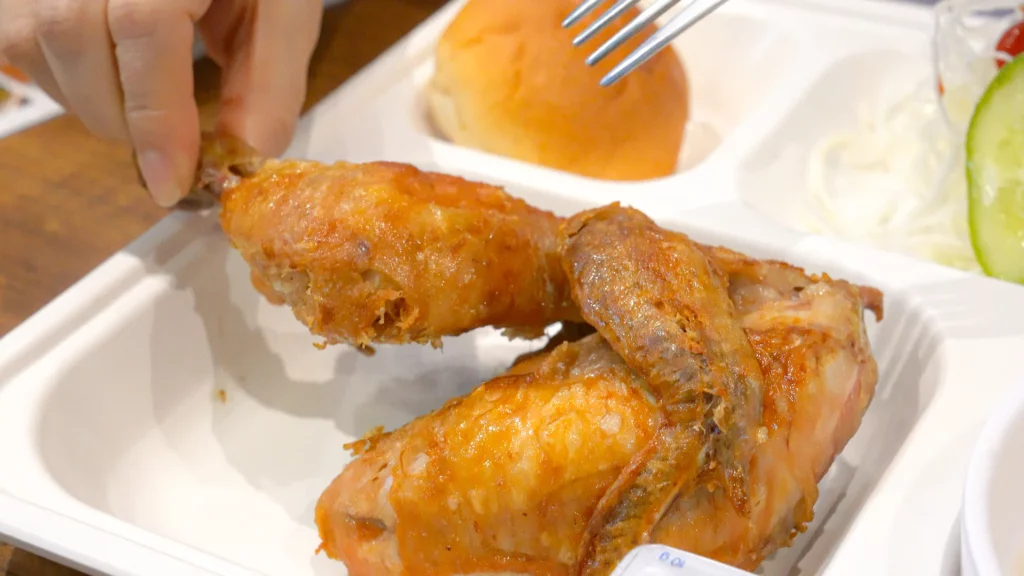
- Tongdak (large whole chicken) — ₩21,500
- Baby Chicken (smaller portion, ideal for one) — ₩12,500
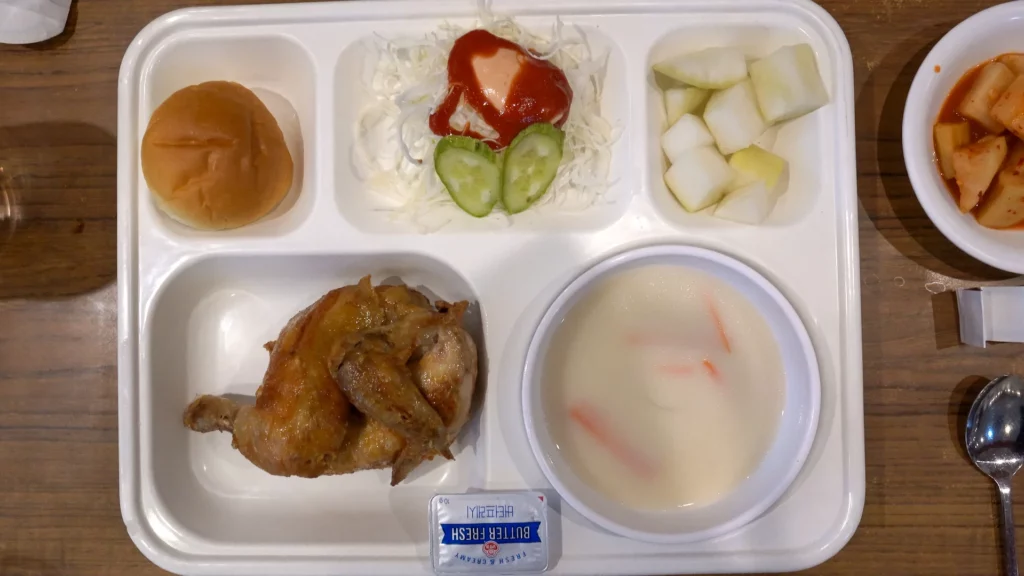
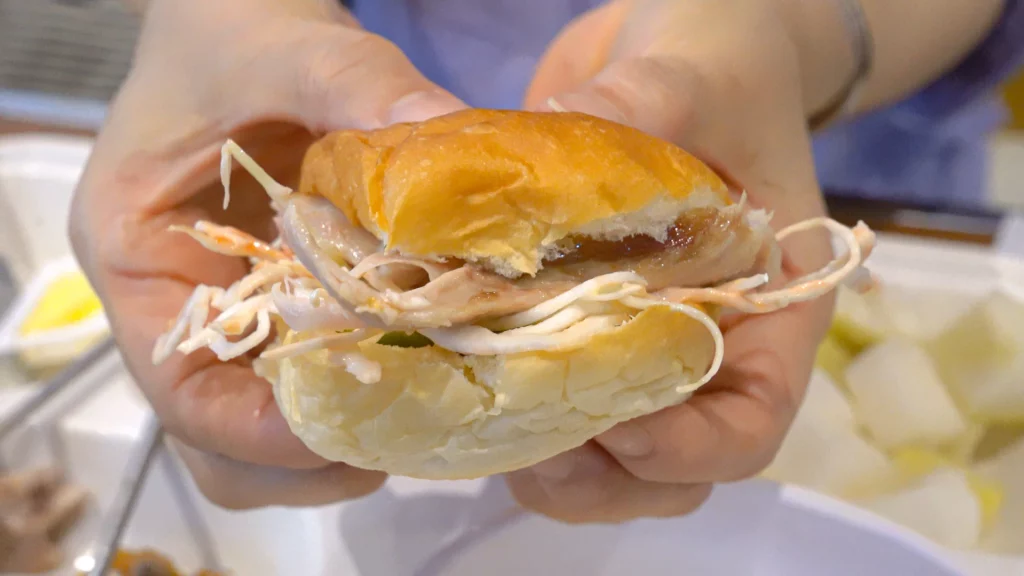
- Tongdak Set / Lunch Special (chicken + soup + bread + salad + pickled radish) — ₩15,000
Ginseng Chicken Soup (Samgyetang / 삼계탕)
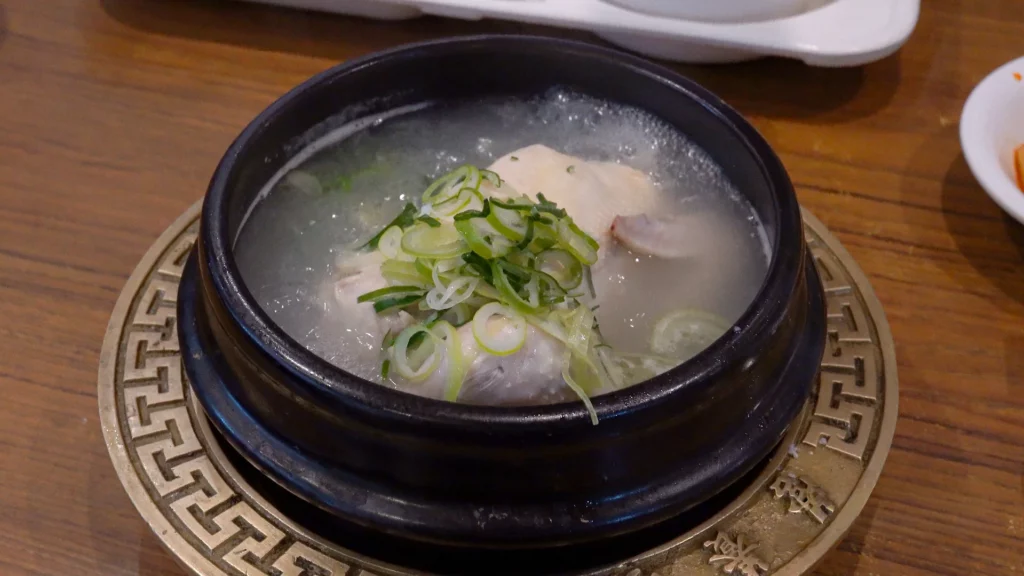
- Yeongyang Samgyetang (standard ginseng chicken soup)
- Deulkkae Samgyetang (perilla seed version) — ₩22,500
- Sansam Samgyetang (wild ginseng version, the premium pick) — ₩26,500
Hours: Daily, 10:30 AM – 10:30 PM Price range per person: ₩10,000 – ₩27,000 Payment: Cash and major credit cards accepted
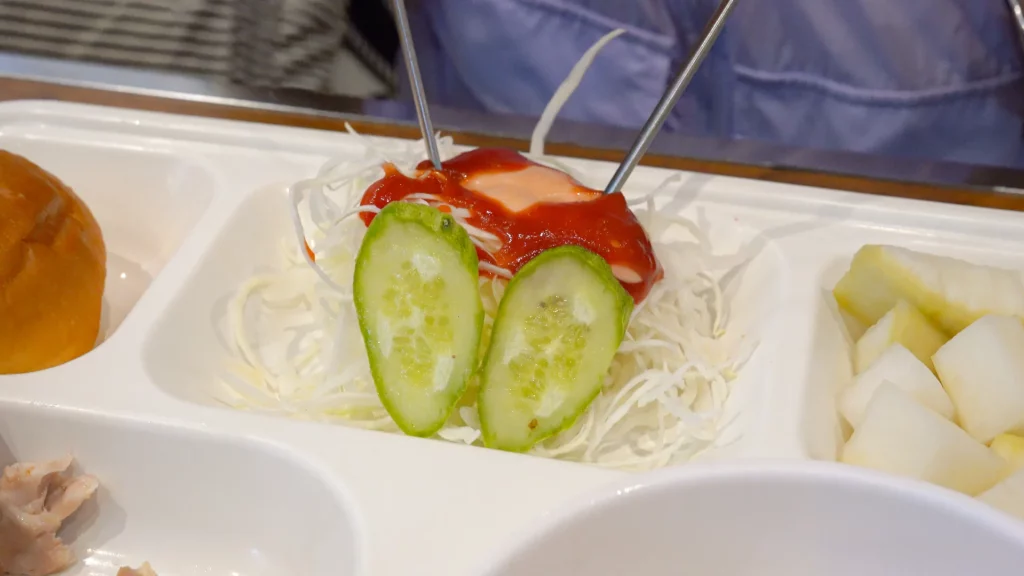
The lunch set is widely considered the smartest first visit — it lets a solo diner try the signature tongdak without committing to a whole bird, and it comes with a small bowl of chicken broth soup, a soft bread roll, a simple salad, and the pickled radish. It is only offered during lunch hours and runs out quickly on weekends.
What Makes This Dish Uniquely Korean?
Tongdak is uniquely Korean not because rotisserie chicken itself was invented here — it wasn’t — but because of how Korea adopted, transformed, and culturally elevated it. In the post-Korean War 1960s, as American influence reshaped urban food culture, Yeongyang Center took the Western rotisserie concept and matched it to Korean ingredients (small, young chickens), Korean accompaniments (pickled radish, salt for dipping, beer), and a Korean approach to dining (whole-table sharing, eating with hands, the dish as celebration food).
The result was an entirely new category that didn’t exist before in Korean cuisine — and one that became the foundational ancestor of every fried chicken franchise in the country today.
What Are the Key Ingredients That Create This Flavor?
Three ingredients carry almost all of the flavor at Yeongyang Center:
- Young whole chicken (영계, yeonggye) — Korean restaurants prize small, young birds for their tender texture and ability to cook evenly to the bone. The chicken’s natural sweetness comes through clearly when not masked by sauce, and the lighter fat content suits long roasting.
- Korean ginseng (인삼, insam) — The defining ingredient of samgyetang, this knobby root brings earthy bitterness and subtle sweetness to the broth, plus the medicinal benefits that have made Korean ginseng famous worldwide. Read more about the role of Korean ginseng in traditional cooking for context on why Koreans consider this such a prized ingredient.
- Sweet pickled radish (단무지/쌈무) — Served alongside the tongdak, these thin, crisp, slightly tangy radish slices cut the richness of the chicken and serve as the traditional palate cleanser between bites. They are inseparable from the dish in Korean dining culture.
For travelers cooking samgyetang at home, the authentic samgyetang recipe with full ingredient breakdown walks through how to source jujubes, glutinous rice, and ginseng outside Korea.
How Would You Describe the Taste and Spice Level?
Spice level: 0 out of 10. Neither dish at Yeongyang Center is spicy. This makes the restaurant unusually approachable for children and travelers who find Korean food too heat-forward.
The tongdak tastes clean, savory, and gently sweet — closer to a high-quality French roast chicken than to American fried chicken. The skin crackles, the meat is moist, and the flavor depends entirely on the bird and the salt you dip it in.
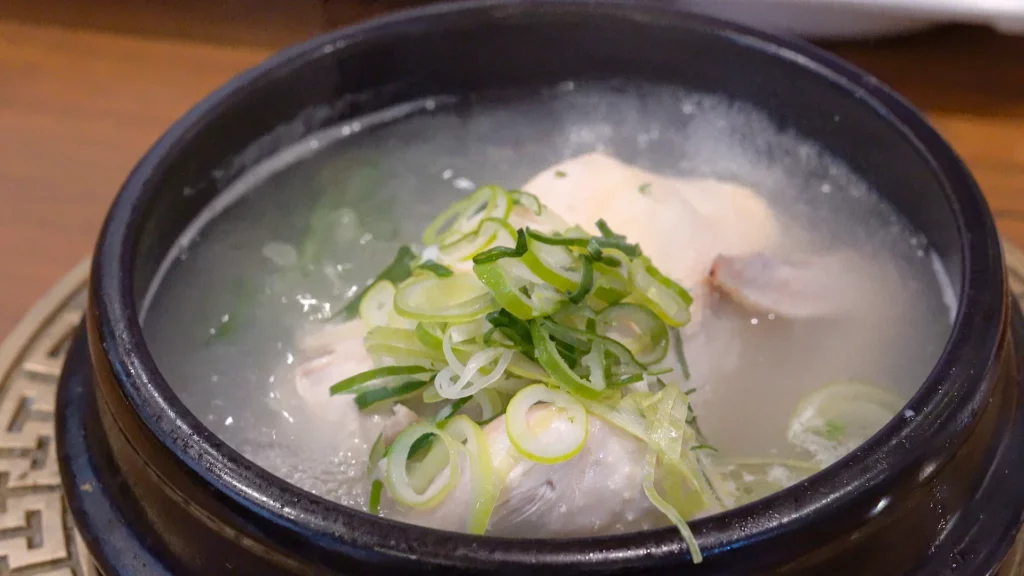
The samgyetang is mild, milky, and deeply nourishing — a clear broth simmered for hours with chicken, glutinous rice, garlic, jujubes, and ginseng. First-time tasters often find it surprisingly subtle until they add a small pinch of the salt and pepper provided at the table; then the flavors bloom. The texture of the chicken is fall-off-the-bone soft, and the rice stuffed inside the cavity soaks up everything around it.
What Should First-Time Eaters Know?
A few things make the experience smoother for first-time diners:
- Eat the tongdak with your hands. This is normal, expected, and the only way to get the best out of the dish. The meat pulls cleanly off the bone, and bones go into the small bin or plate provided on the table.
- Salt is your seasoning. Small dishes of salt (sometimes mixed with pepper) come with the chicken. Dip lightly.
- For samgyetang, eat the rice from inside the cavity by breaking the chicken open with your spoon and mixing the rice into the broth.
- Order beer. Chimaek — chicken with beer — is a Korean cultural ritual, and Yeongyang Center has been doing it longer than anyone. A cold Korean lager is the traditional pairing.
- The lunch set is the best solo option. A whole chicken is generous for two; the lunch set is ideal for one person.
The pickled radish — slightly sweet, slightly vinegary — is meant to be eaten between bites, not after the meal. If you want a deeper dive into how small Korean side dishes function in a meal, the complete guide to banchan and Korean side dishes explains the cultural philosophy that shapes every Korean table, including this one.
How to Get to Myeongdong Yeongyang Center
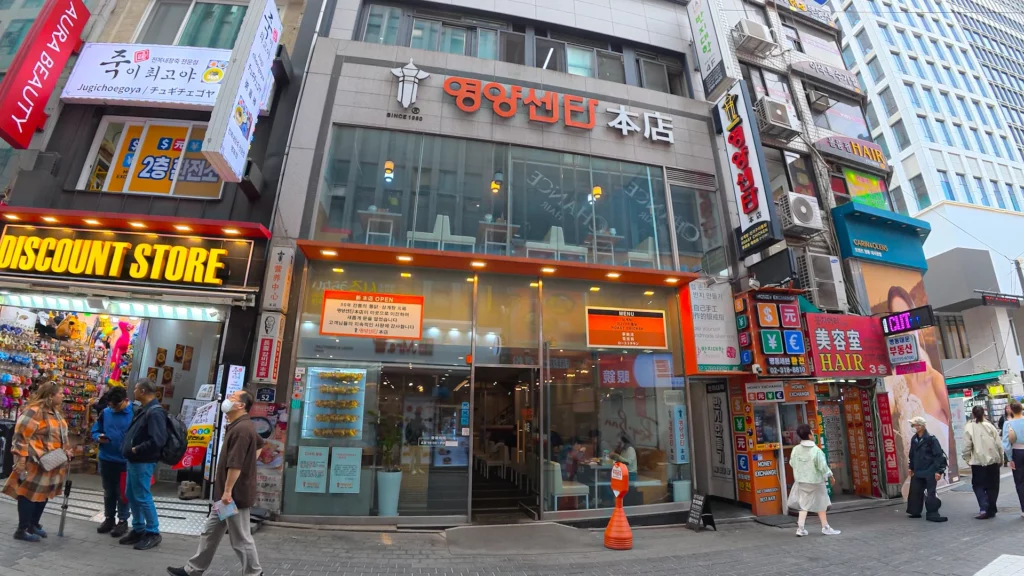
Address: 52 Myeongdong 2-gil, Jung-gu, Seoul (서울특별시 중구 명동2길 52) Phone: +82-2-776-2015 Hours: Daily, 10:30 AM – 10:30 PM Nearest subway: Myeongdong Station (Line 4), Exit 5
From Exit 5 of Myeongdong Station, walk straight for about 110 meters until you reach Myeongdong 2-gil. Turn right and the restaurant appears on your left within 40 meters. The roasting chickens in the front window are unmistakable — if you can’t see them, you’ve passed it.
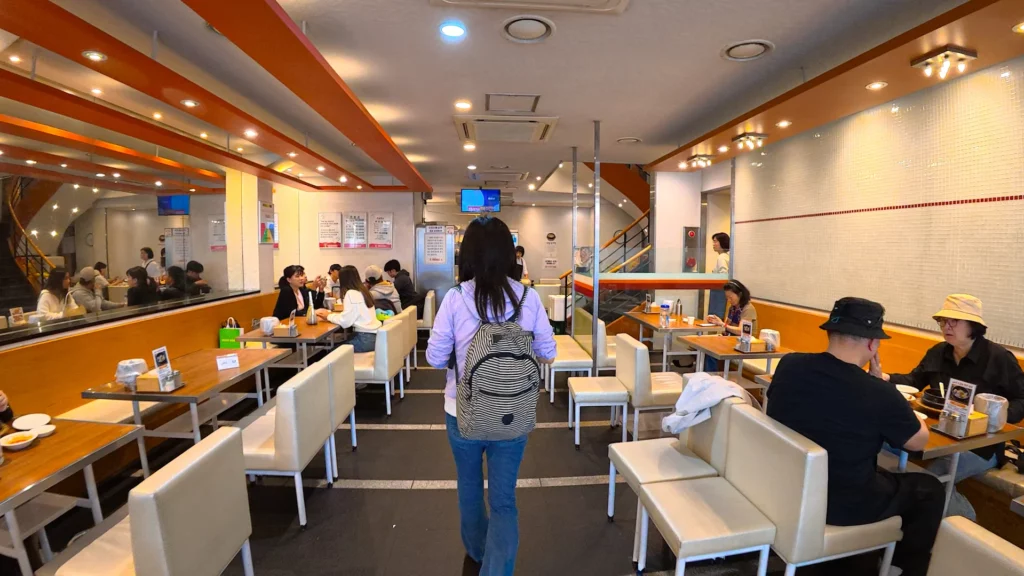
The location places you in the dead center of Myeongdong’s tourist district, which means a few practical considerations:
- Expect a wait at peak hours. Lunch (12:00–1:30 PM) and dinner (6:30–8:30 PM) on weekends are busiest. Mid-afternoon is calmest.
- Two floors of seating. Larger groups are typically sent upstairs; solo diners and small groups are seated on the ground floor.
- The neighborhood is walkable. Myeongdong Cathedral, Namsan Mountain trails, the Shinsegae department store, and Namdaemun Market are all within 10 minutes on foot.
Looking to plan a fuller Myeongdong food day? Two other nearby legends pair beautifully: Myeongdong Kyoja’s Michelin-recognized kalguksu on the next block for hand-cut noodles, and the legendary Myeongdong hamburger toast for an early breakfast if you arrive before shops open. For something completely different but equally historic, Wonjoe Namsan Donkatsu is a short walk away near Namsan Mountain.
Tips for Visiting and What to Order
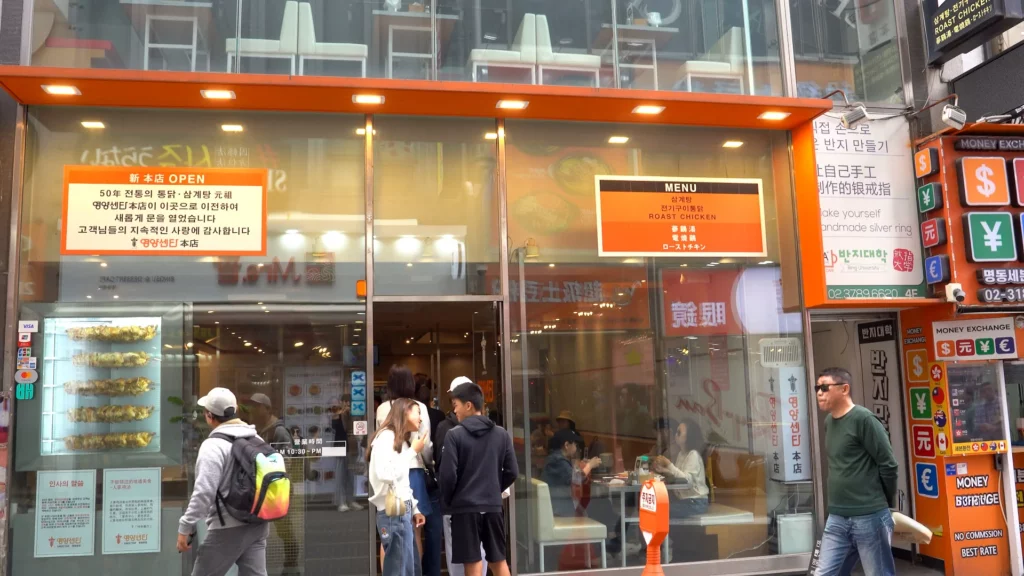
A short, practical checklist:
- First visit, solo: Order the lunch set (₩15,000) — it includes the signature tongdak in a small portion, plus chicken broth, bread, salad, and pickled radish.
- First visit, two people: Get one large tongdak (₩21,500) plus a bowl of samgyetang to share between you. Add a Korean lager.
- Winter or feeling rundown: Skip the chicken and order deulkkae samgyetang (₩22,500) — the perilla seed version is creamy, nutty, and warming. For comparison, Tosokchon Samgyetang near Gyeongbokgung is Seoul’s other most famous ginseng chicken soup destination and uses a different, pine-nut-thickened broth style.
- Summer: Samgyetang is traditionally eaten during sambok, the three hottest days of summer, under the Korean principle of "fighting heat with heat." Locals queue for it specifically in July and August.
- Group of four or more: Two whole chickens, one samgyetang, beers all around. This is how it has been done here for 60 years.
For those who want to explore the broader landscape of Korean chicken cookery, the comparison guide to Korean boiled chicken (dak-baeksuk) covers the simpler, older style of chicken eating that pre-dated tongdak — the dish Koreans were eating when Yeongyang Center first opened its doors.
Final Thoughts on Visiting Yeongyang Center
After 66 years, Yeongyang Center isn’t trying to compete with the thousands of fried chicken franchises that descend from its own innovation. It doesn’t need to. The restaurant earned its place in Korean food history by introducing the country to rotisserie chicken in 1960 and has spent every decade since then quietly perfecting the same two dishes for grandparents, parents, children, and now grandchildren of regulars who first ate here as kids.
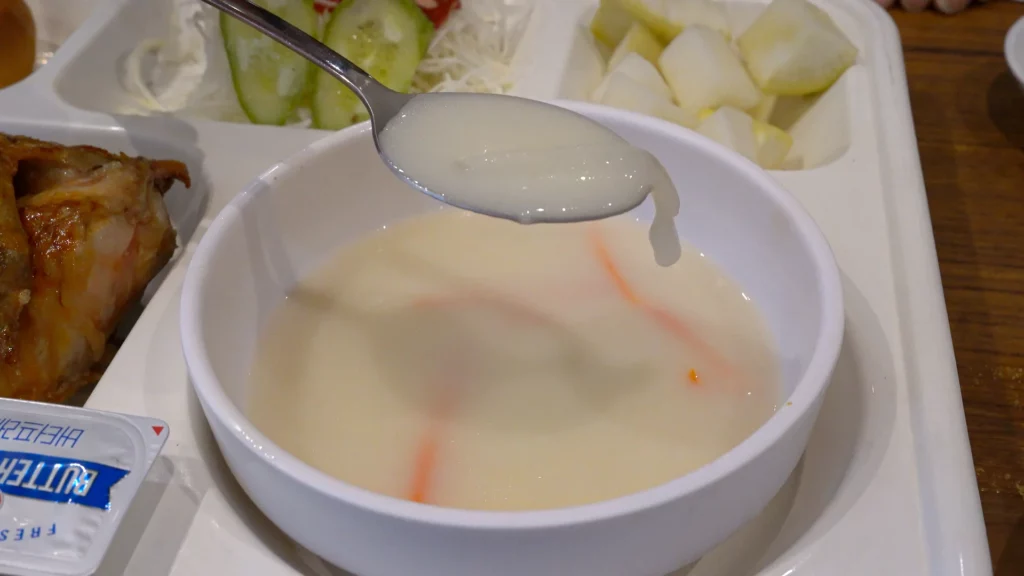
The roasted chicken is clean, juicy, and unfussy. The samgyetang is honest and restorative. The pickled radish is the same as it ever was. And the rotisserie still turns by the window the way it has since the year the restaurant opened, drawing in curious passersby exactly as it did in the early 1960s.
For travelers who want a meal in Myeongdong that means something beyond shopping-district convenience, plan your visit to Yeongyang Center Main Branch at 52 Myeongdong 2-gil. Arrive a little hungry, eat the chicken with your hands, dip into the salt, drink a cold beer, and taste why this restaurant became the foundation of Korea’s modern chicken culture. Share this guide with anyone heading to Seoul who wants to eat somewhere that has been worth eating at for more than half a century.
Did this guide help you plan your Myeongdong dining? Planning to try authentic Korean rotisserie chicken on your next Seoul trip?
Location
Yeongyang Center Main Branch 52 Myeongdong 2-gil, Jung-gu, Seoul, South Korea, KR
Reviews
5.0
0 reviews
5
0%
4
0%
3
0%
2
0%
1
0%
Loading reviews...
Related Recipes

Recipe
Chicken Stock/Dalk-yuksu
There’s a moment in every serious Korean kitchen when the cook stops reaching for boxed broth and starts making her...

Soups
Korean Chicken Noodle Soup (Dak Kalguksu)
There’s a reason Korean home cooks reach for Dak Kalguksu when the skies turn gray or when someone needs nourishing...

Soups
Samgyetang (Korean Ginseng Chicken Soup)
When summer’s sweltering heat blankets the Korean peninsula, something counterintuitive happens at dining tables across the nation. Rather than reaching...

Chicken
Seoul's Top 3 Stir-Fried Chicken: Okeunnae Dakgalbi, Michelin Bib Gourmand Restarant
1st Floor 40-9 Hangangno 3(sam)-ga, Yongsan District, Seoul
5

Chicken
Tongnamujip Dakgalbi: Chuncheon's Charcoal Grilled Chicken Galbi Experience
Chuncheon-si, Gangwon-do 655 Sinsaembat-ro, Sinbuk-eup,
5

Chicken
Top 3 Fried Chicken in Seoul: Why Locals Love "Gyeyeolsa" in Buam-dong
Jongno-gu, Seoul, Republic of Korea 7 Baekseokdong-gil
5

Chicken
Sarangbang Kalguksu: Where Seoul Locals Go for Authentic Dak Baeksuk
Toegye-ro 27-gil, Jung-gu, Seoul, Republic of Korea 46
5