


The sizzle of marinated chicken hitting a scorching iron plate, the aroma of sweet onion and spicy gochujang blending in perfect harmony, – this is the experience awaiting visitors at Okeunnae 2 Dakgalbi in Seoul’s Yongsan district. This Michelin Bib Gourmand-recognized restaurant has earned its reputation as one of Seoul’s top three dakgalbi destinations, where 100% domestic Korean chicken thigh meat meets a proprietary sauce made without a single drop of added water. The second branch offers the same legendary flavors as the original in a cleaner, more spacious setting with convenient parking—perfect for experiencing authentic Chuncheon-style stir-fried chicken without the cramped floor seating of the historic first location.
Seoul's Top 3 Stir-Fried Chicken: Okeunnae Dakgalbi, Michelin Bib Gourmand Restarant
5
Seoul's Top 3 Stir-Fried Chicken: Okeunnae Dakgalbi, Michelin Bib Gourmand Restarant
5
1st Floor 40-9 Hangangno 3(sam)-ga, Yongsan District, Seoul
Editor: 안주은


Interior03
Food04

Menu03
Overview
+82 02-798-0131
WiFi Provided
Indoor Seating Only
Electronic Payment, Credit Card, Cash Only accepted: American Express, Master Card, Visa
Introduction
Operating hours
Mon, Tue, Wed, Thu, Fri, Sat, SunAM 11:30 - PM 10:00
Break TimePM 3:30 - PM 4:30
Menu
Editor's Detail
The sizzle of marinated chicken hitting a scorching iron plate, the aroma of sweet onion and spicy gochujang blending in perfect harmony, the theatrical skill of staff effortlessly stir-frying your meal tableside—this is the sensory experience awaiting visitors at Okeunnae 2 Dakgalbi in Seoul’s Yongsan district. This Michelin Bib Gourmand-recognized restaurant has earned its reputation as one of Seoul’s top three dakgalbi destinations, drawing queues of loyal customers who travel across the city for what many consider their "lifetime best" stir-fried chicken.
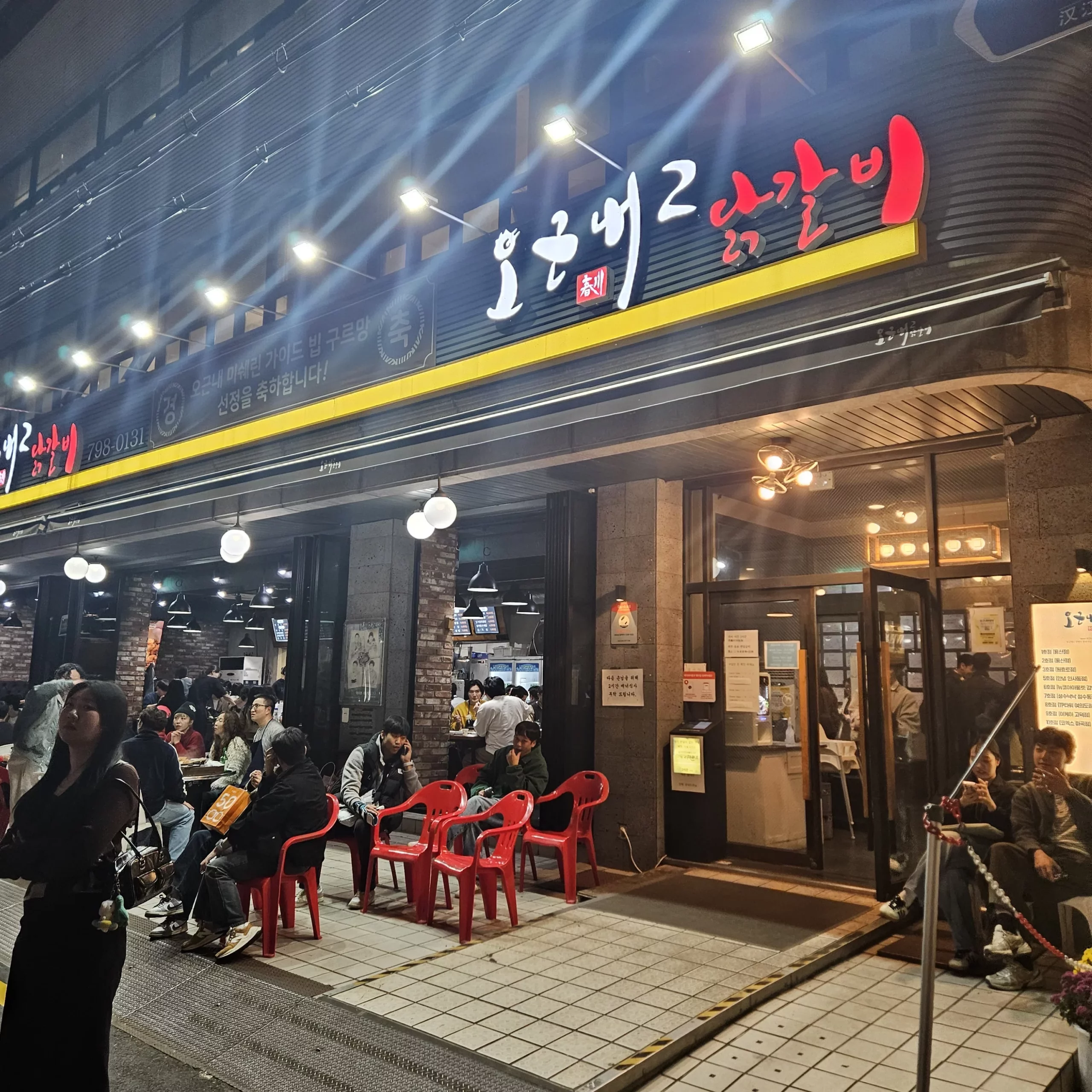
Unlike Western-style chicken dishes that often rely on deep-frying, dakgalbi represents a distinctly Korean approach to chicken preparation—marinated, stir-fried on communal iron plates, and enjoyed as an interactive dining experience. Okeunnae 2 serves as the cleaner, more spacious second branch of the original Okeunnae, offering the same legendary flavors in a more comfortable modern setting while maintaining every element that earned the original its Michelin recognition.
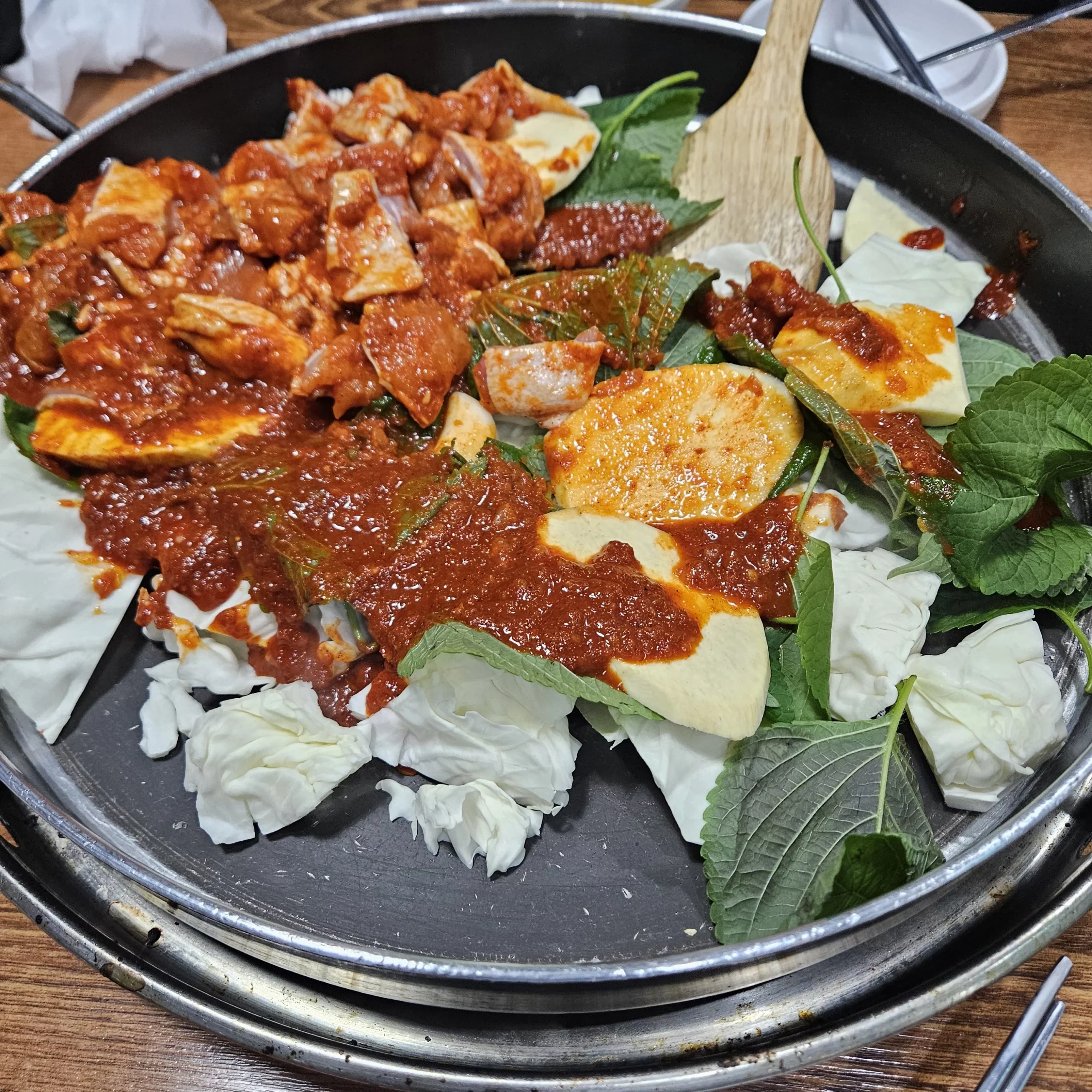
What Is Dakgalbi and Why Is It Special?
Dakgalbi (닭갈비), meaning "chicken ribs," originated in Chuncheon, Gangwon Province during the 1960s as an affordable alternative to the more expensive pork galbi. The name itself carries an interesting linguistic quirk—there are no actual ribs involved. During Korea’s post-war era, when pork ribs remained a luxury item, resourceful restaurant owners created a similarly flavored dish using chicken, and the nickname stuck.
This beloved dish features marinated chicken pieces stir-fried on a large iron plate with sweet potatoes, cabbage, perilla leaves, and chewy rice cakes (tteok), all coated in a spicy gochujang-based sauce. What distinguishes dakgalbi from other Korean dishes is its communal, interactive nature—the cooking happens right at your table, transforming dinner into entertainment as staff skillfully manage the sizzling ingredients. The dish evolved from humble tavern food meant to accompany drinks into one of Korea’s most cherished comfort foods, earning Chuncheon the title of "Dakgalbi Capital" with over 600 restaurants specializing in the dish.
Okeunnae 2: The Superior Second Branch
While the original Okeunnae Dakgalbi sits in a charmingly rustic old building near Seoul’s railway tracks, many regular customers actually prefer the second branch for several compelling reasons. Okeunnae 2 occupies a modern building with significantly more seating capacity, eliminating the cramped floor seating that characterizes the original location. The kitchen maintains identical recipes and preparation methods, but the environment feels noticeably cleaner and more comfortable.
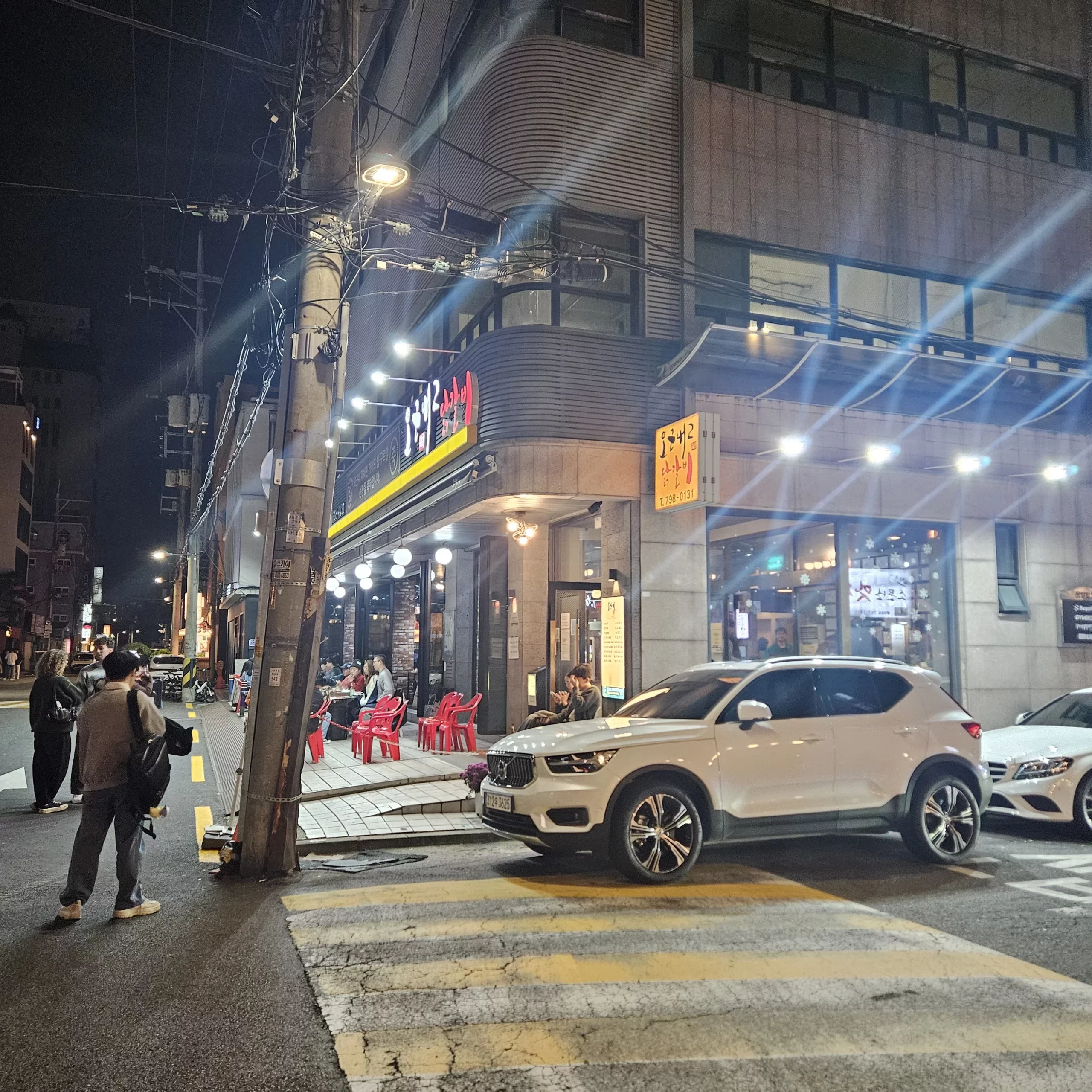
Perhaps most importantly for visitors with vehicles, Okeunnae 2 offers dedicated parking spaces directly in front of the restaurant—a precious commodity in Seoul’s congested Yongsan district. The branch name "Okeunnae" (오근내) actually references the historical name for Chuncheon, effectively meaning "Chuncheon Dakgalbi" while honoring the dish’s geographical heritage. This thoughtful naming reflects the restaurant’s commitment to authenticity.
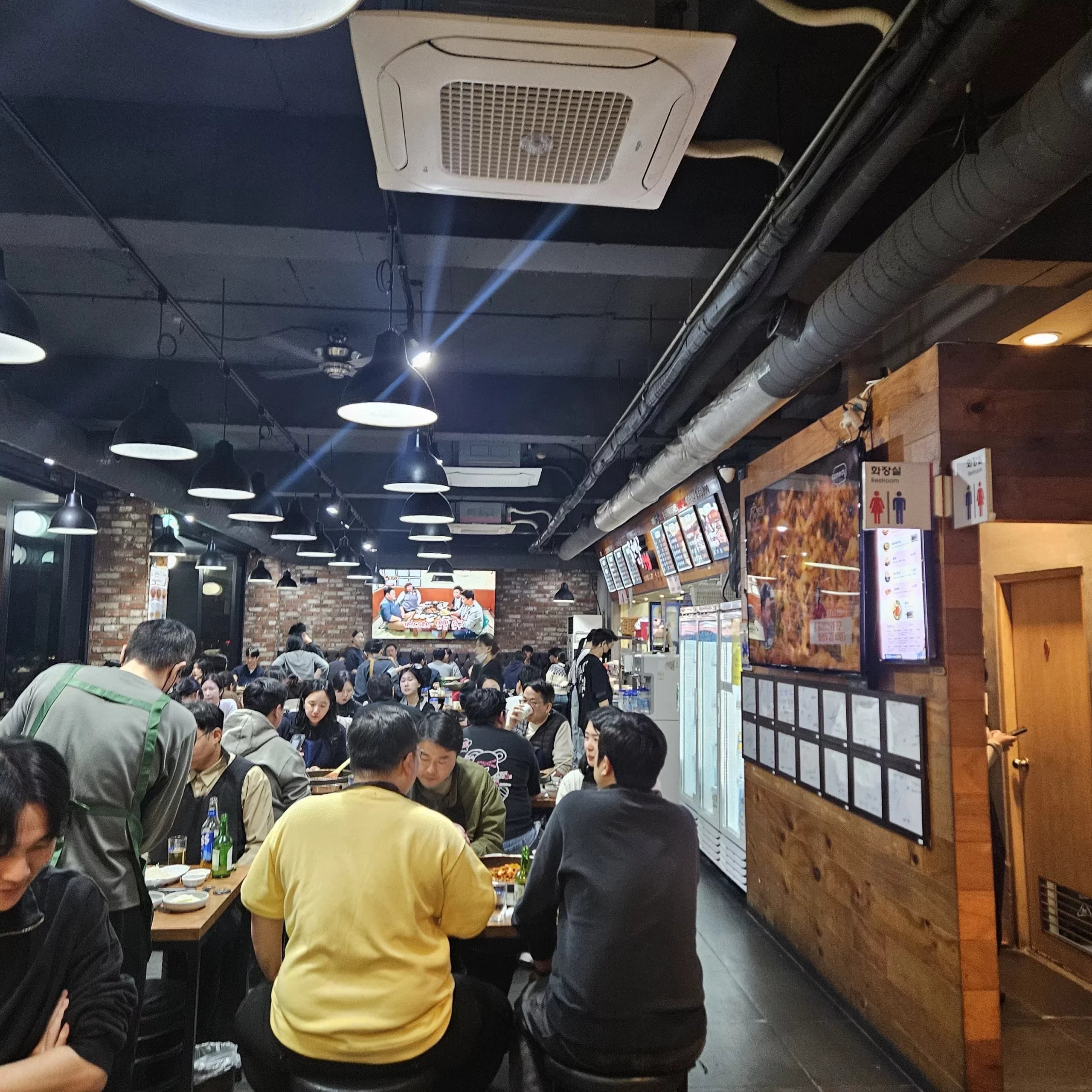
Despite having substantially more tables than the original, Okeunnae 2 still experiences significant waiting times during peak hours. The recommendation is to use CatchTable or similar reservation apps to secure your spot before arriving, as weekend waits can easily exceed 30-40 minutes.
The Signature Okeunnae Flavor Profile
What sets Okeunnae apart from countless other dakgalbi restaurants across Seoul is their proprietary sauce recipe. The restaurant uses only 100% domestic Korean chicken thigh meat from Gangwon Province, ensuring tender, moist results that absorb the marinade beautifully. The sauce itself contains no added water—a significant departure from many competitors who dilute their seasonings.
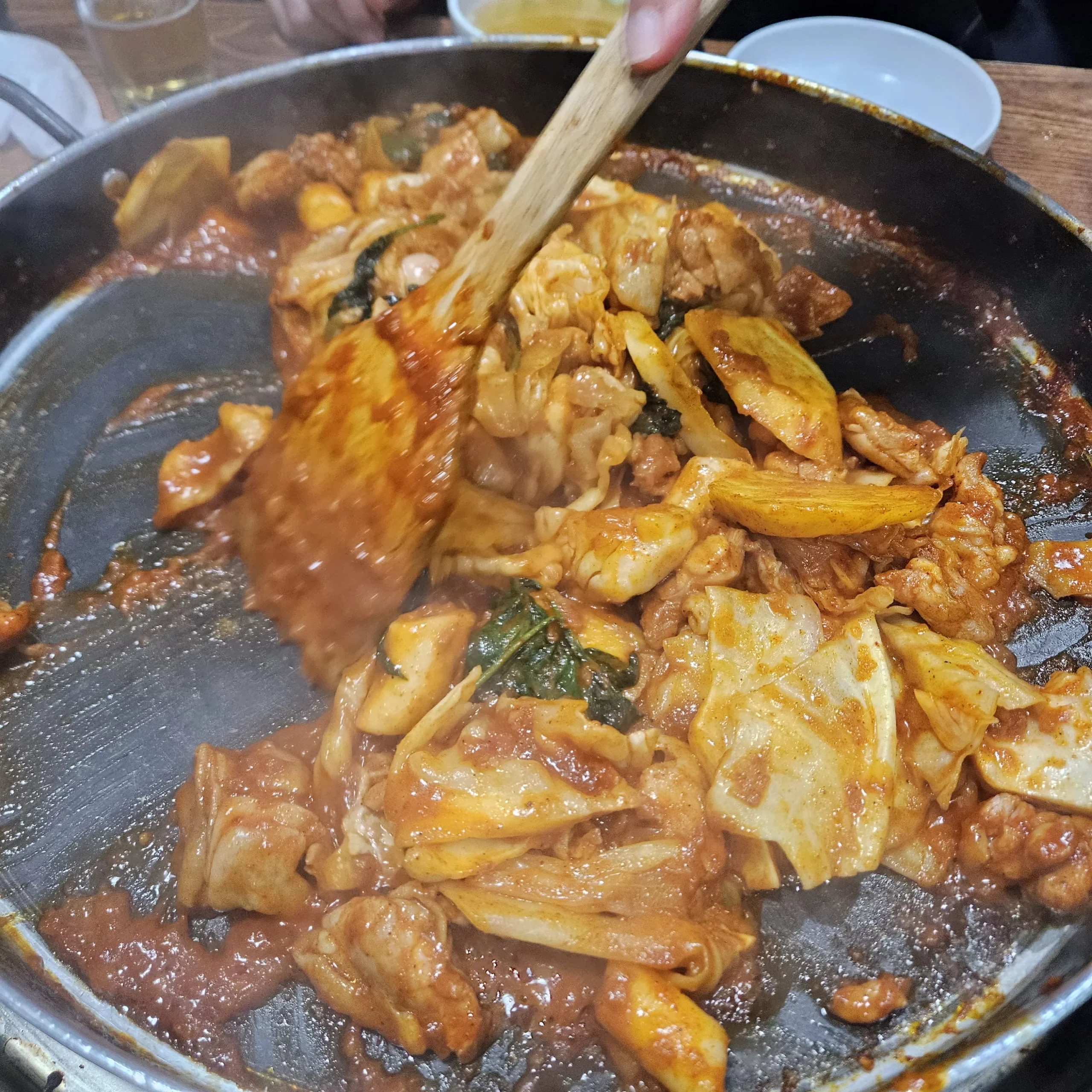
Instead, Okeunnae builds its flavor foundation entirely from sweet onion juice, fresh garlic, ginger, soy sauce, and their carefully balanced gochugaru (Korean red pepper flakes) blend. This creates a sauce that’s simultaneously sweet, savory, and moderately spicy—rich enough to coat every ingredient without becoming overwhelming. Some customers detect subtle curry notes, a common addition in authentic Chuncheon-style preparations that adds aromatic depth without overpowering the fundamental Korean flavors.
The result is dakgalbi with distinctively "jjagl-jjagl" texture—a Korean onomatopoeia describing the slightly sticky, well-reduced sauce that clings to each piece rather than pooling at the bottom of the plate.
Menu Guide and Must-Order Items
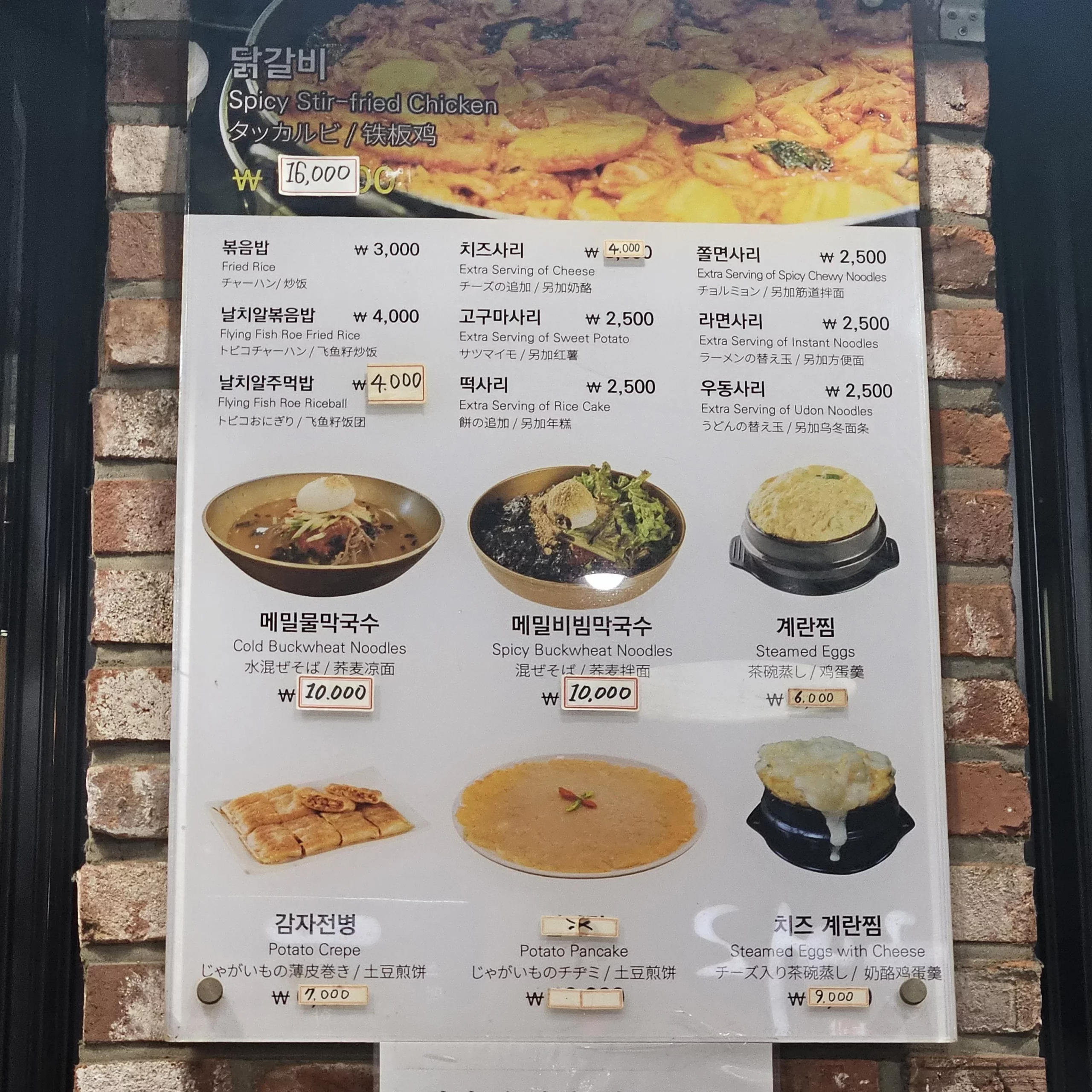
Okeunnae keeps their menu refreshingly simple, allowing the kitchen to perfect their core offerings rather than spreading attention across too many dishes. The main attraction is their standard dakgalbi, priced at approximately ₩16,000 per serving, with a minimum order of two portions.
Essential Add-Ons:
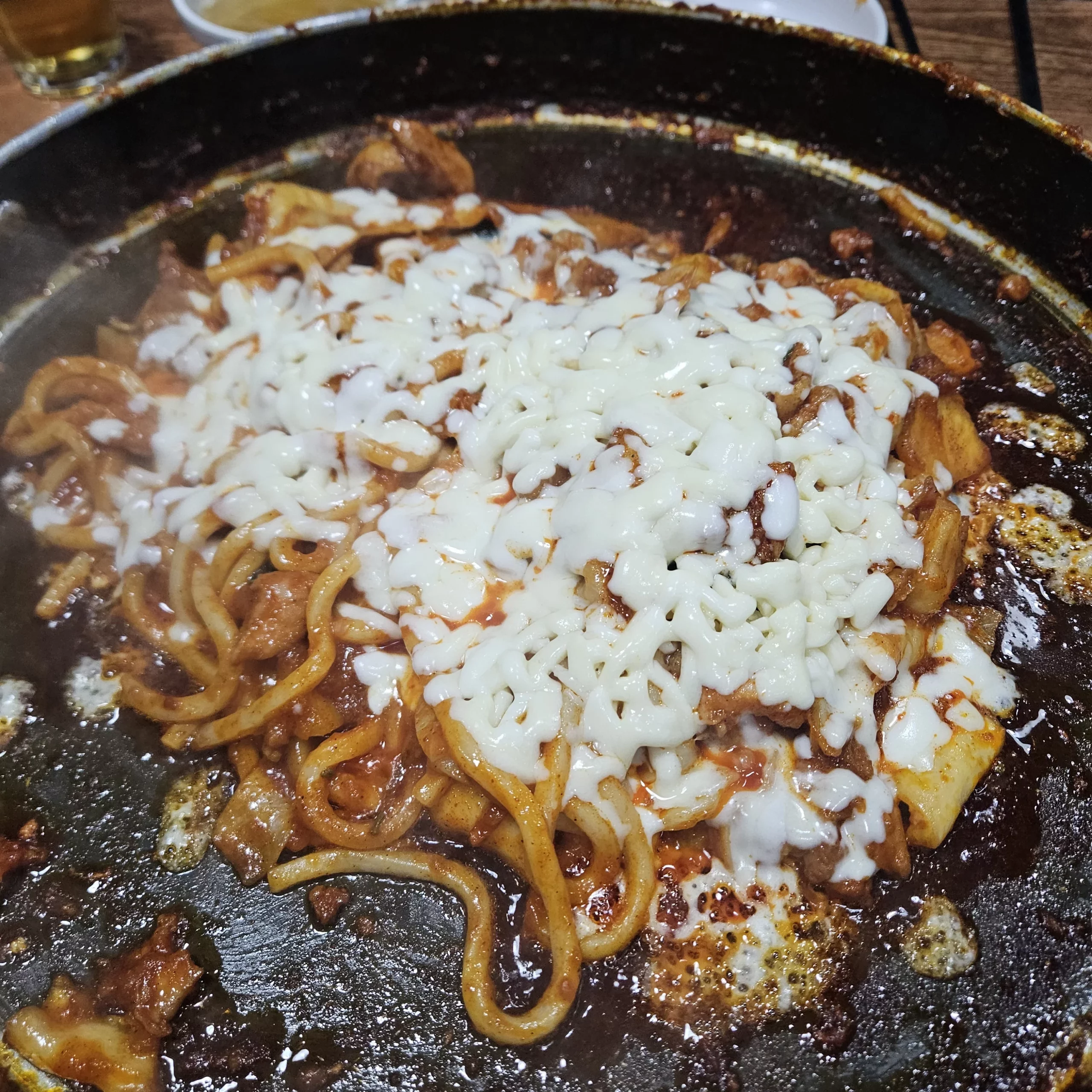
The real magic happens when you customize your order with additional ingredients. Cheese addition creates melted pools of gooey mozzarella that stretches beautifully with each bite, tempering the spice while adding creamy richness. This Korean fusion trend has become almost mandatory for many regular customers. Cheese is an add-on option price at ₩4,000 per extra serving.
I highly recommend adding one of the following options below for a more fuller meal. You can choose between:
- Tteok (떡): ₩2,500 Chewy rice cakes that absorb sauce beautifully
- Udon-sari (우동사리): ₩2,500 Thick wheat noodles adding substantial texture
- Ramyeon-sari (라면사리): ₩2,500 Instant noodle strands for those who prefer springy texture
Experienced diners often recommend the chewy udon noodles, which hold up well to extended cooking without becoming mushy. The noodles or rice cakes get added partway through cooking, absorbing the flavorful sauce as they soften. The noodles come out already boiled, but you need to mix them in well during the meal so it mixes in well with the sauce.
The Essential Finale: Fried Rice
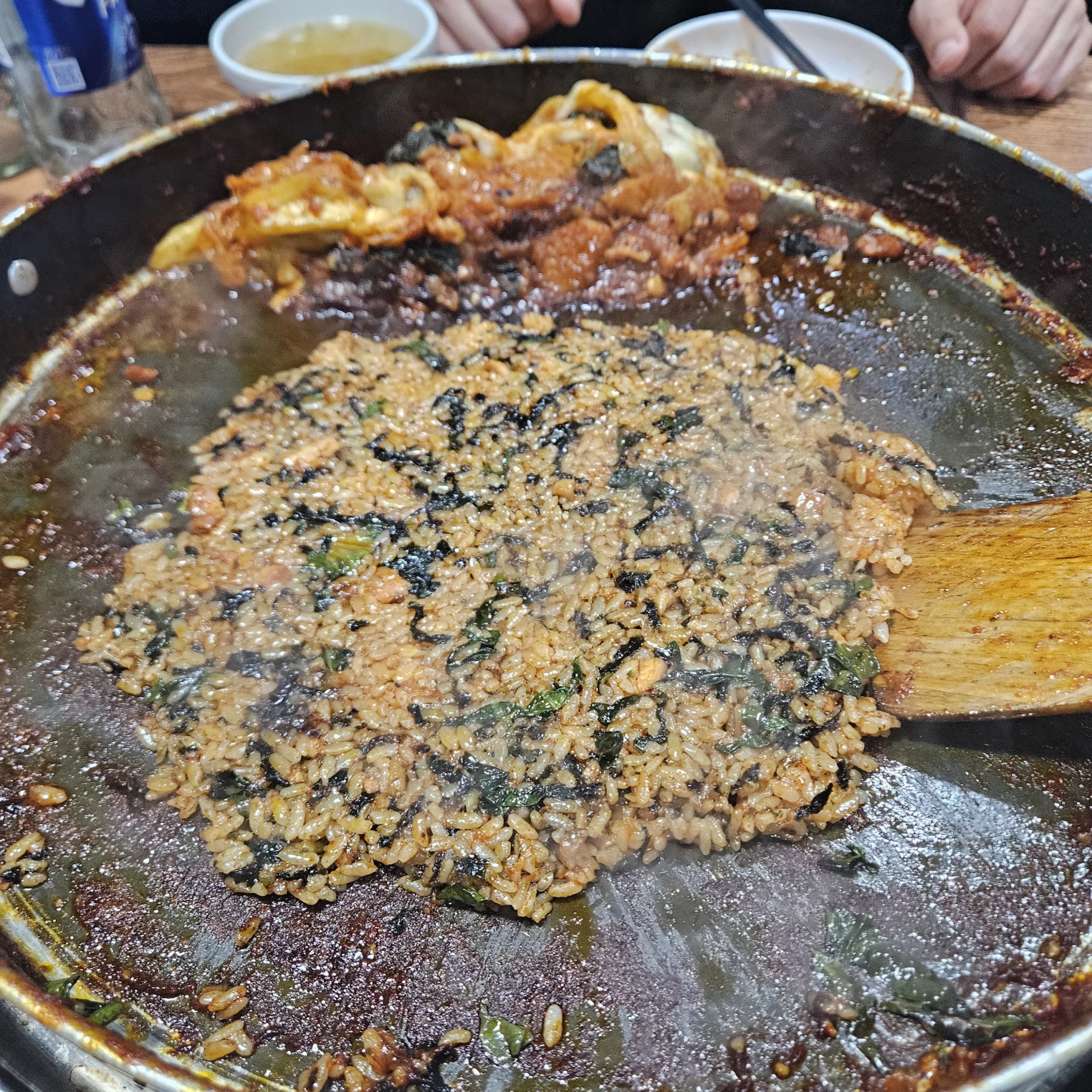
No Okeunnae experience is complete without ordering fried rice at the end of your meal. After you’ve consumed most of the chicken and vegetables, staff will add a portion of rice, gim, cut perilla leaves, sesame oil directly onto the iron plate, stir-frying it with the remaining sauce, caramelized bits, and any leftover ingredients. The resulting fried rice—crispy, intensely flavored, and slightly smoky from the hot plate—is considered by many to be the meal’s highlight.
Fried rice is priced at ₩4,000 per serving.
What Makes This Dish Uniquely Korean?
Dakgalbi embodies several distinctly Korean culinary principles that set it apart from similar dishes in other cuisines. First, there’s the concept of "bap-doduk" (밥도둑), meaning "rice thief"—dishes so flavorful that they make you consume far more rice than intended. The intensely savory sauce practically demands carbohydrate accompaniment.
The communal cooking style reflects Korea’s collective dining culture, where meals are meant to be shared experiences rather than individual portions. Everyone gathers around a single iron plate, creating natural conversation as the food sizzles and transforms.
What Are the Key Ingredients That Create This Flavor?
Three ingredients define authentic Okeunnae dakgalbi:
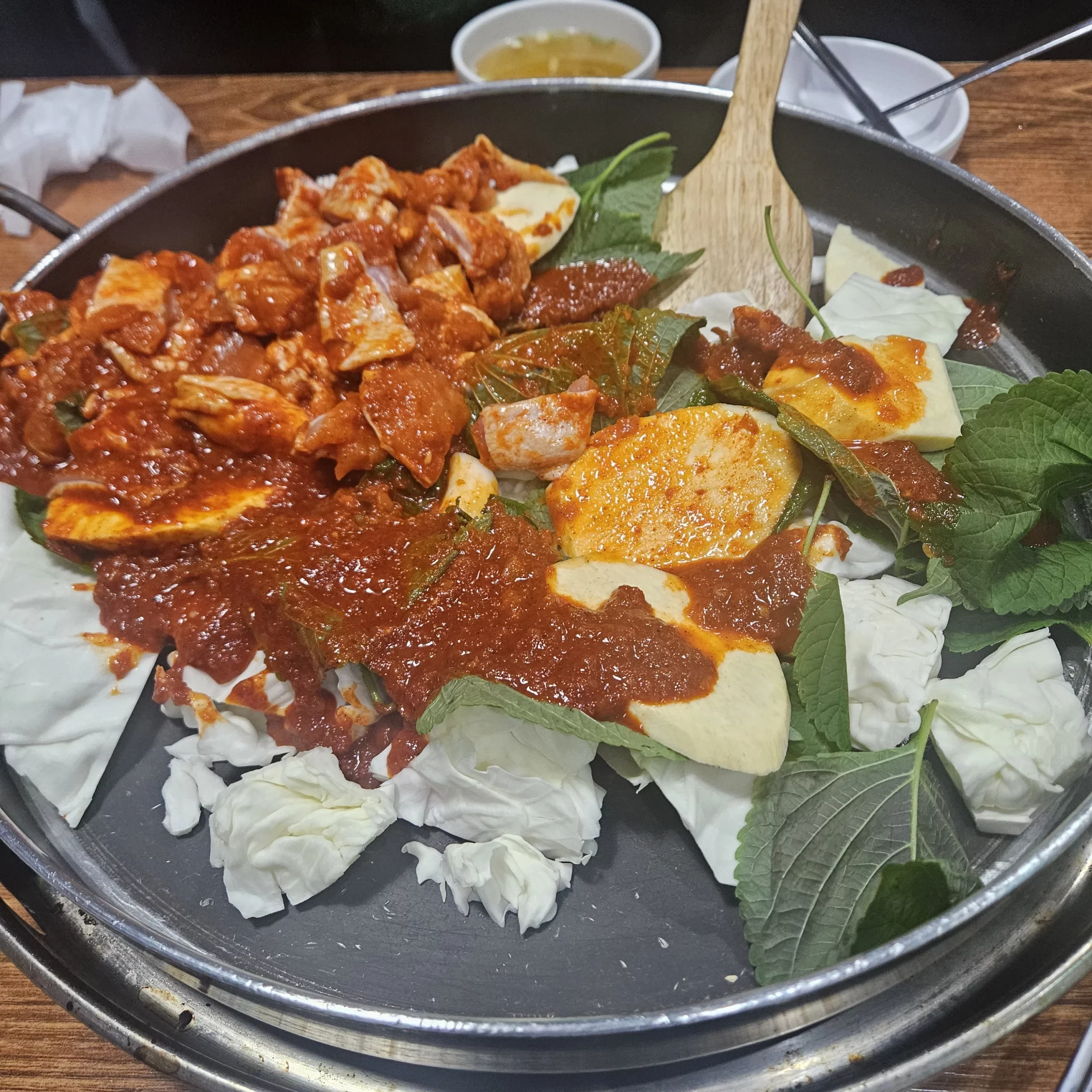
Gochujang (고추장) – Fermented Red Pepper Paste: This foundational Korean condiment provides the characteristic red color and complex spicy-sweet flavor impossible to replicate with simple chili powder. Gochujang undergoes months of fermentation, developing deep umami notes alongside its heat. The paste contains fermented soybeans, glutinous rice, and Korean red peppers, creating layered complexity that builds gradually rather than hitting immediately. Health-wise, gochujang offers beneficial probiotics from fermentation and capsaicin compounds linked to metabolism support.
Chicken Thigh Meat (닭다리살): Unlike breast meat that dries out during extended stir-frying, thigh meat’s higher fat content keeps it moist and tender throughout cooking. Okeunnae sources exclusively from Gangwon Province, the same region where dakgalbi originated, ensuring premium quality. The dark meat absorbs marinades more thoroughly than white meat, resulting in flavor penetrating to the center of each piece.
Sweet Onion Juice: Rather than using water as a sauce base, Okeunnae builds their marinade entirely from pureed onions. This natural sweetness balances the gochujang’s heat while providing sugars that caramelize beautifully during high-heat cooking. The technique creates that signature "jjagl-jjagl" sticky texture that clings to ingredients.
How Would You Describe the Taste and Spice Level?
On a spice scale of 1-10, Okeunnae’s dakgalbi typically registers around 5-6—moderately spicy but accessible to most palates. The heat builds gradually rather than attacking immediately, thanks to gochujang’s fermented complexity. Those sensitive to spice can request milder preparation, though this somewhat diminishes the authentic experience.
Primary flavor notes include: pronounced sweetness from caramelized onions and natural gochujang sugars, deep umami richness from fermented elements, pleasant heat that warms without overwhelming, subtle smokiness from the sizzling iron plate, and a slight tang that balances the richness. The overall impression is "sweet-spicy" rather than purely fiery.
Texture plays an equally important role. Properly prepared dakgalbi offers tender chicken with slightly caramelized edges, soft-yet-textured vegetables, and chewy rice cakes that provide satisfying resistance. When cheese is added, stretchy strands create visual drama while mellowing the spice.
What Should First-Time Eaters Know?
Proper Eating Method: Korean dakgalbi culture involves wrapping cooked portions in fresh lettuce leaves or perilla leaves (kkaennip), adding a dab of ssamjang (wrapping sauce), perhaps some rice, and consuming the entire bundle in one or two bites. This "ssam" technique is fundamental to Korean BBQ culture and creates perfect flavor combinations.
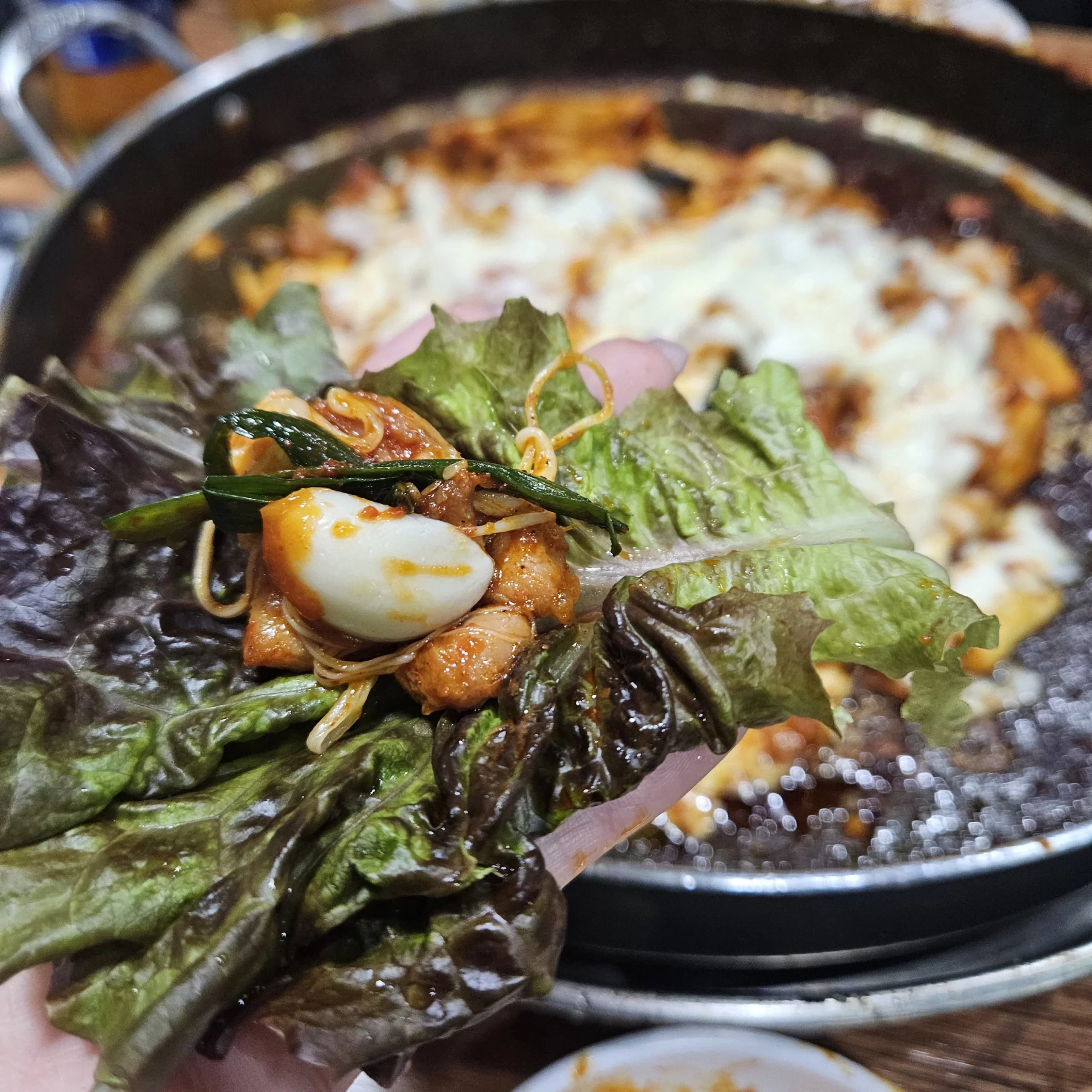
What to Expect: Staff will show you how to stir the chiken in the beginning— later on you must stir the pot yourself with the wooden spatullas they provide. The staff will let you know when the chicken is ready to eat, but until then in order to prevent the food from sticking or buring, continous stirring is needed! Call the staff to prepare fried rice when you’re nearly finished.
Dining Sequence: Arriving hungry is essential, as portions are generous. Start with the proteins, then add in noodles or rice cakes in the early stage of the meal. Save stomach space for the essential fried rice finale. Many customers find themselves fuller than expected due to the high-density carbohydrate additions.
Cultural Considerations: Dakgalbi restaurants tend toward casual, energetic atmospheres—expect noise, laughter from neighboring tables, and aromatic smoke drifting through the space. Wear clothes you don’t mind absorbing food smells, as the scent of grilled chicken and gochujang will accompany you home.
How to Experience Okeunnae 2 Like a Local
Regulars approach Okeunnae 2 with specific strategies perfected over multiple visits. First, timing matters tremendously. Arriving precisely at 11:30 AM opening or during the 3:30-4:30 PM break period allows you to beat crowds. Weekend evenings require reservation app support to avoid excessive waits.
Korean customers typically order one serving per person minimum, with the understanding that generous portions mean moderate eaters might share slightly. However, adding cheese, noodles, and fried rice means most people finish satisfied regardless of initial portion calculations.
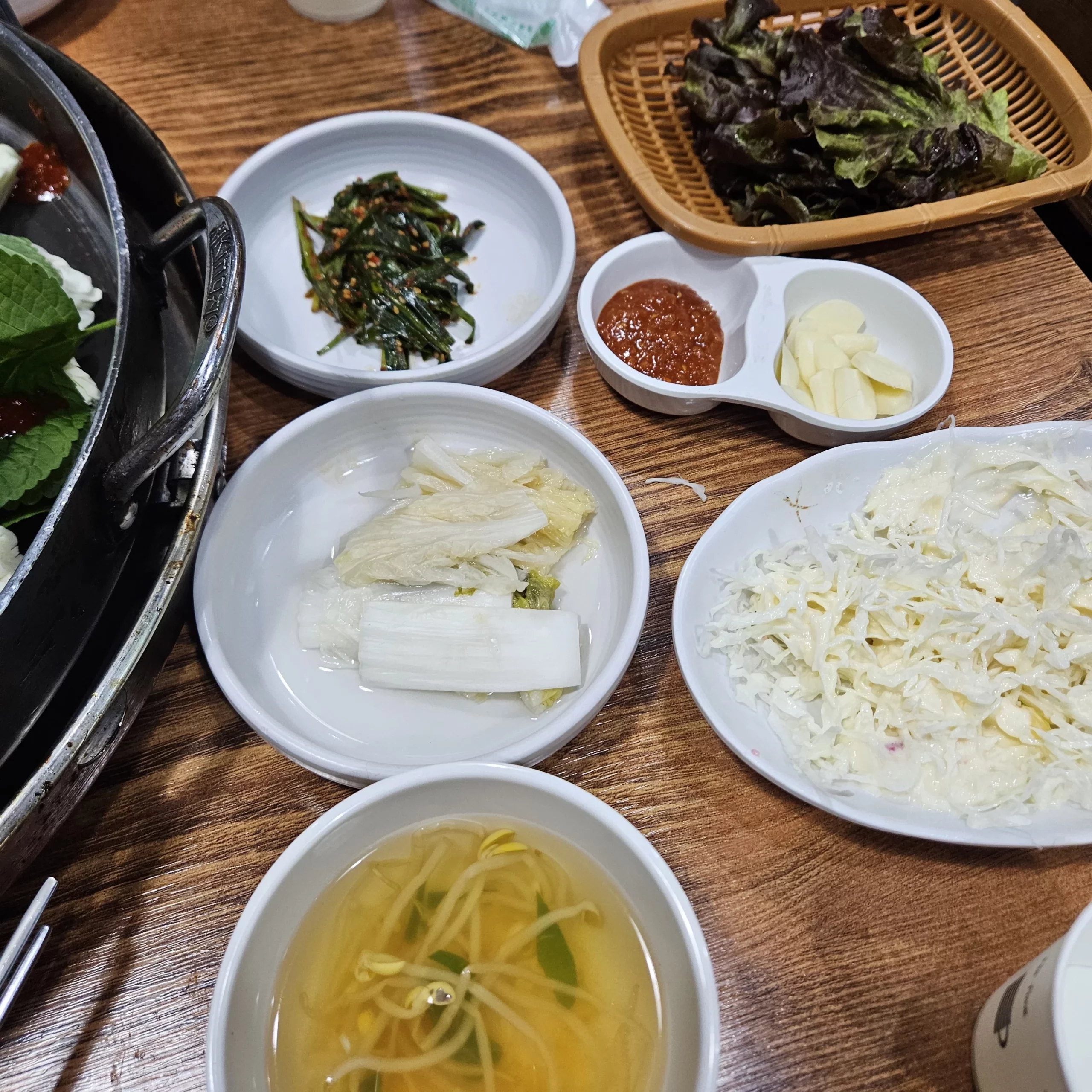
The banchan (complimentary side dishes) served at Okeunnae deserve attention too. Bean sprouts, cabbage salad, buchu kimchi (chive kimchi), white kimchi, and fresh lettuce wraps arrive automatically. The slightly sour kimchi varieties intentionally contrast with the sweet-spicy dakgalbi, providing palate-cleansing breaks between rich bites. Don’t neglect the kongnamul-guk (bean sprout soup)—its clean, mild flavor offers perfect respite from intense flavors.
For beverages, makgeolli (Korean rice wine) or cold beer pair exceptionally well with spicy, rich dakgalbi. The cooling drinks offset heat while complementing fermented sauce notes.
Practical Information for Your Visit
Restaurant Details:
- Name: Okeunnae 2 Dakgalbi (오근내2 닭갈비)
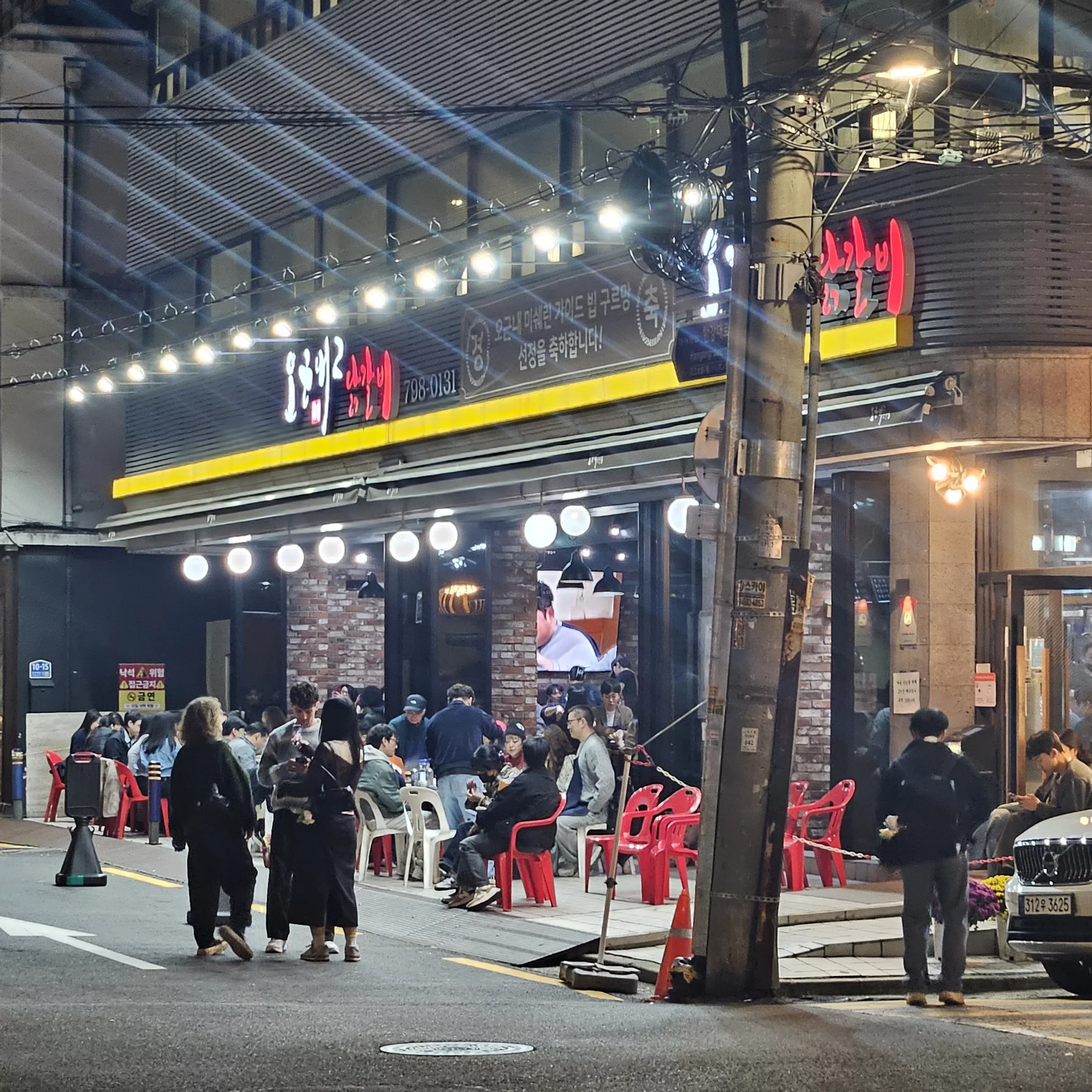
- Address: 13 Hangangdaero 11-gil, Yongsan-gu, Seoul (서울 용산구 한강대로11길 13 용일빌딩)
- Hours: 11:30 AM – 10:00 PM (Break: 3:30-4:30 PM, Last order: 2:30 PM and 9:00 PM)
- Phone: 02-798-0131
- Parking: Available in front (approximately 5-6 spaces)
- Reservations: Available through CatchTable app
Getting There:
The restaurant sits approximately 14 minutes’ walk from Yongsan Station Exit 1. Navigate south through the Yongsan development area and cross the railway tracks into the quieter residential neighborhood where Okeunnae has operated for decades. While somewhat removed from typical tourist circuits, the location’s off-the-beaten-path nature contributes to its authentic local atmosphere.
For those exploring Seoul’s dining scene, consider combining your Okeunnae visit with a walk along the nearby Han River or exploration of the historic railway neighborhood that characterizes this unique corner of Yongsan.
Final Thoughts
Okeunnae 2 Dakgalbi represents Korean comfort food at its finest—unpretentious, generous, and absolutely delicious. The Michelin Bib Gourmand recognition validates what Seoul locals have known for years: this family-run establishment delivers exceptional value and authentic flavors that justify any waiting time involved.
Whether you’re a Korean food enthusiast seeking the real thing or a curious traveler looking to experience something beyond typical tourist destinations, Okeunnae 2 offers that rare combination of quality, authenticity, and accessibility. The interactive cooking experience, communal dining atmosphere, and irresistible fried rice finale create memories that extend well beyond the meal itself.
For your own taste of Seoul’s beloved stir-fried chicken tradition, make your way to Okeunnae 2 Dakgalbi and discover why Koreans consider this dish essential comfort food—and why this particular restaurant has earned its legendary status among the city’s countless dining options.
Planning your Seoul food adventure? Discover more authentic Korean restaurant experiences and explore our comprehensive guides to Korean ingredients to deepen your culinary knowledge.
Location
40-9 Hangangno 3(sam)-ga, Yongsan District, Seoul, 1st Floor, KR
Reviews
5.0
0 reviews
5
0%
4
0%
3
0%
2
0%
1
0%
Loading reviews...
Related Recipes

Recipe
Chicken Stock/Dalk-yuksu
There’s a moment in every serious Korean kitchen when the cook stops reaching for boxed broth and starts making her...

Soups
Korean Chicken Noodle Soup (Dak Kalguksu)
There’s a reason Korean home cooks reach for Dak Kalguksu when the skies turn gray or when someone needs nourishing...

Soups
Samgyetang (Korean Ginseng Chicken Soup)
When summer’s sweltering heat blankets the Korean peninsula, something counterintuitive happens at dining tables across the nation. Rather than reaching...

Chicken
Yeongyang Center Myeongdong: Korea's Original Tongdak Since 1960
Jung-gu, Seoul, South Korea Yeongyang Center Main Branch 52 Myeongdong 2-gil
5

Chicken
Tongnamujip Dakgalbi: Chuncheon's Charcoal Grilled Chicken Galbi Experience
Chuncheon-si, Gangwon-do 655 Sinsaembat-ro, Sinbuk-eup,
5

Chicken
Top 3 Fried Chicken in Seoul: Why Locals Love "Gyeyeolsa" in Buam-dong
Jongno-gu, Seoul, Republic of Korea 7 Baekseokdong-gil
5

Chicken
Sarangbang Kalguksu: Where Seoul Locals Go for Authentic Dak Baeksuk
Toegye-ro 27-gil, Jung-gu, Seoul, Republic of Korea 46
5