


Hidden along a side alley in Seoul’s bustling Myeongdong shopping district, Shinsegae Tteokbokki has been quietly perfecting one of Korea’s most addictive street snacks for over 45 years. The signature draw? A thick, glossy, deep-red sauce loaded with minced garlic, clinging to chubby rice cakes that snap with that signature jjondeuk-jjondeuk chew. This is real-deal Korean bunsik (분식) — the kind locals queue up for, not the Instagram trap.
Shinsegae Tteokbokki: Myeongdong's 45-Year Garlic Bunsik 🌶️
5
Shinsegae Tteokbokki: Myeongdong's 45-Year Garlic Bunsik 🌶️
5
Jung-gu, Seoul 10, Myeongdong 9-gil,
Editor: James Lee


Interior05
Food08

Menu01
Overview
+82 02-778-1680
Free WiFi Available
Indoor Seating Only
Electronic Payment accepted: American Express, Master Card, Visa
Introduction
Operating hours
Mon, Tue, Wed, Thu, Fri, Sat, SunAM 9:00 - PM 9:00
Menu
Editor's Detail
Table of Contents
- Why Shinsegae Tteokbokki Is a Myeongdong Legend
- The Legendary Garlic Tteokbokki: 45 Years of Flavor
- Why the Chewy Rice Cakes Make All the Difference
- The Ultimate Bunsik Combo: How to Order Like a Local
- Affordable Local Vibes in Pricey Myeongdong
- Korean Food FAQ: Garlic Tteokbokki Explained
- How to Find Shinsegae Tteokbokki
Why Shinsegae Tteokbokki Is a Myeongdong Legend
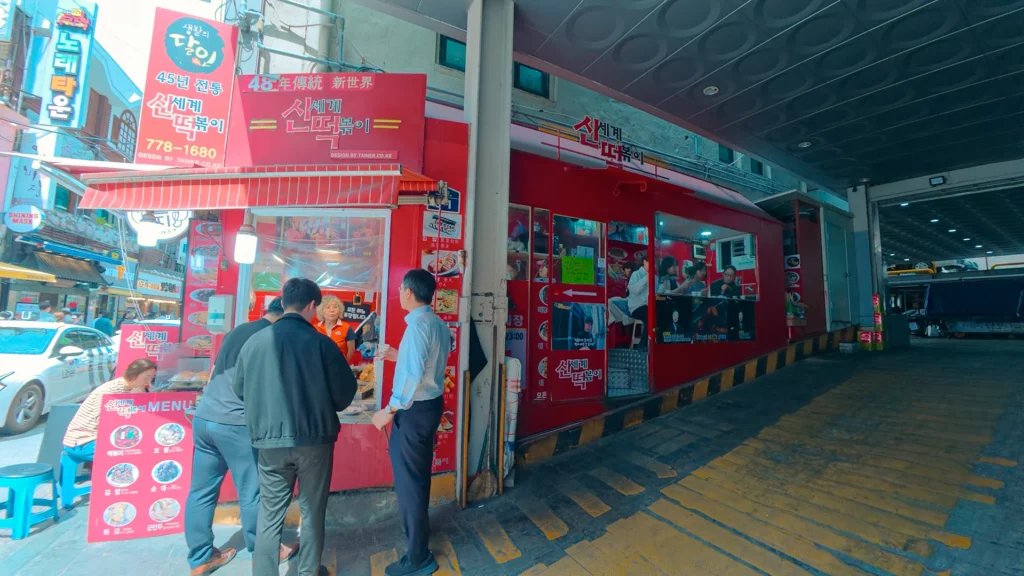
Shinsegae Tteokbokki opened back in 1974 as a humble pojangmacha (포장마차, Korean street tent) parked behind the Shinsegae Department Store flagship — which is exactly where the name comes from. About a decade ago, the original owners moved the operation a short walk away into a tiny brick-and-mortar shop on Myeongdong 9-gil, but the recipe never changed.
The grandma-and-grandpa team still cook everything in front of you on a wide, shallow pan, ladling sauce over rice cakes the same way they did when Korean office workers wore wide-lapel suits and Myeongdong’s neon signs were brand-new. Locals call it "the office workers’ shrine" — a place they sneak away to during lunch breaks for a quick, fiery jolt of comfort food.
For travelers, this matters. Most of Myeongdong’s tourist-facing food carts have shifted toward Instagram-bait giant cheese skewers and 12,000-won lobster tails. Shinsegae Tteokbokki is one of the last spots in the area that still tastes like the Korea that lived here long before the ring lights arrived.
The Legendary Garlic Tteokbokki: 45 Years of Flavor (45년 전통 마늘 떡볶이)
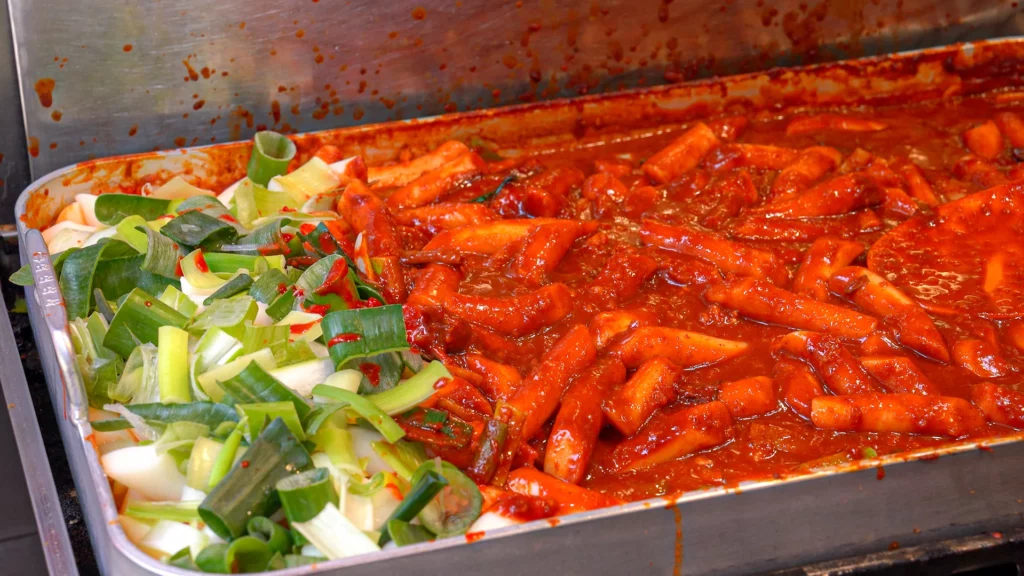
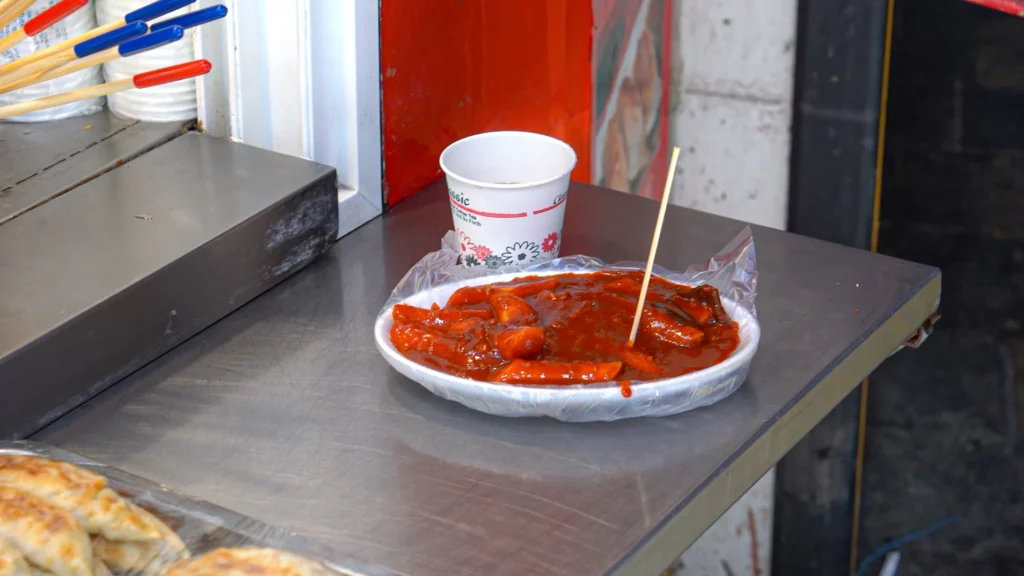
The first bite delivers a flavor most foreigners have never encountered before. The sauce is almost paste-thick, the color of glowing embers, and absolutely loaded with minced raw garlic that has been simmered just long enough to mellow without losing its bite. There is real depth here: fermented chili paste, sweet onion, a hint of pumpkin sweet potato, and that aggressive, addictive garlic punch.
What makes this so different from the standard street stall version? Three things:
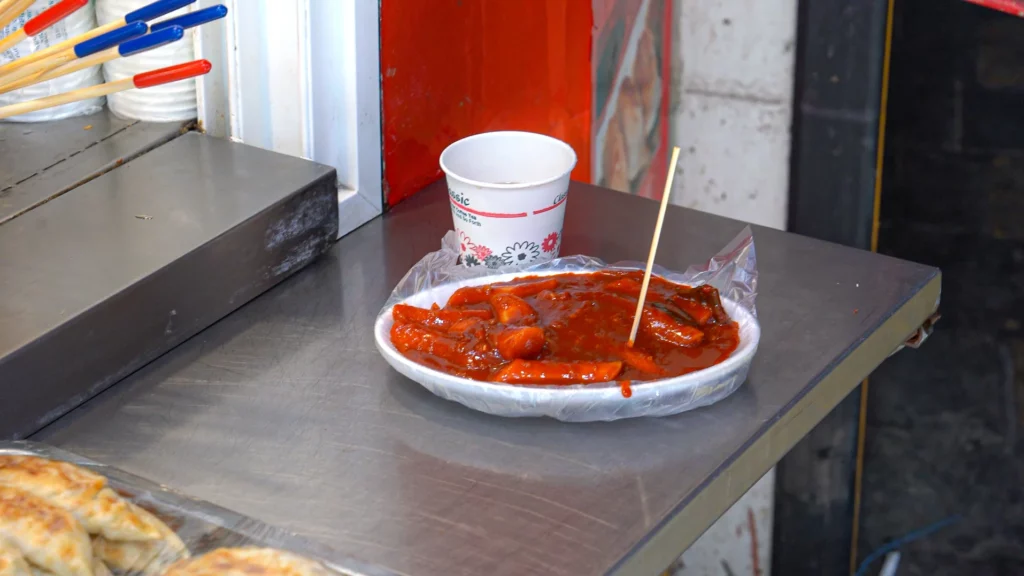
- The thickness: Most tteokbokki sauces are soupy and red. Here it is glossy and clings to every rice cake like a glaze.
- The garlic forward profile: Many vendors use just a hint of garlic powder. This place uses what tastes like a full handful of fresh, chopped Korean garlic per portion.
- The slow build of heat: It is not the eye-watering kind of spicy. It is a warm, savory burn that sneaks up on you around bite four.
Korean garlic itself is a force to be reckoned with — known for higher allicin levels and a more pungent, lingering bite than Western varieties. If you want to understand why this dish tastes so distinctly Korean, the role of Korean garlic in traditional cooking is the missing piece of the puzzle. Combined with fermented gochujang chili paste, the result is a sauce that delivers heat, sweetness, umami, and a slow-burn pungency in every bite.
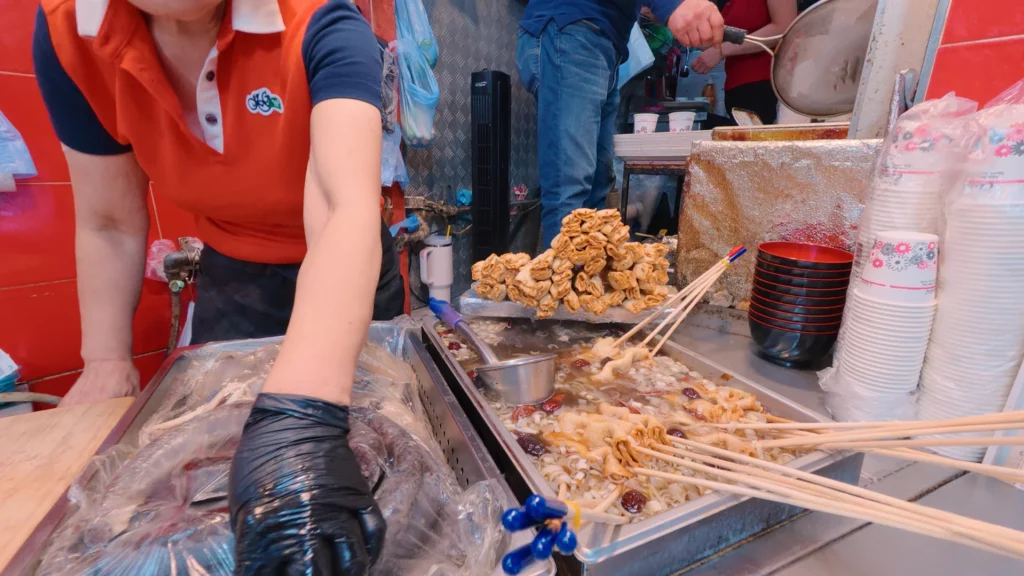
💡 Pro tip: Don’t drink water immediately after your first bite. Let that garlicky-spicy wave roll across your palate. Reach for the free fish cake broth (오뎅 국물) on the side instead — it cools and complements perfectly.
Why the Chewy Rice Cakes Make All the Difference (쫀득한 쌀떡의 매력)
Many cheap tteokbokki spots — especially around tourist zones — use wheat-based rice cakes (밀떡) because they are cheaper and softer. Shinsegae sticks proudly to ssaltteok (쌀떡), the traditional rice-flour cylinder that Koreans consider the original, authentic option.
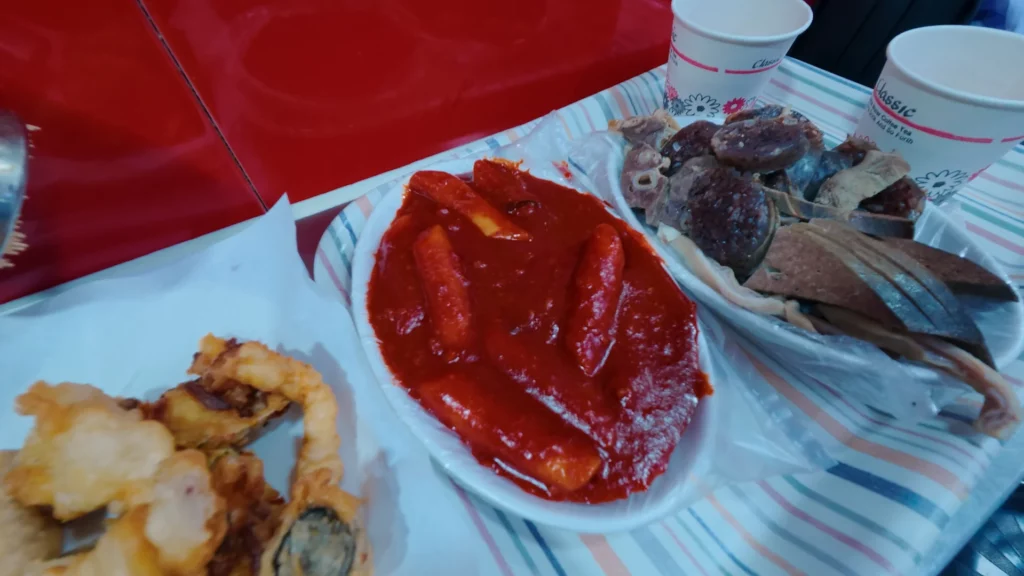
The difference is immediately obvious in your first chew. Wheat rice cakes go limp fast and break apart in the sauce. Rice-flour ssaltteok holds its shape, has a denser bounce, and gives you that famous jjondeuk-jjondeuk (쫀득쫀득) sensation — somewhere between al dente pasta and Japanese mochi but distinctly meatier on the bite.
The owner reportedly sources fresh rice cakes from a local mill every single morning, which is why the texture stays consistent year-round. For anyone curious about the cultural and structural difference between the two main types, our guide to Ssaltteok and rice-based tteokbokki rice cakes walks through exactly why traditional shops insist on the rice version. There is also a much broader story behind these humble cylinders — Korean rice cakes appear at births, weddings, and lunar new year celebrations, and our complete guide to tteok and Korean rice cakes traces that 1,000-year journey beautifully.
The Ultimate Bunsik Combo: How to Eat Like a Local (K-분식 완벽하게 즐기기)
Here is where most tourists go wrong. They order only the tteokbokki and miss the entire point. Korean bunsik culture is about dipping — using sides as edible spoons to scoop up that incredible sauce until the plate is wiped clean. Locals know that every additional menu item is a delivery vehicle for more garlic-chili glory.
The Locals’ Order Lineup
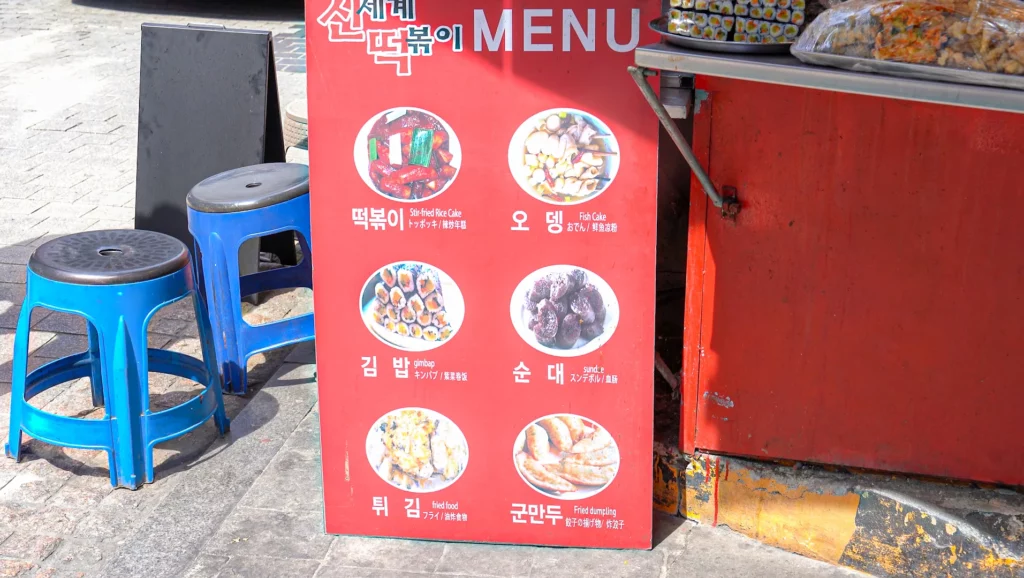
- Tteokbokki (떡볶이) — ₩5,000: The mandatory hero. Order one portion per person, minimum.
- Kkoma Gimbap (꼬마김밥) — ₩4,000: Bite-sized seaweed rice rolls. The mild, nutty rolls are made specifically to dunk straight into the spicy garlic sauce. This combination is what locals call the "holy grail" of bunsik.
- Gun-mandu (군만두 / Fried Dumplings) — ₩4,000: Pan-fried meat dumplings with juicy pork-and-glass-noodle filling. Crispy outside, soaked in red sauce on the inside — pure addiction.
- Twigim (튀김 / Fried Snacks) — ₩4,000: Crunchy battered vegetables, sweet potato, and squid. Perfect for sauce-soaking.
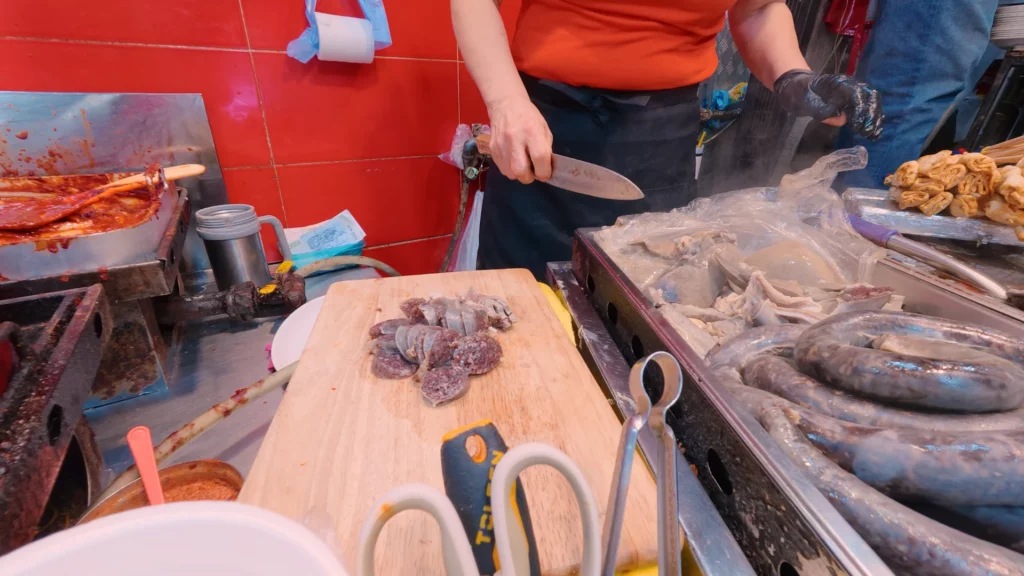
- Sundae (순대) — ₩5,000: Korean blood sausage made with glass noodles and savory pork. Surprisingly creamy and mild, it picks up the sauce beautifully.
The "Pro Move" Order
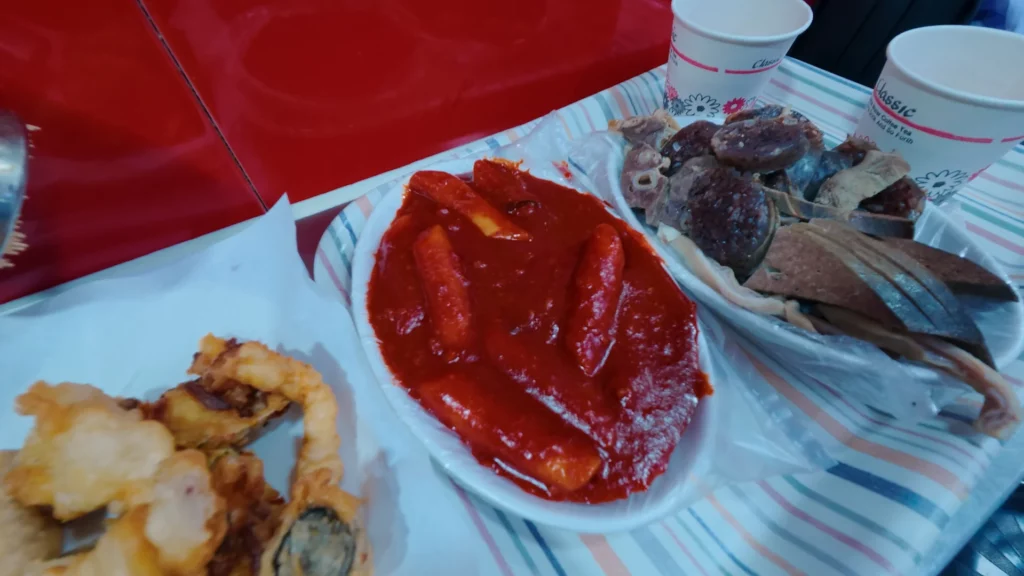
If there are two of you, this is the absolute winning combination at Shinsegae Tteokbokki: 1 Tteokbokki + 1 Kkoma Gimbap + 1 Mandu = the ultimate tasting experience for around ₩13,000 ($9.50 USD).
For first-timers curious about that mysterious dark sausage, our deep dive into authentic Korean sundae and where to find the best in Seoul explains exactly what to expect from this beloved street food classic. And if you want to nerd out on the rolled rice rolls, how to enjoy gim and gimbap properly covers everything from texture to dipping technique.
Affordable Local Vibe: A Budget-Friendly Pit Stop in Pricey Myeongdong (가성비 넘치는 로컬 맛집)

Let’s be honest — Myeongdong is not cheap anymore. A bowl of generic ramen here can run you over ₩12,000, and many "Korean-style" steakhouses pull tourists in for ₩30,000+ meals.
Shinsegae Tteokbokki is the antidote. Two people can absolutely demolish their hunger for under ₩15,000 total ($11 USD) — a shocking value for the heart of Seoul’s most famous shopping street.
Quick Cost Comparison: Myeongdong Eating
Meal TypeAverage Cost (KRW)Cost in USD
Tourist-strip cheese skewer
₩8,000
~$5.80
Chain café sandwich + drink
₩12,000
~$8.70
Casual Korean BBQ lunch set
₩18,000–25,000
~$13–18
Shinsegae Tteokbokki combo
₩9,000–13,000
~$6.50–9.50
This makes it the perfect shopping pit stop. Pop in between hauls at Olive Young, ABC Mart, or Lotte Avenuel, refuel for under ten bucks, and march back into the chaos with garlic on your breath and a smile on your face.
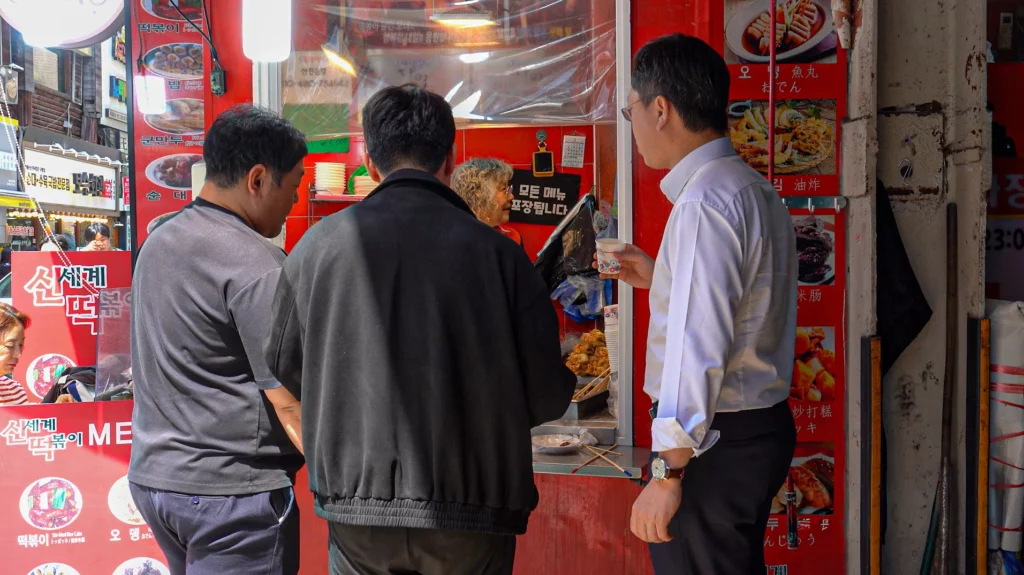
If you are looking to combine multiple iconic Myeongdong food stops in a single day, pair this with a morning visit to Myeongdong’s three-generation hamburger toast vendor for breakfast, or grab a late-night ramen run at Emart24’s K-Food Lab in Myeongdong after a full day of shopping. Need dumplings on a different day? Bukchon Son Mandu’s Myeongdong branch is also nearby.
Korean Food FAQ: Garlic Tteokbokki Explained
What makes this dish uniquely Korean?

Tteokbokki is one of Korea’s defining street foods, born from post-Korean War resourcefulness. The modern spicy version was reportedly invented in 1953 by Ma Bok-rim in Seoul’s Sindang-dong neighborhood, when she dropped a piece of rice cake into jajangmyeon black bean sauce and recognized the magical chewy-saucy combo. What sets Shinsegae Tteokbokki’s version apart is the unusual amount of fresh garlic — a deeply Korean ingredient. To understand the full historical arc, our deep dive on the evolution of tteokbokki from royal court to street food traces that journey beautifully.
What are the key ingredients that create this flavor?
Three ingredients carry the entire dish:
- Gochujang (고추장 / Korean Fermented Chili Paste): A months-fermented blend of red chili powder, glutinous rice, and soybean. Provides spicy-sweet umami depth that simple hot sauces cannot replicate. Rich in beneficial fermentation compounds.
- Korean Garlic (마늘): Pungent, sharp, and significantly more aromatic than Western garlic. High in allicin, with documented immune-boosting benefits.
- Ssaltteok (쌀떡 / Rice Cylinder Rice Cake): Made from non-glutinous short-grain rice. Dense and chewy, it absorbs sauce gradually, adding satisfying bite without going mushy.
The fermentation in the gochujang is the secret weapon. Months of slow ageing in earthenware pots produce probiotics and lactic acid bacteria that develop the deep, layered "wine-like" complexity locals describe as gamchilmat (감칠맛, savory umami).
How would you describe the taste and spice level?
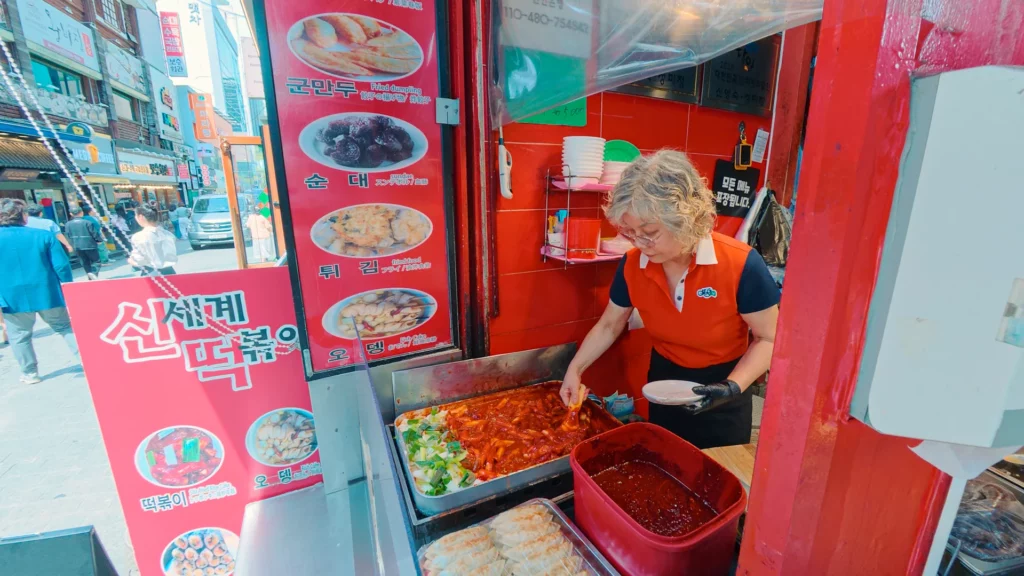
On a 1–10 spice scale, Shinsegae Tteokbokki sits around a 5 to 6. Spicy enough to wake up your palate but not blazing hot. The dominant flavors are:
- Savory and umami (60%)
- Sweet (20%)
- Pungent garlic (15%)
- Spicy heat (5%)
The texture is the magic — sauce is thick like glaze, rice cakes are firmly chewy, and the dish is served piping hot. Koreans describe the sauce as kkudeokhada (꾸덕하다, "thickly luxurious").
What should first-time eaters know?
A few practical tips for first-timers:
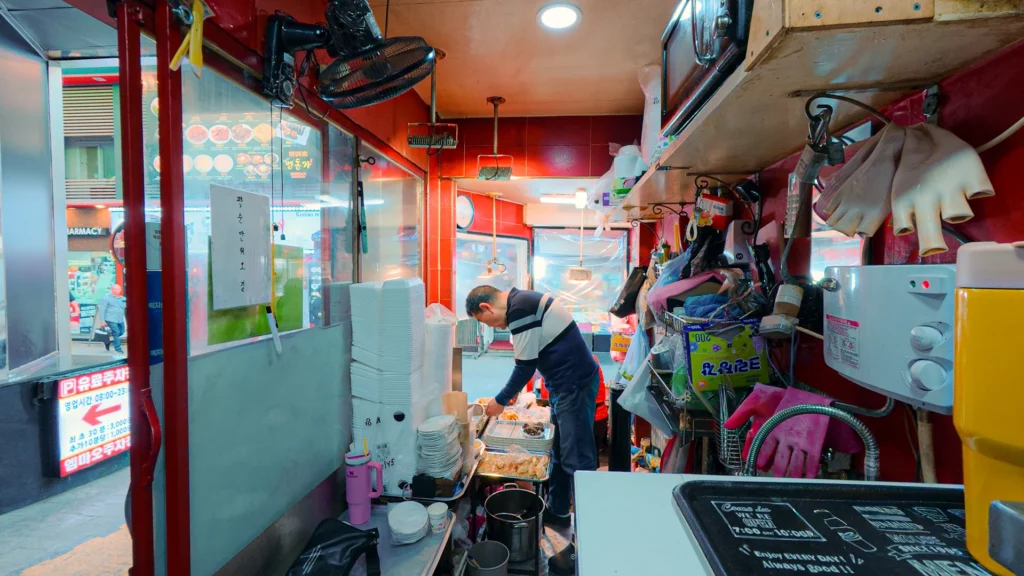
- Order seated, eat fast. The shop only has six seats, and turnover is quick.
- Don’t be shy with chopsticks. Spear two or three rice cakes at a time and dip generously.
- Use the gimbap as a sauce sponge. This is not strange, this is the way.
- Free oden broth refills. A small paper cup of fish cake broth comes with your meal — it is meant to cleanse the palate.
- Cash or T-money preferred, but credit cards are accepted.
- Closes at 6 PM sharp and often sells out earlier. Go before 5 PM.
For anyone tempted to try recreating this at home, our authentic spicy tteokbokki recipe breaks down the technique step-by-step. For a non-spicy historical alternative, the royal court Gungjung Tteokbokki recipe shows how this dish began life as palace food in the Joseon Dynasty.
How to Find Shinsegae Tteokbokki
Address & Hours
- Address: 10, Myeongdong 9-gil, Jung-gu, Seoul (서울특별시 중구 명동9길 10)
- Phone: 02-778-1680
- Hours: 9:00 AM – 6:00 PM (closed irregularly; calling ahead is recommended)
- Closest subway: Euljiro 1-ga Station (을지로입구역, Line 2) Exit 5 — just 3 minutes on foot. From Myeongdong Station (Line 4) Exit 5, it is about 7 minutes.
Look For…
A small storefront with a bright red signboard right next to the Olive Young Myeongdong store. The shop is closer to Lotte Avenuel than to the main Myeongdong shopping street. If you smell garlic, you are nearby.
For deeper tourist context on the area itself, the official Korea Tourism Organization guide to Myeongdong is the best government-curated overview of nearby attractions, including Myeongdong Cathedral and the cosmetics street. For more on Korean street food traditions in general, Michelin Guide’s coverage of Korean fermented food culture provides excellent context on why ingredients like gochujang form the soul of dishes like this one.
Final Verdict: A Pilgrimage Worth Making

Shinsegae Tteokbokki is not flashy. It is not Instagram-bait. There is no English menu, no air conditioning, and the seating situation is genuinely tight. But every single one of those quirks is the reason this place has stayed beloved for over 45 years while flashier neighbors have come and gone.
If you want to taste the real Korean bunsik that locals queue up for — thick garlic-laden sauce, perfectly chewy rice cakes, and the addictive ritual of dipping golden gimbap into a glowing red pan — this is the spot.
So the next time you are recharging between Myeongdong shopping hauls, skip the tourist carts. Walk three minutes from Euljiro 1-ga Station, find the little red sign, squeeze onto a stool, and order a tteokbokki, a kkoma gimbap, and one mandu. Then, when no one is looking, pick up a piece of gimbap with your chopsticks and dunk it deep into that thick, glossy garlic sauce.

Take a bite. Smile. Welcome to real Korea.
Did this guide help you plan your Myeongdong food adventure? Share it with a fellow traveler heading to Seoul, and let us know which dipping combination you tried first!
Location
Loading interactive map...
Reviews
5.0
0 reviews
5
0%
4
0%
3
0%
2
0%
1
0%
Loading reviews...
