


Wandering through Ikseon-dong’s charming hanok alleys, the intoxicating aroma of freshly baked butter and sea salt stops you mid-step. Lines of visitors snake around a beautifully restored traditional Korean house, all waiting for one thing: Jayeondo’s legendary salt bread. This isn’t just another Seoul bakery trend—it’s a culinary experience where Japanese-inspired salt bread meets Korean artisan craftsmanship in one of Seoul’s most photogenic neighborhoods.
Jayeondo Salt Bread: The Ultimate Guide to Ikseon-dong's Most Irresistible Bakery
5
Jayeondo Salt Bread: The Ultimate Guide to Ikseon-dong's Most Irresistible Bakery
5
Jongno-gu, Seoul, Republic of Korea 166-51 Ikseon-dong
Editor: James Lee


Interior02
Food02

Menu01
Overview
+82 02-743-2245
No WiFi
Outdoor Seating Available
Electronic Payment, Credit Card accepted: American Express, Master Card, Visa
Introduction
Operating hours
Mon, Tue, Wed, Thu, Fri, Sat, SunAM 9:00 - PM 10:00
Menu
Editor's Detail
Jayeondo has transformed the simple concept of salt bread (소금빵, sogeumppang) into an art form, drawing lines that rival Seoul’s most famous restaurants. Located in the heart of Ikseon-dong’s historic hanok village, this bakery has become more than just a place to grab a quick snack—it’s a destination that captures the essence of modern Korean food culture while honoring the neighborhood’s century-old architectural heritage.
Table of Contents
Why Jayeondo Salt Bread Became Ikseon-dong’s Most Popular Bakery
Jayeondo didn’t start in trendy Ikseon-dong. The brand’s origin story begins on Yeongjong Island in Incheon, where founder and chief patissier Mr. Chun spent years perfecting his salt bread recipe. What began as a small island bakery selling 7,000 pieces daily eventually expanded to Seoul’s most fashionable neighborhoods: Seongsu, Dosan, Yeonnam, and finally Ikseon-dong.
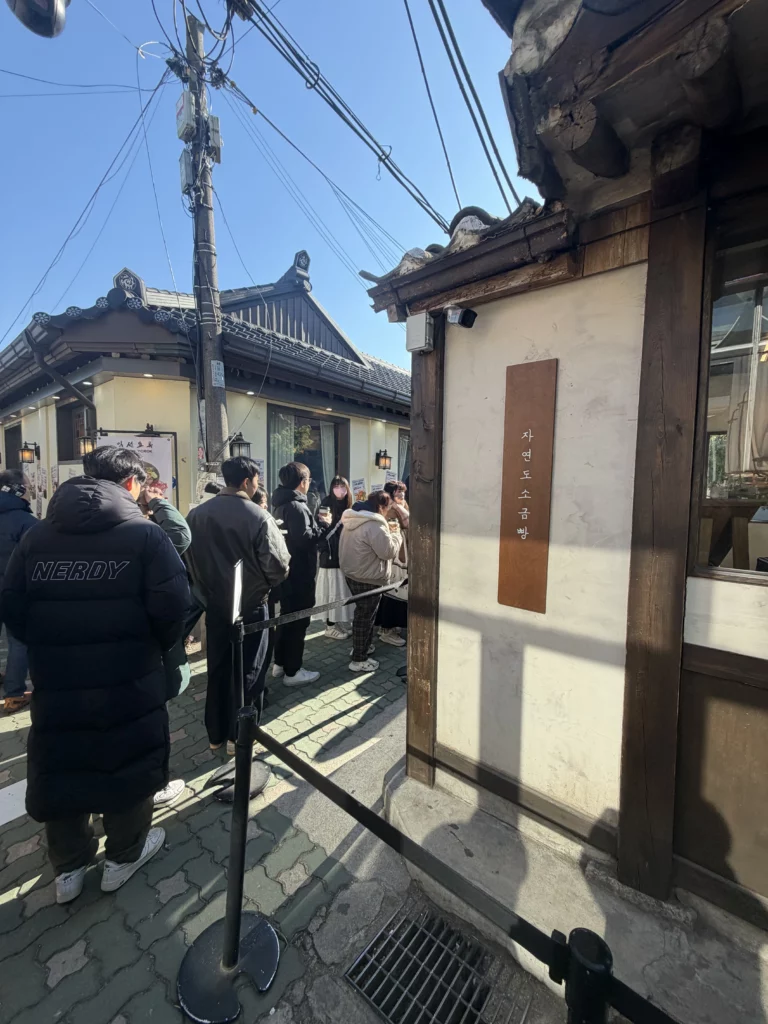
The Ikseon-dong location stands apart from other branches for several compelling reasons. First, the setting itself enhances the experience dramatically. While other Jayeondo locations occupy modern storefronts, the Ikseon branch nestles within a beautifully preserved hanok structure with an open-air courtyard centered around a mature Hallabong orange tree. This isn’t just a bakery—it’s an immersive cultural experience that combines Seoul’s architectural heritage with contemporary food trends.
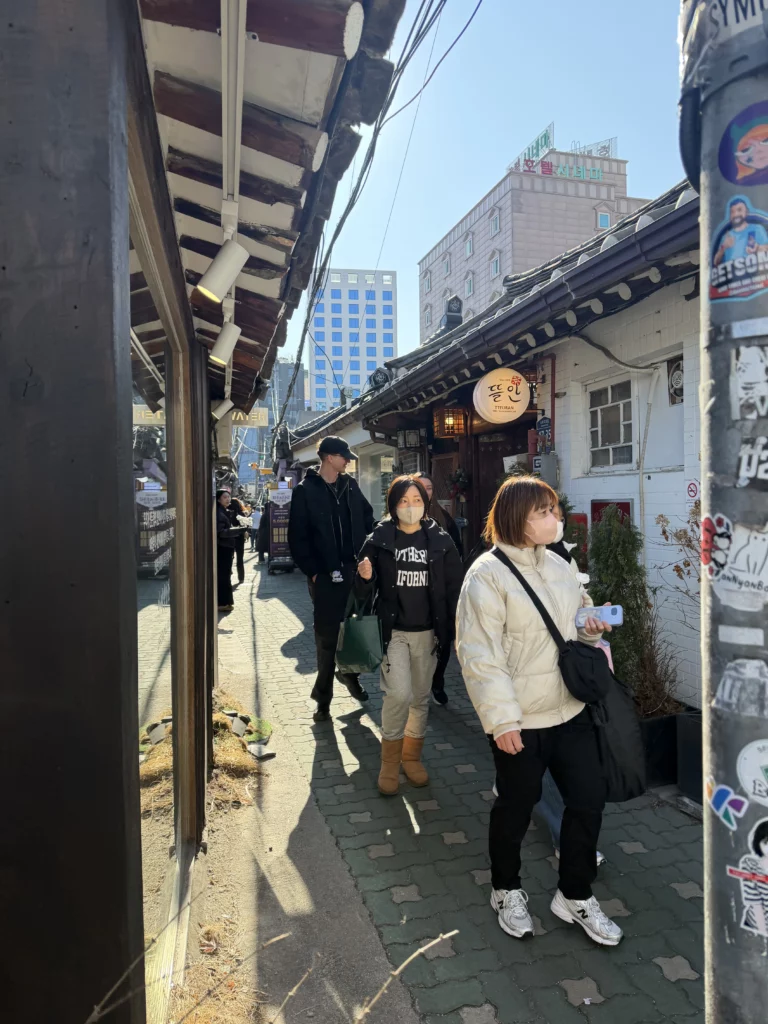
Second, the Ikseon-dong location benefits from the neighborhood’s unique character. Unlike the industrial-chic vibe of Seongsu or the upscale polish of Dosan, Ikseon-dong attracts visitors specifically seeking authentic Korean experiences. The narrow alleyways lined with traditional wooden houses create a nostalgic atmosphere that perfectly complements the artisan approach to salt bread making. Visitors naturally gravitate toward Jayeondo as part of their Ikseon-dong exploration, similar to how hanok cafes like Cafe Onion Anguk have become destination spots by blending traditional architecture with modern cafe culture.
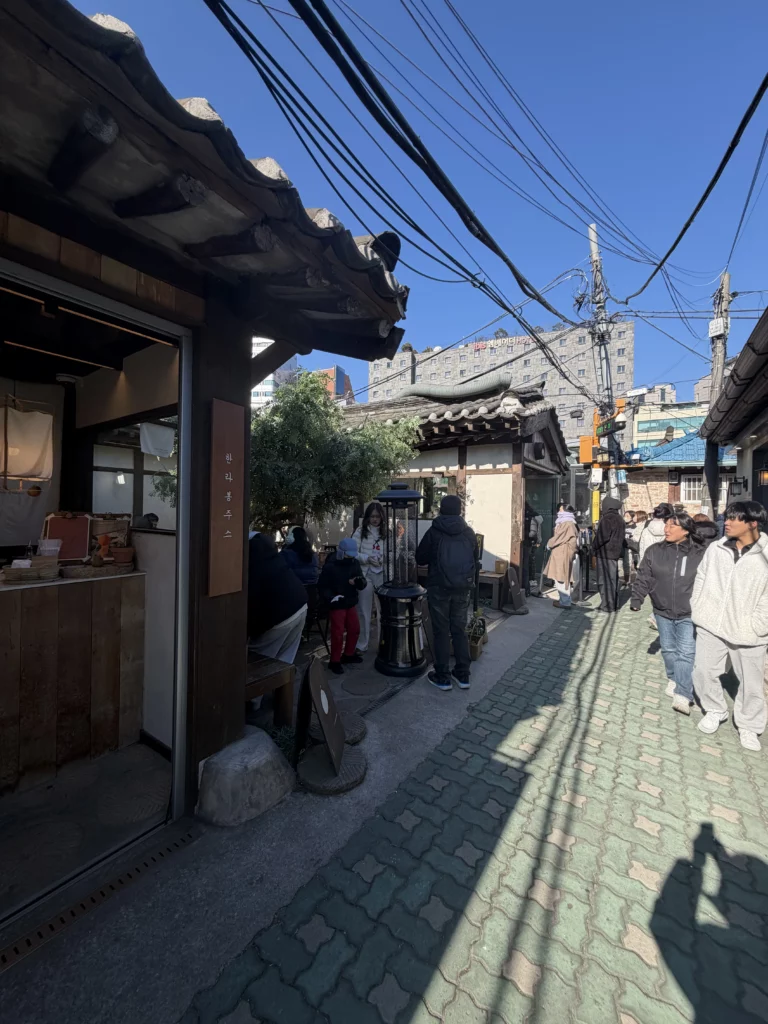
Third, Jayeondo’s unwavering commitment to quality resonates with Ikseon-dong’s discerning audience. Mr. Chun conducted over 100 ingredient tests and 1,000 baking trials before finalizing his recipe. This dedication mirrors the neighborhood’s own transformation—Ikseon-dong didn’t become Seoul’s hippest traditional village by accident, but through careful preservation and thoughtful modernization. The bakery’s philosophy aligns perfectly with the area’s ethos: honor tradition while embracing quality and innovation.
The bakery’s appearance on MBC’s popular variety show "I Live Alone" (나 혼자 산다) featuring celebrities Jeon Hyun-moo and Lee Ju-seung further amplified Jayeondo’s already considerable reputation. Unlike many restaurants that experience temporary post-TV attention, Jayeondo maintained consistent quality that transformed first-time viewers into regular customers. The show highlighted what locals already knew—this salt bread genuinely deserves the hype.
What Makes Authentic Korean Salt Bread Special?
Salt bread might sound like a simple concept, but this Korean bakery phenomenon represents a fascinating cultural crossover between Japanese shokupan (식빵, milk bread) traditions and Korean artisan baking innovation. The dish originated in Japan as shioppan (塩パン), created around 2003 at a small bakery in Yawatahama, Ehime Prefecture, where a knob of butter is folded into the dough and coarse salt is scattered over the top before baking. The trend crossed to Korea around 2018-2019 and exploded in popularity during the pandemic when Koreans, unable to travel abroad, sought novel food experiences domestically.
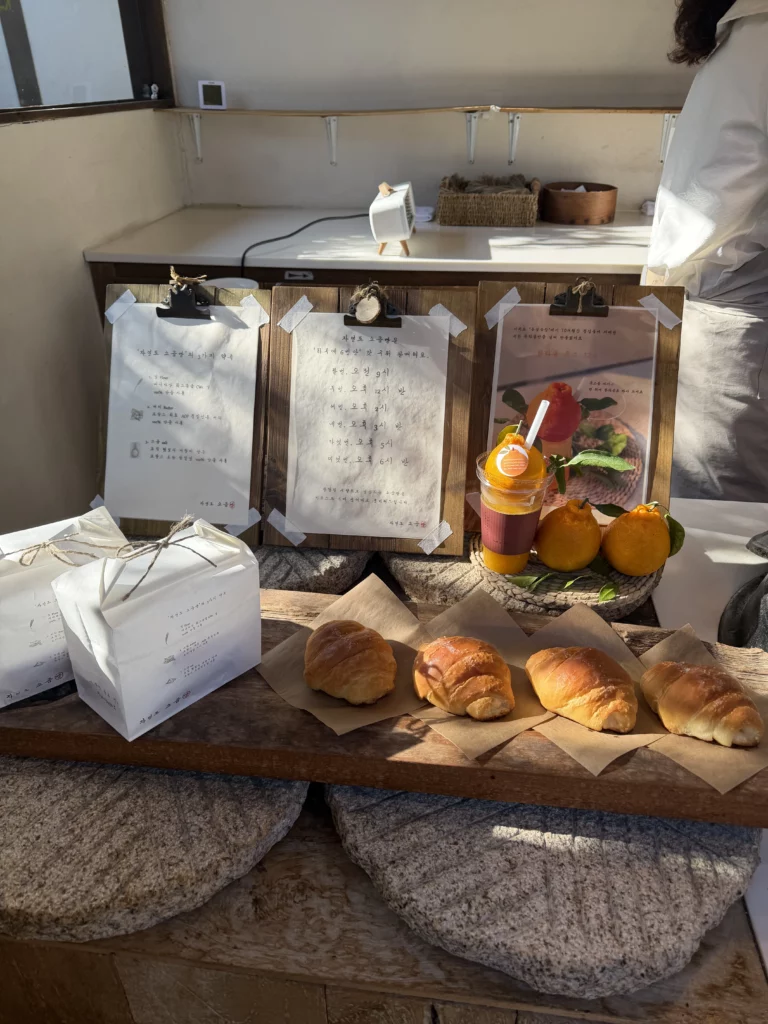
What distinguishes Korean salt bread from its Japanese predecessor is the distinctive approach to texture and flavor balance. Japanese shioppan already folds butter into the dough and finishes it with salt on top, so the Korean departure is not the butter but the crumb around it. Korean flour types, particularly 강력분 (gangllyeok-bun or strong flour/bread flour) with higher protein content, contribute to the characteristic chewy-yet-light texture that Korean consumers prefer.
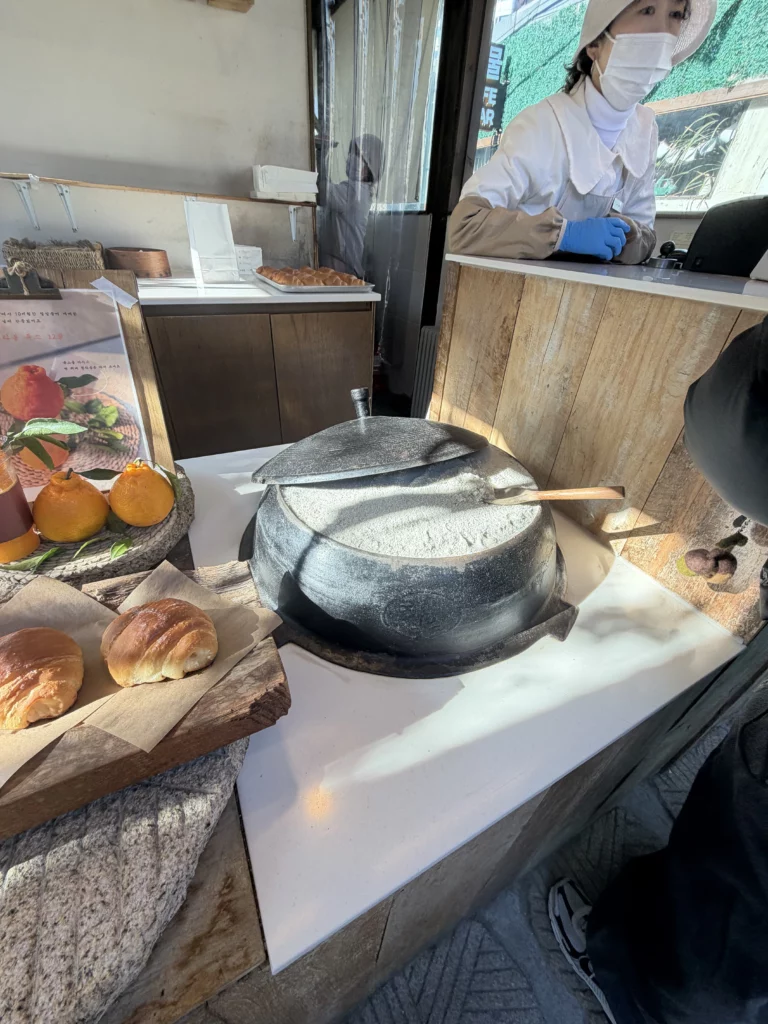
The cultural significance extends beyond taste. Salt bread represents Korea’s remarkable ability to adopt international food trends and transform them into something distinctly Korean. Similar to how Korea elevated fried chicken into a national obsession or transformed Japanese ramen into uniquely Korean ramyeon varieties, salt bread became a canvas for Korean innovation in ingredient sourcing, baking techniques, and presentation aesthetics. The photogenic quality of perfectly baked salt bread—golden crust glistening with salt crystals—makes it ideal for Korea’s vibrant social media culture.
Jayeondo’s salt bread also taps into Korea’s growing appreciation for artisan foods made with premium ingredients. Korean consumers, particularly younger generations, increasingly value quality over quantity and are willing to pay premium prices for demonstrably superior products. This shift in food culture explains why Jayeondo can charge 12,000 won (approximately $9) for four pieces of bread and maintain constant demand—the price reflects genuine quality that customers can taste and appreciate.
What Are the Key Ingredients in Jayeondo’s Salt Bread?
Jayeondo’s exceptional flavor profile stems from three meticulously sourced core ingredients, each chosen for specific properties that contribute to the bread’s signature taste and texture.
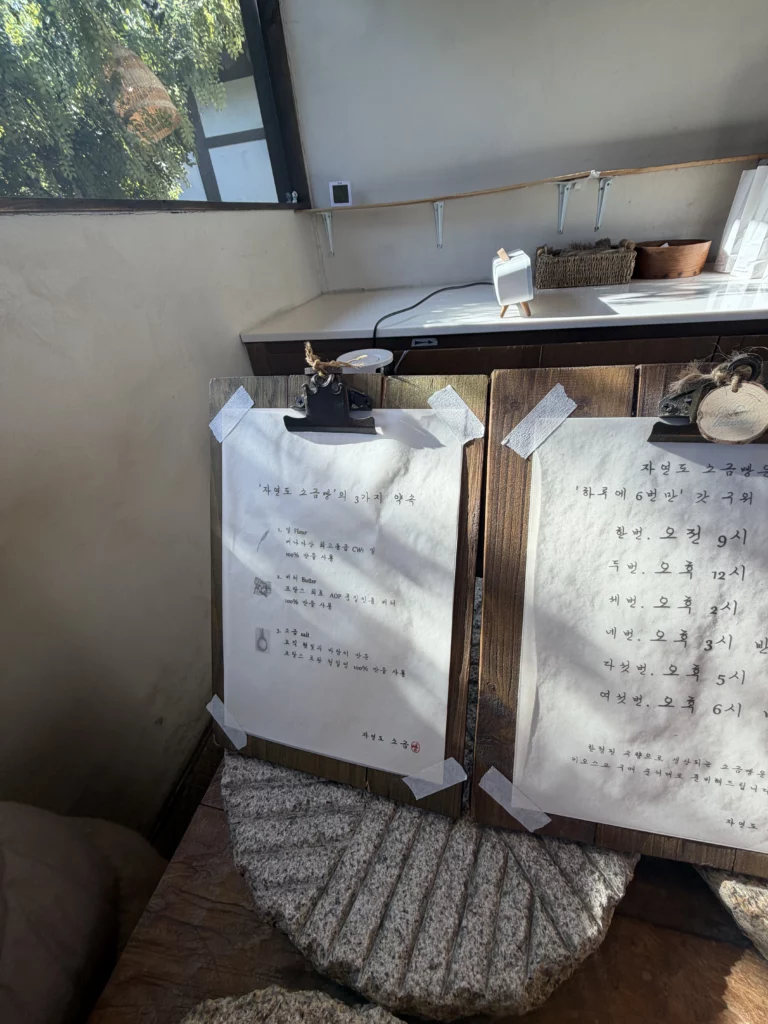
Premium Canadian Wheat Flour (100% Top-Grade)
Jayeondo exclusively uses high-protein Canadian wheat flour, which provides the structural foundation for the bread’s distinctive texture. Canadian wheat is prized globally for its consistent quality and high gluten content, essential for achieving the perfect balance between a crispy exterior and soft, airy interior. The flour’s protein percentage (typically 12-14%) allows for extensive gluten development during kneading, creating the elastic network that traps air bubbles during fermentation. This results in the bread’s characteristic light, fluffy texture that remains tender even after cooling. Korean bakers particularly value Canadian wheat for its reliability—unlike some domestic or other imported flours that can vary between batches, Canadian wheat maintains consistent performance across seasons.
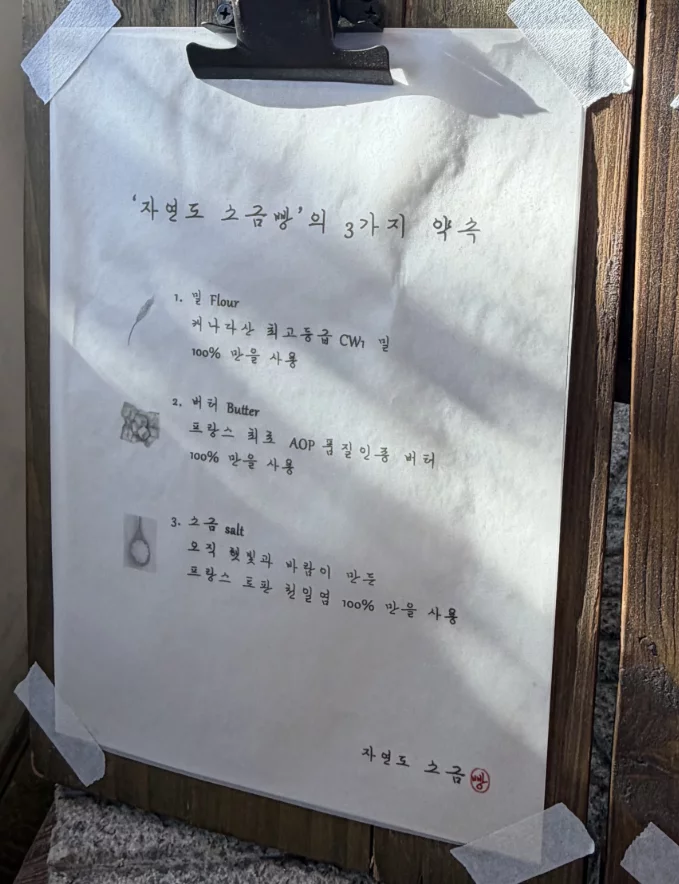
AOP-Certified French Butter (100%)
The butter makes or breaks salt bread, and Jayeondo refuses to compromise. The bakery uses only AOP-certified French butter (Appellation d’Origine Protégée), which guarantees both origin and traditional production methods. AOP butter must contain at least 82% milk fat compared to standard butter’s 80%, creating richer flavor and superior baking properties. More importantly, French butter’s fermented quality—produced using cultured cream rather than sweet cream—adds subtle tangy notes that complement the salt perfectly. The butter is incorporated both into the dough and brushed on the surface before baking, creating multiple layers of rich, creamy flavor. This abundant butter content transforms simple bread into an almost croissant-like experience, where each bite releases aromatic butter notes that linger pleasantly on the palate. The nutritional trade-off is worth noting: this butter-forward approach makes salt bread an indulgent treat rather than everyday food.
Sun-Dried French Sea Salt (100%)
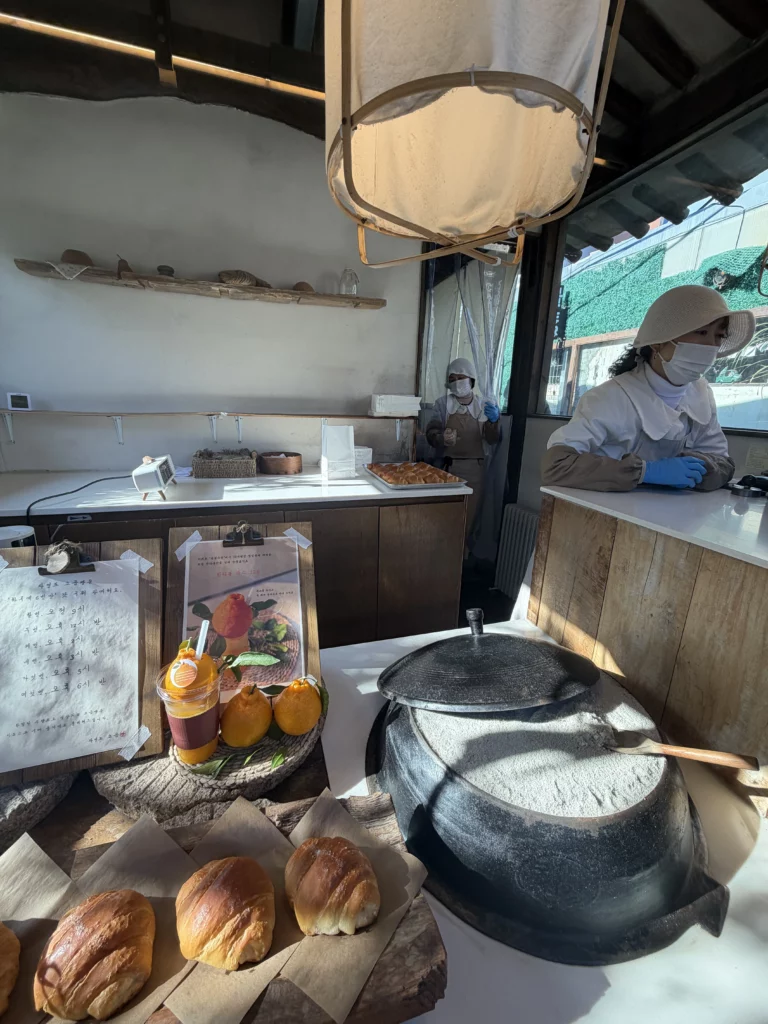
Korean salt varieties are abundant and respected, yet Jayeondo chooses French fleur de sel—sea salt harvested by hand and dried naturally by sun and wind. This choice isn’t arbitrary. French sea salt contains higher mineral content (magnesium, calcium, potassium) than refined table salt, contributing complex subtle flavors beyond simple saltiness. The coarser crystals don’t fully dissolve during baking, creating pleasant textural contrast and delivering bursts of salt that enhance rather than overpower the butter’s richness. Traditional Korean sea salt (천일염, cheonillyeom) is excellent for fermentation and kimchi-making due to its coarse texture and mineral content, but French fleur de sel provides the delicate, clean salinity that suits European-style bread better. The salt serves both flavor and functional purposes—it strengthens gluten structure during kneading and controls yeast fermentation, preventing the bread from becoming too airy or losing its characteristic density.
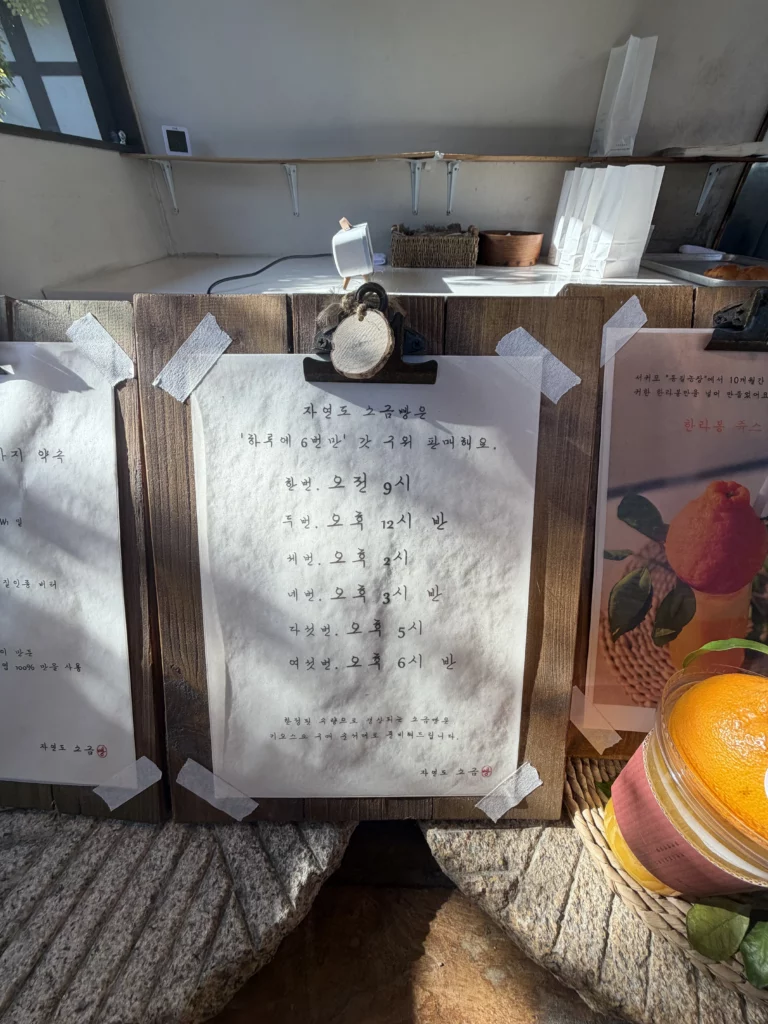
The magic happens when these three ingredients combine during Jayeondo’s precise baking process. The bread is baked fresh six times daily at scheduled intervals (9:00 AM, 12:30 PM, 2:00 PM, 3:30 PM, 5:00 PM, and 6:30 PM), ensuring customers always receive bread at peak freshness. This commitment to timing demonstrates the Korean concept of "son-mat" (손맛)—the irreplaceable quality that comes from hands-on care and attention to detail that machines cannot replicate.
How Would You Describe the Taste and Texture?
Walking up to receive your freshly baked Jayeondo salt bread, the first sensation that hits you is the aroma—warm butter mingling with toasted wheat and subtle oceanic hints from the sea salt. The visual appeal is immediate: each piece displays a gorgeous golden-brown exterior with a slightly darker, caramelized bottom, while coarse salt crystals catch the light across the gently domed top.
Spice Level: 0/10 (Not Applicable)
Unlike many Korean foods that foreigners worry might be too spicy, salt bread contains zero heat. This makes it an ideal introduction to Korean bakery culture for visitors who may be cautious about Korean chili heat levels. The flavor profile centers entirely on butter, salt, and wheat—familiar, comforting tastes that transcend cultural boundaries.
Primary Flavor Notes
The dominant flavor is butter—rich, creamy, and abundantly present without feeling greasy or heavy. The French butter’s cultured quality adds subtle complexity, a whisper of tanginess that keeps the richness from becoming cloying. The salt provides counterbalance, delivering clean mineral flavors that enhance rather than compete with the butter. Wheat flavors remain present but supporting, offering gentle nuttiness and slight sweetness from caramelization during baking. The overall impression is indulgent yet refined, rich yet balanced—each component in perfect harmony.
Unlike heavily sweet Korean bakery items or the sugar-dusted pastries common in Western bakeries, Jayeondo’s salt bread appeals to those who prefer savory-leaning flavors. The subtle sweetness comes naturally from the wheat and butter caramelization, not added sugar. This makes salt bread equally appropriate for breakfast, afternoon snack, or light dinner—versatile enough to pair with coffee, tea, or even Korean makgeolli (rice wine).
Texture Description
The textural experience unfolds in distinct layers. Breaking through the exterior produces an audible crack—the crust shatters delicately rather than requiring aggressive tearing. This crispy shell, achieved through high-temperature baking and butter-brushed surface, provides satisfying contrast to what lies beneath.
The interior presents as pillowy soft, with an open crumb structure showing irregular air pockets throughout. The texture is simultaneously airy and substantial—light enough to compress slightly when squeezed, yet substantial enough to feel satisfying. The Japanese-influenced milk bread quality creates a gentle pull when torn, indicating proper gluten development and fermentation. This isn’t dense like German rye bread or fluffy like Wonder Bread, but rather occupies a perfect middle ground that Korean consumers describe as "chewy-soft" (쫄깃하면서 부드러운).
Temperature When Served
Jayeondo serves salt bread warm from the oven when possible, though takeaway pieces may cool slightly during waiting periods. Warm bread delivers the full butter experience—the fat remains soft and aromatic, creating almost luxurious mouthfeel. The salt crystals on the surface become slightly melty in spots where butter has pooled, intensifying the savory-sweet interaction.
Interestingly, the bread remains delicious even when fully cooled, though the experience changes. Cold bread becomes denser and chewier, with the butter solidifying into rich pockets rather than coating your palate. Many customers purchase extra sets to freeze and reheat at home using air fryers or ovens, which successfully revives the fresh-baked quality. This versatility adds practical value to the relatively high price point—you’re not paying for a one-time experience but for bread that rewards multiple consumption methods.
What Should First-Time Visitors Know About Ordering?
Navigating Jayeondo’s system efficiently transforms your experience from potentially frustrating to genuinely enjoyable. The bakery’s popularity means understanding the process prevents unnecessary waiting and ensures you get the freshest bread possible.
Understanding the Two-Line System
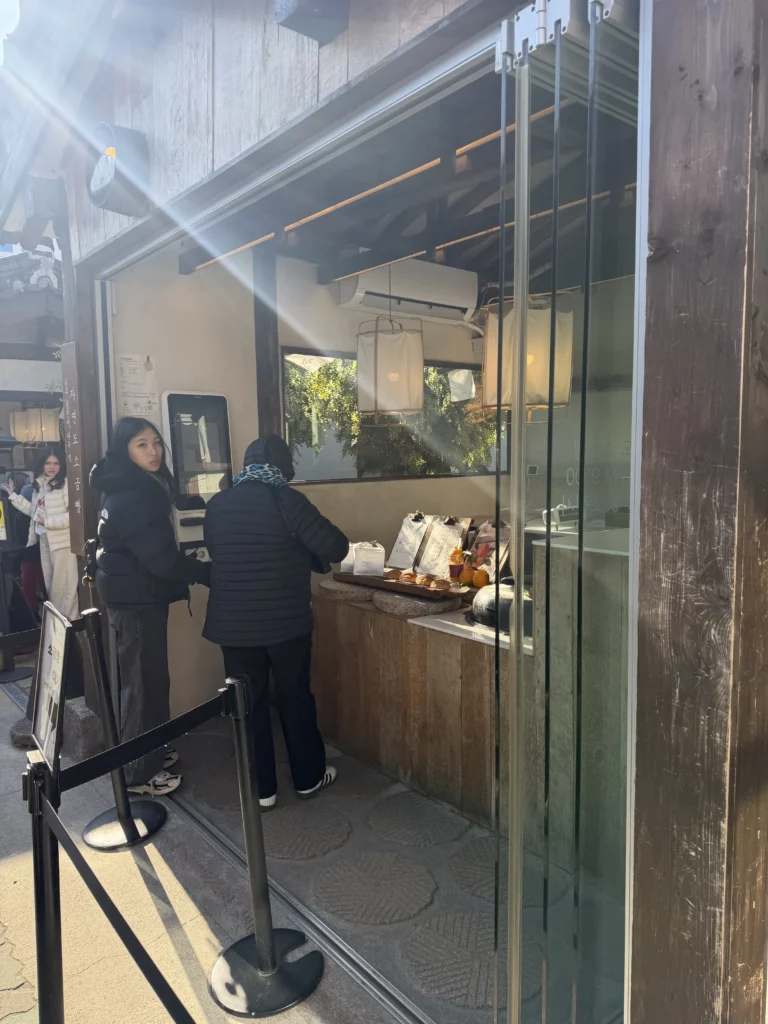
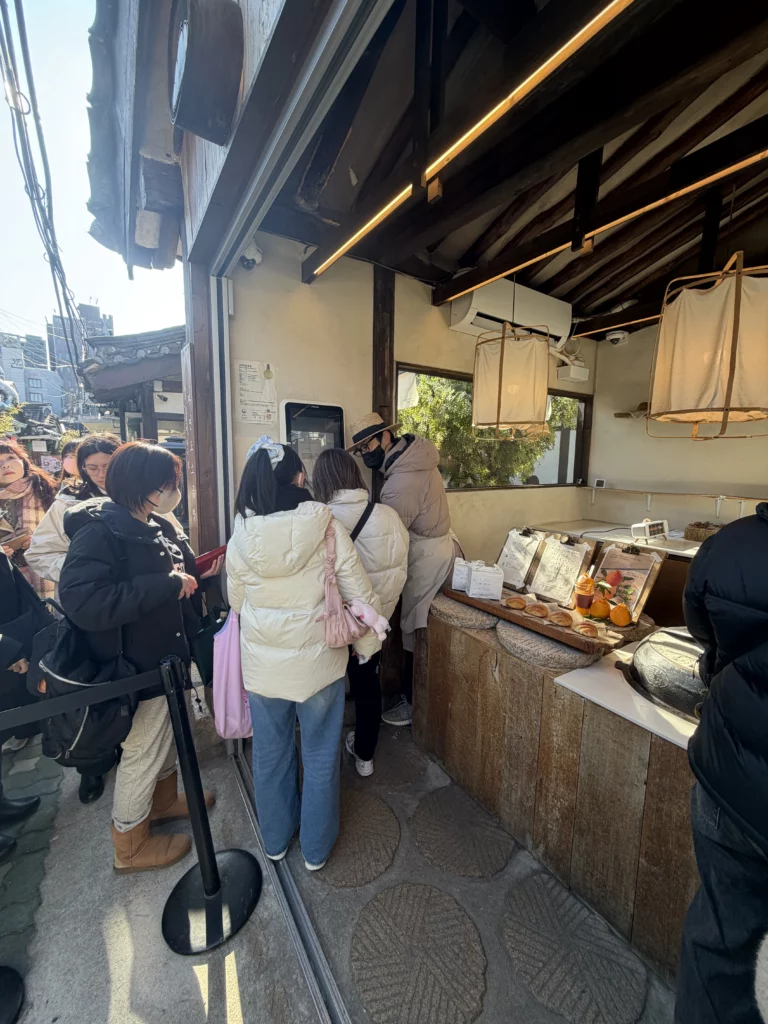
Jayeondo operates using a payment-first, pickup-second system that initially confuses many first-time visitors. Upon arrival, you’ll notice two distinct queues. The first line leads to touch-screen kiosks where you place and pay for your order. After completing payment, you receive a number ticket and must then join a second queue at the pickup counter. This separation allows the bakery to process orders efficiently while baking continues in the background. A common mistake is joining what appears to be "the line" (the pickup queue) without first paying at the kiosk, resulting in wasted time and having to restart the process.
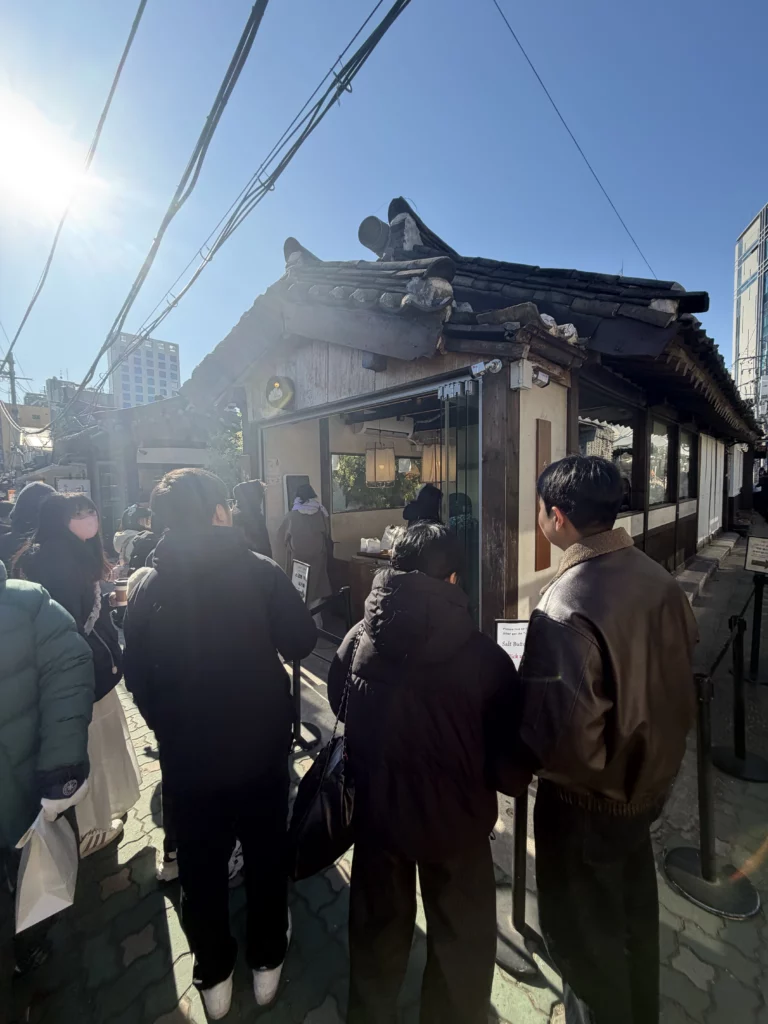
The key insight: arrive prepared to pay first via kiosk (cash and cards accepted), then mentally prepare for the second wait. On typical weekend afternoons, each line might require 10-15 minutes, so budget 30 minutes total from arrival to bread in hand.
Bread Freshness Schedule
Jayeondo bakes salt bread six times daily at specific intervals: 9:00 AM, 12:30 PM, 2:00 PM, 3:30 PM, 5:00 PM, and 6:30 PM. These aren’t suggested visiting times but rather when fresh batches emerge from the oven. Arriving 10-20 minutes before these times positions you to receive bread at absolute peak freshness—still warm, maximally crispy, with butter aromatics at their strongest.
However, the bakery maintains inventory between baking times, so you’re not required to hit these exact windows. Bread baked within the previous hour remains excellent quality. The practical sweet spot for foreign visitors is mid-afternoon (2:00-4:00 PM window) after lunch crowds dissipate but before dinner rush begins. Morning visits (9:00-10:00 AM) offer shortest wait times if you’re planning full-day Ikseon-dong exploration.
Purchasing Format and Pricing
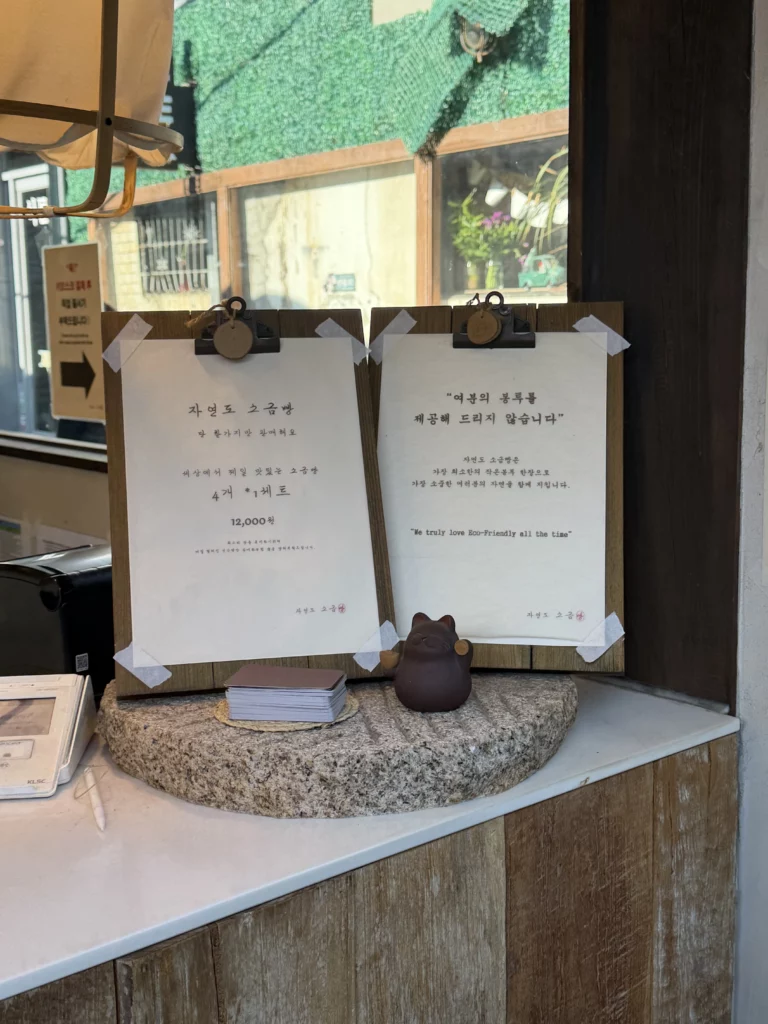
Unlike typical Korean bakeries where you can select individual items using tongs and a tray, Jayeondo sells salt bread in fixed sets of four pieces for 12,000 won (approximately $9 USD). No individual sales, no customization—the four-piece set is the only option. This policy initially frustrates solo travelers or couples worried about waste, but the bread’s keeping quality justifies the purchase. Properly stored in an airtight container, salt bread remains good for 2-3 days at room temperature, or up to one month when frozen.
The pricing represents premium positioning in Seoul’s competitive bakery market. For context, convenience store bread rolls cost 1,000-2,000 won, while chain bakery items range 2,500-4,500 won. Jayeondo’s 3,000 won per piece reflects the ingredient quality, artisan production, and brand positioning. Most customers consider the price justified after tasting the difference—this isn’t industrial bread made from shortcuts, but genuine craft baking using demonstrably superior ingredients.
Seasonal Timing Considerations
Summer visits (June-August) mean standing in outdoor queues during Seoul’s infamous heat and humidity. The hanok’s open courtyard provides some shade, but prepare for potential discomfort. Winter visits offer the opposite challenge—standing in below-freezing temperatures becomes less pleasant, though the reward of warm bread becomes even more satisfying. Spring (April-May) and fall (September-October) provide optimal visiting conditions with moderate temperatures and beautiful light filtering through Ikseon-dong’s traditional architecture.
Korean holidays (Chuseok, Lunar New Year, weeklong vacation periods) dramatically increase wait times as domestic tourists flood the neighborhood. If visiting during peak Korean vacation periods, either arrive very early (8:30 AM for 9:00 AM baking) or accept extended waits as part of the experience.
The Perfect Ikseon-dong Salt Bread Experience: Timing and Tips
Maximizing your Jayeondo visit requires understanding both the bakery’s patterns and Ikseon-dong’s broader rhythm. This neighborhood follows predictable crowd flows that smart visitors can leverage for superior experiences.
Best Times to Visit
Weekday mornings (Tuesday-Thursday, 9:30-11:00 AM) offer the most relaxed experience with minimal crowds. You’ll likely encounter only 5-10 people ahead of you in each line, and the neighborhood’s traditional alleyways remain peaceful enough to appreciate the architecture without constant photo-dodging. Early afternoon (2:00-3:00 PM) on weekdays provides a second sweet spot—lunch crowds have dissipated to return to work, while afternoon cafe-hoppers haven’t yet arrived in force.
Weekend mornings present a calculated gamble. Arriving right at 9:00 AM opening means virtually no wait, but you’ll miss the vibrant neighborhood energy that makes Ikseon-dong special. By 11:00 AM on Saturdays and Sundays, lines stretch significantly, but the people-watching and neighborhood atmosphere peak. Late afternoon weekends (4:00-5:00 PM) see lines subside slightly as day visitors begin heading toward dinner destinations elsewhere in Seoul.
Avoid weekend lunch rush (12:00-2:00 PM) unless you enjoy people-watching enough to justify 45+ minute waits. Similarly, Korean holiday weekends become genuinely overwhelming—the small alleyways fill beyond comfortable capacity, and Jayeondo’s lines can exceed one hour even for the kiosk payment stage.
Combining Jayeondo with Ikseon-dong Exploration
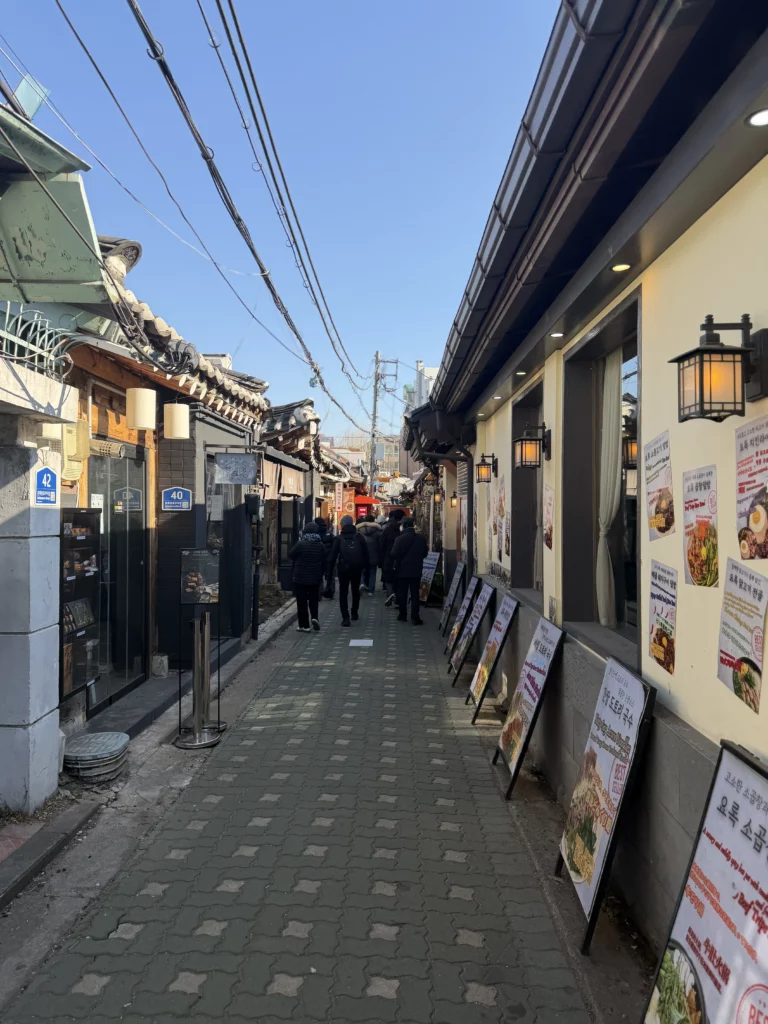
The strategic approach positions Jayeondo early in your Ikseon-dong itinerary rather than as a final stop. Purchase your salt bread within the first hour of arrival, then continue exploring with bread in hand (or stored in provided paper bag). This timing allows you to enjoy the bread while still warm if you hit a fresh batch, or have it ready for a perfect mid-exploration snack.
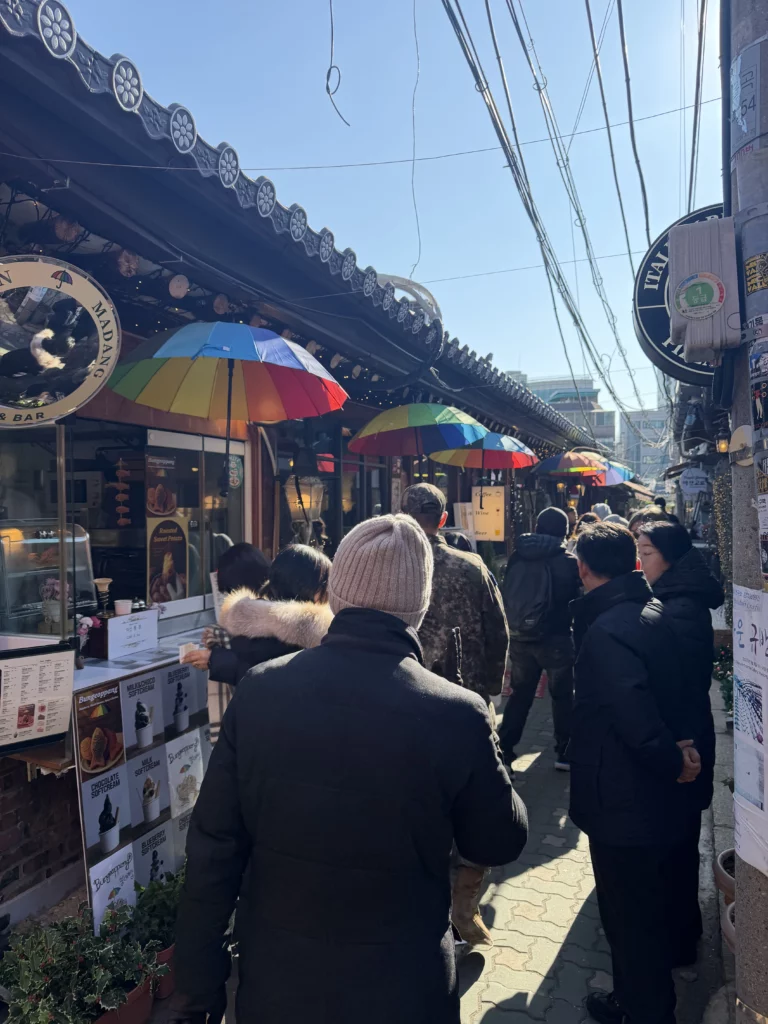
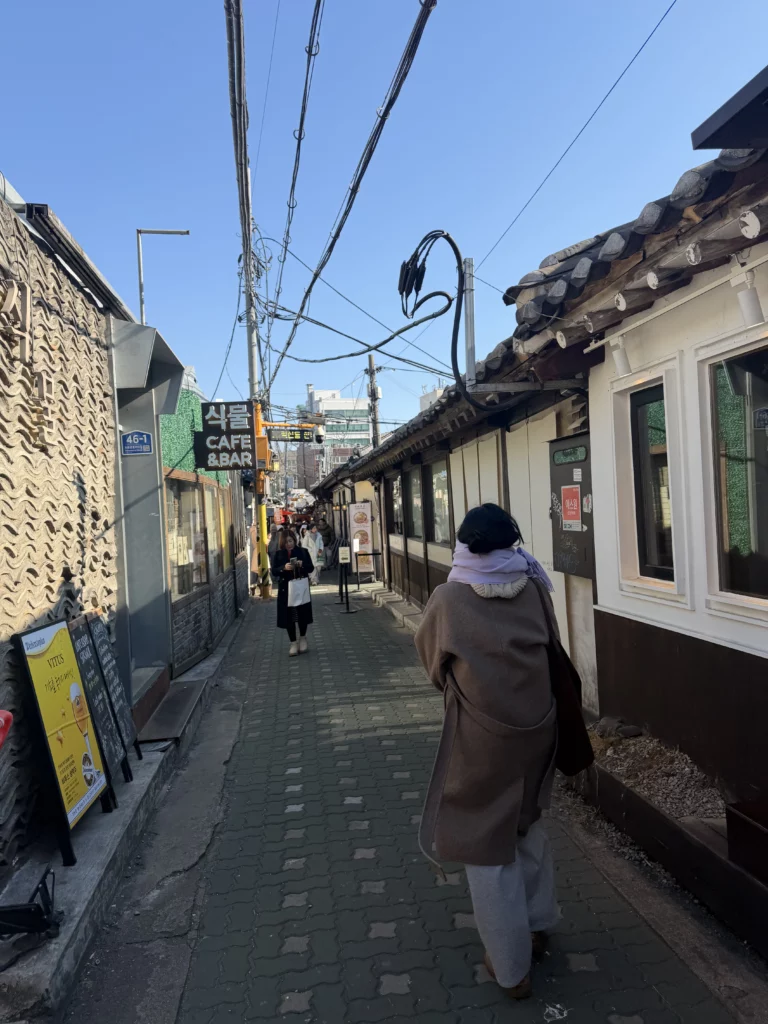
Ikseon-dong’s compact geography (roughly 200 meters by 300 meters of main walking area) means you’re never more than a five-minute walk from any location. After securing your salt bread, wander toward the neighborhood’s other culinary gems—though be warned that hanok cafes elsewhere in Seoul like Soha Salt Pond compete directly for your attention. The area also offers numerous photo opportunities: traditional hanok facades, narrow alleyways with modern cafes tucked inside historic structures, and the iconic Korean aesthetic of vintage architecture meeting contemporary design.
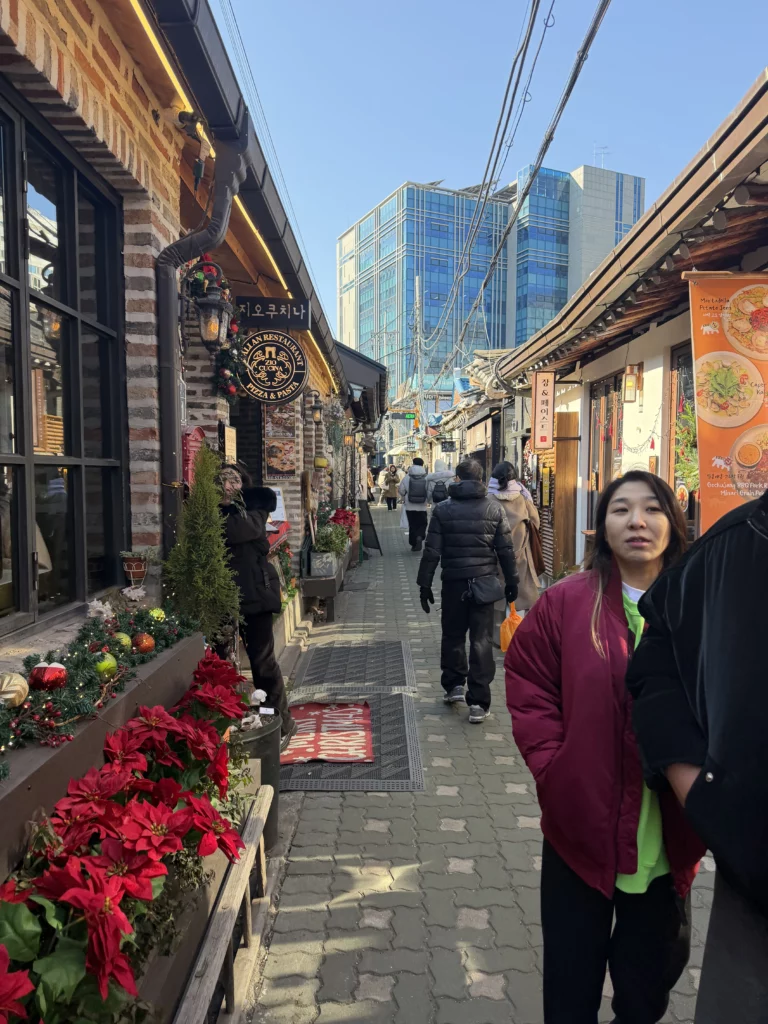
Consider timing your Jayeondo visit around other Jongno-gu attractions. The neighborhood sits within 15 minutes’ walk of Changdeokgung Palace and Bukchon Hanok Village, and just two subway stops from Gwangjang Market. A logical day itinerary might include morning palace tour, late morning Jayeondo salt bread purchase, early afternoon Ikseon-dong cafe exploration, then evening market dinner.
Beyond Salt Bread: The Complete Jayeondo Menu
While salt bread dominates Jayeondo’s identity, the Ikseon-dong location offers complementary beverages that enhance the experience.
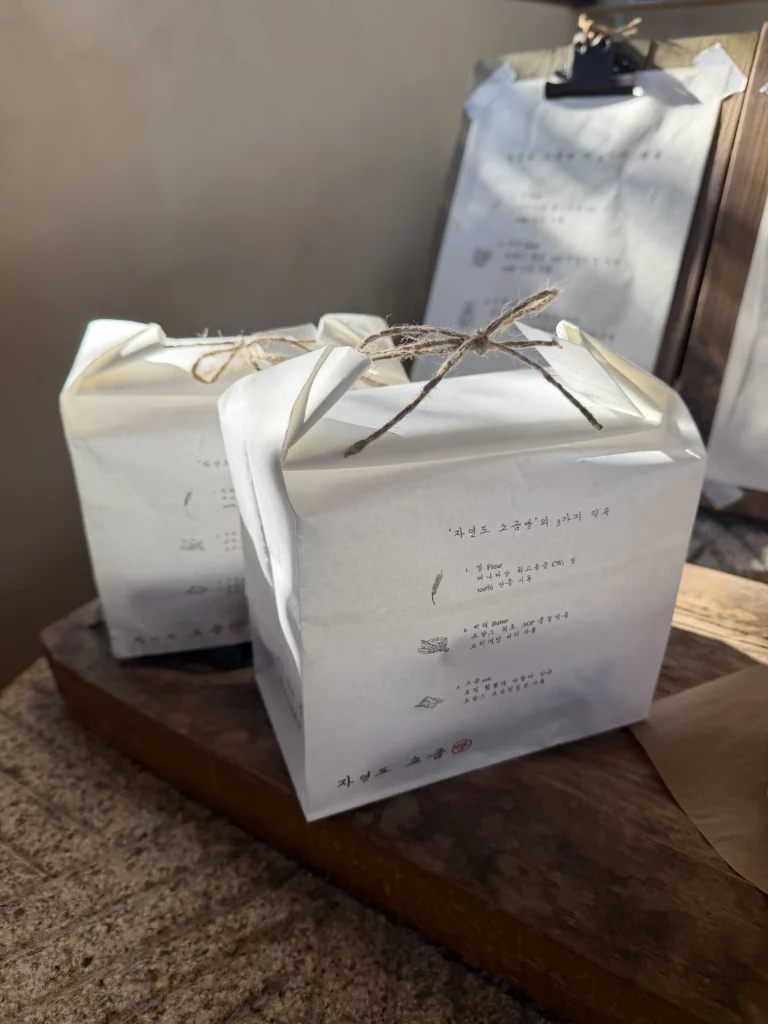
Jayeondo Salt Bread (4-piece set: 12,000 won)
The star attraction requires no introduction by this point. Each set contains four identical pieces—no flavor variations, no toppings, no customization. This simplicity reflects confidence in the core product.
Hallabong Orange Juice (9,800 won)
This premium freshly-squeezed juice highlights hallabong oranges (한라봉), a Korean citrus hybrid grown primarily on Jeju Island. Hallabong combines tangerine sweetness with orange tang, creating refreshing complexity that cuts through butter-rich bread perfectly. The drink arrives with a whole hallabong orange garnish—both decorative and practical, as you can eat it after finishing the juice. The pairing works beautifully: salt bread’s rich, savory butter contrasts with bright citrus acidity, cleansing your palate between bites. This is the most recommended pairing for first-time visitors wanting the "complete" Jayeondo experience.
Cafe Latte (Hot: 5,500 won / Iced: 6,000 won)
Standard espresso-based latte made with whole milk. The coffee provides bitter-sweet balance against salt bread’s buttery richness, though purists might argue the milk’s dairy content redundantly mirrors the bread’s butter. Iced version works particularly well during Seoul’s humid summers, while hot latte makes sense for cooler months. Quality is comparable to mainstream Seoul cafe chains—competent but not specialty-grade.
Sabal Americano (6,000 won)
Perhaps the most Instagram-friendly item after the bread itself, this americano arrives in a large ceramic sabal (사발), a traditional Korean bowl typically used for rice or soup. The presentation pays homage to Korean tea culture while serving modern coffee—a visual metaphor for the entire Jayeondo experience. The large volume means the coffee remains appropriately mild rather than bitter, and the wide bowl opening allows aromatic coffee notes to waft upward as you sip. Holding the warm sabal while sitting in the hanok courtyard creates a genuinely Korean moment that feels authentic rather than contrived.
The beverage menu’s limited scope makes sense given Jayeondo’s identity as a bread specialist rather than full cafe. The adjacent "Jayeondoga" operation handles more extensive cafe offerings if you desire additional options while using the same shared courtyard space.
The Ikseon-dong Hanok Setting: More Than Just a Bakery
Location isn’t merely background for Jayeondo—the Ikseon-dong setting fundamentally shapes the entire experience. This neighborhood represents one of Seoul’s most successful urban renewal stories, transforming from forgotten hanok district to must-visit cultural destination without succumbing to artificial theme-park aesthetics.
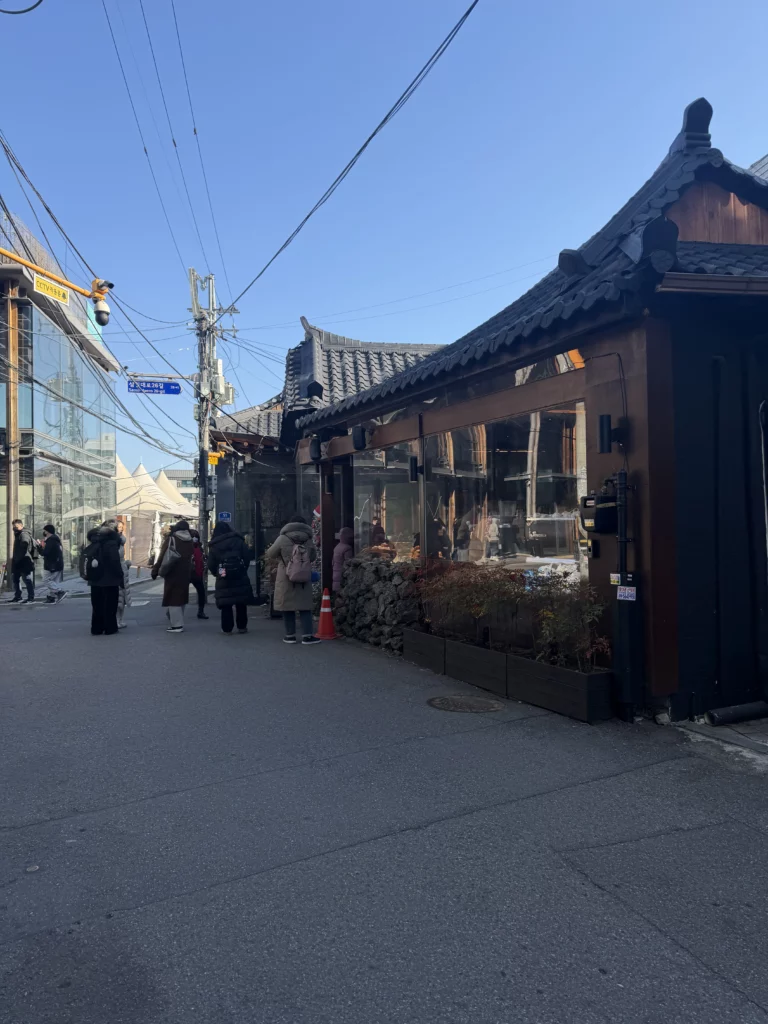
Ikseon-dong’s hanok village dates to the 1920s Japanese colonial period when the area was developed as residential housing. Unlike the larger, more famous Bukchon Hanok Village which housed aristocracy, Ikseon-dong’s smaller, denser hanok accommodated middle-class merchants and workers. These compact structures—typically single-story with intimate courtyards—remained largely unchanged for decades as Seoul modernized around them.
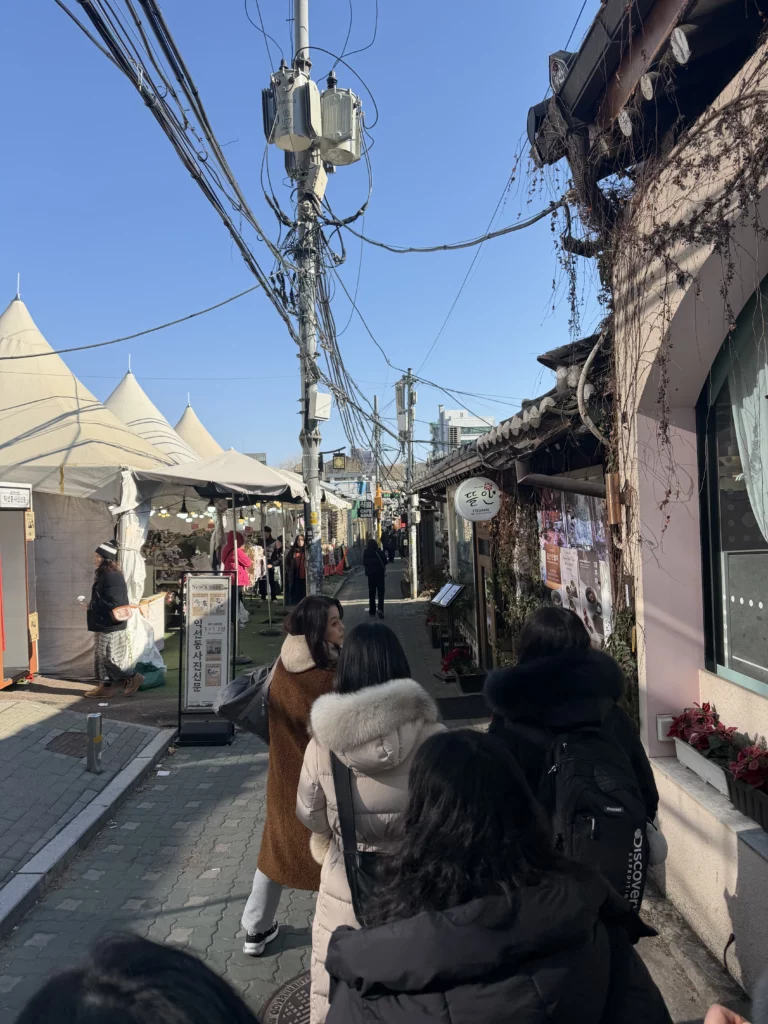
By the 2010s, Ikseon-dong faced potential demolition as property values made high-rise development tempting. Instead, a grassroots preservation movement combined with government incentives encouraged adaptive reuse—maintaining hanok exteriors while updating interiors for modern commercial use. The result is what you see today: traditional wooden facades and tiled roofs concealing hip cafes, boutiques, and specialty food shops.
Jayeondo’s hanok exemplifies this successful fusion. The structure maintains traditional architectural elements—curved roof tiles (giwa), wooden support pillars, hanji (Korean paper) window screens, and the open courtyard layout characteristic of Korean traditional architecture. Yet modern necessities like commercial-grade ovens, refrigeration, and payment systems integrate seamlessly without compromising the building’s historic character.
The central courtyard centered around the Hallabong orange tree deserves special mention. Traditional Korean architecture emphasized harmony between built structures and nature—courtyards weren’t empty spaces but intentional voids allowing natural elements (sunlight, rain, wind, trees) to permeate daily life. Sitting beneath this tree while eating butter-rich bread creates unexpected moments of tranquility amid Seoul’s relentless urban energy. The tree’s seasonal changes mark time’s passage—spring blossoms, summer shade, autumn fruit, winter branches—connecting modern food experiences to agricultural rhythms that historically governed Korean life.
Beyond Jayeondo, Ikseon-dong rewards exploration. The neighborhood’s maze-like alleyways reveal surprises around every turn: a vintage clothing shop occupying a former family home, a specialty tea house serving traditional Korean teas in contemporary minimalist space, or a dessert cafe like Standard Bread Anguk offering entirely different bread experiences.
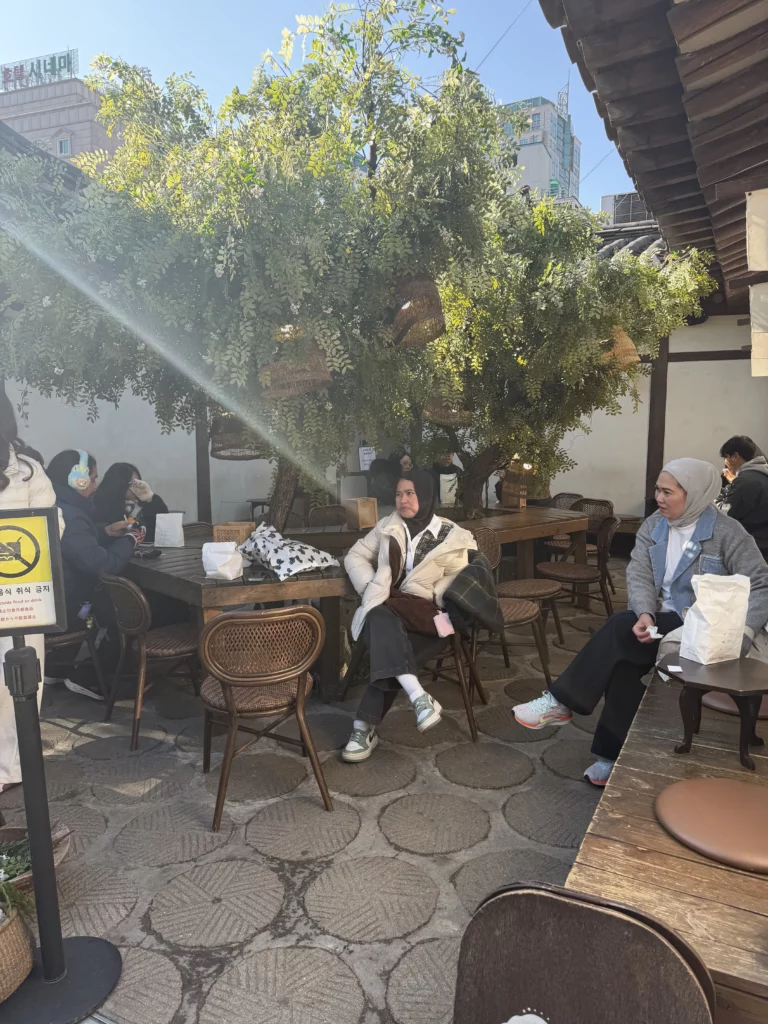
The area attracts specific demographics worth noting: young Korean couples on dates seeking romantic hanok atmosphere, solo cafe-hoppers documenting their visits on social media, foreign tourists checking off Instagram-famous locations, and elderly Seoul residents revisiting nostalgic spaces from their youth. This demographic diversity creates vibrant people-watching opportunities while maintaining respectful neighborhood character.
Ikseon-dong’s proximity to major attractions enhances its appeal. Changdeokgung Palace, one of Seoul’s five grand palaces and a UNESCO World Heritage site, sits just 800 meters northwest. Bukchon Hanok Village, a larger traditional neighborhood with better-preserved aristocratic hanok, lies immediately north. Jongmyo Shrine, Korea’s royal ancestral shrine, is a 10-minute walk south. This cluster of cultural sites allows efficient day itineraries combining palace tours, traditional neighborhood exploration, and modern cafe culture without excessive transit time.
The neighborhood also demonstrates Seoul’s exceptional walkability. From Anguk Station (Line 3) or Jongno 3-ga Station (Lines 1, 3, 5), Jayeondo requires only 5-7 minutes on foot through pleasant, safe streets. Seoul’s excellent subway system makes car rental unnecessary, and the compact neighborhood scale rewards leisurely wandering over rushed destination-hopping.
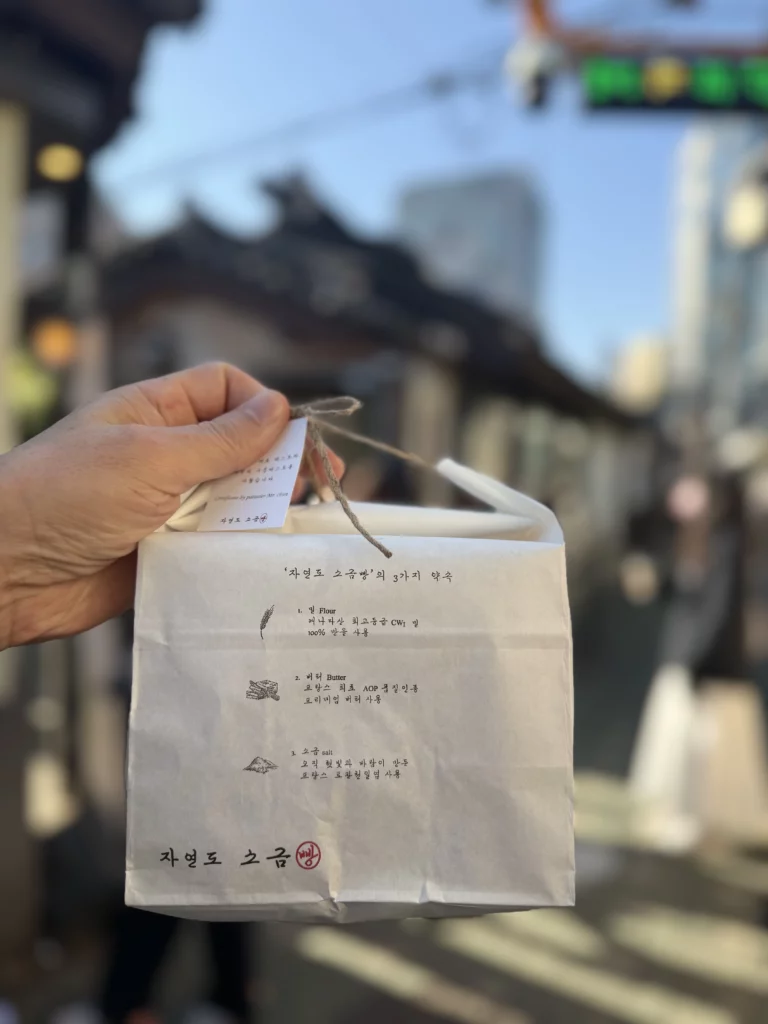
Jayeondo Salt Bread in Ikseon-dong offers more than exceptional bread—it provides a window into contemporary Korean food culture where tradition and innovation, quality and accessibility, heritage preservation and modern sensibility coexist harmoniously. Whether you’re a serious food enthusiast researching Seoul’s bakery scene, a casual traveler seeking Instagram-worthy experiences, or simply someone who appreciates exceptionally well-made bread, Jayeondo delivers on every level. The combination of premium ingredients, artisan technique, beautiful traditional setting, and genuine Korean neighborhood character creates an experience that transcends typical tourist bakery visits.
Plan your visit during weekday mornings for minimal crowds, arrive at baking times for maximum freshness, and prepare to understand why lines stretch daily for these buttery, salty, impossibly delicious little pieces of Seoul’s culinary excellence.
Location
166-51 Ikseon-dong, Jongno-gu, Seoul, Republic of Korea, KR
Reviews
5.0
0 reviews
5
0%
4
0%
3
0%
2
0%
1
0%
Loading reviews...
Related Recipes

Drinks & Dessert
Homemade Bungeoppang Recipe (Korean fish-shaped pastry)
Few smells say Korean winter like a cart of bungeoppang sizzling on a frozen street corner — golden, fish-shaped, and...

Drinks & Dessert
Korean Sweet Rice Donuts with Rice Syrup (Jocheong Donuts)
There is a particular kind of magic that happens when glutinous rice flour meets hot oil. The dough puffs and...

Drinks & Dessert
Matcha French Toast
Matcha French Toast combines the rich flavor of matcha with the soft texture of French toast. Popular in Korean cafés,...


bakery
NUDAKE Tea House Seongsu: Seoul's Experimental Tea House
Seongdong-gu, Seoul 04785 (Haus Nowhere Seoul) 5F, 433 Ttukseom-ro
5

bakery
Lowkey Seongsu: Seoul's Specialty Coffee Roastery
Seoul, South Korea 6 Yeonmujang 3-gil, Seongdong-gu
5

bakery
Dalimmak: Seongsu's Bear-Shaped Bread and Kaymak Cafe
Seoul, South Korea 1F, 38-2 Yeonmujang-gil, Seongdong-gu
5

bakery
Daelim Changgo: Seoul's Original Seongsu Warehouse Cafe
Seoul, South Korea 78 Seongsui-ro, Seongdong-gu,
5