


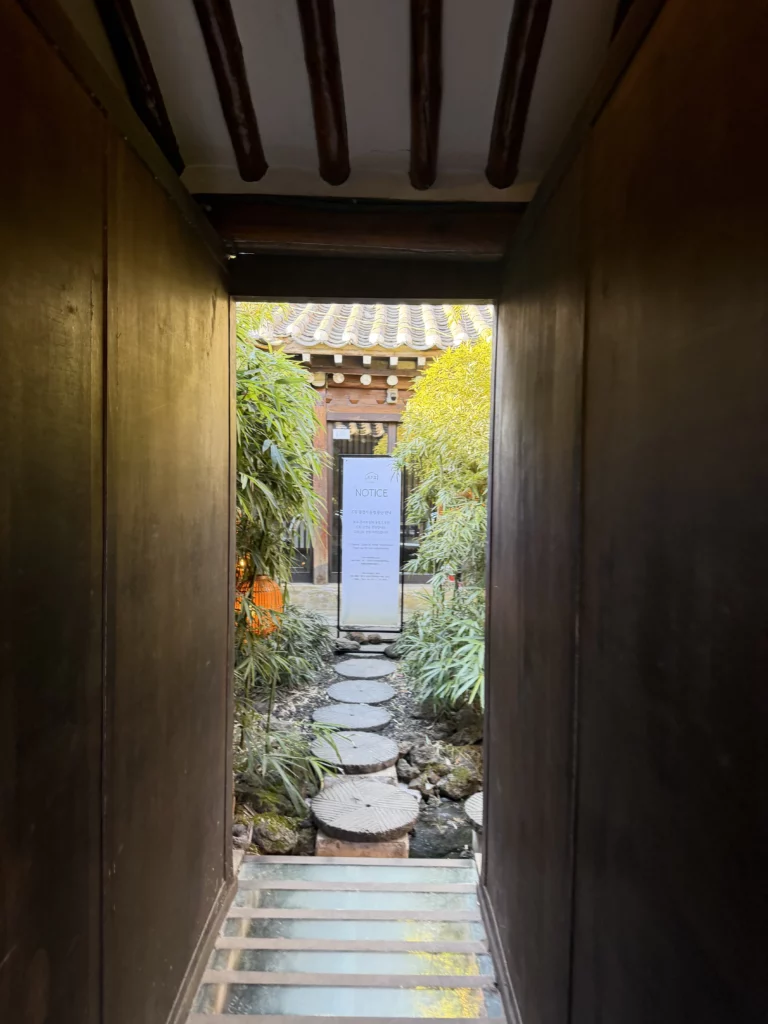
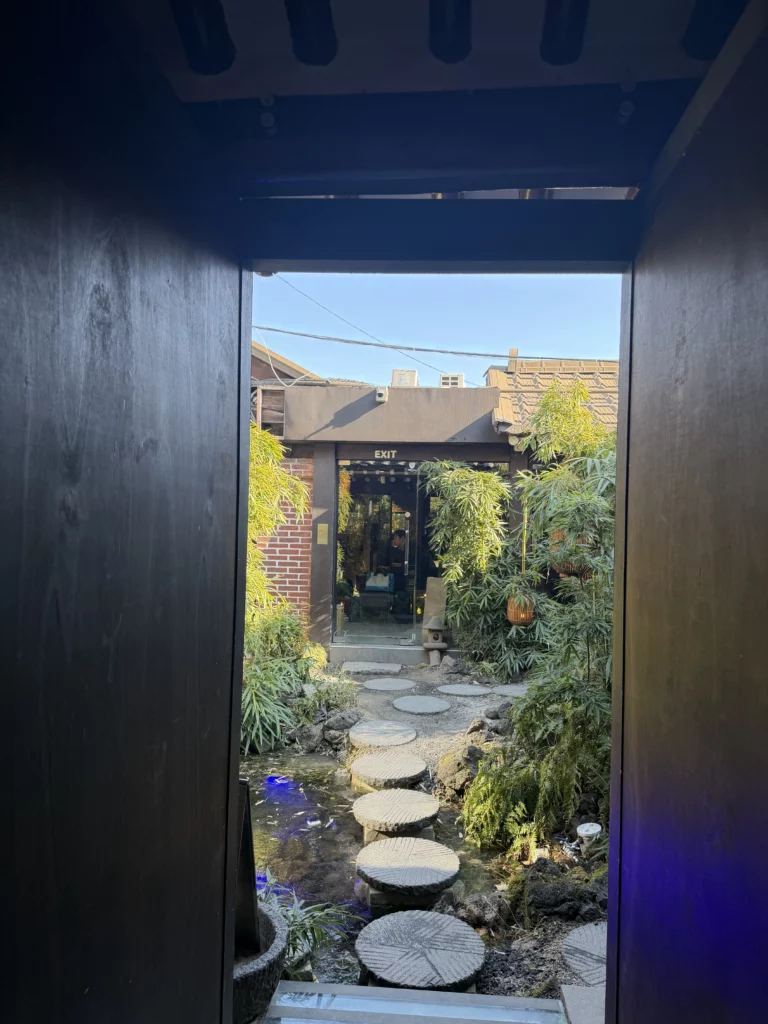
Through a traditional wooden gate in Seoul’s historic Ikseon-dong neighborhood, past a bamboo forest and stepping stones that cross a tranquil pond, lies one of Korea’s most photographed cafe destinations. Cheongsu-dang Bakery represents the perfect marriage of centuries-old hanok architecture and modern Korean cafe culture, where the iconic wobbly souffle castella has made this 300-pyeong (approximately 1,000 square meter) sanctuary a must-visit destination for anyone seeking an authentic taste of Seoul’s evolving food scene.
Cheongsu-dang Bakery: Where Seoul's Most Enchanting Hanok Cafe Meets the Perfect Souffle Castella
5
Cheongsu-dang Bakery: Where Seoul's Most Enchanting Hanok Cafe Meets the Perfect Souffle Castella
5
Jongno-gu, Seoul, Republic of Korea 144 Ikseon-dong
Editor: James Lee


Interior02
Food02

Menu03
Overview
+82 0507-1318-8215
WiFi Provided
Outdoor Seating Available
Electronic Payment, Credit Card accepted: American Express, Master Card, Visa
Introduction
Operating hours
Mon, Tue, Wed, Thu, Fri, Sat, SunAM 10:30 - PM 8:00
Menu
Editor's Detail
Through a traditional wooden gate in Seoul’s historic Ikseon-dong neighborhood, past a bamboo forest and stepping stones that cross a tranquil pond, lies one of Korea’s most photographed cafe destinations. Cheongsu-dang Bakery represents the perfect marriage of centuries-old hanok architecture and modern Korean cafe culture, where the iconic wobbly souffle castella has made this 300-pyeong sanctuary a must-visit destination for anyone seeking an authentic taste of Seoul’s evolving food scene.
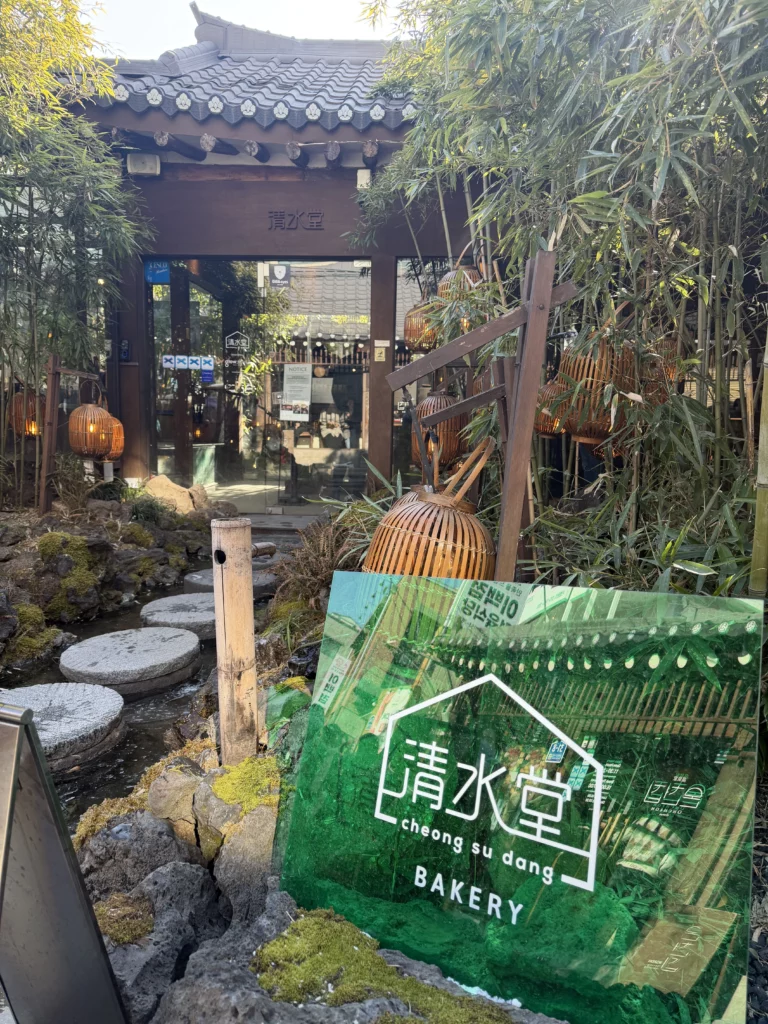
Since opening its doors in summer 2020, this hanok cafe Ikseon-dong location has captivated both Seoul locals and international travelers with its Instagram-worthy entrance, serene atmosphere, and signature desserts. Following a major expansion in July 2023, Cheongsu-dang now encompasses six interconnected hanok buildings surrounding lush gardens, creating what many consider Seoul’s most immersive traditional cafe experience. The location at 31-9 Donhwamun-ro 11na-gil places visitors in the heart of Ikseon-dong’s narrow alleyways, just minutes from Jongno 3-ga Station—making this stunning retreat surprisingly accessible despite its hidden-gem appearance.
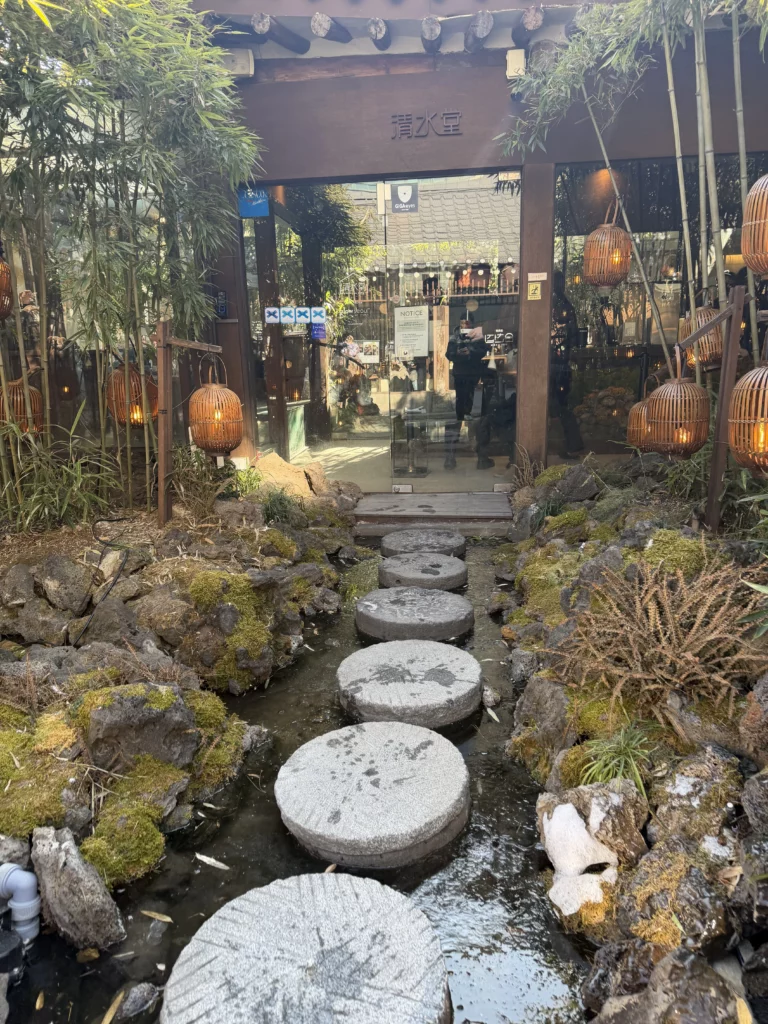
Table of Contents
Discovering Ikseon-dong: Seoul’s Trendiest Hanok Village
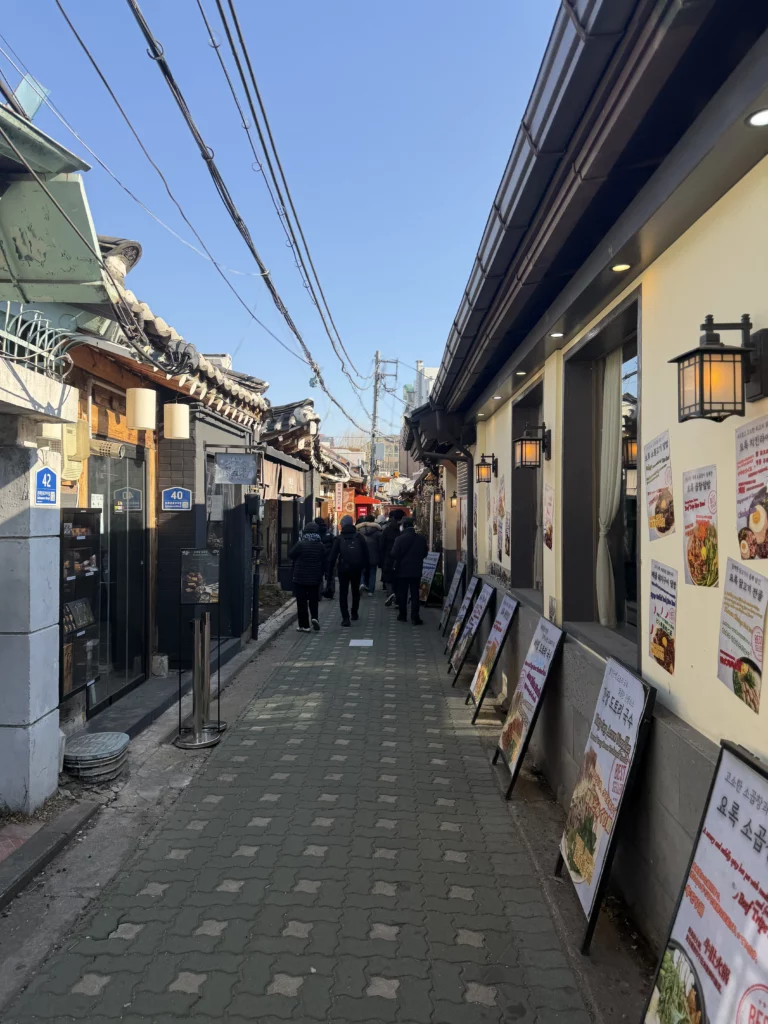
Cheongsu-dang Bakery’s location within Ikseon-dong proves as essential to its appeal as its spectacular interior design. Established in the 1920s, Ikseon-dong stands as Seoul’s oldest surviving hanok village, predating the more famous Bukchon by several decades. With 119 traditional Korean houses packed into narrow alleys, this neighborhood represents the highest hanok density in the entire city.
What makes Ikseon-dong particularly fascinating is its resurrection story. Facing demolition plans for a 14-story residential complex in 2004, the neighborhood seemed destined to disappear beneath Seoul’s relentless modernization. However, preservation efforts combined with entrepreneurial young business owners transformed these century-old structures into one of Seoul’s most vibrant cultural destinations. Today, the district showcases how traditional Korean architecture can thrive in contemporary contexts, similar to successful preservation projects at Cafe Onion Anguk and other historic hanok cafes.
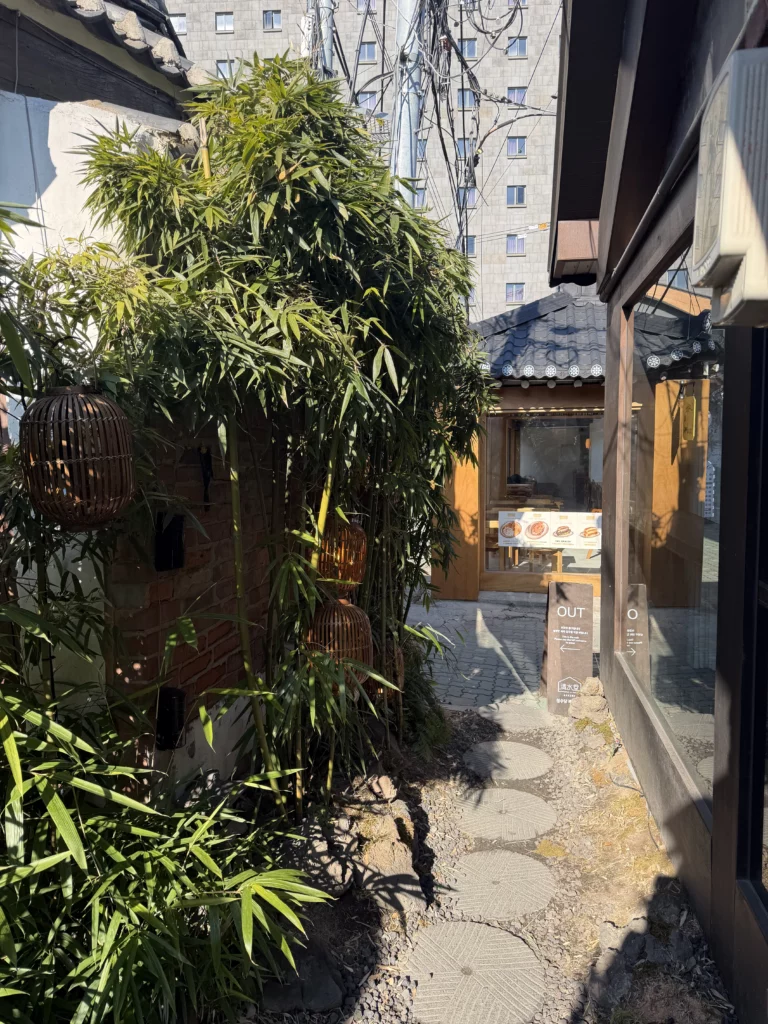
The neighborhood’s narrow alleyways create an intimate atmosphere that larger tourist areas like Insadong cannot replicate. Walking through Ikseon-dong feels like discovering a secret Seoul that exists parallel to the modern city, where traditional curved roof tiles frame sky views and wooden gates hint at hidden courtyards beyond. This authentic setting makes every cafe, including Cheongsu-dang, feel like a genuine discovery rather than a manufactured tourist attraction.
The Enchanting Architecture of Cheongsu-dang Bakery
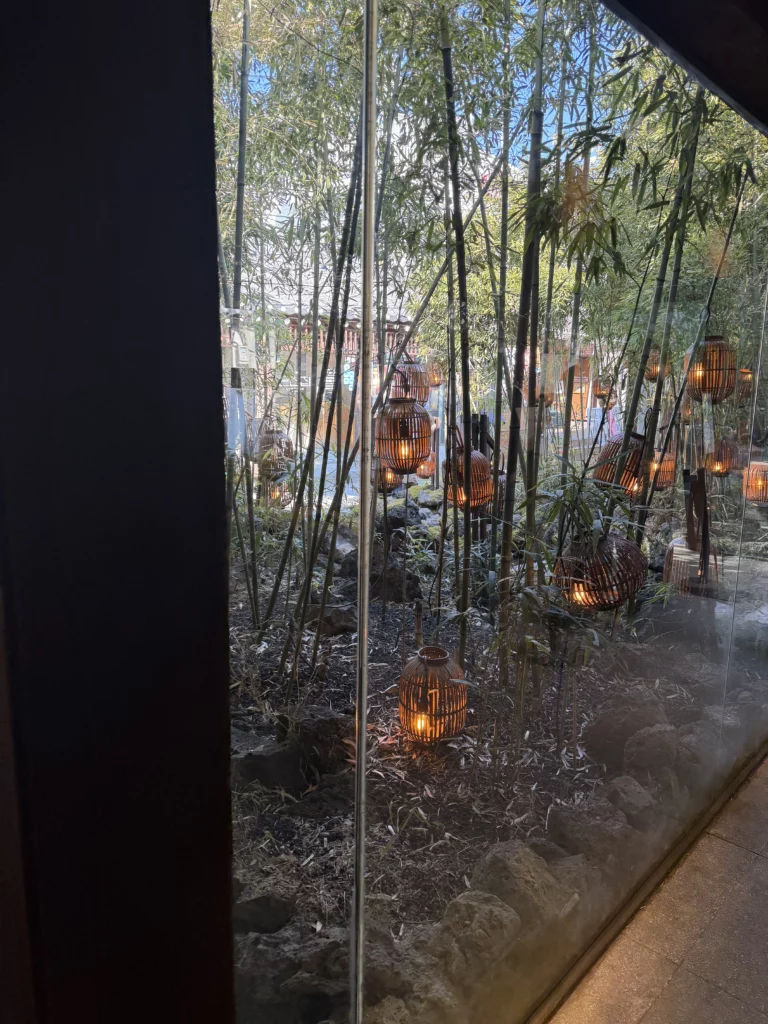
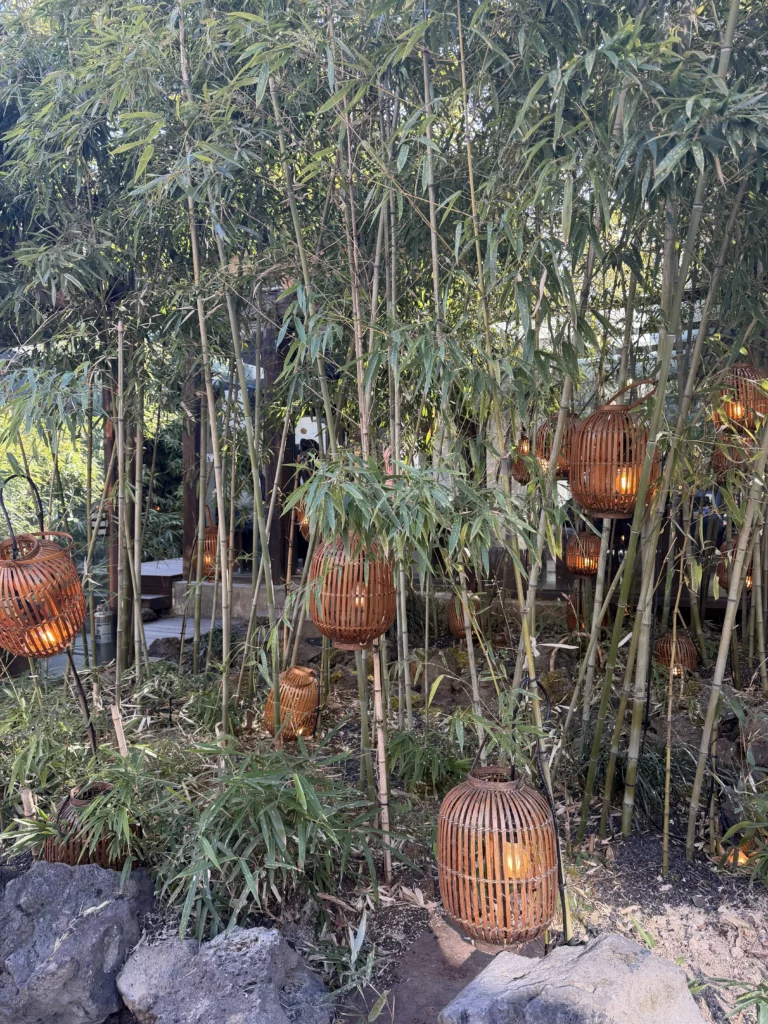
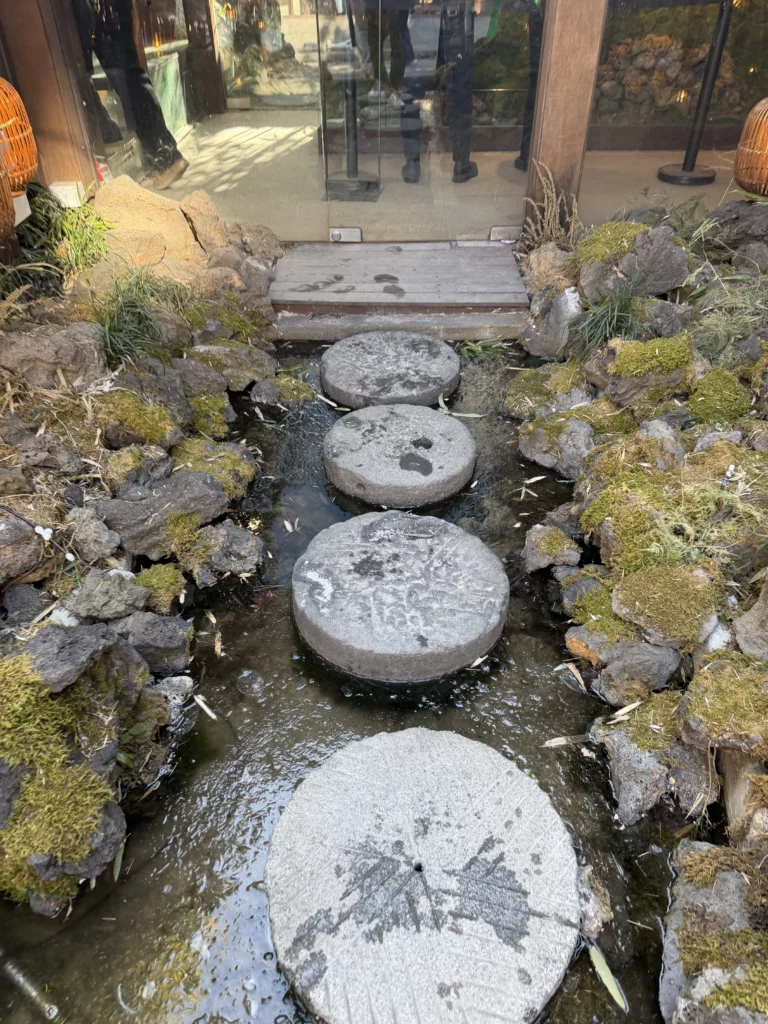
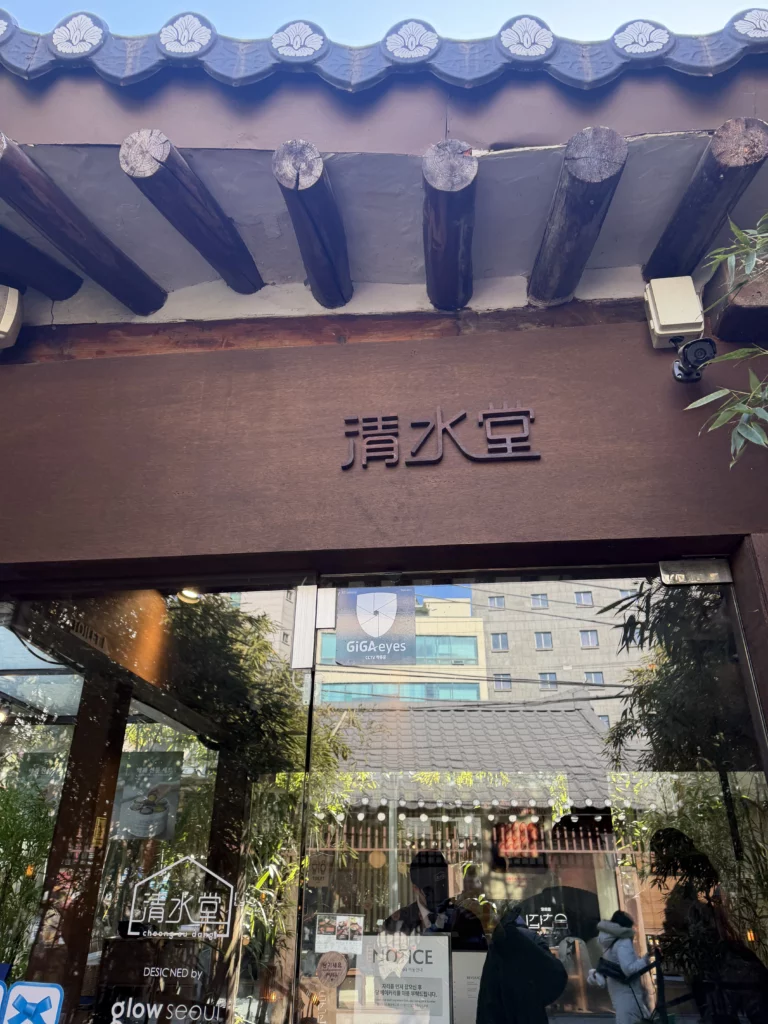
The moment you approach Cheongsu-dang’s entrance, the cafe announces its commitment to creating an extraordinary experience. Lush bamboo trees tower over a small pond where stepping stones lead visitors across the water toward the traditional wooden entrance—this iconic pathway has been shared thousands of times across social media platforms, yet it still manages to surprise first-time visitors with its serene beauty.
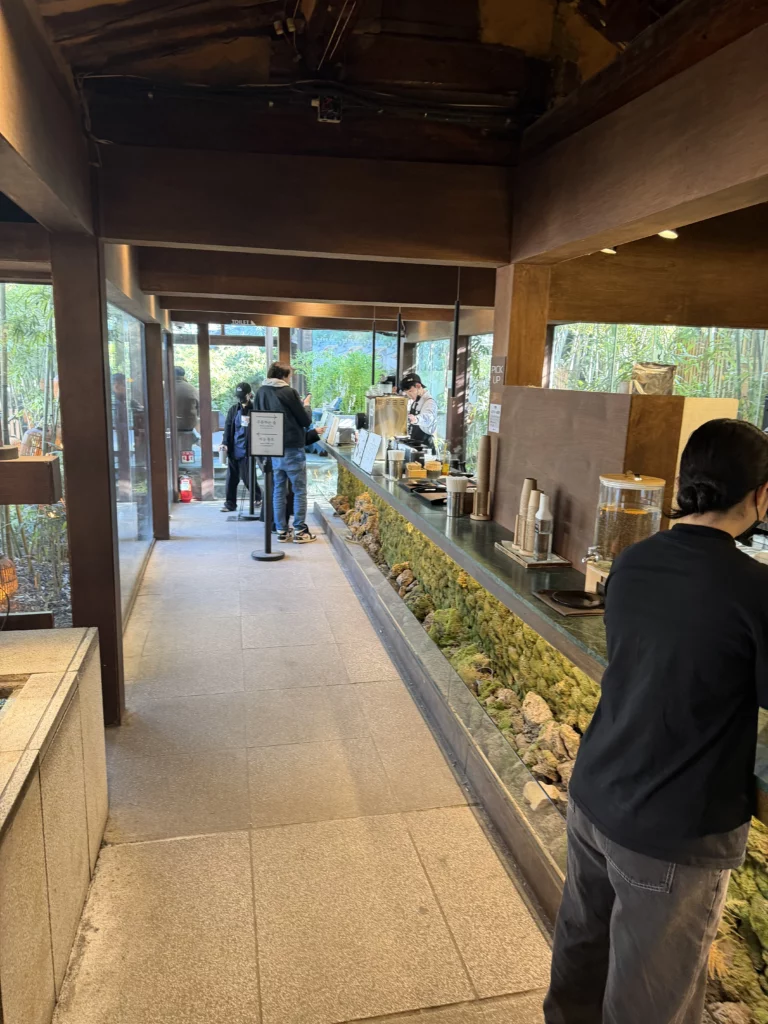
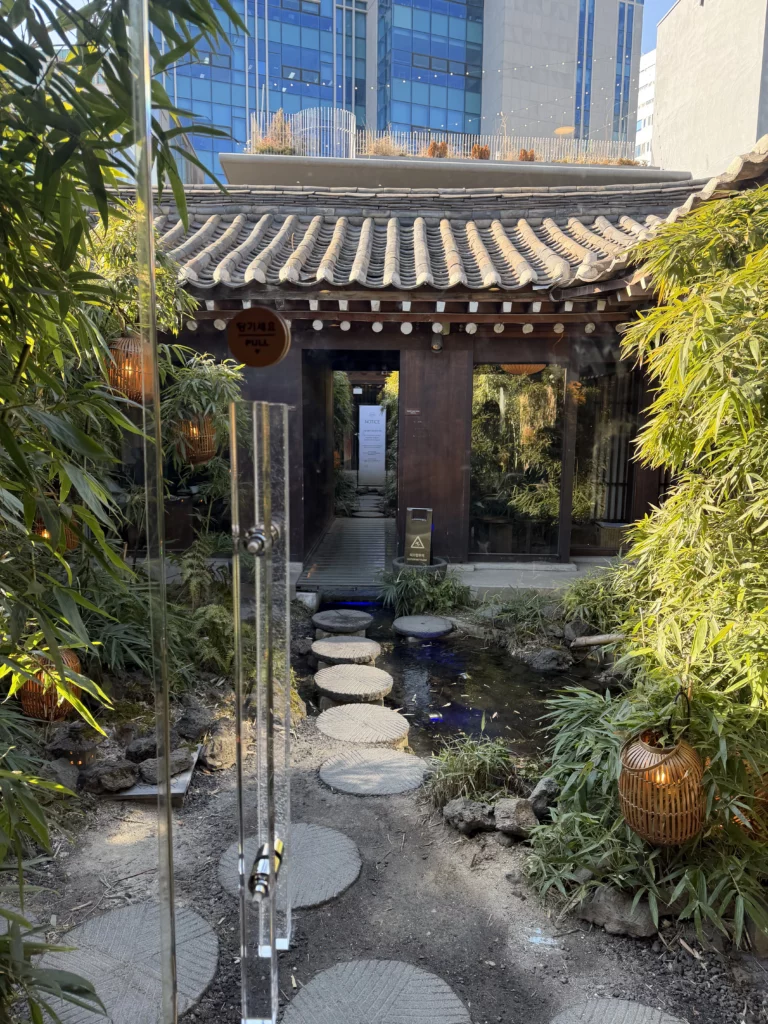
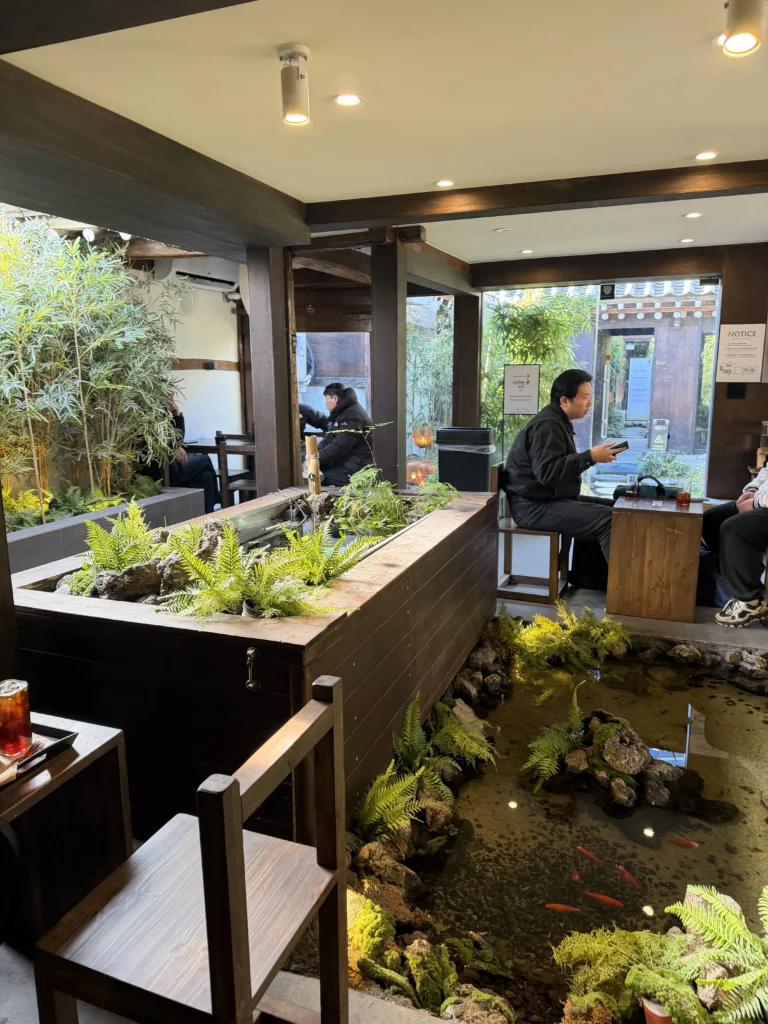
Once inside, the cafe reveals its true scale. Following the 2023 expansion, Cheongsu-dang now encompasses six separate hanok structures connected by outdoor pathways and gardens, creating what the cafe describes as a space promoting "the value of slowness." The design incorporates flowing water features throughout, with streams circulating between seating areas and aquatic plants growing alongside traditional stone pathways. Some dining tables actually surround water features where fish swim peacefully, creating an atmosphere that feels more like a traditional Korean garden than a commercial cafe.
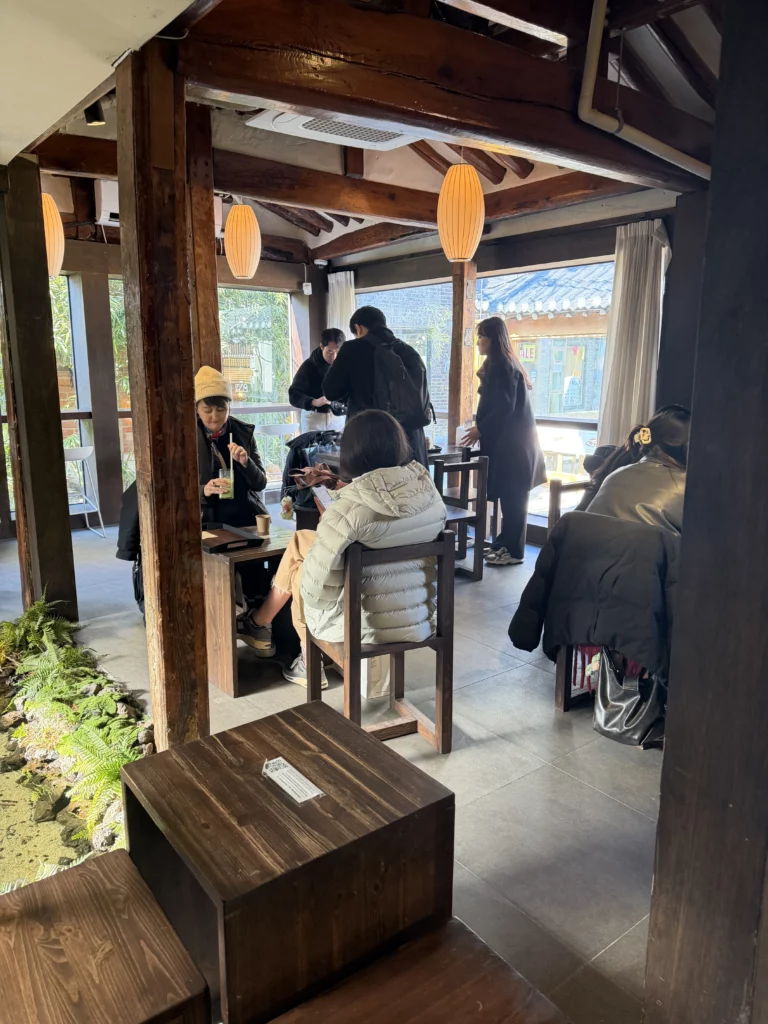
The interior design preserves essential hanok architectural elements while seamlessly integrating modern amenities. Exposed wooden beams showcase traditional joinery techniques, while contemporary lighting ensures comfortable visibility for afternoon work sessions or evening gatherings. The cafe offers both table seating and traditional tatami-style floor seating where guests remove their shoes, providing authentic Korean dining experiences for those seeking cultural immersion. This architectural balance mirrors the approach taken at Seonungak near Bukhansan Mountain, another Seoul hanok cafe that has successfully preserved traditional building techniques while serving modern functions.
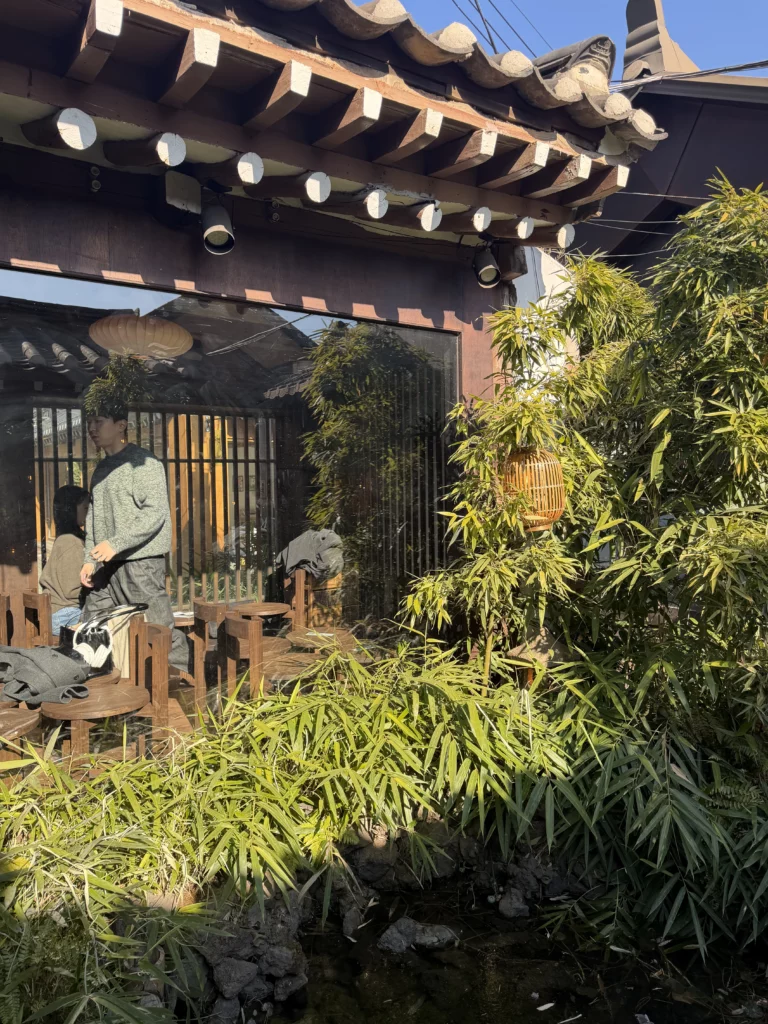
The expansion added significantly more seating capacity, yet the space never feels overcrowded thanks to thoughtful zone division. Guests can choose intimate corners for quiet conversations, open-air garden seating for fresh air and nature views, or the main dining hall where the water features create a constant sense of movement and life.
The Star Attraction: Souffle Castella Seoul’s Best
While Cheongsu-dang’s architecture draws visitors through the gate, the souffle castella keeps them returning. This signature dessert represents the cafe’s commitment to quality and innovation within traditional frameworks—much like the hanok architecture itself.
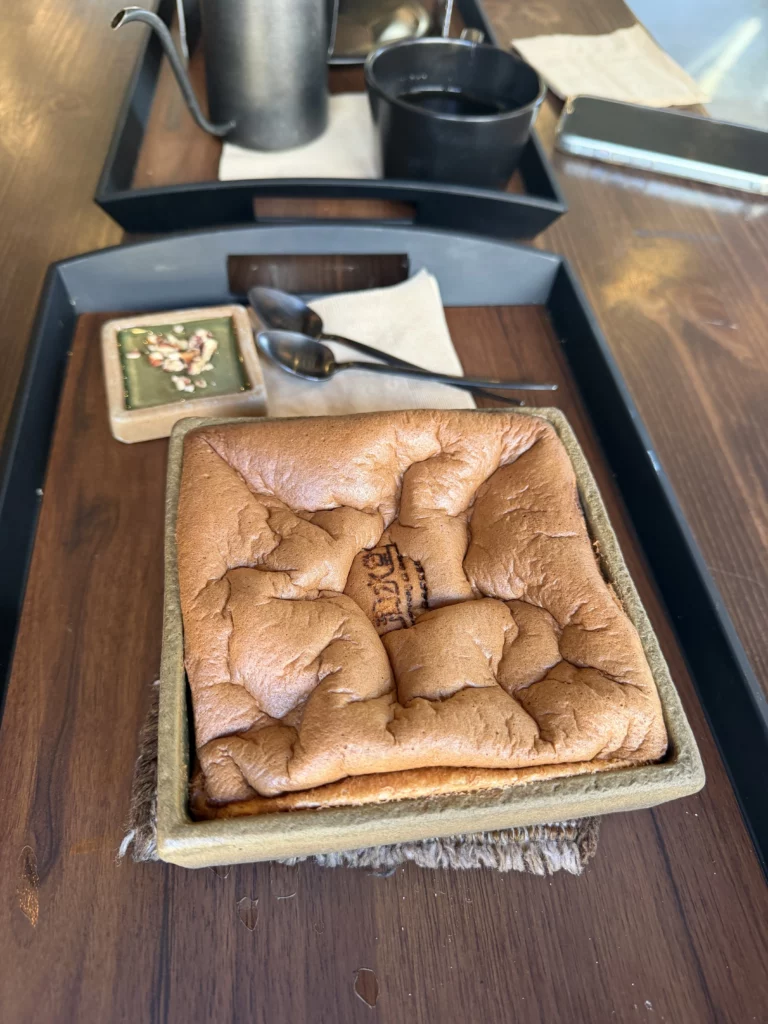
Souffle castella originated in Taiwan as an interpretation of Japanese castella cake, which itself descended from Portuguese pão de Castela introduced to Japan in the 16th century. This genealogy demonstrates how Asian culinary traditions continuously evolve while maintaining connection to historical roots. The Taiwanese version emphasizes an ultra-light, airy texture achieved through meticulous whipping of egg whites and gentle baking in a water bath, creating the characteristic "jiggly" appearance that has captivated dessert lovers across East Asia.
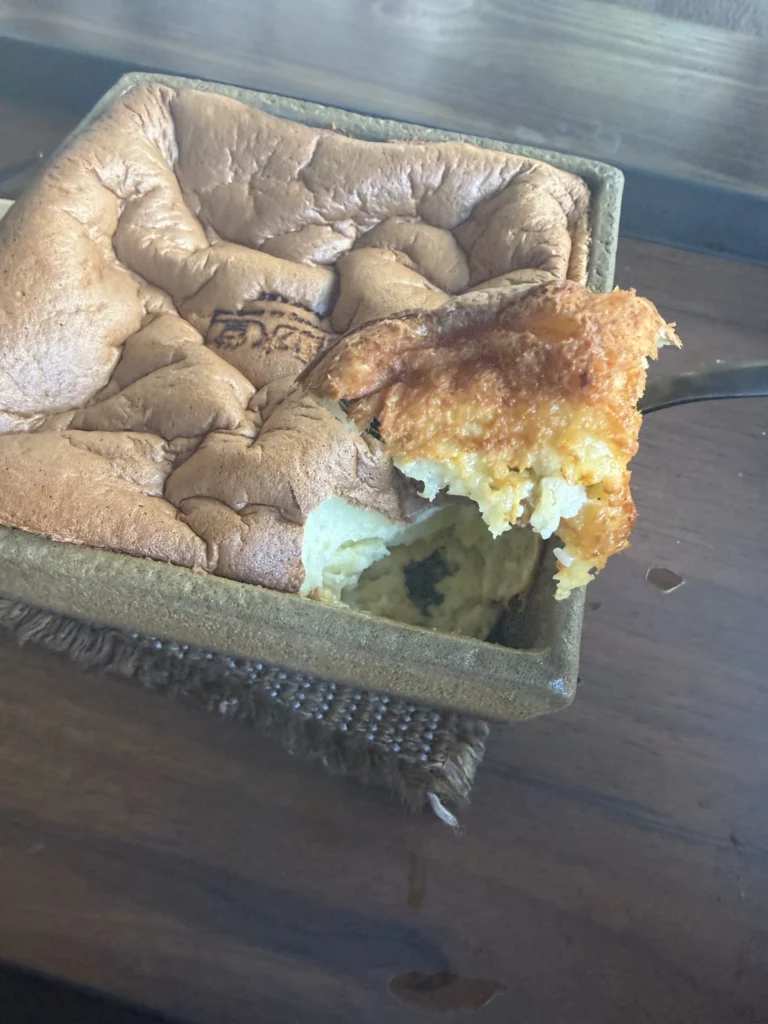
At Cheongsu-dang, the original souffle castella arrives freshly baked, served warm in square pottery dishes that enhance the presentation’s traditional aesthetic. The cake’s surface gently wobbles with each movement, demonstrating the perfect consistency between structure and airiness. A generous dollop of fresh milk cream tops the castella, with seasonal fruit compotes providing complementary sweetness and acidity. The strawberry version proves particularly popular, though the cafe rotates flavors throughout the year to highlight Korea’s excellent seasonal produce.
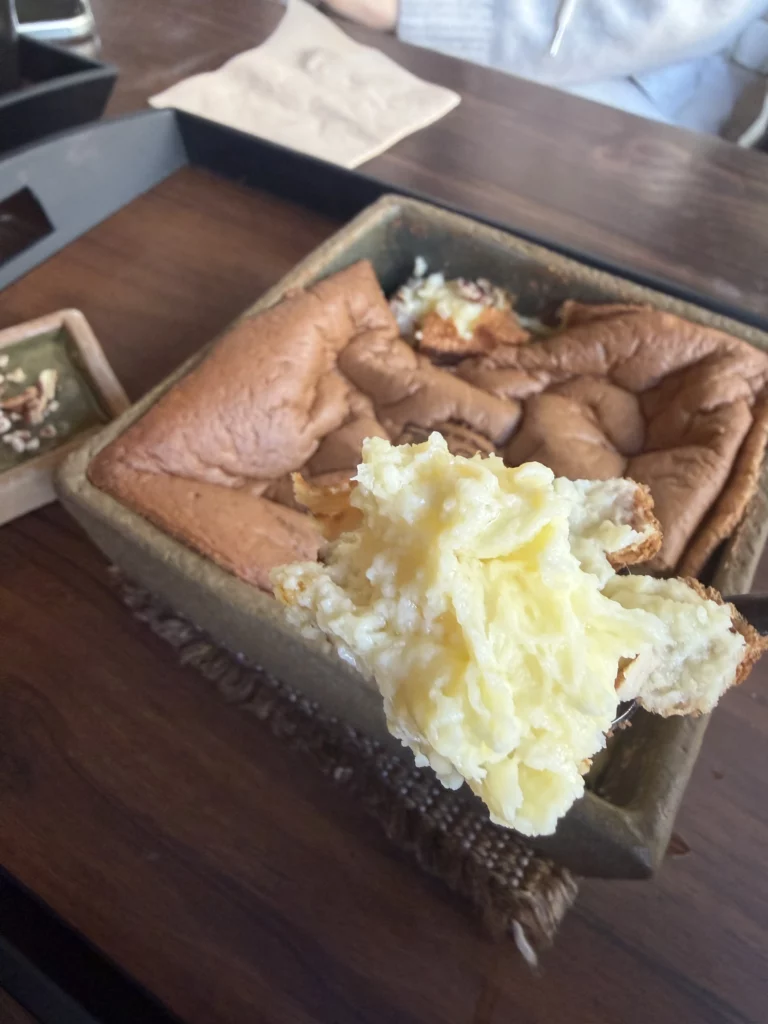
The texture delivers on the souffle castella Seoul’s promise of exceptional lightness—each bite melts on the tongue while maintaining just enough structure to support the cream and fruit toppings. Unlike denser Japanese castella or Western sponge cakes, this version prioritizes ephemeral delicacy over substance, creating a dessert that feels indulgent yet surprisingly light. The subtle sweetness allows the natural egg flavor to shine through, a characteristic that Korean desserts often emphasize compared to Western alternatives that rely on higher sugar content.
Understanding Korean Cafe Culture Through Cheongsu-dang
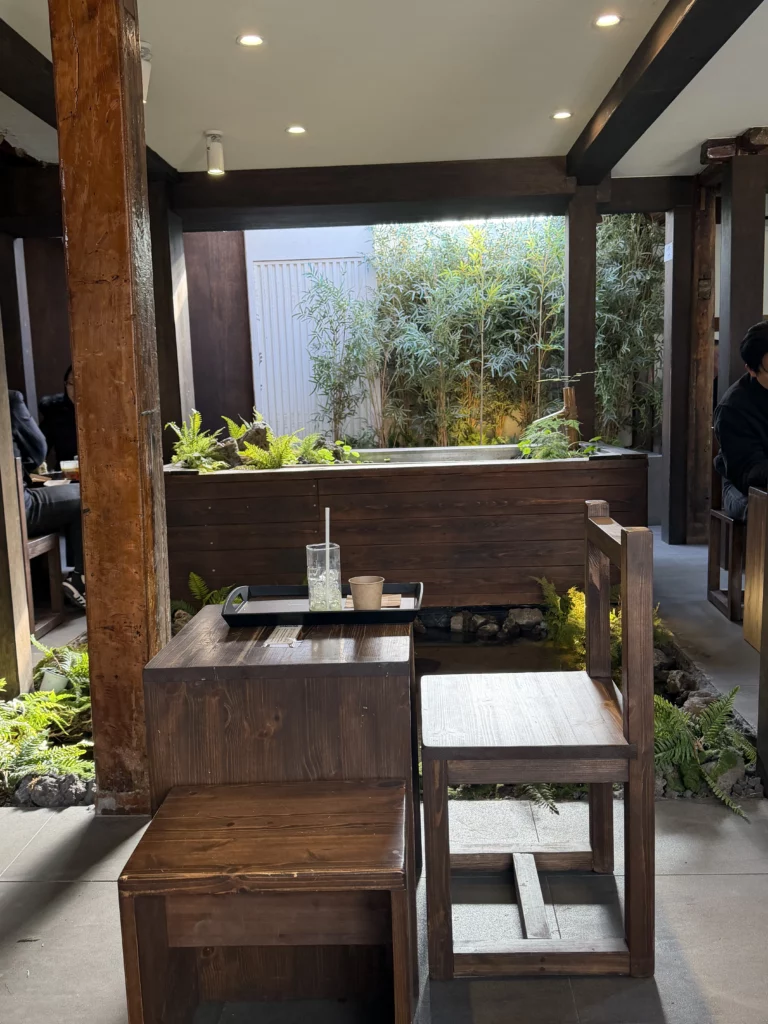
Cheongsu-dang represents more than a pretty backdrop for Instagram photos—it embodies evolving Korean cafe culture that international visitors should understand to fully appreciate the experience. Korean cafes serve as "third spaces" between home and work, functioning as meeting rooms, study halls, date destinations, and social gathering points. This cultural role explains why Seoul supports over 18,000 cafes despite being a city of 10 million people.
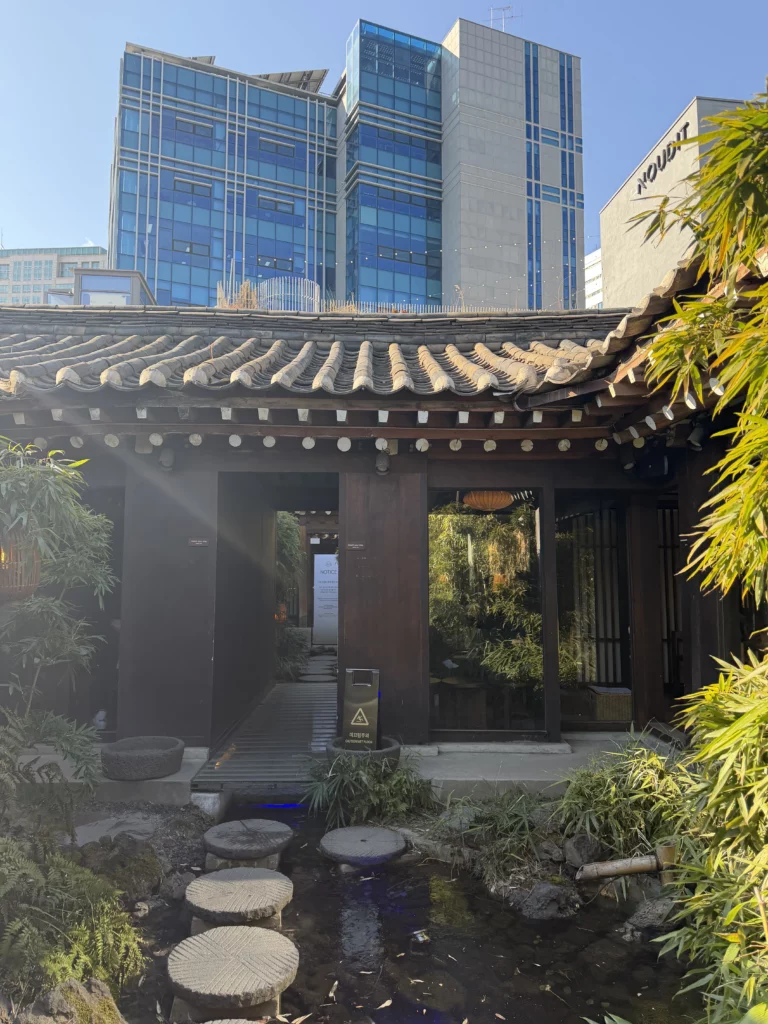
The cafe’s emphasis on atmosphere and ambiance reflects Korean preferences for experiential dining. While Western coffee culture often prioritizes speed and convenience, Korean cafe culture encourages lingering. Cheongsu-dang explicitly promotes this philosophy through its "slowness" concept, where the flowing water, natural light filtering through traditional windows, and thoughtfully curated spaces all encourage guests to extend their visit beyond a quick coffee stop.
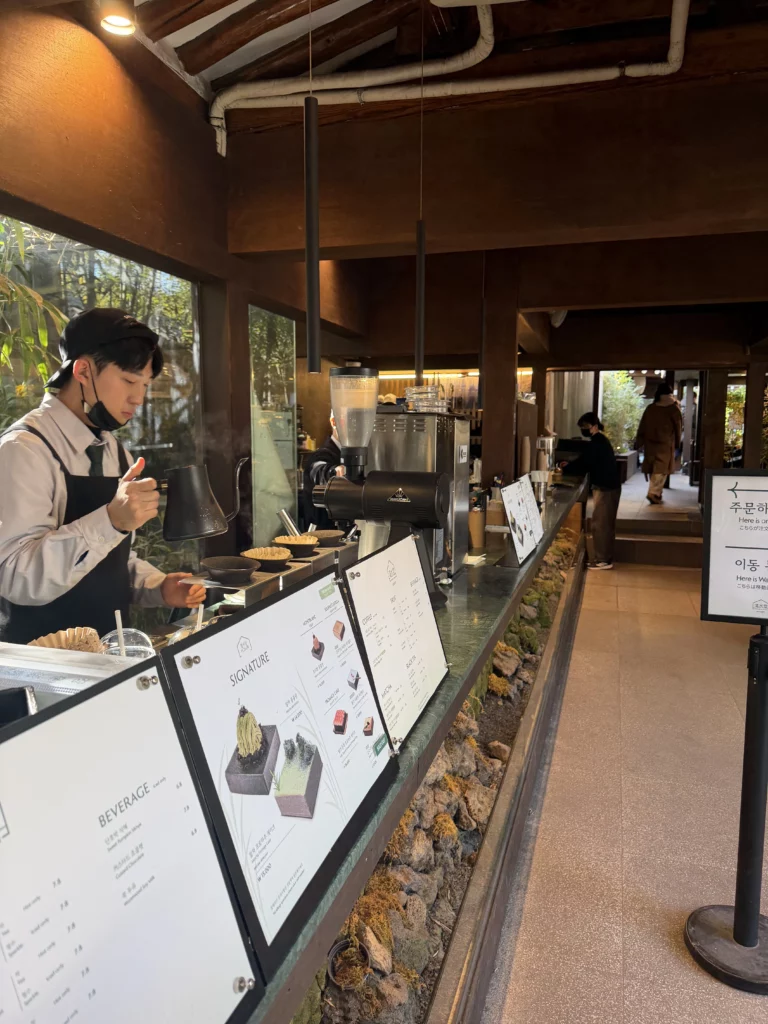
The pricing structure also follows Korean cafe norms. Expect to spend 18,000-23,000 won ($13-17 USD) per person for a dessert and beverage—premium pricing that reflects the location, ambiance, and quality ingredients. This positions Cheongsu-dang at the higher end of Seoul’s cafe spectrum, though many visitors consider the experience worthwhile for special occasions or when seeking an immersive cultural experience rather than simple refreshment. Similar to other premium Seoul cafes like O’sulloc Tea House in Bukchon, the environment justifies the cost for those valuing atmosphere alongside food quality.
The Complete Menu Experience
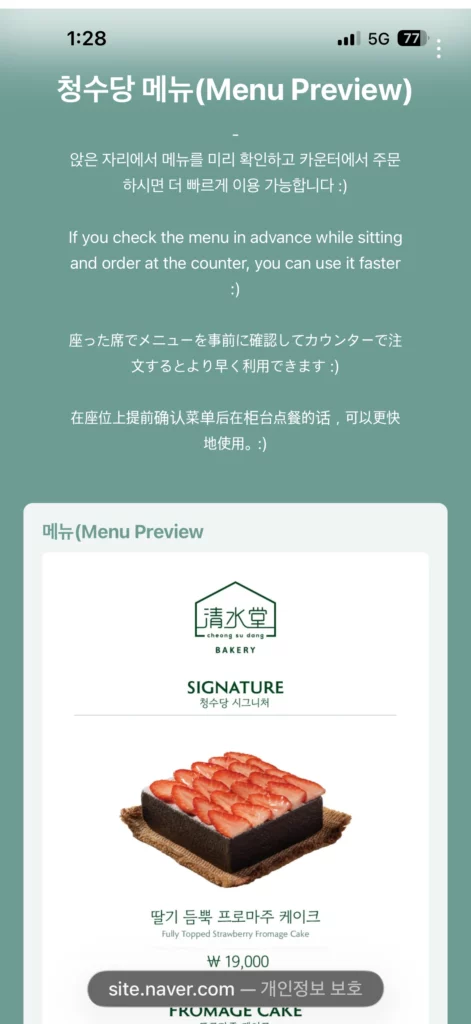
Beyond the signature souffle castella, Cheongsu-dang offers a carefully curated menu that balances traditional Korean flavors with contemporary cafe standards. The beverage selection spans from specialty coffee drinks to traditional Korean teas, with matcha preparations proving particularly popular among both local and international guests.
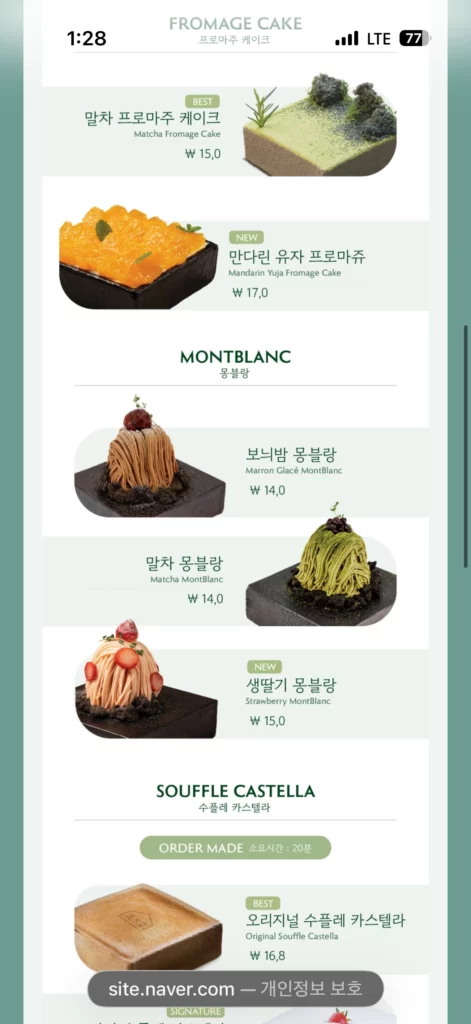
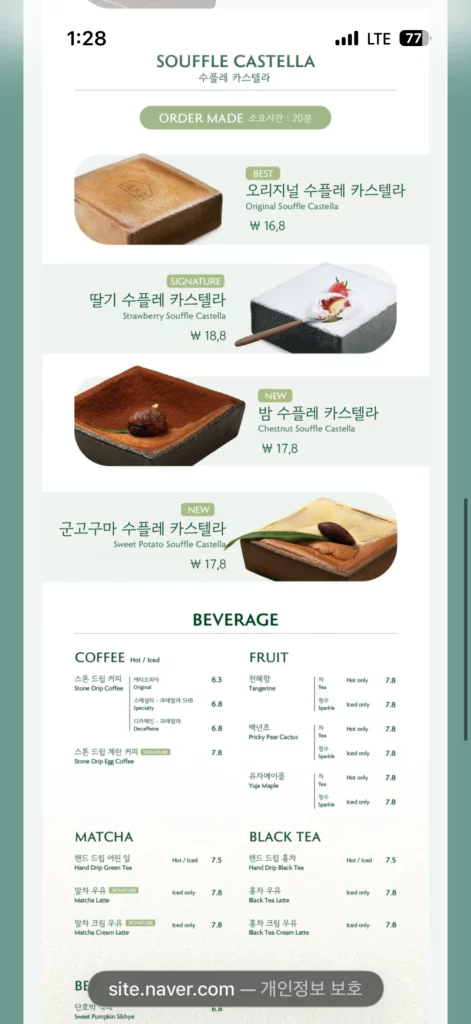
The Heuksimja (black sesame) dessert showcases Korean flavors through a contemporary lens. This chilled dessert layers black sesame-soaked sponge cake with roasted walnuts, mascarpone cheese, milk cream, and black sesame powder, creating a sophisticated flavor profile that appeals to those familiar with traditional Korean sweets. Black sesame holds an important place in Korean cuisine, valued for both its rich, earthy flavor and nutritional benefits—this dessert introduces that classic taste through modern presentation techniques.
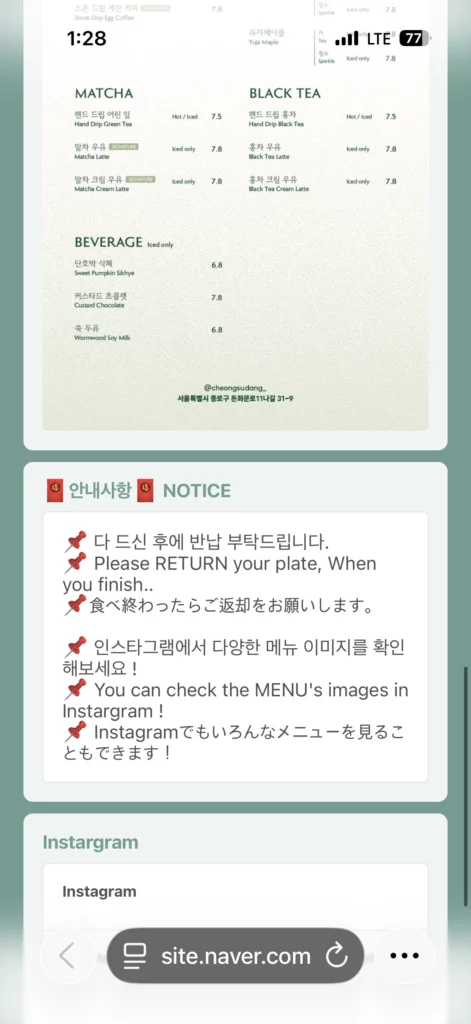
Coffee drinks maintain high standards expected at Seoul’s premium cafes. The beans receive careful sourcing and preparation, producing smooth, balanced espresso-based drinks that complement rather than compete with the delicate dessert flavors. For non-coffee drinkers, the cafe offers matcha lattes, traditional teas, and seasonal beverages that change throughout the year, ensuring returning visitors encounter new options.
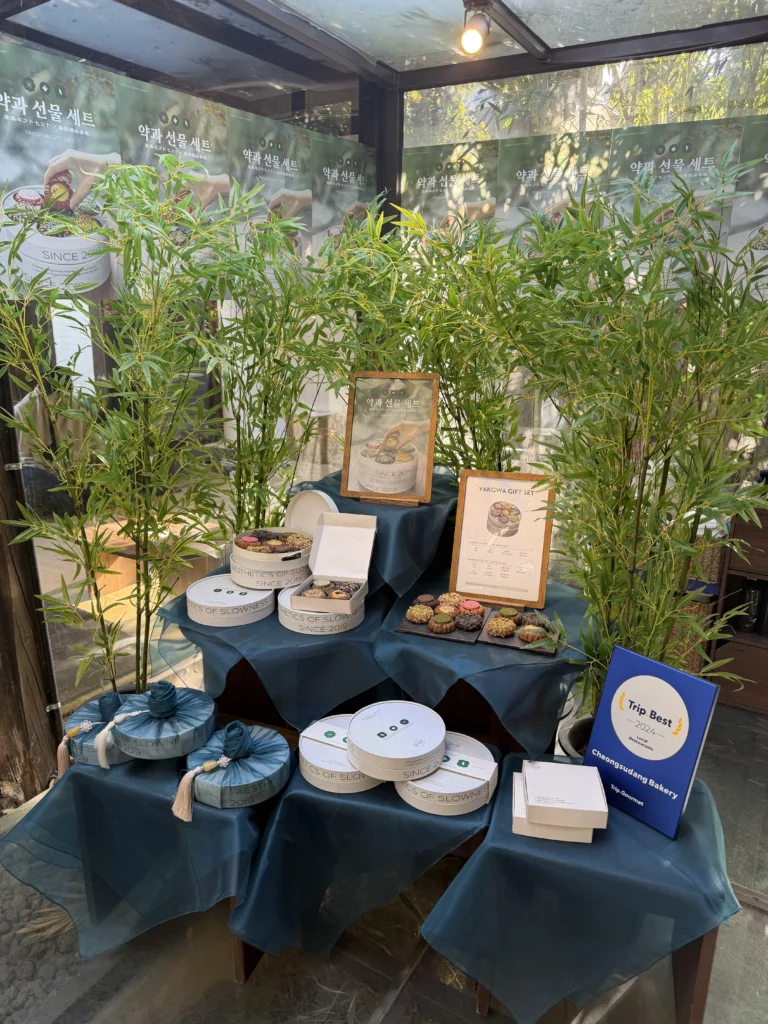
The cafe has also gained recognition for its yakgwa, traditional Korean honey cookies that represent one of Korea’s oldest dessert forms. These elaborately patterned cookies traditionally appear at weddings and celebrations, their labor-intensive preparation making them special-occasion food. Cheongsu-dang packages yakgwa beautifully as gifts, allowing visitors to share a taste of traditional Korean sweets with friends and family.
What makes this dish uniquely Korean?
The souffle castella at Cheongsu-dang, while descended from Taiwanese and Japanese traditions, incorporates distinctly Korean elements that create a unique dining experience. The presentation in traditional Korean pottery rather than modern cake boxes connects the dessert to Korea’s ceramic heritage. The emphasis on natural, seasonal fruit toppings reflects Korean agricultural pride and the traditional practice of highlighting ingredients at their peak ripeness.
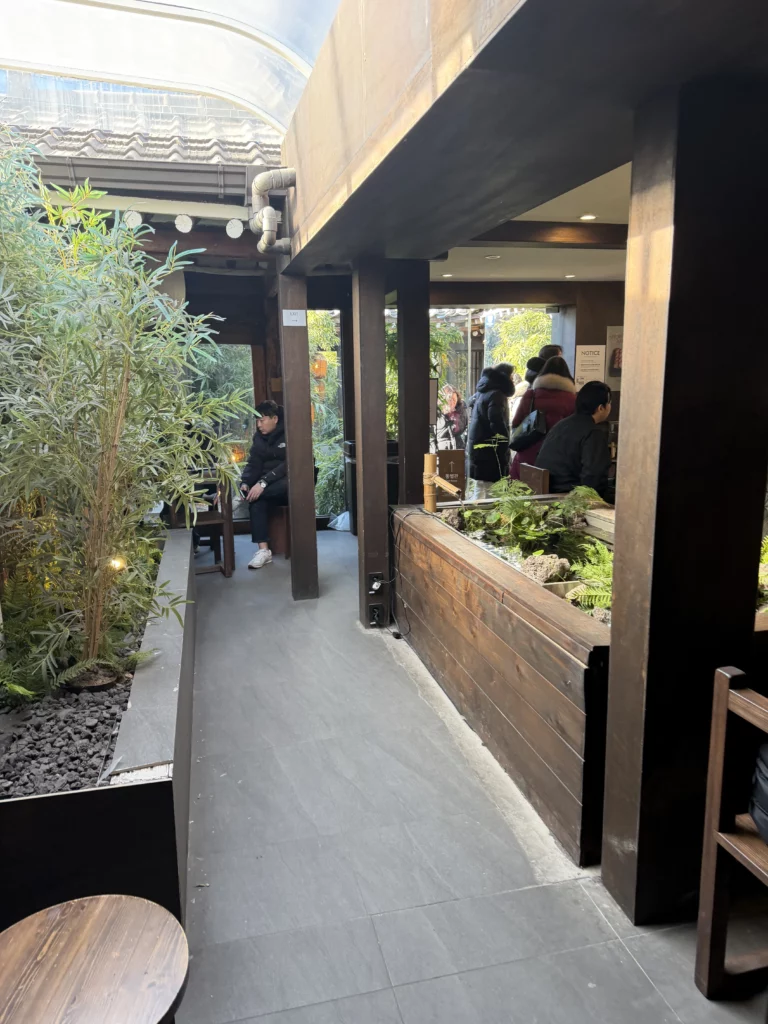
More fundamentally, the cafe’s entire approach embodies Korean hospitality concepts. The Korean term "jeong" (정) describes a deep emotional connection and warmth that develops through shared experiences—Cheongsu-dang’s architecture and service style aim to create environments where jeong can develop naturally. This distinguishes the experience from transactional Western cafe culture, positioning dessert consumption within broader social and emotional contexts that Koreans value deeply.
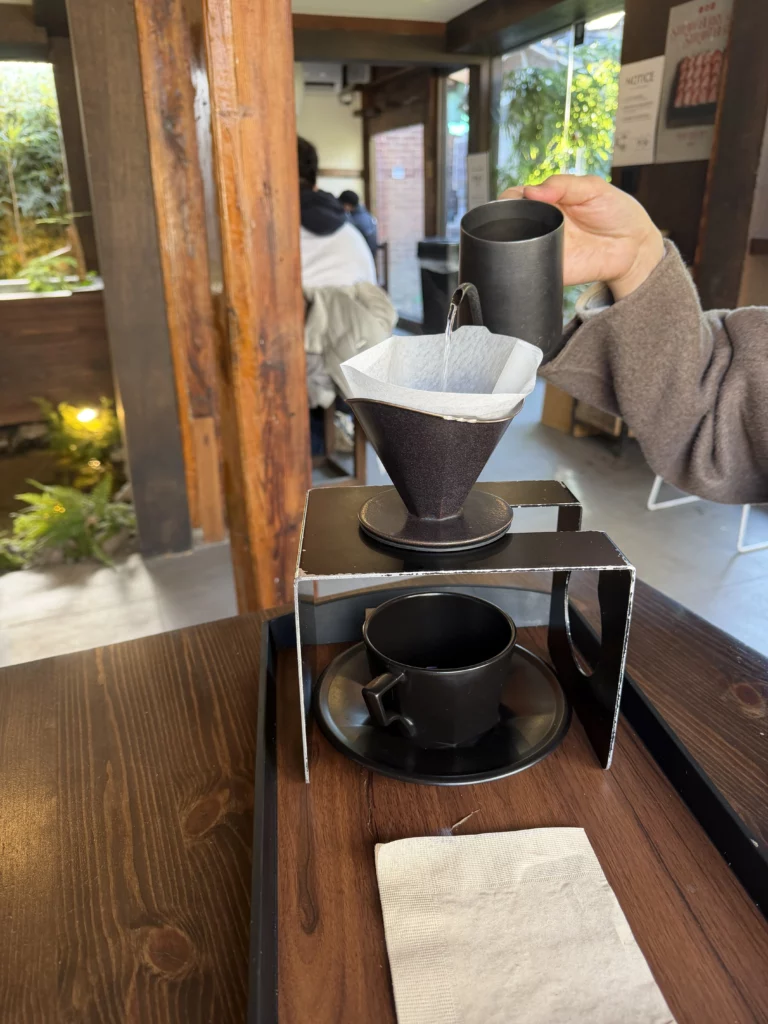
The integration of water features throughout the cafe also connects to traditional Korean garden design philosophy, where moving water symbolizes life flow and purification. These design choices aren’t merely aesthetic—they represent centuries of Korean spatial thinking about how environments affect human wellbeing and social interaction.
What should first-time eaters know?
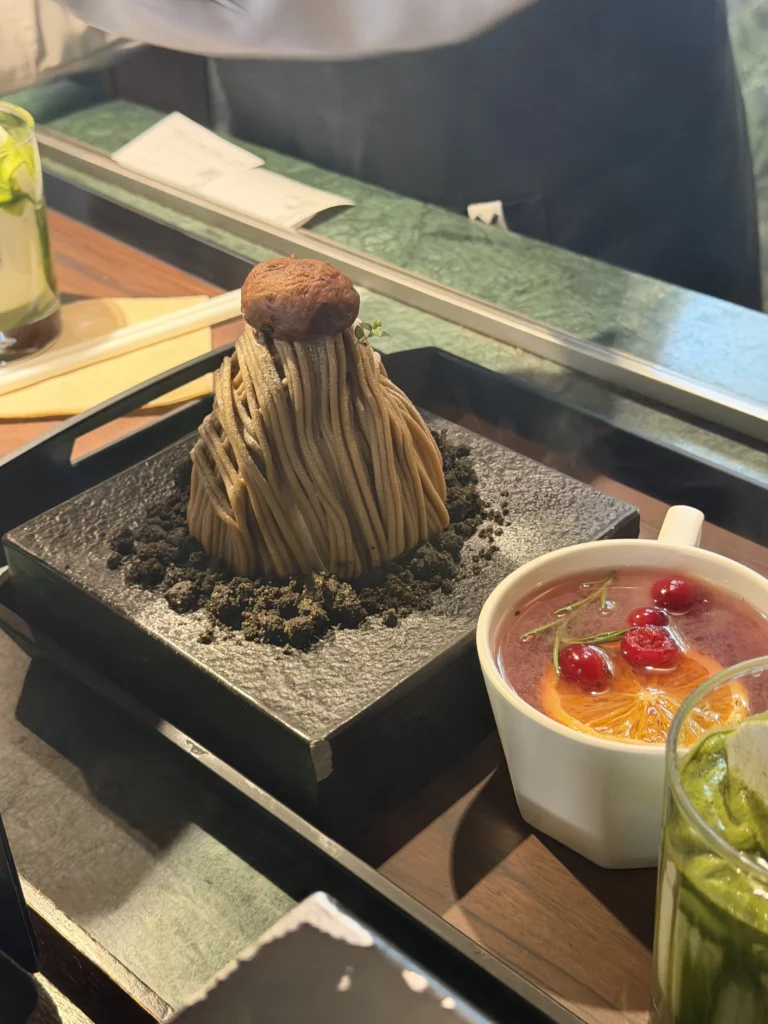
Proper eating method: Souffle castella arrives in its baking dish, meant for immediate consumption while still warm. Use the provided spoon to cut through all layers at once—cake, cream, and fruit compote—so each bite delivers the complete flavor experience. Eating it gently prevents the delicate structure from collapsing, though slight deflation occurs naturally as the cake cools. This is normal and doesn’t indicate quality issues.
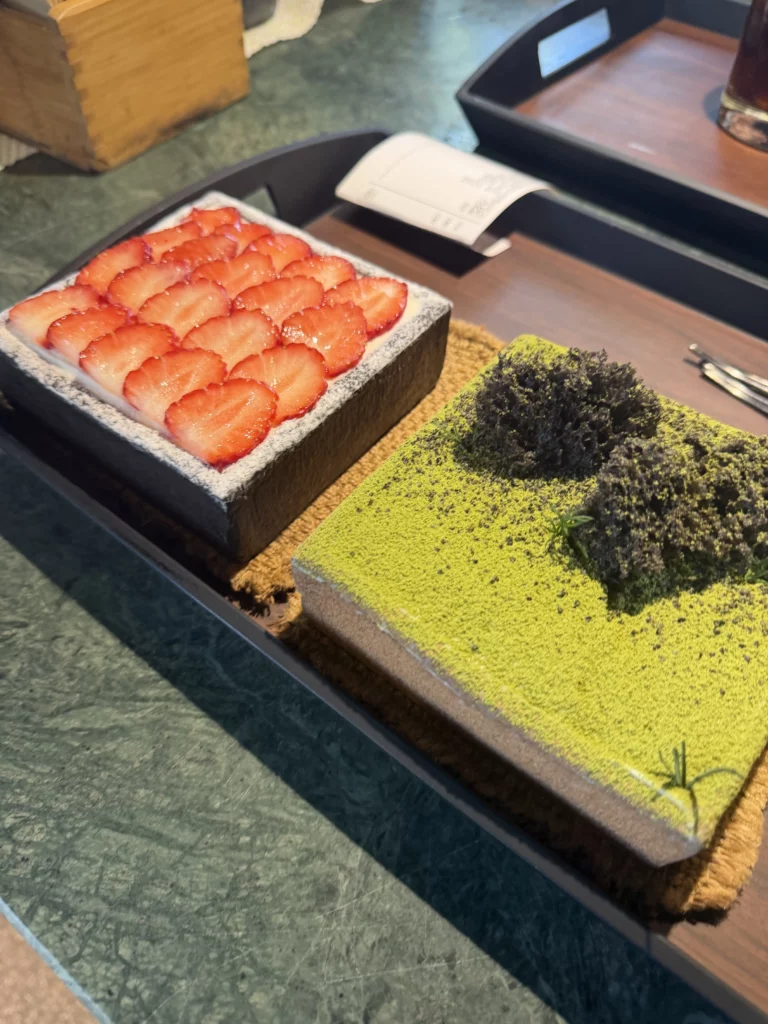
What to expect on first taste: The initial impression focuses on texture rather than flavor intensity. Many first-timers express surprise at how light and airy the cake feels, almost dissolving on the tongue. The egg flavor is more pronounced than most Western cakes but remains subtle and pleasant. The combination of warm cake with cool cream creates a satisfying temperature contrast that enhances the overall experience.
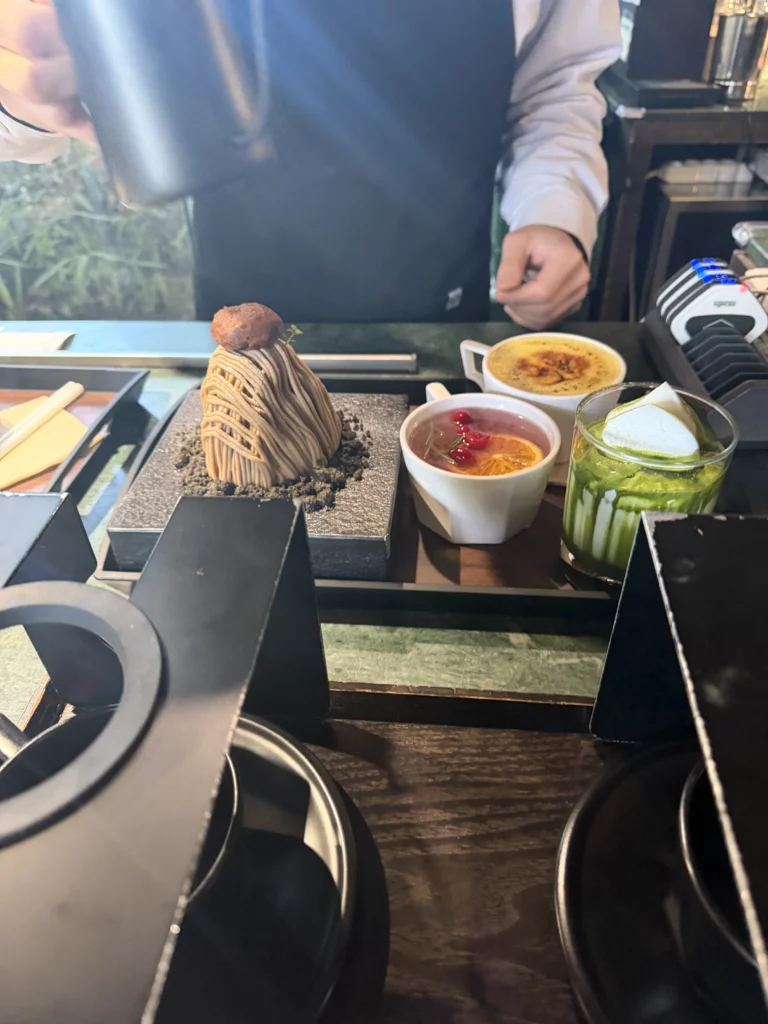
Proper dining sequence: In Korean cafe culture, taking time to photograph your food before eating is not only accepted but expected—the cafe’s design accommodates this social media reality. After photos, many Koreans begin with coffee or tea sips before starting the dessert, allowing the beverage’s mild bitterness to prepare the palate for sweetness. Sharing desserts is common in Korean dining culture, so don’t hesitate to order one castella for two people if you prefer sampling multiple menu items.
Cultural considerations: The cafe operates a queue system during peak hours (typically weekends and holidays). Arriving during off-peak times—weekday mornings or early afternoons—substantially improves your chances of immediate seating. Once seated, Korean cafe etiquette permits extended stays, so relax and enjoy the atmosphere without feeling rushed to vacate your table. The cafe does request minimum orders per person, which is standard across Seoul’s premium cafe scene.
Visiting Cheongsu-dang: Practical Tips and Insider Knowledge
Getting There: Cheongsu-dang sits deep within Ikseon-dong’s maze of alleys, making navigation slightly challenging for first-time visitors. From Jongno 3-ga Station (Lines 1, 3, or 5), exit 6 provides the most direct route. Turn right immediately after exiting, then take your first left into the narrow alleyway system. Follow signs toward Ikseon-dong’s main cafe area—the distinctive bamboo entrance becomes visible as you approach. The walk takes approximately 5 minutes but feels longer due to the winding path. Using navigation apps helps, though be prepared for occasional GPS confusion in the tight alley spaces.
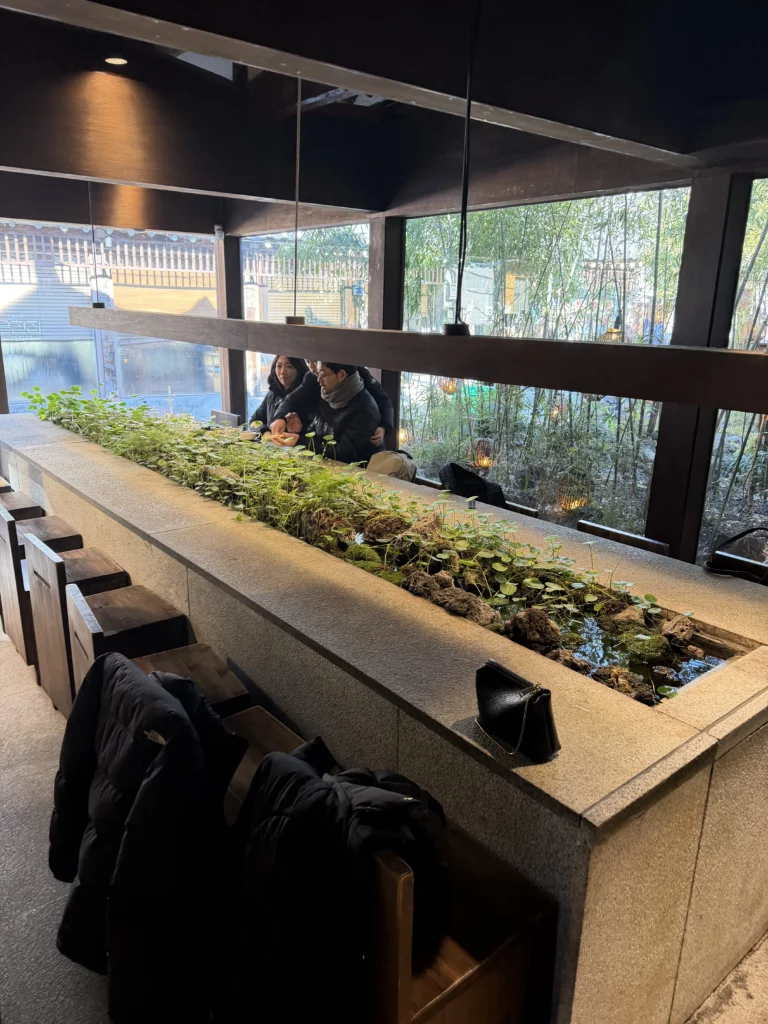
Timing Your Visit: Weekday mornings (10:30-11:30 AM opening until noon) and early afternoons (2:00-3:00 PM) see significantly smaller crowds than weekends or evenings. Late afternoon around 4:00-5:00 PM provides another good window before dinner crowds arrive. The cafe closes at 8:00 PM (last order 7:30 PM), earlier than many Seoul establishments. Summer weekends can see wait times exceeding 60 minutes during peak lunch hours, while winter weekdays might allow immediate seating.
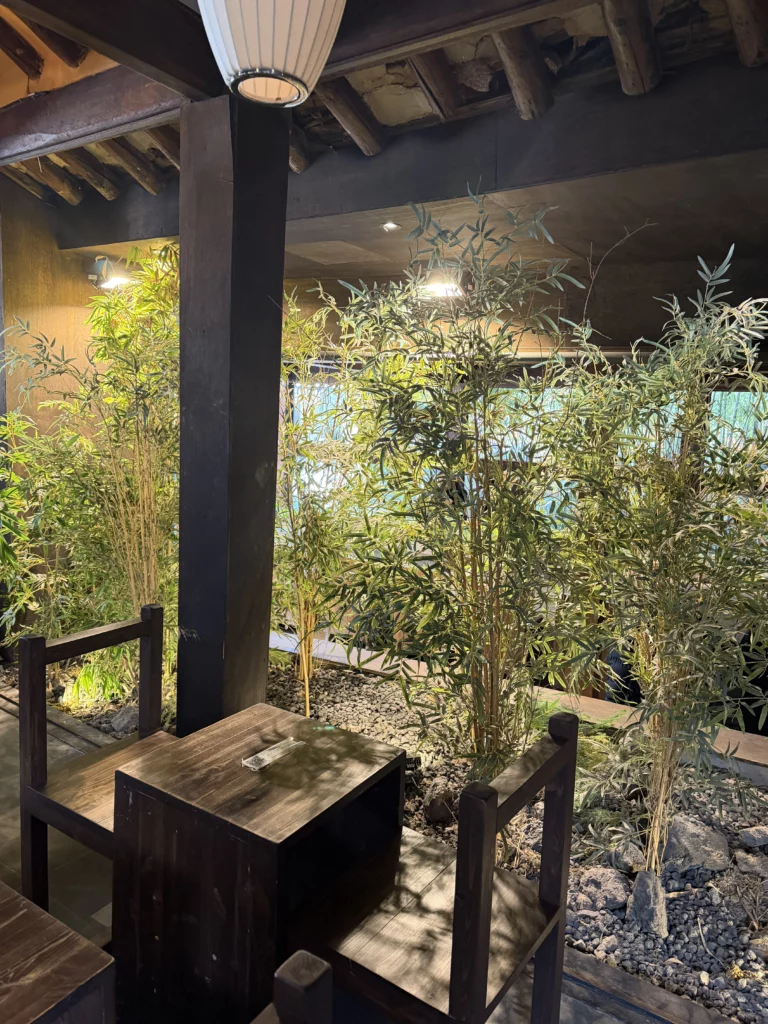
What to Order: First-time visitors should prioritize the original souffle castella with strawberry compote—this signature item represents Cheongsu-dang at its best and delivers the experience most people seek. Pair it with an iced Americano or matcha latte depending on your caffeine preferences. The black sesame dessert makes an excellent second choice if visiting with a companion willing to share multiple items. Coffee quality is high enough to warrant ordering even if dessert isn’t your preference.
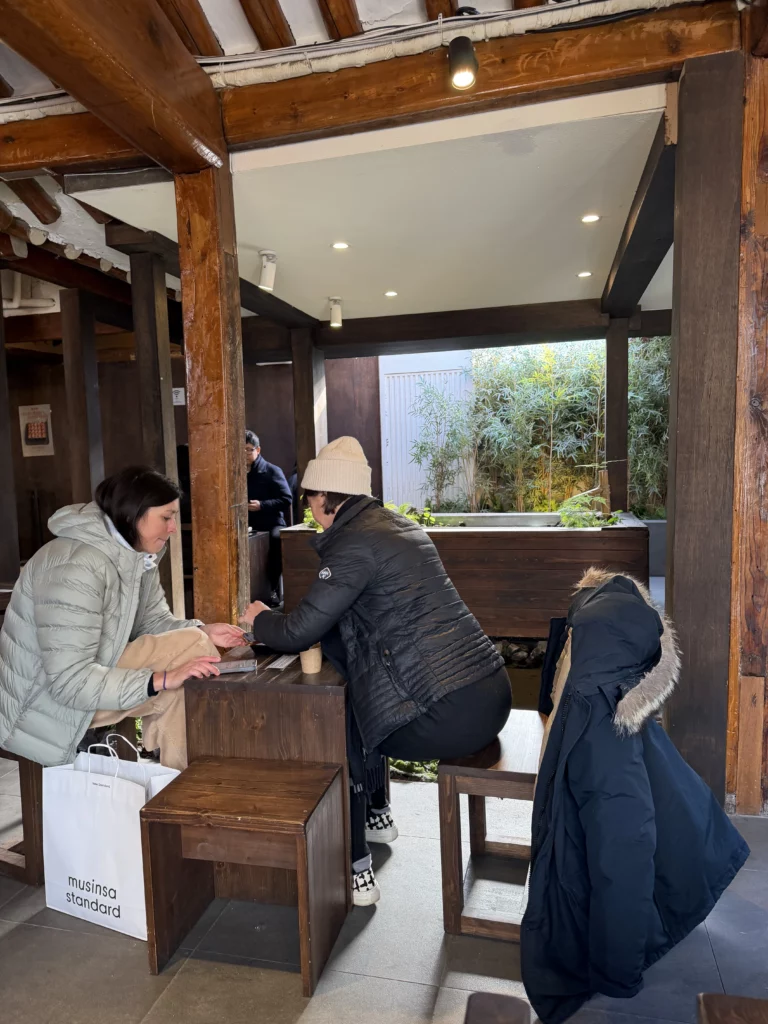
Photography Etiquette: While the cafe welcomes photography, be mindful of other guests’ privacy and avoid blocking pathways during busy periods. The entrance area sees constant traffic from customers taking the iconic stepping stones photo—wait your turn patiently and keep shoots brief to respect others waiting. Inside, natural lighting works best for food photography, particularly at window seats where traditional hanji paper filters afternoon sun beautifully.
Exploring the Neighborhood: Ikseon-dong rewards wandering. After visiting Cheongsu-dang, explore the surrounding alleys where dozens of other cafes, boutiques, and restaurants compete for attention. The neighborhood maintains an energetic but not overwhelming tourist presence, making it feel vibrant rather than overcrowded. Traditional Korean tea culture can be experienced at nearby establishments, creating opportunities for deeper cultural exploration beyond cafe hopping.
Why Cheongsu-dang Matters Beyond Instagram
Cheongsu-dang represents a broader trend in Korean cultural preservation that deserves recognition beyond its photogenic qualities. By proving that century-old hanok structures can thrive as profitable contemporary businesses, cafes like Cheongsu-dang provide economic incentives for preserving traditional architecture rather than demolishing it for modern development.
The cafe’s success also demonstrates how Korean cuisine and dining culture can evolve while maintaining connections to tradition. The souffle castella’s popularity shows Korean consumers’ openness to international influences, yet the presentation, ingredients, and service style remain distinctly Korean. This balance between preservation and innovation characterizes contemporary Korean culture across multiple domains, from fashion to technology to food.
For international visitors, Cheongsu-dang offers accessible cultural education wrapped in an enjoyable experience. Understanding hanok architecture, experiencing Korean cafe culture’s social emphasis, and tasting how Korean bakers reinterpret international desserts all contribute to deeper appreciation of Korean society beyond surface-level tourism. The cafe succeeds precisely because it doesn’t sacrifice authenticity for accessibility—foreign visitors encounter genuine Korean culture rather than diluted versions designed for tourist consumption.
Cheongsu-dang Bakery exemplifies Seoul’s remarkable ability to honor history while embracing modernity. Whether you’re seeking the perfect Instagram backdrop, craving ethereal souffle castella, or simply wanting to experience authentic Korean cafe culture within stunning traditional architecture, this hanok cafe Ikseon-dong destination delivers on every promise. The combination of serene bamboo gardens, flowing water features, and carefully crafted desserts creates memories extending far beyond your initial visit. For anyone exploring Seoul’s food scene, Cheongsu-dang represents an essential stop that reveals how Korea preserves traditions while simultaneously writing new chapters in its culinary story.
Address: 31-9 Donhwamun-ro 11na-gil, Jongno-gu, Seoul (서울 종로구 돈화문로11나길 31-9)
Hours: Daily 10:30 AM – 8:00 PM (Last order 7:30 PM)
Phone: 0507-1318-8215
Estimated Cost: ₩18,000-23,000 per person
Planning to explore Seoul’s stunning hanok cafes and taste Korea’s most delightful desserts? Cheongsu-dang Bakery awaits with its magical bamboo entrance and cloud-like souffle castella—experience the perfect blend of tradition and innovation in every delicious bite.
Location
144 Ikseon-dong, Jongno-gu, Seoul, Republic of Korea, KR
Reviews
5.0
0 reviews
5
0%
4
0%
3
0%
2
0%
1
0%
Loading reviews...
Related Recipes

Drinks & Dessert
Homemade Bungeoppang Recipe (Korean fish-shaped pastry)
Few smells say Korean winter like a cart of bungeoppang sizzling on a frozen street corner — golden, fish-shaped, and...

Drinks & Dessert
Patbingsu: Traditional Korean Shaved Ice with Sweet Red Beans
Few things signal the arrival of a Korean summer like a towering bowl of patbingsu (팥빙수) — Korean shaved ice...

Drinks & Dessert
Sujeonggwa (Korean Cinnamon Ginger Punch)
There is something deeply comforting about the first sip of well-made sujeonggwa. The warm sweetness of cinnamon meets the quiet...


bakery
NUDAKE Tea House Seongsu: Seoul's Experimental Tea House
Seongdong-gu, Seoul 04785 (Haus Nowhere Seoul) 5F, 433 Ttukseom-ro
5

bakery
Lowkey Seongsu: Seoul's Specialty Coffee Roastery
Seoul, South Korea 6 Yeonmujang 3-gil, Seongdong-gu
5

bakery
Dalimmak: Seongsu's Bear-Shaped Bread and Kaymak Cafe
Seoul, South Korea 1F, 38-2 Yeonmujang-gil, Seongdong-gu
5

bakery
Daelim Changgo: Seoul's Original Seongsu Warehouse Cafe
Seoul, South Korea 78 Seongsui-ro, Seongdong-gu,
5