


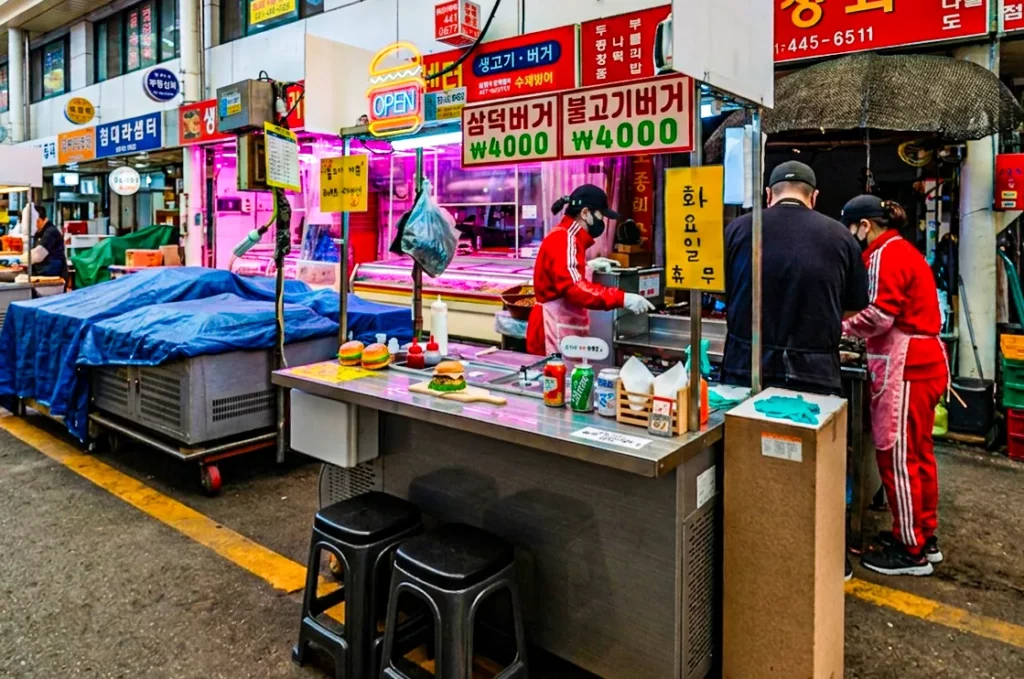
There is a small stall tucked beside the entrance to Anyang’s Jungang Market where the menu has exactly two items and the price has barely moved in years. Samdeok Burger (삼덕버거) is the kind of place that feels like it was always there — a compact griddle, a faint sizzle of beef, and a steady line of regulars who have already decided what they want before they arrive. For ₩4,000, you get a classic burger or a bulgogi burger made fresh on-site, wrapped in paper, and ready to eat standing on the pavement. It is not trying to compete with gourmet burger shops. It is something older and more satisfying than that: a genuine Korean market snack that delivers nostalgia, value, and flavor in equal measure.
Samdeok Burger: Anyang's Best ₩4,000 Korean Retro Bulgogi Burger
5
Samdeok Burger: Anyang's Best ₩4,000 Korean Retro Bulgogi Burger
5
Gyeonggi-do, South Korea 196 Namsan-ro, Manan-gu, Anyang-si
Editor: James Lee


Interior04
Food04

Menu02
Overview
+82 000
WiFi Provided
Outdoor Seating Available
Electronic Payment, Credit Card accepted: American Express, Master Card, Visa
Introduction
Operating hours
Mon, Tue, Wed, Thu, Fri, Sat, SunAM 11:00 - PM 7:00
Menu

Editor's Detail
There is a small stall tucked beside the entrance to Anyang’s Jungang Market (안양 중앙시장) where the menu board has exactly two items and the price has barely moved in years. Samdeok Burger (삼덕버거) is the kind of place that feels like it was always there — a compact griddle, a faint sizzle of beef, and a steady line of regulars who have long since decided what they want before they arrive. The smell reaches you first: a warm, slightly sweet, caramelized-beef aroma drifting out from the stall that belongs entirely to this corner of the market. For ₩4,000 — roughly three US dollars — you get a classic burger or a bulgogi burger made fresh in front of you, wrapped in paper, and ready to eat on the pavement.
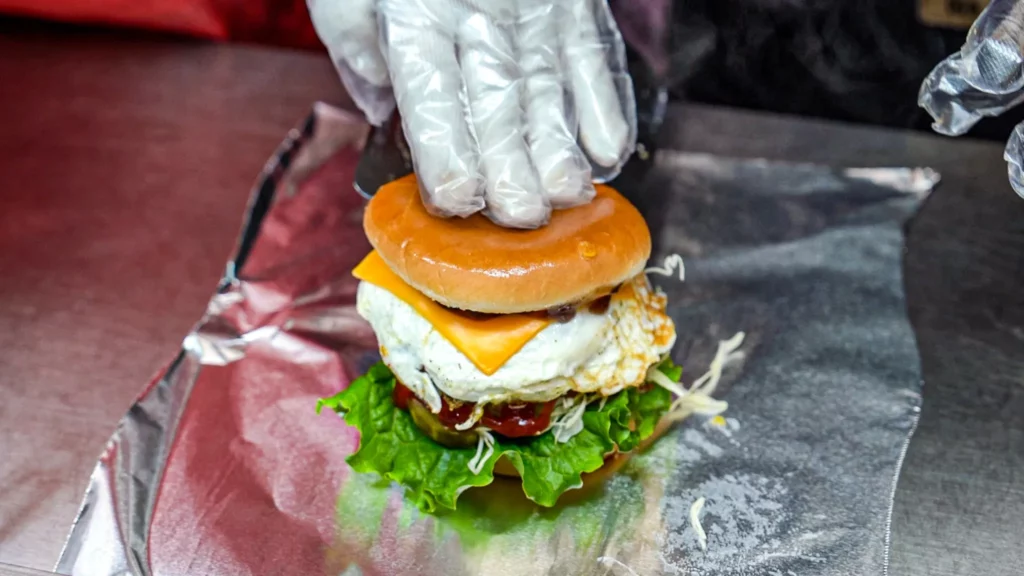
This is not a gourmet burger concept. It is something older and more satisfying than that: a genuine Korean market snack built on nostalgia, affordability, and a flavor that rewards repeat visits. Samdeok Burger went viral in 2024 after short-form food videos on TikTok and Threads captured its impossibly low price and the hypnotic rhythm of the griddle work, drawing visitors from beyond Anyang to experience what locals had quietly enjoyed for years. If you are exploring Korean street food culture — or simply looking for the best-value bite in Gyeonggi-do — this stall deserves a visit.
Table of Contents
- What Is Samdeok Burger? A Traditional Market Gem
- The Menu: Beautifully, Deliberately Simple
- The Bulgogi Burger: Flavor, Texture, and That Nostalgic Sauce
- Three Key Ingredients Behind the Retro Korean Flavor
- Bulgogi Burger FAQ: Four Things First-Timers Should Know
- Practical Visitor Guide: Hours, Location & Tips
- Final Thoughts & Call to Action
What Is Samdeok Burger? A Traditional Market Gem
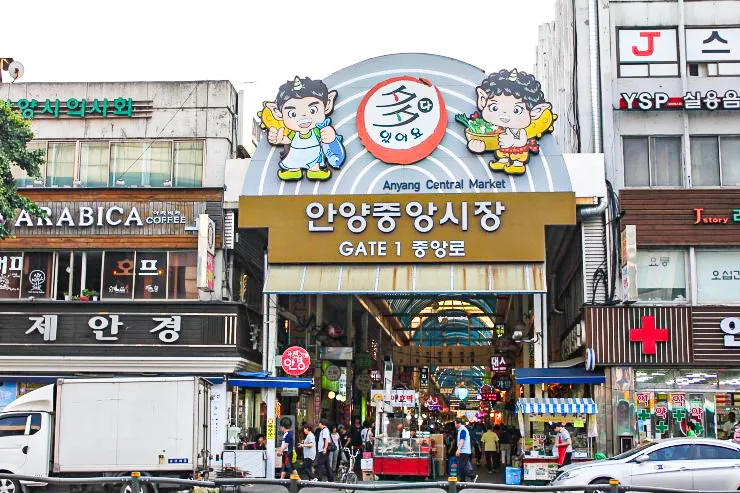
Samdeok Burger operates as a street-style stall at the entrance to Jungang Market in Manan-gu, Anyang-si, Gyeonggi-do — specifically near Exit 6 of Anyang Station on the 1 Line, along Namsan-ro. Anyang Jungang Market itself dates back to 1961, when it opened with 283 shops and gradually expanded into one of the largest traditional markets in Gyeonggi Province, with over 670 surrounding stores today. Like most traditional Korean markets, Jungang Market is a place where practical shopping and street-food culture overlap — the kind of environment where a well-priced burger stall can become a neighborhood institution over time.
Samdeok Burger fits that mold perfectly. It draws steady foot traffic not through advertising or social media strategy, but through the simplest possible combination: honest ingredients, efficient preparation, and a price that has remained accessible even as living costs have risen. The stall setup is minimal — a griddle, a counter, paper wrapping — and the format encourages takeaway rather than sit-down dining. Seating inside the market is limited, and most customers eat standing nearby or while walking.
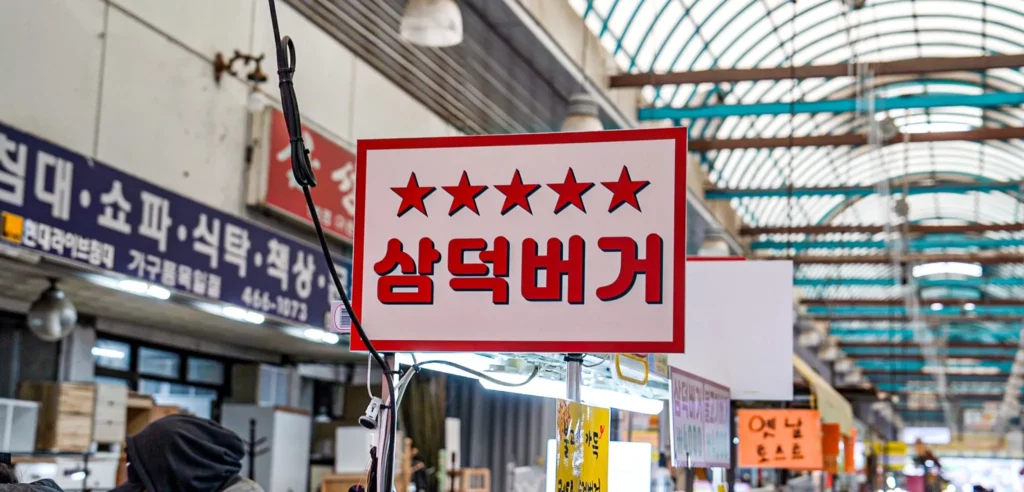
For food lovers interested in Korean traditional market culture and street food, stalls like Samdeok Burger represent a specific category of Korean eating that exists somewhere between pojangmacha (포장마차) tent-bar culture and fast food. It is democratic, unpretentious, and deeply local. The Sokcho Central Market food guide covers a similar spirit further up the coast — but Samdeok Burger brings that same market energy to one of the capital region’s most accessible destinations.
The Menu: Beautifully, Deliberately Simple
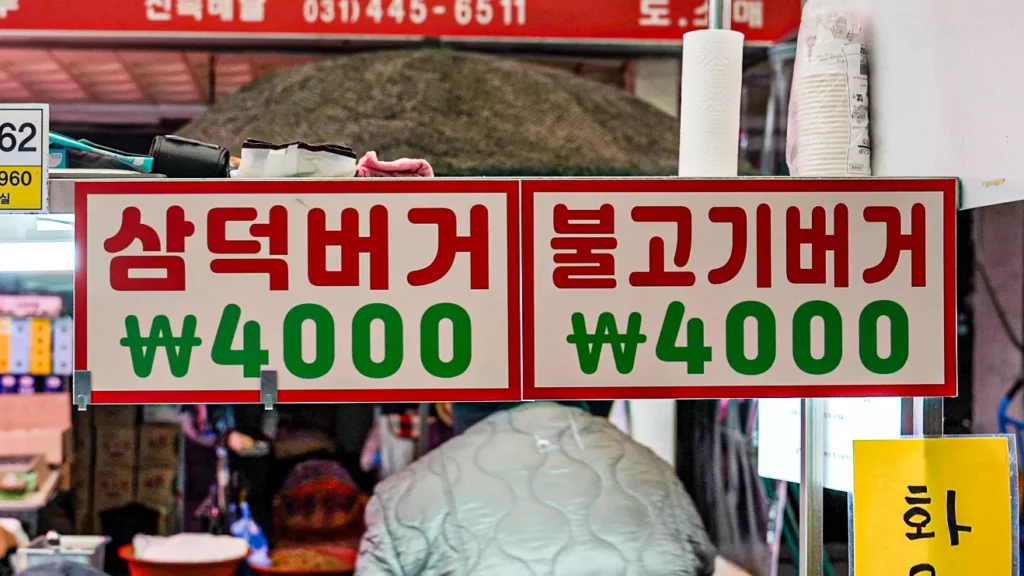
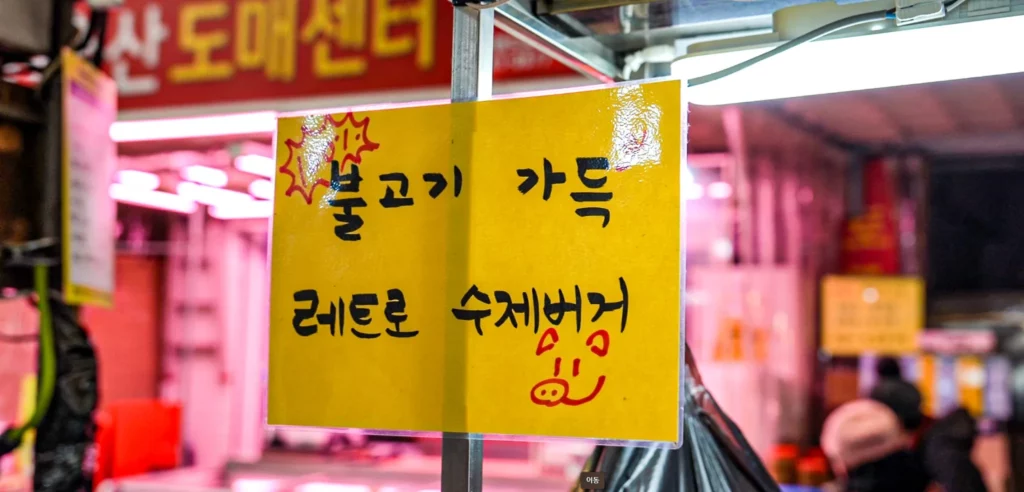
The entire Samdeok Burger menu consists of two items:
- Classic Burger (버거) — ₩4,000
- Bulgogi Burger (불고기버거) — ₩4,000
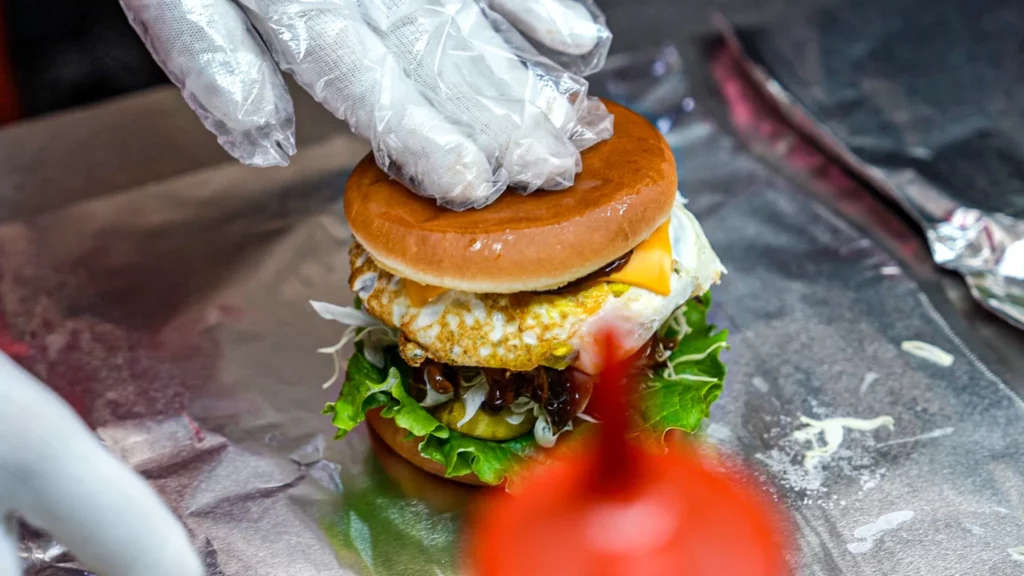
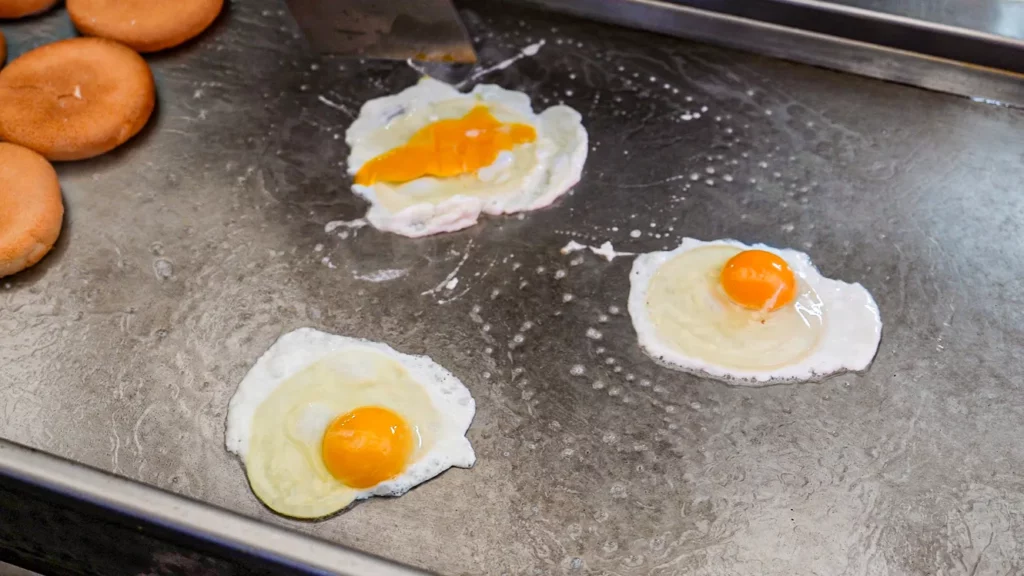
That is it. No upsells, no combos, no seasonal specials. This intentional simplicity is part of what gives the stall its identity — and its consistency. By focusing on just two variations of the same format, the vendor can prepare each one quickly and with a precise, repeatable technique. The thin beef patty is pressed and cooked on a flat griddle, then layered with fresh vegetables (typically shredded cabbage and sliced onion) and a signature Korean-style sauce inside a soft, slightly sweet bun.
The bulgogi burger swaps the standard patty for one seasoned with the recognizable bulgogi profile — a light, sweet-savory marinade of soy sauce, garlic, and a touch of sugar — before hitting the griddle. The result is a burger that tastes distinctly Korean without requiring any prior knowledge of Korean cuisine to enjoy. At ₩4,000 per burger, even purchasing two leaves change from a ₩10,000 note. Parking validation is available for customers who spend over ₩10,000, making it easy to justify a double order.
The Bulgogi Burger: Flavor, Texture, and That Nostalgic Sauce
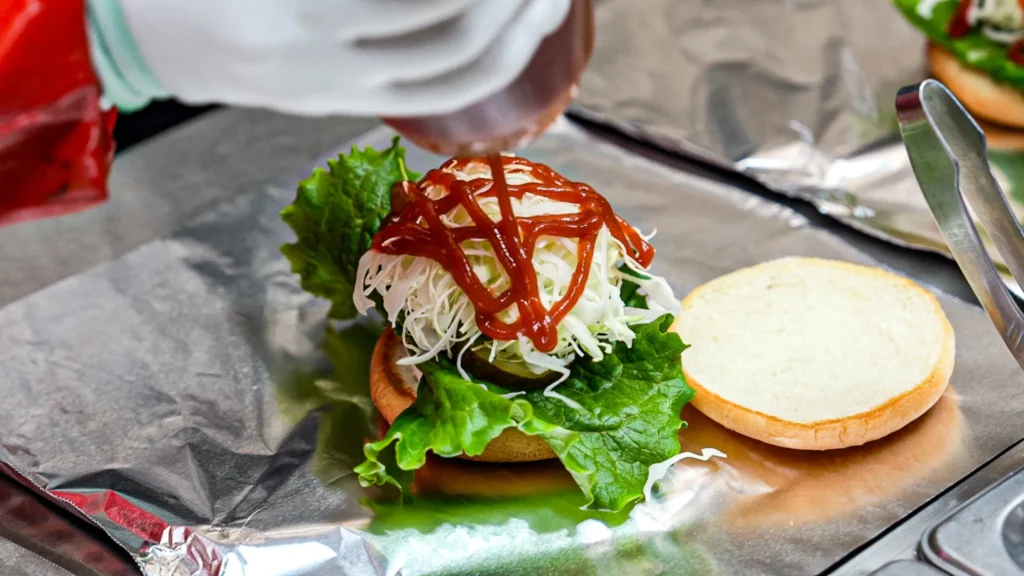
The bulgogi burger at Samdeok is not a thick, juice-dripping patty stacked with premium toppings. It is intentionally thin and clean — closer in spirit to the burgers that Korean fast food chains like Lotteria popularized in the 1980s and 90s than to the American-style smash burgers that have become trendy in Seoul’s food districts. That is the point. The flavor is nostalgic in a specifically Korean way: lightly sweet, subtly garlicky, with a soft umami backbone that comes from the soy-based marinade caramelizing on the griddle.
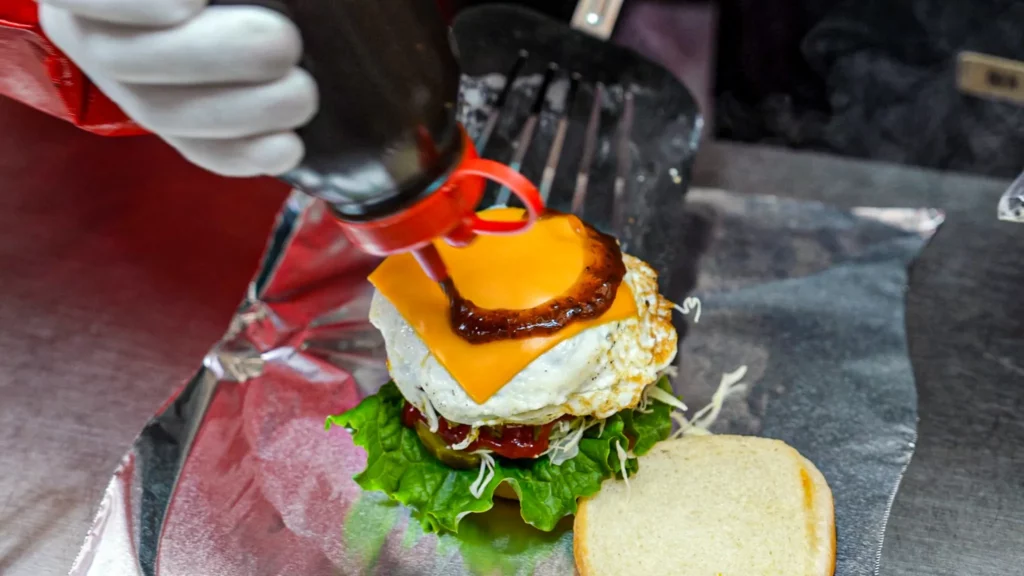
Many customers describe it as tasting like a memory — the kind of simple, satisfying food they associate with school trips, market visits with grandparents, or post-school snacking. For international visitors, the closest Western reference point might be a miniature slider with Asian flavors, but even that comparison undersells the particular comfort of this style. The vegetables keep it fresh and light, while the sauce — applied in just the right quantity — ties everything together without overwhelming the beef.
Unlike the lavishly marinated, restaurant-style bulgogi explored in this deep-dive into authentic bulgogi preparation, Samdeok’s version distills the concept to its most portable, accessible form. It is bulgogi logic applied to street food: sweet, savory beef made quickly and shared generously. For a broader comparison on how Korean BBQ beef culture evolved, the premium Hanwoo galbi experience at Samwon Garden sits at the other end of the spectrum — same cultural lineage, entirely different expression.
Three Key Ingredients Behind the Retro Korean Flavor
Ganjang (간장) — Korean Soy Sauce The foundation of the bulgogi-style marinade. Korean soy sauce (ganjang) provides the deep umami and saltiness that penetrates the meat even in a short marination window. Unlike Japanese soy sauce, ganjang has a slightly earthier, less aggressive flavor that creates a cleaner base for other seasonings. It also aids caramelization on the griddle, contributing to those golden-brown edges on the patty.
Seoltang (설탕) — Korean Sugar A small addition of sugar is what gives the bulgogi burger its characteristic gloss and sweetness. As explored in the guide to Korean sugar in cooking, sugar in Korean savory dishes is not used for sweetness alone — it drives the Maillard reaction during grilling, creating caramelized flavor compounds that define the bulgogi profile. Without it, the patty would taste flat and one-dimensional.
Maneul (마늘) — Garlic Fresh garlic, finely minced into the marinade, provides the aromatic depth that makes bulgogi instantly recognizable to anyone familiar with Korean food. When cooked on a hot griddle, the harsh raw notes mellow into a warm, savory background flavor. It is what prevents the burger from tasting generically sweet — the garlic anchors it firmly in Korean culinary identity.
These three ingredients, combined with a soft bun and fresh vegetables, illustrate a principle that runs throughout Korean street food: maximum flavor impact from minimal, well-chosen components. For more on the fermented condiments that often accompany similar preparations, the gochujang ingredient guide is worth exploring — though Samdeok’s bulgogi burger relies on a gentler, soy-forward seasoning rather than chili heat.
Bulgogi Burger FAQ: Four Things First-Timers Should Know
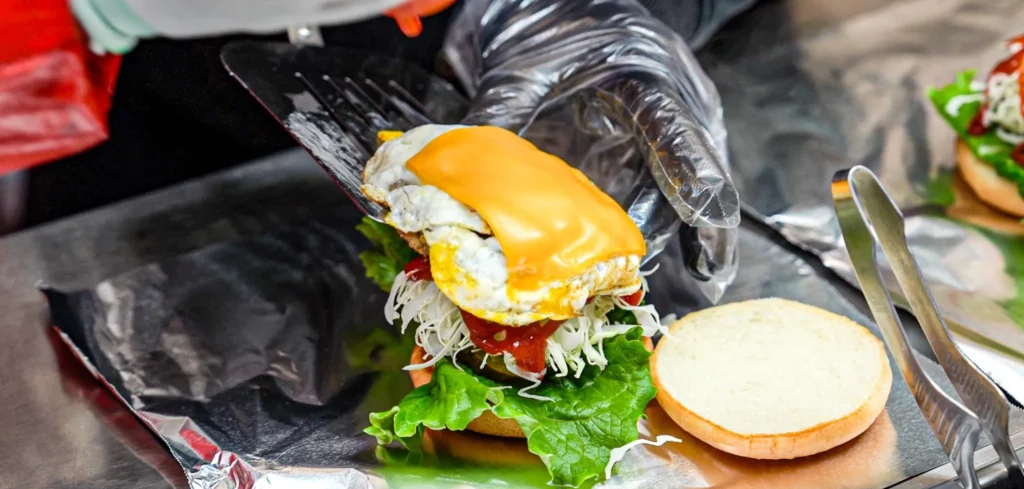
What makes the bulgogi burger uniquely Korean?
The bulgogi burger is a direct descendant of bulgogi (불고기), a marinated beef dish with origins dating back to the Goguryeo era (37 BCE–668 CE). Unlike Western burgers, which traditionally rely on salt and fat for flavor, the Korean bulgogi burger is defined by its marinade-first approach — the meat is seasoned before cooking, not after. The sweet-savory-garlicky profile has no real Western equivalent; it is entirely a product of Korean culinary philosophy, where balance between flavors (ohmi, 오미) is prioritized over bold singular notes. Even in its most simplified street food form, the bulgogi burger carries this cultural DNA.
What are the key ingredients that create this flavor?
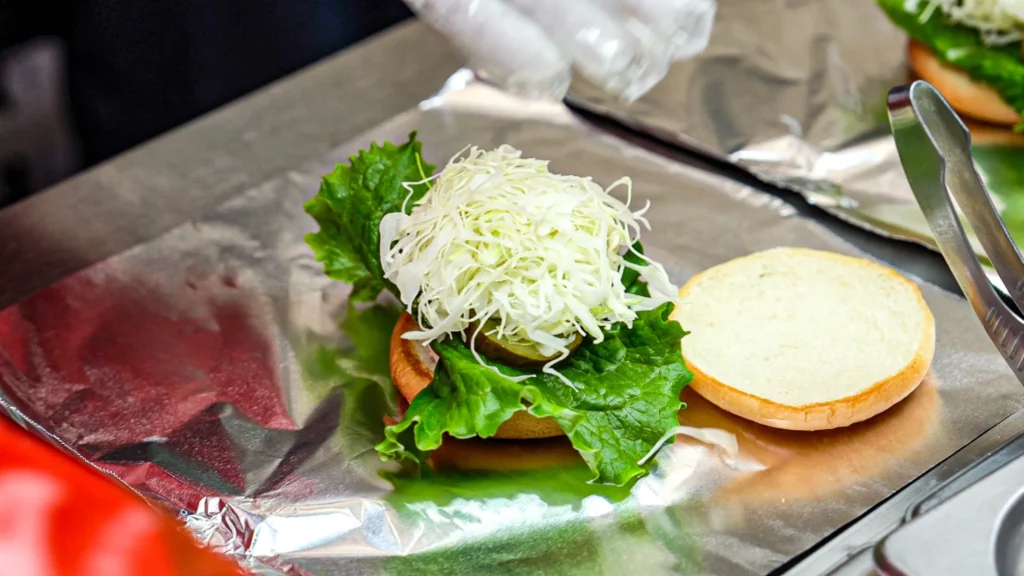
The three essential flavor drivers are Korean soy sauce (ganjang) for umami depth, sugar for caramelization and sweetness, and garlic for aromatic complexity. Together they create what Korean food culture recognizes as a jang-based marinade profile — clean, rounded, and instantly satisfying. The patty itself is thin rather than thick, which means a higher surface-area-to-volume ratio and more caramelized crust per bite. The sauce applied to the bun (a proprietary blend that varies by stall) adds a mild, slightly tangy finish similar to what Korean fast food chains have used since the 1980s.
How would you describe the taste and spice level?
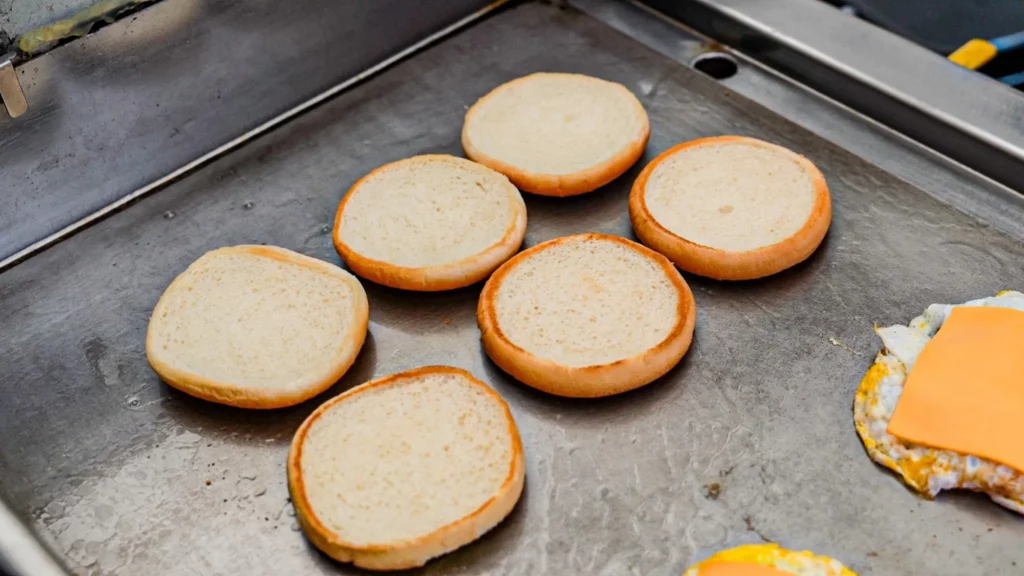
On a scale of 1 to 10, the Samdeok bulgogi burger rates approximately 1–2 for heat — it is essentially non-spicy. The dominant flavor notes are sweet, savory (umami), and lightly garlicky, with a soft, slightly toasted bun providing a neutral backdrop. The texture is tender with caramelized edges, the vegetables add freshness and crunch, and the sauce brings mild tang. It is accessible to children, spice-averse eaters, and first-time Korean food explorers alike. This is deliberately comfort food, not a bold or challenging flavor experience.
What should first-time visitors know?
Arrive during weekday lunch hours (11:30 AM–1:00 PM) for the freshest, most active preparation — though queues do form during peak times. Cash is strongly recommended, as traditional market stalls like this often do not accept card payments. The burgers are made to order and served immediately, so there is minimal wait time once your order is taken. Seating inside the market is very limited; most visitors eat standing near the stall or take their order to a nearby bench. The food is designed to be eaten fresh and warm — the thin patty and soft bun lose some of their appeal if left to sit. If you are visiting with a group, note that the ₩10,000 minimum spend for parking validation is easy to reach with just three burgers.
For a broader sense of how Korean market street food traditions work across the country, the guide to Namdaemun’s legendary hotteok vendor and the Myeongdong Hamburger Toast profile offer excellent context for the category Samdeok Burger belongs to.
Practical Visitor Guide: Hours, Location & Tips
DetailInformation
Restaurant Name
Samdeok Burger (삼덕버거)
Address
Near 196 Namsan-ro (냉천로 196), Manan-gu, Anyang-si, Gyeonggi-do
Market
Anyang Jungang Market (안양 중앙시장) — near Exit 6 area
Hours
Mon–Fri: 11:00 AM – 7:00 PM / Sat: 10:30 AM – 7:00 PM / Sun: Closed
Price
Classic Burger ₩4,000 / Bulgogi Burger ₩4,000
Parking
Available with ₩10,000+ purchase
Seating
Limited — primarily takeaway
Payment
Cash recommended
Getting There: Anyang Station (Seoul Metro Line 1) is the most convenient option, with the market accessible on foot in approximately 10 minutes. Multiple local bus routes also serve the Jungang Market stop.
Best Time to Visit: Weekday mornings and early afternoons offer the smoothest experience. Weekend visitors should expect higher foot traffic in the market.
According to Korea’s official tourism resources, traditional markets like Anyang Jungang Market represent a living strand of Korean commercial culture that has persisted alongside modern retail — and stalls like Samdeok Burger are a significant part of what keeps that culture vital. The Korean Cultural Center similarly recognizes traditional market street food as one of the most authentic and accessible entry points into everyday Korean food culture.
Understanding the difference between Korean fermented condiments like gochujang, doenjang, and ssamjang can deepen your appreciation of how Korean flavor profiles are constructed — useful context whether you are visiting a high-end restaurant or a ₩4,000 market stall.
A Rare Thing: Quality Without Compromise on Price
What makes Samdeok Burger remarkable is not that it is cheap. Plenty of cheap food exists in Korean markets. What makes it remarkable is that the price has not resulted in any compromise on the experience. The patty is fresh, not frozen. The vegetables are current. The sauce is made on-site. The preparation is fast but attentive. At ₩4,000, this stall is offering something that fast food chains charge three to four times more for — and in many cases, delivering a more satisfying result.
This pricing philosophy connects to a broader truth about Korean traditional market food: vendors in these environments have historically priced for the community around them, not for maximum margin extraction. The stall’s viral visibility has not changed this calculus. The bulgogi burger at Samdeok is still ₩4,000. That is a quiet but meaningful statement about what this food is for and who it is for.
Final Thoughts: Go Before the Queue Gets Longer
Samdeok Burger is easy to recommend without qualification. For ₩4,000, it delivers a nostalgic, distinctly Korean bulgogi burger that connects directly to the country’s street food heritage — affordable, freshly made, and impossible to eat without smiling. Whether you are a first-time visitor to Korea navigating the enormous variety of Korean street food options or a regular traveler who thinks they have already tried everything, this stall offers something genuinely different: simplicity executed with years of practice.
Plan your visit to Samdeok Burger on a weekday lunch trip to Anyang Jungang Market. Order both the classic burger and the bulgogi burger on your first visit — the ₩8,000 total outlay is the best culinary investment you will make in Gyeonggi-do this year. And if you are building a wider day-trip around Korean traditional market food, the surrounding market offers additional local eats worth exploring before or after.
Did this guide help you plan your visit? Share it with a friend who loves Korean street food — and drop a comment below about your experience at Samdeok Burger.
Location
Loading interactive map...
Reviews
5.0
0 reviews
5
0%
4
0%
3
0%
2
0%
1
0%
Loading reviews...
Related Recipes

Snacks & Street Food
Japchae Hotteok
If you’ve ever bitten into a golden, gooey sweet hotteok at a Korean winter market, prepare to have your world...

Recipe
Lobster Ramen
Lobster Ramen is a luxurious twist on Korea’s beloved instant noodle culture. The deep umami from fresh lobster combines beautifully...

Snacks & Street Food
Spicy Tteokbokki
Spicy tteokbokki is more than just a street snack — it’s a bold, comforting taste of Korean culture. This guide...