


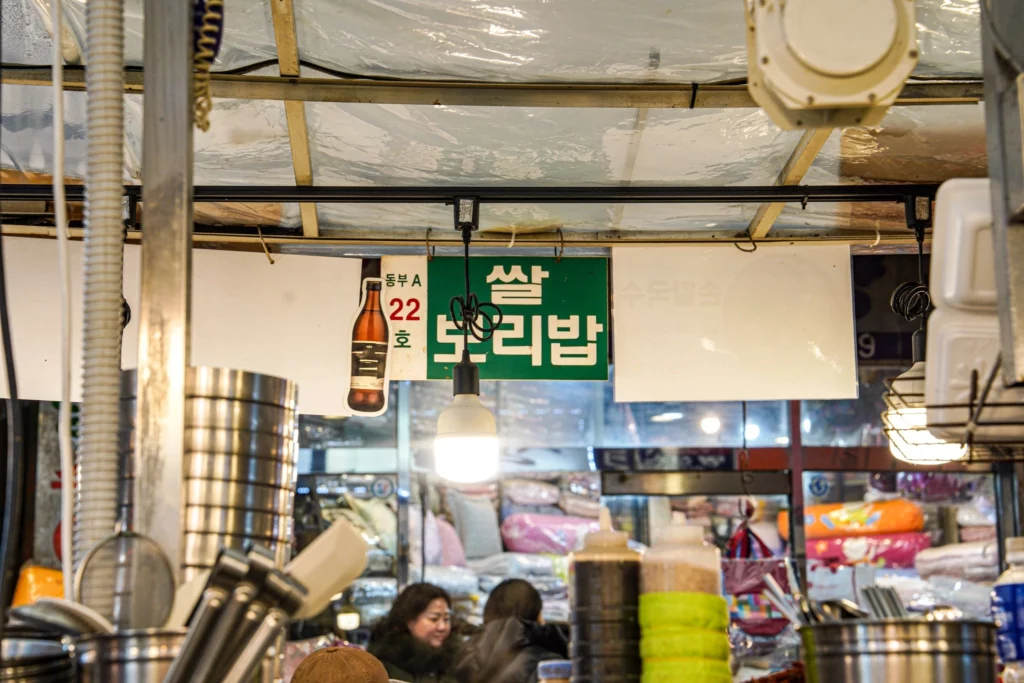
Tucked inside Seoul’s legendary Gwangjang Market at Stall A22, Gabose Bibimbap is quietly doing something the surrounding stalls are not: serving clean, wholesome, home-style Korean food at prices that feel almost disarmingly honest. While the market’s sizzling bindaetteok and raw beef corridors rightfully steal headlines, this understated corner stall offers a barley bibimbap that’s won over local office workers and international visitors alike. Light rather than greasy, vegan-friendly and warming, it’s proof that the most satisfying meal in the market doesn’t always come with a crowd or a queue.
Gabose Bibimbap: Seoul's Gwangjang Market Barley Bowl
5
Gabose Bibimbap: Seoul's Gwangjang Market Barley Bowl
5
Jongno-gu, Seoul, South Korea Stall A22, 395-5 Jongno 1·2·3·4-ga-dong
Editor: James Lee


Interior05
Food07

Menu02
Overview
+82 01094747413
Free WiFi Available
Outdoor Seating Available
Electronic Payment, Credit Card
Introduction
Operating hours
Mon, Tue, Wed, Thu, Fri, Sat, SunAM 9:00 - PM 6:00
Menu
Editor's Detail
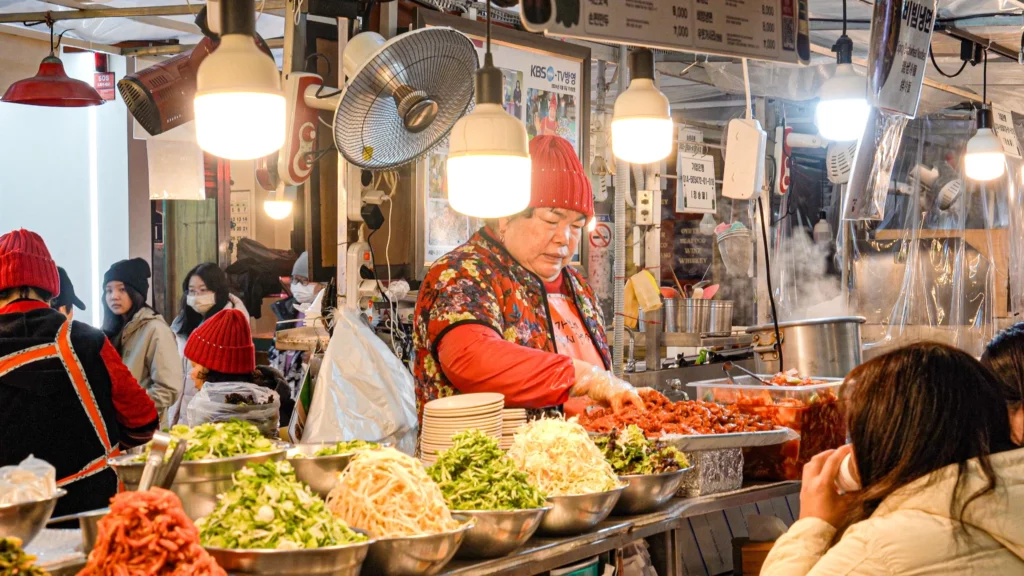
Table of Contents
- What Is Gabose Bibimbap? A Stall Worth Seeking Out
- The Signature Barley Bibimbap — and Why It Stands Out
- Exploring the Full Menu at Stall A22
- What Makes Bibimbap Uniquely Korean?
- What Are the Key Ingredients That Create the Flavour?
- How Would You Describe the Taste and Spice Level?
- What Should First-Time Eaters Know?
- How to Get to Gabose Bibimbap at Gwangjang Market
- Final Thoughts
What Is Gabose Bibimbap? A Stall Worth Seeking Out
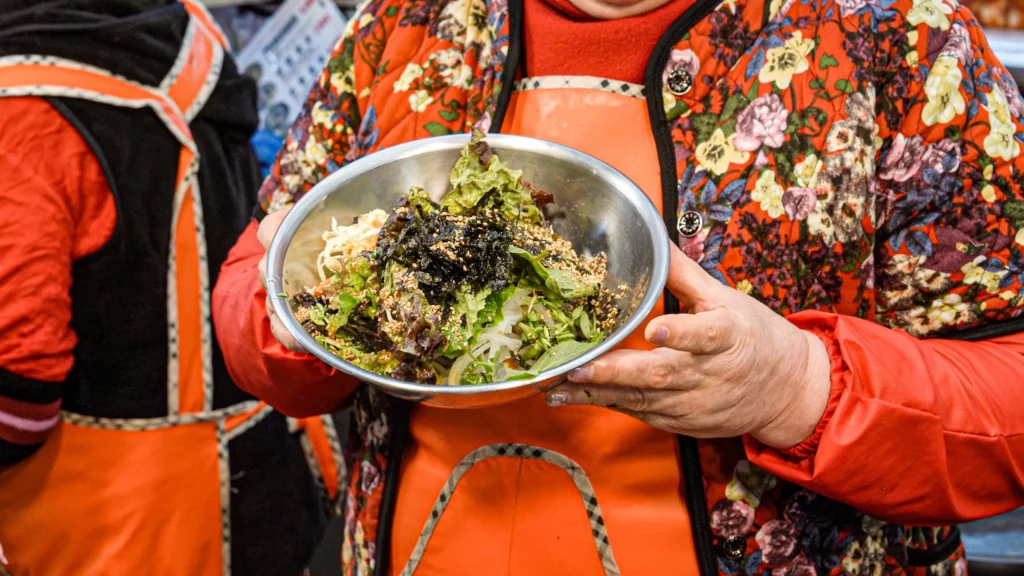
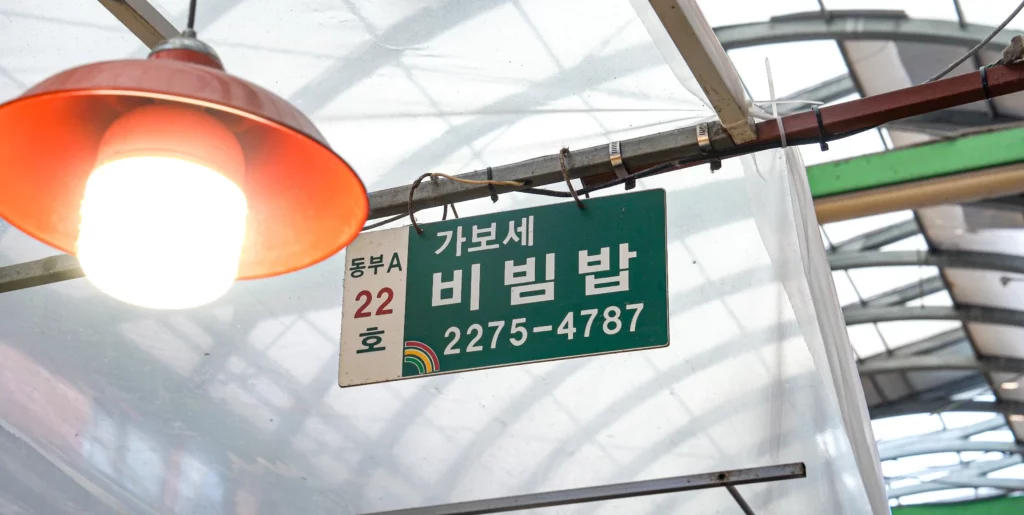
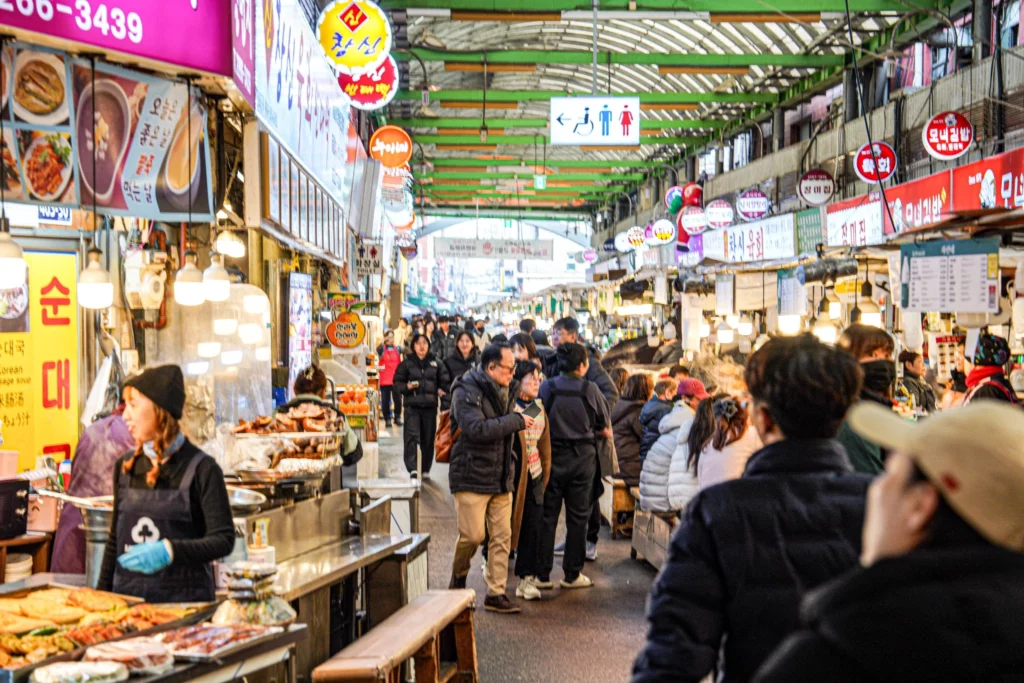
Gabose Bibimbap is a casual counter-style food stall inside Gwangjang Market — Korea’s oldest permanent market, established in 1905 in the heart of Seoul’s Jongno district. The stall sits at position A22 within the market’s central food hall at 88 Changgyeonggung-ro, Jongno-gu.
What separates Gabose from many of its neighbours is a deliberate focus on mild, balanced flavours and clean ingredients. Most of Gwangjang Market’s most famous stalls specialise in rich, oily, or intensely seasoned food — bindaetteok (mung bean pancakes), soondae (blood sausage), and deep-fried twigim. Gabose takes the opposite direction. Its food is the Korean equivalent of a good home-cooked lunch: light, nourishing, and straightforwardly satisfying.
The seating is stall-style — compact stools along a counter — making it ideal for solo diners and quick meals. The atmosphere is unpretentious, and ordering is straightforward even for visitors with no Korean.
The Signature Barley Bibimbap — and Why It Stands Out
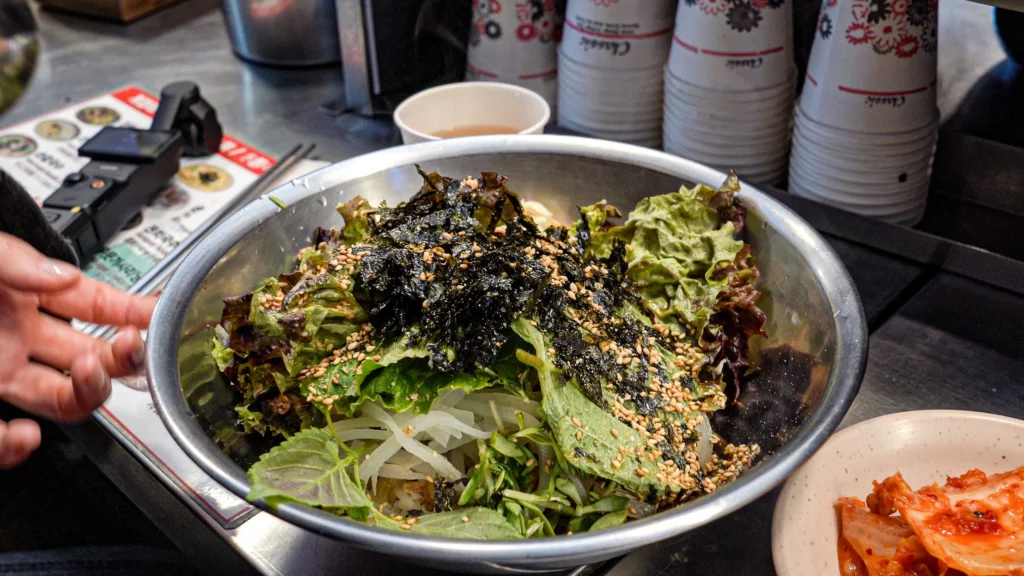
The standout dish is the Barley Bibimbap (보리 비빔밥), priced at ₩6,000 and fully vegan. A generous bowl arrives with a base of white rice mixed with barley — a combination that gives the dish added chew, nuttiness, and fibre compared to plain rice bibimbap. Arranged on top are individual portions of seasoned vegetables (namul, 나물): typically spinach, bean sprouts, zucchini, and carrot, each prepared separately and kept crisp. A spoonful of gochujang — Korea’s fermented chilli paste — accompanies the bowl, and a drizzle of toasted Korean sesame oil ties everything together.
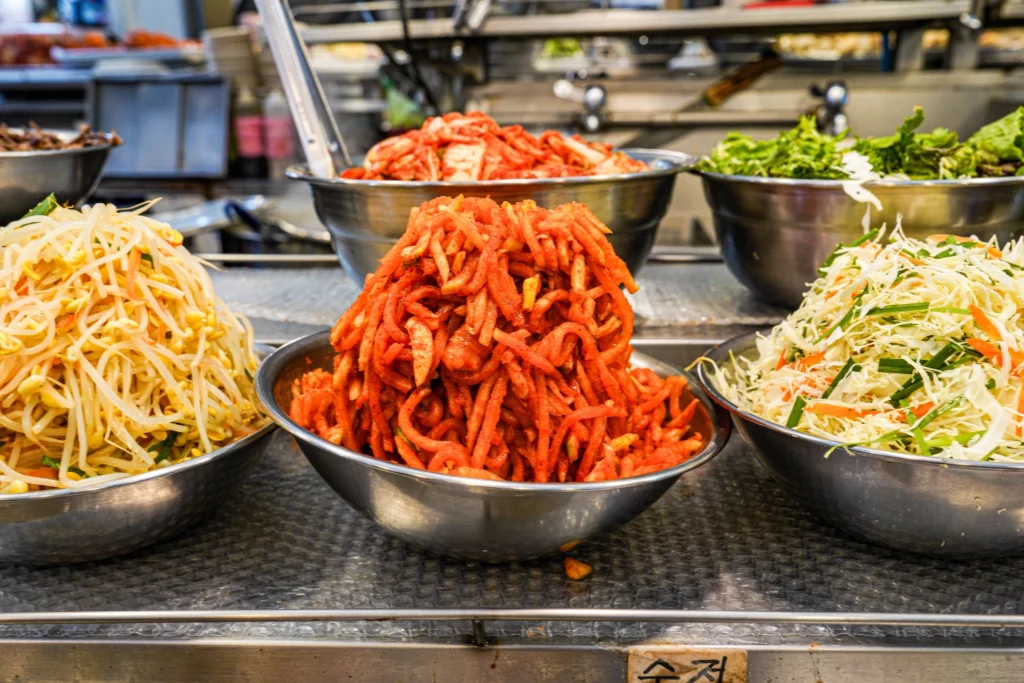
The ritual of bibimbap is half the experience. Diners mix all elements thoroughly before eating — folding the warm rice up through the vegetables, incorporating the gochujang until everything takes on its characteristic red-orange hue. The barley adds an earthy depth that complements the bright, lightly seasoned vegetables beautifully.
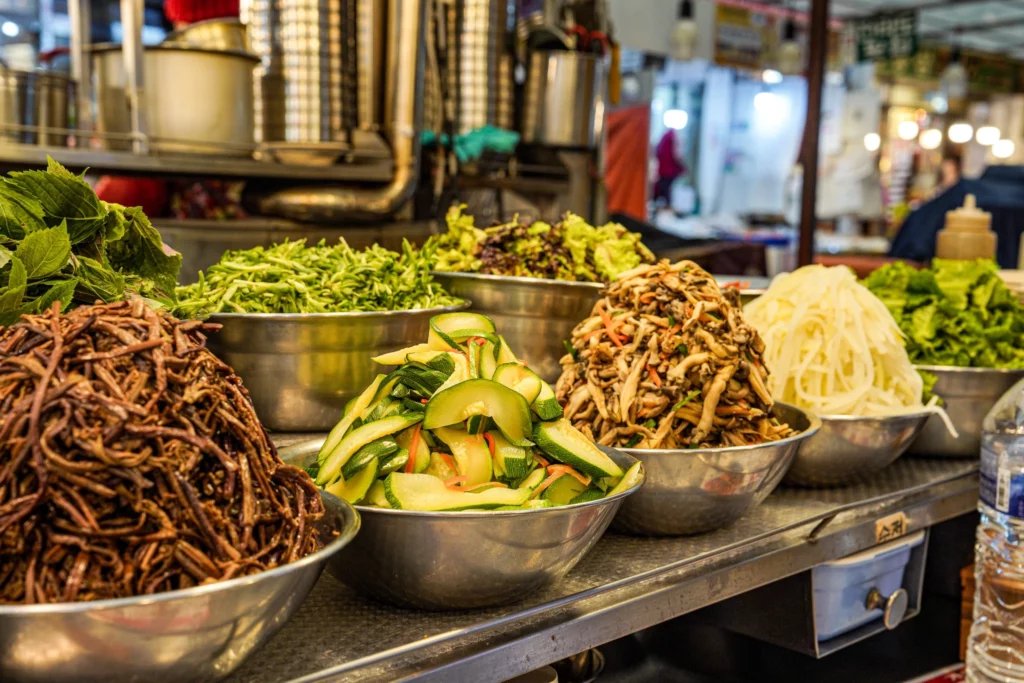
What makes Gabose’s version memorable is not novelty, but consistency. The vegetables are prepared fresh, the portions are honest, and the gochujang is applied with restraint — giving the diner full control over the heat level. For those sensitive to spice, asking for gochujang ttaro juseyo (고추장 따로 주세요 — "gochujang on the side, please") is an easy solution.
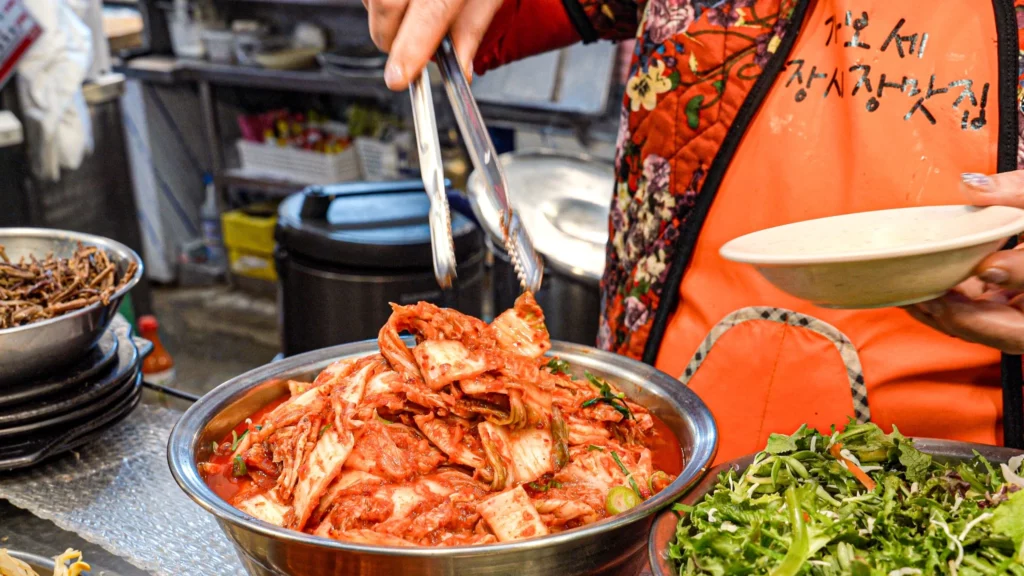
The use of barley also reflects an older tradition of Korean grain cooking. Before white rice became ubiquitous, Koreans regularly ate rice mixed with barley, millet, or other grains — a practice known as japgokbap (잡곡밥, multigrain rice). At Gabose, this historic ingredient choice doubles as a modern health-conscious decision that appeals to both Korean regulars and international visitors.
Exploring the Full Menu at Stall A22
Beyond the signature barley bibimbap, Gabose offers a range of noodle dishes that showcase the same commitment to simple, clean flavours:
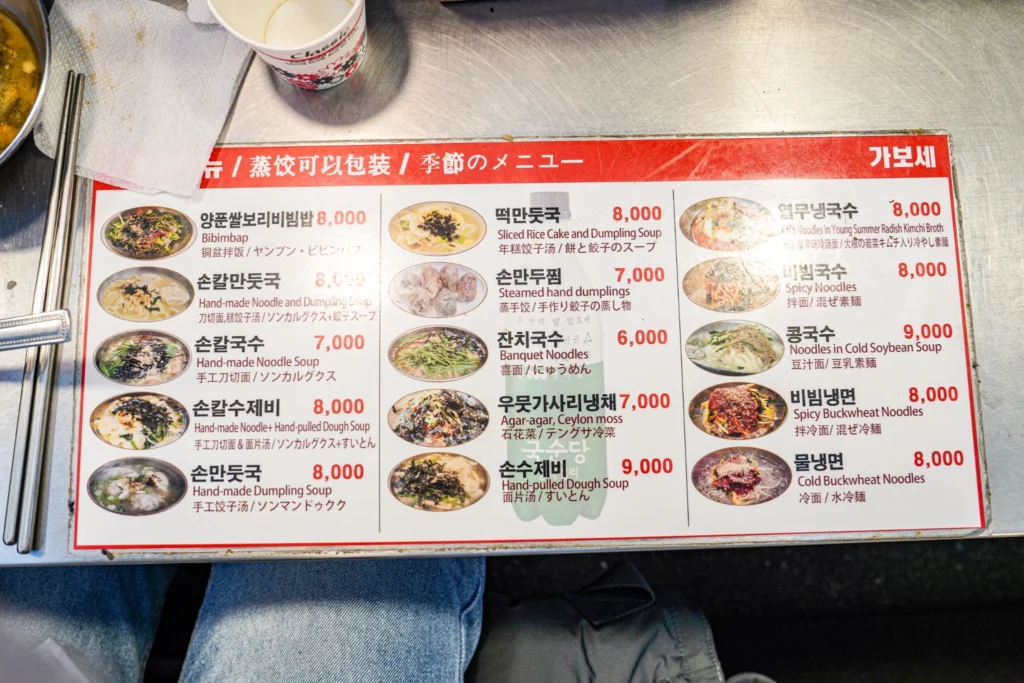
Handmade Kalguksu (칼국수) — ₩7,000 Thick, hand-cut wheat noodles in a light broth. Kalguksu (literally "knife-cut noodles") is a beloved Korean comfort dish — hearty but never heavy. If you’ve tried Michelin-recognised kalguksu in Seoul at restaurants like Hwangsaengga Kalguksu, Gabose offers a more casual, market-style version at a fraction of the price.
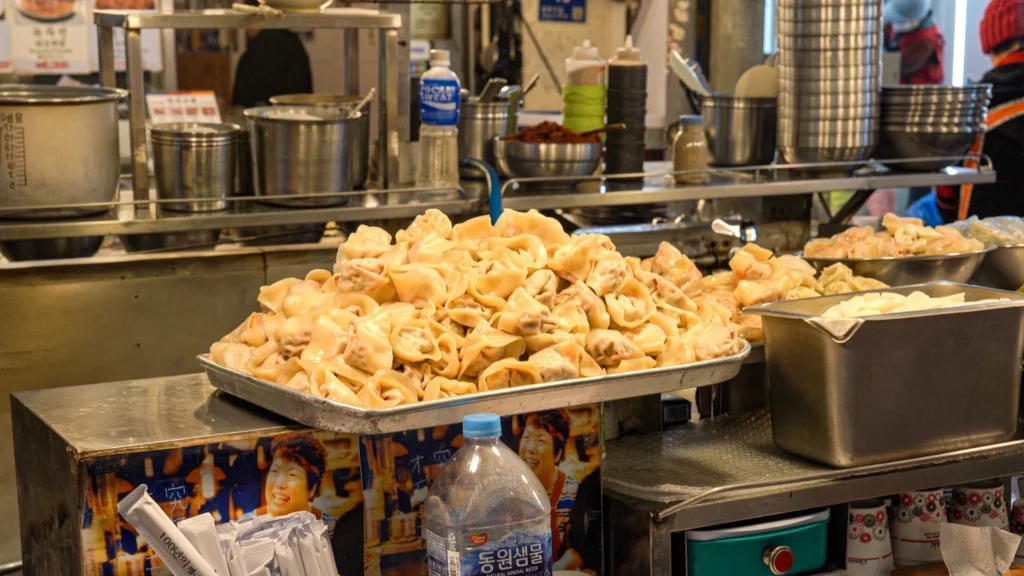
Dumpling Soup (만둣국) — ₩8,000 A warming soup with soft, generously filled mandu in a clear broth. Mandu-guk is one of Korea’s great comfort foods, simple in appearance but deeply satisfying.
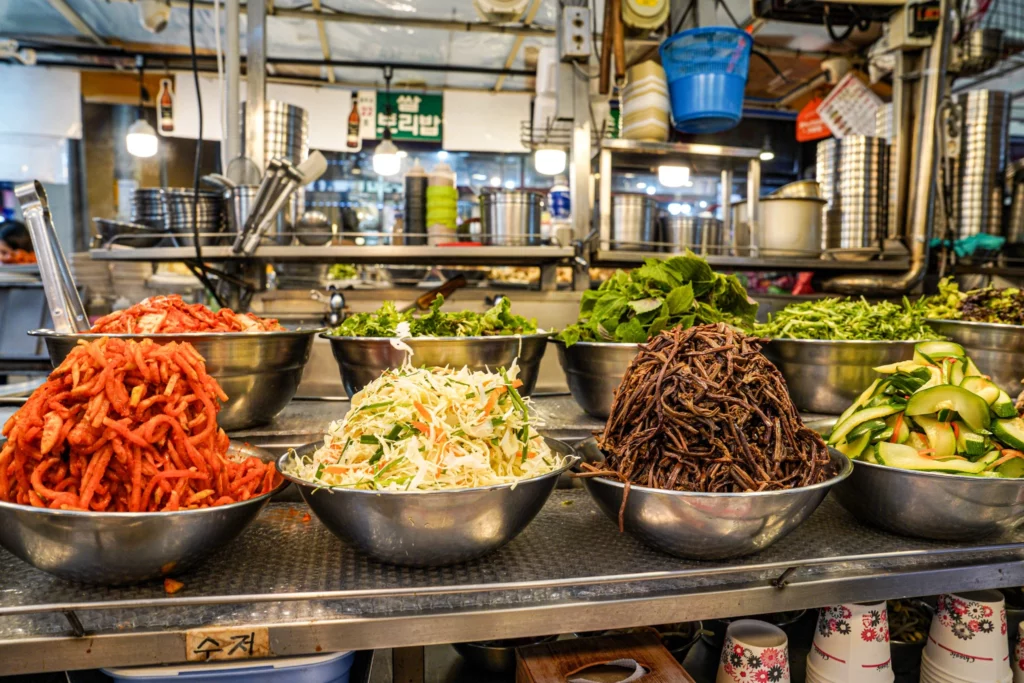
Janchi Guksu (잔치국수) — ₩6,000 Thin wheat noodles in a mild anchovy-based broth — traditionally served at Korean celebrations. It’s the lightest option on the menu and a favourite among those who prefer subtle, savoury flavours over spice.
Kimchi Dumplings (김치 만두, Vegan) — ₩7,000 Steamed or boiled dumplings filled with kimchi, vegetables, and tofu. Fully plant-based and packed with fermented flavour.
Kongguksu (콩국수, Vegan) — ₩9,000 Cold noodles served in chilled soybean milk broth — a beloved Korean summer dish with a creamy, protein-rich base and refreshing temperature contrast. One of the most uniquely Korean items on the menu.
Bibim Guksu (비빔국수) — ₩8,000 Cold thin noodles tossed in a spicy-sweet gochujang sauce with vegetables. Think of it as the noodle counterpart to bibimbap — similar flavour logic, different texture entirely.
The entire menu is priced between ₩6,000 and ₩9,000, placing it well below the average Seoul restaurant, and several dishes carry clear vegan labelling — something still relatively uncommon at traditional Korean market stalls.
What Makes Bibimbap Uniquely Korean?
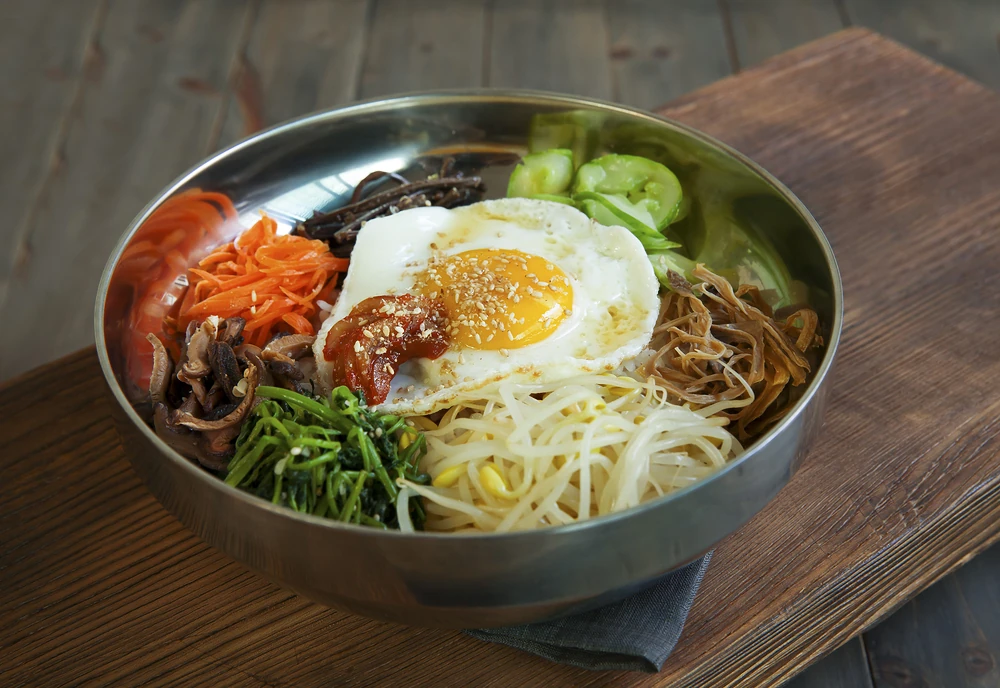
Bibimbap (비빔밥), which literally translates to "mixed rice," represents one of Korea’s most complete and philosophically coherent dishes. Its roots trace back to the gureum bap (그름밥) tradition of placing multiple seasoned side dishes over rice in a single bowl — a practice documented in Korean court records from the Joseon Dynasty (1392–1910).
What makes bibimbap distinctly Korean is its commitment to balance through contrast: each vegetable topping is seasoned and cooked individually before being arranged together. Nothing is mixed until the moment of eating. The dish embodies the Korean concept of obangsaek (오방색) — the five cardinal colours (red, blue/green, yellow, white, black) representing harmony and health — reflected in the colourful arrangement of vegetables before mixing.
Unlike similar bowl dishes in other Asian cuisines, bibimbap uses fermented pastes rather than fresh sauces to season the whole. The history and culture of gochujang is itself centuries old, with records connecting barley bibimbap with gochujang to the earliest years of the Joseon Dynasty. At Gabose, this historical continuity is present in every bowl.
What Are the Key Ingredients That Create the Flavour?
Three ingredients define the flavour profile of bibimbap at Gabose Bibimbap:
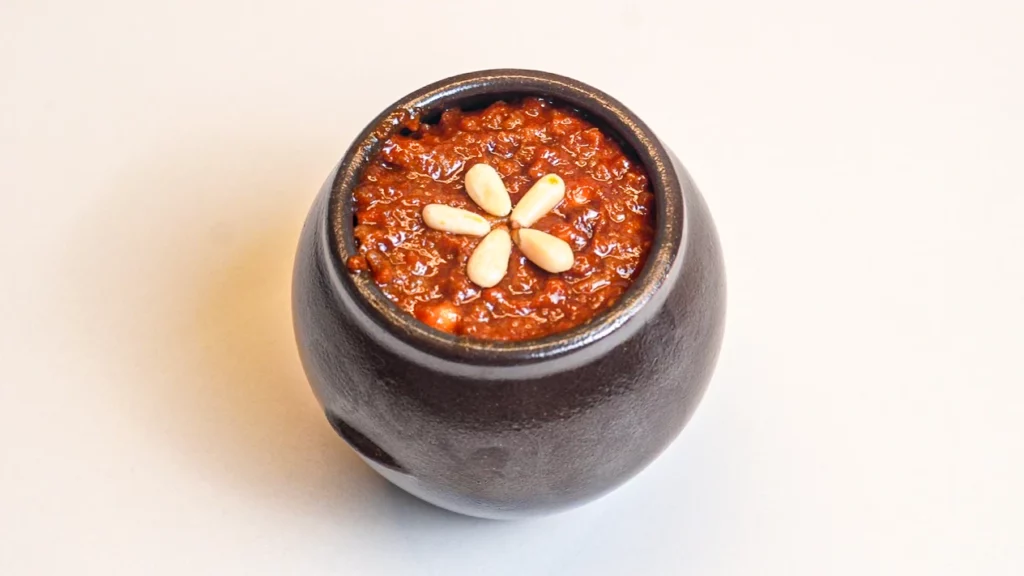
1. Gochujang (고추장) — Korean Fermented Chilli Paste The cornerstone sauce of bibimbap. A complex blend of Korean red chilli powder, glutinous rice, fermented soybean, and salt that has fermented for months — sometimes years. It provides sweet, spicy, and deeply savoury notes simultaneously. Unlike simple hot sauce, gochujang’s fermentation gives it a layered umami quality that holds the whole bowl together. For a deeper understanding of how it works in cooking, the complete guide to gochujang as an ingredient covers its flavour science in full.
2. Chamgireum (참기름) — Korean Toasted Sesame Oil A few drops of dark, fragrant Korean sesame oil are added just before serving. Its nutty, aromatic character is unmistakable in Korean cooking — it elevates vegetables from simple to deeply satisfying.

3. Namul (나물) — Individually Seasoned Vegetables Each vegetable in bibimbap is prepared separately: blanched and tossed with garlic, salt, and sesame, or lightly stir-fried. The Korean spinach component (sigeumchi namul) is a classic element — wilted briefly, dressed with soy sauce, garlic, and sesame oil, and arranged carefully before serving.
Note: Recipes vary by region and stall tradition throughout Korea. Gabose’s vegan barley bibimbap omits egg and meat, allowing the vegetable namul and gochujang to do all the flavour work.
How Would You Describe the Taste and Spice Level?
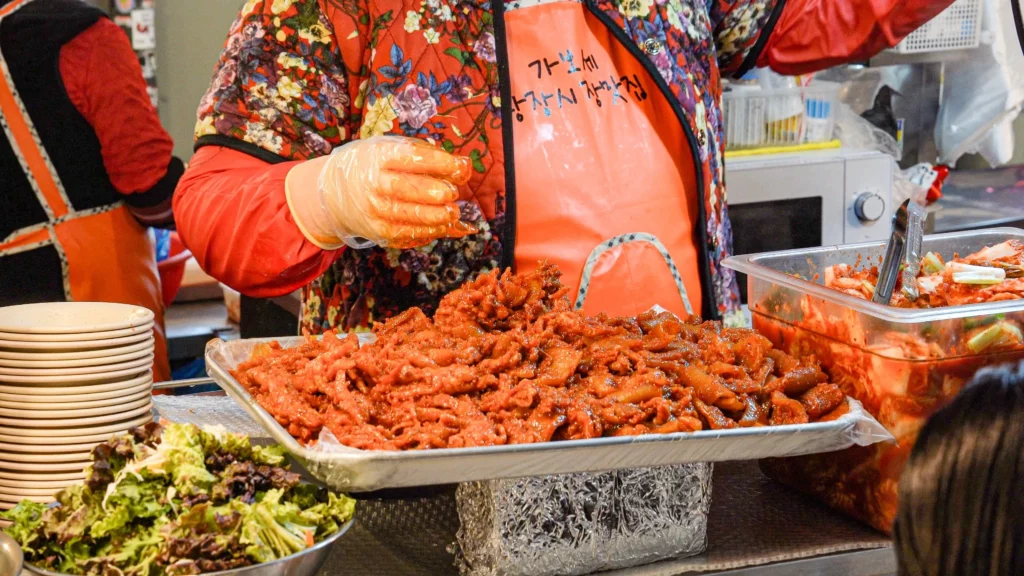
On a spice scale of 1–10, the standard Gabose barley bibimbap — before mixing in gochujang — registers around 1. Once gochujang is incorporated fully, the heat rises to approximately 3–4: warm and present, but mild enough for most international visitors.
Primary flavour notes: earthy (barley), savoury-sweet (gochujang), nutty (sesame oil), lightly vegetal (namul vegetables)
Texture: soft rice base with slight chewiness from barley; tender-crisp vegetables; smooth sauce that coats all ingredients when mixed thoroughly
Temperature: served warm. Kongguksu and Bibim Guksu are the only cold options on the menu.
The overall profile is closer to Japanese donburi than to the bold, assertive flavours typical of Korean BBQ — an approachable starting point for anyone new to Korean food. According to official Seoul tourism resources, Gwangjang Market’s bibimbap stalls consistently rank among the most accessible Korean food experiences for international visitors, partly because the flavour profile is controllable and familiar.
What Should First-Time Eaters Know?
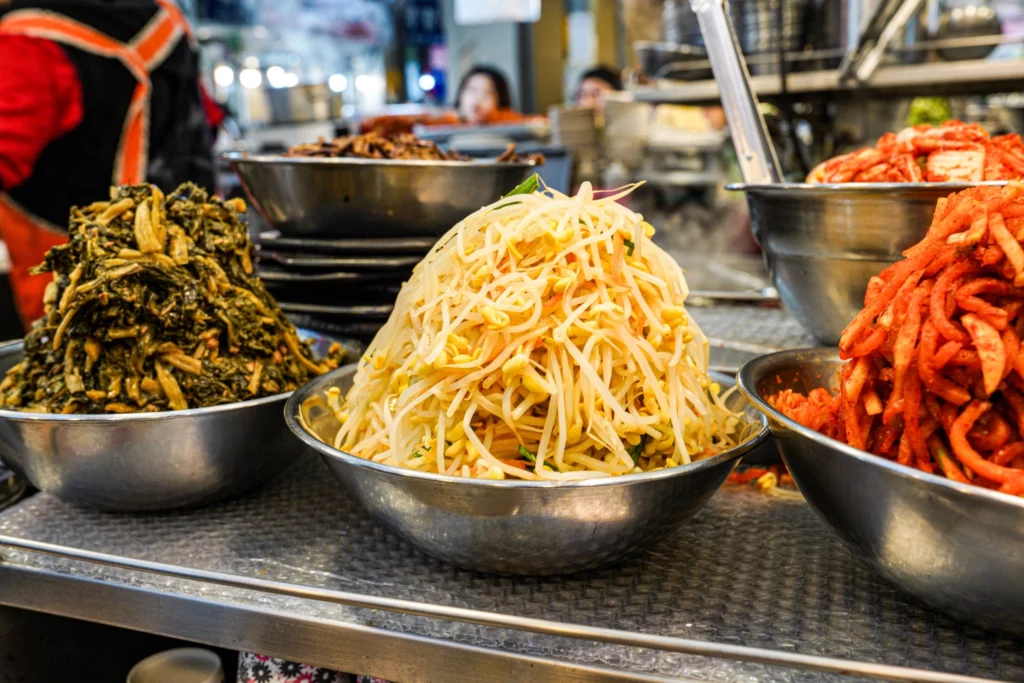
How to eat bibimbap properly: Once your bowl arrives, mix vigorously before eating. Use a spoon to fold the rice up from the bottom, incorporating all the vegetable toppings and gochujang evenly. The mixing is essential — unevenly mixed bibimbap is significantly less satisfying, and the temperature distribution relies on thorough stirring.
Spice control: If you prefer less heat, ask for gochujang ttaro juseyo (고추장 따로 주세요) — the sauce will be served separately. At Gabose, staff are accustomed to international visitors and understand this request easily.
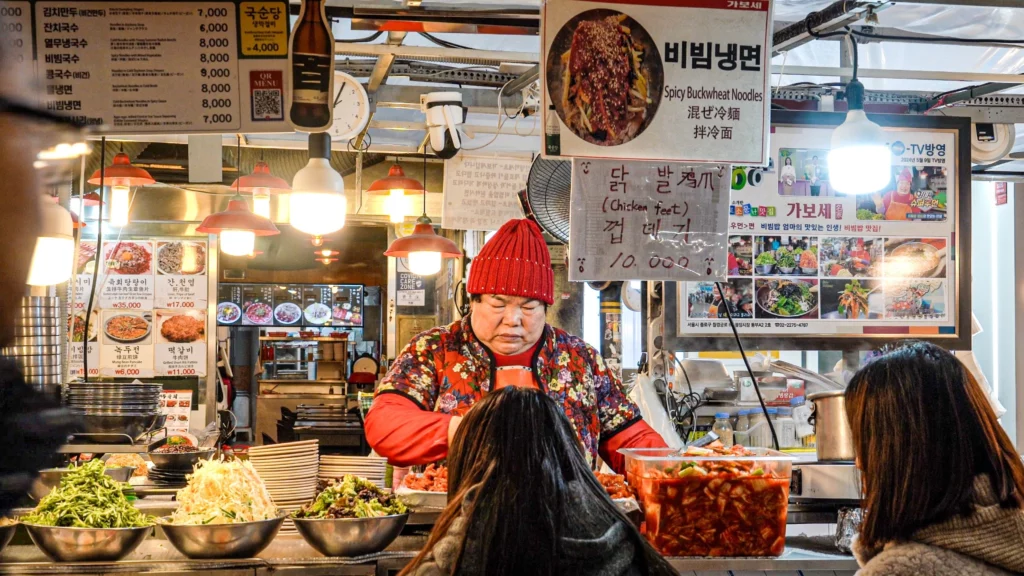
Dining etiquette at a market stall: Payment is typically made upfront or directly after ordering. Seating is first-come, first-served — sharing benches with strangers is entirely normal and expected. Solo dining is very common here.
Pairing suggestion: Bibimbap is traditionally served with a small bowl of clear beansprout soup (kongnamul guk), which many stalls provide as a complimentary side. Its mild, savoury warmth cleanses the palate between mouthfuls.
Language: A simple menu point and nod is enough to order. Most items are labelled in both Korean and English with visible pricing.
For those interested in exploring Korean noodle dishes further after visiting Gabose, Seoul’s dedicated noodle restaurants — such as those covered in the guide to kalguksu and mandu at Myeongdong Kyoja — offer a fuller picture of what Korean handmade noodles can achieve.
How to Get to Gabose Bibimbap at Gwangjang Market
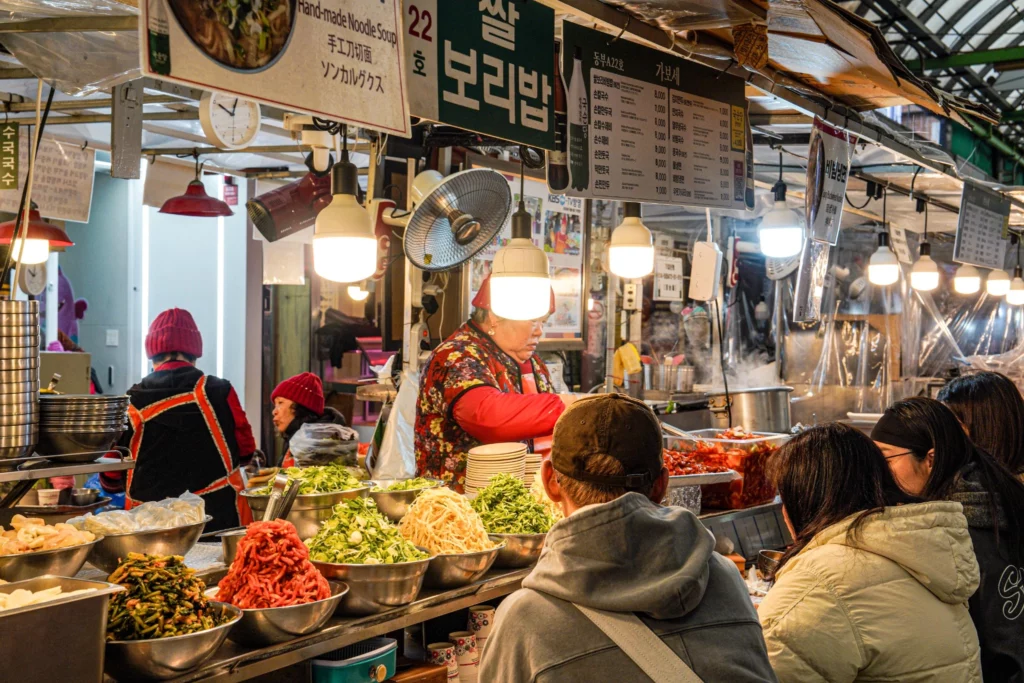
Address: Stall A22, Gwangjang Market, 88 Changgyeonggung-ro, Jongno-gu, Seoul
Nearest Subway: Jongno 5-ga Station (Line 1), Exits 7 or 8 — approximately a 3-minute walk to the main market entrance
Opening Hours: Most food stalls at Gwangjang Market operate from approximately 10:00 AM to 7:00 PM (Tuesday–Sunday). Monday closures are common. Arriving before noon on weekdays avoids the lunch rush.
Payment: Cash preferred. Korean markets operate primarily on cash transactions, though some stalls have recently added card readers.
Accessibility: The market’s main food hall is covered and accessible year-round. Stall seating involves narrow aisles and counter stools.
For broader context on how Gwangjang Market’s food culture has developed — and what else to eat while you’re there — the full guide to Gwangjang Market’s must-visit food spots covers the market comprehensively. The Korea Tourism Organization’s guide to Seoul food markets is also a useful planning resource for building a wider Seoul food itinerary.
Location
Stall A22, 395-5 Jongno 1·2·3·4-ga-dong, Jongno-gu, Seoul, South Korea, KR
Reviews
5.0
0 reviews
5
0%
4
0%
3
0%
2
0%
1
0%
Loading reviews...
Related Recipes

Rice
Dolsot Bibimbap
There are dishes that define a cuisine — and then there is bibimbap (비빔밥). Korea’s most internationally recognized rice bowl...

Rice
Bomdong Bibimbap (Spring Cabbage Bibimbap)
Spring has a flavor in Korea, and right now the entire country agrees on what it is. Bomdong bibimbap—a Korean...

Snacks & Street Food
Japchae Hotteok
If you’ve ever bitten into a golden, gooey sweet hotteok at a Korean winter market, prepare to have your world...
Related Ingredients

Ingredient
A Complete Guide to Korean Bibimbap Ingredients
Bibimbap (비빔밥) lands at the top of global recipe searches for good reason. Translating literally as “mixed rice,” it is...

Ingredient
Doraji(Korean Bellflower Root)
Walk into a Korean home kitchen during Chuseok or the Lunar New Year, and you’re likely to find three vegetable...