


Doraji(Korean Bellflower Root)
Walk into a Korean home kitchen during Chuseok or the Lunar New Year, and you’re likely to find three vegetable dishes laid out side by side — a brown tangle of braised fernbrake, a bright green mound of sesame-dressed spinach, and something pale and fibrous, either lightly gleaming in sesame oil or boldly tinted red with chili. That last dish is doraji namul, made from Korean bellflower root, and it represents one of the oldest, most culturally layered vegetables in the Korean pantry.

Table of Contents
- What Is Doraji (도라지)?
- The Cultural Significance of Doraji in Korean Cuisine
- How to Prepare Doraji: Taming the Bitterness
- Doraji Namul vs. Doraji Muchim: Two Classic Preparations
- Doraji in Bibimbap and Beyond
- Health Benefits: What the Science Says
- How to Buy and Store Doraji
- FAQ: Your Doraji Questions Answered
What Is Doraji (도라지)?
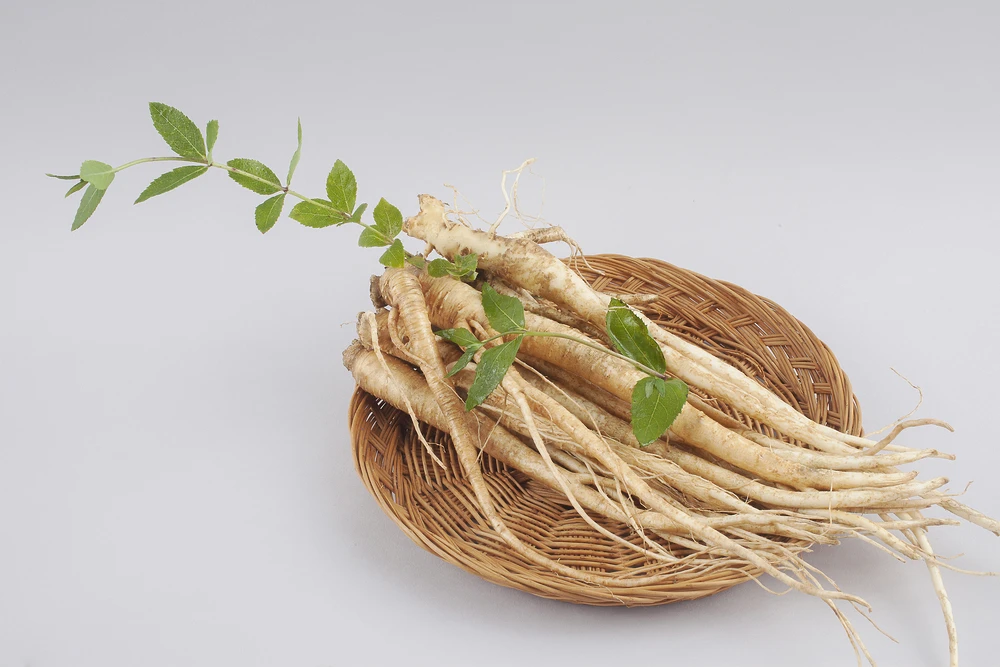
Doraji is the root of Platycodon grandiflorus, a flowering plant native to Korea, China, and Japan. In English, it’s most commonly called Korean bellflower root — a name that reflects the plant’s distinctive purple bell-shaped blossoms, a beloved sight in Korean fields and hillsides from midsummer through early autumn.

The root itself is white to pale ivory, thick and tapered, with a fibrous, slightly waxy texture. When raw, it carries a noticeable bitterness alongside a faint natural sweetness. Its flavor profile has no direct Western equivalent — somewhere between a young parsnip and a mild jicama, but earthier and more complex. The texture after cooking is pleasingly chewy: firm enough to hold its shape in stir-fries, yet tender enough to absorb seasonings beautifully.

Doraji is available both fresh and dried. Fresh roots have a more delicate flavor and require soaking to reduce bitterness. Dried doraji, sold in most Korean grocery stores, must be rehydrated before use but has a concentrated, more intense flavor and longer shelf life.
The Cultural Significance of Doraji in Korean Cuisine

Few vegetables carry as much cultural weight as doraji. It is one of the three components of samsaek namul (삼색나물), the ceremonial "three-color vegetables" served at ancestral rites (jesa) and major Korean holidays. Alongside gosari (Korean fernbrake) representing brown and sigeumchi (Korean spinach) representing green, doraji provides the white element — its pale color symbolizing purity and respect for ancestors.
This tricolor tradition is deeply embedded in Korean festive food culture. Understanding Korean banchan — the small side dishes that anchor every Korean meal — is essential to appreciating where doraji fits. As part of the namul category of Korean side dishes, doraji namul represents the Korean culinary philosophy of transforming humble, seasonal roots into something elegantly balanced.
Doraji is also deeply tied to Korean folk songs and poetry. The traditional folk song Doraji Taryeong (도라지 타령), about gatherers singing as they dig bellflower roots in mountain fields, remains one of Korea’s best-known traditional melodies — a testament to how intimately this root has been woven into everyday Korean life.
How to Prepare Doraji: Taming the Bitterness

Doraji’s distinctive bitterness comes from its saponin compounds — the same compounds responsible for its health properties. The key to excellent doraji namul is reducing but not eliminating that bitterness, creating a balanced, layered flavor rather than stripping the root of its character.
The Standard Preparation Method:

- Shred or cut the root into thin, matchstick-size strips. For fresh doraji, peel away the outer skin first.
- Salt-rubbing: Place the shredded doraji in a bowl, sprinkle generously with coarse salt (roughly 1 teaspoon per 200g), and knead firmly for 2–3 minutes. This draws out bitter compounds from the cell walls.
- Rinse thoroughly under cold running water, then squeeze out excess moisture with both hands.
- Repeat once more if the bitterness still seems strong — a second salt rub and rinse makes a noticeable difference.
- Taste before cooking. A mild residual bitterness at this stage is ideal; it will mellow further during cooking.
For dried doraji, the process begins with a 4–6 hour soak in cold water, followed by the same salt-rub technique before cooking.
Doraji Namul vs. Doraji Muchim: Two Classic Preparations
Doraji Namul (도라지나물) — The White Version

The mild, lightly seasoned preparation is called doraji namul. The prepared doraji is sautéed briefly in a little oil with minced garlic, then dressed with Korean sesame oil and a touch of ganjang (Korean soy sauce). The result is clean, subtly savory, and mildly fragrant — the version most often used in bibimbap and ceremonial tables.
Key seasonings: sesame oil, minced garlic, soy sauce, a pinch of salt, sesame seeds.
Doraji Muchim (도라지무침) — The Spicy Red Version

For a bolder banchan, many Korean home cooks prepare doraji muchim — a spicy seasoned version dressed with gochugaru (Korean red pepper flakes), gochujang, vinegar, sesame oil, and sugar. The heat of the chili plays beautifully against doraji’s underlying bitterness, creating the kind of complex, punchy side dish that Koreans call maekolhada (매콤하다) — spicy-savory with depth.
Key seasonings: gochugaru, gochujang, rice vinegar, sugar, garlic, sesame oil.
Both preparations keep well refrigerated for 3–4 days.
Doraji in Bibimbap and Beyond

Doraji namul is one of the signature toppings in traditional bibimbap, the iconic Korean mixed rice bowl. Arranged alongside other namul vegetables over steamed rice, it contributes a white color contrast, mild bitterness, and satisfying chew — elements that make bibimbap so texturally and nutritionally complete. For a seasonal variation of the dish, our bomdong bibimbap recipe shows how Korean home cooks creatively adapt the bibimbap formula throughout the year.
Beyond bibimbap, doraji appears in:

- Doraji-cha (도라지차): A soothing tea made by simmering sliced doraji with honey, traditionally consumed to ease coughs and sore throats in colder months.
- Doraji-jeong (도라지정과): A traditional candied preparation where doraji strips are slowly simmered in honey until translucent and sweet — a popular offering at Korean traditional ceremonies.
- Doraijogi-tang: A medicinal broth incorporating doraji root, often prepared alongside pear and licorice root as a Korean home remedy for respiratory complaints.

Health Benefits: What the Science Says
Doraji’s reputation in Korean traditional medicine rests primarily on its saponin content — specifically a class of triterpenoid compounds called platycosides. For centuries, Korean healers used doraji to soothe the lungs, clear phlegm, and ease sore throats, practices now supported by modern pharmacological research.

A comprehensive peer-reviewed analysis of Platycodon grandiflorus health effects confirms that the root’s saponins demonstrate significant anti-inflammatory, antioxidant, and respiratory-protective activities — validating traditional Korean medical knowledge with modern scientific methodology.
The primary active compound, Platycodin D (PLD), has been studied extensively for its multiple mechanisms of action. Research published in Frontiers in Pharmacology (2023) details how Platycodin D inhibits inflammatory signaling pathways while also demonstrating antioxidant, antiviral, and lipid-modulating effects — a remarkably broad pharmacological profile for a root vegetable.
Beyond its anti-inflammatory properties, doraji contains linoleic acid (up to 63% of its fatty acid content), as well as multiple essential amino acids, flavonoids, phenolic acids, and trace minerals. This nutritional density helps explain why it features so consistently in Korean medicinal cooking traditions, particularly during winter and cold seasons.
How to Buy and Store Doraji
Where to find it:
- Korean and Asian grocery stores stock doraji year-round in dried form and, seasonally, as fresh roots.
- Online retailers including H-Mart, Weee!, and Amazon carry both dried and pre-soaked vacuum-packed varieties.
- In Korea, fresh doraji appears in traditional markets from late spring through autumn.
What to look for:
- Fresh doraji: Roots should be firm, pale white, and free of soft spots. Avoid any with yellowing or slimy surfaces.
- Dried doraji: Look for thin, evenly dried strips without excessive darkening or mustiness.
- Pre-processed (boiled and frozen): A convenient option — simply thaw and proceed directly to seasoning.
Storage:
- Fresh doraji keeps refrigerated for up to one week, wrapped in a damp paper towel inside an airtight bag.
- Dried doraji stores well in a cool, dark pantry for up to one year.
- Prepared doraji namul keeps in an airtight container in the refrigerator for 3–4 days.
FAQ: Your Doraji Questions Answered
What’s the difference between doraji namul and doraji muchim? Both are seasoned doraji side dishes, but doraji namul is a mild, white preparation dressed with sesame oil, garlic, and soy sauce — while doraji muchim is the spicy version, featuring gochugaru and/or gochujang. Doraji namul is more common in ceremonial and bibimbap contexts; doraji muchim is a bolder everyday banchan.
Can I substitute something for doraji? There’s no exact substitute for doraji’s specific flavor and texture combination. In bibimbap, white daikon radish (julienned and lightly salted) can provide a similar color and crunch, though the flavor is quite different. For the bitter-earthy note, young parsnip strips make the closest Western approximation, though they lack doraji’s distinctive saponin quality.
How do I remove the bitterness from doraji? The most effective method is a firm salt rub followed by thorough rinsing — repeat twice for noticeably strong bitterness. Soaking in cold water for 30 minutes before the salt rub also helps. Avoid over-processing: completely eliminating the bitterness removes what makes doraji interesting.
Is doraji always cooked, or can it be eaten raw? While doraji can technically be eaten raw (and is occasionally used thinly sliced in fresh salads), cooking or at minimum salt-rubbing is standard practice. Raw doraji has an intensity of bitterness that most people find unpleasant, and the texture improves significantly with gentle cooking.
🩺 Dr.’s Nutritional Insight
Doraji’s primary active compound, Platycodin D, has been confirmed to suppress NF-κB-mediated inflammatory signaling — the same pathway that drives "inflammaging," the chronic low-grade inflammation responsible for accelerated collagen breakdown and skin aging. Research demonstrates that platycodin saponins strongly inhibit pro-inflammatory mediators at a cellular level, with the root extract simultaneously documented in Korean cosmetics formulations for its antioxidant and barrier-protective properties (Frontiers in Pharmacology, 2023). For patients interested in anti-inflammatory dietary strategies, doraji is a meaningful functional food choice.
Beauty Benefit: Anti-Aging ✨ | Recovery 💪
Nutritional insight provided by Dr. James Lee, Board-Certified Plastic Surgeon
Related from K-Beauty Kitchen: a surgeon’s read on doraji and Korea’s other adaptogenic drinks.
Related from K-Beauty Kitchen: how to choose a schisandra supplement safely.
Related from K-Beauty Kitchen: another restorative Korean botanical — see the evidence on schisandra.
Related from K-Beauty Kitchen: Korean healing foods a surgeon recommends after surgery.
Reviews (0)
Join the Taste Korean food community and add comments.
Related Recipes

Samsaek-namul (Three-Color Seasoned Vegetables)
Samsaek namul (삼색나물) is Korea’s iconic trio of three-color vegetable side dishes — blanched spinach (green), seasoned bellflower root (white), and slow-simmered fernbrake (brown) —…

Doraji Namul
There are Korean side dishes that show up quietly on the table, never calling attention to themselves — and then, after one bite, you find…