


Cafe Tangerine sits on a quiet stretch of Ieodo-ro in Seogwipo, surrounded by a working tangerine grove and a row of camellia trees that bloom red against the winter sky. Inside the converted warehouse, high ceilings and lush greenery turn a simple brunch into an unhurried Jeju ritual. This is one of the island’s most-photographed Jeju brunch cafes — but the food, especially the Jeju carrot soup and signature Tangerine Brunch plate, is the reason people keep coming back. Here’s what to order, what to expect, and how to get there.
Cafe Tangerine : The Jeju Brunch Cafe Worth the Drive
5
Cafe Tangerine : The Jeju Brunch Cafe Worth the Drive
5
Jeju-do 880, Ieodo-ro, Seogwipo-si,
Editor: Katie Lee


Interior01
Food01

Menu04
Overview
+82 064 738 9767
WiFi Provided
Indoor Seating Only
Electronic Payment, Credit Card, Cash Only accepted: American Express, Master Card, Visa
Introduction
Operating hours
Mon, Tue, Wed, Thu, Fri, Sat, SunAM 9:00 - PM 6:00
Menu
Editor's Detail
Introduction
Jeju Island is famous for tangerines, black pork, and haenyeo divers — but in the last decade, brunch culture has quietly become one of the island’s strongest food traditions. Cafe Tangerine in Seogwipo helped define what a "Jeju brunch cafe" looks like: warehouse architecture, garden seating among citrus trees, and a kitchen that builds its menu around local produce instead of imported pantry staples. On a sunny morning, the outdoor benches look out over a small grove that’s open for guests to wander before or after their meal. It’s the kind of place that explains why Seogwipo, not Jeju City, has become the island’s cafe capital.
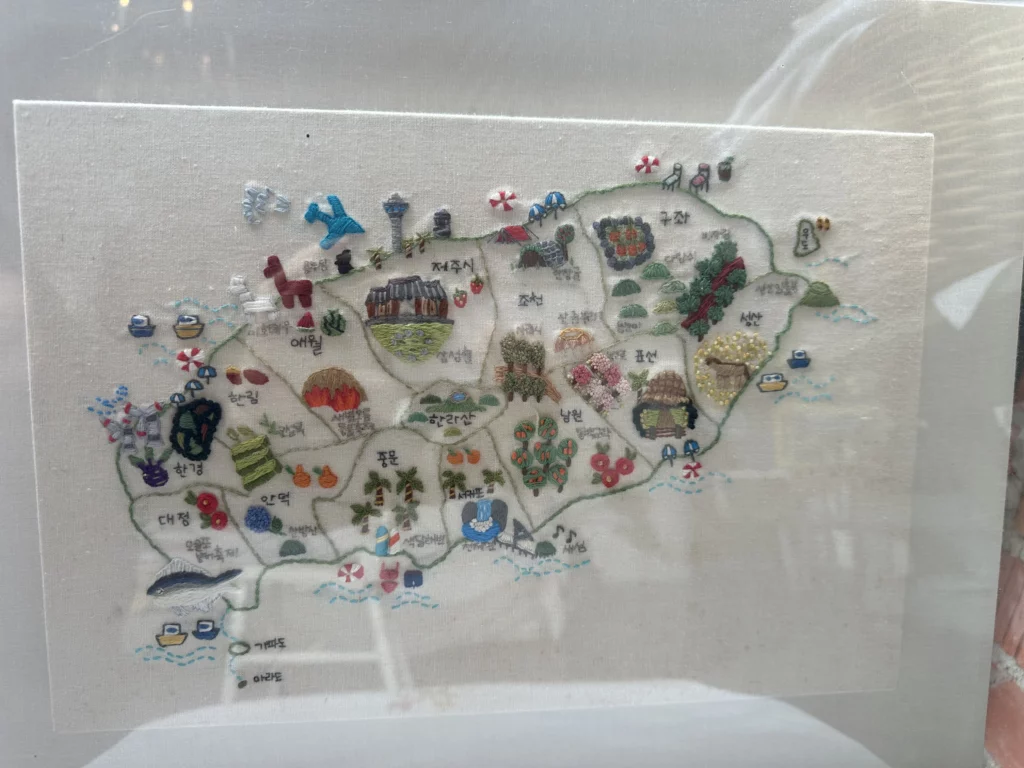
Table of Contents
- What Is Jeju Brunch Cafe Tangerine?
- What to Order at Jeju Brunch Cafe Tangerine
- How Much Does Jeju Brunch Cafe Tangerine Cost?
- How Do You Get to Jeju Brunch Cafe Tangerine?
- Is Jeju brunch Cafe Tangerine Worth Visiting?
- What Are Similar Jeju Brunch Cafes?
- Frequently Asked Questions
What Is Jeju Brunch Cafe Tangerine?
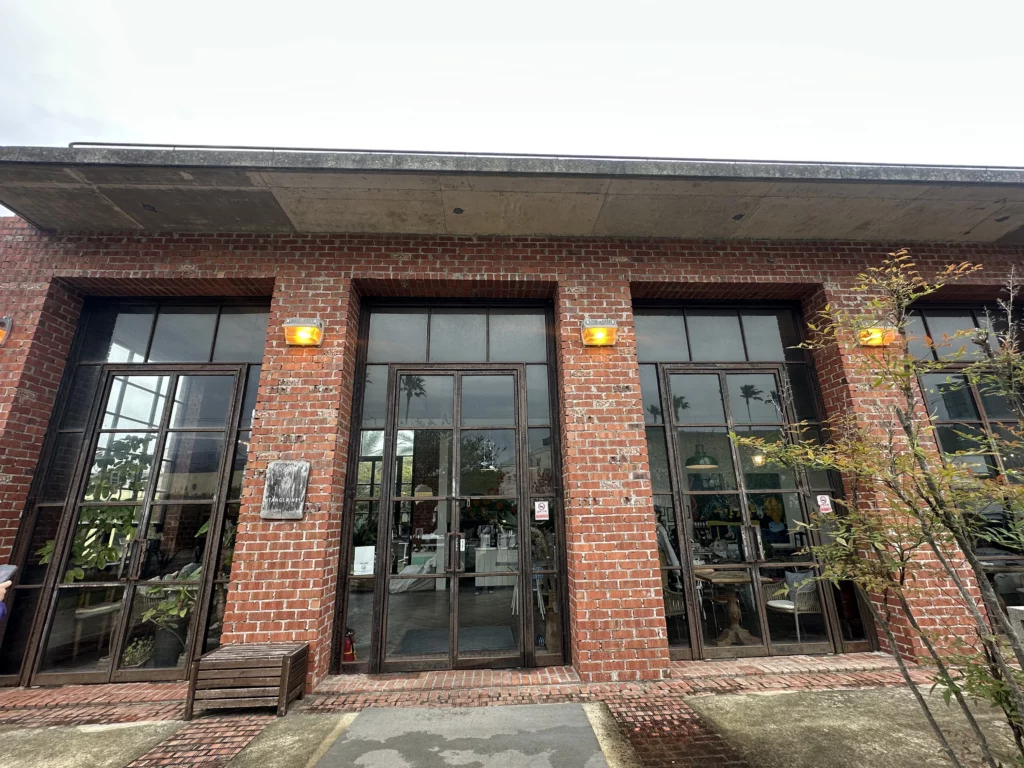
Cafe Tangerine sits on the southern coast of Jeju Island, in the Beophwan-dong (법환동) section of Seogwipo, directly across from Beophwan Elementary School. The building is a converted factory warehouse whose stone walls and tall industrial ceilings have been softened by greenhouses, indoor plants, and a sprawling outdoor garden of camellia trees, hydrangeas, and working tangerine groves. The café’s social-media reputation grew sharply after it appeared on Mnet’s dating reality program Love Catcher 2, which brought a wave of Korean travelers to this otherwise quiet residential corner of Seogwipo.
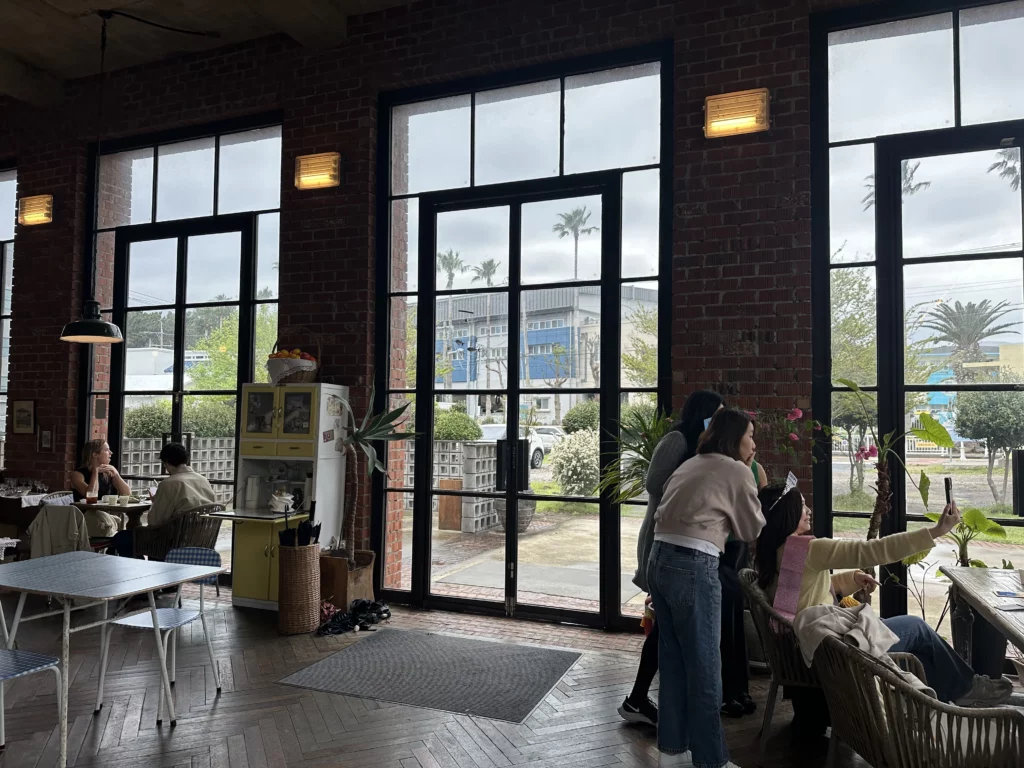
The Jeju Tourism Organization actively promotes Seogwipo’s cafe trail as one of the island’s signature travel experiences, and Cafe Tangerine is one of the most-cited stops on that route. The menu balances Western-style brunch plates with citrus-forward Korean drinks, anchored by produce sourced on Jeju itself. Hours sit at a comfortable 09:00 to 18:00, which makes it a natural mid-morning to mid-afternoon stop on a Seogwipo itinerary — pair it with Jeongbang Waterfall, Lee Jung Seop Street, or a black-pork dinner nearby.
What to Order at Jeju Brunch Cafe Tangerine
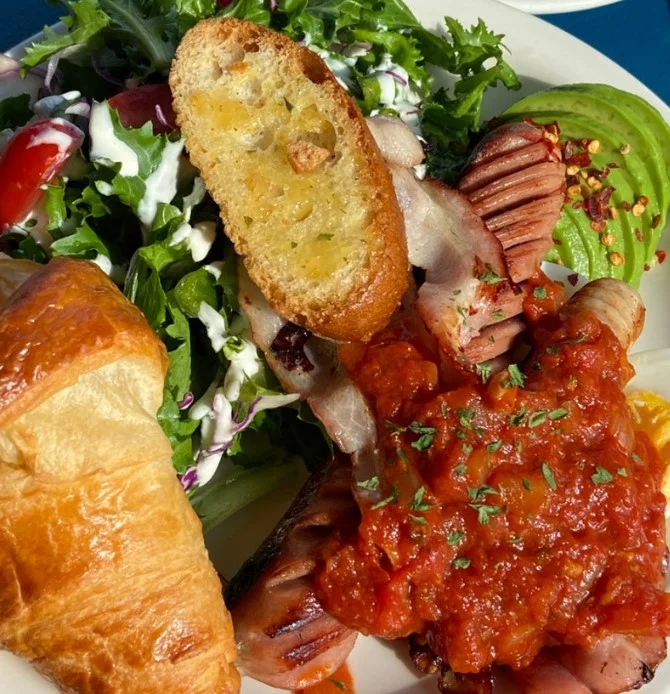
Three dishes define the menu. The Tangerine Brunch (텐저린 브런치) — 19,000 won is the signature plate, designed for one but generous enough to share lightly. Expect a tangerine-glazed protein, soft-scrambled eggs, seasonal vegetables, and toasted bread. The plate changes slightly with the seasons, but the citrus thread runs through every component. If you order one thing, this is it.
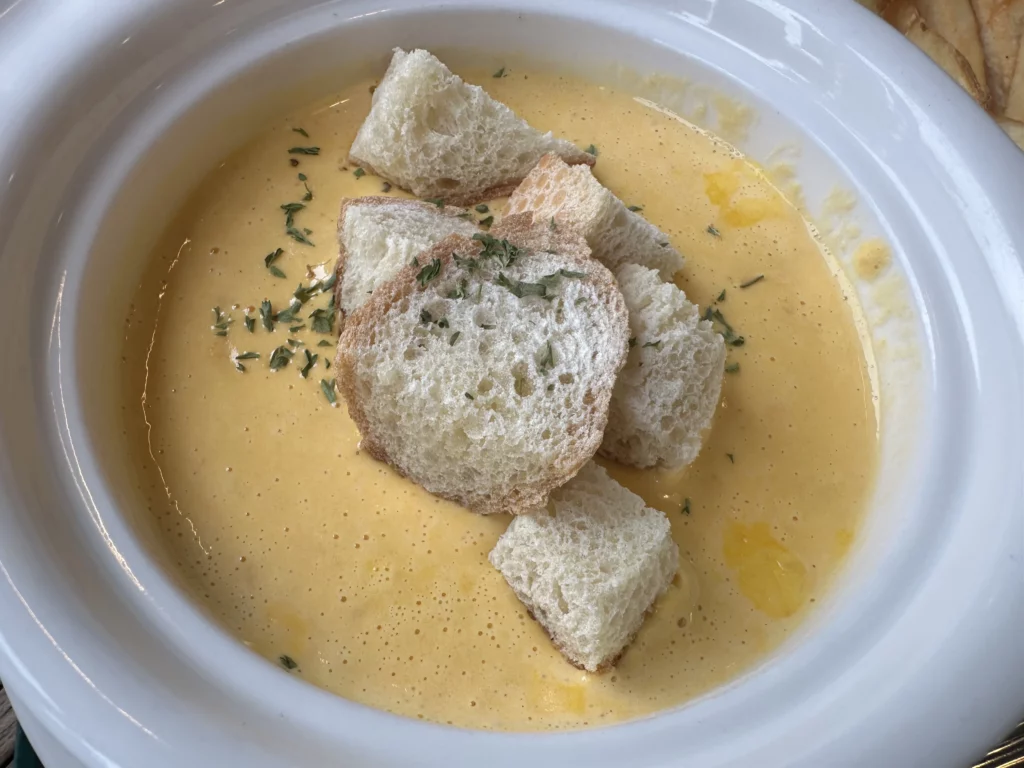
The Jeju Carrot Soup (당근 수프) — 10,000 won punches above its price. Made with cream and slow-cooked Gujwa-eup carrots — the same variety that Jeju exports to the rest of Korea — the soup arrives bright orange, with crisp croutons floating on top and slices of toast on the side. Korean food bloggers consistently single it out as the best item on the menu, even for diners who don’t usually order carrots; you can find a similar emphasis on Jeju produce in our coverage of pan-fried Jeju tilefish, the pride of Jeju Island.
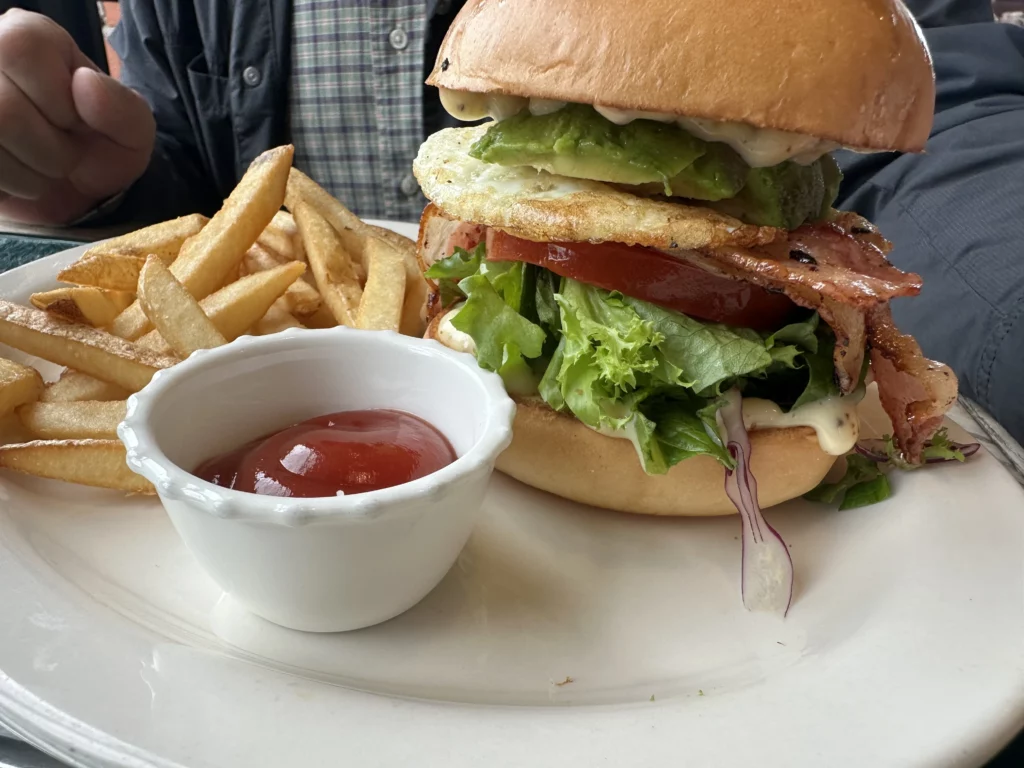
The Burger & Chips (버거 칩스) — 18,000 won rounds out the brunch trio. The patty is house-formed, the bun is brioche-soft, and the chips arrive hot with a small dish of mayo. It’s not a Korean dish, but it’s a useful order for travelers who want something substantial after a morning hike on the Olle-gil. Other strong picks include the Grilled Mushroom Salad (구운 버섯샐러드) — 18,000 won, the Croffle — 15,000 won, and the Udo Peanut Latte (우도땅콩라떼) — 7,000 won, made with peanuts from neighboring Udo Island.
If the Tangerine Brunch’s egg component inspires you to recreate brunch at home, our guide to the Korean rolled omelette (gyeran-mari) walks through the technique step by step.
How Much Does Jeju Brunch Cafe Tangerine Cost?
Cafe Tangerine sits in the middle of Seogwipo’s price range for brunch cafes. Drinks run 5,000–7,000 won (Americano 5,000; Cafe Latte 6,000; Udo Peanut Latte 7,000). Food sits between 10,000 and 19,000 won per item, with the Tangerine Brunch plate at the top. A typical solo visit — one main, one drink — lands at around ₩24,000–₩26,000 (roughly $18 USD). Couples sharing the Tangerine Brunch and adding a carrot soup with two drinks should budget around ₩45,000 ($33 USD). Cash and most major Korean cards are accepted; Korean Tourism Organization’s official Jeju visitor guide lists similar price benchmarks for the island’s brunch cafes, so Cafe Tangerine reads as fairly priced for the setting.
How Do You Get to Jeju Brunch Cafe Tangerine?
There is no subway on Jeju Island, so plan transit accordingly. By car — the most common choice — the cafe is a 10-minute drive from Lee Jung Seop Street in downtown Seogwipo, and roughly a 1-hour drive from Jeju International Airport (CJU). Rental cars from the airport or Seogwipo intercity terminal are the fastest option; free parking is available on-site, and the lot is unusually large by Jeju cafe standards.
By taxi, expect ₩8,000–₩12,000 from central Seogwipo. By public bus, take a local line to the Beophwan Elementary School (법환초등학교) stop and walk five minutes; bus frequency is limited, so check the Jeju bus app before departing. If you’re already walking the Jeju Olle Trail Route 7 or 8, the cafe sits within a manageable detour. Once you arrive, the garden is open for guests, and small dogs are welcome — Cafe Tangerine is one of the few brunch spots in Seogwipo that is officially pet-friendly.
Is Jeju Brunch Cafe Tangerine Worth Visiting?
For most visitors, yes — but with realistic expectations. Cafe Tangerine is a brunch cafe, not a fine-dining destination, and its strengths lie in atmosphere, produce sourcing, and consistency rather than culinary innovation. The Jeju carrot soup is genuinely memorable, the Tangerine Brunch plate is a satisfying island-themed meal, and the garden setting is worth the drive in tangerine season (October–February) when the trees are heavy with fruit.

Honest caveats: weekends can run busy, service is friendly but not fast, and the kitchen prioritizes presentation over portion volume. The remote location means you’ll need a car or taxi, and the limited evening hours rule out dinner. If you’re craving a more elaborate brunch presentation, our review of Colline Brunch Cafe in Seoul’s Hongdae district covers a more theatrical city alternative.
What Are Similar Jeju Brunch Cafes?
Seogwipo and its surrounding coastline host dozens of brunch cafes worth combining into a single-day cafe-hopping route. Cafe Tangerine pairs well with hallabong-themed spots like the bakeries described in our Jayeondo Salt Bread guide, where the Ikseon-dong location centers around a hallabong orange tree. For Jeju-specific desserts after brunch, our traditional Korean desserts guide covers kumquat jeonggwa and yanggang, both of which are easy to find at Seogwipo’s Olle Market a short drive away.
Frequently Asked Questions
What makes the food at Cafe Tangerine uniquely Jeju?
Cafe Tangerine builds its brunch menu around Jeju-grown produce — tangerines from on-site orchards, carrots from Gujwa-eup, and Udo Island peanuts. Unlike mainland Korean brunch cafes that import Western-style ingredients, Cafe Tangerine treats Jeju agriculture itself as the menu, making the visit feel rooted in the island’s volcanic terroir and seasonal cycles.
What are the three key ingredients used at Cafe Tangerine?
Three ingredients define the menu. Jeju tangerines (감귤, gamgyul) appear in the latte, ade, and signature brunch glaze. Jeju carrots (당근, danggeun) from Gujwa-eup blend into the bright-orange 10,000-won carrot soup. Udo peanuts (우도땅콩) from the neighboring island anchor the Udo Peanut Latte with a nutty, locally sourced finish.
How spicy is the food at Cafe Tangerine?
Cafe Tangerine’s brunch menu rates roughly 1 out of 10 on the Korean spice scale — essentially zero heat. The carrot soup, Tangerine Brunch plate, Burger & Chips, and grilled mushroom salad are all built around sweet, savory, and herbaceous flavors. Travelers sensitive to capsaicin or new to Korean food will find every dish comfortable.
What should first-time visitors to Cafe Tangerine know?
Arrive by car or taxi — there is no nearby subway and bus access is limited. Free parking is available on-site. The cafe operates 09:00–18:00 daily and accepts phone reservations for groups. Most menu items are labeled in English, and pets are welcome in the outdoor garden area. Bring a camera for the tangerine grove.
Is Cafe Tangerine the same as Cafe Tangerine Flower Attic?
No. These are two different cafes in Seogwipo with similar names. Cafe Tangerine (카페 텐저린) is the warehouse-style brunch cafe at 880 Ieodo-ro covered here. Cafe Tangerine Flower Attic (귤꽃다락) is a separate, smaller cottage-style dessert cafe at 34 Ieodo-ro 1027beon-gil. Verify the address before navigating.
When is the best time of year to visit?
Tangerine season runs roughly October to February, when the on-site grove is fruited and the camellia trees bloom. Spring brings hydrangeas in the side garden. Summer and early autumn are quieter and good for relaxed outdoor seating. Avoid Korean public holidays if you want a peaceful brunch.
Plan Your Visit
Cafe Tangerine works best as the centerpiece of a slow Seogwipo morning — drive in from your accommodation, eat the Tangerine Brunch plate with a side of carrot soup, and wander the tangerine grove before driving on to Jeongbang Waterfall or Lee Jung Seop Street, both around ten minutes away. Verify current hours and prices on the cafe’s official Instagram account before visiting, since Jeju café hours shift with the seasons. If brunch leaves you curious about Jeju’s other regional specialties, the island’s omegi tteok and other regional Korean rice cakes are an easy follow-up at the nearby Seogwipo Olle Market — a quiet, citrus-tinted way to round out a Jeju day.
Location
880, Ieodo-ro, Seogwipo-si, , Jeju-do, KR
Reviews
5.0
0 reviews
5
0%
4
0%
3
0%
2
0%
1
0%
Loading reviews...
Related Recipes

Drinks & Dessert
Patbingsu: Traditional Korean Shaved Ice with Sweet Red Beans
Few things signal the arrival of a Korean summer like a towering bowl of patbingsu (팥빙수) — Korean shaved ice...

Drinks & Dessert
Sujeonggwa (Korean Cinnamon Ginger Punch)
There is something deeply comforting about the first sip of well-made sujeonggwa. The warm sweetness of cinnamon meets the quiet...