


There is a bowl of soup in Seoul’s Yongsan district that looks nothing like soup at all. When Neungdong Minari (능동미나리) brings out its signature gomtang, the first thing you notice is an almost comically tall mound of bright green water parsley completely hiding the broth beneath it. That striking image — the one that has flooded Korean social media feeds and earned the restaurant its 2025 Michelin Bib Gourmand distinction — is only the beginning. Beneath those fragrant green strands lies a clear, deeply savory beef bone broth made from same-day Hanwoo, and alongside it arrives the restaurant’s equally celebrated beef tartare bibimbap, dressed not with the usual gochujang but with a clean, umami-rich soy sauce. These two dishes have turned Neungdong Minari into one of Seoul’s most talked-about dining destinations, drawing lunchtime queues that regularly stretch past an hour and a half. This guide covers everything you need to know before you go.
Neungdong Minari Gomtang: Seoul's Michelin Bib Gourmand
Yongsan-gu, Seoul 28 Hangang-daero 40-gil,
Editor: Katie Lee


Overview
Introduction
Operating hours
Menu
Editor's Detail
Imagine lifting your spoon to a bowl of Korean gomtang (곰탕) and finding it buried — completely hidden — beneath a towering pile of vivid green water parsley. That is the first impression at Neungdong Minari (능동미나리), the Yongsan-based restaurant that earned a Michelin Bib Gourmand distinction in the 2025 Seoul guide. The visual surprise is part of the concept, but what keeps diners queuing for well over an hour is the substance beneath the greens: a remarkably clean Hanwoo beef broth that manages to be both light and deeply satisfying, paired with a soy-seasoned beef tartare bibimbap unlike anything most international visitors have encountered before.
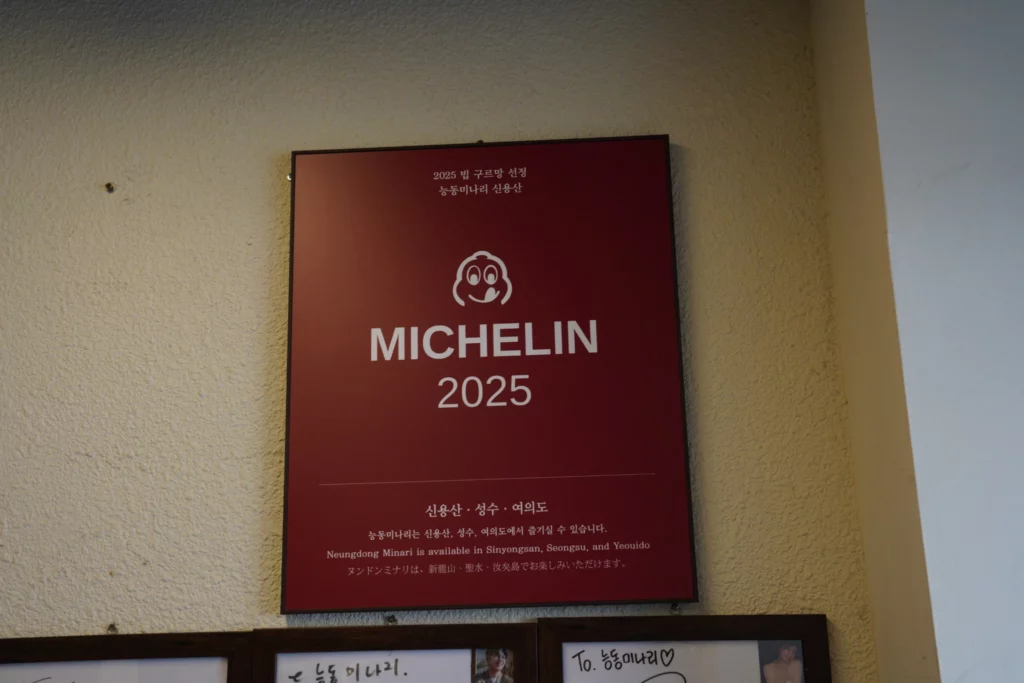
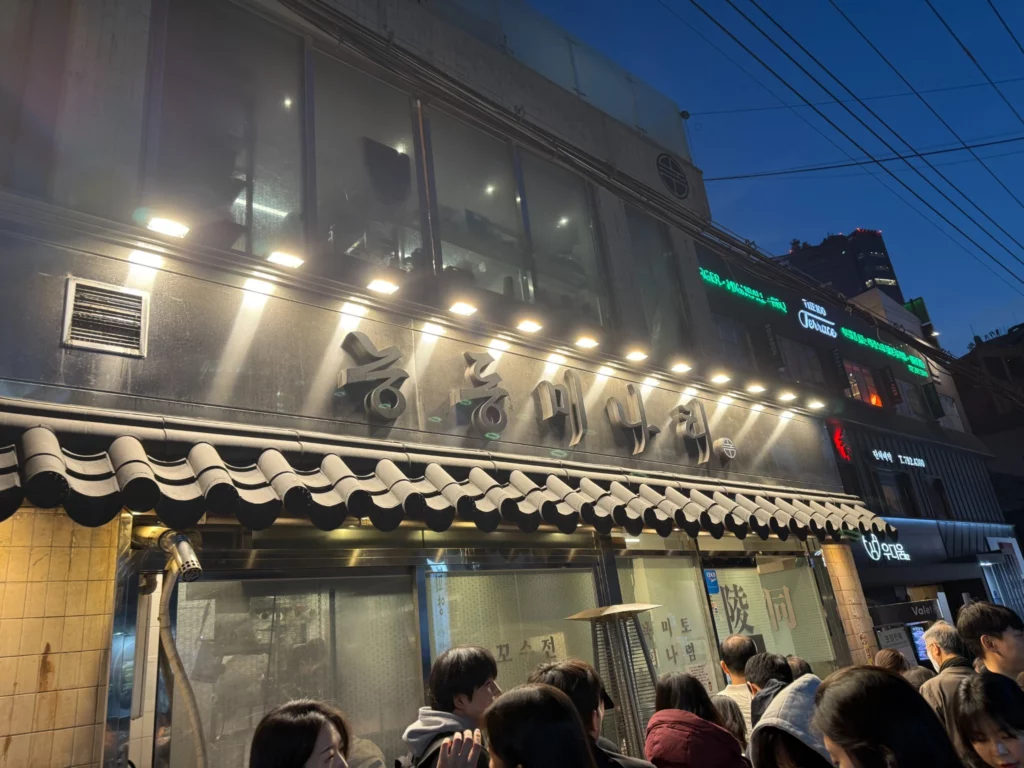
Neungdong Minari sits on Yongnidan-gil — known locally as Yongnidan-gil — a stretch of Yongsan-gu that has evolved from a quiet residential lane into one of Seoul’s most exciting eating streets. The restaurant occupies two floors of a building with a retro, informal energy that feels lived-in and welcoming rather than flashily designed. It is everyday Korean dining at its most confident: the menu is short, the ingredients are exceptional, and the kitchen does not need gimmicks because the food speaks clearly enough on its own.
Table of Contents
- What Is Minari Gomtang, and What Makes It Uniquely Korean?
- The Signature Dishes at Neungdong Minari
- Three Key Ingredients Behind the Flavor
- What to Expect: Taste, Texture, and Spice Level
- Frequently Asked Questions
- Practical Visitor Information
- How to Get There and When to Visit
What Is Minari Gomtang, and What Makes It Uniquely Korean?
Gomtang (곰탕) or Gomguk (곰국) is one of Korea’s oldest and most cherished comfort soups. At its core, it is a long-simmered beef bone or meat broth served over rice in a clear, clean form — closer in spirit to a refined consommé than to the milky white seolleongtang (설렁탕) that some visitors might be more familiar with. Traditionally associated with nourishment and restorative eating, gomtang was historically prized as food for recovery and special occasions. Today it sits comfortably at the center of everyday Korean dining culture, found in humble lunch spots and Michelin-recommended restaurants alike.
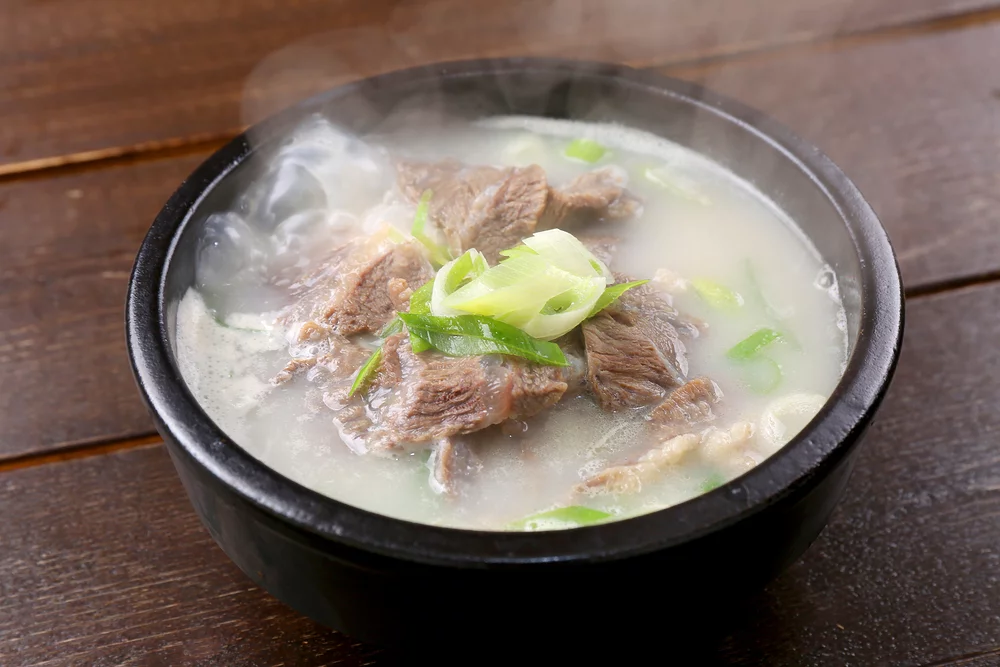
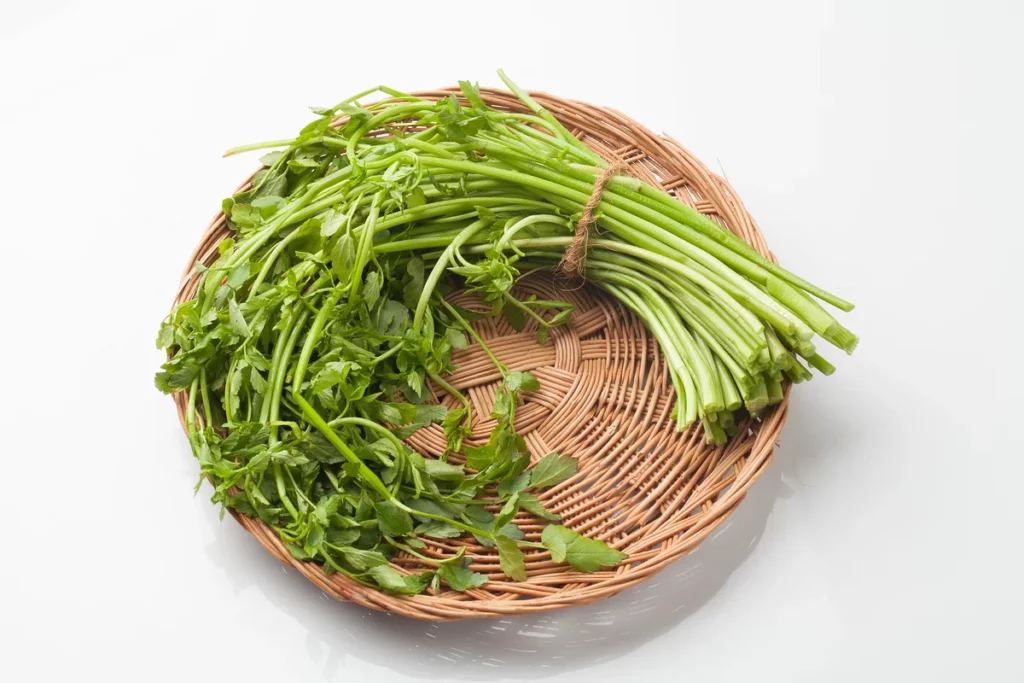
What sets Neungdong Minari apart from hundreds of gomtang restaurants in Seoul is a single, polarizing ingredient: minari (미나리), the Korean water parsley. Most gomtang arrives at the table with no topping beyond finely sliced beef. Here, the parsley arrives in such generous quantities that the soup’s surface is entirely covered — an intentional presentation choice that is both striking enough to photograph and functionally brilliant: the cool, fresh greens placed against the hot broth release their herbal fragrance slowly, layering each spoonful with a clean, slightly citrusy note that cuts through the richness of the beef.
This combination — warming, umami-heavy broth brightened by crisp, aromatic greens — is distinctly Korean in its approach. It echoes the broader Korean culinary philosophy explored in our guide to banchan (반찬): the idea that every element of a meal should offer contrast, balance, and conversation between flavors, not simply reinforce the dominant note.
The Signature Dishes at Neungdong Minari
Minari Gomtang (미나리 곰탕) — The Bowl Worth Queuing For
The gomtang at Neungdong Minari is built on a broth extracted from premium Hanwoo beef slaughtered on the same day — a supply standard that immediately sets it apart from restaurants working with older stock. The result is a clarity in the broth that is rare: not flat or bland, but genuinely clean, with a quiet depth of umami that builds as you eat. Rice is added directly into the bowl (toryeom style, 토렴), meaning each grain has been warmed through the hot broth and carries its flavor from the first bite.
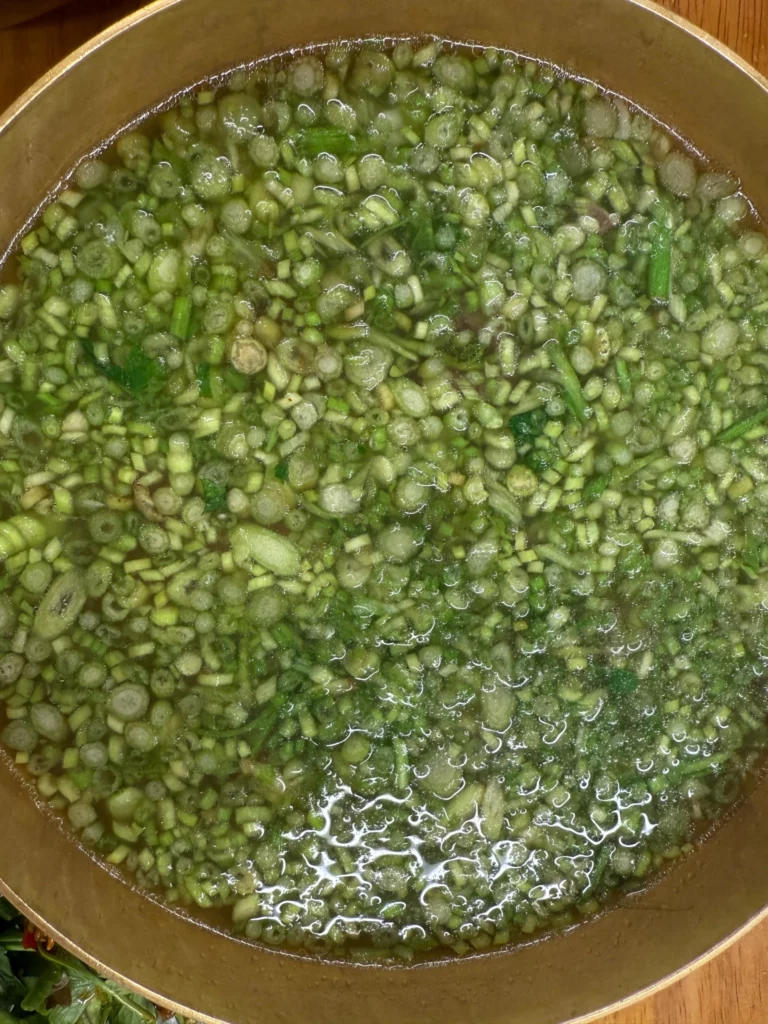
The mountain of Hanjae minari — water parsley cultivated on Hwaaksan Mountain in Cheongdo, Gyeongbuk Province, using pure underground spring water — arrives on top. This specific variety is known for its unusually tender stems and a milder, less bitter fragrance than standard minari, making it more approachable for first-timers while still providing that characteristic herbal brightness. Diners tuck the greens into the soup, take spoonfuls of broth-soaked rice and tender beef, and season to taste with the house-spiced dipping sauce available at the table.
Neungdong Beef Tartare Bibimbap (능동육회비빔밥) — The Dish That Often Steals the Show
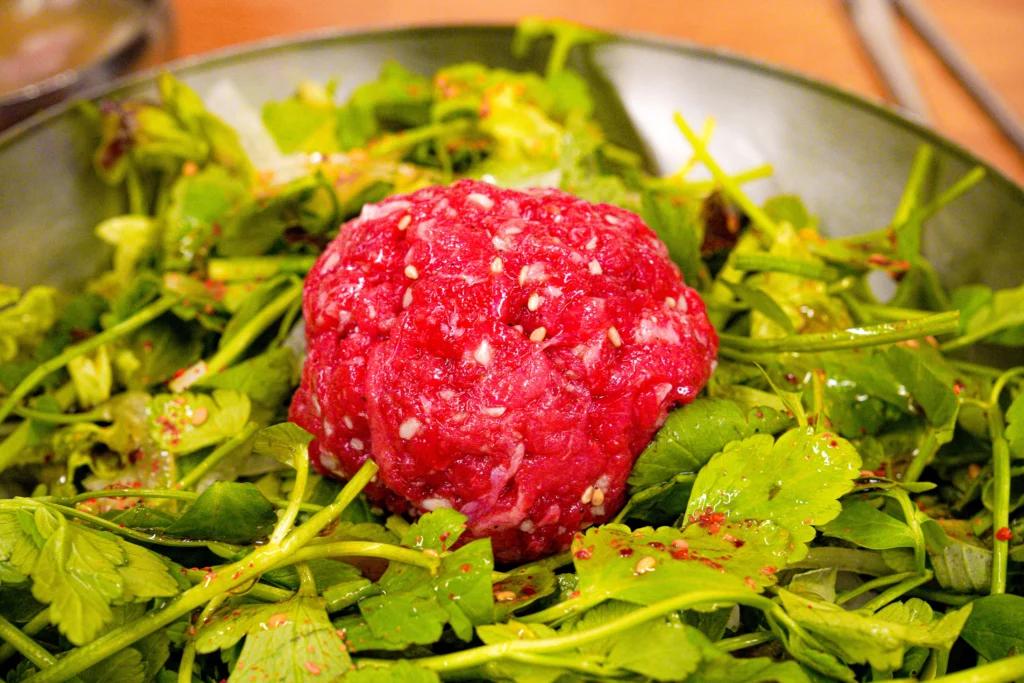
Many visitors arrive specifically for the gomtang and then discover that the yukhoe bibimbap (육회비빔밥) is the meal they will talk about afterward. Korean beef tartare bibimbap is similar to the familiar mixed rice bowl that Gwangjang Market made famous, but Neungdong Minari’s version takes a different approach to seasoning: instead of the standard gochujang (고추장) red pepper paste, the raw beef and accompanying vegetables are dressed with a soy sauce-based marinade enriched with sesame oil and a touch of sweetness. The effect is subtler, cleaner, and far more focused on the natural flavor of the beef itself.
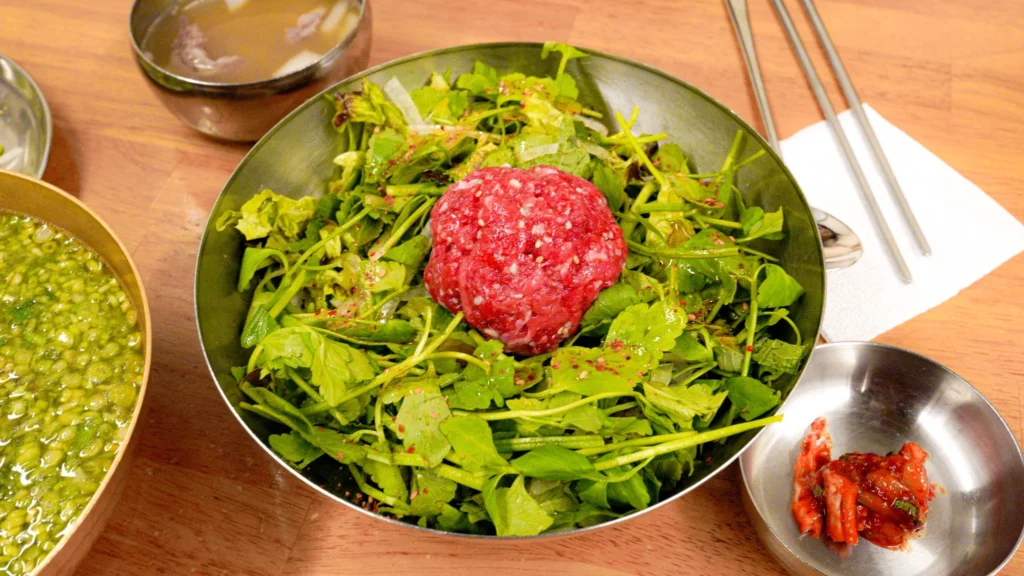
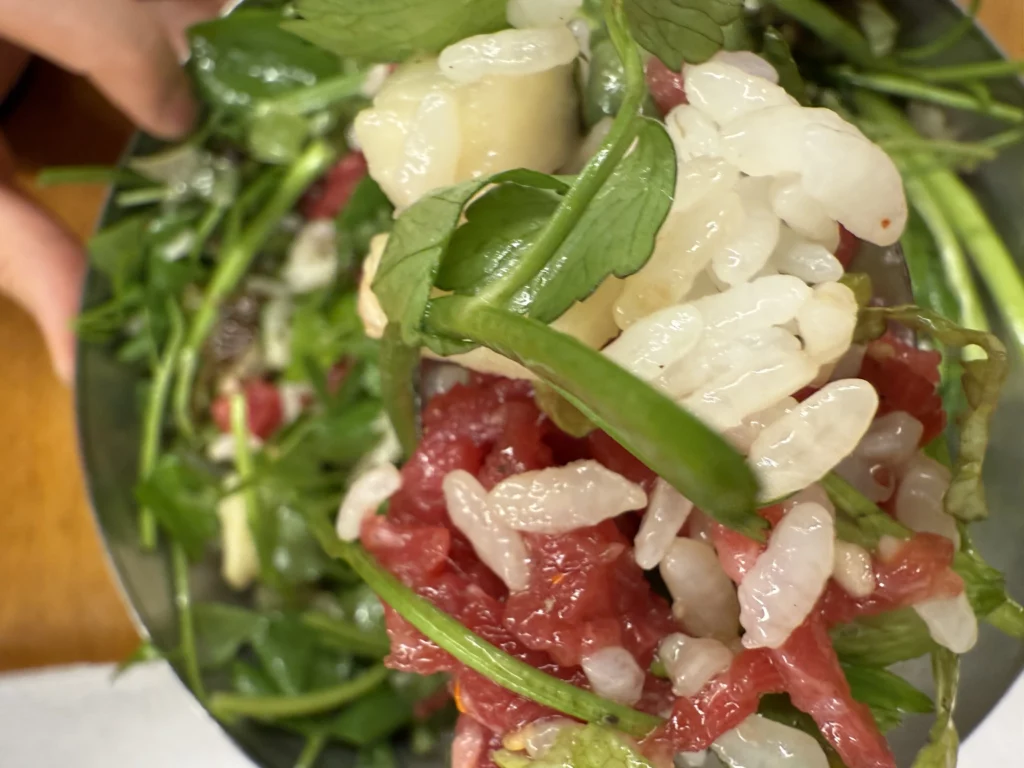
The bowl arrives generously piled with fresh minari, shredded daikon, and deeply marbled raw Hanwoo — the same premium-grade beef used in the gomtang — alongside a small cup of clear broth as a palate cleanser. Reviewers consistently note the perfume of sesame oil as the dominant first impression, followed by the silky richness of the tartare and the bright snap of the minari. A companion piece of oven-baked seaweed (gamtae) is provided for wrapping, adding a pleasant marine note to each bite.
Three Key Ingredients Behind the Flavor
- Hanjae Minari (한재미나리 · Water Parsley): Grown in the mineral-rich groundwater of Hwaaksan Mountain in Cheongdo, this premium variety has tender, slender stems and a clean, mildly herbal fragrance. Rich in vitamins A and C, it contributes both nutritional value and the restaurant’s distinctive visual identity. Sourcing tip: premium minari is available at larger Korean supermarkets seasonally; regular water parsley from Asian grocery stores makes a reasonable substitute.
- Same-Day Hanwoo Beef (한우): Korea’s indigenous cattle breed is renowned for its balanced marbling, buttery texture, and deeply savory flavor — sometimes described as combining the richness of Wagyu with the beefy character of Angus. Explore what makes Hanwoo one of Korea’s most celebrated ingredients and how it compares to other premium beef. Using beef from cattle slaughtered that morning ensures maximum freshness and a broth with no off-flavors or heaviness.
- Soy Sauce Seasoning Base (간장 양념): Unlike the vast majority of bibimbap served in Korea, Neungdong Minari’s version skips gochujang entirely. The soy sauce dressing is lighter in body and allows the quality of the beef to be the focus rather than the condiment. For diners unfamiliar with Korean fermented condiments, this comparison of gochujang and ssamjang provides useful context on how seasoning philosophy shapes the character of Korean dishes.
What to Expect: Taste, Texture, and Spice Level
Spice level: 1 out of 10. Both the gomtang and the bibimbap are essentially non-spicy dishes, making Neungdong Minari one of the more accessible Korean restaurant experiences for visitors who are sensitive to heat. The gomtang’s primary flavor notes are clean umami, a faint mineral sweetness from the broth, and a fresh herbal brightness from the minari. The bibimbap registers as savory, lightly sweet, and subtly nutty from the sesame oil, with the tartare adding a rich, silky mouthfeel that contrasts pleasantly with the crunch of the vegetables.
The texture combination is central to the enjoyment of both dishes: soft rice yielding to chewy beef and crisp parsley in the gomtang; tender raw beef melting against fresh minari and firm daikon in the bibimbap. Neither dish requires any special technique to eat. Temperature-wise, the gomtang arrives very hot but at a temperature designed for immediate eating — the restaurant moderates the heat slightly so diners are not waiting five minutes before the first spoonful.
Frequently Asked Questions
What makes this dish uniquely Korean?
Gomtang is a centuries-old Korean beef bone soup traditionally prepared to extract maximum nourishment from the whole animal. Its cultural significance lies in restraint: good gomtang does not rely on heavy seasoning or fat to build flavor, but on time and quality of ingredients. Adding minari — a beloved Korean spring vegetable associated with cleansing and health — elevates a traditional dish into something that feels distinctly contemporary without abandoning its roots. This kind of ingredient-driven reinvention is at the heart of what makes modern Seoul dining so compelling, as seen in other long-standing Michelin-recognized Hanwoo restaurants in Seoul.
What are the key ingredients that create this flavor?
The three most essential ingredients are same-day Hanwoo beef (for a clean, deeply savory broth), Hanjae minari from Cheongdo (for herbal brightness and freshness), and a light soy-based seasoning (for the bibimbap, replacing the conventional gochujang). The official Visit Seoul restaurant guide for Neungdong Minari highlights how the restaurant’s commitment to sourcing — particularly the same-day slaughter policy for Hanwoo — defines the entire flavor profile.
How would you describe the taste and spice level?
Spice level: 1/10. Both signature dishes are mild by Korean standards and entirely accessible to visitors who avoid heat. The gomtang is clean, savory, and warming — similar in overall concept to a refined European bone broth but with a Korean umami character that is rounder and more subtle. The bibimbap is nutty, silky, and subtly sweet, with the sesame oil providing the dominant aromatic. Neither dish relies on chili heat to build complexity.
What should first-time visitors know?
Expect a wait. On weekdays, average queue times run 30–60 minutes from opening; on weekends, the Tablebling app is strongly recommended for remote queuing — walk-in wait times can exceed 90 minutes. The restaurant operates across two floors. If you are assigned the second floor, rest assured: the atmosphere on both levels is equally casual and comfortable. The meal itself is efficient — food arrives quickly, which helps the line move. When the bibimbap comes with its small cup of gomtang broth, drink it separately or use it to thin the bowl slightly as you mix. Also worth knowing: corkage is free, and the restaurant is family-friendly with high chairs available.
The Menu, Pricing, and What Else to Order
The menu at Neungdong Minari is intentionally focused. Beyond the two headlining dishes, the kitchen offers:
- Minari Suyuk Jeongol (미나리 수육전골): A hot pot of boiled Hanwoo beef slices and water parsley in a clear, seasoned broth — ideal for groups and particularly well-suited to cold weather dining.
- Yukjeon (육전): Pan-fried beef slices coated in egg, served with fresh minari and a soy dipping sauce. Recommended for wrapping into small bites alongside the gomtang.
- Tteukgomtang (특곰탕): A specialty version of the gomtang containing cuts of teukyang (특양) — honeycomb tripe — rather than being a larger serving of the standard bowl.
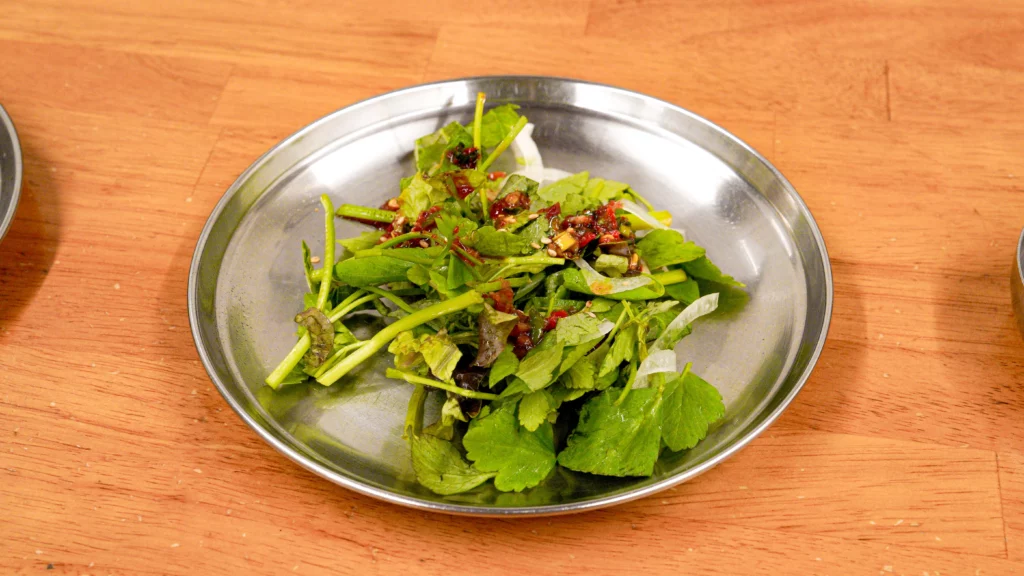
Pricing is reasonable for a Michelin-recognized restaurant in central Seoul. The gomtang sits around ₩16,000, the yukhoe bibimbap around ₩18,000, keeping the meal comfortably within the Bib Gourmand threshold of ₩45,000 per person. Understanding the full range of small dishes and accompaniments that complete a Korean meal — the seokbakji (mixed radish-cabbage kimchi) and minari muchim (water parsley salad) served as banchan here — becomes richer when you understand the deeper role that banchan plays in Korean dining culture.
Practical Visitor Information
DetailInformation
Address
28 Hangang-daero 40-gil, Yongsan-gu, Seoul 04386
Nearest Station
Sinyongsan Station (신용산역), Exit 1 — 5 min walk
Hours (Mon–Fri)
11:00 AM – 11:00 PM (last order 9:50 PM)
Hours (Sat–Sun)
10:30 AM – 11:00 PM (last order 9:50 PM)
Reservations
Walk-in with Tablebling app queuing
Phone
+82 50-71388-1035
@ndminari
Price Range
₩14,000 – ₩22,000 per person
Corkage
Free
Family Friendly
Yes (high chairs available)
Parking
Not available; subway recommended
Finding parking near Neungdong Minari (Yongsan) can be a bit tricky since the restaurant itself does not provide dedicated parking. Most visitors use nearby public or private parking lots.
[Recommended Parking Lots]
1. Hangang-ro Public Parking (Closest)
2. Amorepacific Headquarters Parking (Premium/Spacious)
3. LS Yongsan Tower Parking
Best times to visit: Early weekday lunch (doors open at 11 AM) or weekday evenings after 8 PM, when wait times drop significantly. Weekend lunchtime queues routinely exceed 90 minutes. Use Tablebling to join the queue remotely and explore the surrounding Yongsan area while you wait — the restaurant is close to Yongsan Park and the iPark Mall.
Location
Reviews
5.0
0 reviews


Neungdong Minari Seongsu: Minari Gomtang Guide
Seongdong-gu, Seoul 42 Yeonmujang-gil,

Jayeon NATURE: Best Incheon Airport Korean Restaurant
272 Gonghang-ro, Jung-gu, Incheon Terminal 1, 4F

Gyeongbok - Frozen Samgyeopsal that even Tzuyang went!
1st floor South Korea, Seoul, Gangnam District, Yeoksam-dong, 687-5

Korean Comfort Food Gem in Seoul: Gwan-gye Restaurant
Gangnam-gu, Seoul, South Korea 556-29 Sinsa-dong