


Step off the busy streets of Myeongdong and into a world where a 1,000-year-old Korean tradition meets modern dessert culture. METCHA (맷차), housed in a striking five-storey building in the heart of Seoul’s most famous shopping district, has redefined what it means to drink matcha in Korea. Its defining ritual — watching tea leaves slowly ground by a traditional stone mill called a 맷돌 (Maetdol) — turns every cup into a small piece of living heritage. Whether you’re a dedicated matcha enthusiast or a curious traveler, METCHA delivers one of the most memorable cafe experiences in Seoul.
METCHA Myeongdong: Seoul's Premier Stone-Ground Matcha Cafe
5
METCHA Myeongdong: Seoul's Premier Stone-Ground Matcha Cafe
5
Jung-gu, Seoul 7, Myeongdong 9-gil,
Editor: James Lee


Interior09
Food07

Menu04
Overview
+82 02-6952-4170
Free WiFi Available
Indoor Seating Only
Electronic Payment, Credit Card accepted: American Express, Master Card, Visa
Introduction
Operating hours
Mon, Tue, Wed, Thu, FriAM 8:00 - PM 10:00
Sat, SunAM 11:00 - PM 10:00
Menu
Editor's Detail
Table of Contents
- What Is METCHA and Why Is It Famous?
- The Maetdol Experience: A Stone Mill in the Middle of Seoul
- METCHA Menu: What to Order
- What Makes This Matcha Uniquely Korean?
- What Are the Key Ingredients Behind the Flavor?
- How Would You Describe the Taste and Spice Level?
- What Should First-Time Visitors Know?
- Practical Visit Guide: Location, Hours, and Tips
- METCHA vs. Other Seoul Matcha Cafes
- A Matcha Experience Worth Planning Around
What Is METCHA and Why Is It Famous?
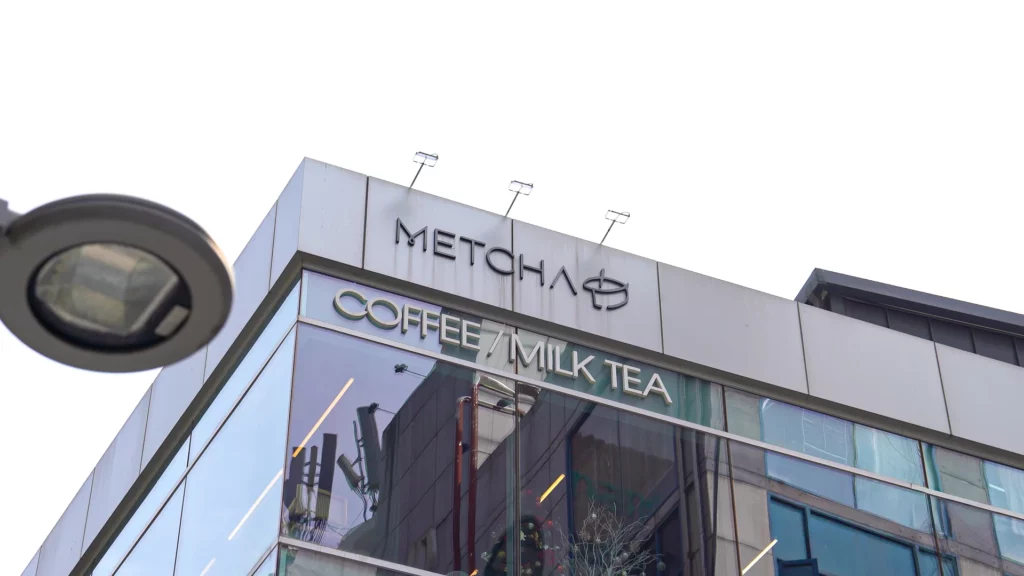
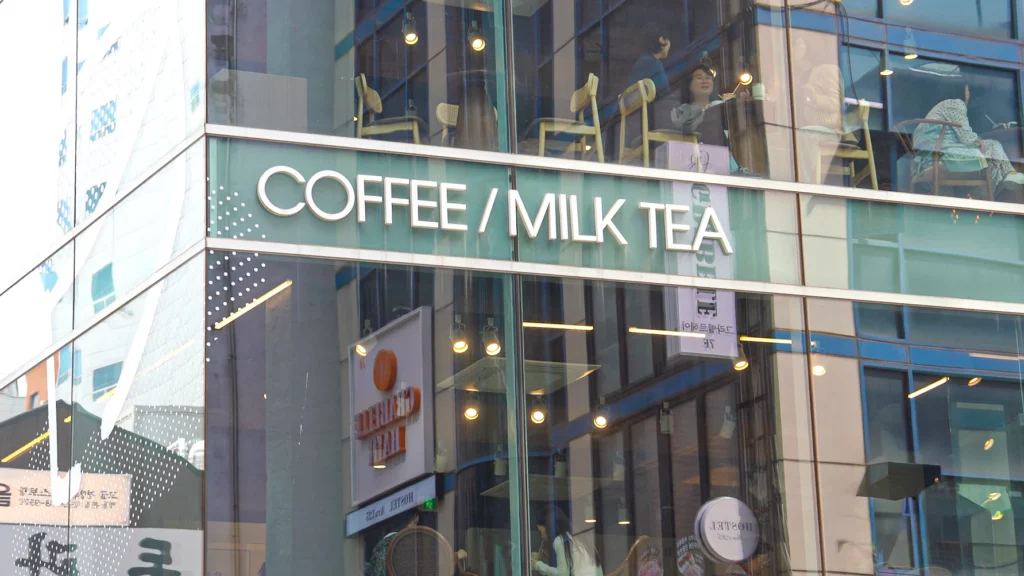
METCHA (맷차) started out as a specialty cafe in Ulsan before expanding to Gwangju, Daejeon, and eventually the heart of Seoul’s Myeongdong district. The Myeongdong flagship — officially located at 17 Myeongdong 9-gil, Jung-gu, Seoul — occupies an eye-catching multi-storey building that has become one of the district’s most photographed spots.
The cafe is a short walk away from Euljiro-1-ga subway station (Exit 5), making it highly accessible for both tourists and locals navigating between Seoul Subway Line No. 2 and Line No. 4. For those exploring Myeongdong’s layered food scene — which already includes legendary stops like Myeongdong Hamburger Toast and the serene rooftop views at Cafe Pines — METCHA offers a compelling reason to slow down.
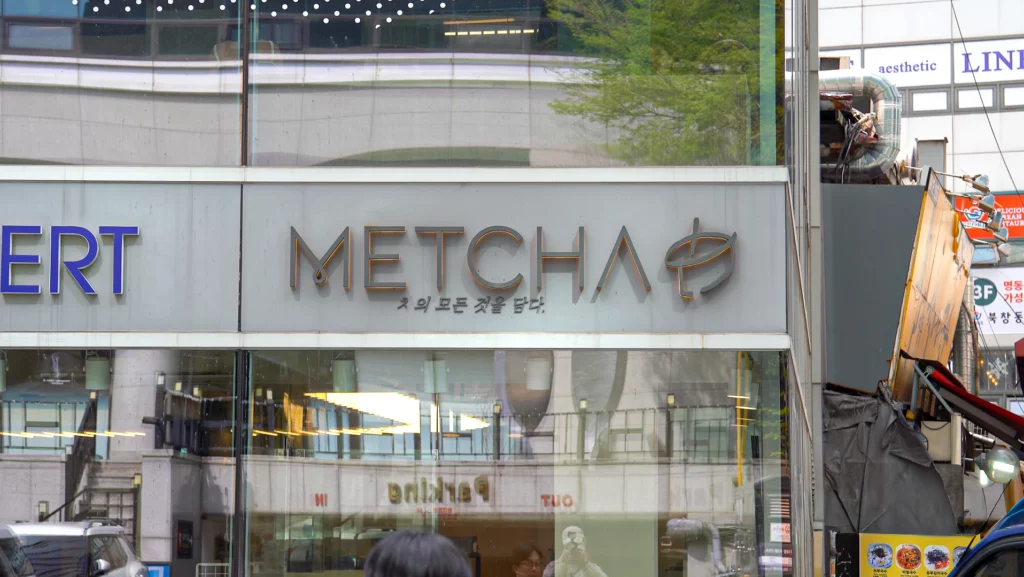
The brand’s Instagram describes its mission simply: "차의 모든 것을 담다" — "to contain everything of tea" — and positions itself as KOREAN MATCHA NO.1, using 100% organic matcha from Jeju Island and specialty-grade coffee beans. That ambition is visible in every element of the space.
The Maetdol Experience: A Stone Mill in the Middle of Seoul
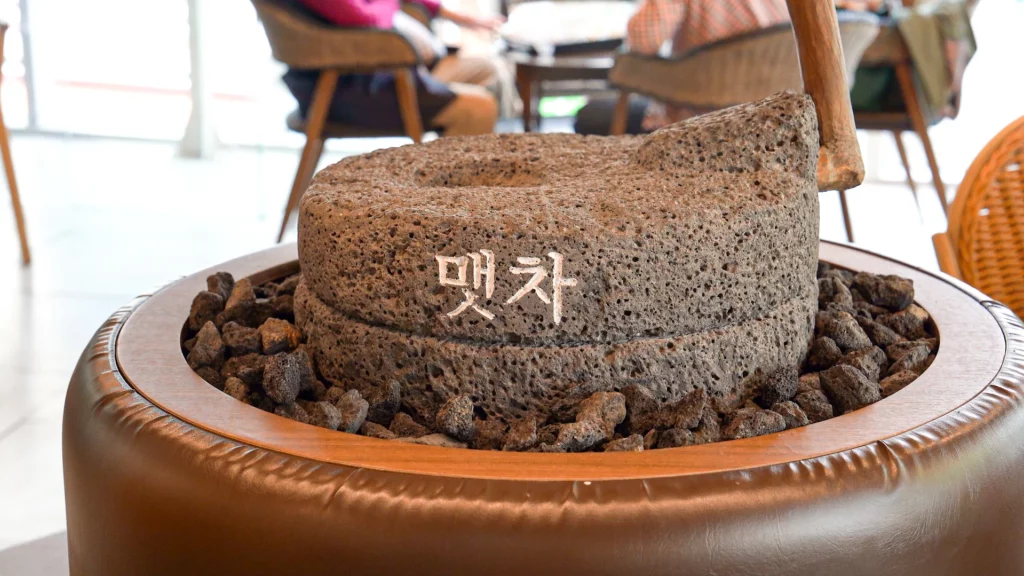
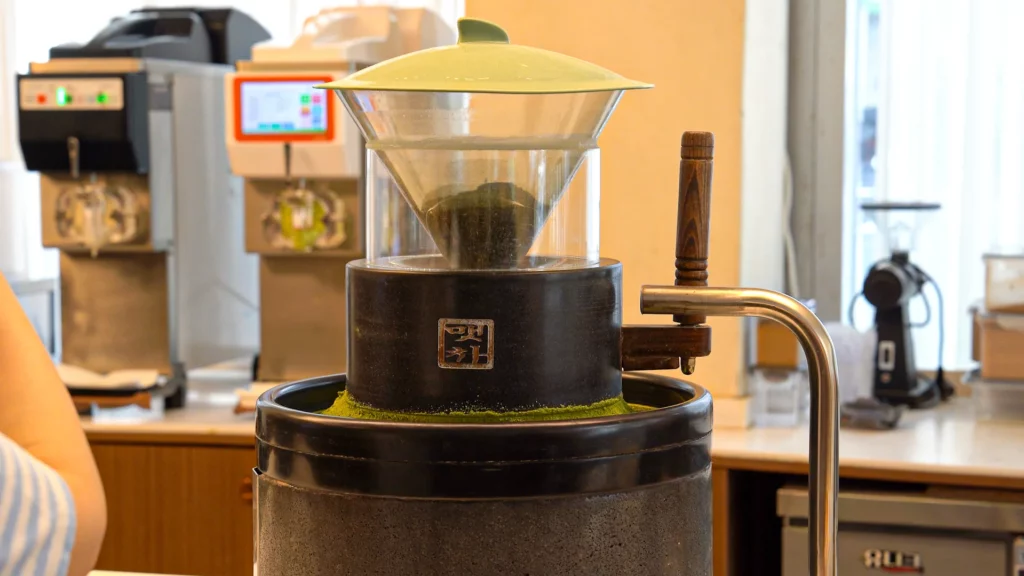
The word "METCHA" itself is a portmanteau of 맷돌 (Maetdol) — the traditional Korean stone grinding mill — and 차 (cha), the Korean word for tea. This is not just branding.
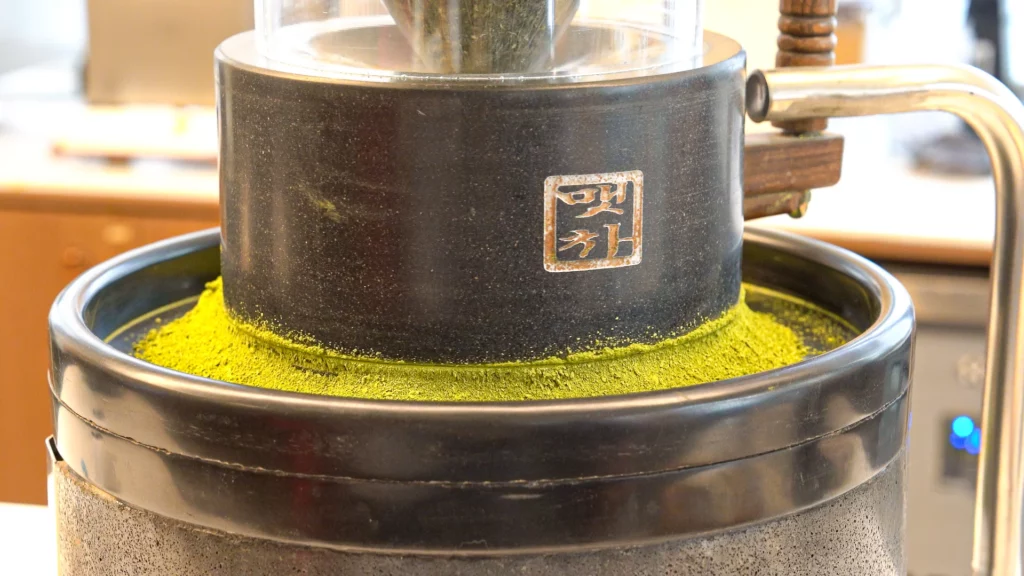
At METCHA, they have their own Maetdol, a traditional Korean stone grinder used to grind tea leaves and coffee beans on the spot. Everything is done in-house, including the matcha and coffee milling process. Watching the stone mill turn — its circular motion deliberate and hypnotic — explains why the drinks here taste different from anything made with off-the-shelf matcha powder.
The key is friction heat reduction. Industrial powder mills grind at high speed, generating heat that degrades delicate flavor compounds and creates a dull, chalky finish. The Maetdol’s slow rotation keeps temperatures low, preserving the tea’s natural sweetness, its deep green color, and the subtle umami notes that distinguish premium matcha from ordinary green tea powder. The result is a cup that is rich and full-bodied without the grassy bitterness or "tepid" aftertaste that can make lower-quality matcha unpleasant.
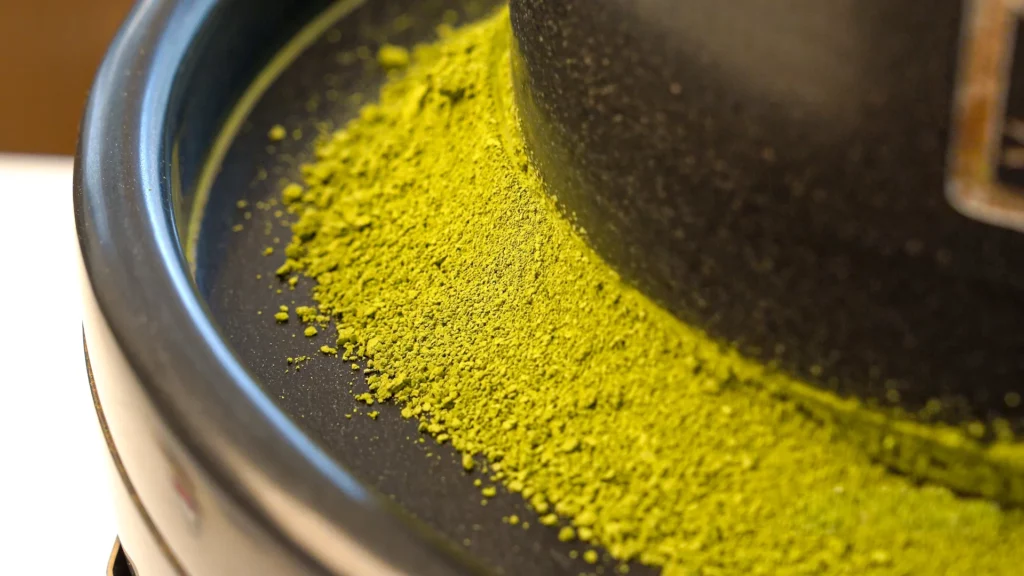
This visual performance — the turning stone, the cascading green powder, the quiet craft — also makes METCHA one of the most Instagrammable experiences in Seoul, appealing equally to those who appreciate traditional Korean craftsmanship and those who simply want content worth sharing.
To understand more about why the grinding method matters so much for matcha’s flavor and nutritional profile, our complete guide to matcha powder covers the science behind L-theanine, chlorophyll, and antioxidant concentration in detail.
METCHA Menu: What to Order
METCHA focuses on beverages while also offering a selection of matcha desserts. Using matcha and hojicha (볶은 녹차, roasted green tea) sourced from Jeju Island, the matcha carries fragrant notes — light bitterness with subtle sweetness and a pleasant aroma.
Signature Drinks:
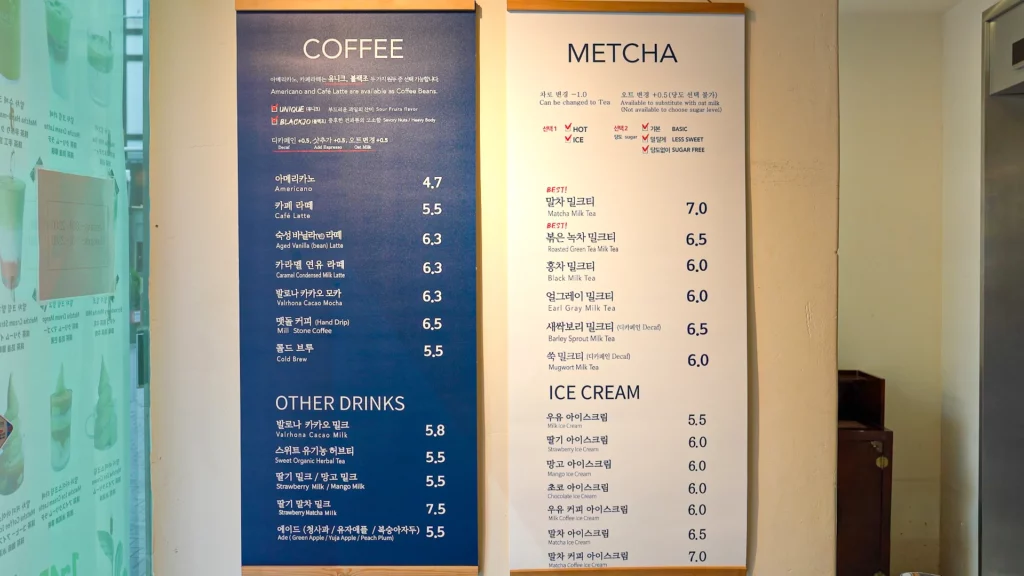
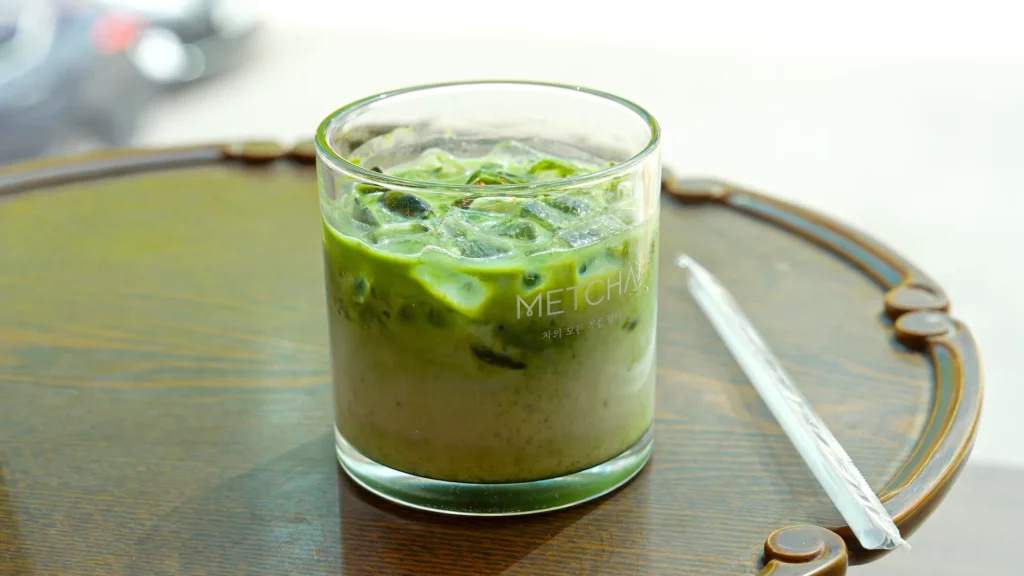
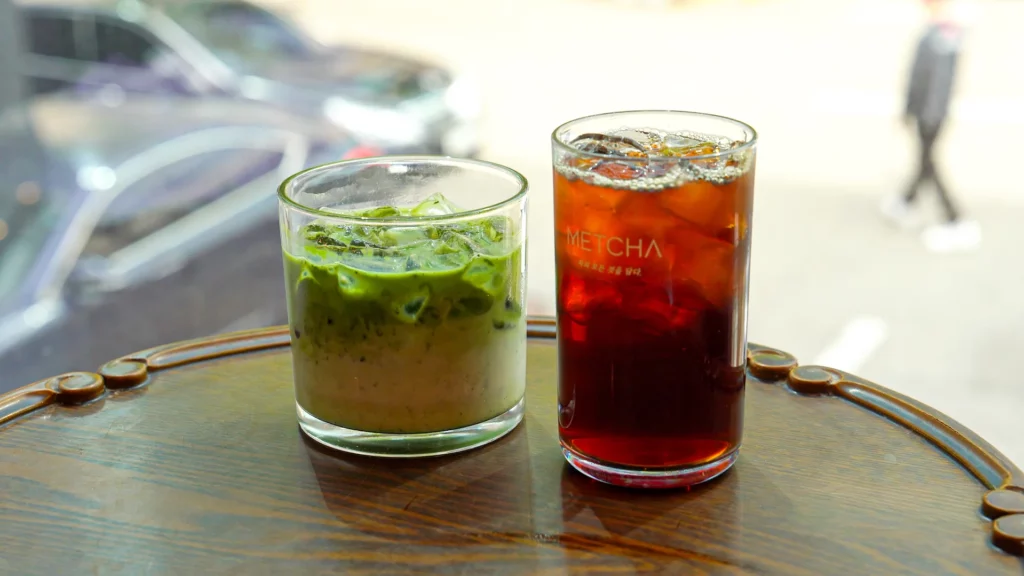
- 맷돌 말차 밀크티 (Maetdol Matcha Milk Tea) — The flagship drink, made from stone-ground Jeju matcha poured over cold fresh milk. Customizable in sweetness (sweet, less sweet, no sugar) and available with oat milk. Approx. ₩6,500.
- 볶은 녹차 밀크티 (Roasted Green Tea / Hojicha Milk Tea) — A toasty, less bitter alternative with a warm caramel-like fragrance. Ideal for those who find straight matcha too intense.
- 맷돌 커피 (Maetdol Coffee) — For non-tea drinkers, METCHA grinds specialty coffee beans the same way, using the stone mill to produce a rounded, low-bitterness cup.
- 딸기 말차 밀크 (Strawberry Matcha Milk) — A seasonal-leaning option combining earthy matcha with sweet Korean strawberries. Many visitors note how generous METCHA is with the strawberries, and that Korean strawberries in this drink are notably sweet and non-artificial in flavor.
Desserts:
- 말차 타르트 (Matcha Tart) — Known for its solid, firm, and crisp tart shell with a lingering buttery fragrance. The matcha tart (made using Jeju matcha powder) comes with a distinctly earthy flavor profile and a subtle, lingering bitter undertone.
- 말차 아이스크림 (Matcha Ice Cream) — A popular standalone option at approximately ₩5,000–₩6,000.
- 말차 밀크 크레이프 케이크 (Matcha Mille Crepe Cake) — Light and delicate, allowing the matcha flavor to shine without sweetness overload.
METCHA also sells take-home tea bags, which reviewers note actually allow you to appreciate the tea’s quality without the milk, making them a worthwhile souvenir.
What Makes This Matcha Uniquely Korean?
Matcha is widely associated with Japanese tea ceremony culture, where it has been central for centuries. So what makes METCHA’s offering distinctly Korean?
The answer begins with the Maetdol itself. Stone mills have been used in Korea since antiquity for grinding grains, sesame, and soybeans — long before matcha entered the peninsula’s tea culture. METCHA’s decision to apply this ancient Korean tool to tea grinding represents a creative reclamation: taking a globally recognized tea ingredient and processing it through Korean heritage craft.
The tea leaves themselves also tell a Korean story. Jeju Island matcha — grown in volcanic soil — tends toward a sweeter, less bitter profile than traditional Japanese matcha. The volcanic ash enriches the tea leaves with minerals, producing a distinctly Korean flavor with subtle floral notes. This gentler character makes METCHA’s drinks particularly accessible to first-time matcha drinkers who might be put off by the sharp grassiness of higher-caffeine Japanese varieties.
Korean cafe culture (카페 문화) also reframes how matcha is consumed. Unlike the solitary formality of a Japanese tea ceremony, METCHA invites you to sit at a window table, watch the street life of Myeongdong four floors below, and share your drink with a friend. The space functions as what Korean sociologists describe as a "third space" — somewhere between home and work — where lingering is encouraged. To explore how other Seoul cafes express this cultural philosophy, the O’sulloc Tea House Bukchon guide offers a beautiful companion perspective.
What Are the Key Ingredients Behind the Flavor?
Three ingredients define the METCHA experience:
1. 제주 유기농 말차 (Jeju Organic Matcha / 제주산 100% 유기농 말차) METCHA uses 100% organic matcha sourced from Jeju Island, Korea’s premier tea-growing region. Shade-grown before harvest, the leaves develop higher concentrations of L-theanine — an amino acid that promotes calm, sustained focus — and chlorophyll, which gives the powder its vivid jade-green color. The Maetdol grinding process then preserves these delicate compounds that would otherwise degrade under industrial heat. L-theanine is also what creates matcha’s signature "alert calm" — focused energy without the coffee-style jitters. Available at specialty Asian markets or online; look for vibrant green color as a quality indicator.
2. 볶은 녹차 (Hojicha / Roasted Green Tea) For the Hojicha Milk Tea, METCHA uses roasted green tea leaves — also from Jeju — ground the same way. Roasting transforms the leaf’s flavor profile from grassy-vegetal to warm, nutty, and gently sweet, while significantly reducing caffeine content. This makes the Hojicha Milk Tea ideal for afternoon visits or for those who are caffeine-sensitive. Flavor profile: toasty, caramel-adjacent, with a clean finish and minimal bitterness.
3. 신선한 우유 (Fresh Milk / Oat Milk Option) METCHA uses quality fresh milk that complements rather than overpowers the tea. The oat milk option (귀리 우유 변경 가능) is a smart addition for lactose-intolerant visitors and creates a slightly creamier, naturally sweet base that many customers prefer with the matcha.
What Should First-Time Visitors Know?
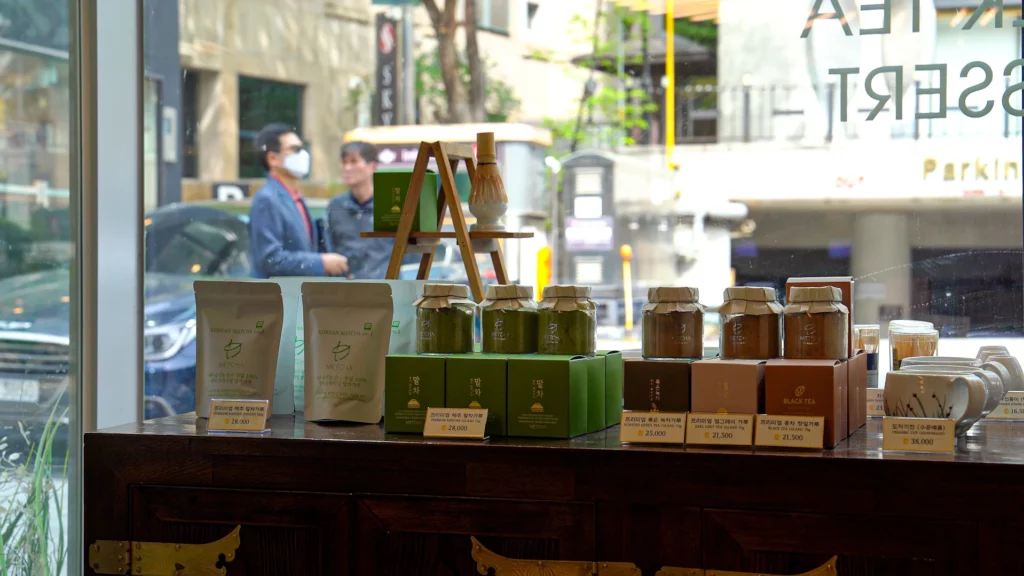
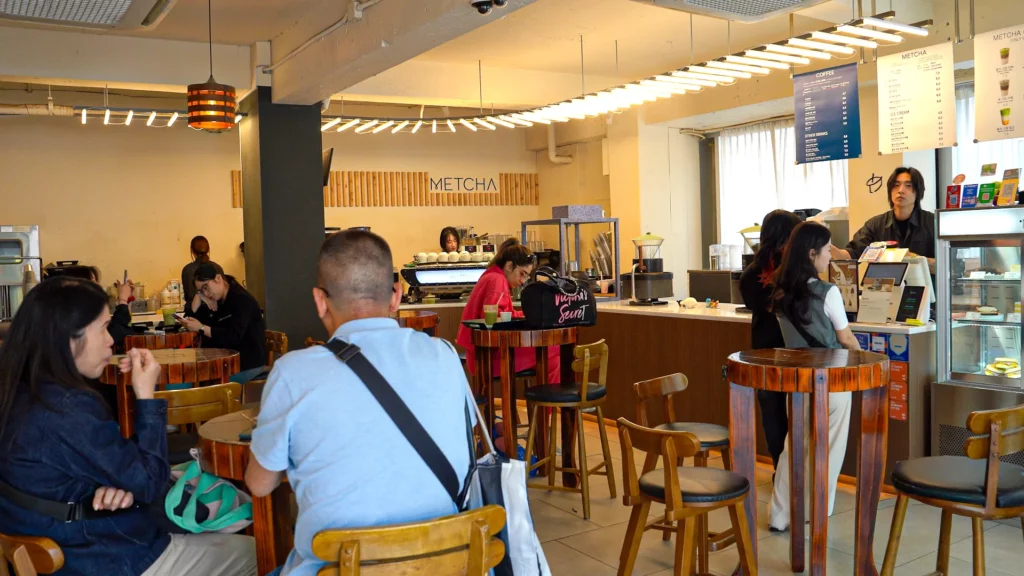
How to order: Ordering and pickup are done on the first floor. Seating is available on the 2nd, 3rd, and 4th floors. There is a lift in the building, which is helpful if you have luggage or mobility needs. Take your number, find a seat upstairs, and wait for your name or number to be called over the speakers.
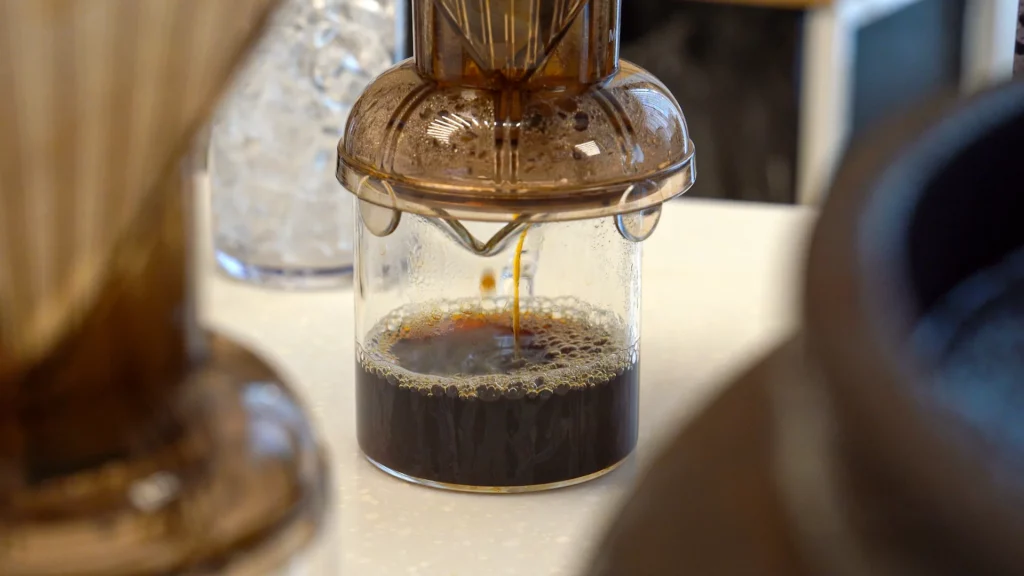
Customization: Always specify your sweetness preference at the counter — sweet (달게), less sweet (덜 달게), or no sugar (무설탕). The no-sugar option is recommended for matcha purists, as it reveals the full flavor profile. Oat milk substitution is available at a small additional charge.
Best seats: With ample sunlight shining through floor-to-ceiling glass windows, diners can either choose to sit at the main tables or near the window. Window seats come with Korean Soban tables — individual traditional low dining tables — that add a lovely traditional aesthetic to the modern cafe experience. Most tables have charging ports, which is convenient for long stays, whether for work or leisure.
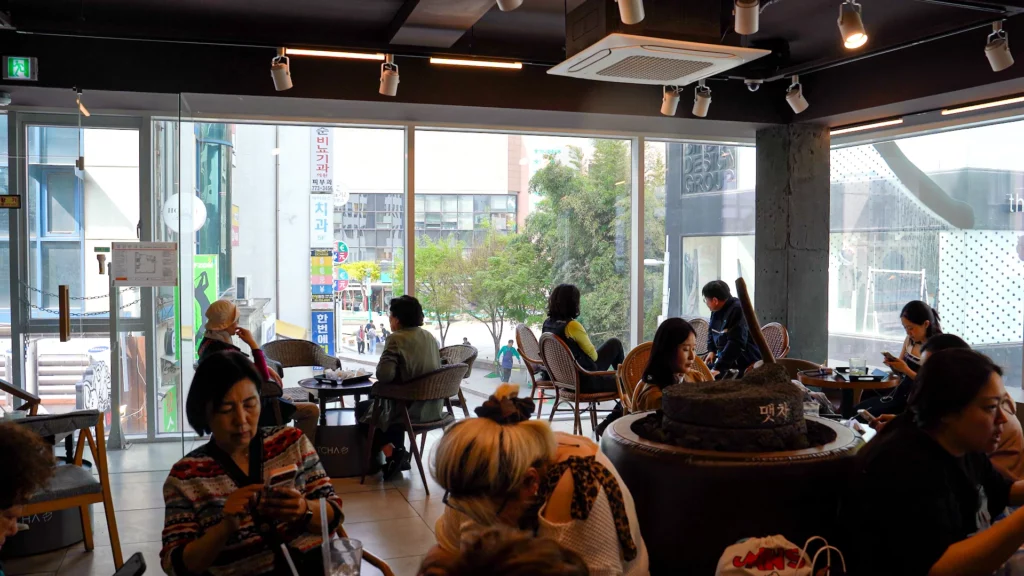
When to go: Weekday mornings (METCHA opens at 8am Monday through Friday) offer the most relaxed experience. Weekend afternoons see significant queues, particularly among groups of tourists — plan accordingly or be prepared to wait 10–20 minutes.
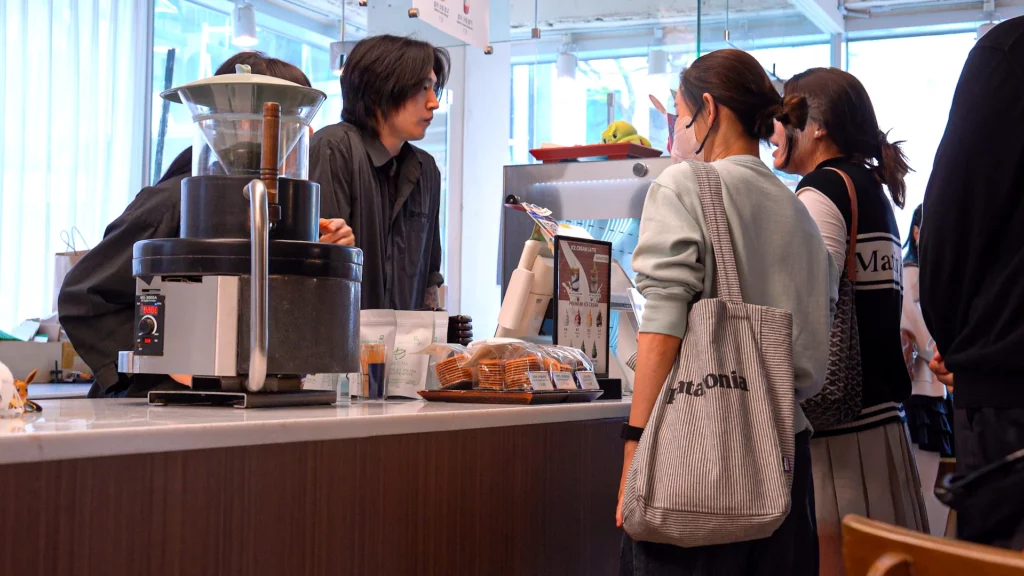
Cultural etiquette: Korean cafe culture encourages lingering. Taking photos is entirely normal and expected — it’s part of the social experience. The staff are accustomed to multilingual visitors, and picture menus make ordering straightforward even without Korean language skills. Tipping is not practiced in Korea.
If METCHA sparks a deeper interest in Korean matcha culture, the Traditional Korean Desserts guide offers a broader look at how Korea’s dessert scene has evolved — from ancient hangwa confectionery to the modern matcha creations now dominating Seoul’s cafe culture.
Practical Visit Guide
DetailInformation
Address
17 Myeongdong 9-gil, Myeongdong 1(il)-ga, Jung-gu, Seoul
Nearest Subway
Euljiro-1-ga Station (Line 2), Exit 5 — approx. 3-minute walk
Hours (Weekday)
8:00 AM – 10:00 PM
Hours (Weekend)
11:00 AM – 10:00 PM
Price Range
₩6,500 – ₩12,000 (drinks); ₩5,000–₩8,000 (desserts)
Floors
5-storey building; ordering on 1F, seating on 2F–4F
Oat Milk
Available (additional charge)
Sugar Adjustment
Available (sweet / less sweet / no sugar)
Reservations
Walk-in only
Language
Picture menus available; English-friendly
METCHA vs. Other Seoul Matcha Cafes
Seoul’s matcha scene is increasingly competitive. O’sulloc Tea House in Bukchon Hanok Village remains the gold standard for formal Korean tea culture with its traditional architectural setting and premium Jeju tea pedigree. Super Matcha in The Hyundai Seoul deploys a robot to prepare drinks, leaning into technological novelty.
METCHA’s niche is the traditional craft performance — the Maetdol grinding ritual — delivered in an accessible, high-volume format at the center of Seoul’s most-visited tourist district. It’s neither the quietest nor the most formal matcha experience in the city. But for international visitors with limited time and a desire to see Korean tea tradition made tangibly visible — the stone turning, the green dust cascading, the ancient meeting the modern — METCHA’s Myeongdong flagship is genuinely hard to beat.
As Visit Korea notes in its Myeongdong district guide, the area has evolved well beyond cosmetics shopping into a destination where cultural and culinary experiences sit alongside commercial tourism. METCHA is part of that evolution.
For those curious about the science behind why stone-ground matcha tastes different, the Japan Tea Export Council’s matcha research documentation provides authoritative background on how grinding temperature affects amino acid and catechin preservation in high-grade green tea.
Note on Myeongdong
METCHA’s location puts it within easy reach of some of Seoul’s most rewarding food experiences. After your matcha, Mipojip in Lotte Department Store offers a quieter sit-down Korean meal with excellent marinated seafood and hot pot rice. Myeongdong’s broader food scene — from iconic street food to premium sit-down restaurants — rewards an afternoon of unhurried exploration.
A Matcha Experience Worth Planning Around
METCHA (맷차) at Myeongdong Main Branch has done something rare in Seoul’s saturated cafe market: it built a concept that is simultaneously rooted in Korean traditional craft and perfectly calibrated for the global tourist moment. The Maetdol stone mill is not a gimmick — it is the reason the matcha here tastes better, the reason the cafe feels different, and the reason visitors who aren’t even matcha enthusiasts find themselves ordering a second cup.
If you’re visiting Myeongdong — and if you’re in Seoul, you almost certainly will be — carve out an hour for METCHA. Arrive early on a weekday, claim a window seat on the upper floors, watch the city move five stories below, and let a 1,000-year-old Korean grinding tradition explain to you exactly why slow and steady produces a better cup of tea. Share this guide with anyone planning a Seoul trip who loves matcha, K-desserts, or simply the kind of experience that reveals something authentic inside a very busy city.
Have you visited METCHA Myeongdong? We’d love to hear which drink you ordered in the comments below.
Location
7, Myeongdong 9-gil,, Jung-gu, Seoul, KR
Reviews
5.0
0 reviews
5
0%
4
0%
3
0%
2
0%
1
0%
Loading reviews...
Related Recipes

Drinks & Dessert
Patbingsu: Traditional Korean Shaved Ice with Sweet Red Beans
Few things signal the arrival of a Korean summer like a towering bowl of patbingsu (팥빙수) — Korean shaved ice...

Drinks & Dessert
Sujeonggwa (Korean Cinnamon Ginger Punch)
There is something deeply comforting about the first sip of well-made sujeonggwa. The warm sweetness of cinnamon meets the quiet...