


Deep inside Gwangjang Market — Seoul’s oldest and most storied marketplace — sits a small shop that has become one of the city’s most talked-about snack destinations. The HBAF Almond Store at Gwangjang Market carries the full lineup of Korea’s most creative flavored almonds: from the iconic Honey Butter Almond that started a national craze to the savory Seaweed Almond that visitors take home by the bagful. Whether you’re a first-time traveler to Korea or a seasoned Seoul local hunting for the best souvenirs, this guide covers every flavor worth buying — and tells you exactly what to expect before you walk through the door.
5 HBAF Almond Flavors You Must Buy in Seoul — Gwangjang Market Guide
5
5 HBAF Almond Flavors You Must Buy in Seoul — Gwangjang Market Guide
5
88 Changgyeonggung-ro, Jongno-gu, Seoul, South Korea HBAF Almond Store, Gwangjang Market
Editor: James Lee


Interior05
Food05

Menu03
Overview
+82 080-700-8383
Free WiFi Available
Outdoor Seating Available
Electronic Payment accepted: American Express, Master Card, Visa
Introduction
Operating hours
Mon, Tue, Wed, Thu, Fri, Sat, SunAM 9:00 - PM 11:00
Menu
Editor's Detail
Table of Contents
- What Is HBAF and Why Is It Everywhere in Seoul?
- Where Is the Gwangjang Market Branch Located?
- 5 Must-Try HBAF Almond Flavors
- More Flavors Worth Exploring
- What Makes Korean Flavored Almonds Uniquely Korean?
- What Are the Key Ingredients Behind Each Flavor?
- How Would You Describe the Taste and Spice Level?
- What Should First-Time Buyers Know?
- Beyond Almonds: Other Products at the Store
- Practical Visitor Information
What Is HBAF and Why Is It Everywhere in Seoul?
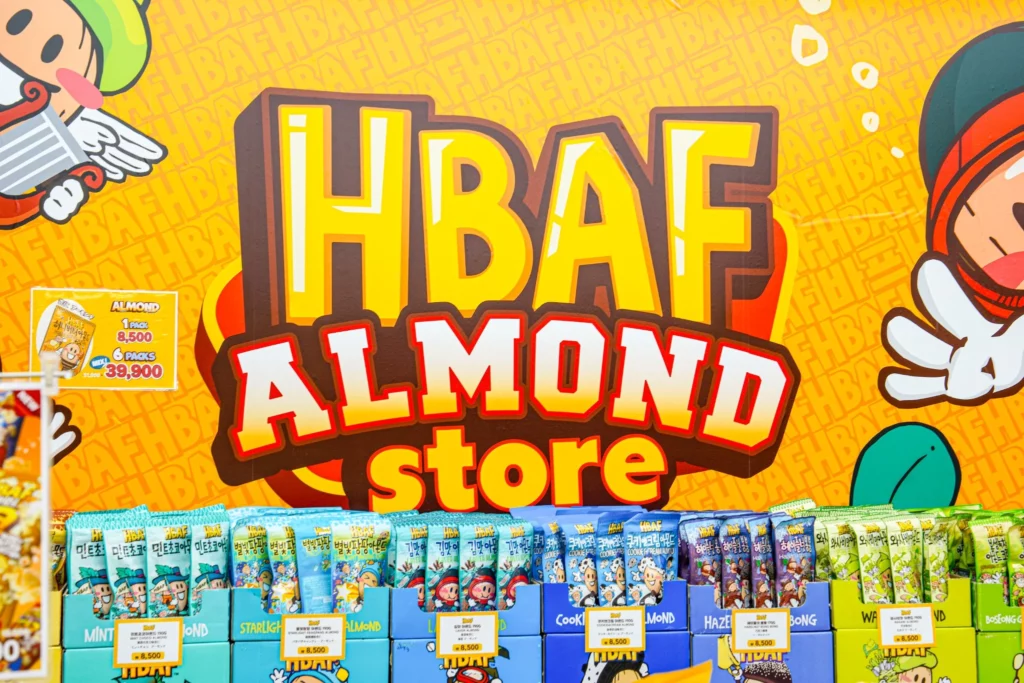
Walk down any major shopping street in Seoul — Myeongdong, Hongdae, Insadong — and the bright yellow signage of an HBAF store is almost impossible to miss. The brand traces its roots to Gilim, a nut company founded in 1982 that became Korea’s first almond importer at a time when almonds were not grown domestically. Over four decades, Gilim built the infrastructure and expertise that allowed it to develop what would eventually become one of the country’s most recognizable snack brands.
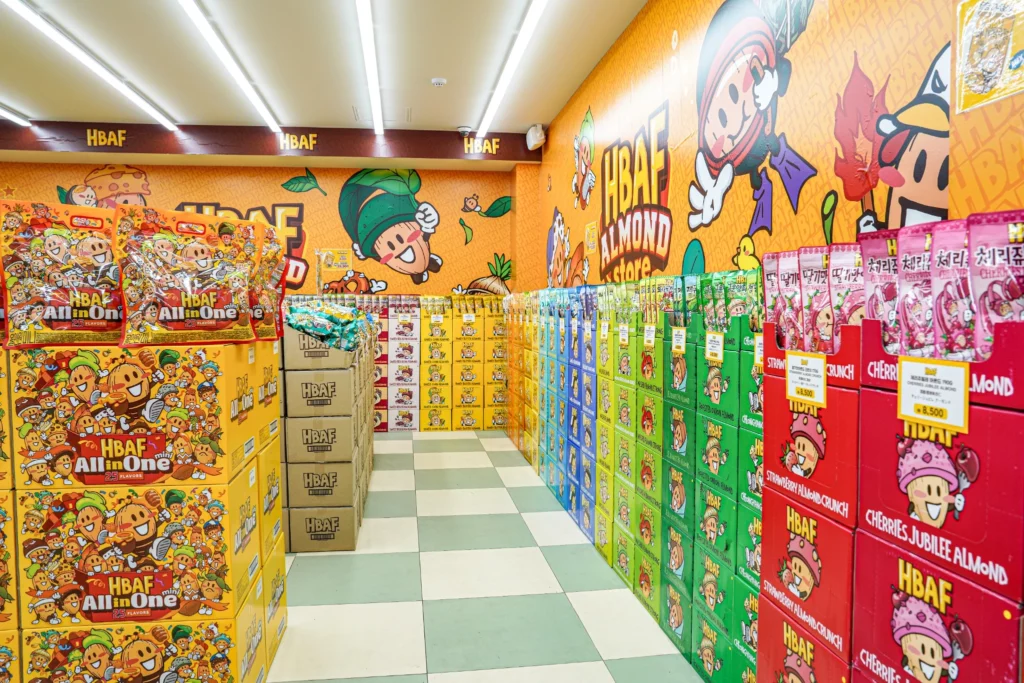
HBAF’s defining move was turning the almond into a canvas. Rather than simply roasting and salting, the brand developed a coating technology that allows complex flavors — everything from Italian tiramisu to Korean tteokbokki sauce — to adhere to individual almonds in a thin, crunchy shell. The result is a snack that delivers bold, specific flavor in every single bite without being cloying or artificially heavy. It is, in the most literal sense, a snack that could only have been invented in Korea, where the culture of flavor innovation in packaged food is among the most advanced in the world.
Today, HBAF operates dedicated stores in Myeongdong, Busan, and — most recently — inside Gwangjang Market itself.
Where Is the Gwangjang Market Branch Located?
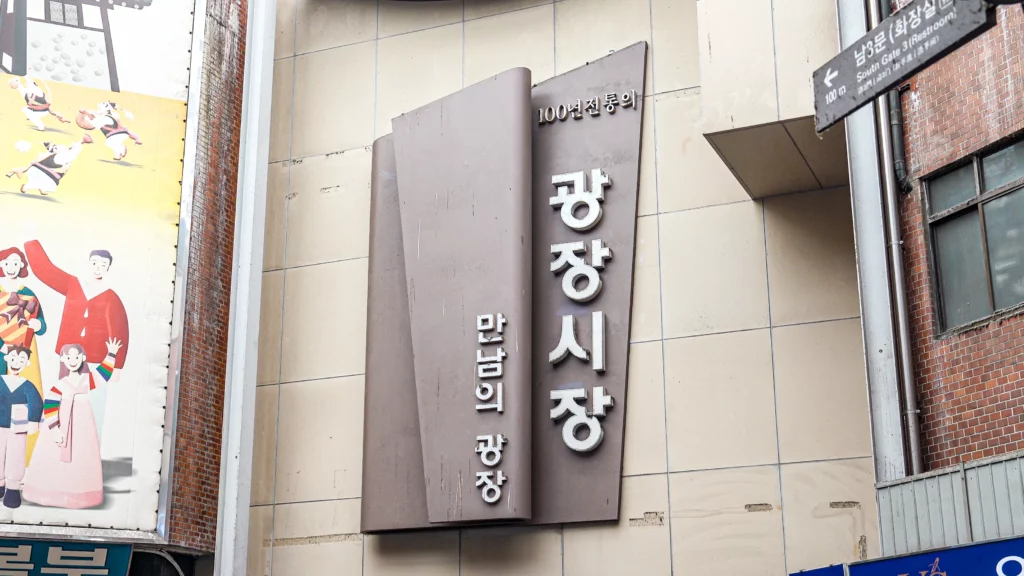
The HBAF Almond Store Gwangjang Market is located at 88 Changgyeonggung-ro, Jongno District, Seoul. The most convenient access is via Jongno 5-ga Station (Seoul Subway Line 1), from which the market’s main entrance is a short walk.
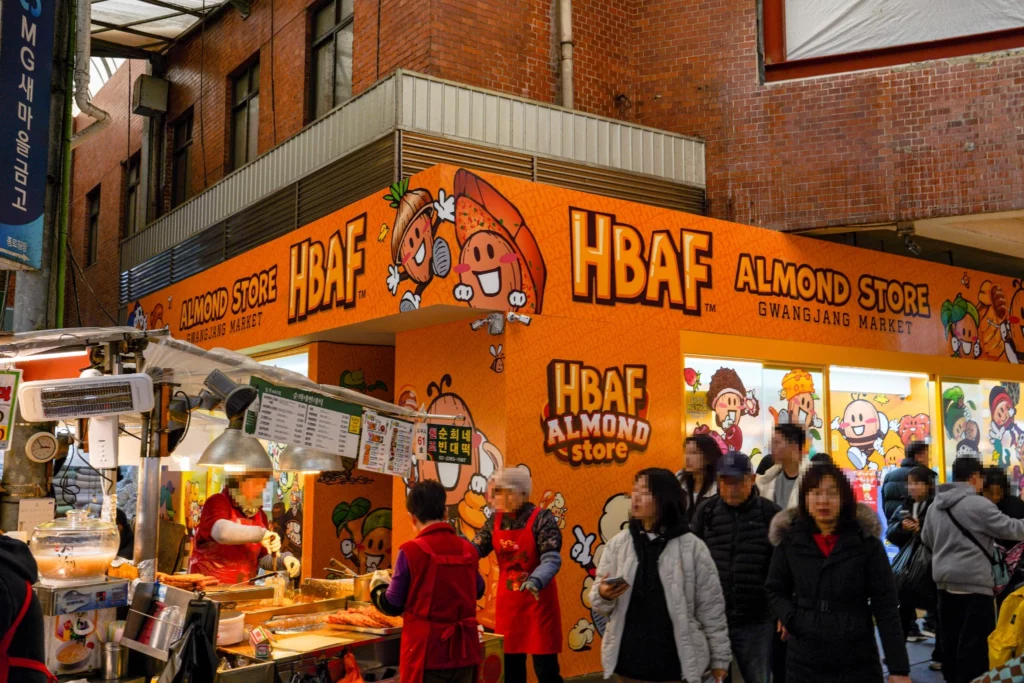
Gwangjang Market (광장시장), established in 1905, holds the distinction of being South Korea’s first permanent marketplace. Originally a textile hub, it evolved into one of Seoul’s most beloved food destinations — a transformation that accelerated dramatically after Netflix’s Street Food: Asia series featured it in 2019. Today, the market draws an estimated 65,000 visitors daily. The HBAF store sits within this flow of foot traffic, making it easy to visit before or after exploring the famous bindaetteok and mayak gimbap stalls.
Operating Hours: Generally open daily from 9:00 AM to 10:00 PM, though hours may vary seasonally. Confirm current hours at HBAF’s official store locator.
5 Must-Try HBAF Almond Flavors
Customers at the Gwangjang Market branch can typically sample flavors before purchasing — a significant advantage over buying packaged almonds at an airport or convenience store. The following five flavors represent the best starting point for anyone new to HBAF.
1. Honey Butter Almond (허니버터 아몬드) — The Signature
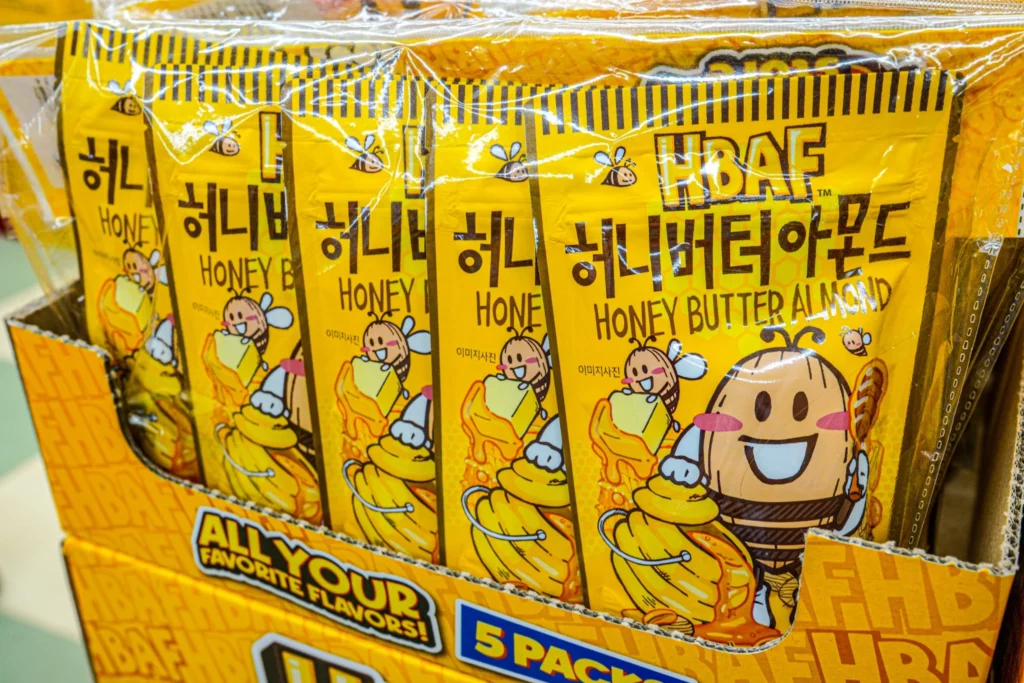
The flavor that started it all. Honey Butter Almond combines the natural sweetness of honey with the rich, savory depth of butter in a coating that manages to feel indulgent without becoming heavy. It is the most popular choice among first-time buyers and remains the brand’s best-selling product. The balance between sweet and salty mirrors a broader Korean flavor philosophy — the same instinct that makes Korean fried chicken glazed with honey garlic sauce so universally appealing.
2. Wasabi Almond (와사비 아몬드) — The Bold Choice
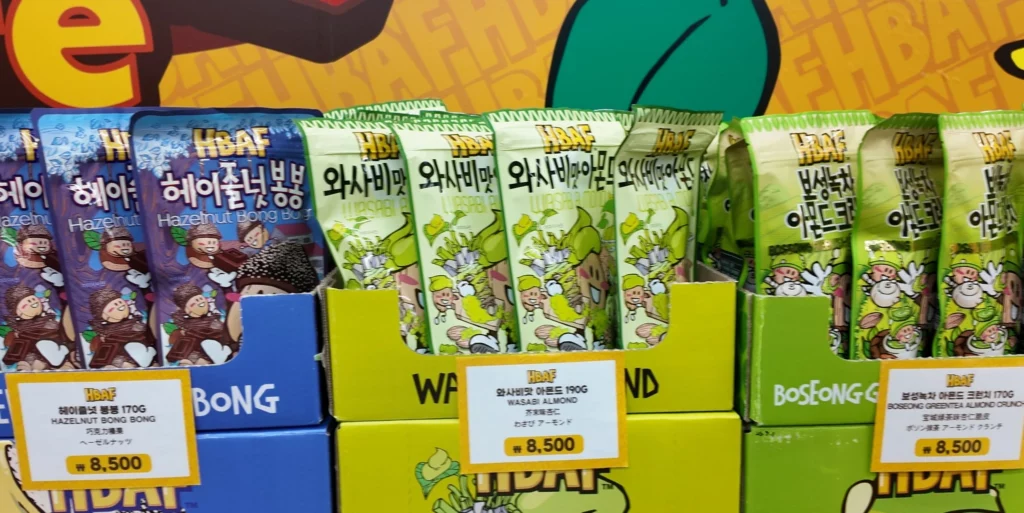
Korean cuisine’s relationship with heat is more nuanced than the West often assumes, and the Wasabi Almond illustrates this perfectly. The wasabi coating delivers an immediate, sharp, nasal-clearing heat that dissipates quickly, leaving behind a clean, slightly savory finish. Many customers describe it as ideal alongside a beer or as a palate-awakening midday snack. Spice level: approximately 4–5 out of 10.
3. Tiramisu Almond (티라미수 아몬드) — The Dessert Almond

One of HBAF’s most elegant creations, the Tiramisu Almond layers coffee bitterness with cream sweetness in a way that genuinely evokes the Italian dessert it references. It pairs exceptionally well with coffee and appeals to visitors who prefer sweet over savory. The coating is noticeably thicker than the honey butter variety, giving each almond a more substantial crunch.
4. Cookies & Cream Almond (쿠키앤크림 아몬드) — The Sweet Snack
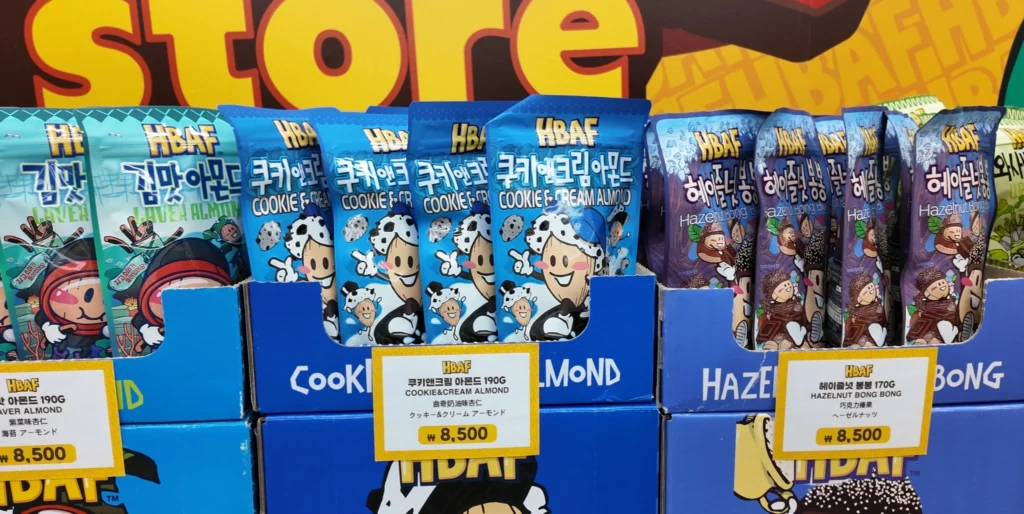
Think Oreo-meets-almond: dark chocolate cookie dust meets white cream coating in a snack that leans unambiguously sweet. This flavor tends to be especially popular among younger shoppers and makes an easy crowd-pleasing gift for people who are unfamiliar with Korean food but enjoy accessible sweet snacks.
5. Seaweed Almond (김 아몬드) — The Korean Souvenir Flavor
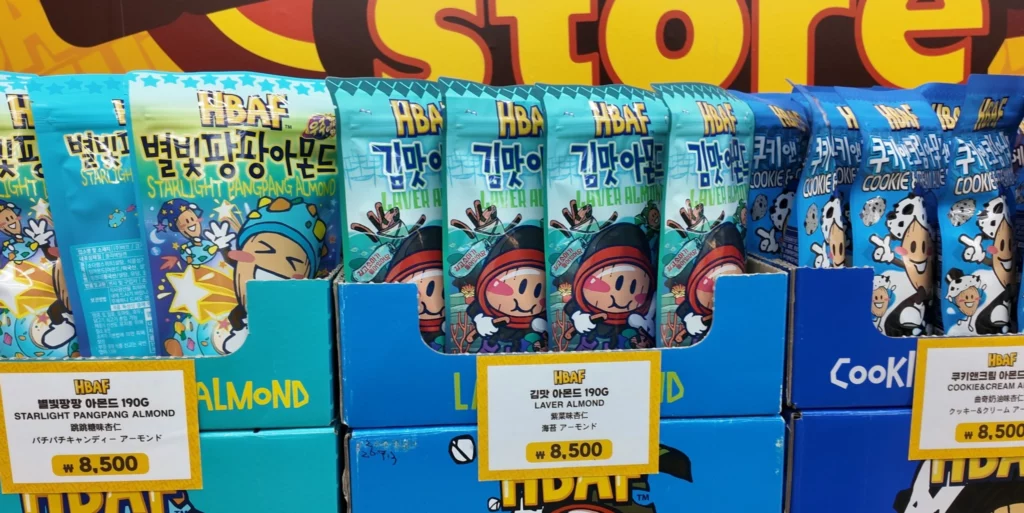
Of all five must-try flavors, the Seaweed Almond may be the most distinctly Korean. The coating uses gim (김), Korea’s beloved roasted seaweed, which delivers a salty, umami-rich, faintly oceanic flavor that is entirely unlike anything in Western snack culture. It is consistently cited as one of the top souvenir picks among international visitors, and for good reason — it is a flavor profile that is difficult to replicate outside Korea.
To understand why gim works so well as a flavoring, it helps to know that Korean seaweed has been cultivated and consumed for over a millennium, appearing at virtually every Korean meal as a side dish, garnish, or snack. Its role in Korean food culture is so central that even a flavored almond carrying its essence communicates something authentically local.
More Flavors Worth Exploring
Beyond the five essentials, the Gwangjang Market branch carries additional flavors that reward adventurous shoppers.
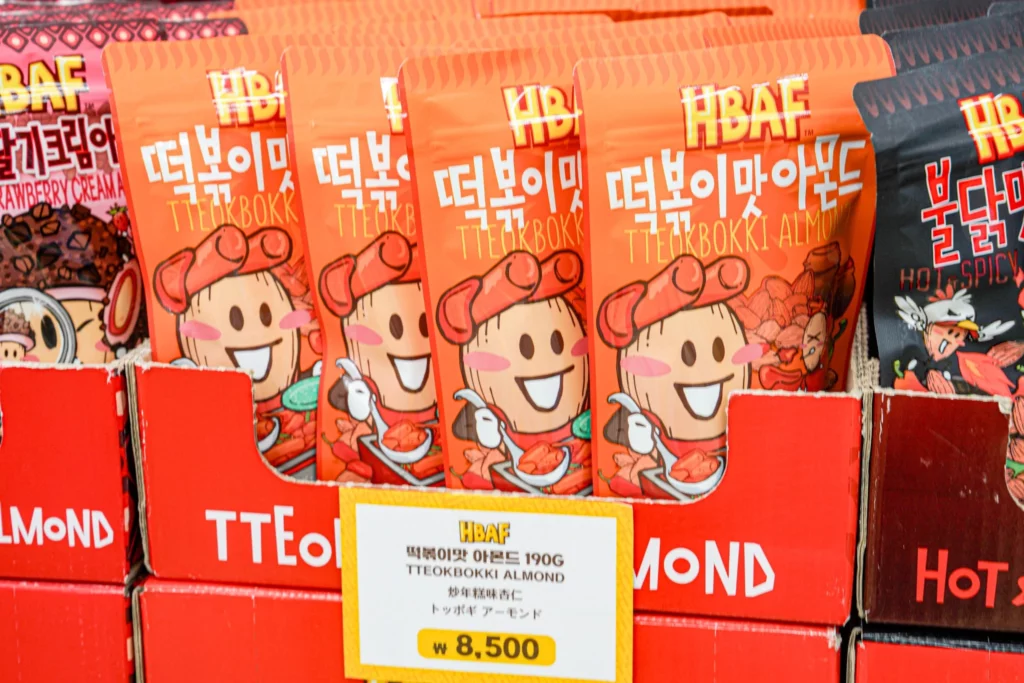
- Tteokbokki Almond (떡볶이 아몬드): Tteokbokki (떡볶이) is Korea’s most iconic street food — chewy rice cakes bathed in a spicy-sweet gochujang sauce. The almond version captures that signature blend of spice, sweetness, and slight funkiness. It is bold, conversation-starting, and genuinely fun. For those curious about the original dish, the full story of tteokbokki’s evolution from royal court cuisine to Seoul street food is worth reading before your trip.
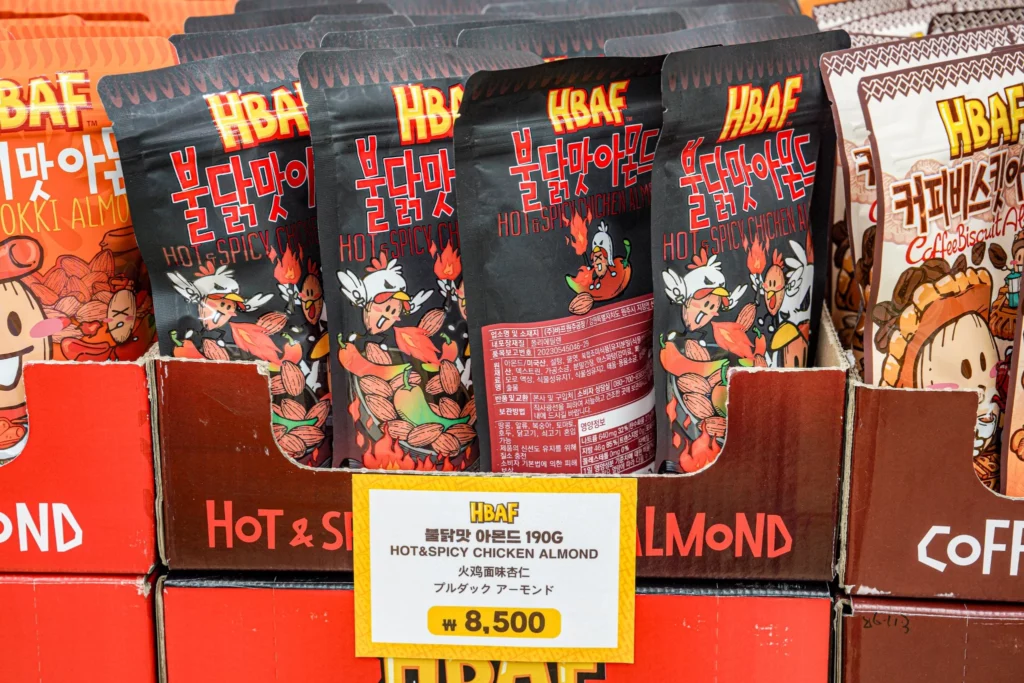
- Buldak Almond (불닭 아몬드): Named after Korea’s famous ultra-spicy "fire chicken" (buldak) flavor — a K-food trend that has gone genuinely global. Spice level: 7–8 out of 10. Not for the faint-hearted.
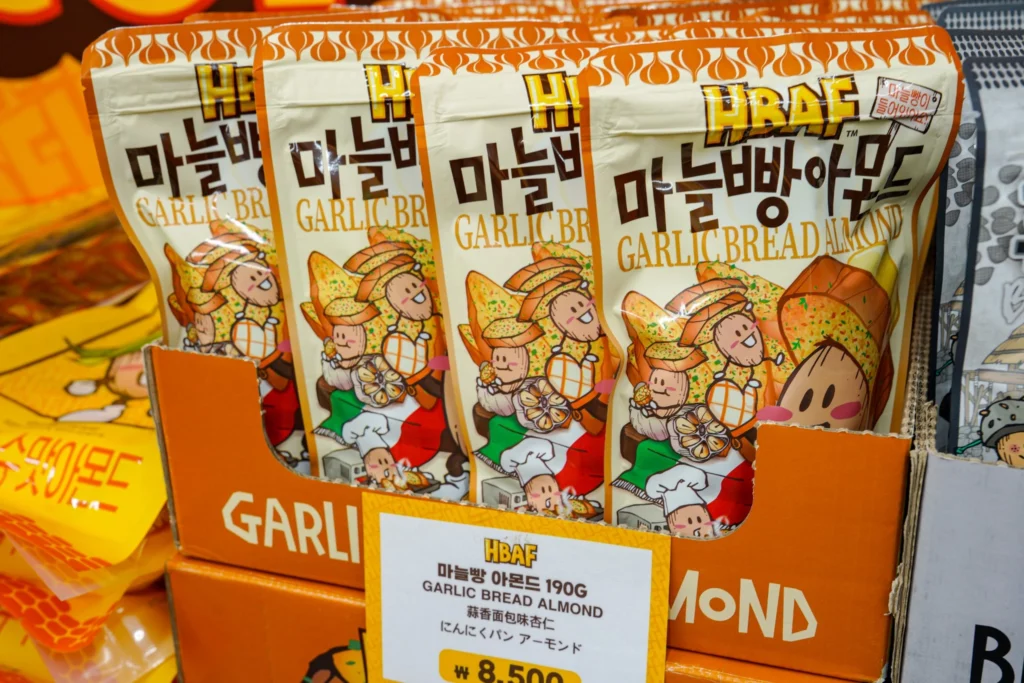
- Garlic Bread Almond (갈릭브레드 아몬드): Buttery, garlicky, and deeply savory. One of the most universally appealing flavors for visitors unfamiliar with Korean-specific tastes.
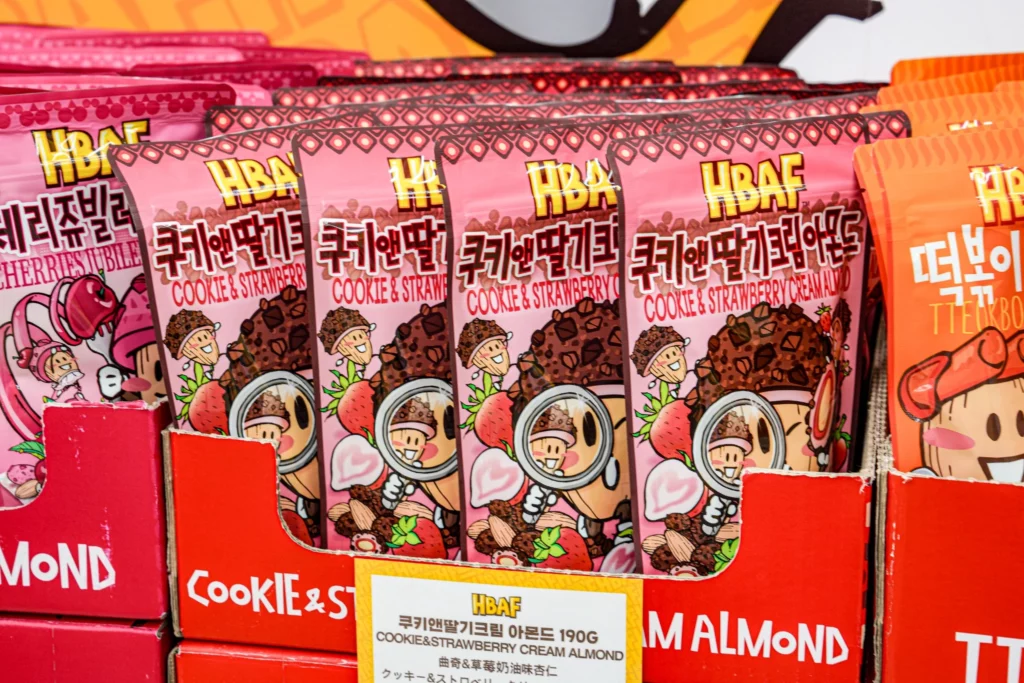
- Cookie & Strawberry Cream Almond: A seasonal-leaning flavor that merges biscuit sweetness with fruity cream — light and snackable.
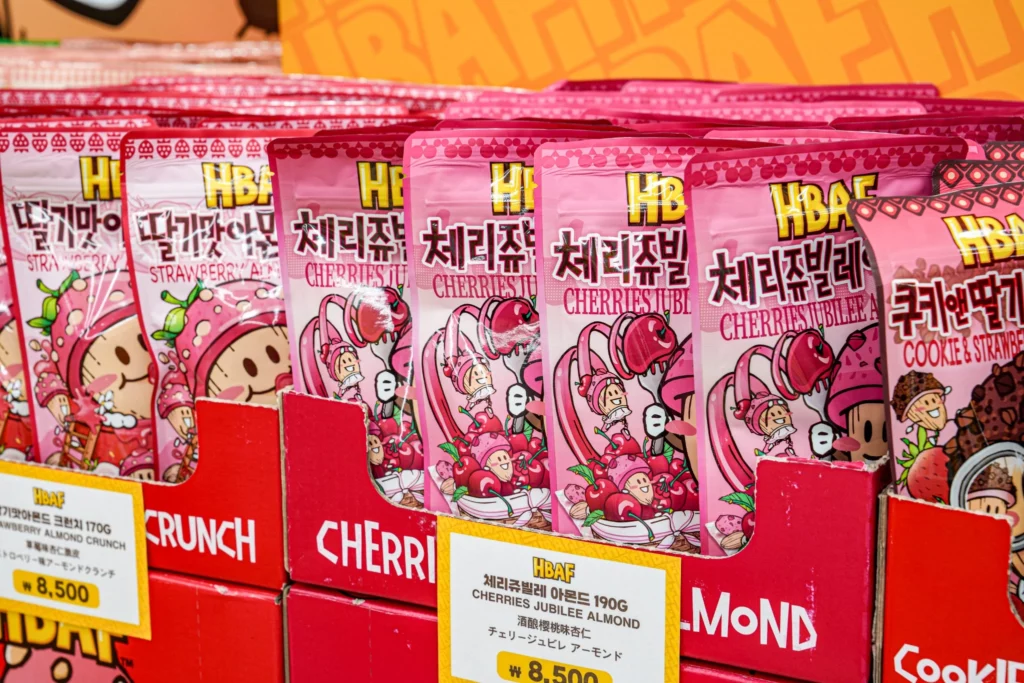
- Cherry Jubilee Almond: A brighter, fruit-forward option with a jammy sweetness that stands apart from the more savory-dominant lineup.
What Makes Korean Flavored Almonds Uniquely Korean?

Korean snack culture is characterized by an unusually high tolerance for flavor complexity and an appetite for novelty that drives continuous product development. Concepts like honey butter — now considered a classic Korean flavor pairing — emerged from the same creative environment that has produced seaweed-flavored chips, corn ice cream, and sweet potato latte.
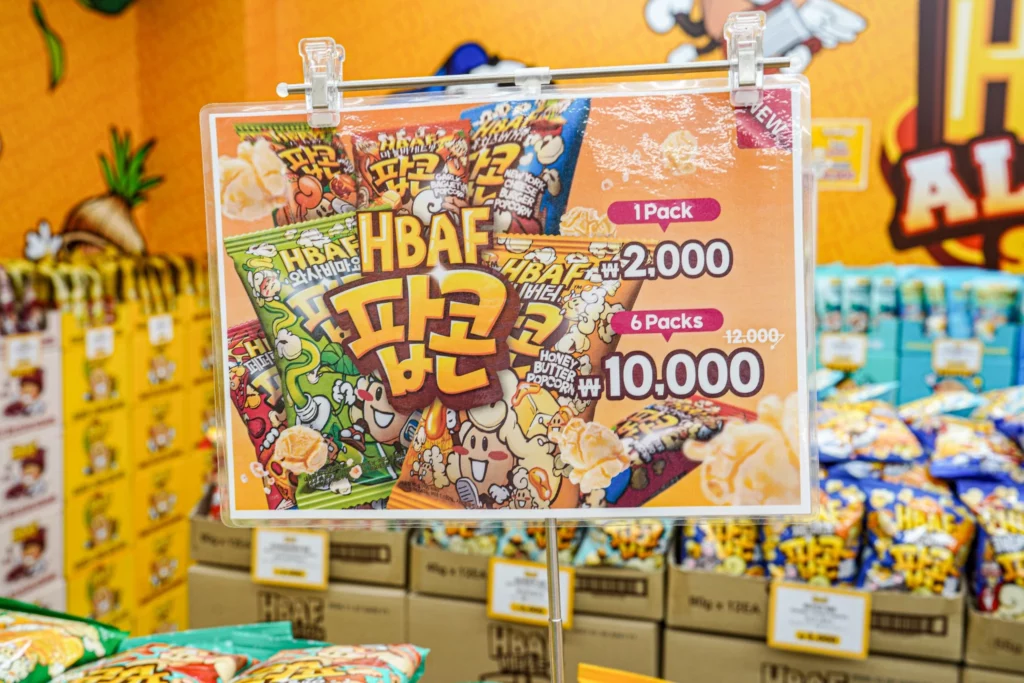
HBAF’s flavored almonds sit at the intersection of two Korean food values: health-consciousness (almonds are widely regarded in Korea as a nutritious, high-protein snack) and flavor maximalism (the belief that a snack should deliver an identifiable, specific taste experience, not just generalized sweetness or saltiness). This combination makes the product feel simultaneously responsible and indulgent — a balance that resonates particularly strongly with Korean consumers.
The brand’s willingness to translate distinctly Korean flavors — tteokbokki, buldak, gim — into almond form also reflects a broader movement in Korean food culture toward finding new formats for beloved tastes. Gochujang (고추장), Korea’s fermented red pepper paste and one of the key flavor bases for both the tteokbokki and buldak almonds, has been a cornerstone of Korean seasoning for centuries. Encountering it in almond form is, in many ways, a deeply contemporary expression of a very ancient flavor tradition.
What Are the Key Ingredients Behind Each Flavor?
Three ingredients define the HBAF flavor universe more than any others:
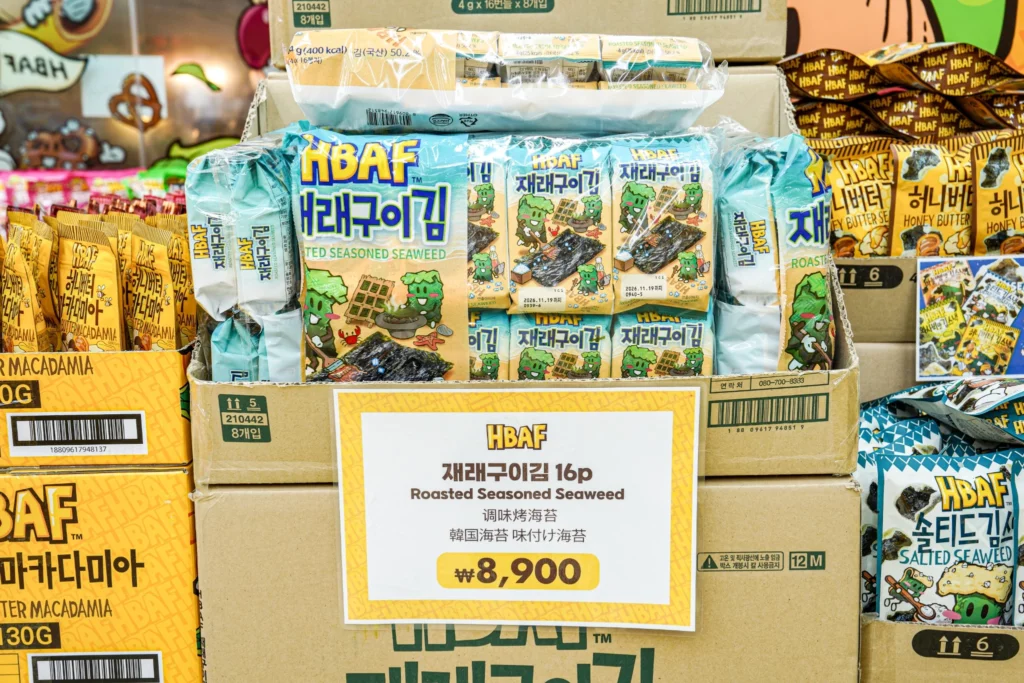
Gim (김) — Korean Roasted Seaweed Gim is dried, toasted laver (a type of red algae) seasoned with sesame oil and sea salt. Its flavor profile is intensely savory and umami-rich, with a characteristic subtle oceanic note. In the Seaweed Almond, powdered gim adheres to the nut’s surface in a thin, fragrant coating. Nutritionally, gim is remarkably low in calories while delivering iodine, iron, and protein. It is widely available at Asian grocery stores internationally, though nothing quite replicates the fresh-roasted version found in Korean markets. For a deeper dive into this essential ingredient, the complete guide to Korean seaweed explains both its production process and its place in Korean food culture.
Gochujang-based seasonings (고추장 계열) — Korean Red Pepper Paste The tteokbokki and buldak flavors both draw on gochujang’s distinctive profile: fermented, earthy, spicy, and faintly sweet all at once. Unlike simple chili heat, gochujang-based seasoning carries depth from the fermentation process — a quality that makes these flavors more complex than their Western heat-snack counterparts. Spice level varies: Tteokbokki Almond sits around 4–5/10, while Buldak Almond reaches 7–8/10.
Butter and honey coating technology The Honey Butter Almond relies on HBAF’s proprietary coating process, which binds a mixture of real honey and butter flavoring to each nut in a thin, crunchy shell that remains crisp without becoming sticky. The result is remarkably shelf-stable — ideal for travel and gifting. Available at most international Asian grocery chains, and increasingly on global e-commerce platforms.
How Would You Describe the Taste and Spice Level?

The HBAF flavor range spans a wide spectrum, which is part of its appeal as a group souvenir purchase.
FlavorSpice Level (1–10)Primary Taste NotesBest For
Honey Butter
0
Sweet, buttery, nutty
Everyone; first-timers
Tiramisu
0
Coffee, cream, sweet
Coffee lovers
Cookies & Cream
0
Sweet, chocolatey
Sweet snack fans
Garlic Bread
1
Savory, buttery, garlicky
Savory fans
Seaweed
1–2
Umami, salty, oceanic
Korean food enthusiasts; souvenir hunters
Tteokbokki
4–5
Spicy-sweet, funky
Spice-curious visitors
Wasabi
4–5
Sharp nasal heat, clean finish
Spice lovers, beer pairing
Buldak
7–8
Intense spicy-savory
Heat seekers
Texturally, all HBAF almonds share a satisfying pattern: the initial crunch of the flavored coating gives way to the firm, slightly chewy bite of the roasted almond beneath. The overall eating experience is more layered than a standard salted nut and distinctly more filling than a chip or cracker.
What Should First-Time Buyers Know?
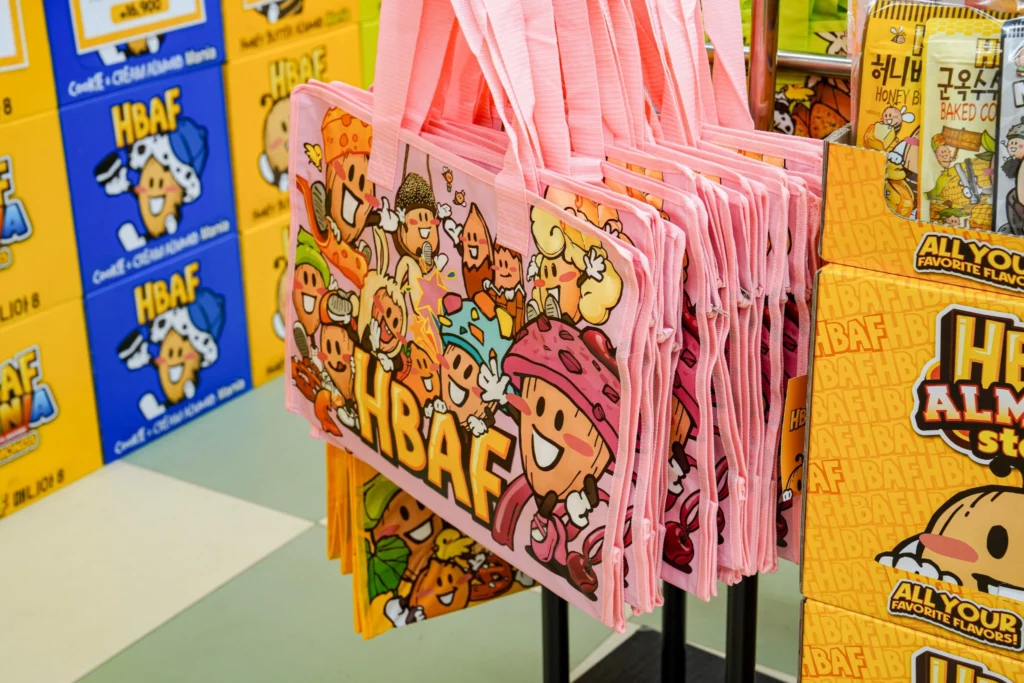
Sampling is encouraged. The Gwangjang Market store typically keeps several flavors open for tasting. Take full advantage — flavor preference is highly individual, and the difference between, say, Garlic Bread and Tteokbokki is significant enough that a sample will save you from buyer’s remorse.

Packaging sizes vary. Most flavors are available in small snack-sized bags (ideal for on-the-go tasting or adding to a gift set), standard 120g bags, and larger 190g bags. If you find a flavor you love, the larger bag represents considerably better value.
Variety packs exist. For those unable to decide, HBAF offers combination packs containing mini bags of multiple flavors. These are among the most popular purchases for visitors shopping for group gifts.
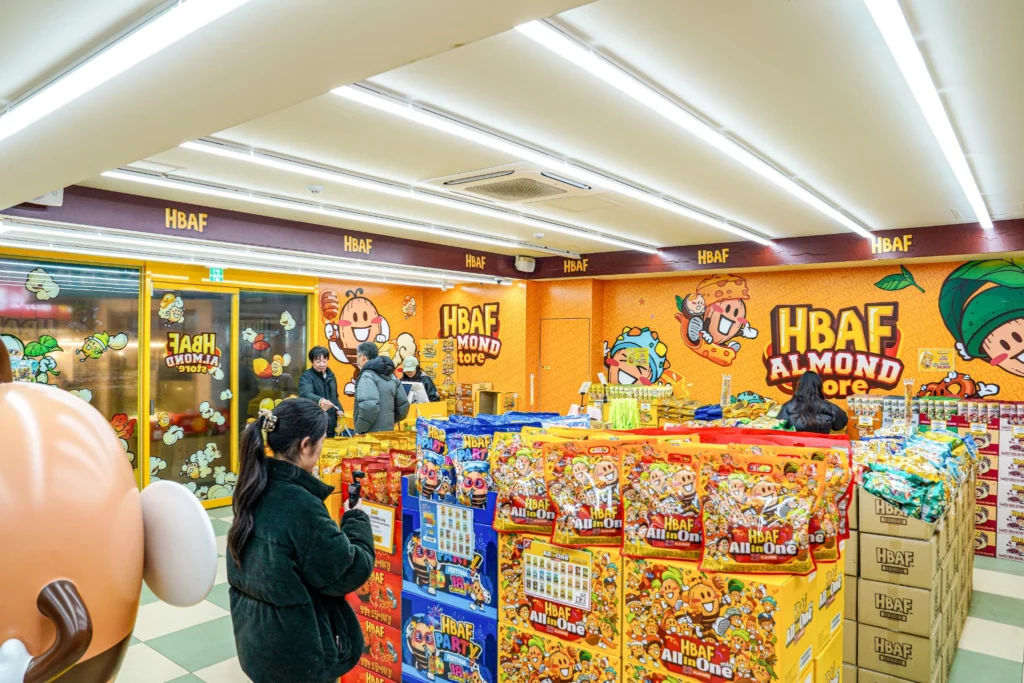
Storage and travel. HBAF almonds are shelf-stable and travel well. The packaging is airtight and relatively compact — a meaningful advantage when navigating carry-on luggage restrictions. Customs regulations vary by country, but processed packaged snacks of this type are generally accepted internationally. Confirm with your home country’s agricultural import rules before purchasing large quantities.
Korean dining etiquette note. Sampling before buying is considered perfectly normal and welcomed at HBAF stores. There is no pressure to purchase after tasting, and staff are generally accommodating of questions even if language barriers exist.
For context on what to expect more broadly from a Gwangjang Market visit — including the traditional foods that surround the HBAF store — this guide to the market’s top food spots provides essential context.
Beyond Almonds: Other Products at the Store
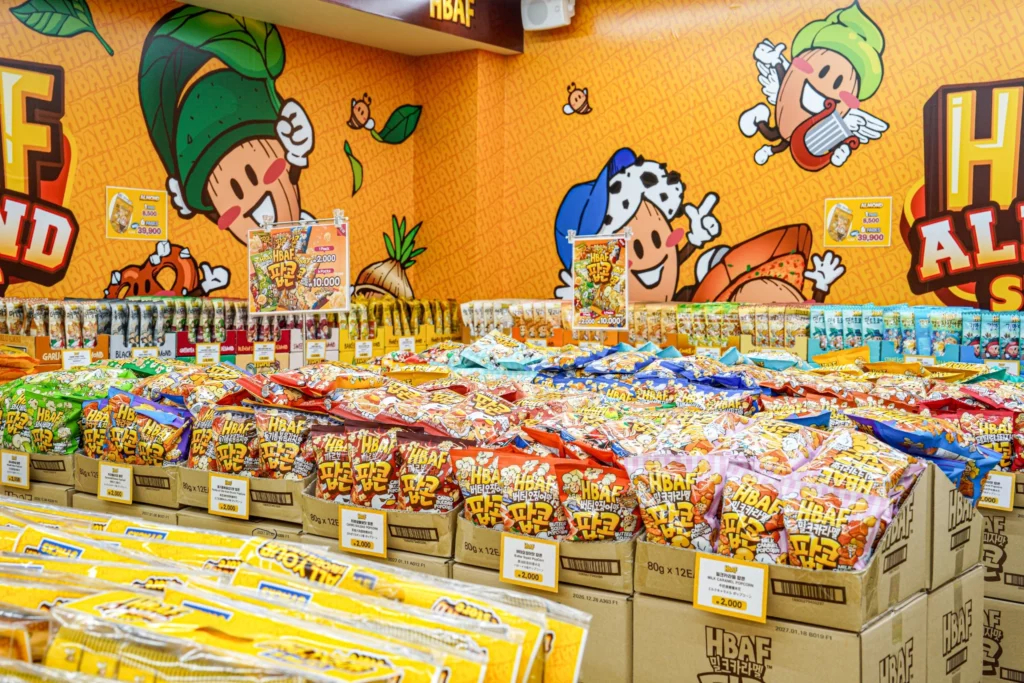
While flavored almonds are unquestionably the centerpiece, the Gwangjang Market HBAF branch also carries a selection of complementary Korean snack products.
Korean seaweed snacks (gim snacks) occupy their own display, offering the crispy, lightly seasoned sheets that have become one of Korea’s most successful snack exports globally. These are low-calorie, nutrient-dense, and widely loved even by visitors who have never tried Korean food before. If the Seaweed Almond piques your interest, sampling standalone gim snacks is a natural next step — Korean seaweed’s flavor, history, and everyday role in Korean meals goes far deeper than its packaging might suggest.
Cashew nuts in flavored varieties round out the nut selection, applying the same flavor-coating philosophy to a different base ingredient. The cashew versions tend to have a slightly creamier texture and carry sweet flavors particularly well.
HBAF malt balls — small chocolate-coated malt spheres available in flavors like injeolmi (roasted soybean powder) and cookies and cream — have grown into a secondary product line with their own following.
Practical Visitor Information
- Address: 88 Changgyeonggung-ro, Jongno District, Seoul, South Korea
- Nearest Station: Jongno 5-ga Station, Seoul Subway Line 1
- Hours: Generally 9:00 AM – 10:00 PM daily (verify before visiting)
- Price Range: Approximately ₩3,500–₩12,000 per bag depending on size and flavor
- Payment: Major credit cards accepted; cash also welcome
- Language: Basic English assistance available; product labels include English descriptions on most packaging
- Website: HBAF Official Store Information
For a broader itinerary around the Gwangjang Market area, Seoul Tourism Organization’s official resources offer neighborhood maps and multilingual visitor guides.
A Perfect Stop in a Perfect Market
The HBAF Almond Store at Gwangjang Market earns its reputation not through spectacle but through substance. In a market famous for dishes that have been refined over generations — the same bindaetteok recipes, the same mayak gimbap technique — HBAF represents a different kind of Korean food story: fast-moving, flavor-forward, and unexpectedly global in its ambitions.
Whether you leave with a bag of Honey Butter Almonds for the flight home, a selection of Seaweed and Tteokbokki flavors for curious friends, or simply an appreciation for how creative Korean snack culture has become, the shop rewards a visit. It takes approximately ten minutes to browse and sample. The flavors will stay with you considerably longer.
Planning a trip to Gwangjang Market? Share this guide with anyone in your group who is looking for the best Korean souvenirs to bring home — a single visit to the HBAF store solves most gift-shopping challenges in one stop.
Have you tried HBAF almonds before? Which flavor surprised you the most? Leave your thoughts in the comments below.
FAQ
What is the most popular HBAF almond flavor? Honey Butter Almond remains the brand’s best-selling and most widely recommended flavor for first-time buyers. Its balance of sweet and savory appeals broadly, and it is the flavor most closely associated with the brand’s identity.
Are HBAF almonds available outside Korea? Yes. HBAF products are stocked at many Asian grocery stores internationally and available through online retailers. However, the full flavor range and freshest stock are found at dedicated HBAF stores in Korea.
Where exactly is the HBAF store in Gwangjang Market? The store is located at 88 Changgyeonggung-ro, Jongno District, Seoul. It is accessible from Jongno 5-ga Station (Line 1) and sits within the market’s main ground-floor shopping zone.
Can you sample flavors before buying? Yes. Multiple flavors are typically available for tasting at the store counter. Sampling is encouraged and requires no purchase.
Location
HBAF Almond Store, Gwangjang Market, 88 Changgyeonggung-ro, Jongno-gu, Seoul, South Korea, KR
Reviews
5.0
0 reviews
5
0%
4
0%
3
0%
2
0%
1
0%
Loading reviews...

Restaurant
Durumi Bunsik at N Seoul Tower: Seoul's Most Scenic Korean Street Food Experience
Yongsan-gu, Seoul 105 Namsangongwon-gil,
5

cafe
Seonungak: Seoul's Most Majestic Traditional Hanok Cafe at Bukhansan Mountain
Gangbuk-gu, Seoul, Republic of Korea 260-6 Ui-dong
5

cafe
Bukhansan Mountain View Cafe: Your Perfect Post-Hike Retreat at Bukhansan Lounge
Gangbuk-gu, Seoul, Republic of Korea 260-11 Ui-dong
5

Korean Food
Korean Street Food Tteokbokki at Hwang Soon Ae in Seoul
Gwangjin-gu, Seoul, Republic of Korea 114-31 Junggok-dong
4