


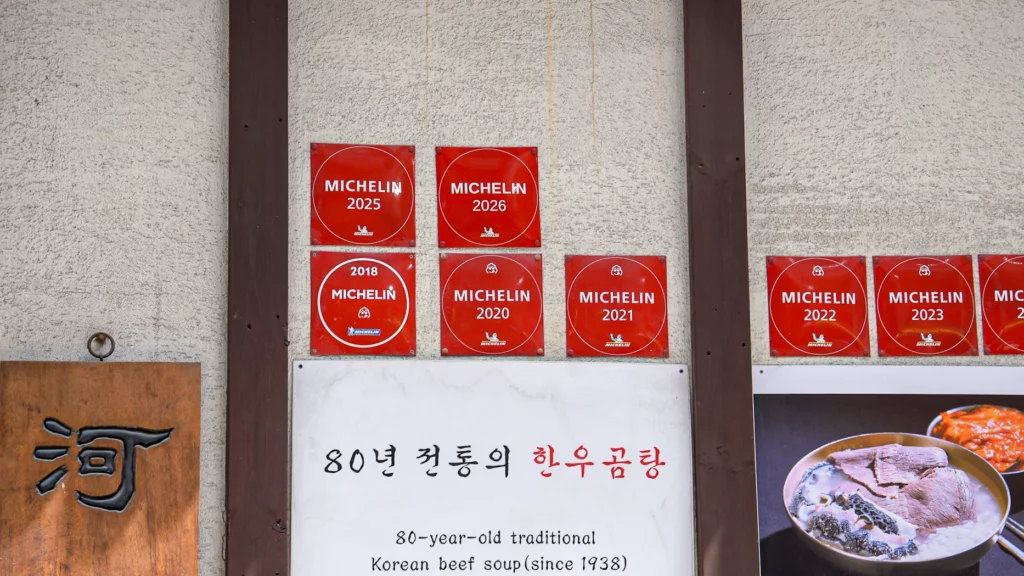
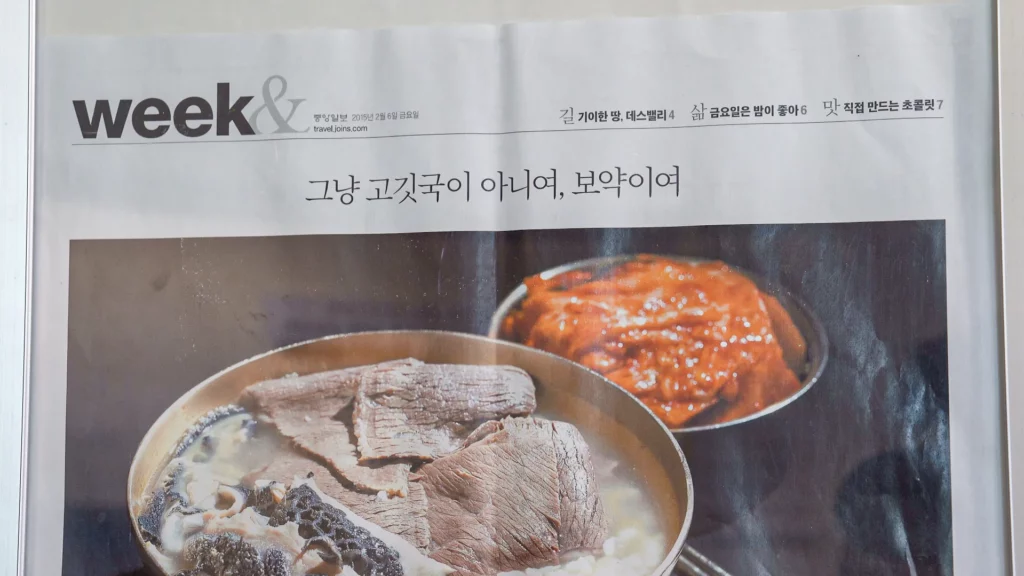
There is a particular kind of restaurant in Seoul that does not advertise, does not change, and does not need to. Hadongkwan (하동관), tucked into a narrow side street in the bustling heart of Myeongdong, is exactly that kind of place. Since 1939, this Michelin Bib Gourmand institution has been serving one thing — a clear, deeply savory bowl of Hanwoo beef gomtang (한우 곰탕) — and serving it almost exactly the same way for 80 years.
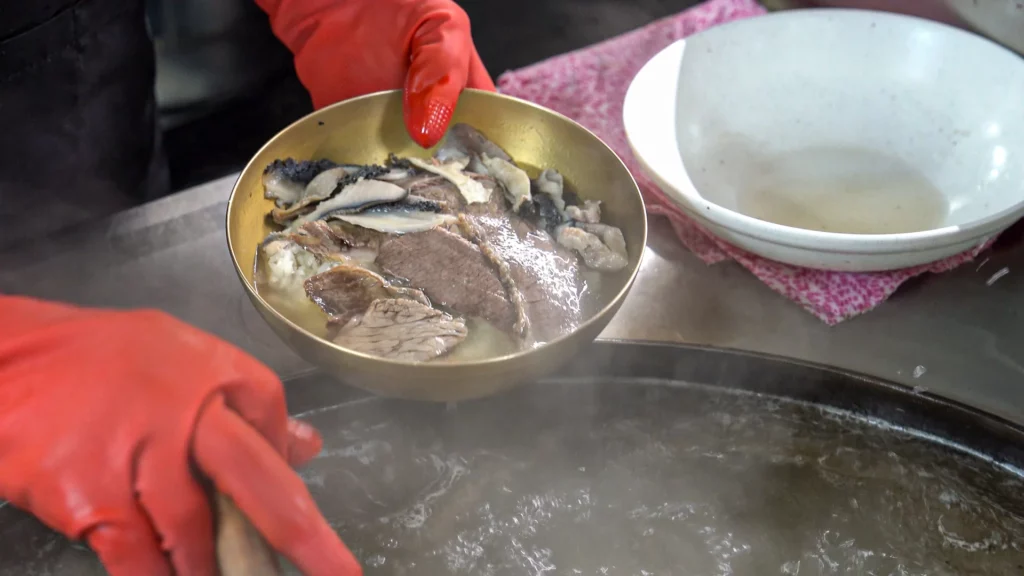
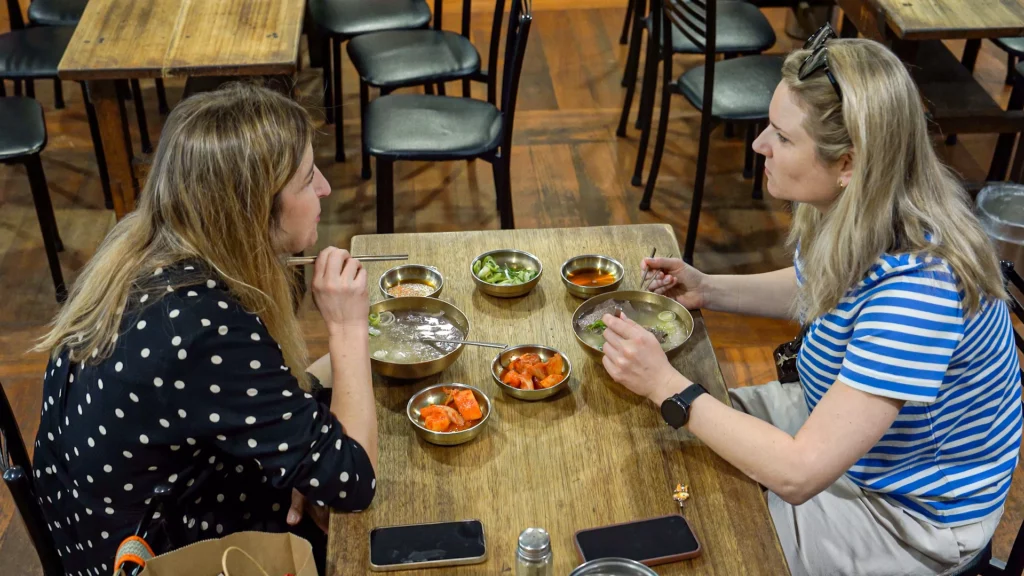
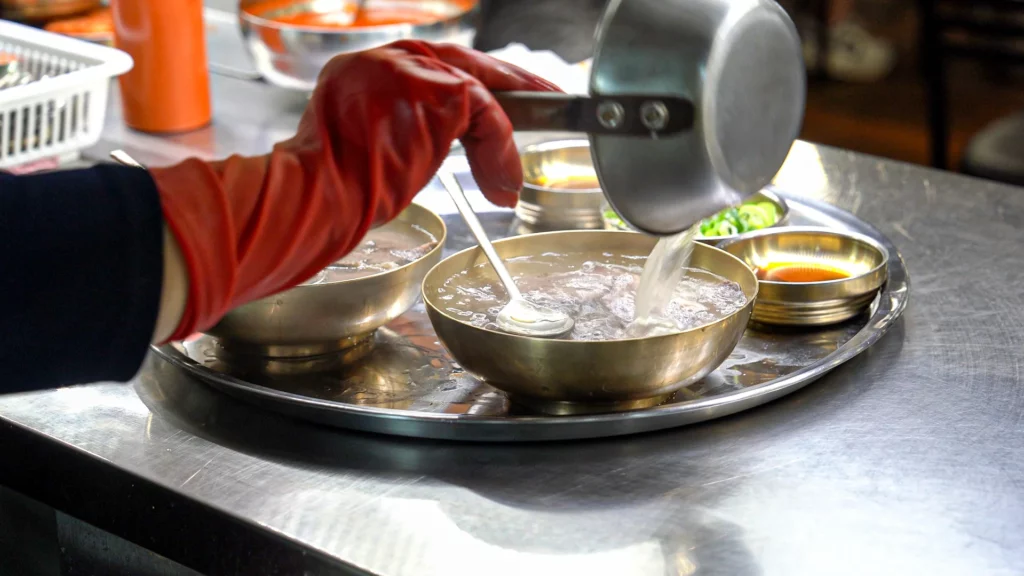
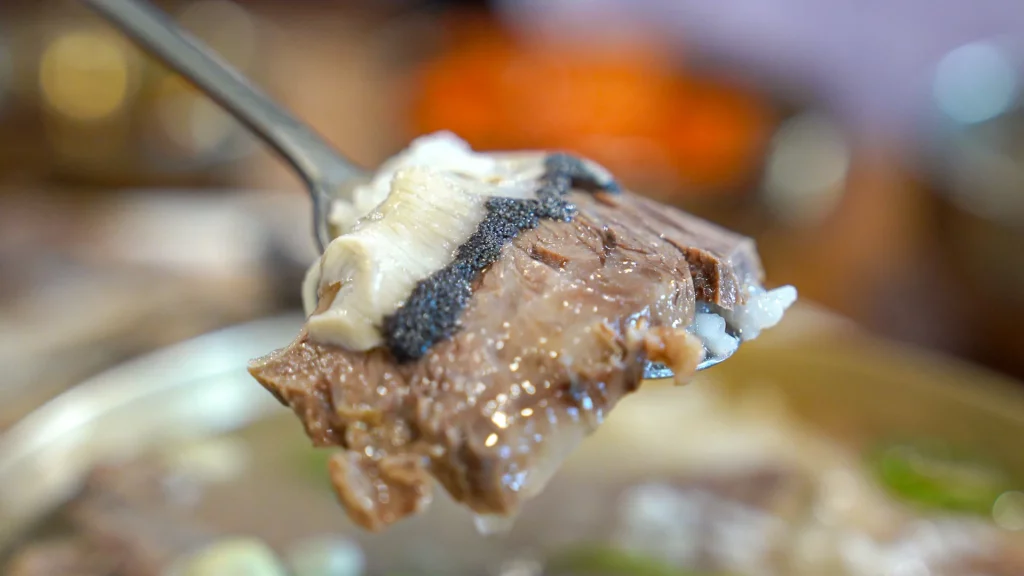
The first thing you notice when your bowl arrives is the vessel itself: a heavy, golden-hued brass bowl called bangjja yugi (방짜유기), hand-hammered from copper and tin alloy in a tradition once reserved for Korean royalty. Inside sits a clear amber broth, slices of brisket and offal, and rice already submerged in the soup — a service style centuries older than fast food. Aromatically, the broth is gentle and clean rather than rich; visually, it looks deceptively simple. Then you take the first spoonful, and you understand why this bowl has earned an entry in the MICHELIN Guide’s official directory and held it for years.
This is not celebration food. It is everyday Seoul comfort food, perfected — a hearty workingman’s breakfast elevated into a cultural landmark. Think of it as the Korean cousin of a perfect Parisian onion soup: humble in concept, transcendent in execution.
Hadongkwan Myeongdong: 80 Years of Michelin Hanwoo Beef Soup
Jung-gu, Seoul 12, Myeongdong 9-gil
Editor: James Lee


Overview
Introduction
Operating hours
Menu
Editor's Detail
Table of Contents
- What Makes Hadongkwan Myeongdong Special
- The Menu: Decoding the "Gong" System
- How to Order Like a Local: Customization Tips
- Local Eating Hacks: Toryeom and Kkak-guk
- What Makes This Dish Uniquely Korean?
- What Are the Key Ingredients That Create This Flavor?
- How Would You Describe the Taste and Spice Level?
- What Should First-Time Eaters Know?
- Crucial Tips for Tourists Visiting Hadongkwan
- Final Thoughts and How to Visit
What Makes Hadongkwan Myeongdong Special
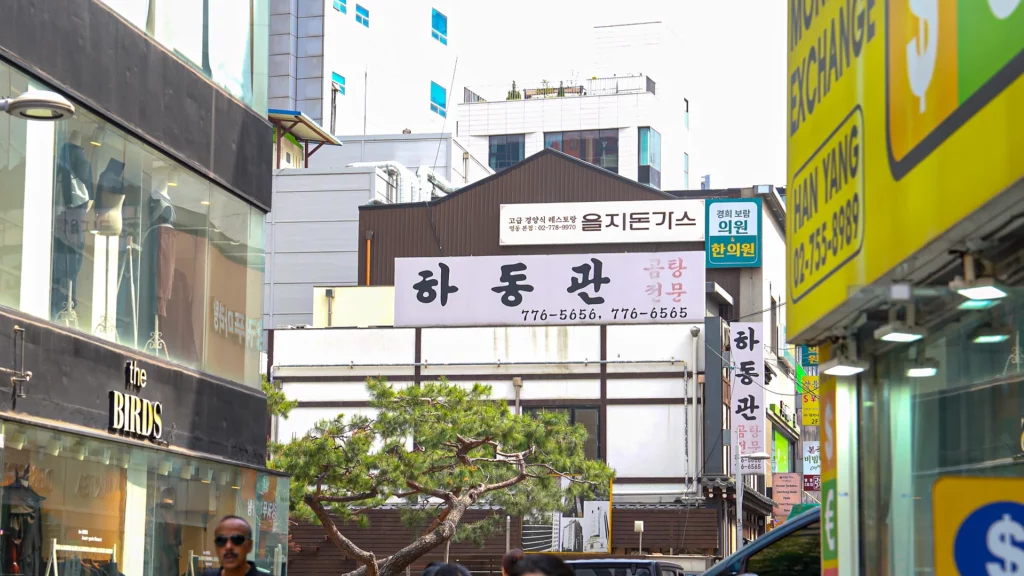
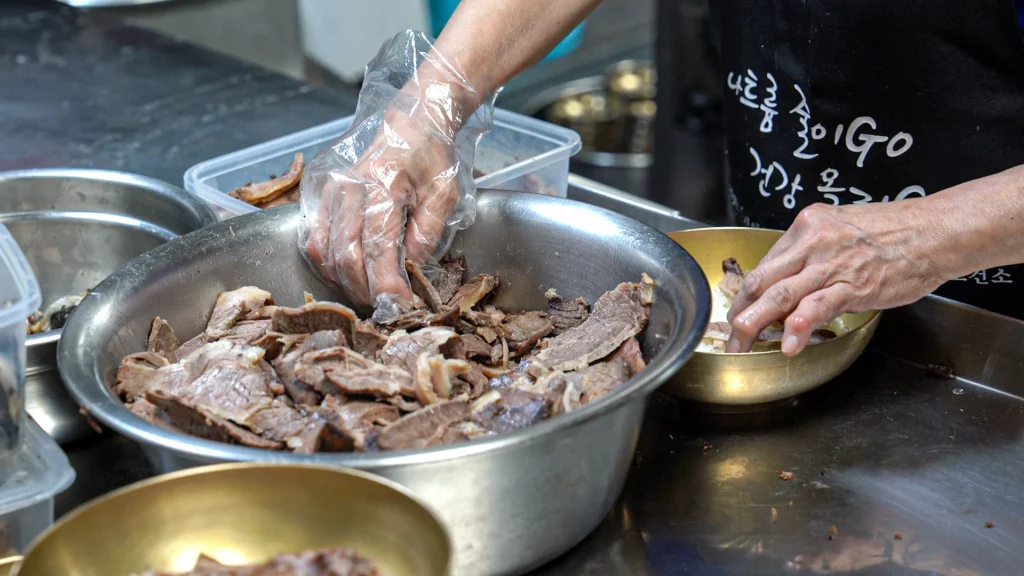
Hadongkwan was founded in 1939 by Kim Yong-taek and his wife Ryu Chang-hee on the banks of Cheonggyecheon stream in the old Suha-dong neighborhood. After decades, urban redevelopment in 2007 forced the restaurant to relocate to its current Myeongdong address, but the founders carefully preserved the old furniture, signage, and — most importantly — the recipe. The kitchen is now run by the third-generation owner, Kim Hee-young, whose family has guarded the same broth-making method since 1968.
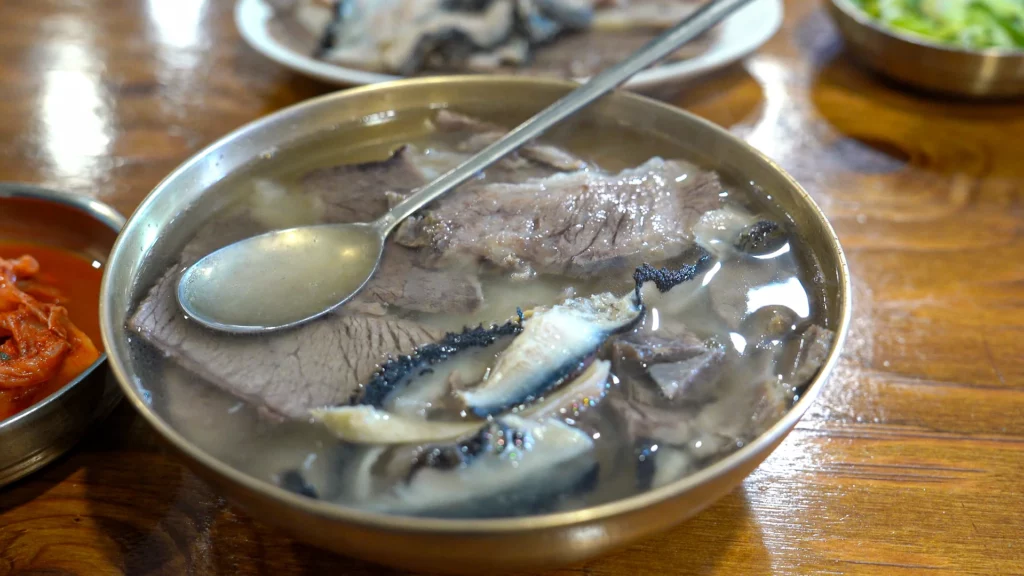
What the Michelin inspectors describe is a place defined by "unwaveringly consistent flavors" in a city that has otherwise transformed beyond recognition. Hadongkwan does not serve banchan beyond a single dish of sharp kkakdugi (깍두기) cubed radish kimchi. There is no tableside grill, no fancy plating, no English-language showmanship. The menu has, in essence, only one item — gomtang — and the staff move with the practiced efficiency of people who have done this every morning for half a century.
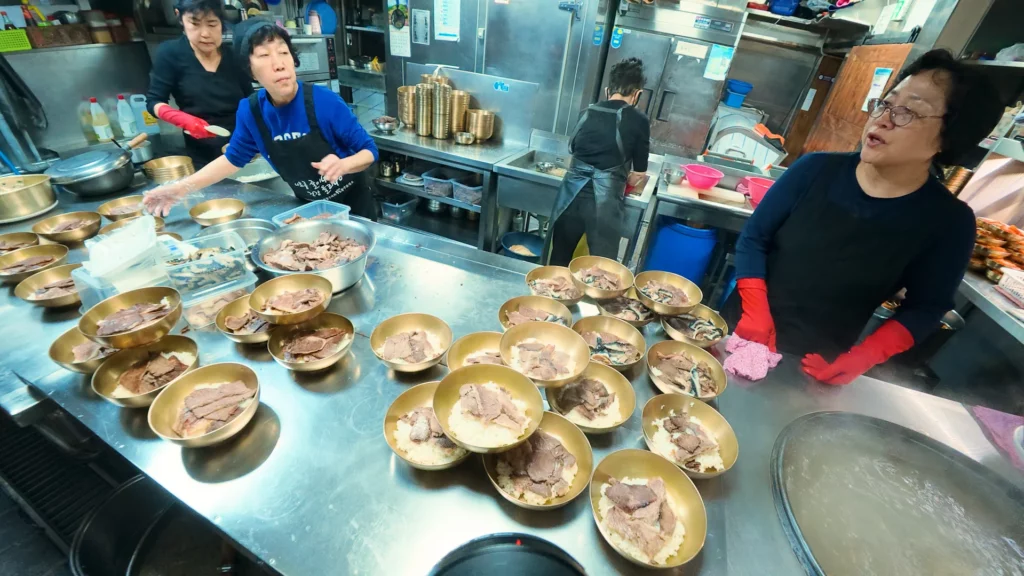
This restaurant is also famous for sourcing only domestic Korean Hanwoo beef — the prized indigenous cattle breed considered Korea’s culinary crown jewel. To understand exactly why Hanwoo commands such reverence among Korean diners, read our complete guide to Korean beef and the Hanwoo tradition. Every ingredient on the menu — from the cabbage in the kimchi to the gochugaru on the table — is sourced domestically, a fact proudly stated on the menu itself.
The Menu: Decoding the "Gong" System
Reading Hadongkwan’s menu can baffle a first-time visitor, because the prices are written into the names of the dishes. Here is what each option actually means:
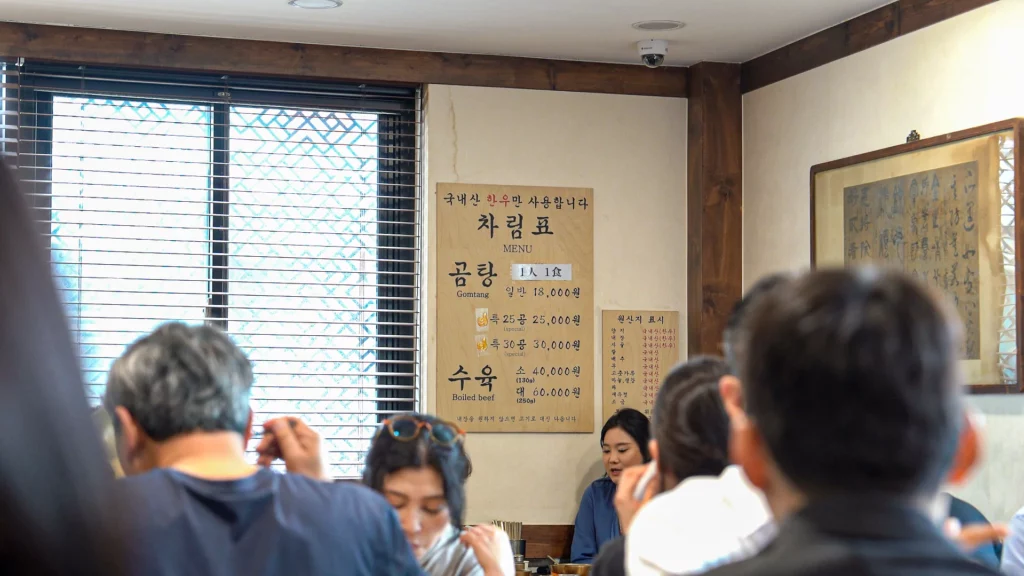
Menu ItemPriceWhat You Get
So (소) — Small
₩15,000
A smaller portion of basic gomtang, less meat
Botong (보통) — Regular
₩18,000
The standard bowl of brisket, offal, and rice
Teuk 25-gong (특 25공)
₩25,000
"Special" with extra meat — the most popular order
Teuk 30-gong (특 30공)
₩30,000
The most generous portion, abundant beef
The word "gong" (공) here simply refers to the price tier — historically a code derived from "thousand won," now used as menu shorthand. Higher numbers mean more meat, not a different broth. For most adult diners, the 25-gong is the recommended sweet spot, balancing portion size with reasonable price. Ordering "Teuk" or higher also unlocks free rice refills.
How to Order Like a Local: Customization Tips
Here is where Hadongkwan rewards visitors who have done their homework. The single most useful tip for foreign travelers is that this restaurant happily accommodates a "no innards" request — printed right at the bottom of the menu in both Korean and English.
If beef intestines (gopchang/곱창) and tripe (yang/양) are not your thing, simply say:

"Gogi-man juseyo" (고기만 주세요) — "Only meat, please"
The kitchen will swap the offal for additional brisket. This is one of the few traditional gomtang houses in Seoul that openly welcomes this customization, making it surprisingly approachable for first-time international diners.
Other useful phrases at the table:
- "Ppa-juseyo" — Skim the surface fat for a cleaner broth
- "Tteugeopge" — Serve it extra hot (it traditionally arrives at a milder ~70°C)
- "Pa mani juseyo" — Lots of green onions, please
The chopped scallions are a non-negotiable garnish. Korean diners almost always heap a generous spoonful into the soup, where the daepa (대파) — Korean green onion releases its sweet, aromatic punch into the hot broth. If you want to understand why this allium is so central to Korean cooking, our guide to Korean green onion (daepa) and its role in Korean cuisine explains the difference between Korean varieties and Western scallions.
Local Eating Hacks: Toryeom and Kkak-guk
Two unique Korean techniques define the Hadongkwan experience.
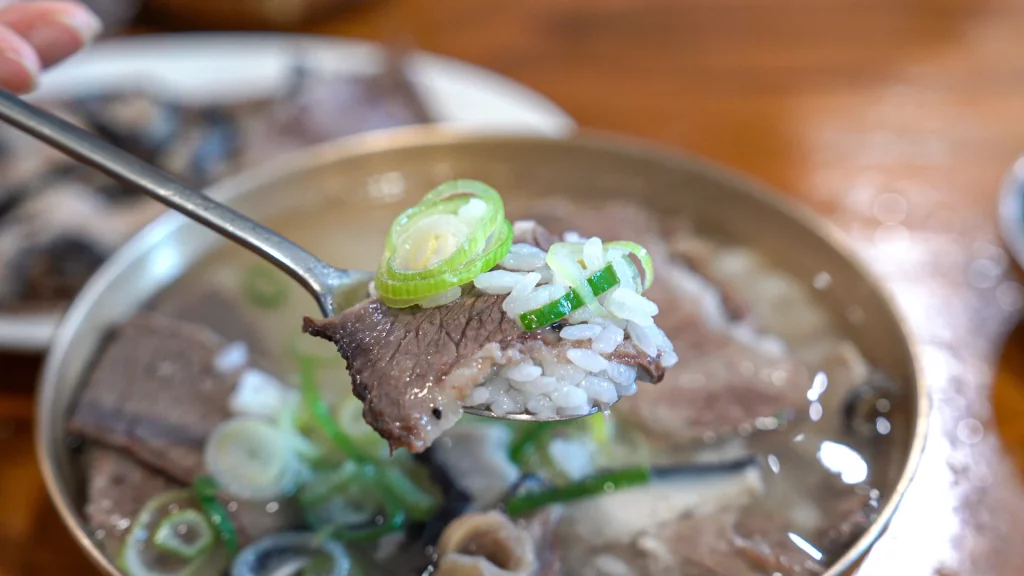
The first is toryeom (토렴), the centuries-old method of pre-soaking cooked rice in hot broth before it reaches the table. This is why your gomtang arrives with rice already submerged — not soggy, but warmed through and seasoned by the broth. Toryeom predates modern refrigeration; it was the original Korean fast food, designed to deliver a piping-hot meal the moment a traveler sat down.
The second is the legendary kkak-guk (깍국) — the secret weapon of Hadongkwan regulars. About halfway through your meal, ask the server for "kkakdugi gukmul" (깍두기 국물) — the tangy, slightly sweet brine from the radish kimchi sitting on your table. Pour a few spoonfuls directly into your gomtang and watch the entire flavor profile transform. The acidic kick cuts through the broth’s richness, brightens the meat, and adds a refreshing layer of complexity. Many longtime customers consider this combination the soup’s "true" final form, and the staff often joke that the kkakdugi brine is "soup-medicine."
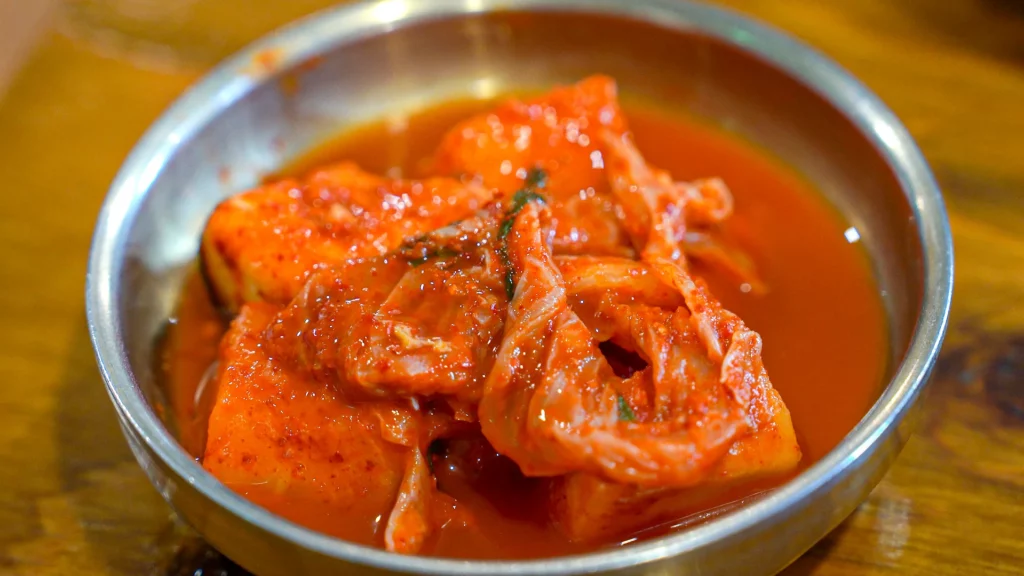
This explains why Hadongkwan serves only kkakdugi — the cubed radish kimchi — rather than the more familiar napa cabbage version. To understand how this radish kimchi is made and why it pairs so well with rich beef broths, see our complete guide to kimchi and Korea’s fermented superfood traditions.
What Makes This Dish Uniquely Korean?
Gomtang (곰탕) is one of Korea’s oldest soup traditions, with documented references going back to the Joseon Dynasty, when it was served to royalty for its nourishing properties. Unlike Western beef stocks — which are typically simmered briefly to produce a clear, amber consommé — Korean gomtang is built through hours of patient, gentle simmering of brisket, shank, and beef bones. The result is a broth that is paradoxically clean and deeply savory at the same time.
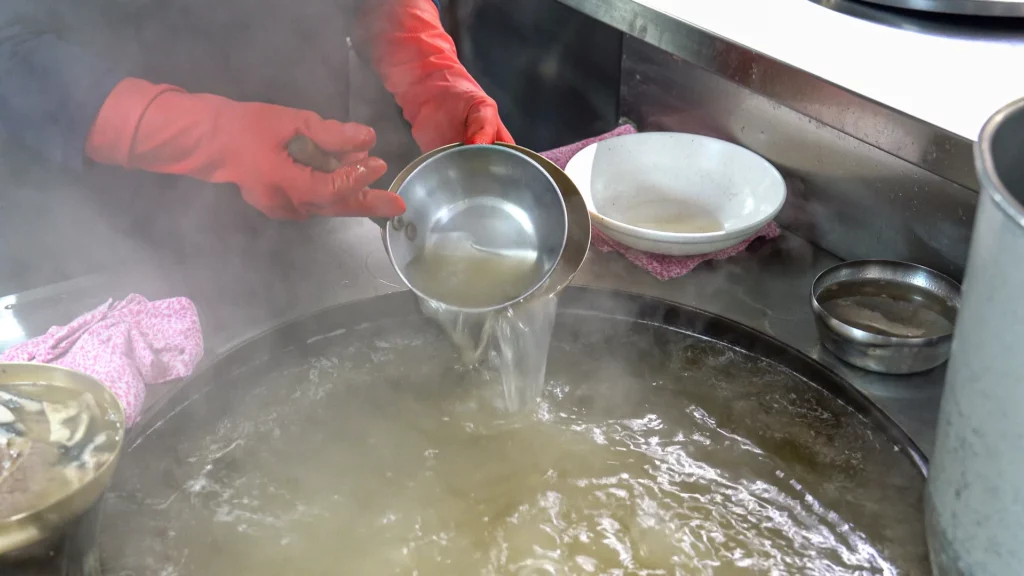
What makes Hadongkwan’s version distinctly Seoul-style is its clarity. Unlike the milky-white seolleongtang (설렁탕) that uses heavy marrow bones for a rich, opaque finish, Seoul-style gomtang prizes a transparent, almost golden broth that lets the quality of the Hanwoo speak for itself. For a deeper look at how this milky-white cousin is produced through repeated long boils, our guide to making Korean beef bone broth (sagol-gukmul) at home covers the technique step by step.
What Are the Key Ingredients That Create This Flavor?
Three ingredients define the Hadongkwan bowl:
- Hanwoo beef (한우) — Korea’s indigenous cattle breed, known for its delicate marbling and clean, slightly sweet flavor. Hadongkwan uses brisket (양지), tripe (양), and intestines (곱창), each contributing different textures and depths of flavor. Nutritional highlight: Hanwoo brisket is high in protein and rich in collagen released during long simmering. Sourcing tip: Available at premium Korean butchers and H Mart locations abroad.
- Korean green onion / daepa (대파) — The thick-stalked Korean leek that mellows when added to hot broth. Flavor profile: Sweet, aromatic, clean. Health note: Rich in vitamin C and allicin compounds traditionally believed to boost immunity.
- Korean radish / mu (무) — Used both to clarify the broth during simmering and as the base of the kkakdugi kimchi served alongside. Nutritional highlight: Loaded with digestive enzymes that complement rich beef dishes. The lacto-fermented kkakdugi additionally provides beneficial probiotics — a hallmark of Korean fermented foods that develop umami and aid digestion.
How Would You Describe the Taste and Spice Level?
Spice level: 1 out of 10. Gomtang is one of the gentlest dishes in Korean cuisine — there is no chili, no gochujang, no fermented bean paste in the broth itself. It is genuinely accessible to spice-averse diners, including children and elderly travelers.
The primary flavor notes are clean umami, gentle sweetness from the long-simmered beef and radish, and a faint mineral richness. The broth is intentionally under-salted at the table — Hadongkwan provides salt and freshly chopped scallions so each diner can adjust to taste. The kkakdugi alongside provides the only real punch of acidity and mild heat.
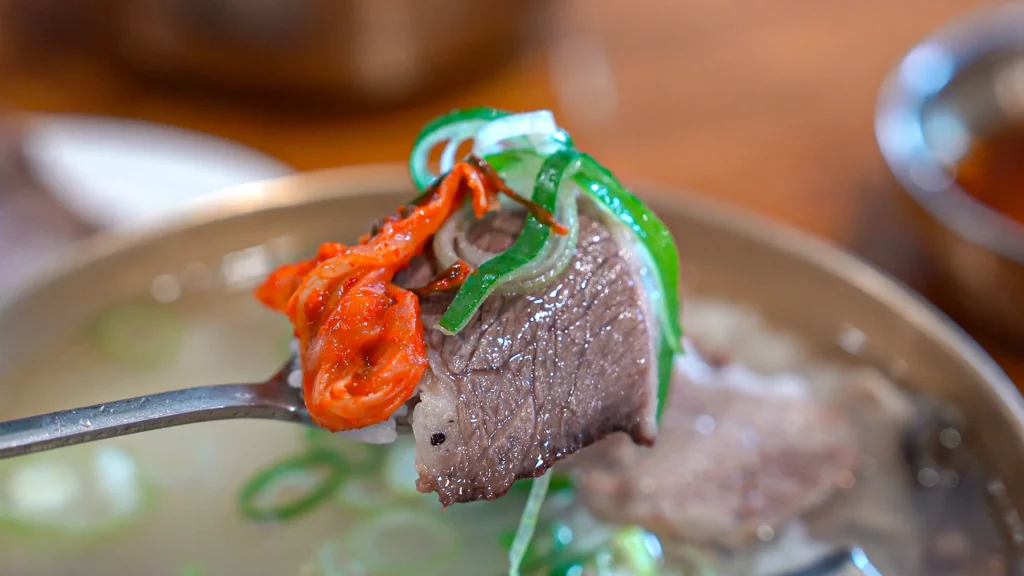
The texture is soft and warming. The brisket arrives in tender slices, the rice is already broth-soaked, and the soup is served at a moderate 70°C (158°F) — warm rather than scalding, a deliberate Korean preference designed to let you eat without waiting.
What Should First-Time Eaters Know?
A few cultural notes will smooth the experience considerably:
The proper eating sequence at Hadongkwan goes like this. First, taste the broth on its own — a few spoonfuls before adding anything. Then add a generous handful of chopped scallions and a small pinch of salt. Take a few bites of brisket. Around halfway through, request the kkakdugi juice and pour it in for the kkak-guk transformation. Eat the rice and remaining meat together with the now-tangier broth.

The only banchan is the kkakdugi, served on the table. There will be no parade of side dishes here. This minimalism is part of the experience — Hadongkwan is unapologetically a single-dish specialist, much like the buckwheat-noodle institution Mijin in Pimatgol or the historic Tosokchon Samgyetang near Gyeongbokgung, where decades of focus on one dish produce a depth no broad menu can match.
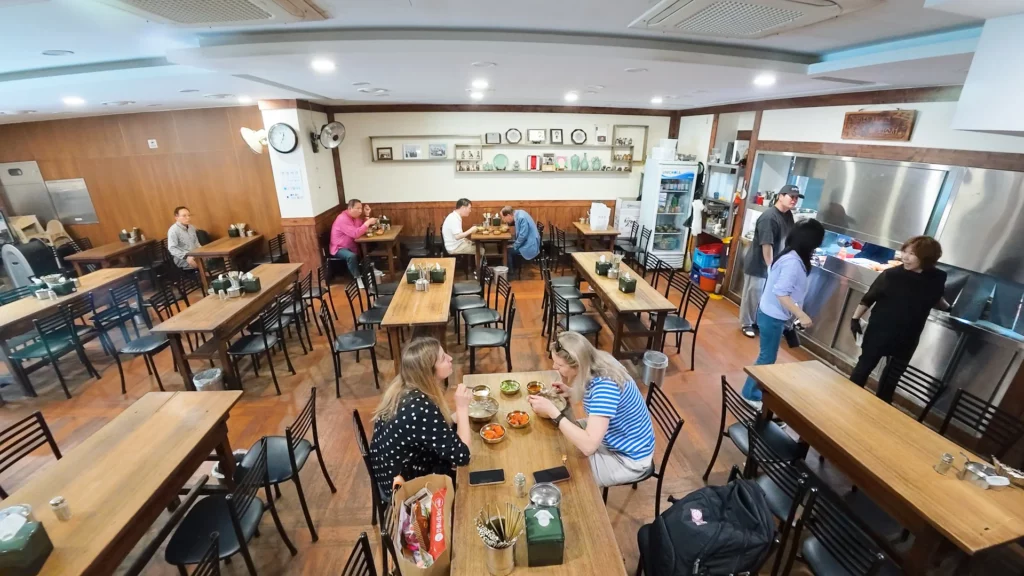
The dining etiquette is casual but efficient. Hadongkwan turns tables quickly during peak hours. It is perfectly normal to share tables with strangers during lunch rush, and lingering after finishing your meal is gently discouraged. The atmosphere is workmanlike rather than romantic — this is breakfast for office workers, not date-night dining.
Crucial Tips for Tourists Visiting Hadongkwan
A few practical points can make or break your visit:
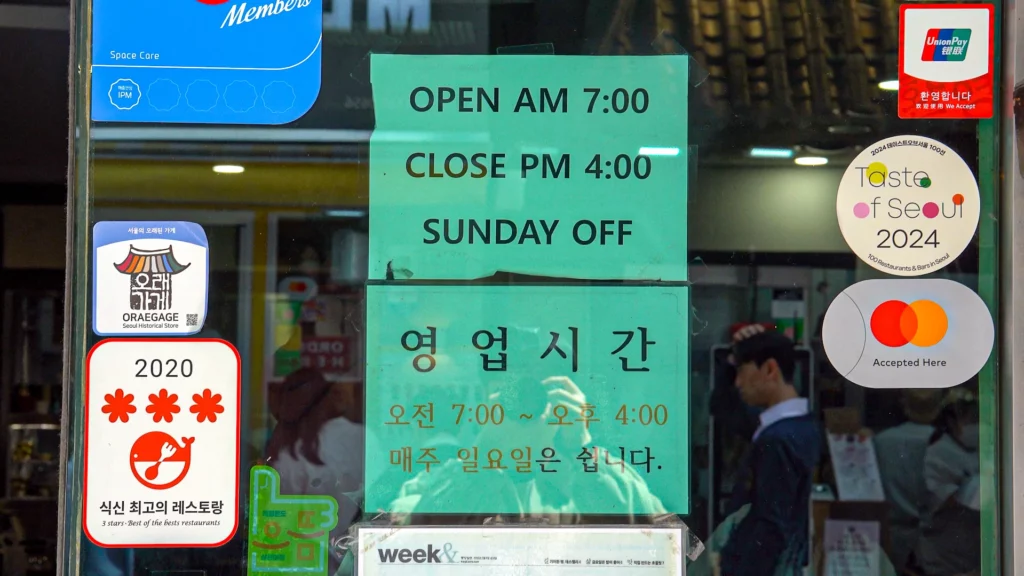
Hours: 7:00 AM – 4:00 PM, Monday through Saturday. Closed Sundays. Hadongkwan does not serve dinner — full stop. Plan it as a hearty breakfast or an early lunch.
Closes when the soup runs out. Once the daily batch is finished, the doors close, sometimes well before 4:00 PM. Arrive earlier rather than later — ideally before 11:30 AM or after 1:30 PM to avoid both lunch crowds and the risk of an empty pot.

Pay upfront. This is a defining quirk. As you walk in, head straight to the counter, place your order, pay in cash or by card, and receive a paper ticket. Hand the ticket to the staff at your table. No tipping — Korean restaurants do not practice tipping culture.

The location: 12 Myeongdong 9-gil, Jung-gu, Seoul (서울 중구 명동9길 12). The restaurant is a 5-minute walk from Euljiro 1-ga Station (Line 2, Exit 5) or Myeongdong Station (Line 4, Exits 7 or 8). While exploring the neighborhood, you can easily combine your meal with a stop at Myeongdong Hamburger Toast — the legendary three-generation breakfast vendor or Mipojip’s traditional hot pot rice on the same street.
Reservations are not accepted. Walk-in only. Wait times average 15–20 minutes during peak hours but move quickly thanks to high turnover.
Takeaway is available if you want to bring a bowl back to your hotel — bring your own container to save on packaging fees.
For broader context on Korean dining customs, the Korea Tourism Organization’s official guide to Korean food culture is a useful resource for first-time visitors.
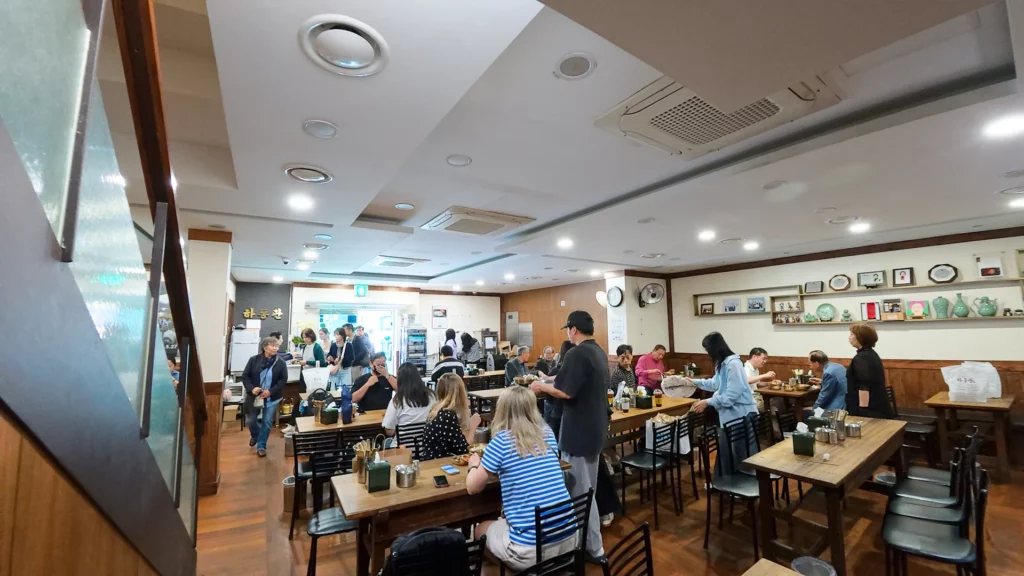
Hadongkwan is not the trendiest, the most photogenic, or the most accommodating restaurant in Seoul. What it is — and has been since 1939 — is a true cultural anchor in a city that rebuilds itself every decade. Stepping inside is, in a very literal sense, stepping into the same room that fed factory workers, civil servants, and bankers in the 1940s, 1960s, and 1990s, all eating the same bowl, prepared the same way, served in the same heavy brass dish.
Order the 25-gong, ask for "only meat" if you prefer it without offal, throw in plenty of green onions, and pour in the kkakdugi juice halfway through. You will leave with a full stomach, an empty wallet that is lighter by about ₩25,000, and a genuine sense of having eaten something that ties you to nearly a century of Seoul’s quiet culinary continuity.
If you are building a Seoul itinerary that goes beyond the obvious tourist beats, plan an early morning visit to Hadongkwan and experience the depth of 80-year-old Seoul flavor right in the middle of Myeongdong. Share this guide with anyone planning a Korean food itinerary — and let them in on the kkak-guk secret too.
Did you find this guide helpful? What part of the Hadongkwan experience are you most curious about?
Location
Reviews
5.0
0 reviews

Neungdong Minari Seongsu: Minari Gomtang Guide
Seongdong-gu, Seoul 42 Yeonmujang-gil,

Sonsuheon: Best Korean Restaurant in Incheon Airport?
271 Gonghang-ro, Jung-gu, Incheon West Side (Public Area), 4th Floor, Incheon Airport Terminal 1 (T1)

Jayeon NATURE: Best Incheon Airport Korean Restaurant
272 Gonghang-ro, Jung-gu, Incheon Terminal 1, 4F

Chowon Korean BBQ: Gangnam's Hidden Gem for Marinated Sirloin and Premium Beef Tongue
Gangnam-gu, Seoul, Republic of Korea 62-3 Nonhyeon-dong