


There is a small stall near the entrance of Gwangjang Market (광장시장) in Seoul where a line forms every single morning, sometimes before 11 AM. The draw is not just tteokbokki — Korea’s beloved spicy rice cake street food — but a version unlike any other in the city. At Gangga-ne Tteokbokki (강가네 떡볶이), shredded radish replaces water as the liquid base, producing a broth that is simultaneously sweeter, cleaner, and more complex than anything a plain water-and-gochujang sauce can achieve. It is a small, quiet technique that makes an enormous difference in the bowl. This guide covers everything a first-time visitor needs to know: what to order, when to arrive, how to eat it, and why this particular stall has earned its place among Seoul’s essential street food experiences.
Gangga-ne Tteokbokki: Seoul's Must-Try Radish Tteokbokki
Seoul, South Korea 88 Changgyeonggung-ro, Jongno-gu
Editor: James Lee


Overview
Introduction
Operating hours
Menu
Editor's Detail
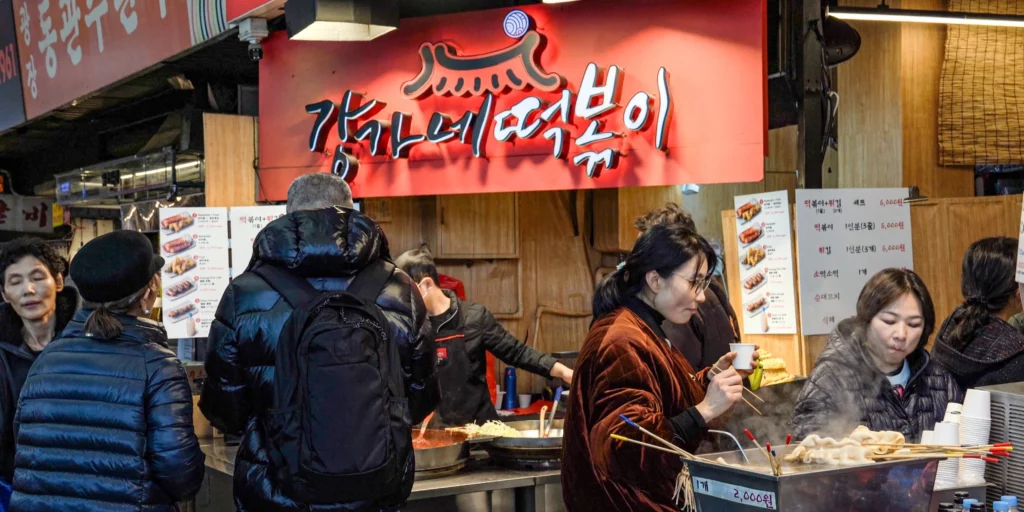
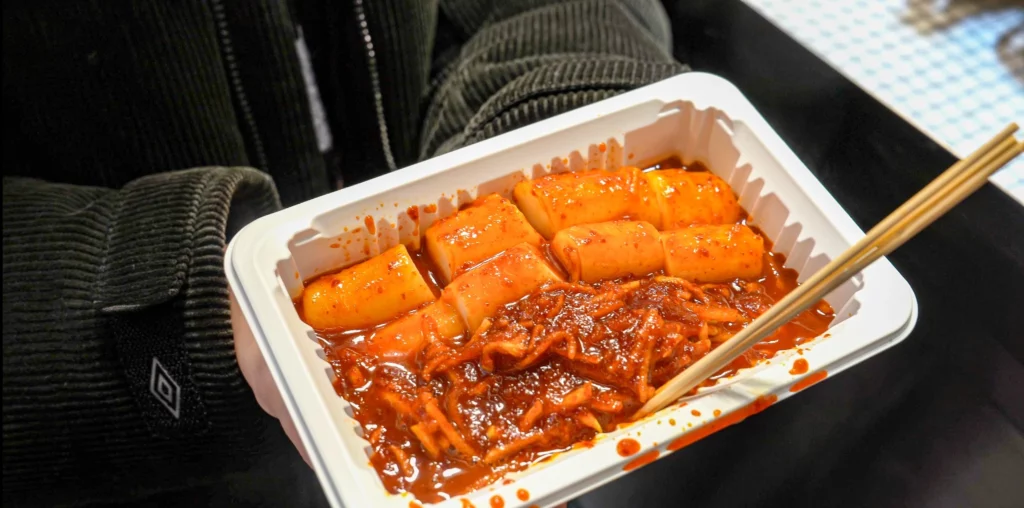
There is a small stall near the entrance of Gwangjang Market in Seoul where a line forms every single morning, sometimes before the stall has even fully set up. The draw is not just tteokbokki (떡볶이) — Korea’s beloved spicy rice cake street food — but a version unlike any other in the city. At Gangga-ne Tteokbokki (강가네 떡볶이), shredded radish (mu-chae, 무채) replaces water as the liquid base for the sauce, producing a broth that is simultaneously sweeter, cleaner, and more layered than anything a standard water-and-gochujang approach can achieve. The cylindrical rice cakes arrive glistening in a thick, deep-red sauce, the steam carrying notes of garlic, Korean chili, and a subtle natural sweetness that is unmistakably the radish working its quiet magic. It is a dish that rewards patience — the queue is real — and delivers on every expectation.
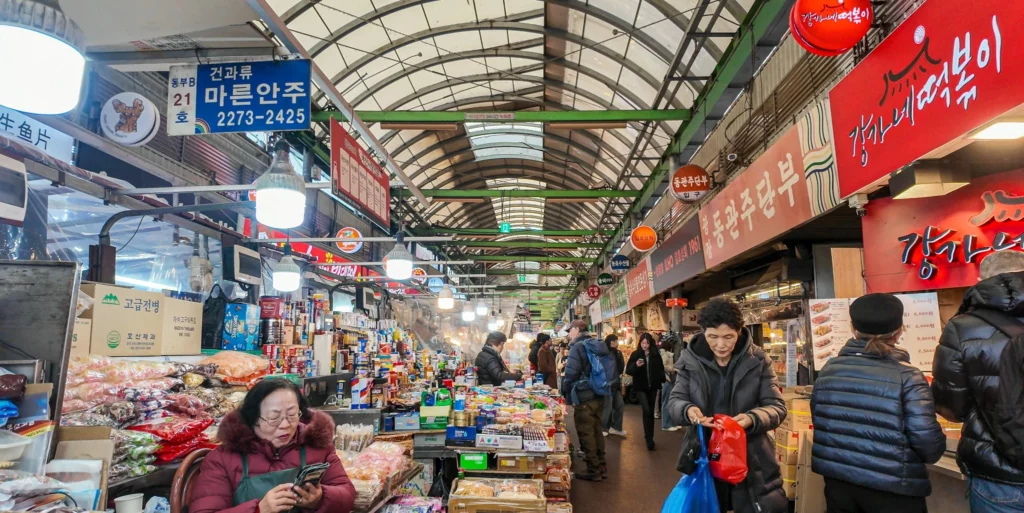
This guide covers everything: what makes this preparation unique, which menu items are worth ordering, when to visit, and how to navigate the market for a complete Gwangjang experience.
Table of Contents
- What Is Mu-chae Tteokbokki and Why Does It Matter?
- Three Key Ingredients That Define This Bowl
- The Full Menu at Gangga-ne Tteokbokki
- What Makes This Dish Uniquely Korean?
- What Are the Key Ingredients That Create This Flavor?
- How Would You Describe the Taste and Spice Level?
- What Should First-Time Eaters Know?
- Practical Visitor Information: Hours, Location, and Tips
- Beyond Tteokbokki: The Wider Gwangjang Market Experience
- Bring the Flavor Home
What Is Mu-chae Tteokbokki and Why Does It Matter?
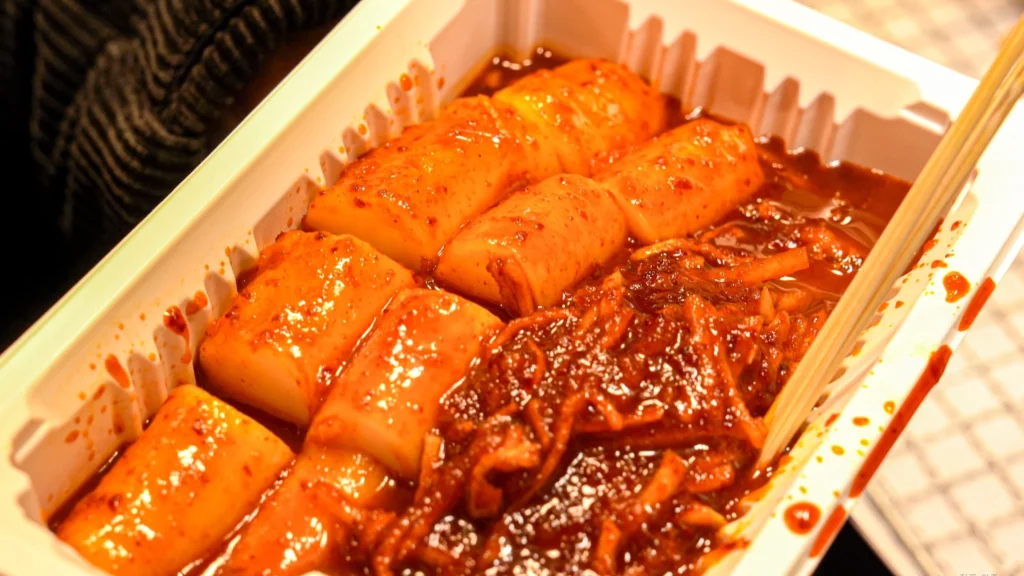
Tteokbokki (떡볶이) is one of Korea’s defining street foods: thick, cylindrical rice cakes simmered in a sauce built on gochujang (Korean fermented chili paste), gochugaru (red pepper flakes), garlic, and a touch of sweetness. The dish has roots in the Joseon Dynasty royal court — where it was a refined, soy sauce-based preparation known as gungjung tteokbokki — before transforming in the 1950s into the fiery, crowd-pleasing street food Koreans know and love today. You can read the full cultural journey of this dish in the complete Korean rice cake guide on this site.
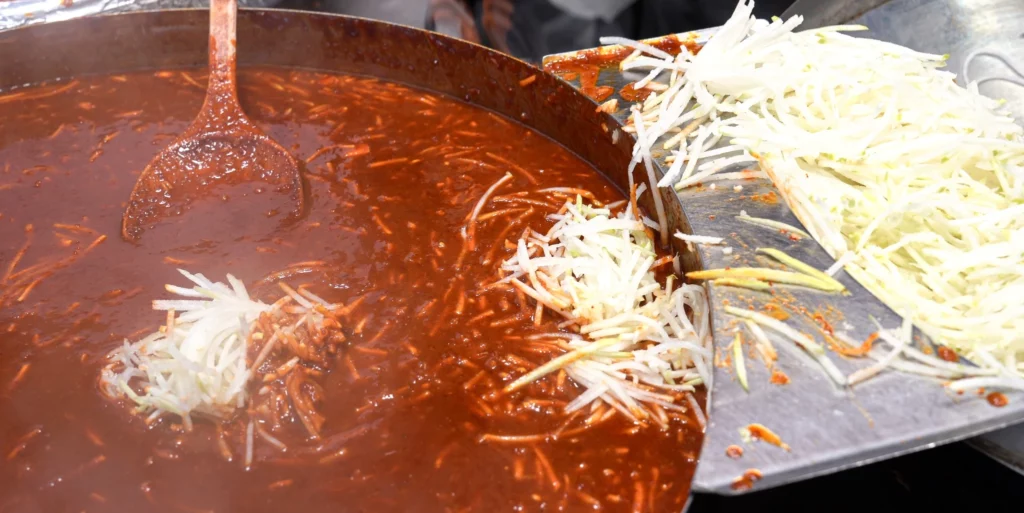
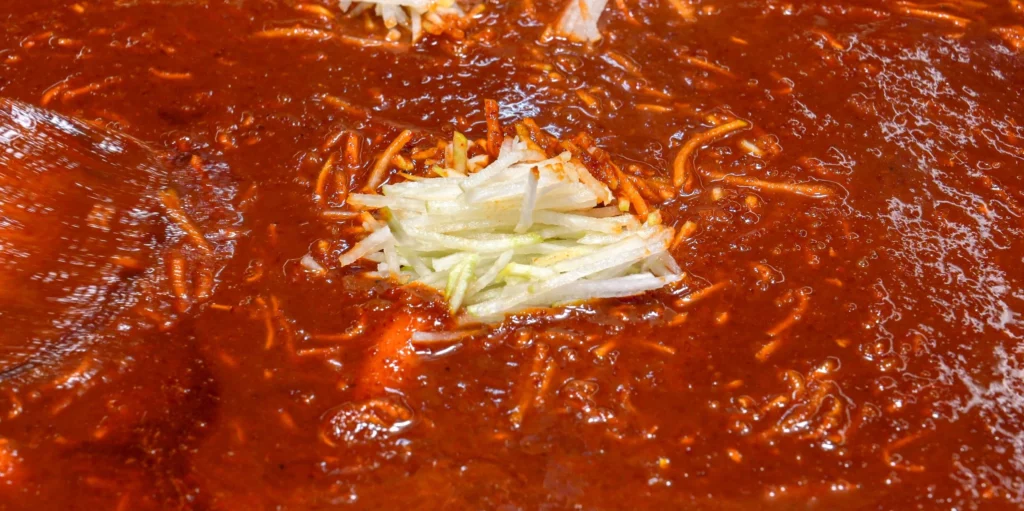
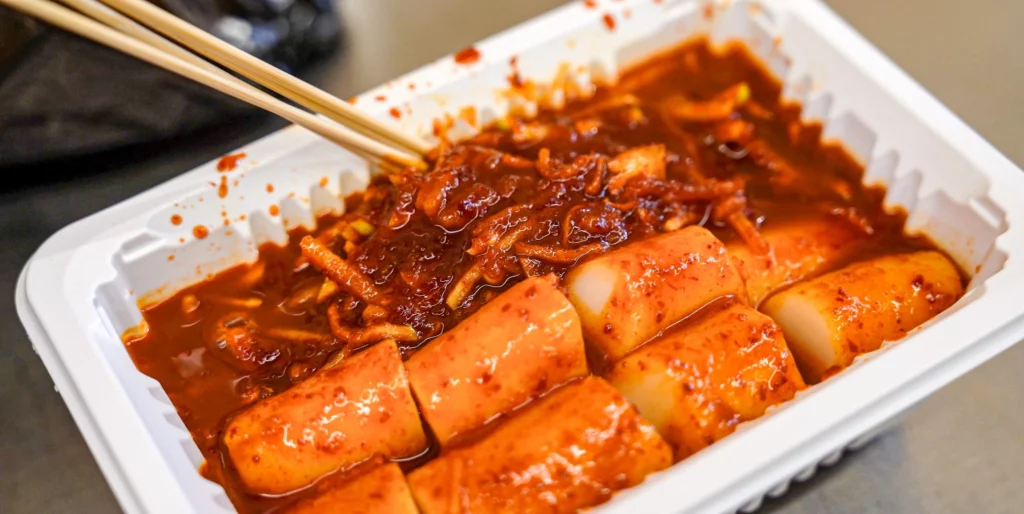
What Gangga-ne (강가네) does differently is the broth itself. Most vendors — and most home cooks — build their tteokbokki sauce by dissolving gochujang and other seasonings in water or a basic anchovy stock. Gangga-ne instead cooks the sauce using an extraordinary quantity of shredded radish (무채, mu-chae), reportedly around 40 whole radishes per batch. As the radish cooks slowly over low heat, it releases its natural moisture, natural sugars, and a mild peppery sweetness directly into the sauce. The result is a broth that is richer, slightly more viscous, and noticeably more complex than a water-based equivalent. It also carries a characteristic "siwonham" (시원함) — a Korean concept roughly translating to clean, refreshing depth — that sets this tteokbokki apart in a city full of excellent versions.
This approach is closer to traditional Korean cooking philosophy than it might first appear. Korean cuisine has long favored building flavor through ingredients rather than shortcuts, and using produce to create stock — rather than water — reflects a deeply ingrained instinct toward layered, natural taste.
Three Key Ingredients That Define This Bowl
Understanding what goes into Gangga-ne’s tteokbokki helps explain why it tastes the way it does. Rather than listing every component, here are the three most distinctive elements:
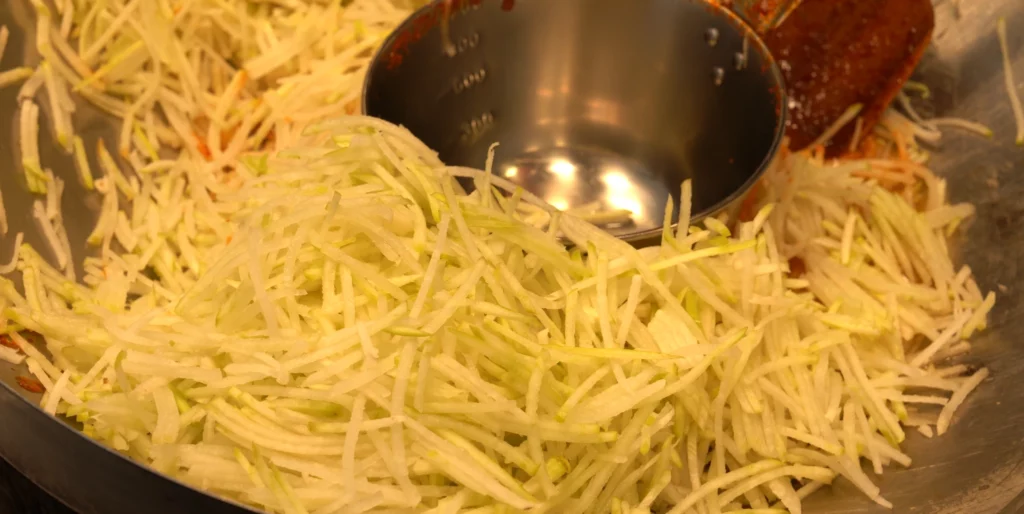
- Mu (무, Korean radish): The defining ingredient. Korean radish is milder, denser, and sweeter than the peppery Japanese daikon it resembles. When shredded and cooked low and slow, it dissolves into the sauce, contributing natural sweetness and a clean, rounded depth. It also provides a subtle aroma that water simply cannot replicate. Korean radish is available at Asian grocery stores worldwide and is a wonderful ingredient to explore in your own cooking.
- Gochugaru (고추가루, Korean red pepper flakes): Rather than leaning heavily on gochujang paste, Gangga-ne’s sauce is built significantly on gochugaru — coarsely ground, sun-dried Korean chili flakes that deliver a fruity, slightly smoky heat. Unlike generic chili flakes, gochugaru has a characteristically Korean flavor profile: warm and moderately spicy, with a natural sweetness that keeps the heat from becoming harsh. The sauce is also aged with garlic, which amplifies the chili aroma and adds savory depth. Learn more about how gochujang and gochugaru differ and when each is used.
- Garaetteok (가래떡, cylindrical rice cakes): The ssal-tteok rice cakes used here are made from non-glutinous rice flour and have a dense, satisfyingly chewy texture. Because Gangga-ne cooks its tteokbokki over a low, gentle flame — necessary to keep the radish from becoming mushy — the rice cakes absorb the sauce slowly, developing a deep, uniform flavor all the way through rather than just on the surface. The result is a rice cake that is both tender and noticeably chewy, with the sauce clinging to every centimeter.
The Full Menu at Gangga-ne Tteokbokki
The menu is short, focused, and remarkably affordable. Everything is priced between approximately ₩2,500 and ₩6,000, reflecting the honest, no-frills spirit of Gwangjang Market street food.
Menu ItemKorean NameApprox. Price
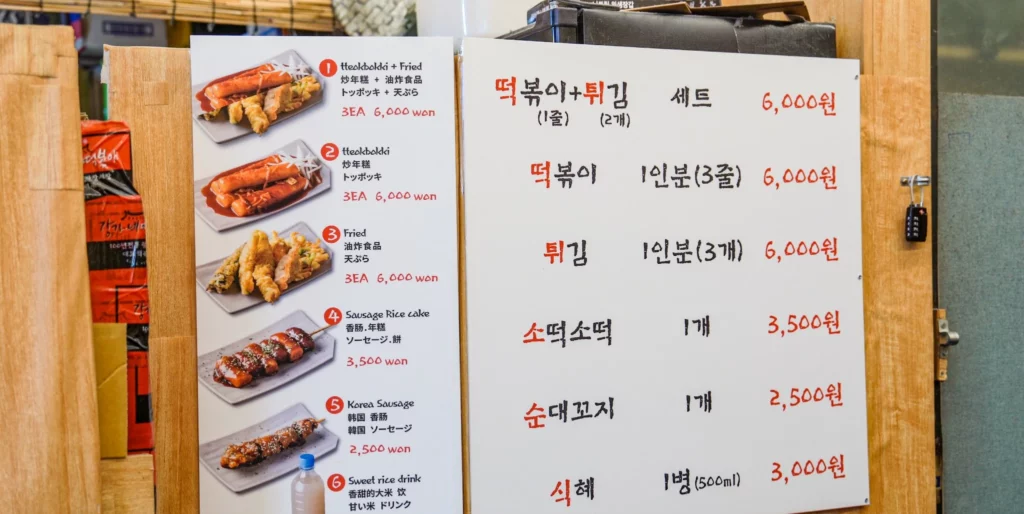
Tteokbokki (Radish-base)
무채 떡볶이
₩6,000
Tteokbokki + Fried Set
떡볶이+튀김 세트
₩6,000
Fried Snacks (Twigim)
튀김
₩2,500–₩4,000
Sotteok-sotteok Skewer
소떡소떡
₩3,000
Sundae Skewer
순대꼬치
₩3,000
Sikhye (Sweet Rice Drink)
식혜
₩2,500
Tteokbokki Sauce (1kg)
떡볶이 소스 1kg
for purchase
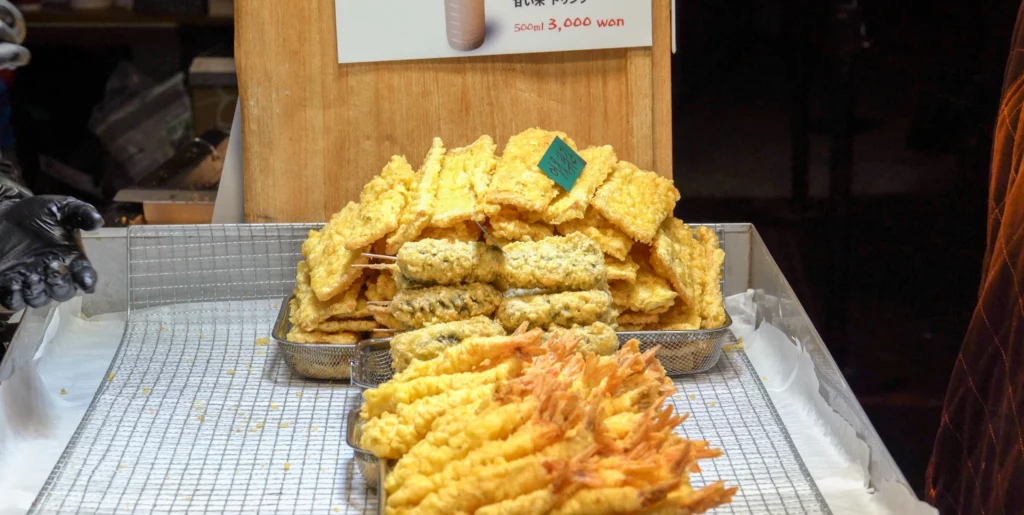
The tteokbokki and fried set (떡볶이+튀김 세트) is the most popular order for first-time visitors. The fried snacks — twigim (튀김) — are freshly fried or re-crisped to order, arriving with a shatteringly crisp exterior and soft, hot interior. They pair naturally with the glossy, saucy tteokbokki in the same way chips pair with dip, each element making the other taste better.
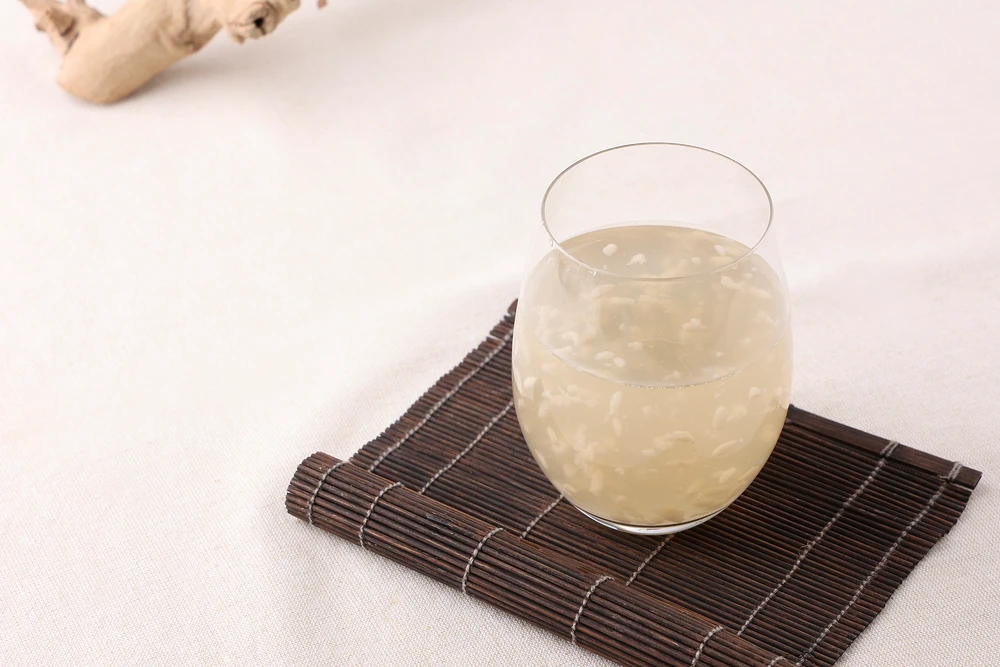
Sikhye (식혜) — a traditional Korean sweet rice drink, lightly fermented, gently flavored with ginger — is the ideal way to close the meal. Its cool sweetness and soft effervescence cut cleanly through the chili heat, providing exactly the palate reset that spicy street food calls for.
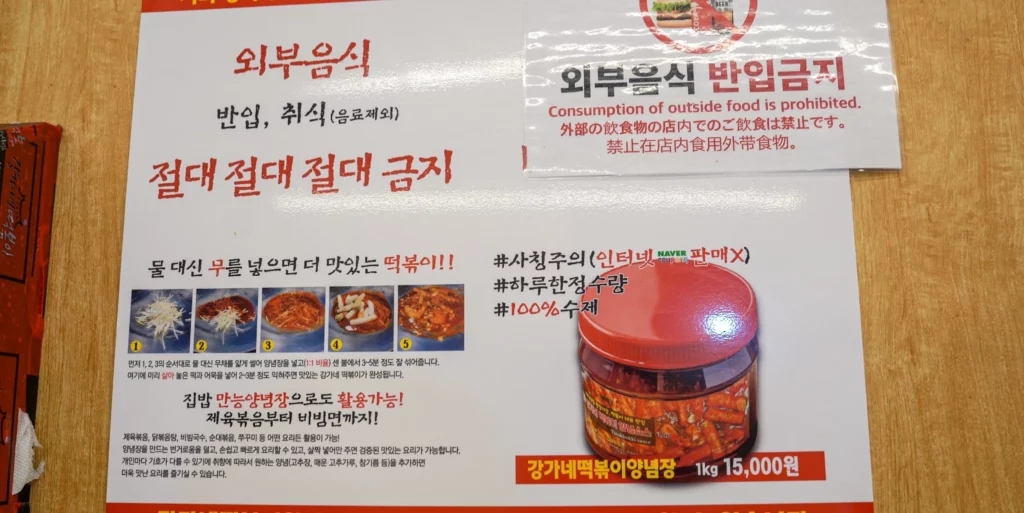
The take-home tteokbokki sauce (1kg) is a popular souvenir. Many customers who discover the stall return specifically for the sauce, which can be used at home with fresh rice cakes to recreate the Gwangjang experience.
What Makes This Dish Uniquely Korean?
Tteokbokki is fundamentally a Korean creation with no meaningful parallel in other food cultures. While many cuisines feature starch-based dishes simmered in spicy sauces — think arrabiata pasta or mapo tofu — tteokbokki’s specific texture, the concentrated heat of gochujang and gochugaru, and the cultural ritual surrounding it (eating standing up, sharing a communal pot, pairing with fried snacks) form a combination that is distinctly and irreducibly Korean.
Its origins trace back to the royal courts of the Joseon Dynasty, where rice cakes were a luxury ingredient combined with premium beef and soy sauce. The democratization of tteokbokki — its transformation from a palace delicacy into a ₩2,000 after-school snack — reflects major shifts in Korean history, including the Korean War, rapid urbanization, and the rise of pojangmacha (포장마차) street stall culture. Today, tteokbokki is simultaneously everyday comfort food and a dish that inspires genuine regional pride: every neighborhood, every market, every bunsikjip (snack bar) tends to have its own interpretation, sauce ratio, and secret technique.
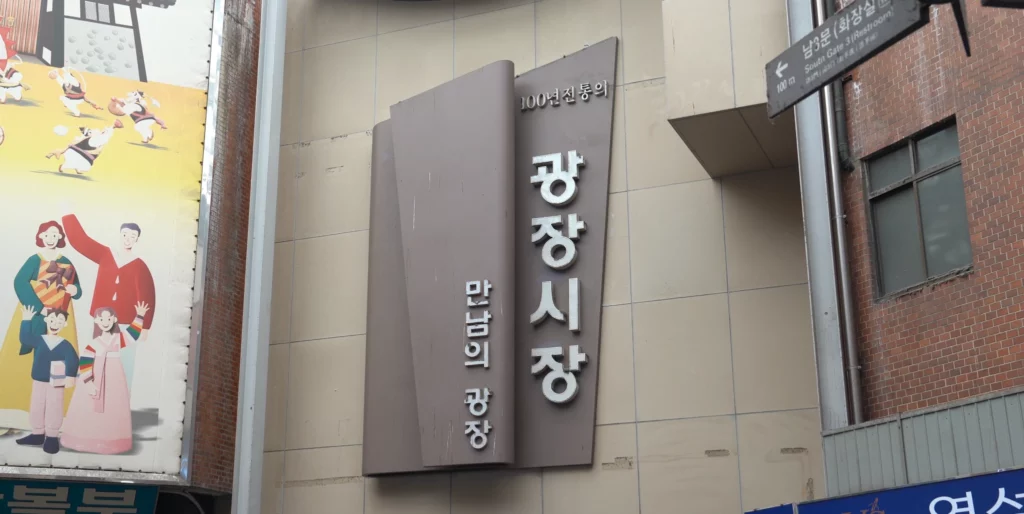
Gwangjang Market (광장시장), which has operated continuously since 1905, is one of the oldest and most culturally significant traditional markets in Seoul. It represents a living link to pre-modern Korean market culture, and eating tteokbokki at a stall like Gangga-ne is as much a cultural act as a gastronomic one. Explore the full Gwangjang Market food guide for a broader picture of what the market offers.
What Are the Key Ingredients That Create This Flavor?
The flavor of Gangga-ne’s mu-chae tteokbokki comes from the interaction of three distinct forces: the natural sweetness of Korean radish, the complex fermented heat of gochugaru and gochujang, and the savory depth developed by slow cooking with garlic.
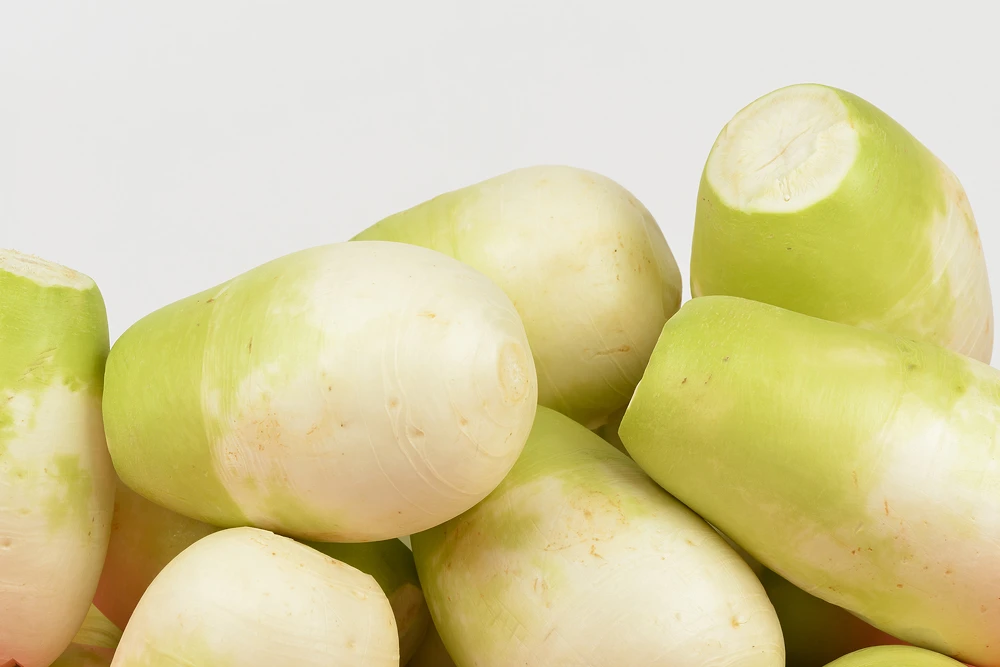
Korean radish (무, mu) contributes a mild, clean sweetness and a distinctive "cool" quality that Koreans describe as siwonham. Unlike sugar — which is also used in the sauce — radish sweetness is subtle and lingers rather than hits upfront. It also adds body to the broth without making it heavy.
Gochugaru provides the heat and the color. Gangga-ne’s sauce leans on gochugaru as much as, or more than, gochujang paste — meaning the chili character is fresher, slightly coarser, and more aromatic than a purely paste-based sauce. The garlic, aged into the sauce, reinforces this aromatic quality and gives the overall flavor a satisfying savory warmth.
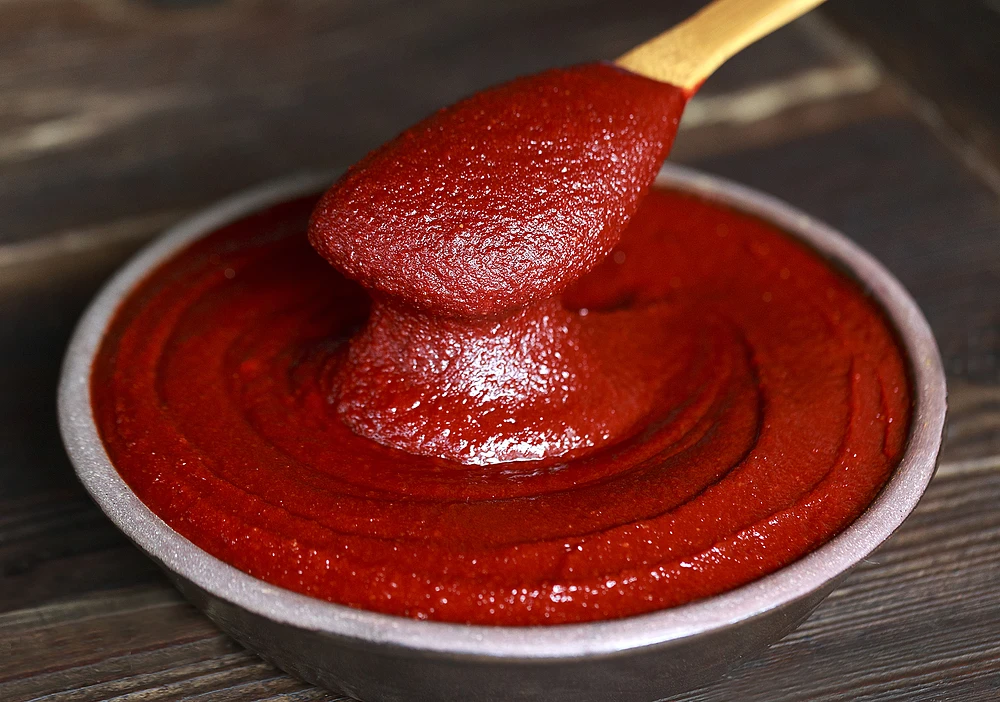
Gochujang (고추장) — the fermented chili paste — provides backbone: saltiness, umami, fermented depth, and a thick, glutinous texture that makes the sauce cling to each rice cake. Without it, the sauce would be flat. Without the radish, it would be one-dimensional. Together, they create something genuinely greater than the sum of its parts. Read more about the complete gochujang guide to understand why this fermented paste is so central to Korean cooking.
How Would You Describe the Taste and Spice Level?
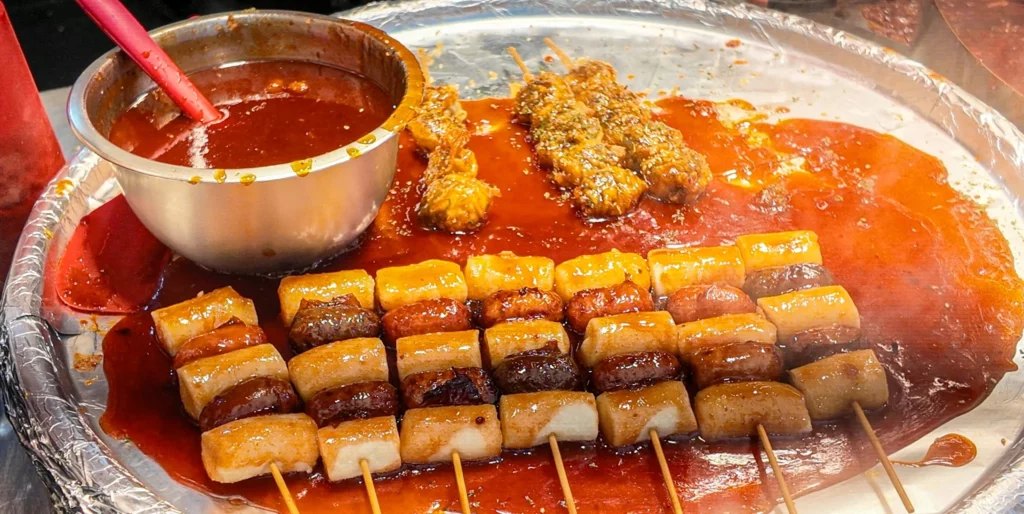
On a scale of 1 to 10 for international visitors, Gangga-ne’s tteokbokki sits at roughly 6 to 7. It is genuinely spicy — more so than many Korean dishes served abroad — but the radish broth pulls the heat toward something more balanced and rounded. First-timers often describe it as "hot but not overwhelming," with the spice building gradually rather than hitting immediately.
The primary flavor notes are: spicy, savory-sweet, garlicky, and deeply umami. The radish adds a cool undertone that prevents the sauce from feeling heavy or cloying despite its glossy richness.
Texture is a major part of the experience. The cylindrical rice cakes (garaetteok) are dense and satisfyingly chewy — similar to a very dense, slightly bouncy mochi — and they hold their shape through the cooking process. This is quite different from soft pasta or noodles; the chewiness is deliberate, valued, and central to the pleasure of eating tteokbokki. The dish is served hot, directly from the pot.
What Should First-Time Eaters Know?
How to eat tteokbokki at Gangga-ne: The stall provides small plastic dishes and bamboo skewers or chopsticks. Standing space is available along a counter at the back of the stall. Most customers eat while standing or leaning — this is how tteokbokki is traditionally consumed at pojangmacha and market stalls across Korea, and it adds to the authenticity of the experience.
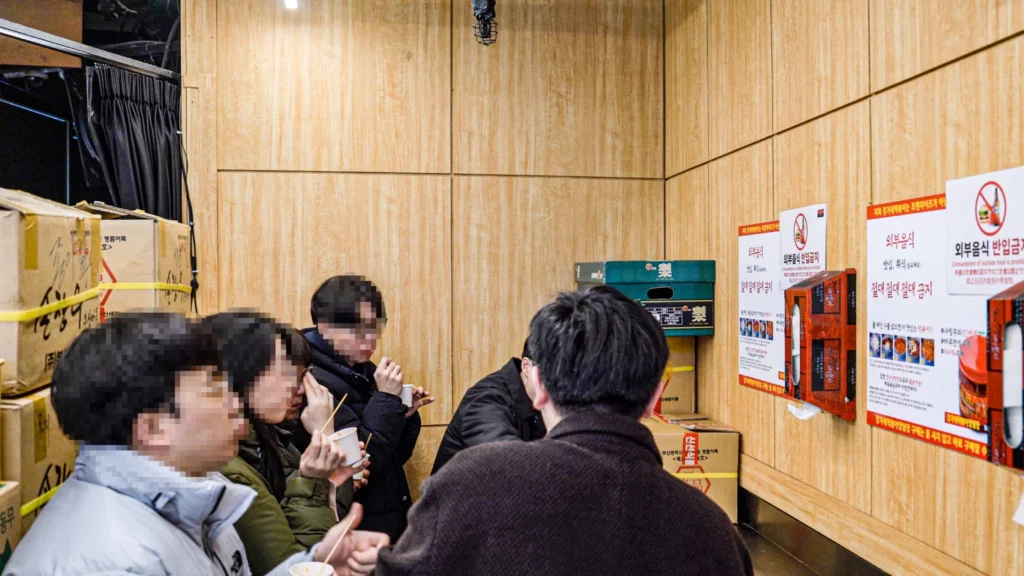
Eating sequence: Many regulars start with a few pieces of plain tteokbokki to appreciate the sauce, then alternate with bites of fried snack (twigim) to add contrasting texture. The sikhye drink is best saved for the end, as its gentle sweetness provides a clean finish to the meal.
Etiquette notes for foreign visitors: Do not bring outside food to the stall — this is explicitly prohibited and clearly signposted. The stall operates on a cash-preferred (or Korean payment app) basis, so having small bills is useful. Pointing at menu items is perfectly acceptable if there is a language barrier; the stall team is experienced with international visitors.
What to expect on a first taste: The initial hit is savory and garlicky, with the chili heat arriving a moment later. The radish sweetness comes through most clearly after a few bites, once your palate has adjusted to the heat. If the spice feels intense, the sikhye drink is the most effective and traditional palate soother available at the stall — more effective than water for cutting through capsaicin.
Allergies and dietary notes: The tteokbokki sauce contains gochujang, which includes fermented soybeans and glutinous rice — relevant for anyone with gluten sensitivity, as some commercially produced rice cakes also contain wheat flour. According to the Korea Tourism Organization’s food safety guidelines, visitors with significant food allergies should confirm ingredients directly with vendors, as market stalls typically do not provide written ingredient disclosures.
Practical Visitor Information: Hours, Location, and Tips
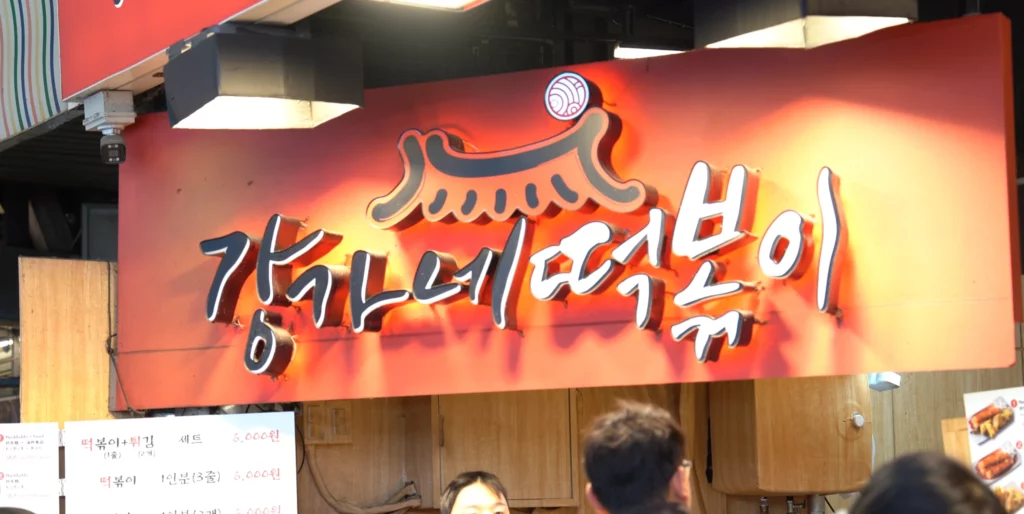
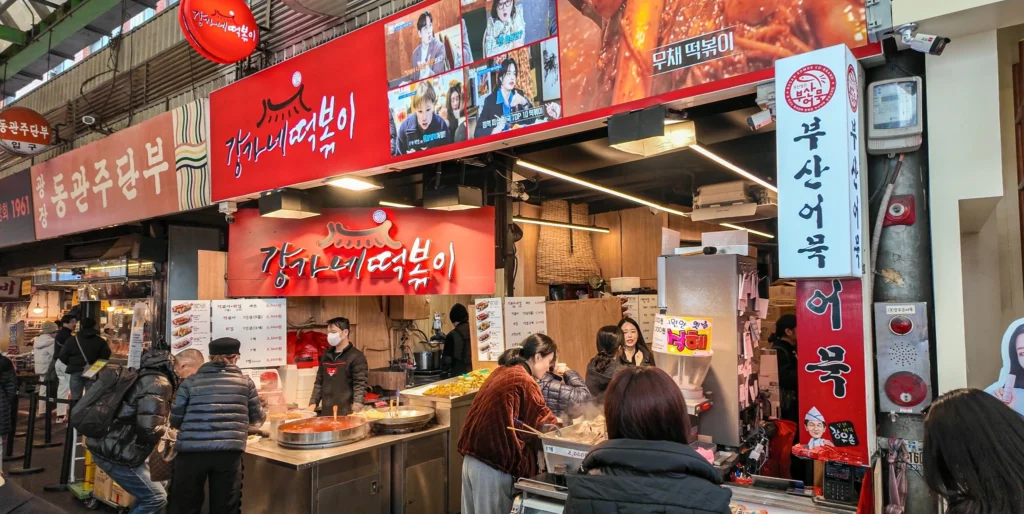
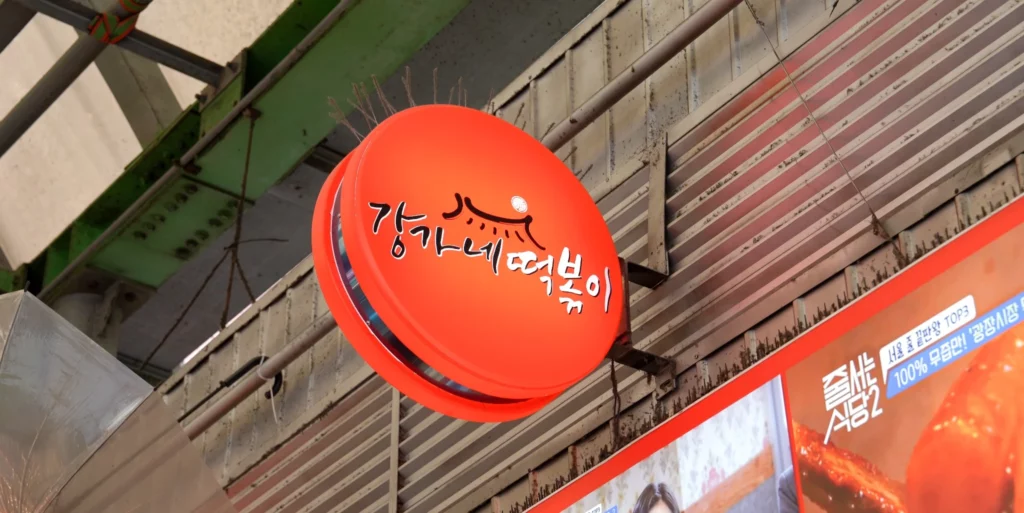
Location: Gangga-ne Tteokbokki is located at the main entrance area of Gwangjang Market, near the corner that faces Jongno 5-ga (종로5가). It is one of the first stalls visible when approaching from Exit 8 of Jongno 5-ga Station (Seoul Metro Line 1). The bright red signboard (간판) is visible from the street entrance.
Address: 88 Changgyeonggung-ro, Jongno-gu, Seoul (서울 종로구 창경궁로 88, 광장시장)
Hours: Approximately 11:00 AM until sell-out, typically between 4:00–5:00 PM. The stall closes earlier on days when ingredients sell out faster — weekends and holidays in particular. Monday is occasionally a rest day; confirm before visiting.
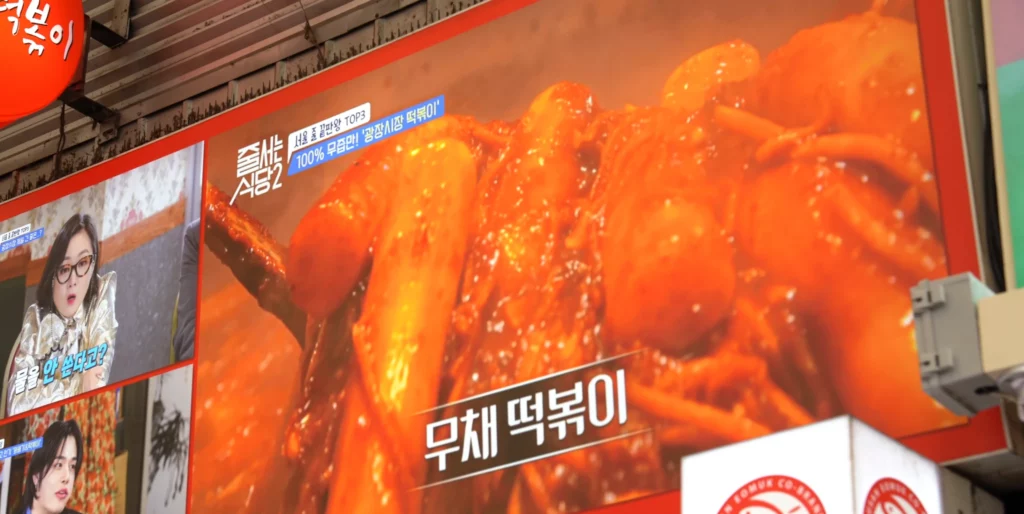
Best time to visit: Between 11:00 AM and 11:30 AM on a weekday. Waiting times are minimal at this hour, and the tteokbokki is freshly made. By early afternoon, queues can be substantial. After 3:00 PM, the risk of early closure increases significantly.
Getting there: Exit 8 of Jongno 5-ga Station (종로5가역), Line 1. The market entrance is a short walk from the station. No parking is recommended — the surrounding area is congested and public transport is strongly preferable.
Price range: ₩2,500 – ₩6,000 per item.
Payment: Cash preferred; Korean payment apps (Kakao Pay, Naver Pay) are accepted. International credit cards may not be accepted at all stalls within Gwangjang Market.
Beyond Tteokbokki: The Wider Gwangjang Market Experience
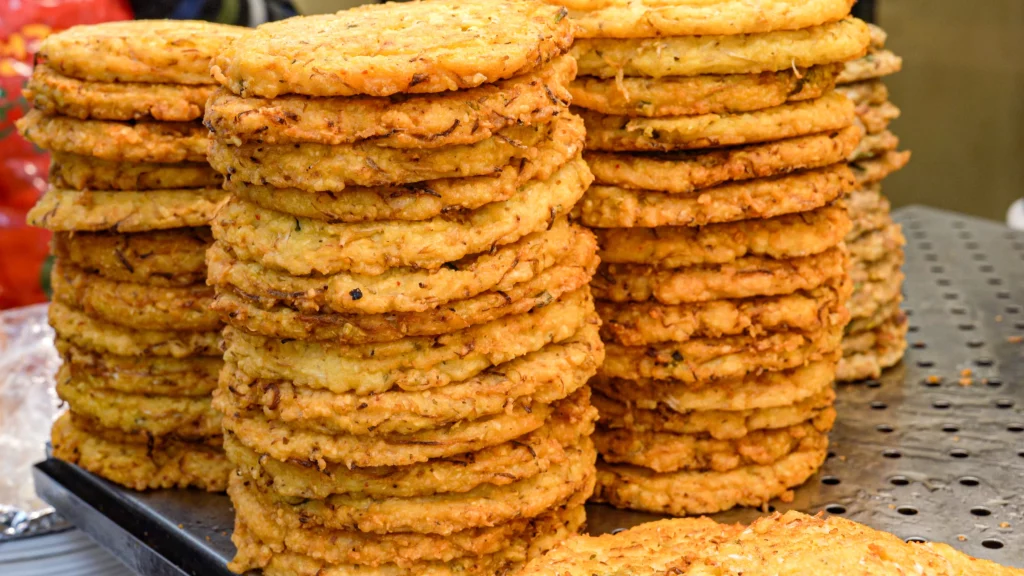
Gangga-ne is a compelling reason to visit, but Gwangjang Market offers an entire morning or afternoon of Korean culinary exploration around it. Bindaetteok (빈대떡) — crispy mung bean pancakes — are perhaps the market’s single most famous item, best eaten fresh from the griddle with a pour of makgeolli (rice wine). Mayak gimbap (마약김밥, "narcotic gimbap") — tiny rice rolls so named because customers find them impossible to stop eating — is another essential stop, typically found at the Moonyeo Gimbap stall. For those wanting to explore more of Gwangjang’s highlights, the full Gwangjang Market food guide covers six must-visit stalls with practical details.
The market also includes a large fabric and vintage clothing section — worth exploring before or after eating. The combination of food, commerce, and the architecture of one of Seoul’s oldest indoor markets creates an atmosphere that modern food halls simply cannot replicate.
Bring the Flavor Home
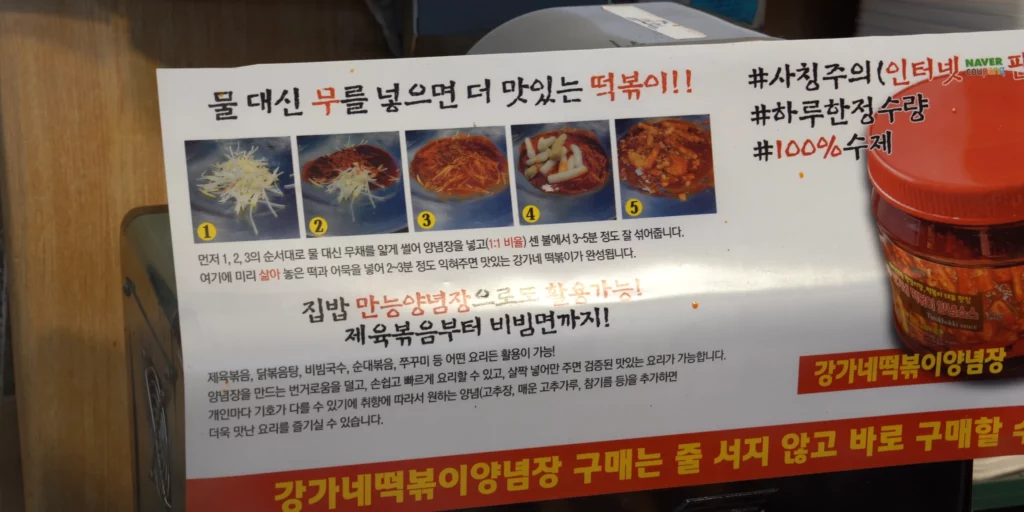
One of the most distinctive things about Gangga-ne is the availability of its house-made tteokbokki sauce in 1kg take-home quantities. This gives visitors a direct way to recreate the flavor at home — something relatively rare among Seoul’s street food stalls. Pair it with fresh garaetteok (cylindrical rice cakes), which are available at Korean grocery stores worldwide, and the result is a remarkably faithful home version of what the stall serves.
For those who want to build the flavor entirely from scratch, the spicy tteokbokki recipe guide walks through the full technique, including how to make a proper anchovy-kelp stock base and how to balance gochujang and gochugaru. A key tip for approximating the Gangga-ne style at home: add shredded Korean radish to your cooking liquid from the start, and simmer over low heat until the radish softens and its moisture is fully incorporated into the sauce before adding the rice cakes. The flavor difference compared to a water-based sauce is immediately noticeable.
If you have been inspired to explore the world of Korean rice cake dishes more broadly, the rose tteokbokki guide and the Meokshwidonna Bukchon tteokbokki restaurant review offer two very different but equally compelling takes on Korea’s most versatile street food.
A Destination Worth Queueing For
Gangga-ne Tteokbokki at Gwangjang Market is not a tourist attraction dressed up as street food. It is the reverse: a working market stall that has earned genuine recognition through a specific, considered technique and unwavering consistency. The radish-based broth is a small innovation with significant impact — the kind of quiet, ingredient-first thinking that defines traditional Korean cooking at its best.
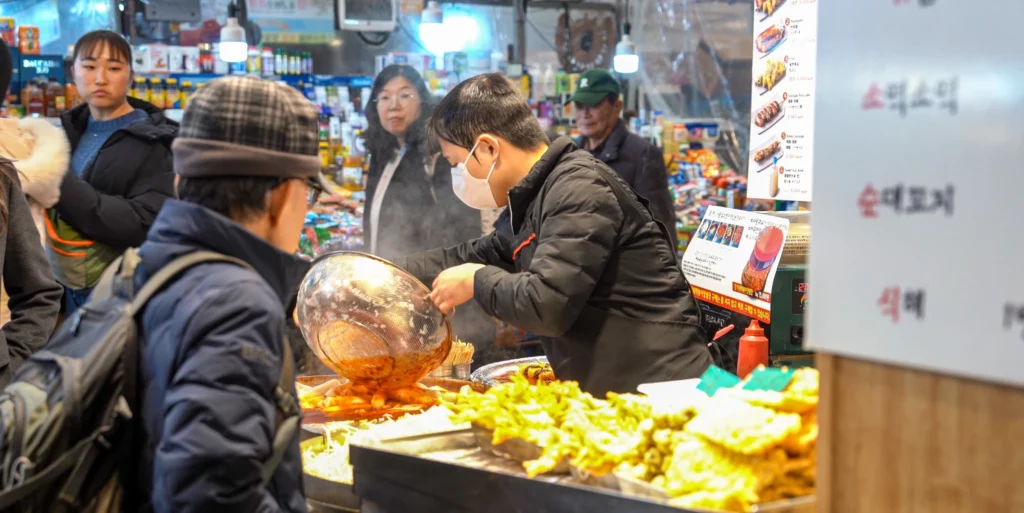
If you are planning a visit to Seoul and have space in your itinerary for only one Korean tteokbokki experience, the combination of setting, technique, and price at Gangga-ne makes it an easy choice. Arrive early, bring patience for the queue, and consider ordering the tteokbokki-and-fried-set alongside a cold sikhye — the way most regulars do.
For friends planning their own Seoul food itinerary, sharing this guide gives them a practical head start on one of the city’s most rewarding market meals.
Have you visited Gangga-ne Tteokbokki at Gwangjang Market? What was your experience with the radish broth tteokbokki? Share your thoughts in the comments below.
For further reading on Korean food culture, the Korea Tourism Organization’s official food guide provides authoritative information on traditional dishes and dining etiquette. For a deeper understanding of Korean fermented condiments and their role in dishes like tteokbokki, the Korean Food Promotion Institute publishes accessible resources for international audiences.
Location
Reviews
5.0
0 reviews
Related Recipes

Cheesy Tteokbokki
Few dishes deliver the pure theatrics of Korean street food the way cheese tteokbokki does — the moment a layer...

Spicy Tteokbokki
Spicy tteokbokki is more than just a street snack — it’s a bold, comforting taste of Korean culture. This guide...

Rose Tteokbokki
When Korea’s beloved spicy rice cakes meet Italian-inspired rosé sauce, something magical happens. Rose Tteokbokki (로제떡볶이) has captured the hearts...


Shinsegae Tteokbokki: Myeongdong's 45-Year Garlic Bunsik
Jung-gu, Seoul 10, Myeongdong 9-gil,

Samdeok Burger: Anyang's Best ₩4,000 Korean Retro Bulgogi Burger
Gyeonggi-do, South Korea 196 Namsan-ro, Manan-gu, Anyang-si

Wonjosunhui: Seoul's Best Bindaetteok at Gwangjang Market
Seoul, Jongno-gu Jongno 32-gil 5, South Korea

Gabose Bibimbap: Seoul's Gwangjang Market Barley Bowl
Jongno-gu, Seoul, South Korea Stall A22, 395-5 Jongno 1·2·3·4-ga-dong