


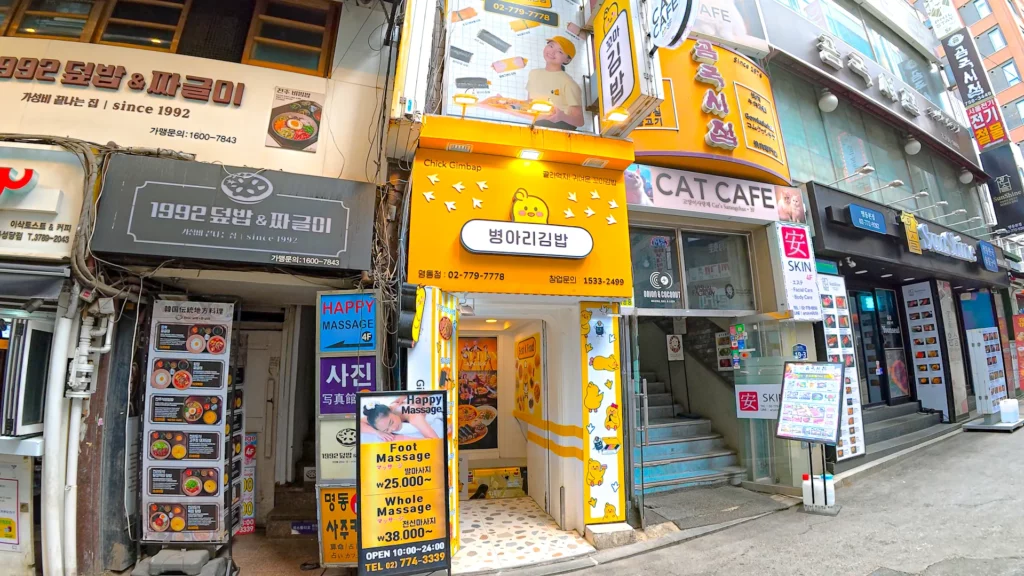
Right under the busy shopping streets of Myeongdong, a sunshine-yellow basement shop is quietly stealing the hearts of tourists. Byeongari Gimbap (병아리김밥) — literally "Baby Chick Gimbap" — turns one of Korea’s most beloved everyday foods into something colorful, photogenic, and incredibly easy to order, even if you don’t speak a word of Korean. Just walk in, peek into the chilled showcase, point to the cute little rolls you want, and you’re ready to eat. It’s the perfect mid-shopping bite, solo lunch, or takeout box for global travelers exploring Seoul.
ChickGimbap Myeongdong: Cutest Mini Gimbap in Seoul
5
ChickGimbap Myeongdong: Cutest Mini Gimbap in Seoul
5
Jung-gu, Seoul, KR B1, 19-3, Myeongdong 10-gil
Editor: James Lee


Interior05
Food07

Menu05
Overview
+82 010-8351-8126
Free WiFi Available
Indoor Seating Only
Electronic Payment, Credit Card accepted: American Express, Master Card, Visa
Introduction
Operating hours
Mon, Tue, Wed, Thu, Fri, Sat, SunAM 8:00 - PM 9:00
Menu
Editor's Detail
Table of Contents
- Why chickgimbap Is a Must-Visit Myeongdong Quick Bite
- Bakery-Style Showcase Ordering: How It Works for Tourists
- The Secret "Yucho-teukbap" Rice & 11 Flavors of Mini Gimbap
- Yubu Chobap, Tteokbokki, and Other Must-Try Menu Items
- The Cute Chick Concept: Why This Yellow Basement Is So Instagrammable
- Perfect for Quick Bites, Honbap, and Hotel Lunch Boxes
- Korean Food FAQ: What First-Time Eaters Should Know
- Visitor Info, Location & Pairings Nearby
Why chickgimbap Is a Must-Visit Myeongdong Quick Bite

Korean gimbap — sometimes spelled kimbap — is Korea’s beloved seaweed rice roll, often compared to Japanese sushi but seasoned with sesame oil and salt instead of vinegar. While giant traditional rolls are the classic version, kkoma gimbap (꼬마김밥), or "mini gimbap," is having a major moment. These bite-sized rolls (often called mayak gimbap or "addictive gimbap" in slang) let you sample many flavors at once without filling up, which makes them tailor-made for travelers who want to try everything.
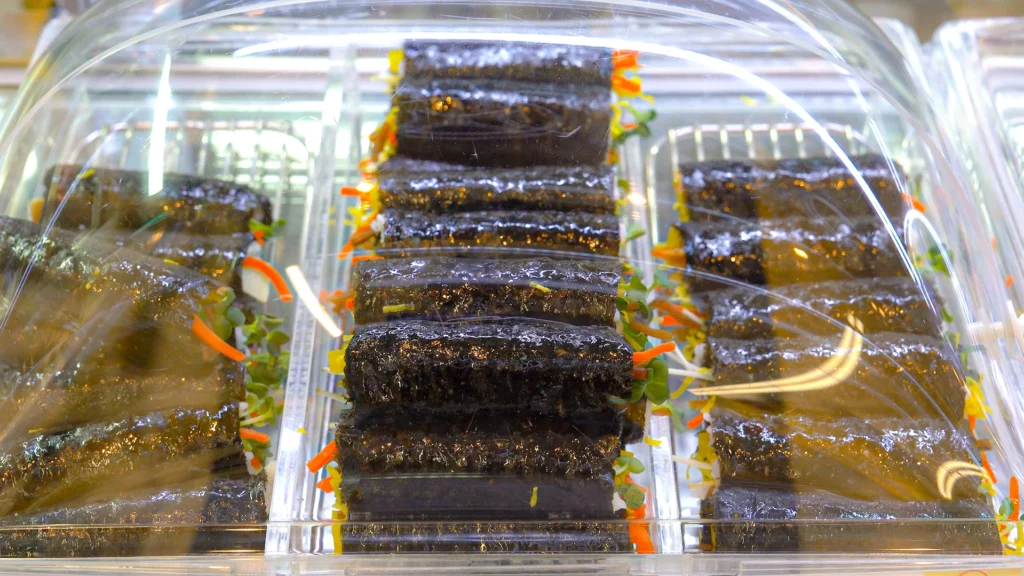
chickgimbap has positioned itself at the heart of this trend. Created by a team of six R&D specialists with the explicit goal of "globalizing gimbap," the brand was designed from day one for international visitors as much as for locals. The Myeongdong branch is the most foreigner-friendly location of the franchise, with multilingual menus (English, Chinese, Japanese), a self-service kiosk with English options, and a showcase ordering system that makes the language barrier essentially disappear.
Even Korean celebrity comedian Kim Jun-hyun, well known on Korean variety shows for his serious food expertise, has publicly recommended the brand — a quiet endorsement that locals trust. Combine that with reviews praising the freshness, the consistent flavor, the speed of service, and the affordability (most mini rolls hover around ₩900–₩1,300 each), and it’s easy to see why chickgimbap has become a quiet favorite tucked into the shopping chaos above.
Bakery-Style Showcase Ordering: How It Works for Tourists
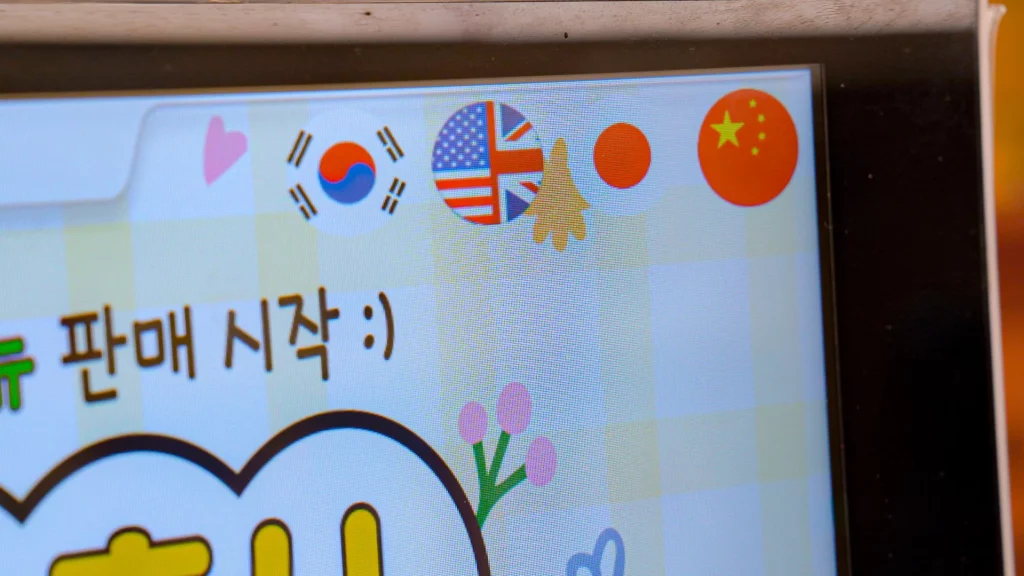
Most foreign visitors arrive in Korea worried about one thing more than any other: ordering food without speaking Korean. chickgimbap solves this problem in the simplest possible way.
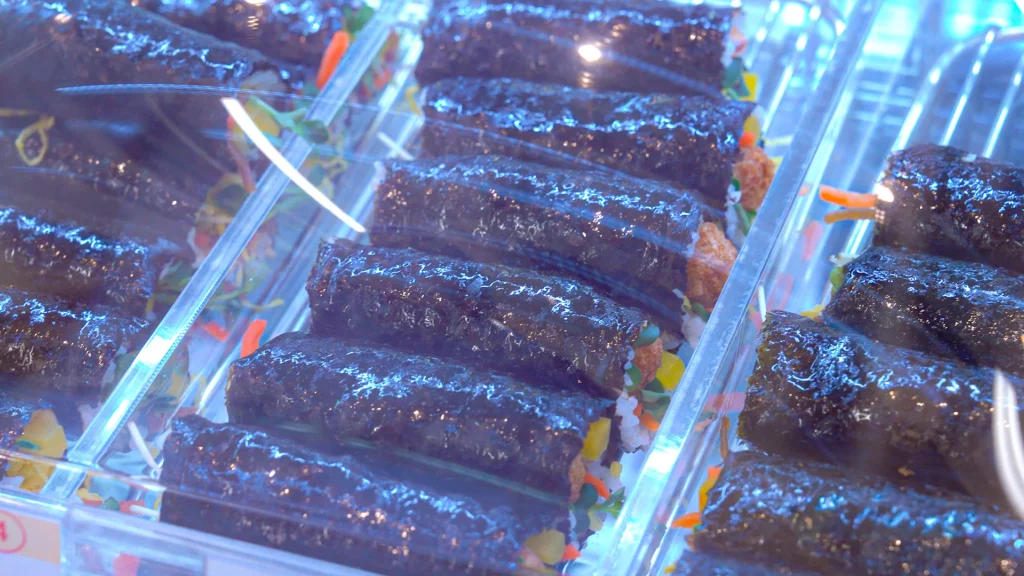
When you walk in, the chilled showcase along the counter is already stocked with freshly made mini gimbap and yubu chobap — eleven varieties of rolls and several types of stuffed tofu pockets, each clearly labeled in English on small signs. You grab a tray, just like at a Parisian bakery, and pick up whichever ones look good. A staff member rings them up at the counter.
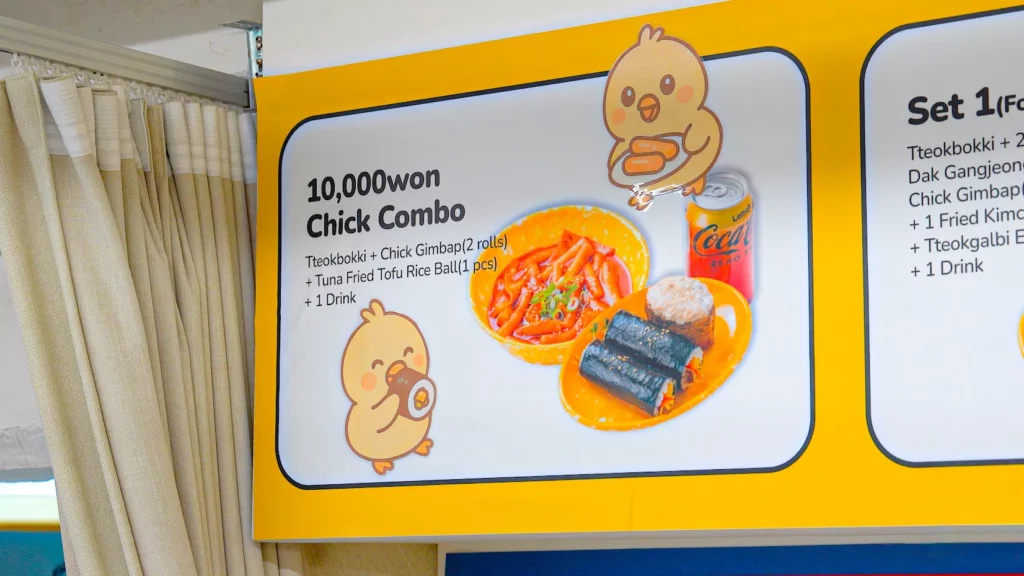
For hot items like tteokbokki, ramyun, or chicken nuggets, chickgimbap uses a touchscreen self-service kiosk with English, Chinese, and Japanese language options. Apple Pay, credit cards, and major mobile payments are accepted, which removes another common stress point for travelers without Korean bank cards.
A few practical tips worth knowing:

- Sets save money. Set menus (like Set B, popular for solo diners) bundle several mini rolls, yubu chobap, and a side of tteokbokki for a discount.
- Water and side plates are self-service. Help yourself from the station near the entrance — no need to flag down staff.
- Free drink with a review. The shop runs an occasional promotion where leaving a Naver or Google review unlocks a complimentary drink.
It’s the kind of stress-free quick bite in Myeongdong experience that travelers actually remember fondly.
The Secret "Yucho-teukbap" Rice & 11 Flavors of Mini Gimbap
The single most important element in any gimbap is, surprisingly, not the seaweed or the filling — it’s the rice. Most gimbap shops simply season cooked rice with sesame oil and salt, but chickgimbap uses a proprietary blend the brand calls Yucho-teukbap (유초특밥). According to the company, the rice is seasoned with multiple sauces and a smoky aromatic ingredient, all carefully balanced to enhance — rather than compete with — the different fillings.
If you want to understand why this matters, our guide to the essential ingredients of kimbap explains how every component, from sesame oil to pickled radish, plays a deliberate role in the final flavor. chickgimbap’s rice innovation is what allows eleven very different toppings — from tuna mayo to spicy chicken galbi — to all taste harmonious in the same shop.
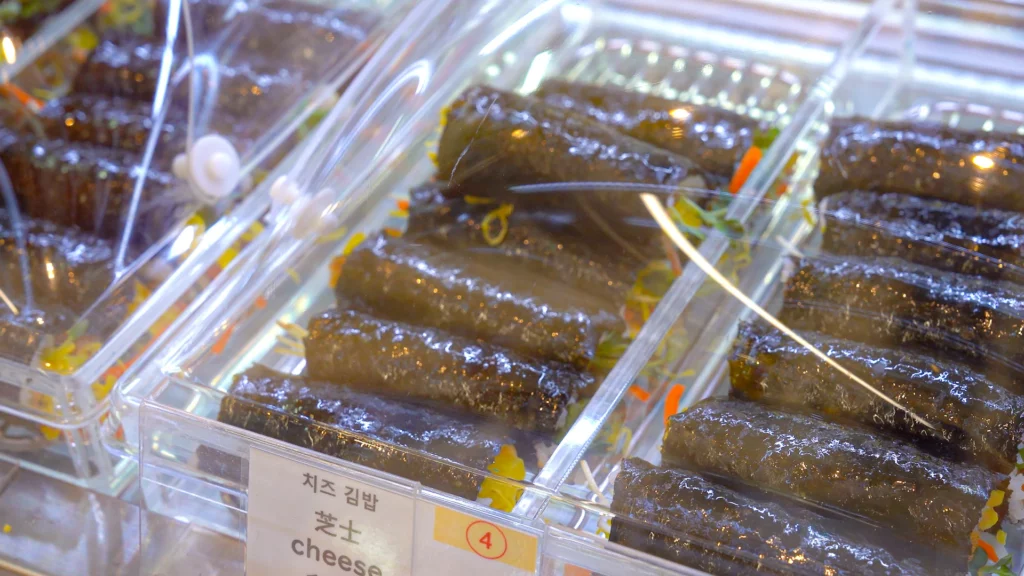
The eleven mini gimbap varieties currently include:
- Chick (Byeongari) Mini Gimbap — the namesake signature roll
- Cheese Mini Gimbap — gentle, kid-friendly, the bestseller for first-timers
- Tuna Mayo Mini Gimbap — creamy and savory, a Korean classic
- Stir-Fried Kimchi Mini Gimbap — for fans of fermented funk
- Spicy Charcoal Squid Mini Gimbap — smoky and bold
- Soft Whole-Egg Mini Gimbap — pillowy, mild, comforting
- Spicy Charcoal Chicken Galbi Mini Gimbap — the spice-lovers’ pick
- Pork Cutlet (Donkatsu) Mini Gimbap — a crunchy fusion bite
- Charcoal Bulgogi Mini Gimbap — see our full bulgogi gimbap guide for why this flavor is so beloved
- Smoked Duck Rice-Paper Roll — a lighter, refreshing option
- Spam & Egg Mini Gimbap — pure Korean comfort food
For curious cooks who want to understand how visually creative Korean rolls can get, our feature on hoeori (spiral) gimbap shows just how far Korean home cooks have pushed this single dish. chickgimbap sits firmly on the playful, modern end of that spectrum — which is exactly why tourists love it.
Yubu Chobap, Tteokbokki, and Other Must-Try Menu Items
While gimbap is the star, the supporting cast is just as exciting.
Yubu Chobap (유부초밥) — known internationally as inari sushi — is a sweet, marinated tofu pouch stuffed with seasoned rice. At chickgimbap, the pouches come in playful flavors that you won’t find in convenience-store versions: tuna mayo, mentaiko mayo, charcoal bulgogi, spicy chicken galbi, sweet-and-sour shrimp, and spam-egg. They’re a little firmer and a little sweeter than the gimbap, making them a great pair.
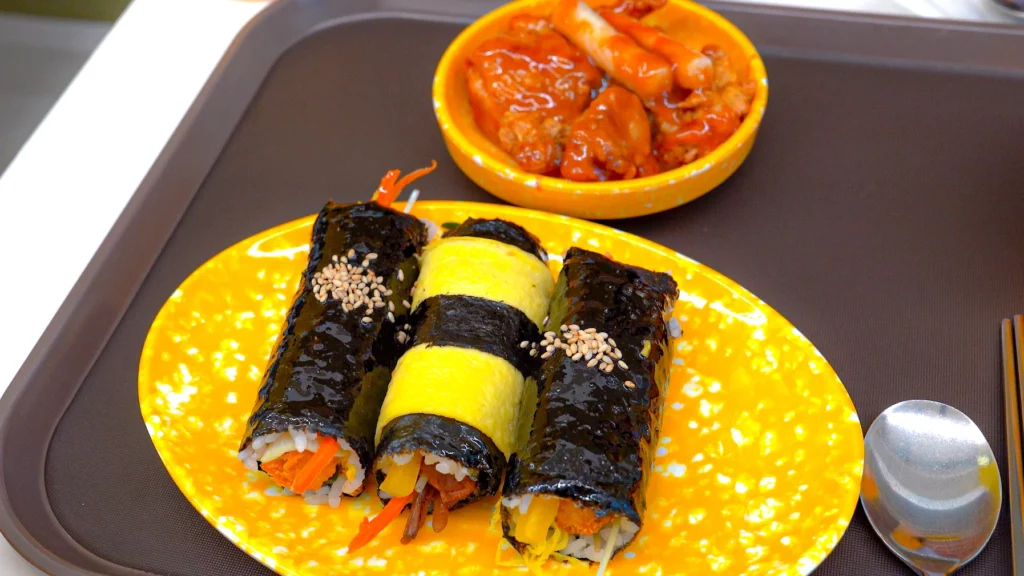
Tteokbokki (떡볶이) — Korea’s iconic spicy rice-cake dish — comes in three styles here: the classic school-front red version, rose tteokbokki with creamy pink sauce, and rabokki (with instant ramen noodles dropped right in). Rose tteokbokki has become a global phenomenon over the last few years; our deep dive into rose tteokbokki, Korea’s viral creamy rice cake dish explains the Italian-Korean fusion story behind it. If you want to understand how tteokbokki itself evolved from royal-court delicacy to street snack to global star, the full timeline is in our royal court to street food guide.
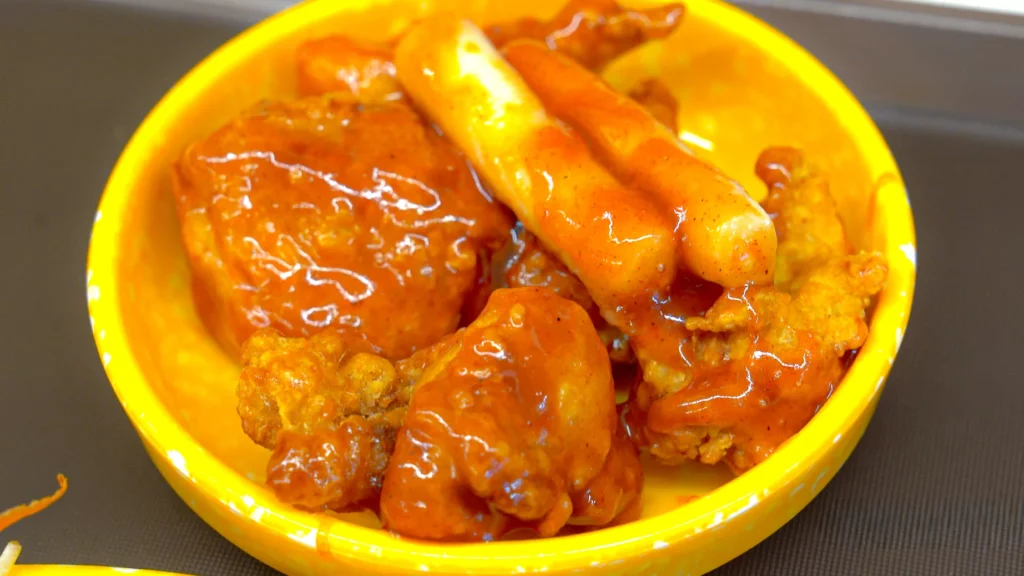
Other quick-bite favorites on the menu include dak-gangjeong (Korean fried chicken nuggets), mixed tempura platters (shrimp, vegetable, gimmari seaweed rolls), skewered fish cake in hot broth, and a Keto Box for low-carb travelers, with no-rice gimbap options like tuna, charcoal bulgogi, shrimp tempura, and smoked duck.
The Cute Chick Concept: Why This Yellow Basement Is So Instagrammable
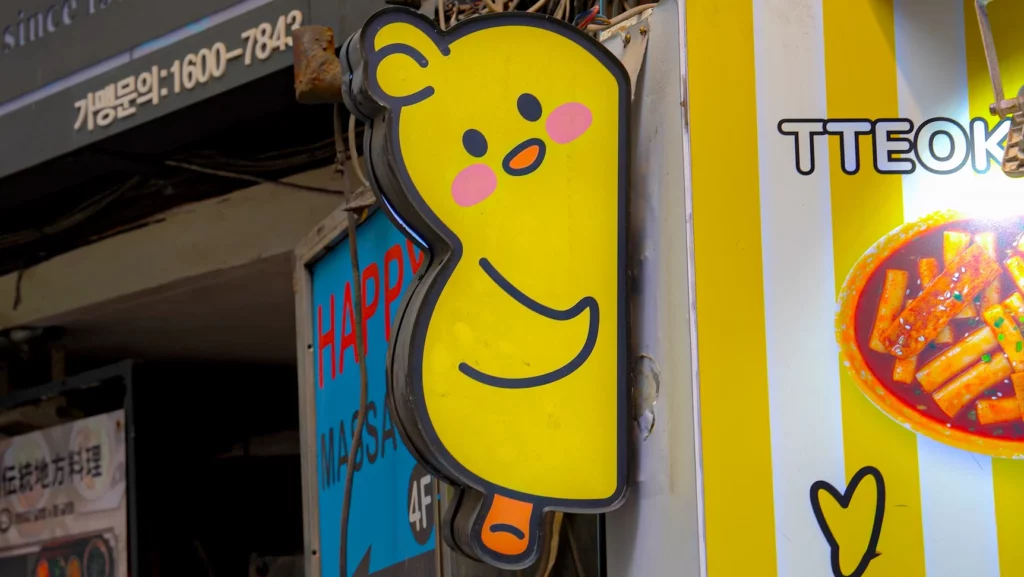
"Byeongari (병아리)" literally means baby chick in Korean, and the brand commits fully to the theme — right down to the all-lowercase, friendly chickgimbap logo. The entire store is wrapped in soft, sunshine-yellow paint. Plush chick mascots sit on shelves. Even the takeout boxes are stamped with a smiling cartoon chick. The result is a space that feels less like a typical Korean bunsikjip (snack bar) and more like a cheerful K-drama cafe set.
For social media-conscious travelers, this is a small jackpot. The bright walls work as a natural photo backdrop, the rolls themselves are colorful and tidy on a yellow tray, and the basement location keeps lighting consistent throughout the day. Many visitors photograph their three-box lunch order — neatly portioned into cute chick-printed boxes — before they even pick up chopsticks.
Beyond aesthetics, the interior is designed for visitor comfort. There’s free Wi-Fi, an open kitchen so you can watch the rolls being made, USB phone-charging spots near some seats, and self-service stations for water and utensils. Everything is laid out clearly so you can move from showcase to seat to recycling station without getting lost.
Perfect for Quick Bites, Honbap, and Hotel Lunch Boxes
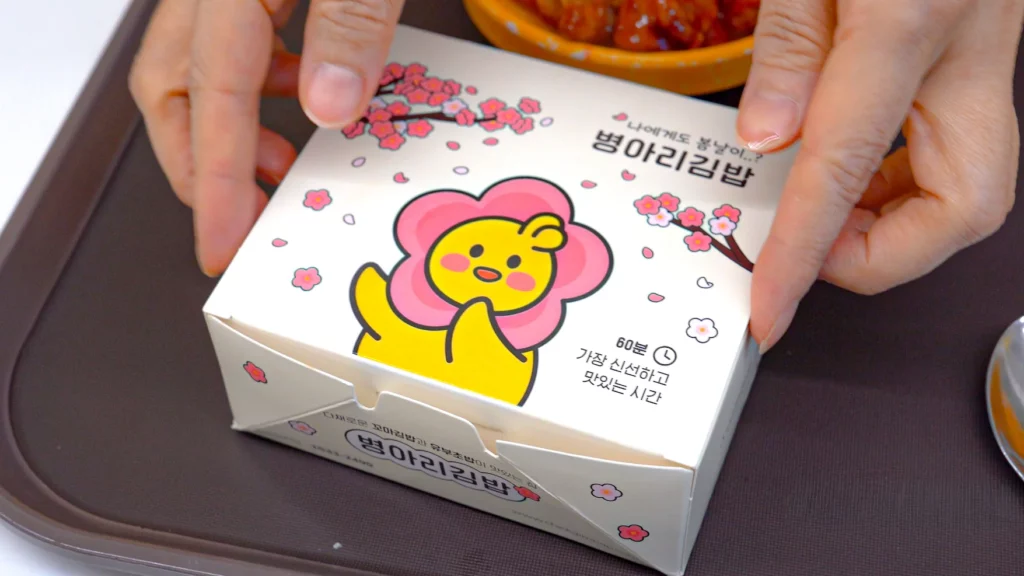
A growing share of Seoul’s food scene caters to honbap (혼밥) — solo dining — and chickgimbap is one of the best honbap spots in Myeongdong. Single-person counter seats line one wall, no minimum order is required, and the showcase format means you never have to feel awkward about ordering a small portion. You can grab three mini rolls and a fish cake skewer for under ₩5,000 and eat in peace.
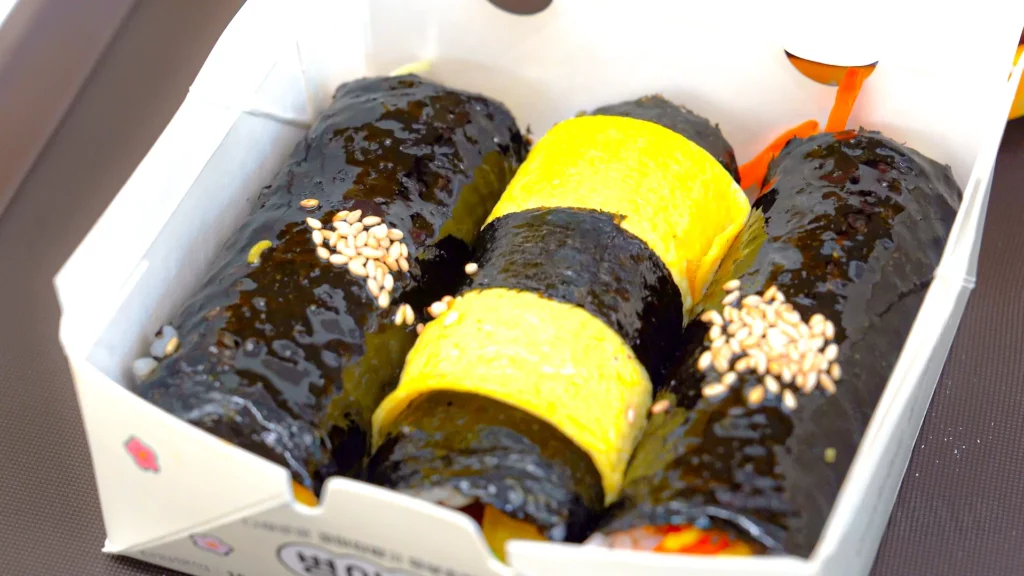
The takeaway side is just as strong. chickgimbap is one of the few places in central Seoul that specializes in group dosirak (도시락) lunch box orders — its cute yellow chick boxes are popular with Korean office workers and tour groups alike. For travelers, this means you can:
- Grab a packed lunch box back to your hotel for a low-key dinner
- Pick up gimbap before a Han River picnic or a Namsan Tower hike
- Order ahead for a tour bus, hostel meetup, or shared Airbnb dinner
For those staying in Myeongdong, this is genuinely useful. Pair a chickgimbap lunch box with a sunset visit to a rooftop view — the Cafe Pines rooftop overlooking Myeongdong Cathedral is a five-minute walk away — and you have one of the easiest, cheapest, most charming evenings in Seoul.

Korean Food FAQ: What First-Time Eaters Should Know
What makes mini gimbap uniquely Korean?
Gimbap (literally "seaweed rice") is one of Korea’s most iconic everyday foods, dating back to the early 20th century. Unlike Japanese sushi, gimbap rice is seasoned with sesame oil and salt rather than vinegar, giving it a warm, nutty taste rather than a sharp, tangy one. Mini gimbap (꼬마김밥) emerged as a casual snack version — small enough to eat in one bite, often paired with tteokbokki at school-front bunsikjip (snack bars) and pojangmacha (street stalls). For Koreans, mini gimbap evokes nostalgia: after-school snacks, picnic lunchboxes, and quick weekday meals. chickgimbap modernizes this tradition with eleven globalized flavors while keeping the bite-sized format intact.

What are the key ingredients that create this flavor?
Three ingredients do most of the heavy lifting in any gimbap, including chickgimbap’s:
- Gim (김) — Korean seaweed. Thicker and more savory than Japanese nori, Korean gim has a roasted, nutty edge. It’s rich in iodine, minerals, and umami. Learn more in our complete guide to Korean laver (gim) types, uses, and benefits.
- Sesame oil (참기름 / chamgireum). This is the signature aroma of any Korean gimbap. A drizzle on warm rice creates that unmistakable toasty flavor.
- Yucho-teukbap rice (유초특밥). chickgimbap’s proprietary seasoned rice — built around sauces, seasonings, and a smoky aromatic note — is what unifies all eleven different toppings into one consistent house flavor.
How would you describe the taste and spice level?
Most mini gimbap at chickgimbap sits at a gentle 1–3 out of 10 on the spice scale, making it very approachable for international diners. The flavor profile is savory, slightly sweet, nutty, and umami-rich, with sesame oil as the dominant aroma. Spicier options like the charcoal chicken galbi or kimchi varieties push closer to 4–5/10 — still manageable for most palates. Texture-wise, expect a soft, slightly springy bite from the rice, a crisp snap from the seaweed exterior, and contrast from fillings like crunchy pickled radish or fluffy egg. Rolls are served cold or at room temperature; hot items like tteokbokki and fish cake skewers arrive piping hot.
What should first-time eaters know?
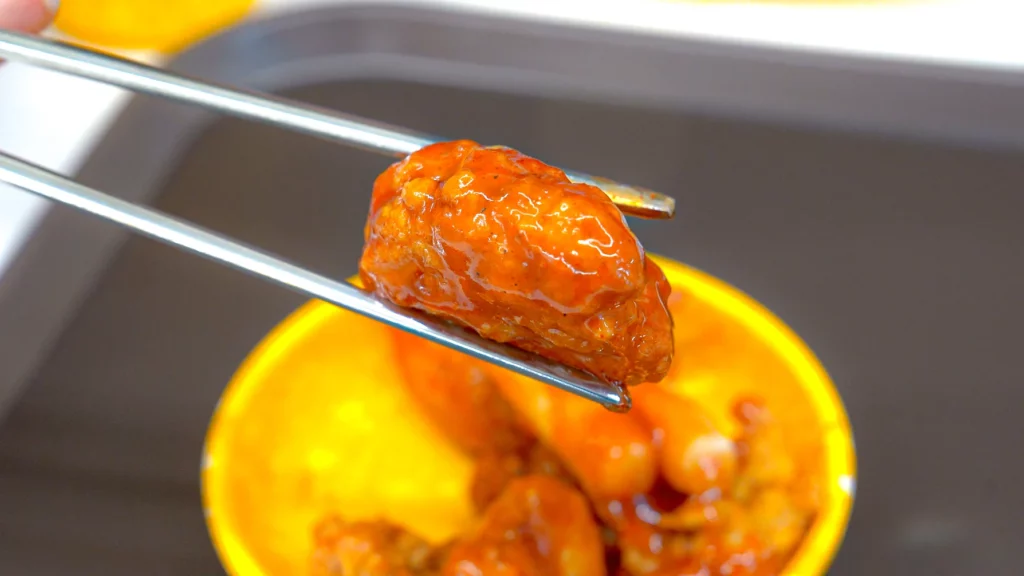
A few quick tips: pick rolls up by hand or with chopsticks — there’s no need to dip them in soy sauce the way you would with sushi, since the rice is already seasoned. Eat each piece in one or two bites to enjoy all the layered flavors at once. Pair the rolls with the cup of warm fish cake broth (free at most counters in Korea) to balance the cold rice. If you can’t handle spice, stick with cheese, tuna mayo, soft egg, or bulgogi versions. And don’t be shy about pointing at the showcase — that’s exactly how locals order at this kind of shop.
Visitor Info, Location & Pairings Nearby
Address: B1, 19-3 Myeongdong 10-gil, Jung-gu, Seoul (서울특별시 중구 명동10길 19-3 지하 1층) Phone: +82-2-779-7778 Hours: Daily, 8:00 AM – 9:00 PM (last order 8:30 PM) Subway: Myeongdong Station (Line 4), Exit 6 — about 4 minutes on foot. Also accessible from Euljiro 1-ga Station (Line 2), Exit 5. Price Range: ₩900 – ₩20,000 per person Payment: Credit cards, Apple Pay, mobile payments accepted
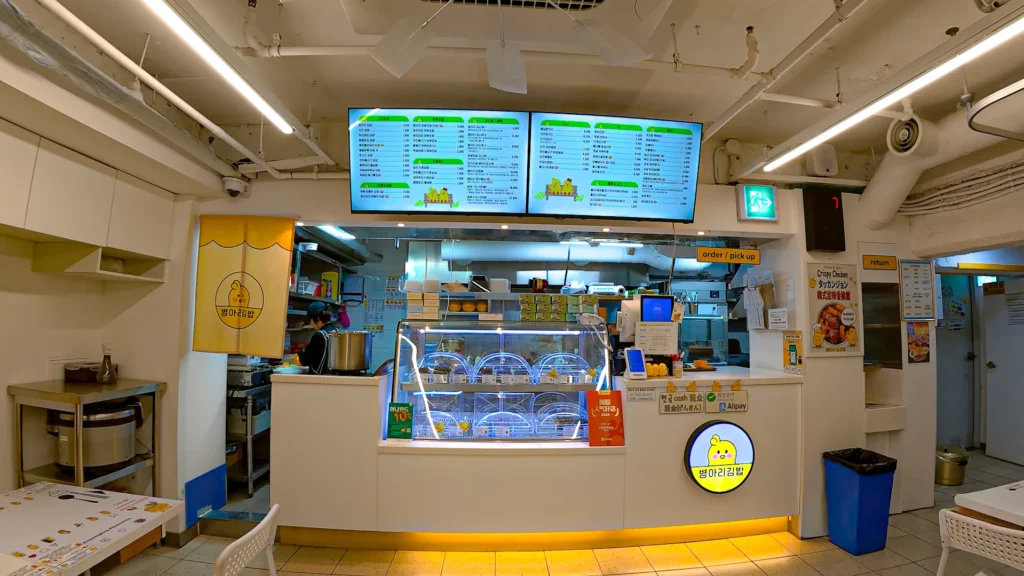
The shop sits in the basement of an alleyway just steps from Olive Young’s main Myeongdong flagship, which makes it incredibly easy to combine with a K-beauty shopping spree. For tourism context on the wider neighborhood, the Visit Seoul official Myeongdong guide is a reliable starting point, and the Korea Tourism Organization’s Myeongdong page covers transit and major landmarks in more depth.
A few pairings to round out your Myeongdong food day:
- Breakfast first: Grab a buttery egg sandwich at Myeongdong Hamburger Toast, a three-generation street toast institution.
- Mid-shopping noodle break: Stop at Myeongdong Kyoja for the neighborhood’s most famous handmade kalguksu and mandu.
- Late-night Seoul fun: Wander to the new Emart24 K-Food Lab Myeongdong, a 24-hour ramyeon experience store.
- Snack souvenirs: Pick up flavored almonds and honey-butter makgeolli at the bright yellow HBAF Almond Store Myeongdong.
- Cultural detour: Visit the historic Myeongdong Cathedral, Korea’s first Gothic-style church, just a short walk away.
Your Cutest, Easiest Korean Bite in Myeongdong
chickgimbap isn’t trying to reinvent Korean food — it’s trying to make Korean food approachable, fun, and photogenic for everyone who walks in. And it succeeds. The showcase ordering removes language anxiety, the eleven mini gimbap flavors let you taste widely without overcommitting, the proprietary Yucho-teukbap rice quietly ties everything together, and the bright yellow chick-themed basement is just plain cheerful.
Whether you’re a solo traveler looking for a comfortable honbap lunch, a couple grabbing dosirak boxes back to your hotel, or a group of friends powering through Myeongdong shopping, chickgimbap Myeongdong is one of the easiest "win" meals in central Seoul. Tuck it into your itinerary between Olive Young and a Namsan Tower walk, and you’ll see exactly why Korean travelers keep coming back to that little yellow basement.
So here’s the real question: when you walk up to that showcase, which flavor are you reaching for first — the savory tuna mayo, the gentle cheese, the smoky charcoal bulgogi, or the spicy chicken galbi? Let us know in the comments, and share this guide with the friend you’re dragging to Seoul next.
Location
B1, 19-3, Myeongdong 10-gil, Jung-gu, Seoul, KR, KR
Reviews
5.0
0 reviews
5
0%
4
0%
3
0%
2
0%
1
0%
Loading reviews...
