


Nestled in the mountain valleys of Gangwon Province, 비발디 송어골 (Vivaldi Songeogol) delivers one of Korea’s most satisfying freshwater fish experiences. Glistening slices of trout sashimi arrive alongside crisp ssam vegetables, two classic dipping sauces, and a finale of bubbling spicy fish stew — a meal that feels like the mountains themselves are on your plate. If you’ve ever wondered what truly fresh Korean river fish tastes like, this is the place that answers the question.
Trout Sashimi at Vivaldi Songeogol: Gangwon's Freshwater Gem
5
Trout Sashimi at Vivaldi Songeogol: Gangwon's Freshwater Gem
5
Seo-myeon, Hongcheon-gun, Gangwon-do, South Korea 23 Daegok-ri
Editor: James Lee


Interior01
Food02

Menu01
Overview
+82 0507-1333-6626
WiFi Provided
Indoor Seating Only
Electronic Payment, Credit Card accepted: American Express, Master Card, Visa
Introduction
Operating hours
Mon, Tue, Wed, Thu, Fri, Sat, SunAM 10:30 - PM 10:00
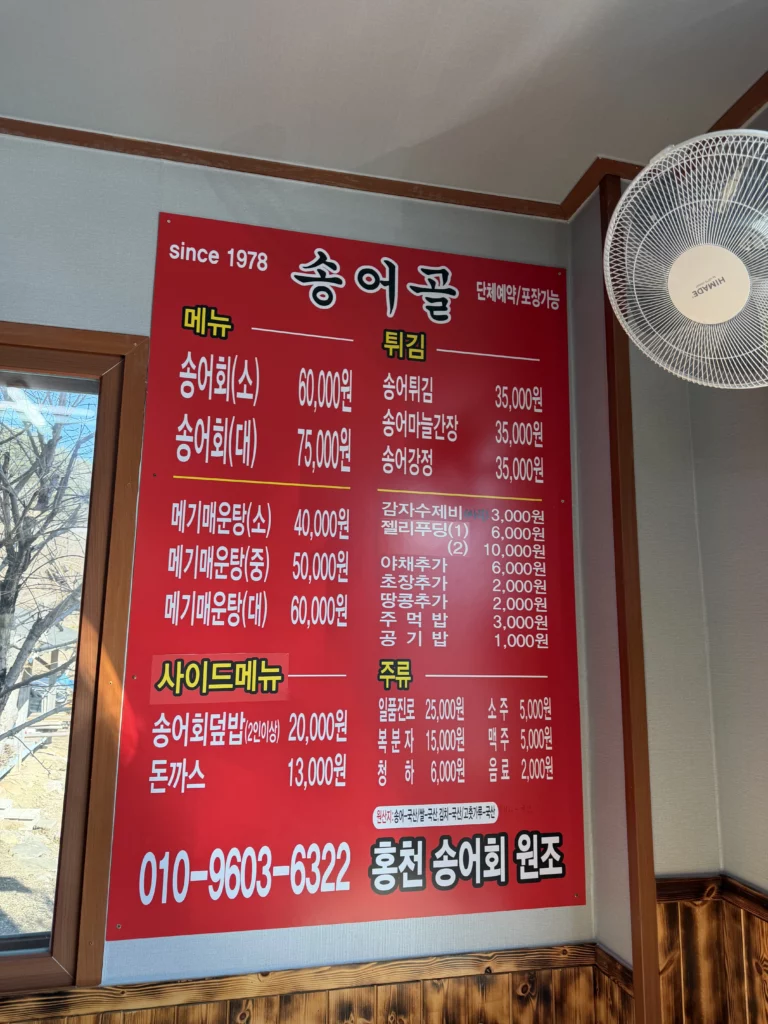
Menu
Editor's Detail
Imagine pulling up to a restaurant tucked into a mountain valley in Gangwon Province, the air carrying a cool, clean crispness you only find this far from the city. Inside, a large platter arrives at your table — translucent slices of freshly cut trout fanned out across the plate, shimmering like river water in the afternoon light. This is 비발디 송어골 (Vivaldi Songeogol), a beloved trout dining destination near Vivaldi Park resort in Hongcheon, and it represents one of the most uniquely Korean ways to enjoy raw fish you’ll find anywhere in the country.
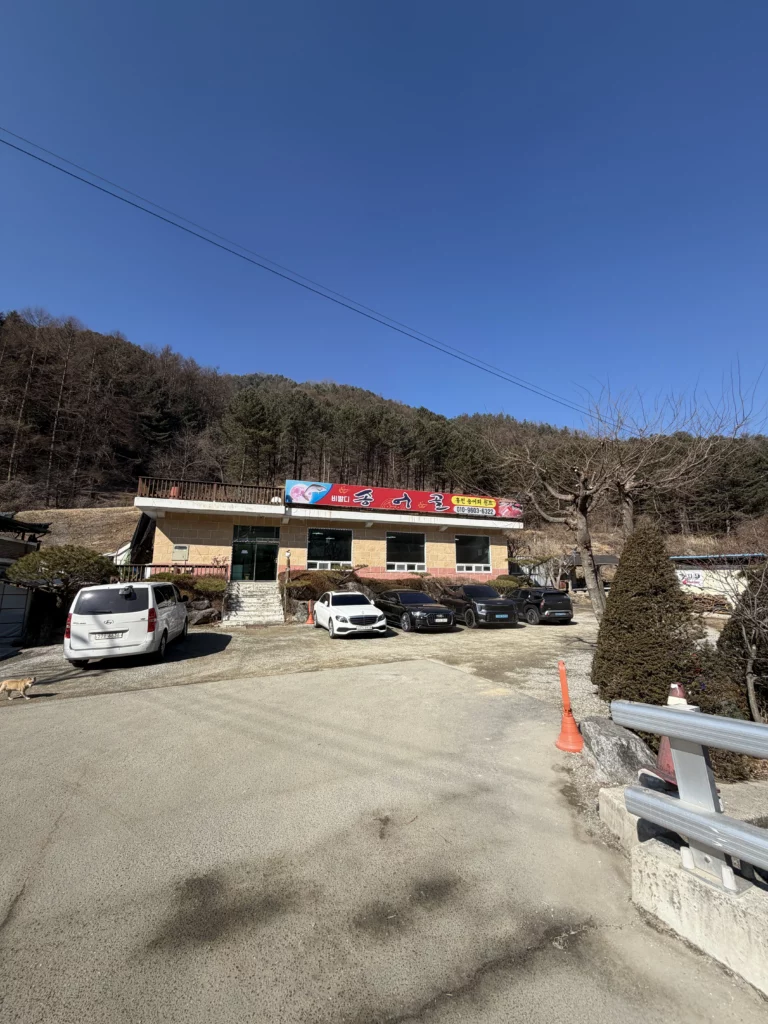
While Japan’s sashimi culture is built on the ocean, Korea has its own parallel tradition centered on pristine mountain streams and freshwater fish. Gangwon Province — with its cold, fast-flowing rivers and clean highland water — has long been the heartland of Korean trout sashimi (송어회, song-eo-hoe), and 비발디 송어골 sits right at the center of that tradition.
Table of Contents
What Is Korean Trout Sashimi and Why Is It Special?
Korean freshwater sashimi occupies a unique corner of the culinary world. Unlike its Japanese counterpart — which is dominated by ocean fish like tuna and yellowtail — Korean hoe (회) encompasses a rich tradition of river and lake fish, particularly in inland provinces like Gangwon and North Chungcheong.
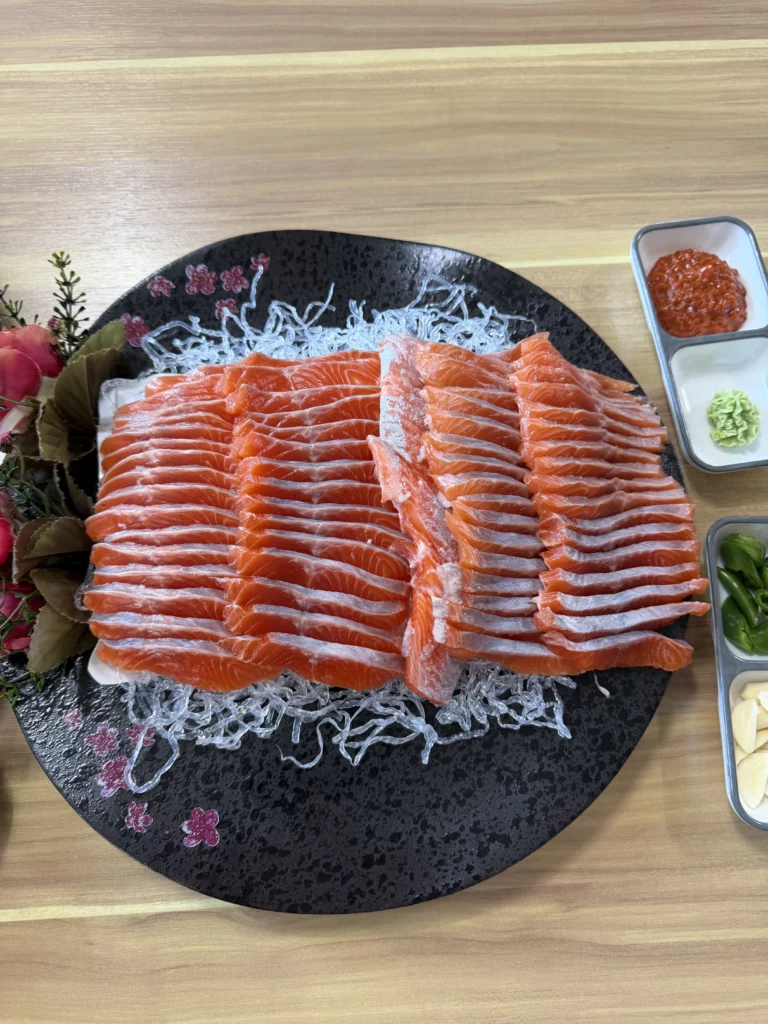
Trout (송어, song-eo) — most commonly rainbow trout (무지개송어) — thrives in the cold mountain streams of Gangwon, where Hongcheon and its surrounding valleys have developed a reputation for some of the freshest freshwater fish dining in the country. Restaurants like 비발디 송어골 raise their fish in tanks fed by mountain water, ensuring the fish remain alive until the moment of preparation. This level of freshness is the cornerstone of the entire dining experience.
For context, think of it as similar to Japanese sashimi in technique, but with distinctly Korean seasonings, eating methods, and cultural rituals that make the experience feel entirely its own. As Korea’s official tourism resource notes, Gangwon Province’s food culture is deeply tied to its natural landscape — and nothing illustrates that better than a table of freshly sliced trout by the mountains.
The Vivaldi Songeogol Experience: What to Expect
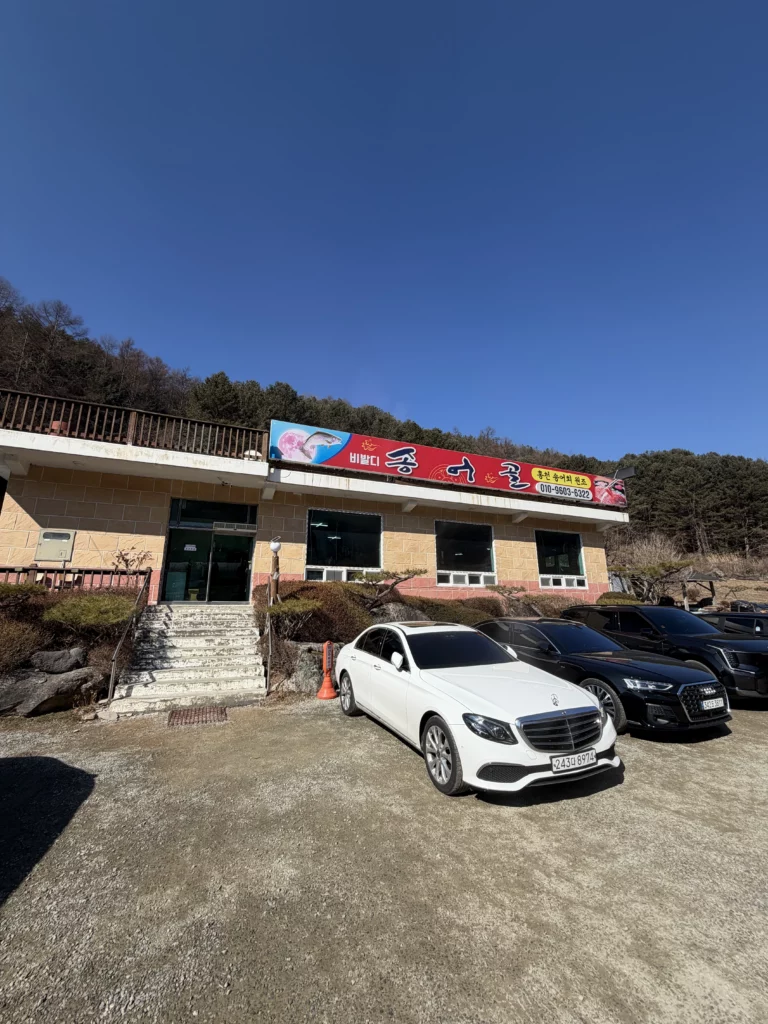
비발디 송어골 is named after nearby Vivaldi Park (비발디파크), the well-known ski resort in Hongcheon-gun, Gangwon Province. Whether you’re visiting the resort in winter for skiing or simply driving through Gangwon on a food excursion, this restaurant makes a compelling stop.
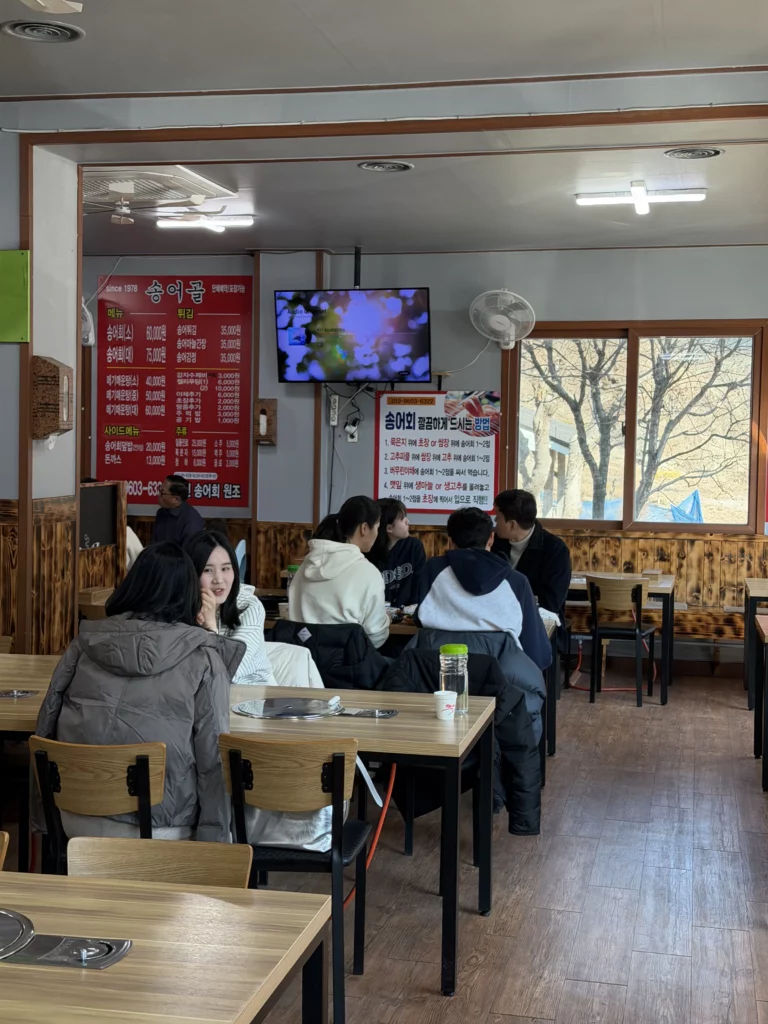
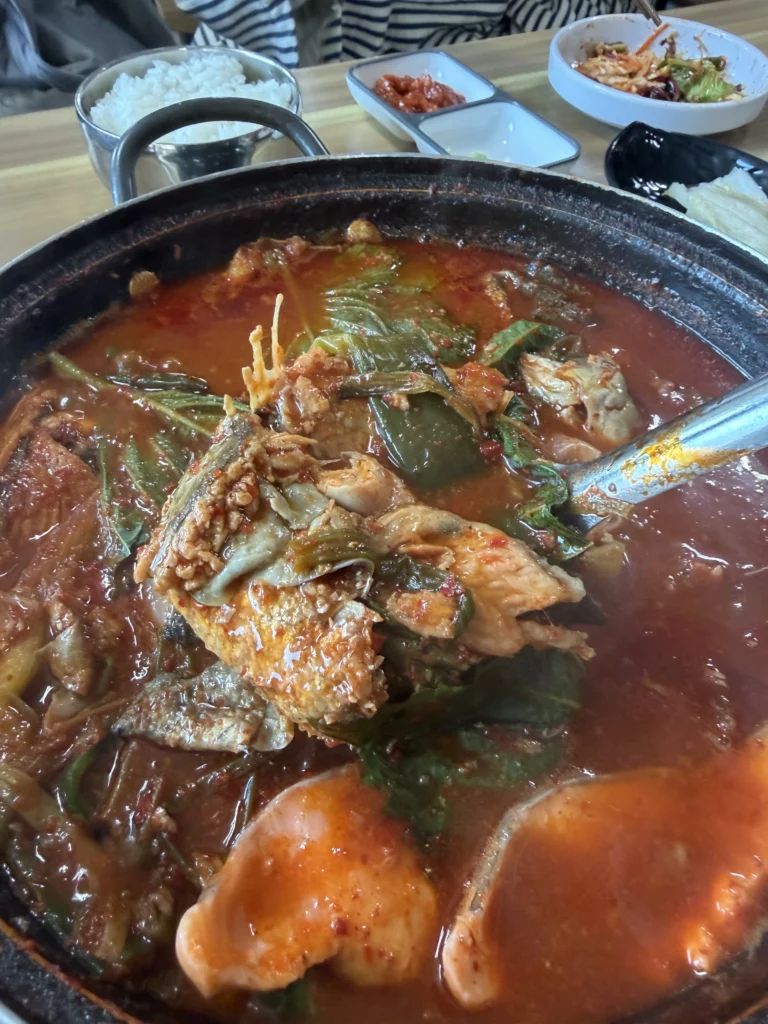
The dining room is practical rather than ornate — the focus here is entirely on the food. Fresh trout is kept alive in tanks and prepared to order, which means the sashimi you receive is about as fresh as it gets anywhere in Korea. The main meal revolves around trout sashimi (송어회) served with an extensive spread of accompaniments, followed by a spicy fish stew (매운탕, maeuntang) made from the remaining fish parts.
For those exploring other fresh seafood experiences in Korea, the sea crab and sashimi scene at Jumunjin Market offers another compelling coastal perspective on Korean raw fish culture.
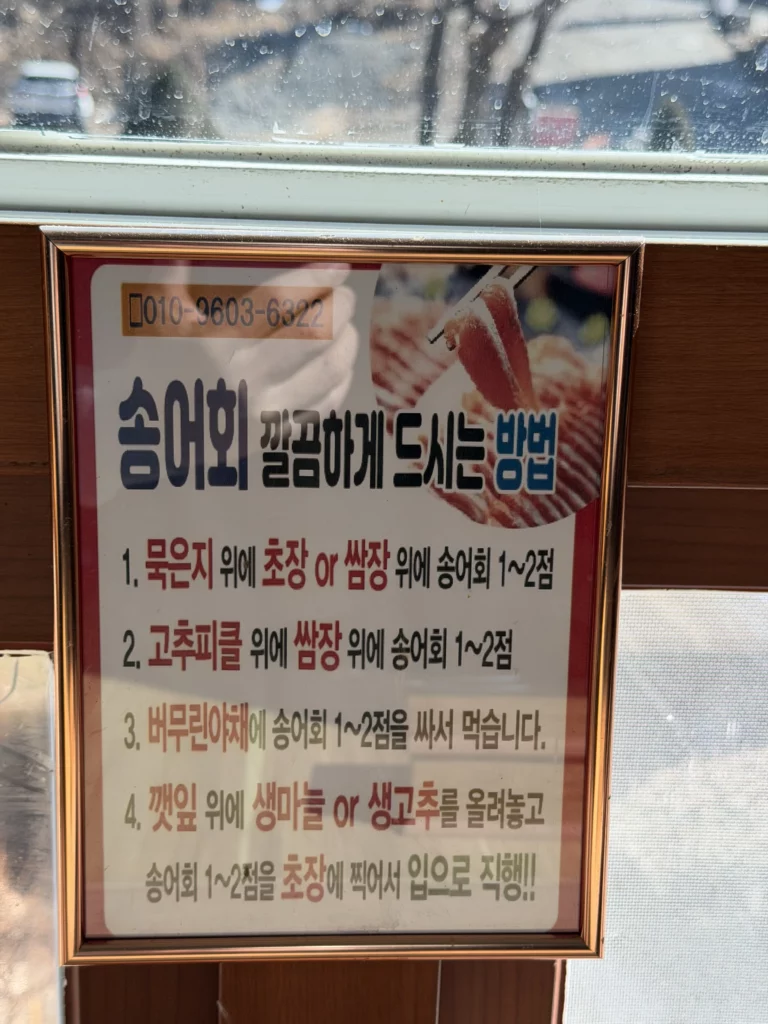
How to Eat Trout Sashimi the Korean Way
This is where 비발디 송어골 becomes a genuine cultural education, not just a meal.
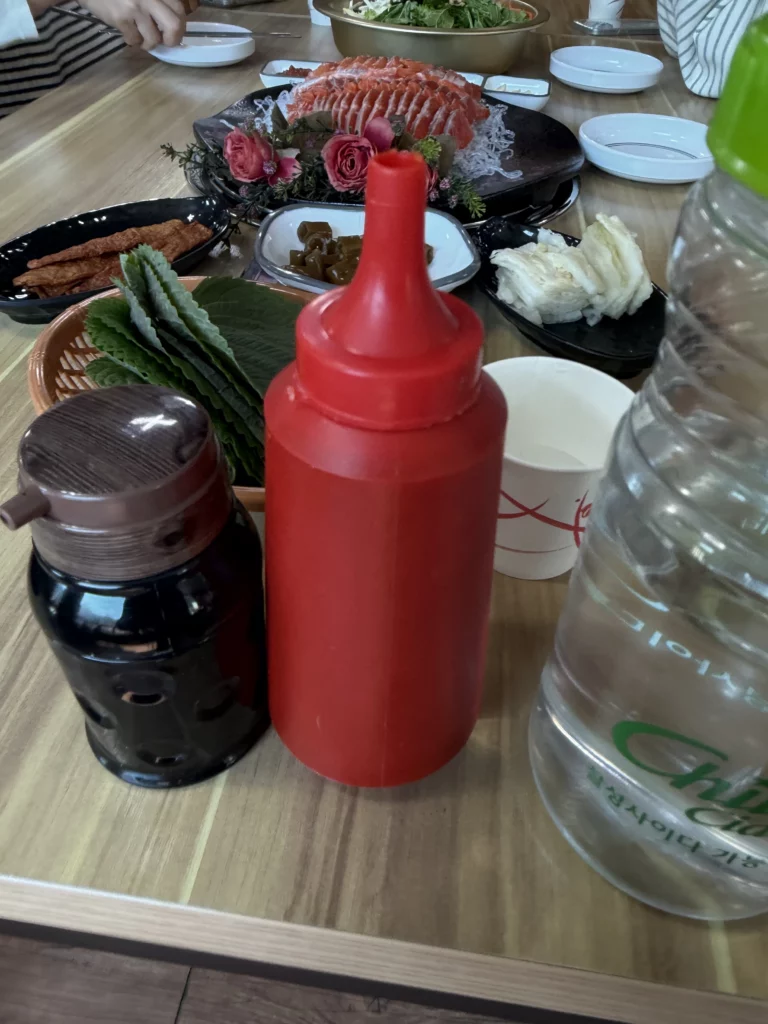
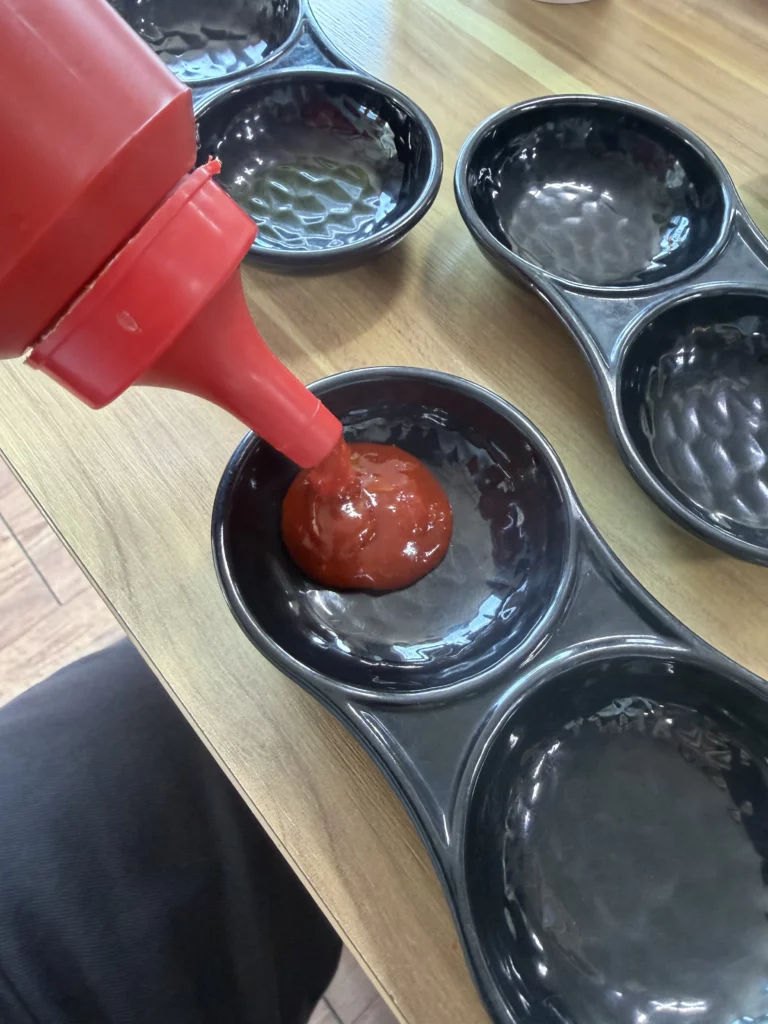
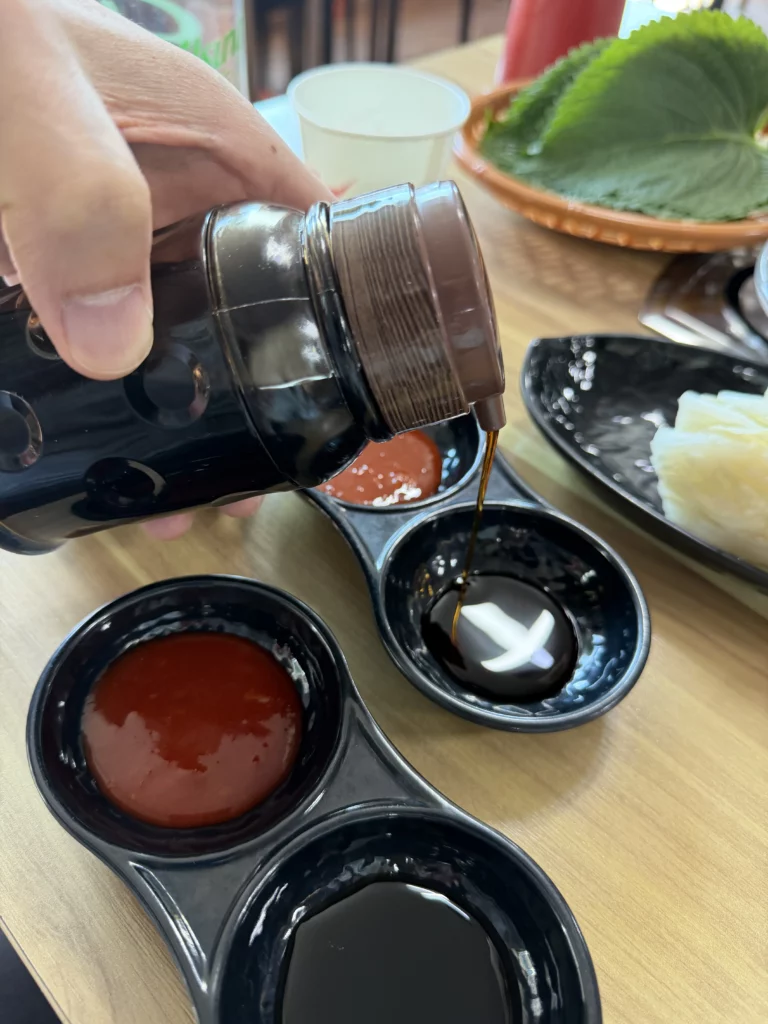
Step 1: The straight dip. Pick up a slice of trout with chopsticks and dip it directly into choganjang (초장) — a tangy, slightly sweet sauce made from gochujang (fermented red chili paste) mixed with vinegar. The result is a bright, punchy contrast to the mild, clean flavor of the fish. You can also dip into wasabi soy sauce (와사비 간장) for a more familiar, Japanese-influenced flavor profile.
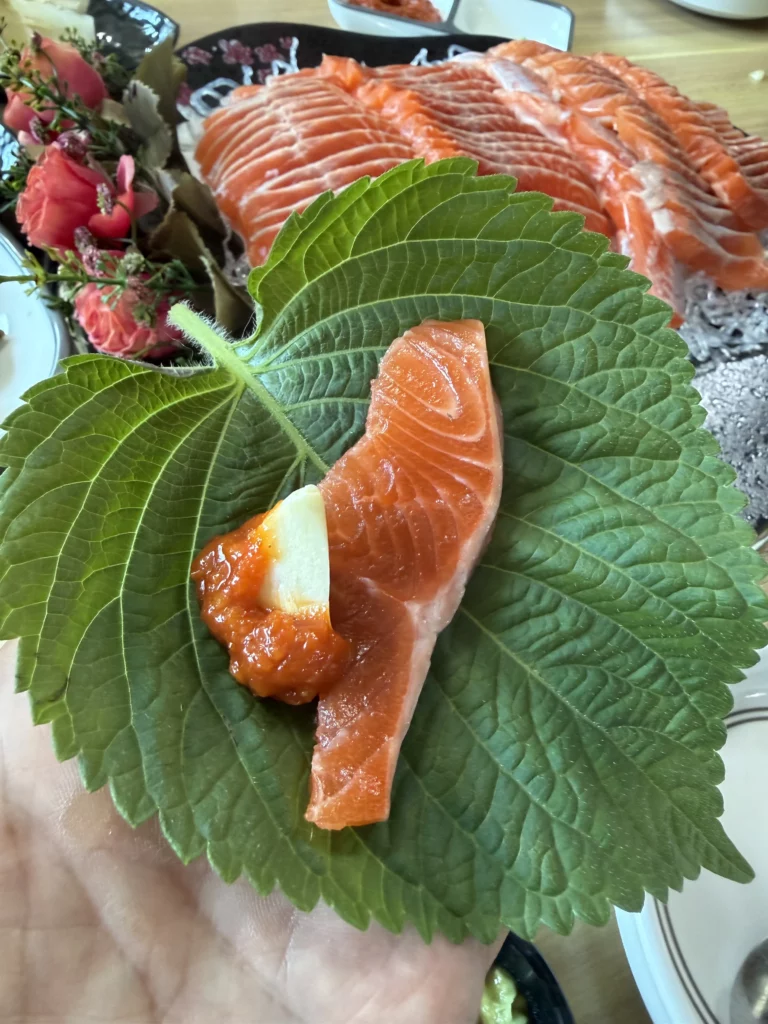
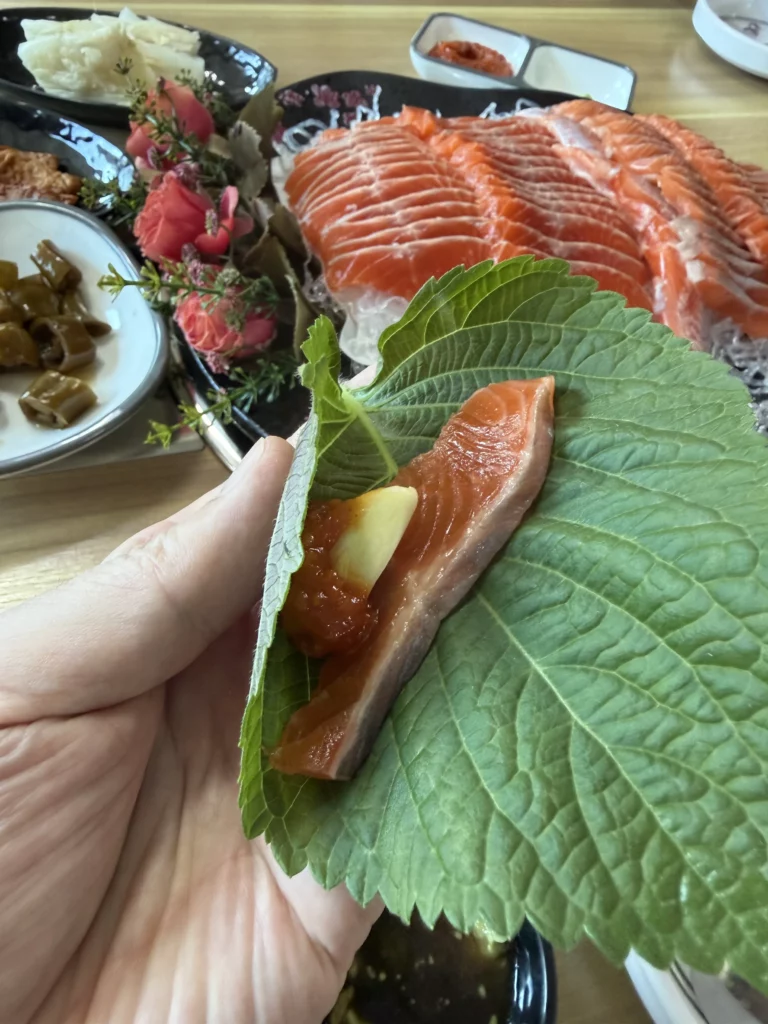
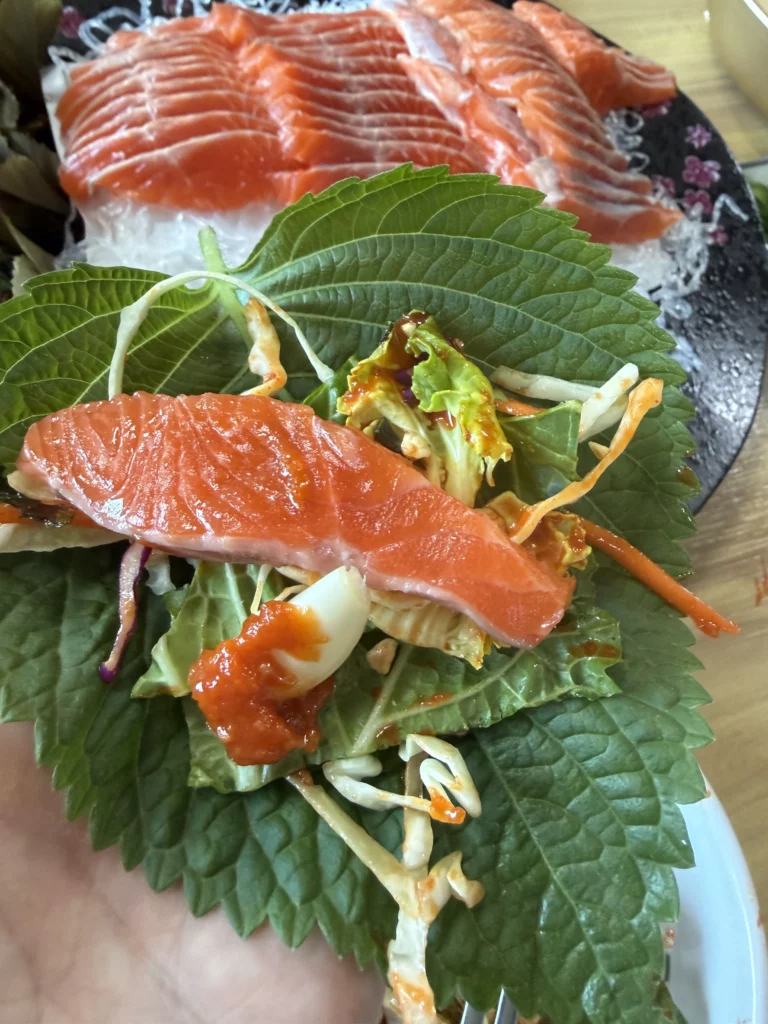
Step 2: Build a ssam. Take a leaf of fresh lettuce or perilla and place a slice of trout inside along with a small amount of choganjang. Fold it up and eat in one bite. The bitterness of the greens, the richness of the fish, and the acidity of the sauce combine into something far greater than their individual parts. Learn more about Korean perilla leaves, one of Korea’s most distinctive ssam vegetables.
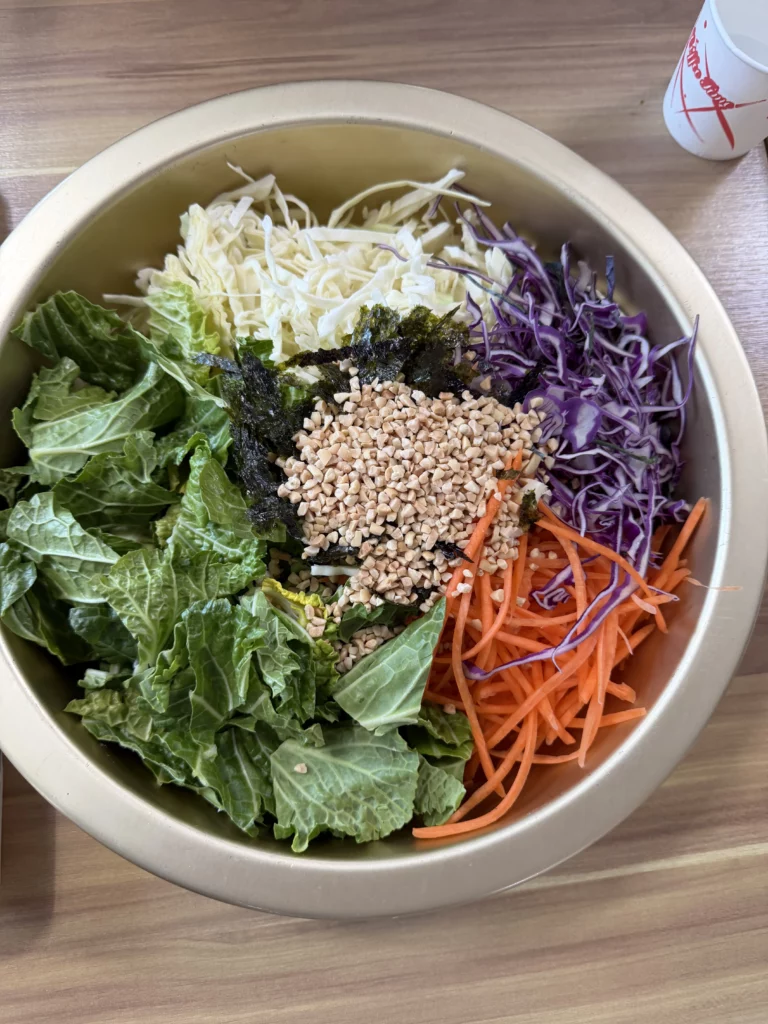
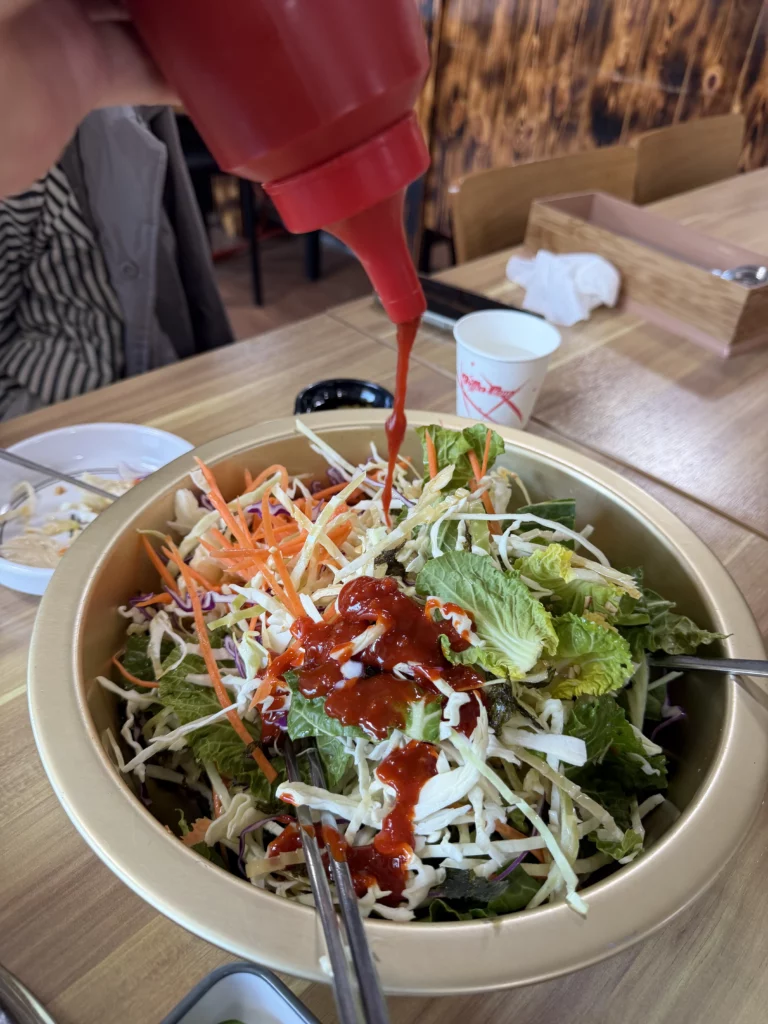
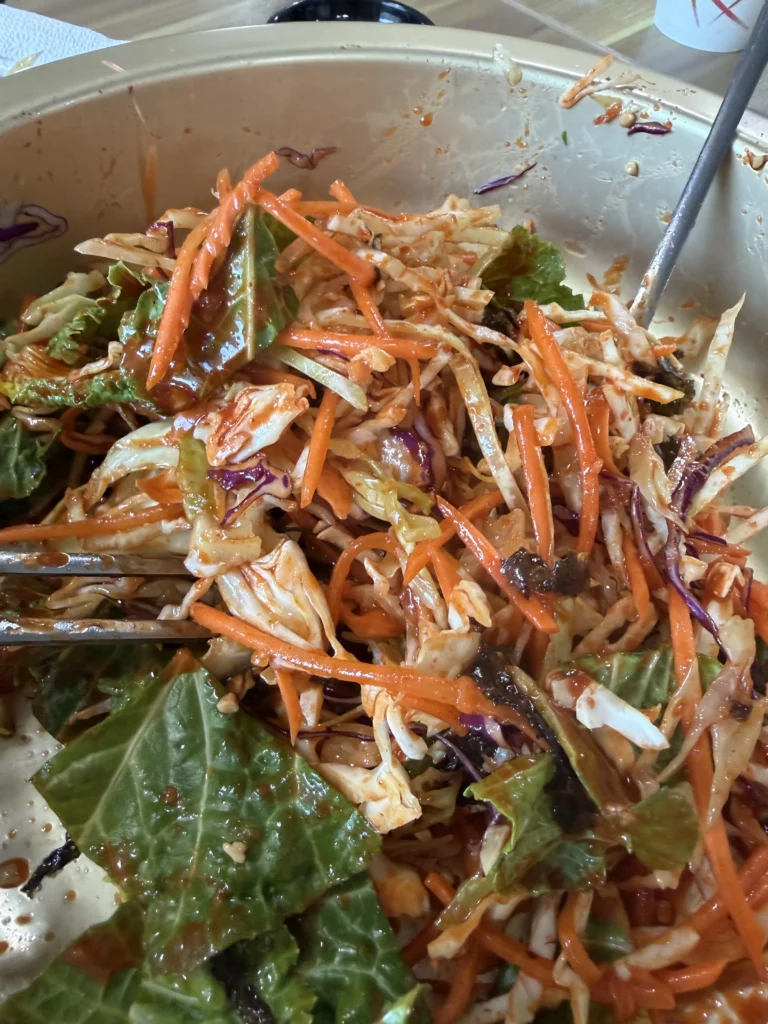
Step 3: The vegetable mix. At many tables, a bowl of fresh vegetables is served alongside the fish. Mixing these vegetables with choganjang and eating them alongside the trout creates a refreshing, palate-cleansing element between bites of sashimi — a technique that’s uniquely Korean and adds texture and brightness to the meal.
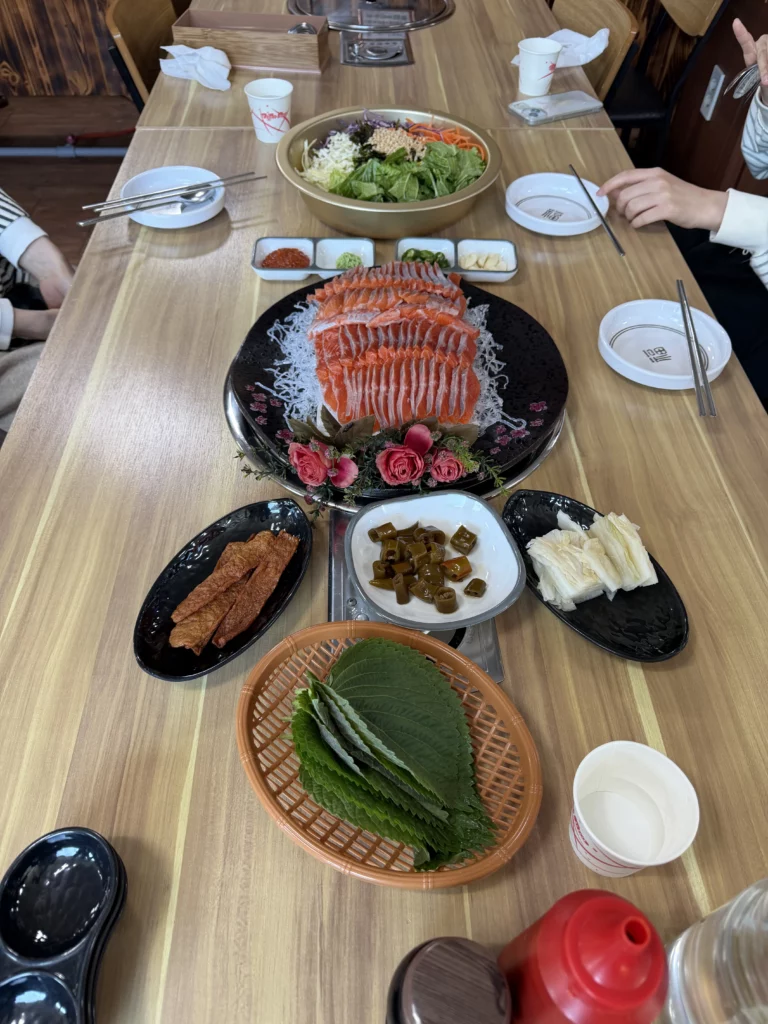
For a deeper dive into the role of ssam in Korean dining, the guide to banchan and Korean side dishes provides excellent context on how accompaniments shape the overall Korean dining experience.
Key Ingredients That Create the Flavors
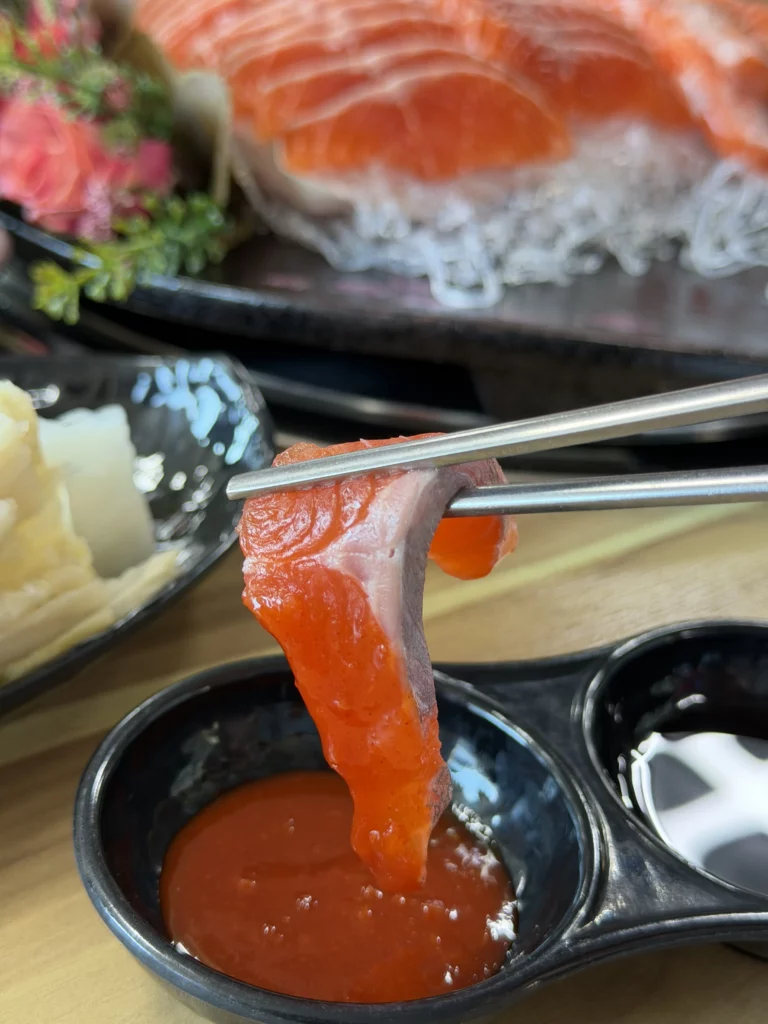
Choganjang (초장) — 고추장 (Gochujang) + Vinegar The signature dipping sauce for Korean freshwater sashimi. Gochujang is Korea’s fermented red chili paste — sweet, spicy, deeply umami, and the product of months of careful fermentation. Mixed with rice vinegar, it transforms into choganjang: bright, tangy, and perfectly calibrated to complement mild-flavored fish. The probiotics from fermentation add subtle health benefits on top of the flavor. Available at any Korean grocery store; no substitute fully replicates it.
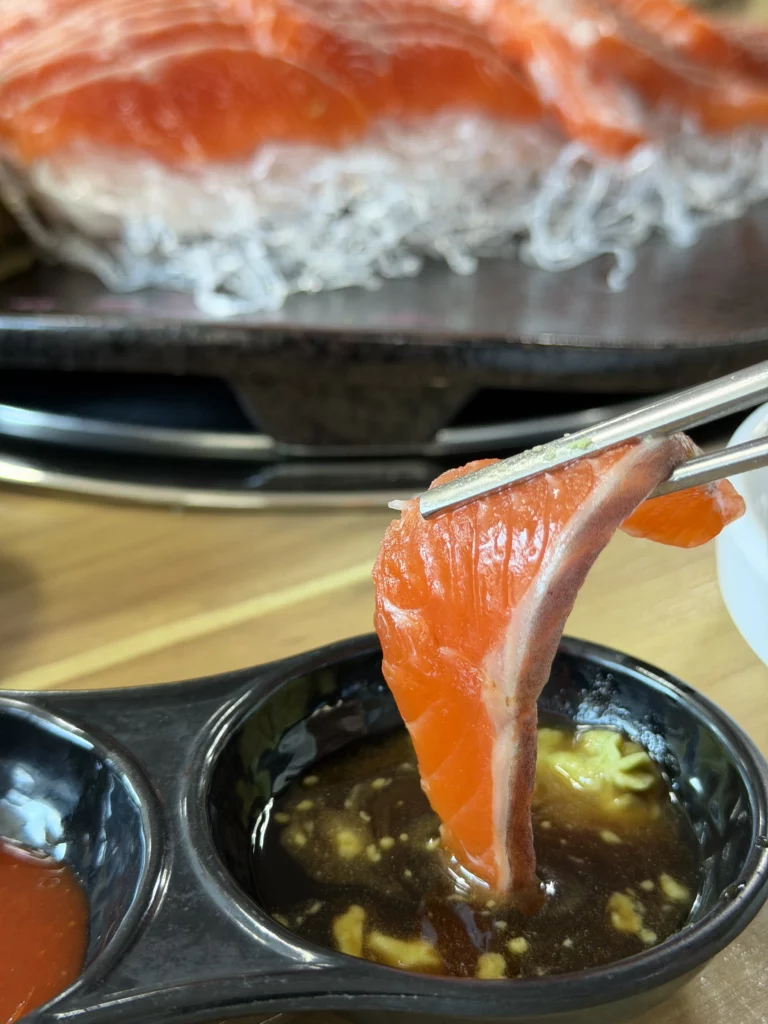
Korean Soy Sauce (간장, ganjang) Used in the wasabi dipping sauce, Korean soy sauce has a slightly different flavor profile from Japanese shoyu — generally deeper and more complex from traditional fermentation methods. It mellows the sharp heat of wasabi beautifully.
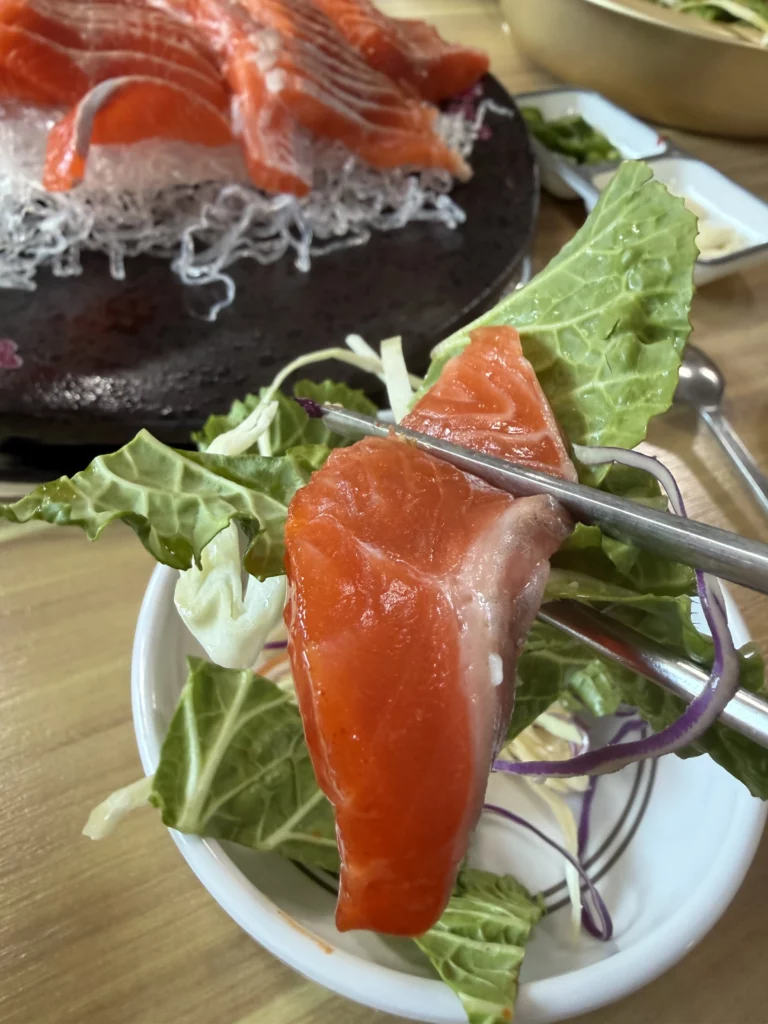
Ssam Vegetables (쌈 채소) Fresh leafy vegetables — typically red leaf lettuce, green leaf lettuce, and Korean perilla (깻잎) — used to wrap the fish. Perilla in particular has a distinctive anise-like fragrance that pairs exceptionally well with freshwater fish.
What Does Korean Trout Sashimi Taste Like?
Spice level: 1/10 for the plain fish; 4–5/10 when dipped in choganjang.
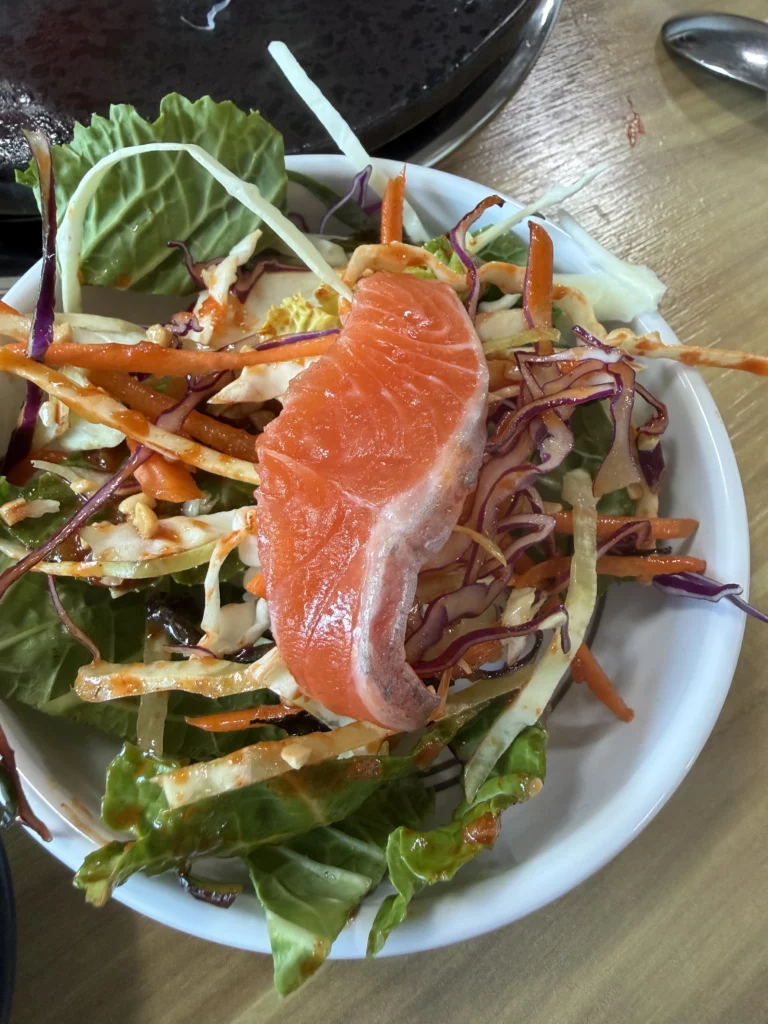
The trout itself is remarkably mild and clean — fresher than almost any fish you’ll encounter in a city restaurant, with a delicate sweetness and almost no fishy odor. The texture is firm yet silky, slightly softer than ocean fish sashimi, and it practically dissolves on the palate.
The flavor transformation happens entirely in the dipping and wrapping. Choganjang adds heat, tang, and fermented depth. Wasabi soy sauce adds sharp, sinus-clearing contrast. The ssam vegetables add herbal bitterness and crunch. Together, these elements create a full-spectrum taste experience that’s simultaneously refreshing and deeply satisfying.
What Should First-Time Eaters Know?
Korean freshwater sashimi is not the same as Japanese sashimi — nor should it be approached the same way. Here are a few things to keep in mind:
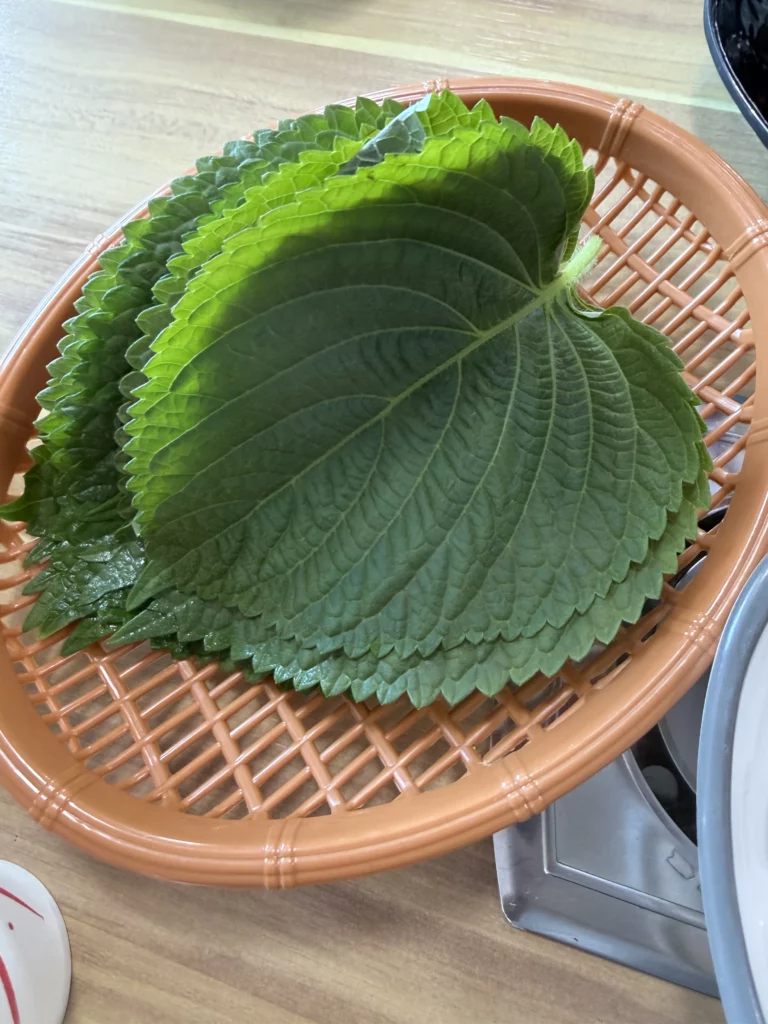
- Don’t skip the ssam. Many first-time visitors treat the lettuce and perilla as garnish. They’re actually central to the meal. Wrapping the fish in a leaf is the most satisfying bite on the table.
- Start mild, then build. Try the fish plain first, then with wasabi soy sauce, then with choganjang, to appreciate how each sauce changes the experience.
- Pace yourself. The sashimi course is generous, and the maeuntang arrives afterward. Leave room.
- The stew is not optional. Culturally, finishing a freshwater sashimi meal with maeuntang is standard practice — the bones and head of the fish yield a deeply flavored, hearty broth. Don’t leave before it arrives.
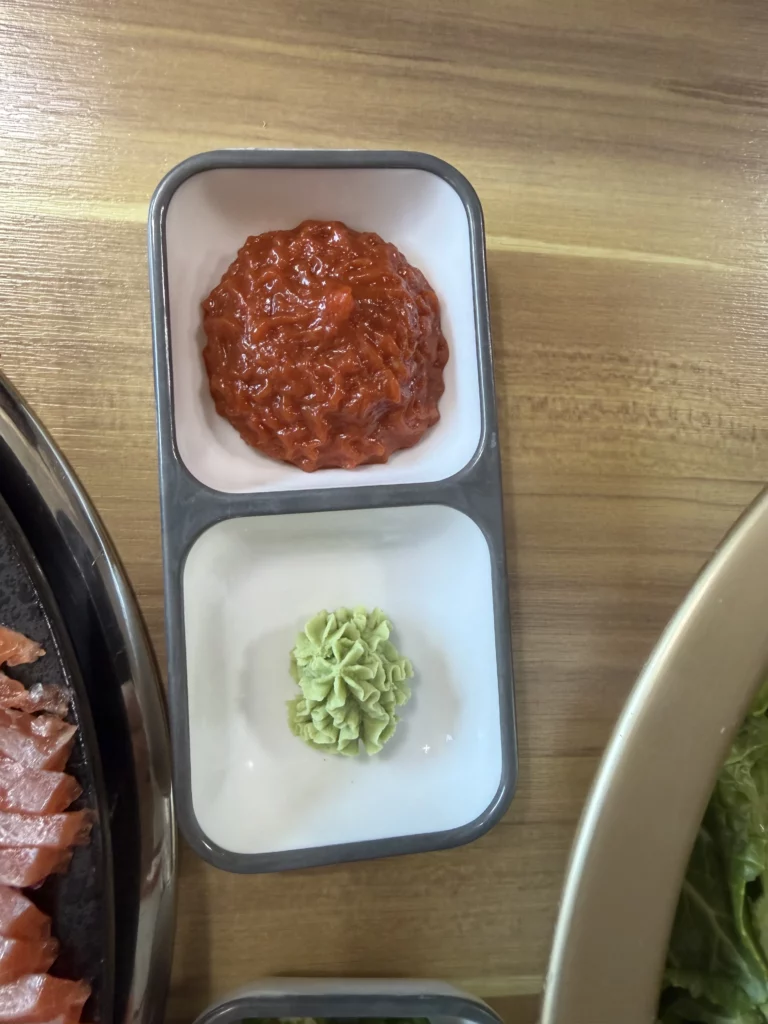
For those unfamiliar with how deeply sauces define Korean raw fish culture, the complete guide to gochujang and ssamjang provides excellent background reading.
The Full Meal: From Sashimi to Maeuntang
The dining structure at 비발디 송어골 follows a classic Korean freshwater fish restaurant format:
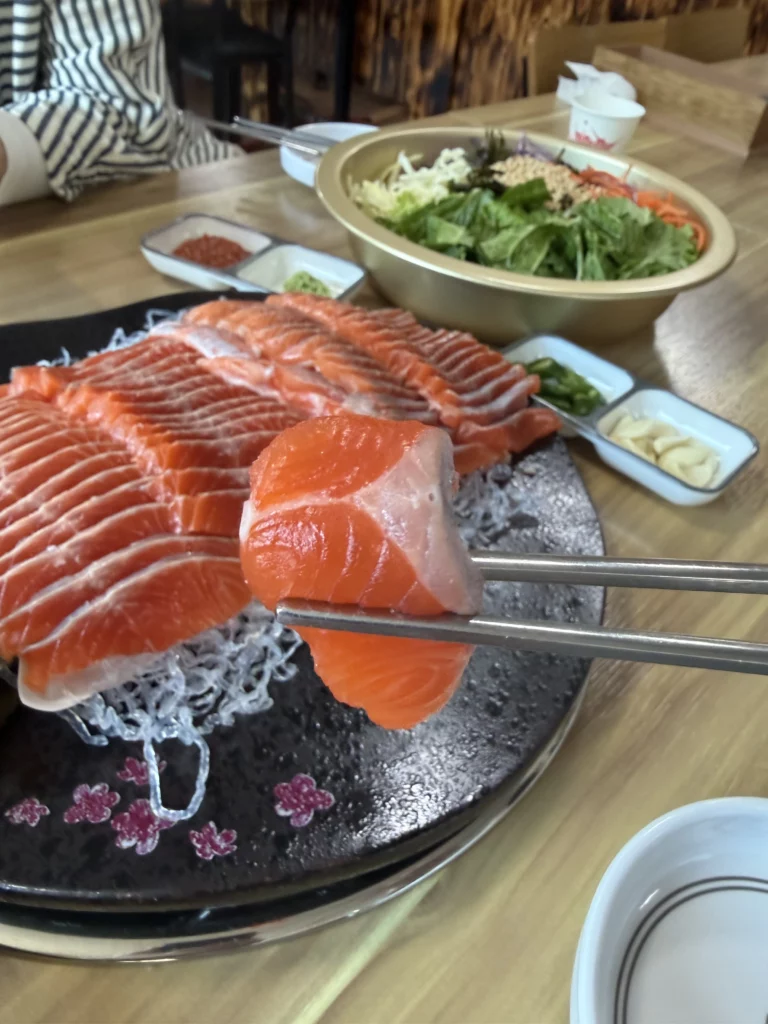
Act 1 — Trout sashimi (송어회): The main event. Sliced fresh to order and served with choganjang, wasabi soy sauce, ssam vegetables, and a vegetable salad to mix and eat alongside.
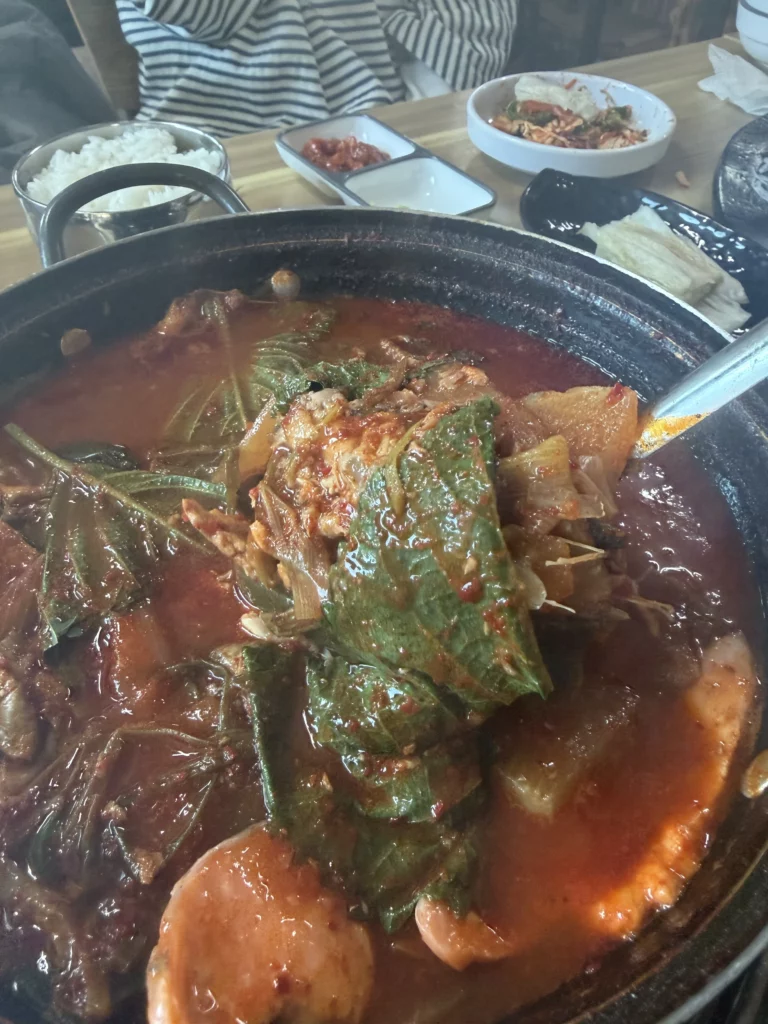
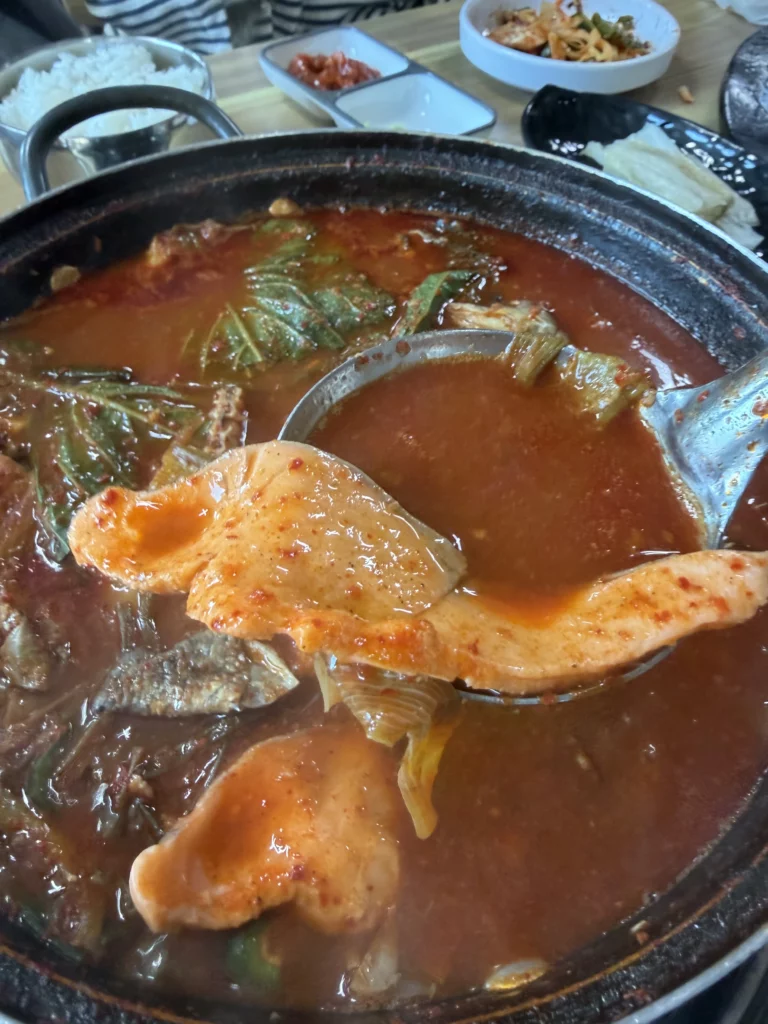
Act 2 — Maeuntang (매운탕): After the sashimi, the remaining fish parts — head, bones, collar — go into a large stone pot with gochugaru, vegetables, tofu, and green onions. The resulting stew is fiery, rich, and packed with the natural sweetness of fresh fish. It’s a Korean dining tradition that ensures nothing goes to waste and that the meal ends on a warming, satisfying note.
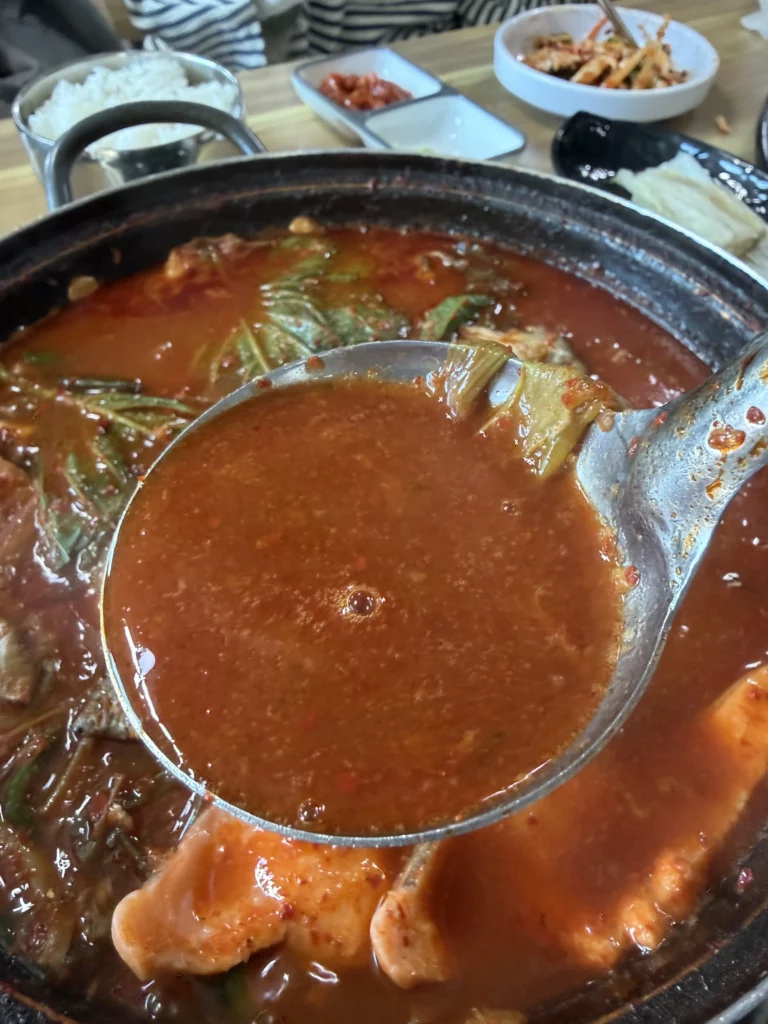
This combination — clean raw fish followed by warming, spicy stew — represents Korean mountain dining at its finest, and it’s why restaurants like 비발디 송어골 draw visitors from Seoul willing to make the two-hour drive. The broader Korean seafood culture explored at Noryangjin Fish Market shows just how central freshness is to the Korean approach to fish.
If you’re making a Gangwon Province trip and love freshwater fish dining, pair this with a visit to another riverside gem: Korean trout sashimi at Yangsuri for comparison. Also consider stopping by Cheongpyeong Lake for dak galbi, another Gangwon institution that makes the region a serious food destination in its own right.
Practical Information
- Name: 비발디 송어골 (Vivaldi Songeogol)
- Location: Hongcheon-gun, Gangwon Province (홍천군, 강원도), near Vivaldi Park resort
- What to order: 송어회 세트 (trout sashimi set) — typically includes sashimi, ssam vegetables, dipping sauces, and maeuntang
- Price range: ₩20,000–₩40,000 per person (set menus)
- Best time to visit: Year-round; especially popular in winter as a warm-up after skiing at Vivaldi Park, and in spring/autumn for scenic mountain views
- Getting there: Approximately 90–120 minutes from Seoul by car via Route 44. Limited public transportation; driving recommended.
- Reservations: Recommended on weekends and holidays
According to Korea Tourism Organization’s regional food guides, Gangwon Province’s mountain and river food culture is considered one of Korea’s most distinctive regional culinary traditions — and a meal at 비발디 송어골 is a compelling illustration of why.
A Meal Worth the Drive
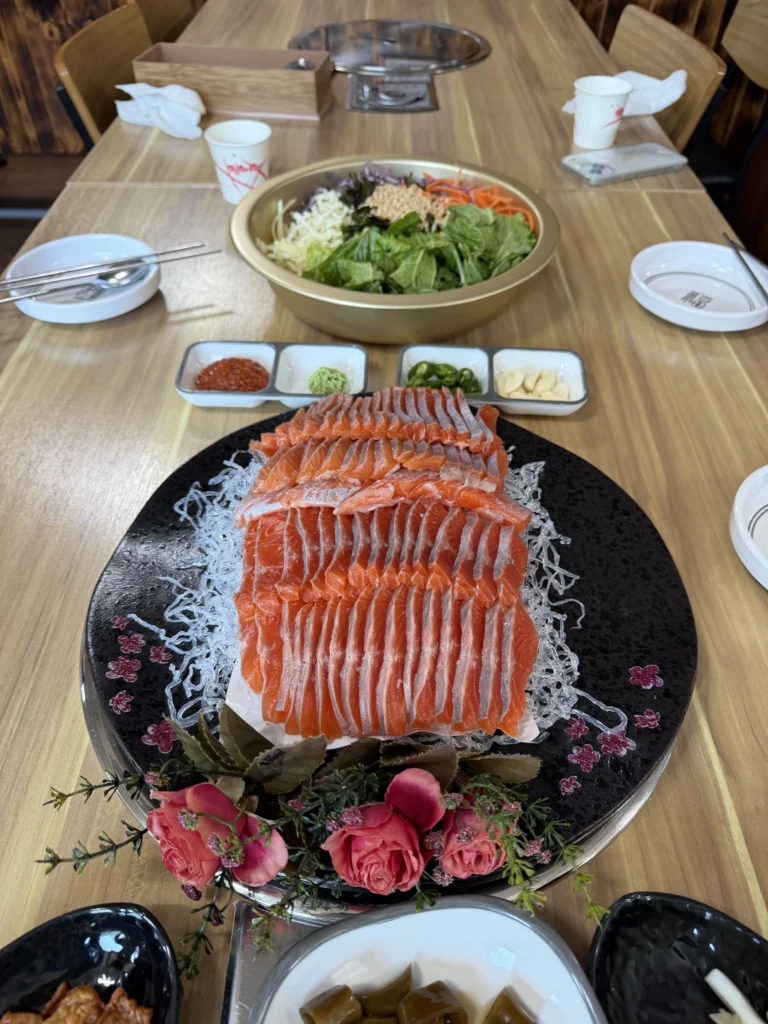
The trout sashimi experience at 비발디 송어골 isn’t simply about eating raw fish — it’s about engaging with a centuries-old Korean relationship between mountain landscapes, clean water, and fresh food. From the first clean bite of chilled trout dipped in choganjang to the last ladle of bubbling maeuntang, every element of the meal is built around freshness, balance, and the particular pleasure of eating well in a beautiful setting.
If you’re planning a trip to Gangwon Province — for skiing at Vivaldi Park, for autumn foliage, or simply for the food — make space for this meal. Share this guide with a friend planning a Korea trip, and feel free to leave a comment if you’ve had your own experience with Korean freshwater sashimi.
Have you tried trout sashimi in Korea? What was your favorite dipping style — choganjang or wasabi soy sauce?
🩺 Dr.’s Nutritional Insight
Rainbow trout’s distinctive pink flesh owes its color to astaxanthin, a xanthophyll carotenoid with potent antioxidant activity — reported at 100–500 times greater than vitamin E. A 2021 systematic review and meta-analysis of nine randomized controlled trials found that oral astaxanthin intake significantly improved skin moisture content and elasticity, two key markers of skin aging (Nutrients, 2021). While the concentrations studied used supplemental doses, regularly consuming astaxanthin-rich fish like trout contributes to cumulative dietary intake of this skin-protective carotenoid.
Beauty Benefit: Anti-Aging ✨ | Skin Health 🌿
Nutritional insight provided by Dr. James Lee, Board-Certified Plastic Surgeon
Related from K-Beauty Kitchen: how Korean food fits together for skin, aging and recovery.
Location
23 Daegok-ri, Seo-myeon, Hongcheon-gun, Gangwon-do, South Korea, KR
Reviews
5.0
0 reviews
5
0%
4
0%
3
0%
2
0%
1
0%
Loading reviews...
Related Ingredients

Ingredient
Korean Mackerel (Godeungeo)
Few ingredients carry as much quiet authority on the Korean dinner table as Korean mackerel — known locally as godeungeo...

Ingredient
Korean Squash Leaves
When summer arrives in Korea, home cooks eagerly anticipate one of the season’s most cherished ingredients: tender Korean squash leaves,...

fish
Yichunok Mackerel Ssambap: BTS Favorite Jeju Restaurant
Jeju-do 7213, Iljuseo-ro, Aewol-eup, Jeju-si
5

fish
Cheombung Agujjim: Garosu-gil Braised Monkfish
1st floor 16-2 Nonhyeon-dong, Gangnam District, Seoul
4

fish
Won Daegu-tang, Cod-fish Stew
1st Floor 8 Hangang-daero 62ga-gil, Yongsan District, Seoul
4

fish
Ihwa Sikdang: Fresh Jindo Seafood & Authentic Jeolla-Style Korean Home Cooking Ihwa restaurant
Jeollanam-do , south korea 494-13, Namdong-ri, jindo-eup
5