


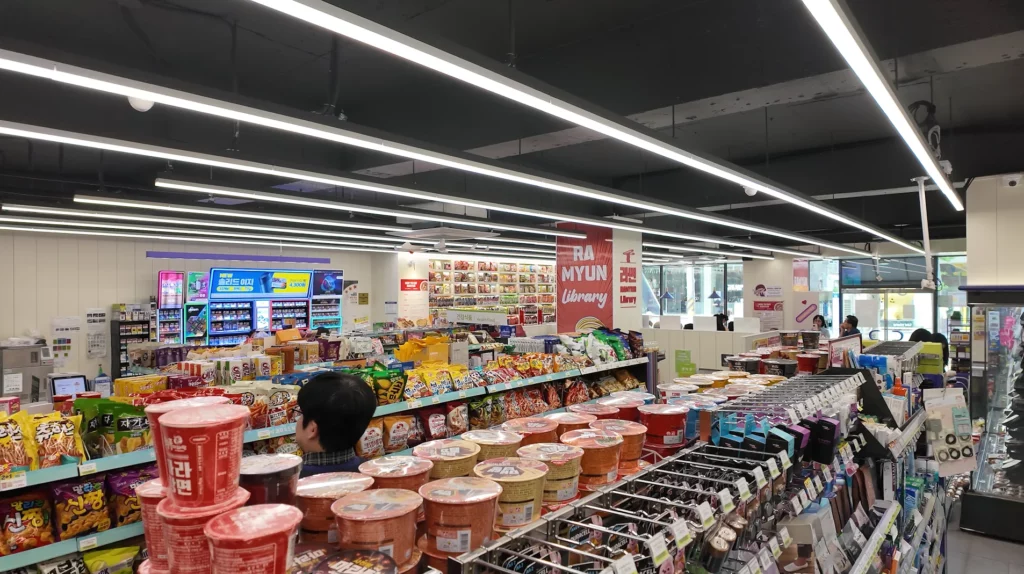
Tucked into the Hongdae neighbourhood of Seoul, the CU Ramyun Library doesn’t look like much from the street — it’s a convenience store. Step inside, though, and an entire wall of floor-to-ceiling wooden shelves stretches out before you, packed with over 225 varieties of Korean instant noodles, organized by spice level like novels in a literary archive. Tables shaped like giant cup noodles line the space. An automated ramyeon cooker hums in the corner, ready for your order. This is the Ramyun Library — Seoul’s most photogenic, most talked-about, and most uniquely Korean dining experience of the decade. Whether you’ve been eyeing it on TikTok for months or you’ve just stumbled into Hongdae for the evening, this guide covers everything you need to know before you walk through the door.
Seoul's Ramyun Library: The Ultimate Guide to the CU Hongdae Experience
Mapo-gu, Seoul, Republic of Korea 1F, Bldg 1, Room 101, 25, Jandari-ro
Editor: James Lee


Overview
Introduction
Operating hours
Menu
Editor's Detail
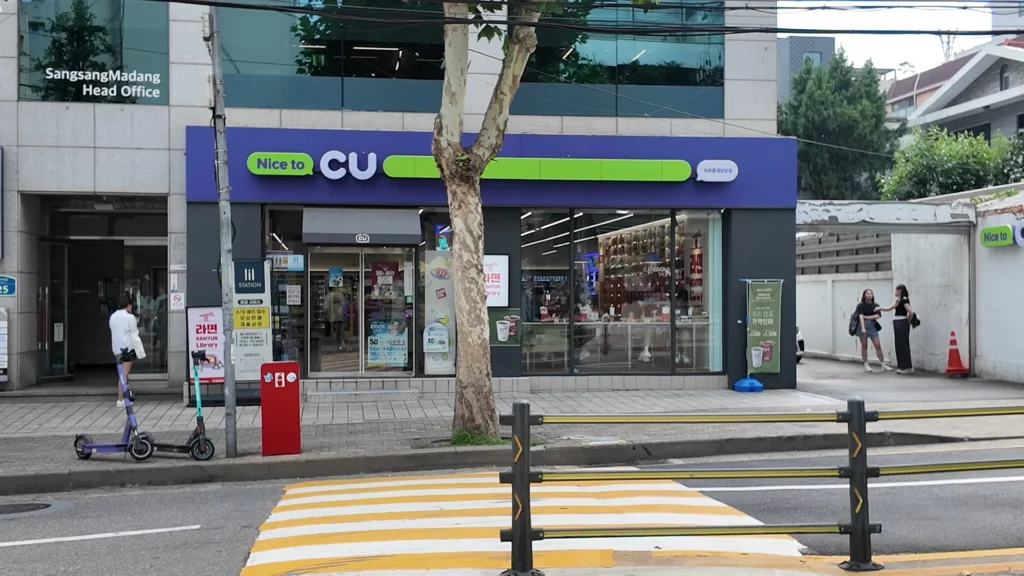
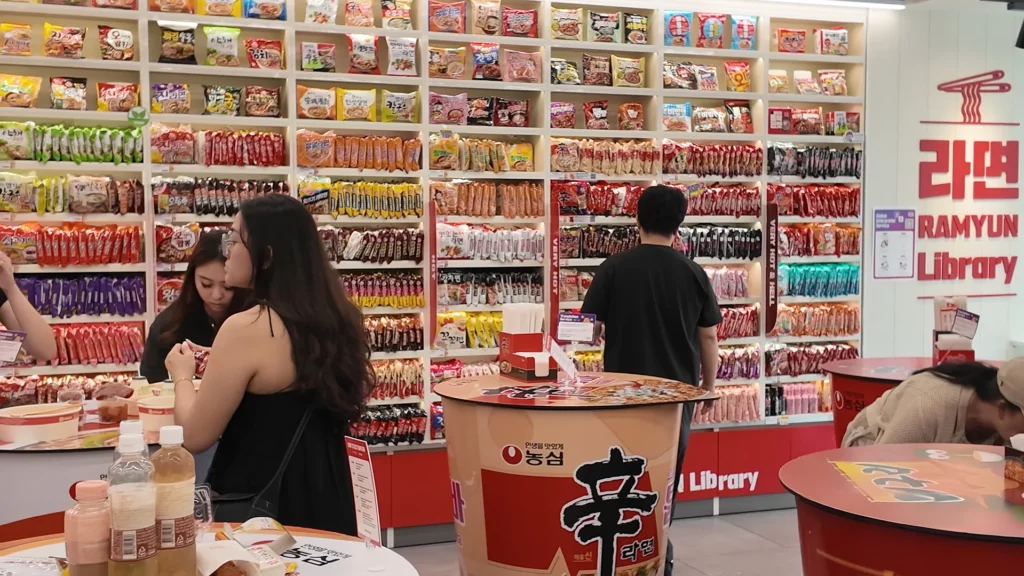
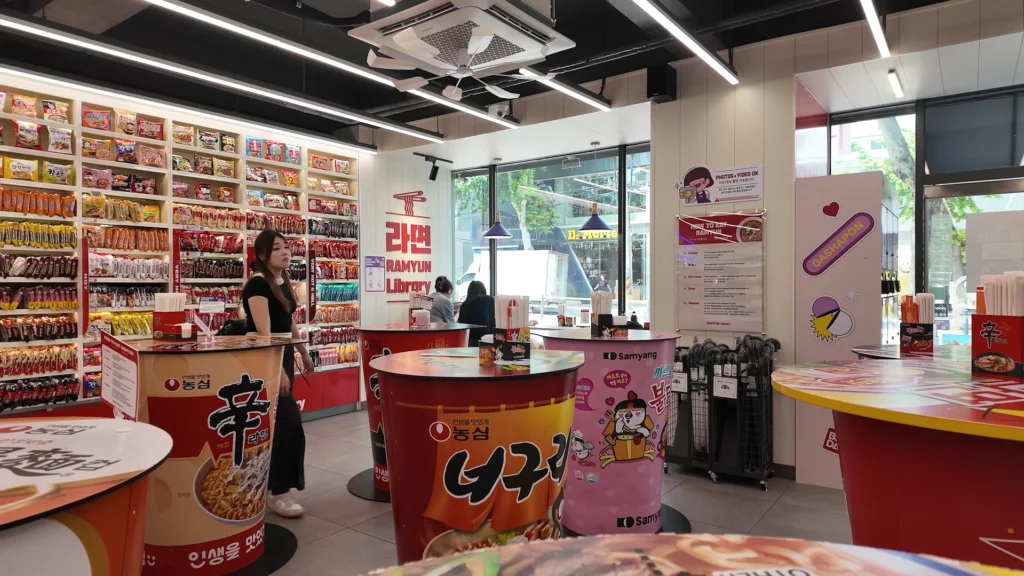
Walk into most convenience stores in Seoul and you’ll find a respectable wall of instant noodles — perhaps thirty varieties, stacked neatly by brand. Walk into the CU Hongdae Sangsang Branch (CU 홍대상상마당점) and you’ll find 225 varieties arranged floor to ceiling in a shelving unit so elaborate it genuinely resembles a library, categorized by spice level, noodle texture, and broth base. Steam rises from automated cooking machines nearby. Giant cup-noodle-shaped tables glow under warm lighting. Outside, the Hongdae night market buzzes on.
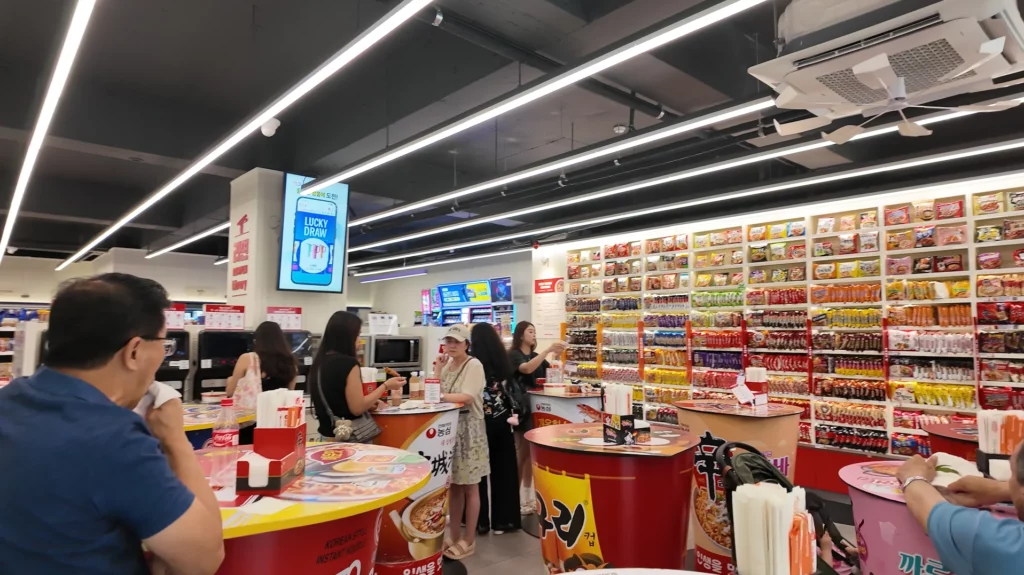
This is the Ramyun Library (라면 도서관) — a concept that opened in December 2023 and immediately became one of Seoul’s most-shared food experiences on global social media. It is not a restaurant. It is not a museum. It is a working CU convenience store that has turned instant noodle culture into an immersive, Instagrammable, deeply Korean cultural encounter. And for anyone who wants to understand why K-food has the world’s attention right now, it is absolutely the right place to start.
Table of Contents
- What Is the CU Hongdae Ramyun Library?
- The Wall of Ramyun: Navigating 225+ Choices
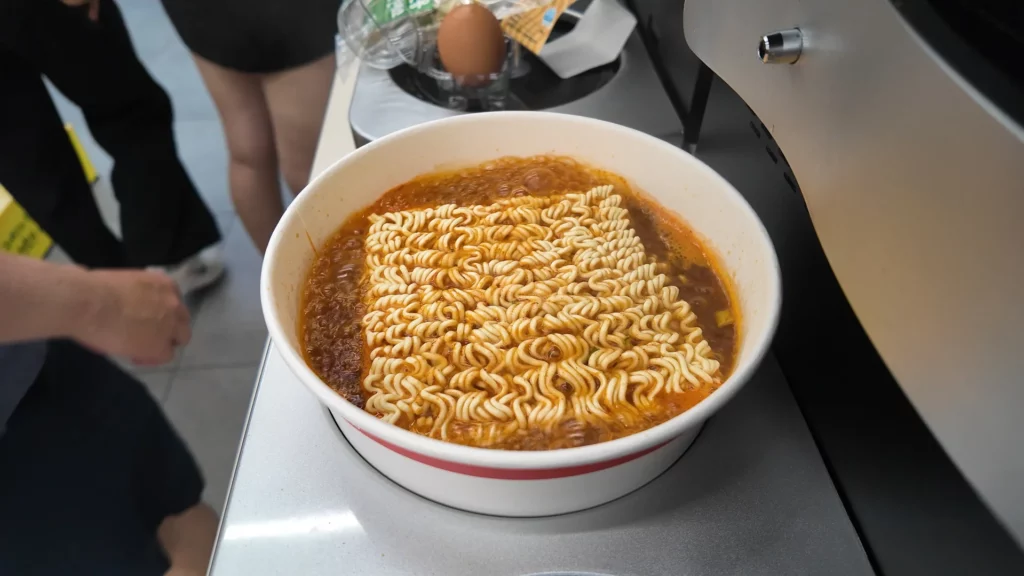
- How the Ramyun Cooker Experience Actually Works
- What Makes Korean Ramyeon Uniquely Korean?
- Three Key Ingredients Behind the Flavour
- How Would You Describe the Taste and Spice Levels?
- What Should First-Time Visitors Know?
- Drink Pairings: Iced Coffee, Banana Milk, and Beyond
- Practical Visitor Information (Hours, Getting There, Payment)
- The Broader K-Convenience Store Culture This Place Celebrates
- Final Thoughts and How to Plan Your Visit
What Is the CU Hongdae Ramyun Library?
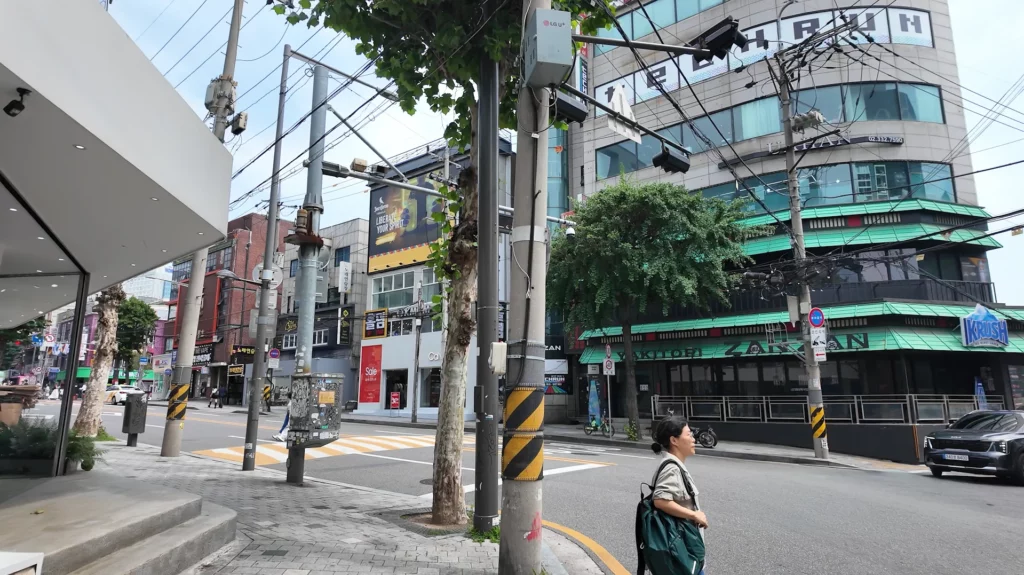
The Ramyun Library sits inside a standard-looking CU branch at 25 Jandari-ro, Mapo-gu, Seoul (서울 마포구 잔다리로 25). From the outside, it announces itself only with a small sign. Inside, the transformation is immediate.
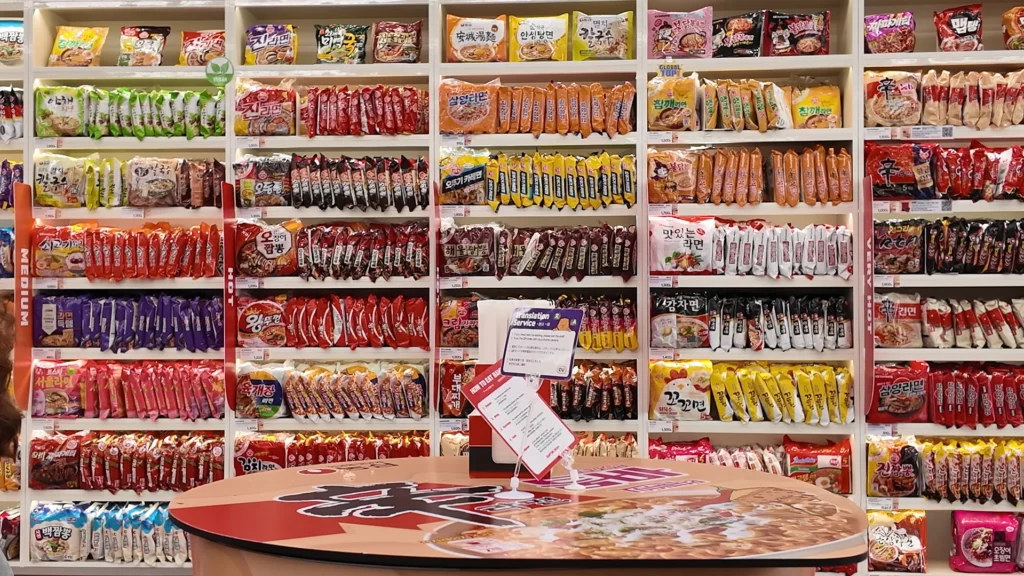
One full wall is given over to a 100-compartment wooden display case holding approximately 105 distinct instant noodle products in permanent display, with the store stocking over 225 varieties in total — including Korean stalwarts, rare regional editions, and international picks from Japan, Indonesia, and Vietnam. Considering that most Korean convenience stores carry around 30 types of instant noodles, the collection here is roughly seven times that size.
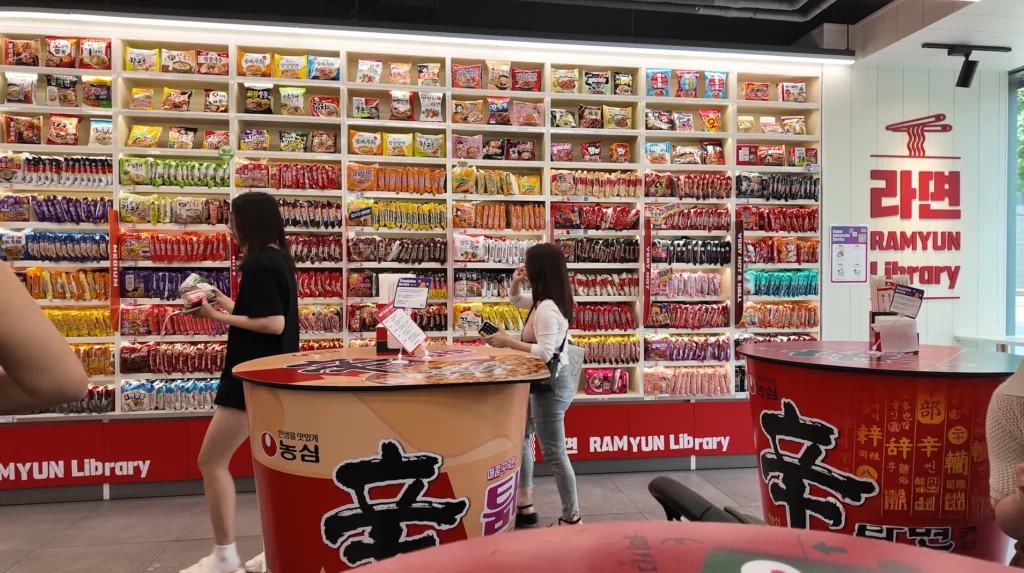
BGF Retail, the company that operates CU, designed the space deliberately to tap into what they call the "modisumer" trend: consumers who want to modify, customize, and combine products into their own unique experience. The Ramyun Library is not a place to grab noodles and leave — it is a place to browse, deliberate, cook, photograph, and eat, all within the same 200 square metres.
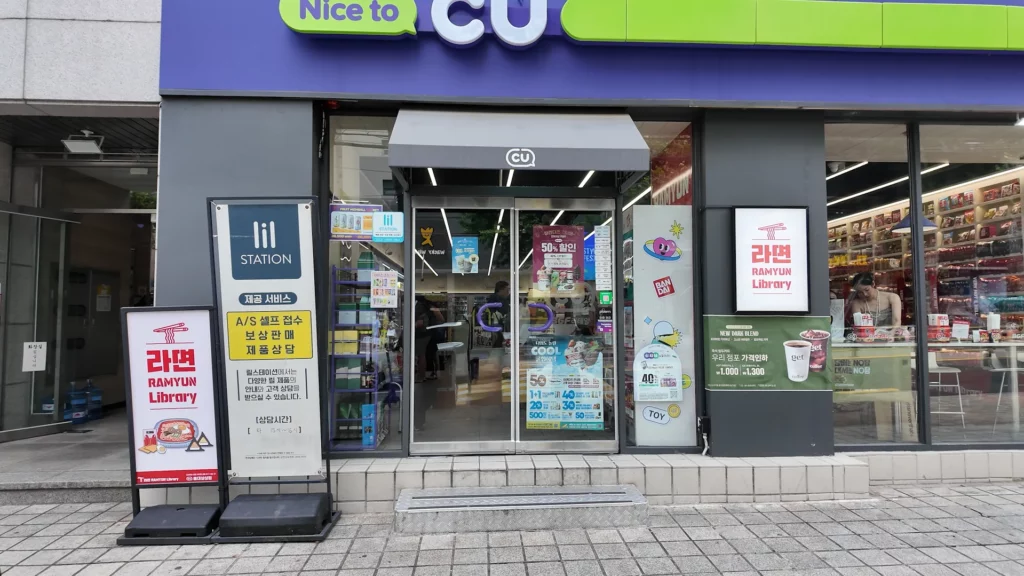
Since opening, the store has drawn an average of 600 to 700 visitors every day, with roughly 65% of those visitors coming from outside Korea. It sells ten times more ramyeon packages than a typical CU branch. The success has since inspired a second K-Ramyun Library location at Incheon International Airport’s Terminal 2 — a logical expansion, given how many international travellers have added the Hongdae original to their Seoul itineraries.
The Wall of Ramyun: Navigating 225+ Choices
The wall is the main event. Each product slot carries a small multilingual label — available in English, Japanese, and Chinese — describing the flavour profile, price, and spice level on a five-tier scale:
Spice LevelDescriptionExample
★☆☆☆☆
Mild
Nongshim AnSungTangMyun (mild version)
★★☆☆☆
Medium
Ottogi Chamke Ramen (sesame)
★★★☆☆
Hot
Budae Jjigae Ramen, Sesame Ramen
★★★★☆
Very Hot
Shin Ramyun
★★★★★
Hell
Buldak Bokkeum-myeon (Fire Noodles)
A Top 5 live ranking board near the cooker stations updates regularly based on actual sales, which removes some of the pressure of choosing from 225 options. At time of writing, the consistently top-ranked noodles include the Budae Jjigae Ramen (army stew noodles, famous for their rich, spicy broth loaded with sausage and kimchi flavour), the Nongshim AnSungTangMyun, and the Ottogi Chamke Ramen — a sesame-forward, moderately spicy bowl that many first-timers find approachable. To understand the Budae Jjigae flavour profile in more depth — and its surprising post-Korean War origin story — the complete guide to Budae Jjigae on Taste Korean Food is worth reading before or after your visit.
Beyond Korean brands, the library also stocks Japanese shoyu ramen, Vietnamese phở-style instant noodles, and Indonesian mie goreng — a nod to the global community of noodle lovers who show up at this Hongdae convenience store every evening.
How the Ramyun Cooker Experience Actually Works
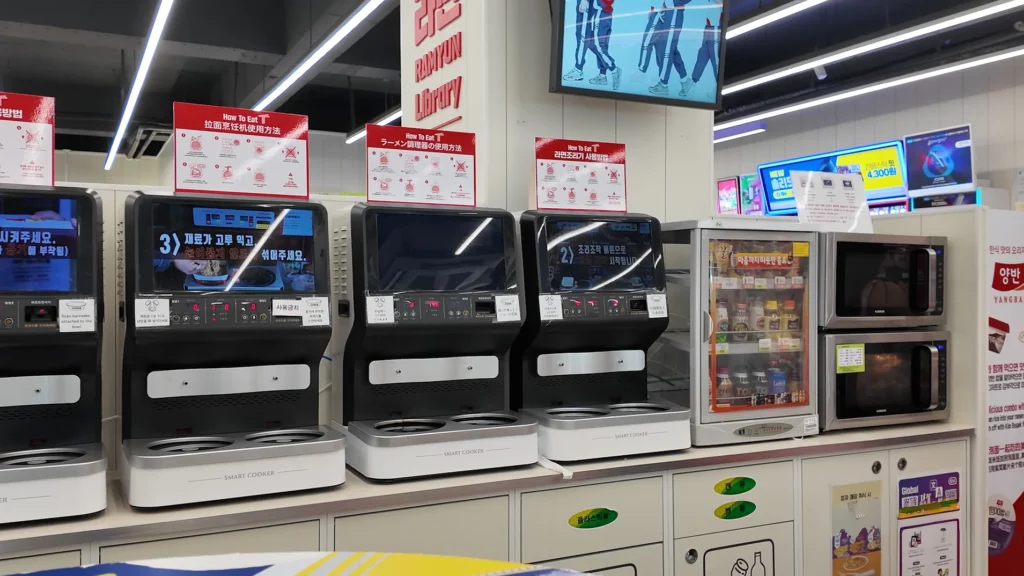
The cooking process is straightforward and satisfying, modelled on the beloved Hangang River ramyeon experience (한강 라면) — the Korean tradition of cooking and eating instant noodles outdoors by the Han River — but brought indoors with a slicker, automated setup.
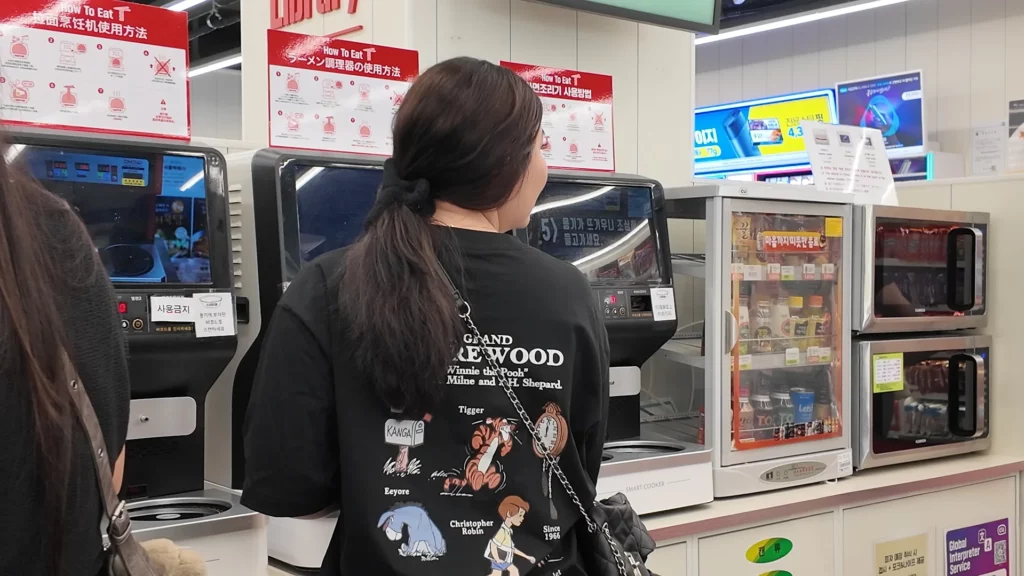
Step-by-step:
- Browse the wall and select your ramyeon (bag or cup format both available).
- Head to the checkout and pay for your noodle, plus a special paper cooking vessel (900 won) if you’re making a bag variety.
- Walk to the automated ramyeon cooker station.
- Open your noodle package, place noodles and seasoning into the paper vessel.
- Scan the vessel’s barcode with the built-in reader.
- Press Start Cooking — the machine reads the barcode and automatically dispenses the correct amount of hot water for the precise cooking time.
- Wait, customise with toppings, and eat at one of the cup noodle-shaped tables.
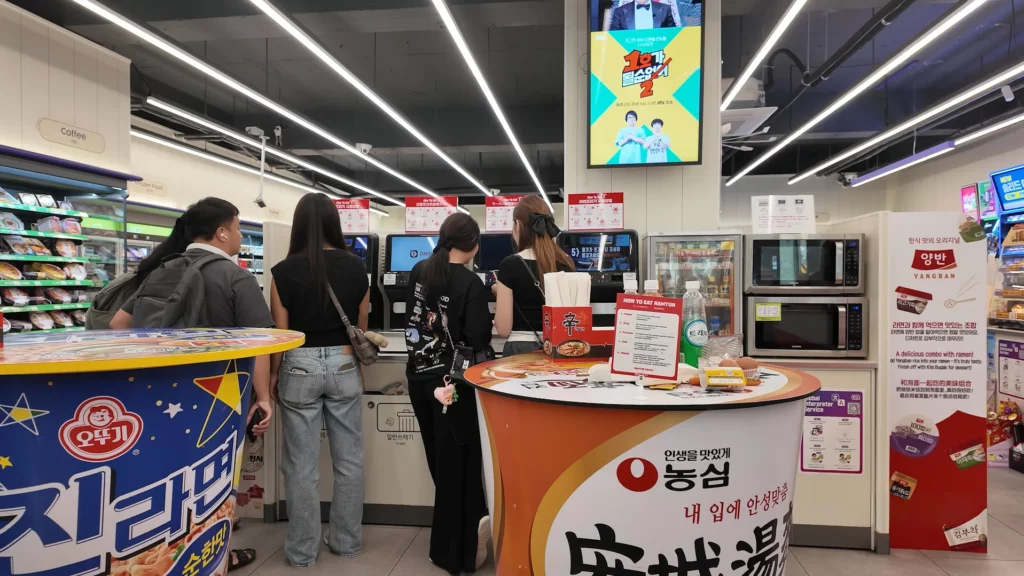
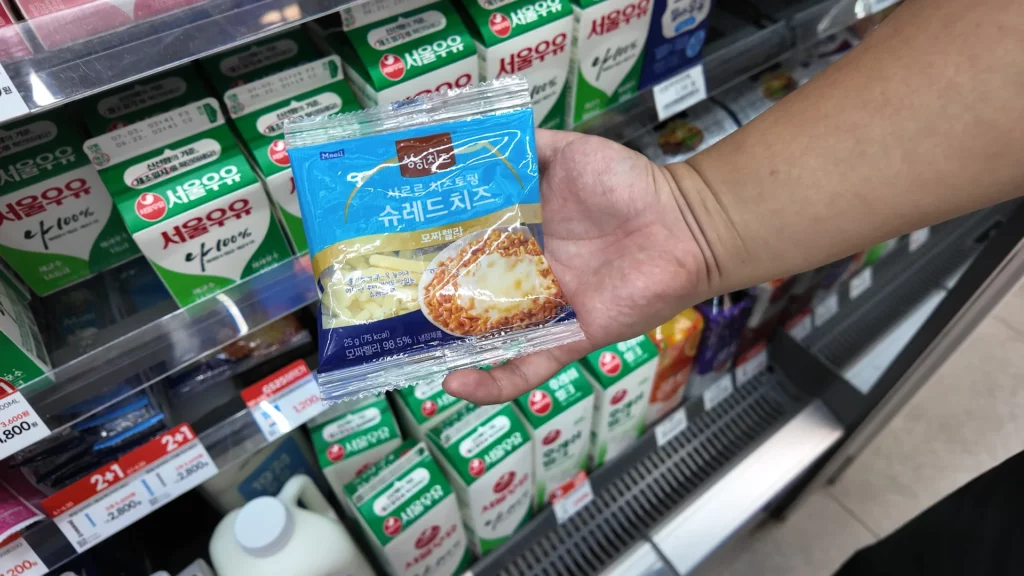
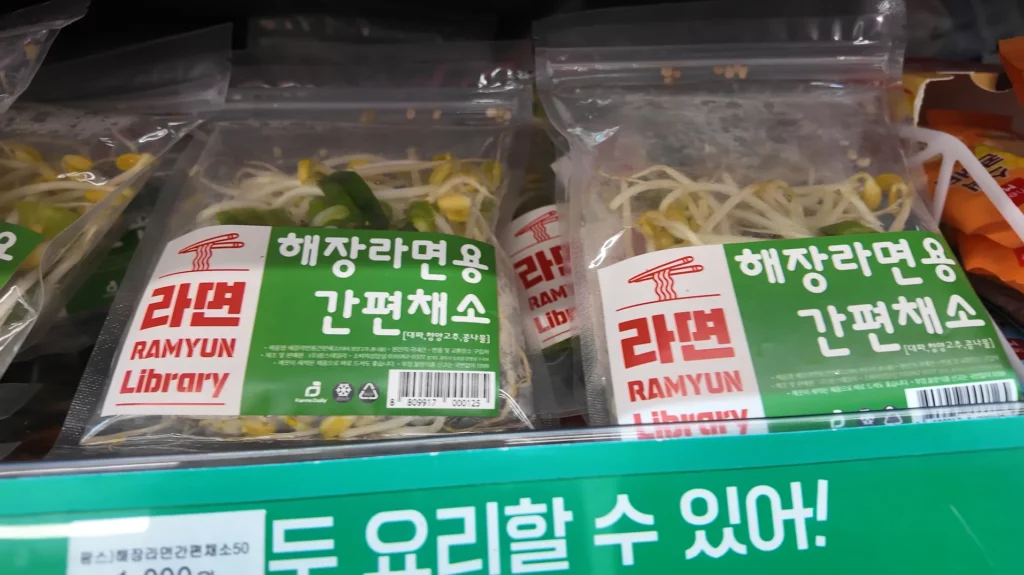
The toppings station on the far side of the store is where the real personalisation happens. Eggs, sliced cheese, fish cake (eomuk, 어묵), bean sprouts, kimchi, sausage, tteokbokki (떡볶이), and green onions are all available as individual add-ons. Adding a cracked egg to spicy ramyeon — a classic Korean hack — softens the heat and adds richness in a way that transforms a simple bowl. Adding a slice of processed cheese to Budae Jjigae Ramen rounds out its heat into something almost creamy.
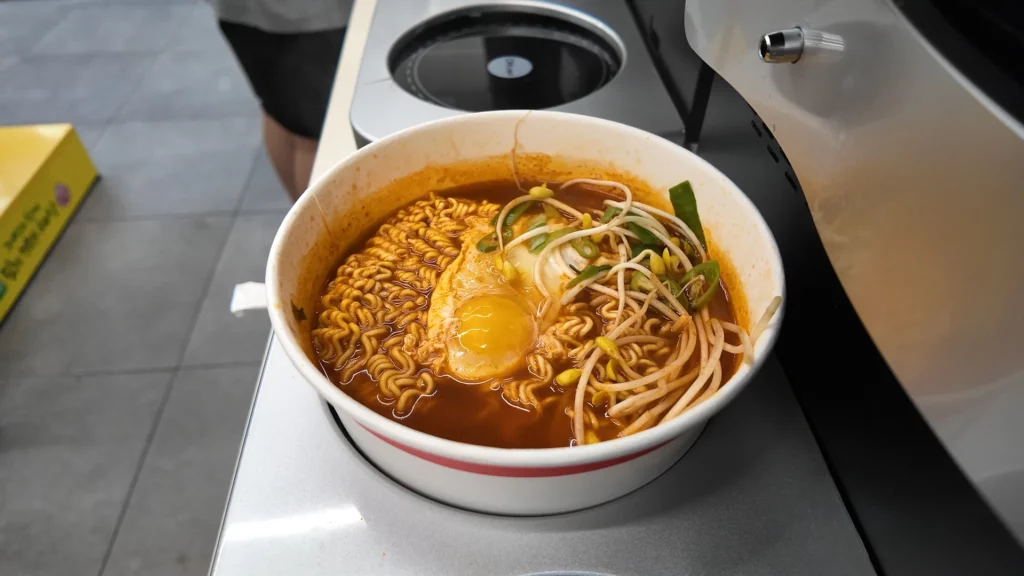
Budget roughly 5,000 KRW per person to cover noodles, a cooking vessel, and a topping or two.
What Makes Korean Ramyeon Uniquely Korean?
A Quick Cultural and Historical Grounding
Korean ramyeon (라면) arrived in 1963, introduced by the food company Samyang as a solution to post-war food scarcity. Its Japanese ramen ancestor was itself adapted from Chinese noodle traditions — but Korea made it its own through bold seasoning, fiercer spice levels, and an entire culture of shared, communal noodle eating.
Unlike Japanese ramen’s restaurant-focused, artisanal identity, Korean ramyeon occupies a different social space: everyday food, comfort food, 3 a.m. food, breakup food, victory food. It appears in blockbuster Korean films and drama series not as a luxury meal but as the most honest, emotional, unguarded kind of eating. The scene in Parasite where characters eat ramyeon underlines its status as the great equalizer of Korean cuisine — accessible to everyone, beloved by everyone.
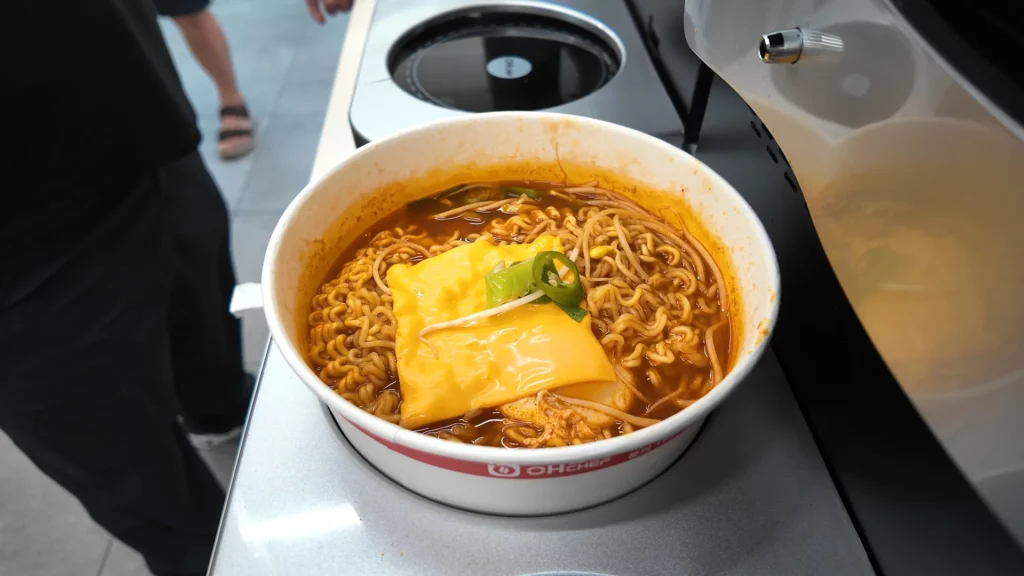
What distinguishes Korean ramyeon from Japanese instant ramen or Western cup noodles is its uncompromising intensity: the broth is deeper, the noodles chewier, and the heat architecture is built on fermented chili pastes rather than simple pepper. This is why a bowl of Korean ramyeon eaten at the Ramyun Library feels categorically different from anything you’ve tried at home — even if you’ve cooked the same packets.
For a deep dive into the fermented chili paste that powers the spiciest options on the wall, the complete guide to gochujang explains how months of fermentation create that layered sweet-spicy-umami profile that makes Korean heat feel so different from Mexican or Thai heat.
Three Key Ingredients Behind the Flavour
1. Gochugaru (고추가루 — Korean Red Pepper Flakes)

The coarsely ground, sun-dried Korean chilli flake that gives most ramyeon its distinctive crimson colour. Unlike generic chilli powder, gochugaru has a natural fruitiness and smokiness that adds complexity rather than just heat. It is the backbone of the "Very Hot" and "Hell" tier noodles on the wall. Available at any Korean or Asian grocery store worldwide. A useful substitute is a blend of sweet paprika and a small amount of cayenne — though the authentic fruity quality is hard to replicate.
2. Gochujang (고추장 — Fermented Chilli Paste)
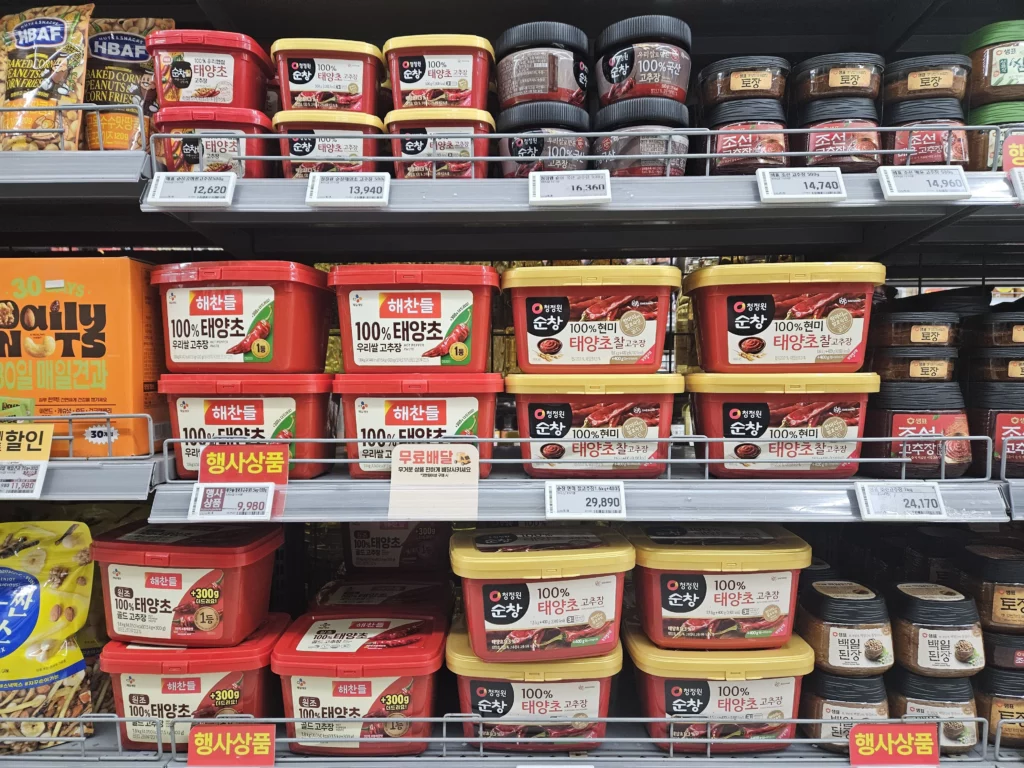
The slow-fermented paste made from red chilli, glutinous rice, and fermented soybean that elevates ramyeon broths from simple spicy to deeply complex. Months of fermentation develop probiotics and lactic acid bacteria, producing what Koreans describe as gamchilmat (감칠맛) — savoury umami. It’s the same paste used in Budae Jjigae, tteokbokki, and bibimbap, and understanding it helps decode almost everything on the Ramyun Library wall. For context on how it compares with Korea’s other essential fermented pastes, the guide to gochujang vs. doenjang vs. ssamjang is essential reading.
3. MSG-Enhanced Soup Base (조미료 — Seasonings)
Korean instant noodle manufacturers have refined their seasoning packets over 60+ years into a science of layered flavour. The soup base typically combines hydrolysed vegetable protein, dried anchovy extract, soy sauce solids, and seasoning compounds to create a broth that, even from a packet, achieves a depth that surprises first-timers. This is why adding simple toppings like eggs or cheese can transform the bowl rather than overwhelm it — the base itself is already balanced.
How Would You Describe the Taste and Spice Levels?
This is the most practical question for visitors who haven’t eaten much Korean ramyeon before.
Spice scale for international visitors:
- Mild (Level 1): 1–2/10 heat. Savoury, brothy, comforting — similar to a rich chicken or beef noodle soup with mild pepper.
- Medium (Level 2): 3–4/10. Noticeable warmth; think of a well-seasoned spicy tomato soup.
- Hot (Level 3): 5–6/10. Genuinely spicy. Builds over the bowl. Still enjoyable for moderate spice eaters.
- Very Hot (Level 4 — Shin Ramyun): 7/10. This is the iconic level. Bold, pungent, and satisfying but requires some spice tolerance.
- Hell (Level 5 — Buldak / Fire Noodles): 9–10/10. An experience, not just a meal. Approach with respect and ice water.
Texture and temperature: Korean ramyeon noodles are springy and chewy — closer to fresh noodles than the flatter instant noodles found in Western markets. They are served piping hot, in a broth that ranges from clear-ish and savoury (for mild options) to deep crimson and intensely fragrant (for the upper tiers). The sesame-forward options like Ottogi Chamke Ramen offer a warm, nutty, slightly toasty flavour that many first-timers find immediately accessible.
For those curious about how Korean convenience store noodles can be elevated into something genuinely impressive, the lobster ramen recipe on Taste Korean Food illustrates exactly how Koreans treat instant noodles as a starting point rather than an endpoint.
What Should First-Time Visitors Know?
Before you go:
- The store operates 24 hours, 7 days a week — it is genuinely excellent at 1 a.m. when the rest of Hongdae is still awake and the queue is shorter.
- International credit and debit cards are accepted at all CU convenience stores in South Korea. Visa, Mastercard, and major international cards work without issue. Apple Pay and Google Pay typically also function at CU registers. No cash required, though a Tmoney transit card (available for purchase at any CU for around 4,000 KRW, then top up as needed) is useful for navigating the Seoul subway system and is accepted at convenience stores as payment.
- Multilingual support is built in. The product labels in English, the spice-level charts, and the illustrated cooking instructions next to the cooker stations mean you can navigate the entire experience without knowing a word of Korean.
Inside etiquette:
- Choose your noodle, then queue at the checkout before approaching the cooker — pay first, cook second.
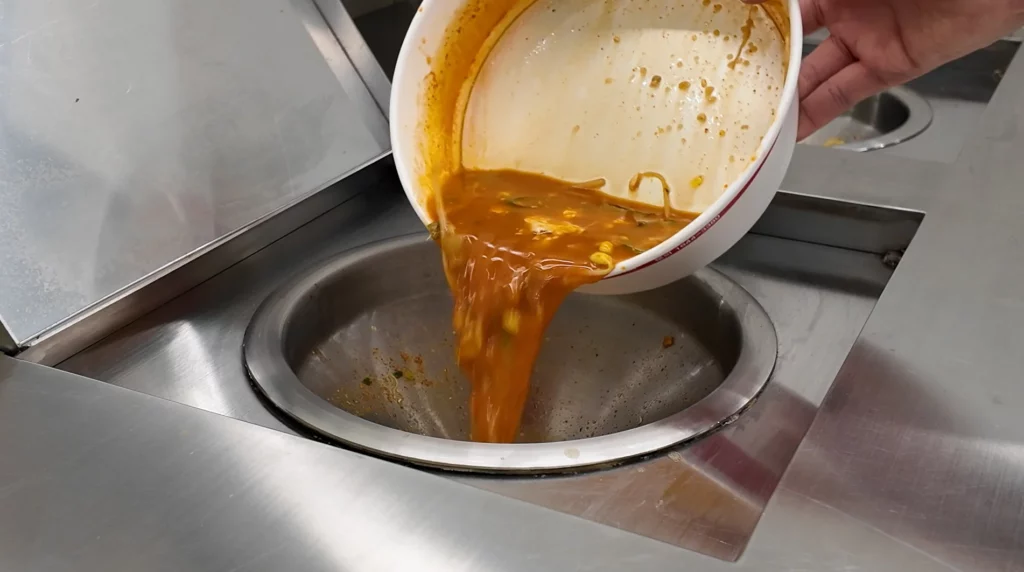
- Recycle properly. Korea has a strict bin separation system: food waste, regular garbage, and recyclables go into clearly marked separate bins. Eggshells go in the regular garbage bin, not the food waste bin — a detail that trips up first-timers.
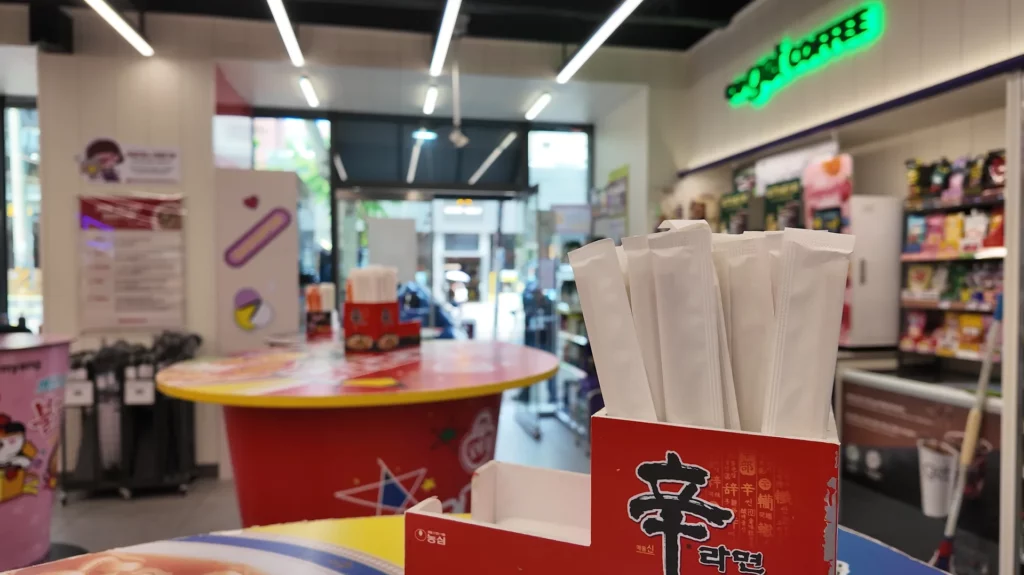
- The cup-noodle shaped tables are communal standing tables. Sit-down seating is limited; be prepared to stand and eat, which is entirely normal at Korean convenience stores.
- Taking photos is encouraged — the whole space is designed to be photographed. The wall of ramyeon makes for an exceptional backdrop.
Drink Pairings: Iced Coffee, Banana Milk, and Beyond
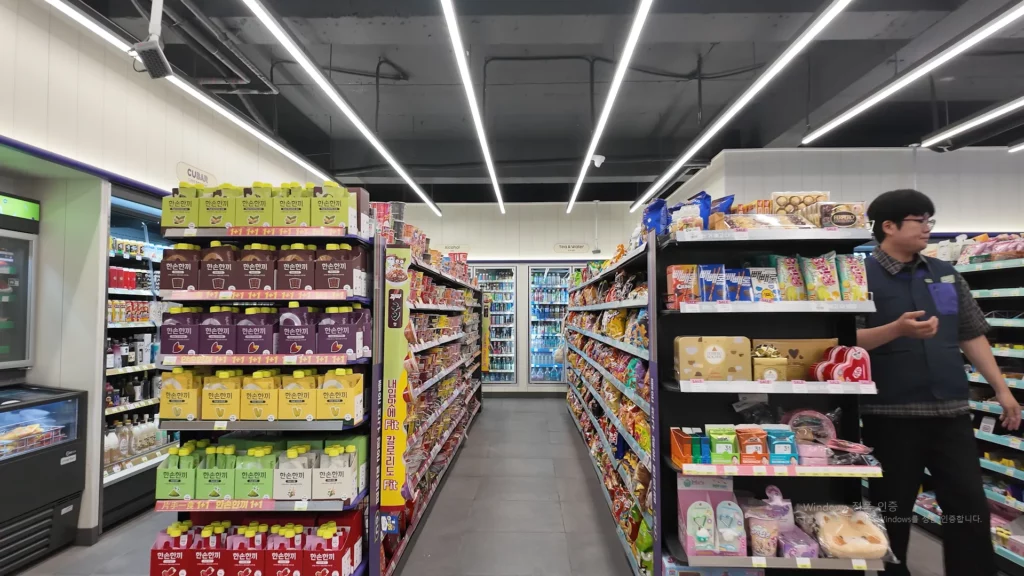
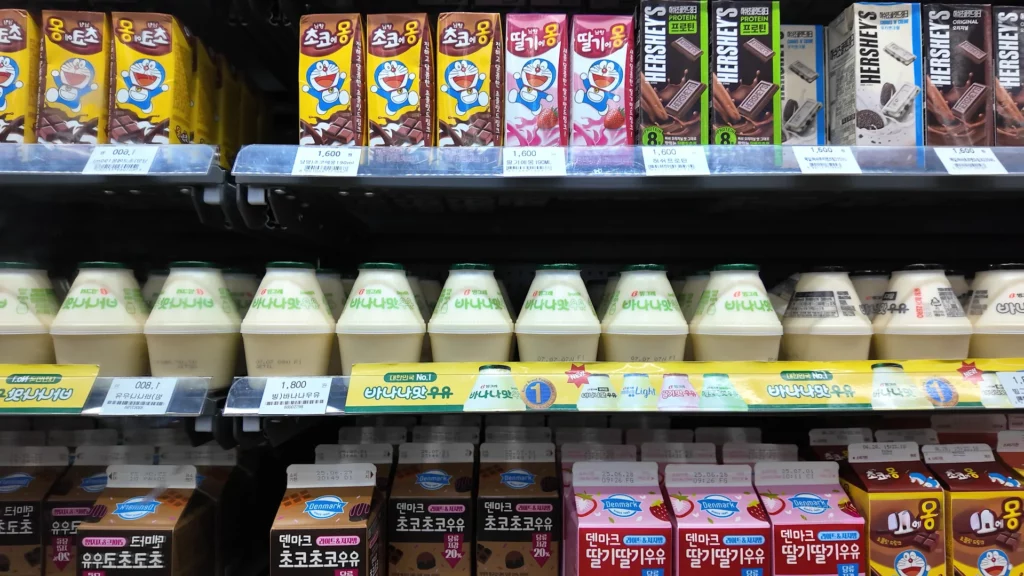
One of the underrated pleasures of the CU Hongdae Ramyun Library is that it stocks an unusually wide beverage selection alongside the noodles — approximately 150 alcoholic and non-alcoholic options, including the full spectrum of Korean flavoured milks, soju, makgeolli, craft beer, and a broad cold coffee selection.
Pairing logic for spicy ramyeon:
- Iced americano or cold brew — The bitterness of coffee cuts through the richness of spicy broth and resets the palate. Many locals pair their late-night Shin Ramyun with an iced Americano from the in-store coffee machine. One popular CU hack: order an ice cup (얼음컵, about 600 KRW) from the drinks station and fill it with any bottled beverage — it becomes an instant iced drink paired perfectly with spicy noodles.
- Banana milk (바나나맛 우유) — The sweet, creamy creaminess of Korea’s iconic banana milk is a natural counter to intense heat. It’s one of Korea’s most beloved convenience store drinks and pairs surprisingly well with fire noodles.
- Makgeolli (막걸리) — The lightly fizzy, slightly sweet Korean rice wine is a traditional companion to spicy Korean food. Its mild acidity balances heat without overpowering the noodle broth.
- Avoid carbonated sodas with very spicy tiers — The carbonic acid amplifies the burning sensation. If you’re tackling Hell-level noodles, stick with cold milk or water.
Practical Visitor Information
CategoryDetails
Official Name
CU 홍대상상마당점 (CU Hongdae Sangsangmadang)
Address
25 Jandari-ro, Mapo-gu, Seoul (서울 마포구 잔다리로 25)
Hours
Open 24 hours, 7 days a week
Getting There
Seoul Metro Line 2 to Hapjeong Station (합정역), Exit 3. Walk straight, turn right at the Woori Bank, approximately 10 minutes on foot. Or from Hongik University Station (홍대입구역), Line 2 or Airport Line, about 12–15 minutes on foot.
Average Budget
₩3,000–₩8,000 per person (noodle + cooking vessel + toppings + drink)
Payment
All major international cards accepted. Tmoney card accepted.
Language Support
English, Japanese, Chinese labels on all products
Best Time to Visit
Weekday evenings for shorter queues; midnight–2 a.m. for a distinctly Hongdae atmosphere
The Broader K-Convenience Store Culture This Place Celebrates
The Ramyun Library is not a restaurant concept pretending to be a convenience store. It is a genuine convenience store that has elevated one specific aspect of Korean daily life — pyeonjeomsik (편점식), or convenience store dining — into something worth travelling for.
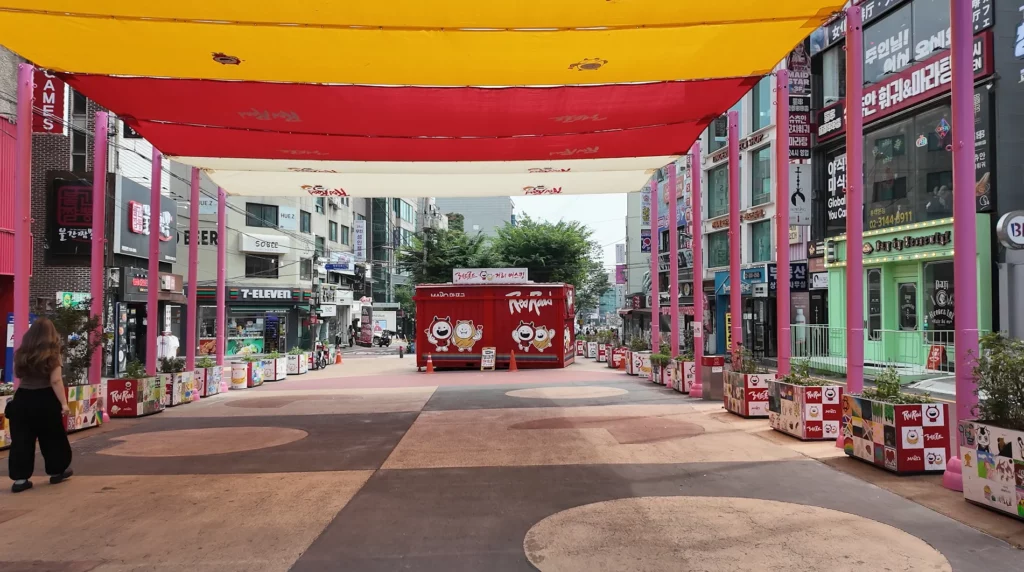
Korean convenience stores are fundamentally different from their Western counterparts. They are neighbourhood eating spaces. They have hot food stations, dedicated seating areas, microwaves, hot water dispensers, and an understanding that customers may eat an entire meal on-site. The culture of buying ramen, kimchi from a small container, a boiled egg, and a cold barley tea, then eating it all standing at a tall table inside a GS25 or CU at 11 p.m., is as thoroughly Korean as sitting down at a samgyeopsal restaurant.
What the Ramyun Library does is frame that already-beloved culture as an experience in itself — giving it a library’s gravity, a museum’s organization, and a social media backdrop worth sharing. According to BGF Retail, ramyeon exports from Korea exceeded $1 billion for the first time in 2024, riding the same Hallyu wave that made kimchi, gochujang, and Korean fermented sauces internationally recognizable. The Ramyun Library exists at the precise intersection of that global interest and Korea’s own confidence in its convenience food culture.
For those who want to understand the broader canvas of Korean snacking culture — from seaweed crisps to rice cakes — the guide to eating Korean gim (roasted seaweed) and the complete tteok (Korean rice cake) guide offer essential cultural context for the broader snack ecosystem this store represents.
The tteokbokki available as a topping at the Ramyun Library is itself a window into one of Korea’s great food stories — chewy rice cakes in spicy gochujang sauce that travelled from royal palace kitchens to street stalls to global cafeteria menus. If that pairing intrigues you, the history of Korean tteokbokki from royal court to street food traces that remarkable journey.
Why the Ramyun Library Belongs on Your Seoul Itinerary
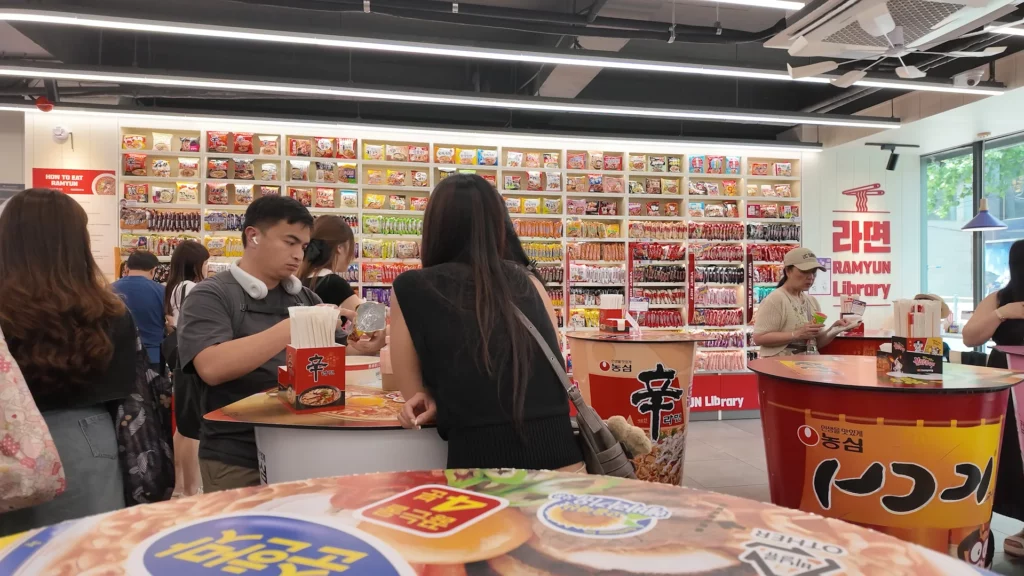
Hongdae has clubs, record shops, indie galleries, mural-covered alleys, and every variety of K-beauty product known to humanity. What it also has, at 25 Jandari-ro, is a convenience store that has become a genuinely meaningful entry point into Korean food culture for hundreds of thousands of international visitors a year.
The Ramyun Library works because it is honest. The noodles are instant. The tables are formica-topped. The cooking machine is automated. Nothing is pretending to be elevated fine dining — and that sincerity is exactly what makes the experience feel so distinctly Korean. As the Korea Tourism Organization notes in its official guide to the space, the store gives visitors a chance to participate in the real daily eating culture of a Korean city, not a performance of it.
Whether you’re navigating the spice wall for the first time, cracking an egg into a bowl of Budae Jjigae Ramen at a cup-noodle-shaped table, or carefully photographing the shelves under the warm library lighting, this is one of those rare places where a convenience store stop becomes a memory you’ll actually keep.
Plan for at least 30–45 minutes. Bring curiosity, bring your phone, and — if you’ve never tried Korean instant noodles at their full intensity — start at Hot, not Hell.
Did this guide help you plan your visit to the CU Ramyun Library? If you’re heading to Hongdae, share this post with anyone in your group who’s still deciding whether it’s worth the detour. (It is.) Drop your favourite noodle pick in the comments — we’d love to know what the wall is recommending this season.
Location
Reviews
5.0
0 reviews
Related Recipes

Bulguri: BTS Jungkook’s Buldak Neoguri Ramen
Bulguri brings together two completely different sides of Korean ramyeon culture: the fiery, sauce-coated intensity of Buldak and the savory...

Rosé Carbonara Buldak Ramen: Creamy Spicy Ramen
Rosé Carbonara Buldak Ramen takes one of Korea’s most extreme food exports and turns the heat down without turning the...

Chapaguri (Ram-don): Korean Instant Noodles with Beef
Every instant-noodle aisle in Korea holds two rival bestsellers — Chapagetti and Neoguri — and chapaguri exists because someone, decades...

Emart24 K-Food Lab Myeongdong: Seoul's 24/7 Ramen Heaven
Republic of Korea 136, Toegye-ro, Jung-gu, Seoul (Namsandong 3-ga)