


On a quiet side street near Sinsa Station, tucked away from Garosu-gil’s designer boutiques and trendy cafés, a fiery red pot of braised monkfish has been drawing loyal customers for over five decades. Cheombung Agujjim (첨벙아구찜) — officially known as Agubonga Cheombung — is one of Seoul’s original agujjim specialists, and its signature dish delivers the kind of deep, layered spice that keeps diners coming back across generations.
Cheombung Agujjim: Garosu-gil Braised Monkfish
4
Cheombung Agujjim: Garosu-gil Braised Monkfish
4
1st floor 16-2 Nonhyeon-dong, Gangnam District, Seoul
Editor: 안주은


Interior03
Food04

Menu02
Overview
+82 02-543-8873
WiFi Provided
Indoor Seating Only
Electronic Payment, Credit Card accepted: American Express, Master Card, Visa
Introduction
Operating hours
Mon, Tue, Wed, Thu, Fri, SatAM 11:00 - AM 4:00
SunAM 11:00 - PM 10:00
Break TimePM 3:00 - PM 4:00
Menu
Editor's Detail
Table of Contents
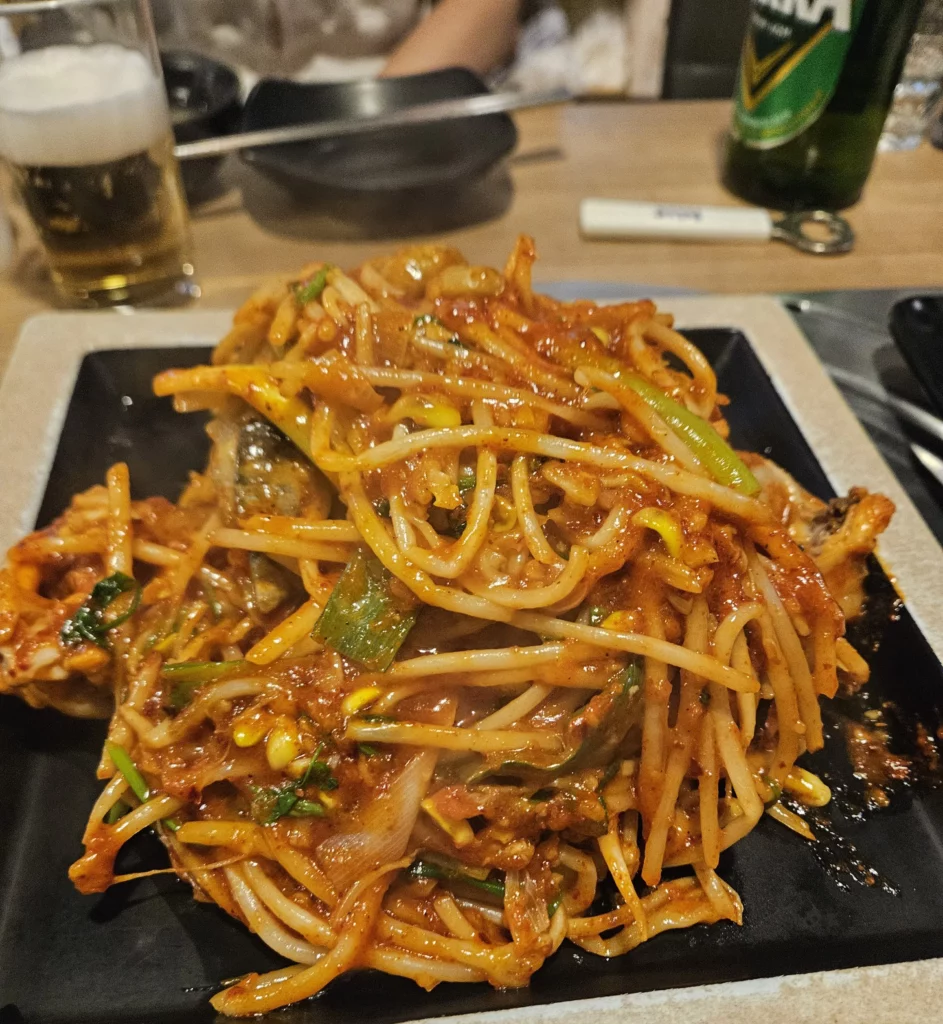
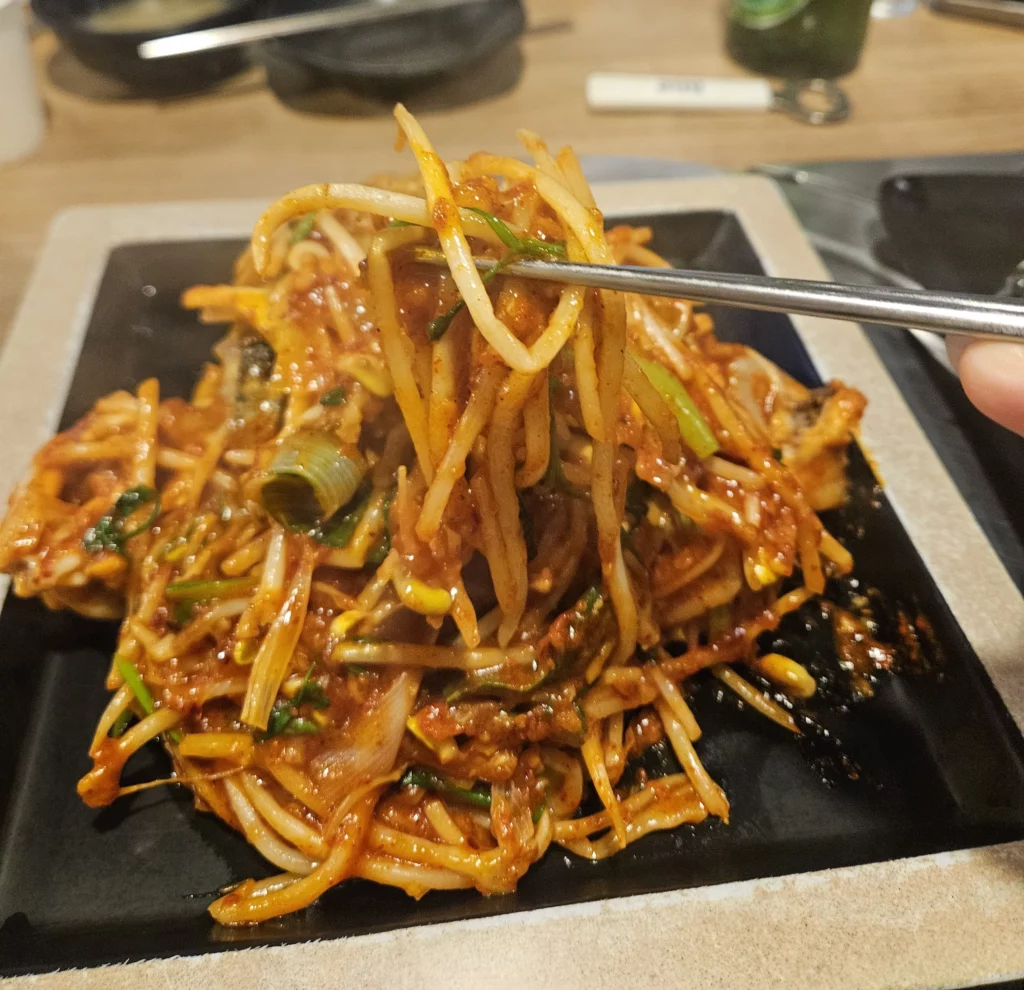
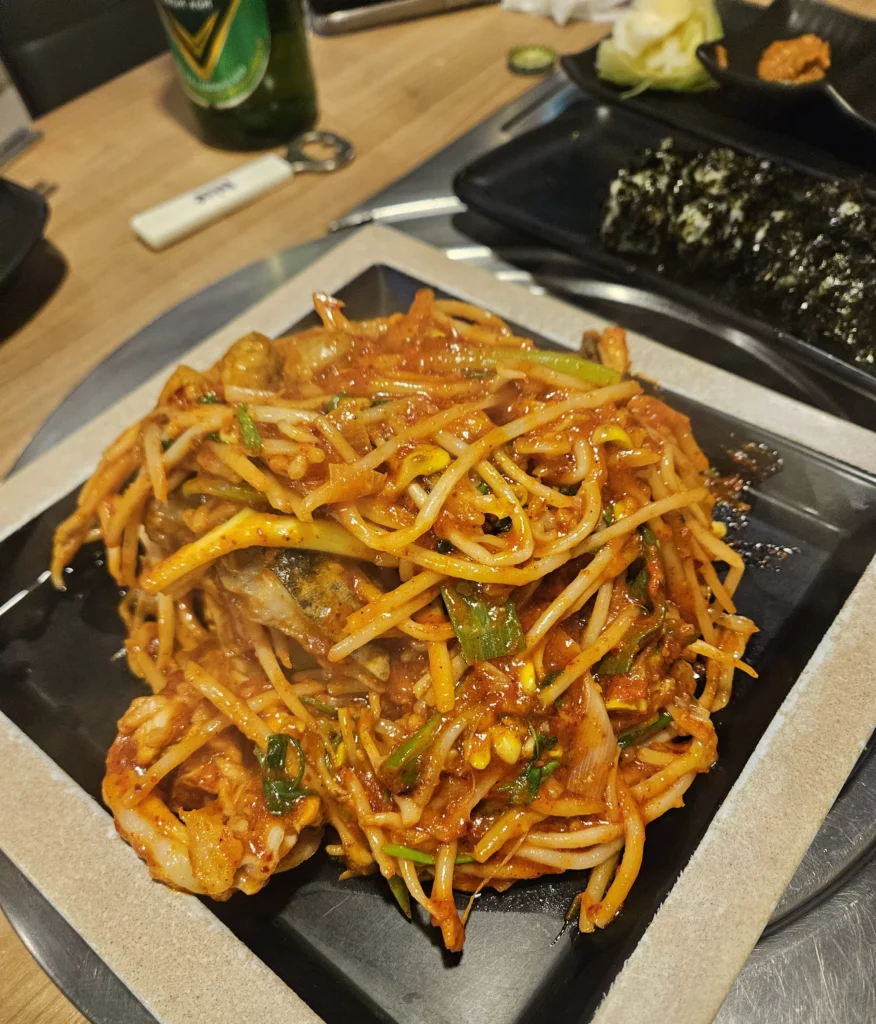
Piled high with tender monkfish, crunchy bean sprouts, fragrant water parsley, and plump mideodduk (sea squirt) bathed in a glistening crimson sauce. This is agujjim (아구찜), Korea’s beloved spicy braised monkfish, and Cheombung Agujjim on Garosu-gil is one of Seoul’s most storied places to experience it.
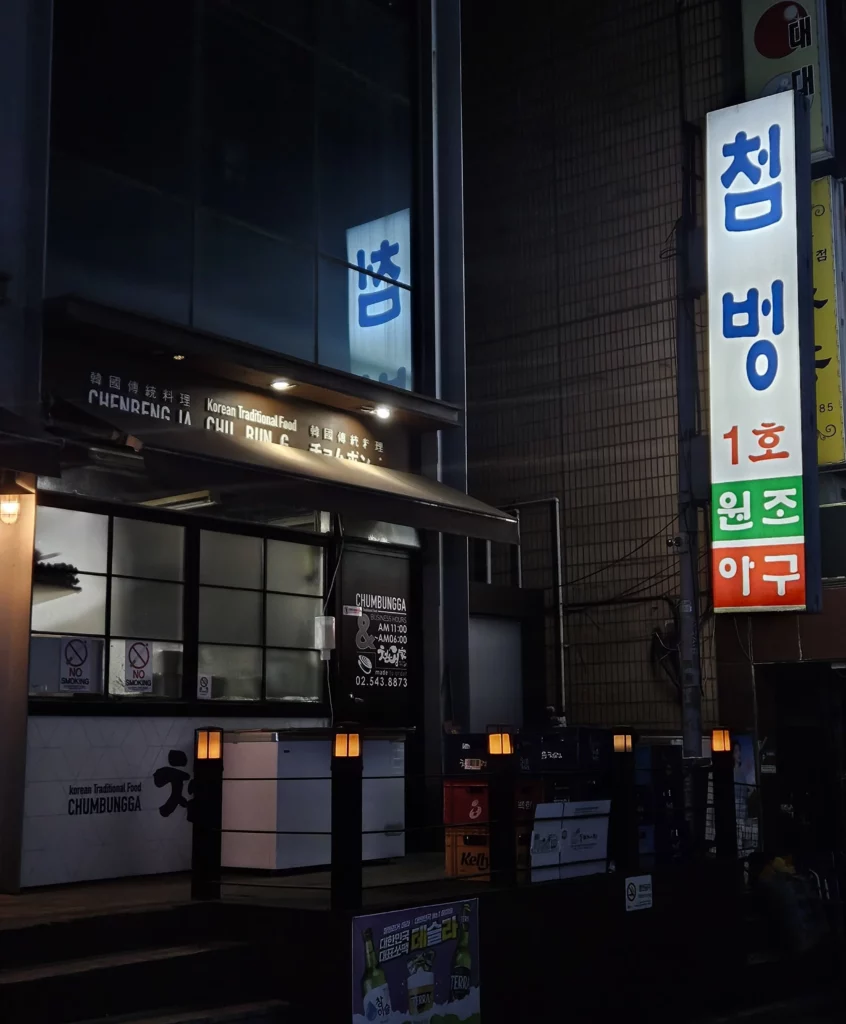
Operating since 1973, this Sinsa-dong institution has earned recognition as a Baeknyeon Gage (백년가게) — a "Century Store" designation awarded by Korea’s Ministry of SMEs and Startups to businesses that have maintained exceptional quality for over 30 years. Think of it as similar to a Michelin nod for longevity, consistency, and cultural contribution. While Garosu-gil is better known for fashion and brunch spots, Cheombung quietly anchors the neighborhood’s culinary heritage, serving braised seafood that feels both deeply traditional and entirely satisfying to modern palates.
For international visitors familiar with Korean BBQ or bibimbap but looking to go deeper, agujjim offers a thrilling next step — a communal, intensely flavored seafood dish that showcases Korea’s mastery of gochugaru (Korean red pepper flakes) and fermented condiments in a way no grilled meat dish quite can.
What Is Agujjim and Why Does It Matter?
Agujjim (아구찜), also spelled agwijjim (아귀찜), is a spicy braised monkfish dish that originated in the 1960s in the southern coastal city of Masan. The story behind it is one of resourcefulness: fishermen would bring their less desirable monkfish catch — a species initially discarded for its unappealing appearance — to local cooks who transformed it into something extraordinary. The combination of soft, gelatinous monkfish meat with a fiery red pepper sauce, bean sprouts, and aromatic herbs became an instant staple of Korean coastal cuisine.
Today, agujjim holds a special place in Korean food culture. It is a communal dish, meant to be shared among two or more people, and it occupies the space between everyday comfort food and celebratory feast. In Seoul, several neighborhoods developed their own agujjim alleys, and Sinsa-dong — the neighborhood surrounding Garosu-gil — is one of the most famous. This is where Cheombung has held its ground for over half a century.
The dish belongs to Korea’s broader tradition of jjim (찜) — steamed or braised preparations that allow ingredients to meld slowly in deeply seasoned sauces. Unlike quick stir-fries, jjim dishes reward patience, and the result is a complexity of flavor that builds with every bite.
What Makes Cheombung Agujjim Special on Garosu-gil?
Several factors distinguish Cheombung from the many agujjim restaurants across Seoul.
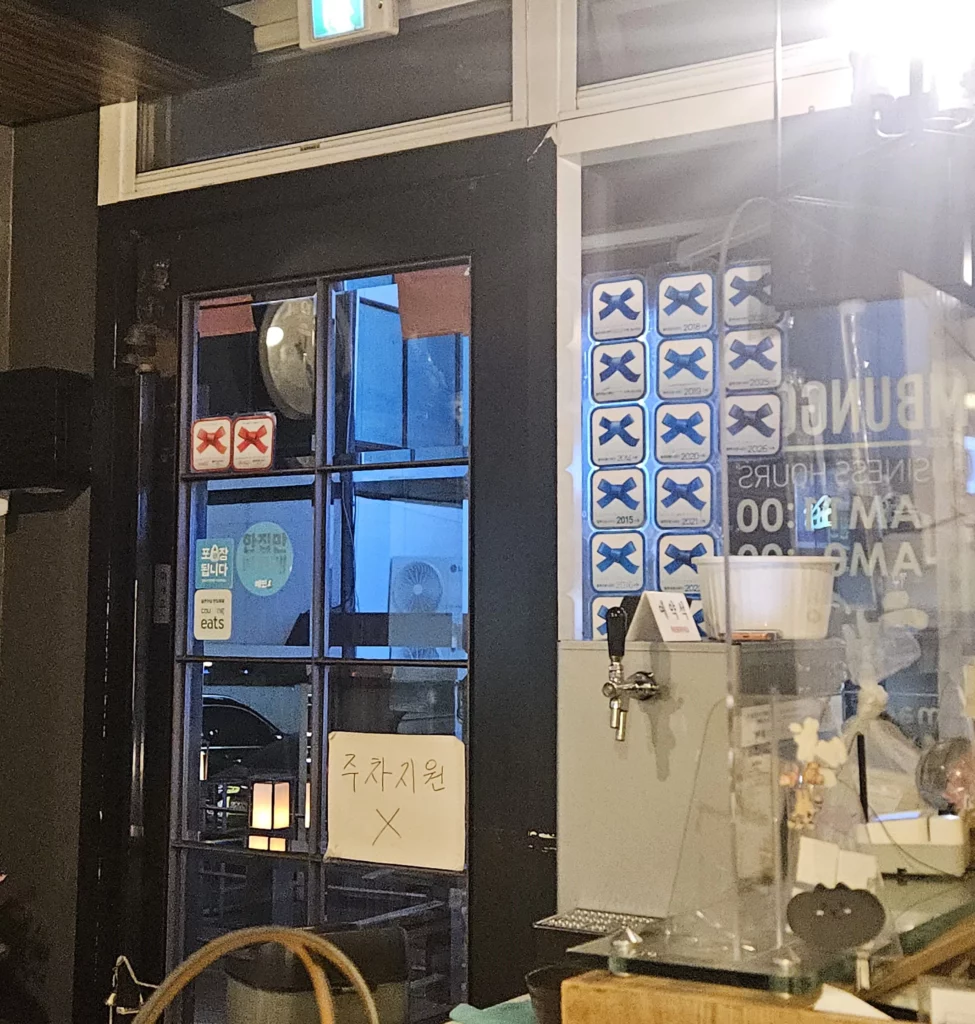
Half a century of consistency. The restaurant opened in 1973, making it one of the oldest continuously operating agujjim establishments in the capital. That kind of longevity in Seoul’s fiercely competitive food scene is remarkable. The Baeknyeon Gage certification underscores what regular customers already know: Cheombung’s flavors haven’t drifted over the decades.
Six levels of heat customization. One of the most practical features for international diners is the spice level system. Cheombung offers six distinct options: Jiri (지리, a clear, mild broth with no spice), An Maepge (안맵게, not spicy), Deol Maepge (덜맵게, less spicy), Botong (보통, medium), Maepge (맵게, spicy), and Aju Maepge (아주맵게, very spicy). This range ensures that everyone from spice-sensitive newcomers to Korean chili veterans can find their ideal level.
Customizable seafood additions. Beyond the standard braised monkfish, diners can add extra seafood to their order — shrimp, crab, squid, and other shellfish — creating a personalized seafood feast. This flexibility sets Cheombung apart from more rigid menus at competing restaurants.
Late-night availability. Operating daily from 11:00 AM until the early morning hours, Cheombung fills a niche that few traditional Korean restaurants do. It has become a favorite destination for second and third rounds of evening dining, when groups migrate from Garosu-gil’s bars and cafés in search of something substantial.
The Menu: Braised Monkfish, Seafood Mix, and Beyond
Cheombung’s menu extends well beyond its namesake agujjim, though that remains the star attraction. Here is a guide to the key offerings:
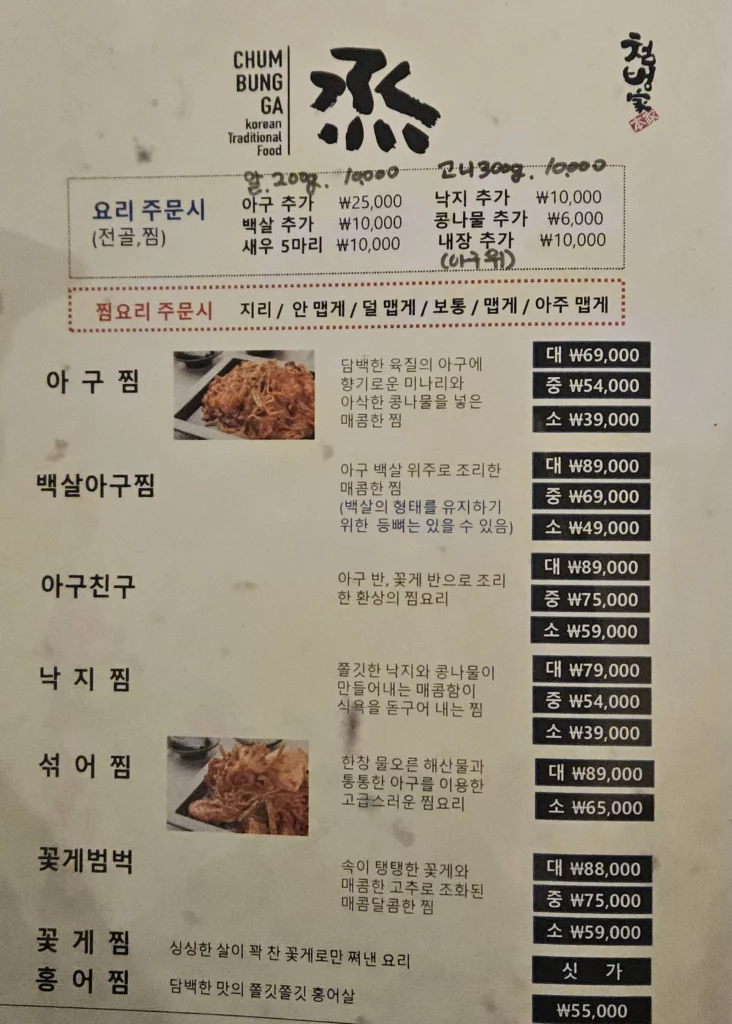
Agujjim (아구찜) — The signature braised monkfish, available in small, medium, and large portions for sharing. The monkfish is prepared with plump, tender flesh — what Korean reviewers describe as "tosiltosilhan" (토실토실한), meaning plentifully meaty. Mideodduk (미더덕, sea squirt) adds a distinctive briny pop.
Haemul Seokkeojjim (해물섞어찜) — A mixed seafood braised dish that combines monkfish with additional shellfish and squid for those who want variety. This is the "greatest hits" option for seafood lovers.
Aguchinku (아구친구) — Literally "Monkfish’s Friend," this combination plate pairs braised monkfish with flower crab (꽃게), offering two textures and flavor profiles in a single order.
Kkotgejjim (꽃게찜) — Steamed flower crab, served without heavy spice, allowing the natural sweetness of the crab to shine. A good option for those who prefer lighter seasoning.
Ganjang Gejang (간장게장) — Soy sauce marinated raw crab, made with egg-filled female crabs. This is Cheombung’s second signature item. In Korean food culture, ganjang gejang is known as "bap doduk" — "rice thief" — because the rich, umami-laden crab sauce makes rice disappear from your bowl at alarming speed.
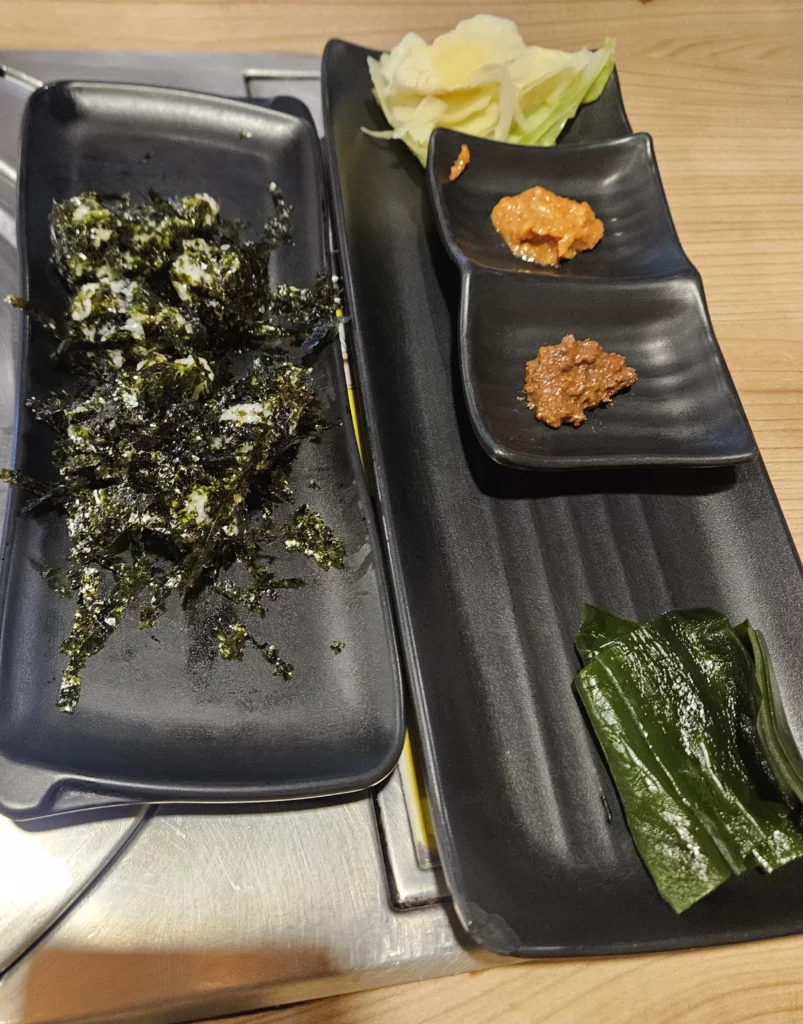
Motnani Kimbap (못난이 김밥) — A rustic, seaweed-flake-coated rice roll that arrives as a complimentary side (with small charges for additional orders). These humble rolls are the perfect palate cleanser between bites of fiery agujjim.
Bokkeumbap (볶음밥) — The traditional fried rice finale, made by stir-frying rice in the remaining agujjim sauce. Many regulars consider this the best part of the meal — the concentrated, caramelized sauce coating each grain of rice creates an addictive finish.
What Makes This Dish Uniquely Korean?
Agujjim sits at the intersection of several Korean culinary traditions that have no direct parallel in Western cuisine. First, there is the jjim tradition itself — the slow braising technique that Korean cuisine has refined over centuries, producing dishes where individual ingredients become part of a unified, deeply flavored whole.
Agujjim reflects a philosophy of waste reduction. Monkfish was once considered a "trash fish" in Korea — too ugly to sell, too bony for easy eating. The transformation of this unwanted catch into one of the country’s most celebrated dishes mirrors the Korean approach to ingredients like fermented bean paste and aged kimchi, where time and technique elevate humble ingredients into something extraordinary. This resourcefulness is a hallmark of Korean food culture as documented by the Korean Food Foundation.
What Are the Key Ingredients That Create This Flavor?
Three ingredients define Cheombung’s agujjim and distinguish it from similar braised dishes in other cuisines:
- Gochugaru (고추가루) — Korean Red Pepper Flakes. The vibrant red color and characteristic warmth of agujjim come from gochugaru, which delivers a different kind of heat than standard chili powder. Gochugaru brings a smoky sweetness alongside its spice, with a Scoville range of approximately 1,500 to 10,000 SHU — enough to warm the palate without scorching it. This pepper also acts as a natural preservative and color agent, giving the sauce its dramatic crimson appearance. Available at Asian grocery stores worldwide, or substitute with a combination of paprika and a small amount of cayenne.
- Mideodduk (미더덕) — Warty Sea Squirt. This is the ingredient that surprises most first-time diners. Mideodduk is a type of sea squirt native to Korean waters, prized for its briny, ocean-forward flavor and distinctive popping texture. When you bite into one, it bursts with concentrated seawater essence. Nutritionally, mideodduk is rich in omega-3 fatty acids and minerals. It is difficult to find outside Korea, but it is what gives Cheombung’s agujjim its unmistakable coastal character.
- Kongnamul (콩나물) — Soybean Sprouts. These crunchy sprouts form the foundation bed of every agujjim pot. Kongnamul is one of Korea’s most ubiquitous side dishes, but in agujjim it plays a critical structural role — the sprouts absorb the sauce while maintaining their satisfying crunch, creating textural contrast against the soft monkfish. They are also a good source of vitamin C and dietary fiber. Widely available at Asian markets and many mainstream supermarkets.
Additional supporting ingredients include minari (미나리, water parsley) for herbal freshness, garlic, gochujang (fermented chili paste) for depth, and doenjang (fermented soybean paste) for background umami.
How Would You Describe the Taste and Spice Level?
Spice level: 4–7 out of 10 (depending on which of the six levels you choose). At the "Botong" (medium) setting, Cheombung’s agujjim registers around a 5 — noticeably spicy with a building warmth, but manageable for most diners. The "Aju Maepge" (very spicy) level pushes closer to a 7 or 8, producing genuine heat that will have you reaching for water.
Texture is layered: the monkfish is soft and slightly gelatinous (similar in some ways to poached cod, but richer), the bean sprouts are snappy, the mideodduk pops, and the minari adds a fresh herbaceous bite. The dish arrives piping hot and continues to bubble gently at the table.
For those new to Korean spice levels, starting at "Deol Maepge" (less spicy) is a wise choice. The flavor complexity is fully present even at lower heat levels — you are not sacrificing taste for comfort.
What Should First-Time Eaters Know?
Proper eating method: Agujjim is a sharing dish. Each diner uses chopsticks to pick pieces directly from the communal pot, placing them onto individual rice bowls or eating them straight. There is no fixed serving sequence — simply pick what looks appealing. Many Koreans wrap a piece of monkfish and some sprouts in a sheet of dried seaweed or dip them in wasabi-soy sauce for added dimension.
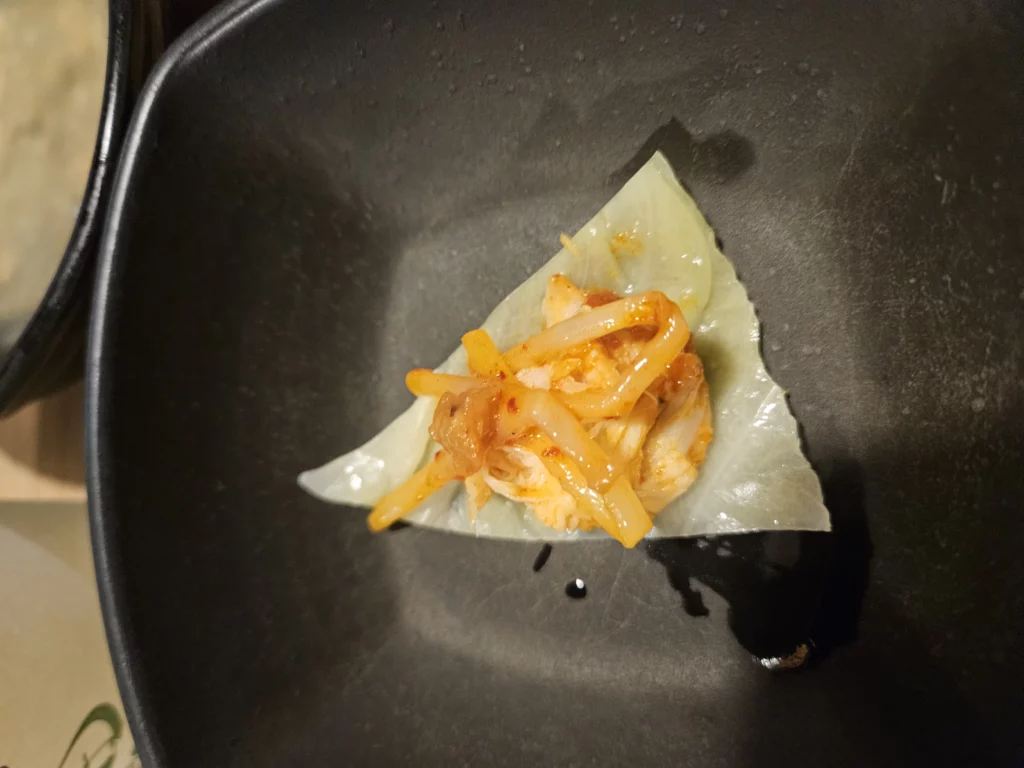
What to expect on first taste: The sauce is more complex than it appears. Beyond the initial chili hit, layers of garlic, fermented paste, and ocean flavor reveal themselves gradually. The monkfish texture may be unfamiliar — it is softer and more yielding than most Western fish preparations, closer to a braised meat than a seared fillet. Embrace the gelatinous quality; it is prized in Korean cuisine for its collagen content.
The bokkeumbap finale: Do not skip the fried rice at the end. After the main dish is finished, the server (or you) will add rice to the remaining sauce and stir-fry it directly in the pot. This concentrated, slightly caramelized fried rice is considered by many regulars to be the highlight of the entire meal.
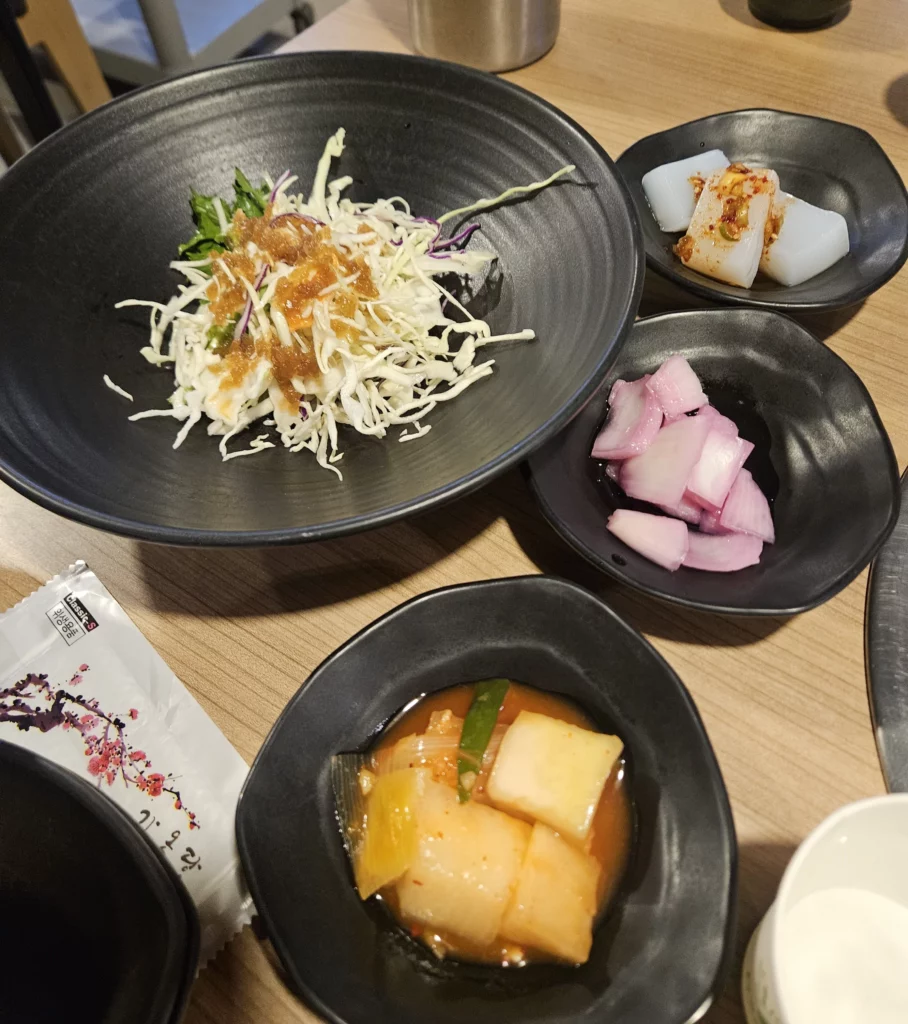
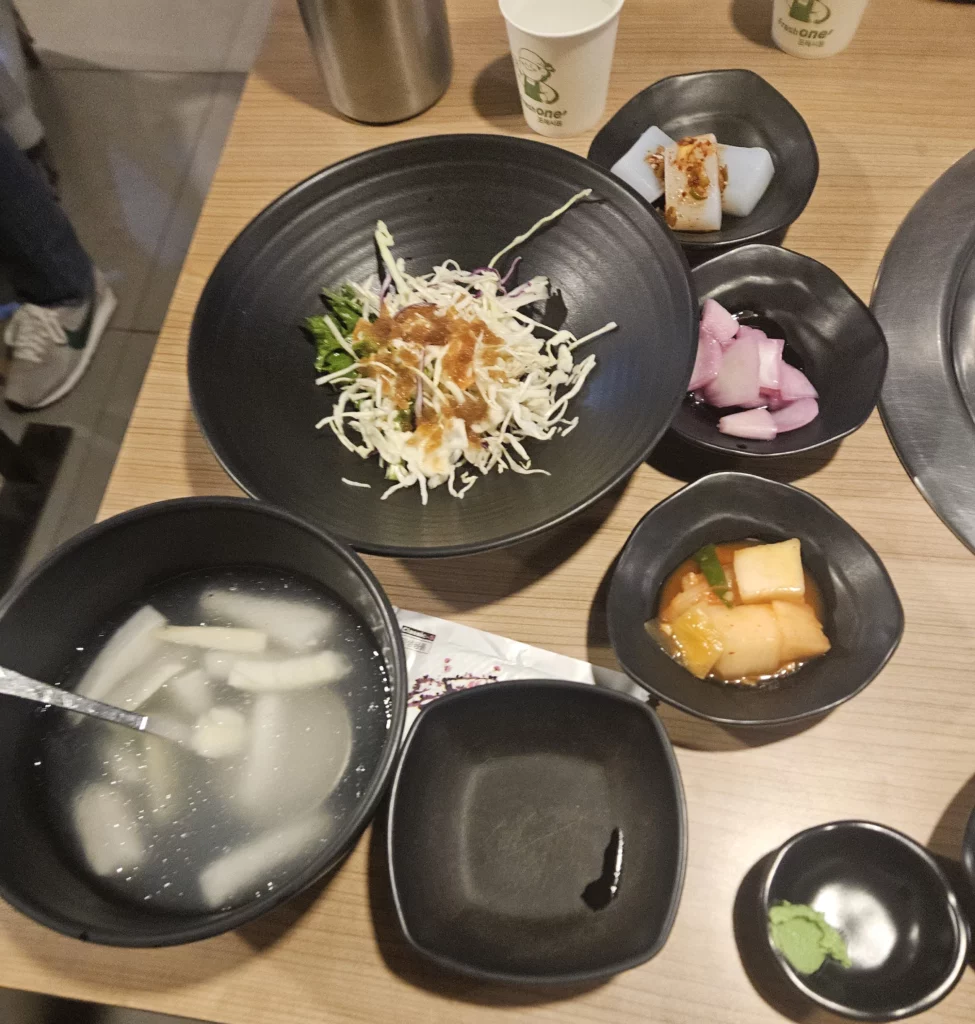
Accompaniments and the dining sequence: The meal begins with banchan (반찬) — small complimentary side dishes including kimchi, dongchimi (radish water kimchi), and sometimes steamed cabbage. The motnani kimbap arrives alongside the main dish. Eat banchan between bites of agujjim to cleanse and refresh the palate.
Cultural considerations for foreign diners: Koreans typically share dishes from communal pots using their own chopsticks. If this feels unfamiliar, it is perfectly acceptable to use serving spoons when available. The restaurant stays open very late, so it is common to see groups arriving at 10 PM or even midnight — this is normal Korean dining culture. Pairing agujjim with soju (Korean distilled spirit) or beer is a time-honored tradition, but the dish is equally satisfying without alcohol.
Practical Information: Hours, Location, and Tips
Restaurant Name: Agubonga Cheombung Sinsa Branch (아구본가 첨벙 신사본점) Korean Name: 첨벙아구찜 Address: 12, Gangnam-daero 150-gil, Gangnam-gu, Seoul (서울 강남구 강남대로150길 12 대원빌딩 1층) Phone: 02-543-8873 Hours: Daily, 11:00 AM – 6:00 AM (next day) Nearest Station: Sinsa Station (Seoul Metro Line 3), Exit 8 — approximately 5 minutes on foot Price Range: ₩40,000–₩80,000 for agujjim (varies by size); ganjang gejang priced separately Reservations: Available by phone; recommended for groups of 4 or more, especially on weekends Parking: Limited street parking; public parking garages available nearby Branches: Additional locations in Gwangjang-dong, Mia-dong, and Daechi-dong
Best time to visit: Weekday lunches offer the most relaxed atmosphere. The restaurant fills steadily through the evening and reaches peak energy after 9 PM, when post-dinner crowds arrive. The late-night hours (after midnight) attract a different crowd — smaller groups looking for a hearty, satisfying meal to end the night.
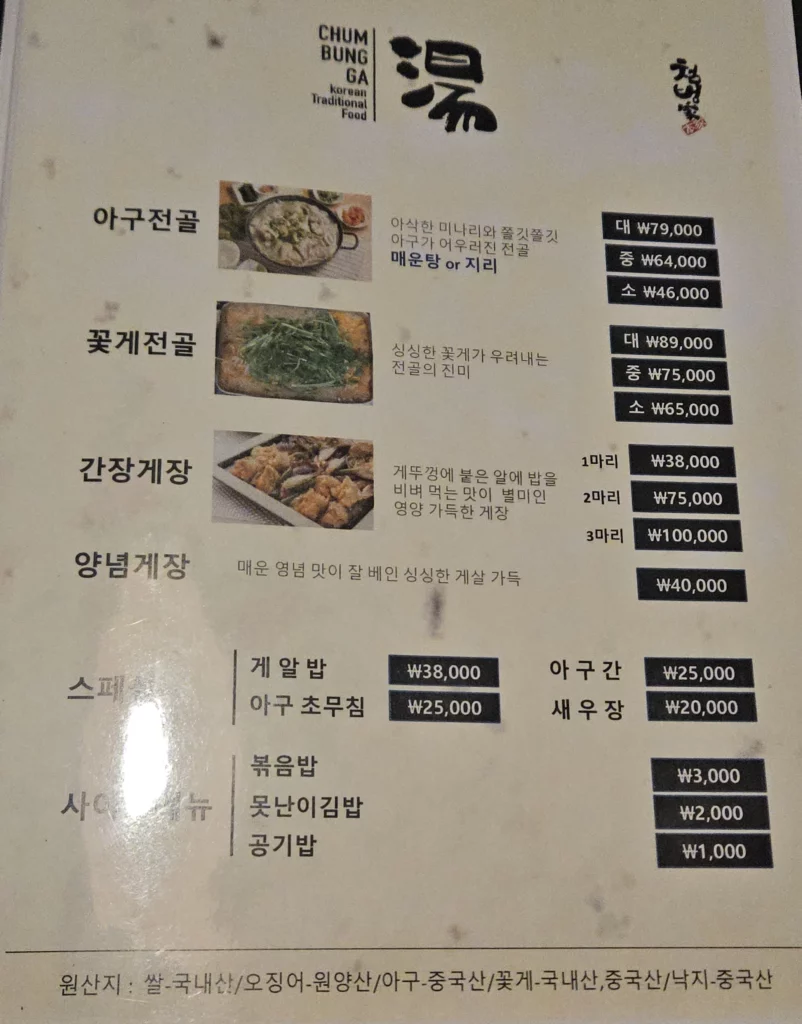
For international visitors: The menu includes photographs, making ordering relatively straightforward even without Korean language skills. Pointing to your desired spice level on the six-tier chart is the simplest approach. Staff may have limited English, but the ordering process is visual and intuitive.
Complete Your Garosu-gil Dining Experience
Garosu-gil (가로수길) is one of Seoul’s most vibrant neighborhoods, stretching from Sinsa Station along a tree-lined boulevard filled with fashion boutiques, galleries, and restaurants. A visit to Cheombung Agujjim pairs naturally with exploring what the area has to offer.
Before or after your meal, consider walking the full length of Garosu-gil itself — the tree-canopied main street is especially atmospheric in autumn. The backstreets (known as Serosu-gil) hide smaller independent shops and quieter cafés that offer a counterpoint to the main strip’s energy.
Cheombung Agujjim has survived five decades in one of Seoul’s most competitive dining districts by doing one thing exceptionally well: serving braised monkfish that balances heat, depth, and ocean freshness with remarkable consistency. For travelers seeking an authentic Korean seafood experience beyond the usual Korean BBQ circuit, this Garosu-gil institution delivers flavors that are bold enough to be memorable and nuanced enough to reward repeat visits.
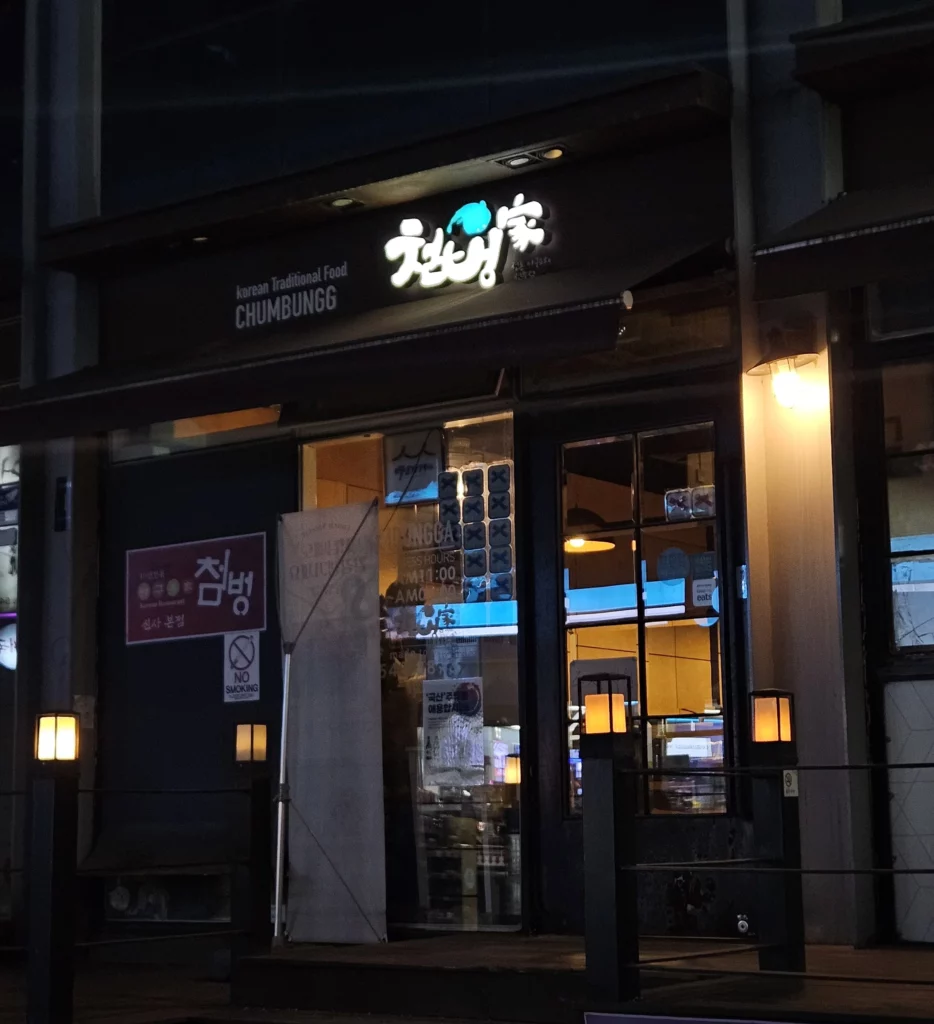
Whether you are a first-time visitor curious about Korean cuisine or a returning diner chasing the perfect spice level, Cheombung offers a window into a tradition of Korean coastal cooking that stretches back generations. Experience the dish that turned an "ugly" fish into one of Korea’s most beloved meals — and do not forget to order the bokkeumbap at the end.
Have you tried agujjim before, or is this your first time learning about Korean braised monkfish? Share your experience or questions below — and if this guide helped you plan your Garosu-gil food adventure, pass it along to friends exploring Seoul’s dining scene.
Published: February 28, 2026 | Last Updated: February 28, 2026
Location
16-2 Nonhyeon-dong, Gangnam District, Seoul, 1st floor, KR
Reviews
4.0

0 reviews
5
0%
4
0%
3
0%
2
0%
1
0%
Loading reviews...
Related Recipes

Seafood & Gim
Gkomak-jjim (Korean Seasoned Cockles)
Every winter, a small, deeply ridged shellfish appears at Korean market stalls and family tables with an almost seasonal ceremony...

Rice
Cockle Bibimbap (Kkomak Bibimbap)
There is a particular bowl that coastal Koreans have been eating since winter market days in Jeolla Province — a...

Rice
Christmas Tree Gamtae Rice Balls
Christmas Tree Gamtae Rice Balls are a festive reimagining of traditional Korean jumeokbap (“fist rice”), combining the subtle sweetness of...
Related Ingredients

Ingredient
Korean Mackerel (Godeungeo)
Few ingredients carry as much quiet authority on the Korean dinner table as Korean mackerel — known locally as godeungeo...

Ingredient
Webfoot Octopus (Jjukkumi)
Walk through any coastal market in Korea’s South Chungcheong Province come spring, and the air fills with the sharp, briny...

Ingredient
Ggomak (Korean cockle)
Few ingredients capture Korea’s coastal soul quite like ggomak (꼬막) — the small, ridged shellfish that appears on Korean tables...

fish
Yichunok Mackerel Ssambap: BTS Favorite Jeju Restaurant
Jeju-do 7213, Iljuseo-ro, Aewol-eup, Jeju-si
5

fish
Won Daegu-tang, Cod-fish Stew
1st Floor 8 Hangang-daero 62ga-gil, Yongsan District, Seoul
4

fish
Trout Sashimi at Vivaldi Songeogol: Gangwon's Freshwater Gem
Seo-myeon, Hongcheon-gun, Gangwon-do, South Korea 23 Daegok-ri
5

fish
Ihwa Sikdang: Fresh Jindo Seafood & Authentic Jeolla-Style Korean Home Cooking Ihwa restaurant
Jeollanam-do , south korea 494-13, Namdong-ri, jindo-eup
5