


Songpyeon: Korean Half-Moon Rice Cakes for Chuseok
Songpyeon is a traditional Korean rice cake made from non-glutinous rice flour, typically shaped like a half-moon or flower and filled with sesame seeds, red beans, or chestnuts. It is especially enjoyed during Chuseok, the Korean harvest festival, symbolizing gratitude, abundance, and good fortune. Families gather to make songpyeon together, turning the cooking into a meaningful cultural ritual.


Cooking Order
Ingredients
Basic ingredients
Rice flour (non-glutinous)600 g(21.1oz)
Sugar6 tbsp
Salt3 pinches
Omija syrup2 tbsp
Mugwort powder2 tbsp
Pumpkin powder2 tbsp
Sesame Filling
Toasted sesame seeds (ground)1/2 cup
Honey4 tbsp
Roasted soybean powder2 tbsp
Sugar (yellow)20 g(0.7oz)
Step 1:
Grind 1/2 cup of toasted sesame seeds finely.
Step 2:
Mix the ground sesame with 4T honey, 2T roasted soybean powder, and 20g (0.7oz) sugar until cohesive.
Step 3:
Make four types of dough using 200g (7.05oz) rice flour, 2T sugar, a pinch of salt, and about 180ml hot water as the base, then add 2T omija syrup for pink, 2T mugwort powder for green, and 2T pumpkin purée for yellow, while leaving the white plain.
Step 4:
Knead each dough until smooth, then place it in a plastic bag and let it rest (dough resting) for about 1 hour.
Step 5:
Divide the dough into 20g (0.7oz) portions.
Step 6:
Roll into a ball and press with your thumb to make a hollow.
Step 7:
Place 4–5g (0.14oz) of sesame filling inside, seal tightly, and remove air.
Step 8:
Shape into a half-moon or press with a mold for flower patterns.
Step 9:
Place on pine needles or cloth in a steamer and steam for about 20 minutes.
Step 10:
Quickly rinse the steamed songpyeon in cold water and drain.
Step 11:
Coat lightly with sesame oil for gloss and to prevent sticking.
Editor's Detail

Authentic Songpyeon Recipe: Traditional Korean Half-Moon Rice Cakes for Chuseok
Create beautiful, naturally-colored songpyeon at home with this authentic Korean recipe. Perfect for Chuseok celebrations, these gluten-free rice cakes symbolize gratitude, prosperity, and family
togetherness.
What is Songpyeon?
Songpyeon (송편) is a traditional Korean rice cake shaped like a half moon, representing one of Korea’s most beloved holiday foods during Chuseok, the Korean autumn harvest festival. These chewy, naturally-colored rice cakes are traditionally made with freshly harvested rice and steamed over pine needles, giving them a distinctive pine tree aroma.
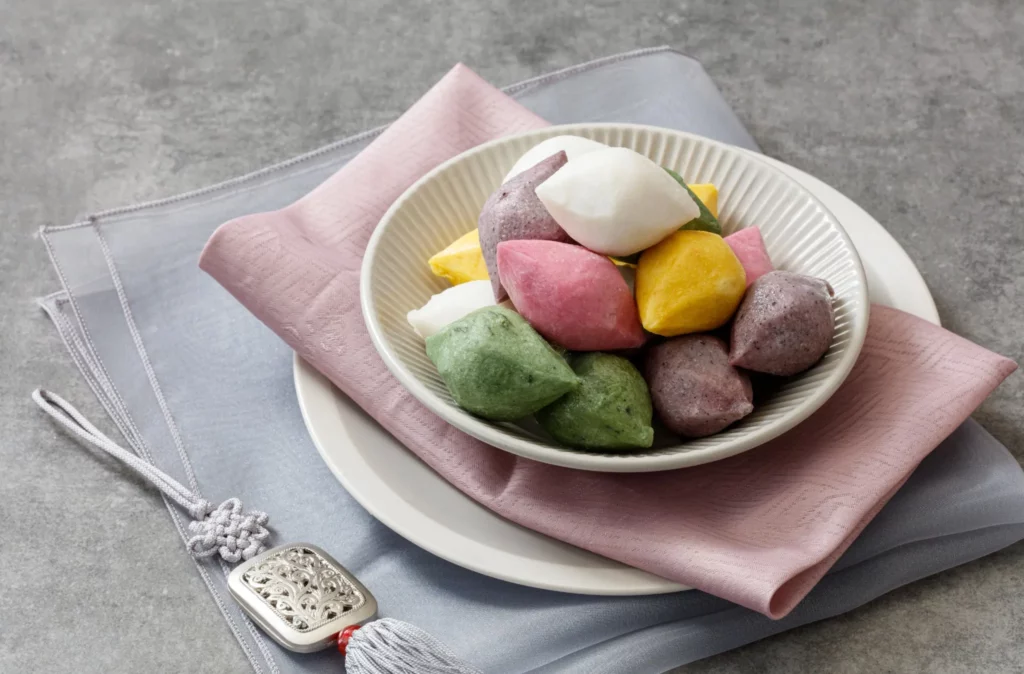
The name “songpyeon” literally means “pine cake” because “song” means pine tree in Korean, referencing the traditional steaming method using pine needles. Beyond their delicious taste, songpyeon carry deep cultural significance—Korean families believe the half-moon shape symbolizes growth and prosperity, as a half moon will continue to grow fuller, unlike a full moon which can only wane.
Essential Korean Ingredients Deep Dive
쌀가루 (Ssalgaru) – Short Grain Rice Flour
Pronunciation: ssal-ga-ru

Wet rice flour is made from short-grain rice that has been soaked in water before grinding, creating the perfect moisture content for songpyeon’s signature chewy texture. This is fundamentally different from dry rice flour—the soaking process builds in moisture that gives the dough its hallmark elastic, smooth consistency.
Where to find: Korean grocery stores (freezer section), online at H-Mart, or Asian markets Substitutions: If unavailable, combine 1 cup dry short-grain rice flour + 1/3 cup glutinous rice flour + extra resting time Storage: Keep frozen until use; thaw completely before making dough
참깨 (Chamkkae) – Sesame Seeds

Pronunciation: cham-kkae
The most traditional filling combines crushed sesame seeds with honey and sugar, creating a nutty, fragrant surprise inside each rice cake. Korean cooks prefer using pre-roasted sesame seeds for deeper flavor.
Pro tip: Use Japanese white roasted sesame seeds for stronger nutty flavor, and add kinako (roasted soy bean powder) for intensified roasted taste
솔잎 (Soljip) – Pine Needles (Optional but Traditional)
 —
—
Pronunciation: sol-jip
Pine needles prevent sticking during steaming and infuse the rice cakes with forest aroma while producing phytoncides that naturally preserve the cakes. Korean families traditionally collect fresh young pine needles before Chuseok, rinsing them thoroughly.
Substitutions: Silicone steamer mat, cheesecloth, or parchment paper Health note: Pine needles contain terpene compounds that help prevent spoilage
Natural Food Coloring Guide
쑥가루 (Ssukgaru) – Mugwort Powder (Green)

Creates deep green color with slightly herbal, earthy flavor traditional to Korean cooking
치자 (Chija) – Gardenia Seeds (Yellow)

Crush gardenia fruits, soak overnight in water for natural orange-yellow coloring
블루베리 (Beullubeori) – Blueberries (Purple)
Blend 1/4 cup blueberries with water, microwave until bubbling, strain hot juice
단호박 (Danhobak) – Kabocha Squash (Orange/Yellow)

Steam and mash kabocha squash for natural sweetness and vibrant orange color
Cultural Context & Serving

Songpyeon represents the heart of Chuseok celebrations. Traditionally, Korean families make songpyeon together on Chuseok eve, offering them to ancestors during charye (ancestral memorial ritual) as gratitude for the harvest.
There’s a beautiful Korean saying that whoever makes the prettiest songpyeon will have beautiful children—making this a cherished family bonding activity across generations.
Traditional serving: Enjoy warm or at room temperature with Korean tea or sikhye (sweet rice drink). The five traditional colors (white, green, yellow, pink, purple) represent harmony with nature.
Recipe Variations
Regional Specialties:
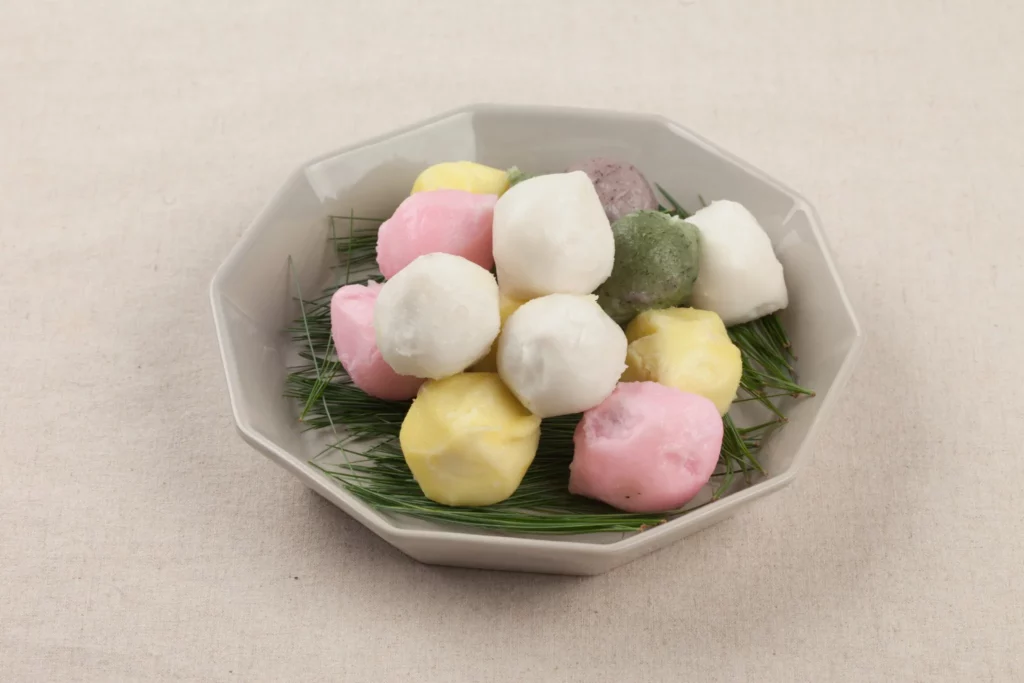
- Seoul Style: Small, five-colored (osaek) songpyeon with natural dyes
- Gangwon Province: Potato songpyeon made with potato starch for chewy, nutty texture
- Chungcheong Province: Pumpkin songpyeon with vivid yellow color and pumpkin shapes
- Jeolla Province: Flower-shaped songpyeon molded to resemble blooms
Modern Adaptations:
- Quick version: Use natural food coloring instead of homemade juices
- Fusion fillings: Nutella, cream cheese with honey, or sweetened coconut
- Mini songpyeon: Make bite-sized versions for parties
Troubleshooting Guide
Dough cracking during shaping: Add hot water gradually—rice flour was likely too dry or not fine enough
Rice cakes too hard: Used dry rice flour instead of wet, or insufficient kneading time
Colors too pale: Increase natural coloring ingredients or use concentrated juices
Filling leaking: Seal edges more thoroughly and avoid overfilling
Sticking during steaming: Ensure pine needles/liner completely covers steamer bottom
Storage & Reheating
Fresh storage: Keep leftover songpyeon in freezer while still fresh and soft—they maintain quality better frozen than refrigerated
Reheating: Steam again for 2-3 minutes or microwave briefly. Never microwave from frozen—thaw first at room temperature
Make-ahead: Shape uncooked songpyeon and freeze on trays. Steam directly from frozen, adding 5 extra minutes.
Frequently Asked Questions
What makes this recipe authentically Korean?
Authentic songpyeon requires wet rice flour (not dry), traditional steaming over pine needles, and natural colorings like mugwort and gardenia that Korean families have used for generations. The half-moon shaping technique and seasonal timing during Chuseok maintain cultural authenticity. Using freshly harvested rice and offering to ancestors during charye ceremony reflects the spiritual significance.
What if I can’t find wet rice flour or pine needles?
For rice flour: combine 1 cup dry short-grain rice flour + 1/3 cup glutinous rice flour + 1/4 teaspoon salt. Add cold water, sieve, refrigerate overnight for better texture. For pine needles: use damp cloth or silicone steamer mat—you’ll miss the forest aroma but achieve proper texture. Order wet rice flour online from H-Mart or Korean grocery stores for best results.
How do I know when songpyeon are properly cooked?

Look for slightly translucent surface after 20 minutes of steaming. Properly cooked songpyeon feel firm but yielding when pressed gently. The rice cakes should hold their shape but give slightly to pressure. Undercooked songpyeon remain opaque white; overcooked ones become mushy. The pine needle aroma intensifies when done.
What should I serve with songpyeon?
Serve songpyeon with Korean tea or by themselves as the sweet conclusion to Chuseok meals. Traditional pairings include sikhye (sweet rice punch), omija tea (five-flavor berry tea), or nokcha (green tea). During Chuseok, songpyeon appears alongside newly harvested fruits like persimmons, apples, and chestnuts representing gratitude for the harvest. They’re perfect with Korean traditional alcohol like cheongju for adult celebrations.
Nutritional Benefits

Gluten-free and plant-based: Made entirely from rice flour, making it suitable for various dietary restrictions Healthy fats: Sesame seeds provide omega-6 fatty acids and minerals Natural energy: Complex carbohydrates from rice provide sustained energy Antioxidants: Natural colorings from fruits and vegetables add beneficial compounds
How would you rate this recipe?
Reviews (0)
Join the Taste Korean food community and add comments.
