


Cucumber Kimbap
Cucumber Kimbap is a unique variation of traditional kimbap that uses a whole cucumber inside the roll instead of assorted fillings. Cooked rice is spread thinly over a sheet of seaweed, a whole cucumber is placed in the center, and the roll is tightly wrapped. When dipped in nutty ssamjang, it delivers a refreshing yet savory taste. With minimal ingredients and a simple preparation process, this healthy home-style kimbap is perfect for lunch, a light snack, or an easy meal at home.


Cooking Order
Ingredients
Basic ingredients
Cucumber2 pcs
Cooked rice1 bowl ≈ 210 g(7.4 oz)
Dried seaweed2 sheets
Seasoned Vinegar Mix
Vinegar3 tbsp
Water2 tbsp
Sugar1 tbsp
Salt2 pinches
For dipping
Ssamjang2 tbsp
Sesame oil1 tsp
Sesame seeds1 tsp
Cheongyang chili1/2 whole
Oligodang syrup1 tsp
Step 1:
Wash the cucumbers with salt, peel roughly with a peeler, and trim the ends.
Step 2:
Combine vinegar, sugar, water, and salt. Stir until dissolved (microwave briefly if needed).
Step 3:
Add about 1 tbsp of seasoned vinegar mix to 1 bowl of cooked rice (≈ 210 g / 7.4 oz). Mix well.
Step 4:
Cool the rice slightly, then spread thinly over about 80% of a dried seaweed sheet. Lightly coat your fingertips with sesame oil.
Step 5:
Place a whole cucumber on top of the rice. Roll gently but firmly, sealing the end of the seaweed with a little water. Press tightly so the cucumber and rice hold together.
Step 6:
Brush the outside with sesame oil and sprinkle sesame seeds.
Step 7:
Cut into bite-sized pieces and serve with ssamjang dipping sauce.
Editor's Detail
The Ultimate Guide to Cucumber Kimbap: Korea’s Refreshing Minimalist Rice Roll
Transform your lunch game with this surprisingly simple yet incredibly satisfying Korean rice roll that celebrates the pure, crisp essence of cucumber in every bite.
What Makes Cucumber Kimbap Special?
Cucumber kimbap (오이김밥) represents the beautiful philosophy of Korean minimalism in cooking—less is truly more. While traditional kimbap bursts with multiple colorful fillings, this refreshing variation celebrates the pure, crisp essence of cucumber wrapped in perfectly seasoned rice and roasted seaweed.

Bottom Line Up Front: This isn’t just another kimbap variation—it’s a masterclass in how simple, quality ingredients can create something extraordinarily satisfying. Perfect for hot summer days, quick lunches, or when you want authentic Korean flavors without the complexity.
Korean Ingredient Deep Dive
Cucumber (오이, Oi): The Star
Korean Name: 오이 (Oi) – pronounced “OH-ee”
Why Special: Korean cucumbers are traditionally blanched briefly to reduce bitterness while maintaining crunch—a technique rarely seen in Western cooking.
Best Sources: Korean cucumbers from Asian markets (bumpy, pale green), or substitute with Persian/English cucumbers. Avoid regular slicing cucumbers (too watery).
Seasoned Rice & Seaweed
Korean kimbap rice uses sesame oil and salt rather than heavy vinegar like sushi rice, creating a nutty, savory base. Korean gim (김) seaweed sheets are slightly thicker and nuttier than Japanese nori.
Seasoned Vinegar Mix (김밥 단촛물)
This traditional kimbap seasoning liquid balances tang without overpowering the cucumber’s delicate taste. The 3:2:1 ratio (vinegar:water:sugar) with salt creates authentic kimbap flavor.
Ingredients

Recipe Variations
Summer Version: Add julienned carrots for color and sweetness.
Spicy Style: Season cucumbers lightly with gochugaru before rolling.
Double Cucumber: Use both fresh cucumber and pickled danmuji for texture contrast.
What makes this recipe authentically Korean?
Traditional Techniques: Blanching cucumbers briefly removes bitterness while maintaining crunch—a distinctly Korean method. Seasoning rice with sesame oil instead of focusing on vinegar like Japanese sushi creates the authentic nutty flavor Korean families expect.
Essential Ingredients: Korean gim (김) seaweed has a nuttier taste than Japanese nori. The dipping sauce combines ssamjang with sesame oil, representing authentic Korean flavor profiles that can’t be replicated with other Asian pastes.
Cultural Method: Using whole cucumbers rather than julienned pieces creates better texture and follows traditional Korean kimbap preparation methods.
What if I can’t find specific Korean ingredients?
Seaweed Substitutions: Japanese nori sheets work as emergency substitute—brush lightly with sesame oil for closer flavor. Korean grocery stores like H-Mart ship nationwide, or find gim on Amazon.
Ssamjang Alternatives: Mix 2 parts miso paste + 1 part gochujang for emergency substitute, though flavor will be less complex. Online Korean grocery websites stock authentic ssamjang.
DIY Options: Make seasoned vinegar mix fresh—never skip this step as it’s crucial for authentic taste. Combine doenjang (Korean soybean paste) with gochujang if you can’t find pre-made ssamjang.
How do I know when cucumber kimbap is properly made?
Visual Cues: Look for clean spiral pattern when sliced, with cucumber perfectly centered. Rice should be evenly distributed without gaps, and seam barely visible. Glossy exterior from sesame oil application indicates proper finishing.
Texture Indicators: Roll should feel firm but not hard when gently squeezed. Cucumber maintains satisfying crunch without sogginess. Rice holds together without being mushy. Should be easy to pick up with chopsticks without falling apart.
Timing Signs: Best consumed within 4 hours at room temperature when flavors are perfectly balanced and rice texture is optimal.
What should I serve with cucumber kimbap?
Traditional Banchan Pairings: Aged cabbage kimchi balances cucumber’s mildness perfectly. Add pickled radish (danmuji) and seasoned spinach for complete Korean meal composition. Clear seaweed soup or simple miso soup complements without competing.
Korean Meal Context: Kimbap IS the rice dish, so no additional rice needed. Serve at room temperature—this is traditional Korean picnic and outdoor food, meant to be portable and satisfying.
Beverage Pairings: Traditional barley tea (boricha), modern banana milk, or light green tea all complement the fresh flavors without overwhelming the delicate cucumber taste.
Family Style: Present on rectangular dish with other banchan for authentic Korean home dining experience.
Expert Tips for Success
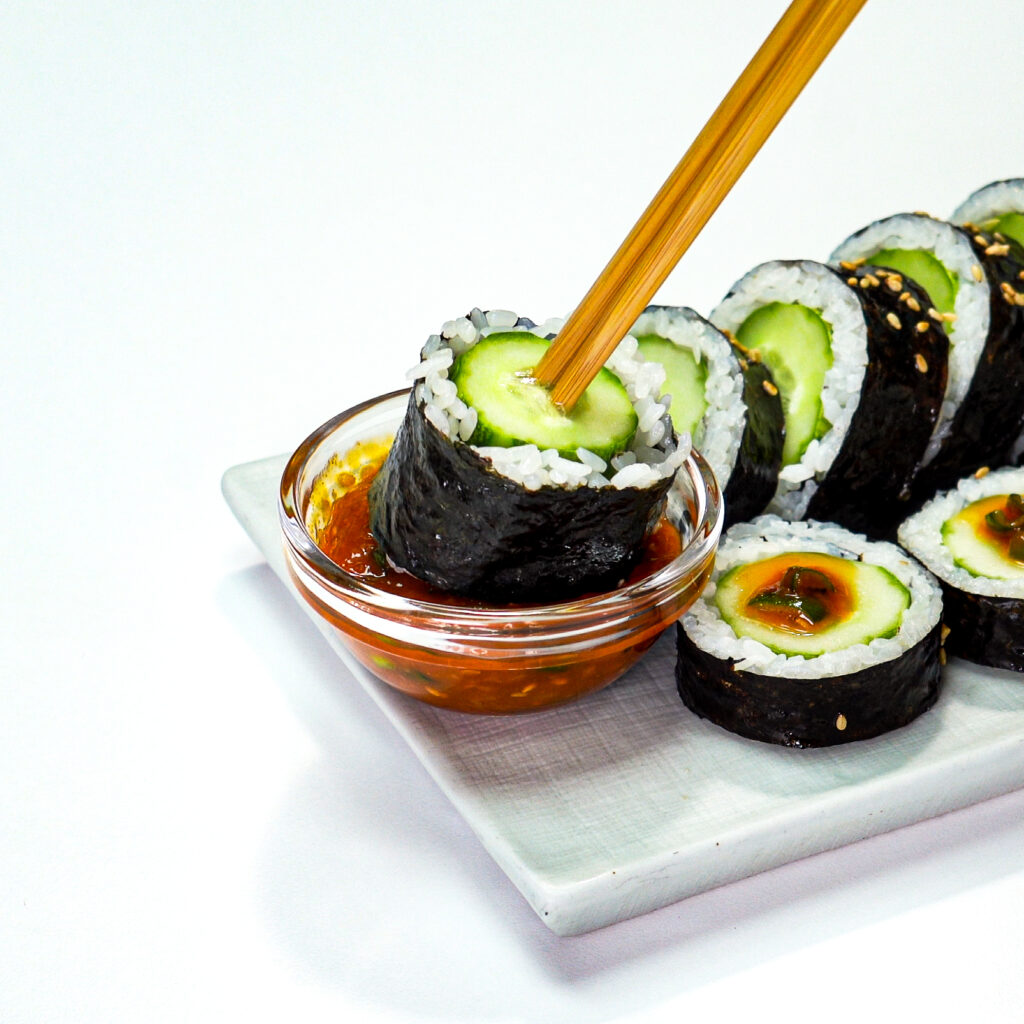
Rolling Technique: Start with less filling—you can always add more next time. Apply consistent pressure throughout rolling, not just at the end. Keep ingredients at room temperature for easier rolling.
Quality Matters: Fresh cucumbers make the biggest difference. Day-old rice often works better than fresh for texture. Invest in quality Korean sesame oil for authentic flavor.
Timing: Prep cucumbers first—they need draining time after salting. Season rice while warm for better absorption. Slice just before serving for optimal texture.
Profound Flavor from the Simplest Ingredients
Cucumber kimbap proves that the most profound flavors come from the simplest ingredients. This refreshing Korean rice roll offers an accessible entry into authentic Korean home cooking while delivering the satisfaction that has made kimbap Korea’s beloved portable meal.
Master this fundamental dish and you’ll understand Korean cooking philosophy that values harmony and respect for ingredients. Ready to expand your skills? Try traditional spinach kimbap next or explore Korean cucumber kimchi.
Share your success with #AuthenticKoreanCooking and connect with other home cooks discovering Korean cuisine!
How would you rate this recipe?
Reviews (0)
Join the Taste Korean food community and add comments.


Samsaek-namul (Three-Color Seasoned Vegetables)
Samsaek namul (삼색나물) is Korea’s iconic trio of three-color vegetable side dishes — blanched spinach (green), seasoned bellflower root (white), and slow-simmered fernbrake (brown) — each color carrying centuries of symbolic meaning: vitality, purity, and the abundance of the earth. Served at Chuseok, Seollal, and ancestral memorial rites, and essential to an authentic bibimbap bowl, this naturally vegan banchan is one of the most culturally significant preparations in the Korean kitchen. Once you understand the simple but precise technique behind each vegetable, it’s a dish that’s entirely achievable at home — and deeply worth mastering.

Doraji Namul
There are Korean side dishes that show up quietly on the table, never calling attention to themselves — and then, after one bite, you find yourself reaching for them again and again. Doraji namul (도라지나물) is exactly that dish. Made from the root of the bellflower plant, this lightly seasoned banchan delivers a satisfying crunch, a gentle bitterness that fades into earthy sweetness, and a delicate chewiness that pairs beautifully with virtually anything. It is one of the original vegetables of Korean cuisine — eaten for centuries, prescribed by traditional medicine practitioners, woven into folk songs and spring rituals. If you’ve been curious about how to make doraji namul at home, this guide gives you everything you need: the soaking technique that makes or breaks the dish, the difference between the white and red spicy variations, sourcing advice for fresh or dried root, and the small details that separate a truly authentic result from a flat, bitter disappointment.

Gosari Namul (Seasoned Fernbrake)
If there’s one Korean side dish that quietly defines the depth of the country’s banchan tradition, it might just be gosari namul (고사리나물) — seasoned fernbrake that appears at everyday tables, holiday feasts, and the iconic mixed rice bowl bibimbap. Despite its understated appearance, this Korean seasoned vegetable side dish carries centuries of culinary heritage, a distinct earthy umami that no other banchan can replicate, and a remarkably satisfying chewiness that keeps reaching for it throughout the meal. Whether you’re new to Korean cooking or trying to round out your banchan repertoire, mastering gosari namul is one of the most rewarding investments you can make.