


Seoul’s Yongridangil district has become the go-to destination for food-savvy locals seeking authentic Korean flavors, and at the heart of this culinary renaissance sits Baboseom—a sashimi restaurant where the phrase "worth the wait" takes on new meaning. With its remarkably fresh assorted sashimi platter, soul-warming yeonpotang (octopus soup), and legendary winter yellowtail, this establishment has earned a devoted following among Seoul’s discerning seafood lovers. Whether you’re craving the clean, oceanic flavors of perfectly sliced raw fish or the comforting warmth of traditional Korean seafood soup, Baboseom delivers an experience that transforms a simple meal into a memorable occasion.
Baboseom, Sashimi Heaven in Yongsan
4
Baboseom, Sashimi Heaven in Yongsan
4
1st and 2nd floor 8 Hangang-daero 42-gil, Yongsan District, Seoul
Editor: 안주은


Interior02
Food05

Menu03
Overview
+82 0507-1322-4108
WiFi Provided
Indoor Seating Only
Electronic Payment accepted: American Express, Master Card, Visa
Introduction
Operating hours
Mon, Tue, Wed, ThuPM 4:20 - PM 11:00
FriAM 4:20 - AM 12:30
SatPM 3:30 - AM 12:30
SunPM 3:30 - PM 11:00
Menu
Editor's Detail
Table of Contents
- The Rise of Yongridangil and Baboseom’s Place in Seoul’s Food Scene
- What Makes Baboseom’s Assorted Sashimi Special
- Yeonpotang: The Soul-Warming Octopus Soup
- Winter Yellowtail Season at Baboseom
- The Complete Dining Experience
- What Makes This Dish Uniquely Korean?
- How Would You Describe the Taste?
- What Should First-Time Eaters Know?
- Practical Information for Your Visit
- Planning Your Baboseom Experience
The Rise of Yongridangil and Baboseom’s Place in Seoul’s Food Scene
Yongridangil (용리단길) has rapidly emerged as one of Seoul’s trendiest neighborhoods, drawing both locals and visitors with its unique blend of artisanal bakeries, specialty coffee roasters, and authentic eateries. The name follows the popular Korean "-ridangil" naming convention that signals neighborhoods undergoing creative transformation, much like the original Gyeongridan-gil near Itaewon.
Stretching between Sinyongsan and Samgakji Station, this once-quiet area exploded in popularity following the arrival of major companies like Amorepacific and HYBE (home of BTS) in the district. Today, old storefronts sit alongside trendy restaurants, creating an atmosphere that feels both established and excitingly new.

Within this bustling culinary landscape, Baboseom has carved out a distinctive reputation. The restaurant’s name, which translates roughly to "Fool’s Island" or "Treasure Island of the Sea," hints at the abundant seafood treasures awaiting diners. Located just a five-minute walk from Sinyongsan Station and near the popular Yongsan I’Park Mall, this two-story establishment has become synonymous with quality raw fish in the Yongsan district.
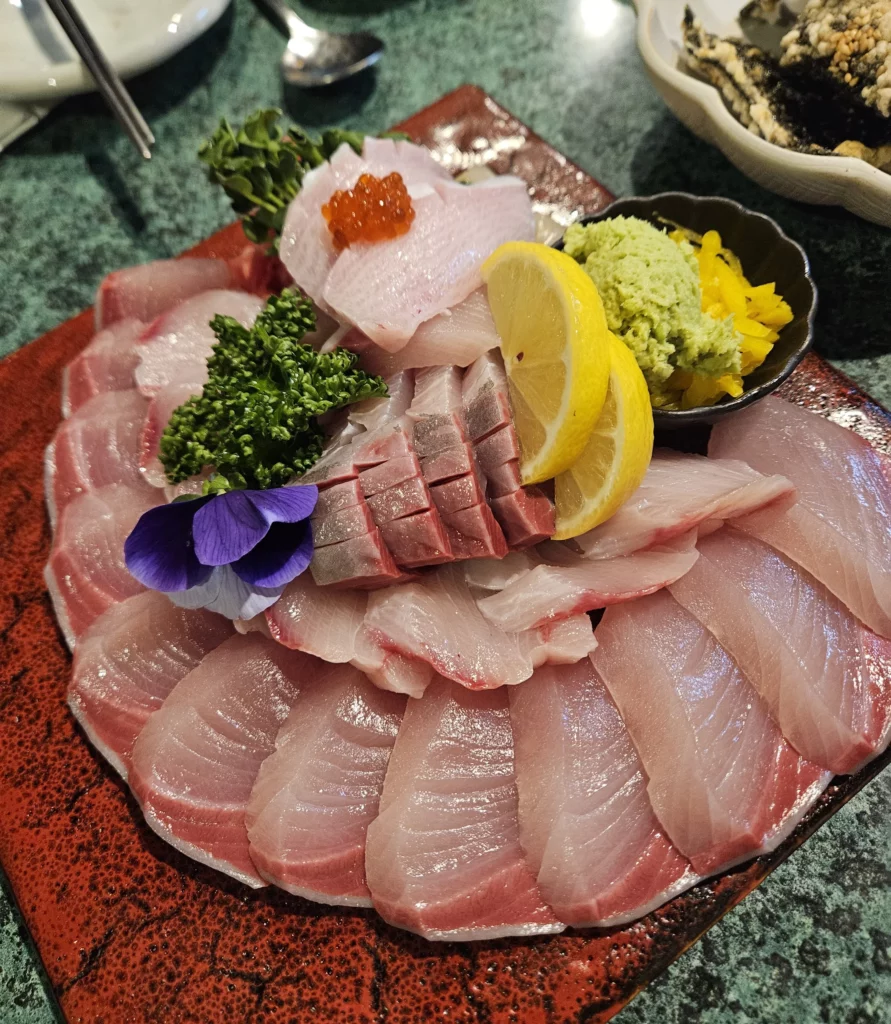
The restaurant sources its seafood fresh from Noryangjin Fish Market each morning, a commitment to quality that has earned it recognition among Seoul’s competitive dining scene. Many visitors report that the freshness here rivals or exceeds coastal seafood restaurants, a significant achievement for a Seoul establishment.
What Makes Baboseom’s Assorted Sashimi Special
The star attraction at Baboseom is undoubtedly the modum hoe (모듬회), or assorted sashimi platter. Unlike Japanese sashimi presentations that emphasize artistic arrangement, Korean hoe (회) focuses intensely on freshness and the natural flavors of the fish. At Baboseom, this philosophy reaches its full expression.
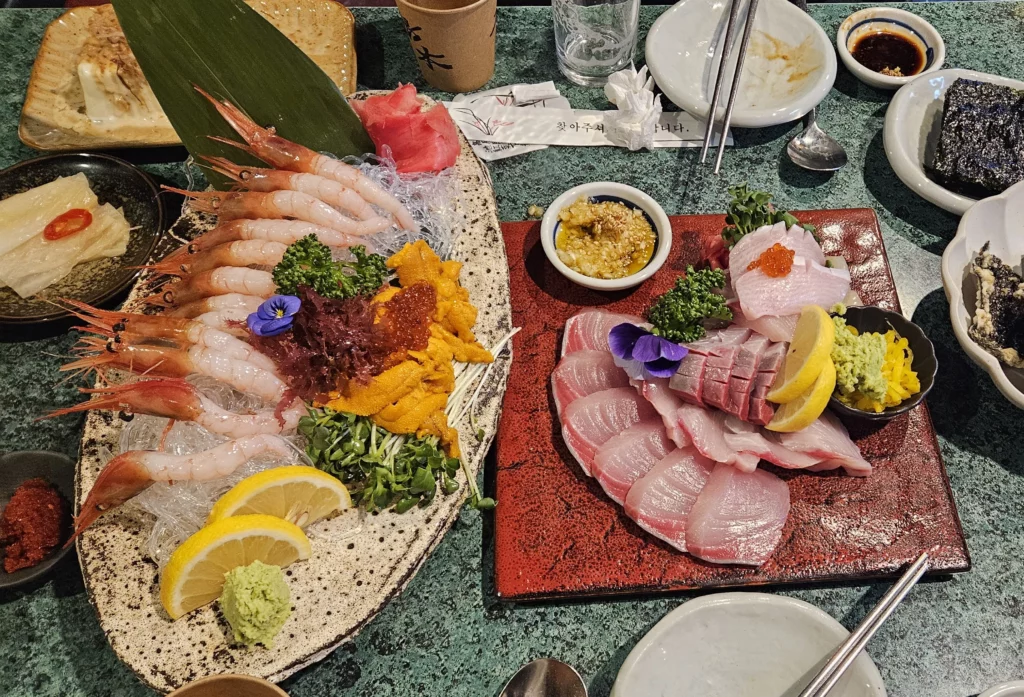
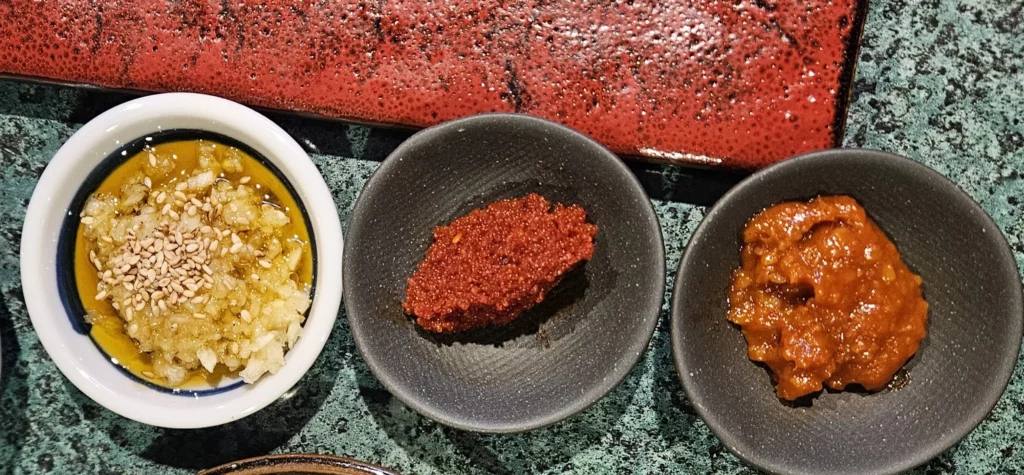
Korean sashimi differs from its Japanese counterpart in several meaningful ways. While Japanese sashimi typically features aged fish prepared with soy sauce and wasabi, Korean hoe often uses fish that’s been freshly killed, resulting in a distinctly firmer, chewier texture that many locals prefer. The accompaniments also differ: Korean diners typically enjoy their raw fish with chojang (a sweet-spicy gochujang-based sauce), lettuce wraps, and raw garlic, creating a more interactive and flavor-forward experience.
The assorted sashimi platter at Baboseom arrives generously portioned, featuring seasonal catches that might include flatfish (광어), rockfish (우럭), and whatever the morning’s market delivered at peak freshness. Diners consistently praise the thickness of the cuts, which allows for a satisfying chew and the full expression of each fish’s natural sweetness.
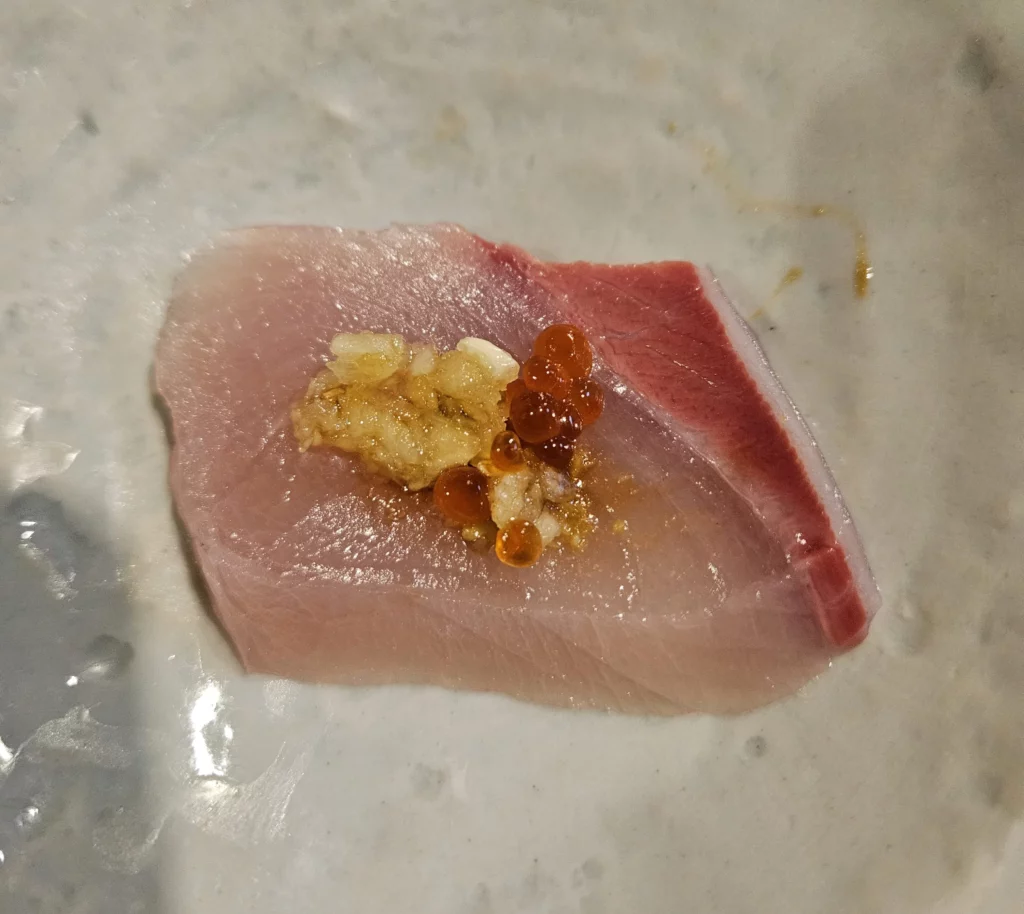
The small plate (소) runs approximately 90,000 won and serves two people comfortably. The restaurant also offers various set menus that combine the sashimi platter with other signature dishes, providing excellent value for groups wanting to experience multiple flavors.
Yeonpotang: The Soul-Warming Octopus Soup
While the sashimi draws initial attention, many repeat visitors come specifically for Baboseom’s yeonpotang (연포탕)—a traditional Korean octopus soup that represents Korean coastal cuisine at its finest. This clear, delicate soup showcases octopus in a light kelp-based broth enhanced with tofu, vegetables, and subtle seasonings.
Yeonpotang originates from South Jeolla Province and differs markedly from the bold, spicy soups many associate with Korean cuisine. The broth is intentionally understated, allowing the natural sweetness of the octopus to take center stage. The soup typically arrives at your table still bubbling, with tender octopus pieces ready to be enjoyed with a dipping sauce on the side.
Winter Yellowtail Season at Baboseom
From late November through February, Baboseom transforms into a destination for one of Korea’s most anticipated seasonal ingredients: daebangeo (대방어), or winter yellowtail. This fatty, flavorful fish reaches peak condition during the coldest months, when the fish accumulate rich fat stores that melt on the tongue.
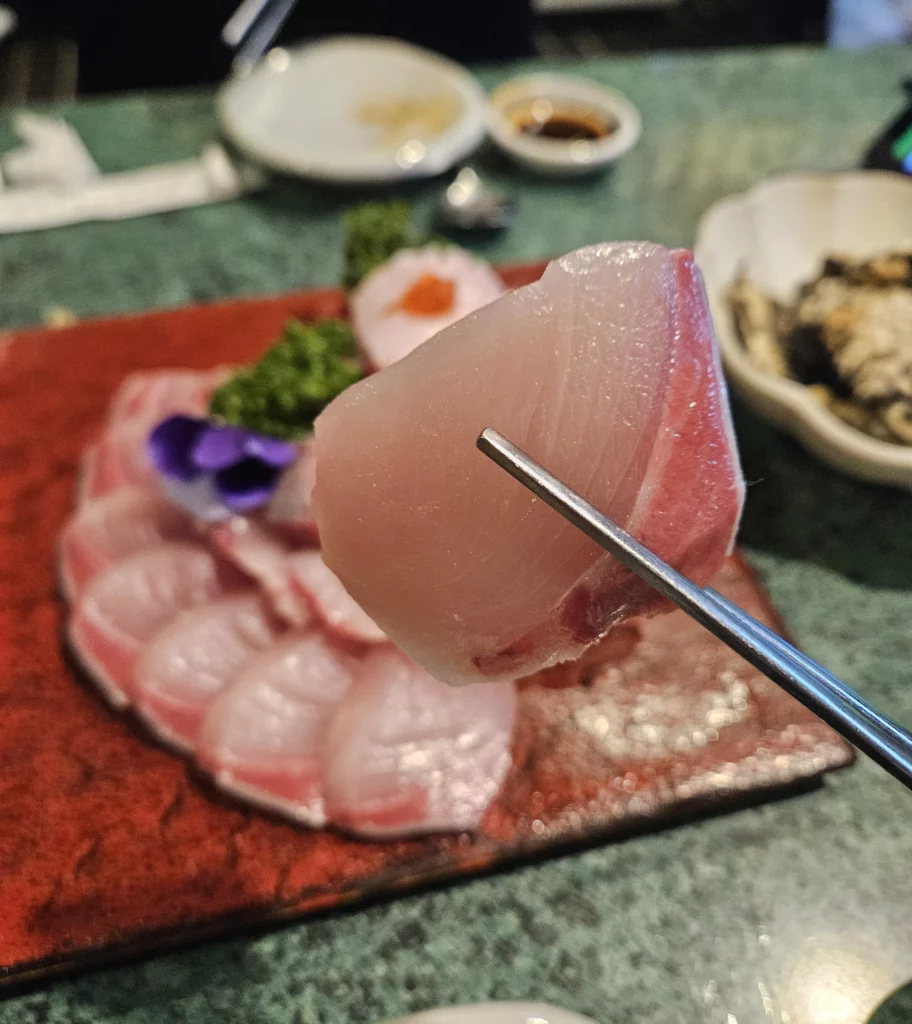
Winter yellowtail at Baboseom has developed its own devoted following. The fish is served thickly sliced, allowing diners to appreciate the marbled fat that distinguishes premium specimens. Many visitors note that the characteristic "fishy" smell sometimes associated with yellowtail is completely absent here, testament to the restaurant’s sourcing standards.
The daebangeo comes sliced into thick pieces that provide substantial chew while still melting with richness. Pairing these fatty slices with the restaurant’s aged kimchi creates a beautiful contrast—the fermented tang and spice cutting through the fish’s richness in classic Korean fashion.
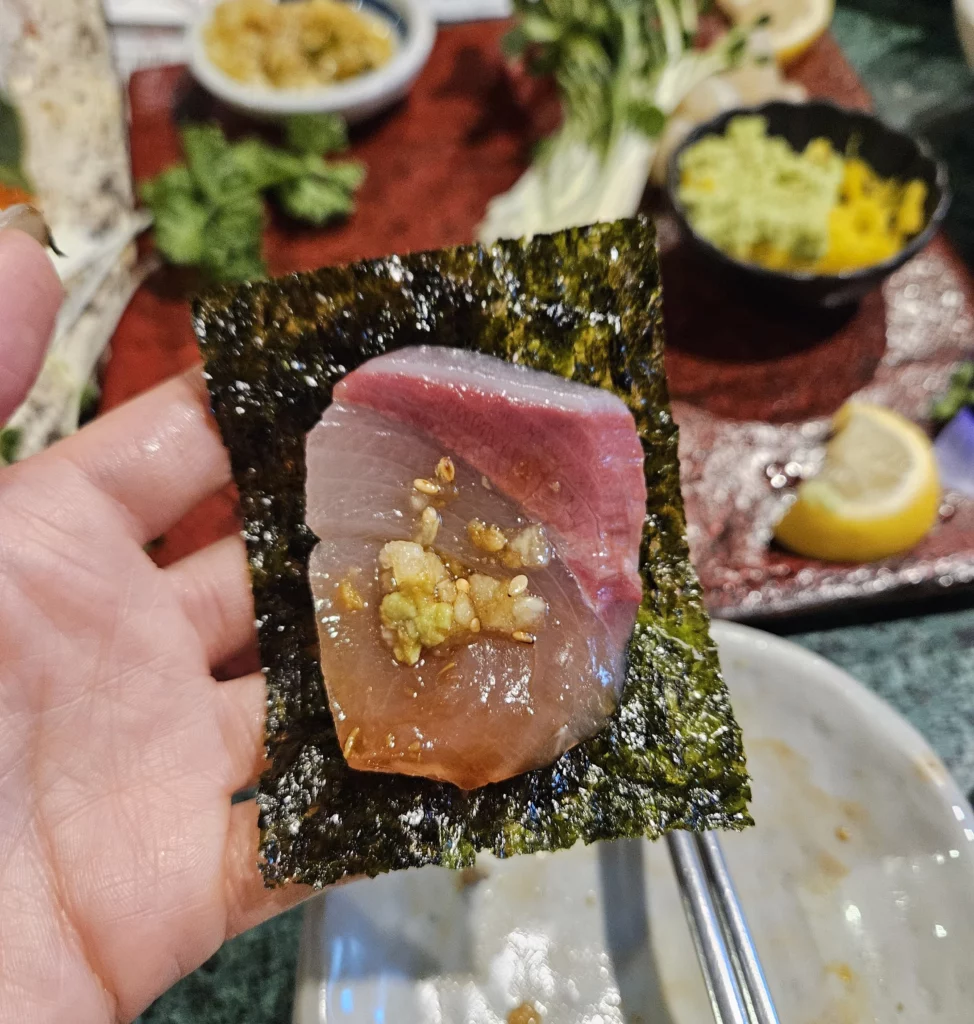
Those visiting during yellowtail season should consider arriving early or making reservations through Catch Table or Naver, as the restaurant fills quickly during this popular period.
The Complete Dining Experience
Beyond the seafood highlights, Baboseom offers an experience that reflects Korean dining culture’s emphasis on abundance and sharing. The meal begins with complimentary banchan (반찬)—the small side dishes that are fundamental to Korean meals.
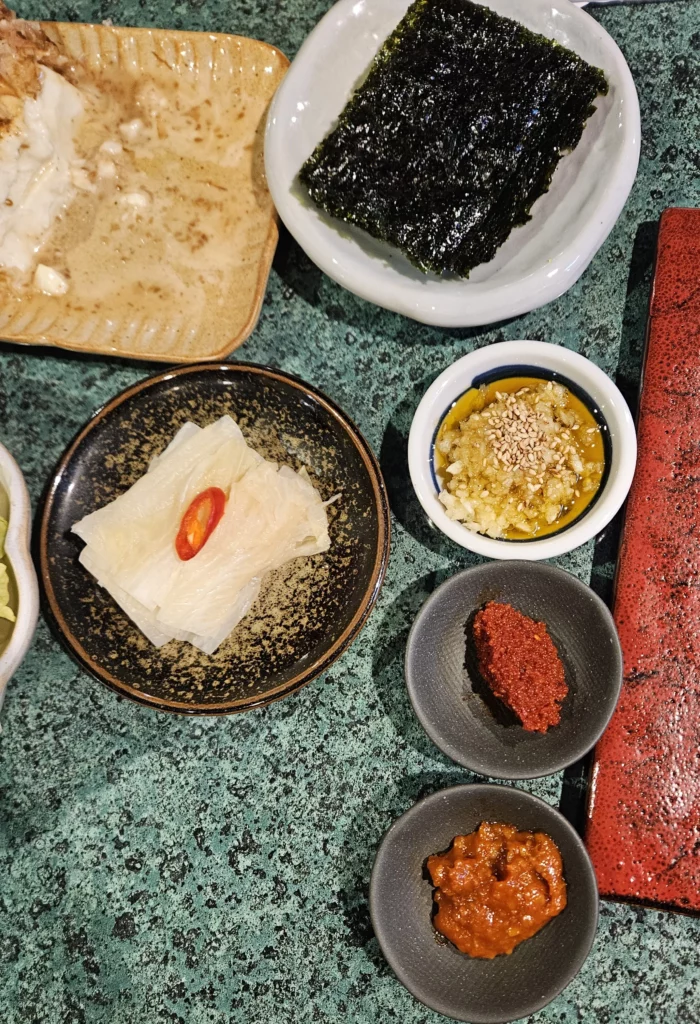
At Baboseom, these banchan include crisp salad, kim twigak (fried seaweed chips), tender al-baechu (baby napa cabbage), roasted gim (seaweed sheets), and refreshing baek-kimchi (white kimchi). A distinctive accompaniment is the ojingeo ssiat ssamjang—a ssamjang enhanced with squid eggs that adds unique texture and savory depth to lettuce wraps.
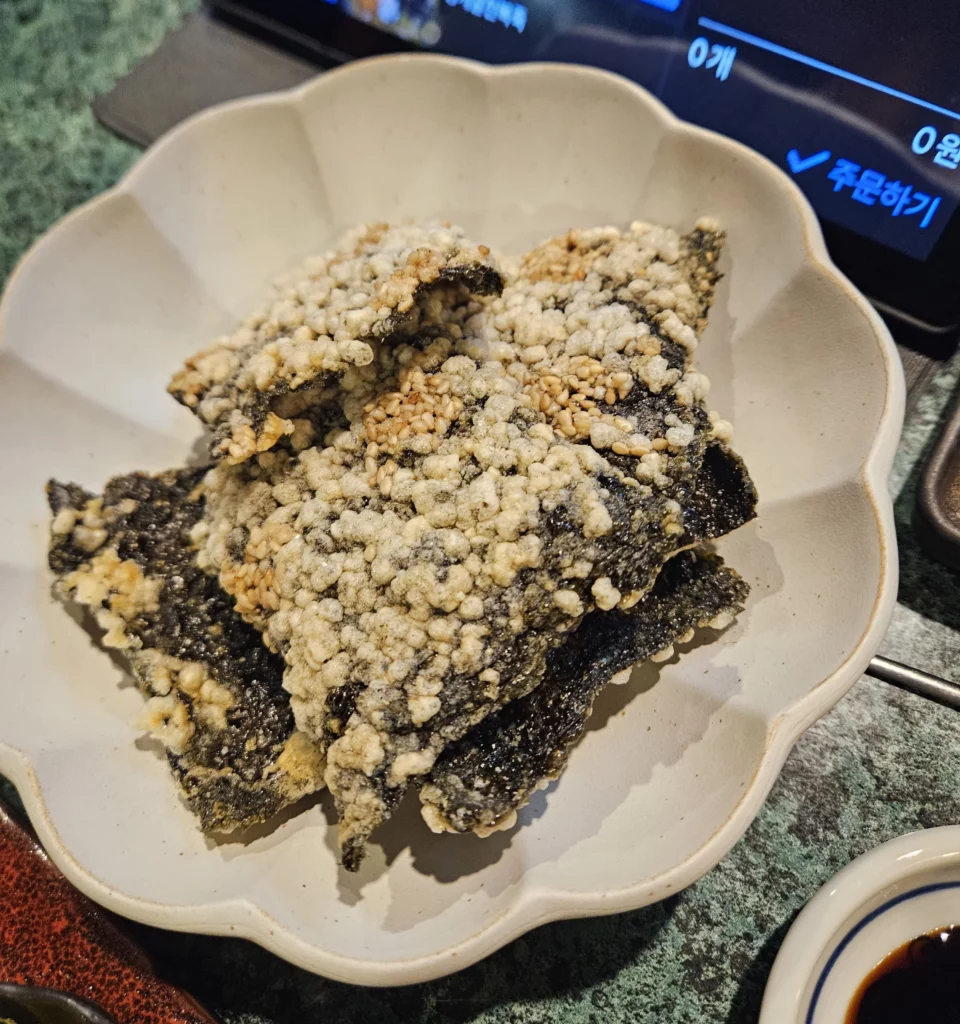
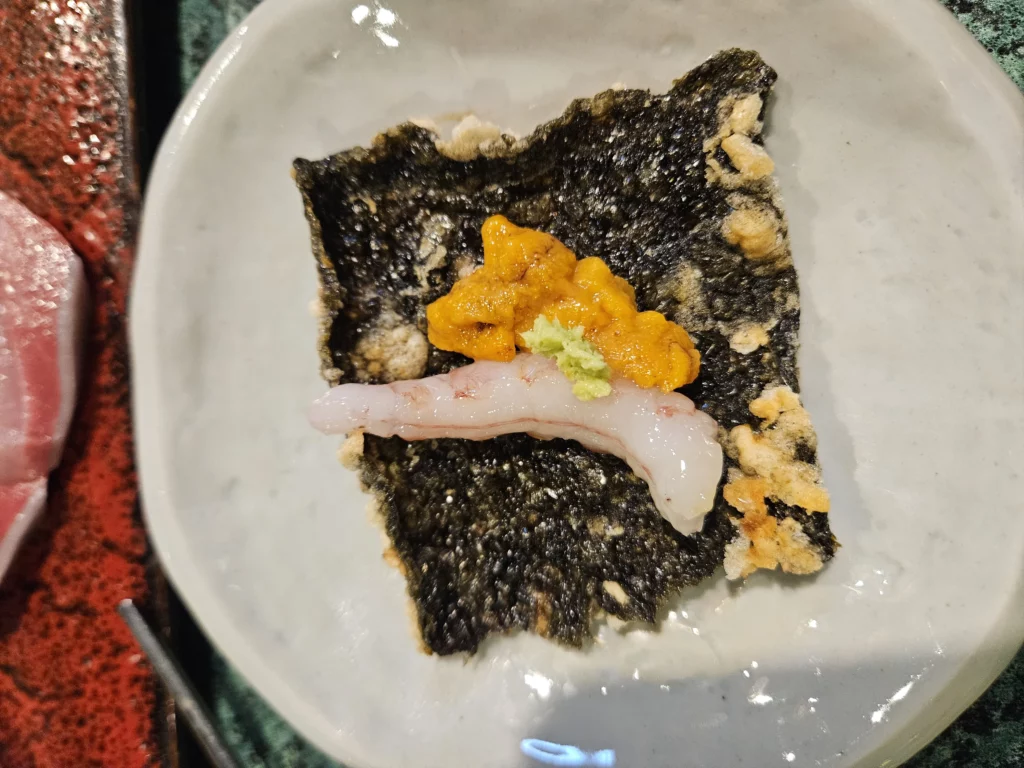
The restaurant also provides rice for creating impromptu hand rolls with the sashimi, a popular Korean eating style where diners wrap fish in seaweed sheets with a small amount of rice and garnishes. This interactive element adds fun to the meal, particularly for groups.
Additional menu highlights include:
- Dolmuneo sukhoe (돌문어 숙회): Blanched stone octopus, approximately 55,000 won
- Uni han pan (우니한판): A full plate of fresh sea urchin, approximately 45,000 won
- Wada uni capellini (와다우니 카펠리니): Cold pasta with sea urchin, approximately 28,000 won
- Comprehensive set menus: Combining sashimi, octopus boiled pork wraps, and yeonpotang for 3-4 people at approximately 188,000 won
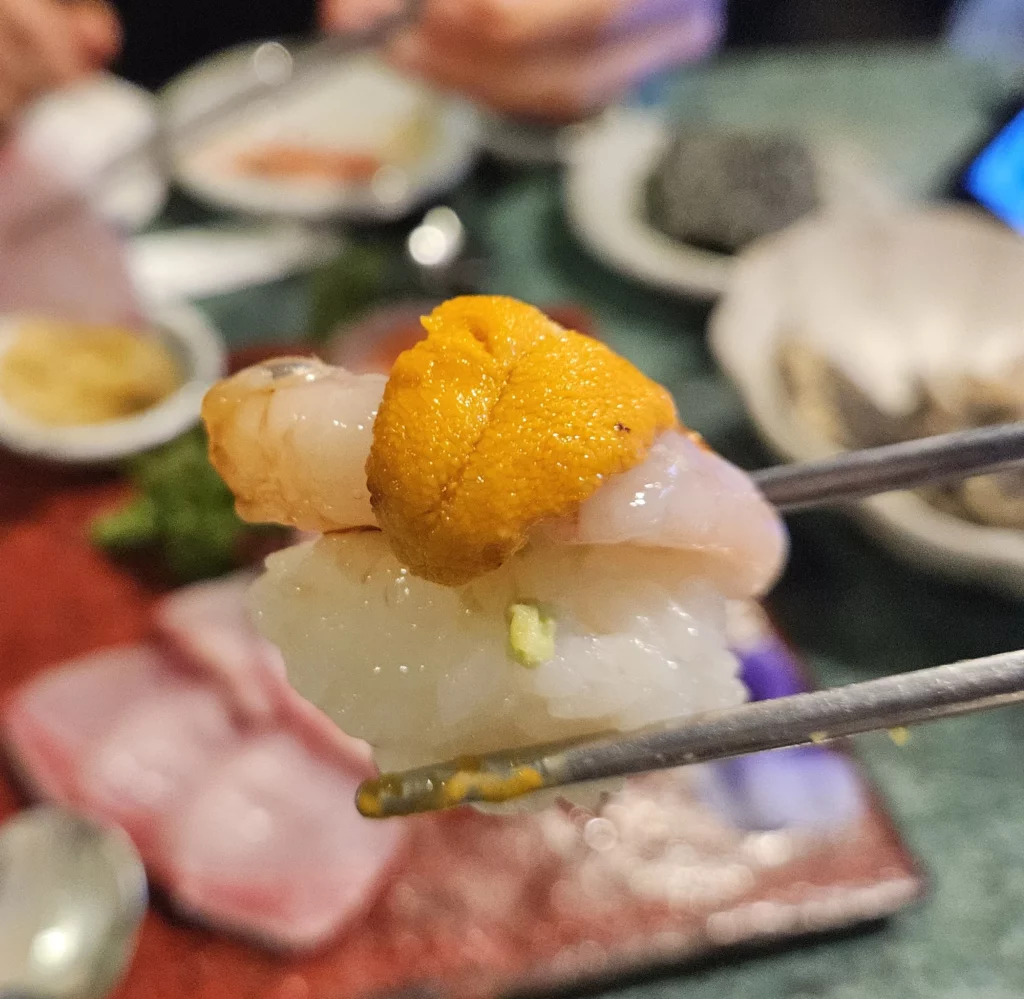
Many diners report being pleasantly surprised by the freshness of the dansaewu (sweet shrimp) and uni, noting that these delicate items demonstrate exceptional quality that matches specialty establishments.
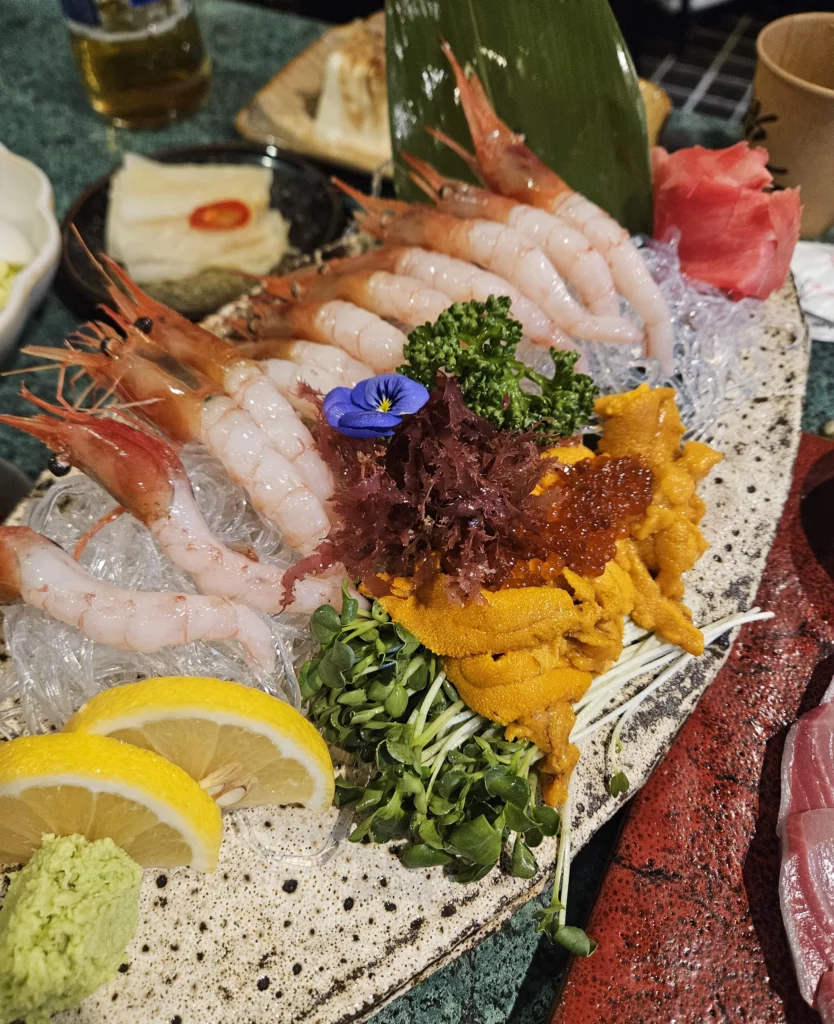
The uni (sea urchin), available as a full platter (우니한판) for approximately 45,000 won, represents another level of indulgence entirely. These golden-orange lobes—technically the gonads of the sea urchin—deliver an intensely creamy, briny-sweet experience often described as "the ocean distilled into butter." Quality uni should have no trace of bitterness, only a clean, lingering sweetness with oceanic undertones. At Baboseom, the uni arrives with remarkable freshness, free from the metallic or iodine-heavy notes that plague lesser specimens.
What Makes This Dish Uniquely Korean?
Korean sashimi culture, known as hoe(회), developed independently from Japanese sashimi traditions and carries distinct cultural significance. While raw fish consumption exists in many coastal cultures, Korean hoe developed its unique character through the influence of ssam (wrapping) culture and the country’s fermented condiment traditions.
The practice of eating hoe dates back centuries in Korea’s coastal regions, where fishing communities developed techniques for enjoying the freshest catch. Unlike the refined, meditative presentation style associated with Japanese sashimi, Korean hoe emphasizes abundance, interaction, and bold flavor combinations. The communal sharing of a large platter, the active wrapping of fish in vegetables, and the liberal use of chojang and raw garlic create a lively, engaging meal.
This dining style reflects deeper Korean food values: the belief that good food should be shared generously, that freshness matters above all, and that contrasting flavors and textures create more satisfying meals. At restaurants like Baboseom, these traditional principles meet contemporary execution in Seoul’s trendy dining landscape.
How Would You Describe the Taste?
The overall flavor profile at Baboseom balances clean, oceanic freshness with strategic flavor contrasts:
Spice Level: 1-2 out of 10 (for the sashimi and yeonpotang; spicier options available)
Primary Flavor Notes:
- Clean oceanic sweetness (sashimi)
- Mild salinity and mineral quality
- Tangy-sweet from chojang
- Earthy, fermented depth from ssamjang and aged kimchi
- Refreshing bitterness from the vegetables and herbs
Texture: Expect satisfying chew from the fresh-cut sashimi—this is not the melt-in-your-mouth style of aged Japanese fish. Korean diners appreciate this firmer texture, which they associate with freshness. The octopus in yeonpotang should be tender without being rubbery, while the soup arrives piping hot to maintain temperature throughout the meal.
What Should First-Time Eaters Know?
What to Expect on First Taste: If you’re accustomed to Japanese sashimi, Korean hoe will feel noticeably firmer and chewier. This is intentional and indicates freshness in Korean seafood culture. Give yourself a few bites to appreciate this texture difference—many first-timers come to prefer it.
Cultural Considerations: Korean dining is communal—expect shared platters rather than individual portions. It’s perfectly acceptable to use your chopsticks to take food from shared plates. Pace yourself, as Korean meals tend to be abundant and arrive in multiple waves.
The 2.5-hour time limit at Baboseom (enforced during peak hours) is standard practice at popular Seoul restaurants. Plan your meal accordingly and don’t feel rushed—this timeframe allows for comfortable dining.
Practical Information for Your Visit
Address:
8 Hangang-daero 42-gil, Yongsan-gu, Seoul (서울 용산구 한강대로42길 8)
Hours:
- Weekdays: 4:30 PM – 11:00 PM (Last order 10:00 PM)
- Weekends: May open earlier (2:30 PM on Sundays)
- Closed: Check Naver or Catch Table for occasional closure days
Phone: 0507-1322-4108
Reservations:
Highly recommended through Catch Table or Naver Booking, especially for:
- Weekend evenings
- Winter yellowtail season (November–February)
- Groups of 4 or more
Price Range:
₩50,000 – ₩100,000 per person (approximately $40–$80 USD)
Getting There:
- Sinyongsan Station (Line 4): 5-minute walk
- Samgakji Station (Lines 4, 6): 10-minute walk
- Parking is extremely limited; public transportation recommended
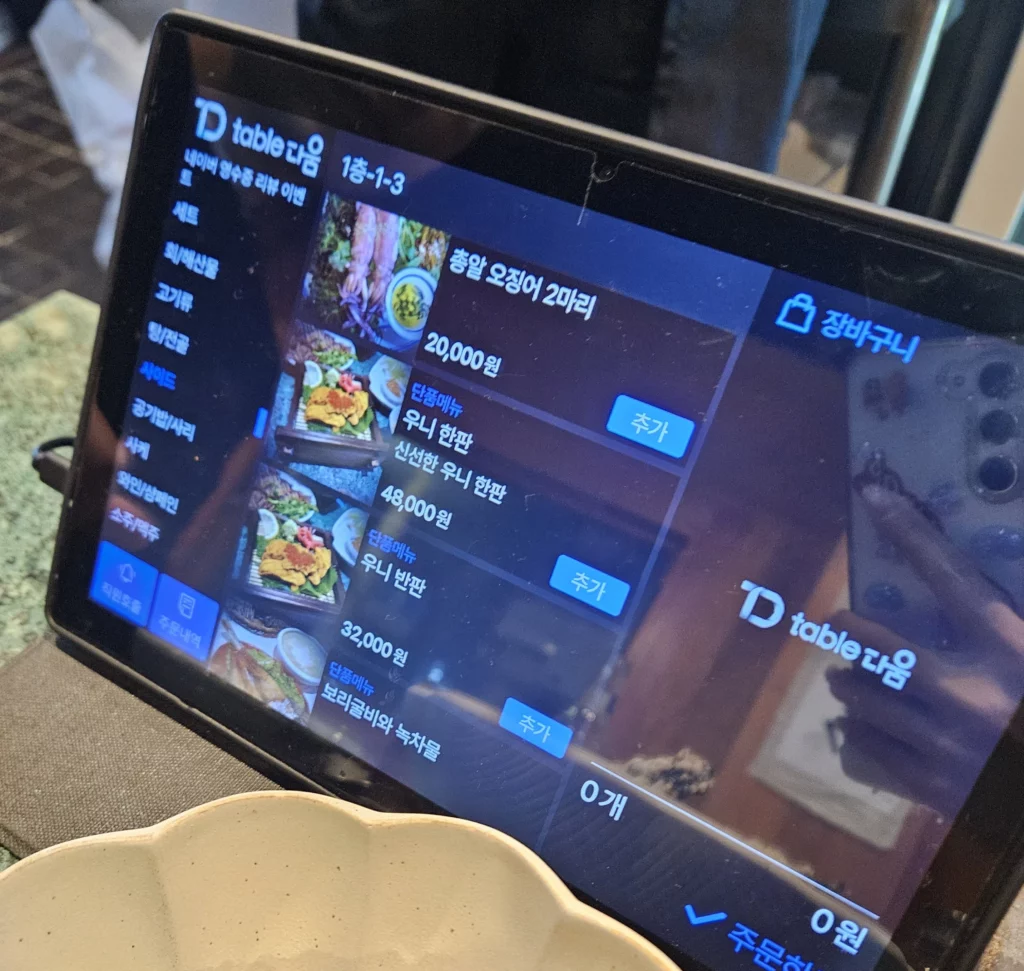
Payment: Cash and cards accepted; kiosk ordering system in place
Wait Times: Expect significant waits (1-2 hours) during peak dinner hours without reservation. The restaurant fills quickly after 5:30 PM and maintains steady crowds until closing.
Planning Your Baboseom Experience
For the optimal Baboseom experience, consider these strategies:
Best Timing: Arrive at opening (4:30 PM) to secure seating without a wait. Alternatively, late evening visits (after 9:00 PM) sometimes offer shorter waits as the first seating clears. During winter yellowtail season, weekday visits are significantly easier than weekends.
Ordering Strategy: For two people, the small assorted sashimi platter plus one yeonpotang creates a satisfying meal. Groups of 3-4 should consider the set menu combining sashimi, octopus bossam (보쌈), and yeonpotang for the best value and variety.
Pairing with Yongridangil Exploration: The wait time offers an opportunity to explore the neighborhood. Popular nearby spots include BREADYPOST for signature pretzels, Teddy Beurre House for pastries, and numerous specialty coffee shops. Register for the waitlist via Catch Table, then explore until you receive notification.
Beverages: Soju (approximately ₩6,000) pairs traditionally with Korean sashimi, and the restaurant offers an extensive selection of alcoholic beverages. Corkage is available at ₩15,000 per bottle for those preferring to bring their own wine.
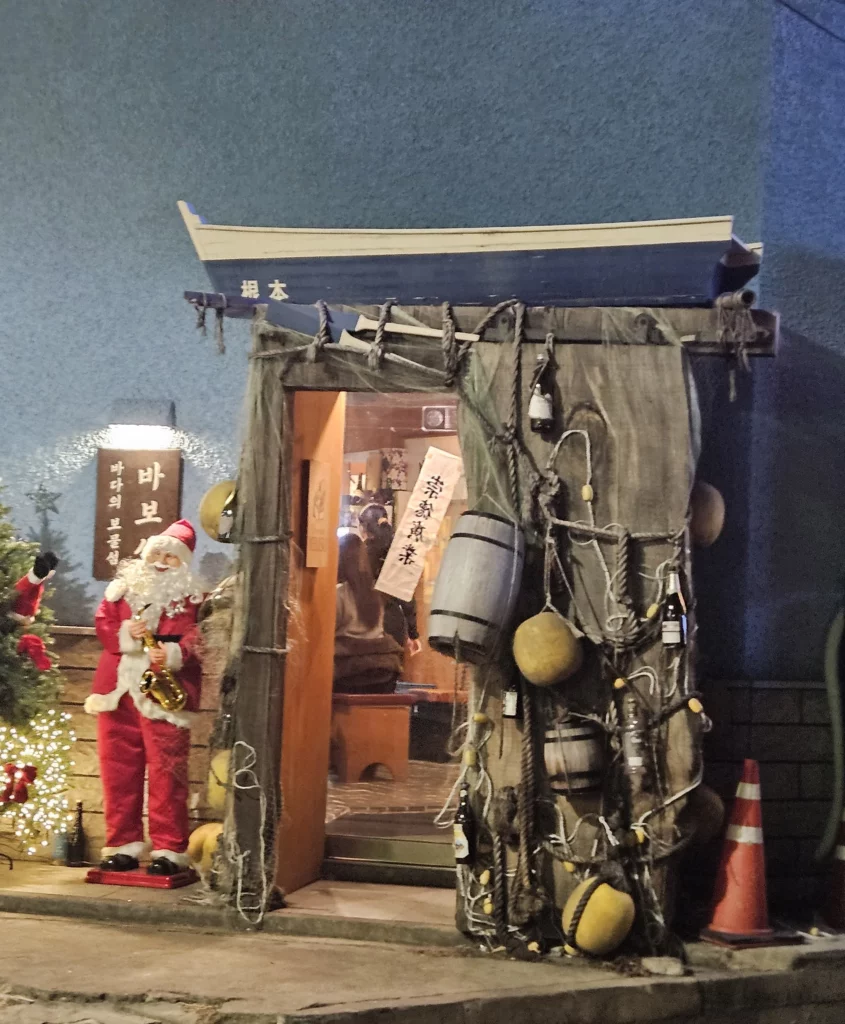
At Baboseom, the marriage of pristine seafood and traditional Korean preparation creates something worth seeking out. The restaurant embodies what makes Yongridangil compelling: authentic Korean flavors presented in a contemporary setting, without the pretense or excessive pricing that can accompany trendy neighborhoods. Whether you’re pursuing the winter yellowtail pilgrimage, seeking the perfect yeonpotang, or simply want excellent Korean sashimi, this "Fool’s Island" delivers treasures that justify its devoted following.
For a taste of fresh Korean seafood in one of Seoul’s most exciting neighborhoods, make Baboseom part of your Yongsan itinerary. Just remember—plan ahead, prepare for a wait, and come hungry.
Location
8 Hangang-daero 42-gil, Yongsan District, Seoul, 1st and 2nd floor, KR
Reviews
4.0

0 reviews
5
0%
4
0%
3
0%
2
0%
1
0%
Loading reviews...
Related Recipes

Seafood & Gim
Gkomak-jjim (Korean Seasoned Cockles)
Every winter, a small, deeply ridged shellfish appears at Korean market stalls and family tables with an almost seasonal ceremony...

Rice
Cockle Bibimbap (Kkomak Bibimbap)
There is a particular bowl that coastal Koreans have been eating since winter market days in Jeolla Province — a...

Rice
Christmas Tree Gamtae Rice Balls
Christmas Tree Gamtae Rice Balls are a festive reimagining of traditional Korean jumeokbap (“fist rice”), combining the subtle sweetness of...
Related Ingredients

Ingredient
Korean Mackerel (Godeungeo)
Few ingredients carry as much quiet authority on the Korean dinner table as Korean mackerel — known locally as godeungeo...

Ingredient
Webfoot Octopus (Jjukkumi)
Walk through any coastal market in Korea’s South Chungcheong Province come spring, and the air fills with the sharp, briny...

Ingredient
Ggomak (Korean cockle)
Few ingredients capture Korea’s coastal soul quite like ggomak (꼬막) — the small, ridged shellfish that appears on Korean tables...